

Latest News

Science & Technology

Hormone therapy: A new way to treat Alzheimer’s, or more harm than good?

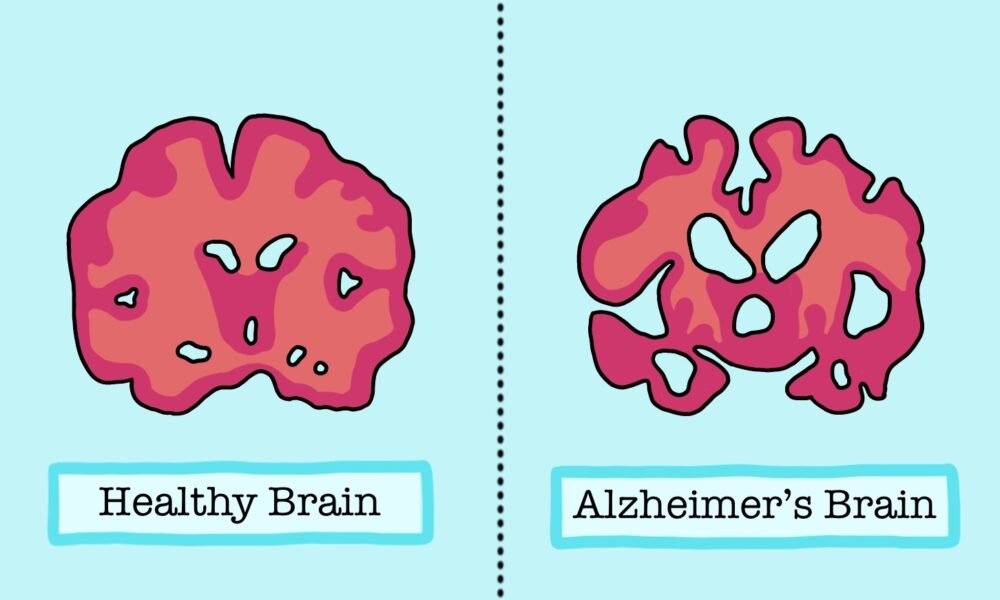
Menopause is often associated with sleep disturbances, hot flashes, and mood swings—but could it also play a role in brain health? While most people do not immediately link menopause with Alzheimer’s disease (AD)—a brain condition that results from the buildup of amyloid and tau proteins in the brain—research suggests that the decline in estrogen during this stage of life may contribute to an increased risk. With women making up nearly 70 per cent of all Alzheimer’s cases, scientists are exploring whether hormone replacement therapy could help protect the brain and reduce this risk. 

Yi-Tang Wang, a researcher at McGill’s Department of Neurology and Neurosurgery, investigated the effects of hormone therapy on Alzheimer’s-related biomarkers. These biomarkers, such as phosphorylated tau (p-tau), can indicate the buildup of amyloid plaques and tau neurofibrillary tangles (NFTs) in the brain even before the patient begins showing symptoms of Alzheimer’s.

“We have these biomarkers from both neuroimaging and biofluid that can identify the pathology happening in the brain before the symptoms actually show up,” Wang said in an interview with The Tribune.

In an observational study, Wang found that postmenopausal women who had undergone hormone therapy exhibited lower levels of Alzheimer’s-associated biomarkers than those who had not. This suggests that hormone therapy decreases the accumulation of amyloid plaques and NFTs in the brain. Furthermore, as the buildup of amyloid is thought to accelerate the buildup of NFTs, Wang also found that hormone therapy might help to reduce this interaction.

However, she emphasized that this does not necessarily mean hormone therapy can prevent Alzheimer’s.

“[This study] is not trying to tell you—or recommend you—to take hormone therapy to prevent AD […] It provides certain evidence that hormone therapy might link to AD biomarkers in the brain, [but] its goal is not really to give you any recommendations,” Wang clarified.

Research on the effect of hormone therapy on cognitive decline has been inconclusive. While some studies suggest it reduces Alzheimer’s risk, the Women’s Health Initiative Memory Study (WHIMS) found no such benefit and even suggested a potential increase in dementia risk.

These discrepancies are likely due to differences in study design, participant populations and hormone therapy timing and dosage. Furthermore, genetic factors, such as carrying the APOE ε4 gene—a major Alzheimer’s risk factor—may influence how individuals respond to hormone therapy. Socioeconomic factors also play a role, as women who undergo hormone therapy typically have better access to healthcare and tend to be more educated, which could contribute to improved health outcomes that are not necessarily representative of all women.

Despite Wang’s desire to investigate the impacts of hormone type, treatment duration, and genetic predisposition, her study’s small sample size limits the ability to study these variables separately.

“When you [want] to do too many things, you really don’t get to if you don’t have a big sample size. But that means you are sacrificing [considering] certain factors that could impact the results,” Wang said.

Wang calls on the need for large-scale case-control studies to conclusively determine the potential of hormone therapy as a way to prevent Alzheimer’s. She is also interested in uncovering the reason behind the sex disparity in Alzheimer’s, asserting that it will help scientists better understand the mechanisms of the disease and develop sex-specific treatment approaches.

“One of the reasons why we really want to try to explain the sex difference is we want to know if there’s certain strategies that need to be changed between men and women. We don’t want a one-size-fits-all strategy,” Wang said.

Overall, Wang’s study shows that hormone therapy reduces levels of Alzheimer’s-associated biomarkers and she hopes to enable future studies regarding Alzheimer’s risk and treatment in women.

Student Life

How to stay motivated through spring

With only two weeks of classes left and finals following close behind, the finish line of the semester finally seems within reach. However, when seeing the melting snow and lengthening days, it is tempting to relax, enjoy this time of year with friends, and completely forget about schoolwork. Even as the distractions grow stronger, keeping academic motivation is key to staying on top of finals for the last push of the semester. The Tribune has compiled a few tips for staying motivated and balancing schoolwork with personal time.

One way to stay motivated is to have clear objectives and keep your academic goals in mind. Daphne Barret, U1 Arts, stressed the importance of remembering why you’re at McGill in the first place.

“I moved here to pursue education, and I want the best grades possible,” Barret said. 

Setting clear goals, regardless of how small they may be, can help create a sense of direction and put into perspective the importance of staying on course.

Another effective way to stay motivated is to find the right group of friends to study with. While not every friend is the right partner for a study session, surrounding yourself with people who can keep you accountable to your work can not only boost your productivity but also create an environment where you can support each other by sharing ideas and clarifying concepts.

Still, academic success is not only found in the library. Barret highlighted the necessity of taking breaks and making time for social activities. 

“I would not be able to function without breaks and valuable social time. It’s part of a balance that cannot stop just because you have a lot to do,” Barret explained. “It would be detrimental in the long run to only focus on school.” 

Barret also added that she likes to go on walks or spend time on a bench outdoors during the school day, especially when the weather is nice, to maintain a balance between studying and relaxing.

Studies from the National Library of Medicine confirm the importance of spending time outside to improve mental and cognitive health. Further, time spent outdoors can also lower anxiety and stress levels and improve your sleep cycle. Exposure to natural light also helps regulate our circadian rhythm. 

In addition to spending time outside, engaging in social or creative activities can be a great way to take your mind off school and unwind. Barret noted that while hard work and academic success can be fulfilling, what makes her time in university enjoyable is finding ways that she can have fun. 

“In high school, I was only dedicated to school, and it took a toll,” Barret said. 

Now, in university, she listens to what she needs, prioritizing her well-being.

This could look like meeting a friend for a coffee date, trying out a new recipe, or picking up a new hobby like drawing or writing. By taking the time to switch gears, you can return to schoolwork later with a fresh mind and renewed energy.

Getting regular exercise is also crucial, as physical and mental health are often intertwined. While this may seem like a break from schoolwork, getting your heart rate up can give you an academic boost. Processes in the brain that occur during physical activity release proteins that are important for memory and cognitive function. Additionally, exercise increases blood flow to the brain, supporting neuron and cell growth, and improving concentration and energy levels.

As the semester wraps up, it’s important to keep in mind that finding this balance is a necessary part of being successful in school. Productive study habits also need to be accompanied by activities that will recharge you—whether it be socializing, exercising, or spending time with just yourself—to nurture academic and personal health.

News, Private, SSMU

SSMU BoD members debate hiring process for VP Finance and subscription to Bounce app

The Students’ Society of McGill University (SSMU)’s Board of Directors (BoD) met on March 25 to discuss the hiring process for Vice-President (VP) Finance, whether the student union should pay for organization app Bounce, and possible renovations in the University Centre

The meeting began with a discussion on the new process for hiring the SSMU VP Finance. This role was previously student-elected, like all other VP positions. However, following the Winter 2025 referendum results, in which 87.7 per cent of voting students approved the motion to make the role a hired position, the BoD will now appoint an applicant for the role who the student body will ratify in a referendum. Council Member and incoming VP External Seraphina Crema Black noted the importance of taking the general will of the students into account during the hiring process. 

“However we go about this process, I think we should consider that the person who ran for the position [in the Winter 2025 executive election] and got elected was elected with quite a large majority,” Crema Black said. “Whoever’s on that committee should take [that] very seriously [….] I think it was [around] 1,400 students voted in favour of Dylan [Seiler].” 

VP Internal Zeena Zahidah responded to this, claiming that the hiring process should instead focus on expertise and experience over electability. 

Zahidah then raised questions on how to address potential conflicts of interest between BoD members and applicants for VP Finance now that the position will be hired. 

Solomon responded, noting the guidelines around whether a Board member should disclose conflicts of interest and recuse themselves from any decision-making benefiting applicants are “very surface-level.” He stressed that recusal is voluntary and that Board members should not be persuaded to recuse themselves, although he encouraged recusal in the event of a conflict of interest. 

President Dymetri Taylor advised that the HR Manager revise and release the job description for VP Finance, and the Board opted to finish the conversation about the hiring process later. 

Next, the Board turned to a Motion brought forward by Director of Clubs and Services, Hamza Abu-Alkhair, regarding building renovations for Room B-24 of the University Centre. 

Abu-Alkhair said the motion followed a conversation with the building manager, who noted that the space is currently unused due to disrepair. Repairs would include electrical work, carpet change, repainting, and the demolition of walls. The Board agreed to postpone the motion until further consultation could take place. 

The Board then revisited a debate on whether SSMU should commit to Bounce, an app that would centralize processes for clubs and student groups. 

Zahidah raised concerns that students would not use it, citing the failure of the recent election to meet quorum twice in a row as an example of a lack of student participation. 

“I doubt that we have enough student engagement and sway at this point for even the consideration of our ability to move a bunch of students to download an app when they won’t even go into their emails to vote on something that directly affects them,” Zahidah said. “I don’t know if this is a space where we should be putting our energy right now or our staff’s energy right now.” 

The Board decided to use a free trial for Bounce through September, approving the motion, and stating they will reevaluate involvement with Bounce after the trial. 

Soundbite:

“I’m not saying that [candidates’ experiences] don’t matter. I guess I’m trying to highlight that there was a democratic election and that many people voted for something, and I think that means something.” — Crema Black on the importance of election results in appointing VP Finance alongside qualifications. 

Moment of the meeting: 

The public session of the meeting ended with the Board discussing the Special General Assembly meeting scheduled for March 27, which voted on the Motion Regarding Strike in Support of Palestine Liberation. Council members expressed concerns about the limited capacity of the meeting given the high number of expected attendees,  an issue the Board addressed by granting the option of attendance via Zoom. 

Science & Technology

Dementia and disparities: The sex differences in healthcare use

Healthcare inequities—avoidable differences in health across population subgroups—are ubiquitous in Canada. Even though women are more affected by dementia—a group of age-related diseases characterized by memory decline—than men, current dementia policies often do not consider sex-based differences.

Dementia is a major public health issue, with the number of cases projected to rise significantly as the population ages. According to the Alzheimer Society of Canada, nearly 600,000 Canadians are currently living with dementia; this figure is expected to double by 2030. Women account for approximately two-thirds of all dementia cases, but an alarmingly low amount of research and policy development in the field takes gender-based disparities into account.

In a recent study, Geneviève Arsenault-Lapierre, a researcher at the Centre for Research and Expertise in Social Gerontology and an associate professor in the Department of Family Medicine, and her collaborators investigated disparities in healthcare utilization between men and women with dementia. 

Expanding on previous research conducted in Ontario, Lapierre’s study examined 23 healthcare indicators such as visits to family physicians, antidepressant prescriptions, and mortality.

Pulling data from the Quebec Integrated Chronic Disease Surveillance System, Arsenault-Lapierre and her collaborators organized the healthcare indicators into five different healthcare settings that reflect a continuum of care needs: Ambulatory care (outpatient services), pharmacological care, acute hospital care, long-term care (including nursing homes), and mortality.

Their findings revealed significant differences in how men and women access and use healthcare, but the nature of these differences varied by setting.

“Women received more ambulatory care, saw their family doctor more often, and received their dementia diagnosis from their family doctor,” Arsenault-Lapierre said in an interview with The Tribune.

Moreover, women were more frequently prescribed dementia-related drugs, such as memantine and cholinesterase inhibitors. However, they also saw increased prescriptions for antidepressants and benzodiazepines—drugs that are not optimized for dementia treatment.

On the other hand, men with dementia were hospitalized more often and relied more heavily on acute care services—many of which could have been avoided with better primary care. They also experienced higher rates of hospital readmission within 30 days, an indicator of lower-quality healthcare and poorer patient outcomes.

“Men went to the hospital more often,” Arsenault-Lapierre added. “They also had more acute care services […] that could potentially have been avoided, and more [30-day] readmissions after hospitalization.”

Additionally, men with dementia were more frequently admitted to long-term care facilities and had higher mortality rates than women with dementia.

While this study was primarily descriptive and did not investigate the causes of these sex-based differences, Arsenault-Lapierre emphasized the importance of understanding how sex is recorded in healthcare databases.

“Administrative databases [use] sex attributed at birth, which changes if the person requests a change,” Arsenault-Lapierre explained. “We measure indicators that are influenced by biological factors, that is, sex, but also psychological and sociocultural factors, that is, gender.”  

Nevertheless, their findings highlighted the need for healthcare policies that consider sex differences in dementia care. In particular, they support the implementation of personalized medicine—an approach that tailors treatment to the needs of individual patients rather than employing a one-size-fits-all strategy. 

Personalized medicine could help address key disparities within dementia treatment practices, such as the overprescription of potentially ineffective drugs to women and the lack of adequate outpatient care for men.  

To better understand how people with dementia access and use healthcare services, Arsenault-Lapierre says future work should focus on differences between additional population subgroups. 

“[We should investigate] the differences at the socioeconomic level and between rural and urban areas because rural areas do not have the same services as urban areas,” Arsenault-Lapierre said.

Ultimately, further research is required to determine whether these sex differences arise from inequities in healthcare access and, if so, how to address them.

Behind the Bench, Soccer, Sports

Spain’s young sensation: Dominating the pitch and defying the doubters

By the end of this past European Championship, it became impossible not to know the name “Lamine Yamal” and the story of the young star the world celebrated all summer. On June 15, 2024, Yamal made history by becoming the youngest player featured in the tournament, making his debut against Croatia at only 16 years old. Yamal consistently draws both praise and criticism, yet always manages to come out on top.

Luis de la Fuente, Spanish Men’s National Football Team head coach, did not just place Yamal on the starting roster to break age-based records. Yamal played well beyond his lack of experience, serving as a crucial piece to Spain’s undefeated journey to the finals. By providing four assists throughout the divisional round, including three in the knockout stage, Yamal became the first player to score or assist in the quarterfinals, semifinals, and final of a single Euro Cup. 

With his impressive skill, one would believe that Yamal’s support would remain unwavering throughout the tournament. Nevertheless, where there is talent, there will be talk, and despite all of his accomplishments, many critics of Yamal seem to still be asking for more. Such was seen for the first time before the Euro semi-finals between Spain and France, when French midfielder Adrien Rabiot criticized Yamal.

“It’s up to us to put pressure on him and to take him out of his comfort zone,” Rabiot said. “And to reach a final at the Euros, he needs to do more than he’s done up until now.”

Undermining Yamal’s efforts was crucial to La Roja remaining the top team to beat all summer. However, Rabiot would regret his comments hours later, as Yamal entered the semi-final match and scored his first goal of the tournament. Noting his opponent’s concerns, Yamal stated, “Speak now” in celebration back to Rabiot, later posting “checkmate” to his Instagram story. Yamal not only broke another record but also made a joke of the veteran player questioning his efforts, ending the competition with both the Euro Cup and the honour of being crowned the Young Player of the Tournament

One would believe that after Rabiot’s embarrassing attempts to talk down to the young star, players would steer clear from questioning Yamal. Unfortunately, former Dutch footballer turned commentator Rafael van der Vaart did not catch this memo. Last week marked the Union of European Football Associations Nations League qualifying round for the semi-finals, where many familiar faces, including Yamal and the Spanish men’s football team, competed again. The tournament remained business as usual up until Spain’s final match against the Netherlands, with both teams hoping to move on to the final four rounds, played in June. Before the match, van der Vaart launched unprovoked negative comments at Yamal, including commenting on Yamal’s loose shorts, his supposed lack of effort, and superficial gestures after scoring.

“[There are] things that are starting to bother me a little,” van der Vaart said. “No matter how good you are, at that age, you have to prove it every minute and in every game.”

And prove himself, Yamal certainly did. Scoring Spain’s third goal in a pulsating 3-3 draw, he brought his team into a penalty shoot-out, winning a ticket to the semifinals. Upon taking his goal, Yamal solidified his win. After tugging down his pants and posing for the camera as a goal celebration, he later wrote on his Instagram, “Pants down, a goal, a missed penalty and INTO THE SEMIFINAL, COME ON SPAIN,” serving as a mockery towards his most recent hater. 

Despite his age, Yamal has never shied away from responding to criticism from senior or retired players. If those in the league have learned anything about Spain’s star, it’s that he will continue to break records and, in the end, always get the last laugh. 

McGill, News

AGSEM’s Academic Casuals unit holds first negotiation meeting with McGill

Representatives from Unit 3 of the Association of Graduate Students Employed at McGill (AGSEM) sat down with the university on March 27 for the first time to negotiate a collective agreement (CA). Unit 3 represents Academic Casual workers such as tutors, graders, course assistants, and graduate teaching fellows. AGSEM’s Units 1 and 2 represent teaching assistants (TAs) and invigilators, respectively.

This first meeting comes two months after AGSEM reported McGill had been slow to begin the negotiation process. 

During the session, Unit 3’s bargaining committee presented their non-monetary demands to the university, including calls for better protections for unit members against harassment and discrimination. 

In a written statement to The Tribune, Bronwyn Walsh, a member of the Unit 3 bargaining committee, emphasized the importance of these protections, given that McGill’s Policy Against Harassment and Discrimination is currently under review by the university. 

“Since this policy is being reviewed/reworked this year and we don’t yet know what the policy will look like, it is important that we ensure our membership is protected through the Collective Agreement as well,” Walsh wrote. “Additionally, there are some things [that] are not currently covered by McGill’s policy such as deadnaming and misgendering, and harassment of academic casuals by students.”

The McGill Media Relations Office (MRO) explained to The Tribune that the university is reviewing the Policy Against Harassment and Discrimination as required per section 10.1 of the document, which states that the policy will be reviewed every 3 years. McGill declined to comment on the bargaining meeting. 

“As a general rule, we avoid commenting on labour negotiations that are underway,” MRO wrote.

According to Donnie Morard, another member of the bargaining committee, other non-monetary demands included that McGill create a conflict of interest policy and standardize its hiring process for academic casuals. 

Morard highlighted that like AGSEM’s Unit 1 TA negotiations with the university during the 2023-2024 academic year, Unit 3’s CA will be developed through open bargaining “to make use of workers’ expertise of their diverse roles and working conditions on campus.” This means all members of Unit 3 are invited to attend negotiations with McGill and share thoughts on the proceedings. 

“These negotiations are important as this first contract will provide protections to over 800 workers on campus in positions such as graders, course assistants, and graduate teaching fellows, along with roles in the McGill Writing Centre not previously unionized,” Morard wrote. “We hope for a quick negotiation that will give these workers a strong contract that recognizes the value they bring to campus.” 

Walsh noted that AGSEM is “excited” to begin this new bargaining process, reaffirming the union’s aim of securing stronger safeguards for academic casuals.

“[W]e look forward to building a contract that greatly improves the working conditions of Unit 3,” Walsh wrote.

Arts & Entertainment, Comedy, Theatre

McGill Drama Festival showcases six student productions

From the throes of budding romance complicated by a tragic accident in Small Death to the aftermath of a long-term partner abandoned at the altar in I Don’t, the McGill Drama Festival (MDF), which took place from March 24 to 28, brought something to the table for everybody. Exploring the ups and downs of romance, mortality, and politics, the ambitious lineup of plays showcased a variety of student talent, with each play written, directed, and produced entirely by students. 

On the comedic end of the spectrum, The Great God Pan is Dead imagines a handful of academics eulogizing their professor-turned-comedian former colleague (complicated by the presence of that colleague’s ghost at the funeral). On the flip side, Hesperus, Phosphorus! went full Downton Abbey, featuring a tumultuous romance between a Russian countess and her Marxist tutor in the final years of the Tsar’s reign. If linear storytelling isn’t your thing, Things Aren’t Looking Too Good flips between moments of a young woman’s life, unfolding its story through fragments and glimpses. 

Alexis Mezzarobba, U3 Science and the writer behind Dress Rehearsal, spoke to The Tribune about the challenges and rewards of writing a comedy, and the anxiety that comes with hoping people will enjoy your jokes as much as you do. Luckily for Mezzarobba, it seems people did—Dress Rehearsal won both the Best Script and Best Directing awards.

“It’s so rewarding to hear the roars of laughter come to life when it all started as some words on a Google Doc I wrote as I was procrastinating my other tasks,” Mezzarobba added. “I’m just glad people found it funny.”

She also spoke on the experimental nature of the script, playing with the boundaries between audience and cast. 

Dress Rehearsal is interesting because although it is a simple concept, the spontaneity makes it special,” Mezzarobba wrote in a statement to The Tribune. “Starting with a regular play, then realizing it’s about the actors working on the play and not the play itself, then discovering that they all have inner issues that need to be worked through, […] you never know what’s going to happen next. It gave me the opportunity to test the limits of live performance.”

The show’s director, Danielle Brooks (U3 Arts) emphasized the importance of the cast and crew coming together to make this unique production shine.

“I had so much fun putting that show together, and this year has been just as exciting,” she wrote. “Directing Dress Rehearsal with such a great team has been a blast. Everyone really understood the comedic style of the piece, and what we needed to put into it to make it stand out.”

The Tribune also spoke to Siya Pandit, U2 Arts and coordinator of the McGill Drama Festival, about putting on a festival with so many moving pieces. 

“We have a little community we build each year with everyone involved,” Pandit said. “It is so much fun running into other actors backstage and wishing them luck, seeing everyone’s faces during their bows, and getting to congratulate everyone on a job well done.”

While there’s a lot to do just to keep the lights running for each of the six productions, Pandit emphasized that having students come together and collaborate for the festival makes it all worth it.

“I have always loved MDF. I’ve been taking part in it since my first year at McGill, and each year, I get to meet so many talented people,” Pandit said. “Especially as governments and institutions cut funding for the performing arts, I think it is so important to remind students that there is a community of people who care and who will support them. Student theatre such as Players’ gives students a chance to practice their craft.”

Arts & Entertainment, Film and TV

David Lynch at midnight

One of Montreal’s most beloved theatres, Cinéma du Parc, is currently screening the filmography of late filmmaker David Lynch for their “Parc at Midnight” series. The retrospective, named David Lynch: In Our Dreams, began on March 7 and ends on April 27.

Since launching in 2017, the theatre’s “Parc at Midnight” series has established a dedicated fanbase. Initially screening films at 11:30 p.m. (hence the name), the event now offers more accessible showtimes: Fridays and Saturdays at 9:30 p.m. and Sundays at 2:30 p.m.

Jean-François Lamarche, the theatre’s programming director, spoke to The Tribune regarding the series’ origin.

“‘Parc at Midnight’ was this idea of bringing back the nostalgia of [cult] films and this kind of feeling for people to see these films late [at] night,” he said.

The theatre had initially been preparing other programs for the upcoming edition of the series but decided it was only right to pay homage to Lynch following his recent passing. His death on Jan. 16 was devastating for many film lovers, including Lamarche, who has considered the filmmaker a key influence throughout his life.

“I’m still mourning, you know,” he said. “I’ve been listening to all his [film’s] music since then. I have a lot of his soundtracks on vinyl.”

The theatre is screening the films in the order in which Lamarche first encountered them. His introduction to Lynch’s work came by chance when he stumbled upon a VHS copy of Twin Peaks: Fire Walk With Me at a local video store. Intrigued by the film’s cover, he watched it over and over again, utterly astonished and bewildered by Lynch’s unconventional style. 

“I think I watched it twice or three times back to back,” he recalled. “It was really a revelation. I never saw anything like that. It was brand new.”

That moment marked the beginning of Lamarche’s lifelong fascination with Lynch. During his cinema studies at Cégep, his appreciation for Lynch deepened. Whether it was watching Blue Velvet at a local cinema or hunting down a hard-to-come-by VHS copy of Eraserhead, Lamarche became absorbed into Lynch’s surrealist world.

Jean-François even recalls how, in 2006, Lynch’s final feature film, Inland Empire, helped keep the theatre afloat by attracting a large turnout. Lynch, he says, is perhaps the most adored filmmaker at Cinéma du Parc, by audience and staff alike. 

“It’s like, for Cinéma du Parc, David Lynch is a rockstar,” he told The Tribune. “After the screenings, it’s really like a rock show. People are standing in line to buy merchandise to have a memory of him at home.”

“[Lynch’s] legacy is in the ability to dream,” audience member Mark Paterson said in an interview with //The Tribune//. “I think that his films are going to be something that we can always go back to and see what’s possible.”

Another attendee, Lucile Gazquez, reflected on the ongoing relevance of Lynch’s work.

“Because we are in a violent world right now, what I like—like we see in the end of Blue Velvet—is that in violence, we still have hope,” she said.

Consistently selling out, the screenings have received overwhelming enthusiasm, drawing fans of all ages eager to admire Lynch’s films on the big screen.

“There’s a lot of people who are discovering David Lynch now,” Lamarche said. “So this is incredible, you know. There’s a younger generation that is discovering this incredible movie maker.”

With each screening, Cinéma du Parc keeps Lynch’s unforgettable vision alive. The retrospective is a heartfelt tribute to the beloved filmmaker, celebrating his unique style and lasting influence on cinema, ensuring his legacy lives on.

David Lynch: In Our Dreams is screening until April 27 at Cinéma du Parc. Tickets are available online: Student tickets are $11.00 CAD, and general admission tickets are $15.25 CAD.

Science & Technology

Do we really choose our groceries, or does habit choose for us?

How do we decide what to buy when we go grocery shopping? Why do we purchase the same items time and time again? Do we really choose our groceries, or do we pick what we buy based on habit alone?

Hiroshi Mamiya, a professor in McGill’s Department of Epidemiology, Biostatistics, and Occupational Health, is trying to answer these questions. In a paper recently published in the International Journal of Behavioral Nutrition and Physical Activity, Mamiya explored patterns of co-purchased foods in Montreal.

“When we buy food, we buy different foods together, and that’s important from a public health sense, because we want to know whether people are eating healthy food or not,” Mamiya explained in an interview with The Tribune

Mamiya and his team analyzed anonymized grocery store loyalty card data from a single Montreal grocery store chain between 2015 and 2017, allowing them to identify which foods were most frequently purchased together.

“We found that sodas and salty snacks tend to be bought together. This is kind of common sense, because when we go to the store, they are always side by side, and intentionally lined up together  to make us buy them,” Mamiya said.

Along with the co-purchasing of soda and salty snacks, they found that fruit is often purchased with foods such as yogurt and nuts, and that vegetables are often purchased with fresh or frozen fish.

“We used very sophisticated science to prove what everybody kind of knows, but someone has to prove these things empirically. Our project has a lot to do with confirming common sense using science,” Mamiya explained.

Their project also confirmed some widely held assumptions: People who buy soda tend to buy more unhealthy foods, including sweets, highly processed foods, red meat, and ready-made meals, as compared to people who do not buy soda.

In contrast, those who purchased fresh fruits and vegetables were more likely to have healthier diets overall, with fewer processed foods and more whole ingredients.

Having analyzed these findings, Mamiya is particularly interested in how these purchasing patterns may shift in response to the current food insecurity crisis

“In the age of increasing food insecurity, we want to know if the rising prices of vegetables and other healthy foods will cause people to buy more junk foods,” Mamiya said. “Do people tend to buy junk food to get the same level of caloric intake? Whether people give up buying healthy food or not is what I think is probably important, because we want to help make sure people’s diets are not compromised because of the price of food.” 

Government initiatives, such as taxes and subsidies, could help steer people toward healthier eating habits. By identifying which foods are commonly purchased together, policymakers can better determine which products to tax or subsidize to encourage nutritious diets.

Mamiya highlighted how these policies can help remind people of what they are buying.

“We don’t always know what we buy, because we kind of buy things almost as a habit, right? Even if prices increase, people still buy Pepsi and potato chips together. Everybody does it, it’s a habit,” Mamiya explained.Trying to break these ingrained purchasing habits and actively making more intentional food choices at the store can help improve our diet quality. Since nutrition plays a critical role in preventing many chronic health conditions, such as diabetes and cardiovascular diseases, being mindful of grocery shopping habits is a crucial step toward better health.

Arts & Entertainment, Film and TV

Twelve Vacancies opens portals to strange, tender, and bold cinema

Stepping into the screening room for this year’s Twelve Vacancies Film Festival felt like entering a pocket dimension—one shaped by a brilliant lineup of experimental short films from young filmmakers around the world, gathered to share and appreciate their work. Filled with film enthusiasts, the energy in the room was both electric and eerie. Excited chatter quieted down as the lights dimmed, and anticipation took over the crowd. 

The festival’s focus on screening visually innovative films paid off: Each piece felt distinct, often unconventional, and always driven by intention. Whether through textured animation, surreal imagery, irony or detailed sound design, each move was intentional. Every frame reflected a sharp artistic vision and the filmmaker’s willingness to take risks.

Standouts included Itch by Maggie Zeng, a symbolic exploration of anxiety. The film follows Manon, a young woman waiting for her date to arrive. As she sits on a bar stool, an uncontrollable itch overtakes her—first as physical irritation, then as phantasmic monsters. Itch’s pink and red colour palette adds to its audience’s unease, mirroring the unravelling of Manon’s sense of control. The short film blurs the line between metaphor and real-life unease, using the itch as a symbol of psychological burden and agitation. It reveals the cerebral discomfort of anxiety through visceral embodiment.

In an interview with The Tribune, Zeng revealed that Itch—animated entirely in Krita, a free software program—was her graduation film at Concordia University. It has since screened at Montreal’s own Fantasia Festival, among others internationally. 

“What inspired me was a series of bad dates and a flare of eczema before my last year at uni started,” Zeng said. “I wanted to combine my feelings about love and desire with how something emotional can leave a lasting mark on your body. And I’m a fan of horror, so it felt natural to take a body horror approach.” 

Another standout was Reverend Mother by Mia Buono, which uses the framework of confession to examine a morally complex young Catholic woman through the framing of confession and the strain it creates in her romantic relationship. The film’s writing is sharp, full of ironic detachment and quiet moments of emotional clarity. A unique aspect of Buono’s filmmaking was her decision to film analog on 16mm film

“It seems to really connect every piece of the process on set in a way that digital doesn’t,” she told The Tribune. “We have very limited takes. I couldn’t see a monitor, so I have to just watch the actors, etc. It just requires a degree of coordination and trust that I feel like really strengthens the film.” 

The choice to film in an actual church with a choir added indispensable richness to the dark but comedic tone.

At the end of the screening, the audience voted for their favourite film. My Friend in the Jingle Truck by Sima Naseem was awarded as the Fan Favourite. Set in Karachi, the film follows a young girl who encounters a magical bird in a traditionally painted truck. Via her journeys through vibrant scenes of Pakistani culture and heritage, the story explores themes of friendship, imagination, and letting go. The use of stop-motion and 2D animation brought the magical world to life, highlighting the intricate details of handcrafted Pakistani artwork. The film was both whimsical and moving, capturing the wonder of childhood in frames layered with texture, colour, and care.

Twelve Vacancies Film Festival made room for risk, honesty, and experimentation; it was a space that challenged and pulled viewers into unfamiliar realities. As the last film’s credits rolled and the lights came back up, what stood up was not just the talent on display but also the sincerity behind it. It was a reminder that sometimes, the strangest images are the ones that feel most true. 

Through 14 short films, the festival opened up many new ways of seeing the world: Distorted, delicate, frightening, and real. It was proof that emerging artists aren’t just experimenting with form; they’re carving out space for new stories, new emotions, and new ways of being. 

Twelve Vacancies Film Festival ran from March 20-21.

Read the latest issue

Read the latest issue