

Latest News

Montreal, News

Protestors march for Missing and Murdered Indigenous Women, Girls, and Two-Spirit People

Content warning: Mentions of murder and violence.

The Native Women’s Shelter of Montreal (NWSM) and Concordia’s Centre for Gender Advocacy (CGA) hosted the No More Lost Sisters march for the National Day of Awareness/Action for Missing and Murdered Indigenous Women, Girls, and Two Spirit People (MMIWG2S+) on Feb. 14. Protestors walked in -10° C weather to raise awareness about the disproportionately high rates of violence committed against Indigenous women, girls, and two-spirit people, and the low conviction rates for their murderers. 

The march began at Cabot Square at 6 p.m. and ended at Place du Canada at around 8 p.m.. According to speaker Kevin Deer, the goal of this event was to inform onlookers of the historic and ongoing violence MMIWG2S+ people face in Canada, where Indigenous women are 16 times more likely to go missing than white women.

Before the march, activist Ellen Gabriel addressed the crowd, discussing the central role protests and demonstrations play in creating systemic change within Canada’s policing system. 

“To all the people who have lost loved ones because of racism, because of sexism, we are here to show our support to anyone that has experienced this type of violence,” Gabriel said. “If we don’t stand up and rise up against imperial fascists, we will lose our rights.” 

Gabriel has been a prominent advocate for over 30 years, acting as the Haudenosaunee’s spokesperson during the 1990 Kanesatake Resistance: A 78-day stand-off between Mohawk communities and the town of Oka, who sought to build a golf course on Indigenous burial grounds. 

At this march, Gabriel asked that the media and the Canadian government stop blaming murder victims for their deaths, criticizing the press for labelling missing women as “partiers.”

“Let’s bring to light this issue of violence that we all are responsible to fight against,“ Gabriel said. “I hope that one day, men will see that violence against women is not a woman’s issue, it’s a man’s issue.” 

(Armen Erzingatzian / The Tribune)

McGill’s Indigenous Student Alliance (ISA) also emphasized the responsibility of the media in pursuing justice in a written statement to The Tribune

“Our women aren’t only the targets of this violence at higher rates than the national average, but are sought out by organized crime and institutionalized networks,” the ISA wrote. “The media’s reluctance in connecting these organized networks (sex-trafficking) to the violence of Indigenous women, girls, and two-spirit people capacitates the way in which this violence is not only perceived by the settler state and its citizens, but also the way [justice evades] the deeply ingrained injustices that allow and promote this violence.” 

The ISA encouraged non-Indigenous McGill students to show their solidarity with MMIWG2S+ by supporting the Red Dress Alert initiative, which the federal government agreed to develop in May 2024. The Red Dress Alert is akin to an AMBER Alert system, pointing the public to the last known location and appearance of MMIWG2S+. 

(Armen Erzingatzian / The Tribune)

Mike Turner was also present at the march. His daughter, 24-year-old Chelsea Poorman, went missing in 2020. Despite her mother reporting Poorman as missing to authorities the next day, Turner reported that the police did not start investigating her disappearance until 10 days later. Police discovered parts of her body in 2022, but today, neither her killer nor the entirety of her remains have been found. Turner told The Tribune that the press has a duty to report on cases like Poorman’s, which go under-investigated and neglected by police due to the victim’s race. 

“The media’s role has been insignificant when it can be extremely significant,” Turner said. “Why can’t they run ads for missing people? […] There’s no reason why this isn’t front-page every single day. If that were the case, a lot more could change.”

When the march concluded at Place du Canada, Gabriel thanked the crowd for their participation on Valentine’s Day, and spoke about the integral role public protests play in raising awareness for MMIWG2S+ who are neglected by the Canadian government. 

“On Love Day, although this cause is heartbreaking, I have to say I’ve never seen so many people pour love back into the hearts of women,” Gabriel said. 

Football, Sports

Propelled by their defence, Eagles soar to victory in Super Bowl LIX

It is said that you either die a hero, or live long enough to see yourself become a villain. This is the situation the Kansas City Chiefs found themselves in leading up to Super Bowl LIX in New Orleans. Once a group led by a young, relatively unknown quarterback named Patrick Mahomes going up against the decades-long dynasty of the New England Patriots, the Chiefs now find themselves on the other end of the spectrum. That young quarterback is now a two-time league MVP, leading a team that has won three out of the past five championships. The Chiefs were the National Football League (NFL)’s version of Star Wars’ Galactic Empire—a powerful regime on a quest to conquer the league yet again. This year, Kansas City was trying to do something unprecedented: Win three Super Bowls in a row.  

In an era where the players’ lives off the field can take the forefront (especially star tight end Travis Kelce’s relationship with musical superstar Taylor Swift), the Chiefs’ regular season trudged along without much fanfare. While they won an American Football Conference (AFC)-best 15 games across the regular season, questions arose about their offence, as they never managed to score 30 or more points in a game. This problem was exacerbated against the Eagles’ number-one-ranked defence, who had given opposing offensive lineups problems throughout the year.  

Philadelphia had generated 1.9 turnovers per game in the 2024 regular season—a league-best— and its defence had only given up 278 yards per game in the 2024 regular season—33 yards fewer than the second-place Tennessee Titans. To put this in perspective, the gap between first and second in this statistic was as large as the gap between second and 23rd ranked teams. The Eagles also had a little extra motivation as Kansas City had bested them in Super Bowl LVII two years prior. The unstoppable force of the Chiefs and their dynastic power would meet the immovable object of Philadelphia’s staunch defence on Feb. 9 in New Orleans.

Fans expecting a back-and-forth battle much like the first Super Bowl meeting between the two squads were quickly corrected. From the outset of the game, the Kansas City offence seemed completely outmatched by the Eagles’ defence. Mahomes was sacked six times throughout the game, the highest total of his career. Amazingly, Philadelphia did not blitz a single time in the game. They were able to generate pressure on the quarterback through simple three- or four-man pass rush schemes. Mahomes also threw two picks, including a first-half pick-six to rookie cornerback Cooper DeJean (on his birthday no less), which made the score 17-0 and swung the momentum of the game decisively in the Eagles’ favour. Mahomes finished the first half with a career-low 33 yards and a paltry 43 per cent completion rate.

When Eagles quarterback and eventual Super Bowl MVP Jalen Hurts threw a 46-yard laser to DeVonta Smith for a touchdown to make it 34-0, the game was all but over. Two consolation touchdown catches from Chiefs rookie wideout Xavier Worthy, who finished with 157 yards, did nothing to sway the end result. The Eagles were so confident that they gave Head Coach Nick Sirianni a celebratory “Gatorade bath” with three minutes left in the fourth quarter. The Chiefs’ offensive problems, which had popped up throughout the regular season, emerged at the worst time possible. Their inability to move the ball down the field and generate points, coupled with their relative ineffectiveness on the defensive side, spelled disaster and the end of their hunt for a historic three-peat.  

The Eagles now face some big decisions to make in the offseason, as multiple key defensive players will be hitting the free agency market looking for the big payday they deserve, including defensive end Josh Sweat and linebacker Zack Baun. As the green and white confetti fell in New Orleans, however, this was the last thing on anyone’s mind. For now, the Eagles and their fans can revel in the fact that they are Super Bowl champions.

Behind the Bench, Sports

To all the sports I’ve loved before

Jenna Payette, Contributor

Dear Ice Hockey,

“Anything less than your best is to sacrifice the gift.”

This quote from Steve Prefontaine hung in my brother’s room growing up and became the silent force that subtly shaped me. As the baby of my family, I was pushed to challenge my limits and continuously raise my standards. The ice was the one place where I truly felt confident enough to do so.

You revealed a fire within me that can’t be extinguished. Years of being middle of the pack taught me to speak up and make my voice heard. Years of being trusted as a leader taught me that vulnerability is not a weakness. And the constant chirps I heard as the only girl? They built my resilience.

You’ve taught me that failure is simply feedback, discomfort is a sign of progress, and joy is the reward for perseverance.

I hope my younger self knew how much her life would change the moment she picked up that stick.

Eternally yours, 

Jenna

Zain Ahmed, Staff Writer

Dear Rugby,

They say love shapes you into something greater than yourself. You’ve done exactly that. From the moment I met you when I was 10, you saw past my (then) gangly height and unsuspecting build, and recognized potential I couldn’t see. You took me in, made my parents’ blood pressure soar week in and week out, and for a decade, you have remained constant.

Heartbreak came in my first year at McGill when I fell short of a shot at Varsity. But, like any great love, you emphasized that worthwhile things don’t come easy. The adversity made me fight for you and earn my place a year later as a rebranded player.

You have given me brothers in arms, loyal soldiers who stand beside me in those passionate and intense 80-minute battles—friendships for life. 

Through injury and triumph, you are my North Star. You have shaped me not just as an athlete, but as a human being. You have taught me that family isn’t just about blood—it’s about the people who stand with you in the scrum of life. Rugby, I will forever be indebted to you. The hooligan’s game played by gentlemen. 

With love, 

Zain

Auxane Bussac, Student Life Editor

Dear Swimming,

As a child, I dreamt of being the next Laure Manaudou. My dad grew up in water; you were his go-to sport. His mom and sister both swim competitively to this day, so you are a family affair. 

I was thrown in a pool at a young age during a “baby swimmers” class and kept on taking swimming lessons regularly until I was old enough to start competing on a team. I was proud of being a strong enough swimmer to impress my dad. 

But it all went downhill. After my first competition at 13, I was supposed to move to the higher-level group. During practice my new coach yelled at me for doing the crawl with my palms open, which slowed me down. He made a great point, but I was traumatized and quit. 

Spoiler alert: I won’t be the next Manaudou, but I miss you and sharing this passion with my dad. You were my first love and heartbreak but you taught me that giving up on something I love for fear of not being good enough is not an option anymore. Thank you.

Love, 

Auxane

Mairin Burke, News Editor

Dear Basketball,

My parents determined I was an anxious kid early on. Their solution? Put me in every available sport to distract me, from hockey to track to trampolining. But it was you alone that truly quieted my brain. Shooting a free throw or executing a pick and roll took a unique level of focus that crowded out all other thoughts. I was hooked.

But I grew to resent you in high school. Your three-hour evening practices full of wind sprints, and weekend tournaments spent in rural Ontario where there was nothing to do but roam around a local mall, took their toll. I’m ashamed to say I ended up ghosting you—the pandemic preventing practice-as-usual was just a convenient excuse.

In retrospect, you brought me peace worth foregoing any Saturday sleep-in for. I am forever grateful that you pushed me beyond my limits and introduced me to some of my dearest people. So take this as my apology. Maybe we can still be friends?

XOX,

Mairin

McGill Recommendations, Out on the Town, Student Life

Dollars and sense: The cheapest places to grab lunch near campus

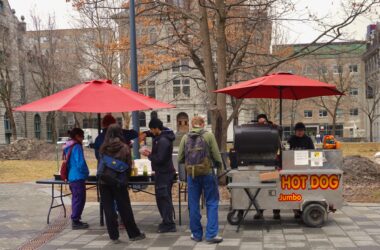
While many students choose to meal-prep for the week, weekends often topple the best-laid plans of mice and men. We’ve all had the experience of arriving on campus Monday morning with an empty lunch box and a growling stomach. What are the best options to satiate your mid-day cravings on a budget? The Tribune took a walk around the neighbourhood to find meal deals within a 10-minute radius.

Free option: Midnight Kitchen

The Midnight Kitchen is a non-profit worker- and volunteer-run collective that serves free lunches in the University Centre, typically at 1:00 p.m. on Wednesdays and Thursdays. Their food is vegan and always includes a dessert, often made with produce grown in their community garden. You have to bring your own container and utensils if you want to pick up a meal, and remember to get there early as the services are limited.

$0-$5 CAD options: The Yellow Door, Japote, and McGill metro finds

The Yellow Door (3625 Aylmer Ave) is a non-profit whose mission is to reduce social isolation of vulnerable groups in downtown Montreal. They run the Rabbit Hole Lunch, offering vegan meals for under $5 CAD every Friday at 12:00 p.m.. Their mains typically cost $3 CAD, and $1 CAD for dessert. You are encouraged to bring your own containers, but can also use their plates and utensils (which you have to wash afterwards). The service is cash-only, and you can dine in their basement.

Japote is a family-owned fast food restaurant located on the concourse level of 1000 Rue Sherbrooke O. You can grab a homestyle curry there for the small price of $6 CAD. Remember to bring lunch money, because it’s cash only, and to prepare for a wait. 

Along the same line, Lee N Kim (located inside of the McGill metro station) and Marché Eden (3575 Parc Ave) both sell onigiri at around $4 CAD a piece. These balls of rice wrapped in seaweed are filling snacks, sure to keep you going through a long day. Also located inside the McGill metro is Pizza Soleil, where you can get a beef patty and a drink for under $5 CAD.

$5-$10 CAD eats: Vinh’s Café, McGill Pizza, Opiano, G-Store

Vinh’s Café (Genome Building and Strathcona Music Building) offers Vietnamese food, with their classic bánh mì for about $8 CAD.

McGill Pizza (625 Rue Milton) is permanently part of the McGill gastronomic canon. Don’t let their expensive main plates fool you—their two-slice combo of pizza goes for $8.75 CAD, perfect for a light lunch. Or, you can get one slice with a side of fries, for $8.50 CAD. 

Opiano (1115 Rue Sherbrooke O) is located where the famous Super Sandwich used to be.  This Korean spot offers kimbap from $6.50-$8 CAD, depending on whether you choose a tuna, beef, or regular roll. They also sell eight fried dumplings for $9 CAD. If you’re more in the $10-$15 CAD range, their curry plates are a good bang for your buck, typically including two pieces of fried meat, rice, salad, and a miso soup.

If you’re looking for a quick bite without leaving campus, G Store in McConnell is your spot for lunch on the go. They sell wraps for $6 CAD, though these can sell out during the day if you don’t buy one early. The wraps are from Ô Four, a Lebanese restaurant and bakery located on Avenue du Parc.

A satiating meal for $10-$15 CAD: Nouilles Zhonghua

Nouilles Zhonghua (908 Rue Sherbrooke O) is an excellent spot for a filling bowl of noodles. A small bowl of their beef special is $14.99 CAD, though you can grab their small combos such as their cold noodles with a Chinese hamburger for around $12 CAD (or, you can just get a Chinese hamburger for about $7 CAD).

Next time you’re feeling snackish, just remember that there are many options around! Lunch on campus does not have to cost you $20 CAD—it doesn’t even have to cost you $5. Just remember to bring cash wherever you go, and support these local spots to ensure students have accessible eats in the future.

Student Life

Exploring a passion for music outside of the School of Music

McGill brings together a wide variety of students, each with unique passions and creative interests. While some choose to pursue their art through a Music degree, others take a more technical course of study and explore their creativity in their off-hours. While it can be hard to find time for yourself between all the essays and exams, these students shared how they found a way to explore their passion for music on campus.  

Brandon McLeod, U3 Engineering and a member of the rock and blues band One Dime Ride, opened up about his experience as bass guitarist, which started truly growing at McGill.  

“McGill provides opportunities through venues like the Blues Pub and Gerts, which are very open to hosting live bands [….] The Plumbers’ Band Room, where the Blues Pub takes place, allows students to use their equipment for free as long as it’s being used inside the room,” McLeod explained in a written statement to The Tribune

On a similar note, DJ and mixer Nina Baby, U2 Arts, expressed that although her passion for mixing began when she was younger, she only started performing at McGill. 

“My first gig ever was last year at Blues and I’ve mixed there multiple times since then,” she said. “It was really at McGill that I started, it really helped me and gave me so much visibility.”

She explained how she later played at Bar des Arts (BdA), Open Air Pub (OAP), and Gerts, making a bigger name for herself in the music scene. 

Apart from performance opportunities, McGill also has a large selection of classes in the Music Program for students seeking to deepen their knowledge. For students like Arian Meh, U2 Arts and member of the band Blufin, McGill’s classes allow him to have a consistent time, place, and opportunity to explore music. 

“University is so big and it’s easier to find like-minded people to share interests with [….] You can do a minor in Music or take electives in Music. McGill has plenty of systems in place to support a passion in music,” Meh said. 

Baby similarly elaborated on how she applied for a minor in Musical Application of Technology, which focuses on music production. 

“I hope to get in to be able to spend more time doing [music] and also spend time in studios and really learn how to do the production,” she said. 

However, it is not always easy to take on a Music minor if you are already pursuing an unrelated major program. Balancing daily responsibilities, living independently, having a social life, and doing schoolwork can easily get overwhelming. Some therefore find ways to reduce their academic workload. 

“I decided to take four classes instead of five this year, so I have more time to do it all,” Baby expressed. “It’s still a challenge. I’m trying to learn how to manage.” 


Hence, she advises other students pursuing music alongside another major at McGill to manage their time effectively.

“My advice for someone trying to accumulate experience at McGill would be planning ahead and well to gain time and prioritize what is important,” noted Baby. 

McGill offers an exceptional environment for artistically driven students looking to cultivate their creative passions while partaking in the academic world. Whether you are a band member, a photographer, or an aspiring journalist, the school’s various venues, classes, and student-run initiatives are great opportunities to grow and learn. 

“I play as many concerts and shows as I can; I write and record as much as I can,” Meh said. “School comes first, but it only lasts four years while a passion will stick all life.”

Student Life

TEDxMcGill makes waves by celebrating ripples

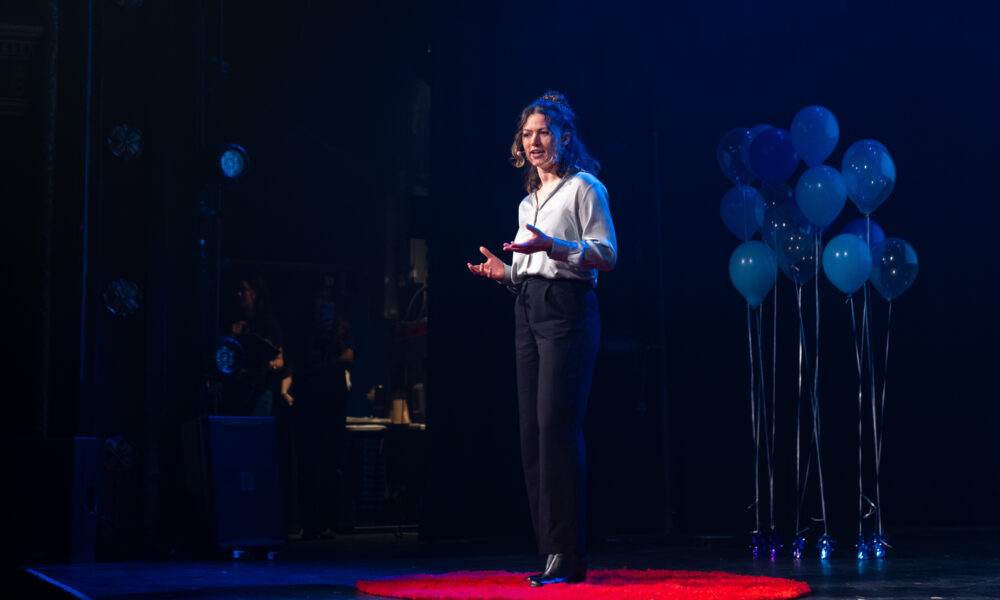
TEDxMcGill brought together seven speakers and two performances by McGill students at their annual conference on Feb 9. TEDx events are similar to TED Talks, except that they are independently organized all over the world by community groups who have obtained a free license from TED to use their name and format. In turn, all of the speeches are uploaded to a centralized TEDxTalks library

“I really love [TEDx’s] international community,” Katherine Squitieri, U3 Arts and Chair of TEDxMcGill said in an interview with The Tribune. “It’s a super strong network of people. You’re constantly in contact with other TEDx leaders, attendees, and members. I think it’s really inspiring to be able to see that so many people are working towards the same goal throughout the world.”

This year’s event featured lectures on a variety of topics, from equality in healthcare, to community-based AI literacy, to reflections on working with cancer patients in an oncology ward. The morning session ended with a performance by McGill’s Soulstice acappella group, and the afternoon kicked off with a dance number from United Groove

“I hope that people will be inspired to learn more and explore more opportunities to connect with topics that maybe they don’t hear about as much,” Squitieri told The Tribune. “I think that’s the beauty of TEDx: The variety in talks and being able to get snapshots of things that people are so passionate about.”

The organizers for this year’s TEDxMcGill event asked presenters to incorporate the idea of “ripples” into their talks as a guiding conceptual thread, although it was left to individual speakers to interpret the theme as they wanted. 

“Ripples are a reminder that even small actions matter, often in the largest ways,” Mikalah Martindale, U1 Arts and VP Communications of TEDxMcGill, said in her opening remarks. “Our speakers today have carefully curated both ideas and stories to share with all of you of ripple effects in their lives, from comedy to human connection.”

Charlotte Spruzen, a PhD candidate at McGill whose presentation focused on a geological response to climate change denialism, began her talk with a very literal reference to the conference theme. As it turns out, physical ripples appear in various materials and along different time scales in the geological record. 

“Modern ripples are everywhere [….] You can also find them in rivers, desert sands and lakes,” Spruzen said in her talk. “Ripples are fundamentally transient structures; ripples you see on the beach today will not be the same as the ripples you see the beach tomorrow, and that makes it, in my opinion, mind-blowing that the same structures of ripples can be preserved in rock for billions of years.”

Spruzen went on to describe how climate change deniers misconstrue evidence from the geological record—such as the fact that there have been large spikes in global temperature in the past—and she carefully demonstrated how those claims draw invalid conclusions from valid data. 

Coming from a different angle, Michael Zegarelli, Vice-President of Project Management at Colliers Project Leaders, spoke about the wide-reaching ripple effects that can result from seemingly small changes to city design, such as improving parks, infrastructure, and gathering places. Charlie Scholey, U3 Engineering, took yet another perspective, talking about the positive impacts that comedy can have on people. 

“If there’s one thing I’ve learned, it’s that everyone has the ability to be funny. Everyone has a sense of humour,” Scholey said in his discussion. “They just need the tools to use it, and then they have to want to use those tools.”

Montreal, News

Quebec rental tribunal recommends record rent rate increase

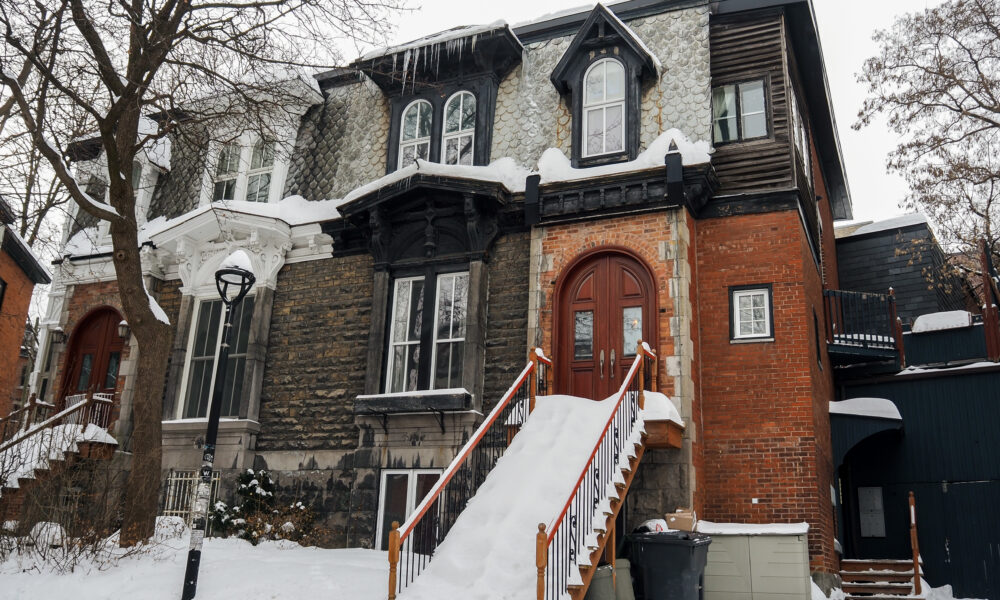
On Jan. 21, Quebec’s Tribunal administratif du logement (TAL) announced that its recommended rent increase rate for 2025 was 5.9 per cent for units that do not include paid heating, and between 4.1 and 5.5 per cent for units that include heating in the rent. While this recommended increase rate is not binding, it is a signal for both landlords and tenants of what is considered a reasonable rent hike. 

This year’s recommendation is the highest since 1988. It also represents a significant jump from 2024’s rate of 4 per cent and 2023’s rate of 2.3 per cent, although when tenants contest rent increases, the TAL often approves increases in excess of their recommendations. In 2024, the average rent adjustment granted by the TAL was 5.8 per cent. Daphne Sainte-Onge, an organizer for the tenant union Syndicat des locataires autonomes de Montréal (SLAM), commented on the difficulties these hikes can pose for tenants.

“The majority of tenants are not receiving raises, (cost of living or otherwise), that match these increases, so every year rent is eating away a bigger chunk of our earnings and landlords are taking more from our pockets as tenants,” Sainte-Onge wrote in an email to The Tribune

Sainte-Onge also noted that students are particularly vulnerable to exploitation by landlords through high rent increases, due to their high turnover rates and lack of collective organization. She emphasized the importance of speaking with one’s neighbours about rent prices and contesting unreasonable hikes. 

“Landlords often ask for unjustifiably high increases because they do not expect tenants to push back, but you have the right to refuse and to stay in your apartment,” Sainte-Onge wrote. “Negotiating collectively multiplies the power tenants have to fight back.”

Elliott Kalt, U2 Science, and his roommates were paying $3,000 CAD a month for a three-bedroom apartment in the Plateau, where one of the bedrooms did not have a window. When Kalt and his roommates decided not to renew their lease, the landlord listed the apartment for $3,300 CAD, a 10 per cent increase in just one year. 

“I think that my old apartment was already a bit expensive for what it was, but increasing the rent by $300 almost feels criminal,” Kalt wrote in a statement to The Tribune

While upper-year students navigate the housing market in broader Montreal, first-year students living in McGill residences are also considered tenants, signing leases with McGill for the duration of the academic year. While the Quiet Residences at the Downtown Campus and Laird Hall at Macdonald Campus offer prices per room from $585 to $985 CAD for some students, prices in residences range from $1,055 CAD to $1,780 CAD, with a regular single room in Royal Victoria College costing $1,610 CAD per month, and a double room in La Citadelle costing $1,545 CAD per month. 

These rents do not take into account the mandatory meal plan in most residence halls, which is currently $5,800 CAD for the year. In the Plateau, the average rent for a one-bedroom apartment is $1,512 CAD; however, that price includes a bathroom and kitchen. 

As a landlord to thousands of students, McGill also makes decisions about rent increases year to year. The McGill Media Relations Office (MRO) commented on the factors the university takes into account when setting residence fees. 

“The Quebec Rental Tribunal’s rent increase rate provides a guideline for understanding the housing market, but it is not the main factor we consider when revising our fees,” the MRO wrote in an email to The Tribune. “More importantly, we take into account the overall cost of living in residence, the condition of each building, and if any recent upgrades and renovations have been done.”

The rent for McGill residences in the 2025-2026 academic year has not yet been finalized, but the MRO stated it would be announced in the next several weeks. 

With rent increases across Montreal, students are struggling to find suitable apartments for reasonable prices. 

“I’ve definitely seen pricing get worse over time, but the more annoying part of looking for a place is just finding a place that has windows in all rooms—something you would think is a normal standard,” Kalt wrote. “Overall, it feels like the quality of places has gone down while prices have increased.”

McGill, News

McGill Senate discusses smashed windows and budget cuts at Feb. 12 meeting

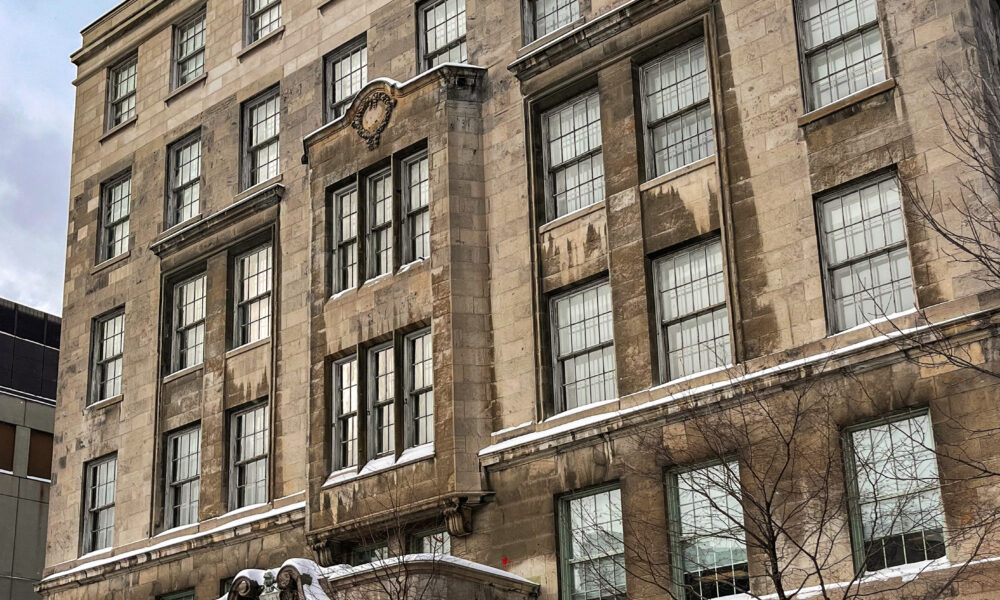
Smashed windows of campus buildings, academic freedom, and upcoming budget cuts were among the discussion items at the McGill Senate’s Feb. 12 meeting.

The meeting began with memorial tributes to Patrick Dias in the Faculty of Education, Patrick Farrell in the Department of Chemistry, and Abraham Fuks in the Faculty of Medicine and Health Sciences. McGill President and Vice-Chancellor Deep Saini, the Senate Chair, then moved to the Report of the Senate Steering Committee

Saini then addressed the Senate regarding the protestors who smashed windows of the Leacock, McCall-MacBain Arts, Dawson Hall, and James Administration Buildings on the night of Feb. 5. Saini noted that “an anarchist group […] with no known connection to McGill” has taken responsibility, stating they were protesting McGill’s refusal to divest from companies with ties to the state of Israel. The base repairs are expected to cost McGill hundreds of thousands of dollars. 

“Even higher, though, is the price to our collective morale,” Saini said. “Our campus cannot continue to bear the brunt of outrage caused by a war half a world away.”

Saini then read two written statements from instructors whose classes were writing exams in Leacock when the protestors smashed the building’s windows before concluding that the university cannot make decisions “rooted in response to threats.” From there, he opened the floor to comments.

Arts Senator Anzhu Wei noted students’ frustration with a lack of communicable channels with McGill, particularly surrounding the university’s investments in companies connected to Israel. Wei highlighted that 78.7 per cent of voting students in the Fall 2023 referendum voted in favour of the Policy Against Genocide in Palestine, which called on McGill to divest from such companies. An injunction subsequently suspended the policy. 

“I’m not saying that McGill should make any decisions in response to violence or intimidation,” Wei said. “I think where a lot of the frustration comes from is that disconnect between what students want and what students want to say and what they perceive McGill to be taking in as input.”

The Senate moved on to address McGill’s expected budget cuts as the result of a projected $15 million CAD deficit for the current fiscal year. Engineering Senator Nathaniel Quitoriano asked what role the Senate would have in determining how the cuts will be allocated given the Senate’s jurisdiction over academic matters at McGill. Saini responded that budget cuts are administrative in nature, but situations of academic concern would be brought to the Senate, such as the hypothetical amalgamation of departments.

“Or, in an extreme scenario, there’s a suggestion to eliminate a faculty to save money,” Saini said.

The Senate then addressed questions from members. The first—submitted by Wei and Arts Senator Vivian Wright, concerning artificial intelligence and pedagogy—was deferred to Provost and Executive Vice-President (Academic) Christopher Manfredi, who was not present but provided a written response. Manfredi also answered the second question—submitted by Quitoriano and Member-at-Large Christa Scholtz—about the Report on the Policy on Indigenous Membership

Student Senator Abe Berglas raised concerns regarding this report’s accessibility. 

“It’s quite difficult, if you start from the main page of the Office of Indigenous Initiatives [website], to find the report. I wouldn’t have been able to find it if I didn’t work backwards from the full hyperlink,” said Berglas.

Saini noted the feedback before turning Senators’ attention to the annual reports on the Action Plan to Address Anti-Black Racism, Student Life and Learning, the Committee on Student Services, the Equity, Diversity, and Inclusion (EDI) Strategic Plan, and the EDI Committee.

The meeting ended with a confidential session regarding an honourary degree.

Moment of the Meeting: 

The two written statements from instructors—who were teaching and invigilating when the protestors smashed windows in Leacock—reported a climate of uncertainty, with one noting that some students screamed out that there was a shooting, while another described locking the doors and calling security. 

Soundbite: 

“If you think that the university should have a role in thinking through these issues, such as the ones raised by BDS, I suggest that we just have an academic conference where we talk about these things [….] I think it would be wrong to not do things just because the [protestors who smashed the windows] want something.” — Senator Catherine Lu in response to Saini’s request for comments in regard to academic freedom.

A previous version of this article stated that Catherine Lu was an Arts Senator. In fact, Lu is an Arts Faculty Senator. The Tribune regrets this error.

Science & Technology

Our universe through the James Webb Space Telescope

For some, seeing images of distant galaxies induces feelings of excitement and curiosity. For others, it sparks fear and a sense of insignificance. And who can blame them? It’s easy to feel small when living in a seemingly infinite universe.

The James Webb Space Telescope

On Feb. 14, at the sixth McGill Physics Society Colloquium of 2025, guest speaker Sarah Rugheimer—an astrobiologist and Associate Professor at York University—delivered a lecture on the James Webb Space Telescope, the most technologically advanced space observatory ever created. Known for its breathtaking images of distant galaxies and cosmic phenomena, Webb has opened new frontiers in our understanding of the universe.

Rugheimer began by explaining the remarkable technology behind Webb, focusing on its primary mirror, which is composed of 18 smaller, gold-plated mirrors that measure a combined 6.5 metres in diameter.  

“These 18 different [mirrors] are each getting their own image, and then they have to be brought together to sing as one choir, so to speak, so that they actually are functioning as a single telescope,” Rugheimer said in her lecture.

The mirrors work together to concentrate their light onto one smaller secondary mirror which reflects back to the telescope’s processing system, ultimately allowing Webb to capture extremely high-resolution images. To reflect their light onto such a small point, each mirror must be able to adjust its position within eight nanometres of precision, equivalent to one ten-thousandth of a human hair.

Webb & Hubble

Before Webb claimed the title of ‘most advanced telescope ever built,’ the Hubble Space Telescope was the reigning champion. Hubble, a reflecting telescope, captured the first images of deep space, revealing thousands of galaxies, each with hundreds of billions of stars. First launched in 1990 and still functioning today, it has fundamentally changed our understanding of the universe. 

While Hubble captures light in the ultraviolet and visible spectrum, Webb’s much larger mirror surface allows it to capture longer, infrared wavelengths of light. Because our universe is expanding, light waves from distant galaxies are subject to the Doppler effect, meaning they have been stretched by the time they reach us. These stretched wavelengths are redshifted into the infrared frequency range, making Webb an ideal candidate for capturing them.

“James Webb [Space Telescope] is needed in order to see those most distant galaxies because that light has really shifted to those infrared wavelengths. So Webb is able to just look back further than Hubble ever could,” Rugheimer explained. 

Infrared wavelengths also paint a clearer picture of our universe, since they travel right through clouds of gas and debris, revealing details that Hubble couldn’t capture.  

Together, these telescopes give us clues about the early stages of the universe’s formation. The light emitted from these distant galaxies has often been travelling for billions of years by the time it finally reaches the telescopes’ point of view.  

“Hubble can see back to about a billion years after the Big Bang, and Webb is able to go back to 0.3 billion years.” Rugheimer said. “Telescopes are time machines in a way, because of the constant speed of light. The further we look away, the earlier the parts of the universe we see.” 

From exoplanets to our own solar system

Webb’s scope isn’t limited to galaxies and supernovas: It is also helping scientists explore exoplanets—planets outside of our solar system. Rugheimer highlighted the TRAPPIST-1 system in particular, containing three Earth-sized exoplanets in the habitable zone, where conditions may be suitable for life.

Closer to home, Webb has also captured the clearest picture of Neptune’s rings in existence and imaged water plumes on one of Saturn’s moons that are larger than planet Earth.

Rugheimer shared a personal moment during Webb’s launch on Christmas Day, 2021, reflecting on the significance of Webb in our journey through the universe. 

“We were watching it on our cell phone, my husband and I, and I started to cry as this telescope launched: This is really the telescope of our generation.”

McGill, News, The Tribune Explains

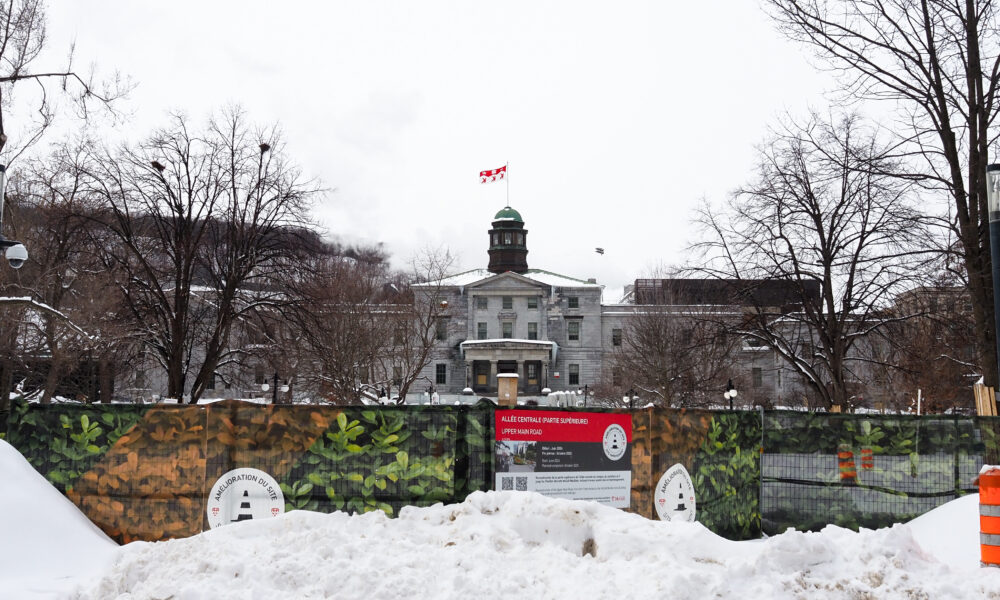
The Tribune Explains: McGill’s ongoing construction projects

In August 2024, McGill Vice-President (Administration and Finance) Fabrice Labeau and Provost and Executive Vice-President (Academic) Christopher Manfredi announced the provincial government’s changes in its funding mechanism for university construction and renovation projects. As a result of these changes, new projects and all calls for tender for construction have been halted at McGill.

At McGill’s second budget town hall of the academic year on Feb. 7, President and Vice-Chancellor Deep Saini highlighted additional financial pressures the university is facing. 

In light of the university’s projected financial deficit, The Tribune breaks down the funding processes behind current and future construction projects at McGill, and examines the timelines of these various projects.

What are some of the outstanding construction projects at McGill?

The McGill Downtown Campus’ Upper Main Road, otherwise known as the Y intersection, has been under construction for eight months. The project was outlined in McGill’s 2019 Master Plan, with construction beginning in June 2024. The Master Plan set out short-, medium-, and long-term plans to improve the built environments of McGill’s Downtown and Macdonald campuses. 

In a statement to The Tribune, the McGill Media Relations Office (MRO) wrote that although some construction projects may seem stalled, it can be due to the phasing of work and environmental factors.

“The Y intersection redesign is a project that involves ground infrastructure,” the MRO wrote. “Though some work can happen during frost periods, other phases must wait for warmer periods.”

The New Vic Project, which was first introduced in 2015, has been under construction since 2022. The project takes place in part on the grounds of the former Royal Victoria Hospital, whose Allen Memorial Institute was a site of the CIA’s MK-ULTRA mind control and chemical interrogation experiments. Since its inception, the Kanien’kehá:ka Kahnistensera (Mohawk Mothers) have contested the project, arguing the site may hold unmarked graves. Despite the Mothers’ calls to halt construction and undertake a comprehensive investigation of the site, McGill maintains that the New Vic will be completed and inaugurated in 2028.

Other ongoing construction and renovation projects include the Strathcona Music Building, the Raymond Building on the Macdonald Campus, the New Residence Hall, and the McConnell Arena. Currently, there are over 60 ongoing or planned construction projects at the downtown campus.

Pending or new construction projects, like the Fiat Lux library project, have been suspended until further assessment.

How will cuts to McGill’s financial budget affect current and future construction projects?

The McGill Media Relations Office (MRO) wrote to the The Tribune, clarifying that construction projects are not affected by McGill’s financial budget.

“Capital projects like construction are not part of the operational budget. They have their own envelope,” the MRO wrote. “Government rules require that these remain totally separate.”

What factors may affect the timeline of McGill’s construction projects?

McGill construction projects require governmental approval as they are heavily funded by the provincial government of Quebec. With Labeau and Manfredi’s announcement on the government’s yearly cap on provincial funding, the university has to suspend new construction projects. In turn, this may delay the completion date of various construction projects.

In addition, any construction or renovation project in the Golden Square Mile must be approved by the Ministre du Patrimoine Pascale St-Onge due to the neighbourhood’s historical significance. 

The Golden Square Mile, bordered by Avenue des Pins on the north, covers most of McGill’s Downtown Campus. Most construction projects on campus therefore require this second layer of approval, adding time to their completion.

For more information on McGill’s current construction projects, visit the McGill Interactive Accessible Network Map. For future construction projects, visit McGill’s Campus Planning and Development Team’s Master Plan.

Read the latest issue

Read the latest issue