


Latest News

Student Life

‘Making Drugs More Accurate’ offers free drug checking kits

On Aug. 24, Making Drugs More Accurate (MDMA), a non-profit organization piloted by the Canadian Students for Sensible Drug Policy (CSSDP) chapter at McGill, launched their free drug-checking and harm reduction service for McGill students. 

In a 2019 survey conducted by CSSDP McGill, 86 per cent of students demonstrated interest in an accessible drug checking service on campus. A group of students who  were eager to contribute to the initiative assembled a team to execute CSSDP’s vision and respond to student demand.

After consulting different supervised injection sites, harm reduction organizations, and overdose prevention sites in Montreal, MDMA now allows students to order free, personalized kits with chemical reagents that identify substances and verify their compositions. On their website, substance-specific instructions guide students through every step of the testing process. 

The testing kits, sourced from DoseTest and Test Kit Plus, can confirm the presence of ecstasy, ketamine, LSD, cocaine, amphetamine, and opiates in the body. Each kit also includes testing strips that can detect the presence of fentanyl—a potent synthetic opioid that greatly increases the risk of accidental overdose.

The greatest challenge for the MDMA team was realizing a method of distribution that did not require students to compromise their personal information. By requesting a unique code word from users on the order form, MDMA is able to preserve clients’ anonymity while delivering the kits. 

In an interview with The McGill Tribune, Jordan*, the founder of MDMA, explained the organization’s non-judgemental, non-coercive, harm reduction approach to drug use. 

“Ultimately, our job is not to tell people what they can and cannot use,” Jordan said. “Our job is to give people the information so that they can have a better idea of what they’re putting in their bodies, the consequences of it [….] We would like to empower people’s decision making and nothing more than that.” 

The team hopes to connect students with resources and information that can facilitate safer experiences with drugs. Jordan emphasized the importance for students to be educated, even when equipped with harm reduction tools, on the ever-present risks of substance use. 

“[MDMA’s] goal is to promote a greater degree of safety, though it’s important to remember that drug use carries inherent risk,” Jordan said. “You can never reach safety with drug use.”  

Allison Chow, U3 Science and member of the MDMA team, hopes to dismantle the stigma surrounding substance use on campus. Condemning and prohibiting drug use, Chow explained to the Tribune, makes support less accessible and places students at greater risk of drug-related injury.

“If you purport the idea of drug abstinence, you are just going to get negative consequences, [like] people overdosing, or [not knowing] when to call for help because they’re scared of repercussions,” Chow said. “Good Samaritan laws are a step in the right direction, but more needs to be done.” 

To glean insight on the unregulated drug supply students are in contact with, MDMA will be anonymously collecting and analyzing the results of their clients’ reagent tests. These statistics will provide important grounds not only for growing MDMA’s own presence at McGill, but also for motivating the implementation of similar harm reduction services at other Canadian universities. 

Although the service launched just this past month, the MDMA team said it has received positive responses from students who either support the project or want to get directly involved as volunteers. 

“Every class I go to, whenever I make a new friend, they are very interested in [the service],” Chow said. “I think that this is something that people want and need.”

MDMA is currently looking to expand their outreach and welcomes anyone interested in helping students.  

“You don’t need to be a drug user to join,” Chow said. “You just need to care about human beings, harm reduction, and be compassionate.” 

*Name has been changed.

Student Life

Five apps to help you step up your study game

The back-to-school season is the perfect time to revamp your study system to ensure a successful semester and minimize your stress. While some prefer to stick to traditional pen and paper, The McGill Tribune has compiled a list of the most useful apps for those wishing to craft the perfect online workflow. 

  1. Notion 

Notion is a must-have for students looking to create a fully customized planning and productivity system. Using their bank of templates, you can create to-do lists, monthly and weekly calendars, and centralized locations for all your readings and assignments. While the platform can be confusing to navigate at first, you can learn how to customize plenty of page templates to suit your needs––and aesthetic––on YouTube and Reddit.

  1. Focus To-Do 

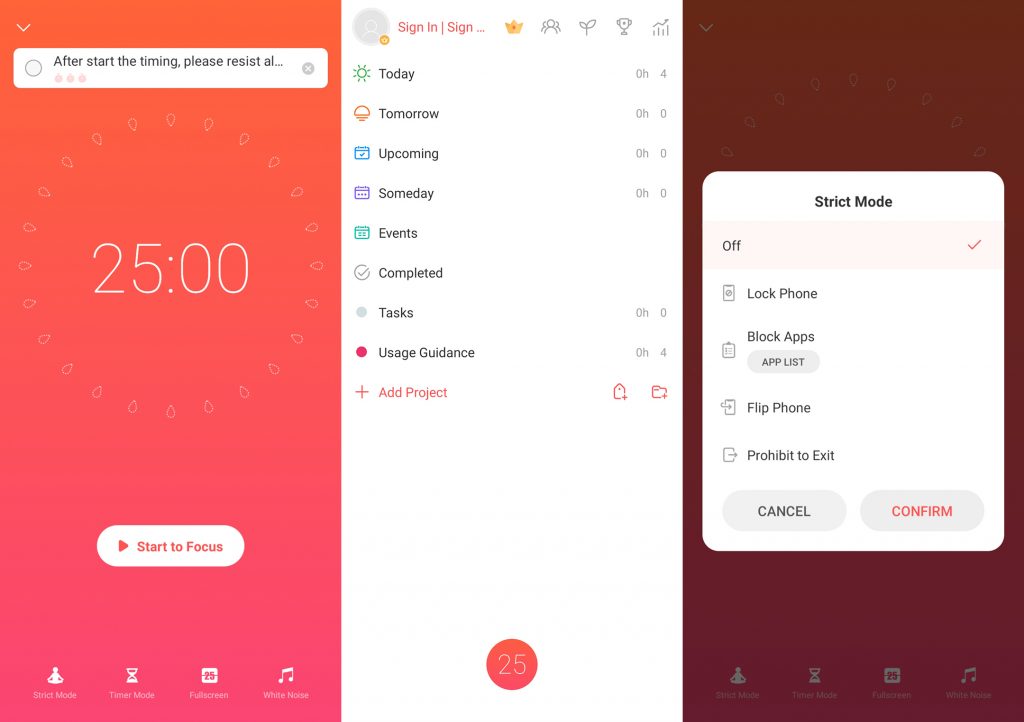
Available for both iOS and Android users, Focus To-Do is one of many Pomodoro-based task management apps. The Pomodoro method is simple: Rather than mindlessly plugging away at Available for both iOS and Android users, Focus To-Do is one of many Pomodoro-based task management apps. The Pomodoro method is simple: Rather than mindlessly plugging away at your tasks without scheduled breaks, it suggests you work in 25-minute blocks with five-minute breaks in between. The app helps you track your study sessions and gives you the option to block yourself from closing it during your work periods. You can also customize the length of your work and break blocks.

downzen.com
  1. Goodnotes 

For those with an iPad or tablet, Goodnotes is a great way to transition to an online note-taking system. Popular among students in the sciences for annotating powerpoints, Goodnotes—and its competitors like Notability or Bear—can help you to pay better attention in class by alleviating the pressure to mark down every word. For arts students, Goodnotes is a great way to save paper and money when doing readings. After you import the PDF, the app allows you to highlight text and bookmark pages. Goodnotes is especially useful for those who like adding artistic elements to their notes, as its streamlined design makes changing pen colours, moving and resizing text, or inserting images and diagrams simple. If you don’t have an iPad or don’t want to pay the $10.99 start-up cost, you can try the free notes app or Microsoft OneNote.

goodnotes.com
  1. Speechify 

After a year and a half of online school, most students are tired of having to stare at a screen for hours on end every day. But headaches and eye strain remain impossible to avoid, with many instructors opting to upload online readings and textbooks. Speechify presents a solution: Upload PDFs and other digital text, and the app will read it aloud. You can personalize the voice and listening speed to align with your habits. Even when reading a physical book, you can scan pages using your camera and have the text transform into audio. While the app is great for any student looking to up their reading game, it’s especially useful for those with learning disabilities that make reading text more difficult.

  1. Anki

Available on both desktop and mobile, Anki is a powerful flashcard system that is great for students in fields that have lots of memory-testing assessments. It relies on a specific method: Spaced repetition. The technique is based in the psychology of memory, on the specific idea that we retain less information as time passes, and so must revisit them to remember them long-term. As such, Anki’s algorithm displays your flashcards in increasingly spaced intervals to strengthen your brain’s recall abilities. Because Anki is an open-source software, there are plenty of add-on features to explore that can tailor your study system to your needs. Train away!

flamory.com
News, SSMU

SSMU BoD to explore legality of vaccination mandate for SSMU employees

The Students’ Society of McGill University (SSMU) Board of Directors (BoD) convened on Sept. 9, voting on a motion to investigate the legality of enforcing a COVID-19 vaccination mandate for SSMU employees. The board also approved a budget for purchasing new office furniture.

Claire Downie, SSMU vice-president (VP) of university affairs, who has been vocal in her demands for McGill to adopt a university-wide mandatory vaccination policy, requested a last-minute addition to the agenda to discuss the feasibility of implementing such a policy for SSMU employees. 

“Certain workplaces are saying that they think it is legal to have a vaccination mandate,” Downie said. “I know before, the concern was raised that this was not legal, [but] people on the [BoD] seemed generally receptive to having such a policy at SSMU. So given the potential of legal change, I just wanted to bring this up again and see if the board would be interested in looking into the legal logistics […] of having such a policy.”

Board members agreed that a hybrid model for the policy would need to be adopted to accommodate those who preferred not to get vaccinated. One such model might include seeing those unvaccinated undergo COVID-19 testing twice a week. Éric Sader, SSMU VP finance, mentioned that people may have religious reasons for not being vaccinated, or may not feel comfortable sharing their health records.

“If an employee, for example, has a medical reason or a sincerely held religious belief, we would not really have an option to force them to get vaccinated,” Sader said. “Then our only path forward if they refuse is termination, which would be termination for religious discrimination. I am not against contacting legal on this, but to me, this is a little dubious moving forward, especially given the fact that we have been stressing in the past few months that this was not the direction we want to go.”

Benson Wan, Legislative Council Representative on the BoD, suggested that SSMU implement a policy mandating their employees to be vaccinated or agree to bi-weekly COVID-19 testing to enter the workplace, or represent SSMU in other public settings.

Sader raised concerns about the financial feasibility and logistics of conducting twice-weekly testing, to which Downie clarified that the motion was limited to only looking into the legality of a vaccination mandate. Beatrice Mackie, BoD member at large, echoed Downie’s sentiment that such a policy would be SSMU’s way of acting in accordance with their recent protests for a safer campus. The motion was passed unanimously.

Next, Sacha Delouvrier, SSMU VP external affairs, introduced a motion to approve an expense under the General Administration budget for new furniture and fixtures for the SSMU building. The money would go toward replacing the furniture in the SSMU office, the student lounge, and the building’s cafe. SSMU building manager Wallace Sealy addressed directors’ concerns regarding the need for such an expense.

“We are at the point now where we are in our five-year plan [and] things are not going to get better the further we move along,” Sealy said. “So if we do not take decisive action soon, we are going to be in a situation where […] people will want to come back to the office at some point [but] our area will [not] be able to support them.”

The motion to allocate approximately $20,000 of the General Administration budget to replacing the SSMU office fixtures and furniture was unanimously approved.

A previous version of this article incorrectly named ‘Ben Wan’ as ‘SSMU Medical Students’ Society representative.’ In fact, his name is Benson Wan, and his title is Legislative Council Representative on the BoD. The Tribune regrets this error.

McGill, News

Students and staff push for better COVID-19 academic accommodations

Members of the McGill community have been requesting more inclusive academic considerations since the university’s requirement that students and faculty be on campus for Fall 2021. Similar to the academic accommodations that apply specifically to students with the Office for Students with Disabilities, academic considerations are specific to COVID-19 concerns and apply to students who are required to self-isolate, or who are delayed in starting their courses due to isolation requirements

According to the current academic considerations framework, members of the McGill community with disabilities, long-term medical conditions, or other chronic health issues are not eligible to receive COVID-19-related accommodations—such as flexible grading schemes for courses, audio or Zoom recordings of lectures, or withdrawal, incomplete, or “leave of absence” from a course. Carrie Rentschler, a professor in the department of art history and communication studies at McGill, applied for accommodations to teach her large COMS 310 course remotely to protect herself and her spouse—who could be adversely affected by the Delta variant—but had her request denied.

“I did so on the advice of my spouse’s oncologist and my own endocrinologist,” Rentschler wrote in an email to The McGill Tribune. “It’s really disappointing to be turned down for accommodation. The policy is that employees who live with people with serious chronic illnesses are not eligible for accommodation, even when medical doctors advise it.”

In a statement to the Tribune, Frédérique Mazerolle, media relations officer at McGill, assured the McGill community that the university’s safety measures are guided by public health officials’ advisories. According to Mazerolle, McGill examines each request for accommodations and makes decisions on a case-by-case basis. 

“Some students have been experiencing delays in travel due to circumstances beyond their control, such as study permit processing delays, travel restrictions, and quarantine requirements,” Mazerolle wrote. “The Office of the Dean of Students will work on a case-by-case basis around academic accommodation for these students. Students requiring long-term accommodations related to COVID-19 should connect with the Office for Students with Disabilities to seek potential accommodations.”

Alice Laheurte, U1 Arts, experienced trouble travelling to Montreal for Fall 2021. Laheurte encountered complications at almost every stage in the process for acquiring her study permit, such as delays in obtaining proper documentation and biometrics like fingerprints, as well as  COVID-19 testing. Stalling in these services and McGill’s changing deadlines regarding study permits left Laheurte wondering whether she would have to defer this semester. Laheurte felt that the university could have been more accommodating during this time of high stress. 

“In my case, McGill advisers [and professors] really took care of me,” Laheurte said. “But I think being more reassuring and not just throwing [study permit deadlines] at students [when the deadline to apply] for a deferral [is] in two weeks […], is not the right decision. Even if [McGill] is just going to extend the deadline, just reassure [students] and tell them that it is okay […] because they know that students are struggling on their own.”

Rentschler pointed to McGill’s ability to implement inclusive accommodations in a timely manner during the transition to online learning in 2020, arguing that McGill should be able to apply those accommodations now. 

“Last year I felt as if McGill was developing a more humane and just framework of accommodation, one that recognized that having chronic illnesses, being disabled, and living in conditions of vulnerability did not mean we could not also actively participate in the life of the university,” Rentschler wrote. “There is no reason why we cannot be more accommodating at the university, to see access to the university and learning as a human right we should all have, no matter what our physical conditions are. We know it is possible.”

Soccer, Sports

Laval triumphs over McGill in women’s soccer opener

On Sept. 10, the McGill Women’s Soccer team lost 2–0 to Laval in a hotly contested match, as the eventual winning goal did not come until the 59th minute. Mireille Patry of Laval pounced on a rebound after a Laval free kick to give them the lead. Thirty minutes later, Audrey Genois put the game to bed with a composed finish past first-year goalkeeper Brenna Bordeniuk, cementing their victory with a –0 final score. McGill registered six shots compared to Laval’s 16, only one of which was on target, compared to Laval’s six. However one-sided these stats sound, they do not tell the full story of the match. 

Before drawing any conclusions from the score, it is crucial to note that the Martlets went into Friday’s opener with a roster of 12 first-years, nine second-years, four third-years, and four fourth-years. 

“For the first game of the season, with a squad composed primarily of rookies, the game went well,” first-year Bordeniuk said. “I think we became a bit scattered in the second half, but against tough opposition, I think we performed well.” 

The quantitative stats show that Laval dominated, but the qualitative side of the game supports Bordeniuk’s points. In the first half, it was anyone’s game: McGill’s press in their 3-5-2 formation was effective in slowing down Laval’s buildup in their 3-4-3, as McGill’s formation gave them an extra player in midfield. This led to some chances, including McGill’s only shot on goal which came from first-year forward Zoe Gardiner. However, as time went on, the Martlets struggled to hold onto the ball and lost the very formation that had initially slowed Laval down.

“We performed well in the first half and forced Laval to play a style that they did not appear to be fond of,” McGill head coach Jose-Luis Valdes said in an interview with McGill Athletics. “We had two or three clear chances in the first half but couldn’t convert. But after Laval scored in the second half, we kind of pushed the play too much. We rushed the play, lost our [structure] and didn’t wait for them to come to us.”

This was the first time in over a year that the Martlets took to the pitch in front of a crowd. Bordeniuk noted how fans have an incredible way of influencing the game from the sideline.

“Fans always help the atmosphere for us down on the pitch. Whether that’s cheering for a good tackle or a nice play, it’s exhilarating to feel some momentum from the crowd. The more fans, the better,” Bordeniuk said in a message to //The Tribune//.

However, there was a noticeable gap in fan attendance in the women’s game compared to the men’s game immediately following. The student ticket was valid for both games, yet most people only showed up for the men’s match.

“It’s always hard to see people show up for the men’s game and not ours,” Katherine Chadwick, second-year midfielder, said in an interview with //The McGill Tribune//. “Considering how Canadian women have dominated athletics lately, it’s totally time for people to start getting excited for women’s games.” 

Looking forward, the Martlets hope to secure their first win this Thursday versus UQAM. If they play as strong as they did in the first half against Laval, they have a real chance of taking home their first win of the season—especially if a strong fan section comes out to support them on September 16th at 6 p.m. at Molson Stadium.

Moment of the Game

In the 59th minute, Laval’s Mireille Patry was the first to a rebound from a dangerous free-kick and was rewarded with a tap-in that became the winning goal.

Quotable

“Coming from last game, I think we need to work on staying more composed with the ball, rather than forcing plays that are not on. The defense was a brick wall, so keeping that up will be crucial to our performances this week.” — Brenna Bordeniuk, first-year keeper.

Stat Corner
First-year keeper Brenna Bordeniuk made five saves in her home debut for the Martlets.

McGill, News

Two McGill alumni win grant for COVID-19 vaccine community outreach initiative

The Public Health Agency of Canada (PHAC) awarded a $10,000 grant to Tammy Xuan Bui, MScPH ‘21, and Nehal Islam, a current McGill medical student and MSc ‘21 on June 7.  The funds will go toward implementing the duo’s community-based proposal called WeCanVax—an initiative that seeks to increase diverse communities’ vaccine confidence. 

Since the launch of WeCanVax, research has shown that the vaccination rate in Parc-Extension—76.8 per cent—exceeded Montreal’s vaccination rate—74.6 percent—as of September. Bui and Islam worked alongside Dr. Ananya Banerjee, assistant professor in McGill’s Department of Epidemiology, Biostatistics, and Occupational Health (EBOH), to receive the Vaccine Community Innovation Challenge award. 

“It is very rare for masters students to take an assignment and submit it for funding, but I [told Bui and Islam that they should] try it,” Banerjee said. “And lo and behold, they were awarded $10,000.”

WeCanVax operates in the Parc-Extension (Parc-Ex) borough—a low-income neighbourhood inhabited by many immigrants and other racialized communities—where vaccination rates have been low. Banerjee explained that the campaign put up posters around the neighbourhood that feature Parc-Ex community members in an effort to promote residents’ confidence in getting the COVID-19 vaccine.

“[When] you walk around Parc-Extension and you see residents on the posters saying why they got vaccinated and why it is important, in multiple languages […] it puts confidence in the community,” Banerjee said. “[Unvaccinated people] are walking by and they see pictures of their neighbours saying things like ‘I got vaccinated to protect my children’ or ‘I got vaccinated so I can travel back to India to see my parents’ […] that is huge, and it helps to change people’s mindsets.”

WeCanVax also maintains a strong social media presence. Bui said that Facebook in particular was important for WeCanVax, as it allows the initiative to foster a deeper connection with the community.

“Facebook is really interesting, because a lot of the community groups in Parc-Ex actually operate mainly on Facebook,” Bui said. “So what’s really nice is if I wanted to share something that we are doing, maybe a poster, I would post it on a group of theirs called ‘ParcEx Action Squad’ […] where the community of Parc-Ex comes together online.”

The grant money—as well as an additional $15,000 awarded to the project by the EBOH—has helped create outreach opportunities, such as WeCanVax’s new initiative that encourages young people to create TikTok videos or to submit a picture about why getting the vaccine is important to them. The creators of the top-three submissions will get the opportunity to attend National Basketball Association and Toronto Raptors star Chris Boucher’s basketball camp

Islam and Bui feel that the WeCanVax initiative has helped create important changes in a borough where vaccination rates have been low. Islam was careful to note, however, that vaccine hesitancy was not the main reason for low vaccination rates.

“Going in beforehand, we had access to a whole bunch of different media articles saying that there was a large amount of vaccine hesitancy [in Parc-Ex] and that people in this community did not want to get vaccinated,” Islam said. “But what we really came to realize is that it was more of an issue about access to the vaccine. [I]t is really important to recognize these challenges and barriers that stand in the way of people easily receiving the vaccine.”

By working closely with the Parc-Ex community, Bui and Islam hope to establish trust with the people whom WeCanVax aims to benefit.

“We allowed [the project] to be really dynamic, so working with the community to understand [their needs] and to strengthen their own community at the same time,” Islam said. “Allowing community members to have a say in which way we oriented our project made it more effective overall and allowed us to be really warmly received by the community.”
Bui and Islam recently applied for another grant through the Canadian Institutes of Health Research (CIHR) to evaluate the impact that the initiative has had on the community.

Editorial, Opinion

Take note: It’s time to vote

Millions of students will head to the polls on Sept. 20 to vote in the federal election. With the semester underway and the pandemic here to stay, many people feel lost in a dizzying haze of parties, ideologies, and options. From climate change, to racial injustice, to more efficient healthcare, countless priorities are on the ballot. More than deciding between parties and candidates, many voters are asking themselves what issues should take precedence, which political decisions will best serve their causes, and for some, whether it is worth voting at all. Granted, no one can be forced to vote. But with so many important issues that impact students sparring in the political arena, every eligible voter should take the time to inform themselves and cast the ballot of their choice.

Although Elections Canada has suspended the Vote on Campus program this year, voters can mail in their ballots or pick up a special ballot at an Elections Canada office until Sept. 14. Election officials have cited the pandemic as well as the snap-pace of the election as logistical justifications for the campus voting program’s cancellation. Even so, students can reasonably be concerned that the current parliament is not doing enough to facilitate turnout. But that is even more of a reason to vote early and encourage others to do the same. If the government has blundered the election process, it should answer for it on Sept. 20.

In response to some of these barriers, McGill’s administration has taken some steps to assist student voters. In an Aug. 31 email, Secretary-General Edyta Rogowska discouraged staff from scheduling academic deadlines on Sept. 20 and asked them to accommodate students when necessary. Nevertheless, because many courses have mandatory attendance or are not recorded, some students may be reluctant to miss lectures for the polls. Those in this position should consider mail-in or early voting. But McGill could go further by disseminating resources, identifying nearby polling places, and requiring professors to permit absences for voting purposes. As a public institution and educational space, the university has a basic obligation to encourage young voters to make their opinions heard and support democratic participation.

Student organizations like the Arts Undergraduate Society (AUS) have already been promoting election materials and helping voters make informed choices. For example, the AUS held a virtual debate between the presidents of the different political party-affiliated clubs on Sept. 13, providing students with a variety of perspectives and answers to policy positions. Students interested in learning more about the federal parties should reach out to these clubs, including Liberal McGill, New Democratic Party (NDP) McGill, the Conservative Students’ Association of McGill, Young Greens McGill, and others. Some of these clubs have planned “Get Out to Vote” initiatives. Students should take part in these to help others learn about the different parties’ ideas in preparation for election day. Even students who are ineligible to vote, such as international students, should learn about the issues raging across the country as the election unfolds. Canada’s next government will make decisions that affect all students, and everyone has the agency to promote candidates of their choice on social media and elsewhere, as well as encourage friends to vote.

Above all, it is imperative that students not be apathetic. An election—especially an early one—is a rare occasion to turn rhetoric into votes, and ideas into policies. People may disagree on the merits of voting based on one’s conscience—such as voting for a party that they feel most represents them—or strategically voting for a candidate to block another that they vehemently disagree with from power. Although that decision is ultimately up to the individual, everyone should agree that votes do count—even if a riding typically skews a certain way. Students should vote in this election, and all the ones to follow, because today’s prevailing questions are the policies of tomorrow and the shape of Canada’s future.

For more information on the political parties and their candidates, consult the Elections Canada website; voter information guides published by Macleans, Global News, and other media outlets; or the different political organizations’ web pages.

Arts & Entertainment, Film and TV, Pop Rhetoric

Canon or continuation? The delicate art of remaking a classic

A remake of Rebecca appeared on Netflix in October 2020, The Magic School Bus is going live-action, and HBO Max is making a new Gossip Girl television series. Seeing our childhood remade and repackaged can be unsettling. Remakes of familiar fictions can indulge our nostalgic memories, but half-baked carbon-copies of past works often do the opposite, leaving a poor taste in the mouths of fans. 

A.R Martin characterizes nostalgia in the American Journal of Psychoanalysis as a “tendency to follow the path back home, back to our beginnings.” Beardsley Ruml in his article Some Notes on Nostalgia argues that nostalgia is a basic biological drive. It is easy, therefore, for creators to fall prey to making reboots too similar to their originals. Reboots provide a starting point for creators, but can quickly become unenjoyable if they are copies of previous work rather than something new and innovative. 

The success of a reboot can be traced to one word: Change. Effective reboots, such as  Riverdale, exemplify how recycled media can be enjoyable with enough originality. Riverdale’s morbid mysteries are especially novel when compared to the original Archie comics, and the many plot twists provide endless surprises. As the winner of seven Teen Choice awards, the show’s commercial success supports this as well. Riverdale writers include iconic details such as Jughead’s cap and Betty’s good-girl persona without succumbing to tonal repetition of the source. The unique, almost soap-opera lens is what makes the show come alive—and is what has kept it alive for five seasons, and counting. 

On the other hand, Arrested Development falls flat where Riverdale flourishes; the former’s failure can be attributed to its lack of original direction. When an audience consumes a piece of media, they remember not only the media itself but also its context—which includes the viewer’s own memories of watching it. Viewers develop relationships with pieces of media, which are changed, for better or for worse, by attempts to modernize or reinvigorate its original properties. Many will undoubtedly carry their previous emotional bias, but if the remake is sufficiently different, both the original and the reboot can exist uniquely. Whereas Riverdale is a totally different viewing experience than reading Archie comics, the fourth and fifth seasons of Arrested Development are the dregs of what was once a successful sitcom. Those final seasons lack true merits of their own, making the show a drab continuation of the past with nothing new or refreshing to add. While fans of Arrested Development were excited to see the show’s return, most were disappointed by the poor and flat attempts to recreate the original magic of the show.

  As long as both audience and creators ditch the loyalty to canon, plenty of innovative work can be made from pre-existing sources. Modernizing older narratives continues to bring about exciting new works—notably the upcoming Dune movie remake, which has the chance to remedy the previous, notoriously bad Dune film. After all, the originals will remain unchanged anytime we are looking to be brought back to the past—reboots look to the future. 

Commentary, Opinion

Toward body liberation

Content warning: This article discusses disordered eating 

I first started to think about my weight when I was in elementary school. I distinctly remember feeling as though I had to lose weight to make friends or to capture the attention of my crushes. But it was not until early high school when it started to take a larger toll on my life. In ninth grade, my mom would send me to school with $20 a week to buy food at the cafeteria. Rather than eating, I would pocket the money and tell my friends it was simply a way to save some extra cash. In reality, this was the first time I was consciously engaging in disordered eating, skipping meals in the hopes of becoming thinner. These patterns have continued on and off for most of my life thus far. 

As I grew up, I began to notice how common it was amongst my––more often than not, woman-identifying––peers to count calories, develop unhealthy relationships with exercise, and pick apart their appearances. Often, this was under the guise of merely caring about our health. This belief is likely genuine for many. After all, people are taught from a young age that fatness correlates directly to being unhealthy and that weight gain drives them to an early grave. But in reality, these claims have their roots in racism and arbitrary metrics. And for many who struggle with body image, the fear of weighing more is based in internalized fatphobia more than anything else––even if that fear is unconscious. 

Though I never fully escaped my recurring patterns of disordered eating, I realized a few years ago that I needed to improve my body image––something would have to change if I wanted to regain control over my life. As I started to work to unlearn some of what I had been taught to believe about weight, I set off on a mission toward self-love and body positivity. 

I quickly noticed, however, that this focus had its issues as well. I found that I was angry at myself whenever I had a bad day; if I looked in the mirror and didn’t love what I saw. In some backward way, I was still placing far too much emphasis on my relationship with the way I looked—rather than the way I felt and why. 

Beyond my own personal struggles with body positivity, fat activists and disability rights activists have long been questioning whether the mainstream approach to body image is productive. For one, the mainstream body positivity movement tends to be dominated by thin, white, non-disabled women. While it is undoubtedly important for everyone to accept themselves as they are, many activists feel as though the fat acceptance movement––which aims to tangibly improve plus-sized people’s experiences—has been watered down by an over-emphasis on physical appearance. Additionally, when body positivity focusses too much on one’s body’s  ability to function “properly,” it risks excluding disabled people—especially those who experience issues with body image. 

For those like myself, who inhabit bodies that are not large enough to experience struggles like excessive stigma and poor experiences with health care professionals, it is essential for all to confront internalized fatphobia, fight for those whose voices are underrepresented in the movement, and work to unlearn patterns of disordered eating. Overall, it is important to recognize the powerful origins of the fat acceptance and liberation movement and use them to contextualize current societal attitudes toward weight. 

McGill, News, Private

Students wait in line for hours at McGill’s first on-campus vaccination clinic

Amidst the implementation of Quebec’s vaccine passport, McGill announced that a vaccination clinic in Redpath Hall would offer first and second doses and register vaccines received outside of Quebec on Sept. 3. The event was heavily advertised by email and across McGill’s various social media accounts, but many attendees felt it was mismanaged. The clinic, which was a stand-alone event and did not require registration, was overwhelmed by the turnout from its start. Though the clinic was meant to remain from 1 p.m. until 7 p.m., it closed after only two and a half hours due to short supply. McGill has since stated that future clinics will be registration-only.

Dory Sampson, U3 Arts, who went to the clinic with the hope of getting help fixing her malfunctioning vaccine passport, remembered arriving early to a long line and then leaving without getting the help she needed. 

“My roommate and I showed up an hour early and there was already a line,” Sampson said. “After waiting in line for three and a half hours, we were told to go to a different location […] which, we had found out through Facebook, had been rejecting people […] because they were all booked up and under-staffed as well.”

Sampson said she had expected the event to be adequately staffed and better managed, given how much publicity the clinic had received from the university.

“The fact that they advertised it on their Instagram, with a countdown timer, and then the line was not moving at all was kind of unacceptable,” Sampson said.

Amir Shah, U3 Science, attended the clinic in hopes of registering his out-of-province vaccines, but eventually left the line after realizing he would not be helped. Shah feels the university should have foreseen the logistical issues, given its large international student population—including many who do not have access to Canada’s list of approved vaccines. According to the International Student Services (ISS), McGill has over 10,000 international students who make up nearly 30 per cent of the overall student body.

“If those [international student numbers] are the numbers you are proud of, then you also need to make sure you have the resources to work with those numbers,” Shah said. “I really was expecting McGill to have started this kind of program for vaccinating students and registering students’ vaccinations from before orientation so that […] as students trickled in from all around the world […] they would have slowly gotten their vaccinations and registrations done.”

Shah, like Sampson, did not receive the service the university had advertised. Shah pointed out that the clinic’s shortcomings could pose a challenge for those new to Montreal who may not know how to access local resources. 

“I walked out of the line after a while,” Shah said. “I got an appointment for next week on Wednesday at a clinic to register my vaccine, and I know a lot of friends who did that as well. It is okay for someone [like me] who has been in Montreal and who knows places around, but [I feel for] new students.”

In an email to The McGill Tribune, David Juncker, professor and chair of the department of biomedical engineering at McGill, emphasized the importance of offering vaccination clinics on campus, adding that the university should be taking more steps to effectively manage COVID-19.

“Lacking a vaccination mandate, [McGill’s] encouraging people to vaccinate via pop-up clinics is most certainly recommended,” Juncker wrote. “The university should also consider rapid testing, as is now used in Waterloo and at UBC.”

The administration stated that they are looking into the potential for more on-campus vaccination clinics, and encouraged students to take advantage of walk-in clinics in Montreal. 

“The university is working with public health authorities to explore options for future vaccination clinics,” Frédérique Mazerolle wrote in an email to the Tribune.  “In the meantime, […] there are a number of walk-in clinics set up for the first and the second dose depending on vaccine availability. They can also book vaccination times on the Clic Santé website.”

Since providing the Tribune with this statement, McGill has announced it will hold a vaccine registration clinic from Sept. 14 – Sept. 17.

Read the latest issue

Read the latest issue