

Latest News

Arts & Entertainment, Film and TV

Don’t let its charm fool you; “Bad Boys for Life” is a bad movie

To analyse Bad Boys For Life on its own terms, as most other critics seem to be doing, would be a disservice to the canon of good-to-great Hollywood films that have been and are being made. Sure, as a buddy-cop movie filled to the brim with gun-fights and corny jokes, the film functions perfectly fine. But the bar doesn’t need to be so low. When considered alongside other, superior crime films, this one is a heaping pile of garbage. 

The last movie in the Bad Boys franchise was released in 2003, a sequel to Michael Bay’s directorial debut. Boasting 147 minutes of runtime, Bad Boys II raked in $273.3 million at the box office but was almost universally panned by critics. Despite the film’s commercial success, the decision to revive the franchise in a market saturated with remakes is questionable. Bad Boys for Life confronts a culture whose attitudes toward both police violence and cliché plot twists have shifted in the 15 years since the previous iteration. The film still does its best to make those work while Will Smith and Martin Lawrence reprise their roles as narcotics detectives Mike Lowrey and Marcus Burnett, but it falls short in moving beyond tired tropes. 

The two aging detectives play roles familiar to the cop-drama genre. While Marcus wants to retire, Mike does not. Prolonged bickering thus ensues before personal calamities inevitably bring them both back into the fold. Other clichés ticked off include a brash, hot-headed officer whose penchant for danger frightens his female love interest, a good-cop-bad-cop interrogation, a “club scene” featuring familiar female characters in sexy outfits, and a hero who tries to complete his mission alone before being rescued by his friends. 

What makes this movie palatable is the indisputable chemistry between Smith and Lawrence. Lawrence, playing an Alexa-using, modern version of the ‘I’m getting too old for this’ guy, gets a laugh at every turn, while Smith does a fine job with the loveable-asshole shtick. As a pair, the two manage to turn this action film into a bonafide comedy, albeit an unambitious one. 

Unfortunately, the film’s strengths end there. A high-tech squad that joins the fray plays as a parody of an elite CIA unit, and not in a funny way. Casual references to extreme police surveillance and PTSD aside, the connections that directors Adil El Arbi and Bilall Fallah try to forge between Lowery and the techies are embarrassingly stiff, and the primacy of their roles is unjustified. 

Meanwhile, the romantic spark between Mike and fellow officer Rita (Paola Nuñez) is non-existent, as Mike repeatedly clashes with her before she decides to love him again for no apparent reason other than narrative convenience. As such, the film reads as if the writers took the narrative skeleton of a buddy-cop film, decided what point A and point B were, and filled in the rest on the fly. The film simply has too many plot points and too little development.

Despite Bad Boys For Life’s mediocrity, most critics are still giving it praise. Part of this seems to be the penchant for evaluating it as a buddy-cop popcorn movie and nothing else. If done this way, a review might stand for a casual filmgoer, but it does a disservice to movie fans who have an operating standard that goes something like ‘Godfather good, Transformers 4 bad.’ Sure, Bad Boys For Life might be good given its commitment to the standard formula for a buddy-cop movie, but by no means does that make it universally good. All films have creative and artistic potential, and by embracing certain genre films as inevitably uninspired, critics are discouraging innovation and normalizing mediocrity.  

Film lovers should demand more from critics, just as moviegoers should demand more from the studios that have a stranglehold on the means of film production and distribution. With a trite script, worn out tropes, and unfunny writing, Bad Boys For Life is simply not good.
Arts & Entertainment

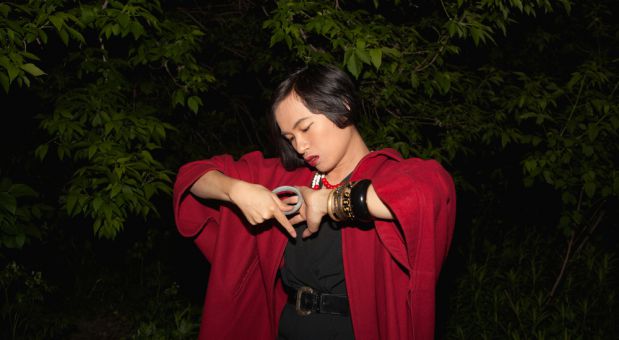
Kai Cheng Thom questions cancel culture with ‘I Hope We Choose Love’

Despite the biting cold of a resurgent Montreal winter, Librairie Drawn & Quarterly saw a packed house on Jan. 17. The crowd was eager to hear Kai Cheng Thom speak about her new collection of essays and poetry, I Hope We Choose Love: A Trans Girl’s Notes from the End of the World. Though Thom often referred to herself throughout the night, with a hint of ironic self-mockery, as “queer famous,” the McGill alumna has been a prominent voice in recent literary discourse on transgender issues and the notion of a queer community. 

With her book, Thom explores the hostility, both from outside and within marginalized communities, that pervades our lives under the lens of cancel culture and our growing uncertainty about communal integrity. Thom described I Hope We Choose Love not as a prescriptive, technical manifesto on repressing reactionary hostility, but rather as a text that validates the possibility of transformative justice within a community. 

As an alternative to punitive justice, whose emphasis on punishing transgressions Thom believes undermines cancel culture, transformative justice favours open communication and forgiveness between a perpetrator and their victim. During the talk, Thom suggested that this form of peacemaking is often absent in marginalized communities because survival and self-preservation instincts are often inextricable from its members’ identities, which can impede empathy for others.

“In times of crisis we turn on each other. The trauma brain is well developed in many of us,” Thom said. “Our executive functioning shuts down [….] But the desire to be safe is probably what brings a lot of us into activism.”

Later in the talk, Thom read from an essay that discussed the utopian ideal—dubbed “Queerlandia”—that many queer communities seek to obtain. Thom lamented that the search for a space free of persecution or hatred creates an unreachable and unforgiving mentality that punishes even the most minor transgressions. Our collective disavowal of these forms of accountability and justice distract from the inclusive and compassionate world that many marginalized people want to live in.  

“In Queerlandia our politics are woke and our words are revolutionary. Queerlandia is a village, is the village in its ideal form. But of course we do not really live in Queerlandia,” Thom read from her essay. “Real life queer communities are full of wounded dreamers [….] And because we are so wounded, we are not prepared for the reality of bad things happening among us. How to talk about it, how to hold it, how to heal from it. We do not know how to have difficult conversations, how to look at each other through the lenses of love and justice at the same time. You either belong in Queerlandia or you don’t, there is no in between.”

Though much of her collection deals with pressing subject matter, Thom also made sure to include anecdotes of personal victories and happiness. In one essay about a trip to New York, she recounted a night in Times Square in which she and her friend photobombed a couple’s marriage proposal on The Red Steps. Though its content appears trivial in contrast to the collection as a whole, Thom used the story to illustrate the potential in marginalized communities for solidarity and kinship, even if shared between just two people, which larger and often idealized communities currently fail to provide.

“[We] held each other in those glowing stairs to heaven in the centre of the world and we held each other for dear, dear life,” Thom read.

Student Life

Keeping your cool in the cold

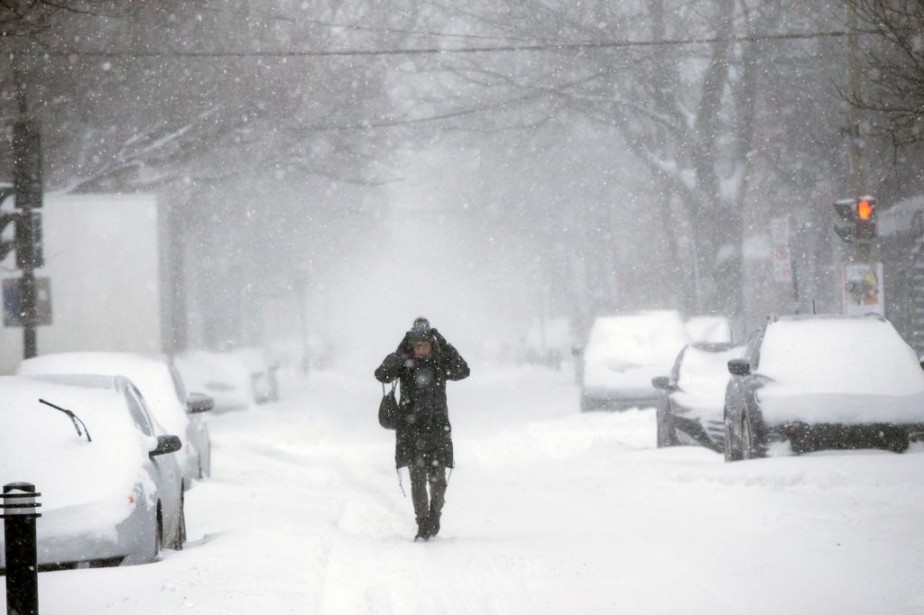
The winter is brutal: It gets dark too early and the freezing temperatures make going anywhere a miserable experience. The cold environment can make it hard to find joy this season, but here are some winter rituals that might help. 

Be proactive

During the wintertime, the stronger desire to stay home can result in less social interaction. But friendships are essential to our mental health and general well-being. Try to push yourself to connect with others on a regular basis; invite your friends over for various gatherings like a dinner party or a study session. Alternatively, McGill offers plenty of volunteer opportunities such as Homework Zone or the Montreal Heart of the City Piano Program. These are great ways to simultaneously meet new people and give back to the community. 

Move it! 

When the temperatures drop, it is easy to avoid all forms of physical activity. However, keeping up with an exercise routine during the winter can provide numerous benefits for your health and can help boost your mood by increasing your levels of endorphins. The American Heart Association recommends at least 150 minutes per week of moderate-to-vigorous activity for optimal overall health. Stay accountable with a membership to the McGill Athletic Centre or take advantage of the indoor track and swimming pool. If the frigid walk to the gym already feels like a marathon, develop a regimen that you can keep up with at home. 

Clean up your diet 

Committing to a healthy and regular diet can make a difference in how you feel during the winter. A diet of warm comfort food and buckets of hot chocolate can lead to headaches, increased blood pressure, and bloating. For Vincent Kwong, U2 Agricultural and Environmental Sciences, meal prepping and buying in-season fruits and vegetables is how he maintains a healthy and sustainable diet. 

 “I love baking sweet potatoes and making warm soups using winter squashes,” Kwong said. “It tastes really good and is actually one of the reasons I look forward to the wintertime. It’s also a good way to meal prep, since you already make a lot. You’d also be less tempted to go out [to eat].” 

Lighten up

If the lack of sunlight gets you down, then drop by the McGill Office of Religious and Spiritual Life, at the corner of University and Milton, or the SSMU Office, located in the Brown Building, to use their light lamps for free. These light lamps, which are offered first come, first serve, mimic sunshine and can help suppress your body’s release of melatonin, a chemical that makes you drowsy. McGill’s guidelines recommend using the lamp for 1 hour at 16 inches away from you, or 30 minutes at 12 inches everyday, optimally first thing in the morning. Using light lamps can make a difference within just a few days, so take advantage of them and go light up your life. 

Take care of your skin 

The water in your skin evaporates more quickly in the winter, which results in a dry and tight feeling  in your skin. Investing in a humidifier can add moisture to the air and keep your skin hydrated. You can also try out different lotions and cleansers to see which works best for your skin. Another important skin care tip is to stay hydrated.

While these lifestyle changes may boost your mood, these tips don’t substitute proper solutions to mood disorders, such as Seasonal Affective Disorder. If you’re experiencing any of these issues, consider consulting a professional. 

McGill, News

Talk explores the intersection of video games and education

McGill’s Rare & Special Collections, Osler, Art, and Archives (ROAAr) hosted “The Ludic Generation: Harnessing the Potential of Interactive Learning in Higher Ed” on Jan. 16 to generate discussions among educators about how to embrace the growing presence of technology in the world. The panel featured York University PhD candidate Paul Darvasi, who is a founding member of the Play Lab at the University of Toronto, and Shawn Young, co-founder and CEO of ClassCraft.

Darvasi’s presentation focussed on the impact of technology on Generation Z—people born between 1996 and 2011—and highlighted this generation’s frequent interactions with technology, which include social media, video games, and the internet. In particular, he referred to the phenomenon of ‘informal learning,’ which he believes to be beneficial to Generation Z.

“Kids are learning from YouTube videos, they are learning from Wikipedia, [and] they are quite curious,” Darvasi said.“As educators, we have to start thinking, ‘how do we encompass these informal learning spaces,’ because they are very powerful, very influential, and very effective.” 

He noted that members of Generation Z are accustomed to the accessibility of technology, a phenomenon which he hopes educators can learn from. 

“One thing that video games do very well is that they adjust to the player,” Darvasi said. “When [Generation Z] goes out to a learning environment, they are a little shocked by the lack of personalization [….] Now, with digital media and computers, we can personalize learning experiences.”

Young presented ClassCraft, an application that elementary school teachers around the world have started to implement into their daily class activities.  Mimicking a video game, ClassCraft enables students to design characters, form teams, and compete for points at school. The points can be used to earn assignment deadline extensions and other academic rewards.

“Games are a string of systems that are really good at driving intrinsic motivation,” Young said. “The classroom is the game. We’ve managed to take the culture and mechanisms of games and bring that to […] real life.”    

Young pointed out how ClassCraft can accelerate learning and enhance an education environment, despite the common conception that video games only have negative impacts on youth. 

“[ClassCraft] is a non-competitive game,” Young said. “You can’t win on your own, there’s no leaderboard, there are no ways you can harm other players. It’s a collaborative experience.”

During the question period, members of the audience asked Young and Darvasi about their thoughts regarding the role of libraries amid the takeover of technology in schools. The two presenters provided similar suggestions based upon integrating games into the library space. 

“[The library] is a space to create face-to-face opportunities within a culture that is increasingly making interaction more difficult,” Darvasi said. “[Libraries should be] a space [that] is both celebrating digital culture and face-to-face interactive culture”. 

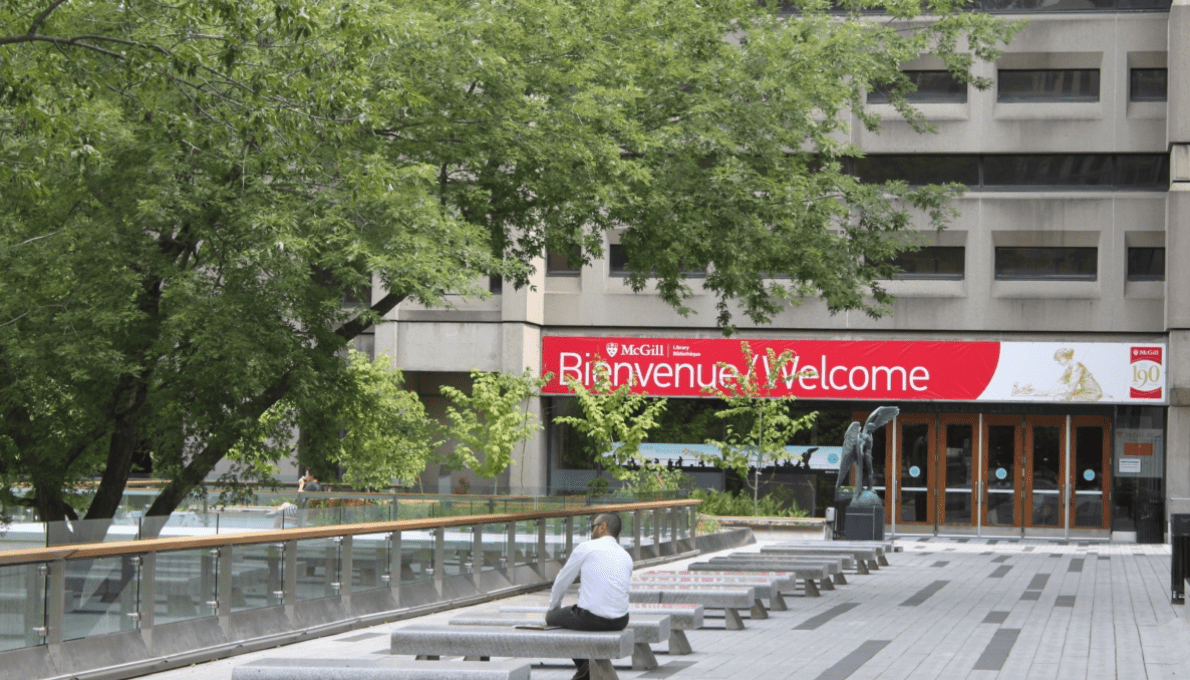
Trenholme Dean of Libraries Colleen Cook concluded the event by emphasizing the library’s innovative outlook on the impact of digital culture.

“We, as a library, […] have a foot in every corner of this university,” Cook said. “We need to make sure that when [students] are here, they are productive.”

McGill, News

Hundreds protest against Bill 21 at the Ministry of Immigration

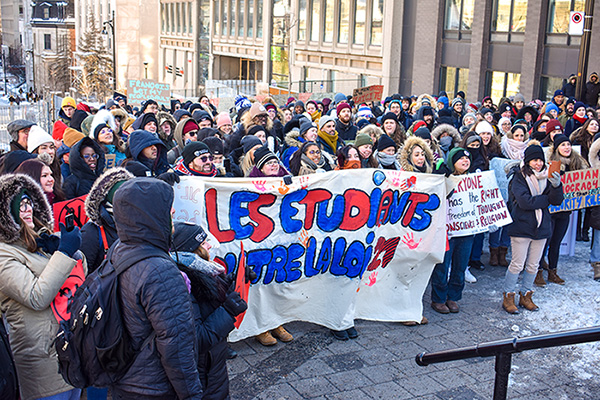
Despite the extreme cold on Jan. 17, hundreds marched from McTavish Street to the Ministry of Immigration in protest of Bill 21—a law passed by the Quebec government, prohibiting public servants from wearing religious symbols at work. Organized by student unions, including the Students’ Society of McGill University (SSMU) External Affairs, the Education Undergraduate Society (EdUS), and Université du Québec à Montréal’s l’Association des étudiantes et étudiants de la faculté des sciences de l’éducation and l’Association facultaire étudiante de science politique et droit, the protest demanded a full repeal of Bill 21, and for McGill and other universities to take a more hardline stance against the legislation. 

Hanadi Saad, co-founder of Justice Femme, explained how hate crimes have increased since the passage of Bill 21 in June 2019. Adam Gwiazda-Amsel, SSMU Vice-President (VP) External, discussed the bill’s repercussions on campus and the purpose of the protest.  

“[The protest] is not just about the abolition of the bill, but [also] to get the university to come out much more strongly against it,” Gwiazda-Amsel said. “Even students who don’t wear visible religious symbols are racialized, [and they’re] being told that they’re not welcome in Quebec.”

The protest was part of a two-day strike by undergraduate students in the Faculty of Education on Jan. 17 and 20. Zeina Jhaish, U2 Education, believes that Bill 21 is contradictory to the field of education as a whole. 

“I think that Bill 21 completely undermines our profession, and does not correlate with the core values of education,” Jhaish said. “Education is about empathy, care, acceptance, and inclusivity but Bill 21 does not believe in that I think that the rest of McGill should really look at the values that [the Faculty of Education] is trying to uphold, because I feel like we should become stronger as a university against these issues.” 

Janah Hajjsleiman, a protestor and a CEGEP student, expressed the importance of her religion and faith in spite of discrimination. 

“The hijab is not a game. I respect it and it’s a part of my religion, and if I respect my religion, I respect my hijab, so why would I want to risk [my faith] for your comfort?” Hajjsleiman said. “At the end of the day, [there are] different people in the world, [and] if you really want to be scared of each person [who is] different from you, how [will we] progress?” 

The protest exists alongside other forms of campus activism, including McGill Against Bill 21—a group reserved for students to mobilize, share articles, and provide support for one another. McGill Against Bill 21 falls under the External Affairs portfolio, spearheaded by Gwiazda-Amsel. 

“The idea [behind the group] is to have a centralized planning hub, both for actions against Bill 21, but also to make sure that students feel supported,” Gwiazda-Amsel said. “[…] A lot of students feel alone right now, so it’s important for them to know that [we] support them. We’re also educating other people about the bill.”  

Similarly to EdUS, the Arts Undergraduate Society tried to pass a motion to strike in a Jan. 17 General Assembly that failed to reach quorum. Gwiazda-Amsel explains that the most important thing for students to take away from the protest is to get involved with faculty associations.

“The faculties are the ones who are closest to students,” Gwiazda-Amsel said. “SSMU does not really have the position to mobilize students from the ground, [however], what we can do is support faculties that do go on strikes […] Faculty associations have the power to get together and organize their own students, and [SSMU] will help anyway we can.”

Arts & Entertainment, Music

In conversation with NOBRO

From the first riff of their electric guitar, Montreal punk rock group NOBRO will have listeners feeling ready to dye their hair Manic Panic pink and stomp angrily down the street in a pair of Doc Martens. With uniquely powerful drums and the unexpected inclusion of bongos, NOBRO is pursuing their dream of becoming the most kick-ass all-female band of all time. 

Founded in 2014, NOBRO’s current members, vocalist and bassist Kathryn McCaughey, guitarist Karolane Carbonneau, drummer Sarah Dion, and percussionist Lisandre Bourdages have been successful in establishing a name for themselves in the Canadian punk rock scene, a feat made all the more impressive considering the male monopoly on the genre. The name NOBRO was born from the band’s commitment to maintain their female identity and provide a space for women to shred. 

“When we first started looking for female guitar players, there were a bunch of dudes that were like, ‘Oh, I’ll play guitar in your band or whatever’ and it was like, ‘No, bro,’” McCaughey said. “It was a joke, [and] now it’s our name.”

With the upcoming release of their EP Sick Hustle in April and the start of another Canadian tour this week, it is a busy time for NOBRO. The band has previously played with groups such as FIDLAR and Toronto rock band PUP. This time, NOBRO will be joined during their first arena tour by the Distillers and feminist punk group Pussy Riot, who rose to fame for their activism against the Russian government. 

For Pussy Riot, NOBRO, and other all-female punk bands like McGill’s Nervous Nancy, finding space in the music industry presents unique difficulties, but the experience can also be incredibly rewarding.

“[Being an all-girl band], it’s awesome, it’s really fun, and it’s also very challenging. When we’re able to [succeed], it’s like a huge accomplishment for us, [even] just finding female musicians that want to shred,” McCaughey said. “I’m sure in the next 10 years it’s gonna be a lot different [….] There’s such a big push for all kinds of people to pick up all kinds of instruments and play. But for us, it’s really important to maintain our all-female status because we like to challenge ourselves.”

On Jan. 17, the group announced their signing with Canadian independent record label, Dine Alone Records, and proceeded to drop the first single off of Sick Hustle, “Marianna.” Through the raucous guitar, fire bongo solos, and McCaughey’s powerful vocals, the song delivers a more personal insight into the band. 

“This EP is a little more personal than anything we’ve put out before. It dives into some mistakes,” McCaughey said. “‘Marianna’ is about the first guitar player in the band [.…] Right before we went to go play Way Home, she told us that she didn’t really want to play music anymore [….] She moved away and it was really hard for us so we kind of just wrote a song for her.” 

With so much happening for the band, NOBRO is on its way to carving out a new place for women in the Canadian punk scene. However, their main focus remains on creating new and exciting music over the coming years. 

“I just hope that we can keep writing the best music that we can [.…] it’s always about the songs and the music,” McCaughey said. “[Also], I don’t want to be a bartender for the rest of my life and I don’t have a plan B. I have a philosophy degree so this is it.”

NOBRO will perform at Le Ministère on Jan. 30 with UUBBUURRUU.

McGill, News

McGill students discuss animal protection in Canadian legislation

Content warning: Mentions of animal abuse

 The Herbivore Society for Peace and Justice and Animal Justice McGill hosted, “A Talk on Animal Protection in the Canadian Legal System” on Jan. 17 to discuss whether the law in Canada and Quebec adequately protects animals. The guest speaker was Alanna Devine, former Director of Animal Advocacy at the Montreal Society for the Prevention of Cruelty to Animals (SPCA) and current Policy Advisor to the Mayor Valerie Plante and the Executive Committee at the City of Montreal.

Devine, who worked at the SPCA for a total of 10 years, has a Bachelor of Civil Law from McGill, which she uses to advocate for increased animal protection legislation at the municipal, provincial, and federal level. She has taught courses at the Faculty of Law.

Devine explained that the majority of animal protection legislation in Canada is criminal or penal in nature, meaning that it is enforced by either the federal or the provincial government. In some cases, the power of enforcement can be given to entities such as the Montreal SPCA. Devine focussed on the Canadian Criminal Code and the Quebec Animal Welfare and Safety Act.

 “There are definitely problems with [the] provisions in the Criminal Code,” Devine said. “Essentially the […] requirements in both of these provisions are what we call mens rea,  [which means you] have to prove that a person intentionally neglected or failed to provide suitable and adequate food, water, shelter [or] care for their animal, or willfully permitted or caused unnecessary pain, suffering [or] injury.”

Devine was heavily involved in the recent expansion of the Animal Welfare and Safety Act, a Quebec provincial law. Its provisions can be more helpful than the Criminal Code in some cases.

“[The Animal Welfare and Safety Act] is very different from the Criminal Code and has positive degrees of care,” Devine said. “[That means that, while] the Criminal Code says ‘You can’t do this,’ this legislation says ‘You have to do this.”

Devine gave examples of when the law is sufficient and insufficient in protecting animals. To exemplify the shortcomings of the law, Devine described the case of the Rodier fur farm in 2014 that sparked public outcry: After an anonymous complaint, the SPCA inspected Rodier’s farm and found about 90 foxes, 10,000 minks, and two dogs that were living in inhumane conditions. The animals were sick, dehydrated, and living in filthy cages, leading some to be euthanized. Nonetheless, Rodier’s sentence was minimal.

Devine referenced an image of an emaciated fox that could not stand: Under stress and deprivation the fox had chewed its paw to the bone.

“I’ve seen a lot of things in my life, working at the SPCA and doing animal advocacy work,” Devine said. “This fox and this photo will haunt me for the rest of my life.”

Overall, Devine believes that there is still a long way to go for Canadian legislation on animals.

“[In] conclusion, does the law protect animals?” Devine said. “I would argue, not really. The majority of animals are not protected by the law, unless you are a dog or a cat […] or maybe a horse.”

After the discussion, Anita Sengupta, 1L Law, spoke with The McGill Tribune about points that she found interesting.

“A lot of the provisions in the articles we talked about, they require very specific actions on the part of the owner,” Sengupta said. “If the owner wasn’t found to be intentionally harming the animal, then potentially there’d be no case against [them].”

Abby Couture, U3 Arts and Science student and events organizer at the Herbivore Society, was inspired by Devine’s presentation.

“It was really interesting and eye opening for me to see how language plays a really big role in deciding to what extent is something unlawful or unethical,” Couture said. “On an individual level, I am now more motivated to want to volunteer with the SPCA or donate to the SPCA because you can understand how these resources are going to be [tangibly utilized].”

Arts & Entertainment, Film and TV

The most atrocious Oscar snubs of 2020

It’s that time of year again: Awards season. Love it or hate it, it is impossible to ignore the discourse surrounding which movies (dare we say, films) are worthy of claiming hardware. The McGill Tribune is here to add to that discourse, presenting movies that we believe have been wrongfully left off of the ballots. 

The Lighthouse for Best Screenplay 

Given the controversies that inevitably arise throughout the season, it is tempting to renounce the Oscars altogether. After last year’s egregiousness, The Tribune came close to ignoring all awards shows. That is, until The Lighthouse got snubbed. Indie-darling studio A24 does not have the money to lobby for all their great films, resulting in a single nomination this year for cinematography. Their contribution is The Lighthouse, the best film of the year and a movie more deserving of the Best Screenplay Oscar than any of the other nominees. Alas, the Academy does not know what a good screenplay is until you cook them a big juicy lobster first. 

Men in Black: International for Best International Feature Film

The criteria for the international feature film category require that the film be produced outside of the US and that at least half the dialogue be in a language other than English. While The Academy of Motion Picture Arts and Sciences may not believe that Men in Black: International meets these criteria, Chris Hemsworth’s confusing fake British accent should be counted as non-English dialogue. Furthermore, the majority of scenes were filmed in England, Morocco, and Italy, adding to the international filmmaking that the Academy aims to highlight in this category. 

Midsommar for Best Costume Design 

One of the most deserving costume designers of the year is Andrea Flesch for her work on the beautifully horrific Midsommar. In the movie, a small Swedish village celebrates the summer solstice, wearing white dresses and tunics with intricate, unique embroidery. The attention to detail on display in these handmade garments is especially impressive considering the number of extras in the movie, but the most iconic outfit comes at the end: Florence Pugh’s May Queen robe and headdress, in which Pugh is covered from head-to-toe in flowers. Midsommar’s outfits are instantly iconic and memorable, inspiring Halloween costumes for years to come.

The Farewell for Best Picture

It is truly a shame that Lulu Wang’s poignant family drama, The Farewell, was left out of the Best Picture race. Sure, East Asian people can rep Parasite as some meagre representation in the ballot, but that’s no excuse to ignore Wang’s triumphant film. It is bonkers that 1917, which is essentially a B-version of Dunkirk, can get a nomination, but The Farewell cannot. It seems like the Academy is more comfortable with retreading the familiar ground of war propaganda, rather than considering new, vibrant stories. 

Julia Fox in Uncut Gems for Best Supporting Actress

Preceding the Oscars’ nominations announcement, A24 launched an unsuccessful lobbying campaign for Adam Sandler, the star of their thriller Uncut Gems. Sandler’s portrayal of Howard Ratner was worthy of consideration, but the Oscars’ greatest snub was Julia Fox, who plays Howard’s mistress, Julia. Showcasing a masterful range in her first acting role, Fox is responsible for Uncut Gems’ funniest moments while subverting the expectations often given to mistress roles. She becomes the film’s singular redeeming character and the only person Howard can trust. Unfortunately, like Howard, A24’s social media team did not recognize Fox’s standout performance until it was too late.

McGill, News

ILADA hosts talk on effects of climate change on Indigenous refugees

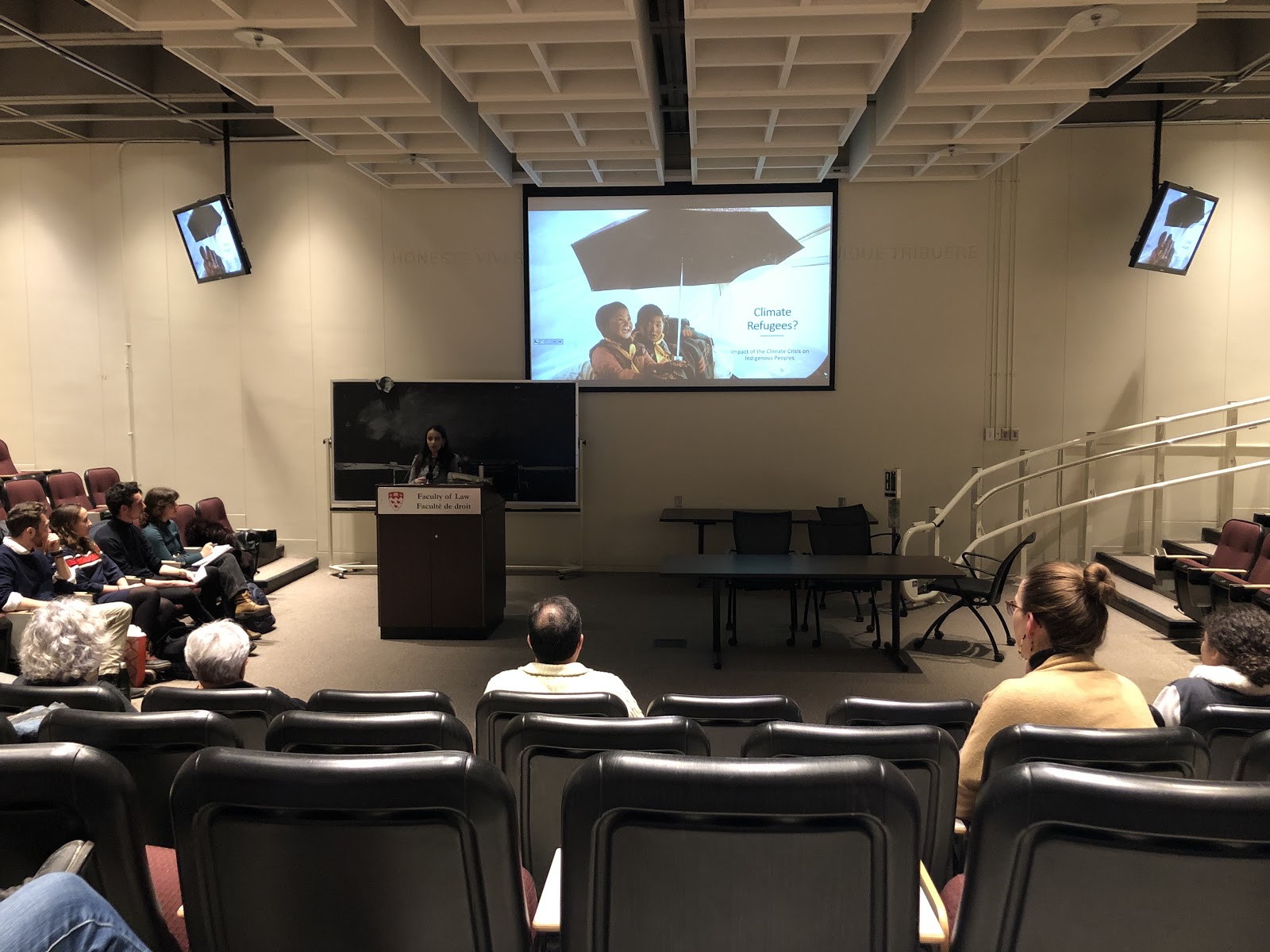
The Indigenous Law Association de Droit Autochtone (ILADA) hosted a forum to examine how climate change affects Indigenous refugees in a legal context. On Jan. 15, keynote speaker Me Karina Kesserwan presented the talk to law students and other members of the McGill community.  

ILADA is a student group that organizes events to promote an understanding of the legal obstacles faced by global Indigenous communities. Kesserwan, an expert on international Indigenous issues, is a co-founder of Kesserwan Arteau, a firm that focuses on Aborignal law.

Kesserwan argued that the relocation of displaced people diminishes the importance of their knowledge.  

“Displaced people are often seen as standing in the way of development: We need to move them, because we need to progress,” Kesserwan said. “In the process of their removal, we deny the authority of their experiences on the land.” 

Kesserwan proceeded to discuss the current conflict between the contemporary legal definition of a refugee under the 1951 Geneva Convention on Refugees and the existence of ‘climate refugees.’ Despite the subjectivity of the Geneva Convention’s definition—an approach that is uncommon to legal frameworks—it excludes people who are fleeing due to environmental phenomena. 

“The definition of a refugee incorporates a well-founded fear,” Kesserwan said. “Laws do not often involve subjective feelings, since they are built on objective reason. [However], the definition, does not apply to ‘climate refugees.’ [One] cannot claim refugee status if their state has been destroyed or homeland is uninhabitable.” 

In her presentation of the impacts of climate change, Kesserwan explained that the crisis’ effects add to the burden of vulnerable nations. 

“The states disappearing because of climate change are not the states [that] are responsible for it,” Kesserwan said. “Very often, they are the states that do not have the means to protect themselves. We see that individuals lose their connection to culture and community, but we also see that entire nations lose their nationalities.” 

Kesserwan also emphasized the need to involve the voices of Indigenous communities in conversations and legislation surrounding climate change.  

“Indigenous people have the knowledge of how to work the land, so they have solutions for adapting to climate change, but are they being asked to contribute?” Kesserwan said. “For many years, we have not considered Indigenous knowledge to be knowledge.”

For Natalie Lloyd,  U1 Arts & Science, the speaker’s emphasis on the loss of symbols and stories, rather than just land, presents the climate crisis from a different perspective. 

“The loss of the right to self-determination often accompanies the loss of less tangible, yet equally significant, aspects of Indigenous culture, a thought that Kesserwan brought my attention to,” Lloyd said. 

Alisha Atri, U3 Education, believes that non-Indigenous individuals are responsible for educating themselves about Indigenous issues.

“Unfortunately, our legal system and laws were created by colonizers and systematically allows the oppression of Indigenous communities to continue,” Atri said. “Non-Indigenous people have benefited from colonization and the oppression of Indigenous communities, past and present, so I think we have a responsibility to learn about these lasting effects and actively resist current forms of [injustice].” 

Atri questioned the prospects of reconciliation with Indigenous peoples in the absence of institutional support. 

“How do we, as settlers, reconcile with communities who’ve been forced to resettle, assimilate, and face the primary effects of climate change without any support from governments that are responsible for the climate crisis?” Atri said.

Student Life

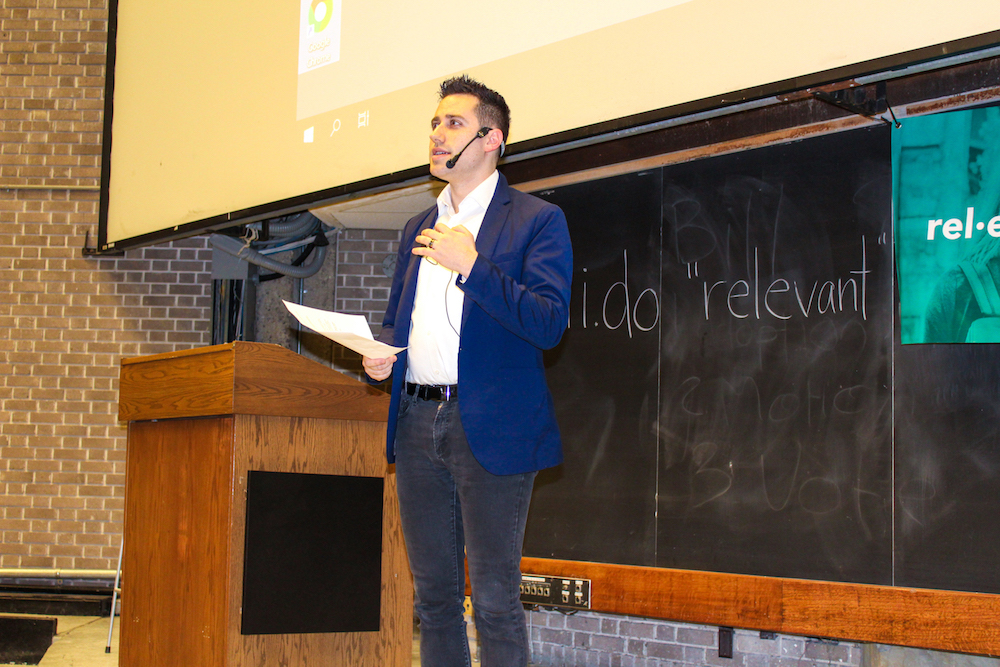
Relevant McGill hosts forum on the potential consequences of porn

Content warning: Explicit mentions of sexual exploitation, sexual violence. 

Pornography has never been as easily accessible as it is today. On Jan. 17, Relevant McGill, a week-long series of talks about faith, science, and culture organized by multiple Christian groups on campus, including Power to Change and the McGill Christian Fellowship (MCF) hosted a panel discussion titled “Is Porn Really Harmless?” The event featured three speakers who discussed the ethics of pornography in the context of rape culture, sex trafficking, and faith. 

Speaker Maylissa Luby, an intervention counselor for La Sortie (The Way Out) and a survivor of sexual exploitation, explained that exposure to pornography at a young age drew her into the sex industry. 

“My mom travelled a lot in her work, so I ended up living with her sugar daddy,” Luby said. “I was all alone. I was a 12-year-old. One day, I walked into the bedroom, and I stepped on the remote, and porn came on [….] I just became consumed with pornography. It really taught me how to be a sex object for men [….] Someone asked me tonight, ‘Is porn really harmless?’ For me, porn open[s] the door to the sex industry.”

Reverend Daniel Gilman, former Director for Human Rights Projects in the Canadian Parliament, claimed that pornography is intimately linked to human trafficking.

“[In my time working at Parliament], what we began to discover is that the same people who are making the porn that you are comfortable with are making porn you’re not comfortable with,” Gilman said. “[They are the same] people who are trafficking women and girls on the streets.”

According to Gilman, watching pornography can skew one’s perception of sex and make one more complacent toward harmful behaviours toward women.

“An article titled ‘Pornography and Violence’ found that those who consume porn […] are much more likely to support statements that promote the use of sexual aggression towards women and girls,” Gilman said. “I’ve sat down with pedophiles, sat down with people who have committed sexual violence against women […] and their path into descending into doing those types of actions came from watching porn.”

During the Q&A session, one audience member asked the panelists for their opinion about sexually explicit content in films and television. Panelist Louis Phillips, an Oxford Centre for Christian Apologetic (OCCA) fellow, stated that he had previously struggled with a pornography addiction and explained that after recovering, he now refuses to watch sex scenes in media.

Another audience member asked about sex workers who entered the industry of their own volition. Reverend Gilman responded by arguing that suicide statistics in the pornography industry are high for a reason and that it is impossible to know whether pornographic content posted on the internet depicts a consensual situation. 

“If you’re like, ‘well, not all of it is [exploitative], so I’m just going to take my chances and keep watching porn,’ you need to stop,” Gilman said.

Cassie Powell, a U2 Arts & Science student involved in Power to Change, explained that she is grateful for the chance to discuss taboo subjects such as pornography.

“I come from the Bible Belt,” Powell said. “[In] the churches down there, it’s a very touchy topic that no one wants to talk about. I’m glad that we live in a society where we can talk about [porn].” 

Read the latest issue

Read the latest issue