

Latest News

The Rossy student wellness hub.
McGill, News

Students protest Wellness Hub’s scheduled open house

Content warning: Mentions of suicidal thoughts.

Approximately 20 McGill students protested outside of the Brown Student Services Building for accessible healthcare on Nov. 12, the day of a planned open house of the Student Wellness Hub. The open house was postponed the day before due to weather.

The demonstration, organized by the Students’ Society of McGill University (SSMU) University Affairs and the Association of Graduate Students Employed at McGill (AGSEM), highlighted barriers that students face while seeking healthcare at the Student Wellness Hub.

SSMU Vice-President (VP) University Affairs Madeline Wilson delivered a speech demanding shorter wait times for services, more affordable student health plans, and a better complaint system for students. 

“The [current] international student health plan is the most expensive […] plan in all of Canada, and that’s not okay,” Wilson said. “One of the results of transferring long term counselling care out of the Hub means [that] students have to pay upfront [to third party care providers].”

AGSEM member Melissa Marquette condemned the rollback of McGill’s Eating Disorder Program, which was abruptly canceled two years ago, and the absence of long-term counselling services.

“We want to actively ensure that the Brown Building is always physically accessible,” Marquette said. “We want long-term clinical mental health care. Student-run peer support is a Band-Aid. It is not healthcare. We want to bring back the Eating Disorder Program, which was shut down with no warning.”

McGill launched the Student Wellness Hub this year after a $14 million combined investment from McGill and the Rossy Foundation, which aimed to improve health services to students by adding Local Wellness Advisors and merging Psychiatric and Counselling Services to the clinic. 

AGSEM Mobilization Officer Rine Vieth claimed that the administration did not deliver that vision, condemning the lack of investment into student well-being at the institutional level.

“It’s a big shiny façade that has a lot of cracks,” Vieth said. “[Administrators] here seem more into their own careers than […] supporting students or building a community together. [It’s] infuriating.”

Former SSMU Mental Health Commissioner Bee Khaleeli shared the upsetting treatment that they experienced from a doctor at McGill. 

“My clinician here at McGill didn’t inform me of [the] diagnoses [I received when I was hospitalized],” Khaleeli said. “He put me on medication that made me flip between mania and immobilizing depression. I told him early on that it wasn’t working, and he raised my dose […] I told him that I was suicidal and I still have the notes from the appointment [….] He [wrote] that I [was] giggly.”

SSMU Community Affairs Commissioner Claire Grenier said that the Hub rarely seemed to coordinate its services well.

“They call it the ‘one-stop shop,’” Grenier said. “Yet no one is working together. It is so disconnected. I [access] three different parts of the supposed Wellness Hub. None of them are talking to each other, and I’m responsible for playing catch up between all of them to make services and my life easier.”

Graduate student Lindsey Franks claimed that her appointment for Tuesday was canceled for the Open House, despite the postponement.

I asked why since the event got moved, and I was told that the Hub was still closed to appointments regardless,” Franks wrote in an email to The McGill Tribune.

At the protest, Franks shared her frustration in trying to access services at the Hub.

“[It’s] been the number one biggest cause of stress for me this semester,” Franks said. “I’m also American, and I know everyone shits on the American healthcare and insurance system […] I got better healthcare in the US than I’m getting here. And that’s saying something.”


Out on the Town, Student Life

Serving sushi with love

With the holidays just around the corner, many students will start to miss the comfort of coming home to a nice family meal. Maggie Yu and chef Kiki Ju, the owners of Parc Sushi, are dedicated to recreating this atmosphere by providing high quality sushi in an intimate setting.

“[Ju] worked for different sushi restaurants, [like] K2 and Sushi Palace, [that] are all-you-can-eat,” Yu said. “Personally, I don’t like [that] because it’s not like 30 years ago where we have to eat a lot, now we need healthy food. [It should be] about the quality. We make our sushi with love.” 

Yu and Ju are focused on quality. Their menu is limited, with a precise selection of fresh and tasty rolls and nigiri, making their sushi an affordable and well-made choice.

Perhaps the most intriguing aspect of Parc Sushi is that the couple runs the operation out of their old apartment, a choice that was influenced by their desire to foster a sense of community among customers. 

“Last year, we moved to a new home, and this place became vacant, and we wanted to do something for the neighbourhood so we decided to open a sushi takeout,” Yu said.

The couple’s decision to operate out of their old house is also influenced by their desire to replicate the hospitality of Yu’s mother.

“Whenever I had friends [over as a child], my mom [was] very generous,” Yu said. “She would cook the food, and we would enjoy [it] and laugh [….] This [atmosphere] is something I want to share [through] my business.”

Customers will definitely feel as though they are eating at home, waiting in the owners’ former living room as Ju prepares fresh sushi. Yu and Ju create a friendly environment, taking the time to chat with and get to know their customers.

“All of my customers become friends, [so] I am really touched,” Yu said. “It’s not just about the business, it’s not just the money. We really don’t charge a lot for the food we are making. It’s just a simple idea to share food with our neighbourhood and friends.” 

Parc Sushi opened for business in May 2019. Though still new, its reputation is growing, and Yu has several ideas for the future of the takeout store, including additional seating. 

“Because now it is a takeout, people cannot really enjoy their food here,” Yu said. “Next year, I want to put some tables and chairs, so people can sit and enjoy the sushi here.”

In the future, Yu also hopes to form stronger links with people within her community. 

“I want them to feel at home, […] have some sushi and talk to me [or] have a cup of tea and warm up,” Yu said.

Because they are in charge of their own hours, the couple can also spend more time with their daughter. 

“My daughter [used to] sometimes ask me, ‘What is Baba doing?’ Before, he worked everyday, especially during weekends,” Yu said.

Parc Sushi is a unique, affordable sushi spot worth visiting, mixing intimate service with professional dishes. 

News, The Tribune Explains

Tribune Explains: The Indigenous Student Equity Fund and Fee

The Fall 2019 Students’ Society of McGill University (SSMU) Referendum included a proposal written by the Indigenous Affairs Commissioner Tomas Jirousek to create a new Indigenous Equity Fund and Fee (IEFF). With a voter turnout of 17.3 per cent, the motion passed with 72 percent of students voting in favour. With the successful passing of the non–opt–outable $1.00 fee, The McGill Tribune spoke with Indigenous student leaders to explain the purpose and future of the new funds.

What inspired the IEFF?

Currently, many Indigenous organizations are registered as SSMU clubs, meaning that they have to submit a motion to the SSMU Funding Committee if they need money. Jirousek, who spearheaded the #ChangeTheName campaign, described how inconsistent funding hindered the initiative last year.

“Without a stable base of funding for the campaign, I was forced to make alternative arrangements [that] fell outside of my portfolio and the original campaign road-map,” Jirousek said. “I had originally wanted to bring in scholars to speak to the topic, but my inability to rely on steady funding from SSMU forced me to delay the launch of the campaign until I could secure outside funding and support, which eventually came from the Indigenous Studies program.”

What will the fund be used for?

The new fee funds Indigenous student groups and initiatives on campus, providing then with financial autonomy from SSMU, as well as an opportunity to hire more personnel dedicated towards support activism efforts. During the #ChangeTheName campaign, a significant amount of work fell on a few student volunteers. According to Catie Galbraith, co-chair of Indigenous Student Alliance, a stable fund that carries over unused capital every semester allows for more dedicated positions. This includes a position investigating McGill’s progress on the Provost’s Taskforce on Indigenous Studies and Indigenous Education’s 52 calls to action for support and reconciliation from McGill’s administration on Indigenous issues.

“We will create a couple [of] new [paid] positions under the Indigenous Affairs portfolio,” Galbraith said. “There would be a campaign and events manager and then a researcher who would follow up on the 51 calls to action that the Provost made. Their job would be to keep McGill accountable to those [calls to action].”

Indigenous student groups outside the SSMU system could also apply for funding from the Indigenous Equity Fund. Joel Grant, President of McGill Students’ Chapter of American Indian Science and Engineering Society (ASIES), a club promoting Science, Technology, Engineering, and Mathematics (STEM) careers for Indigenous students, explains how this fund will support their operations.

“The Equity Fee would allow our Indigenous students to have access to a fund for Indigenous STEM initiatives,” Grant said. “It is important [that] McGill continues to have representation and involvement in the expansion of AISES within Canada [….] Our current approach to funding is [not feasible] and often involves us trying to raise our funds as a student group and generating some sponsorship from the university. The Equity Fund would be a long-term solution that would be reliable.”

What are the first steps for the new funds?

Jirousek stressed that the IEFF will be first used to make sure that vulnerable Indigenous students are provided with the resources and support they need.  

“The very first thing we will do is make sure that the most vulnerable Indigenous students are taken care of,” Jirousek said. “I’ve already began working with vice-president Finance Sam Haward to ensure that an Indigenous-controlled [funding] structure is up and running for the beginning of next semester, which will provide immediate support [for] at-risk Indigenous students.”

In the next year, SSMU Indigenous Affairs and other Indigenous student groups will use their expanded funding to take on new projects.

“I’ve begun the process of planning an academic conference for next semester,” Jirousek said. “This will provide a platform for academics and activists like our confirmed keynote speaker Professor Cindy Blackstock. This event is particularly exciting as we are planning to bring onto campus Indigenous vendors, Indigenous caterers, and an Indigenous art exhibition.”

Science & Technology

How robots are transforming the field of law

Artificial intelligence (AI) is one of the biggest innovations of the modern era, profoundly impacting many areas of society, and the field of law is no exception. During an event titled ‘Artificial Intelligence and the legal sector,’ hosted by the Faculty of Law on Nov. 13, Hannes Westermann, a PhD student in AI and Law at the Université de Montréal, presented his research on how AI can benefit the legal sector. He began the talk by providing a definition of AI.

“[In AI], machines […] exhibit signs of intelligence,” Westermann said. “This is a very broad definition, because lots of distinctions can be made between general AI and narrow AI.”

Narrow AI describes technology designed to perform a specific task. In the legal sector, this entails using machine learning (ML), whereby a computer learns a task without a human to guide it. Within the field of AI, ML offers a host of advantages, allowing machines to process and store data, spot patterns, and make linkages that humans cannot. Furthermore, ML does not require task-specific knowledge.

While ML can process large amounts of data, it cannot understand it the way humans do. This is especially true for text data, which is problematic for a field like law. Law is based on textual documents, legislation, and contracts, and requires analysis and understanding of legal forms. Lawyers and judges often use precedent to make judgements on new cases. However, because this analysis requires an understanding of the real world that it does not yet have, AI cannot do this. Thus, using annotated data—data sets used to train AIpresents many problems in the legal sector.

This does not mean that AI cannot be useful. ML can analyze documents, provide support for legal research, and build models to compare actors in the legal system.

At the moment, AI is just a tool that lawyers can use; it will not replace them in the foreseeable future.

“I do not think lawyers will become obsolete,” Westermann said. “I just think [that] there are parts of the world and places where people do not have access to lawyers, where they will have more legal opportunities with the introduction of AI.”

Westermann’s research focusses on the possibility of using AI to increase people’s access to legal aid. The legal system is complex, with many barriers to entry, including monetary, psychological, and temporal costs, all of which prevent people from seeking aid. In fact, while 50 per cent of Canadians encounter legal issues, only seven per cent use the court system. 

This is where the JusticeBOT, a project that Westermann is involved in, plays a role. The JustiveBOT is a chat box that can answer simple legal questions. In the case of a tenant who has bed bugs and is seeking compensation but does not know where to look, the JusticeBOT would ask a series of questions about the issue, and, based on the user’s responses, explain the legal situation’s outcomes in past cases, as well as next steps people can take moving forward. Westermann claims that the program, built with the support of legal experts, can be useful in increasing legal harmony and in reducing court caseloads.

This is just one example of how AI can play a pivotal role in the legal field. Yet, many audience members expressed fear that AI would take away jobs. Westermann calmly addressed these worries.

“Did the carpenter get replaced by the hammer?” Westermann said. “No, but the hammer changed the job for the carpenter.”

Student Life

Tribune Tastes: Le Central

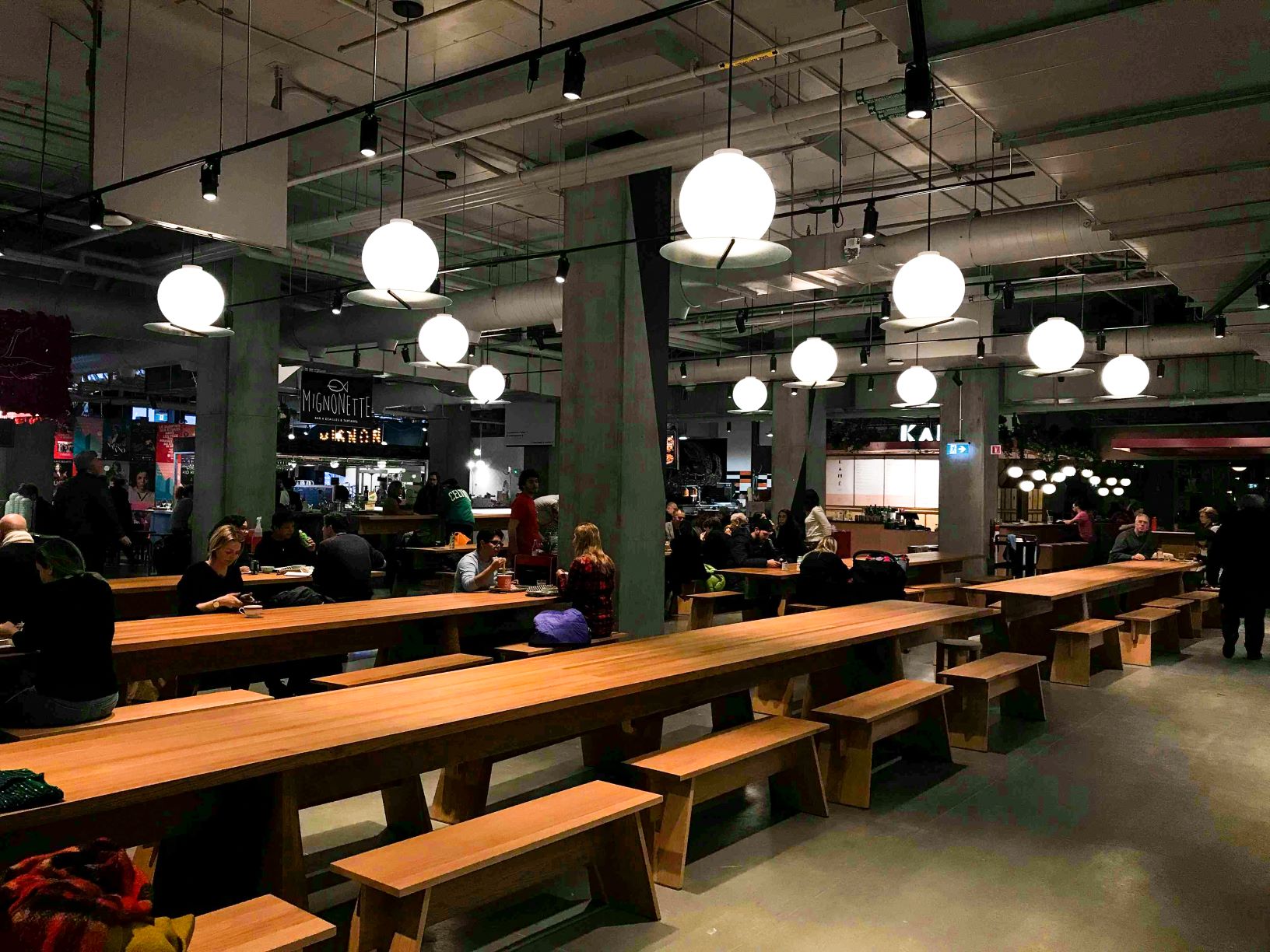
Montreal is in the midst of a food court revolution, with three new food spots slated to open downtown in the next year. The McGill Tribune’s Student Life team visited Le Central, the first and largest of the three, and highlighted some dishes to try from its wide range of restaurant options.

Le Tio Joaquim from Cantine Emilia

Cantine Emilia is a Portuguese grill offering a wide selection of Portuguese chicken, sandwiches, salads, and poutines. The outside is patterned with images of azulejo tiles, which are common in Portugal and Spain. Le Tio Joaquim came with two pieces of chicken covered in the restaurant’s famous sauce and a large portion of fries. The slightly spicy sauce was a delicious topping for the perfectly cooked chicken, making for a filling and reasonably priced meal. This Portugese chicken spot is certainly worth a return visit.

Vegan carnitas tacos from Bonita’s Taco & Deli

Bonita’s Taco & Deli is a Le Central–exclusive restaurant offering a modern take on traditional tacos, including meat, fish, and vegan options. Their delightful vegan carnitas tacos, which consist of king oyster and enoki mushrooms with black garlic on organic local tortillas, are fresh and savoury, although they don’t quite pass as actual carnitas. At $3.75 each, their tacos are the perfect size to pair with an assortment of agua frescas and deli options.

Margherita Con Stracciata pizza from Morso Pizzeria & Alimentari

The diverse range of toppings at this Roman market-style pizza stand, which includes pancetta coppata, prosciutto and mushroom, smoked salmon, zucchini, and potato, makes for a striking range of options. The Margherita Con Stracciata is a classic, with tomato sauce, grana padano cheese, extra virgin olive oil, and basil. In addition to their pizzas, Morso offers a selection of artisanal sodas, wine, tapenade, and packaged charcuterie meats. To complete the Italian culinary experience, order a chocolate mousse or tiramisu, served in a sleek reusable jar, for dessert.

Kailua poké bowl from Kamé Snack-Bar

The outpost of popular Hawaiian snack bar Kaméhama is sleek, pleasantly pink, and features a simple menu of customizable poké bowls. The brightly coloured Kailua bowl, a pre-set base of torched salmon, spicy mayo, sesame, and green onion over rice, was perfectly customized to my taste. Kamé also offers an inspired range of smoothies that incorporates goji berries, silken tofu, and quinoa. 

Laab (Lao meat salad) from Thip Thip

Thip Thip looks like it was transported right from the streets of Thailand: With colourful lighting, a bamboo stick menu board, and a full view of the chefs meticulously crafting the food, the snack bar radiates a fun and authentic energy. Inspired by his Thai Issan and Laotian roots, Chef Athiraj Phrasavath presents a simple menu of traditional dishes. Basil is the star of the pulled chicken Laab, but it is well-balanced between the spice, sweetness, and crunch of the rest of the ingredients.

Raspberry black pepper and passionfruit white chocolate ice cream from Bagado

Le Central is the only spot in the city to find this innovative ice cream label, whose name roughly translates to “Butterfly River” in the Indigenous Colombian language Emberá. Inspired by delicate and complex flavours, Bagado forgoes standard ice cream fare in favour of unusual combinations like cacao and lime or pear and chocolate alongside simple pleasures like honey and banana.

Blueberry-chocolate doughnut and a glass of oat milk from Trou de Beigne

Trou de Beigne offers a wide assortment of perfectly sized “scout” doughnuts, with flavours ranging from apple crumble and maple bacon to the decadent Oreo-studded white chocolate blizzard. The blueberry chocolate donut was absolutely indulgent and paired beautifully with a tall glass of oat milk on tap.

Sports

NFL 2019-20 Midseason Awards

The NFL has passed the halfway point of the 2019-20 season. Thanks to a plethora of spectacular games, interesting storylines, and individual excellence, this year has been as eventful as any in recent memory. There is plenty of football left to play, but the contenders for the annual NFL awards have already separated themselves from the pack, and many are the rightful favourites to receive individual recognition in February.


Most Valuable Player (MVP): Russell Wilson (Quarterback, Seattle Seahawks)

With incredible play on a weekly basis and exceptional statistics, Russell Wilson has edged out Lamar Jackson through Week 10 as the favourite for the MVP award. Wilson currently leads the league with an exceptional 23:2 touchdown to interception ratio and sits fourth with 2,737 passing yards, along with an efficient 68.5 completion percentage. Wilson has led the Seahawks to an 82 record, with a recent victory over the previously undefeated San Francisco 49ers. If Wilson replicates the first half of the year, he will certainly be going to another Pro Bowl, and possibly win his first MVP award, and second Lombardi Trophy. 


Coach of the Year: Kyle Shanahan (Head Coach, San Francisco 49ers)

Many could claim this award come season’s end, as several coaches have led their teams to impressive records while overcoming sub-par rosters, injuries, and low expectations. Although the 49ers had a solid roster coming into the season, very few expected a perfect 8–0 start or that the 49ers would be sitting atop the league through 10 weeks. The 49ers have relied on their defence, placing second in points and yards allowed per game, while still boasting a steady offence. The 39-year-old Shanahan has truly impressed in his third season as head coach and looks to lead his young team into January with home-field advantage and a chance to bring a Super Bowl championship back to San Francisco.


Offensive Player of the Year: Christian McCaffery (Running Back, Carolina Panthers)

The Carolina Panthers lost starting quarterback Cam Newton earlier in the season to a foot injury, and, despite solid play from back-up Kyle Allen, the Panthers would be nowhere near a playoff spot without Christian McCaffery. The Stanford University product currently leads the NFL in rushing yards per game, rushing touchdowns, and total scrimmage yards. The future looks bright for Carolina regardless of this season’s outcome, as McCaffery, only in his third year and already setting records, looks to lead this offence each week for years to come. 


Defensive Player of the Year: Chandler Jones (Outside Linebacker, Arizona Cardinals)

With no clear favourite to win the Defensive Player of the Year award, Chandler Jones may be in the running, despite playing for an Arizona team that has been dreadful over the last few years. Jones sits atop the league with five forced fumbles and 11.5 sacks, along with three fumble recoveries and 27 combined tackles. The former first-team All-Pro and Super Bowl champion outside linebacker has continued to succeed despite playing on a poor defence and certainly deserves recognition for his outstanding effort.


Comeback Player of the Year : Cooper Kupp (Wide Receiver, Los Angeles Rams)

After tearing his ACL last season and missing the team’s successful NFC championship season, Cooper Kupp has returned this season putting up career numbers. Although the Rams have struggled offensively compared to last season, Kupp sits sixth in the league in receiving yards, seventh in receptions, and leads his team in touchdown catches. If the Rams want to return to the playoffs this year, Kupp must continue to produce. With the pace he has set, he is, deservingly, the favourite for Comeback Player of the Year.

McGill, News

Hundreds join walkout for fossil fuel divestment

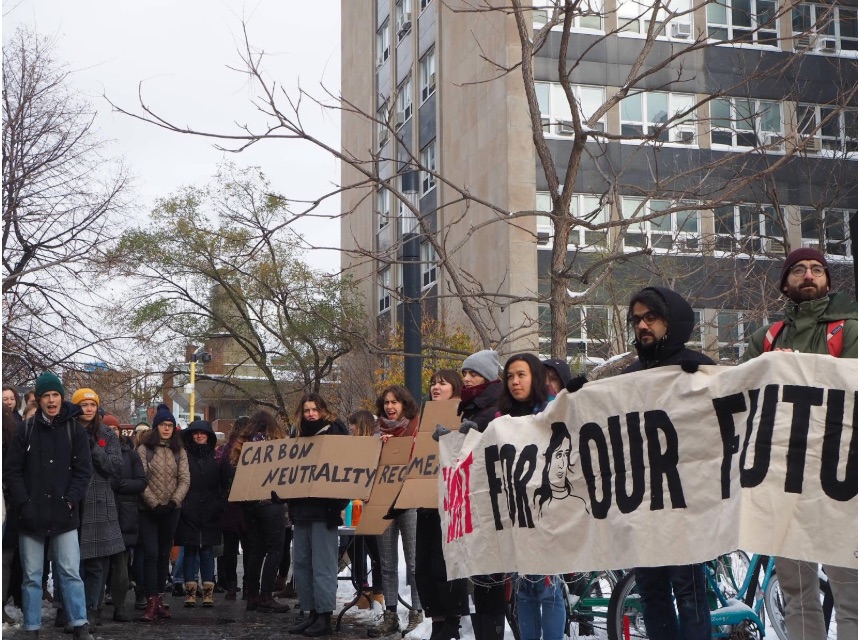
Gathered around the snowy steps of the McGill Community Square on Nov. 12, over 200 students and faculty took part in a walkout calling for the university to divest from fossil fuels. The protest was co-organized by Divest McGill, Greenpeace McGill, and Climate Justice Action McGill (C-JAM).

Protestors chanted and cheered as speakers called on McGill’s Committee to Advise on Matters of Social Responsibility (CAMSR) to support their demand that the university divests from the top 200 largest fossil fuel companies. CAMSR, who was meeting simultaneously in the James Administration Building adjacent to the Square, was finalizing recommendations on divestment to be approved by the Board of Governors on Dec. 5. Divest McGill organizers hoped that the protest would be loud enough to be heard from inside the building. 

Speaker Dr. Jen Gobby, PhD ‘16, returned her bachelor’s diploma in disapproval of McGill’s refusal to divest from fossil fuels. She expressed her disappointment with the university’s immutability on the issue. 

“It’s 2019 […] and still, this institution is invested, as in financially benefiting, from an industry that is killing people, ravaging ecosystems and threatening the future of its student body,” Gobby said. “McGill, […] by continuing to invest in fossil fuels, is strengthening the resilience of an energy system that needs to die.”

Gobby, who recently finished her PhD at McGill in economics in the Anthropocene program, also highlighted the socio-economic consequences of climate change.

“We know that climate change is exacerbating existing social inequality and injustice,” Gobby said. “That people already marginalized by systemic racism, sexism, poverty, and colonialism are bearing the worst of the impacts, first and hardest.”

Concordia student Emily Carson-Apstein, who spearheaded Concordia’s successful divestment campaign as the external sustainability coordinator for Sustainable Concordia, encouraged protestors to remain resilient and criticized both universities’ administration for their inaction to negotiate greener investments.

“I know that this is not a financial movement, it is a social one,” Carson-Apstein said. “Oil is holding up the capitalist colonial history of Canada. They can talk about percentages, and [socially responsible investing] and long-term goals, and we kept saying ‘sure, but there are kids out there who don’t have clean water’.”

Student organizer Laura Mackay, U4 Environment, stressed that McGill has historical precedents for divestment campaigns. She noted the university’s cessation of business ties with companies in South Africa’s apartheid regime in 1985 and divestment from the tobacco industry in 2007

“Now, in 2019, we’re demanding that the university follows its own precedent and divests from another injurious industry,” Mackay said.

Professor Gregory Mikkelson, professor of environment and philosophy and president-elect of the McGill Association of University Teachers, has been part of the divestment campaign since it began in 2012. He congratulated protestors on their tenacity, despite the meager progress the campaign has achieved in the past seven years.

“Our bosses failed in their gambit to wait until a few troublemakers graduated,” Mikkelson said. “Those troublemakers passed on their arguments, their stories, their passion and the professors they roused from this ivory cloister.” 

Despite the frigid temperature, most participants remained till the end of the protest, enthusiastically relaying cheers. For Katie Ross, U3 Science and member of Greenpeace McGill, the turnout demonstrated students’ eagerness for change.

“I think it sends the message that were a unified force,” Ross said. “[We are] not going to stop […] until we reach divestment from fossil fuels.” 

Student Life, The Tribune Explains

Tribune Explains: How to dispose effectively

The phrase “reduce, reuse, and recycle” is a staple of many elementary school classrooms. Students are often told to recycle their paper and plastic items, unaware that if they do so incorrectly, the whole batch of recycling can end up in a landfill. With the consequences of climate change becoming increasingly severe, the City of Montreal hopes to enforce proper garbage and recycling practices. By recycling correctly, residents can aid in reducing greenhouse gas emissions by decreasing energy consumption. For those confused about the correct way to go about trash day, The McGill Tribune has a guide to proper waste management. 

What should I know for trash day? 

The City of Montreal strives for clean streets, but on a windy day, your trash may end up strewn across the curb. To prevent this, the city recommends placing all garbage in either a 65 x 90 centimetre trash bag that weighs no more than 25 kilogrammes and has no holes, or in a tightly closed regulation garbage can. Montreal garbage pick-up days differ depending on where you live, so make sure to follow your pick-up schedule

What can I recycle?

Montreal, unlike some cities, makes recycling quick and easy. Paper, cardboard, glass, metal, and plastic are all recyclable. Some items commonly mistaken as recyclable include pizza boxes, take-out containers, meat trays, styrofoam, photos, rubber, No. 6 plastic, and porcelain. The city asks that residents prepare their items for recycling carefully: Though they do not require you to sort these items, they do ask that you thoroughly rinse cans and jars to prevent mould, smells, and animals from invading the bins. To find out dates and times for recycling in any Montreal borough, students can go to Info-collectes and enter their postal code. Additionally, many stores, including Provigo, offer cash back for glass bottles or other recyclable items in addition to regular recycling pick-up. The program, called Consignation in Quebec, creates a win-win situation by ensuring that items will be recycled correctly while providing you with a little extra grocery money. 

What should I know about composting? 

In recent years, Montreal has begun taking steps to turn food scraps into compost. Composting food scraps saves water, helps soil hold moisture, and reduces runoff water. Recycling organic resources also helps conserve landfill space. This year, residential buildings in the northeast sector of the Côte-des-Neiges neighbourhood received food-waste collection bins. If you live in this area, make sure to only compost food scraps and biodegradable items like houseplants and soil. Students outside of this area looking to shop more sustainably can purchase compostable items to help ease the strain on the city’s landfills. Some paper food packages, dishes, paper towels, and tablecloths are also compostable and can make for better buys. Several large- and small-scale Montreal businesses are joining the fight by committing to using reusable serving materials and have managed to eliminate vast amounts of non-compostable and non-recyclable waste. McGill has also joined the movement with biodegradable materials and composting stations in all dining halls, as well as ending the sale of plastic water bottles in vending machines. 

What types of waste need special disposal? 

Some hazardous waste requires special attention to be properly disposed of. Paint, batteries, aerosol cans, medication, compact fluorescent bulbs, and other chemical and electronic products are not safe to toss in the garbage bin. Luckily, Montreal has the perfect solution, with seven ecocentres located around the city. These centres offer free access with just a government ID and proof of residence and help ensure Montreal residents are doing all they can to reduce waste, alleviate the stress on our landfills, and reduce greenhouse gas emissions. 

Art, Arts & Entertainment, Automotive

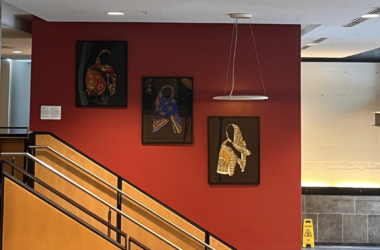
Breaking into the art scene with Norval Morriseau


McGill’s Department of Art History and Communication Studies welcomed Carmen Robertson to present her research on the artist Norval Morrisseau on Nov. 14. The event was the latest in a series of lectures hosted by the department which aim to provide opportunities for discussion on current research in the field of art history. 

Robertson, a Scottish-Lakota professor of art history at Carleton University, took questions on her archival research on Morrisseau’s work. Her work examines Morriseau’s relationship with art dealers during the 1960s, when he first emerged into the Canadian and international art scene. 

Robertson sees Morrisseau as the grandfather of contemporary Indigenous art. He initially rose to prominence in Toronto and Montreal in the 1960s. Born in 1931, the Anishinaabe artist grew up in the Sand Point reserve in Ontario, learning the stories and traditions of his people from his grandfather—many of which would become the subjects of his paintings. 

Curated by Jack Pollack, Morrisseau’s first gallery exhibit took place in Toronto in 1962. Before this landmark exhibit, most Indigenous artwork shown in Canadian galleries was by Inuit artists. However, Morrisseau’s first show was such a success that all of the paintings sold on the first day it was open. Later in the decade, Montreal’s Expo 67 commissioned a mural from him, and Morrisseau continued to gain international recognition with the help of art dealer Herbert T. Schwarz.

Robertson’s ongoing research on this period started with a donation from the archival sources of the Art Gallery of Ontario. She did, however, note that while she relies on these sources for her research, this archival approach is problematic for studying Indigenous art. Archives overrepresent written records, while much of Indigenous cultures, histories, and traditional knowledge are passed down orally. 

“[Morrisseau’s] life and art demand engagement outside of conventional art discourse,” Robertson said.

He learned many stories and traditional knowledge from his grandfather, but was also forced to attend residential school at a young age. As opposed to the extensive archives of traditional western painters, much of Morrisseau’s life, influences, and education is missing from the writings and materials in an archive. 

“Methods of research require academic unlearning in order to make space for Indigeous ways of being and knowing,” Robertson noted. “Morrisseau’s art did not follow traditional trajectories.” 

Robertson’s research draws on writings from Pollock and Schwarz that documented Morrisseau’s entrance into the gallery scene. By analyzing the relationship between the artist and the dealers, she found benefits and problems alike associated with the negotiation between the two parties. While Schwarz and Pollock brought Morrisseau’s art to a broader audience, they were exploitative and verbally abusive toward him. Robertson concluded her talk by addressing the need for Morrisseau’s unmediated voice to be preservedthe archive only shows the artist from the problematic perspective of non-Native art collectors, not from the artist’s own experiences.

The lecture attracted an audience of both McGill students and members of the public.  McGill art history professor Angela Vanhaelen organized the lecture series and invited Robertson to share her traditional archival perspective on a contemporary Indigenous artistan uncommon approach within the Canadian art world.

“It’s always interesting to hear about [researchers’] processes and their work in progress, because if they read something they’ve already [finished], it’s not quite as open-ended and you can’t ask as many questions,” Vanhaelen said. 

The department will continue its lecture series with Finnish media scholar Susanna Paasonen on January 23.

McGill, News

Deputy Provost compels McGill Daily to publish letter about Zionism

The McGill Administration recently demanded that The McGill Daily publish a letter to the editor that critiqued the publication’s definition of Zionism. The letter, written by two Jewish law students, argued that the Daily had defined Zionism in a way that was both inaccurate and malicious. Michael Aarenau, 3L Law and one of the letter’s authors, decided to contact Deputy Provost (Student Life & Learning) Fabrice Labeau after the Daily ignored five attempts at submitting the letter.

“[It is] important to note that in order to reject [the letter], they would have had to actually formally acknowledge it, which they never did because they repeatedly ignored it,” Aarenau wrote in a message to The McGill Tribune. “They finally wrote [to] us […] on Oct. 25 after the provost threatened action against them.”

Josh Shapiro, 3L Law, asked Labeau to compel the Daily to publish his and Aarenau’s letter on Oct. 7. 

“[The Daily] has effectively refused to publish our piece,” Shapiro wrote in an email to the Provost. “We believe that we are being ignored due to the content of our letter, in violation of […] the Memorandum of Agreement [(MOA)] between McGill and the Daily.” 

The Daily Publication Society (DPS), which manages both the Daily and Le Délit, maintains a MOA with McGill University that allows the two papers to operate on campus. Section 10.2 of the document compels the DPS to publish letters sent by students, even if the letter does not conform with the opinions of the editorial team. After Shapiro sent his email, Labeau met with the chair of the DPS; soon after, the Daily reached out to Shapiro with an offer to publish the letter on Nov. 4. 

“On Oct. 22, [the Provost] wrote [to] us [and] we were pleased with his actions,” Shapiro wrote in a message to the Tribune. “[The letter] was not edited. That being said […], the manner in which they published the letter [was undesirable].”

Aarenau took issue with the format in which the letter was published, and the letter was prefaced by a response from the Daily’s editorial board.

“They wrote a response […] which mischaracterized our arguments, defamed our characters, engaged in tokenism, and outright encouraged their readers not to read our letter, apologizing for its existence!” Aarenau wrote.

In print, Aarenau’s letter was opposite a copy of the Daily’s response which was printed in larger font; the letter itself is also hidden from the publication’s home page on their website. The response claims that Labeau had threatened to enter into arbitration with the DPS for breaking their MOA, which would have the potential to jeopardize the future of both publications.

The response also cites the DPS’s Letters Policy, which guides the Daily and Le Délit in publishing letters from students. The policy states that editors have the authority to reject letters whose content is racially or ethnically prejudiced. According to a representative from Independent Jewish Voices (IJV) McGill, the Daily’s response to the letter is justified.

“The Daily was in no way being antisemitic in their initial definition of Zionism nor in their response to the letter,” the IJV McGill representative wrote in an email to the Tribune. “I do agree [with the Daily] that the letter is harmful in the way that it [omits] to the point of gaslighting the systematic oppression and ethnic cleansing of Palestinians crucial to the Zionist project.”

The reprsentative also spoke on how IJV McGill and McGill Students in Solidary for Palestinian Human Rights (SPHR) both contributed to editing the Daily’s response.

“A member of IJV McGill told The McGill Daily to delete a paragraph that IJV members found lacked nuance in its description of Zionism,” the representative wrote. “They felt [that] it was important to do this because […] some members of IJV McGill [were] concerned that the Daily’s response could provide more fodder for claims that criticism of Israel and anti-Zionism are antisemitic, inspiring backlash for IJV and SPHR and threatening their work on campus.”

Aarenau remains unsatisfied with the Daily’s response and conduct with regards to his letter.

“I don’t know in what universe we allow people to shout over a minority group like this, where they try to [say] to Jews: […] ‘Actually, you’re wrong about what the movement for your own liberation is, let us educate you,” Aarenau wrote. “It’s blasphemous.”

Neither Labeau nor a member of the DPS responded to a request for comment.

Read the latest issue

Read the latest issue