

Latest News

Soccer, Sports

2018 World Cup final preview

The 2018 World Cup draws to a close on Sunday, July 15 in Moscow, where France and Croatia will meet to decide a winner. From Spain’s last-minute firing of head coach Julen Lopetegui to Twitter’s #NeymarChallenge—named after the Brazilian superstar Neymar, who exhibited a propensity for faking excruciating pain to draw fouls and bookings–this year’s competition provided fans with plenty of drama both on and off the field. Early exits for Germany and Spain stunned viewers worldwide and opened up the knockout stage to less-experienced nations. In fact, Mexican fans were so excited about their country’s 1-0 upset over Germany in the group stage that earthquake sensors registered two tremors in Mexico City. In more serious business,  VAR (Video Assistant Referee) assisted game officials for the first time in the World Cup in a controversial attempt to minimize costly mistakes that could unfairly end a team’s tournament.

As for the finalists, France are the favourites. As expected, the team was undefeated in the group stage, but lacked gusto and finished atop a weak Group C with two close wins and a draw. Still, they arose from their slumber in the knockout stage: In a thrilling, seven-goal Round of 16 match, they knocked Lionel Messi and Argentina out of the tournament. The French defence then settled in for the quarterfinals to take down Uruguay 2-0, and handled the world-class talents of Eden Hazard and Romelu Lukaku to top Belgium in the semi-final.

Les Bleus have only won the World Cup once before, when they defeated reigning champions Brazil in the 1998 World Cup hosted on French soil. Their only other finals appearance came in 2006, when they lost on penalties to Italy. Meanwhile, Sunday will be Croatia’s first-ever final. They placed third in the 1998 World Cup after falling to France in the semifinals, but they had not advanced beyond the group stages again until this year.

This year, the Croatians dominated in the group stage and joined Uruguay and Belgium as the only teams to win all three group stage matches. In the Round of 16, Denmark took them to penalties, but Croatia snagged the win. They were blessed with a quarterfinal matchup against Russia after the hosts pulled off one of the biggest upsets in World Cup history over Spain. Denis Cheryshev and his teammates gave Croatia a run for their money, but Croatia was again victorious in penalties.

Croatia, led by the midfield duo of Luka Modrić and Ivan Rakitić, have earned their spot in the 2018 World Cup final with solid defence, creative attacking play, and unrelenting effort—evidenced by their three extra-time victories. Although the late stages of those matches pushed them to their limit, they still outworked the opposition. The 90 total extra minutes could cost them, however, against a French squad that likes to work their opponents to exhaustion. Despite claims that France’s play against Belgium was “anti-football,” the French have displayed some brilliant soccer in the competition thus far—courtesy of a balanced and dynamic lineup led by teenage superstar Kylian Mbappé. 

Given France’s depth and Croatia’s fatigue, Deschamps’ side will edge out the Croatian underdogs for their second World Cup title exactly twenty years after their first. That said, both teams are well-deserving of their spots in this year’s final, and they will surely deliver a satisfying conclusion to what has been a riveting tournament.


Arts & Entertainment, Music

Beyoncé and Jay-Z upstage the ‘Mona Lisa’ in ‘Apeshit’

On June 16, Beyoncé and Jay-Z released their surprise joint album, Everything is Love. That same day, they shared the music video for the the album’s second track “Apeshit,” filmed entirely at the Louvre. The video features acclaimed works from the famed gallery, including Mona Lisa, The Coronation of Napoleon, and Venus de Milo. The audience follows the Carters showcasing their wealth and success, acknowledging the sacrifices of those before them, and crooning “This is what we’re thankful” in the song’s chorus. The Carters defy the colonial history of artworks in the Louvre: They challenge the Louvre’s Eurocentric art by showcasing the beauty of people of colour and re-contextualizing famous Western art.

Works such as the Mona Lisa are often seen as timeless and classic images of beauty, but Beyoncé and Jay-Z challenge this notion with their very presence beside the famed painting. The video’s opening depicts the Carters standing regally in front of the painting, stealing La Joconde’s spotlight. The Mona Lisa is even on the album’s cover, where it is foregrounded by a black couple holding an afro pick. By cleverly paralleling the work’s fame with their own, the Carters demonstrate that black excellence can be just as formidable as the Mona Lisa herself.

Given the lyrics’ focus on the Carters’ extreme wealth and influence—Beyonce sings of “expensive fabrics” and “expensive habits”—the Louvre seems like an appropriate setting for the video. The Louvre is one of the most influential museums in the world and draws millions of visitors each year. However, it doesn’t take an art history buff to realize that such institutions fail to represent people of colour both as subjects and as artists. When people of colour are the subjects of works of art, they are often fetishized: Portrayed as uncivilized and, at times, dangerous. An example is Paul Gauguin’s Barbarous Tales which depicts two naked tahitian women, one of many of the artists’ racially stereotyping images trying to paint the “primitive” landscape of the French Polynesia.

“Apeshit” also forces us to re-examine Jacques-Louis David’s The Coronation of Napoleon: An image revered for having captured the crowning of the imperial family. The painting illustrates a moment of glory for Napoleon, and simultaneously ignores Napoleon’s expansion of French colonial land in the Middle East and Africa. Beyoncé and her dancers—all women of colour—dance in a line in front of the painting, which shows their defiance and strength by swaying in solidarity. Beyoncé is at the centre: It is her inauguration.

Beyoncé and Jay-Z defy the reign of white art, which changes how we see symbols like the Mona Lisa and The Coronation of Napoleon. “I can’t believe we made it,” Beyoncé rejoices in the chorus. She is referring not only to her own family’s success, but also to people of colour finally showcasing their art—and themselves—in the Louvre. They change the nature of the museum to represent their own artistic landscape. In so doing, the Carters are as timeless as the centuries-old artwork around them.


McGill, News

International student fees free to change

Quebec’s new budget policy will boost funding to the provincial university network by $1.5 billion over six years and give universities the power to set tuition rates for international students. The policy, announced on May 17 by Quebec Higher Education Minister Hélène David, provides McGill University with a 9.4 per cent increase in funding for and allows universities to keep the total sum of tuition fees.

In a statement published on the organisation’s website on June 6, the Students’ Society of McGill University (SSMU) condemned the provincial government’s deregulation of international tuition, citing concerns that the increase in international student fees will likely impact the financial affordability of McGill.

“This change will allow individual universities to raise fees for international students at their own discretion,” the statement, signed by the 2018-2019 SSMU Executive Team, reads. “[The budget] increase will come at the expense of financial accessibility for international students, an unacceptable tradeoff.”

In an email to The McGill Tribune, Vice-President (VP) External Marina Cupido questioned the exclusionary impact of the new policy on McGill’s student body.

Raising fees places a crushing financial burden on many international students, and narrows the pool of those who can even contemplate a McGill education in the first place, meaning our community will skew [toward the] more privileged and less diverse,” Cupido said.

The Quebec Government’s current tuition policy regulates the gap between domestic and international tuition fees and redistributes the difference among the universities. According to SSMU, the new freedom for administrations to charge their own international rates is a step in the wrong direction.

“Our provincial government should be working to curb exploitative student fees, with the ultimate goal of making education free and accessible to all,” SSMU wrote in its statement.

The SSMU Executive Team compared the new policy to provincial deregulations that took place in 2008, which gave McGill the jurisdiction to determine supplemental international tuition fees and allowed the university the keep the additional revenue. Such changes saw international tuition increase by an average of nearly $20,000 per student in the Faculties of Management, Engineering, Science, and Law.

While higher tuition rates would provide McGill with a substantial increase in funding, the SSMU Executive Team questions whether the additional funding will, in fact, be directed toward Student Services or whether it will instead be used to alleviate the institution’s financial burdens.

In an online FAQ, the Office of the Provost and VP Academic announced the new policy changes and attested to the likelihood of a resulting increase in international tuition rates. According to the Office, however, financial resources will be available to incoming students following the new budget allocations.

“McGill offers competitive awards and financial aid to qualifying international students and we will continue to do so,” the Office’s statement reads. “Moreover, we anticipate being able to expand these programs in coming years, with greater freedom to allocate university revenues to institutional priorities.”

Domestic tuition in Quebec will not be affected by the new policy, and will remain the lowest in Canada. The tuition rates for Fall 2019 onwards have yet to be determined, but incoming students in Fall 2018 will continue to pay the fees set under the current policy for the duration of their programs.

It is unclear how the new policy changes will be received on campus but Cupido stressed the need for student bodies to take swift action to prevent future deregulations.

“As a student community, we must be prepared to stand firmly against the deregulation,” Cupido said. “If this latest decision goes unopposed, it’s likely that this would embolden future governments to deregulate domestic tuition in years to come.”

News

Campus bar to reopen amid construction

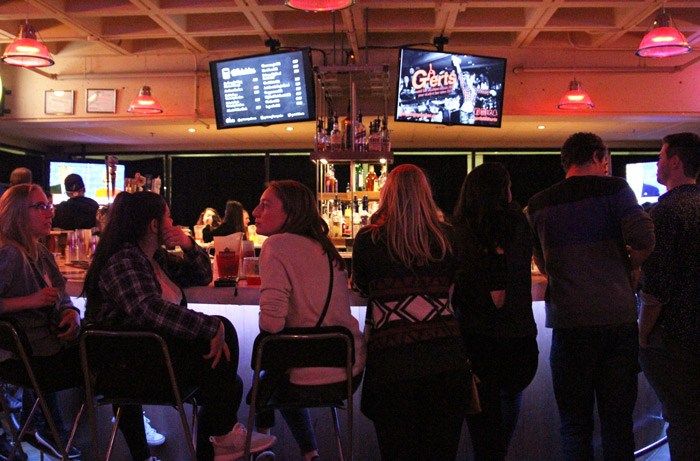
Gerts, McGill’s on-campus bar, will reopen in the last week of August, marking a hopeful return to normalcy for student patrons and its staff. Gerts has been temporarily closed since March 17 to allow for renovations to the University Centre. Although the current construction will continue through to Winter 2019, the completion of preliminary renovations to the building’s basement levels will allow Gerts to reopen.

Several structural issues, including outdated ventilation systems and the presence of asbestos, led to the University Centre’s temporary closure. The building closure impacted many groups at McGill, as nineteen student clubs were forced to relocate temporarily. Gerts’ inaccessibility was particularly disruptive as students could no longer access the popular campus bar during the last weeks of the Winter 2018 semester.

“I think the closure really left a hole in McGill culture,” Meg Price, a U2 Arts student, said. “There’s something about people’s moods when they go to Gerts. It’s like its own little world on campus. Whether you’ve just failed an exam or you’re out to celebrate not failing an exam, I feel like Gerts is always the place to go.”

The venue has also allowed a number of students to explore new interests by hosting various events throughout the year, ranging from trivia nights to club meetings. For example, Gerts hosted “Stand Up for Sangria,”  a free stand-up comedy show, in March 2018..

“I was able to get a lot of students involved in stand-up comedy for the first time,” Nicholas Krywucki, the U2 Arts student who organized Stand Up for Sangria, said. “Students could get a free fun stand-up show with a mix of professional comedians and first-timers.”

While the building closure left staff temporarily out of work last March, Gerts’ August reopening will allow incoming employees to train and start work as they have in previous years. The bar itself should also appear much the same to returning students. The bar’s appearance may undergo minor changes over the summer, but no large-scale renovations are scheduled, as the bar already underwent major renovations in 2012 costing an estimated $450,000.

As a SSMU operation, Gerts’ profits contribute directly to funding the society’s events, clubs, and services such as Drivesafe and Midnight Kitchen. According to the SSMU 2016-2017 Operating Budget, Gerts produced relatively low sales figures between 2014 and 2016, which the then vice-president (VP) finance and operations Zacheriah Houston attributed in part to the construction on McTavish Street. Since then, SSMU has reported a financial uptick, as revenues were reportedly significantly higher than expected in the last couple of years, with Gerts earning a net revenue of $23,384 in 2016-2017 and $29,766 in 2017-2018.

“[Gerts’] sales were greater last year [than] the year prior. We are hopeful the trend will remain positive,” SSMU President Tre Mansdoerfer wrote in an email to The McGill Tribune.  

The SSMU 2018-2019 Operating Budget predicts that Gerts’ temporary closure will not cause a major loss in revenue. However, to account for decreased traffic to the University Centre as a whole due to its partial closure as well as  inflation, SSMU intends to increase pricing at Gerts by up to $1 on certain products. SSMU has not increased Gerts’ prices in the last three years and does not expect to increase them again in the near future.

In a public statement on June 26, SSMU outlined how it expects future construction on the University Centre to proceed.

“Construction [and] renovation […are] well under way and will continue throughout the summer,” the statement reads.

SSMU plans to reinstate public access to the rest of the University Centre floor-by-floor and will provide formal notification to occupants as portions of the renovations are completed. In the same statement, SSMU announced that the Flat Bike Collective and the Muslim Students Association (MSA) Operations, situated on the basement levels of the SSMU building, are also scheduled to reopen in late August. The first and second floors should reopen in October 2018, followed by the third and fourth floors in January 2019, which will mark the completion of the renovations.

News, SSMU

SSMU Board of Directors reduces dental coverage

As a result of an unforeseen deficit, at a meeting on June 11, the Students’ Society of McGill University (SSMU) Board of Directors (BoD) voted to reduce student dental coverage from $750 to $500 for the upcoming academic year. The motion was approved by the Board, with seven votes in favour and one abstention.

The SSMU Health and Dental Plan is administered by the Alliance pour la Santé Étudiante au Québec (ASEQ) / Studentcare, founded by McGill alumnus Lev Bukhman (BA ‘93) in 1996. Studentcare is dedicated to facilitating access to health and dental plans for post-secondary communities across Canada.

While the health care services component of the Plan only covers Canadian SSMU members, the Dental Plan provided by Studentcare is automatically available to all SSMU members. For an annual Dental Plan fee of $100, students are usually guaranteed coverage of dental services of up to $750 from Sep. 1 to Aug. 31 of that academic year. Following the BoD’s decision, however, students enrolled in the Dental Plan for 2018-2019 will only have access to services totalling up to $500 for the same payable fee of $100.   

SSMU pays a total $134.15 premium per student on the Studentcare Dental Plan, financed in part by the annual $100 student fee. The Society is responsible for the remaining costs, which amount to over $600,000 for the approximately 18,000 students covered by the Plan. Typically, SSMU covers this amount using Plan reserves they have built up over the years. Due to a miscommunication on the part of the previous SSMU Vice-President (VP) Financial Affairs Esteban Herpin, however, the reserves are not sufficient to shoulder the cost for the coming academic year.

“Esteban communicated in an email that we had over two million dollars in reserves which we didn’t have, so we never restructured the [student] fee accordingly last semester,” SSMU President Tre Mansdoerfer said. “As a result, we only have about $200,000. It’s significantly smaller, meaning that we are currently slated a $320,000 deficit if we don’t adjust the fee.”

Following consultations with Studentcare, Mansdoerfer presented the dental coverage reduction to the Board as the only rational choice in the face of such a sizeable projected deficit.

“The suggested plan of action was to decrease dental coverage from 750 to 500 dollars,” Mansdoerfer said. “[…From] everything that I have gathered […] this is the most logical thing to do. Going forward this coming Fall, we can run a fee referendum for the next cycle of dental and health care coverage, and we can raise it back to 750 dollars if that’s what students deem is important, and I think they probably do.”

According to Mansdoerfer, SSMU’s Studentcare insurer estimates that five per cent of the Dental Plan subscribers exceed $500 worth of services over the course of 12 months. Indeed, only one third of dental services required by students constitute more expensive urgent reactive care, while the remaining two thirds are simply preventative services.

VP External Affairs Marina Cupido raised the concern that, for those approximately 900 students who were expected to exceed the reduced coverage, no other funding would be available to help alleviate the incurred costs.

“If we do have a member who is in a crisis situation and needs more coverage, is there anything we can say to them, is there anywhere we can direct them to, is there any pool of money that we could [use]?” Cupido said.

Mansdoerfer answered that he was unaware of any supplementary financial assistance that SSMU could provide to those students. The Board stressed the necessity for a fee referendum in the coming academic year to rectify the discrepancy between the maintained Plan fee and the reduced dental coverage.  

“[It’s going to be] really important to run this referendum in the Fall if there’s this number of students that are going to be underserved,” Cupido said.

Soccer, Sports

From the cheap seats: We are all Iceland

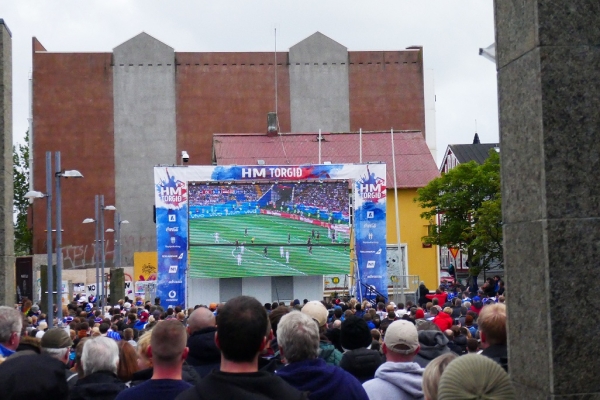
Iceland made their first World Cup appearance in Russia this year, and their fans, rightfully, went all in. I landed in Reykjavik less than three hours before the kickoff of their final group stage match against Croatia and could immediately distinguish the locals from the tourists by checking who was sporting the Iceland jersey. As I arrived in the city centre later on, supporters had socks, hats, and face paint to show off their pride hours before the crucial contest.

Typically, there’s not much going on in Iceland’s capital city, but on that Tuesday evening, a little square in central Reykjavik was the most exciting place for a sports fan to be. There was an enormous screen set up at one end and people, mostly standing, filled the entire square. The crowd was so dense that I had to spend the entire first half on my tiptoes, trying to find a window between the many heads before me.

Neither team scored in the first half, but the crowd still had plenty to buzz about. Fans laughed upon watching the slow motion replay of Iceland’s Birkir Bjarnason clearing the ball off the face of Croatia’s Vedran Corluka for a throw-in, and they gasped when Alfred Finnbogason missed just wide right before the end of the half. There were the typical disgruntled shouts when the Nordic players were whistled for fouls, sighs of relief when goalkeeper/filmmaker Hannes Halldorsson shut down a strong Croatian attack, and cheers when Iceland won the ball back after a strong tackle.

Highlights from the halftime break included watching a commercial directed by Halldorsson and discussing the first half with long-time and newly-minted Iceland supporters alike.

Though first-half viewing had been a pleasant experience—since everyone had been engaging with the game—the people of Iceland gave me what I came for in the second half. Someone had brought out their drum and thus, the legendary Skol viking clap began. Sometimes, it was the drum in our little square in downtown Reykjavik that started the chant, and sometimes, the crowd would try to match the sound of the Icelandic crowd on the screen, 5,000 kilometers away in Rostov, Russia. Chants of “Island!” (pronounced “eese-land”) followed by three quick claps were initiated in a similar fashion.

All three goals came in the second half and, unfortunately for the “Ultimate Underdogs,” Croatia scored two of them. When Croatian midfielder Milan Badelj found the back of the net in the 53rd minute, the Icelanders were visibly disappointed but quick to return to their chanting and cheering. In the 76th minute, Iceland levelled the score with a penalty kick by Gylfi Sigurdsson and the square went wild as their knockout stage hopes were revived.

Going into this match, Iceland needed a win over Croatia and for Argentina to beat Nigeria to advance to the Round of 16. As a result, supporters were closely tracking the progress of the other Group D contest as the second half went on. In the 88th minute and with the game still tied, the announcer suddenly exclaimed, “Argentina skorar! Argentina skorar!a phrase which even I could understand. The crowd erupted, as if Iceland had just scored. Now, all they needed was a single goal and that second qualifying spot would be theirs.

Unfortunately, Croatia scored two minutes later, effectively killing Iceland’s hopes of making it past the group stage. The crowd knew it, but still, they stayed to watch their team play all the way through the final minute. After the referee blew the final whistle, the supporters gave their team a round of applause, thanking them for representing Iceland at the country’s first-ever World Cup. Though they finished the group stage with just one point, Iceland had much to be proud of, playing Argentina to a draw and scoring the only goal that Croatia conceded in three matches.

As the faithful fans of Iceland cleared out of the city square, a light rain began to fall, as if the sky, too, was mourning the loss of everyone’s favourite team.


Science & Technology

The DRAW Project: Delving into Montreal’s weather history

Step aside, Old Weather, eBird, and Galaxy Zoo—there’s a new citizen science project on the block, and its name is DRAW.

DRAW, which stands for Data Rescue: Archives and Weather, allows anyone to explore Montreal’s weather history and contribute to important scientific research. And to make the project even more exciting, McGill has the longest continuous series of weather observatory records in Canada, with legers dating back to 1863.

DRAW began in 2015 when a group of researchers decided to digitize McGill’s weather observatory records to help contribute to scientific research. The process involves studying thousands of pages of meteorological data detailing more than 150 years of temperature, relative humidity, wind, and precipitation—all of which must be rendered in a cohesive digital format.

Since the project needed volunteers to help with transcriptions, a website was created so that citizen scientists could access scanned original documents and assist in transcribing the data.

“We’re dealing with about three million items of data. That’s a lot of data, and there aren’t enough academics or people we pay to transcribe this stuff,” Renee Sieber, associate professor in McGill’s Department of Geography and the School of Environment, said in an interview with The McGill Tribune.

As an added challenge, DRAW seeks to record every single piece of data from the original legers, unlike similar projects, which only transcribe select data points and use them to extrapolate results. Climate science is based on proxies; physical types of data such as ice cores, sediment samples, and tree rings help scientists understand climatic conditions and trends. The diversity of sources means that having detailed data is extremely important.

As a geographer and a computer scientist, Sieber is interested in how citizens engage with complicated technologies. Although she understands it can be repetitive, she finds that most volunteers participate in the project because they want to contribute to science, while others simply find the work relaxing.

Victoria Slonosky, the instigator of DRAW and a visiting fellow in McGill’s Department of Geography, pointed out that science isn’t always exciting—it can oftentimes be tedious.

“I’m always amazed and grateful [that] people are willing to give up their time to do this,” Slonosky said.

Slonosky approaches the project with a climatology background, but there are plenty of other participants with expertise in information science, archive management, and programming. Unlike other citizen science projects, DRAW is strongly interdisciplinary, and it was important to Slonosky that every field was represented.

“Everybody has a specific expertise that they bring to the table in this project,” Slonosky said.

For archivists like Gordon Burr, a course lecturer in the School of Information Studies, DRAW is an amazing way for the research-oriented archives world to contact the public.

“This is why I really love this project,” Burr said. “It allows [the archival world] to touch and engage people in ways it usually does not.”

At the beginning of the project, Burr’s main task was simply to make the records available. He ensured that there were readable scans of all the records and that all the metadata—data that describes other data—was included. Afterwards, the records were digitized, making the archives accessible to the public. This is when the true value of archives is realized, as they have the power to tell us where we’ve been and how we got there.

“Archives are important because they’re basically the heritage of society,” Burr said. “If there are no archives, there’s a large collective memory loss.”

While these archives are meteorological by nature, the data can also be useful in other fields of study like urban planning and civil engineering, which benefit from statistics such as maximum rainfall. Researchers are also hoping that this open-source project can serve as a prototype for similar ones in the future.

McGill, News

Hillel Neuer interrupted midway through convocation speech

McGill’s Faculty of Arts’ June 5 convocation was interrupted by protesters demonstrating against Hillel Neuer, the keynote speaker, who also received an Honorary Doctorate of Law at the ceremony. Neuer is a graduate of McGill’s Faculty of Law and the executive director of United Nations (UN) Watch, a NGO which monitors the performance of the UN according to its Charter. However, because of his organization’s alleged biases toward Israel, protesters halted Neuer a minute into his speech.

“During Neuer’s speech, the activists rose and came [forward], chanting ‘Stop justifying Israeli murder,’” Finn McCleary, a U1 Arts student who attended the ceremony, said.

The protesters were led by political activist and lawyer Dimitri Lascaris, along with fellow activists Paul Tetrault and Yves Engler.

“[Neuer has used UN Watch] to try to delegitimize and even criminalize individuals and organizations working for equal rights for Israeli Jews and Palestinians,” Lascaris wrote in an email to The McGill Tribune.

Thomas Woodley, president of Canadians for Justice and Peace in the Middle East (CJPME), helped Lascaris design pamphlets for the protest and summarized grievances against Neuer on his organization’s website. CJPME claimed that UN Watch is partly funded by right-wing, pro-Israel, Islamophobic platforms such as Birthright Israel, Central Fund of Israel, and Friends of the Israel Defense Forces. Additionally, CJPME noted that Neuer has criticised intellectuals for sharing their opinions on the crisis in the Middle East, including Professor Michael Lynk of the University of Toronto, whom Neuer condemned for being an anti-Israel advocate.

Lascaris disagrees with Neuer’s claim that the UN itself is biased against Israel.

“Through all the years that Israel has dispossessed Palestinians and subjected them to a range of other human rights abuses, including torture and collective punishment, the United Nations has done nothing but issue condemnations,” Lascaris wrote. “[The UN] has not imposed a single sanction on Israel even as it has imposed sanctions on other human rights abusers.”

Overall, Lascaris believes that Neuer fails to properly contextualize Israel’s actions in the Middle East.

“His motivation […] is to paint Israel as the victim when in fact it is the obvious aggressor,” Lascaris wrote. “For [this reason], McGill’s decision to grant Neuer an honorary doctorate is beyond the pale.”

A pro-Palestinian rights student group, the McGill Students in Solidarity of Palestinian Humans Rights (SPHR McGill), also expressed discontent with Neuer’s appointment as a keynote speaker.

“Hillel Neuer has a long history of spreading Islamophobia and skewed information,” SPHR McGill wrote in an email to the Tribune. “As McGill University claims to combat these forces, awarding an honorary degree to Neuer is deeply inappropriate and insulting to students who are affected by these issues.”

Neuer was unsurprised by the interruption, dismissing Lascaris’ legitimacy as a political activist.

“It makes sense that Dimitri Lascaris, an overt Western apologist for the fascist murderers who brutalize the people of Syria, Venezuela, and Gaza [and] someone who was expelled by the Green Party for his extremist activities, would likewise try to silence me,” Neuer wrote in an email to the Tribune.

Neuer feels that his experience working with the UN had equipped him to handle such an outburst.

At the UN I’m interrupted all the time. Our work for human rights victims regularly has dictatorships calling to silence us,” Neuer wrote. “I’ve been interrupted countless times by [delegates from] Syria, North Korea, Libya, Cuba, China, Iran, Pakistan, Venezuela, Egypt, and other autocracies.”

Neuer sees these heated interactions as a mark of success, rather than of failure.

“In the words of Franklin Delano Roosevelt, who received an honorary degree from McGill seven decades before me, ‘Judge me by the enemies I have made,’” Neuer wrote.

Meanwhile, Christopher Buddle, Dean of Students and platform party member at the ceremony, was primarily concerned with the students’ experience during the demonstration, seeking to avoid an escalation.

“After allowing the demonstrators sufficient time to make their views known, they were asked, out of respect for those there to celebrate the wonderful achievements of our graduates, to refrain from further interruptions and were ushered peacefully out of the tent,” Buddle wrote in an email to the Tribune.

News

Victims of McGill brainwashing experiments seek compensation

In 1962, Montreal resident Marilyn Rappaport’s sister was admitted to the Allan Memorial Institute (AMI) at McGill University to treat a minor psychological condition. Instead of receiving the expected care, however, she was subjected to a number of experimental procedures including 107 electric shock treatments and multiple drug-induced comas. Additionally, she underwent intense psychic driving: a treatment which consists of repeated audio messages being played to a patient while they are under the influence of LSD in an attempt to alter their behaviour. When she was discharged in 1964, she had no recollection of who she was, and, to this day, she has no memory of her life before the experiments. The Rappaports have joined other victims who continue to feel violated, and they are in the process of forming a class-action lawsuit against the Government of Canada, the Government of Quebec, and McGill University.

Rappaport’s sister was a victim of MK Ultra subproject 68: A series of experiments carried out during the 1950s and 60s by the Government of Canada in coordination with the US’ Central Intelligence Agency (CIA). Unsuspecting patients like Rappaport’s sister were admitted for routinely-treated conditions such as anxiety or postpartum depression and were then subjected to psychedelic experiments without their consent.

“They basically fried her brain, […] because when she was […] finally discharged, she came home and was telling my mother that she was not my mother,” Rappaport said in an interview with The McGill Tribune. “Today, my sister is 77 years old, and when I visit her, she’s telling me that I’m not her sister. This needs to be corrected because it was criminal and there was no informed consent given.”

Julie Tanny, another Montreal resident, had her father recommended to the AMI in 1957 for treatment for Trigeminal Neuralgia, a neurological condition resulting in shock-like pain which is usually concentrated on one side of the face. By the end of the year, his memory had also been completely erased.  

“My own father was not the same person when he came out,” Tanny said. “[He] didn’t even know who he was–never mind who we were–and I don’t know if he learned [who we were] all over again or if his memory came back [….] He was a very different man, he was very high-strung…,angry, [and] aggressive.”

During its time in operation, hundreds of Canadians filed through the doors of the AMI; although, the Government of Canada has yet to acknowledge or apologize for the long-term consequences for its subjects. Instead, families have taken matters into their own hands and formed the Survivors Allied Against Government Abuse (SAAGA) last February with the goal of demanding an apology and compensation from the government. SAAGA met for the first time in May, with approximately 40 members in attendance. They estimate that the lawsuit will take another four to six months to manifest, as it is pending approval from the Quebec Superior Court.

Prior to the founding of SAAGA, organized public responses to the MK Ultra Canadian subproject have been few and far between. In 1986, Halifax Member of Parliament George Cooper was tasked with investigating the effects of the experiments, and his final report allegedly found the Canadian Government to be clear of any legal responsibility. Nonetheless, in 1992, the national government implemented the Depatterned Persons Assistance Plan, which provided $100,000 to those who could prove that the experiments had reduced them to a ‘child-like’ state. Out of the 332 who applied, only 77 were granted compensation.

Although the Cooper Report concluded that the Government of Canada was not responsible, it did suggest parameters to provide victims with financial assistance,” Ian McLeod, acting media relations manager of Justice Department Canada, wrote in an email to the Tribune. “The Depatterned Persons Assistance Plan was set up on a humanitarian and compassionate basis to provide victims of these experiments with an ex gratia payment.”

Finding Canada’s response unacceptable, the victims and their families have turned to Montreal lawyer Alan Stein to represent them in their case. Stein had previously succeeded in attaining compensation for Alison Steel in 2017, whose mother was a victim of the experiments. In an interview with the Tribune, Stein explained that, although the case is complicated, he believes that the experiments were illegal.

“It’s a tough case,” Stein said. “ I think [that] the weight of certainty of expert psychiatric opinion is that the treatment and the experiments […were] tantamount to a criminal act [….] They had mental problems, it’s true, but when they came out they were a lot more sick than when they went in.”

Basketball, Sports

The LeBron James narrative

“The human mind is addicted to stories,” author Jonathan Gottschall said. It is for this reason, he claims in his book, The Storytelling Animal, that our minds wander and turn information into stories. Sports are one of the best examples of this tendency. A fan’s addiction to narrativization creates incredible tales of heroes and villains, Davids and Goliaths, heel turns, and redemptions.

LeBron James is a superstar—many believe him to be the best basketball player in the world—so, it’s no wonder that he has a first-rate story. But, this summer, he could turn down a near-perfect ending to the best narrative the sporting world has ever seen.

His saga began in his birthplace of Akron, Ohio before he moved a mere 45 minutes down the highway to Cleveland. It took an unbelievable stroke of luck for the Cavaliers to win the draft lottery and select James first overall in 2003. Cavs fans embraced the superstar for years, as he led the Cavaliers on five postseason runs—even if he couldn’t finish the job and bring home a championship in his first stint with the team.

Of course, it was bitter on numerous fronts when he left in 2010 and became a villain during his chapter in Miami. But, a return to Cleveland in 2014 healed the wounds; and the Cavaliers fans embraced him once again. It didn’t take long for James to deliver the championship the Cleveland fan base craved: In 2016, his second season back, he led the team to a remarkable comeback victory against a legendary Golden State Warriors team in the finals. It was a special moment for both James and the city of Cleveland.

Two years later, after the Cavaliers fell short in the 2018 NBA Finals, James has another opportunity to leave. This time, few would blame him if he did. Despite the King’s presence, his current team is nothing special, and they certainly can’t contend with the Golden State juggernaut. The Cavaliers played abysmally for most of the postseason stage this June, and even struggled to win the Eastern Conference. Most of all, they sorely miss the secondary creator they traded away in Kyrie Irving.

James has his pick from the several suitors if he chooses to change teams: In year one of a self-imposed two-year deadline to bring more talent to the team, Lakers great Magic Johnson is ready to pitch James on the bright lights of Los Angeles. Joel Embiid wants LeBron to trust the process and join him and Ben Simmons in Philadelphia. However, James has become a fixture for the Cleveland Cavaliers, and it would not feel quite right if he wore a different uniform next season

Superteams assembled in free agency lack the critical formative years that allow fans to emotionally attach themselves to a team. It is truly special to watch a team come together from the ground up. So, James’ story loses its sheen of perfection if he leaves Ohio. The 2010-11 Dallas Mavericks are an example of a good team that overcame the obstacles to become great. Between an MVP performance from Dirk Nowitzki and a stifling defence that contained James, there was a sense that this title was truly earned. The Warriors were a similarly fun team, whose talent was developed from within. However, many basketball fans feel that their rise to the summit was soiled by the free-agency arrival of Kevin Durant.

The best example of major free-agency acquisitions making a championship run less enjoyable was James’ move to the Heat. Those Miami teams, which were assembled primarily in free agency and starred James, Dwyane Wade, and Chris Bosh, were terrific. But, since that roster core’s success came so instantaneously, their eventual two championships left many fans unsatisfied.

If LeBron wants to create a new superteam, it should be at home. He can enjoy the best of both narratives this way: An excellent team and a storybook ending in Cleveland.

For years, Eastern Conference franchises have dreamt of the stories they can write if James leaves the conference. But LeBron himself should be dreaming of ruining those stories. He should be dreaming of another successful year in Cleveland, since no sports story will ever be as perfect as LeBron’s narrative if it were to end gracefully at home.

Read the latest issue

Read the latest issue