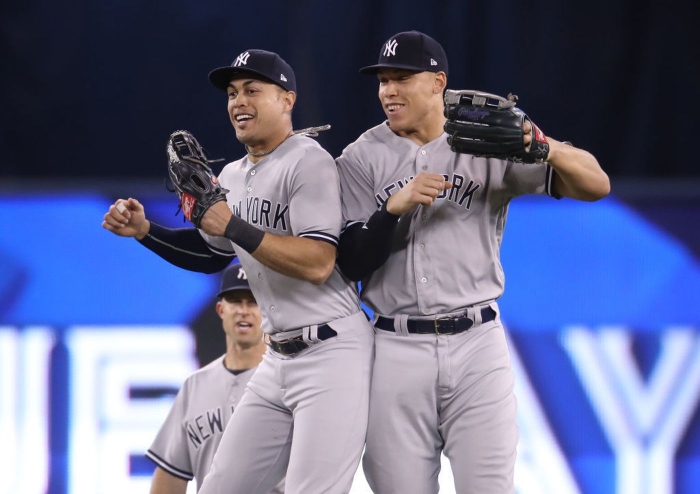
Entering the year as the defending World Series champions, the Astros’ roster has changed very little since last season. Given the number of returning faces, Houston remains one of the teams to beat in the race for a World Series title. Additionally, the Astros acquired Pittsburgh Pirates ace Gerrit Cole to boost their already-competitive pitching rotation and added Hector Rondon to the team to strengthen their bullpen. Their rotation has been record-setting this season, and Cole and teammate Justin Verlander both rank in the top six best Earned Run Average (ERA) for the American League (AL). Familiar names remain atop the AL once more: The Astros only have to worry about the dominant Yankees and the powerful Red Sox.
3. Boston Red Sox
Last season, the Red Sox were excellent at working their way on base by consistently stringing long rallies of singles and doubles together. With a superb pitching rotation led by Chris Sale, Boston’s contact hitting proved reliable enough to win their division in the regular season, but not enough to win the coveted World Series trophy. So, they recruited power hitter J.D. Martinez, who has delivered with a .315 batting average and 22 home runs so far this season. Mookie Betts’ ascendance lends even more firepower to the offence: He has already knocked in 19 home runs halfway through the third month of the season, a striking uptick from his 2017 season total of 24. An improvement in power hitting and a maintained pitching staff have put the Red Sox in position to battle the Yankees for the best record in baseball and have strengthened their prospects of being World Series contenders once more.
4. Atlanta Braves
Despite including no household names, Atlanta’s starting pitchers are the stars of the team. Sean Newcomb and Mike Foltynewicz are fooling hitters and both boast ERAs below 3.00. But with a hit-or-miss bullpen, it’s up to the offence to build sustainable leads for the Braves—and they’re doing just that. Led by veteran Nick Markakis and his .323 batting average, the Braves’ outfield is knocking the cover off the ball. Infielders Freddie Freeman and Ozzie Albies have been tremendous, as well. Along with Markakis, theyplace in the top 50 in the majors in Wins Above Replacement (WAR). The Braves have surprised the league, coming out of nowhere to dominate the NL East, and they are now serious contenders to battle for the World Series trophy.
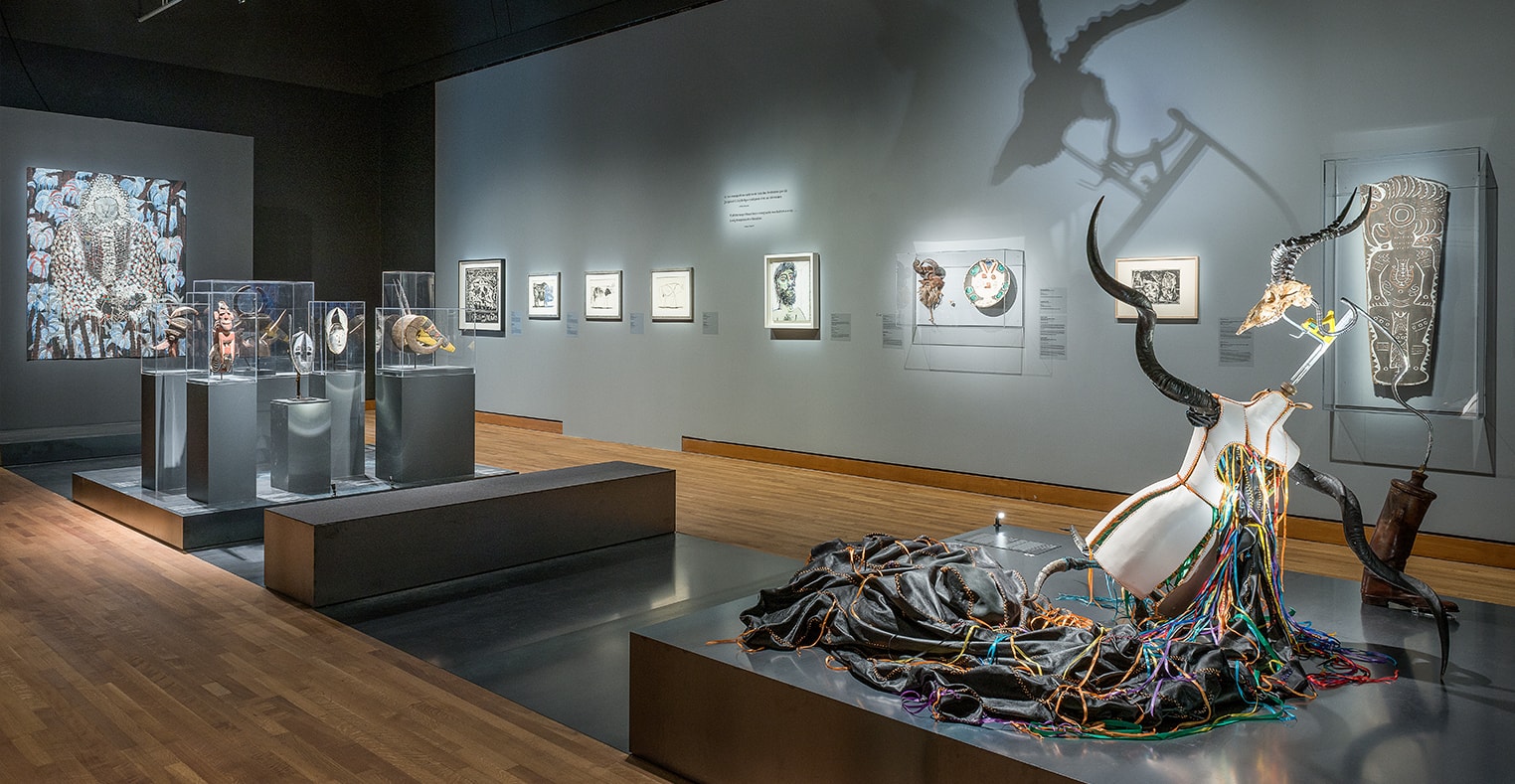
2018 is the year of Picasso’s renaissance. In May, he graced the cover of National Geographic, and in March, the Tate Modern launched “The EY Exhibition: Picasso 1932 – Love, Fame, Tragedy,” the first-ever Picasso exhibit at the London museum. It’s no wonder that Montreal’s Museum of Fine Arts decided to have their own Picasso show, From Africa to the Americas: Picasso Face-to-Face, Past and Present. The exhibition juxtaposed Picasso’s works with sources from which he drew inspiration, namely the work of African artists. Identified only by their region, Dogon Artist, Dan Artist, and other African artists make up the majority of the exhibit space. The focus, however, is always on Picasso.
It seemed as though the MMFA was trying to take advantage of Picasso’s name in hopes of attracting more visitors; however, even with the assemblage of Picasso’s works, there were barely enough of his paintings present to merit his name being in the exhibition title. Along with the Picassos, the MMFA sprinkled in work by contemporary black artists, moving up pieces like “I Learned the Hard Way” (2010) by Mickalene Thomas and “Simeon the God Receiver” (2015) by Kehinde Wiley from the basement’s International Contemporary Art Pavilion to join Picasso upstairs. In February, the Smithsonian’s National Portrait Gallery unveiled Wiley’s presidential portrait of Barack Obama.
From Africa to the Americas: Picasso Face-to-Face, Past and Present felt unfocused and mismatched. Though the MMFA attempted to bring attention to the African art which inspired Western European artists, who ended up appropriating parts of its styles and techniques, the bankability of Picasso’s name obscured their message. The museum did a disservice to the contemporary black artists featured in the exhibit, further marginalizing their work. Maybe, this is a first step to a slow reconciliation and the dismantling of the Western art canon. Still, it would have been more beneficial had the museum removed Picasso’s name and focused instead on African art, black contemporary artists, and the ways their techniques influenced artists such as Picasso and Gauguin.
From Africa to the Americas: Picasso Face-to-Face, Past and Present runs until Sept. 16 at the Montreal Museum of Fine Arts(1380 Sherbrooke Ouest). Student admission is $12 and $10 on Wednesday evenings.
Russia and Saudi Arabia—stars in June 14’s opening match—should bring up the rear in Group A, as the stronger squads from Uruguay and Egypt are looking to go deep in the knockout stages.
The other two teams, however, have higher expectations to take care of. The Egyptians, led by superstar forward Mohamed Salah, are ready to make waves in the team’s first tournament appearance since 1990, while Uruguay have their own superstar in Luis Suárez to carry them forward. Whichever superstar best makes his mark in the opening round could make the difference between first and second place in Group A.
Group B: Iran, Morocco, Portugal, & Spain
Perennial World Cup contender and 2010 champion, Spain, had a strong qualifying run, conceding a mere three goals and scoring 36. World class goalkeeper David de Gea and central defender Sergio Ramos form Spain’s brick wall at the back while attacking midfielder Isco heads a dangerous Spanish offence. However, on Jun. 13, the team fired coach Jopen Lopetegui after he accepted the Real Madrid job. With only hours before the tournament begins, this move suddenly raises plenty of fans’ eyebrows.
Five-time Ballon d’Or winner Cristiano Ronaldo will once again lead the Portuguese squad. Striker André Silva and defensive midfielder William Carvalho will also play key roles in the 2016 European Champions’ hunt for their country’s first World Cup title.
Group B’s story will hinge on whether it will be Spain or Portugal who take the group’s top spot. Despite strong qualifying play, Morocco and Iran are unlikely to fare well against the two European powerhouses.
Group C: Australia, Denmark, France, & Peru
France enter the World Cup as the overwhelming favourites to lead Group C, and rightfully so. They’ve risen on a steady upward trajectory since falling in the group stages of the 2010 World Cup, culminating in a close loss to Portugal in the 2016 UEFA European Championship. Next-generation stars like Antoine Griezmann and Kylian Mbappe headline the group’s most talented squad.
Les Bleus will open against Australia, who played a World Cup-record 22 qualifying matches to make it to Russia. Bert van Marwijk, who took the Netherlands to the final in 2010, will lead the Socceroos after Ange Postecoglou’s resignation at the end of 2017’s qualifying marathon.
Denmark enter the World Cup as the front-runner to advance alongside France. The Danes’ hopes rest on the back of Tottenham’s Christian Eriksen, who is easily the squad’s greatest offensive threat and the group’s best player outside of France’s roster.
The Peruvians round out Group C in their first World Cup appearance in 36 years. La Blanquirroja has better championship odds than Australia and explosive attacking talent in Jefferson Farfan, André Carrillo, and Paolo Guerrero.
2014 World Cup runner-up Argentina wants to finish what it started four years ago. In what could be his final World Cup tournament, Lionel Messi will look to add the World Cup trophy to his mantle and complete a storied career.
Nigeria’s young roster hopes to make a splash in more ways than one. They’ve already turned heads with their stylish kits—Nike reported that three million people have bought the team jersey before their release—but the Super Eagles hope to show that there’s substance to match the style. On the field, 31-year-old midfielder John Obi Mikel is the veteran tasked with controlling the pace. If he can make his mark, the youngest team in the tournament is certainly capable of advancing to knockout play.
However, they’ll have to go through Croatia: A solid squad that will be tough to topple. The Croatian team, led by star midfielders Luka Modric and Ivan Rakitić, looks to advance to the knockout stage for the first time in 20 years.
Group E: Brazil, Costa Rica, Serbia, & Switzerland
Simply put, Group E already has one spot locked up: Brazil. Despite exiting the 2014 World Cup in an embarrassing 7-1 fashion in the semi-final, Tite’s squad enters the competition with the best odds of winning the Cup. With a final 23-man roster chock-full of Champions League talent, the real question heading into group play is which country will join them in advancing to the knockout stage.
Costa Rica became fan favourites in 2014 as they rode a breakout performance from goalkeeper Keylor Navas—who allowed through just two goals in five matches—to a tight quarter-final loss. Meanwhile, Serbia make up for their lack of household names with a pool of reliable talent. Sports bettors, however, give the advantage to Switzerland. Midfielder Granit Xhaka will lead the Swiss charge, and young Schalke forward Breel Embolo could become a star by the tournament’s conclusion.
Group F: Germany, Mexico, South Korea, & Sweden
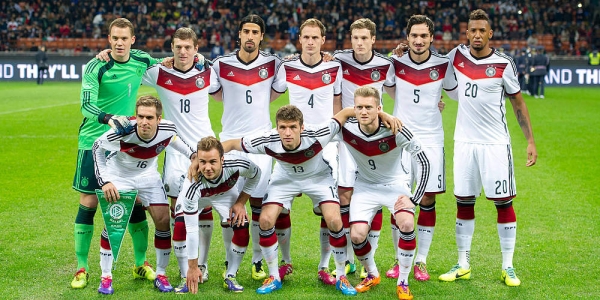
Germany, reigning World Cup champions and the number one team in the world entering the tournament, went a perfect ten-for-ten in qualifying. With many of the same stars who made up the core of their 2014 championship line-up returning to this year’s World Cup, the Germans are strong favourites to go the distance again.
As for the rest of the field, Mexico seem likely to slide into second place in the group and advance to the round of 16. However, they’ll have to be prepared for upset-minded Sweden, who already took down a traditional soccer powerhouse in Italy, to qualify and keep the four-time champions out for the first time since 1958. When South Korea play, look out for Son Heung-min of Tottenham and Ki Sung-yueng of Swansea. They’ll be worth the watch, although the team simply does not have the depth to advance beyond the group stage this year.
Group G: Belgium, England, Panama, & Tunisia
Group G should hold few surprises, but still packs some intrigue. Panama qualified for their debut appearance in dramatic fashion: Benefitting from a better goal differential than Honduras. Tunisia, England, and Belgium, meanwhile, finished unbeaten at the top of their respective groups during qualifications.
The third-ranked team in the world, Belgium are expected to finish first in the quartet, with England advancing in the second spot. Whether England are fighting for the chance to move on or are simply jostling for a position, the final match between Belgium and England should provide a dramatic finish. If England lose, they may need a Tunisian loss to Panama to help them advance to the knockout round. The Eagles of Carthage are dark horses to steal the second spot from a European team if they can put together a strong effort in the group stage.
Group H: Colombia, Japan, Poland, & Senegal
Poland, led by prolific Bayern Munich striker Robert Lewandowski, are returning to World Cup play for the first time since 2006. After their FIFA ranking dropped to76 in 2013, promising results against perennial powers Germany and Portugal at the 2016 European Championship carried the Poles back to respectableglobal standing.
Their biggest challenge will come from Colombia; Los Cafeteros are coming back from their best-ever showing at the 2014 World Cup, where then 22-year-old James Rodríguez scored six goals en route to their quarter-final exit. All-time Colombian scoring leader Radamel Falcao, alongside Rodriguez and young defensive star Dávinson Sánchez, should secure a spot in the knockout round.
Senegal and Japan are the final two members of Group H and face a considerable challenge; however, fans can place their faith in standout stars Sadio Mané and Shinji Kagawa, respectively, for an upset.
Teenagers often spend their formative years in a state of emotional limbo; no longer children, but not quite adults. From this place, wonderfully moving art has been produced. At the age of 19, Baltimore native Lindsey Jordan has managed to emerge as a potential threat to songwriters everywhere as Snail Mail, her high school band, is now signed to legendary indie rock label Matador Records. Lush, her most recent release, is a rare thing: A near-perfect debut album.
It’s hard to pinpoint exactly what makes Lush so utterly enchanting: Maybe it’s Jordan’s deft lyricism, or maybe it’s her natural ability as a guitarist. Regardless, it’s difficult to listen to Lush and not feel transported to the liminal world of suburbia that teenagers tend to inhabit. Throughout the ten tracks, Jordan races through the uncertainties and joys unique to adolescence with the wit of someone wise beyond her years. Each crescendo and pause is deliberate. In “Stick,” Jordan’s impeccable delivery of what could have been a throw-away question—“And did things work out for you? / Or are you still not sure what that means?”—is a punch straight to the gut. Through this attention to detail, Lush harkens to a world of monotonous high school parties, summer heartbreak, and endless daydreaming.
Lush could easily have been dismissed as the latest in a long line of over-saturated coming-of-age indie-pop albums (looking at you: Foster the People and MGMT), but Jordan’s reflexivity as a lyricist elevates the album. “Pristine” is an achingly self-aware anthem about unrequited love in which Jordan lets herself feel both angry and hurt, chastising herself for her naivety. It’s an internal debate almost everyone has had. After every chorus, there is a cathartic silence that deepens the impact of the noise that surrounds it. By playing with the absence of sound, and juxtaposing silence with Jordan’s raw vocals, the sonic contrast is introspective. Ultimately, Lush captures what it is to be young: To feel so little, when everything around you seems so big.
For many Star Wars fans, there is a degree of apprehension about Solo: A Star Wars Story (2018). The second-most recent Star Wars movie, The Last Jedi (2017), received overwhelmingly positive reviews from critics, yet still divided the fandom in half—fans either loved it, or absolutely hated it. On Rotten Tomatoes, the film has the lowest audience score of any Star Wars film, a 46 per cent approval rate, which jars with the 91 per cent approval rating awarded by critics. By focusing on Han Solo, one of the most iconic and beloved characters in the Star Wars mythos, Solo set the bar high to satisfy fans, and that’s not even accounting for the allegedly-bumpy production. The cast is surprisingly strong, but the film’s plot can drag and underwhelm, making for a relatively bland film. With stakes as high, it comes as quite the surprise that Solo’s biggest flaw is just that it’s boring.
The opening of the film is fast-paced: Han Solo (Alden Ehrenreich) attempts to escape from the planet Corellia with his love interest Qi’ra (Emilia Clarke) in a dynamic starship chase. Unfortunately, while escaping, the two are separated, and Solo must embark on a journey around the galaxy to make his way back to Qi’ra. Along the way, he is taken under the wing of professional thief and mentor Tobias Beckett (Woody Harrelson), befriends the wookie Chewbacca (Joonas Suotamo), and begins his path to becoming one of the most infamous rogues in the galaxy.
One of the highlights of the film is the cast: It’s hard to follow Harrison Ford, but Ehrenreich’s performance is laudable. Ehrenreich captures Ford’s trademark arrogance, but he also reveals a younger, more naive Han Solo, one who could feasibly grow into a hardened smuggler. Suotamo is flawless as Chewbacca, and Donald Glover, playing Lando Calrissian, is equally excellent, encapsulating the charm and slyness of the character. The band of supporting characters, including Harrelson and Clarke, make for a fun production, with Paul Bettany particularly shining as crime lord Dryden Vos.
Unlike the Last Jedi, Solo is a simple movie, and while it contains its fair share of action, it brings little new material to the table. The plot is predictable, and the knowledge that its most important characters—Han, Chewie, and Lando—all appear in later films means that viewers know they will survive, minimizing the threats they face. While there are moments that are genuinely entertaining, the pacing is uneven. Several scenes give the impression that the film is about to end, whereas others drag on.
As with many highly-anticipated series, the over-hyped promotion contributed to the mediocre viewing experience. Solo’s predecessor in the anthology series, Rogue One (2016), was a gripping film that flexed its creative muscles, and featured a cast of never-before-seen characters in the Star Wars universe. In comparison, Solo explores many of the most important stories and questions related to the character of Han Solo, but doesn’t always deliver satisfying resolutions, and the result is underwhelming. Certain scenes that should have felt suspenseful are instead lacklustre, due to the aforementioned knowledge of characters’ futures. The pacing issues result in specific events feeling rushed. Scenes that should be iconic—like when Han and Chewie acquire the Millennium Falcon—feel unfulfilling. The fan-baiting is excessive, and the audience is left feeling inundated with references. The entire experience just feels superfluous.
With Episode 9 scheduled for release in Dec. 2019, as well as another anthology film in the vein of Rogue One and Solo, and two additional trilogies in the works, there is still a lot more Star Wars on the horizon. Although The Last Jedi polarized fans and critics, it was at least an attempt at a new vision for the series. With so many upcoming Star Wars films, fans of the franchise will have to ask themselves if they want future projects to take creative risks, or just deliver more of the same material. However, if Solo is any indication, we may have a slew of subpar Star Wars films in store.
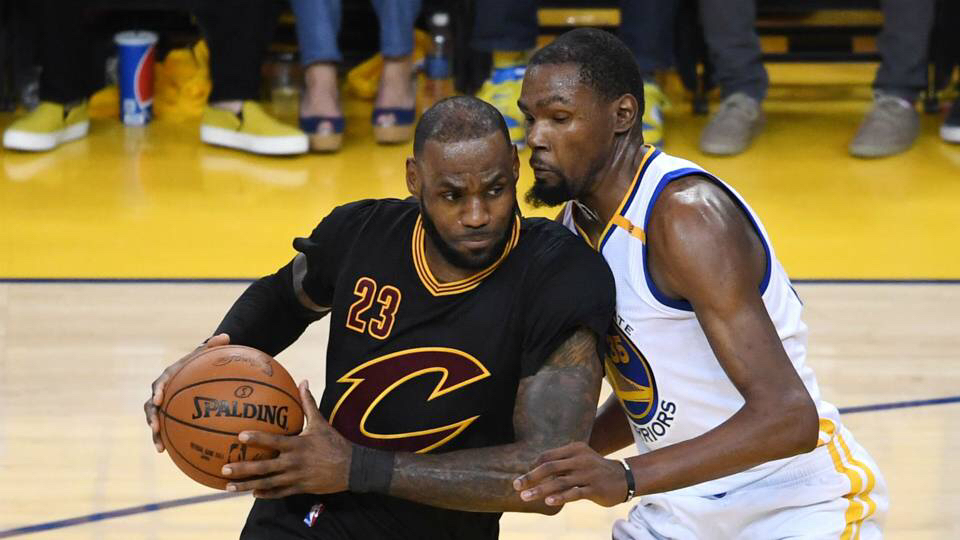
The saga continues: Starting tonight, the Cleveland Cavaliers and the Golden State Warriors will face off in the NBA Finals for the fourth consecutive season. While this matchup seemed inevitable to some, neither team had an easy path to the Finals. Both failed to secure first place in their respective conferences, and, as a result, had to win Game 7 on the road in the Conference Finals. But, with the help of a key injury and extraordinarily unlucky 3-point shooting, they have begun another chapter in the story of one of sports’ greatest rivalries.
After dominating the basketball world for the past four seasons, the heavily-favoured Warriors are looking to repeat their easy five-game victory over the Cavs in last year’s Finals. While LeBron James is reaping the rewards of one of the best seasons in his storied career, this iteration of the Cavaliers’ roster is composed of James’ weakest supporting cast yet. Key helpers from past seasons, like Kyrie Irving and Tristan Thompson, have either declined in their performance or left the team entirely For Cleveland to win this series, they will desperately need the support of forward Kevin Love, who will only just be returning to the floor from a concussion sustained in Game 6 of the Eastern Conference Finals. Cleveland must also limit the Warriors’ Kevin Durant, a glaring mismatch with any Cavalier guard besides James, but James must preserve his energy in order to play up to 48 minutes and run the offence. Durant is averaging 29 points per game in the postseason and, standing at nearly seven feet tall, is arguably the Warriors’ most dynamic offensive threat.
For Cleveland, this series might be the last that they enjoy in the spotlight for quite some time. With LeBron James seeking a stronger team to surround himself with and perhaps a better relationship with his team’s owner, it seems likely that he will take his talents elsewhere next season. Houston Rockets guard and close friend Chris Paul has purportedly already started recruiting the four-time MVP.
The Warriors, on the other hand, have coasted through much of the 2017-2018 season—even, at times, in the playoffs. In an interview with TNT, coach Steve Kerr described the first quarter of the Warriors’ seventh game against the Houston Rockets as “one of the worst quarters of basketball [they had] ever played.” In Games 6 and 7 of the Western Conference Finals against Houston, the consequences of the Warriors’ uneven performance became evident in light of the Rockets’ relatively consistent lead. Closing performances allowed the Warriors to come back in each game and take the series, but it won’t be easy for them to continue at this pace in the final games of the season.
Golden State’s Hamptons 5 lineup—the four All-Stars Durant, Stephen Curry, Klay Thompson, and Draymond Green, and versatile wing Andre Iguodala—is nearly-unstoppable at full force. However, the deadly lineup has been sidelined for most of the first three playoff rounds: Both Curry and Iguodala have sustained knee injuries causing them to miss the first six games and the last four games of the playoffs, respectively.
Iguodala and Love are key to their teams’ successes. Iguodala is the Warriors’ best choice to limit James’s impact, whereas Love is the greatest option the Cavs have to support him. With Love performing at sub-optimal strength and without a secondary scorer, only James will be there to carry an entire team’s load of the work against the Warriors.
The Warriors will need to stay healthy and maintain an energetic performance in order to hold onto the edge they have on the Cavs. LeBron versus the world has been an enjoyable watch thus far, and his greatest challenge yet will be entertaining regardless of the outcome. But, even as James has done incredible things this postseason, his Cavaliers don’t have enough firepower to dethrone the Warriors at their best.
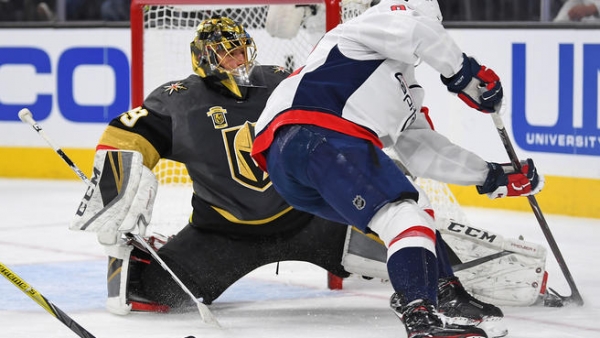
After a hard-fought month and a half of playoff hockey, the 2018 Stanley Cup Final is here. In a surprising twist, the final two teams standing are the Washington Capitals and Vegas Golden Knights.
At the beginning of the season, no one could have predicted that the expansion Golden Knights would have made it to the playoffs—let alone the championship round. Since 1968, no expansion team has played well enough to reach the playoffs in their inaugural season. In fact, the Capitals went 8-67-5 in their opening campaign 43 years ago, the worst mark in NHL history. However, the Golden Knights’ 51-24-7 record and 109 points were good enough to secure the Pacific Division title.
Last June, Golden Knights General Manager George McPhee constructed a roster of overlooked and unwanted players. William Karlsson, acquired from the Columbus Blue Jackets in the expansion draft last June, had scored no more than nine goals in a single season prior to 2017-18. This year, he put up forty-three. Deryk Engelland, 36 years old and an enforcer for the Calgary Flames last season, stepped into a leadership role as an assistant captain for the first time in his career. Every player had something to prove and the opportunity to do so.
Although it remained somewhat doubtful whether they could translate their success to the postseason, the Golden Knights quickly swept the Los Angeles Kings in the opening round before taking down the San Jose Sharks in six games. Their greatest challenge came in the Western Conference Finals against the Winnipeg Jets, a high-scoring team with aspirations of their own. However, Golden Knights goaltender Marc-André Fleury stifled the Jets offence, and Vegas took the series in five games. As long as Fleury stays solid in the crease, Washington is in serious trouble.
However, if Washington continues to play its game, they will be just as threatening. With 11 division championships over the past two decades, the Capitals have been one of the best teams in the NHL, but have consistently faltered in the playoffs. They have failed to advance beyond the second round since 1998 and have fallen to the defending champion Pittsburgh Penguins in each of the past two seasons. This year, they finally slayed their dragon and rode their momentum through a seven-game series against the Tampa Bay Lightning to earn their spot in the franchise’s second Stanley Cup Final ever.
Capitals captain Alexander Ovechkin finally has the opportunity to add a Stanley Cup ring to his trophy case. The 13-year veteran will see his best opportunity to add a championship to his resume. He can thank McPhee for some of his team’s success: Before leading Vegas, the executive served as GM for the Caps and built most of the team that his current project will have to face.
Ultimately, when it comes to this point in the postseason, all bets are off. Both teams have momentum entering the series, but whichever team holds onto it will be set to raise the Stanley Cup.
Given how evenly matched these two teams are, this series will go the distance. If Fleury stays hot and shuts down the Washington offence, Vegas will defeat Washington on home ice and get their storybook ending. Whatever the result, hockey fans can expect a thrilling series.
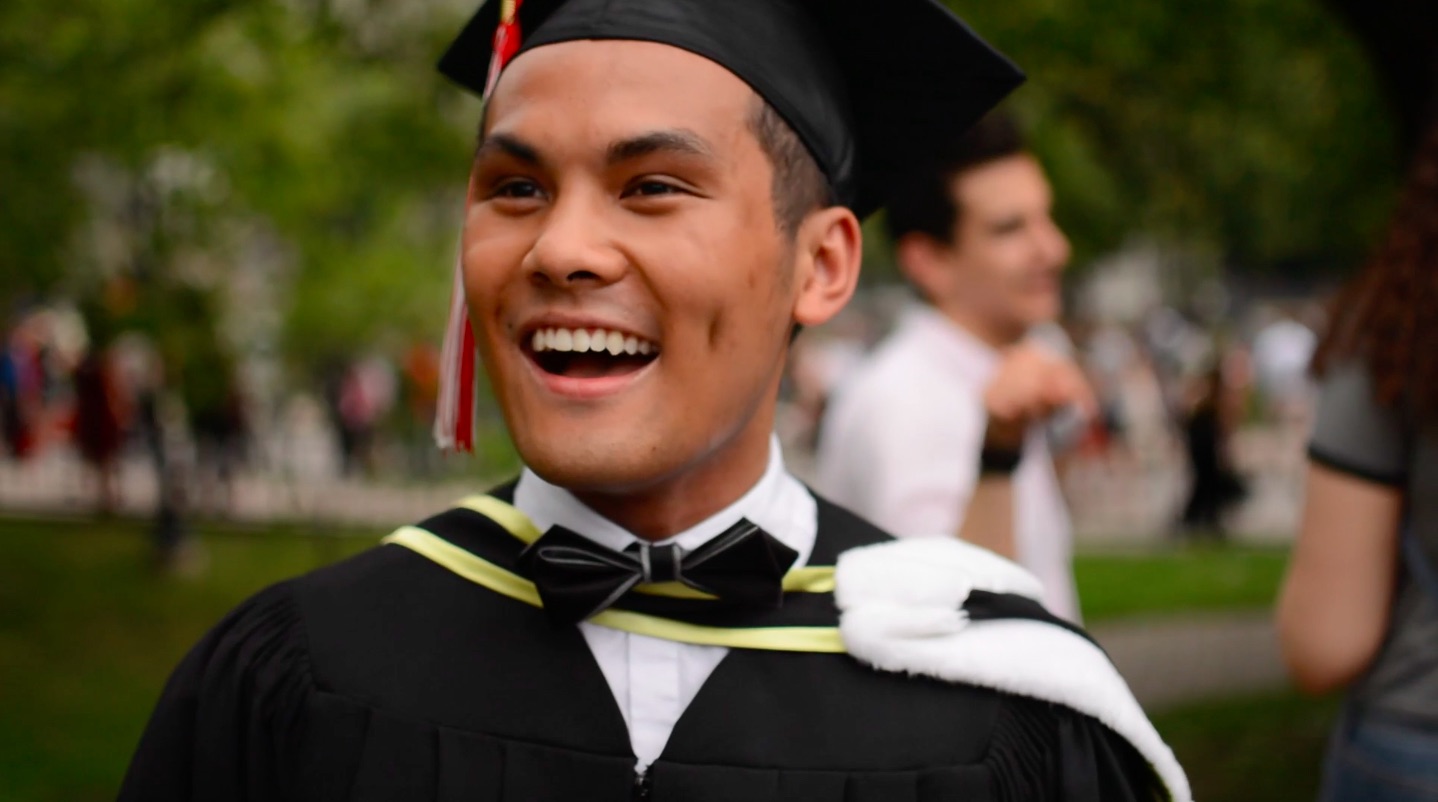
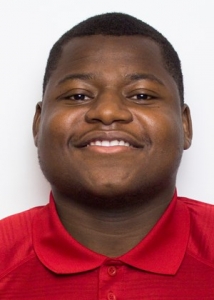
Ousmane Guindo, a sociology major, was one of three McGill athletes invited to the 2018 CFL Eastern Regional Combine. Overall, Guindo feels satisfied with the legacy he and his teammates are leaving behind. Collectively, they have striven to combat a defeatist attitude within the football program; McGill’s four victories in the 2016 season were the programs highest win total since 2006.
“We changed the culture at McGill, the losing culture,” Guindo said. “And, for me, that was the best memory.”
Guindo will also miss the daily motivation that his teammates provided him with.
“Sometimes […] you’re like ‘Damn, I don’t want to practice,’ [….but] even though it was hard […] at least you were with your guys, and there were people helping you […] on your bad days,” Guindo said.
Guindo enjoyed his time with the football team so much that, after four strong seasons with the Redmen, he is negotiating the possibility of returning for a fifth.
“I love the guys, I love the culture,” Guindo said. “Playing with the guys one last time, that would be one of my biggest wishes.”
(mcgillathletics.ca)
François Bourque
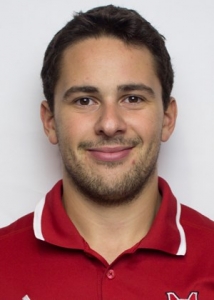
Redmen basketball forward François Bourque will be hanging up his sneakers for the foreseeable future.
“Yeah, that’s it for me,” Bourque said. “At least for a while […] I’m taking a little break.”
Of his many memories at McGill, Bourque looks back most fondly on his travels with the team. In November 2016, he and three of his teammates travelled around China for the World University League 3×3 basketball championships.
“That was an overall amazing experience,” Bourque said. “[Especially because] McGill was representing Canada and we were ranked last overall and we ended up winning the whole tournament.”
To his and his teammates’ amusement, the locals of Xiamen were excited to welcome Bourque and his teammates.
“They’re not used to […] a lot of tourists, so when we got there, they were treating us like professional basketball players,” Bourque said. “Because I guess they’re not used to seeing six-foot-five or six-foot-six basketball players, wherever we would go in the city, they were just taking a bunch of pictures of us, asking us for autographs [….] It was cool to be treated like superstars.”
Bourque put a number on the signatures he’s given out over his basketball career.
“Here, in Montreal, not many,” Bourque said. “In China, probably over 50.”
(mcgillathletics.ca)
Nathan Chiarlitti
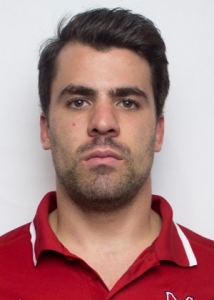
Nathan Chiarlitti had a productive final season as the captain of the Redmen hockey team, scoring five goals and accumulating 20 assists in 44 games. Graduating with a MSc in exercise physiology, he received the Richard Pound Trophy for Proficiency and Leadership in Athletics at the McGill athletics awards gala.
After playing for three years with the St. Francis Xavier X-Men, Chiarlitti’s two years sporting McGill colours mark the end of his university eligibility. Moving forward, Chiarlitti said that he will miss being able to play with his teammates.
“Any time you can leave a job, or you can leave school and go see your best friends for an hour and a half, two hours, […] I think that’s an unbelievable opportunity,” Chiarlitti said.
His favourite memory of his time at McGill was playing in and winning the Queen’s Cup this season.
“The first couple periods […] I remember how prepared the boys were and how much we wanted it going on the road [….] It was just one of those memorable games.”
Another resonant memory was the Redmen’s 2017 bus adventure: The team got trapped in a snowstorm on their way to nationals in New Brunswick last year, and their bus broke down on their way home too.
Chiarlitti recently signed on to play pro hockey in Australia this summer and will be beginning a MD-PhD program at the University of Ottawa in September.
(mcgillathletics.ca)
Francis Lambert-Lemay
Francis Lambert-Lemay was an exceptional defender for the Redmen hockey team, contributing two goals and 11 assists over the course of the season. Lambert-Lemay is graduating with a BA in economics.
After he graduates, Lambert-Lemay explained that he will miss his teammates the most.
“After a long day at school, heading to the rink and seeing all of the guys,” Lambert-Lemay said. “That’s what I’m going to miss the most, just being surrounded [by] friends.”
Lambert-Lemay looked back fondly on the team’s two trips to nationals, the annual Carnival Games, and a pre-season trip to Colorado in his rookie season; however, his favourite memory of all is winning the Queen’s Cup Championship this year.
(mcgillathletics.ca)
Myriam Robitaille
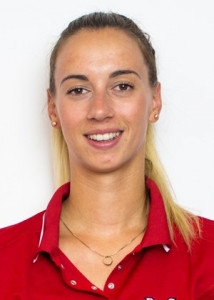
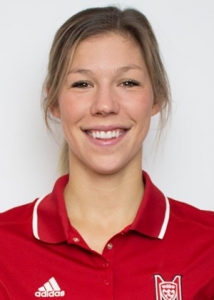
After four successful years at McGill, Myriam Robitaille has big plans for her volleyball career, including potential gigs with a professional European team and the Canadian national senior team.
“I signed [an] agent to play [professionally] in Europe next year, so I am waiting on news from him,” Robitaille said. “Otherwise, in the next years, I would like to be part of the [Canadian senior national] team [….] Maybe [playing in the] 2024 [Olympics] would be a good objective.”
Although she will ultimately find herself among a new group of teammates wherever she plays in upcoming years, Robitaille fondly remembers the many great individuals she met at McGill.
“Throughout the whole four years, I met different people,” Robitaille said. “And every year there was a different vibe, but a good one.”
In addition to her teammates, she will miss her classmates and other students. She was quick to describe McGillians as focused and driven, highlighting the inclusiveness of the McGill community.
“[I’m going to miss] the belonging feeling,” Robitaille said. ”With the team, but with the school as well, I met so many great people.”
(mcgillathletics.ca)
Frédérique Potvin
Frédérique Potvin, a guard for the Marlet basketball team, came to McGill after three seasons playing for the University of Pittsburgh Panthers. This season, she started in 32 games, averaging 13.8 points per game. Her favourite memory as a Martlet is winning the national championship in 2017.
“[Winning the championship] is not something many people can say they have accomplished, and I will definitely cherish this accomplishment for the rest of my life,” Potvin wrote in a message to the The McGill Tribune.
Potvin is graduating with a BA in social work. After graduation, she hopes to play professionally.
(mcgillathletics.ca)
Marjolaine Ste-Marie
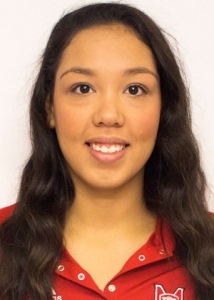
As a fifth-year member of the McGill volleyball team, Marjolaine Ste-Marie has made many memories as a Martlet. The team’s trip to Manitoba for nationals in 2016, where they forced the eventual national champion University of Toronto Varsity Blues to a fifth set during the quarter finals, remains one of her favourite moments on the team.
“It was such a great experience that was so much fun,” Ste-Marie said of the tournament.
Without a doubt, the thing she will miss the most about being a McGill Martlet are the people—players and coaches alike—who accompanied her along the way. From describing the moment when a teammate hid in a laundry basket to scare the coaches, to catching up with other players right after her interview with the Tribune, Ste-Marie always seemed at home around her teammates.
Graduating with a BSc in physical therapy, Ste-Marie will be working at Accès Physio on Montreal’s South Shore.
“I’m going to stay in sports, helping other athletes,” Ste-Marie said.
(mcgillathletics.ca)
Érika Cournoyer
While fans won’t be able to find Érika Cournoyer on the court in a McGill jersey next year, they will be able to spot her in the stands cheering on her girls. Cournoyer is staying on at McGill to finish her graduate Diploma in management.
Despite hundreds of hours on the court and in the gym, Cournoyer never tired of spending time with her teammates.
“We always see each other, [almost] every day,” Cournoyer said. “[If] we don’t see each other for two days, we’re all like, ‘I miss you.’”
The group’s tight bond comes with some great memories, and for Cournoyer, the most notable of them was the team’s quarter-final game against the Varsity Blues at nationals in 2016.
“There were a lot of people […] so it was super loud,” Cournoyer said. “We went into five sets. It was [an] intense game.”
(mcgillathletics.ca)
Simone Cseplo
Simone Cseplo is a Martlet backstroker and freestyler graduating with a BA in sociology. She plans to take a year off to work after graduation but aims to eventually return to university to earn a master’s degree in communications and marketing.
Cseplo’s favourite memory from her time at McGill is winning a medal at nationals in her first year.
“At that moment, I was so proud and overwhelmed to be a Martlet and [to] be part of a team where one person’s success radiated to the entire team,” Cseplo wrote in a message to Tribune. “They are an incredible group of caring and supportive people and are the reason why I loved the sport so much.”
Editor’s note: The McGill Tribune compiled a list of the top-10 most read Opinion articles of the 2017-18 year, reflecting, among other things, a year of controversial Students’ Society of McGill University (SSMU) action, growing discussion around the pervasiveness of sexual assault on university campuses and beyond, and continued criticism of the McGill administration’s shortcomings when it comes to student mental health.
1. Commentary: McGill students need a Fall reading week to maintain mental health
At Western University, two high-profile suicides led to the creation of a Fall reading week in the 2017-18 year. Meanwhile, McGill Health Services reported increased student demand for mental health support in October and November. In light of this evidence of stress that comes with midterm season, contributor Johanna Cline argued for the necessity of a Fall reading week. A month later, on Nov. 21, Deputy Provost (Student Life and Learning) Ollivier Dyens quashed the idea in an interview with the McGill Reporter, claiming that good “hygiene de vie” is all that students need to maintain their mental health. Subsequent student backlash to his comments—and SSMU’s adoption of the Policy on Implementation of a Fall Reading Break following a Winter 2018 referendum question—demonstrate the continued relevance of this article, and the rising demand for a Fall reading week at McGill.
2. Letter to the Editor: I work for SSMU. I’m giving the record some context
October 2017 saw drama among SSMU executives reach a climax: At the October 19 Legislative Council meeting, the rest of the executive team announced a position of no confidence in President Muna Tojiboeva, prompting Tojiboeva to write a letter to The Bull and Bear on October 20 to defend herself. Alison Gu, one of the 2017-2018 SSMU sustainability commissioners, provided context to the situation, elaborating on the challenges she faced while working under the President: “Tojiboeva never treated me poorly or unfairly; in fact, she was often very nice and understanding,” Gu wrote. “My concern is that it takes very little to be nice. A good SSMU President needs to be more.”
Adding fuel to the fire of the campus free speech debate, Wilfred Laurier University teaching assistant Lindsay Shepherd’s supervisor reprimanded Shepherd for screening part of a Jordan Peterson debate on gendered pronouns in her communication studies class. Contributor Keating Reid pushed back against Laurier’s perceived need for censorship, arguing that, in fact, university classrooms are some of the safest spaces to have these difficult conversations.
4. Off the Board: The guilty male conscience in the age of #MeToo
Since October 2017, the #MeToo movement has swept across Facebook newsfeeds and into campus conversations. A babe.net expose of a woman named Grace’s unsettling experience with actor Aziz Ansari sparked particularly divisive discussion around how society ought to understand consent, with some columnists coming forward in defence of Ansari. News Editor Domenic Casciato reflected on these skeptical, largely male reactions to the Ansari case, and to #MeToo moments more broadly: “I have never met Ansari nor has he ever been my role model, and yet, while discussing the article, I felt protective—almost as if I was being personally attacked,” Casciato wrote. “I later realized that this is the exact opposite of how I, and other young men, should have responded to Grace’s experience.”
In November 2017, following increasingly public divisions within the SSMU executive team, former vice-president finance Arisha Khan stepped down from her position, citing mental and physical health reasons. In this op-ed publicly announcing her resignation, Khan discussed her reasons for leaving, her experiences with fellow executives and on the SSMU Board of Directors, and the consequences of a student society that serves individual personal or political interests at the expense of those of the student body. “Recent history at SSMU has shed light on its failures: A lack of oversight, and blatant abuses of power,” Khan wrote. “SSMU can be better, and should be better.”
6. Editorial: Student mental health needs admin support, not “hygiene de vie”
In a November 2017 McGill Reporter interview, Deputy Provost (Student Life and Learning) Ollivier Dyens attempted to assuage rising student mental health concerns and calls for a Fall reading week. It backfired. Horribly. In response to Dyens’ appeal to “hygiene de vie,” the Tribune editorial board gave the McGill administration a reality check on its hands-off approach to student mental health: “The Student Life and Learning Office exists to ‘support students inside and outside of the classroom.’ To that end, it is insufficient to divert attention to the logistics of implementing a Fall reading week, or offer self-care tips, in lieu of providing adequate—and desperately needed—resources.”
7. Laughing Matters: The agonies of email etiquette and prof dudes
Technically, emailing a professor is a menial task. Yet, as any stressed-out McGill student can attest, it is also an elaborate, gruelling mind game. So when Dean of Students Chris Buddle chided students for lazy email etiquette in February, contributor Isaac Berman set the record straight: “Based on my own enduring struggles, I can only assume that the entire McGill student population is already a neurotic, over-analyzing mess when it comes to using electronic mail with our professors,” Berman wrote.
8. Editorial: If SSMU Council won’t stand up for student press, students must
In November 2017, controversy ensued after SSMU Council endorsed a “No” vote to the Daily Publication Society’s (DPS) existence referendum, putting the fate of two campus newspapers—The McGill Daily and Le Délit—into question. The referendum provoked a heated “No” campaign, with many students voicing disagreement with the Daily’s anti-Zionist editorial slant. The Tribune editorial board urged students to look beyond political divisions and continue to support their student press. “Regardless of current views on SSMU, the Council’s failure to endorse the DPS’ existence is shameful. It is a failure to endorse a diversity of independent publications—and, by extension, a critical, balanced, and representative campus press, an essential tenet of SSMU’s democratic legitimacy.” Ultimately, the DPS referendum passed with 65 per cent of students voting “Yes”.
In the lead-up to the 2018-2019 SSMU executive elections, contributor Kyle Dewsnap addressed the age-old question: Why don’t students care about SSMU? According to Dewsnap, SSMU’s lack of “political efficacy”—in other words, its inability to engage voters—is due to its executives’ incompetency and unprofessionalism. “SSMU is in desperate need of an overhaul: It must shift from being a playground for political-wannabes to a legitimate, necessary, and functioning governing body,” Dewsnap wrote. “Like in any democratic system, this kind of political shift requires cooperation between both the electorate and the elected.”
10. Commentary: “What were you wearing?” And other questions to stop asking rape victims
Contributor Phoebe Balshin eloquently illustrated the harm victim-blaming inflicts on survivors of sexual assault.
“Words cannot describe the shame, regret, loneliness, fear, and sadness a person who was raped feels. It is of utmost importance that university communities and society at large do not further contribute to the problem by engaging in questions that offer perpetrators an excuse. Upstream administrators, as well as friends and peers, need to realize how their questions affect victims, and (prepare to) be there for support, rather than interrogation. Instead, ask a victim what you can do to help them. It is difficult to know how to support someone during a traumatic event, but it is essential to think before you ask questions, and realize that certain questions may haunt a victim for years to come.”