

Latest News

McGill, News

Iskweu Project hosts vigil to honour victims of gendered and racialized violence

Content warning: Mentions of gendered and racialized violence.

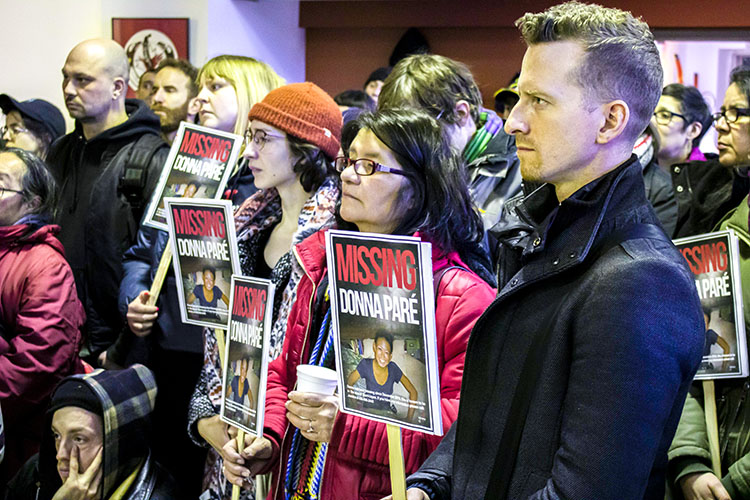
In collaboration with Missing Justice: Justice for Missing and Murdered Indigenous Women, the Iskweu Project hosted the 10th annual vigil on Feb. 14 at The Native Friendship Centre, to honour individuals lost to gendered and racialized violence. The event was designed to create a space for survivors, family members, and loved ones of the women, children, two-spirit, and non-binary victims to gather and mourn. 

Four speakers shared stories about the loss of their sisters, grandmothers, and loved ones to violence. Their speeches recognized the lives of those they had lost and demanded that the Canadian authorities pursue concrete action. 

Melanie Morrison, who lost her sister, Tiffany, spoke about the lasting impact it had on her family and community. 

“The day [that] my sister’s remains were found, we did not get her back,” Morrison said. “She was not returned to us; [only] her bones were. [This] affected everyone in our family, including our extended family. When you’re part of an Indigenous family, it extends generations. The whole family unit changed. That closeness was lost. We were broken.”

Tiffany went missing from the Kahnawake Mohawk Territory in 2006. Melanie emphasized the need for the Canadian government to institute legislation to prevent similar instances. 

“Our reports should be taken seriously from day one,” Morrison said. “Everyone is human first, and should be entitled to the same treatment when a loved one goes missing. With these events, my hope is that people change the way they view these stories. These people shouldn’t be pushed aside, forgotten, or taken advantage of for political gains or campaigns. We need to change the process, thinking, and realities for our women, girls, two-spirited, and non-binary people.”  

Between speeches, hand drummers and singers performed songs to honour those lost. 

After battling alcoholism and the loss of her sister, Tess Lalonde became involved with the National Inquiry into Missing and Murdered Indigenous Women and Girls (MMIWG)

“I joined a healing circle with the MMIWG,” Lalonde said. “ They heard my story, and they wanted to know if I would testify at the inquiry. My big issue is not my sister’s suicide. [It] is mental health and how easy it is to go down that stream and not be able to swim when it’s rocky.” 

She described the need to seek help from available resources when battling mental illness. 

“My message is, before you have those thoughts, seek help,” Lalonde said.  “The MMIWG brought me on a journey where I got to liberate my sister’s spirit.” 

Jessica Quijano shared her experience with losing Donna Paré, an Inuk woman experiencing homelessness who went missing in December 2018. Her disappearance was only reported in March of the following year. 

“I had the privilege of meeting Donna a long time ago,” Quijano said. “Since her disappearance, flashbacks have been coming to me about how she was living on the street. It is difficult for me to hear comments about the circumstances regarding people going missing. There is this idea of the ‘perfect victim,’ which tears me apart.” 

She urged Canadian authorities to take action against the lasting impacts that colonization had on Indigenous communities in Canada. 

“Donna was a fighter who had to deal with the consequences of colonization,” Quijano said. “It is heartbreaking to speak to her family, who does not have a voice in the process. It’s up to us to put pressure on our politicians. They can no longer be unwilling to pursue [investigative] action, because families have put themselves through the pain of testifying.”

McGill, News

Divest McGill holds rally protesting invasion of Wet’suwet’en territory

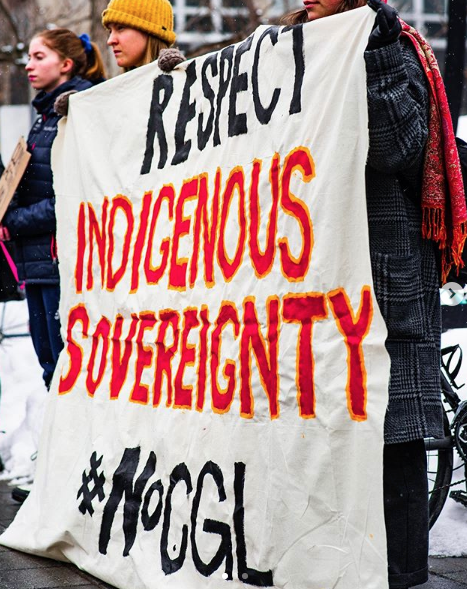
A small crowd of demonstrators braved the cold on Feb. 13 and gathered outside the James Administration building for a Divest McGill rally. The group called on the university to withdraw their investments in Coastal Gaslink and Teck Mining. In the midst of the ongoing conflict between Wet’suwet’en land defenders and the Royal Canadian Mounted Police (RCMP) over the construction of the Coastal Gaslink pipeline in British Columbia (BC), the rally was intended to draw attention to the social consequences of the fossil fuel industry.

Following a land acknowledgment and a performance by the activist group The Montreal Raging Grannies, the rally hosted several speakers from different groups within the McGill community. First to address the crowd was Morgen Bertheussen, a member of Divest McGill, who emphasized the important role that Indigenous communities have played in climate activism.

“As students and activists at this university fighting for climate justice, we stand on the shoulders of many Indigenous land defenders before us,” Bertheussen said. “Here, the Kanien’kehá:ka and Mohawk have laid the foundation for resistance to oppressive and destructive colonial powers for the past four centuries.”  

The tone of the rally, which was held on International Fossil Fuel Divestment Day, was set by recent friction between the BC government and the Wet’suwet’en Nation, located on unceded territory in Northern BC. RCMP arrests of Wet’suwet’en members protesting the construction of TC Energy’s Coastal Gaslink pipeline, a company in which McGill has substantial investments, has sparked outrage across Canada, prompting other protestors to blockade nationally-owned railways in Quebec and Ontario.

“The Canadian government is siding with TC Energy and is calling the RCMP to violently raid and remove people from their land,” said Bertheussen. “McGill’s endowment [in TC energy] is directly complicit with this violence.” 

In December 2019, the McGill Board of Governors (BoG) announced its decision to not divest McGill’s $148 million dollar endowments in the fossil fuel industry based on a report by the Committee to Advise on Matters of Social Responsibility (CAMSR). The committee’s report found that the activities of fossil fuel companies failed to meet the criterion of creating ‘social injury’ and thus did not recommend divestment to the Board of Governors. 

For Heleena De Oliveira, U2 Arts and member of the McGill Black Students Network (BSN), climate and social justice issues are inextricably linked. 

“Most people at this protest, myself included,  […] will not be the ones feeling the most severe impacts of the global climate crisis,” De Oliveira said. “The worst effects of climate change will be felt by people whose race, gender, and class puts them at a politically condemned position […] as I see it the intersectionality between race, gender, sexuality, class, and the environment is quite clear.” 

On-campus support for the divestment movement has generated increasingly public actions in the previous year. In April 2019, Derek Nystrom and Darin Barney, two academic staff representatives on the BoG, resigned from their positions due to the university’s continued investment in fossil fuels. Similarly in January, following the CAMSR report, tenured professor Gregory Mikkelson announced his resignation. 

Ehab Lotayef, a current member of the BoG and a supporter of divestment, praised the actions of those staff members who had come out in opposition to divestment and called on the university to reconsider the issue. 

“It is very disappointing to see McGill falling back behind other Canadian and Quebec universities,” Lotayef said. “I believe it is the time for McGill to take [the] position [of divestment]. It is never too late, now is the time to do it.” 

Principal and Vice-Chancellor Suzanne Fortier’s office was contacted regarding the rally. She did not respond to a request for comment as of press time.

Sports

A guide to becoming a cold-weather athlete

The sky is dark when you leave your lecture at 5:30 pm, you have seen more MTL Blog headlines about the cold than you can count, and you might even have had your eyelids freeze shut on the way to school. It is February in Montreal, and constantly fending off the elements can make tasks as simple as grocery shopping arduous. In such conditions, it is easy to give up on sports and wait for the warmer days ahead, but you don’t have to: Here is The McGill Tribune’s guide to staying sporty this winter.

Intramural sports

Many students are unaware of the various intramural leagues that run throughout the year in the McGill Sports Complex. From activities as obscure as innertube water polo to more mainstream sports like soccer or basketball, there are a wide variety of sports and levels of competition to choose from. Getting involved is easy: Simply pick your sport and find a group on Facebook or declare as a free agent directly on the website.

Indoor yoga

Whether you are a seasoned veteran with a closet full of Lululemon gear and a yoga mat to your name or a complete beginner who has not even thought to touch your toes since high school gym class, yoga is for everybody. Luckily, there are plenty of options in Montreal. Modo Yoga and ensō yoga are just a few studios offering everything from hot to bar yoga. Yoga is not just a way to increase your flexibility: It improves breathing, posture, and boosts endorphins to fend off the threat of seasonal affective disorder. If you are looking to experience any sort of warmth this winter, take advantage and get your stretch on. 

McGill Ski Club

McGill boasts the largest ski club on the east coast of North America and has the mission of providing as much skiing at the lowest cost possible to McGill students. For a relatively inexpensive initial membership fee, the SSMU Ski Club offers free transportation and significant discounts on equipment rentals and lift passes. A day on the mountain isn’t just about shredding that pow; it is also about forging friendships on the bus ride there and the drinks at après-ski

Cross-country skiing

The nearest downhill ski mountains are out of range for most McGill students looking for a quick day trip, but what many don’t realize is that you can cross-country ski right behind campus. Mount Royal boasts miles of serene cross-country ski trails free for all to use. The tracks are maintained on a daily basis, and the views are pristine. In addition to being a fantastic workout, cross-country skiing is cheap and accessible: The McGill Gym and McGill Outdoors Club both offer great deals on rentals for an entire season, or for just a day. 

Pick-up hockey

The sheer volume of rinks in Montreal is a marvel, so it is no wonder that the pickup hockey scene is robust. Even on McGill’s downtown campus, students can take time between classes to lace up, shoot some dingers, and skate their worries away for a few hours. Montreal also maintains over 100 rinks throughout the city and updates conditions daily on their portal website. Next weekend, grab your skates and stick and head down to your nearest rink—you’ll be sure to find some competition and meet new friends. 


Arts & Entertainment, Theatre

‘Medea’ perfectly blends classical tragedy with the contemporary

Continuing its acclaimed annual tradition, the McGill Department of History and Classical Studies held its McGill Classics Play, Medea from Feb. 5-8 at the Mainline Theatre. This classical text, written by Euripides, is a sequel to Jason and the Argonauts—the Ancient Greek myth where he finds the golden fleece. This time, the story focusses on Medea, Jason’s now ex-wife he returned with from his quest. He then goes on to dump her for a Corinthian princess once she has left her entire world and kingdom behind for him. The play follows Medea navigating the consequences of this catastrophe and enormous insult, which she does in a very Greek tragedy way. 

While Professor Florence Yoon from the University of British Columbia (UBC) and Professor Lynn Kozak from the McGill Classics Department oversaw the production as a whole,  two student directors, Marina Martin (B.A. ‘19) and Michaela Drouillard (U3 Arts), translated Medea from the original Ancient Greek text. 

“Translating Medea was weird,” the pair wrote in their directors’ note.  “Throughout the process, we learned that it was less important for a play to look and sound like the original world it claims to represent.” 

Martin and Drouillard found that they were able to take what they needed from the Greek text in order to give themselves room to voice their message and to be able to have fun with it.”

The play perfectly blended the contemporary into the classical and tragic setting. The presence of podcasts, text messages, and plenty of other anachronisms did not feel forced. Rather, the production felt mature and comfortable in its own skin and, at the exception of certain out-dated plot points and archaic tones adopted for the purpose of dramatic effect: The juxtaposition of lines such as “You wanna get an Uber?” and “I killed those dragons for you” often feel contrived. Besides that, the play could blend perfectly into today’s setting, as seen impressively in the chorus.

Featuring a cast of undergraduate and graduate students, the group fully functioned as one,  and yet it was executed in such a way that impressed with its normality and ease. The group acted like friends gossiping, producing a continuous dialogue that was quick, witty, and entertaining all the while maintaining a necessary commentary that made its role feel as whole as it did. 

Of course, the two main characters that occupied the centre of the stage were Medea (Niamh Power, M.A. Psychology) and Jason (Tom Giles). Giles played a heinous Jason, and yet the pain he felt at times was so well communicated that he was able to shift the feeling of the entire theatre from one extreme emotion to the next. Power’s portrayal took up all the stage and her Medea was a loud and powerful character furthered the blending of modern and ancient as well as pain and revenge into a seamless and smooth work.

Perhaps the play could have lasted a bit longer as it was only a bit more than an hour which only revealed a small portion of what could’ve been possible for the actors and for the play. All the while, it remains a great play that did not disappoint in maintaining the presence of Classical texts and Greek mythology in today’s world.

McGill, News

Hundreds demonstrate at Prime Minister’s office against the RCMP

Over 300 people packed the entrance of Prime Minister Justin Trudeau’s Papineau constituency office to protest against the Royal Canadian Mounted Police (RCMP) who invaded northern British Columbia’s (BC) Wet’suwet’en territory. Gathered in foot-deep snow on Feb. 10, Indigenous youth and allies chanted and held signs demanding that the RCMP retreat from Wet’suwet’en territory and urged Trudeau to take action.

Nakuset, the director of the Montreal Native Women’s shelter, recounted her own experience with the RCMP as an Indigenous woman. She told protestors that the fight against the RCMP invading Wet’suwet’en is part of a greater struggle between police forces and Indigenous communities.

“The RCMP were the first ones who came and took the children away to residential school,” Nakuset said. “Now they’re blocking [and] taking our people to jail.”

Nakuset also highlighted the need for the media to pay attention to the movements as a form of peaceful opposition to pipeline expansion projects in the region.

“Like our people, we have been pushed out of sight [and] out of mind […] but if we have more media out there and more people become outraged, this is not going to continue,” Nakuset said. “We know how to take care of the land [and] that there’s a reason why we don’t want the pipelines. It is going to be disastrous. And I love the fact that everyone keeps coming up and voicing their opinion […] because it’s a reflection that it’s not just those big corporations that are trying to make money off of our land.” 

Alex G, a Mi’kmaq McGill alumnus, led the crowd with traditional Indigenous songs. He feels that his songs act as both a form of healing for his community and a symbol of Indigenous resilience. 

“These [protests] are to generate action,” Alex said. “It is a reminder to the government that here is a group of people, as Indigenous people especially who have agreed to the United Nations’ Declaration of Indigenous rights and here [they] are forcefully removing us from our communities, from our territories.”

Protest organizer Aneeka Anderson, U2 Arts, believes that the recent momentum gathered by the Wet’suwet’en land defenders and previous sit-ins at Trudeau’s constituency office help explain the protest’s high turnout. 

“I was really blown away,” Anderson said. “We’ve been hurting as a community during the weekend […] but I think we all took a deep breath after that demonstration because it went so well and we felt so supported. The crowd was ready to cheer with us and to make sure we were heard from those inside the office.”

Anderson noted the numerous police officers surrounding the demonstration. She believes that their presence was more to intimidate protestors than to assure their safety.

“It felt like we were being surveilled,” Anderson said. “I think luckily the demonstration went so well that we completely forgot they were there, and that speaks to the power of [the] space that was created.”

Anderson pointed out Trudeau’s late response to the protests across Canada, claiming that it demonstrates the federal government’s lack of concern for the issue.

“It’s very shameful,” Anderson said. “[Trudeau] is abroad speaking about wanting to improve human rights internationally when there are huge injustices and human rights violations going on [currently] in the Wet’suwet’en territory.”

Arts & Entertainment, Theatre

Gilbert and Sullivan remain fresh in ‘The Gondoliers’

Gilbert and Sullivan are ubiquitous in the theatre world and beyond. Their songs appear in television shows both in their original form and in parody, in shows like Star Trek and Family Guy.  Yet while other productions play with their time period, projecting plot and characters into modern scenarios, much of the charm of a Gilbert and Sullivan production comes from its Victorian history. The McGill Savoy Society’s production of The Gondoliers is no different: Stepping into Moyse Hall is anachronistic in and of itself, and adding a Victorian-era operetta to the mix heightens the nostalgic atmosphere. Yet, escapism is only part of the appeal of  The Gondoliers. More than 130 years after it first premiered, the play remains relevant. Themes of gender, agency, and love are just as fresh as they were when the show premiered in 1889. The Savoy Society conveys such stories wonderfully though dance numbers featuring a fantastic chorus, as well as genuinely emotional pieces sung by its leads.

As with other Gilbert and Sullivan works like Pirates of Penzance and HMS Pinafore, Gondoliers satirizes class differences, bureaucracy, and the monarchy. As anyone who has seen coverage of Mexit (Meghan Markle and her husband’s choice to leave the royal family) can attest, all of these themes are equally present today. There is something uniquely comforting about stepping back in time to confront issues of the present. A production like Hamilton comes to mind, which effectively uses modern music to update its historical setting. The music of Gondoliers, however, is very much contemporary to its staging, and rightly so. It would not be Gilbert and Sullivan without jaunty patter-song, clever twisting rhymes, and cheeky nods to the audience. The Savoy Society executes these fantastically.

“It’s as much about the personal relationships as it is about bigger themes,”  Ben Markbreiter, U2 Arts and the president of the Savoy Society, said. “The chorus is even more important.” 

Markbreiter is  correct; the chorus shines in this staging, providing background comedy, often in the form of slapstick, as well as intricate ensemble dances choreographed by Coralie Heiler, who is also a co-director. Performing in the chorus in a production of this scale is no easy undertaking. As is typical of Gilbert and Sullivan, the play is comprised of two cohorts divided down 19th century gender lines. A crowd of young women lines up, hoping to be chosen as the wife of one of the titular gondoliers in one scene and go to great lengths to be with their lovers at their own personal risk, and the divide is clear. As expected, it’s also a source of comedy through flirtation and rejection often in slapstick form. 

Sexism, racism, and imperialism go hand in hand with the play’s creation in the Victorian era. While Gilbert and Sullivan, to their credit, did challenge imperialist and monarchical ideas, they often did so at the expense of another culture, most notably in The Mikado, a critique of the establishment set in Imperial Japan. Racist stereotypes ensue. 

“You can’t avoid the racism or sexism” Markbreiter said, “but what we try to do is shine a light on the aspects that hold up their comedy, which is where a lot of the personal relationships come in, and emphasizing elements that don’t punch down.” 

Luckily for the show, Gilbert’s libretto has jokes that have survived the test of time, which, coupled with Heiler and co-director Stefania Bertrand’s staging, succeed in unveiling and critiquing dated attitudes behind them.

Though asking any busy student to take two and a half hours out of their schedule might seem like a tall order, Gondoliers is worth the commitment. It is the perfect combination of escapism, political satire, physical comedy, and catchy music in a space that often feels mysterious behind its heavy doors in the centre of the Arts Building. The Savoy Society’s production is a showcase of hard work and most importantly, fun. If you have ever caught yourself trying to sing the Modern Major General song, this is the show for you, and if not, this show might encourage you to learn.

The Gondoliers is playing in Moyse Hall Feb 14–22. Tickets are available at mcgillsavoy.tickit.ca.

Student Life

The uncertain future of Bar des Arts

For over a year now, many McGill clubs and services, such as Midnight Kitchen and Schulich Library, have been affected by indefinite construction. Among the impacted spaces is McGill’s beloved Bar des Arts (BdA). 

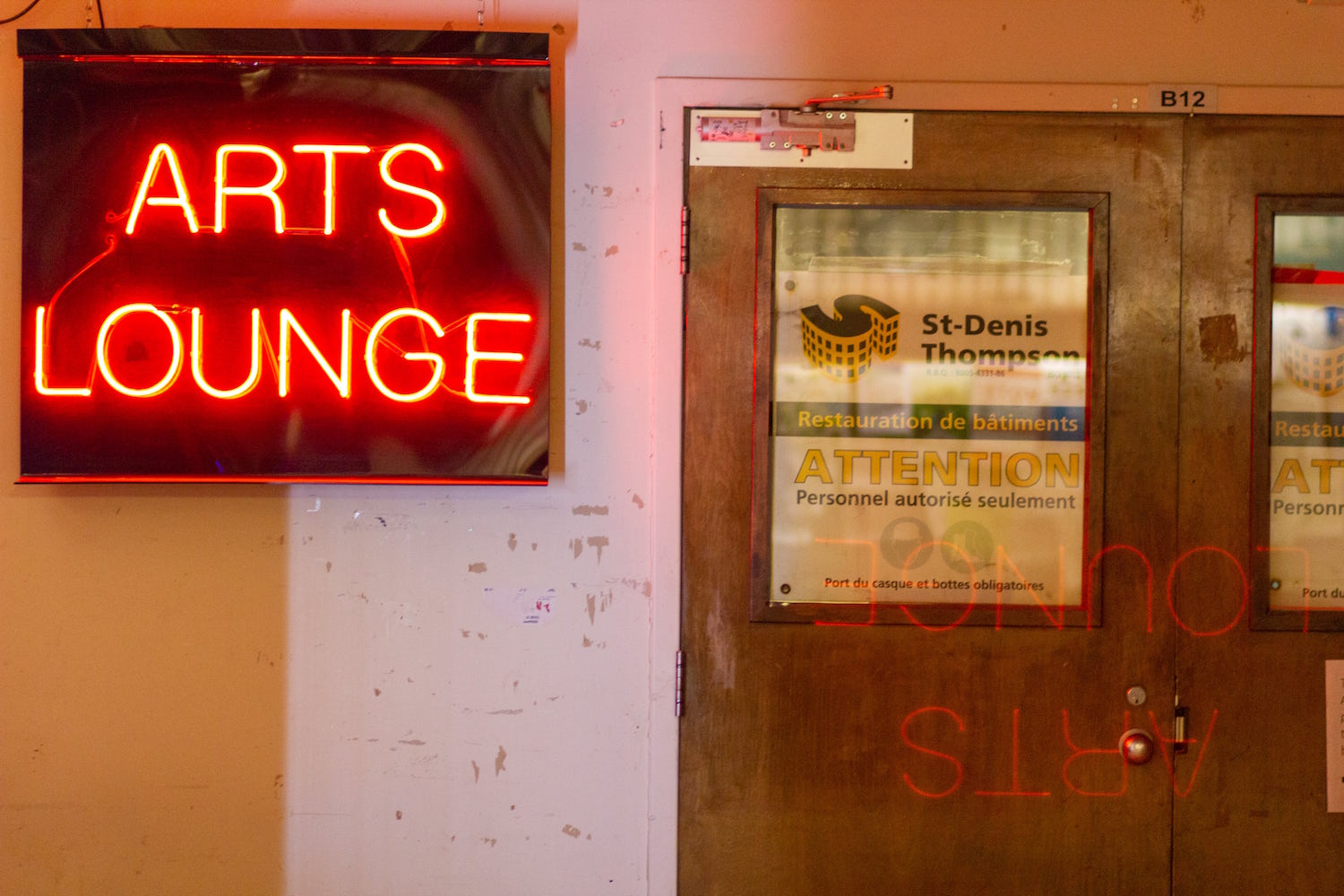
Usually taking place every Thursday from 5:30 to 8:30 p.m. at the Arts Lounge located in the basement of Leacock, BdA has closed its doors due to renovations taking place throughout the building. In the face of these developments, BdA staff initially worked to find other locations on campus, including McConnell Engineering, Ferrier, and the Education Building. The staff even looked at venues within the Milton-Parc neighbourhood such as Le Coin Social, Apartment 200, and La P’tite Grenouille. However, while BdA managed to hold a couple events at other locations, they ended up facing constant dead-ends and high costs when looking for a permanent location for the bar, forcing them to halt the occurrence of weekly events. 

Known for its cheap drinks and delicious $1 grilled cheeses, BdA has held many iconic events, most notably last year’s “BdAll In This Together,” a High School Musical-themed evening and  “BdA and Boujee” in February 2018, a special Migos-themed event serving $1 glasses of wine. 

For many, BdA has become more than just a bar. During its 13 years in operation, it turned into a place for a diverse community of students to come together. Like Gerts, which was forced to close due to HVAC, electrical, and asbestos issues found in the University Centre, the closure of BdA has had a large impact on many at McGill. 

For Mercedes Labelle, U3 Arts and BdA Co-Chair, the bar’s indefinite hiatus represents a loss for the student community.

“BdA was often the only time I saw a lot of my friends from Arts outside of class,” Labelle said. “It made me feel connected to the community in a deeper way and made me want to come and stay on campus for something other than class. With the SSMU Building, Gerts, and now BdA gone, McGill is slowly losing its campus culture and community—something that is essential to everyone’s university experience.”

Ethan Casey, U3 Arts and BdA Co-Chair, explained that the loss of the Arts Lounge extends beyond the weekly events of BdA.

“Moving past just BdA, the Arts Lounge in itself has always been a place in which Arts students can be themselves in a setting that is inclusive,” Casey said. “Whether you need to destress and play pool, […] have a quick nap, or escape the stress of McLennan and eat your lunch peacefully, Arts students could always rely on the lounge as a humble home for the largest faculty on campus.”

In response to its closure, BdA staff have written an open letter to the McGill Administration—in particular to Fabrice Labeau, McGill’s Campus Planning and Development Office—explaining the importance of finding the bar a home. BdA staff are demanding a consultation with administrators, a construction timeline, a guaranteed date of re-opening, and monetary compensation if alternative venues are not financially feasible for their not-for-profit bar. Through following these measures, the staff hope to bring BdA back to the McGill community as quickly as possible. 

The open letter also described how BdA’s forced closure highlights McGill’s deprioritization of initiatives that foster student communities. In fact, even after having meetings with seven members of the McGill administration, BdA staff received no help in finding a new venue for the event. 

“The lack of Bar des Arts constitutes more than students not having a place to drink alcohol on campus,” the letter stated. “It plays into the bigger discontent with the administration’s disregard for student life and wellbeing.”

At this moment, McGill students can only hope that their beloved BdA will find a home soon so that we can all get back to singing “Dancing Queen” while eating gooey grilled cheese sandwiches in no time.

Album Reviews, Arts & Entertainment

Tame Impala time travels in ‘The Slow Rush’

If Tame Impala’s third album, Currents, is the outset of an interstellar psychedelic sugar-pop trip, then their fourth full-length release, The Slow Rush, released on Feb. 14, is that trip’s arrival. In his most recent offering, Kevin Parker, the singer, songwriter, and multi-instrumentalist behind the band’s music, has delivered another genre-defying album that reflects his continued radical commitment to perfectionism. While Parkers psychoactive sound has come to help shape contemporary rock and pop music, The Slow Rush sounds like it was made for an era that has not yet arrived.

The shift in production style between Tame Impala’s sophomore album Lonerism and Currents is a sharp, but welcome, divergence into more avant-garde territory, as Currents borrows elements from modern electronic-synth pop. In The Slow Rush, the production has become even more futuristic; synthesizers and phazers feature heavily, and sounds like that of a laser gun firing are incorporated into the soundscape. Tracks like “Glimmer” and “Is It True” find more footing with groups like Crystal Castles or Neon Indian than they do with long-cited comparisons of Parker’s sound such as The Beatles.  

The album’s lyrics are still themed by a melancholy yearning present in past Tame Impala tracks. Yet, rather than focusing on an individual person, Parker’s emotions seem captured by a broader sense of nostalgia, as he reflects on the idealization of memories and recognizes the fleeting nature of the present. The album opens with the massive humming vocal synths of “One More Year,” as Parker questions: “Do you remember we were standing here a year ago?” As the bridge opens, the synths give way to a sparse piano melody, and the sonic gap begs the listener to anticipate the impending drop and sets the tone for the rest of the album. In the final track, “One More Hour,”  the intense guitar chords matched with heavy snare and bass hits, which one can’t help but compare to Current’s “Eventually,” seal the record in an appropriately bombastic fashion. 

Everything about The Slow Rush—its lyrics, its melodies, and the emotions it evokes—suggest a fruition of Parker’s artistic maturity. Tame Impala’s sound has evolved in astounding ways through each phase of their discography. As a record, it transcends easy categorization because it so fluidly blends elements of traditional indie rock with futuristic electro-pop. Parker, like no one else, is making music which seems to come from another place and another time.

Science & Technology

Montreal start-up Aifred Health is applying AI to mental healthcare

Mental health treatments for conditions such as depression are currently based on an arduous ‘trial and error’ process. Matching people with the right care is difficult: An individual experiencing depression might consult different specialists who may recommend various different kinds of treatment, none of which could actually work. 

Aifred Health, a Montreal-based healthcare company, has perhaps found a better way. The company is developing a treatment-agnostic artificial intelligence (AI) model that helps make personalized treatment more widely available and match patients with the best care. Specifically, it is a machine learning model, a mathematical algorithm trained on sample data to make predictions about the most effective treatment. 

“Once the clinician has made a diagnosis, we assist in the process of treatment selection,” Dr. David Benrimoh (M.D, C.M, 2016), Aifred Health’s Chief Science Officer and a Resident in McGill’s Department of Psychiatry, said in an interview with The McGill Tribune.

Medical professionals collect a number of data when a patient visits the doctor, including symptoms and sociodemographic information. Aifred Health’s job starts with assembling this data using an AI model to predict the probability of remission with different treatments. Afterward, the clinician receives a report that helps them make a more informed decision with the patient about their treatment. 

“The clinician still makes the choice with the patient, but we help give them more information to make a better choice that is more likely to work than without the tool,” Benrimoh said.

Currently, the treatment-agnostic AI model is only intended for one condition. 

“Right now, [it is designed] for depression, with plans to expand to other conditions such as anxiety and schizophrenia in the future,” Benrimoh said.

At the moment, there are no widely accessible methods of personalizing treatment for patients. Aifred Health’s model’s main advantage is that it tailors treatment to the individual, increasing the chance that patients will receive the right medical care. What’s more, the new tool does not need huge amounts of time-consuming data collection, as it only requires patients to fill out a questionnaire.

Despite the huge potential of this technology, the model still poses many challenges to the Aifred Health team. According to Benrimoh, the biggest obstacle they face is adoption of the technology. Thus, it is essential that the tool they build is one that doctors and patients actually want to employ.

“If no one uses it, it could be the best model ever, but it’s not going to do anything,” Benrimoh said.

Still, Aifred Health has a few steps to complete before worrying about consumer reactions. The company is currently conducting a feasibility study in which they are using the technology for the first time in real clinics. Computer simulations and tests at McGill’s Arnold and Blema Steinberg Medical Simulation Centre have already yielded promising results. The Steinberg Medical Simulation Centre simulates authentic health care settings using the latest technologies to enhance the skills of healthcare professionals. Indeed, most doctors that participated in tests at the Simulation Centre found that the AI model was useful and were willing to use it in their practice, though they will have to wait a few years.

“Within roughly two to three years, the full AI tool will be market ready,” Benrimoh said.

Aifred Health’s treatment-agnostic AI model has the potential to revolutionize mental health treatment. Although still currently in the testing stages, they will soon be providing millions of individuals with more effective treatment.

McGill, News

SSMU Indigenous Affairs hosts Have A Heart Day for Indigenous youth

Content warning: Mentions of racialized and colonial violence.

The Students’ Society of McGill University (SSMU) Indigenous Affairs hosted Have A Heart Day, a reconciliation-based event held at the First Peoples’ House on Feb. 14. At the event, some participants wrote Valentine’s Day letters with messages of support to Indigenous youth, while others wrote cards addressed to Prime Minister Justin Trudeau demanding action. 

According to SSMU Indigenous Affairs Commissioner (IAC) Tomas Jirousek, Have A Heart Day provides a vital chance for participants to reflect on reconciliation more deeply. 

“Valentine’s Day is very commercialized, but I think at its core, it is centred on love, empathy, [and] caring,” Jirousek said. “[Have a Heart Day is an] outreach to First Nations kids who’ve been apprehended by the child welfare system or the foster care system, [and the idea is] kind of wrapping those kids in love and showing that there are people, First Nations and non–First Nations around the country, who really do care about them.”

The event featured the Executive Director of Montreal’s Native Women’s Shelter, Nakuset, who spoke about intergenerational trauma and the continued separation of Indigenous families in Canada. Nakuset revealed that she was a survivor of the Sixties Scoop, a period in Canadian history when around 20,000 Indigenous children were removed from their families and placed into foster care or put up for adoption. 

“So, when I was taken, the government felt that it would be better that [they adopt me] into a Jewish family than to put me with [one of my] family members,” Nakuset said. “I had family members that were willing and able to take care of me, but that was the whole idea [of] assimilation.”

In the 20 years that Nakuset has worked at the shelter, she has noticed an increase in the number of separated families. In particular, she became concerned by the frequency with which children were apprehended or taken away by Batshaw Youth and Family Centres, one of the provincially-funded organizations responsible for child welfare in Montreal.

“When I went to meet the director [of Batshaw] back in 2004 […] I told her there’s a problem here,” Nakuset said. “There’s a problem with the amount of kids that you have in care and the fact that the number is growing. She didn’t think it was a problem. […] I started to notice that there was this thing where the women would have a child, [their] child would get apprehended […] and they would never be able to get the child back.”

In an attempt to keep Indigenous families together, Nakuset developed a collaboration agreement between Batshaw and the Native Women’s Shelter in 2013 that would allow Indigenous women to access support at the shelter before child separation was considered. However, according to Nakuset, Batshaw continually failed to honour the agreement. 

“I [had] said, ‘All right, let’s sign a collaboration agreement, let’s say that Batshaw and the Native Women’s Shelter are going to work side by side,’” Nakuset said. “And so a couple of weeks after I signed the agreement, a mother called the shelter complaining, ‘Look, [Batshaw] took my child away. I told [them] that I wanted to come to the shelter, and they said, ‘We don’t know what you’re talking about. We never heard of such an agreement.’”

Following this conversation, Nakuset worked with Dr. Elizabeth Fast at Concordia University to publish a study called “One Step Forward, Two Steps Back” in Nov. 2019, about Batshaw’s practices of apprehending Indigenous children. 

“We published the report and we went to the media with it,” Nakuset said. “And now they won’t talk to us. They’re refusing to meet with us [….] Throughout all this, our women are still suffering.”

After her talk, participants wrote their Valentine’s Day cards. Hamza Bensouda, an exchange student who attended the event, addressed his Valentine Day’s Card to Justin Trudeau demanding justice.

“[Justin Trudeau] said […] that [the federal government] can always do better,” Bensouda said. “That’s exactly the sentence from his mouth, and [so] the question that I’m asking is about giving respect to people [in the spirit of that statement].”

Read the latest issue

Read the latest issue