Read the latest issue online


Latest News

Student Life

Tricky transitions: How McGillians are adjusting to a new semester

With winter semester exams concluding on April 30 and fall semester classes beginning Aug. 31, McGillians were given four luxurious months to let their minds roam free from endless readings, WeBWorKs, and lab reports. Many students leave Montreal, returning to hometowns and part-time jobs that barely pay a livable wage. Others stay in the city, enrolling in summer classes or simply savouring the fleeting Montreal warmth at Parc Jeanne-Mance. A few did it all: work, travel, and time with friends. Although all their summers may have diverged tremendously, returning students are united by the same struggle: mental disconnect from the academic vigour of McGill that we all love to hate and hate to love. 

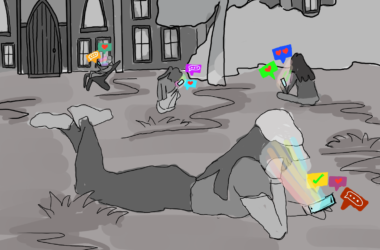
It only takes a few days of uninterrupted Instagram scrolling and aimless neighbourhood walks before the Summer Brain (SB) switches on. Your SB is so happy and naive; it believes that a day consisting of tanning, eating out, and partying is a triumph of productivity. The SB, unchallenged for weeks on end, may go into shock when you find yourself back in the McIntyre Medical Building at 8:30 a.m. But fret not: As your SB scrambles to take notes, set up a Notion, and jump into a hefty reading list, you are not alone. Transitions are challenging—even when those transitions are back to a place you’re well-acquainted with. 

In an interview with The Tribune, Léa Neblai, U2 Arts, shared that returning to McGill after a summer relaxing at home on Guadeloupe beaches brings some anxiety.

“I mostly struggle with the routine because I’m not so organized […] and there’s a lot of time management and realization that you [can’t] take too long to [do] your readings,” Neblai said. “It’s difficult for me to set a strict routine and stick to it.” 

Many students find organizing their time a difficult and daunting feat after a summer off. Ivy Luders, U2 Arts, mirrored the worries that Neblai expressed.

“I feel like even though I’m a junior, I still don’t know how to balance all of the readings I have to do,” Luders said. “It takes so much time and I’m such a slow reader, and I get so distracted. I’m still sorting it out.”

Despite shared anxiety about the incoming heavy workload, Neblai feels that an enjoyable, manageable routine will fall into place in time. 

“I’m looking forward to learning new things [and] discovering new people,” she added. “[I’m taking] classes that I’m really interested in, so I hope I’m going to learn stuff that I like and enjoy working in these circles.”

Lucas Sirois, U3 Arts, echoed these ideas in an interview with The Tribune, highlighting that the back-to-school transition gets easier each year, and that enjoying campus while it’s nice out is the best remedy. Sirois explained that switching the mental gears from summer relaxation to the rigour McGill expects is part of what can make the transition a challenge.

David Flexer, U1 Arts, acknowledged that back-to-school anxiety isn’t always a terrible thing in an interview with The Tribune

“The good thing about being anxious is that it’s kind of like the double-edged blade of, [you’re] anxious, because it’s change, it’s new, it’s stressful, but at the same time, it’s new, so it opens you up to so many more opportunities.” 

So here’s some Tribune tough love. Remember that transitions are a challenge for everyone, no matter how far from home you may be, or what year you are embarking on. Let your SB go, as it has served its purpose and will always come back. With this in mind, allow yourself some grace to feel multiple things at once as the course load inevitably picks up. Don’t forget—anxiety and excitement can go hand in hand.

Editorial, Opinion

Montreal’s gutted motion pacifies Israel’s apartheid regime and shirks precedented municipal responsibility

On Aug. 24, the Montreal City Council adopted a motion introduced by the Official Opposition, Projet Montréal, that expresses solidarity with the Palestinian people and civilian casualties under the Israeli siege.

Passed by a 54 to 6 vote, the approved motion diverges significantly from Projet Montréal’s initial proposition. The original motion called for the City of Montreal to suspend all institutional ties with the Israeli government, and to use the terms “apartheid” and “genocide” when referring to the Israeli occupation in Gaza and the West Bank—terms that the United Nations and Amnesty International uphold as legally correct.

However, before the City Council meeting adjourned, Montreal Mayor Soraya Martinez Ferrada delivered a speech arguing that international affairs are not a municipal responsibility. She cited rising incidents of antisemitism in the province as further justification against Projet Montréal’s motion. 

Following her lead, the Official Majority, Ensemble Montréal, proposed amendments to scrap provisions calling for Montreal to cut its institutional ties with Israel and change official terminology. The amended version of the motion now not only lacks concrete calls to action or any quantifiable economic or bureaucratic boycott of the Israeli government’s occupation in Gaza, but also fails to condemn the apartheid regime at all.

The amended motion—and the rationale that led to it—fails the city’s Palestinian and Jewish populations alike, reflecting a deliberate and hypocritical recalcitrance towards the city’s precedented responsibility to take a stance beyond just symbolic solidarity.

Ferrada’s leading argument for erasing the economic and institutional boycott provisions from the motion is that municipalities have neither a role nor a responsibility to engage in international affairs—despite her mayoral campaign’s emphasis on reviving multi-national diversity in Montreal and increasing the city’s international profile. While it is true that municipalities do not have independent constitutional jurisdiction over international affairs, municipal governmental intervention in global issues is politically and economically salient, and such intervention from Montreal’s government specifically has strong historical precedent.

Previously, the Montreal municipal government has independently cut economic and institutional ties both in the 1990s with the South African apartheid regime, and in 2022 with Russia for its war of aggression against Ukraine. During his tenure as mayor of Montreal, Jean Doré led the city’s government to adopt a resolution demanding that all city contractors end transactions with South African businesses, and established a committee tasked with auditing the city’s economic ties to the apartheid regime. More recently, after Russia invaded Ukraine, then-Mayor Valérie Plante publicly condemned the invasion, while members of Ensemble Montréal called for the city to cut economic ties with Russian businesses. The city also sent a donation to the Canadian Red Cross to aid recovery efforts in Ukraine.

These demonstrations of independent municipal condemnation and boycotting of violent regimes affirm that municipalities like Montreal can exert prominent political-economic power in international issues. It is a lack of political will, not constitutional constraint, that prevents Montreal’s enactment of similar boycotts of the Israeli state.

The municipal government is a Montrealer’s closest point from which their voice can be communicated to an echelon capable of real change. Yet if municipal politicians refuse to enact economic sanctions or explicitly condemn Israel’s atrocity crimes, there is significantly less pressure on the federal government to do the same. Municipal governments, as the first rung in the ladder between citizen and prime minister, have a responsibility both to amplify constituents’ voices, and to take legislative steps to reckon with any and all issues relevant to Montrealers—as Montreal residents and global citizens alike.

Further, if Montreal’s bilateral economic and institutional collaborations with the Israeli government are substantial enough to have been at the center of Projet Montréal’s original motion, their role in enabling this violence must be equally salient. The existence of these ties to Israel in the first place speaks to the city’s direct involvement in, and active promotion of, Israel’s occupation in Gaza. Ferrada’s argument that the city cannot and should not involve itself in human rights issues overseas, while garnering tangible financial and institutional benefit from the perpetrator of that violence, is violently hypocritical.

The amended version of the motion that the Montreal government did adopt is a symbolic gesture of solidarity—gutted of accountability infrastructure or actionable demands—that extricates the municipality from any real commitment. When an expression of solidarity is the beginning and end of a city’s stance on an apartheid regime, the scope of future municipal-level action becomes similarly limited to symbolism.

Ferrada’s second argument for the amended motion was based on the documented rise of antisemitism in Montreal—claiming that economic and institutional boycotts, along with the formal change in the bureaucratic language used to describe the Israeli occupation, would represent a failure on the part of the city to support its Jewish community. Ferrada’s argument is based on the fundamental conflation between antisemitism and anti-Zionism—a conflation that hurts Montreal Jews and Palestinians alike.

In fact, equating continued support for the Israeli state with support for Montreal’s Jewish population has the potential to exacerbate antisemitism, as it incorrectly aligns Judaism with the abuses enacted by the Israeli government. A growing population of Jewish Montrealers outwardly condemn Israel’s violence in Gaza, reiterating the distinction between their Jewish identity and the Israeli state. Ferrada’s appropriation of antisemitism as rationale for the municipal government’s inaction is a divisive non-sequitur that threatens the very Jewish Montrealers whose wellbeing she is claiming to champion. Condemnation of the Israeli state and support for Montreal’s Jewish community are not mutually exclusive.

More broadly, the acquiescent attitude towards Israel’s genocide reflected in the amended motion aligns with a long track record of hostility towards Palestinians in Montreal and Quebec as a whole. Palestinians immigrating to Quebec from Gaza, for example, receive provincial public healthcare for only three months before they are expected to fund their healthcare out-of-pocket. 

Meanwhile, for more than two years, Immigration, Refugees and Citizenship Canada has refused to process the study visa applications of 130 Palestinian graduate students who have been accepted to Canada’s most competitive graduate programs but remain stuck in Gaza awaiting visa approval. Disproportionate police violence against pro-Palestinian protesters also persists, along with structural barriers to Palestinians’ participation in political conversations in the first place. 

Even on the City Council discussion floor for this very motion, the city prohibited hijab-wearing attendees from wearing their religious garments in alignment with the province’s ban on visual religious symbols—a restriction that disproportionately targeted Muslim community members seeking to participate in the meeting.

The Montreal government has a responsibility to follow its own municipal precedent and enact economic and institutional boycotts of the Israeli state. Such legislation must also be explicit and condemnatory in its use of language: Israel is committing a genocide in the Gaza Strip, and Montreal’s legislation must address the conflict as such.

Yet even if the municipal government continues to ignore its imperative to act, no individual is helpless in stirring political action: Voting in municipal, provincial, and national elections is foundational to any future reform. Last municipal election, Montreal saw a mere 37 per cent voter turnout. Showing up to vote armed with an educated understanding of who is on the ballot is a necessary condition for constructive legislative reform. Finally, as students at an influential institution in Montreal with its own undeniable complicity in the Israeli genocide, we must not cede in this war of attrition. As inaction persists, incessant demands for a politically responsible municipal government are more important than ever.

McGill, News

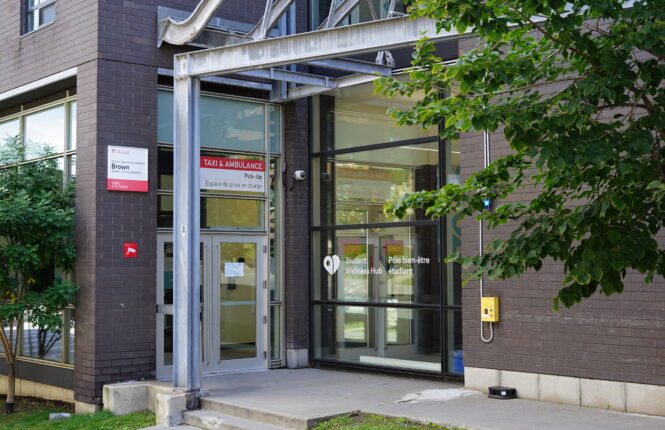
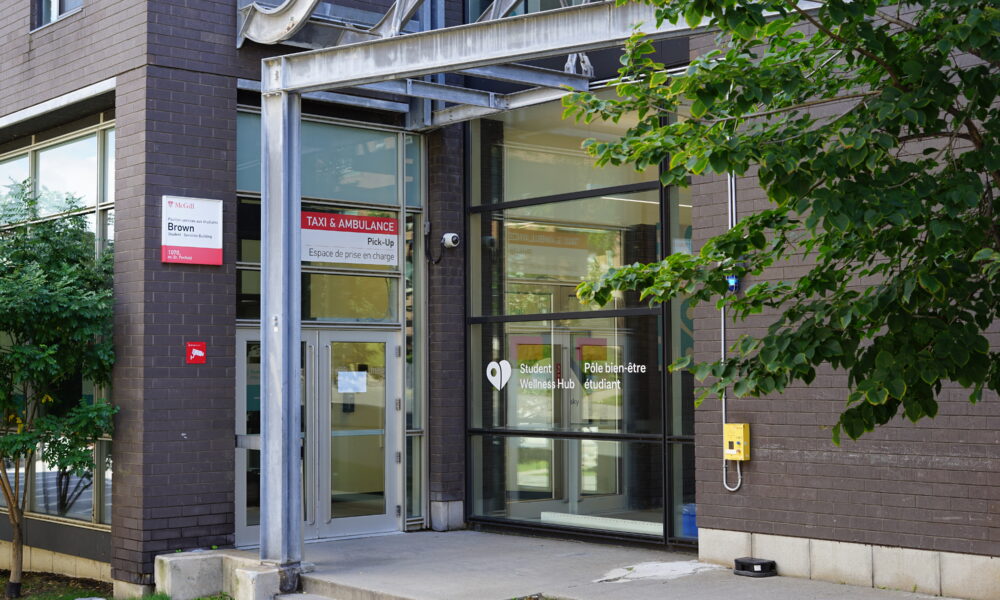
McGill Wellness Hub reinstates GAC for trans American students under the age of 19

The Montreal Trans Patient Union (TPU)—a collective advocating for healthcare for trans and nonbinary people—announced on July 12 that McGill’s Student Wellness Hub will once again provide gender-affirming care (GAC) services to trans American students under the age of 19. This reversal followed months of negotiations between the Wellness Hub and the TPU, after the Wellness Hub decided in March to suspend GAC access to this demographic. 

The Wellness Hub halted certain American students’ access to GAC in light of United States President Donald Trump’s executive order in January 2025, which banned young Americans from accessing this essential care. Following this ban, the Trump administration released a form in April of the same year, allowing people to whistleblow on American and Canadian doctors who provide GAC. 

The Wellness Hub cited related liability concerns about potential American legal repercussions for McGill doctors performing GAC as the reason behind the suspension. However, the TPU and other advocates for GAC argued that precedent shows American executive orders have no legal force in Canada, rendering the Wellness Hub’s decision to suspend this care unnecessary.

In an interview with The Tribune, Emma Gimbert, a U2 McGill student and member of the TPU, shed light on how the process of reinstating GAC at the Wellness Hub unfolded.

“After some discussions with the [Wellness] Hub, and after [the TPU] had a couple interviews with some local newspapers, [and made] some social media posts, [there was] pressure towards the [Wellness] Hub,” she stated. “[After] internal discussions [between the Wellness Hub and the TPU], we eventually came to the agreement [in May 2026] that it would be up to the doctor’s individual discretion of whether they wanted to provide HRT to 19-year-olds based on their personal assessment of the legal risks involved with the situation […] and we know that there’s at least one doctor [at] the [Wellness] Hub who [is currently] willing to prescribe that care.”

Eike*, co-administrator of the TPU and recent McGill graduate, explained in an interview with The Tribune how the Wellness Hub’s initial GAC suspension demonstrates greater concern over doctors’ hypothetical safety than the immediate safety risks caused by limiting students’ GAC access. 

“It is incredibly unlikely for a doctor from Canada to actually face action over [Trump’s executive order],” they said. “[An adult patient’s] parents [would] have to get access to their medical records, [and] then have to report [them via the whistleblowing] form [….] Then, the Trump government [has] to decide [to] give this list of doctors to every border station [between Canada and the United States] and [have the] police ‘do something’ [….] I do think that the concerns by doctors have been somewhat exaggerated, [seeing as] it really is a very specific sequence of events that cause things to go wrong.”

Eike then noted that for some trans students, McGill campus services may be the only avenue for receiving the medical support they need.

“In theory, students can go to another [Montreal] clinic and get [GAC],” they explained. “But being a new international student in Quebec, […] if you’re getting care through the public system, you don’t have [RAMQ] and [must rely] on your international student [health] insurance, [so] you really don’t have other options than the [Wellness] Hub [unless] you have hundreds or thousands of dollars to go private.”

McGill’s Media Relations Office did not comment to The Tribune on the Wellness Hub’s recent GAC provision guidelines.

In an interview with The Tribune, Celeste Trianon, Montreal trans rights advocate and reporter, reiterated TPU members’ assertions that the Wellness Hub’s GAC offerings are essential for international students who struggle to navigate the francophone public healthcare system or come from countries where GAC is not legally available.

“The [Wellness Hub’s decision] to implement a ban on [GAC for] U.S. international students […] is confusing,” she said. “Why [is GAC then] allowed for someone fleeing from Russia or Saudi Arabia or all these other countries where trans healthcare is banned [or restricted], even for adults?”

Trianon also echoed Eike’s perspective, stating that the Wellness Hub’s GAC interruption posed a much greater risk to trans students than doctors, considering Quebec’s broader anti-trans climate.

“In Quebec, there are several anti-trans policies which are currently active,” Trianon said. “In the public sector, the word ‘iel’, the equivalent of ‘they/them’ in English, is prohibited by force of government policy, and there’s also current policy throwing trans women into men’s prisons, […] which can […] expose [them] to increased risks of sexual assault.”

Chloe*, a collective member of The Union for Gender Empowerment—a trans-positive and feminist McGill service—expressed the importance of sustained, collective action to protect trans rights amid growing uncertainty. In an interview with The Tribune, she highlighted the insecurity of trans healthcare in Canada and the backslides to trans rights in the U.S. as reasons for demanding stronger institutional accountability and support.

“The consistent crux of trans healthcare is that it’s always very precarious, and we always have to fight for every inch,” she stated. “So it’s always kind of a consistent combat with organizations like [universities] who […] without outside pressure, will just kind of revert to underfunding and neglecting trans healthcare [….] We need to just keep the pressure up [and] keep fighting for more because […] any step back, especially given the context in the U.S., is very risky to a lot of trans students.”

Gimbert similarly discussed how, considering some American students may be attending McGill in large part to avoid anti-trans legislation at home, GAC must be assured by the university.

“[GAC] is a necessary thing that trans people often need to improve their mental health and to feel more comfortable in themselves, and recognizing [through GAC provision] that it’s [a form of] healthcare same as anyone else would receive, and not some special, discrete category, helps to affirm that [GAC] is something that should be supported across the board,” she said.

Eike further emphasized that GAC must not be “medically gatekept.” 

“An issue in the whole Quebec healthcare system […] is that providing [GAC such as hormone replacement therapy (HRT)] is viewed [as] specialty trans care,” Eike stated. “Oftentimes, doctors will refer you to an endocrinologist, [though] any family doctor in Quebec is able to provide HRT. A lot of doctors assume [this care] is out of their professional bounds, but it very much is not.” 

Eike then called out the Quebec medical system’s undue treatment of GAC procedures as exceptional.

“If you were going to a doctor who had gone to [medical] school decades ago, and they [said], ‘I never learned about that new cholesterol medication, so I just don’t prescribe it,’ you’d say, ‘No. You’re a doctor. It’s your job to stay up to date on the current care that you can provide your patients.’ And HRT is just not held to the same standard,” Eike said. “The bar is on the floor for all of this.”

Beyond the Wellness Hub’s reversed decision, Eike also spoke to the TPU’s wider fight against barriers to GAC in Montreal.

“[Limited GAC access] is partly downstream of transphobia and not necessarily caring about trans people,” they stated. “And it is partly just down to a lack of resources. The [Quebec] medical system in general, and family doctors especially, are very overburdened, and so we [at the TPU] are starting to run into more systemic problems in addition to these smaller ones. And so that’s what we’re working to address more broadly.”

*Eike and Chloe’s last names have been omitted for the sake of their privacy.

To learn more about GAC, visit transpatientunion.org, where you can also sign an open letter stating your support for the TPU’s current advocacy for shorter GAC wait times in Quebec.

Sports

After McGill Athletics cuts, teams navigate a new future under SSMU

McGill Athletics and Recreation announced last November that it would cut 25 varsity and club teams across 15 sports, citing issues with human resource capacity and budget constraints. Since then, most of the 25 teams have worked with the Students’ Society of McGill University (SSMU) to reinstate their programs by shifting their organizational authority from McGill Athletics to the SSMU.

The McGill Nordic Ski Team is Canada’s first collegiate skiing program. The club president, Céléna Cossette-Chan, U3 Science, explained her initial shock that her team was cut in an interview with The Tribune.

“We never thought that [the cuts] would come down to the self-led teams. We train outside [of McGill], and we only store our equipment in a small closet that [McGill Athletics] gave us,” Cossette-Chan said.

Since the club is self-funded, its athletes were accustomed to handling finances on their own. Now, the athletes must learn to follow SSMU’s guidelines for creating a club, such as writing a constitution and transferring over their bank account.

“[The SSMU has] been really helpful and supportive. They sent a lot of emails, and they’ve been reaching out to let us know the deadlines,” Cossette-Chan continued. 

SSMU’s Legislative Council discussed how to best assist teams after the topic was brought forward by the Council’s Athletics Representative. SSMU Vice President (VP) of Clubs and Services, Acadia Knickerbocker, explained the transition in more depth in an interview with The Tribune.

“At that time, the […] Council decided to integrate the [cut] teams as interim clubs until […] they were either reinstated by McGill Athletics or a more comprehensive solution was created at SSMU,” Knickerbocker said. “Then, the Council created a task force which addresses what that solution would look like, and that task force operated from the last academic year.” 

The McGill Fencing Club, formerly associated with McGill Recreation, had to rename itself the McGill Students Fencing Club after the cuts.

“Since McGill owns the images and the name of ‘McGill Varsity,’ the teams have had to rebrand themselves as SSMU groups,” Knickerbocker said.

In an interview with The Tribune, the president of the Fencing Club, Claire Han, U2 Science, said the team’s biggest challenge has been managing its finances.

“We have a higher [rental fee], so we have to decide how to compensate our instructors and how much to charge for [our] registration fee,” Han said. “SSMU offered a discounted rate, but it’s still not a lot compared to when we were under McGill Recreation. But after some meetings with [McGill Recreation], we figured out a new deal that ended up working out, so they have been quite helpful on that end.”

For the baseball team, a former Tier 2 varsity team, off-field logistics now depend more on the athletes than on the support McGill Athletics previously provided.

In a joint interview with The Tribune, team captain Agastya Kushari, U3 Arts, and the team’s VP of Operations and Communications, Marcus Dela Cruz, U3 Arts, explained that interest in their team has not wavered.

“Probably 30 to 35 players have expressed interest in joining [the team], and we definitely don’t have that many spots, so [we are in a] good position,” Dela Cruz said.

Both student-athletes expressed that there are many unpredictable factors as they head into their first season under SSMU. On the other hand, they believed that the switchover helped the team to gain greater autonomy over their program, as well as to bond as athletes. 

“We are planning out our budget, booking our field times, coordinating with Coach [Christopher Haddad] about our selection criteria,” Kushari explained. “These are things that we have never seen before, but it makes us [have] more ownership of the team.”

“I think that it’s honestly been a positive experience for [athletes] to […] promote their teams based on the hard work that they’ve done,” Knickerbocker echoed.

Regarding its transition from McGill Athletics to SSMU, the baseball team expressed some frustration with the information they’ve received from the former.

“Communication with [McGill Athletics] has been a test of our patience, to put it bluntly,” Kushari said. “I completely understand why it takes time, but it limits what we can do.”

For McGill Tennis, the cuts affected the former club team’s eligibility to compete on a wider scale. For the past few years, the team had been communicating with McGill Athletics to confirm its eligibility to compete at U SPORTS Nationals. Although Tennis Québec still allowed the team to compete in provincial tournaments after it was cut, the situation underscored McGill Tennis’s inability to compete at the national level.

Women’s team captain, Charlie McNeil, U3 Management, spoke to the team’s frustration in an interview with The Tribune.

“Last year at provincials, the men won and the women were finalists, so the men should have gone to nationals, and the women were very close. But now, it’s not even worth trying [to get the eligibility],” McNeil said.

“[The SSMU have been] talking to the competitions that [teams] intend to compete at and providing documentation [so they are] allowed to compete on behalf of SSMU,” Knickerbocker explained.

For McGill Women’s Rugby, November’s cuts stung but did not shock. Elisa Abergel, U3 Engineering, a fullback and one of the team’s new executive members, spoke to The Tribune about the restructuring. 

“The school itself never really gave that many resources towards women’s rugby,” Abergel said.

What followed the announcement was less devastation than confusion, and a scramble by players to navigate the team’s uncertain next steps largely on their own. Rather than continue fighting for varsity reinstatement, the team registered with the SSMU, prioritizing certainty over a tedious battle.

“The longer we waited, the less certainty we’d have about a future season,” Abergel explained. “The SSMU hadn’t anticipated absorbing so many teams at once, and untangling the nuances tied to ex-varsity programs took weeks of back-and-forth, [but] we made it through.”

Senior members took on executive roles spanning hiring, finances and logistics, and running a student-led committee. They also brought in men’s rugby alumnus Nicolas Dube-Mercier as head coach. Registering as a club under Rugby Québec proved cost-effective, as many players already competed with the organization in the summer so their insurance carried into the fall. The team floats coaching, kit, and an independently hired physiotherapist through fundraising, alumni support, and sponsorships.

The rugby team is hardly scaling back. Three practices a week build toward an eight-game season against university and club sides, including Norwich University, Laval University, Université de Montréal, Sherbrooke University, Bishop’s University, and Carleton University, with the long-term aim of earning their way back into the Réseau du sport étudiant du Québec.

For Abergel and women’s rugby, that ambition is the story.

“Many students stepped up to make this happen, and it’s really exciting that we’re able to continue playing, continue competing,” she said. “It’s a new beginning, and [there is] a lot of potential for growth.”

As for McGill Field Hockey, the team negotiated with Carleton University and the University of Ottawa with the goal of competing as much as possible. Changes they face include sharing the field with other teams during practice. 

Tess Schreyer, U3 Arts and Science, told The Tribune that the planning process has been “bittersweet.”

“It’s definitely nice to be in [collaboration] with my teammates and us having more of a role, but it’s hard when you have so much unknown,” Schreyer said. “[The SSMU] were very responsive, and it seemed like they were ready for a big turnover of a lot of teams.”

Knickerbocker emphasized the SSMU’s goal of supporting students and highlighted the importance of transparent communication with McGill Athletics.

“McGill has been responsive with all of our questions,” Knickerbocker said. “For us, the best-case scenario is open communication […] and that’s what we’ve seen so far from McGill.”

A McGill Athletics spokesperson stated that representatives from Athletics and Recreation, Student Life and Learning, and the SSMU have been working closely together to ensure a smooth transition in an interview with The Tribune.

“The priority for us was always supporting students, their well-being, and their goals,” Knickerbocker said. “Our focus was always to make sure that the students were able to [compete] […] safely, and to come up with a long-term plan so they could continue in the future.”

Managing Editor Clara Smyrski is captain of the McGill Women’s Field Hockey Club. She was not involved in the writing, editing, or publication of any parts of this article pertaining to the Field Hockey team.

Art, Arts & Entertainment

Know Your Artist: Stina Baudin

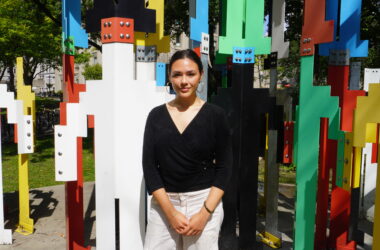
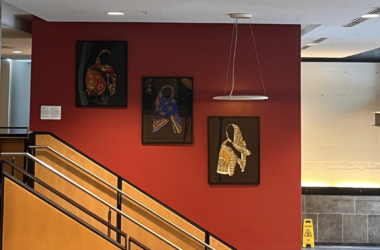
Based in Montreal, Haitian-Canadian interdisciplinary artist Stina Baudin combines textile, sound, written text, and archival data to represent Black and Afro-diasporic identity. She describes her approach as bricolage, a mixed media practice that transforms readily-available materials into a composite work. 

In an interview with The Tribune, Baudin shared how she became involved in textile-based art.

“After I graduated university, I took a trip to Cambodia alone, and I stumbled upon a collective of Cambodian women weaving. I didn’t know what the loom was back then, and we didn’t speak the same language, but I just sat there for hours watching them weave [….] I was fascinated by the loom itself,” she said.

Baudin incorporates found objects, multicoloured beads, and a wide range of fibres into her textile pieces, allowing her to innovate beyond the inherent capabilities of fabric. In this way, she practices bricolage—not only within her textile practice, but also by combining her weaving with writing or sound. 

According to Baudin, this innovation is intimately related to the political intention of her work.

“I wasn’t interested in just aesthetics or creating something for a [function]. I was interested in developing political themes within the work, and fabric […] [has] its own language [for doing so],” she said. “It’s found in almost every culture. Fibre arts, as a medium, […] [is] not just cotton. It can be cables, hair, anything fibrous, depending on where your imagination brings you.”

Her latest work, The Sky Still Carries the Stories, epitomizes her portfolio’s signature emphasis on bricolage. Installed on the roof of the Adélard barn in Frelighsburg, Quebec, the piece is a tapestry depicting a night sky in black and indigo thread, with hand-sewn mirrors forming its stars. 

Baudin described how the project began with the intention of commemorating the site’s Black history and community.

“The story goes that there were Black people in America who took the Underground Railroad […] and found themselves in Frelighsburg,” she said. “This barn is 100 years old […] [and] in speculation, it could have been a place where Black people lived and worked, like many of the barns in the town.”

The architectural location of The Sky Still Carries the Stories grounds the work in the town’s Black history, while simultaneously forcing the viewer to gaze up at the tapestry-adorned roof from their place on the ground. 

“When I first looked at the barn from the back side, […] the backdrop was the sky [….] I was instantly reminded of […] the stars that guided [Black people] to freedom,” Baudin said. “[I see] stars as a place where we can think [of] our ancestors in the sky, watching over us, divinely protecting us.” 

In their research at Adélard, Baudin’s team discovered several Black historic residents of Frelighsburg who had lived in the town, but were not named in its archives. Baudin highlighted the inherent complexities of remembering individuals whose histories are unrecorded or hidden behind unmarked graves.

“There were 220 Black people [who] lived there at some point, but there were not 220 names in the archives, so I started thinking about […] how to account for this absence of names, […] how to commemorate all these people that are unnamed and [buried] in graves that are unnamed, some that exist on private property,” she said. “This [was] my first large-scale project, and it was a great exercise for me in terms of taking up space […] to make a history that hasn’t been visible, visible.”

The Sky Still Carries the Stars is also accompanied by a soundscape, which combines a musical composition by Markus Floats with spoken-word poetry and sporadic, out-of-order counting. 

“I had personally recorded Black Canadians […] counting numbers at random, and I thought about these numbers as being representative of the names that were not found in the archives […] [and] the scatteredness of not being found and not being known,” she said.

Baudin’s work gracefully weaves unknown Black histories into the threads of the present, depicting Black identity through her signature bricolage approach.

The Sky Still Carries the Stories is on display at Adélard until Nov. 2, 2026.

McGill, News

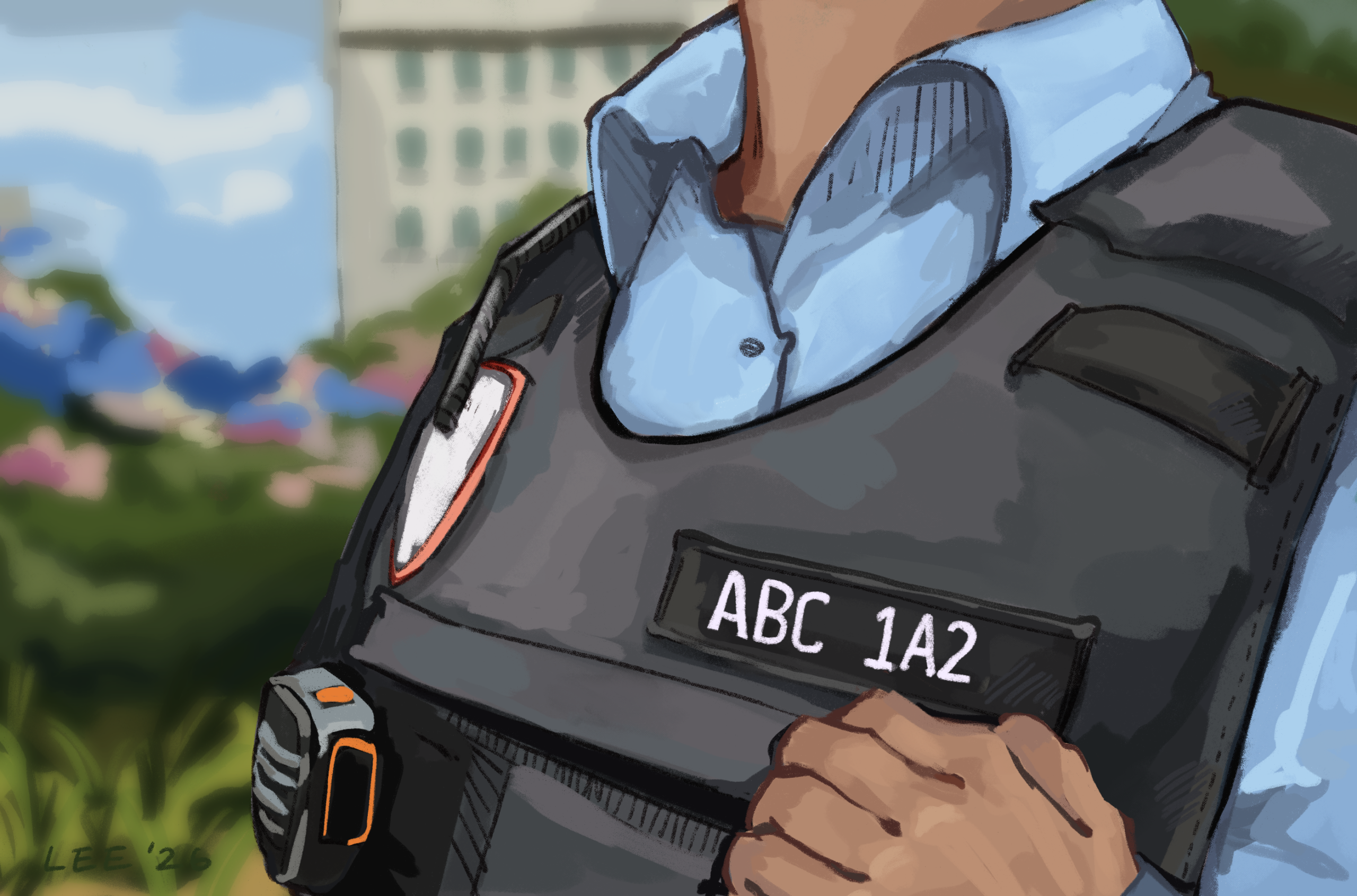
McGill security required to wear recognizable badges per new policy

Following a joint meeting with student leaders and members of McGill Campus Public Safety earlier this year, a student-led initiative mandated McGill campus security to wear visible, distinct badges on their uniforms starting at the beginning of the 2026-27 academic year. These badges contain six alphanumerical digits—three pronounceable letters followed by a combination of numbers and letters.

The resolution comes months after the McGill Board of Governors ratified the Identification Policy for Access to Properties Owned, Occupied or Used by the University in April 2026, which granted McGill security the right to request identification from anyone on campus grounds. 

In a written exchange with The Tribune, Students’ Society of McGill University (SSMU) President Hamza Abu-Alkhair explained that the badge policy is a meaningful result of community members expressing concern the past few years over campus safety and officer accountability.

“[This is] a project proposed […] and heavily consulted on [by student leaders],” Abu-Alkhair wrote. “SSMU Senators last year had been discussing the ID Policy […] in particular to how it reflects on the policy having a dual context of both academic and discipline.”

In an email to The Tribune, McGill’s Media Relations Office (MRO) highlighted that the new badge system gives community members greater clarity when interacting with security on campus.

“The new agent badges improve transparency and help the McGill community better identify security personnel,” the MRO wrote. “[The Identification Policy] establishes a framework for requesting identification from people on properties that the University owns, occupies, or uses for its operations and activities.” 

Naya Wardeh, former president of the Arts and Science Undergraduate Society, reiterated this perspective, explaining that the new badge policy allows for simpler identification of security staff for easier reporting purposes in an interview with The Tribune

“[Agents previously] kept IDs in their pockets that they were to show on request,” Wardeh said. “We wanted something visible and, because the whole point of the ID implementation was to develop the reporting system, we also needed something easy to memorize.” 

Wardeh worked with McGill Associate Professor of Psychology Oliver Hardt to design the six-digit badge identifiers, accounting for colourblindness and visibility in low-light conditions as well as alphanumeric distinctiveness. According to Wardeh, this design and the process behind it has helped increase opportunities for students to hold security accountable. 

“Our main duty in the [Chief Security Officer (CSO)] meetings was advocating for and relaying student concerns about campus security, especially given [its] heightened presence recently,” Wardeh said. “As the meetings progressed […] [CSO Tom O’Neill and security representatives] became a lot more collaborative.”

The meeting that brought about the badge policy came shortly after McGill appointed O’Neill. Wardeh underscored that students and campus security under O’Neill’s leadership now have a set of action items for future meetings and are working to implement a reporting system. 
“It’s the middle ground we reached to give students the ability to report agents in case of emergencies, all the while protecting the agents’ identities,” Wardeh said.

In March 2025, a security guard detained a University Affairs (UA) staff member without probable cause, refusing to tell her what she was being held for. When the staff member tried to report the officer through Campus Public Safety, the website contained little to no reachable contacts. This is still the case today: The link to the Senior Director’s email is for Pierre Barbarie, who left the post a year ago

Despite the positive exchanges between security representatives and student leaders throughout badge policy negotiations, Wardeh remains skeptical about the future. 

“I don’t want to sanitize the issues with campus security and admin by saying all of this. I think it’s important to also acknowledge the problems in the same conversation,” Wardeh said. “[It was previously] understandable to wonder if our communication efforts with McGill admin [made] any difference at all.”

McGill, News

AMNAS challenges McGill at the Tribunal administratif du travail

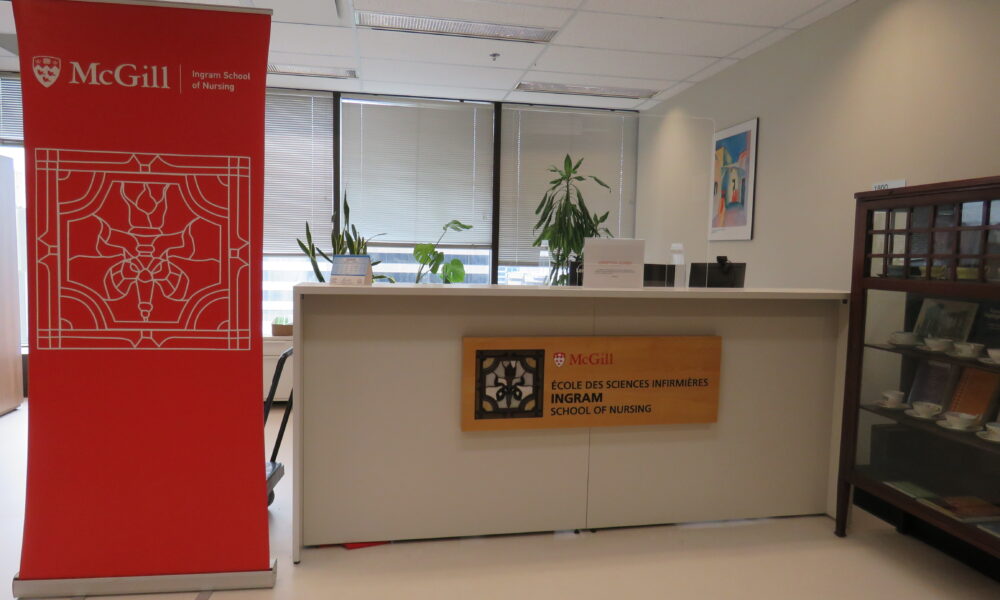
On Aug. 28, the Association of McGill Nursing Academic Staff (AMNAS) and McGill attended a hearing at the Tribunal administratif du travail. AMNAS represents academic staff in the Ingram School of Nursing, one of six schools that fall under McGill’s Faculty of Medicine and Health Sciences (FMHS). Represented by Sibel Ataogul, AMNAS disputed McGill’s contestation of AMNAS’ union certification. The union first filed for certification before the Tribunal on June 29, representing McGill’s seventh academic union to file for accreditation. 

Shortly after, McGill contested AMNAS’ certification, stating that AMNAS should be unionized under its broader faculty rather than by the school itself. Currently, there are 19 unions and 2 non-unionized associations at McGill. This includes the McGill Association of University Teachers (MAUT)—an existing organization that aims to include faculty in university governance in order to advance the working conditions of McGill’s academic staff and librarians.

AMNAS has already obtained a membership of over 75 per cent nursing academic staff—exceeding the 50 per cent threshold in Quebec for union certification. If McGill’s nursing academic staff accepts McGill’s proposal to unionize under the FMHS, the union membership rate would drop significantly, effectively restarting the unionization process. 

In an interview with The Tribune, William Archambault, assistant professor of nursing and AMNAS interim president, highlighted the unfair working conditions that nursing academic staff experience, underscoring the urgency to unionize amid McGill’s budget cuts.

“Over the past year and a half, we were asked on multiple occasions to take on more work without more pay and other compensations,” Archambault said. “Workload increases for the same conditions, which is one thing when you’re told it’s just going to be for one semester, while [McGill] gets the [financial] situation under control. But no, whatever was added, we’re being told that it’s the new normal now, and it looks like it might keep happening for a bit [….] It was not a discussion. We were basically informed of decisions that were made without consulting us, and that’s the biggest source of frustration among faculty.”

In a written statement to The Tribune, Norma Ponzoni, assistant professor of nursing, mirrored the same sentiment, citing the disproportionate workload as a major challenge the Nursing faculty faces.

“The number of students in some Nursing courses has increased substantially, while at the same time faculty are being allocated fewer teaching credits for essentially the same work,” Ponzoni wrote. “We’re facing a difficult combination: more students and greater teaching demands, but less recognition of that work through teaching credits. That is simply not sustainable over the long term.”

Ponzoni also expressed that AMNAS allows the faculty to hold collective bargaining power, providing a more effective avenue to improving working conditions. 

“Under the existing collegial and administrative model, faculty can raise concerns, participate in committees, and seek support from organizations such as MAUT,” Ponzoni wrote. “Collective bargaining changes that dynamic. It gives faculty a formal seat at the table when decisions about our employment conditions are being made. Instead of simply raising concerns or making recommendations, we can negotiate those conditions with the employer. And once an agreement is reached, its provisions aren’t just recommendations—they’re contractual commitments [….] That creates a different level of accountability.”

In a written statement to The Tribune, McGill’s Media Relations Office (MRO) maintained that McGill respects the Nursing faculty’s right to unionize, arguing that the university’s decision to contest the accreditation stemmed from concerns over the union’s fit rather than opposition to unionization itself.

“We have never opposed unionization as a matter of principle, and we remain committed to bargaining in good faith with our certified unions and to reaching collective agreements that are fair and sustainable for everyone involved,” the MRO wrote. “The question currently before the Tribunal administratif du travail is not whether nursing academic staff can unionize; it’s about which bargaining unit is the right fit for certification. That’s a legitimate legal question, and the Tribunal is the appropriate place to resolve it. McGill will present its position there, as any party to a certification process is entitled to do.”

According to Assistant Professor of Nursing Caroline Marchionni, the School of Nursing has the highest concentration of Contract Academic Staff (CAS)—representing 17 per cent of all CAS faculty at McGill, and 47 per cent of CAS in the FMHS. While CAS faculty are still expected to work full-time, much like Tenure Track Academic Staff, they do not receive the equivalent hiring benefits, pay, and contract length as their tenured colleagues do. 

In an interview with The Tribune, Marchionni emphasized that the need for the School of Nursing to unionize independently stems from its large proportion of CAS faculty.

“Our needs are different, and our primary job is to teach. My job is to educate nurse clinicians and nurse practitioners […] for the Quebec health system and advance nursing education,” Marchionni said. “[Other schools in the faculty] have different mandates, some more focused on research [….] Given the varied missions and methods of renumeration across the six schools, it would never work [….] We’re so different in the way we function on a daily basis that it’s just [McGill’s] way to make [our own union] not happen.”

Archambault shared a similar perspective, illustrating the difference between the School of Nursing and the rest of FMHS. 

“What we’re arguing is that [FMHS] is different from others in the sense that it’s made of a bunch of professional schools who are very distinct, and that we don’t really talk to each other,” Archambault noted. “I don’t know many people in medicine or in physiotherapy [….] I wouldn’t feel comfortable being represented by one of them, just like how I wouldn’t feel comfortable representing those schools because we don’t know [each others’] realities.”

Both Marchionni and Archambault also pointed to a Nursing pharmacology course that originally had two sections—one conducted completely in-person, and the other entirely remote. However, McGill fused the two sections into one in 2025, so that all students now must attend both in-person and online instruction. Marchionni explained how professors were forced to then take on extra work to fulfill the credit requirements.

“Now [the professor] is getting three credits for the whole [course], so then he has a spot in his credit load because we have to teach 18 credits,” Marchionni said. “But 300 students mean 300 emails. He wasn’t compensated for more work.”

Archambault commented that the repercussions of McGill’s decisions are felt most acutely by the course’s professors and instructors, as well as students—rather than the administration itself.

“Pretty much all the students were unhappy,” Archambault said. “Because it happened so quickly and [the course] wasn’t designed for that, the quality of the course definitely went down. And who got blamed for that? The professors. But it wasn’t our decision. We were told basically two months ahead of September [2025], in July, that this was going to happen. So those are examples of decisions that were made top-down without consultation that directly impacted the student experience and learning.”

According to Archambault, when McGill does not renew some CAS faculty contracts, extra work will be piled on to those who stay, or the university will opt to hire more course lecturers. 

“No matter how good [a new] course lecturer is, there’s a lot more rotation. They don’t tend to stick around for many years, which may leave a gap in the curriculum,” Archambault said. “On average, it takes about three to four years minimum to build a good course and to have it running. If that [course lecturer] doesn’t stick around, then everything has to be started over.” 

Science & Technology

McGill science students: You don’t need to know where you’re going yet

Being unsure of what to pursue after university is not an uncommon feeling among McGill students. A string of interests fostered by your academic pathway and environment does not always lead to an obvious next step. Most of the time that is the last thing it does; the endless course selections, varied student body, and plethora of clubs and activities that fill our campus broaden our prospective career interests every day.

For those studying science, the pressure to solidify post-grad plans can often unidirectionally orient students towards a career as a physician. This path is an apparently straightforward one: A science graduate can complete their degree, write the necessary exams, apply, and begin their medical school program in predictable succession.

But what happens when that pathway does not feel so linear?

Annie Bernier completed her PhD in the Department of Microbiology and Immunology at McGill in 2018, her research focusing on microRNAs’ roles in hepatitis C viral infection. She later moved to work in cancer research at Institut Curie and in the biopharmaceutical services industry at CellCarta before transitioning into scientific project management at Consortium Québécois sur la Découverte du Médicament.

“I didn’t have a clear path at all [….] You don’t have to follow a single traditional path. You can have a very meaningful scientific career in a broad diversity of things,” Bernier said in an interview with The Tribune.

Bernier’s range of experiences, consistent curiosity, and desire to learn provided her with tools that ultimately transferred to her career progression. When beginning her PhD, she became the first student to join a new laboratory still establishing its flow and procedures. This unique circumstance gave her the unexpected opportunity to set protocols and to help hire new students, ultimately leading her towards a more administrative scientific career.

“My goal at every step was always, ‘How do I learn new things and keep feeling like I’m building something?’” Bernier said. “When you pick a position, always ask yourself, ‘What can I learn from it?’ and, ‘Am I interested [in learning] those things? Are they going to be useful to me?’ Always take what you know and then try to add something on top of it in your next position.”

Rather than pursuing the traditional postdoctoral route after her PhD, Bernier moved to Paris to work at Institut Curie. The position allowed her to continue doing research while building on the laboratory management skills she had developed during her PhD. During her time in Paris, she worked on understanding how cancer-associated fibroblasts can influence T-cell penetration in lung cancer. Bernier emphasized how this unique experience differs from her other professional progressions that resulted from making connections.

“Do not underestimate the power of networking,” Bernier said.

For Bernier, networking does not necessarily mean attending professional events or marketing yourself to prospective employers. Many of her career connections came from casual conversations that only became relevant months or years later.

Networking, she explained, also introduced her to an abundance of careers that are much less known to the typical science undergraduate.

“I wish students knew how many different careers exist in science beyond medicine, beyond academia [….] [There are also] biotechnology, pharmaceuticals, […] intellectual property, […] science policy regulatory affairs, […] project management, […] medical communications, […] government, […] [and] non-profit organization [jobs],” Bernier said. “The skills you develop during your scientific training are super transferable.”

While the number of possibilities might feel overwhelming, Bernier sees career uncertainty as an opportunity rather than a setback. Her own career path demonstrates how one experience can build on another in unpredictable ways, unveiling new interests and possibilities along the way.

“You don’t need to know exactly where you’re going, but every conversation is going to [add] another piece of the puzzle on the things that you like and the things that you might want to do later,” Bernier said.

Off the Board, Opinion

Belonging is not something we have to earn

I was 16 years old when I first encountered anti-Latino racism. I was in high school, and a professor suggested that my family had ties to drug cartels. I froze, and without knowing what to do or say, I nervously laughed. 

I was 18 years old when my family experienced anti-Latino racism. My mom had come home from the supermarket with my brother, looking distraught. I asked her if something was wrong. She explained that a man in the grocery store parking lot had yelled at her:Go back to where you came from!”—words she never thought she would hear after having lived more years in Canada than in her hometown in Mexico. 

Such blatant acts of racism often get dismissed as expressions of ignorance or, even worse, as tasteless humour. However, the profound effect that anti-Latino racism has on Latino identity and community is far from harmless.

These experiences are neither unique to me nor my family. In fact, they are a reality millions of Latinos in Canada and the United States know all too well. According to Statistics Canada in 2021, more than two in five Latinos described having experienced discrimination in the past six years. It is notably during this time, in 2016, that U.S. President Donald Trump was elected and began his first presidential term. 

Only 100 days into Trump’s tenure, a coalition of 46 Latino organizations published a report outlining the devastating effects the Trump administration was having on Latinos—such as significant budget cuts across social assistance services and the mass targeting of undocumented immigrants. Nearly ten years later, racism against Latinos living in the U.S. and Canada has only escalated. According to the FBI, 2025 was a record year for hate crimes against Latinos in the U.S. In Canada, hate crimes targeting specific ethnic groups such as Latin American and South American populations increased by 23 per cent from 2023 to 2024. 

What I, my family, and many Latinos across North America experience are not isolated events: They are a response to the increasing normalization of anti-immigrant sentiment driven by anxieties surrounding unemployment, housing shortages, national identity, and perceived failures in migration governance. Anti-Latino discourse from political figures like Trump conflates Latino communities with criminality and illegality, further allowing racial profiling and other race-based violence and discrimination to become quotidian for Latinos.

This process of vilification not only harms the way Latinos are perceived, but also negatively affects the way they perceive themselves. Latino youth who have left their native countries for Canada or the U.S. are torn between their Latino heritage and current citizenship. Growing up in a society in which Latino communities are consistently surveilled, detained, and deported creates a deep-seated fear of deportation. These fears fracture family bonds and leave youth struggling with mental health issues that can endure far into adulthood

Social media further normalizes anti-Latino racism by disseminating dehumanizing content online. Videos of Latino families being torn apart by immigration officers and people pleading to Immigration and Customs Enforcement (ICE) agents that they are legal citizens reach thousands of viewers within seconds. As content circulates, what initially sparks rage can begin to feel routine. Numbed by endless exposure to hatred and violence online, viewers become disconnected from victims shown in videos and habitualize racism as just another event. Therefore, challenging and redefining what is deemed as normal becomes a first step in ending anti-Latino racism. 

The mass targeting and deportation of Latino citizens and immigrants is not normal, Latinos fearing violent and potentially fatal encounters with ICE agents is not normal, and wanting to hide one’s visible cultural traits to appear less suspicious in front of authorities is definitely not normal. 

The realities across different Latino communities are not the same, and I am aware that growing up in Montreal has afforded me a certain safety and privilege that others do not have. But I also know what it feels like to be othered by public discourse surrounding my heritage. Even if my experience feels like an alternate reality to other Latinos in North America, I refuse to accept that Latinos must hide what defines their identity and connects them to their ancestors—simply to be seen as less of a threat or more of a citizen. Belonging is not conditional, especially not when it comes to heritage, and it is not something Latinos should have to earn.

Read the latest issue

Read the latest issue