

Latest News

Know Your Athlete, Martlets, Rugby, Sports

Know Your Athlete: Lauren Minns

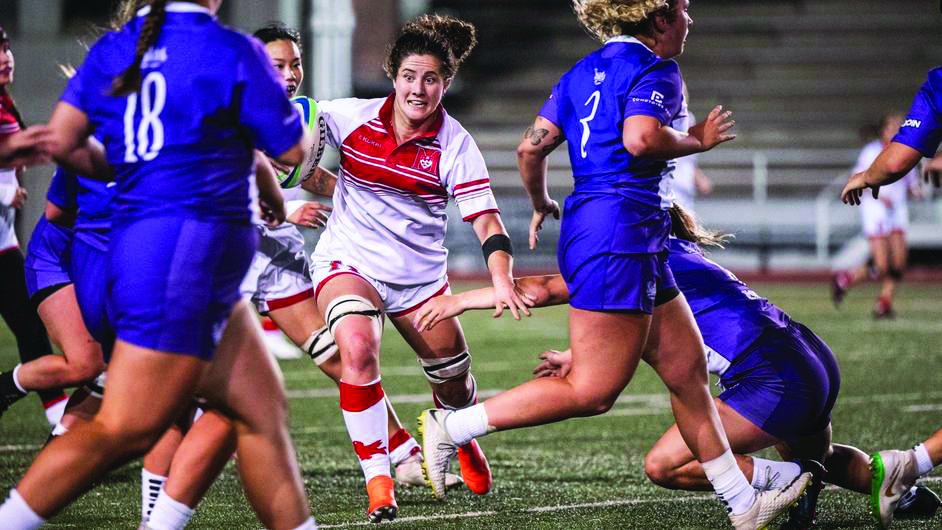
Despite missing the past two seasons due to a sprained ankle and then a coaching job at Vanier College, Lauren Minns was quick to make an impression with the Martlets’ rugby team, scoring three tries in the Martlets’ historic win in the first game of the season. After back-to-back seasons stuck on the bench, Minns sat down with //The Tribune// to discuss her journey to falling in love with the sport and her excitement to finally play a full season at McGill. 

Minns grew up in the Montreal neighborhood of Notre-Dame-de-Grâce, and only started playing rugby as a sport in high school. Growing up, she exclusively played soccer and wrestling. After playing a bit of rugby in high school, she switched her focus to wrestling, but felt that it was not giving her what she wanted from athletics.

“I really missed that team-sport vibe, which is what led me to try out for the rugby team at John Abbott [College] in my third year,” she explained. “Also, wrestling wasn’t [competed] at the CEGEP level, so I wasn’t playing for John Abbott when I wrestled—I was just part of my own club. I wanted to get reintroduced into the student-athlete life in college.”

Minns’ rugby prowess in CEGEP caught the attention of the University of Ottawa (UOttawa). UOttawa representatives invited her to rugby recruitment weekend programs before she later committed to the school. At UOttawa, Minns experienced the glory of a national championship in her rookie year; that season, she won Réseau du sport étudiant du Québec (RSEQ) Rookie of the Year and was a first-team All-Star. She played three seasons for the school before the pandemic wiped out her senior season.

After graduating from UOttawa, Minns came to McGill Law and decided to continue her rugby journey with the Martlets. 

“What I thought was very unique about this opportunity was to just see […] how we can continue helping this program slowly and surely get back to the top—because, at one point, McGill was the best in the RSEQ,” Minns said.

Despite the Martlets’ poor record over the past few seasons, Minns believes that the key to success lies in attitude and in strong defensive play.

“For me, [the mindset] is: How, in any way, shape, or form, can I help decrease the gap between the points we score and the points that the other team scores against us?” she explained. “The goal was to shorten that gap so that every single game felt more competitive, every game felt more like the other team actually had to work for their win, work for every point. I didn’t want [opposing] teams to feel like they could do whatever they wanted.”

In Minns’ eyes, the game against Bishop’s on Aug. 31 exemplified that changed attitude in action as McGill not only rallied to keep their defense tight while scoring points but also made one last try towards the end of the game just to make a point, despite not needing the try to win the game.

At the start of the season, nobody on the team had experienced a win while playing for McGill. With a win under their belt now solidifying their foundation, the team is set up well to keep building their program.

Outside of rugby, Minns is a travel fanatic. Her favourite trip was with one of her best friends to Greece, where she spent six weeks in Sparta volunteering and teaching English to kindergarteners.

“It completely changed my outlook on life—the way people approach life in Sparta is so different from how I was used to approaching it here,” she said. “Nothing felt like a rush there; everyone took the time to do what they wanted to do throughout the day, properly […] the human interaction was so much more genuine and thoughtful.”

The team’s last game of the season was a loss on Oct. 1 against the Université de Montréal. With this season’s conclusion, Minns hopes to make the most of her last year of eligibility in 2024.

Research Briefs, Science & Technology

Based on traits: Selecting more resilient wood for future wood-building industries

Before concrete and steel, wood was the predominant material in many human endeavours. Nowadays, while wood has been mostly replaced, its usage remains common. Wood construction specialists, however, continue to rely on only a few species, limiting their survivability against climate change.

To ensure the viability of forestry and building industries, there must be long-term solutions that reduce the impact of such environmental disturbances. Peter Osborne, a PhD candidate at McGill’s Peter Guo-hua Fu School of Architecture, believes that building with more functionally diverse and ecological resilient wood species is the key.

According to Osborne’s paper, ‘functional traits’ are biological characteristics of plants associated with their growth, survival, and reproduction. A ‘plant-building trait-based’ approach, therefore, analyzes tree species based on their ecological and construction-relevant traits. 

“[Trait-based ecology examines] characteristics within aspecies, such as drought tolerance, leaf area, and seed disperaldiameter at breast height that contribute to forest ecosystem resilience. ,” Osborne said in an interview with The Tribune. “[Building-related traits] would be characteristics of wood that are desired in [construction, within] certain ranges of mechanical and physical properties such as fire resistance and pest tolerance.”

By grouping species of similar construction-relevant traits, Osborne compared the current needs of the industry with the internal characteristics of each species. One of his case studies, performed in southeastern Quebec, found that although the construction industry’s perspective designates softwood from coniferous trees as the most desirable wood, overreliance on a few of these species jeopardizes construction systems.

“Softwoods grow faster and straighter. And in Canada, they are extremely abundant,” Osborne said. “The workability, and the general physical and mechanical properties of these species are oftentimes advantageous.”

To enhance the ecological resilience of our forests, Osborne’s forest-building approach advocates for a greater selection of tree species with diverse functional traits. The construction industry should then extend its repertoire of wood construction techniques to encompass a more extensive spectrum of wood species. To achieve this, the forestry and wood industries need to work synergistically. 

Coniferous trees, often used in wood-building, would be an ideal candidate for growing ecologically resilient, climate-adapted forests. Unfortunately, coniferous trees are prone to both fire and damaging insect species such as the moth genus, Dendrolimus.

Conversely, fire cannot climb the tight, smooth bark of deciduous trees, which can reduce forest fire spread. However, the wood from these trees can easily bend and form knots, which is considered inadequate for construction lumber. Although not used structurally, these hardwoods can still be used in flooring for high durability. Osborne elaborated on this point by alluding to silviculture—the science of controlling and managing forests.

“There are also silvicultural reasons why [hardwoods] are not as utilized—primarily due to their age, the time that they have to take to grow, and the facility silvicultural applications that surround them,” Osborne said. “So, a maple [hardwood species] forest is not as functionally convenient to harvest as a pine forest.”

To examine long-term forest dynamics within the region where these tree species grow, Osborne simulates them on the LANDIS-II model by testing four forest management approaches—business-as-usual (BAU), climate change adaptation (CCA), and two variants of functional diversification network (FDN)—under different climate scenarios—current, warm, and hot. Then, he measures the changes in harvest output and species composition of the trees.

“[Although] in the business-as-usual [BAU] approach, there is a substantial increase in harvest volume[,] unless we somehow find ways to utilize the wood more efficiently[,] we cannot really do it under this approach,” Osborne said. “Under the climate change adaptation [CCA] and the functional diversification network [FDN] approach, we find that the standard building groups (BGs) stayed more or less the same in their output, if not increased compared to the BAU approach. But where we found the most increases were obviously BG3-BG7 [hardwoods].”

Furthermore, he found a 40 per cent increase in short-term harvest volume in the CCA and FDN approaches, resulting from a timely harvest at early growth stages. Prioritizing species with overlapping functional traits for harvest while planting ecologically foreign species would increase forest functional diversity. 

Although the CCA and FDN approaches seem to offer promising avenues, the striking reality is that the outcome remains uncertain. Greater functional diversity and ecological resilience may increase chances of survival in case of ecological disturbances.

“This calls for designers and engineers in the industry to become more adaptable in the future to survive in any of these [climate] scenarios,” Osborne explained.

To prepare for the unforeseeable future, it is critical to work with, and not against, our forests—by increasing the adaptability of wood construction and creating a dynamic and flexible usage of wood in response to current needs.

Science & Technology

Annual Environment Public Lecture explores an economic approach to clean energy

On Oct. 5, McGill’s Bieler School of Environment hosted their annual Environment Public Lecture. For this occasion, Moyse Hall Theatre was speckled with professors and students curious to hear how Gernot Wagner, a climate economist and lecturer at Columbia Business School, would argue that the solution to the climate crisis lies in the business world. 

In his lecture, Climate Risks, Uncertainties, and Opportunities, Wagner argued that investing in sustainable climate technologies to reach global emission targets is the right thing to do, not only morally, but economically. 

He stressed that the social cost of carbon (SCC)—an estimate, in dollars, of the economic damages that would result from emitting an additional ton of CO2 into the atmosphere—is an effective tool to guide policy creation, as it translates the consequences of climate change into economic language, which are more easily understood by policymakers than future concerns about preserving the environment. 

“$200 [USD] is the bare minimum of the full social cost per ton of CO2 emitted into the atmosphere today,” Wagner explained in his lecture. 

However, this estimate only considers what we already know. What we do not know—the risks and uncertainties—may worsen the climate crisis, and push the value of the SCC higher. In other words, as the crisis worsens, the financial toll of each new ton of CO2 may change dramatically.

Since these unknowns are so critical to the future of climate change, Wagner considered environmental protection a global risk-management problem. He highlighted the importance of higher cost estimates, since inevitable tipping points, such as the Gulf Stream collapse, will likely double the social cost of carbon. 

But using only SCC estimates leads to a seemingly simple solution: If we were to all pay $200-400 per ton of CO2 by policy, we could solve the climate crisis.

“News flash, we don’t live in that world,” Wagner said. “There is no one silver-bullet technical solution, or one silver-bullet policy solution either.” 

Rather than treating carbon pricing as a fix-all solution, to see real change, governments must decide to frontload their funding, as opposed to spending a small portion each year. Although legislators may have trouble justifying this hefty initial sum politically, pure economic reasoning can justify these investments even when we leave out the costs of climate-related disasters, health impacts, and loss of ecosystem services

Wagner explained that, on a global scale, these measures are feasible. If we redirect investments from high-emissions assets, such as fossil fuel extraction, to clean energy, and consider how much is currently spent on clean technologies and infrastructure, then the costs of reaching global emission targets start to shrink. 

“The difference between current policies and net-zero by 2050 is only $25 trillion in total spending over the next 30 years, or less than an extra $1 trillion per year on average,” Wagner said. 

This extra annual cost is less than half the total military spending worldwide in 2022, which amounted to 2.2 trillion USD. 

He stated that ultimately, the right policy would not be to simply price the “optimal fee.” The solution is a mix of different measures: Subsidies and regulations, providing alternative sources of energy, redirecting funds away from high-emissions technologies, and investing in efficient ones. 

For context, Wagner used the example of a U.S. policy set in 2007 that enacted the switch from incandescent to LED lightbulbs. Predictions about initial investments paying for themselves due to dramatically higher energy efficiency drove this policy. Soon after the U.S. implemented this policy, many countries followed suit. 

Wagner ended by emphasizing that the solution to climate change will happen with the right mix of different approaches. A large part of the solution involves applying our scientific knowledge to direct policy and using all of our current technologies to achieve this. 

“It’s technology, it’s behavior, and it’s policy,” said Wagner. “The name of the game is to actually get on with it.” 

Research Briefs, Science & Technology

How exoenzymes changed the fate of organic matter

The very first life on Earth appeared 3.8 billion years ago as individual cells called heterotrophs, which were dependent on external food sources. Over the years, these simple heterotrophic cells underwent countless evolutionary changes, transforming into the planet’s diverse range of present-day animals. Despite the critical importance of evolution for life on Earth, the metabolic processes—life-sustaining reactions that convert food into energy—the evolutionary changes underlying them remain poorly understood. 

In a recently published paper, Nagissa Mahmoudi, associate professor in McGill’s Department of Earth and Planetary Sciences, and her team discussed current evidence in the evolution of Earth’s early oceans, particularly the production of exoenzymes—degradative enzymes used for digestion.

Mahmoudi’s team chose to write a Perspective paper—a type of article showcasing the author’s personal opinion. Perspective pieces are generally speculative and forward-looking. They also aim to raise awareness of the latest research in a certain field. Although a Perspective paper does not allow the inclusion of new data, it permits the re-analysis of existing data.

“The reason that we focused on [marine life] is because we think life started in the oceans,” Mahmoudi said in an interview with The Tribune. “We think that’s where life has evolved and where life is dominant.” 

Mahmoudi aimed to extend the understanding of modern oceans and to make inferences about how early forms of life evolved and functioned in ancient oceans.

“We would like to gather geobiological evidence from the modern ocean where we know exoenzymes are really important and bridge the gap between our understanding of the modern ocean and what it would have looked like in the past,” Mahmoudi said. 

The emergence of exoenzymes represents a vital step in the early evolution of heterotrophs. Exoenzymes break down macromolecules—large molecules composed of smaller constituents—into their subunits. The breakdown of macromolecules is crucial as it makes food particles small enough for the cell to take up. 

“The proteins and carbohydrates are too big for the [cells] to take up,” Mahmoudi said. “If you figure out a way to cut the protein in half to eat it up, then you have access to way more food.”

For complex organisms such as humans, this process occurs in the digestive system in which exoenzymes break down foods into small molecules, including amylases, proteases, and lipases

Cells then take up the small molecules produced by exoenzymes to support various cellular functions essential for life. 

For example, amylases break down complex carbohydrates into simple sugars; proteases break down proteins into amino acids; and lipases break down triglycerides—a type of fat that circulates in the blood—into free fatty acids and glycerol. A molecule with diverse functions, glycerol enables processes such as cellular respiration and photosynthesis. 

Despite the importance of exoenzymes, Earth’s first heterotrophs lacked the ability to secrete them. As such, most food sources, primarily organic matter, were largely inaccessible to heterotrophs in the early evolution of life.

In addition to being a food source for marine microbes, organic matter also contributes to carbon dioxide emissions and marine sediments. 

“In modern oceans, 99 per cent of the organic matter gets broken down and respired back to carbon dioxide, and one per cent is buried and sequestered,” Mahmoudi said. “But in ancient oceans, the microbes weren’t able to break down and take up the organic matter. Then more of the organic matter will end up being buried in the bottom of the ocean.”

This phenomenon suggests that the fate of organic matter in the marine environment has shifted with the emergence of exoenzymes.

“When the organic materials settle down into the ocean, there would have been fewer nutrients available for the microbes in ancient oceans,” Mahmoudi said.

Mahmoudi’s research points to the importance of exoenzymes and their role in the evolution of marine life. Her paper also identifies a need for future research into the processes underlying the emergence of exoenzymes as well as the biogeochemical context in which they appeared.

Commentary, Opinion

Becoming a 5-star chef has never been easier 

The transition to apartment life can be a daunting experience for many students. On top of the heavy workload that accompanies attending McGill––the prestigious academic institution we all know it to be––students are faced with balancing perhaps the most strenuous task of apartment-living: Cooking for themselves. Perpetual dissatisfaction with one’s meals seems to be a rite of passage for university students. For those surviving off freezer-burned bagels and cheap coffee for breakfast, followed by a box of Kraft Dinner every night, precarity makes the fulfillment of all the recommended food groups unfortunately out of the question. 

For many already busy students, the reality of an unfulfilling diet satisfies the palate, or is simply unavoidable due to financial constraints and skyrocketing food prices. However, for those looking to create slightly more complex and nutritious meals while remaining within the confines of a student budget, they face a more tedious and stress-inducing experience. Luckily, a new and increasingly popular solution to this issue has emerged: Recipe videos on TikTok that teach university students how to cook quick, healthy, and oftentimes affordable meals with just a single swipe. This side of the app is more popularly known as “FoodTok.” Aspiring student chefs can say goodbye to the cookbook, with its inaccessibility and high prices, and hello to a new, more democratic online era of cooking.

One of the biggest constraints preventing university students from unleashing their full culinary potential is time. After all, figuring out which meal to prepare after a lengthy day of classes or endless hours studying at Redpath is often one of the last things a McGill student wants to do. Through the app’s design, users are shown seconds-long snippets that are interesting, entertaining, and informative. Users are guided by short, easy-to-follow recipes that cater to beginner cooks. Here, the structure of TikTok provides a crucial service: It allows overwhelmed and overworked students not to think. 

This online cooking explosion ensures that those with little-to-no culinary experience have the opportunity to whip up high-quality, michelin-star level meals in the blink of an eye. Want an under-25 minute meal idea? Hop on TikTok and take your pick of delicious meals ranging from creamy pesto pasta to chicken chow mein.

Another issue facing today’s student chefs is the high cost of food—whether this involves eating out or grocery shopping. Fortunately, many of the TikTok cooking posts emphasize cooking on a budget. The high cost of food affects almost all students whether they are funding part or all of their college or university education, as home cooking is no longer a viable means to affordable and healthy food. TikTok videos exist for every possible budget, advising viewers about what to buy and where to shop for healthy bargains. 

For college students, many of whom are living away from home for the first time in their lives and are inexperienced in the kitchen, this sense of community among student chefs is particularly helpful. The TikTok cooking community lets participants share their creations, ask for advice, and learn from others, creating a supportive cooking network. This community acts as a constant source of culinary inspiration and innovation, encouraging students to step out of their comfort zones and try new recipes and techniques. Even celebrities contribute to “FoodTok” to share and popularize their creations––any FoodTok frequenter is familiar with Gigi Hadid pasta and Dwayne Johnson’s famous coconut banana pancakes.

It turns out, cooking and other independent responsibilities don’t have to be as overly complicated as they’re so commonly painted out to be. Online cooking recipes have ushered in a new culinary culture in which students can create easy, affordable and delicious meals, and for that, all university students have TikTok creators to thank.

McGill, News

Science, storytelling, and stepping up: Conference highlights hope about the climate crisis

On Oct. 12 and 13, McGill University’s Bieler School of Environment hosted the “Montréal 2140: Hopeful Futures in Science and Storytelling” climate conference. The conference included a series of events that worked toward inspiring productive discourse around climate change and enabling younger generations to uncover hopeful narratives for the future. The conference brought together researchers, writers, scientists, and activists to gather a multitude of diverse perspectives, and to craft an art-centric mélange of both scientific fact and fictional storytelling.  

Over the two-day period, the conference hosted multiple panels, workshops, and keynote speakers. Much of the event discussed the newly emerging literary genre called Hopepunk—a subgenre of speculative fiction that seeks to illuminate the themes of scientific transformation, discovery, and empathy. The resulting conversations addressed the importance of art as a cathartic medium, and emphasized recognizing the privilege certain people have in regard to the immediate climate action they can take. The conference highlighted how respecting people’s diverse temporalities and methods of communication is essential to creating a space for authentic, reflective conversation.

“There’s a lot of solidarity [at this conference],” Tamara Ghandour, U2 Science, said. “When you lose hope in the world because you look at all these people in power who are just not doing anything about the environment […] it’s nice to be reminded that there […] are communities where you can foster that hope.” 

Despite these conversations taking place on campus, many attendees did not feel that McGill adopts the same attitudes towards sustainability. When asked how the conference aligns with McGill’s sustainability goals, first-year Ph.D. student B. Parazin pointed out, “McGill has yet to divest from fossil fuels, which is a pretty big sticking point.”

The Tribune reached out to McGill Media Relations Officer Frédérique Mazerolle to enquire about McGill’s progress on its sustainability goals and objectives. Mazerolle, citing the university’s climate strategy, stated that the university was on its way to achieving its targets. 

“The University has a long-standing commitment towards sustainability and social responsibility in investment that has already expressed itself in several initiatives and measures,” Mazerolle wrote. “The University’s 2020-2025 Climate & Sustainability Strategy identifies achievable actions focused on the University’s operations and academic activities that will further position McGill as a leader among universities with respect to sustainability.”

Along with faculty-led events, the conference included an entirely student-organized panel that sparked conversations about how students can shift their mindsets to incorporate hope and optimism in their lives.

Daphne Chalmers—a third-year master’s student in the Faculty of Education and a member of the conference planning committee—expressed the value she sees in collaboration between students and faculty.

“What I was excited about here was the chance to have intergenerational dialogue because not often do students get to talk to faculty members and say what they want,” Chalmers said. “I think [the conference] breaks down some of that power dynamic.”

During the event, science communication and ecology professor Diane Dechief co-hosted a workshop that discussed prompting climate change conversations and inspiring hope in educational spaces. She examined the different ways people communicate in institutional settings and highlighted the empathy required to create genuine conversations about climate action and the future.

“I feel like in universities, we’re trained to speak and write in a certain way to participate in the disciplines we’re a part of, which is important, but it’s also really important to speak from the heart in a more casual and colloquial way because those are the real ways we think and understand each other,” Dechief said.

Off the Board, Opinion

Diary of a Dad Friend

Sometimes I wonder if I was destined to become the “Dad Friend.” The label attached itself to me well before my friends bought me “#1 Dad” socks for Christmas. It became almost certain when my roommate began saying “Thanks, Dad” as they slid over their leftover dinner for me to finish. By the end of my first year of university, I was forced to accept that I had slipped, inevitably and deeply, into this role––I even had the socks to prove it. By the time I looked up from doing the dishes the other day to explain that the song playing was actually a cover of the Grateful Dead, it was old news.

Ticking 21 of the 29 boxes on BuzzFeed’s “Are You the Dad Friend?” quiz, I have to ask myself: How did I get here? 

At first glance, many of these behaviours result from an imitation of my own Dad. The jeans and plain sweater uniform, the habit of ordering black coffee, and the taste for goofy jokes certainly seem to support this argument. Perhaps lesbian stereotypes play a role as well; when it comes to button-downs and working with tools, I sometimes even out-Dad my own father. 

However, I have come to believe that there is something deeper at play here. Some quirk of personality that underlies all these surface-level behaviors. But what is that, exactly? What is this “Dad essence” that my friends are constantly picking up on?

Asking around in preparation for this article, I got a variety of responses. Some friends emphasized a particular brand of “goofy intellectualism” or a “caring disposition,” two traits I think I can live with. But others noted a desire to educate, or even a feeling that they needed to meet my approval. This is about when a troubling word began to surface: “Paternal.” 

“Paternal,” in itself, means simply “pertaining to a father.” However, its connotations are far-reaching, and its counterpart, “paternalistic,” which describes a government that makes decisions for its citizens out of a supposed sense that it knows their best interests, is an important reminder of the key role that unchecked power plays in fatherhood. 

By nature, fatherhood involves an age gap, a degree of physical control over the home, financial authority, and, often, a gender imbalance. All of these factors, in combination with the emotional influence of having a child who will naturally seek their approval, contribute to a huge and unequal power dynamic between father and child. This creates an environment––as with any power dynamic––that can foster emotional distance, manipulation, and even abuse. 

I am, as a result, in an interesting position. I have an “impression” of Dad-ness, but without the age gap, without the financial or physical power (as anyone who’s ever arm-wrestled with me will tell you) and also as someone assigned female at birth. So what does it mean, then, to be a Dad without the power imbalance? Does this position allow me to subvert the unique dynamics of gender, age, and control and make being a Dad Friend an act of rebellion against the patriarchy? Or, is this collection of habits and traits a result of internalized sexism, which recreates and reinforces existing power dynamics, even when the oppressor is absent? 

This reminds me of a classic debate between second and third-wave feminists: The former seeking to imitate men to gain equal power and influence, the latter embracing femininity as its own, uniquely valuable, asset. Perhaps a rewatch of the Barbie movie is in order to help untangle my position here. 

Either way, when I pause a movie for the fourteenth time in the first five minutes, or as I offer an unrequested explanation of the nuances between USB-A, USB-B, and USB-C cables, it bears taking a moment to pause and ask exactly what power structures I’m participating in, exactly what interpersonal relationships I’m emulating, and whether I’m working to dismantle or to strengthen them.

Student Life

Indigenous Voices of Today exhibit showcases culture and resilience

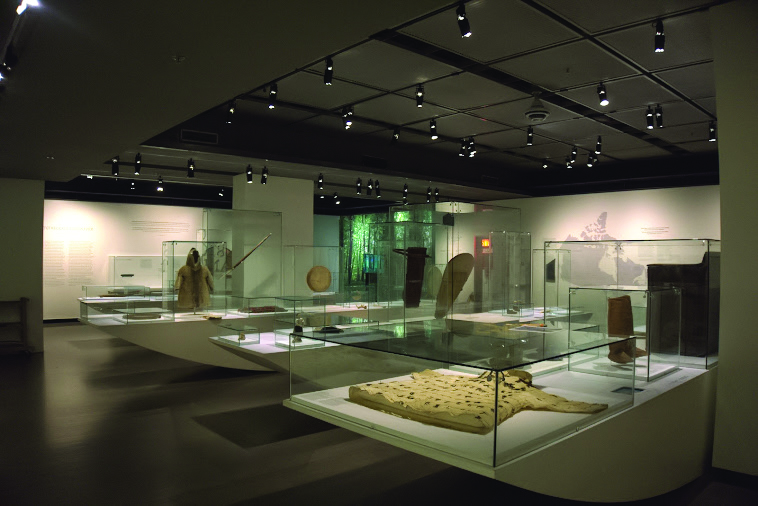
You’re in a forest. Dappled light filters through a lush maple canopy and wraps you in a green cocoon. This is the entrance to the Indigenous Voices of Today: Knowledge, Trauma, and Resilience exhibit at the McCord Stewart Museum, which displays various Indigenous artifacts that highlight Indigenous cultures and histories. 

The exhibit opened in 2021 and is on permanent display, with over 100 artifacts on rotation. For over eight years, Huron-Wendat curator and professor Élisabeth Kaine, who passed away in 2022, travelled to all 11 of the Indigenous nations in Québec and gathered around 800 testimonies. Quotes from her travels adorn the exhibit. 

The exhibition is divided into two main rooms: One on Indigenous culture, and one on Indigenous trauma. 

In the center of the forest-themed foyer, a large circular screen provides video interviews of Indigenous spokespeople, including Joséphine Bacon, an Innu author from Québec. Immediately, visitors are greeted by Indigenous voices and perspectives.

“It’s truly Indigenous people expressing themselves and what they went through, what they believe is important, and what their aspirations for the future are,” Johnathan Lainey, a member of the Huron-Wendat nation and Curator of Indigenous Cultures at the McCord Museum, said in an interview with The Tribune.

The first room is white and well-lit. Canoe-shaped tables hold artifacts from many aspects of Indigenous culture. One table, titled Moving, displays Indigenous transportation methods, with models of canoes, toboggans, and snowshoes. Other Indigenous technologies include hunting equipment such as Inuit harpoons and knives, highlighting groups’ no-waste and efficient hunting practices. The materials of the artifacts range from ivory to sinew. 

The section titled Children are the Centre showcases the love within Indigenous families One table is dedicated almost entirely to baby carriers called cradleboards. A series of monochrome photos display mothers from different Indigenous communities and their children. They are smiling, the babies laughing in their cradleboards. While the physical objects inform one of the items that Indigenous peoples make and use, the photos help connect those objects to the people using them. 

“The [quotes] are written with ‘we,’” Lainey noted. “So it’s our stories, it’s our traumas. It’s us.”

Other features of the exhibit help contextualize the artifacts and photos. A map on the left-hand wall shows Indigenous communities across Canada, with markers for the 11 nations in Québec. Videos document Indigenous craftspeople and homelands. 

“The more you appreciate the first section, the more you feel the violence of the second section,” Lainey said.

The following room is black and dim, with a burnt forest along the back wall. Monochrome photos show the inside of residential schools, capturing how white supremacist, settler colonial policy stripped away Indigenous children’s culture and language. Totems are featured to explain how Indigenous religious practices were invalidated and judged. A television presents movies that feature damaging stereotypes of Indigenous people. In the center, a beaded, bright red dress is dedicated to missing and murdered Indigenous women and girls. Each testimony, written in red, is impactful and revealing. The walls are lined with artifacts, forcing the visitor to circulate in near-darkness.

“Now that we acknowledge Indigenous trauma, what do we do? So this is where the exhibition becomes a tool for better understanding and living together,” Lainey told The Tribune.

The exhibit ends with a room similar to the foyer, with trees and a video greeting. Centred on resilience, the room encourages visitors to be proactive about supporting Indigenous communities. One can write a message in a notebook and receive a pamphlet with ten actions they can do to support Indigenous peoples. 

“We must rewrite the story of our lives by breaking the silence,” Kaine wrote on the wall at the end of the exhibition.

The exhibit is open from 10 a.m. to 5 p.m. on weekends and from 10 a.m. to 6 p.m. Tuesday-Friday.

Admission is $15 for students and free for members of Indigenous communities.

Along Party Lines, McGill, News

McGill students and staff respond to new language requirements for the PEQ

On June 7, the Quebec government, led by the Coalition Avenir Québec (CAQ) in the National Assembly, implemented changes to the Programme de l’expérience québécoise (PEQ)—a program which many international students at McGill rely on as a path to permanent residency. 

The PEQ has two branches: One for temporary foreign workers, and another for international students. The program provides a fast-track to permanent residency. If successful, applicants receive a Quebec Selection Certificate

As of June, the program now differentiates between applicants who have studied in French and those who have studied English. Whereas Francophone applicants can apply right after they finish their studies, Anglophone workers and students will not be qualified to apply unless they have been enrolled in secondary and post-secondary courses in a French institution for three years beforehand. The program makes no specification about whether or not Anglophone applicants need 12 to 18 months of employment before applying, a condition that has been exempted for Francophones. In addition, all applicants must now have a knowledge of oral French that is of Level 5 or higher on a 12-point French proficiency scale established by the Quebec government for immigrants. 

English universities—including McGill and Concordia—have voiced their discontent with this new requirement, stating that it will hurt their current and future student bodies and negatively affect English universities’ ability to attract students. According to McGill’s data, around 30 per cent of the student body are international students. The academic institutions have requested that the Minister of Immigration, Christine Fréchette, reconsider the new policy—a request the minister declined

McGill’s media relations officer Frédérique Mazerolle explained why McGill stands opposed to the policy in an email to The Tribune

“Our primary expertise and focus lie in identifying and attracting the finest talents globally, irrespective of the languages they speak, to contribute to our world-renowned research initiatives and, in the case of our professors, enrich the learning experience for our students, a significant portion of whom are from Quebec,” Mazerolle wrote.

During the party’s election campaign in Fall 2022, François Legault—the leader of the CAQ and Quebec’s premier—publicly stated that allowing more than 50,000 immigrants per year into Quebec would be “suicidal,” arguing that it would further threaten the French language. Despite this, the CAQ announced in late May that it will allow more than 50,000 immigrants per year into the province. When it shifted the language requirements for the PEQ, the CAQ also removed its cap on the number of students and temporary workers from outside of Canada who are eligible for the PEQ. 

McGill Political Science Professor Daniel Béland told The Tribune in an email that such changes in policy direction are ill-considered, but not uncharacteristic of the CAQ.

“The CAQ government regularly changes course on key policy issues based on polling numbers and pressures from various constituencies,” Béland wrote. “This is certainly the case in immigration policy, where the government’s lack of a coherent and compelling vision is hurting the economy and creating social anxieties that could have easily been avoided.”

Sumaira Nawaz, a fifth-year Ph.D. student at the Institute of Islamic Studies, pointed out that learning French requires time, which not everyone has in between the need to study and to find employment.

“I respect the [provincial government’s] intention, I understand that this is a French-speaking province,” Nawaz said. “Why would you change regulations? I’m in the fifth year of my Ph.D., I came here expecting that I can find employment in a bilingual setting at least. And now suddenly that’s gone? That’s ridiculous.”

The latest development in the CAQ’s policies impacting students is the plan to double tuition fees for out-of-province Canadian students. McGill’s Principal and Vice-Chancellor Deep Saini released a statement to the media, stressing that Quebec needs global talent to foster a successful economy. 

“A thriving knowledge economy requires a global exchange of talent,” Saini wrote. “The measures announced today will have a major, long-term effect on Quebec’s economy. The skilled people we attract and retain contribute significantly to Quebec and provide our businesses with the highly qualified workforce they so urgently need.”

Behind the Bench, Sports

McGill’s lack of varsity sports culture needs to change

McGill has a long history of pioneering innovation within the sports world: James Naismith, the creator of basketball, studied at McGill, the university’s annual carnival hockey game first took place in 1883, and McGill participated in the first American football game of all time.

In April 1874, McGill played Harvard in what is widely viewed to be the first time that North American football rules were played with, otherwise known as Boston rules. Next year will mark the 150th anniversary of this first football game, though most are likely unaware of the milestone and  McGill has not made any public plans to celebrate this momentous occasion. 

This speaks to a wider issue within McGill varsity sports. McGill has struggled to maintain school spirit around its sporting events, and fans in attendance are often few. The administration has previously expressed that they would increase ticket sales if there was higher demand. Yet, playoff games and rivalry games often fail to generate enough interest for McGill to expand how many tickets are sold. Leaving fans out of the stadium delivers a weak atmosphere at our games, both diminishing the accomplishments of McGill’s student athletes and failing to build a cohesive community culture. 

Next week is the Redbirds’ homecoming football game against Concordia, and players are concerned about a lack of publicity for the game. Fourth-year offensive lineman Klaus Calixte wished that there was a larger effort to make homecoming an event for all of McGill sports. 

“The stadium should be opened to 100 per cent capacity for homecoming, yet there is little marketing done by the school to even sell these tickets,” Calixte told //The Tribune//. “We have a generational QB [quarterback] talent in Eloa Latendresse-Regimbald and Scott Walford, a third-round draft pick to the NHL [on the hockey team]. People should come see them!” 

The lack of engagement with our teams not only delegitimizes the hard work of student athletes but reflects poorly on McGill’s university culture. Is the problem due to post-COVID students who never saw pre-COVID sporting events at McGill? Or, is there a pattern of apathy stemming from McGill Athletics? 

For some varsity teams, this lack of school spirit extends beyond having a limited number of fans at games. The Martlets’ field hockey team has not played a home game since the 2018-19 season. According to Madeline Cohen, the team’s captain, McGill Athletics has not provided a “solid reason” as to why they cannot play regular season games at home, and also claims their Ontario University Athletics’ competitors have expressed a willingness to travel.

“Athletics is so fan oriented,” Cohen said. “Most of our athletes would tell you that they could name 10 people instantly who would love to come to a game. We all have huge support bases here [….] But there isn’t even a video stream for them to be able to watch us play.”  

If McGill Athletics cares about creating a McGill culture around our sports, there are lots of simple steps they can take. McGill must follow in the footsteps of schools by offering free tickets to their students and faculty like the University of Toronto or a package with tickets at less than one dollar per game like the Université du Québec à Montréal. Lowering ticket prices for students and having a set amount of free early bird tickets, in combination with greater marketing efforts on campus could easily increase fan engagement. Those who frequent the quad will notice Marty the Martlet advertising a few football games a year, which begs the question: Why can’t this happen for every game and for more teams? 

By not playing into historic sporting events and disappointingly marketing players and teams, and an overall lack of care to its sports teams, they are doing a disservice to their athletes, fans, and McGill culture. The McGill community must celebrate the talent we have at our school and revive our sports culture. 

Sports Editor and Martlets field hockey goalkeeper Anoushka Oke did not contribute to this article.

Read the latest issue

Read the latest issue