


Latest News

Features

Paint me a pixel

Imagine intelligence is artificial 

It begins as an idea. A flicker of colour, of motion, a feeling that you want to convey. There are so many mediums to choose from—charcoal, clay, oil, acrylic? Pencil, paintbrush, camera, hands? In a frenzy, you make the decision and set to work. It’s torturous, amazing, and gut-wrenching all at once. You hate the final product. The next day, you love it. And if you choose to show it to the world, you relinquish control, and you can only hope that it will mean something. 

This process of artistic creation was on my mind when I was recently fiddling with DALL-E, an artificial intelligence text-to-image generator. And it’s on the minds of many: Those who care about the sanctity of human creativity, those who are concerned with the rapidly evolving capabilities of artificial intelligence, and those who spend too much time on Discord. 

Artificial intelligence (AI) and machine learning are intimidating concepts. These terms are so entrenched in the public consciousness and social media, well beyond the tech world, that it feels embarrassing to ask the most basic of questions. 

AI is a branch of computer science that aims to help machines solve problems that are typically only solvable by the human mind. A variety of techniques, like machine learning, help accomplish this task: Machine learning involves training an algorithm to make decisions or predictions based on large data sets. The more data it is trained on, the more accurate its prediction will be. Machine learning has helped power accessible services like Google Translate and convenient ones like Netflix recommendation algorithms. When presented with astonishing advances in this technology, it bears reminding that AI is not inherently good nor bad, but instead a neutral tool. Look only to the world of chess for examples of its dual nature: IBM’s Deep Blue chess bot showed that human grandmasters could be outplayed; but this summer, an AI-programmed robot broke a seven-year-old’s finger during a chess tournament in Moscow. 

As for AI text-to-image generators, their sinister nature is a little less clear-cut. Several open-source, free services have popped up this year; names like DALL-E and Midjourney especially ruled Twitter timelines for a few weeks, garnering a John Oliver segment. Midjourney, Stable Diffusion, and Google’s version, Imagen, exemplify a new wave of open-source, soon-to-launch programs capable of visually manifesting almost anything you can think of: Put in a line of text, as specific, as outlandish as you wish, and the algorithm will sift through thousands of data derived from images online to produce an original result as close to the prompt as possible. Prompts like “R2D2 getting baptized” or “Nosferatu on Rupaul’s Drag Race” demonstrate just how absurd the images can get. The idea is incredible. But is it art? And if so, what purpose does it serve? 

AI has been marketed to the public as progressive and impressive by virtue of its ability to mimic human decision-making. Sun Ha Hong, an assistant professor who teaches about the implications of algorithms on society at Simon Fraser University, rejects that narrative. 

“One of the greatest myths about AI is that, because we are told these technologies are so cutting edge and amazing, we tend to assume that every piece of it is cutting edge, world-class, and really well thought out,” Hong told me. “There are a few world-class, well-thought-out elements that are then held together with several metres of duct tape from the 1970s.”

Contrary to how many AI companies would have it appear, these generators do not possess anything close to human intelligence. When I spoke to Helen Hayes, a PhD candidate in McGill’s Department of Art History and Communication, she told me that, based on what these AI art generators actually do, “artificial intelligence” is in many ways a “misnomer.” Open-source AI art generators benefit greatly from the term’s cultural zeitgeist because users are lured in by the power of infinite possibility.

“The use of the term [AI] has so much social capital, so much financial capital, that it doesn’t actually matter if people know what’s going on behind that smokescreen,” Hayes said. “You can call DALL·E like, ‘the scraping of a dataset to produce a digital file that’s […] visually representative of the text that you’ve entered.’ But no one’s gonna use it.”  

For start-ups, the buzzword carries the promise of technological utopianism that puts companies at a disadvantage if they are not using AI in some way. In some cases, tech firms will even pretend to use AI to attract corporate interest and clients, while humans are really doing the work of the “bot.” 

All the while, we humans should beware of attributing “intelligence” to any non-sentient machine. “Remember, AI has no idea what it is saying,” Hong reminded me. “It has no idea what art is, it has no idea what it faces. It has no idea what science is. It’s a monkey on a typewriter that’s just copying and pasting things.” 

The flimsiest aspect of art-generating algorithms is what they were trained on—or rather, what they weren’t. Companies like Midjourney and Stable Diffusion will tell you that their AI image generators can create anything within the limitless bounds of imagination. Time, labour, and expertise limit hand-made visual art. But the inputs of text and the set of images the algorithm was trained on are what limit algorithmically-generated outputs. 

“If the AI systems are trained using a specific set of data, that data, which usually isn’t like cleaned in a specific way to account for varying perspectives […] includes a lot of what we call ‘awful but lawful’ data,” Hayes said. 

Everything that is problematic about the internet, then—racism, misogyny, ableism, etc.— may be reproduced through algorithms trained on scraped image data that is not carefully filtered.

“They’re not going through a representative sample of all the art created by anyone across the world, they’re scraping a bunch of things off the very surface of often the English American internet,” Hong explained.

If so, how could an algorithm fed only a small sliver of human creativity produce anything truly original? 

/imagine/ The future of art 

Before AI, the creativity inherent to artistic pursuits was infallible. So I reached out to a veteran artist to see what he thought about this newfangled technology. Back when McGill still offered courses in the Fine Arts, internationally acclaimed artist and architect Charles Gurd was an undergraduate studying psychology and still figuring out his career path. With a wealth of experience in multimedia, he sees digitally rendered, AI-generated art not as a threat to the industry, necessarily, but rather as a site of contemplation of the form. 

At the basis of artistic expression, he says, is a “transmission of energy—way beyond the ‘concerns’ of the intellect—that operates on a level of unity of all things.” I understand what he means. Sometimes, writing electrifies me, as though a live wire keeps my fingers moving until I’ve transformed the inspiration into a sentence. 

“So, as an artist, you have to go to that place and thereby become capable […] of reaching viewers,” Gurd wrote to me. “[A]rt is this communication that everyone experiences in [a] common way [….] Art usually involves mystery/magic/surprise/chaos which is the basis of it all—life.”

In our email chain, Gurd looped in Gwendolyn Owens, director of visual arts at the McGill Library and Archives, who looked to the evolution of art forms throughout history.

“In the 20th century, we saw the advent of happenings and performances, readymades, and so much more.  To some people, these advances were not art,” Owens wrote. “My view is that every artist can decide what they want to use (or not use) and every critic and collector can make their own decision as well. AI will not be the last change, there will be more. The debates are what make the world of art vibrant.”

I took Owens’s words as an opportunity to explore what AI-generated art had to offer, telling myself all the while that I could mark the pages of art history. But figuring out how to use these flawed platforms to your advantage is more complex than it appears. 

I started imagining prompts to complement articles in the Tribune, with mixed results (successful examples shown here). Legality presented the first hurdle: I quickly learned that Midjourney creations for commercial use would cost $10 USD per month, with a maximum of around 200 generated images. Then there was the task of finding the right words. I was impressed and chastised by other users’ incredible aptitude for getting the AI to produce truly amazing images; prompts would be 25 lines long and include dozens of terms like “hyperrealistic,” “4k pixel,” “octane render”. They knew every trick in the book, while I was sitting there struggling to generate an image of a cat that didn’t resemble a misshapen badger. 

Many users, like Sarah Tornai, have actually put the time and effort into learning the best techniques associated with prompt-making, even within a platform structured around data inequities.

“I feel like I’ve landed in a different dimension. Honestly having a slightly hard time wrapping my mind around all of this being real,” Tornai, who goes by MoyoMoz, wrote in a public post on the Midjourney server. “Been using [Midjourney] for about a week or two and I feel like someone just gave me access to a deep dream/desire I’ve always had but never knew was possible.” 

The post triggered hundreds of community reactions, most of which were overwhelmingly positive. When I spoke to her about her experience using Midjourney to create portraits and landscapes of her home country of Mozambique, she described both wonder and frustration. 

“Midjourney has opened up a world of creative possibilities to me that feel personally revolutionary,” Tornai wrote to me. “I’ve been working on images about Mozambique, which is an incredibly resource-rich and culturally rich county, but one of the “poorest” countries in the world economically because of the effects of colonization, historic racism[,] and past wars.”

 “I’ve noticed that because AI is pulling images from the web[,] the images it generates of Mozambican people or houses [are] highly skewed towards very deep poverty even though a Mozambican middle class and upper class does exist. I’ve decided to incorporate that into my art because it’s actually part of the story I want to tell.” 

Google’s Imagen site states that “[T]he data requirements of text-to-image models have led researchers to rely heavily on large, mostly uncurated, web-scraped datasets. While this approach has enabled rapid algorithmic advances in recent years, datasets of this nature often reflect social stereotypes, oppressive viewpoints, and derogatory, or otherwise harmful, associations to marginalized identity groups.” This disclaimer explains why they haven’t yet released Imagen for public use, but it does not excuse other platforms’ decisions to develop algorithms using any data that they can find for free. 

The advent of text-prompt-generated artwork subverts the traditional one-way relationship between an artist and their creation. The user is responsible for the text prompt, the algorithm is responsible for turning this input into an output, and the developer is responsible for feeding the output possibilities to the algorithm. In the Tribune’s publications of AI art, I referred to both myself—the artist— and Midjourney AI—the tool—as the source of each image. But really, who is the artist? Is it the person who imagines the text prompt, in the unique string of words that only they have, the intermediary algorithm, or the person who coded the machine and made all of this possible? And more importantly, who is responsible when the generated product is harmful?

/imagine/ Something beautiful, turned for profit

One story that has been morally exhausted in the headlines is that of Jason M. Allen, a man who took home the first-place prize in the Colorado State Fair “emerging digital artist” category for his Midjourney-generated submission. Beyond eliciting outrage about the fairness of allowing Allen to submit a piece that was rendered by an “intelligent” machine, it worried artists whose labour and originality are remunerated. In a capitalist world, the fear of cheapening and expediting art creation is salient. 

“I think what history tells us is that with new technologies, again, it’s the low, low quality, cheap-cost, stuff that really makes the impact and not the high-quality virtuoso stuff,” Hong said. “We’re not talking about three-star Michelin restaurants, we’re talking about how McDonald’s revolutionizes the food business.”

Advertising content supports businesses best when it is cheap, fast, and plentiful. On a platform such as Midjourney, it takes no more than 15 seconds to generate a prompt. One can only imagine how content creators, advertisers, and even students could use this to optimize their time and subsequently generate an abundance of art with less care and thought behind it. 

Hong worries that AI art could become a cost-effective way for businesses to make increasingly eye-catching advertisements designed to sell us things, not to inspire artistic thought or contemplation. 

“We are going to be bombarded with more ugly, nonsensical, barely good enough art, in our buildings, in our books, and our album jackets, that’s going to be bad news for anyone who’s working in art and design and illustration,” Hong said.  

Job automation has been both incredibly innovative for some and incredibly scary for manual labourers, and creatives, too. The proliferation of AI art could seriously disrupt the labour market for freelancers who are already struggling to secure stable employment and livable wages.

With great art comes great responsibility. As it stands, regulatory frameworks are not robust enough to curtail the evil power of manipulating what people perceive as real and using it for capital gains. “We’re often met with this conundrum where tech advances very rapidly, [but] our policy moves very slowly. And so we’re always responding to technological change rather than being ahead of it,” Hayes told me. 

Results have yet to be released from a federal public consultation into copyright law and AI. Despite this, an AI art generator was legally registered as the co-author of an AI art piece, much to some law scholars’ consternation. The corporate pattern of releasing a product and sloughing off responsibility makes it even more challenging for the law to place blame when users abuse the product. 

A much less colourful world lies ahead if a greater proportion of the graphic art that decorates our institutions, billboards, and furniture stores comes from the same pool of images regurgitated through an algorithm at the behest of overworked labourers. 

But the sense of wonder generated by these AI creations and the idea of art for art’s sake cannot be ignored. Only when policy changes to protect creatives, and only if AI art companies keep their platforms accessible, will artists be able to do what artists do best: Use their medium to make sense of misery, critique systems of exploitation, and inspire change from the inside out. 

Editorial, Opinion

Protecting disability rights is the only way forward

On Nov. 16, Quebec’s Health Minister Christian Dubé recommended the use of face masks in public spaces again. In a press conference, he cited the rise in COVID-19 cases as well as the uptick in respiratory syncytial virus and influenza cases as a serious risk to public safety. What is being called a “tripledemic” has dramatically increased hospital bed occupancy in recent weeks, particularly in children’s wards. As a system already in disarray, the Quebec hospital network is completely unprepared to deal with what Dr. Luc Boileau, director of Quebec’s public health department, calls a “spicy cocktail” of respiratory viruses. To truly address this public health crisis, the provincial government and universities like McGill must centre disability rights in their COVID-19 policies to move away from violent medical and bureaucratic practices.

Public health officials have, at best, ignored disability rights and, at worst, curtailed them. Although disabled people are more at risk of suffering complications from COVID-19 infections and to die from the disease, public health policies have been geared towards “returning back to normal” rather than protecting the most vulnerable. An insistence on limiting COVID-19 measures even when the epidemiological situation requires them is proof that disabled lives are seen as disposable. Indeed, much of the language around COVID-19 deaths evokes eugenics ideology: Throughout the pandemic and beyond, the Canadian government has engaged in deplorable eugenicist practices, with hospital guidelines denying disabled people ventilators in favour of non-disabled patients, effectively issuing a death sentence for those deemed to have a lower chance of survival. 

While discourse surrounding COVID-19 measures tends to focus primarily on the individual strain on our social lives and relationships, this kind of understanding ignores the calls by disability activists for a politics of care that focuses on mutual aid and community resources. Rather than being burdensome, public health measures like mask mandates can ensure that essential spaces are available and accessible to all, not just those who can weigh the risk of infection. The forging of a “new normal” requires a change in the perception of which lives are worth living, as well as the implementation of strong initiatives to support disabled people. 

Institutions such as McGill have the power to lead this change. However, McGill’s response to the pandemic has been not only insufficient, but dangerous. Beyond masks, the university has virtually eliminated COVID-19 accommodations and case tracking efforts despite the continued spread of the virus. Lecture recordings are no longer mandatory, and professors still have the option to grade attendance. This leaves at-risk students in the precarious situation of having to attend class despite the dangers to their physical and mental health. Furthermore, McGill has not provided any support for immunocompromised professors who do not feel comfortable teaching in-person or being in crowded classrooms with unmasked students. This is just another iteration of McGill’s disregard for worker’s rights and a concerning manifestation of the university’s profit-forward thinking. 

Considering that the provincial health system is in shambles, McGill must do everything in its power to alleviate the strain on Montreal hospitals. Instead, the substandard Wellness Hub consistently fails to address the needs of the student body and funnels a steady stream of students into emergency rooms because of insufficient resources. This adds to the burden of already overcrowded and understaffed hospitals in the province and shows students that their university cannot and will not care for their health. 

As respiratory viruses continue to emerge, McGill must reinstate academic accommodations and make them a permanent feature of university life. Health concerns, especially for disabled people, are not seasonal, and students need proper support throughout their degrees. As such, exam accommodations must be accessible without the need of a doctor’s note, all lectures must be recorded, and mandatory attendance must be scrapped. The university also needs to reinstate case tracking and address outbreaks that take place in dining halls and residences like the health emergencies they are. Most importantly, McGill must reform the Wellness Hub and provide students with quality and accessible health care every single day. 

Until McGill takes action, the university is a dangerous place for disabled students. A post-COVID world must be pro-disabled lives, otherwise we will return to the ableist and deadly status quo that got us here in the first place.

Sports, Volleyball

Martlets volleyball claims victory in rematch against Sherbrooke Vert et Or

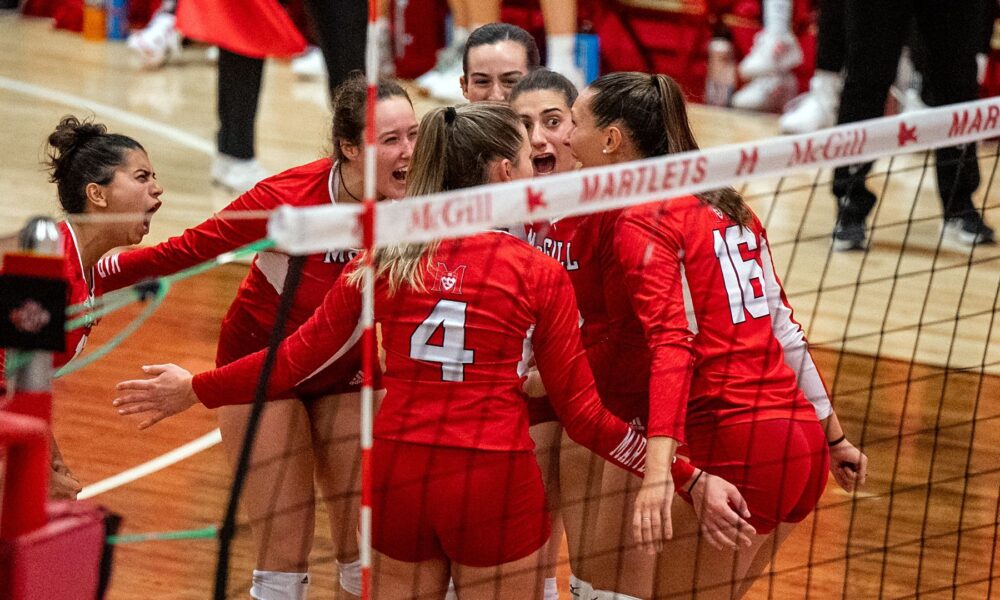
On Nov. 27, McGill Martlets volleyball (6–2) extended their winning streak to four games following a home victory over the Sherbrooke Vert et Or (4–6). The Martlets previously matched up against the Vert et Or in their season opener on Oct. 30, where they ultimately lost 3–2. Hoping to redress their opening defeat, the Martlets were fired up for a second shot. 

“We were a lot more confident going into the game today,” first-year power hitter Rachel Leduc told The McGill Tribune. “We know that we can beat them, so we actually played the way we know that we can.”

The Martlets kickstarted their first set with a service ace by third-year outside hitter Masha Solaja. However, Sherbrooke played hard defence by forcing McGill’s libero, Catherine Vercheval, to dive for her digs. A combination of sharp cut shots from power hitters Leduc and co-captain Victoria Iannotti as well as compounded Sherbrooke errors allowed McGill to pull away with a 25-22 score and take the set. 

The second set was similarly sparked by the Martlets’ efforts, this time by a set of blocks from Leduc and middle blocker Meaghan Smith. Steadfast McGill defence was the order of the day as the Martlets repeatedly shut down Sherbrooke’s scoring attempts. 

Leduc told the Tribune about their preparations for Sunday’s game.

“This week, our coach [shook us a bit] and said ‘girls we have to pick it up on defence’,” Leduc said. “We popped off every single practice and everyone was giving their 110 per cent. Today we really brought that into play.” 

The Martlets finished the second set leading with a demoralizing score of 25-15, punctuated by phenomenal defensive efforts from fourth-year power hitter Clara Poire, co-captain Charlene Robitaille, Leduc, and Smith. 

The third set marked another sensational opening run from McGill, as Iannotti and fourth-year setter Audrey Trottier combined for a deadly combo of a clinical attack, a double block, and a service ace to start the set 3-1. Sherbrooke, however, turned it up on their end, forcing mistakes from McGill by bending the Martlets’ defence out of shape to take the lead. Both sides were neck and neck heading down the stretch, with McGill climbing back to match Sherbrooke with stunning serves from third-year Olivia Krishnan and Smith. Despite their second-year setter Charlotte Chouinard-Laliberté’s efforts, Sherbrooke took the set with a tight 26-24 score to hang on. It looked as though the Vert et Or might finally be back in the game, but the Martlets said, not today.

“Our team makes a conscious effort to have a positive attitude,” Iannotti told the Tribune. “[With] volleyball being a game of errors, you cannot get caught up in the past. You have to snap out of it really fast.”

Sherbrooke carried their momentum over to begin the fourth set, but were met with staunch defence as McGill pulled from their energy reserves to finish the game. In the dying moments of the set with the score at 24-23 for the Martlets, a nail-biter rally culminated in co-captain Robitaille taking a hard receive to the head and hitting the deck briefly before getting back into the exchange. Iannotti stepped up and delivered the final blow. 

The Martlets will close out the semester at home on Friday, Dec. 2 against the Ottawa Gee-Gees (2–7) before resting over the winter holidays. 

Moment of the Game: In the final seconds of a frantic fourth set, Victoria Iannotti chased down a setup to crush the Sherbrooke defence and win the game with a commanding spike. 

Stat Corner: Meaghan Smith dominated on the front lines with two solo blocks and six additional block assists.  

Quotable: “When the ball gets up […] whichever way that ball goes will bring a lot of momentum to the team [….] I was like every single time I’m touching the ball in this rally I’m giving it my all to close or set someone else up to close [….] It was time to finish the game.” –– Co-captain Victoria Iannotti on the final rally of the game

Arts & Entertainment, Books

Write a novel in 30 days: Time starts now

While a 2,000-word paper may be a daunting task for some students, others take on a greater and even more creatively stimulating challenge—writing 50,000 words to draft an entire novel over the course of November. Besides being known as the month when exams start to loom, it also hosts National November Writing Month (NaNoWriMo), an international challenge for aspiring and established writers alike to complete the first draft of a novel within the month. 

NaNoWriMo began in 1999 as a straightforward challenge: Write 50,000 words in 30 days. Over 20 years later, the challenge is still going strong, boasting over 400,000 participants in 2021. To put it in perspective, 50,000 words is about the length of F. Scott Fitzgerald’s The Great Gatsby (47,094 words) or Chuck Palahnuik’s Fight Club (49,962 words). NaNoWriMo is responsible for the publication of several bestsellers, including The Night Circus by Erin Morgenstern and Water for Elephants by Sarah Gruen—the latter of which was adapted into a movie of the same name starring Robert Pattinson

While “winning” (in that someone reaches the 50,000-word count) is the advertised objective, the beauty of NaNoWriMo is that participants can use the program’s resources to support their individual goals. The website is available year-round, allowing writers to create at their own pace. Simply put, NaNoWriMo merely encourages people to write. 

To reach the goal in November alone, one would need to write an average of 1,667 words per day. In an interview with The McGill Tribune, current NaNoWriMo coach and published author Shameez Patel Papathanasiou explained how this goal is surprisingly motivating for aspiring NaNo winners. 

“Almost every writer has one thing in common, and that is the powerful skill of procrastination,” Papathanasiou said. “NaNoWriMo is, for me, such a great way to turn off the perfectionist part of my brain. Because of the time pressure, I force myself to write [….] There’s no way to get stuck if you don’t know what terrible nonsense words you wrote the previous day.”

NaNoWriMo additionally fosters a growing community of writers to support each other along the journey. The organization uses its portal for authors to announce and track individual projects, and connect with fellow ‘WriMos’—other NaNo participants. The company additionally gathers published authors to coach new and experienced WriMos to the finish line through blog posts and Twitter takeovers. Papathanasiou—who drafted and edited her debut novel The Last Feather through NaNoWriMo’s programs—gushed about connecting with her local WriMos in Cape Town, South Africa. 

“Joining NaNoWriMo was the first time I’d met, actually linked up, with other Cape Town authors. I didn’t know that this group even existed,” Papathanasiou said. “Once I linked up with my writing community, they were active throughout the year [….] They become your beta readers, your critique partners, sometimes they’re your cheerleaders.”

Local businesses welcome and support regional authors in their NaNo challenges. In Montreal, WriMos meet up to participate in writing sprints at cafés like Second Cup or Thésaurus Thérrarium, a tea shop near the De L’Église stop on the green line. This year, Thésaurus Thérrarium is an official ‘Come Write In’ location and has provided goodie bags and tea, as well as kindly offering to stay open until 9 p.m. on Fridays in November in support. 

Of course, those participating in NaNoWriMo have work and social commitments to contend with outside of the challenge. WriMos in university have found success and obstacles in participating while balancing full-time studying and part-time work. Two Montreal WriMos wrote to The McGill Tribune about their experiences balancing these commitments. Discord user Reine_Margaux won NaNoWriMo in all four years of undergrad at L’Université de Montréal in the early 2000s. 

“[Winning NaNoWriMo in university] was way easier than it is now. I only had about 3.5 [hours] of classes a day and I was only working part-time,” Reine_Margaux said. “My part-time job was very menial, so [I had] lots of mental space for plotting. I also sometimes wrote in class when I was bored. I can make word count in an hour when motivated, so that helps.”

Time management is obviously a vital aspect of winning NaNoWriMo. As university students, WriMos may have more flexible schedules to sneak in writing time, but are also burdened with their employment and a heavy workload of exams and projects to juggle as finals approach. Ophelie, from Bishop’s University, said that this year’s NaNo is her third attempt at 50,000 words, after being unsuccessful in previous years due to heavy workloads. 

“I struggle to manage between school and NaNo,” Ophelie said. “At first, I was trying to hit the 50k goal since I was in my reading week [but] now I have too much going on to write every day.”

Ophelie is a great example that not every WriMo sets out to win, representing what is known as a NaNoWriMo rebel, someone who deviates from the traditional NaNo objective. She expressed that her main objective for participating in NaNoWriMo is to set herself up for a career in editing. She said she wants to publish a novel herself before publishing others’ books and get a feel for what writers look for in an editor. 

Although it is formidable that Reine_Margaux was able to win her NaNo challenge each year, it’s not feasible for every participant, given that everyone writes differently. Thirty days is not a lot of time to write a draft, and for those who finish, not all WriMos are lucky enough nor have the insider information or connections to publish bestsellers. This idealized conception of ‘finishing’ a novel within strict time limits and potentially inaccessible writing conditions is why Sarah Wolfson, a McGill creative writing lecturer, takes issue with the program. Wolfson specifically feels concerned over NaNoWriMo as a timed challenge, a sentiment she expressed in an email to The McGill Tribune

“On the one hand, I support systems that motivate people to embark on a writing practice and to shape meaningful stories,” Wolfson wrote. “On the other, I’m allergic to speed as a guiding principle in writing literature. I think most novels take time, simple as that.” 

Ultimately, winning NaNoWriMo is not attainable for everyone, and maybe that’s okay. Some people write to publish and others to practice. It doesn’t matter if someone wins or “loses” because really, who loses if they’re making progress? Participating in NaNoWriMo is a success for the published author, the aspiring writer, and the rebels forging their own literary path. 

ABCs of Science, Science & Technology

How STEM’s  leaky pipeline persists at McGill

At the end of this semester, I will have completed half of my neuroscience undergraduate degree at McGill, and the number of women professors in my science courses so far is slightly alarming. Out of the 22 professors that I have had spanning disciplines like neuroscience, biology, mathematics, physiology, and computer science, only four of them were women—a measly 18 per cent. Many courses offered by the Faculty of Science are taught by more than one professor, and PHGY 311 is a prime example, with four different instructors leading the class over the course of one semester. Each time we finished a section of this course, my friends and I hoped that the new professor would be a woman. But with only three classes left, we now know that we will not be getting the opportunity to learn about ion channels from a woman professor. Many would argue that this doesn’t matter, but it reflects a broader gender inequity that is stubbornly entrenched across scientific disciplines.

PHGY 311 is not an outlier; it is the norm. In McGill’s physiology department more broadly, men represent 72 per cent of all professors. It demonstrates the troubling reality that, on average, academic positions in the faculties of science and engineering are primarily held by men. “Turning the Tide for Academic Women in STEM: A Postpandemic Vision for Supporting Female Scientists” is a recent study investigating the challenges women encountered in academia throughout the COVID-19 pandemic. The researchers noted that, although inclusivity in science has increased over the past decades, underrepresentation, salary discrepancies, and increased career-related obstacles are some of the challenges that women in science, technology, engineering, and mathematics (STEM) continue to face. 

The pandemic alone did not cause these issues—it exacerbated the effects of pre-existing inequalities between men and women academics. Women spent less time doing research throughout the pandemic because care responsibilities and other traditionally gendered tasks  fell disproportionately on their shoulders. A meta-research study also found that the number of women who were first authors on COVID-19 papers published throughout the pandemic decreased by a staggering 19 per cent compared to 2019.

The phenomenon behind gender disparities, such as the decreased number of research publications, is known as the leaky pipeline, which describes how gender biases may limit women’s opportunities to ascend to the highest positions within STEM. These barriers can have devastating effects at various stages of women’s careers, such as hiring, funding, publishing, and professional advancement. The leaky pipeline problem has resulted in a persistent gender gap among STEM academics despite the significant increase in the number of women pursuing advanced degrees in the sciences.

Julie O’Reilly, a second-year PhD student in the Bourque Lab at the Research Institute of the McGill University Health Centre (RI-MUHC), has noticed that the number of women in McGill’s science graduate programs contrasts starkly with the number of women who occupy academic positions at McGill. 

In an interview with The McGill Tribune, O’Reilly shared that, even though she has never consciously thought that women would be worse in STEM, she has realized that an unconscious bias, largely perpetuated by outdated social norms, has shaped the mental image that she has of principal investigators. 

“When there’s a great discovery and it’s made by a female, then the article will mention: ‘It’s a female!’ and [the focus] would be about [gender], which shouldn’t be the case,” O’Reilly said.

Intersectional identities can further intensify the inequalities that women in STEM may experience. The term “double bind” encompasses both the institutional and interpersonal sexism and racism that women who are Black, Indigenous, or people of colour face. Another such factor is the variability across specific STEM fields. Some studies have shown that women majoring in physics, engineering, and computer science (PECS) are outnumbered by men who do worse academically. Even more surprisingly, the researchers determined that student-level factors, such as socioeconomic status, self-confidence in scientific abilities, and home resources do not sufficiently explain the gender discrepancies witnessed in PECS.

I sat down with Longyu Li, a third-year student in mechanical engineering at McGill, to learn about her experience as a minority in a major that is still very male-dominated.

“I know that in other engineering departments, there’s quite a few [women students]. Mechanical [engineering] is just that one department that’s mostly boys,” Li said. “I think that if there were more activities and social events, [we would feel better supported].” 

When looking at the faculty members in the mechanical engineering department at McGill, the number of male professors significantly overshadows that of women academics. Of the 27 professors listed on the department’s website, only three are women. 

The lack of representation of transgender and non-binary people in STEM is representative of a larger narrative that erases this community from key industries and fields of study. Queer McGill said in an email statement to The McGill Tribune that the history of gendered violence in Quebec may influence the makeup of the STEM field today. 

“To be a woman in a STEM program is a position especially charged in Quebec in light of the École Polytechnique massacre, which targeted women in an engineering class,” Queer McGill wrote. “We [do note] that many students and staff run initiatives in an attempt to overcome imposter syndrome, lack of equal opportunities, and other barriers related to being a minority in STEM programs.”

Such initiatives on campus include Diversity in Math, the equity discussion group led by professor Rosalie Bélanger-Rioux, and Promoting Opportunities for Women in Engineering McGill.

“We would like to see these efforts shared and prioritized by the McGill administration,” Queer McGill wrote.

Sophia Moubarak shared some of her experiences as a third-year student in electrical engineering at McGill with the Tribune. When I asked if she could remember how many women professors she has had since she started university, Moubarak quickly responded that she indeed could, because the paltry number—four women professors out of 23—was so easy to recall. 

“You can count your female professors on one hand,” Moubarak said.

In accordance with what seems to be the trend in STEM majors at McGill, only 22 per cent of professors in the Department of Electrical and Computer Engineering are women. Prior to starting her undergraduate studies, Moubarak knew that the demographic would be tilted towards men, but she still expected more inclusivity and better representation.

“If you see someone that you can maybe picture yourself as in the future, you tend to do better in those courses,” Moubarak said.


Some scholars have predicted that many STEM fields like computer science, surgery, and mathematics will not achieve gender parity within the next 100 years. Although the prediction may seem discouraging, there are changes that institutions can implement to fast-track their faculty memberships to better reflect the population. Increased support for scientists who are mothers will help alleviate some of the demands of childcare and domestic work. Advocacy committees can support women in STEM, especially racialized women, and raise awareness about the structural hurdles that prevent them from reaching the top. Pathways for career advancement should offer greater flexibility depending on the scientist’s particular circumstances, such as childcare and household responsibilities. For science to continue its innovative and transformative work in society, the STEM workforce needs to equip women with better resources and tools to succeed.

Arts & Entertainment, Pop Rhetoric

Pop Dialectic – Two Black Panther: Wakanda Forever movie reviews

Just for Laughs –  Simi Ogunsola

After four years of waiting, Black Panther: Wakanda Forever is finally here and people have been talking. Some are calling the film an 11/10 and hailing Ryan Coogler as a genius while others can only describe the film as “mid” and prefer the first movie. Personally, I loved the film, but it was a wild ride for sure. Here is a spoiler-free list of my thoughts while watching.

No wayyy…..

Director Ryan Coogler definitely took audiences for a ride with the cameos and plot twists in this sequel. One second I was flying to the edge of my chair in fear, and the next, shock had me flinging myself back. From multiple conflicts between Wakanda and Talokan going on at the same time, to the frantic omg-the-movie’s-almost-done-but-the-problem-isn’t-resolved stress, the film keeps you engaged and thoroughly entertained.

The U.S. low-key being the bad guy? What’s changed!?

The movie explores tensions between Wakanda and the U.S., among other global superpowers. Without saying too much, it really made me reflect on what makes us consider a country “good” and “bad,” and how narratives (true or otherwise) can be spun to achieve a country’s goals. Poli sci and IDS majors, run, (with an open mind) don’t walk, to this one.

*Speechless*

By “speechless,” I mean that you could’ve heard a pin drop on the stained carpets of theatres worldwide. During the tribute moments, the entire theatre was silent. Fans hoping for a final goodbye to Chadwick Boseman will be pleased by what I can only describe as a love letter to the star. Suffice to say that during the post-credit scene, tears were definitely shed.

Purrrrr Ms. Girllllll!

One thing that wasn’t on my Wakanda Forever bingo card was a touching feminist tale.  The film did not shove the “strong Black Woman” trope down audiences’ throats, nor did it obsess over Shuri being a young girl who likes science. The movie simply said: “Here is woman. Here is woman in all of her different facets.” It illustrated, without obsessing over, all the different ways for a woman to just //be// and I really appreciated that.

The film tantalizes the viewer, the soundtrack pleases and surprises the ear, and of course, the actors bring it all home. A must-watch—you won’t regret it. 

Cultural Faux Pas – Joy Sebera

Just the Facts

Although opinions may be divided about which Black Panther was better, viewers cannot ignore the sequel’s cinematic merit, aesthetic appeal, intense plot, and moving tribute to the late Chadwick Boseman. However, one of the elements that makes it so popular is the majority Black cast and the film’s inclusion of African cultures. That being said, who is actually being represented and who is the film truly for? The Black Panther superhero was created to introduce a Black superhero, not an African superhero, to the American Marvel comics canon, and the films sustain that narrative.  

One Size Fits All

Wakanda is a fictional African country that has closed its borders off from the rest of the world to protect itself from being exploited for vibranium, a fictional resource. The people of Wakanda speak Xhosa, a language from South Africa, and multiple East and West African cultures are represented through the clothing and traditions showcased in the film. Is this positive representation or homogenization that does not take specific African identities seriously? What effect does this serve in a film that does not reflect African realities? Wakanda has never been colonized and the main conflict in the first film is if and how Wakanda should share their resources with a hostile and alienating world. The message is from American voices disguised in African clothing, literally.  

Who’s the real villain?

The Black Panther franchise features arguably two of the most sympathetic villains in the Marvel Cinematic Universe —Erik Killmonger and Kukulkan or “Namor.” Without giving too much away, the storyline that pits the Wakandans and the Talokanil against each other is justified, and yet it seems to come completely out of left field. The introduction builds up a plot that would challenge Western exploitation, but it quickly becomes a battle between two nations that both fear exploitation, with Americans at the unsatisfying centre of the resolution. Is it really any surprise that, even in Xhosa, American voices speak the loudest?


Black Panther: Wakanda Forever is currently playing in theatres.

McGill, News

McGill not equipped to handle emergency mental health care cases

Content warning: Mention of suicide

Since its inception in 2019, McGill’s Student Wellness Hub has been marred by a lack of staff, minimal support from other university infrastructures, soaring demand for appointments, and the COVID-19 pandemic. As a result, students have struggled to book appointments and are often left to navigate Quebec’s understaffed and overwhelmed health care system.

Across Canadian universities, 30 per cent of students experience clinical depression and roughly 65 per cent of students report feeling overwhelming anxiety at least once. In Quebec, one in five people will experience mental health issues throughout their lifetime, but only about half of them will seek professional help. There are currently an estimated 155,864 mental health and substance use health care providers in the province—approximately 1,817 providers per 100,000 people. Despite this, many Quebecers report difficulty accessing care: In the most dire cases, lives are lost because of the system’s inadequacy. Jeremiah Wallace, a Quebec resident, has experienced the failings of the health care system firsthand.

In May 2022, Wallace’s daughter, Hannah, took her own life after a battle with depression and other mental health issues. (Wallace suspects Hannah may have had undiagnosed bipolar disorder.) Hannah was an education student at McGill and an Arts and Culture editor at The Bull and Bear, a student-run magazine published by the Management Undergraduate Society. In an interview with The McGill Tribune, Wallace described his daughter as a talented writer, an avid reader, and an overall wonderful person who was failed by the systems charged with caring for her. He believes that Hannah’s past suicidal behaviour should have qualified her for more urgent care.

“[McGill] should not have exposed [Hannah] to the inadequacies of the Quebec health care system,” Wallace said. “She was definitely eligible after a suicide attempt for somebody to take care of her, to watch her [….] My daughter had a nervous breakdown and a psychological breakdown, [yet] she was not able to avail special services.”

Wallace is now channelling his grief into advocating for better mental health care on campus.

“I think [McGill] needs to improve their health care plan to have unlimited counselling. If somebody really needs it, they should be able to see a counsellor every day,” Wallace said. “Don’t say you are hiring one counsellor, that’s not enough. Tell me you are hiring 10 counsellors per year; tell me you are going to tell the next [donor] that shows up […] to spend money on [mental health].”

McGill’s Wellness Hub is currently the main point of contact on campus for students looking to access mental health services. It is not, however, equipped to help students in crisis requiring immediate attention. In a written statement to the Tribune on behalf of the Wellness Hub, Frédérique Mazerolle, a McGill media relations officer, explained that “emergency care for students in crisis is not part of the Wellness Hub’s mandate,” because the Hub does not have the means—financially or staff-wise—to provide such services.

“We have connected with the Faculty of Medicine and Health Sciences to recruit graduates and are exploring more innovative digital recruitment approaches to adapt to an ever-changing Quebec job market,” Mazerolle wrote. “It is important to note, however, [that] crisis care requires a range of highly specialized services working together, around the clock, that the Wellness Hub is not equipped to provide.”

The Students’ Society of McGill University (SSMU) mental health commissioner Maya Willard-Stepan added that emergency care is not a part of SSMU’s health care mandate because of its complexity.

“SSMU doesn’t have the level of training or capacity needed to properly intervene in emergencies,” Willard-Stepan explained. “Currently at McGill, emergency cases are tended to through the Office of the Dean of Students, not any student group or the Wellness Hub.” 

The Office of the Dean of Students (ODoS) employs case managers who work with students experiencing mental health difficulties and members of the McGill community who are worried about a student’s well-being. According to Willard-Stepan, case managers can streamline access to clinicians and other counsellors at the Wellness Hub so that students do not have to navigate the process of booking an appointment on their own.

“If there is a student who is either a survivor of a suicide attempt or someone who is experiencing suicidality, when the situation is no longer an emergency, ODoS has referral power to clinical counsellors at the Hub,” Willard-Stepan said. “You do not have to go through normal pathways.”

Accessing care through the Wellness Hub is notoriously difficult. Students have reported wait times of up to nearly three months for an appointment with a mental health care provider. While the Wellness Hub employs nurses, they can only write prescriptions for birth control medication and “smoking cessation tools.” 

Wallace takes particular issue with McGill’s accommodation policies. Though he feels that an extension for a final project would not have changed Hannah’s mental state, an extended break may have been enough to allow him to find her proper care. 

“She [sent] an email to a professor and said ‘I need an extension, I tried to commit suicide,’” Wallace alleges. “His response was ‘talk to your [teaching assistant]’.”

As the SSMU mental health commissioner, Willard-Stepan is responsible for advocating on behalf of students during meetings with the McGill administration. This semester, Willard-Stepan must also prepare for the renewal of SSMU’s Mental Health Policy, which expires on May 1, 2023. In order to forge a policy that responds to the evolving needs of students, Willard-Stepan is holding community consultation meetings. 

One of Willard-Stepan’s goals for the coming policy is to better acknowledge intersectionality—BIPOC and 2SLGBTQIA+ students face many more barriers to care than white, cisgender, heterosexual students. The Wellness Hub currently has one wellness advisor dedicated to serving 2SLGBTQIA+ students, but the wellness advisor supporting Black students position is currently vacant. Mazerolle confirmed, however, that the Hub employs a diverse counselling team “with representation from BIPOC and 2S&LGBTQIA+ communities” and that “all staff at all levels are trained in [equity, diversity, and inclusion] informed practices and care.” 

“I think that in the past few years, we’ve seen a lot of progress and understanding of how your intersection of identities impacts your health and also impacts your access to health,” Willard-Stepan explained.  “Equitable access to health care is social justice.”

Also on the docket for Willard-Stepan next semester is the finalization of a suicide prevention framework. Currently, McGill has a postvention—after the fact—framework that is implemented in the case of a death on campus. There is no framework in place if a student dies off campus apart from formal procedures like cancelling their registration and lowering flags on campus to half-mast. Willard-Stepan is looking forward to developing a preventative framework that will hopefully help students when they are in crisis rather than post-crisis. 

“[The framework] is designed to create a preparedness plan at McGill so that when there is a death on campus or when there is someone experiencing suicidal thoughts, there is a document that gives people the knowledge of what they can do, and when their role stops and they need more support,” Willard-Stepan said.

While advocating for a reform of McGill’s and Quebec’s mental health care systems, Wallace is also calling on the Faculty of Education to commemorate Hannah in some way and to acknowledge that there is a mental health crisis on campus. In the meantime, he is focused on remembering his daughter as the beautiful, brilliant person she was.

“Hannah wrote several novels [….] She was a huge fan of Taylor Swift, Glee, and Love Simon, and before there was Love Simon, there was The Perks of Being a Wallflower,” Wallace wrote in a follow-up email to the Tribune. “She likely read 5,000 novels. When she died, it was a bit like the fire in Alexandria.”

Students in crisis should contact Suicide Action Montréal at 1-866-277-3553. For an appointment with a doctor, wellness advisor, or mental health counsellor, students can contact case managers at the Office of the Dean of Students, call the Wellness Hub at 514-398-6017 Monday through Friday, or go to the Hub’s website for more information. To consult with the SSMU mental health commissioner, email [email protected].

McGill, News

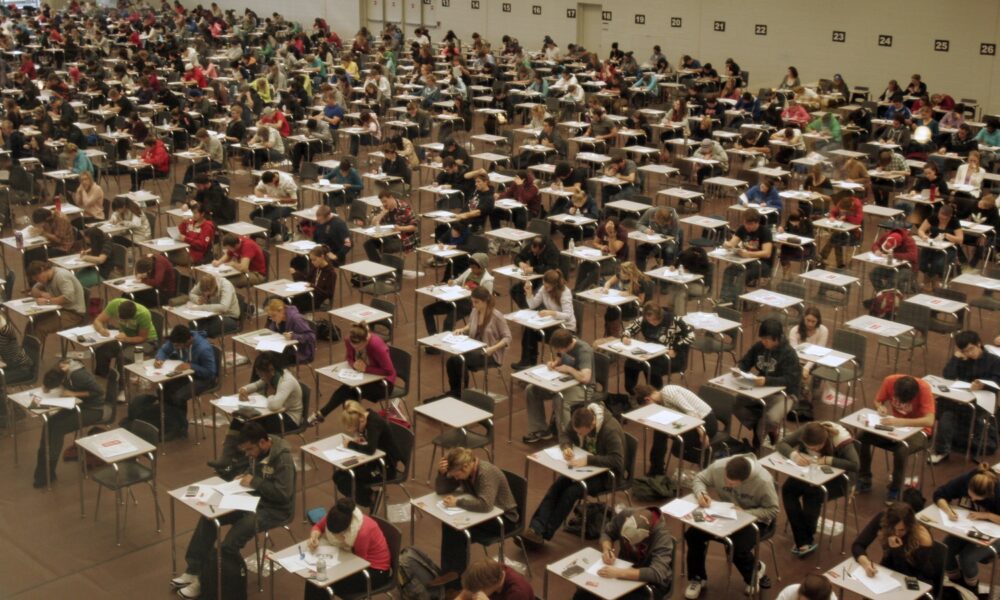
COVID-positive students no longer need a medical note to defer exams

McGill’s exam deferral regulations now allow students with COVID-19 to request a deferral without a medical note. This alteration was made on Nov. 25 after meetings between Law Senator Josh Werber, Students’ Society of McGill University (SSMU) vice-president (VP) University Affairs (UA) Kerry Yang, and McGill administrators.

Under McGill’s existing regulations, students in eligible faculties, including Arts, Management, and Science, get one opportunity while completing their degree to defer an exam without supporting documentation. For subsequent deferrals, supporting documentation is required. Such documentation includes a medical note from a verified health practitioner, a statement of capacity that indicates to what extent a student’s condition has hindered them academically, dates during which the student was impacted, and when they are expected to recover. 

The Deferred and Supplemental Exams webpage now indicates that for students in eligible faculties who have contracted COVID-19 “a medical note is not mandatory even if this is not your first deferral.”*

As COVID-19 case numbers soar once again, medical clinics in Quebec are increasingly backlogged. Yang explained that the modification of the regulations is meant to alleviate the stress on students who contract the virus and struggle to obtain supporting documentation due to the overburdened health care system or other accessibility issues. 

“All this, the documentation, the entire process [of requesting a deferral] is extremely stress-inducing, especially during finals season,” Yang said in an interview with the The McGill Tribune. “We sort of want what requires the least amount of work and effort out of [students].”

McGill media relations officer Frédérique Mazerolle noted in an email to the Tribune that exam deferrals should only be used for extremely strenuous circumstances. 

“Deferring an exam is an exceptional measure, and is meant to help students who are severely ill or dealing with unforeseeable, significant extenuating circumstances,” Mazerolle wrote. “Requests due to minor illnesses (e.g. a cold, cramps, nausea, etc.), minor personal matters, for scheduling conflicts (e.g. travel plans), or to manage your workload will not be approved.” 

Deferral requests can also be refused for the failure to provide a valid reason, recurring deferral requests for similar reasons without attempting to address the barriers hindering a student’s ability to write the exam, and inadequate medical documentation. 

While there may be fear of students taking advantage of the policy due to the leniency of the new clause, Werber believes it should not present a significant concern. In an interview with the //Tribune//, he asserted that inappropriate use of a policy is bound to occur and that students in need of deferrals should not be punished for the possibility of improper use. 

“You’ll have students who legitimately deserve a deferral, who don’t get one,” Werber said. “I’d rather have the occasional bad actor get a deferral than [have] some student who’s legitimately sick [not] get it.” 

Macdonald Campus Students’ Society (MCSS) VP UA Alireza Roosta explained that the uncertainty over the approval of deferral requests has forced students to attend their exams while ill. 

“The first thing that you think of is, ‘Okay, I have 12 hours before my exam, and I need to get my request approved and I also need to get, for example, medical documentation. So how can I do all of that? Isn’t it better for me just to show up sick?’” Roosta said. 

Werber has hope that the medical note exemption for COVID-19 cases will be carried over to other illness-related exam deferrals.

“Hopefully, this practice of not requiring a medical note for COVID-19 is the beginning of a new direction by which students are believed when they have an accessibility issue or need a deferral, rather than always having to prove it all the time,” Werber said. 

Those who need to request an exam deferral can do so through the Student Menu on Minerva.

*This information was listed on the Deferred and Supplemental Exams webpage at the time of publication.

Science & Technology, Science Rewind

Trottier Foundation gives $16 million to McGill Space Institute

The Trottier Family Foundation announced on Nov. 21 that they would be making a donation of $16 million to the McGill Space Institute (MSI)—which will now be called the Trottier Space Institute (TSI)—as well as $10 million to L’Université de Montréal. Half of the money donated to McGill will go towards building an annex onto the TSI building at 3550 University Street, while the other half will fund fellowships and provide increased support for research projects. 

In light of the donation, Nicholas Vieira, a PhD student in astrophysics at McGill, discussed his hopes for the future of the TSI in an interview with The McGill Tribune

“Hearing about this new donation is super exciting as a graduate student, because I know that this kind of money is going to fund all sorts of new students to come to the TSI,” Vieira said.

Since the TSI was founded in 2015, it has grown to house more than 120 researchers who work on a wide variety of topics, including exoplanets, astrobiology, and the formation of stars. As the TSI continues to grow, the extra space provided by the annex will allow for new and exciting research projects to develop. 

“My understanding is that the building is hopefully going to just accommodate a lot more students, because this building is beautiful. I love it, but it’s not the biggest building on campus,” Vieria said. 

Vieira studies kilonovae, phenomena that occur when two neutron stars orbiting each other collide, emitting a burst that lasts for about a week. “The reason why kilonovae are super interesting to me is that we think the reason they shine is that during these mergers, you synthesize a bunch of radioactive elements, and just heavy elements in general,” Vieira explained. 

In the future, Vieira and a team of scientists at the TSI hope to use the James Webb Space Telescope (JWST) to further their research. 

“We really want to point James Webb at these things, and analyze how their […] colour evolves over time, how their brightness evolves over time, and see if we can learn stuff about the origin of these really heavy elements using that data,” Vieira said. 

Research into kilonovae is one of many space-related investigations currently underway at the TSI. 

“There’s a lot of really exciting stuff going on, which is one of the things that I really like about coming into work here,” said Vieira.

Even before the donation, the TSI was already doing ground-breaking research. Professor Victoria Kaspi, director of the TSI, was even awarded the Albert Einstein World Award of Science in September 2022. 

“The ground-breaking work by the Space Institute’s researchers includes major discoveries in the area of neutron stars and fast radio bursts by […] Victoria Kaspi,” wrote Frédérique Mazerolle, media relations officer at McGill, in an email to the Tribune.

Kaspi is known for her past work on neutron stars, which are formed by the collapse of massive stars and are some of the densest objects in the universe. More recently, at TSI, she has focused on fast radio bursts, which are a mysterious observed phenomenon. 

“Fast radio bursts […] are these bursts of radio waves that, as the name implies, are very fast, like milliseconds long,” Vieira explained. “What’s really neat about FRBs, as they’re called, is we have no idea where they come from, nobody knows what produces them.”

New astronomical telescopes and instruments accelerate innovative research like Kaspi’s, and the donation from the Trottier Foundation will help keep TSI at the cutting-edge of this development. 

“The visionary gift coincides with an exciting age of discovery in astrophysics, thanks in part to the development of powerful new telescopes—such as the Canadian Hydrogen Intensity Mapping Experiment (CHIME) and [the JWST]—that enable researchers to explore deep into our solar system and beyond,” Mazerolle wrote.

Chill Thrills, Student Life

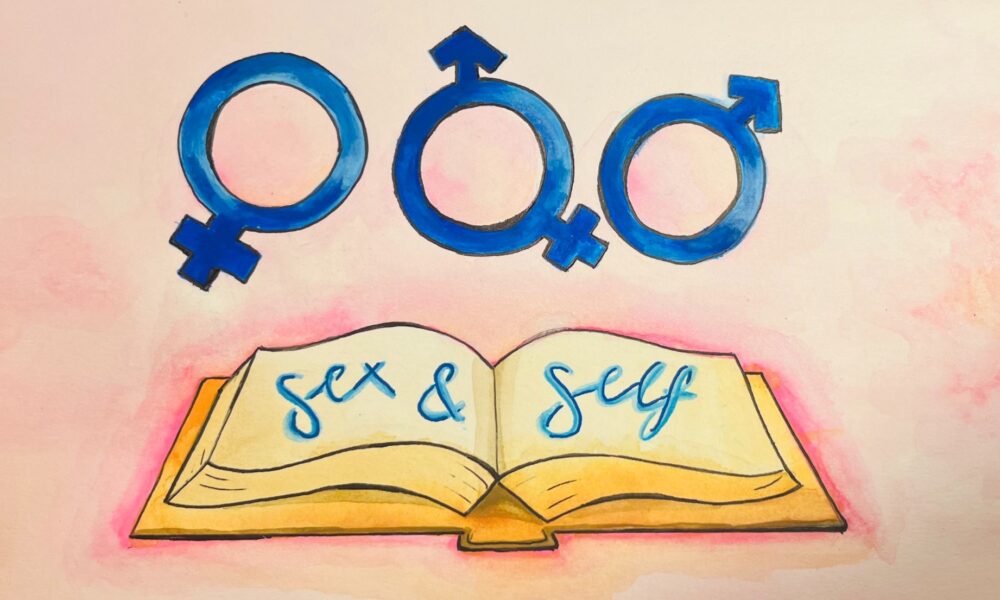
Sex and Self’s new shame-free book club caters to open and honest discussions

Sex and Self, a not-for-profit, sex-positive organization, held its first book club meeting last Thursday over Zoom. Readers congregated virtually with Mo Asebiomo to discuss It’s My Pleasure: Decolonizing Sex Positivity—the author’s debut book that challenges the basis of what it means to hold sex-positive attitudes in a white supremacist country. Participants discussed their interpretations, experiences, and observations, and also listened to Asebiomo read and discuss their work. 

Sex and Self is a student-run group that aims to educate and empower individuals about their bodies, autonomy, and sexuality. The organization was set up at McGill in 2019 by Felicia Gisondi, but has now expanded across many universities in Canada. Sex and Self’s mission is built on three pillars: Scientifically-backed sex education, intersectionality, and a sex-positive atmosphere. It facilitates various seminars, workshops, and events to educate people about sexual and reproductive health and wellness. Simultaneously, the organization works with sex and health sponsors to attain free products for students and works with health care professionals to ensure their message is scientifically grounded. 

The co-president of Sex and Self McGill, Holly Bloomfield, U4 Science, said in an interview with The McGill Tribune that “[o]ur main goal is to provide comprehensive sex education that’s shame-free, pleasure-focused, and scientifically backed to the McGill community.”

To expand its repertoire of sex-positive offerings, Sex and Self’s newest initiative, Book Club, provides a safe space to explore topics that are often not reflected in the media or sex education programs. A common theme surrounding sex education in the classroom is one of abstinence, in an attempt to scrub the important topic out of students’ awareness. Book Club takes a vastly different approach, with open discussions taking the forefront. 

“Books ranging from anything, like smut, just give people a safe and informed place to talk about all the different kinds of aspects of sex, while also bringing in perspectives that we may not hear through the books,” Bloomfield said.

Sex education taught at a younger age can be inadequate or even nonexistent; often, sex education lacks information, stigmatizes sex curiosity, and is done through a cisgender and heteronormative lens. With the slogan of “Nobody benefits from knowing less about their bodies,” Sex and Self is trying to help fill these gaps. 

“Within our future generations, we don’t have to have this like closing up [around topics like sex]. I would love to live in a world where we can talk about genitals the same way we talk about other body parts like we don’t have to pause and say it quieter or laugh uncomfortably afterward,” said Tess Vardy, the University Coordinator at Sex and Self and a fourth-year Arts student at the University of Guelph. “Like, I’d love to say vagina like I say finger. That’s the kind of world I want to live in.”

This desire for open and shameless conversations about sex is brought into the book club meetings, as Vardy aims to create the most comfortable environment possible when leading the club. They actively ensure a safe space by providing trigger warnings and low-pressure discussions so that people can participate if desired. 

The other McGill Sex and Self co-president, Lidie Silva, U4 Science, spoke about her experience creating safe, inclusive environments while moderating different workshops and events. 

“Allow everyone to learn and [don’t] assume that everyone has different backgrounds, voices, and information. It’s just like, everyone has space to learn together,” Silva told the Tribune.


Sex and Self’s fulsome resources are available on their Instagram or website, where you can sign up for events and stay up to date with their various initiatives. The organization also provides a wellness pantry on the first floor of the University Centre, where, at any time during opening hours, students can pick up pads, tampons, condoms, lube, ovulation strips, period cups, and (if you turn on their Instagram notifications) even sex toys.

Read the latest issue

Read the latest issue