Latest News

Know Your Athlete, Sports

Know Your Athlete: Ludovyck Ciociola

The exceptional play of first-year goalkeeper Ludovyck Ciociola was a bright spot for Redbirds soccer fans during a disappointing 2–8–4 season. After a successful stint at Collège Ahuntsic, the rookie from Montreal North capped off his debut season at McGill by earning a spot on both the RSEQ all-rookie team and the U-SPORTS all-rookie team. This provincial and national level recognition cements Ciociola as a name to watch in the Canadian university soccer circuit. The McGill Tribune sat down with Ludovyck to discuss his accomplishments and to hear about his path to McGill.

A four (or maybe five, his memory failed him here) year-old Ciociola began playing soccer in his neighbourhood under the guidance of his number-one fan––his mother.

“Honestly, my mom put me in because it was the most popular sport in Montreal North. Since I can remember, I liked it, so I’ve just continued,” the keeper told the Tribune

It wasn’t until a few years later, however, that Ciociola started standing between the posts. The transition from the outfield was seamless as the youngster slid into his new position with ease. With a game inspired by Barcelona’s Marc-André ter Stegen, the Redbirds keeper has the skill set of a modern goalkeeper: Excellent footwork, fast reflexes, and solid passing abilities.

Ciociola’s success this season comes after overcoming persistent doubt in his playing abilities early on. 

“For a long time, I didn’t have self-confidence as a keeper,” Ciociola said. “From U13 to U17, I didn’t have the confidence to play AAA [the highest level in Quebec] [….] After U17, I just made the jump to AAA, and I won the golden glove in my only AAA season. I was invited to try out for semi-pro. I made the semi-pro team, so when I got over that mental block, it really started working out.”

Early in the Redbirds’ season, Ciociola had a brilliant stretch of play, showcasing incredible poise against some high-quality teams. 

“We faced [Université de Québec à Trois-Rivières] at home on Friday and won 1-0, then Sunday we went to Laval and [tied] 1-1,” Ciociola said. “I played excellent games on an individual level in the two matches. And, after that week, I won McGill athlete of the week, RSEQ athlete of the week, and U-SPORTS athlete of the week.” 

However, the triumph didn’t last long. McGill’s early success ground to a halt after the team failed to pick up points in five out of the last six contests. Nevertheless, Ciociola had plenty of positive experiences throughout his first year with the Redbirds. 

“[I want to give a] shoutout to Mika [Michael Palomo], I met him this summer when I joined Blainville to play semi-pro, and I found that he really helped me become more aware of goalkeeping tactics,” the keeper said.

After getting the first-ever red card of his career against Sherbrooke on Sept. 15, Ciociola wanted to clear up what really happened and to emphasize the support from his team. 

“It wasn’t really a red card; the ball hit my face. That was the one time I was actually mad [….] A coach, Pierre [Lepage], came to see me on the bench and told me they were going to win for me, and we did win, 2-0.” 

Ciociola also expressed gratitude for senior goalkeeper Chris Cinelli-Faia as the veteran guided him through his first season.

“There’s the team, and then there are the goalies, who form a sort of team inside the team,” Ciociola explained. “Chris has been there all season, talking, giving advice. If I had something to ask, I would see him. You can say he took me under his wing. Chris wrote a paper on penalties and how you should move as a keeper […] but I haven’t applied his paper findings yet.”

During the offseason, the Redbirds keeper will be keeping busy by cheering on Les Bleus in their World Cup defence while attending his first-year management classes and weekly team training.

*The interview was translated from French by the author.

Soccer, Sports

Qatar World Cup 2022: Notable moments from week one

Infantino’s unhinged defence of FIFA 

Off the pitch, in a bizarre defence of FIFA’s controversial decision to host the tournament in Qatar, FIFA president Gianni Infantino went on a 57-minute rant praising Qatar’s migrant worker policies and deflecting criticism of the human rights abuses that continue to unfold under FIFA’s supervision. In the speech, Infantino, often regarded as the most powerful man in sports, compared himself to a number of oppressed groups and labelled the criticism directed at FIFA as hypocritical. 

Qatar’s early knockout

The tournament opened with a 2-0 win for Ecuador over Qatar. For many, this did not come as a surprise as Qatar had never qualified for the World Cup before 2022. All host countries are given automatic entry regardless of their ranking. This marked the first time that the host of a World Cup lost the opening game; after Qatar’s 3-1 loss to Senegal, it marked the earliest elimination for a host team in FIFA’s 92-year history.

Protests against the Iranian government 

On Nov. 21, the Iranian football team refused to sing their country’s national anthem in a display of solidarity with the ongoing human rights protests in Iran. Despite this move, the team met with Iranian President Ebrahim Raisi prior to the World Cup. Fans wearing shirts with the name “Mahsa Amini”, the woman who was killed by the Islamic Regime’s morality police, were removed from the stadium. Some protesting fans said they had flags, t-shirts, and signs confiscated while others were shouted at and harassed by stadium workers. 

Upset number one: Saudi Arabia beats Argentina

Saudi Arabia shocked the world with a 2-1 victory over Argentina on Nov. 22. This win astonished many fans as Argentina is ranked third in the world and was a pre-tournament favourite, while Saudi Arabia is ranked 51st. This ended Argentina’s three-year, 36-game winning streak but the team was able to avoid elimination with a 2-0 win over Mexico on Nov. 26. 

Upset number two: Japan snubs Germany

Another pre-tournament favourite faced defeat on Nov. 23, when Japan claimed victory in a 2-1 win over Germany. Germany is a four-time World Cup champion, while Japan has never progressed past the round of 16 stage. 

Hope for a new era of men’s soccer in Canada

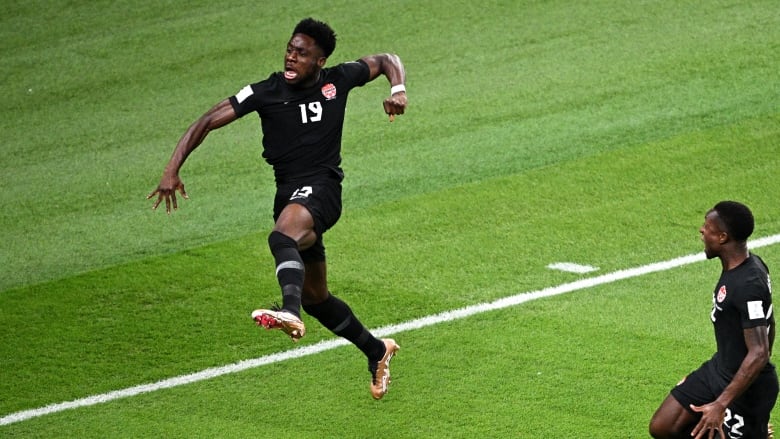
While many eyes were drawn to Spain’s record breaking 7-0 win against Costa Rica, the Canadians took the field for the first time since 1986. In a heartbreaking 1-0 loss to Belgium, the Canadian team still made its fans proud with their impressive performance. They had 14 shots on the Belgian goal in the opening 45 minutes alone and dominated play for much of the match, but unfortunately, were unable to capitalize on any of their opportunities. Canada became the second country to be eliminated from the World Cup, after getting defeated by Croatia 4-1 on Nov. 27. The match did have some bright spots, with Alphonso Davies scoring Canada’s first goal in five World Cup games within 67 seconds of play. 

The first red card

On Nov. 25, Wales’ goalkeeper, Wayne Hennessey, crashed into Iranian striker, Mehdi Taremi, when he steamed out of his penalty area, missed an attempted clearance, and received the first red card of the tournament. Iran scored two goals after the ejection for a 2-0 victory. 

The banning of ‘OneLove’ armbands 

With the tournament taking place in Qatar, a country where homosexuality is illegal, rainbow armbands intended to show support to the LGBTQ+ community have been banned, alienating queer players and fans. The captains of seven European teams were planning on wearing armbands with the ‘OneLove’ logo but FIFA warned that they would receive an automatic yellow card if they did so. In protest, German players covered their mouths with their right hands in team pictures before their opening game to denounce how FIFA is silencing support of the LGBTQ+ community. Fans and media have also been subject to these restrictions, as a BBC cameraman and Welsh fans were refused entry for possessing items with the rainbow print. Although FIFA has continually insisted that all fans are allowed and encouraged to attend matches, it is clear that certain spectators are not welcome at the World Cup.

Behind the Bench, Sports

Dear Buffalo Sabres: A letter from an aggrieved fan

When I tell people I’m a Buffalo Sabres fan, I get one of two extreme reactions: A look of shock, or one of disappointment. Everyone knows that being a Sabres fan is a merciless and unforgiving job, one that breaks you down until you find yourself cheering for any ounce of success they can hold on to. The only thing the Sabres are leading the NHL in right now is the longest-consecutive record for missing the playoffs at 11 years and counting. 

For Sabres fans, it feels like we will never get a moment of reprieve from the endless cycle of lacklustre seasons. Despite making the playoffs in 2010-11, the Sabres have been on a steady decline since losing to the Dallas Stars in the 1999 Stanley Cup Final. Between 2012 and 2018, Buffalo finished last in their division in five out of six seasons. The team desperately needed a rebuild but a few faulty decisions, like trading Ryan Miller and Steve Ott and picking up Evander Kane, who only brought controversy, left the team no better than where it started.

In 2015, hope arose in the form of superstar Connor McDavid, whom many Buffalo fans pegged as a sure future Sabre who could save the franchise. Things didn’t go as planned, however, and Buffalo ended up with second pick Jack Eichel who, despite being one of the league’s top stars, amounted to nothing for the team. After failing to make the playoffs for Eichel’s first five seasons, his patience began to wear thin. As Buffalo continued to decline, drama arose surrounding a disagreement between Eichel and the team about how to handle an injury, leading him to publicly request a trade and be stripped of the captaincy.

Looking at the Sabres’ losing culture is painful, to say the least. The 2017-18 season ended in complete misery with yet another last-place finish, but spirits began to rise after drafting Rasmus Dahlin first overall in the 2018 Draft. That’s one thing the Sabres have going for them at least––last-place finishes turned first-round draft picks, with 10 in the past five years. 

Are the Buffalo Sabres just cursed? On paper, there is no practical reason for the Sabres to be this bad, especially this season. Tage Thompson, a former St. Louis Blues first-round pick, whom the Sabres acquired in the Ryan O’Reilly trade, has had an incredible season so far with 28 points. Dahlin and Alex Tuch, a highlight of the blockbuster Eichel trade last season, have held their own with 23 and 21 points, respectively. Owen Power, the first overall pick in 2021, is having the breakout season you dream about for a young player, with some even calling him the best defenceman in the game. Goaltender save percentages are hovering around average, Sabres stars are consistently putting up multi-point nights, and Buffalo’s roster of young, talented players are populating the top of NHL stat lists. Despite all of this, Buffalo still sucks. 

To rub salt in the wound, O’Reilly won a Stanley Cup in his first season with the St. Louis Blues and Eichel has continued to taunt Sabres fans, scoring a hat trick in his most recent appearance in Buffalo. 

All this leads me to the conclusion: Something is broken in the Sabres’ culture, and it’s time to fix it. With just a few tweaks, and by continuing to develop a promising young core, the Sabres may finally emerge from their decades-long slump. Not to sound like a broken record, or worse, a Leafs fan, but maybe next year really will be the season for the Sabres. If all scandals are avoided and if off-season moves live up to their promise, maybe, just maybe, the Sabres can sneak into the playoffs and give their debilitated fans something to cheer about.

Out on the Town, Student Life

Milton B offers students a convenient alternative to the McGill libraries

There is not an hour in the day when a tired, hungover, deadline-pegged McGill student cannot seek refuge in the Milton B cafeteria. 

Tucked in on the corner of Avenue Parc and Rue Milton, Milton B was originally a 24-hour Second Cup and five years ago, it rebranded and reopened. But one thing remained: The shop’s hours. It’s still open 24/7. 

With exams looming, we need to stay ready for anything, and I want to play my part. So, I have placed three deliberate grammar mistakes in this piece. Grab a pen and circle the ones you can find. There are only three, so keep your eyes peeled. If you see four, I’ll buy you a Kit Kat. 

I walk past Milton B every day I come to campus—and because I’m a nerd, this is most days. The building is a wooden structure with a steep gabled roof and a dash of vibrant green on the wall overlooking the sidewalk. Its straight out of Club Penguin. And despite coming close with it nearly every day, I still can’t put my finger on what exactly Milton B is trying to be. 

The interior is chaotic and incongruous. Thick, tan beams contrast razor-light green curtains by the front windows. A row of metal stools stalk the Rue Milton sidewalk and an assorted mix of yellow, green, black, and metal-rimmed chairs accompany a mismatch of different tables, with some varnished and some not quite as lucky.

My biggest issue is with the lifeless, white-grey wall on the far left of the entrance. It offers nothing but a reflection of your tired, depressed soul as you wish you were on a different plane of existence. 

The menu offers the usual café fare, like espresso-based beverages, cakes, and pastries. But it also provides milkshakes and an extensive range of hot food, from calzones to poutine. Prices are reasonable, and some of the cakes were in clingfilm, which doesn’t scream ‘freshly baked.’ 

I order a black Americano ($3.55) and I’m quite peckish, so I also grab a cookie with a heart-shaped centre ($2.70), a chocolate torsade ($2.70), and a mozzarella chicken calzone ($7.95). I take a seat by the window. 

The mood is sullen, like a late night in an airport. Piano jazz plays monotonously in the background and the light is desolate and unnatural, like in a casino. 

The room is scattered with MacBook warriors toiling over deadlines. And they’re not just working—they’re waiting. Waiting to find love, to find an internship, to find a decent show on Netflix. But above all, they’re waiting to finish their work and go home. 

And then it hit me: Milton B is not trying to be a café you want to visit. It’s trying to be a café you visit out of necessity

A big tell of a shabby coffee shop is whether they use stale coffee. If there’s a harsh acid after-taste, the beans are probably stale. And, thankfully, Milton B’s coffee did not smear my taste buds. There isn’t the richness that more specialized coffee shops offer, but this Americano is balanced, pleasant, and easy to drink—once it cools down. 

The cookie looked more appealing behind the glass. It’s, underbaked and its glaze is bleakly pale. It’s in desperate need of a tan. I’m not sure if the red sugary layer in the heart-shaped centre was initially a spread of jam that’s since been desiccated from the artificial light. But whatever it is, it tastes like a melted edible sticker.

The chocolate torsade is nothing special. If anything, it’s a little dry. The mozzarella chicken calzone has the texture of a fossil. It could also be politely used as an object for a game of catch. The chicken is well-seasoned and fills you up. Would it survive the high streets of Naples? Don’t be silly. Does it suffice as a midnight snack? Hell yes!

Score: 3/5

McGill, News, The Tribune Explains

Tribune Explains: Financial Aid at McGill

There are various avenues available to undergraduate McGill students in need of financial aid, from merit-based entrance scholarships to government aid or bursaries. The McGill Tribune looked into the resources available on and off campus, and how to access them.  

What financial aid is available to incoming undergraduate students?

McGill has an Entrance Bursary Program for entering undergraduate, medicine, or law students who demonstrate financial need. The value of an entrance bursary varies depending on an applicant’s extent of need and tuition fee rate as determined by their program and living situation. In order to qualify, students must complete their Financial Profile on Minerva, which requires information about their salaries, cost of living, and their and their families’ tax information. Canadian and American students must also fill out a CSS profile

Students registered with McGill’s Student Accessibility & Achievement may be eligible for the Entrance Bursary even if they are pursuing part-time studies. Additionally, any student receiving aid through the Entrance Bursary is automatically enrolled in McGill’s Work Study program, which offers a host of on-campus jobs and incentivizes campus employers to prioritize Work Study students when hiring.  

What financial aid is available to current undergraduate students?

McGill’s in-course financial aid is also need-based and can be offered to students at any point during their studies, provided they are taking a full course load. Aid is granted in the form of a bursary or a loan. To apply, students must complete their Financial Aid profile on Minerva, detailing their tax information, income, and cost of living. Once their profile is completed, a student can contact a financial aid counsellor at McGill who will determine the amount of aid for which they are eligible. This decision is based on the level of funding available each year, the number of applicants, and the relative need of other candidates. 

How do tuition fee deferrals work? 

Tuition fee deferrals are in place to give students an extended deadline to pay tuition without any late charges or registration holds. Deferrals are granted if students can prove that they are waiting on funds such as bursaries, government loans, or delayed international transfers. The Scholarships and Student Aid Office examines a student’s situation and approves the submissions made through Minerva. 

How do emergency loans work?

The university has emergency loans available to students experiencing sudden, extreme financial hardship, such as homelessness or severe food insecurity. Students must complete an In-Course Financial Aid application and update their Financial Aid profile on Minerva in order to make this request. 

What kind of government financial aid is available for Quebec residents?

The Quebec Government offers loans and bursaries to eligible Quebec residents pursuing post-secondary education. Eligibility is based on marital status, type and length of education, cost of tuition, and income. Applications must be submitted through a Student Financial Aid File. Students must apply a minimum of six to eight weeks before the beginning of the semester in order to receive their funding in time for the start of term. Importantly, the loan must be repaid after students graduate. When the time to repay student debt approaches, students must contact their financial institution’s student loan centre to negotiate their repayment schedules and interest rates. 

What kind of government financial aid is offered for out-of-province students?

There are both federal and provincial government aid programs available for out-of-province students. The Canada Student Financial Assistance Program offers grants and loans to eligible students to pay for their education, textbooks, and living expenses. Students are deemed eligible based on their tax information, income, number of dependents, and disability if any. Just like Quebec, each province has its own financial aid program. Federal and provincial financial aid can be combined. 

What kind of financial aid is offered for international students?

While international students must demonstrate financial security and the ability to fund their education and living costs to be eligible for a Certificate of Acceptance of Quebec, they may still be eligible and considered for the Entrance Bursary, scholarships, in-course financial aid, tuition fee deferrals, Work Study, and emergency loans. 

Off the Board, Opinion

No, you’re not OCD for liking things organized

Content warning: Mentions of mental illness and descriptions of intrusive thoughts and compulsions

I was 17 when I finally started to seek help for my obsessive-compulsive disorder (OCD). The signs had been there for a long time, but it took me receiving a proper diagnosis to realize the scale at which it was affecting my everyday life. After six months of weekly therapy sessions, coupled with the support of my family and friends, I finally gained enough control to get my life back on track. I learned a lot about myself during those six months, but, most importantly, I learned that having OCD is not to be taken lightly.

OCD is a mental illness that affects roughly 350,000 people in Canada, but that’s only those who have received formal diagnoses.. Its symptoms may vary from person to person but generally involve unwanted or intrusive thoughts, which often provoke anxiety and fear, as well as ritualistic actions to help cope with said thoughts. Intrusive thoughts can manifest themselves in many ways, from fear of contamination to the inability to throw things away. For instance, I would often have anxiety-provoking thoughts about those close to me getting injured, and the only way I could shake them from my head was to perform seemingly arbitrary rituals, such as obsessively checking that the doors were locked or that the oven was turned off. If I didn’t do these rituals, I would have trouble sleeping, with thoughts of intruders or housefires racing through my mind.

I used to be embarrassed by my OCD, partially because I knew that so many people still don’t take it seriously. I have heard that a crooked picture frame is “triggering someone’s OCD” or that people who like to clean their rooms are “OCD about it” too many times. These are sentiments that I have been hearing my whole life, at school, on the internet, everywhere. Every time I hear someone making a joke about OCD, it cuts deep, as people don’t seem to understand how horrible it truly is. I had felt the paralyzing anxiety caused by my OCD for years before I finally received help, and it is something that continues to afflict me to this day.

I would like to think that most people who say such things are not saying them out of malice, but rather out of ignorance. It is very easy to fall back on stereotypes that have been parroted for generations, but it takes effort to learn about what the condition really entails. There have been countless times where I have heard these same annoying jokes being made, and while I desperately wanted to tell people to stop, I didn’t out of embarrassment and anxiety.

Luckily, more initatives have cropped up in recent years to help educate and spread awareness about OCD and its symptoms. International OCD Awareness Week, which takes place every year in early October, helps destigmatize OCD and provide resources for those diagnosed with the condition. The campaign is run by the International OCD Foundation, a non-profit which aims to help those dealing with OCD around the world. They have done a lot of great work educating the public on a condition that is still widely misunderstood.

Unfortunately, there is no “cure” for these obsessive-compulsive thoughts, but there are many great resources and coping mechanisms that I am very grateful for. It is an affliction that I still deal with on a day-to-day basis, but I am in a much better place now than I was before I sought out professional help. Unfortunately, professional help is not always easily accessible and McGill’s resources for mental health support are severely lacking. From difficulties getting appointments, to staffing shortages, it can be incredibly tough for students to receive the help they need. However, there are many free, professional services, such as AMI-Quebec, that offer mental health support and counselling to those in need.

I am now at a point where I am proud to say that I am no longer ashamed or embarrassed by my OCD. It is something that I myself and many others deal with on a daily basis, and it must be taken seriously. Hopefully, with continued efforts and better education, we can finally break away from the misconceptions that continue to stigmatize people to this day.

Arts & Entertainment, Film and TV

Seeing Quebec through a new lens in ‘Lida Moser Photographer: Odyssey in Black and White’

In the summer of 1950, Lida Moser set out from New York City on a journey to capture the spirit of Quebec through photographs. She was a single woman travelling with three men: Ethnologist Luc Lacourcière, folklorist Félix-Antoine Savard, and Paul Gouin, cultural advisor to Premier Maurice Duplessis. She did not speak a word of French. 

Today, her corpus of over a thousand photos continues to resonate with Quebecois and non-Quebecois people alike. They have been carefully preserved in the Bibliothèque et Archives nationales du Québec (BAnQ) and exhibited at the Musée national des beaux-arts du Québec. Now, they live on vividly in the animated short film Lida Moser Photographer: Odyssey in Black and White, produced by Academy-Award nominated filmmaker Joyce Borenstein. 

The McGill Tribune sat down with Borenstein and former McGill professor Norman Cornett to discuss the film and the lasting impact of Lida Moser’s photographs. 

“What started me on this quest was seeing her photographs. They just bowled me over, they were exquisite. They recalled my idyllic summers as a child,” Borenstein said. “My parents rented and then bought a little old schoolhouse in the middle of the farmland of Quebec, in the Laurentians. We played with our neighbours, who were francophone farming kids. We didn’t need language at the time [….] We got along beautifully, and summers were my favourite times in my childhood.”

Currents of profound understanding run through the film. Borenstein was born in Montreal to an immigrant, anglophone, Jewish family, and relates to Moser as a woman persisting in a patriarchal world. She explores the complexities of feelings of otherness with lyrical empathy, by placing herself in Lida Moser’s shoes. 

“I retraced her steps, I did her journey two and a half times,” Borenstein said. “It came alive, and I fell in love.” 

Professor Norman Cornett, also a Montrealer, was likewise captured by Moser’s photographs and Borenstein’s film. Earlier this fall, Cornett discussed the film in depth with Borenstein as part of a series of video dialogues.

“What intrigues me in Lida Moser Photographer as a religious studies scholar is, particularly as it relates to [Bill] 96 and nationalism, it’s as though through the animated documentary, we can see Quebec, its history, its people, its language, through another lens, in another light,” Cornett said.

The film’s Quebec is not the Quebec of postcards or brochures. Lida Moser’s photos do not depict eminent figures, grand buildings, or familiar landmarks. They show children growing up, playing with kittens, and people sitting outside, working with tools. What, then, shapes La Belle Province are not majestic monuments, but images of everyday life. The resulting photographs relate to outsiders in Quebec and abroad in their sheer authenticity. 

For Cornett, this approach, grounded in everyday occurrences, captures Moser’s essence. 

“Lida Moser comes from that milieu, that ambience, of Jewish, left-leaning, socially conscious artists [….] They want to tell the people’s stories, not the bankers’ stories […] they want to tell the untold stories,” Cornett said. “To what extent are we doing justice to the history of French Canada, to the history of Quebec, if we’re only looking at it through the lens of those that are bigger than life?” 

The film’s focus on everyday life crucially presents a rare and accessible ethnographic picture of Quebec in the 20th century. The language-less nature of photography and animation makes them boundary-breaking mediums to tell the story of a province whose identity exists entrenched in the French language. 

“Somehow art gets through […] no matter  the language,” Cornett said. “Art transcends language, art transcends ethnicity, art transcends identity, art transcends the boundaries, the barriers, between us. And that is the beauty of Lida Moser Photographer. She doesn’t speak a word, and yet we hear her loud and clear.”

Lida Moser Photographer: Odyssey in Black and White is currently in distribution, but is available to McGill students as a DVD via interlibrary loan.

Arts & Entertainment, Pop Rhetoric

What’s wrong with world music?

On what grounds do we describe music that breaks with Western traditions? Does the simple label “world music” suffice? Unsurprisingly, this term was not popularized by so-called world musicians. Rather, like much of the language we use to describe music, it was the creation of profit-minded record label executives. In 1987, industry tycoons were looking to capitalize on the success of Paul Simon’s South African-influenced Graceland to start selling more music by African artists to Western audiences. They settled on “world music” as a broad marketing term to denote music not originating from Europe or North America. 

In many ways, the top-down nature of this term’s inception and its formulation in the absence of any actual musicians is reflective of its problems. World music casts an otherness upon the music it encompasses, demarcating it solely by the fact that it’s not Western, rather than what it sounds like or how it was composed. It’s clear to any listener that the Brazilian Tropicália music of Caetano Veloso bears no more, and arguably much less, relation to North-Indian classical music by Ravi Shankar than it does to Western pop or rock music. To lump the two artists under one bracket ensures that the designation of “world music” is defined by its proximity to our narrow conception of Western music. This reinforces a Western hegemony that casts foreign art and culture as less high-brow or unsophisticated. This has pervaded the way we engage with art throughout history, both in terms of how it is marketed and how consumers perceive it. 

Such a characterization fails to grant non-Western artists the individuality they deserve. When it comes to Western artists, entertainment media is more than willing to hyper-taxonomize, creating ever-more specific genre labels to describe the next progressive-metal-influenced mathcore band or post-punk revival act. Pigeonholing artists into overly narrow labels can itself be unhelpful, but this tendency of music journalists highlights that they can be specific in their descriptions of artists when they actually make an effort. Identifying the specific genre of a foreign artist operates as a basic courtesy that would crucially enable such artists to forge their own musical identity distinct from their nationality. 

Besides the lack of respect the term “world music” affords artists, the designation lacks any utility for listeners. At their best, genre labels help differentiate between different kinds of music, describing how an artist sounds or the movement they belong to so that listeners can gravitate towards music they are more likely to enjoy. A broad-strokes term like “world music” fails because it reveals so little about the fundamental basis of music: How it sounds. What types of instruments does an artist compose with? What kinds of harmonies do they employ? What lyrical themes do they explore? Labelling an album as world music does nothing to answer any of these questions. 

The perniciousness of this term is symptomatic of one of Western music media’s major failures: It can’t challenge the premises on which its viewpoints rest. Panels for music awards, such as the Grammys, regularly shoehorn Black artists’ musical achievements into the category of rap, or until recently, “urban” music, in spite of music often not fitting into those characterizations. Meanwhile, the Golden Globes’ critic panel decided to place Minari (2020) into its foreign film category due to its dialogue being predominantly in Korean, despite the American-produced film’s central tenet being the promise of the American Dream to U.S. immigrants. These examples demonstrate how the merits of the works of non-Western artists and people of colour are routinely conceived of through a white-centric viewpoint. 

Ultimately, what “world music” gets wrong is that, for its artists, world music is just music. Labelling music in binary terms based on its Western or non-Western origin is not just disrespectful: It’s bad music journalism. 

Commentary, Opinion

McGill needs to boycott Sabra—for real this time

After a stickering campaign by  Students for Palestinian Human Rights McGill (SPHR) at the end of the winter 2022 semester, McGill’s Food and Dining Services removed Sabra products from the shelves of McGill’s dining halls and cafés. However, in recent weeks, they’ve returned. Instead of toying with their merchandising to temporarily appease student groups, McGill must permanently remove Sabra products from their selection. 

The Strauss Group, the parent company of Sabra which is co-owned by Pepsi-Co, is one of the largest food production corporations based in Israel. The group financially supports the Golani Brigade, a brutal and inhumane division of the Israeli Defense Forces (IDF). In addition to financial support, Ofra Strauss, the company’s chairwoman, has admitted to providing food and care packages to the Brigade during training and missions. The IDF is responsible for the continued ethnic cleansing and settler colonialism of Palestine through horrific violations of international law and crimes against humanity. The Golani Brigade in particular has carried out arbitrary murder campaigns, participated in the demolition of Palestinian homes, and helped incarcerate children. The brigade played a significant role in the egregious assault on Gaza in 2008, killing around 1,400 Palestinians and wounding many more. In addition to the alienation that McGill’s hundreds of Palestinian students face from an administration that systemically ignores Israel’s war crimes, supplying blood-stained products such as those of Sabra serves as a constant reminder of McGill’s complicity. 

Calls to remove such products are part of a larger Boycott Divest Sanction (BDS) movement, that aims to hold Israel economically accountable for its occupation of Palestine and subsequent apartheid and colonialism. With Sabra as one among many corporations, the global movement makes calls to boycott consumer brands like Puma, L’OREAL, and Pillsbury, supported by five members of the Pillsbury family themselves. The calls for BDS were successful. Earlier this year, Pillsbury’s parent company, General Mills, divested from apartheid Israel. We are seeing worldwide that BDS works; the University of Manchester removed Sabra from its campus after a boycott campaign.

The appropriation of hummus by an Israeli-backed group serves as another example of Israel’s obsession with co-opting and appropriating Palestinian culture. The Israeli promotion of falafel, hummus, and labneh without recognition of their Palestinian origins represents the overarching project to erase Palestinian culture and history. These historical and cultural deprivations complement the Israeli government’s systemic dispossession of Palestinian land,  restriction of access to water in occupied Palestine, and continual uprooting of farmland through military and settler violence. 

But why does the appropriation of hummus specifically matter? In Israel’s genocidal framework, the persistence of historical Palestinian culture threatens the state’s legitimacy and independence. Therefore, cultural appropriation is just one of many tactics to suppress traces of Palestinian validity and resistance. 

While settlements in the West Bank and the Gaza blockade illustrate instances of direct subjugation towards Palestinians, cultural appropriation, notably through corporate action, is far more cynical: The objective is to psychologically dominate and humiliate a people and nation by denying them not only their basic human rights but also the right to own their history and culture. 


McGill has a longstanding history of profiting from Israeli apartheid in Palestine and has shown time and time again that they do not value human rights, especially when it concerns people of colour. Students, however, have begun to show up and make their positions clear. Even though it was not adopted, the Palestine Solidarity Policy was approved with a  71.1 per cent majority, a policy that held a promise to boycott all corporations complicit in settler-colonial apartheid against Palestinians, including Sabra. It is imperative that students remain active in fights against McGill’s profiteering from Israel’s violent occupation in Palestine. Complicity is violent and until Sabra is off the shelf, we’re all guilty.

McGill, News

Student advocates call for reform of McGill’s harassment and discrimination policy

Content Warning: Mention of sexual violence and racism

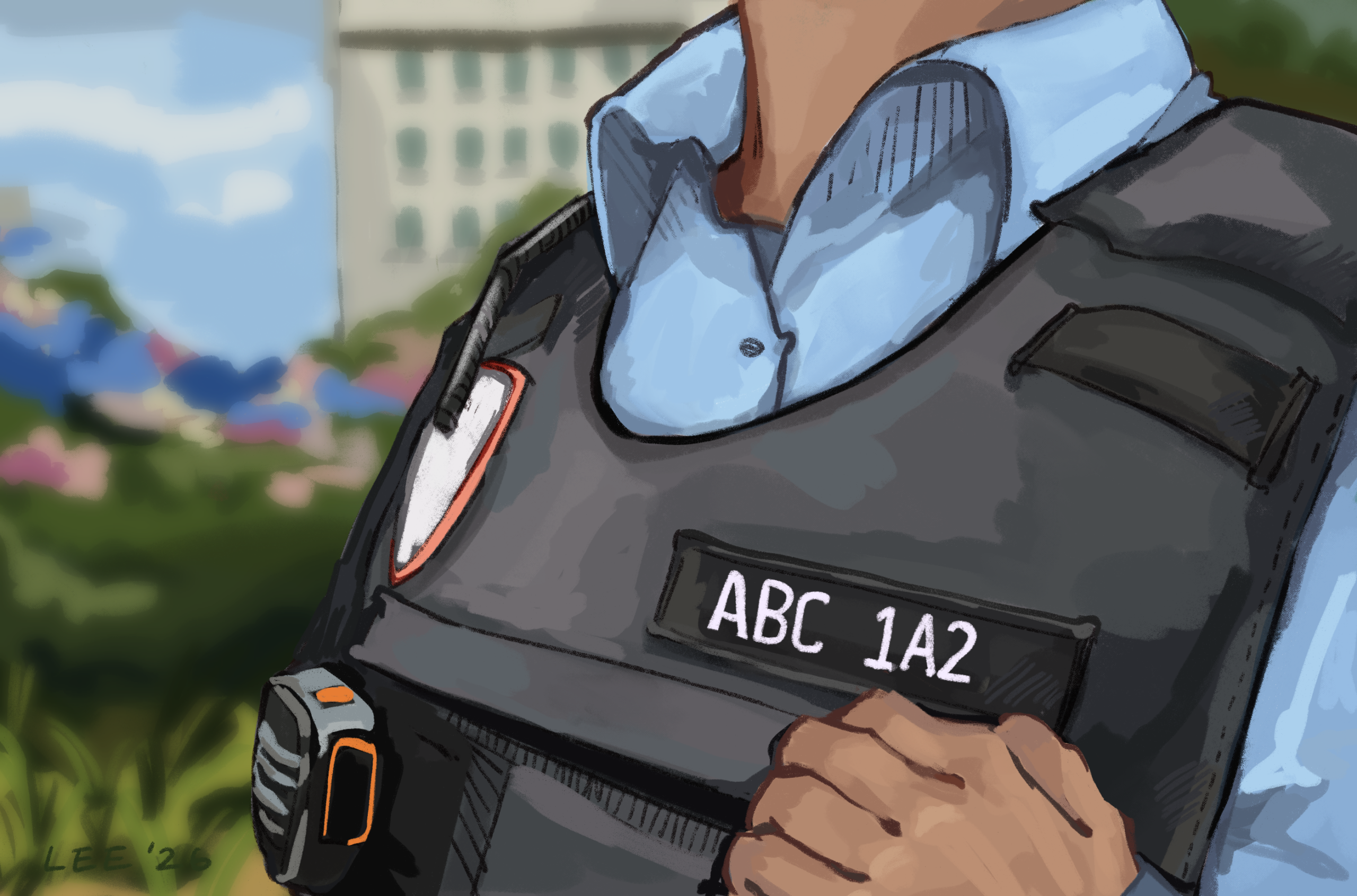
McGill’s Policy on Harassment and Discrimination allows members of the university community to take action when they feel they have been harassed or discriminated against. The policy and its accompanying procedures outline how to file complaints and prompt investigations into both individuals at McGill and the university’s systemic practices. While it is intended to provide support to students navigating the official complaint process, many—including Black and 2SLGBTQIA+ students, and members of student advocacy groups—are dissatisfied with the policy’s framework and implementation. In interviews with The McGill Tribune, student advocates familiar with the policy explained that they have found several issues with it, such as inefficient procedural practices and a lack of legitimate third-party intervention. 

Complaints about harassment or discrimination are brought to McGill’s Office for Mediation and Reporting (OMR), which was created after the policy’s revision in 2021. McGill media relations officer Frédérique Mazerolle explained it as “an office dedicated to the independent and impartial oversight of the resolution of reports of harassment, discrimination, and sexual violence” in an email to the Tribune.

Once a complaint is filed with the OMR, assessors—typically members of the university’s staff—begin the investigation process. According to section 6.2 of the policy, reports may be handed to an external third-party assessor if one of the investigators has a conflict of interest, if one of the parties is a member of the OMR, or if one of the parties is a member of McGill’s senior administration. Regardless of whether the assessor is an independent party or not, the Provost is responsible for making a final decision that concludes the investigative process. 

“If the assessor’s report determines that the evidence is sufficient to find that harassment and/or discrimination has occurred, then the Provost will inform the parties in writing of the decision to refer the matter to the appropriate University disciplinary authority to determine disciplinary and/or administrative measures,” Mazerolle wrote. 

A case’s appropriate disciplinary authority depends on the role of the accused, according to section 6.16. The appropriate authority in the case of a student is outlined in the Code of Student Conduct and Disciplinary Procedures. In the case of a staff member, it will be the dean of their faculty or the dean’s delegate, whereas in the case of a Vice-Principal, it would go to the Principal. The Chair of the Board of Governors presides over cases involving the Principal. 

Queer McGill administrative coordinator Brooklyn Frizzle is concerned about what they believe is the Provost’s outsized role in managing harassment and discrimination complaints. Frizzle stressed that a Provost’s individual biases can have an impact on how cases are handled. They pointed to previous comments that the former Provost and current Interim Principal Christopher Manfredi made in Senate meetings. 

For example, Frizzle took issue with Manfredi’s indication—during a Nov. 18, 2020 Senate Meeting—that there is no inherent concern with McGill professors signing a petition to support a professor using racial slurs in their teaching.

In an interview with the Tribune, Students’ Society of McGill University (SSMU) vice-president (VP) University Affairs Kerry Yang explained that the OMR might not be completely detached from the university given it fits within the Equity department under the Office of the Provost and remains under the administration’s jurisdiction. 

“Although they say it’s all to remain impartial, based on how the structure is, it doesn’t seem that way,” Yang said. “There’s no recourse if [McGill does] conduct something in bad faith because it’s all centralized. How can we ensure that what [McGill] is saying is impartial is truly impartial?”  

Frizzle also takes issue with how the Policy serves 2SLGBTQIA+ students. They explained that many queer students who tried to file a complaint under the policy were advised by the OMR that their complaint would not be successful in an “investigative setting,” which ultimately discouraged them from seeking justice. 

“Most of those cases are not investigated. They’re not formally documented and there’s no assessment made, typically, because they’re kind of pre-screened,” Frizzle said. “They advise a student that now this doesn’t meet the definition, so it probably wouldn’t go anywhere.” 

The most recent annual report on the Policy on Harassment and Discrimination noted that only eight per cent of inquiries with the OMR led to formal reports in 2020-2021. However, 47 per cent of all inquiries met the definitional requirements to launch a report. 

Alex*, a student advocate, believes there are purposeful factual errors and omittances in McGill’s records. 

“Many other Black students had filed harassment and discrimination complaints under McGill’s policy, and […] it wasn’t conducted properly in the sense that [McGill] literally lied,” Alex explained in an interview with the Tribune.  “There were factual mistakes in the [reports]. They failed to include key elements, so it was intentionally not done properly.” 

Alex compared the Policy on Harassment and Discrimination to the university’s Policy against Sexual Violence (PSV), which they believe is much more robust due to continued momentum from the #MeToo movement

“Oftentimes when there’s a movement and there’s this kind of shift, like social pressure on a particular issue, sometimes it’s […] tied to a specific momentum and then it fades,” Alex said. “In [the case of sexual violence policies], we see this continuous legislative improvement and oversight. But when it comes to harassment and discrimination, it’s not the same.”

Frizzle explained that another reason McGill may prioritize updates to the PSV could be its provincial legal obligations. Bill 151 mandates universities to establish strong policies addressing sexual violence, whereas there are no specific laws mandating universities to institute policies against harassment and discrimination. 

“McGill is a very big fan of the bare minimum, legally,” Frizzle said. “So, of course, they are going to take it more seriously because if it’s found that they’re not investigating sexual violence, then that has a much bigger […]  legal implication than […] failing to address harassment and defending professors that use racial slurs in our classroom and uplifting the voices of people who perpetuate injustice.”

The additional staff members who are employed to assist in anti-discrimination policy-making often occupy roles with limited abilities. Alex explained that the Black Students Liaison Officer, who is responsible for supporting Black students, is not allowed to engage in any advocacy or directly aid students who have filed complaints. They also noted that McGill has recently eliminated the position of Assistant Dean (Inclusion – Black and Indigenous Flourishing), who was tasked specifically with supporting and recruiting Black and Indigenous law students. This position has been replaced with the Assistant Dean (Students), who carries out several student affairs duties in addition to being the dean’s lead on Black and Indigenous flourishing.

Both Yang and Alex believe that McGill’s Policy on Harassment and Discrimination must be revised to make it a more effective support mechanism. The most efficient way to conduct investigations, they say, would be entirely through an independent third party. Alex also suggested increased levels of academic accommodations for students during the complaint process and a provision to encourage advocacy throughout McGill’s governance channels.

“Every time I go to [governance] meetings, white administrators always say that ‘we don’t do any advocacy,’” Alex said. “But if we’re talking about equity issues and we’re trying to improve a structure, the whole point is to demand that these structures be more equitable, and that requires advocacy.”

*Alex’s name has been changed to preserve their anonymity.

Read the latest issue

Read the latest issue