Latest News

Off the Board, Opinion

Attempting to bridge the gap: A family divided by COVID-19

At the beginning of the COVID-19 pandemic when we were all shut into our homes, washing our groceries when we got home from the store and buying every disinfectant we could get our hands on, everyone in my extended family agreed that we had to do everything necessary to keep our loved ones safe. However, as the pandemic evolved with the introduction of vaccines, vaccine passports, masking regulations, and travel restrictions, our opinions began to differ. Soon, it felt like our disagreements about COVID-19 were unwinding our once tight-knit group.

When the COVID-19 vaccine finally became available for those 18 years and older, I rushed to clicsanté.ca—the Quebec government’s online platform for booking appointments through the public health-care system—and registered to receive my first dose of the Pfizer-BioNTech vaccine

One of my uncles and one of my aunts decided they would not be getting the vaccine. Although they decided to do so for personal reasons, they were ones that I could not understand. Although initially their decisions had little impact on me since the world was under lockdown, the introduction of vaccine passports complicated things. In October 2021, my sister turned 18 and wanted to go to a restaurant, all of which were open to fully vaccinated people. But, my unvaccinated uncle and aunt were not able to join us, and their decisions resulted in a celebration all too similar to those we had during lockdown, where those who came to the house kept their distance. 

The debate was tough on my sister, and we discussed the impact that the differing opinions were having on our ability to spend time together. The issue grew from there, as my aunt and uncle became increasingly critical of vaccine passports and booster shots. When the Freedom Convoy began, my aunt agreed with its initial mission, but has stopped talking about it since it took a violent, disrespectful turn. Tensions like these have resulted in my extended family barely speaking with each other, except for sending non-political messages like “have a good day.” 

My family is not the only one struggling with strain caused by differences in opinion. Multiple news sources have run stories on families disagreeing and friendships ending over standpoints on vaccination. Public safety and personal rights in the time of COVID-19 have become two of the most politicized and polarizing debates in recent years. People have been forced to confront opinions that are vastly different from their own and the way that this affects their relationships with others. 

For example, some believe that the vaccine mandate imposed throughout Quebec infringes on individuals’ rights to personal liberty, as determined by section seven in the Canadian Charter of Rights and Freedoms. Despite the urge to ignore those we disagree with, navigating the cleavages that have emerged during the pandemic remains important. Ultimately, it is very likely that the pandemic will eventually end and vaccine mandate opinions will become inconsequential, and I do not want to lose my family because of this thing of the past.

The first step, from my experience, is recognizing and respecting that people will ultimately have differing opinions, whether or not they are right or based on facts and research. Disagreement can be healthy, but arguing intensely with someone has been proven to reinforce opinions, not change them. 

I have also learned that empathy is key. Mending relationships goes beyond recognizing the differences that exist; it requires understanding. I know now that my aunt made her decision because she believes it is what will be best for her children. I do not agree with her, and I do not think I ever will—I believe in the science supporting vaccination—but I respect and understand that she is doing what she thinks will keep her children safe. I remind myself of this when the topic of COVID-19 comes up in casual conversation, when we actually see each other. 

Going forward, treating each other with dignity must be a priority. At the end of the day, we are all trying to get through the COVID-19 pandemic and doing so united would be much better than bitter and divided.

Arts & Entertainment, Pop Rhetoric

2022 Oscar nominations: Winners, losers, and snubs

After yet another long and tumultuous wait, this year’s Oscar nominations have been released—and I, for one, am pleasantly surprised. With the past year yielding a wide variety of films from across the globe, the 94th annual Academy Award nominations recognized an impressive collection of well-deserving work. It can be hard to know what’s worth your time, so here are the best and worst nominations of the show, with predictions of who will take home the top prize. 

Netflix took the biggest wins this year, coming away with a whopping 27 nominations, including 12 for The Power of the Dog, the most for any individual film this year. They also have two films in contention for Best Picture: The aforementioned The Power of the Dog and previous Oscar winner Adam Mckay’s Don’t Look Up. The other notable winner is Danish film Flee, which is the first film to be nominated for Best International Feature Film, Best Animated Feature, and Best Documentary simultaneously. Netflix’s final winner is the entire Best Supporting Actress category—and wow. Every performance was well deserving of a nomination. From Jessie Buckley in The Lost Daughter to Ariana DeBose in West Side Story (2021), this category may be just near impossible to predict. 

Unlike the Best Supporting Actress category, the biggest loser of the nominations was the Best Actress category. Putting aside the questionable nomination for Nicole Kidman’s performance in Being the Ricardos, the category fails to acknowledge any break-out performer. In a year with two truly excellent first-time performances from Alana Haim in ​​Licorice Pizza and Rachel Zegler in West Side Story (2021), the oversight is not only an unjust but a painfully dull decision. The last loser is arthouse film distributor A24. Known for their consistent, exceptional artistry, A24 films are typically received with warm audience reactions and mass critical acclaim. With their impressive slate of 2021 films including Red Rocket, Zola, C’mon C’mon, and my personal favourite The Green Knight, it’s almost incredible how they managed to accumulate so few nominations—a mere three for The Tragedy of Macbeth​​

In addition to the broader categorical snubs, there were quite a few individual oversights in other nominations. Denis Villeneuve definitely should have received a Best Director nomination for Dune (2021). The Academy has been traditionally hesitant to acknowledge the achievements of sci-fi and horror films, such as Ari Aster’s Midsommar, which wasn’t nominated, and The Matrix, which only received craft awards. Although Dune (2021) did break through by receiving an astounding nine nominations—including Best Picture—Villeneuve should have been recognized for his brilliant handling of adapting such a highly technical novel. 

Now that I’ve thoroughly complained about the nominees, or lack thereof, what do I think will actually happen on Hollywood’s biggest night? As passionate as I am about smaller films like Drive My Car and CODA, I predict Netflix will receive Best Picture, and we’re looking at a The Power of the Dog vs Don’t Look Up showdown for the top prize. Although Belfast seemed to be a strong contender earlier in the awards season, winning a Golden Globe at the start of this year, it fell short in nominations compared to other films, suggesting that it might have fallen into third place. 

In terms of viewing recommendations, for both personal enjoyment and winning that Oscar pool, The Power of the Dog, Worst Person in the World, Licorice Pizza and Drive My Car are my top choices. Slightly less relevant, but still excellent films you should seek out are CODA, The Lost Daughter, and West Side Story (2021). I would recommend skipping Don’t Look Up as well as ​​Being the Ricardos, because there are far superior films nominated that are more worth your time. No rush, though: The Oscars telecast will air on Mar. 27, so there’s plenty of time to catch up with all the nominees and craft your opinions for who will take home what.

Commentary, Opinion

Standardized testing is a perpetuation of white supremacy

As students near the end of their degrees, whether high school or university, many opt to continue their education. And for those whose dreams involve college in the United States, law school, or medical school, a terrifying barrier to entry stands in their way: Standardized tests. Despite being known for their difficulty, their most troubling characteristics are often overlooked, including their racist origins and the way they systematically impede marginalized people’s access to further education. A system conceived to benefit wealthy white men, standardized testing has continued to create additional barriers to entry for those who are already disadvantaged by the institutionalized racism present in most universities. The fight for equal access and opportunity to post-secondary education must include the removal of standardized testing from the process. 

The precursor to most standardized tests was the Scholastic Aptitude Test (SAT), adapted from the Army Alpha—a test that was supposed to evaluate future cognitive abilities but, in reality, reinforced white male cultural biases. The College Board commissioned Carl Brigham, a noted white supremacist, anti-immigrant eugenicist, and segregationist, to create the SAT. His “research” claimed that African-Americans were on the “low-end” of a supposed racial, ethnic, and cultural hierarchy. Hence, the creation of standardized tests is inextricably tied to intellectual racism, separating different “intelligence levels” under the guise of science to falsely separate races. Standardized testing is a system created by and for white men: Knowledge that is common to white men given their life experiences and expected education levels is used as the baseline to test the intelligence and future potential of all students.   

Today, standardized testing is mandatory to pursue many career paths. There is virtually no acknowledgement of the documented advantage that high-income white men continue to have on these types of examinations, whether it be the Law School Admissions Test (LSAT), the Graduate Management Admission Test (GMAT), the SAT, or the American College Test (ACT). These tests are “norm-based,” which, when the norms are biased toward majority groups, means they reflect the knowledge of white populations. 

Another major issue with these tests is their financial barrier. Prep programs, which often exceed $1,000 per course, are much more accessible for wealthy families. For many lower-income families, where racial minorities are disproportionately represented, these resources are out of reach. Further, the LSAT costs $200 to take, a steep price that can discourage some participants from retaking the exam to achieve a higher score. 

Otherwise, there are systemic factors in the tests that make it easier for certain people to excel. For example, according to the Law School Admissions Council’s own statistics, white people comprise the largest percentage of test takers and consistently have the mean highest LSAT scores, while African American and Puerto Rican test takers have the lowest. Some explanations offered for this include the percentage of higher-scoring populations in high-income schools and neighbourhoods, and the way that this knowledge base is considered the norm. Studies have also shown that by the age of 10, many Black students internalize racial biases, which often include negative academic stereotypes that can result in a paralyzing fear of underperformance in stressful testing environments. While the hours in the exam room with nothing but pencils and an extra sheet of lined paper are supposed to promote a fair environment, people of different backgrounds and circumstances experience those three hours in vastly different ways. Three hours of a gruelling test embodies the effects of three centuries of exclusionary testing. On top of racial inequalities, standardized tests assume perfect fluency in the English language, resulting in a major disadvantage toward those whose first languages are not English. 

The inequalities that seep into standardized testing reflect those that minority populations face in their everyday lives and continue to act as barriers to upward mobility. Some schools have made changes to mitigate these, such as Northwestern University and Massachusetts School of Law, which no longer require LSAT scores for admissions. In Quebec, schools including McGill recognize the disadvantage to non-native English speakers and thus do not require MCAT or LSAT results for admissions. Schools must move away from this flawed system based on a single arbitrary test that does not accurately predict success in law school. Instead, they should start using holistic applications, equally considering grades, personal statements, work experience, and even extracurriculars. Just acknowledging these problems will not fix the racist and classist problems inherent to standardized testing. Since standardized tests were created to reinforce these differences, they must be removed from the admissions process.

McGill, News

$5-million donation launches development of Laidley Centre for Business Ethics

McGill announced on Feb. 2 that David Laidley (BCom ’67), chairman emeritus of Deloitte LLP, donated five million dollars to establish the Laidley Centre for Business Ethics, which will be part of the Desautels Faculty of Management. According to Desautels communications manager Leilani Ku, the fledgling centre is in its early stages.

“There are still many elements to be put in place, including the establishment of structure and objectives,” Ku wrote in an email to The McGill Tribune. As of yet, there is no one slotted for the role of director.

Matias Font is a first-year master’s student in business administration (MBA) and vice-president External of Desautels Graduate Student Society (DGSS). He says the donation is especially meaningful coming from inspiring alumni like Laidley because he was the one to acknowledge the lacking business ethics component of management education. 

“There was a gap and he’s willing to close that gap. Bringing all that knowledge to us is really important,” Font said.

The Laidley Centre is the first of its kind at McGill, but other Canadian universities began establishing similar centres as early as 1988 when the Clarkson Centre for Business Ethics at the University of Toronto’s Rotman School of Management was founded. Anish Umasuthan, U3 Management and vice-president Internal of the Management Undergraduate Society (MUS), noted that Desautels does not currently devote significant attention to ethics.

“I haven’t had much exposure to [business ethics] as a whole or to the Laidley Centre,” said Umasuthan. “We do integrate sustainability and ethical dilemmas into our classes, but a class that’s solely focused on ethics doesn’t fully exist outside of MGCR 360 [Social Context of Business].”

Unless students voluntarily participate in ethics-related case competitions outside of the classroom, MGCR 360 is the only ethics training required of Desautels undergraduates.

“The professors in MGCR 360 are great,” Umasuthan said. “They definitely make the topics adjustable for […] people who are more quant, [who] are not going to enjoy writing essays or doing readings, which is more arts focussed. But we would benefit from implementing business ethics a little more in some other classes.” 

According to Font, the graduate program in business administration also lacks exposure to ethics discourse. Though McGill hosts workshops at the beginning of the year introducing multinational MBA students to ethics in the Canadian cultural and environmental context, the bulk of the instruction derives from external experiences, such as internships.

“We have a good onboarding process, but looking back, I don’t think it should be taught only once or twice,” Font said. “Every semester, every year, we need […] to refresh the idea. Continuous learning is important and would be the next step.”

Font says the Laidley Centre is a welcome development, especially for a generation that is heavily invested in environmental, social, and corporate governance (ESG), as well as equity, diversity, and inclusion (EDI).

“So many students want to have an impact in ESG, they consider EDI, and how we could change things from the inside,” Font said. “The centre […] is for people that are going to be in various positions or even start their own companies. And what’s better than realizing that a person started their company with a social purpose?”

To Umasuthan, business ethics is not an oxymoron. While businesses can be unethical, he believes it can also be used for social good.

“You can make the argument that finance as a whole is destructive, but ultimately we are working in the system that we have, and [change is] going to be incremental,” Umasuthan said. “It’s hard to predict how exactly people will act in the real world once they leave Desautels, but implementing little bits of ethics here and there is helping change the narrative on what business should look like, and what profit-building means to people and to companies.”

Arts & Entertainment, Film and TV, Pop Rhetoric

Fact or fiction? Creative liberties in biopics

Biographical movies are not a recent phenomenon. From Lawrence of Arabia to Malcolm X, biopics in modern cinema have consistently met commercial success, as audiences seem to have an interest in seeing the lives of famous figures dramatized. But there is always the risk of biopics misrepresenting the lives of those who have passed. How then does one navigate the tension between telling a compelling story and maintaining historical accuracy? Ultimately, script writers can afford themselves creative freedom in crafting an entertaining story, but should still uphold a standard of realism and accuracy.

Take, for instance, Amadeus, a film about the life of Wolfgang Amadeus Mozart and his rivalry with the composer Antonio Salieri. The costumes in the movie are grand and colourful, the set pieces magical; the movie gives an enchanting, lighthearted depiction of the Age of Enlightenment in Europe. There is, however, a major inaccuracy here: The historical rivalry between Mozart and Salieri was not as sensationalized as the movie portrays—in fact, it was likely based on a rumour. But would audiences want to see a more tame depiction of Mozart? Probably not. Despite the movie’s major historical inaccuracies, it is frequently listed as one of the best biopics of all time

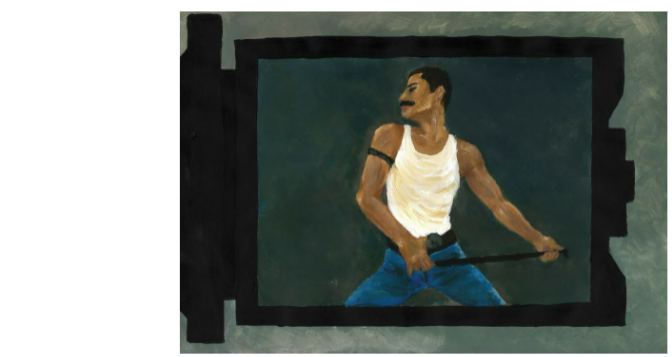
This trend of prioritizing theatricality over accuracy continues in biopic production today. Bohemian Rhapsody and Rocketman—recent biopics covering the careers of Freddie Mercury and Elton John, respectively—take major creative liberties in depicting real-life events. For instance, Rocketman portrays Elton John’s father as neglectful and unloving, but this fact is heavily contested by John’s own half-brother. In a different, but no less problematic turn, Bohemian Rhapsody diverges from reality by downplaying Mercury’s bisexuality and making it seem as if the band broke up in the early 1980s before their show at Live Aid, which is not the case. In both instances, historical accuracy is diminished in favour of crafting a story for the audience’s enjoyment. 

But are there times when theatricality can come before accuracy? With Bohemian Rhapsody, former band members have stated that they liked how the movie turned out, including guitarist Brian May and drummer Roger Taylor. But who is to say that Freddie Mercury would have approved of the movie—and its portrayal of his sexuality—if he were alive today? Closeting the main character is rather unethical, so situations like this need to be taken into account when writing the script. 

These ethical decisions are rarely easy to make. Recall the success of Amadeus, which received critical praise and won numerous awards despite its historical inaccuracy. Mozart did not give his consent to create the movie, and producers today continue to fail to obtain the consent of the figures in question, as seen with the controversy concerning Pamela Anderson’s recent biopic series. Conversely, another celebrated biopic, Steve Jobs, received criticism for inaccurately portraying its titular character by highlighting the negative aspects of his life to make him appear as less loving than some people said he was. Both films’ creative liberties provide theatricality that audiences tend to like. But, in this case, some viewers actually did care about the biopic’s rightful portrayal, hinting at the possibility that perhaps the time between a person’s death and the creation of the movie changes viewers’ opinions on the importance of a movie’s historical accuracy. Historical fallacies in biopics are applied rather arbitrarily, so an objective moral solution to the dilemma of “fact or fiction” in cinema is muddled.

However, moral arbitrariness is not always a bad thing. Unless egregiously inaccurate, film creators should allow themselves creative liberties as they see fit. The inaccuracies of Bohemian Rhapsody crosses this paradigmatic line, as closeting the main character fundamentally changes who is portrayed on screen—here, fact should be preferred over fiction. On the other hand, the less serious and more playful inaccuracies of Amadeus are a classic example of when it is acceptable for fiction to rule over fact.

Audiences should be able to enjoy cinema, but some degree of historical reality should also be preserved. Although these two tend to be at odds in an industry specifically made to be sensational, entertainment value seems to take precedence—sometimes for the better and sometimes for the worse.


Biographical movies are not a recent phenomenon. From Lawrence of Arabia to Malcolm X, biopics in modern cinema have consistently met commercial success, as audiences seem to have an interest in seeing the lives of famous figures dramatized. But there is always the risk of biopics misrepresenting the lives of those who have passed. How then does one make sure that deceased figures would approve of how they are represented on screen? Ultimately, script writers can afford themselves creative liberty in crafting an entertaining story, but should still uphold a standard of realism and accuracy.

Take, for instance, Amadeus, a film about the life of Wolfgang Amadeus Mozart and his rivalry with the composer Antonio Salieri. The costumes in the movie are grand and colourful, the set pieces magical; the movie gives an enchanting, lighthearted depiction of the Age of Enlightenment in Europe. There is, however, a major inaccuracy here: The historical rivalry between Mozart and Salieri was not as sensationalized as the movie portrays—in fact, it was likely based on a rumour. But would audiences want to see a more tame depiction of Mozart? Probably not. Despite the movie’s major historical inaccuracies, it is frequently listed as one of the best biopics of all time

This trend of prioritizing theatricality over accuracy continues in biopic production today. Bohemian Rhapsody and Rocketman—recent biopics covering the careers of Freddie Mercury and Elton John, respectively—take major creative liberties in depicting real-life events. For instance, Rocketman portrays Elton John’s father as neglectful and unloving, but this fact is heavily contested by John’s own half-brother. In a different, but no less problematic turn, Bohemian Rhapsody diverges from reality by downplaying Mercury’s bisexuality and making it seem as if the band broke up in the early 1980s before their show at Live Aid, which is not the case. In both instances, historical accuracy is diminished in favour of crafting a story for the audience’s enjoyment. 

But are there times when theatricality can come before accuracy? With Bohemian Rhapsody, former band members have stated that they liked how the movie turned out, including guitarist Brian May and drummer Roger Taylor. But who is to say that Freddie Mercury would have approved of the movie—and its portrayal of his sexuality—if he were alive today? Closeting the main character is rather unethical, so situations like this need to be taken into account when writing the script. 

These ethical decisions are rarely easy to make. Recall the success of Amadeus, which received critical praise and won numerous awards despite its historical inaccuracy. Mozart did not give his consent to create the movie, and producers today continue to fail to obtain the consent of the figures in question, as seen with the controversy concerning Pamela Anderson’s recent biopic series. Conversely, another celebrated biopic, Steve Jobs, received criticism for inaccurately portraying its titular character by highlighting the negative aspects of his life to make him appear as less loving than some people said he was. Both films’ creative liberties provide theatricality that audiences tend to like. But, in this case, some viewers actually did care about the biopic’s rightful portrayal, hinting at the possibility that perhaps the time between a person’s death and the creation of the movie changes viewers’ opinions on the importance of a movie’s historical accuracy. Historical fallacies in biopics are applied fairly arbitrarily, so an objective moral solution to the dilemma of “fact or fiction” in cinema is muddled.

However, moral arbitrariness is not always a bad thing. Unless egregiously inaccurate, film creators should allow themselves creative liberties as they see fit. The inaccuracies of Bohemian Rhapsody crosses this paradigmatic line, as closeting the main character fundamentally changes who is portrayed on screen—here, fact should be preferred over fiction. On the other hand, the less serious and more playful inaccuracies of Amadeus are a classic example of when it is acceptable for fiction to rule over fact.

Audiences should be able to enjoy cinema, but some degree of historical reality should also be preserved. Although these two tend to be at odds in an industry specifically made to be sensational, entertainment value seems to take precedence—sometimes for the better and sometimes for the worse.

Campus Spotlight, Student Life

From socialism’s romantic influences to skeletal bromances, multifaceted love through time and space

Ahead of Valentine’s Day, the History Students’ Association (HSA) and the Classic Students’ Association (CSA) hosted their annual  “Love In The Time Of” panel on Feb. 10. The event featured four researchers and faculty members from the department of history and classical studies who delivered lectures on diverse instances of love throughout time, including love’s impact on socialism and queer histories in London.

The evening began with Natalie Cornett, a postdoctoral research fellow in the history department. Her lecture focussed on Rosa Luxemburg, a socialist revolutionary, and her reflections on love and joy while imprisoned in Germany for her political activities. While incarcerated, Luxemburg wrote letters to console her colleague and friend Sophie Liebknecht, a member of the Communist Spartacus League whose husband was also in prison. 

Cornett drew interesting connections between socialism and love. Given that one of the goals of socialism is to rid humanity of inequality and egotism, many socialist thinkers, including Luxemburg, drew inspiration from the Romantic period and earlier concepts of love when crafting their political agenda. These influences were reflected in Luxemburg’s letters; despite being surrounded by death and poor living conditions, she nevertheless showed Liebknecht compassion and love, urging her to stay strong. 

Following Cornett’s lecture, archaeology professor Darian Totten discussed the history of bromance through skeletons. Twenty years ago, a pair of skeletons holding hands dating back to Ancient Rome were discovered in Modena, Italy. When the story broke, many assumed it was a heterosexual couple buried together. Professor Totten explained that because the skeletons were poorly preserved, it was initially difficult to tell their gender through the pelvis or the size of the skull. However, new technologies that detect the peptides in teeth, which differ between sexes, revealed that both the skeletons were male. 

Totten proposed that the relationship between the two skeletons could have been a bromance. This should come as no surprise, Totten explained, referencing the iconic first Imperial bromances between Maecenas and Augustus and later of Marcus Agrippa and Augustus. Statues of soldiers who displayed affection for each other were also common in Ancient Rome. 

However, Totten points out that the relationship between the skeletons will never be certain just by looking at the burial and analyzing the historical context at the time.

“When we look at burials, we have to be really careful because they might not represent the final wish of the individuals who had died, especially individuals who die earlier in life and don’t necessarily express their wishes before they die,” Totten said.

The penultimate speaker of the night, professor Brian Lewis, explored the love life of English gay novelist E.M. Forster. Forster lived in England during the 19th and 20th centuries, when queer relationships were illegal. As Forster grew older, Lewis explained, he became more aware of his sexuality, especially in his 20s. Forster dreamed of a world where he could freely love a man and be loved by a man. In 1930, Forster was experiencing loneliness, despite being a successful literary figure. It was during this low state when he met Bob Buckingham. After exchanging books and knowledge, they pursued a sexual relationship, despite Bob’s heterosexual marriage.

“For much of the second half of his life, he had lived at least part of his dream to love a strong man of the lower classes and to be loved by him,” Lewis said.

Though Valentine’s Day in the modern age is traditionally tied to romance and gift-giving,  “Love In The Time Of”’s annual reflections look to the past to redefine love and uncover its enduring multiplicity. 

Campus Spotlight, Student Life

Growing up in the West as an Asian woman: Being the ‘Other,’ fetishization, and self-love

Growing up in the West as an Asian woman is an experience of sharp contradictions. While those from Asia or of Asian descent are told that they “are one of us” through performative displays of diversity, they are made to feel like the “Other.”

This was the message from a recent panel hosted by the East Asian studies student journal, Orientations, called “Growing Up in the West: East Asian Perspectives.” The event brought together three McGill students, Estelle Mi, Annette Hong Kim, and Angelina Guo, to discuss their experiences as Asian women and activists. 

Everything was on the table: Multiculturalism, childhood, romantic relationships, bi- and tri-lingualism, fetishization, self-love, and the panellists’ journeys toward self-acceptance.

Guo grew up in Montreal and Longueuil, a Montreal suburb. A translator and literature student, she made her mark last spring when she delivered an impassioned speech at an anti-Asian hate rally.

“I already knew I was different when I was in Montreal because there weren’t that many Asians,” Guo said. “In Longueuil, I realized that without even saying anything, people perceived me as this ‘Other,’ and that ‘Other’ was a subject worthy of getting mocked and either verbally or physically assaulted.”

Mi’s story was quite different, having grown up in a relatively liberal, colour-blind bubble of multiculturalism at the international schools she attended. Born in Lyon, her parents were immigrants from China to France. 

“The first time I felt that I was the ‘Other’ was when the pandemic started and I faced my first assault,” Mi recalled. “It was the first time I realised my identity was a problem in my everyday life.” 

Guo’s feeling of “Otherness” was etched into her memories by incidents from her childhood. “I thought [the attacks] were my fault and that whatever is repulsive about me is tied to my [Chinese] ethnicity,” Guo said. “I think that is why I spent so long detached from my culture because it was so dangerous. It was a way of surviving.”

A Korean-Canadian born in the Netherlands, who spent part of her childhood in South Korea, Hong Kim discussed the phenomenon of pushing away one’s culture as a survival tactic.

“One of the things I’m really proud of is that I’ve never wanted to be someone else,” Hong Kim said. “I know that’s a pretty common thing in our community—to not want to be Asian. That’s the only way we can survive—to forget our language, forget our culture, eat Western food, not listen to our culture’s music, and not watch our films.”

The panellists went on to discuss the duality of fetishization and repulsiveness that often comes with being an Asian woman in the West. 

“When I was young, I never felt that I was part of the Western beauty ideals,” Mi said. “In a sense, I felt that I was not a woman. For so long I felt that no one would love me because all I saw in the media were white women.”

In tandem, Guo described the difficulties she has been forced to navigate as someone whose cultural identity is degraded and objectified. 

“When I turned 12, that’s when the catcalls started, that’s when I started getting followed and stalked, and when men would come up to me, they would ask where I’m from.” Guo said. “It’s been a weird thing to comprehend, because what once used to be the reason why people despised me and attacked me became a very desirable thing for men.”

Despite these alienating experiences that many Asian women experience at the hands of men and the media, Mi offered an optimistic counterpart to Guo’s and Hong Kim’s panels, describing her personal journey of finding self-love and acceptance. 

“Today, I can say that I accept my Chinese identity,” Mi said. “Two years ago, when I was facing all of this anti-Asian racism, I wanted to eradicate my Chinese identity.”

Guo highlighted the importance of processing trauma and continuing to discuss these issues. 

“I encourage everyone to keep talking. Having multiple heritages and speaking multiple languages is something that enriches you so much,” Guo said. “I think we are very lucky to be at a point in time when people are listening to us.”

Laughing Matters, Opinion

How to talk to the only Black person at work

To kick off Black History Month, The McGill Tribune has prepared ways for you to talk to the only Black person in your workplace. Remember to speak to a Black person is to move closer to racial justice. Those were the words of Colin Powell or Clarence Thomas or Candace Owens I think.

Always stalk your co-worker. Every conversation requires preparation. Leave your high-rise, and go check out where the gentrifiers don’t go.

They’re in their cubicle. Note their hair––the kink pattern will tell you if they are more of a Real Housewives of Atlanta or Potomac Black person. No kink? No problem! That’s not their hair, silly goose! And they’d love it if you comment about how unnatural their hair is. Wig, weave, extension, repeat these words. You listen to Drake, so. Work your way up their neck and touch—nay, grab!—their hair. If they’re wearing it out in the open, it’s open country! As you remember from the anti-racism training that Rita from HR forced you to go to twice, Black people aren’t a monologue or the disease mono or whatever, so try and touch each one.

Begin talking to them. You’ll become their white friend here, and they’ll like you. Black people also want to be in romantic, and disturbingly physical, relationships with white people. We both know how beautiful mixed-race children are. Think of famous mixed people! Barack Obama, Kamala Harris, they always become politicians in the U.S., end of list. You can invite them home to your mom, who remembers when Canada wasn’t so divided and Indian people didn’t exist before Apu from The Simpsons, and your dad who always pays his Black housekeeper whose name he can never remember (Lucinda, Jemima, Condoleezza?) under minimum wage.

You’re not like your parents though. You’re a good white person, a noble ally white person, put-BLM-in-my-bio white person. Your favourite movie is The Help and it reminds you that Viola Davis looks so much like your dad’s housekeeper who raised you.

Don’t get too overwhelmed with your future plans of having biracial children. You work with them, you’ll be professional (unlike their hair). Focus on the now. You don’t see colour, they’re just another co-worker like Gina from accounting who is Filipina or Hispanic or Latina (what’s the x all about?) or Mexican or Asian. You’ll figure that out later.

Continue the conversation and stare at their features. 

Are they light skin? If so, ask if they are from South Africa. Your uncle went once in the ‘90s! Talk about Charlize Theron, and share the Afrikaans swear words you learned from your sister’s ex-husband’s rugby league. Tell them they’re smart and articulate for a coloured person or whatever they call those people in South Africa (half-breed, mulatto?). They care that you’re trying. They’re not supposed to just fit in with white people!

Ask this light skinned god or goddess which parent is the one like you, the white one. If it is the mother, make a joke about their Karen mother and their sellout father. If it is the father, ask them how great it is to have a father who didn’t abandon them. Do you think you’re crossing the line? You’re not: Remember that Black people came out with that song We Are Family.

The darker their skin, the thicker your accent should be. Do be advised that that’s how Lilly Singh and Awkwafina got famous! If you are in Toronto, make sure you sound like you stepped off of the shores of Montego Bay. You went to Sandals once! Remember, your mom was too scared to go because of disease and poverty and voodoo. 

If you are in the United States, every Black person is from the South. Bring watermelon, fried chicken, and collard greens. If your co-worker is a woman, holler at her and call her “mama.” If he’s a man, wait until he gives you permission to use the n-word. Consent is implied. That’s what friends are for! You’ll sound like you’re one of your favourite rappers. Aren’t Black people fun!

McGill, News, The Tribune Explains

Tribune Explains: The loosening of COVID-19 restrictions on campus

On Feb. 8, Premier François Legault announced the Quebec government’s plans to ease most pandemic measures in the province, with the exception of the vaccine passport and mask rules, by March 14. As the province reopens, McGill’s COVID-19 protocols will evolve accordingly. In university-wide emails sent out on Feb. 4 and Feb. 11, Deputy Provost Fabrice Labeau announced a first wave of loosened restrictions.

The McGill Tribune looked into the updated measures and the changes students can expect in the coming weeks.  

When will gyms and other extracurriculars be allowed to reopen?

The Quebec government announced on Feb. 1 that gyms and fitness centres can reopen at half capacity as of Feb. 14, provided that vaccine passports, social distancing measures, and masks are maintained. Legault also announced that sports and artistic activities for groups of up to 25 people will be allowed to resume at the same time. As such, McGill gyms are scheduled to reopen on Feb. 14. Other extracurricular activities are expected to follow on Feb. 28. 

When are members of the McGill administration and support staff returning to campus?

Starting Feb. 28, all administrative and support staff will be required to spend at least 30 per cent of their weekly work time in person. This number will gradually increase in the following weeks to support the university’s transition to pre-pandemic operations.  

Who can you call if you have symptoms or tested positive?

Students who were on campus in the 48 hours prior to developing symptoms are expected to report any positive diagnosis to the Case Management Group (CMG), regardless of whether the results are from a Polymerase Chain Reaction (PCR) or an antigen rapid test. The number to report symptoms and positive tests was recently changed. To contact the CMG, call 514-398-2920. 

What is happening to the Emergency Operations Centre?

On Feb. 14, the Recovery and Operations Resumptions Committee (ROR) will replace the Emergency Operations Centre (EOC), and lead the university through its transition to pre-pandemic operations. The EOC, first activated in Jan. 2020 to coordinate McGill’s COVID-19 response, was previously deactivated on Nov. 1, 2021, but the centre was reactivated following the Omicron surge in Quebec. The EOC directly reported to a branch of the university’s senior leadership; Under the ROR, however, administrative operations and governance will return to their decentralized and pre-pandemic structures. 

How do the student body and the McGill administration view this transition?

Since McGill’s announcement of the return to in-person learning, many student associations have since gone on strike to protest the university’s reopening and its overall COVID-19  response.

Nathaniel Saad, U2 Management, is slighty apprehensive about the transition to pre-pandemic operations. 

“I am excited to [have] most of the restrictions slowly dissipate, but every time we try to open back, we end up having another wave,” Saad said in an interview with the Tribune. “I think it’s really important that as we start going back to normal, we still do our part [so that] we can be done with COVID as soon as possible.”

Frédérique Mazerolle, a McGill media relations officer, explained in an email that the administration is aware of the anxieties about the return to in-person, but that its decisions are always in accordance with public health guidelines.

“[McGill’s] measures, along with a high level of vaccination—more than 96 per cent of our students are now vaccinated with at least two doses—make us confident that we can maintain both our commitment to in-person academics and to ensuring that there is a safe environment on our campuses,” Mazerolle wrote.

Emma Herrle, U0 Arts and Science, finds McGill’s correspondence tedious. She expressed frustration with the university’s unclear communications about its decision-making logic. “There are a lot of emails that say nothing, just a lot of words and not a lot of substance,” Herrle said in an interview with the Tribune. “I don’t totally understand how they decide what’s in person and what’s online. For example, this semester, I have lectures with a hundred people that are in person, but my lab of twelve people is online. It just seems really random and arbitrary.”

McGill, News

‘Women in Policy’ panel talks tackling patriarchy in policymaking

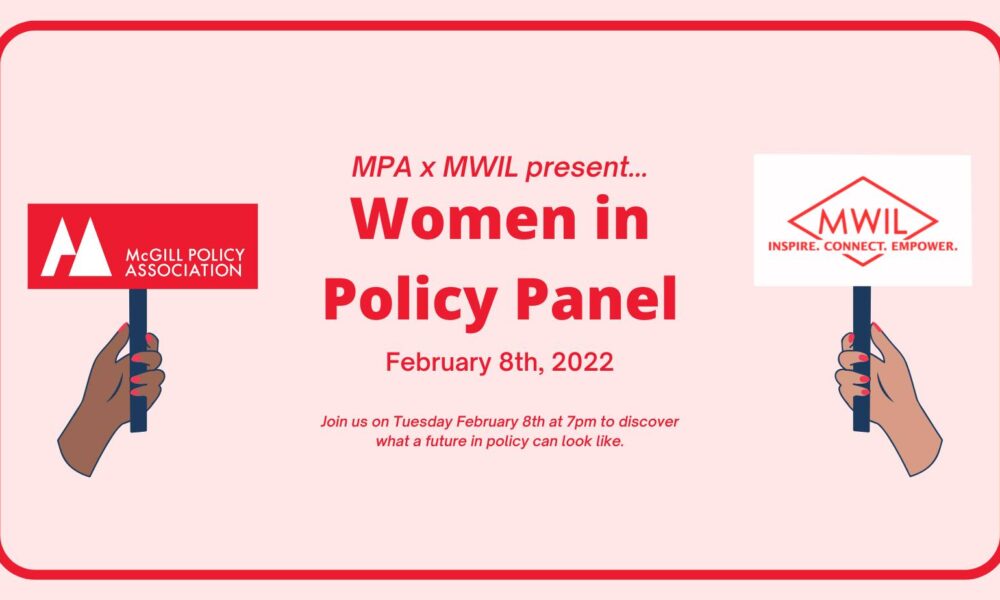
On Feb. 8, the McGill Women in Leadership (MWIL) and the McGill Policy Association (MPA) collaborated in hosting a virtual panel titled “Women in Policy.” The event featured three panelists: Nirushaa Senthilnathan, a senior policy analyst at Canada Mortgage and Housing Corporation (CMHC); Maeva Vilain, the borough councillor for the district of Jeanne-Mance; and Muna Tojiboeva, a current law student at McGill, former Parliament Hill staffer, and previous Students’ Society of McGill University (SSMU) president.

After outlining their individual career journeys, the speakers shared the obstacles they faced in politics and policymaking, offering hard-earned advice to students who wish to pursue similar paths. Senthilnathan spoke about how her identity as a woman and a daughter of refugees helped her pave her path in policymaking.

“One major challenge I can think of is […] learning how to navigate systems that we are unfamiliar with,” Senthilnathan said. “It sometimes felt like we were never told the rules of the game that we were playing so we had to figure out what that was very quickly.”

Senthilnathan received her bachelor’s degree in psychology from McGill in 2015 and is a 2020 graduate of McGill’s Max Bell School of Public Policy. As the president and co-founder of the McGill Alumni Public Policy Society (MAPPS), Senthilnathan delved into the importance of forming connections with people in her professional life, encouraging audience members to get involved in groups they find interesting after university.

“My brother and I […] grew up with mostly people who were in blue-collar and service-sector jobs which meant that we didn’t have any contacts or mentors within the professional sector spaces,” Senthilnathan said about breaking into the field. “Oftentimes [jobs] aren’t posted [….] You have to go through certain networks, so if you think that you can apply to a hundred jobs into a black box and never talk to anyone, that’s not the way for you to be successful.”

Vilain, as an elected official, noted that a supportive workplace helps ease the sometimes stressful transition into the field.

“What helped me a lot was when I decided to be a candidate with Projet Montreal, there was a very, very clear equity policy [….] They wanted women to win their elections,” Vilain said. “My party, I would say, was a feminist party. It understood the importance of having women.” 

Tojiboeva spoke of her experiences as a young woman working on Parliament Hill, where she often struggled with ageism and feelings of imposter syndrome, and offered advice on how to overcome such challenges.

“If you’re a young political staffer, especially if you’re a young political staffer from an immigrant background who doesn’t know any other political staffers […] sometimes it feels like all of this policy and all of this responsibility […] is on your shoulders,” Tojiboeva said. “I would be reaching out to other people either for help or for support and it’s not a failure to do that.”

All the panellists agreed that fatigue from facing bureaucratic obstacles was a common experience among many women in policy. 

“More often than not, government is very slow, it’s bureaucratic,” Tojiboeva said. “It takes a lot of bandwidth out of you and you have to know what to prioritize and where to let go.”

Lis Riveros, U1 Arts and vice-president of Events for MWIL, helped organize the event. For Riveros, it was important to see women at varying life stages represented on the panel—and in the policymaking field at large.

“People attending the panel see people like Maeva and they think, ‘Okay, I can be […] a mother and still be able to take on such a large position,’” Riveros said. “But it’s also impressive to see people like Muna who are so fresh out of McGill being able to take on such a large challenge.”

Co-executive directors of the MPA, Michelle Marcus, U2 Arts, and Matthew McLaughlin, U3 Arts, hope that attendees walk away from the panel feeling inspired and excited to enter the field.

“We started thinking that we could really partner and create an opportunity for women and for female McGill students to really hear from some women who have been invested in the realm of policy,” Marcus said. “I think it’s really important that there are specific outlets and opportunities for [female-identifying students] to hear from female role models and women who have pursued careers in areas they are interested in.” 

Read the latest issue

Read the latest issue