

Latest News

Arts & Entertainment, Film and TV

Korean Film Festival Canada portrays self-empowerment

The eighth iteration of the Korean Film Festival Canada runs from Sept. 30 to Oct. 30 this year, and features the theme “Narratives Beyond Borders: Women’s Perspectives in the Korean Cinema.” The struggles many women face in determining their identities emerge as a common thread in the festival’s offerings. Bae Chang-ho, director of Whale Hunting, explained how the films navigate both the construction and spontaneous expression of femininity.

“There is naturally given femininity, and femininity given artificially in tradition, family, society, education,” said Bae in an interview with The McGill Tribune. “The latter femininity has tied and repressed women.”

Three of the featured films, The Apology, The Woman Who Ran, and An Uninterrupted View of the Sea, perfectly capture the festival’s essence. At the heart of these films lies the seemingly never-ending struggle to discover oneself. 

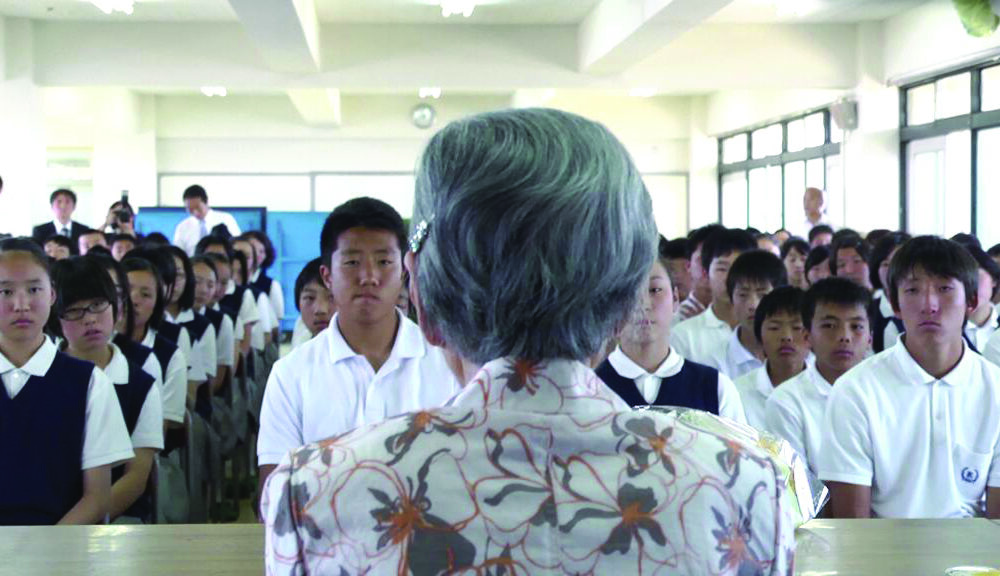
The Apology, by Tiffany Hsiung, is a compelling and eye-opening documentary that follows the personal stories of three former “comfort women.” The women in the film were among 200,000 others who were forcibly taken and sexually exploited by the Japanese Imperial army during the Second World War. The film is not only a captivating historical piece, but a moving emotional journey. One of the women in the film expressed, “[she wants] to be reborn as a human, as a woman, as someone’s precious daughter, married into a precious family and have [her] own precious family.” By documenting the stories of real women, interlaced with elements of trauma and hope, Hsiung succeeds in creating an intimate and harrowing connection with the viewer.    

The Woman Who Ran by Hong Sang-soo is about a woman who has never been apart from her husband since being married. When he leaves for a business trip, she finds herself alone for the first time and takes the opportunity to visit old friends. The film pushes the viewer—even those who are not married, in love, or in any kind of relationship—to self-reflect, and think on how one’s life decisions don’t always turn out the way one wants or hopes. This quality of normalcy is what makes the film so interesting; the quest for independence can be felt universally. Sang-Soo magnificently portrays the ordinary.

An Uninterrupted View of the Sea Short Film 1 by Mika Yatsuhashi chronicles Yatsuhashi’s great-grandfather’s struggle to prove his American identity as a Japanese immigrant. The short film is a conglomeration of old photographs, super 8mm films, and FBI documents. In the span of just 15 minutes, Yatsuhashi introduces, and educates the audience about the emotional hardships specific to immigrant life, as well as the structures which enforce these difficulties. The old photographs transport the viewer into the life of her great-grandfather. 

 “I chose to use only the archive material because that is how I connected to this story,” Yatsuhashi said in an interview with The McGill Tribune

In the movie, the photographs and film act as looking glasses; they allow the audience to connect with the person even if through a distant lens. The film displays a very real and important struggle that many people tend to ignore.

“I learned that you should define your own identity and not strive for the acceptance of a government [or] population, because all you’ll do is tire yourself out or worse,” Yatsuhashi said. “[Upon] realizing this, you can form your identity yourself, and not base it upon the values of a government.”

Even though the bulk of films centre culturally specific stories and experiences, the struggle to achieve inner peace, to develop an identity, and to attain a sense of belonging, resonate universally. The Korean Film Festival succeeds in directing a conversation about women’s struggle to define themselves.

Arts & Entertainment, Poetry

Comedic, joyful, and sombre: ‘The Best Canadian Poetry of 2021’

Canadian poets, consistently overshadowed by American writers, rarely get the recognition their talents deserve. is A collection of 50 poems by Canadian poets, the Best Canadian Poetry 2021 anthology is curated by its guest editor Souvankham Thammavongsa, who has author of five books, including How to Pronounce Knife, and received several literary awards. Published on Oct. 5, the book features poetic reflections on the transience and joy of this past year. Many poems share themes of aging and loss, while others interject bizarre and comedic variety into the array. 

Many featured poets happen to be Montreal locals. Hayden Ward explores his childhood memories in his poem, “From the Nurse’s Cabin Porch, Keats Island.” Formatted into a series of haikus, the poem recalls himself as a young child as his mother frees him from a wasp swarm. By switching from third to first person, Ward finds meaning in both living through and retroactively remembering his childhood memories of summers in British Columbia. Similarly, Mary Dean Lee, a professor in the Faculty of Management, navigates her childhood memory of her brother’s death in “Riddle.” Lee captures the traumatic effects of this loss on her family by using a disjointed structure and rhythm to mimic the unique ways that family members process trauma. The separation between lines emphasize her family’s emotional estrangement from each other. 

Other poems focus on lighter matters, including the horror of teenage acne and the (accidental) killing of a peace lily plant. David Ezra Wang’s poem, “acne, blood, and all things that flow,” may resonate with many students who hoped, in vain, that their acne would disappear as they transitioned out of their teenage years. Wang expresses his discomfort with going out in public with acne, and wonders if he would find love if only he “really exfoliated.” Kayla Czaga, who admits to writing a first draft of “The Peace Lily” on a Thrifty Foods receipt, contemplates the simultaneous frustration and relief of killing her beloved houseplant. Czaga juxtaposes her guilt with the poem’s beautiful imagery that captures the plant’s slow death, unaffected by the countless internet tricks Czaga employs in an attempt to save it.

One of the funniest poems in the anthology is George K Ilsley’s “Another Woman in Canada,” a found poem that ranks his 10 favourite one-star reviews of Canadian short story writer Alice Munro’s short story collection, Dear Life. Ilsley highlights the unintentional irony of several reviewers who either dislike Canadians entirely, or believe themselves to be better literary critics than those who awarded Munro the 2013 Nobel Prize in Literature. For instance, reviewer number two says of Munro’s fiction, “The characters are boring and bland, like Canadians.” The Canadian poets in the anthology clearly refute this statement, discussing any and all aspects of the vibrant human experience that prove they are quite an interesting bunch. Between struggling with mental illnesses (Roxanna Bennett), shielding parents from embarrassment (David Romanda), and finding freedom in motherhood (Louise Carson), each poet has something new to say. 

No matter whether a reader is a frequent or first-time poetry fan, Best Canadian Poetry 2021 is an excellent way to experience new and established Canadian poets. Bursting with personality, this anthology has something for everyone, and is a touching reflection on the highs and lows of 2021.

Best Canadian Poetry 2021 is available for purchase online or through local retailers.

McGill, News

Where is Gerts Café? Opening postponed after delays in equipment shipping

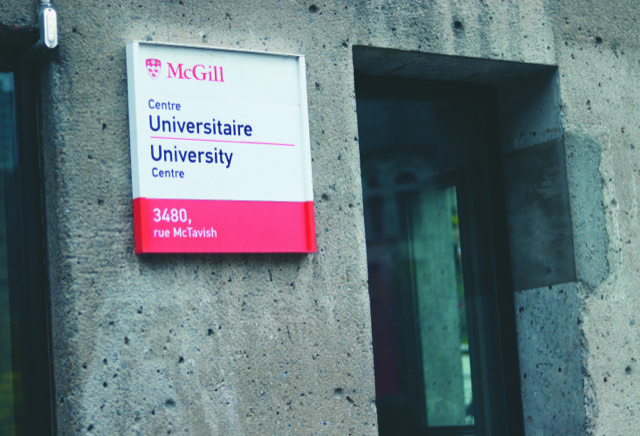
The Students’ Society of McGill University (SSMU) University Centre, located at 3480 McTavish St., re-opened at the start of the Fall 2021 semester, offering space for studying, club gatherings, eating, and socializing. Gerts Campus Bar was also reopened with a new concept: A Gerts Café that would operate out of the same space as the bar during the day. While the bar section of Gerts has been in operation since Sept. 14, the cafe side has yet to open.

Inside Gerts, students can see a cafe-style counter set up in the corner closest to the entrance. Signage and arrows throughout the University Centre direct students toward “Gerts Café” at the ground level. There are also Quick Response (QR) codes posted on the Gerts entrance doors that lead to a webpage listing Gerts Café opening hours. Gerts doors, however, remain locked until 12:30 p.m., when the bar officially opens. 

Many students, like Maya Sokoloff, U3 Arts, did not know Gerts would be adding a cafe, despite having been to the bar. Nevertheless, she expressed enthusiasm toward the concept.

“I only know [Gerts] as a bar,” Sokoloff said. “I think it is such a good idea [for Gerts to have a cafe]. Especially with it getting colder and rainier, I feel like there have been less communal spaces for people to hangout inside and having a nice student area for people to just do work, get coffee, and eat seems like a great idea.”

Gerts manager Nadine Pelaez explained that a series of logistical obstacles are behind the cafe’s delayed opening.

“An endeavor like this [has] so many moving parts,” Pelaez said in an interview with The McGill Tribune. “The whole cafe is an entirely new business, so that in itself takes a lot of time. Another delay is that it took a second for our machines to arrive. [Because] this is a new business, I want to get a new espresso machine, I want to get a good grinder and to be selling good coffee, so with COVID supply chains, things [took] longer than we originally anticipated.”

Pelaez also cited staff schedules and training as a challenge to opening.

“It takes so much coordination to hire and start people out,” Pelaez said. “Here, everything has been from scratch. These six baristas, this is my starting lineup, we have to train them all at the same time but also everyone has class, half of them have class on the Mac Campus, and it is so hard to coordinate.”

Rex Hamilton, U1 Science and a bartender at Gerts, noted that shipping delays have had an impact on Gerts’ operations.

“There has been a huge backlog, not just of café equipment, but all over the world for all different sectors […] because of COVID-19,” Hamilton said in an interview with the Tribune. “[Gerts Bar] has been short on tequila, there is a huge tequila shortage. But the [cafe] equipment did arrive a week or two ago, so I know [Nadine] has been scrambling to get the cafe staff ready.”

Despite backorders and the learning curve of opening a bar after a three-year hiatus, Hamilton has had a positive experience at Gerts so far and has enjoyed getting to know the McGill community. 

“It has been a really good team, and we [have] all got each other’s backs,” Hamilton said. “I hope [the cafe staff] has fun and enjoys it too [….] I have met a lot of kids in the McGill universe through this job. It kind of feels like I am at the centre of everything if I am working [at Gerts]. So many different people come through [….] It is really cool to work a job where I feel like I am a part of the McGill community.”

Editorial, Opinion

Land acknowledgements are not political, but should be accompanied by political action

On Oct. 16, a Montreal Canadiens announcer read a land acknowledgement aloud ahead of the team’s home opener at the Bell Centre, with the Canadiens having declared earlier that day that it will now be a permanent addition to their home games. On Oct. 20, Quebec’s non-Indigenous Indigenous Affairs minister, Ian Lafrenière, responded by saying, “it’s important to recognize that the First Nations were here before us and that we now live together, but we’re getting into a debate between historians who don’t agree with each other. I think it might be a mistake.” Lafrenière also questioned why a sports team had decided to participate in “political” affairs. Land acknowledgements signal a recognition of the land on which settlers gather, and are themselves only the beginning, not the end, of reconciliation. Lafrenière’s comments showed that the Quebec government is unwilling to accept even the most symbolic action in support of Indigenous Peoples. 

Lafrenière cloaked his disagreement with the Habs’ land acknowledgement in arguments about the historical obscurity of which Indigenous group(s) were the original inhabitants of Tiohtià:ke (Montreal). This critique could have been a legitimate one in theory, but instead reads as an attempt to discredit the Canadiens’ efforts at moving toward reconciliation—a move that was applauded by the Mohawk Council of Kahnawà:ke. If Lafrenière’s genuine concern was historical accuracy, his comments would have been accompanied by some kind of praise for the action or recommendation on how to improve it, as opposed to challenging the Habs’ decision altogether. But this is old news: Lafrenière is a minister under an administration that refuses to believe systemic racism exists in its province, let alone officially recognize the National Day for Truth and Reconciliation.

The idea that the world of sports is apolitical terrain is simply untrue: Systemic oppression infiltrates all facets of life, and sports have a long history of activism. Lafreniere’s questioning of the Canadiens’ decision is an affront to every fan and player who has dealt with systemic oppression, not to mention those players who are themselves Indigenous, like Habs goaltender Carey Price. The nationalism associated with sports teams also plays into the anti-woke rhetoric employed by Lafrenière and his ilk, which purports to protect Quebecois culture by ignoring the voices of marginalized peoples. 

The widespread use of land acknowledgements is a relatively novel phenomenon. Their purpose is straightforward, asking settlers to take a moment to reflect upon the history of the land they are gathered on and recognize its traditional stewards. This can be a meaningful process, but some Indigenous activists and commentators have become critical of individuals, businesses, or organizations who instrumentalize land acknowledgements to position themselves as allies without taking any meaningful steps toward reconciliation. To make matters worse, many larger institutions recycle the same vague land acknowledgements, limiting opportunities for meaningful reflection. What is meant to be powerful is eventually reduced to a ticked checkbox on a list, a facade of allyship without substantive advocacy for Indigenous communities. 

Take McGill as an example––the university’s website lists a land acknowledgement, but the administration has consistently failed to respond to demands from its Indigenous students. For instance, it took multiple vandalizations for the James McGill statue to finally be removed from its spot on campus following over a year of controversy, with no promise that the removal would be permanent. Perhaps McGill’s land acknowledgement would be more meaningful if it engaged with the university’s own entanglement in settler-colonialism and enslavement. But instead, it exists separately from the university’s brief acknowledgement that James McGill enslaved Black and Indigenous people. 

Land acknowledgements are a mere first step in the process of unlearning and relearning history, and must above all be coupled with genuine efforts in support of Indigenous communities to have any true impact. In the McGill context, students holding events can lead by example and listen to suggestions from Indigenous activists on how to make land acknowledgements more meaningful. As well, the minister of Indigenous Affairs should recognize the demands of his constituency instead of wasting time disputing the wording of a land acknowledgement. 

Off the Board, Opinion

God, it’s brutal out here

As a third-year student, I feel like I should have this whole “university lifestyle” thing figured out. This year, however, I am living on my own for the very first time and at times feel as lost as I did in my first. I am someone who needs personal space and who takes great pleasure in spending time by myself, so conceptually, living alone sounded appealing to me. After a year of living with my entire family and being constantly around people, I could not wait to once again “leave the nest” and move into a studio apartment. 

When I arrived in Montreal for the first time since the COVID-19 pandemic began, I wasted no time reuniting with old friends and fully embracing the freedom I missed so much. But I quickly came to the stark realization that I was now facing life alone. Although many people think of living alone as a luxurious experience, I noticed right away that I was more anxious than I had been in a long time. A simple trip to the bank by myself sent me into a panic. And while it was amazing to see friends again, I did not anticipate the amount of time that I would spend by myself. Even though McGill has returned to primarily in-person teaching, I somehow only have one in-person class. This makes meeting new people more difficult and magnifies loneliness and solitude. One positive that has come with all of this unexpected “me-time” is the significant strides I have made in improving my self-image and self-confidence. It is no fun to live with a roommate who hates you, and that still holds true when you are your own roommate. As I learn to do a lot of things by myself for the first time, it is an important reminder to go easy on myself when I inevitably make mistakes.

One thing I initially failed miserably at was cooking. After living in residence in my first year and then spending a year at home with my parents, I never really learned to cook. And while I spent the first week living alone mostly eating out, I eventually decided I had to at least start preparing my own breakfast. In making this one meal alone, I set off the smoke alarm in my apartment and gave myself food poisoning. After this experience, I thought for sure that I would be taking full advantage of my roll-over meal plan money for the remainder of the semester. However, there is no better way to learn than being thrown into the deep-end, no matter how intimidating it may be. I can now proudly say that I have learned to cook numerous different meals with the help of internet recipes and my parents over Zoom. 

Despite all of these growing pains, there are some significant upsides to living alone. I can design my place to fit my needs and my needs only. I do not have to share my space with anyone else and therefore can set it up in a way that suits me. I feel more comfortable spreading my things around the apartment and listening to my own music without headphones. I also do things at my leisure––I no longer have to work within the schedule of other roommates or family members. But I also learned to appreciate the relationships I have with my friends and family.

Because I am no longer constantly surrounded by family members or roommates, I actually have the opportunity to miss them. I am able to choose exactly who I want to spend my time with, which makes the moments I do spend with friends and family all the more meaningful.

Spending countless hours alone can be extremely lonely and anxiety-provoking, but it can also help with self-discovery and self-love. The world is a daunting and scary place, but I am slowly learning how to conquer it all on my own.

McGill, News

McGill Senate presents annual report on Action Plan to Address Anti-Black Racism

The McGill Senate assembled remotely on Oct. 20 to discuss several reports, including the 2020-2021 Annual Report on the Implementation of the Strategic Equity, Diversity, and Inclusion (EDI) Plan, and the 2020-21 Annual Report on the Action Plan to Address Anti-Black Racism. The Senate also approved the 506th Report of the Academic Policy Committee. 

During her welcoming remarks, principal and vice-chancellor Suzanne Fortier was optimistic about the Quebec government’s estimate that 94.9 per cent of the McGill student body is fully vaccinated against COVID-19.

“That is very good news. I think our experts were telling us to aim for 95 per cent, so we are very close to our target. Within the staff community, the latest data are a bit older, it was two weeks ago, and at that point it was 91.2 per cent.” 

Fortier also announced that the administration plans to increase the amount of in-person activities for the winter term. 

“We will continue to be prudent, but are aiming to increase slightly the percentage of activities that will be done in person,” Fortier said. “We do know from our students that they very much want to have their academic activities in person on our campuses.”

Provost and vice-principal (Academic) Christopher Manfredi presented the Report of the Academic Policy Committee, which included revisions to the academic structure for the School of Continuing Studies

“These are revisions to the academic organizational structure of the School of Continuing Studies, which has not changed since 1968,” Manfredi said. “Once every 50 years, whether it needs it or not, I think it is probably a good idea to review [the structure].” 

The report included a motion to relocate the McGill Writing Centre (MWC) from the School of Continuing Studies to the Faculty of Arts. The motion to approve the relocation was passed. 

The Senate appointed Eric Galbraith, professor in the Department of Earth and Planetary Sciences, to the Committee on Student Services, and Annie Chevrier, professor in the Ingram School of Nursing, to the Committee on Student Discipline, at the recommendation of the Senate Nominating Committee.

During associate provost (Equity & Academic Policies) Angela Campbell’s presentation of the Report on the Action Plan to Address Anti-Black Racism, Saku Mantere, professor in the Desautels Faculty of Management, raised concerns about mandating the learning module. 

“I’m a scholar of organizational change myself, and I’m delighted that we’re working on a change of this kind. However, I would object to the implements of how this change is being pursued,” Mantere said. “I found that […] having a mandatory module, [like “It Takes All of Us”], is a form of indoctrination rather than a form of learning.”

In response, Campbell explained that while the plan’s module will be mandatory, the consequences of non-compliance will be lesser than for the “It Takes All of Usmodule, which blocks students’ course registration. 

Moment of the meeting:

Toward the end of the meeting, Edith Zorychta, associate professor in the Faculty of Medicine and Health Sciences, provided highlights of the Report from the Board of Governors to Senate. Of note is the approval of new grant agreements, which will sponsor research on air pollution in cities and on carbon neutral design and architecture. 

Soundbite:

“The notion of hybrid teaching, the idea that an instructor can at once deliver a course both in person and virtually at the same time, is not currently feasible [….] The current infrastructure at the university does not permit that [….] We are not equipped for that, so that is something that I do not think will be entertained.” —Angela Campbell, associate provost (Equity & Academic Policies), on the Ad Hoc Advisory Committee on COVID Academic Planning and Policies’ stance on hybrid teaching.

McGill, News

Open researching, publishing, and access on the table at McGill Library’s Open Access Week 2021

The McGill Library is bringing International Open Access (OA) Week 2021 to the university’s scholarly community from Oct. 25 to Oct. 31. This year’s theme is “It Matters How We Open Knowledge: Building Structural Equity.” The planning committee members, such as librarians Jessica Lange, Michael David Miller, Lucy Kiester, and Robin Desmeules, organized several virtual events running throughout the week. Events to note include “The Future is Open: Becoming an Open Researcher” on Oct. 25, “Publishing Data with the McGill Dataverse” Oct. 26, the “ORCID-a-thon” on Oct. 28, and “Open Access Scholarly Books: Demystifying the Publishing Process,” also on Oct. 28. 

The McGill Library defines open access as the practice of making access to research free. In an interview with The McGill Tribune, Jessica Lange, McGill Library coordinator for Scholarly Communications, noted that McGill is able to make scholarly articles and research materials free to students and staff because of the university’s status as a large scholarly institution.

“There has been a lot of discussion now in the Open Access field about […] equity in terms of some institutions like McGill,” Lange said. “We can basically pay large publishers a certain amount of money, [and] negotiate [that] money, so that McGill researchers can publish open access for free in certain journals [….] We have done that with SAGE and a couple other publishers.”

Lange emphasized the importance of this year’s theme, “Building Structural Equity,” pointing out the existing inequities in publishing. For instance, racialized authors are less frequently published within existing OA journals. Lange also noted that smaller institutions are often excluded from the OA framework because they lack access to resources that larger institutions like McGill have. 

“Of course, smaller institutions may not have […] resources to negotiate such agreements, so […] this leads to another structural inequity where researchers at larger institutions might have access to either funds or waivers that people at other institutions do not,” Lange said.

The week features a virtual “ORCID-a-thon,” a workshop that helps students create accounts on ORCID—a platform that displays academics’ profiles. During the workshop, McGill librarians will help members of the McGill community build a comprehensive, self-updating, public Curriculum Vitae (CV) on the ORCID platform. Michael David Miller, associate librarian and liaison librarian for French Literature, Economics, and Gender Studies, spoke with the Tribune about the upcoming event, the first of its kind at McGill.

“[ORCID] is an open and free identifier for researchers,” David Miller said. “There will be three of us [at the ORCID-a-thon]. So, a researcher, grad student, or just anybody who is interested in ORCID [can] come in and we will help them set up their ORCID profile.” 

Robin Desmeules, a cataloguing librarian at McGill and past chair of the Library’s Scholarly Communications Committee, believes having the ability to navigate the research world can have profound impacts on structures beyond educational institutions, such as the economy. 

“It is really interesting to understand how knowledge is disseminated or not, and the economic impacts of that,” Desmeules said in an interview with the Tribune. “And how for-profit publishing, or capitalism in general, […] can interfere with the free circulation of knowledge, and how that impacts scholarship in all of its forms.”

On how McGill organizations can help promote OA in scholarship and research, Lange, Miller, and Desmeules all expressed the importance of issuing statements in support of OA, like in McGill Library’s own statement and the Douglas Research Centre’s new Open Access Policy.

“We are starting to get pockets where you can see that departments are saying ‘this is a priority for us, we’re going to make a statement,’” Lange said. “So hopefully […] we’ll see other [departments] pick up and recognize the relevance.”

Campus Spotlight, Student Life

‘On the Table Magazine’ paints a vivid portrait of Montreal’s culinary scene

There is no doubt that Montreal has one of the most diverse and exciting culinary scenes in the world. For Evelyne Eng, U4 Arts, the vibrant city served as inspiration for starting her own culinary magazine last summer.

On the Table Magazine is an entirely student-run culinary magazine that aims to highlight the food scene in Montreal for its student readership by sharing recipes, informative blog posts, and articles on restaurants and culinary-related organizations in the city. In an interview with The McGill Tribune, Eng, the publication’s founder and editor-in-chief, described how the magazine came into existence.

“I got into food […] toward the end of high school, and then it sort of grew when I came to Montreal because there are so many restaurants and so many different cuisines to choose from,” Eng explained. “I got really pulled into that scene and then I [thought] it would be so cool to have a food journal.”

With the multitude of diverse restaurants in the city, the writers at On the Table Magazine will never run out of unique culinary stories. Some of Eng’s favourite restaurants in the city include Boulangerie Le Toledo, an artisanal French bakery, Restaurant Manitoba, a restaurant serving New Canadian cuisine inspired by Indigenous ingredients, and Keung Kee, a Chinese seafood restaurant.

“[The culinary scene is] super diverse,” Eng said. “I met somebody […] who’s lived all around the world and she was saying that Montreal is the most exciting place in North America for food right now because of not just the turnover of restaurants, […] but the ideas behind them [….] What’s cool about Montreal is that there’s a mixture of all the new young kids coming in and the institutions that remain.”

Eng has had a passion for food long before she came to Montreal. Since her parents did not tend to cook very much, Eng, motivated to start eating healthier, decided to learn how to cook for herself in high school.

“I just started by looking up recipes [and] watching YouTube videos,” Eng said. “I’ve always had an interest in journalism, so I then got really into reading food magazines.”

Eng’s interest in food magazines later resulted in the birth of On the Table Magazine. In addition to highlighting local restaurants, the magazine also publishes recipes and helpful how-to articles. More serious pieces are mixed and balanced out with more lighthearted ones; they recently posted an article about the diet of various squirrels across the city.

The magazine currently has a team of four editors and several contributors. While other publications on campus have set style guides and rules about how articles should be written, On the Table Magazine strives to give writers more freedom to explore their ideas.

“What I really want to do overall is allow the writers and photographers […] freedom to write what they want about food from their background,” Eng explained. “We have a really diverse range of writers coming from different departments.” 

The magazine’s unique focus on food sets it apart from other publications at McGill. The recipes on the blog and restaurant profiles help newer students escape the McGill bubble and also render the task of cooking for oneself less daunting. Eng suggested that students interested in cooking for themselves should start with basic recipes that they can adapt to suit their budget and taste.

Though they offer students advice about cooking, the On the Table team also aims to highlight McGill specific events.

“[It’s] sort of a beautiful assemblage of quirky little things and more serious [pieces],” Eng said.

In addition to publishing articles on their website, On the Table Magazine will be publishing a biannual print issue at the end of the semester. Find them on Facebook here and follow them on Instagram.

Chill Thrills, Student Life

McGill-themed Halloween costumes: 2021 Edition

With Halloween just around the corner, The McGill Tribune offers you nine McGill-themed costumes that are sure to set you apart from other party-goers. 

1. Cloudberry

A star of the McGill Reddit thread, this albino squirrel has become somewhat of a mythical creature at McGill, with a sighting guaranteed to bring you good luck. Throw on a long fluffy white jacket to achieve the look. For an eerie take on this costume, opt for some red contact lenses (though it is debatable whether red-eyed albino squirrels are of the same family as the beloved Cloudberry).

2. Vegan hot dog 

Though Hot Dog Mobile sells a variety of hotdogs—from polish sausages to jumbo hot dogs—the vegan hot dog remains a favourite among McGill students. Just hit up your local costume shop and pick up a hot dog costume, but be sure to customize it with the classic toppings we know and love (and if you’re feeling brave, include sauerkraut). Remember to indicate somewhere that you are dressed as a vegan hot dog in order to distinguish yourself from other hot-dog-costume-wearing people whose costumes aren’t as ethically sourced as yours.

3. Dispatch Barista

Known for their iconic hipster, nonchalant style, Dispatch baristas are an excellent source of costume inspiration. Simply grab a beanie, a pair of overalls—the more industrial the better, and holes in the denim are an added bonus— and some ironically hipster glasses, and you’re good to go. Head to a bar and people are sure to think they’ve spotted the sixth member of The Backstreet Boys during their golden age in the ‘90s.

4. Chris Buddle

The legend who got us through a tough time with his speeches and Q&A sessions via Instagram Live certainly deserves to be honoured in costume. Throw on a page boy hat and some wide-rimmed glasses to achieve the look. Bonus: If you have a beard, see if you can groom it as immaculately as Buddle does (Just kidding, we all know it’s impossible to emulate perfectly).

5. Classics Major

No one can top classics majors’ dark academia aesthetic. Pull on a crisp button down and layer it under a sweater vest and you’ll be sure to have people thinking you just stepped out of The Secret History. Remember, when it comes to classics, it’s all about layering. See how many sweaters you can fit on top of one another. For a more traditional route, simply throw on a toga.

6. Desautels Chad

Anyone can pull off the Desautels Chad look if they have enough confidence. Though a suit is an asset, all that is really needed is a passion for the stock market and an enthusiasm for discussing your latest bitcoin purchases. Pro-tip: A Peaky Blinders haircut will also do the trick.

7. Skeleton from Anatomy Lab 

This costume is really a two-in-one. Arts students will think you’re dressed as Phoebe Bridgers, but those in science will know the truth. However, if you ask an anatomy major they’ll likely say that the scariest thing about anatomy labs isn’t the skeletons, but the assignments. 

8. Orange dot on myCourses 

The apple of our eyes, this menacing dot signals ominous futures. Put on a dark orange shirt and beanie to strike fear in onlookers’ eyes. Though you might repel your friends with this costume because of how lame you’ll look, the orange dot works its magic anyways. 

9. The mysterious box on the steps of Arts 

Too soon? If you’re daring, tie two bands of rope onto a box large enough to step inside and become the harbinger of drama on campus. For an added dynamic element to your costume, walk through the streets performing the classic mime act: Stuck in a box. People will be confused, but such is the sign of a successful showing. 

Commentary, Opinion

Facebook’s blackout should inspire us to reevaluate our relationship with the internet

On Monday, Oct. 4, at approximately 11:30 a.m., the entirety of Facebook shut down due to an internal malfunction. Its 3.5 billion users were denied access for approximately six hours, resulting in global panic and complaints. With WhatsApp, Messenger, Instagram, and all the other Facebook-owned platforms also down, many of McGill’s clubs and student-run organizations were left scrambling to find alternative methods of communication. Despite the temptation to surrender to the simplicity of remote learning, the outage served as a reminder that students and instructors should stay grounded in tangible learning, like taking handwritten notes rather than typing, and attending in-person lectures rather than watching the recorded ones. 

The outage was a stark reminder of our dependence on social media. In a boom of online school and work, the pandemic has become a turning point: Society has now entered an irrevocable interdependent relationship with the internet. 

Within four hours of the shutdown, Twitter’s official account tweeted about the influx of new users migrating to their platform from Facebook. Within hours, the tweet amassed over 2.4 million likes. Many news sources were providing live updates throughout the incident, the first serious outage Facebook has had since 2019. As the software came back online, Facebook apologized in a tweet, and CEO Mark Zuckerburg also issued a statement in a post. However, already exposed was the terrifying reality that Facebook dominates our lives. 

Billions of people use Facebook every day, relying on it for communication of all sorts. Outside of North America, WhatsApp is the main platform for communication. With over two billion users worldwide, it was estimated to generate between five and 10 billion dollars in revenue for Facebook in 2020 alone. Added to Facebook’s monopoly on advertising and user data, the company has immense control over its users’ behaviour and encounters. At McGill, students use Facebook to chat with classmates and discuss course material—a now-normalized version of study groups. But many clubs and student-run activities at McGill also rely on Facebook’s apps for communication purposes, especially over the pandemic. 

But many clubs and student-run activities at McGill also rely on Facebook’s apps for communication purposes, especially over the pandemic. With many operations now fully online, social media and the internet permeated into nearly all aspects of life. This rapid switch from analogue to digital prompted the development of online softwares designed to ease the transition, propelling platforms like Zoom to see an unprecedented boom in popularity. The internet is convenient and efficient, and as the world slowly opens up and normalcy returns, society is left with a growing—and potentially permanent—dependence on online technologies. 

However, as much as society needs the internet, the internet also needs society. The outage resulted in Facebook shares plummeting 4.9 per cent—their biggest drop in almost a year. There is heavy corporate reliance on the customer base, and Facebook depends on their users to generate revenue. A self-sustaining cycle is created: The internet and social media are made popular by society and society uses them due to their popularity. This growing reliance on technology suggests the internet will continue to remain a crucial part of everyday life, but such a codependent relationship could have disastrous consequences, leaving society’s future entanglement with technology uncertain. 

Luckily, the majority of McGill’s coursework is distributed through myCourses, which is not a Facebook platform, but we can rest assured that if Zoom were to go down in a similar way, it would certainly result in campus-wide panic. With no alternative way to deliver online classes, McGill will need to confront post-pandemic academia as roughly half of the academic schedule would be thrown off course dramatically.

Read the latest issue

Read the latest issue