

Latest News

Arts & Entertainment, Film and TV

Stacey Steers’ ‘Night Reels’ creates a collage of warmth and empowerment

A young lady’s eyes gently sweep across the floor, lost in thought, only to land on the giant sparrow wrapped deep within her arms. She pats and caresses it as if it were her child, with inexplicable worry escaping her lips. This is but one of the many soul-stirring moments that mark Stacey SteersNight Reels, an exhibit on display at the esteemed Cinémathèque Québécoise until Oct. 17. Based on her three previous animated films—Phantom Canyon (2006), Night Hunter (2011), and Edge of Alchemy (2017)—Steers adds a new light to her older stories by incorporating giant sculptures and tiny collages, newly imagined astrological instruments, and nearly forgotten Hollywood starlets.

Each of Steers’ three films tell vastly different stories, from a mother sparrow striving to protect her eggs from a giant serpent, to a peculiar woman with a honeycomb crown chased by a sea of giant wasps. What links each story is Steers’ decision to weave together different scenes from classic silent cinema with zoological drawings of different reptiles and insects. The process takes many years, as each film is a mix-and-match of thousands of collages. Slightly static in motion, the films capture subtle microexpressions, like quick smirks or watery eyes, that would otherwise escape even the most attentive of viewers.

“I don’t work very methodically. It’s more of an organic process where I try to freely associate with the work I have already created and move forward in a way that’s cohesive,” Steers said in an interview with The McGill Tribune. “This is why I don’t always know where my story will go, even if looking at the film will give off the impression the story is planned out. It’s very subconscious for me.”

The exhibit itself brings a sense of reality to the films, with their fantastical elements coming to life as sculptures. The stills from the films line the walls, each lending a certain stagnancy to some of the most important scenes, and displaying the silent actresses’ powerful emotions. Steers also created new astrological instruments with steam-punk-inspired designs, which visually distort her films through their strange lenses. One of her most eye-catching sculptures features six bed-frames stacked and melded together—with bed-frames being a motif from Phantom Canyon (2006)—with a projector hidden inside that casts the film.

Resistance is a central theme of these films and the exhibition as a whole, whether against grotesque monsters or one’s own desires. Steers’ work highlights the feeling of helplessness; of fighting against different elements one cannot control. Steers’ protagonists, all maternal figures, counter this effect with a warmth that holds the audience’s curiosity and engrossment. 

“I am making this for people who are introspective, [especially] in a world they know they can’t control,” Steers said. 

Night Reels’s mystical and dreamlike exhibition continues until October 17 at the La Cinémathèque Québécoise. 

Arts & Entertainment, Internet

Met Gala 2021 fashion roundup: ‘American Independence’

The return of the Met Gala marked the return of its most classic staples: Extravagant looks, varying adherence to the yearly theme, twitter commentary, and men in black suits

Quannah Chasinghorse

For model and Indigenous activist Quannah Chasinghorse, the gala’s theme of “American independence” was an opportunity to remind everyone of the long-standing history of Indigenous cultures prior to settlers’ colonization of the continents. Amidst a troop of red, white, blue, and star-spangled gowns, Chasinghorse stood out, embracing her Hän Gwich’in (Alaska and Canada) and Oglala Lakota (South Dakota) identity. With traditional Hän Gwich’in face tattoos, turquoise Navajo jewelry, and a dazzling golden dress, Chasinghorse’s look was stunning and poignant. Many people on social media commented that she “understood the assignment,” and I couldn’t agree more. Chasinghorse sent a powerful reminder that Indigenous cultures have been, and always will be, the original “American” fashion. Hopefully, Chasinghorse’s Met Gala debut is only the beginning of her fashion revolution. 

Alexandria Ocasio-Cortez

From her politics to her Twitter account, U.S. Representative Alexandria Ocasio-Cortez (D-NY) has maintained a consistent message over the year: Tax the rich. The politician, more commonly known as A.O.C., took this stance a step further at the 2021 Met Gala, donning a white floor-length gown with those three words emblazoned in scarlet across the dress’ back. A matching bag with the slogan written in silver accentuated the bold dress, just in case you missed it the first time. Though some have criticized the politician for sporting the message while choosing to attend an event synonymous with opulence, A.O.C. firmly defended both her look and her presence at the gala. 

“Ultimately the haters hated,” Ocasio-Cortez said in an Instagram story from September 14. “But we all had a conversation about taxing the rich in front of the very people who lobby against it.”

Whether an indictment of the upper class or an empty, hypocritical comment, the dress and its message were perfectly on-theme for a country whose fashion industry has consistently catered to the rich.

Ciara

Ciara donned a sparkling neon-green, floor-length dress, reminiscent of a football jersey, to the event. On the surface, it appeared to be a tribute to American Football, but upon a closer look, it also referenced American designer Geoffrey Beene’s fall/winter 1967-68 collection. Ciara’s custom dress was designed by Norwegian designer Peter Dundas, who updated Beene’s original look by fitting it, adding a short train, and including cutouts at the waist. As a personalized touch, the dress nods to Ciara’s husband, Russell Wilson, a quarterback for the Seattle Seahawks, through its eye-catching neon-green colourway, and the number three—Russell’s jersey number. Ciara’s look fit the theme to perfection. 

Grimes

Canadian music sensation and McGill alumna, Grimes, raised the phrase “slaying the red carpet” to a whole new level this year as she brandished a sword to accessorize a sci-fi-warrior look designed by Iris Van Herpen. Grimes, an experimental musician, was inspired by David Lynch’s 1984 film adaptation of Dune—a seminal novel by American author Frank Herbert. Sporting intricate space-age detailing, a silver capsule crystal ring, an anti-gravity ponytail, and a sword borrowed from the Met’s permanent collection, Grimes’ look packed an ethereal punch—par for the course for the genre petitioner. The sword, based on a Western European weapon from the end of the Middle Ages, was melted down from an AR-15; and what’s more American than that?

McGill, News

McGill’s week-long vaccine registration centre took in approximately 100 students daily

McGill opened its second walk-in vaccine registration centre from Sept. 14 to Sept. 17 in Redpath Hall—this time a four-day event rather than a single day. This second installment is part of the university’s sustained attempt to help students register vaccinations received outside of Quebec, and came in response to the high demand for a vaccine registration service demonstrated at its first on-campus clinic. 

Some students, such as Kyle Minnie, U2 Education, appreciated the clinic opening again, but expressed their frustration with the long, slow lines, and low daily capacity.

“I appreciate that [this centre] is being done on campus,” Minnie said. “It is nice that they are doing it again for the whole week, but as you can see from this lineup, I do not think it is as efficient as a lot of students hoped it could be.”

McGill clarified that the centre would be able to register vaccines, but not administer them, in the event’s announcement on Facebook. The registration centre’s web page states that clinicians have the capacity to register around 100 students’ vaccination statuses per the centre’s eight-hour working day. The page urges students to book an appointment at a different site on the Clinic Santé website, or come back another day, if the line is too long.

Monse Cas, a PhD student in neuroscience at McGill, believes some of the problems with the centre could have been prevented with better planning. 

“We have been waiting for too long, and I think [McGill] could have handled it better,” Cas said. “Maybe they should have opened registration […] so you could arrive at your appointment and not wait for […] six hours.”

Cas arrived at the centre around 9:15 a.m. on Sept. 15, and said that the centre did not register her vaccination status until seven hours later, around 4 p.m., at which point she had missed a full day of work at her lab. According to Cas, the people in line directly behind her waited all day as well, but did not end up getting their vaccines registered that day. 

Minnie was at the centre for a second day, having left after fifteen minutes the previous day to attend class, when he spoke to The McGill Tribune. Though Minnie had planned to block out more time the second time around, he ended up waiting in line for a little over six hours to get his vaccine registered.

“Once inside it was a little more clear why the line was taking so long, since there were only two people doing the actual registration,” Minnie said. “Each registration only took like five to seven  minutes, though, so there are still some unanswered questions about why it took six hours to get inside [….] I have to assume that the university was trying to minimize the number of people inside the registration room since there were security guards keeping count of people.”

In an email to the Tribune, the McGill administration pointed out that the centre resembled the typical pop-up vaccination clinics in Quebec and said more dates will be added if the demand for vaccine registration continues. 

“Pop-up clinics like these usually average 100 vaccinations per day,” McGill’s media relations officer Frédérique Mazerolle wrote. “We are aware that many international and out-of-province students have experienced challenges with registering their vaccines and getting their vaccine passports [….] If there is still demand for more vaccine registrations at the end of the week, more dates may be added for the following week.”

McGill has since extended the dates for its vaccine registration centre. The centre will be open from 9 a.m. to 5 p.m. on Sept. 20 and 21, and will operate out of the Welcome Centre, located at 3415 Rue McTavish. 

Montreal, News

Stabbing outside McGill’s Roddick Gates leaves one dead

Content warning: violence and death

At approximately 1:45 a.m. on Sept. 18, the Service de Police de la Ville de Montréal (SPVM) responded to a call about an assault on Sherbrooke Street, not far from McGill’s Roddick Gates. The SPVM reported that two men, of 20 and 23 years of age, were the victims of a stabbing. The incident may have involved other people; as of yet, there is evidence of three or four suspects fleeing the scene. The two victims suffered injuries to their upper bodies and were immediately rushed to the hospital. While the 20-year-old is reported to be in a stable condition, the 23-year-old passed away on Sept. 18. The SPVM is currently investigating the details of the event.

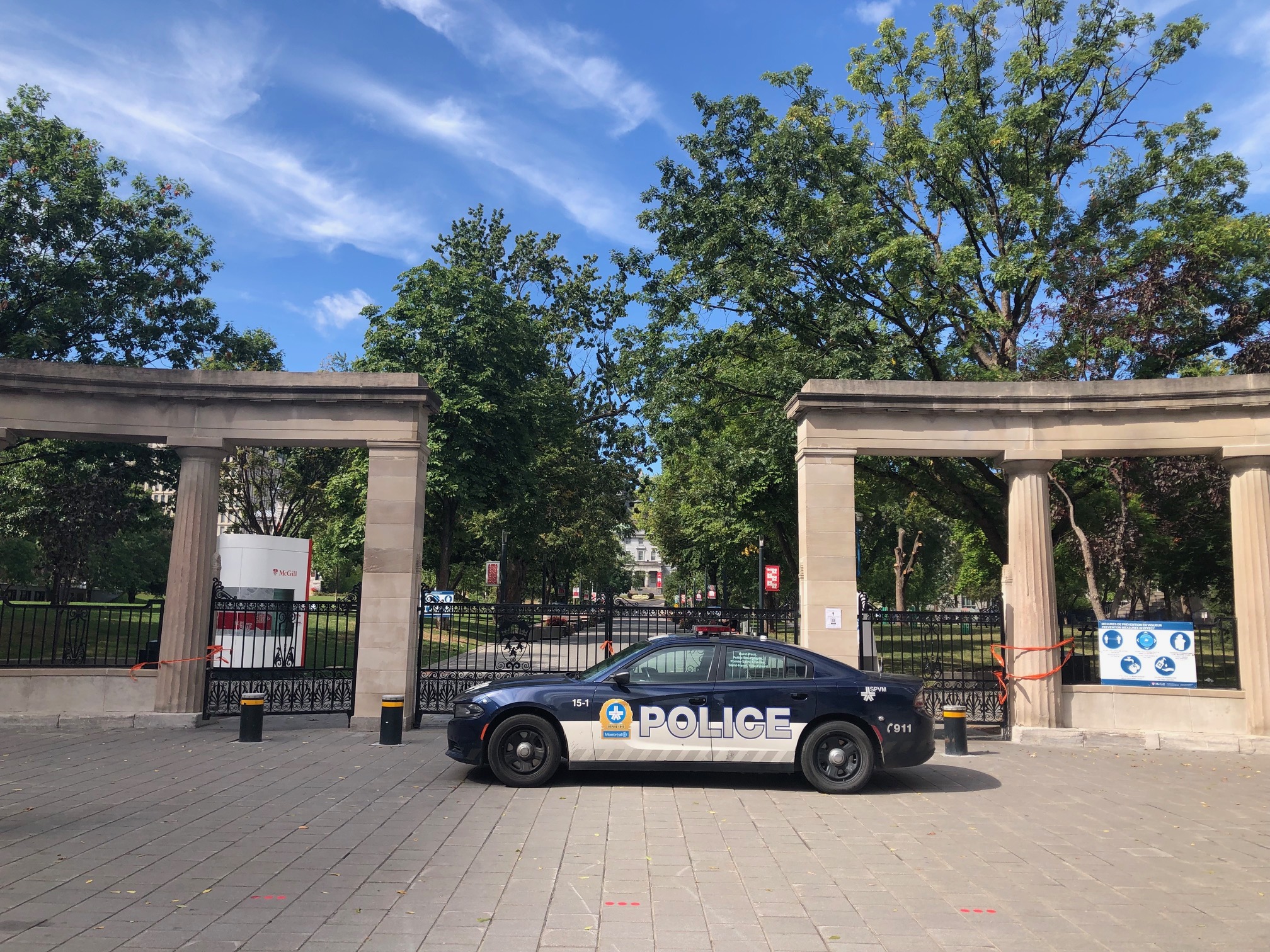
The morning of Sept. 18, many members of the McGill community were surprised to find the lower area of the downtown campus cordoned off and Sherbrooke Street flooded with police vehicles. Orange police tape ran along the campus perimeter and a police car was parked to block off the Roddick Gates. The stabbing incident occurred only a few hundred meters from McGill’s McLennan Library. Avery*, a U3 Science student who regularly stays at the library late, spoke to The McGill Tribune about the incident.

“I [am] so surprised because I was here yesterday night, and late as well,” Avery said. “[I] did not see anything. [But] now after what happened, I would not stay too late in the library.”

Avery was one of many students on campus that morning—and was not the only one to express concern about campus safety. Alier Magok, U0 Science, had not heard about the stabbing until he arrived on campus only to find most of it sealed off.

“I did not know what had happened,” Magok said. “But [then], when you first open Reddit and see ‘stabbing,’ it’s crazy. Nobody knew, the police hadn’t released anything, […] but you do not feel as safe because [of] everything happen[ing].”

The homicide was not the first violent incident that occurred close to McGill this year. Avery recalled an incident that occurred in May 2021, where a 21-year-old man was stabbed inside the McGill metro station. Despite sustaining injuries to his upper body, the victim survived. Avery reflected on how this increase in violence has made her feel.

“Recently we have been seeing a lot of stabbing occurring especially on St. Catherine,” Avery explained. “Back in May, there was a stabbing at the McGill metro, so that’s why I am not very surprised this is happening. It has been occurring a lot [near campus]. We thought that it was safe.”

Frédérique Mazerolle, McGill media relations officer, relayed the SPVM’s statement that the Sept. 18  incident did not have any connection to McGill.

“According to SPVM, an altercation unrelated to McGill took place downtown […] during the very early hours of Sept. 18,” Mazerolle wrote in an email to The McGill Tribune. “For a brief period, the surrounding area was restricted due to the police operation. Despite rumours circulating on Twitter, the investigation presented only [a] minor inconvenience to our community.”

While acknowledging the safety of the McGill community as the school’s first priority, Mazerolle explained that the school did have a department dedicated to safety on campus.

“McGill University, through the Campus Public Safety Department, […] offers services on a 24-hour basis to all members of the McGill community, such as safety escorts within certain limits to all students and staff at both the downtown and Macdonald campuses.”

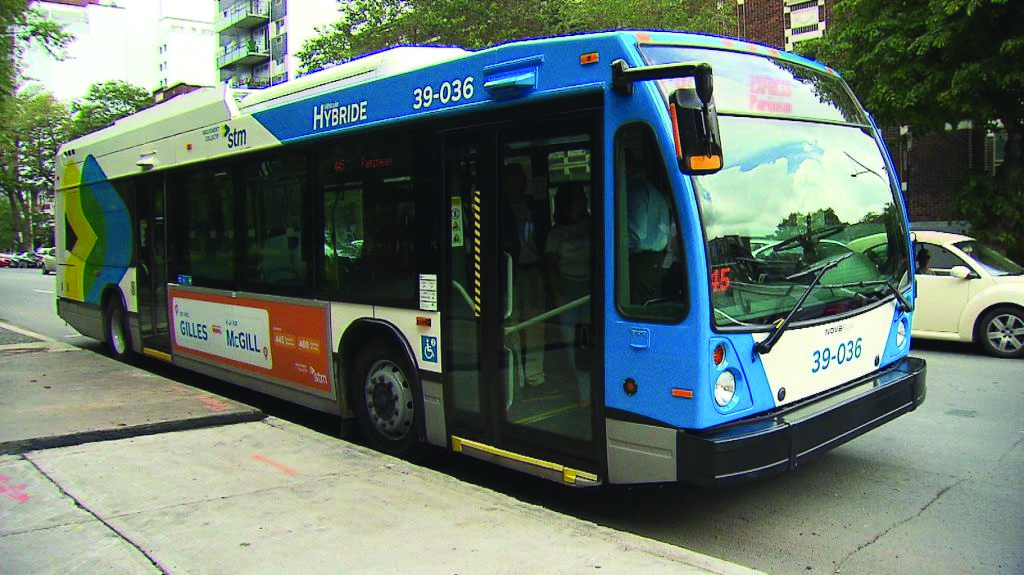
Though the Students’ Society of McGill University’s (SSMU) WALKSAFE and DriveSafe services were recently halted, one nighttime security service available to students is the Société de Transport de Montreal’s “Between Stops” program. The service runs as of 7:30 p.m. or 9:00 p.m. at different times of the year and allows bus drivers to let passengers off between stops if bus stops are too far from a passenger’s destination.

*Avery’s name has been changed to preserve anonymity.

News, SSMU

Virtual Activities Night goes awry following technical difficulties

Major technical difficulties arose during the Students’ Society of McGill University (SSMU)’s virtual Activities Night on Sept. 13, leaving the approximately 2,000 registered student participants confused. The online event platform Gather.Town crashed due to the high volume of participants, though organizers have since suggested that there is more to the story.

The w platform malfunctioned and experienced a system overload when it opened its doors to the thousands of participants. The system also experienced several glitches—room hosts would frequently freeze and participants struggled to access the different booths. 

In an interview with The McGill Tribune, Karla Heisele Cubilla, SSMU vice president (VP) student life, explained that her team chose Gather.Town—as opposed to Zoom or Eventus, which were used for last year’s activities night—to host the event in hopes of delivering a more engaging online experience.

“We need to have a platform that is going to engage students, because really, Eventus did not work,” Heisele Cubilla said. “It was an expensive platform and it did not connect the groups with the students. [An] in-person fair was just not possible. In June, I reached out to McGill, hotels, and the Bell Centre, and everyone said no. [I heard from some of my staff that] Gather.Town was perfect and super interactive.”

Despite discussing capacity limits with Gather.Town executives, who recommended purchasing two spaces for the event, the platform was overwhelmed within minutes of the event’s start. 

“We had around 1,200 registrants two days before the event, but two hours before the event we had a total of 2,267 students registered,” Heisele Cubilla explained. “[Our understanding was that] once capacity was reached in one of the worlds, there would not be a failure of the system, students just have to wait in a waiting room. The day of the event, at 4 p.m., 1,500 people signed in at the same time, we saw major lag, and [the first space] collapsed.”

SSMU organizers immediately began exploring troubleshooting options. Some club executives took matters into their own hands, coming up with alternatives on the fly, to connect via alternative means.

“After talking to many peers and executives from other clubs, I realized that the technical difficulties I faced using the platform were widespread,” said Liam Lynch, McGill Pre-Law Students’ Society Mock Trial president. “Once we realized that we were not able to get to our booth, we quickly set up a Zoom meeting open to all students and shared the meeting invitation through our social media channels.”

According to Heisele Cubilla, SSMU is currently planning a second activities night to make up for the first one’s shortcomings.

“We refunded all the community groups that paid,” Heisele Cubilla said. “I communicated to all the student groups what was happening, and I emailed all the students apologizing. Although there were technical difficulties outside our reach, we are still responsible to make sure that student life thrives. I have partnered with Campus Life & Engagement, and we have a team of six people working on Activities Night 2.0 for mid-October.”

The reaction to the event among student group leaders varied. Some, like Lea Baroud, vice president media and communications of the Arab Students’ Network, attributed the failure to uncontrollable technical circumstances.

“We found that the initiative of having a virtual […] booth to interact with students was a really creative one that could have replicated the experience of an ‘ordinary’ activities night,” wrote Baroud in a message to the Tribune

Others worried about the impact that a failed Activities Night will have on club recruitment and outreach.

“I’m worried that not every SSMU club had sufficient means to connect with new students or make their name known on campus,” Lynch wrote to the Tribune. “As a result, some new or smaller organizations may have missed their chance to gain valuable new members.”

Commentary, Opinion

The social politics of municipal retrenchment

Montreal’s bustle is returning after months of rigid COVID-19 restrictions, yet the Société de transport de Montréal (STM) ridership remains remarkably low. As a result, in August, the regional transit board asked the STM to cut $276-million from its budget over the next three years. Recently, the STM proposed cutting $114-million of the funds currently allocated to operations, a decision that would affect the quality and accessibility of services offered to STM riders. Although cost-cutting will be necessary to rebuild the economy post-pandemic, underfunding the STM threatens to leave behind regular commuters. The City of Montreal must reconsider its 2021 budget allocation to respect the communities most reliant on the STM.

The STM is not without its problems, however: Notoriously inefficient, transit routes have gone largely unchanged over the past decade, resulting in accessibility issues for commuters—especially those from Montreal’s North and South Shores, areas primarily inhabited by low-income and racially diverse communities. Some logistical elements of STM services are outdated as well: To renew OPUS cards, for example, riders must go in-person to a metro station or to select pharmacies. This process is unnecessarily complicated when compared against Toronto’s PRESTO card system, which allows riders to manage their accounts entirely online. With adequate funding, the STM could capitalize on technological advances, make services more accessible, and help restore ridership levels—which would mitigate the transit sector’s current financial crisis. The municipality’s decision to target the STM, a service in evident need of revamping, inspires questions about the depth of Montreal’s commitment to equitable and efficient tax dollar spending. 

The proposed STM budget cuts also raise ethical questions regarding the city’s environmental goals. Montreal is one of Canada’s greenest cities, but cutting funds for a system so crucial to emission reduction contradicts Projet Montreal’s supposed commitment to sustainable development. Even if the STM decided to keep the $114-million in the budget, that alone would not be able to cover the cost of creating new metro lines or implementing long-term environmental projects. Still, allocating funds to green initiatives while reducing the efficiency and accessibility of transit services is counterintuitive—especially given the budget’s three-year timeline.  

As universities and businesses resume in-person activity, those living beyond Montreal’s downtown core will rely more heavily on STM busses and metros. The city’s lack of alternate transportation options means that riders will have to deal with the potential consequences of underfunding, including prolonged wait times or outdated service renewal options. Since high living costs continue to push some racialized communities away from the downtown core, the effects of slower STM operations will be felt disproportionately. The municipal budgetary plan highlights a troubling pattern of Montreal’s municipal public service policies neglecting to adequately serve marginalized communities. 

Attention to budget reform has dominated recent political debates. Despite outcry from Montreal locals to defund the police in 2020, the city’s 2021 budget boosts funds to the police. Montreal’s law enforcement and transit systems disproportionately impact marginalized communities, yet the city’s 2021 funding allocation fails to reflect that in their budget. If the city is truly committed to meeting community needs, fiscal policies should support, not hurt, those most impacted by the public service sector. 

If Montreal’s budgeting fails to reflect public demand in areas as uncontroversial as transit, the possibility of seeing meaningful structural reform in law enforcement is far-fetched. City officials must be receptive to the needs and voices of vulnerable community members, even in the face of economic pressure. Otherwise, those most affected by the service sector’s shortcomings will be left to suffer the consequences of retrenchment. 

Campus Spotlight, Student Life

McGill Farmers’ Market creates community for sustainable eating

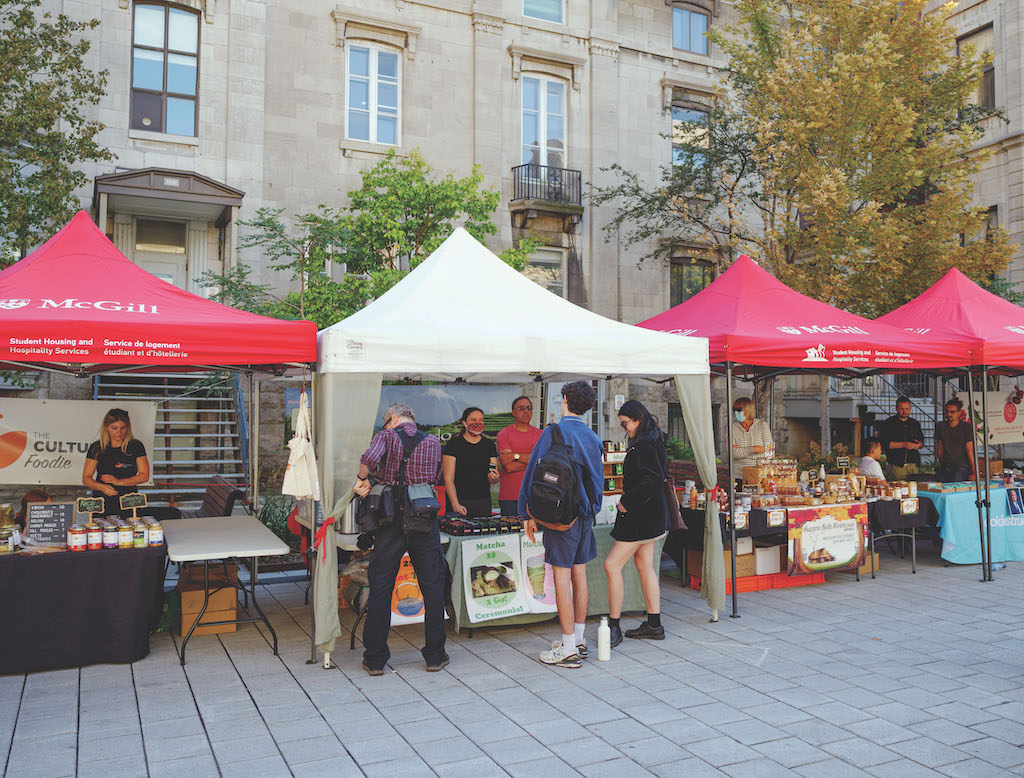
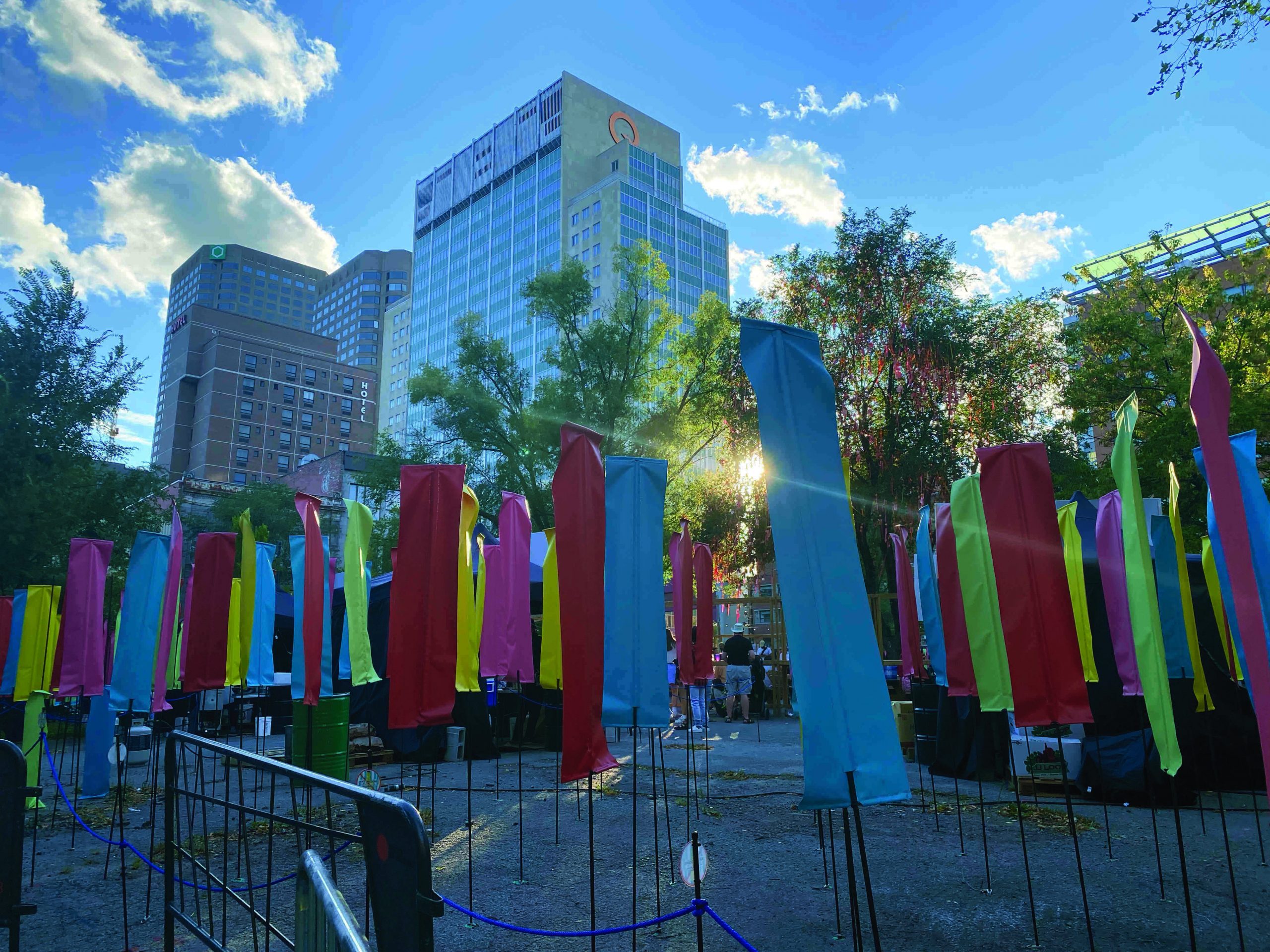
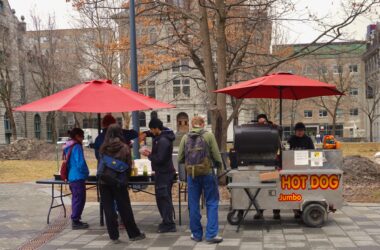
The McGill Farmers’ Market has been a staple of the summer and fall seasons at McGill since 2008. It returns again to McTavish Street this year, open on Thursdays from 11:00 a.m. to 5:00 p.m. Multiple vendors selling their signature products offer students a variety of food and flavour options, from De Sucre & de Miel’s avocado cakes and biscoff cookies, to the Cultured Foodie’s kimchi and pickled carrots.  

Jodie Anderson, U3 Arts, and her best friend Aneeka Anderson, U3 Arts, visit the market regularly. 

“We met up last week here and we are meeting up again this week to make this a little tradition,” Aneeka Anderson said. “We’re in our final year and, with COVID interrupting these traditions that we were forming [on-campus], we’re happy to be back and making the most of our last year.”

“It’s hard to shop locally and get such fresh stuff,” Jodie Anderson added. “Otherwise, if this wasn’t here, I might just be going to a big chain grocery store.”

Emma Leaden, MA2 Information Science, who visited the market for the first time, found it conveniently located and easily accessible. 

“This was right on campus,” Leaden said. “I know there’s a couple other farmers markets in the city that I haven’t been to because it’s just not as convenient.”

Leora Schertzer, U4 Arts and the coordinator of the farmers’ market, said that the market’s mandate is to provide accessible and sustainable food options to students.

“The goal is to promote local agriculture and local food production,” Schertzer explained in an interview with The McGill Tribune. “I think people like to meet the people who are producing their food as well. It makes it feel more personal. It makes you feel like you have more of a connection to what you’re eating and what you’re putting in your body.”

In addition to connecting students to local vendors, the market team organizes the Community Supported Agriculture (CSA) program, an initiative that offers local and seasonal produce through a weekly basket subscription service. The baskets are sourced from Co-op au Bout du Rang, a farm based in Saint-Felix-de-Valois—approximately an hour away from McGill by car—that grows over 40 varieties of vegetables. 

With current agricultural production systems causing substantial harm to the environment, Schertzer said a shift in food industry practices is urgently needed to confront climate change. 

“I think, in order for that change to happen, people need to have some sort of personal investment [in their food],” Schertzer said. “It makes people really happy to see the farmers’ market. They recognize familiar faces of the vendors who are super into what they’re doing and care a lot about their projects.”

Among these vendors is Elba Vasquez, owner of Café Elba. Vasquez started her business in 2013 to help struggling farmers in El Salvador. 

“I grew up in a small coffee farm in El Salvador, and I know what it’s like to be working there all day long in the coffee plantation,” Vasquez explained. “When I was a teenager working as a coffee picker, I was making 50 cents for every 35 pounds of coffee that I picked […] Some people make only $10 a day working all day long.”

The proceeds from the coffee Vasquez sells at the market help communities in Central America. She has recently been sending money to students in El Salvador to help them buy school supplies.

Although she takes part in a number of other farmers’ markets, Vasquez appreciates the student demographic unique to the McGill Farmers’ Market.

“Young people are very interested in [my business],” Vasquez said. “They want to help us by buying [the coffee]. They are very curious.”

Student Life

Bringing Pride to Chinatown

There was once a time when the terms “Pride” and “Chinatown” would not be associated unless you were talking about a restaurateur’s delight in the quality of their har gow (Cantonese dumplings). However, these days in Montreal’s Chinatown district, pride has a new meaning.

On Sept. 12, queer folks and allies united at Place des Souhaits for “Fierté au Quartier Chinois,” an event organized by Sticky Rice magazine, to celebrate Chinatown’s first pride and to mark the magazine’s one-year anniversary.

In an interview with The McGill Tribune, Viet Tran, Sticky Rice’s editor-in-chief, explained the importance of the event for Montreal’s queer Asian community.

“It became necessary to break the silence around [being queer and Asian],” Tran said. “What has been expected from Asian folks was to be quiet and to make ourselves discreet.”

Sticky Rice magazine explores what it means to be an Asian Canadian by highlighting the experiences of the Asian diaspora communities across Canada. Through essays, interviews, films, and other mediums, the magazine promotes an ever-changing dialogue around Asian-Canadian culture and identity.

Sticky Rice was founded in 2020, when anti-Asian hate crimes were on the rise. Amid this difficult period, the team decided it was time for Asian-Canadians to express themselves creatively from a place of vulnerability and authenticity.

The challenge to explain and understand what queer folks experience in predominantly Asian spaces is a difficult one, as Asian cultures are not homogenous. All with their own traditions, values, foods, belief systems, and people, Sticky Rice and its contributors recognize that they cannot speak for the experiences of all queer Asians.

“It’s not a secret that older generations are known to be more conservative with regard to sexual diversity,” Tran said. “There’s also something to be said about the relative lack of jargon in many Asian languages to address LGBTQ+ issues. We’re hoping that by giving queer Asians the permission to celebrate themselves in a more traditional neighborhood will inspire them to continue taking up space.”

Tran felt it was important to invite people from all demographics to the event.

“I do think that in any culture in which the pillars of family life sometimes take priority over individual differences, there are more efforts put into calling in people from all generations,” Tran said. “It was really important that this event be multi-generational, because the goal was to build bridges between younger queer demographics, local business people, and their legacies.”

Last weekend’s event featured performances from Montreal-based artists Hua Li, Waterboi, Miranda Chan, Beau Gomez and Die Nasty, Molly Gum, Frantz Lin, and Kai.

Frantz Lin described the significance of the event for him and others involved. 

“As far as I know, this was the first Pride in Montreal’s Chinatown, period,” Lin said. “It’s historic. It’s pretty important for Asian and Chinese youth to take our energy and community to partake in and claim Chinatown.”

Attendees enjoyed Asian street food and drinks provided by the on-site Asian Night Market and also learned about the Chinatown area through community-led walking tours. 

Tran described the significance, and importance, of holding this event in Chinatown. 

“It’s a neighbourhood that harbours a lot of cherished memories for us and our families, so we wanted to really pay respect to its history and to the resilience of its culture through guided walking tours, and by re-appropriating the space through an Asian-led party,” Tran said.

Sticky Rice’s second volume focusses on opening up the conversation around what it means to be Asian and queer. Titled (BE)LONGING: The Queer Edition, the volume showcases queer Asians from all backgrounds who have not historically been centred in mainstream 2SLGBTQIA+ platforms.

“​​As a musician of Asian descent, it also meant a lot to have such a diverse audience full of allies alongside the intergenerational support I felt from other Asians in the audience,” Montreal-based performer Hua Li said. “Sticky Rice highlights the margins of the Asian experience and gives us the space to break free from the model minority myth.”

Out on the Town, Student Life

Exploring Montreal’s thrifting scene

With the return to campus, many members of the McGill community are meeting off-screen for the first time, finally getting the chance to express themselves through their fashion choices. For the budget-conscious university student, this may sound daunting. However, Montreal’s wide selection of thrift stores, each with their own unique ambience, offer cheaper and more environmentally friendly alternatives to the big name-brand clothing stores. 

1. Marché Floh – 4301 Saint Denis Street

Marché Floh is a three-story vintage market that boasts 20 different resellers.

Alex Mondry, the market’s founder, has been passionate about thrifting for years. The business began as a pop-up thrift shop from Mondry’s own home, and eventually grew into larger pop-ups in Montreal’s commercial spaces in collaboration with other vintage resellers. The idea of hosting resellers all under one roof, Mondry explained, became what is now Marché Floh.

“The environment that we want to offer is very judgment-free, inclusive, [and] expressive, [where someone can] look for any type of piece and probably find it,” Mondry said in an interview with The McGill Tribune

Marché Floh’s stock includes ‘90s and early 2000s streetwear, baby-doll and goth styles, as well as hand-painted pieces.

Key to thrifting’s appeal, Mondry said, is the eclectic flare that vintage pieces bring to one’s wardrobe.

“Thrift shopping simulates a creative style that is different from shopping in a big-box store,” Mondry said. “You’re rarely going to run into someone with the same outfit as you.” 

Mondry also recognizes that thrift shopping helps minimize waste in the fashion industry. 

“People who thrift are helping us keep garments out of the landfill,” Mondry said.

2. LNF Shop – 5319 Park Avenue

For those looking for a thrift shop focussed on ‘90s nostalgia and high-quality brand name accessories, look no further than LNF Shop. Known for its denim, graphic T-shirts, and accessories, the shop is conveniently located within walking distance of the McGill campus.

Charlie Whitley, LNF Shop’s co-owner, is a former American Apparel employee who was inspired to add to Montreal’s vintage scene—which was lacking when LNF Shop started 10 years ago. 

“[It’s very] heavy ‘90s nostalgia, while trying to keep up with current trends,” Whitley said. “The care that goes into the products and the selection process [sets LNF Shop apart].”  

Items come from a variety of independent suppliers across Canada and are sold at affordable prices. 

The number of students opting to shop at thrift shops instead of big-box retailers is encouraging to Whitely, who is happy to see that many have shifted toward a more environmentally conscious lifestyle. 

3. Cul-De-Sac – 3794 St. Laurent Boulevard

Cul-De-Sac sells a variety of collectable pieces spanning multiple decades. It also boasts an in-house workshop where thrifted pieces can be modified and repaired.

Co-owner and manager Marc Jetté is no stranger to Montreal’s thrifting scene: 17 years ago, he began selling bags made out of recyclable materials, and his business eventually grew to include other accessories and clothing items.  

Jetté highlighted that many of Cul-De-Sac’s garments are of high quality because they were made during time periods when production methods were more thorough than they are now in the fast fashion industry.

“When people buy [from Cul-De-Sac], they are buying from a time period where things were made better.” 

Science & Technology, Science Rewind

Science Rewind: Eight scientific advances discovered at McGill

Since 1821, McGill University has climbed the ranks and established itself among Canada’s high-performing research institutions. It is no understatement that McGill professors and alumni went on to excel in their respective fields, particularly in scientific domains. 

Ernest Rutherford, who was a professor of experimental physics at McGill, conducted world-renowned research on the concept of radioactivity. In 1908, he was awarded the Nobel Prize in Chemistry for his work, which included coining “radioactive half-life” and distinguishing between alpha and beta radiation.  Past these remarkable achievements, The McGill Tribune has compiled a list of lesser-known accomplishments that have irrevocably altered and advanced various scientific disciplines.

  1. The discovery of radon in 1899

Anyone who has taken basic high school chemistry courses will have come across this noble gas in the periodic table. With an atomic number of 86 and an atomic weight of 222, radon sits just below xenon, and forms as a result of the radioactive decay of uranium. Radon was the fifth radioactive element to be discovered, with the first four being uranium, thorium, radium and polonium. Rutherford, after whom the physics building on campus is named, made yet another groundbreaking discovery when he identified the noble gas alongside fellow McGill professor Robert B. Owens

  1. The development of the first artificial cell

Biological cells are the building blocks of life: A group of cells are arranged into tissues, which form the organs that make up nearly every part of our bodies. In 1957, Thomas Chang, a then-undergraduate student in the Faculty of Science, engineered the world’s first artificial cell that imitates one or more actions of a biological cell. Chang developed an artificial cell that was able to carry haemoglobin as efficiently as a red blood cell does. 

  1. The first internet search engine

Imagine having thousands of files stored on a computer with no way to easily sift through them to find a specific result. Fortunately, search engines exist to avoid this issue. A search engine probes the information stored on a computer to pick up the specific data the user requests. Examples of search engines include web search engines like Google or Yahoo, for example, and are designed to find and display information that was already stored on the World Wide Web. The first web search engine was developed by Alan Emtage in 1990, a postgraduate student at the School of Computer Science, after he was tasked, along with a team of other students and staff, to connect McGill to the internet. 

  1. The first veterinary pathology course 

Often dubbed the “father of modern medicine,” Sir William Osler completed his medical studies at McGill, receiving his MDCM degree at the age of 22 in 1872. He went on to complete his postgraduate training and returned to McGill in 1874 to pursue professorship. Osler was the first professor to teach a course on veterinary pathology in North America with the aim of furthering his students’ understanding of the origin and development of diseases. He later joined the University of Pennsylvania faculty, became one of the four founding fathers of the Johns Hopkins School of Medicine, and established the first formal residency program there.

  1. The invention of Plexiglass

Plexiglass, also known as acrylic, is a chemical compound invented by William Chalmers, PhD ‘30. The material became widely used in the manufacturing of airplane windows during the Second World War and has also seen a revival throughout the COVID-19 pandemic—where it was quickly implemented in vaccination centres and grocery stores to curb the transmission of the virus. Due to its strength and durability, plexiglass is typically sold as a shatter-resistant alternative to glass. Common applications of plexiglass include aquariums walls, building windows, and greenhouse panels. 

  1. The discovery of cytokine interleukin-2

Cytokines are a family of small proteins secreted by cells that send messages to the immune system to perform a certain function, thus playing a pivotal role in regulating the body’s immune response. The ‘interleukin-2’ hormone entered scientific discourse when a team of researchers were studying the impact of retroviruses on human disease; the hormone was necessary for the maintenance of T-cells in the lab. This cytokine, later referred to as ‘interleukin-2,’ was discovered by McGill researcher and Royal Victoria Hospital’s surgeon-in-chief Dr. Lloyd D. Maclean in 1965.

  1. The creation of MUSIC/SP

Punch cards, physical pieces of paper with lines of code punched into them, were once used to store digital data. However, the Multi-User System for Interactive Computing/System Product (MUSIC/SP), formerly known as “McGill University System for Interactive Computing,” was invented as a time-sharing operating system that allowed students and university staff to enter and extract information from the modern, newly developed terminals. Released in 1972, MUSIC/SP was able to expand globally. By the time the operating system became obsolete due to more efficient methods of data storage, it had already reached 250 research institutions and schools.

  1. The invention of the Montreal Procedure

The Montreal Procedure, used to treat epilepsy patients, was developed in 1952 by renowned neurosurgeon Wilder Penfield, a then-professor at McGill and founder of the Montreal Neurological Hospital and Institute along with neurologist Herbert Jasper, who was a professor of experimental neurology. Epilepsy is characterized by groups of nerve cells signalling in an abnormal manner, causing seizures. The Montreal Procedure is an epilepsy treatment that attacks the nerve cells that cause these seizures. During the operation, patients are given a local anesthetic, thus remaining conscious throughout the procedure. The surgeon would then use electrical brain stimulation and let the patient inform them of the sensation they receive from such stimulation, allowing the surgeon to identify and remove the tissues affected by the seizure.

Read the latest issue

Read the latest issue