


Latest News

Arts & Entertainment, Film and TV, Pop Rhetoric

Film trailers with spoilers rob us of the joy of surprise

In an era of empty movie theatres and increasingly popular streaming services, movie marketers are desperate to entice viewers back to cinemas. According to the Motion Pictures Association’s annual theme report, the United States and Canada’s box office market decreased by 81 per cent between 2019 and 2020. At the same time, subscriptions to home entertainment in the United States, including streaming services, rose by 33 per cent. Although the popularization of streaming services may seem encouraging to the film industry, most of this subscription money goes to the service rather than the filmmakers and actors. To put the importance of physical cinemas into perspective: Without movie theatres, the cast and production crew of Avengers: Endgame (2019) would have missed out on nearly $2.8 billion dollars of box office revenue. 

In order to combat the rise of Netflix, HBO, and Disney+, some movie marketers have opted to grab potential viewers’ attention by packing in as much plot information as possible into their film trailers. This strategy has worked in the past—in an interview with Insider, Jason Blum, the producer of Get Out (2017) and The Invisible Man (2020), revealed that it is typical practice for movie producers to market trailers toward those who are indecisive about watching a particular film. By revealing plot points and spoilers, the marketers hope the audience will gain a better idea of what to expect and thus be encouraged to go see the film.

The debate about whether a movie trailer should include spoilers or not was reignited this September with the release of British psychological horror film Last Night in Soho’s trailer. The trailer is essentially a three-minute summary of the film—director Edgar Wright even made sure to warn his Twitter audience about the spoilers. He tweeted, “If you are already sold and would prefer to know NOTHING more of the secrets within, avert your eyes now.” Although it was thoughtful of Edgar Wright to caution his Twitter audience, the lack of warning in the trailer itself destroys potentially surprises which await the viewer in the film.

Many infamous movie trailers have opted to use spoilers as advertising in the past. Tom Hanks’ film Cast Away (2000) follows Hanks’ character as he attempts to survive on a deserted island for the majority of the film. However, the trailer reveals that he ultimately survives, much to some viewers’ disappointment. Similarly, the trailer for Kingsman: The Golden Circle (2017), the sequel to the wildly popular Kingsman: The Secret Service (2014), exposes that a character presumed dead in the first film is still alive, divulging information solely for the purpose of a shock reveal.

Though movie marketing teams may believe that all press is good press, spoiling the movies without warning removes the novelty of seeing the film for the first time. If someone wants to read spoilers before going to the theatre, there are plenty of blogs and websites that can help. Revealing important information within a trailer completely eradicates any agency over how and when an excited viewer learns the plot. However, as Edgar Wright proves, at least Twitter is a surefire way to discover trailer spoilers—unless it spoils the movie itself. 

Research Briefs, Science & Technology

McGill researchers find link between chronotype and sleep behaviour

Irregular sleep schedules are common among university students: From late night exam cramming to binge-watching favourite TV shows, most students have first-hand experience with sleep deprivation. Since proper rest is essential for optimal functioning and health, disrupted sleep is associated with many health-adverse effects including cardiovascular diseases. As such, studying sleep and exploring ways to improve daily rest are central to improving human health and wellbeing.

When analyzing rest patterns, shift workers are an important group to focus on as their sleep-wake schedules often misalign with their bodies’ circadian rhythms. Because of this, they are thought to experience shorter and poorer quality sleep. In a recent article published in the journal Sleep, a group of McGill researchers set out to investigate how chronotype—an individual’s preference for going to sleep early or late—can influence sleep behaviour and quality

By conducting a field study on rotating shift workers, the researchers discovered that the effect of an individual’s chronotype on sleep quantity depends on whether their shift is in the morning, evening, or night. 

For around a month, 74 Quebec police officers wore an actigraph, a device that functions as a watch, to measure their sleeping and napping behaviour while they worked their regular shifts. The researchers used watch data to determine sleep duration, questionnaires to deduce chronotype, and statistical models to study whether chronotype and shift type affect sleep duration. Between the most extreme chronotypes of the group, the early risers slept 1.1 hours longer on average during a series of morning shifts, while night owls slept two hours longer on average during a series of evening shifts. ​​No significant effect of chronotype on sleep duration was observed during night shifts. Dr. Diane Boivin, professor in the Department of Psychiatry at McGill and director of the Centre for Study and Treatment of Circadian Rhythms at the Douglas Research Centre, explained that naps were the most efficient countermeasures against shortened night sleep for early chronotypes completing night shifts—making up for the lost night rest. 

“The early chronotype has a more difficult time adjusting to working night [shifts], in that their main sleep period is shorter,” Boivin said. “But they catch up on the sleep restriction by napping more, to a point that the association between chronotype and sleep duration is no more significant [than] with night [chronotypes].”

Running counter to the theory that napping leads to sleep inertia, Boivin insists that napping is something to encourage, arguing that its benefits outweigh its downsides. 

As for coffee-lovers, the study found little interaction between chronotype or shift type and the daily intake of caffeinated beverages. Although it was not directly explored in this static study, Boivin noted that chronotype is not a fixed concept and that it can evolve throughout one’s lifetime.

“In our teens and early 20s, there is a period of delayed sleep schedule [where] we tend to be more evening chronotypes,” Boivin explained. “As we grow older, we tend to be more morning types, [although sometimes the original pattern persists].” 

While previous studies examined the effect of chronotype and shift type on sleep quantity using between-subject comparison and self-reported sleep duration, this study employed more objective assessment methods, such as actigraphy-measured sleep and intra-subject changes.

“This [study] shows that individual differences in internal biological timing, which is regulated by the endogenous circadian clock, impact the amount of sleep that shift workers are able to get,” Boivin said. “Our findings show that chronotype should be considered in the design of strategies or recommendations [to optimize sleep in shift workers].”

Commentary, Opinion

McGill’s library vaccine mandate is indicative of its patchwork approach to COVID-19

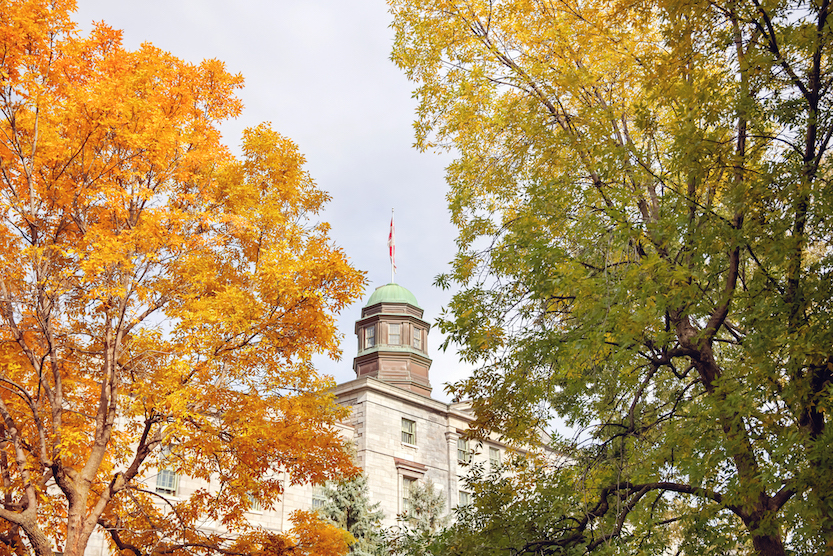
On Sept. 17, McGill sent an email announcing that students will need to present their  Quebec COVID-19 vaccine passport to enter any on-campus library—beginning in mid-October. The announcement came three weeks into the Fall semester, amidst demands from McGill students and faculty to implement stricter COVID-19 protections. The Students’ Society of McGill University (SSMU) drafted an open letter and staged a protest on campus demanding a vaccine mandate, online accommodation for all classes, the prohibition of mandatory attendance, and a commitment to including student representatives in COVID-19 related decisions. Although McGill’s new library policy is a step toward protecting students, it is also proof of a disorganized and backward approach to vaccine requirements. McGill should instead enforce a university-wide vaccine mandate instead of haphazardly patching up the gaps in their own policies. 

Whereas many Canadian and American universities have implemented a vaccine mandate, McGill has not. The university has argued that the Quebec government’s vaccine passport provides enough incentive for students to get vaccinated and that a university mandate is beyond their legal jurisdiction. But despite McGill’s efforts, alongside the province’s hefty lottery incentives, cases and hospitalizations have risen within and beyond campus. During the first week of class, McGill reported six COVID-19 cases on campus with no community transmission. Just one week later, that number tripled, rising to 18, and the week after that, the McGill community was alerted to 13 cases with possible community transmission in the McIntyre building. This rise in cases is not surprising, given that students are returning to in-person classes and student life, parties, and large gatherings for the first time in almost two years. McGill should have predicted the spike in cases and should have mandated vaccinations for all students, faculty, and staff at the beginning of the term. An all-encompassing mandate would be less confusing, and it would have set clear rules and standards from the start. It would show that McGill is prepared to guarantee students’ safety during the return to in-person learning. 

Although the vaccine requirement for accessing libraries is a welcome step, it does not protect students from transmission in their classes, especially considering the fact that masks are not mandatory for instructors. McGill’s patchwork approach leaves students confused as to where they need to show proof of vaccination, and what the rules are—there is no established standard delineating which spaces and activities require proof of vaccination, and which do not. Not only are there ambiguities, but there are also logical inconsistencies:  A passport is required to attend sporting events, but not to live in residence. Similarly, the decision to require vaccine passports in libraries, but not in other spaces was not a matter of coherence for the administration; instead, it was a matter of pressing firmer COVID-19 protocols while avoiding implementing a school-wide vaccine requirement. 

Furthermore, the university’s vaccine verification procedures have been inefficient, considering the long lines outside of dining halls, where students wait to get their vaccine QR codes scanned. Library lines, too, risk becoming very long because of the sheer number of students that go in and out every day. Considering the amount of time McGill has taken to make this decision, the administration needs to present a plan for a more efficient system. Furthermore, as colder weather settles in, students will begin to migrate to indoor spaces, spending more time in higher-risk areas such as dining halls and libraries. Additionally, many speculate that library capacity limits will increase once access is restricted to those fully vaccinated, or that people will be allowed to take their masks off while studying. If the capacity does not increase, how the university will deal with rising demand in study spaces remains unclear. 

McGill still has some time to figure out the logistics of the new policy, but the administration should be prepared to answer questions and address the concerns of its students before they ask them to comply. 

Commentary, Opinion

Embracing the uncertainties of hybrid learning

After the August heatwave, September promised to bring fall weather, pumpkin spice lattes, and the ability to wear full-length pants outside of the house. And for a while, it did: Jeans walked the campus roads; cardigans thrived. But then, the average temperature rose to around 20 degrees Celsius, bringing with it a fashion dilemma: What to wear when it is too hot for pants, yet too cold for shorts. This ambiguous, 20-degree mid-point between seasons mirrors McGill’s hybrid learning model. With the model threatening to freeze their personality development, students must make an effort to make the most of this fall’s ever-changing circumstances.  

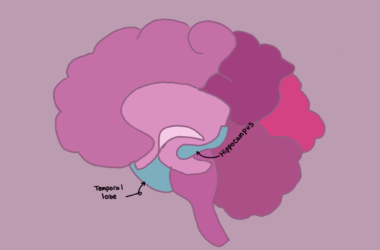
Whether it is sprinting to the library from the Stewart Biology Building to make it to an online Zoom lecture on time, or hiding in Starbucks from unexpected bouts of rain, students have adopted flexible mindsets and routines to adapt to this year’s unique challenges. University is a transitional period, a time of newfound freedom where many students begin to discover themselves as individuals. However, remote learning last year interrupted that process, and McGill’s hybrid model this year continues to present challenges, as most students have a mix of virtual and in-person lectures, tutorials, labs, and conferences. Although online learning may allow for flexible schedules and self-paced learning, a study published in PLOS ONE found that pandemic learning has disrupted many important neurological processes in college students, particularly personality development. 

Now that in-person classes have recommenced, the social aspect of learning has returned, accompanied by a harsh mental distinction between online and in-person classes. Hybrid schedules make it difficult to experience either to the fullest extent. Furthermore, much like how sunshine can disguise a chilly day, this balancing act can cause dissonance between the desired, idyllic school experience and reality. While university is usually a place where students discover their own identities, yet when personality development is inhibited, ​​they tend to mirror the traits of others in proximity, rather than cultivating unique personalities. 

Isolation has been proven to exacerbate introverted tendencies and can make it difficult for students to switch between virtual Zoom classes and pre-recorded lectures, let alone contribute to participation marks at in-person classes. Pandemic fatigue and academic burnout further discourage participation. However, taking part in educational settings shapes students’ personality development and other non-cognitive skills. 

In 2013, a study discovered that a positive sense of self in adolescents is often associated with psychological growth and personality development. This was also found to be correlated with increased emotional stability and personal autonomy. The pandemic, and now hybrid learning, has forced students to surrender to life’s unpredictability, dismantling routines and even sense of belonging. These changes emphasize the uncertainty that is living through a pandemic; but just like flash rainstorms, sometimes the unexpected can lead to transformative and memorable experiences. Students should adopt a mindset of radical acceptance and understand that life is unpredictable, but change, and its effect on the psyche, should be appreciated.  

McGill is difficult to navigate without a pandemic, but luckily, personality and self-discovery are neurologically flexible traits that are only enriched by experiences. So, much like the ambiguity of 20-degree weather, hybrid learning will leave students sweaty, confused, and wishing they had checked the weather app one more time.

Out on the Town, Student Life

Nights at Jeanne-Mance

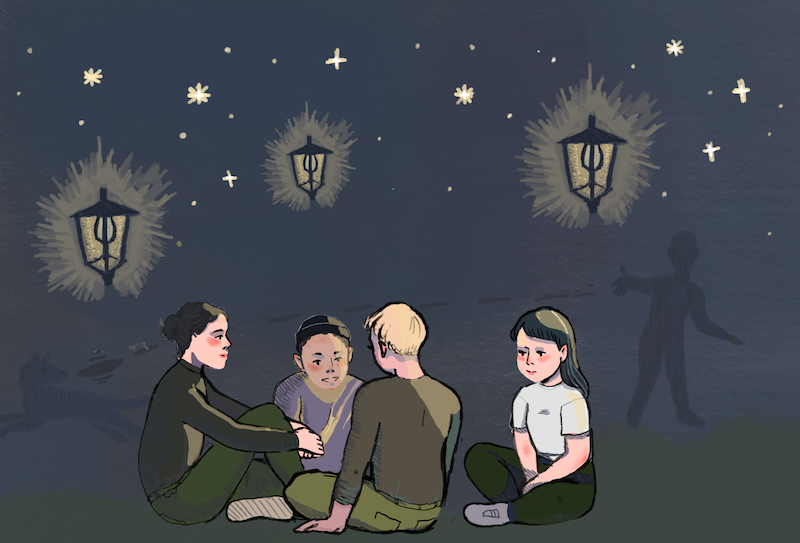
By the time 8:00 p.m. rolls around on a nice night, Jeanne-Mance Park is crowded with people. As the sun sets, people form small circles, huddle around picnic tables, and can sometimes be spotted dancing on the grass. In an effort to better understand the diversity of these park gatherings, The McGill Tribune talked to a range of park-goers one evening, many of whom were McGill students.

Isabel Heard, U3 Arts, joined friends for a picnic to break their fast following Yom Kippur. Stepping aside from her circle of friends, Heard shared her thoughts on Jeanne-Mance park gatherings.

“This is a very McGill space for me,” Heard said. “You can tell that there’s a lot of McGill students that hang out here [….] I usually spend time talking to everyone and […] I like it because it’s kind of chaotic.”

Though some associate the park with McGill student life, others like Elyssa Khoury, a first-year master’s student studying political science, have memories that date further back.

“I grew up in Montreal, so […] I have a lot of memories here,” Khoury said. “I planned a surprise party for my boyfriend [here].” 

Khoury has been coming back to the park more often than she did before the pandemic. That night, she and other master’s students chatted over a few beers.

“I think it’s different at a bar,” Khoury explained. “In a restaurant, you can’t really stay six hours, and then that shortens your social activity because you have to [ask] ‘what are we doing now? Is the night over?’”

The night certainly wasn’t over for another group who came to Jeanne-Mance to play volleyball but decided to hang out on the bleachers when they realized the nets were no longer up. 

Vivienne Orrell, a student at Dawson college, and her sister Ingrid, were among the group. As amateur volleyball players, they planned to play with their friends later that night, appreciating the absence of the more skilled volleyball teams that populate the court during the day. 

Gazing up at the Mount-Royal cross, visible from the park’s fields, the sisters looked back on a night they spent out with friends roaming around the mountain, no specific destination in sight. 

“One time we spent all night on the mountain walking,” Orrell said. “We were saying it was going to be an all-nighter, but then everyone went home around five.” 

Spanning 14 hectares of greenery, Orrell feels Jeanne-Mance Park is an essential part of the city. 

“At night, […] people are drinking,” Orrell said. “I suppose the sentiment of downtown is present in the park tonight.”  

While some park meet-ups are planned casually between friends, others are run by student organizations. 

Sophia Howard, U2 Science, was at an event with AM McGill, also celebrating Yom Kippur. 

“It kind of reminds me of Washington Square Park,” Howard said of the park’s liveliness, reminiscent of a hometown spot for her. 

Others, like Ismael Sefiane, U1 Management, and his friend Simo Bouayad, U2 Management, came to the park on a whim. The park’s central location, bordering on neighbourhoods densely populated by students, makes it a convenient meeting place.

“Some friends [from management] called me, so here we are,” Sefiane said. “They just told me five minutes ago.”

In comparison to typical house parties, Sefiane noted the different atmosphere meet-ups in the park offer. 

“It’s more chill [in the park],” Sefiane said. “The house is smaller and […] it’s going to be more crazy.”

As we spoke, a growing crowd gathering behind us began to dance, chanting “hotel, motel, Desautels.” 

With dancing and singing currently prohibited in Montreal bars and clubs, Jeanne-Mance has quickly become the venue for an adapted version of traditional student nightlife activities over the pandemic. Where there is an open space, you will almost undoubtedly find students taking the opportunity to party there.

Ask Ainsley, Student Life

Ask Ainsley: How do I live harmoniously with my roommates?

Dear Ainsley,

I’m in my second year at McGill, and I just moved into my first apartment with four of my friends. Although I’m very excited for this new chapter of adulthood, I’ve never had roommates before, and I’m worried that a five-person apartment is bound to breed conflict. What advice do you have for maintaining positive relationships with your roommates?

Sincerely,

Anxious Disorganized Roomie (ADR)

Dear ADR,

Congratulations on moving into your first apartment! Living independently for the first time can be exciting, but also overwhelming. This is especially true when you’re sharing an apartment with four people you’ve never lived with before. Luckily, there are many ways to develop and preserve an environment where everyone can feel at home. 

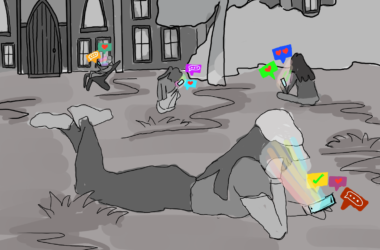
Since many roommate conflicts are the result of miscommunication, it’s important to ensure everyone is on the same page. Consider forming group chats on Facebook, Discord, or iMessage—whichever platform works best for everyone. You can use this group chat to send out reminders about things like chores and rent. 

It’s equally important to establish ground rules and personal boundaries. You may wish to set up a meeting early on to acquaint yourself with your roommates’ living habits: Are they early birds or night owls? Do they cook elaborate meals or mostly order takeout? All of this information will not only give you a sense of what to expect on a daily basis, but will also help you accommodate everyone’s needs. After becoming familiar with each other’s preferences, you might set up monthly meetings to address any issues that arise—especially since there are five of you living under the same roof. 

Another priority for when you first move in should be to create a roommate agreement that outlines each roommate’s duties and expectations. This agreement can be an opportunity to establish household management and bill-paying plans. Going forward, consider using a chore chart to accommodate each roommate’s unique schedule and time constraints. You can make things even easier by using a roommate chore app, such as Tody, ChoreBuster, OurGroceries, Cozi, or OurHome

Even with preventative measures in place, problems may still arise, and you will need a good strategy in place for managing them. While it can be daunting to directly address issues with your roommates, it will save you a headache later down the road. First off, ensure that you approach your roommates level-headed and willing to hear them out. Aside from blurring your own judgment, any anger is bound to put them in defensive mode. Rather than throwing accusations, try to use “I” statements, like “I feel I am frequently taking out the trash and would appreciate a little more help.” By framing it in these terms, you’re expressing to your roommate how you feel, thereby encouraging collaboration rather than conflict. 

The LARA method can also help you foster successful dialogue with your roommates. The L stands for listen: Try and be an active listener by providing them with thoughtful responses, open body language, and eye contact. The A stands for affirm or acknowledge, meaning that you recognize the feelings and needs behind what is being said. The R stands for respond, giving you the floor to express your thoughts and feelings about the problems your roommate brought up, and the second A stands for Add, finishing off with a chance to voice any of your additional opinions or solutions. If you follow LARA, your roommates are more likely to recognize that you are invested in resolving the issue in a way that works for you both.

Using these tactics is a sure-fire way to cultivate a harmonious relationship with your roommates. But if all else fails and you’re still struggling to get them to wash their dishes, you can always leave them passive aggressive messages

In all seriousness, living with roommates is an incredible way to build friendships, have fun, and make the most out of your college experience. Don’t forget to enjoy the process and let loose!

Good luck with your semester.

Sincerely,

Ainsley

Campus Spotlight, Student Life

‘Lettuce eat’: McGill’s first lettuce-eating competition a success

Despite the stress of adjusting to a hybrid semester, McGill students ‘romaine’ committed to cultivating a vibrant campus culture. Case in point: The unbe-leaf-able turnout for McGill’s first-ever lettuce-eating competition, which took place at the lower field on Sept. 24. 

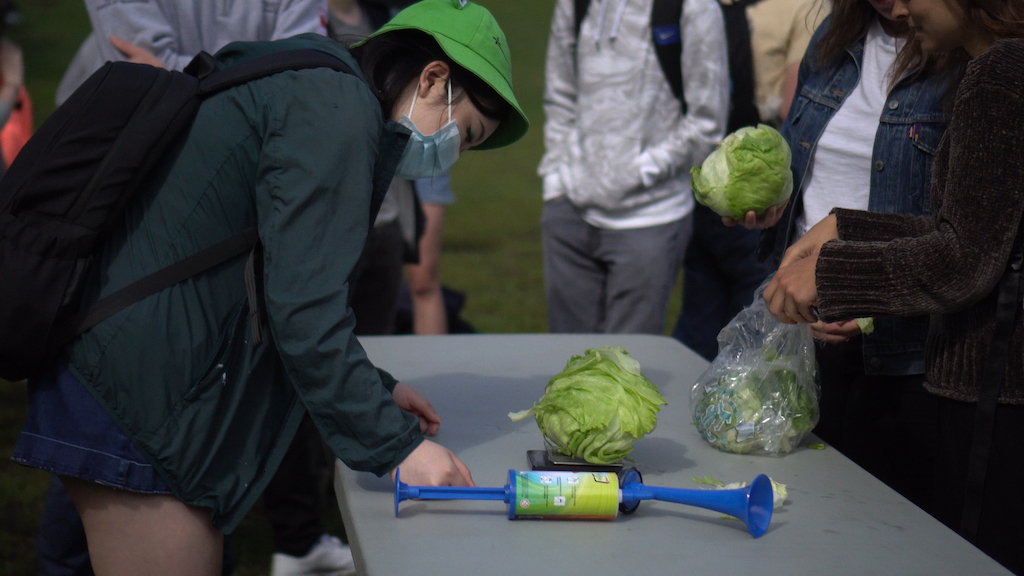
Upwards of 150 people, ranging from enthusiastic participants to bemused onlookers, attended. The event was BYOL, or “bring your own lettuce”—specifically, a head of iceberg lettuce weighing over 600g.

Arielle Lok, U2 Management and founder of Lettuce Club McGill, hosted the event with the help of Bjørn Christensen, U2 Arts, and Joel Conway, U2 Management. While lettuce clubs have existed in universities across Canada and the U.S. with the first appearing in Worcester Polytechnic Institute in 1865, Lok thought the “fun and meme-y” concept would be a hit among McGill students.

“I was going to throw this online last year, but I thought it’d be silly to have a lot of people on a Zoom call eating heads of lettuce,” Lok said in an interview with The McGill Tribune. “There had been a huge lack of student life [back then], so I’m glad this was able to make people happy.”

Just before noon, organizers ushered the lettuce-eaters into the rough outline of a circle. Brandishing an air horn and megaphone at its centre stood Lok, who first gave a shout-out to the climate march happening later that day. 

“We have to make sure we can grow the lettuce we’re eating!” Lok reminded the crowd.

Lok then blared her horn, the church bells ringing in agreement, and the race began.

Noah Vaton / The McGill Tribune

Lettuce littered the grass as competitors frantically chowed down. Some shredded their heads into manageable handfuls before downing mouthfuls; others bit into them like an apple. The act itself was unwieldy—and sort of gross—but the crowd’s energy was palpable.

Three minutes passed with boisterous fanfare. Soon after, some lettuce-eaters began to slow. The crowd eagerly pressed forward: Two competitors had almost finished their heads to the core, neck-in-neck. With a few resolute chugs of water, Aslan Lacouvee, U2 Arts and Science, emerged victorious. 

“I’m feeling on top of the world,” Lacouvee said to the Tribune after his win, which clocked in at three minutes and 45 seconds.

Is winning just the tip of the iceberg for the freshly appointed Head of Lettuce? Clout is the only prize, according to Lok. As the new leader of the Lettuce Club, however, Lacouvee will be tasked with organizing the next meeting if the competition is to continue. 

Maria Haddad, a second-year master’s student studying neuroscience, and Thomas Allen, U3 Engineering, participated in the contest together.

“I thought, life is short, might as well eat a whole head of lettuce for fun,” Haddad said. 

Allen’s motives skewed more to longevity. 

“I saw this [event], and I realized I hadn’t eaten any vegetables since before the semester started,” Allen laughed. “I thought it’d be a good idea to come here and make up for lost time.” 

Both Allen and Haddad agreed that the event’s turnout was a pleasant surprise. 

“I expected it to be maybe 10 people in a semicircle, [so] seeing all these people turn up is amazing,” Allen said. “I was down at Provigo today and they were having a bit of a lettuce shortage. I got three heads of lettuce and there were only two left on the shelf after that.”

With luck, there will be more creative events to engage the student community this year. 

“[If] you have a stupid idea, you should just go ahead with it,” Lok advised. “It turns out a lot of us like stupid ideas.”

Noah Vaton / The McGill Tribune

Campus Spotlight, Student Life

Investigating McGill’s mysterious Mafia Club

If you want to improve your poker face, teamwork skills, and strategic thinking, look no further than McGill’s Mafia Club. Known for its long nights of intense gameplay filled with lies and deception, this student club offers a unique sense of community centred on the beloved game of social deduction.

Founded in 2013, McGill’s Mafia Club drew traction in the McGill community due to its niche premise and rumours of intense meetings. Mafia, also known as Werewolf, is among the most popular social psychology games, and with its simple set of rules, the game is easy to learn and enjoy. The game, at its core, is a battle of wits between two teams: The informed majority—the mafia—are tasked with killing off members of the uninformed majority—the townspeople—without being detected.

In addition to hosting Mafia games, the club also plays other social psychology games, such as Secret Hitler and The Resistance. During the COVID-19 lockdowns, Mafia Club even played a variety of games virtually, such as Enigma. However, with in-person meetings allowed again, the club will return to its focus on Mafia, as it is better suited to a large, in-person group.

Daniella Serrador, U3 Science and co-president of Mafia Club, initially joined in 2019. As someone who enjoyed playing Mafia in high school, Serrador seized the opportunity to make new friends while continuing to play a game she loved.

Serrador said she hopes to foster a laid-back atmosphere, considering that many McGill spaces and clubs are often very focussed on academics.

“Mafia Club is accepting and welcoming to people of all backgrounds, [including] beginners,” Serrador said in an interview with The McGill Tribune. “It is a relaxed place to come and unwind.”

Serrador believes the game has a unique ability to foster multiple social and personal skills. 

“[The club offers] the opportunity to improve your public speaking skills, because the game involves defending your point of view to others in the group in order to stay in,” Serrador said.

Mafia Club intrigued Emily Bidder, U3 Arts and general club member, when she visited Activities Night as a first-year student. Although she had played similar games in the past, Bidder was impressed by participants’ teamwork and deception during the beginner’s night.

Bidder was motivated to continue playing to improve her own strategic thinking skills applicable to her personal and academic life. However, the biggest takeaway for Bidder has been the close friends that she made, thanks in part to the club’s positive and social ambience.

“Because it’s such a social game, everybody gets involved [in] debating [to defend their side’s point of view],” Bidder said. “We do get a bit heated during the games, but it’s all in fun.”

With meetings drawing groups ranging from 15 to 40 participants, the club has proven to be an easy way to find people to connect with.

“I’ve never made so many friends in one place,” Abdel-Rahman Sadaqa, U4 Engineering and general member, said in an interview with the Tribune. “It’s one of the most comfortable […] environments I’ve ever been in.”

Members are dedicated to the game, despite the club veering from typical CV-boosting extracurricular activities. Proof of this passion are its several-hour-long meetings, with each round lasting up to 90 minutes. 

“It’s some of the most genuine frustration I’ve seen,” Jonathan Mayrhofer, U3 Arts and executive member, said. 

This year, McGill’s Mafia Club meets on Tuesdays from 6 p.m. to 10 p.m. in room 201 of the SSMU building. They will also be hosting beginners’ nights for those that are new to the game and want to get involved. Those interested in joining are encouraged to email [email protected] to join the mailing list.

( La Presse)
Behind the Bench, Sports

Behind the Bench: Montreal Canadiens must repent for their draft pick

Content warning: This article discusses sexual violence.

On July 23, the Montreal Canadiens organization made the controversial decision to draft Logan Mailloux as the team’s first round pick. Mailloux was charged and fined in November 2020 for taking and sharing sexually explicit photos of a woman without her consent. As public scrutiny mounted in the days before the draft, Mailloux posted on Twitter asking teams not to draft him until he felt he had gained the maturity, character, and trust to be worthy of playing in the NHL. 

Many fans, especially women and survivors of sexual violence, were appalled by this decision. Zoe Babad-Palmer, BA ‘21, was disappointed, but not surprised, by both the pick itself and the way the organization carried itself in the days that followed.

“[The Habs’] backtracking and responses after the draft have made it even worse,” Babad-Palmer said in an interview with The McGill Tribune. “It makes me seriously consider why I should give them my time, money, and attention when they can’t give their fans, especially fans who are survivors of sexual violence, care or respect.”

Rachel Jaworski, U2 Arts, shared Babad-Palmer’s sentiments, arguing that the organization should be ashamed for going through with this draft pick.

“It just proves how little progress we have made in teaching about sexual assault and consent,” Jaworski said. “By drafting Mailloux, the Canadiens have shown how little they truly care about their female fans, with athletic talent being valued over real human lives.”

While many fans understandably feel betrayed and disgusted by Habs management for making this move, others believe that Mailloux deserves a second chance

An argument often invoked by excusers of this behaviour is that men should not be punished for poor choices made in their teenage years. Unfortunately, this rhetoric is common in the sports community, with terms like “locker room talk” originating in these spaces and being used to justify vulgar harassment. This line of thinking, however, discounts the lives and experiences of people whose lives are forever altered by violence and assault.

In 2016, the NHL adopted a domestic violence and sexual assault training program aimed at preventing sexual abuse by its players. Despite this program, scandals continue to surface and players rarely face retribution or take accountability after they are accused. 

Selecting Mailloux is a serious misstep for the Canadiens, and especially for general manager Marc Bergevin, who was the director of personnel for the Chicago Blackhawks in 2010 at the time when two players were reportedly sexually assaulted by video coach Brad Aldrich. 

Although the Habs management made feeble attempts to remedy the situation, such as announcing a plan to raise awareness around sexual violence, many fans are not ready to forgive the organization. Babad-Palmer noted that the Canadiens’ lack of accountability for their actions may lead some fans to cease their support entirely.

“The announcements they have made on raising awareness and education on sexual cyberviolence are a step in the right direction, but at this point I’m not sure if I trust them to follow through,” Babad-Palmer said. “If they make good on their word, it will help, but it will not erase the draft, and I would not blame any fans [or] former fans who have abandoned the team for good.”

This decision to pick Mailloux was extraordinarily misguided, not to mention a complete waste, as he was barred from participating in the Habs’ rookie and training camps, and was suspended from the entire OHL season this year. 

In Jaworski’s opinion, Mailloux should be dropped from the organization if the Canadiens want to prove that they value justice and accountability.

“Mailloux has caused great harm from his actions and he has just proven how pervasive toxic masculinity still is in sports environments,” Jaworski explained. “The Canadiens need to do better, and this starts with revoking their draft of Mailloux.”

As for right now, Canadiens owner Geoff Molson continues to sit on his pedestal of wealth, facing some public backlash, but no material consequences for the deeply troubling message he has sent to the NHL community. The Montreal Canadiens must take concrete action to show those affected by sexual violence that they are supported within the world of hockey.

Know Your Athlete, Sports

Know Your Athlete: Braden Tennill

A disclaimer to our usual “Know Your Athlete” series: Braden Tennill, U1 Engineering, is not technically a McGill-affiliated athlete. His baseball team, along with eight other sports teams, were cut for the 2021-2022 school year due to a lack of medical staffing

As a pitcher and dedicated student, Tennill is an ace on the mound and in the books. It was the combination of these two hobbies that led the athlete to McGill.

“I had a couple of criteria for schools,” Tennill said in an interview with The McGill Tribune. “I wanted to go to a big school that had a good engineering program, [and] a baseball program I could play at.”

Tennill remembers coming up with an initial list of universities in the U.S. based on these requirements, which didn’t include McGill.

“I was mainly looking at schools in Chicago and New York,” Tennill said. “McGill was not really on that list until they contacted me. But once I looked into Montreal and McGill, it ticked all my boxes. I visited Montreal my senior year [of high school] and fell in love with the city.”  

Although Tennill has pursued baseball at the collegiate level, it was not always in the cards for him. In fact, baseball was not the sport his parents wanted him to play. 

“Originally my parents wanted me to be a hockey player, which was weird growing up in Texas,” said Tennill. “But, I would not ice skate. I hated falling. So, hockey was out of the picture […] I switched to baseball when I was nine and I was a little bit late to the game […] It was not until high school when I realized I wanted to play at the college level and made [baseball] an active part of my life.”

Tennill also chose McGill for its high-calibre engineering program. His mechanical engineering prowess has led him to develop a growing passion for 3D printing. Over the summer, Tennill took part in an internship that opened his mind to the possibility of turning this passion into a career. 

“I’m really into 3D modelling and designing my own products,” Tennill said. “Most of my stuff at home is self-made. I had an internship over the summer where I made antenna mounts for warehouses. I had a 3D-printed baseplate for this mount that hatched to very different types of antennas.”

Tennill also noted that his team, coach, and teammates alike have encouraged his interests outside of the diamond.

“Our coach [Casey Auerbach] is really understanding and gives us academic days,” Tennill said. “Chatting [with] the older guys between innings has been awesome. I’ve learned a lot of career and McGill tips. I’m glad I have access to that resource through athletics.”

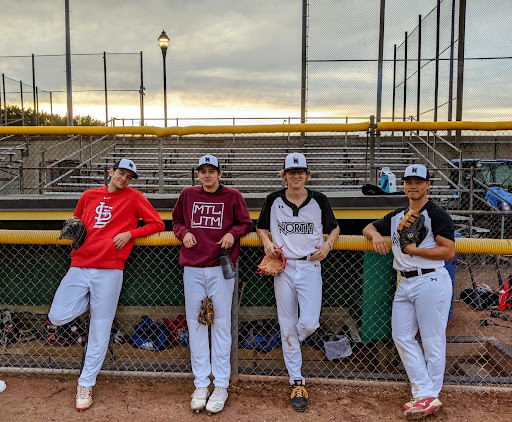
Despite the team not being an official McGill varsity sport this year, the baseball team is still competing in a travel league for The North. Thanks to this opportunity, the team still gets the training and practical know-how that they would in a normal season—experiences that Tennill views as a hallmark of the program.

“Half the appeal of the baseball team is that not only is it an athletic team, but it is also 30 or so close guys of different backgrounds that have been there and done that, meaning they can give you advice,” Tennill said. “It’s almost like an instant friend group.”

If there is someone on campus fiddling with mechanical parts like a mad scientist, do not judge too quickly—there is a decent chance they can throw a hell of a baseball. Additionally, if they have a thigh tattoo in Japanese Kanji that means “trusting the chance,” it is most certainly McGill baseball’s very own Braden Tennill.

Read the latest issue

Read the latest issue