


Latest News

Commentary, Opinion

Student vignettes from a pandemic

Valentina de la Borbolla, Contributor

Talk about the pandemic has been defined by words like “abnormal,” “unprecedented,” and “challenging.” Admittedly, these last months have been all of those things and more, but in the chaos, I have found a sense of normality that I had never-before experienced. 

Being alone with all the time in the world has left me craving both flexibility and something constant to hold on to. For me, that became my morning routine. I did have a routine before the pandemic; I am a pretty anxious person, so I usually need structure to function. However, I found that my pandemic routine was a lot more mindful than any of those prior to COVID-19. My morning rituals became a lot more intuitive, and I started doing things that actually made me feel good and not just things that made me productive. 

Breakfast was no longer just caloric fuel: It became a mindful half-hour where the most important thing was my milk-to-coffee-ratio and bagel-crispness-level. Listening to the New York Times’ The Daily podcast every day stopped being a source of news anxiety; instead, it became a comforting break to hear the same intro-music and anticipate Michael Barbaro’s Here’s what else you need to know today” at the end of each episode. 

But the most important thing about my routine is that I am comfortable changing it. I tend to come up with a routine and stick to it for months on end. However, this is not possible in the pandemic context because now, more than ever, my emotional state is unpredictable. At the beginning of the semester, I was very set on my routine: 7:30 a.m. alarm, have breakfast, shower, make my bed, and start school at 9:00 a.m. Yet, as the months passed and school began to weigh me down, I realized my routine needed to change. This would have been unthinkable a year ago because adapting my routine would have meant being less productive. As I shift my priorities, productivity is slowly losing ground to things like comfort, calm, and enjoyment. So I rejected years of prioritizing academic performance over my health and stopped setting an alarm. I changed up my breakfast; I laid in bed for longer. The Daily stayed, though—that one is non-negotiable. 

Although these changes may not seem life-changing, and not everyone has the privilege to be flexible, I have learned to adapt the expectations I set for myself to prioritize my mental and emotional well-being. The pandemic has shown us that we cannot take our health for granted. To me, that means never putting school over my health ever again. 

Sepideh Afshar, Staff Writer

I have always found comfort in numbers, in having a group of people around me vulnerable enough to share similar feelings. The COVID-19 pandemic has resulted in many rapidly changing emotions ranging from fear to helplessness but, as the reality of Montreal’s red zone set in, I feel that it has settled on loneliness. Feeling alone is hard, but it’s an inevitable fact of life during lockdown. I have found solace in building connections within the McGill community and knowing that we are all going through these feelings together. I am lucky to live with six girls. We all act as support systems for each other, bound by our shared feelings. These are relationships I have held close to me, as online school has changed the way we communicate with our peers.

Between Zoom classes and online events, forming friendships looks completely different now. It is hard to really understand how someone is feeling when it is impossible to speak face-to-face. However, I find comfort in logging into the Facebook Messenger group chats for my classes and seeing that everybody else is also freaking out, collectively accepting that we are all being penalized 10 points a day for handing in our essays late in the middle of a pandemic. 

This online semester has also allowed me to connect with the McGill community in ways I may not have before the pandemic. Together, we have hyper-fixated on the McGill Fight Club incident through memes, and shared disappointment with the choice of the Redbirds as the new name of our Men’s varsity teams. Reactions to these events would not have diffused so far, nor would they have attracted the attention of so many different student groups, had they not taken place online. They have allowed for links between students to flourish where they may not have been able to before.

Beyond relationships between McGill students, the accommodation and compassion shown by professors has allowed me to connect with them more than I may have in a classroom setting, where it is much more intimidating to ask a question. I know that most people are not as lucky as I am, but many of my professors this semester have shown that they want to be as helpful as possible—beyond the regulations McGill sets in place for them. 

There is a general understanding that we are all going through this together, and will continue to do so until the virus is snuffed out. No one is exempt from the impacts of COVID-19. Instead, we’ve all come together within this common experience and tried to support each other. 

Rory Daly, Staff Writer

Calling me a David Bowie superfan would not be an overstatement. I am in the top one per cent of his listeners on Spotify, I can sing a good third of his catalogue by heart, and a vintage 70s concert poster of his hangs on my apartment wall. I can even tell you what songs he sang at that specific concert. Please don’t think I’m crazy—I just happened to be quite sick for much of my childhood, and music provided much-needed relief for the loneliness that chronic illness can induce. And during this pandemic-enforced isolation, music has continued to serve as a powerful coping mechanism, more so than other avenues like fiction or television. 

While I prefer David Bowie, any genre and any artist can provide an experience similar to the one he does, because the greatest value of music is in hearing the struggles and passions of others. Compared to the familiar voices of roommates and family that many have become accustomed to in their quarantine bubbles, listening to an artist you love is like a breath of fresh air. Even instruments work similarly if one focusses on how they are played and the number of individuals that are involved in a piece. To a keen ear, a good song can provide company. 

I also enjoyed reading as a kid, but reading a great deal of fictional literature fosters feelings of isolation instead of working against it. Wishing to be in the presence of the prodigious d’Artagnan or the resourceful Bilbo replaced the longing to be around friends with a want for more fictional companionship. Most TV dramas work the same way. But there is something grounding in music, in hearing someone describe their own struggles and experiences, that cannot be found elsewhere. 

Recently, I have been returning to Bowie’s Blackstar, an album which in many ways is a reflection of his impending death from cancer. It is hard to imagine a man staring his death in the eye and choosing to create something so powerful with it, but he does. Every minute of the album is tinged with his soul, and one might find comfort in hearing something so human. Not only do I empathize, but I feel I know a bit of the man through his work—just as I do Joan Baez or Elvis Costello. I carry their voices with me in times of isolation, and in turn, they provide me with company in a way that a good book or show never could.

Sports

10 things: The most inspirational sports moments of 2020

WNBA supports Warnock

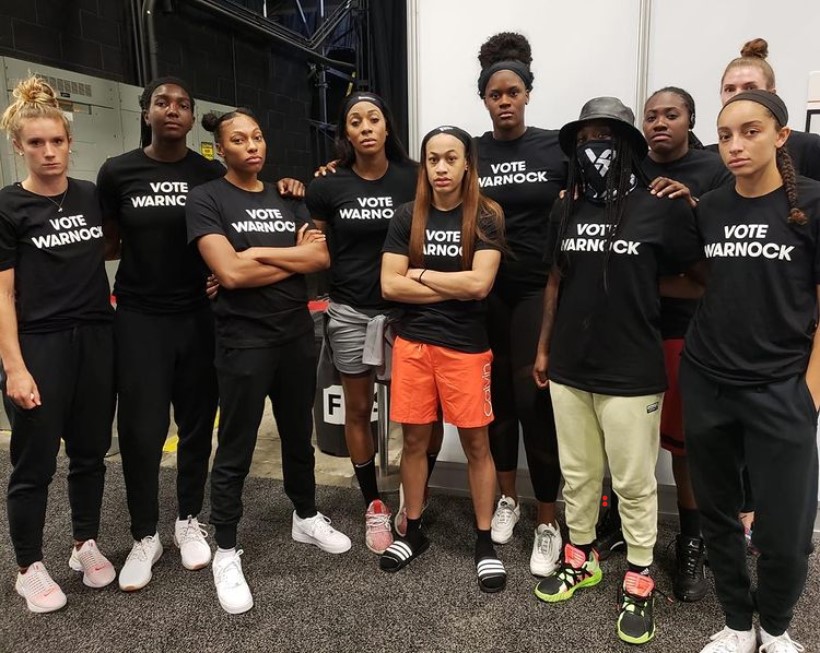
The 2020 U.S. elections have remained heated in Georgia, with Republican Senator Kelly Loeffler facing off against Democrat Raphael Warnock in a runoff in January 2021. Among the groups who helped Warnock advance are WNBA players, including several from the Atlanta Dream, of which Loeffler is part-owner. The players, who participated in some of the most poignant Black Lives Matter demonstrations earlier this year, rejected Loeffler’s claim that sports shouldn’t be political, along with her proposed bill attacking transgender girls in high school sports. Players from all 12 teams in the WNBA wore shirts proclaiming “VOTE WARNOCK” in August—and 32.9 per cent of voters did, propelling him to the runoff against Loeffler, who won only 25.9 per cent of votes.

Laurent Duvernay-Tardif helps in fight against COVID-19

As COVID-19 swept through Quebec in March, Super Bowl Champion and McGill medical school graduate Laurent Duvernay-Tardif immediately acted to help in the fight against the pandemic. Duvernay-Tardif was assigned to a long-term care facility near the South Shore and focussed on helping by any means necessary, despite playing in the most-watched television program in North America just 10 weeks prior. When the NFL decided on plans to return to play for the 2020 season, Duvernay-Tardif announced that he would opt-out of playing, citing his understanding of the pandemic’s severity. Caring for patients as a doctor seemed a more worthwhile risk than playing football.

NBA players strike

 Following the shooting of Jacob Blake in Wisconsin, the Milwaukee Bucks chose to strike during a playoff game against Orlando in protest. The decision prompted a chain reaction throughout the NBA bubble in Orlando, with many other organizations following suit, leading to the cancellation of playoff games for multiple days. This type of protest was unprecedented in modern sports. The last NBA team to go on strike for social justice was the Boston Celtics in 1961, who refused to play after Black players were denied service at a Kentucky restaurant. 

The Chicago Blackhawks hire Kendall Coyne

On Nov. 23, the Chicago Blackhawks hired former Olympic Champion Kendall Coyne Schofield as the first female player development coach in the organization’s history. Coyne Schofield was also the first woman to participate in the NHL All-Stars Skills Competition in 2019, coming in seventh in the fastest skater competition, less than a second behind the winner, Connor McDavid. The first female coach in the 103-year history of the NHL, Dawn Braid, was hired only four years ago in August 2016. The hiring of Coyne Schofield was another step toward equality and representation in the NHL and the sport of hockey in general. Coyne Schofield adds to a growing list of women working for an NHL team, including Canadian Hall-of-Famer Hayley Wickenheiser, who is the assistant director of player development for the Toronto Maple Leafs.

Empty arenas find new use

With voter registration initiatives and early voting reaching unprecedented numbers in the 2020 U.S. presidential election, sports arenas contributed to making voting more accessible: Over 35 NFL, MLB, NHL, NBA, WNBA, and MLS stadiums acted as polling stations for both early and Election Day voting. As other polling locations closed and petitions sought to invalidate early votes, these stations proved to be invaluable for the election. 

Naomi Osaka’s strike

Star tennis player Naomi Osaka announced on Aug. 27 that she would not play in her semifinal match of the Western & Southern Open after the shooting of Jacob Blake in Kenosha, Wisconsin.

“As a black woman I feel as though there are much more important matters at hand that need immediate attention, rather than watching me play tennis. I don’t expect anything drastic to happen with me not playing, but if I can get a conversation started in a majority white sport, I consider that a step in the right direction,” Osaka wrote in a tweet.

Osaka did not play again until her next tournament, the US Open, which she won on Sept. 12 in a 3-set comeback victory against Victoria Azarenka. Osaka brought seven face masks to this tournament, each displaying the name of a Black victim of police brutality.

Megan Rapinoe and Sue Bird’s engagement

After four years of dating, power couple Megan Rapinoe and Sue Bird became engaged. The two met while representing the United States at the 2016 Olympics in Brazil. In 2018, Rapinoe and Bird were the first same-sex couple to be featured in ESPN’s Body Issue. 

Rapinoe and Bird are already considered greats in their respective sports of soccer and basketball. Rapinoe, in 2019 alone, won the Ballon d’Or Féminin, World Cup Golden Boot, World Cup Golden Ball, and World Cup Final Player of the Match. Bird’s career is equally as impressive, totalling three WNBA titles, four Olympic gold medals, two NCAA championships, and the all-time assist record in the WNBA. Rapinoe and Bird’s relationship will continue to break down boundaries for same-sex couples, similar to how they break down the opposing defence in games.

Marcus Rashford’s School Meal Initiative

Marcus Rashford is currently one of the best players in the Premier League, scoring 17 goals for Manchester United in the 2019-20 season. However, this year Rashford made headlines for his work off the field. As a child, Rashford experienced food insecurity and was often dependent on the UK government School Meal Programme, which provides free meals for children in school. When the government decided to pause the programme in the summer holidays during the pandemic, Rashford filed a petition for its continuation, which gathered widespread support and forced the government to reverse its decision. Rashford has also lobbied to expand the eligibility criteria for the programme to include more vulnerable households. For his efforts in mobilizing support for this noble cause, Queen Elizabeth awarded Rashford with the Member of the British Empire award. Rashford’s petition has started a national debate on social welfare programs in the country, especially those relating to children.

NWSL and WNBA maternity benefits

Female athletes have historically faced several barriers if they wanted to have children without giving up their playing careers. Issues of unpaid maternity leave, childcare support, and the social expectations that come with being a mother have all been unfortunate realities in women’s sports. However, 2020 brought promising changes to women’s sports leagues that will hopefully set a precedent for the continued support of athletes with children. In January 2020, the WNBA and the Women’s National Basketball Players Association (WNBPA) reached a new collective bargaining agreement that included fully paid maternity leave and other benefits for mothers in the league. Furthermore, the National Women’s Soccer League (NWSL) hosted their Challenge Cup in a “bubble” in Utah over the summer, making sure to find a way to accommodate players with children and ensuring access to childcare

Katie Sowers is the first female coach in a Super Bowl

Another glass ceiling was broken after San Francisco 49ers offensive assistant coach, Katie Sowers, became not only the first female but also the first openly lesbian coach in Super Bowl history. Sowers is a former professional football player, playing as a part of the Women’s Football Alliance, and led the U.S. to a gold medal in the Women’s World Championships in 2013. Her journey has not been an easy one.

“As I was finishing college, I actually got turned down from a volunteer coaching job (basketball) because I was a lesbian,” Sowers told Outsports in an interview. “I was told ‘because of your lifestyle, we ask that you do not come around the team.’”

Sowers has used this discrimination to motivate her, and she believes that although the hate was tough to deal with, she would not be where she is today without it. 


Science & Technology

McGill Space Institute hosts talk on the new Vera C. Rubin Observatory

On Nov. 17, the McGill Space Institute (MSI) hosted a special public lecture titled “Surveying the Universe,” given by Steven Kahn, the director of the Vera C. Rubin Observatory and a professor of physics at Stanford University. Khan discussed the goals of the Large Synoptic Survey Telescope (LSST) which is located on the same mountain as the Gemini South Telescope in central Chile. 

“The idea is actually very simple,” Kahn said. “We build a telescope that can take large-format digital images very quickly so that the entire southern hemisphere of sky […] can be surveyed with these images in just a few nights.”

This process will be repeated over the course of 10 years, allowing researchers to observe moving objects in the sky, track how they change over time, and construct some of the most detailed astronomical images ever taken. 

“This will yield catalogues of something like 20 billion galaxies and a comparable number of stars,” Kahn said. “It will be the first time in human history that we know of more objects in the universe than there are people on Earth.” 

To capture these catalogues of images, the team of scientists at the Rubin Observatory built the largest-ever digital camera and developed a new optical system with a large enough field of view, the maximum angular size of the object viewed from a given point. 

“The field of view for the Rubin Observatory is 10 square degrees, which is roughly 40 times the size of the full moon in the sky,” Kahn said. “The camera for the Rubin Observatory is 3.2 billion pixels. It’s equivalent to about 1,500 of the highest resolution high-definition televisions.” 

Even the telescope’s mount had to be specially designed to facilitate the rapid movement, known as slewing, necessary to capture images of the whole southern hemisphere in just a few nights. 

“We’re moving this massive telescope every 30 seconds, and conventional telescopes, as you slew them around, take a while to settle and you can’t take a picture until they’ve settled,” Kahn said. “We set a limit that we needed to be able to slew and settle within five seconds, and that had never been done before with telescopes of this size.”

Ensuring that the vast amounts of data that the Rubin Observatory will collect can be easily shared is also a key consideration in the telescope’s construction. Within 60 seconds of the camera’s shutter closing, all the changes that occurred since the image was taken will have been detected and the information saved on a central computer system. A system of optical fibre networks will connect the telescope in Chile to processing facilities in the United States and France. A supercomputer in the Rubin archive will then process the raw data to create usable image files, time-domain alerts (recorded changes of astronomical objects over time), and catalogues. 

Kahn explained a number of ideas that prompted the building of the observatory. 

“[The] four main science themes that have motivated the design of this facility [are] probing dark energy and dark matter, […] taking an inventory of moving objects in the solar system, exploring the transient optical sky, and mapping the outer regions of the Milky Way,” Kahn said.

The onset of the COVID-19 pandemic in March of 2020 delayed the construction of the observatory and its equipment as Italian and Spanish construction teams returned home and laboratories in California were temporarily shut down. Work on the camera resumed in California in May and the team is hopeful that construction in Chile can resume in January 2021. 

“It’s been difficult to maintain morale during this period, but our team is very committed, fortunately,” Kahn said. 

Under the new timeline, the observatory is set to begin operations in 2023. The duration of the project is expected to be 10 years in total.

This talk can viewed on the MSI YouTube channel.

Arts & Entertainment

The McGill Tribune Presents: THE BEST AND WORST OF 2020

TV SHOWS

1. The Queen’s Gambit

Netflix’s smash-hit scripted limited series follows Beth Harmon, an enigmatic chess prodigy. The twist? Harmon has had a tranquilizer addiction since she was child, a plot point that carries both her chess career and the binge-worthy nature of the show itself. 

(variety.com)

2. Normal People

Based on Sally Rooney’s bestselling novel of the same name, the limited series revolves around the complex romantic relationship between university students Marianne and Connell. Teeming with captivating chemistry, tension, and a bittersweet, coming-of-age tone, the show sharply sheds light on the messy and emotional nature of relationships and social identity.

(newyorker.com)

3. Betty

Betty follows a group of Gen Z gals infiltrating a male-dominated skateboarding scene in New York City. Based on the 2018 film Skate Kitchen, Betty captures the spirit of friendship, skating, and style. Betty is a joyful and vibrant series with in-depth character development that allows each cast member to shine. 

(variety.com)

4. The Crown

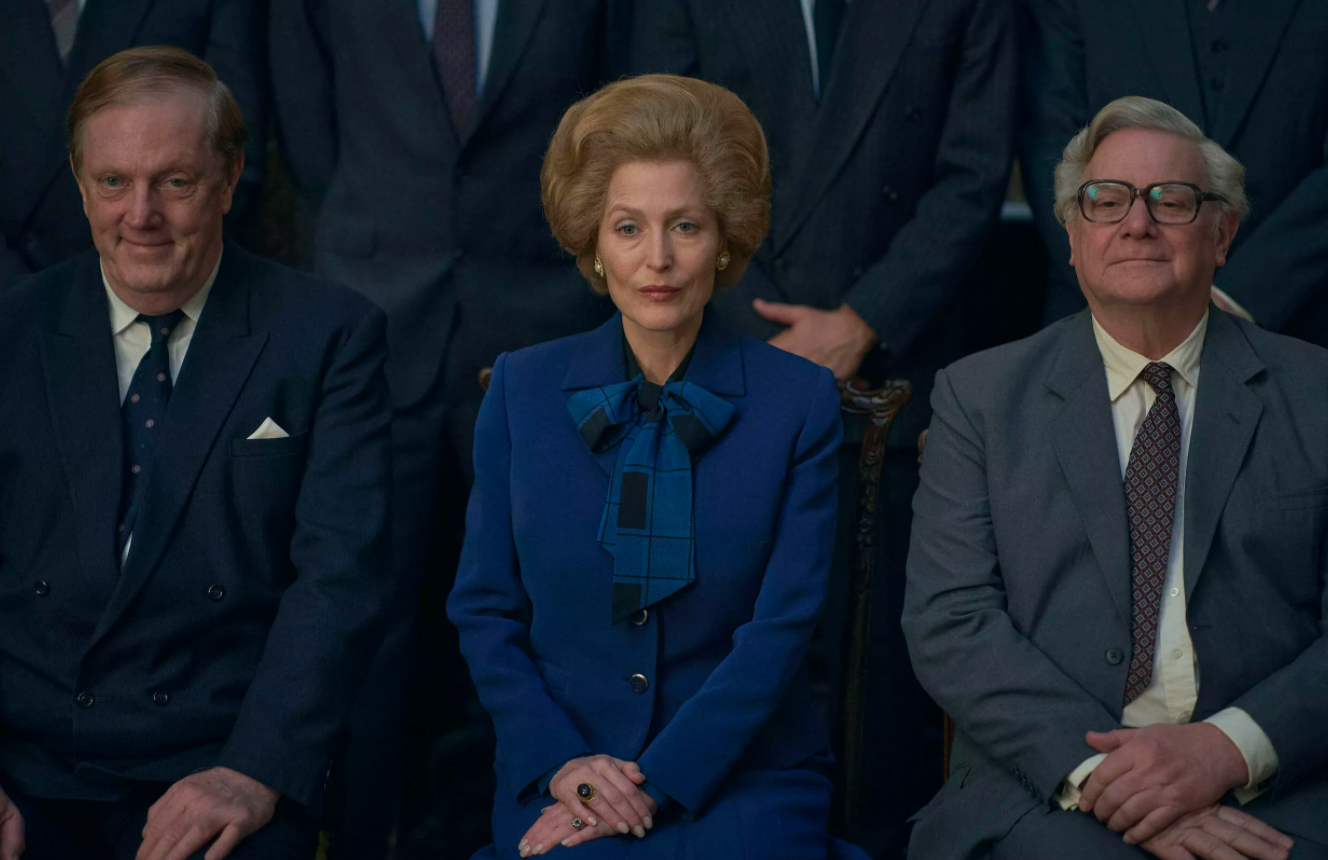
Following the most entertainingly controversial royal family from 1977-1990, Season 4 of The Crown adds two dynamic characters—Prime Minister Margaret Thatcher and Diana Spencer—to the mix.

(cnet.com)

5. The Mandalorian

The second season of The Mandalorian continues to follow the adventures of The Mandalorian and his adorable, meme-able friend, Baby Yoda, as the two adventure through the Star Wars universe.

(variety.com)

Worst TV Show: Emily in Paris 

Emily, an overeager girlboss-to-be from Chicago, moves to a clichéd version of Paris to assist a PR firm with her American perspective. The show desperately tries to be campy, but the result is just cringeworthy.

(variety.com)

SONGS

1. “WAP” by Cardi B, feat. Megan Thee Stallion

Cardi B and Megan Thee Stallion emphasize their erotic desirability in a love song that favours lustful sexuality over etiquette or gentility.

2. “XS” by Rina Sawayama

Rina Sawayama brings rich vocals and a mix of nu-metal and Y2K pop production to this stunning bop—and its message against consumerism and capitalism in the face of climate change is the cherry on top.

3. “hand crushed by a mallet” (Remix) by 100 gecs, feat. Fall Out Boy, Craig Owens, Nicole Dollanganger

100 gec’s absurd and beautifully chaotic “hand crushed” remix is an emo-pop-punk revolution for our times.

4. “Moon Song” by Phoebe Bridgers

Bridgers’s soft yet powerful vocals combined with lulling guitar chords produce a dreamlike quality to this hit from her latest album, Punisher. Moon Song” is a must-add for all playlists pertaining to “chill,” “falling asleep,” “getting over them,” and “songs about the moon”—if that’s your thing.

5. “Watermelon Sugar” by Harry Styles

In this unbelievably catchy, Grammy-nominated song, Harry Styles sings about lustful, sticky summer desire represented through the use of multiple fruit metaphors. Perhaps fruit wasn’t the only thing Styles was checking out at the farmer’s market.

Worst Song: “Yummy” by Justin Bieber

Pairing his lifeless vocals with the lyrical genius of a fifth grader, Bieber gives us a mind-numbing track about that “yummy yum”… whatever that means.

ALBUMS

1. Fetch the Bolt Cutters by Fiona Apple

Sparsely produced with GarageBand, Fiona Apple’s latest album is a percussive and dissonant look at the confinement of our times.

2. folklore by Taylor Swift

Diving into indie-folk, Taylor Swift astounds with her tour-de-force album, folklore, which features a patchwork of delicate, vulnerable songs coinciding with the rise of Gen Z “cottagecore” subculture on social media.

3. Punisher by Phoebe Bridgers

Phoebe Bridgers’ sophomore album blends somber lyricism and haunting instrumentals, making it the perfect album to listen to in a melancholic state on a rainy day. Punisher is Bridgers’ personal diary made public, reflecting feelings of inner turmoil with candid vulnerability.

4. Set My Heart on Fire Immediately by Perfume Genius

Ranging from upbeat pop songs to slow, contemplative melodies to explore themes of memory, anxiety, and sexuality, Perfume Genius’ newest album is a unique and multifaceted take on the body and its experiences.

5. SAWAYAMA by Rina Sawayama

Rina Sawayama’s debut LP recreates early 2000’s pop music with stellar production, eclectic vocal mixing and occasional, well-placed irony. 

Worst Album: Changes by Justin Bieber

2020 had a slew of R&B-inspired pop albums, but none have been as forgettable as Justin Bieber’s Changes. Intended to be his comeback album, it instead gave us Bieber’s terrible moustache and some clumsy lyrics thanking Hailey Bieber’s parents for “making” her.

MOVIES

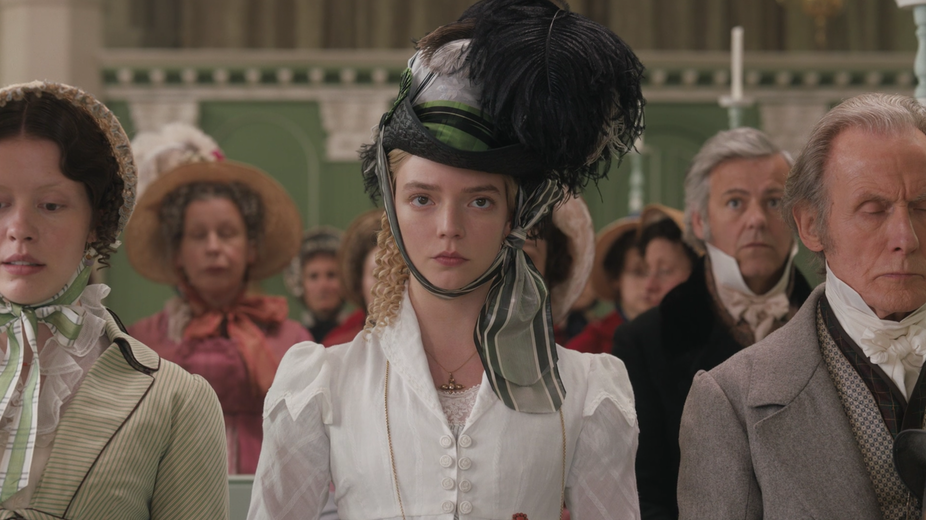
1. Emma.

Another decade, another brilliant adaptation of one of Jane Austen’s most famous novels. With stunningly detailed sets and costumes, Emma. successfully flaunts all the novel’s famous, silly sentiments of love, making for a delightful and lighthearted film.

(theconversation.com)

2. Palm Springs

Two strangers (Andy Samberg and Cristin Milioti) meet at a wedding in Palm Springs and get stuck in a time loop—think Forgetting Sarah Marshall meets Groundhog Day. It’s the perfect blend of rom-com and sci-fi.

(hellomagazine.com)

3. Da 5 Bloods

Spike Lee’s latest follows a group of aging Black Vietnam War veterans who return to Vietnam in search of their fallen squad leader and the treasure they buried while serving. Da 5 Bloods is a touching sendoff to the late Chadwick Boseman, who gives a stellar performance. 

(newyorker.com)

4. I’m Thinking of Ending Things

Back with his imaginative cinematography and meta-surrealism, director Charlie Kaufman confused and dazzled viewers with his new time-bending thriller, I’m Thinking Of Ending Things. With a more existentially nihilistic take on the nature of relationships and time than his previous films, Kaufman once again leaves a stately mark on the cinematic landscape of the year.

(indiewire.com)

5. The Invisible Man

Elizabeth Moss attempts to escape her crazed ex-boyfriend—who is invisible—in the 2020 adaptation of the 1897 H.G. Wells novel. The film retains its classic sci-fi roots while revamping its horror for a modern take.

(theverge.com)

Worst Movie: Hillbilly Elegy

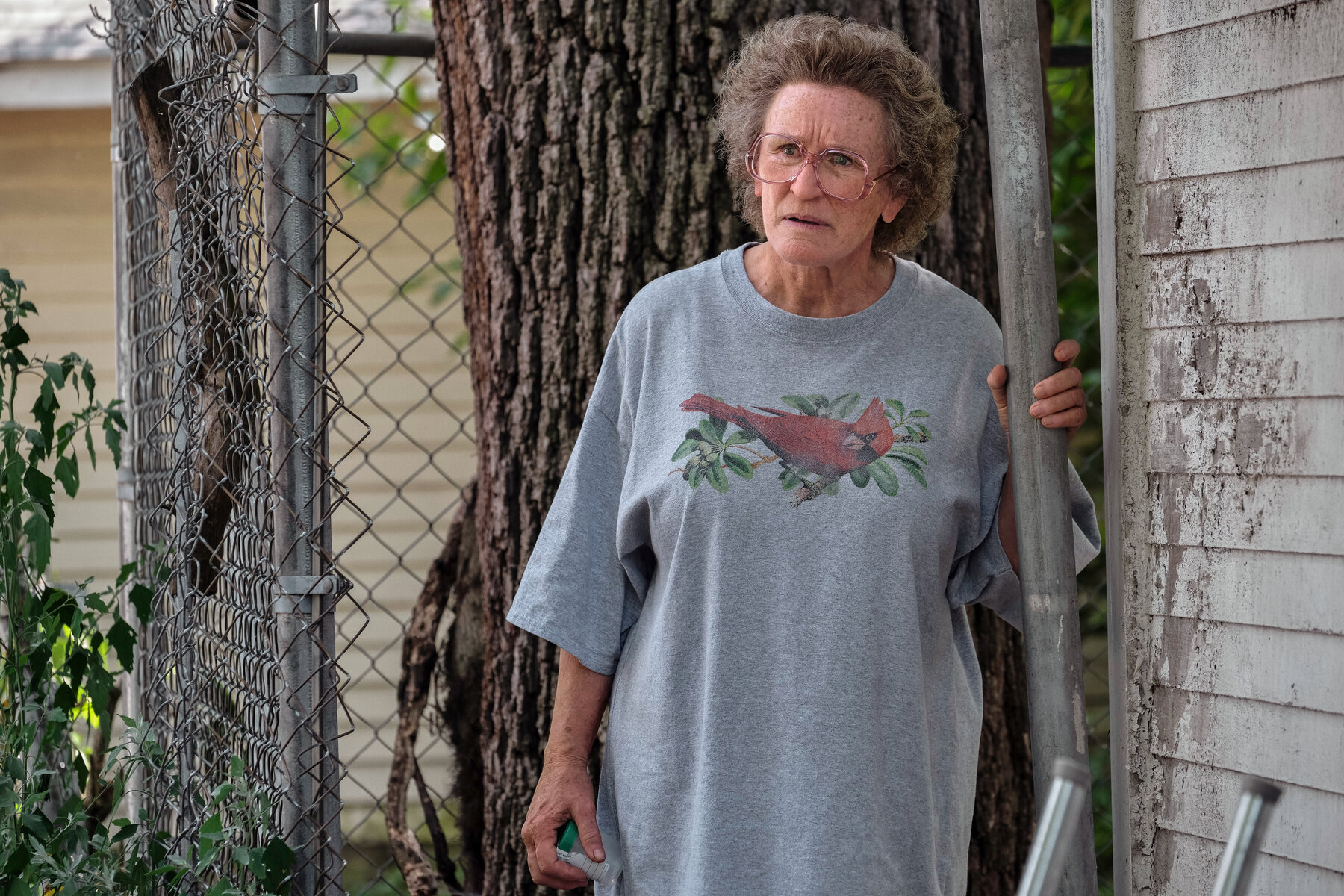
Directed by Ron Howard, Hollywood’s worst former child actor, Hillbilly Elegy features truly egregious accent and wigwork, on top of being patronizing poverty porn. It is offensive to any one with a moral center or good taste.

(nytimes.com)
Arts & Entertainment, Theatre

COVEN brings the witching hour to Twitch

In March of 2020, the COVID-19 pandemic locked down the world. As a result, eight months later on Nov. 28, I found myself standing alone in my room and being sworn into the COVEN by two drag queens on Twitch.

“We are a coven. We are here to support each other, and you’re part of the coven with us. Now, repeat: I solemnly swear to use my power to fuck with the patriarchy,” hosts Selma Gahd and Uma Gahd said. 

This delightful induction introduced the intimate audience of approximately 60 Twitch users to the second anniversary of the COVEN Drag Show, an evening of drag performances hosted by the ladies of the House of GahdUma Gahd and Selma Gahd, the show’s producer, who had a few words of warning for the audience. 

“This show can be a little intense,” Selma said. “This show is meant to freak you out!”

Selma Gahd went on to describe the potentially triggering imagery that would appear in the evening’s performances, including, but not limited to, blood, gore, flashing lights, and clowns. Yet, despite the show’s creepy and supposedly scary premise, the two Ms. Gahds maintained a morbidly humourous tone throughout.

“Assume someone might get bloodied up and murdered by the end of the night, and it might even be part of the show,” Uma joked. 

The show was structured around pre-recorded, home-made videos of Montreal’s biggest drag names lip syncing to various songs, with the common denominator appearing to be, just how creepy of a music video can I make for this show? Opener and chat moderator Sierra Myst performed a visually jarring rendition of Röyksopp’s “Running to the Sea,” writhing on the floor, the combination of her KISS-esque makeup and an edited doubling of her body creating a spooky, psychedelic effect. Myst set the mood for the show, which escalated with every performance: Anaconda Lasabrosa lip-synced to Evanescence’s “Bring Me To Life,” waking up in a bathtub as a rotting zombie. Demone Lastrange donned a Beetlejuice-green wig as she danced in a kitchen with a knife and pretended to kill someone on what looked like the world’s most violent cooking show. 

Gore and lip-syncing aside, the diversity of COVEN’s performances helped maintain a momentum that ensured minimal boredom amongst the audience. Matante Alex’s unique video editing paid homage to the 8-bit Mario format of the 1980s, depicting a miniature Alex dodging fireballs in Bowser’s castle. Drag King Charli Deville, in turn, presented a montage of himself dressed in different costumes, ranging from a freshly-shaven, winged-eye-liner clad man to a creepy, murderous clown. Without fail, every performer throughout the night brought a fiery dedication to appear as freaky as possible, whether it was through costume, choreography, editing, or bloody props.

Despite the daunting online format, COVEN was a success, spotlighting Montreal’s spookiest drag art. Prior to the pandemic, COVEN took place on Halloween at the Diving Bell Social Club. Yet, like many shows, COVEN had to migrate to the COVID-friendly medium of online live streaming. Twitch, a popular streaming platform, proved to be a phenomenal substitute venue, replicating a pre-COVID drag show with banter between the two hosts and audience crowd work via the chat. Even the act of tipping performers translated into a convenient tip button, a bot that would announce the latest tip in a British female accent—dubbed by the Gahds as “Elizabeth.”

Undeterred by the change of performance venue, producer Selma Gahd adapted to public health restrictions, creating a memorable and delightfully spooky evening. Performing Queen’s “The Show Must Go On,” Gahd ensured that every performer and every virtual audience member felt the resilience and creativity of Montreal’s queer artists. COVEN was not just an entertaining evening of drag; it was a celebration of adapting to calamity and a welcome invitation to the COVEN for anyone who feels like a fellow weirdo.

Arts & Entertainment, Books

The Booker Prize turns a new page

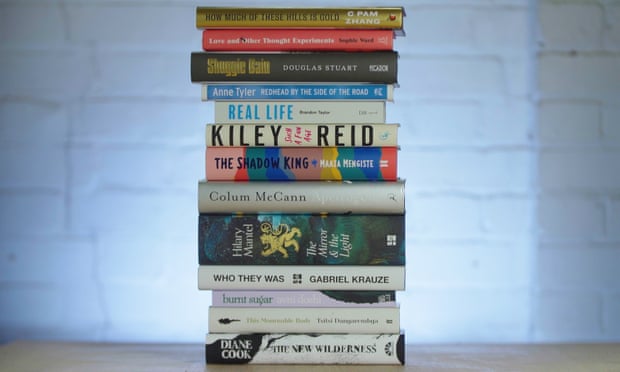
The debate over acceptance into the English literary canon grows livelier with each new publication. For some, the canon is a tradition—a members-only club seeking to promote the same trite stories over those centring women, people of colour, and 2SLGBTQIA+ communities, among other marginalized groups. But the increasing prominence of “outsider” writers on the literary stage throws the dominance of tradition into tension. After a three-month process of longlisting, shortlisting, and finalizing a winner, on Nov. 19, the Booker Prize announced its winner, Shuggie Bain, a debut novel by Scottish writer, Douglas Stuart. Shuggie Bain’s win in a group of striking nominees for one of the literary world’s most acclaimed prizes is part of the new beginnings of representation and recognition by literary establishments.

Shuggie Bain is about family, violence, and sexuality in Thatcher-era Glasgow. Stuart is the first Scot in 26 years and the first gay man since Marlon JamesA Brief History of Seven Killings in 2015 to win the prestigious £50,000 prize. Likewise, the other five shortlisted authors were of diverse backgrounds. For the second consecutive year, no white, cisgendered, heterosexual men were on the Booker shortlist. Three authors, Tsitsi Dangarembga, Maaza Mengiste, and Brandon Taylor, are Black. One author, Avni Doshi, is of Indian descent. Both Taylor and Stuart are gay, and Dangarembga, Mengiste, Doshi, and Diane Cook identify as women. To see traditionally marginalized individuals recognized at an international scale shows a shifting approach in highlighting stories—the “modern classic” is growing toward a more inclusive mainstream definition. After years of grassroots work by smaller independent publishers like Canongate Books and Oneworld Publications and other organizations’ awards like the NAACP and the Lamda Literary Foundation, these two years of diverse nominees are a triumphant result of the fight to prove the worth of “outsider” authors in an often unwelcoming, exclusionary environment.

In an industry whose conventional wisdom for female writers, writers of colour, and queer writers is to toe the line, not go too far, and keep expectations low, these authors have written spectacular, innovative novels. Their inclusion demonstrates that the limits and definitions of literary merit are malleable. Literary award nominees were and still are largely straight, white authors. As authors like Toni Morrison, Salman Rushdie, and Alice Walker blazed trails for people of colour in publishing, prizes across the board are taking authors historically excluded from the Western canon more seriously. Colson Whitehead winning the Pulitzer Prize twice for consecutive novels, the last five winners of America’s National Book Award being people of colour, and 2SLGBTQIA+ writers like Stuart, James, and Taylor flourishing are all testaments to the efforts of past individuals, both authors and publishers, who were ahead of their times.

The question of whether representation by committee matters is a valid one, as the Booker Prize may well shortlist six white, male authors next year. In fact, it seems like only yesterday when the Booker Prize’s inexplicable choice to break their own rules in their judging process led to a controversial tie between the first Black female winner, Bernardine Evaristo’s brilliant, experimental novel Girl, Woman, Other and Margaret Atwood’s The Testaments. Further, prizes can act as an elite process of virtue signalling that do not address systemic barriers in the field. Representation in higher arenas of literature can shatter the presumed exclusivity of literary canons and give platforms to shortlisted authors. Bringing these stories to the forefront of today’s literary scene must, however, lead to action. The blindly held argument that 2SLGBTQIA+ or Black narratives are not palatable to mainstream audiences does not follow. The Booker’s shortlist sends a message to academic institutions, to publishing houses, to magazines, and to production companies that upholding decorum and singularity is a thing of the past.

Arts & Entertainment, Film and TV

‘Happiest Season’ is a serious but sweet Christmas romance

Although Netflix and the Hallmark Channel may have separate monopolies on the GBCM (Good/Bad Christmas Movie), it goes without saying that camp fests like the Christmas Prince trilogy and the Princess Switch movies are not every viewer’s cup of tea. However, Hulu’s newest release, Happiest Season, is more in line with the tastes of movie viewers who carve out time every December for a Love, Actually rewatch. 

Happiest Season follows Abby (Kristen Stewart) who plans to propose to her girlfriend Harper (Mackenzie Davis, B.A. ‘10) while spending the holidays with Harper’s family. However, shortly before they arrive, Harper reveals that she has not come out to her family and as such both women have to pretend to just be good friends for the entire trip. 

This leads to a series of wacky, classic rom-com misadventures as Abby tries to get to know and impress Harper’s parents, all while grappling with the difficulty of being forced to hide her relationship and watching the love of her life pretend to be a completely different person. The emotional gravity of the situation is juxtaposed with the humour and lightheartedness of a holiday comedy, which director Clea DuVall balances well.

Stewart is the centre of the movie: Her charisma and comedic timing are a big part of what makes it so enjoyable. Stewart captures the confident conviction of Abby’s love for Harper just as well as Abby’s introspective, awkward side that emerges in hiding her sexuality and relationship. The supporting cast shines throughout the film, with particular standouts Dan Levy as John, Abby’s gay best friend (GBF)—although the trope is somewhat subverted by the fact that Abby herself is, by definition, his gay best friend as well—and Harper’s two eccentric and intense older sisters, Mary Holland as Jane and Alison Brie as Sloan, respectively. 

The biggest highlight from the supporting cast, however, is Riley (Aubrey Plaza), Harper’s ex-girlfriend from high school. As the only other lesbian in the town, the two form a friendship after continuing to run in to each other during the vacation. The chemistry between the actors is phenomenal and, by the end of the film, it’s clear that Abby seems better suited to a relationship with Riley, rather than Harper. 

Davis’ performance makes it easy to empathize with her character, but while Harper’s predicament is an understandable reality for many lesbians, the damage that her actions inflict on Abby make it hard to root for the two to end up together. Although the film doesn’t explicitly villainize Harper, it does make the viewer more sympathetic towards Abby. Abby is often played as the straight man to some of the more exaggerated characters in the film, making her character seem more grounded and relatable, and thus easier to root for.

Happiest Season arrives on a streaming service, making it feel adjacent to a made-for-TV Hallmark or Lifetime film, as well as ideal for the current pandemic. Perhaps more imporantly, it is also the first major holiday movie to feature a lesbian couple. Duvall, who also co-wrote the film, modeled Abby after herself and her own story of coming out to her mother on Christmas. 

While at times the film’s attempts to recast the typically heteronormative genre of holiday romance may come off as disjointed, Happiest Season ultimately strikes a balance between the serious topics of sexuality and the warmth of Christmas magic. Despite the uncertainty and complications that have changed the way that holidays are celebrated this winter, movies like Happiest Season help to bring back a sense of normalcy to this holiday season. 

Most film consumers would agree that Christmas movies aren’t aiming to reach the highest standard of art. Regardless, they do reach an emotional pathos with viewers to provide hope and light for the new year—something that most, if not all, of us undoubtedly need right now. Happiest Season, despite being the first queer film of its kind, isn’t pretending to be anything else—it reminds us what we need in a time like this: Love, leisure, and lesbians.

Editorial, Opinion

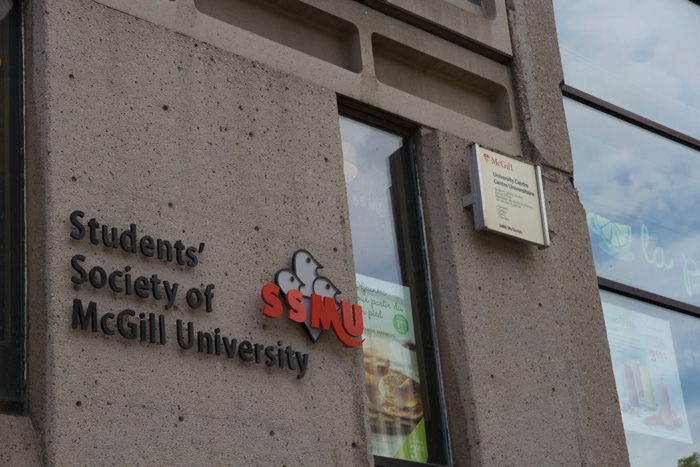
Students’ Society of McGill University Executive Midterm Reviews 2020-2021

Jemark Earle, President 

Jemark Earle campaigned for the position of SSMU president with two major goals in mind: Pinpointing and improving SSMU’s logistical weaknesses and carving out space for under-represented voices in high-level, decision-making arenas at McGill. Over Summer 2020 and throughout the Fall 2020 semester, Earle has proven to be an engaged adherent to both of these objectives. At SSMU Legislative Council on Nov. 19, Earle presented his 40-page proposal for a five-year growth plan for SSMU. The detailed document outlines a series of amendments pertaining to SSMU’s handling of its staff, operations, student clubs, organizational finance, and advocacy at McGill. Notable initiatives include the doubling of SSMU’s full-time staff, establishing a streamlined online portal for all clubs at McGill, and a Francization Plan, which would guarantee that all SSMU documents be made available in English and French. Earle has also been a vocal supporter of student advocacy initiatives, such as the “Take James McGill Down” campaign. Under his leadership, SSMU passed a motion on Sept. 24 to create a Black Affairs Committee within SSMU’s Legislative Council.

Ayo Ogunremi, VP External

Despite being absent from his position for September and October 2020 due to an illness, Ayo Ogunremi was highly engaged over the summer and has worked on important initiatives. In July, he campaigned against Bill 21 and changes to the Programme de l’expérience québécoise (PEQ). He also coordinated activism against systemic racism at McGill, helping to establish the Black Affairs Committee and helping to lead the “Take James McGill Down” campaign. Moreover, he forged ties of solidarity between SSMU and other student unions to foster continued advocacy. Indeed, when Ogunremi returned from his illness, he helped organize an inter-association of CEGEP and university student unions to facilitate discussion, collaboration, and joint action between student societies. At this event, Ogunremi drafted a proposition on solidarity with international students. 

Maheen Akter, VP Student Life 

Although many clubs are no longer active due to COVID-19, Maheen Akter has fulfilled several of her campaign promises this semester, including facilitating a successful virtual activities night and helping to implement the SSMU Clubs Portal to streamline the creation and organization of clubs. Akter was successful in her advocacy for raising the SSMU daycare fee from $2.70 to $3.00 and has also organized the return of clubs and services to the renovated University Center. While Akter has overseen several initiatives that support student mental health, such as the keep.meSAFE program and the October mental health week, she has not yet significantly increased the Wellness Hub’s accessibility for students, as was indicated in her platform, besides creating a survey about student mental health during virtual learning.

Gifford Marpole, VP Finance 

Gifford Marpole has used the Fall 2020 semester to implement various initiatives. With effectively all campus activity now remote, Marpole and his team have put accessibility, communication, and accountability at the forefront of his work. This semester, Marpole approved credit cards for all SSMU services and oversaw all banking procedures’ transition to remote processes. Perhaps Marpole’s greatest achievement so far is his Investigation into SSMU’s Student Fee Policies (ISSFeeP), which is looking into the current ambiguity of fee levies. Working with the Finance Commissioner and Committee, Marpole plans to establish a process that thoroughly assesses students’ fees for clubs and services and ensures that all funds are transparently and fully re-invested in them. Marpole hopes that these new implementations will be fully integrated and become standard procedure as classes return to in-person, on-campus learning.

Brooklyn Frizzle, VP University Affairs 

Frizzle has been hard at work since their term began, taking on numerous advocacy initiatives. One key area of their work has been library improvement, including working to expand McGill’s collection of free-access course materials and increasing the representation of marginalized authors, and the Open Educational Resources project. On Nov. 22, SSMU announced that coursepacks would be made available free of charge through the library rather than sold by Le James McGill Bookstore starting in Winter 2021an initiative in which Frizzle played a key role. Beyond the library, they have been revising several policy documents, including SSMU’s Human Resources Policy. With regard to employment equity, Frizzle has also been advocating for SSMU councillors to be remunerated. They also established the Board Ad-hoc Committee on Naming (BACoN), tasked with renaming the University Centre and 3501 Peel, another SSMU building. Beyond SSMU initiatives, Frizzle has been vocal with the McGill Senate to increase student representation within the Senate, address academic racism, and reform the University Student Assessment Policy. 

Science & Technology

Building pathways toward a greener future

Nov. 17 marked the end of the “Food for Thought” lecture series’ 21st season. Hosted by the Faculty of Agriculture and Environmental Sciences, this year’s theme was centred on sustainable use and conservation of resources that are otherwise taken for granted

Michael Jemtrud, an associate professor at McGill’s School of Architecture and director of the Facility for Architectural Research in Media Mediation, delivered the final talk titled “Building Environments: Designing & Constructing Deep Decarbonization Pathways,” in which he focussed on the three initiatives he is a part of and their efforts to mitigate the environmental impacts of building construction. 

A holistic approach to building and urbanization is at the centre of Jemtrud’s research, particularly the formulation of “deep decarbonization” pathways for architects, engineers, and construction companies, as well as Quebec’s energy and resource sectors.

“One of the things that has collectively frustrated a lot of us within the [field] is that a lot of upstream [and] downstream impacts within our discipline are not accounted for in our methods and the way in which we design things,” Jemtrud said. 

Upstream production deals with raw material inputs needed for manufacturing, while downstream production refers to the process of transforming those raw materials into their final products. 

Decarbonized architecture and building (DeCARB) is one of Jemtrud’s initiatives that is taking an interdisciplinary approach to addressing the lack of environmentally sustainable materials in the construction industry. DeCARB methodologies look at all of the components of the built environment and how they interact with the geosphere and biosphere

“We’re very concerned about how a lot of these issues are routinely externalized in the research and design of buildings and urbanization,” Jemtrud said. “These enabling externalizations are directly responsible for a lot of environmental and social degradations around the world.”

DeCARB focusses on a metric called global warming potential (GWP), which compares the relative impact of different greenhouse gases on the environment. There is considerable emphasis on revealing the false sense of environmental sustainability touted by greenwashed technologies. For example, sulphur hexafluoride has a GWP that is 22,800 times greater than that of carbon dioxide, the most common greenhouse gas emission. Still, sulphur hexafluoride is frequently used in electrical insulators due to its low conductive potential. Jemtrud explained that although many people think of electricity as a green alternative to fossil fuels, many electric products and the materials from which they are made are responsible for high levels of greenhouse gas emissions. 

“The more we ‘electrify,’ we might be saving carbon equivalents on certain levels, but this one [sulphur hexafluoride] is really exacerbating another level of that,” Jemtrud said.

The Quebec Building Energy Retrofit program (Q:BER) is another one of Jemtrud’s focal initiatives. The program aims to refurbish existing buildings across Quebec in order to reduce their carbon footprint

“Basically, a deep energy retrofit is wrapping the existing building in a new skin, then upgrading its mechanical and its active systems,” Jemtrud explained. “For me, one of the main non-energy benefits is the increase in healthier indoor environments and the well-being of its occupants.”

Indeed, this initiative has many potential benefits in helping to solve the current housing crisis in Montreal. Working with the Société d’habitation du Québec, Q:BER’s efforts to retrofit buildings are especially important in maintaining the structural integrity of existing affordable housing units, as well as an important consideration in the process of building new ones. 

Finally, Jemtrud spoke about the Building Architecture Research Node (BARN), a new program that would release funding for the construction of a new building on Macdonald campus where students and researchers can test DeCARB technologies. 

“Basically, [it’s] a big shop where we can prototype and construct things at full scale,” Jemtrud said. 

If approved, the construction of the building would itself become a part of Jemtrud’s research program, allowing Jemtrud and colleagues to test the viability and construction of many of the sustainability concepts presented in his work.

News, World

Rest in prose: How COVID-19 is affecting the obituary industry

She lived through the Spanish flu. He portrayed a suave MI6 agent on the big screen. She invented the windshield wiper. He remained a bon vivant into his ninth decade. She came to be known as “the people’s princess.” These are some of the subjects of the newspaper’s obituary pages.

Since the pandemic began, obituary writers have continued to do what they have always done: Provide captivating accounts of lost lives. To this end, COVID-19 has not upended the art of obituary writing; obituarists are less concerned with the granularity of human suffering and the cause of a person’s death, and more with artfully capturing the essence of a life.

However, COVID-19 has disrupted the obituary industry in other ways. As physical distancing restrictions continue to bar traditional mourning rituals, such as funerals and memorials, obituaries and death notices have emerged as communal spaces for mourners and the curious alike to navigate grief. In a public health crisis of such a magnitude, obituaries give readers the opportunity for a moment of humanity, exempt from abstract statistical projections and enable them to connect to the vibrant stories of strangers, with all their foibles and graces.

Faced with a plethora of life stories to report, obituary writers have had to implement their own form of triage. Danielle Adams, editor of obituaries at The Globe and Mail, described a new normal in the assignment of obituary coverage. 

“COVID-19 has had an enormous effect on obituary writers and editors because of the sharp rise in the sheer number of notable people dying [….] The wave of deaths last spring/summer was absolutely overwhelming,” Adams wrote. “There were too many stories to tell [….] I think the stress of this situation has affected me quite a bit—as it is affecting everyone.” 

There’s a fundamental difference between obituaries and daily updated death notices. Whereas obituaries generally feature the lives of public figures and individuals otherwise deemed notable, it is typically left to families and funeral homes to write death notices. The first wave of the pandemic marked a sharp increase in the number of death notices published in Canadian newspapers such as The Montreal Gazette and The Globe and Mail.For some it is in these swelling pages—online and in print—that the pandemic’s impact feels the most acute. 

By remembering some of the lives lost to COVID-19, death notices and obituaries have assumed an increased resonance—by putting names and faces to the toll of the pandemic obituaries can blur the line between statistic and story.

Linnea Crowther, a senior writer for Legacy.com, a global leader in online memorials, has observed a sharp increase in obituaries through her ongoing project that tallies the number of U.S. obituaries in 2020 as compared to 2019.

“Watching the outbreaks travel around the U.S. through obituary publications has been sobering,” Crowther said. “In New York [C]ity, in April, there were 85 per cent more obituaries in April 2020 than in April 2019.” 

The phenomenon is somewhat reminiscent of an earlier tragedy, the September 11 attacks, when Crowther was part of a team memorializing lives lost in the attack on the twin towers. 

“[9/11] was a gruelling time for anyone in memorialization,” Crowther said. “In many ways, COVID-19 is similar for some people, especially in related businesses like funeral homes.”

Nevertheless, amid the pandemic, the fundamental mission of obituaries has survived unchanged, according to Crowther.

“I’m still committed to telling life stories,” Crowther said. “Regardless of what that cause of death is, I’m still writing that story.” 

Susan MacKay, a freelance obituary writer for The Globe and Mail, voiced a similar sentiment, one that prioritizes the life of the subject above the circumstance of death.

“The focus is very much on […] what made [the person] extraordinary,” MacKay wrote.

The art of obituary writing entails a delicate exploration of someone’s life, a teasing out and careful mining of the hidden gems of their experiences, which are then distilled into a few hundreds, or even thousands, of words. 

“I tell people that I want the reader to feel as if they knew the person,” McKay wrote. “There’s an obituarist’s joke that the editor asks the writer for a shorter obit to which the writer says ‘But I don’t have time to make it shorter.’

Although the genre dates back to ancient Rome, where obituary notices were published in papyrus newspapers called Acta Diurna, obituaries rose to prominence in the mid-18th century. McGill history Professor Brian Cowan charted the rise of obituaries, which surfaced in 18th century British periodicals, tying their emergence to biographical writing. 

“It’s in Gentleman’s Magazine in the 18th century where you begin to see regular death notices,” Cowan said. “That fits in with biography writing more generally, which has a long history. The obituary is a news item, but it’s also a mini-biography; almost a perfect encapsulation of those two genres coming together.”

Professor Cowan also tied the development of obituary writing to the expansion of celebrity culture.

“It fits with fame, too,” Cowan said. “There is this idea of who is worthy of an obituary—and who is not.”

The politics of whose death merits coverage and whose does not remains a fundamental challenge for obituary writing. Nick Serpell, the former editor of obituaries at the BBC, wrote the obituaries of hundreds of prominent figures, from Margaret Thatcher to David Bowie, during his 10-year term as editor. In an interview with The McGill Tribune, Serpell underscored the phenomenon of concurrent celebrity deaths, where famous individuals die in close proximity to one another, often with the death of one figure overshadowing the other. The death of Princess Diana, for example, by far eclipsed the coverage for Mother Teresa, who died less than a week later.

“There was no way Mother Teresa was going to get on a [U.K. network], because Princess Diana, who died [before Mother Teresa] was just massive,” Serpell said. “If you want to know my rules about getting good coverage when you die: Don’t die when someone more famous than you dies, and try to die on the weekend, because news is pretty sparse at the weekend. They don’t always follow those rules, unfortunately.”

This process of ranking deaths by newsworthiness continues to weigh heavily on the minds of obituarists, who must choose who gets featured in the obituary pages and who gets sidelined. This is especially true for local newspapers, which have emerged to provide a sanctuary for the coverage of lost lives during the pandemic, notable and obscure alike. Maureen O’Donnell, an obituary writer at the Chicago Sun Times, who has covered a wide range of notable lives since the pandemic, from Chicago TV news anchor Joel Daly to Italian deli matriarch Emilia Pontarelli discussed the increased demand for obituaries has had on her writing. 

“Obituary writers are getting a lot more requests to write obituaries due to the pandemic,” O’Donnell said.“You can’t write about everyone who died, but, to many, that one obituary can be universal.”

If there is a common sentiment that unifies obituarists in their craft, it may be the honour of providing a space independent of geography and location, where people can mourn and celebrate the dead, whose stories will remain committed to prose.

“It’s such a gift to be able to tell these stories,” O’Donnell said. “When you can’t be at the funeral home or at the graveside, at least you can read the obituary.”

Read the latest issue

Read the latest issue