


Latest News

Off the Board, Opinion

The good things about having cancer

No one wants to learn that they have cancer, but when I was 12 years old, that is exactly what my doctor told me. I was diagnosed with Basal Cell Carcinoma, a nonfatal chronic skin cancer. Although it is one of the most common types of skin cancers, it is exceedingly rare in children. For me, the cancer came in conjunction with Basal Cell Nevus Syndrome, which is a genetic condition characterized by jaw cysts. By the time I left high school, I had undergone three major jaw surgeries and five operations to remove cancerous tumors. At the time, I was so embarrassed about my scars that I told people at school that they were hockey injuries. I didn’t want people to know that I had “old-people” cancer—that seemed so lame. The average age of patients with my condition in the waiting room had to be over 80. And while cancer at any age is unfair, these patients had lived their lives spending too much time in the sun, and now they were paying the price for it. I did not understand why I had to as well. 

Being told at 12 years old that you can’t spend any significant time in the sun was pretty much the worst thing the doctors could have told me. My parents were just glad that my life was not ending, but to me, my life was as good as over. I loved the outdoors and nature, and a life spent almost entirely indoors seemed like the exact definition of hell. However, with the help of my doctors, I would eventually discover that my life was far from finished. While I am supposed to avoid being outside when the UV index is high, with the help of a little SPF 50, I was able to do basically everything I had been doing before. I ran competitively and played soccer outside, and I still enjoy hiking and swimming in the Adirondacks. I learned to appreciate the nighttime, and I love bonfires and night walks. I just have to budget my time in the sun during the day like money—if I overspend, it will cost me. 

As I grew up, I learned to not be ashamed of my syndrome. Unsurprisingly, no one wants to make fun of the girl with cancer, and being open about my situation has strengthened a lot of my connections with family and friends. Being the youngest patient at the office also had its benefits. The nurses loved having someone young to care for. When I first started going to doctor’s appointments, they would always compliment me for not complaining like their senior patients. Every time I go in for an appointment, I look forward to seeing my favourite nurse, Sue, and talking about hockey and travelling. The elderly patients are also always sweet to me. We are all there for the same reason, and it is unpleasant for everyone. 

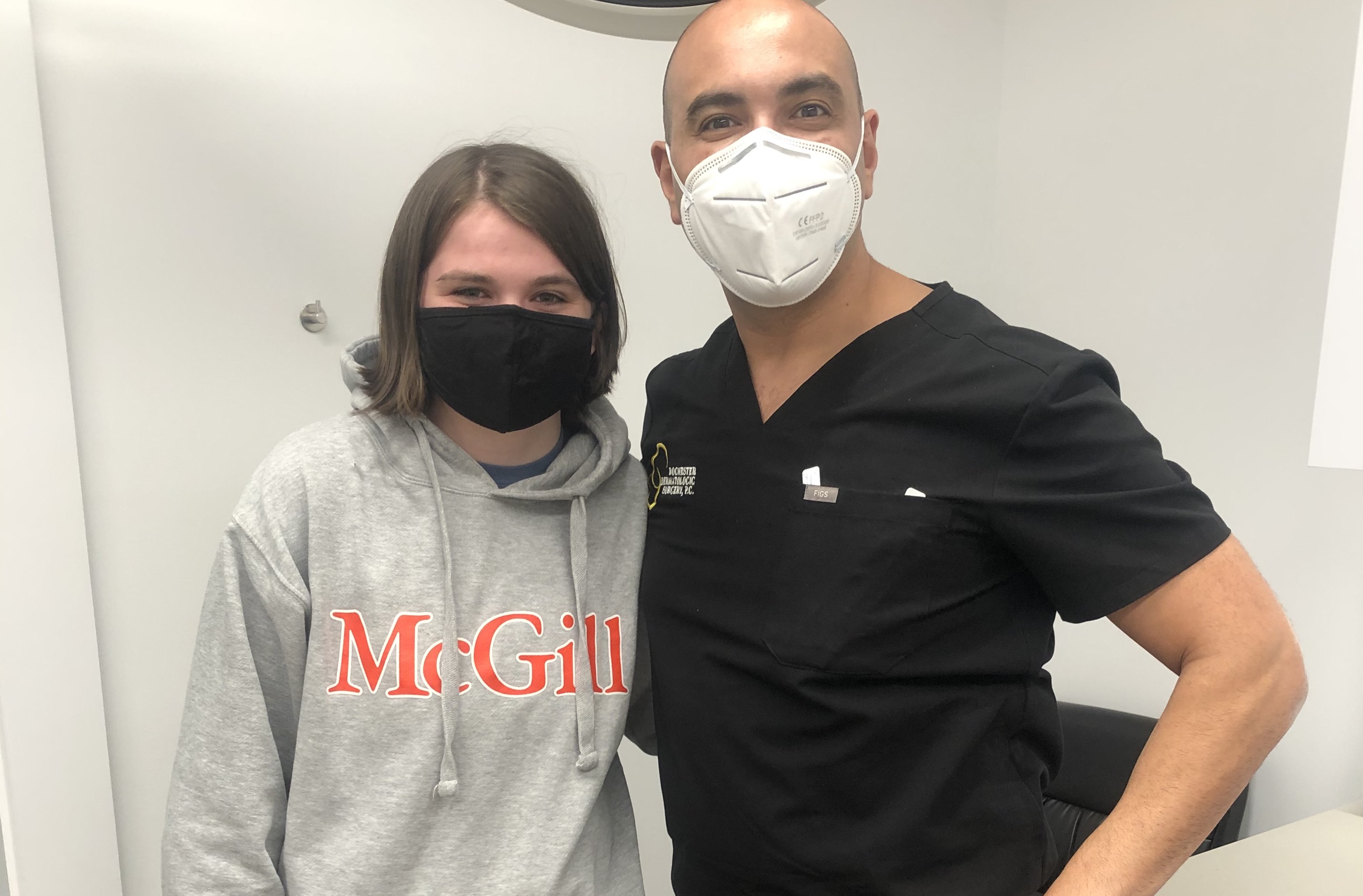
Another special thing about my syndrome is how much doctors and researchers are still learning. Because my condition is rare, with my permission, my doctor would take pictures of my skin to show his dermatology class. Although at first I felt a little like a guinea pig, I realize now that these photos could help advance the medical field. Before the pandemic, whenever I had an appointment, my doctor would always bring a medical student in to learn about my cancer. As someone interested in medicine myself, the idea that I could contribute to dermatological discoveries is exciting, to say the least. 

I have always hated the idea of finding the good in everything because, with some things, there are just no good parts. And with many cancers, I stand by that statement. However, in my case, I find myself extremely lucky. Although surgeries and radiation are not fun, and avoiding the sun can be a hassle, I have a newfound appreciation for shade, for sunsets, and for seniors.


ABCs of Science, Science & Technology

Picture this: The illustrious world of medical illustration

Before writing was used as a means for communication, ancient civilizations relied on pictorial representations of objects, which included visual representations of medical concepts. Medical illustrations date back to 15,000 BCE, and have continued to evolve over time. Over the course of many millennia, advancements in art and technology have accelerated the field of medical illustration. 

Today, the industry represents a small yet diverse group of medical professionals who are trained in both medicine, specifically the study of anatomy, as well as media and visual communication.

Jean-Paul Acco, a former medical illustrator at the Montreal Neurological Institute and Hospital, spoke about his experience in the field over the last three decades.

“[My] role as a medical illustrator [was] to try to make things understood,” Acco said in an interview with The McGill Tribune. “Back in the ‘90s, [medical] students would explain their project to me and I would then make the illustration.”

Being a medical illustrator often demands working with other professionals like writers, photographers, and filmmakers toward the holistic communication of complex concepts. Medical illustrators work with photographers when documenting surgical procedures to detail or enhance the part of the body or procedural aspect they wish to portray in their illustrations. 

Dr. Nancy Posel, director and co-founder of the Patient Education Office at the McGill University Health Centre (MUHC), believes medical illustrations are essential to improving patient care. 

“For [many] patients, the issue is one of literacy,” Posel said in an interview with the Tribune. “[Medical] literacy levels in North America are very low. Therefore, if you are doing illustrations, […] do it from a pedagogical perspective and keep it very simple. [Patients] simply need to know how they can best take care of themselves.” 

Numerous studies have shown that visual aids help patients better understand medical information that doctors otherwise provide verbally. 

Posel recognizes that, depending on the audience, communication styles differ. Medical illustration targeted for patient understanding would look very different from diagrams geared toward educating doctors. 

Acco spoke to the heightened importance of medical illustration for understanding symptoms and diagnoses in times of crisis, such as the ongoing COVID-19 pandemic. 

Although most people are aware of public health guidelines concerning COVID-19, misinformation and disinformation can prevent individuals from attaining a complete understanding of how the virus affects their physical wellbeing. Unable to see the damage that the virus can do to their bodies, it can be difficult for patients to understand its potential complications.

Medical art and illustration have realized the potential of visual communication since they make the unseen visible. Illustration can also bridge language barriers by communicating vital information as well as dispelling fears for audiences who speak a different language than their physicians.  

“Images are needed to expand one’s comprehension,” Posel said. “They need to understand what could happen.”

Acco spoke to how illustration can help to prevent miscommunication and lack of compliance with public health directives. In depicting COVID-19 and its effects on the body pictorially, many who look past mask ordinances may think again before doing so. 

“This is why you need the mask,” Acco said, as if speaking directly to the viewers of his drawings. “This is why it helps you. You want everyone to understand one thing.” 

The transmission of medical information through visual media remains an essential communication tool between medical professionals, their colleagues, and their patients, not unlike early practitioners of millenia past. With the growth of digital media and improvements in the tools available to artists, medical illustrators will continue to imagine new ways of visualizing the body and its many ailments. 

Arts & Entertainment, Books

Margaret Atwood and Lorna Crozier discuss cats, poetry, and widowhood

On Nov. 19, esteemed Canadian poets Margaret Atwood and Lorna Crozier read from and discussed Atwood’s new poetry collection, Dearly: Poems, and Crozier’s autobiography, Through the Garden: A Love Story (with Cats). Broadcast over Zoom through Montreal-based bookstore Drawn & Quarterly, the two writers discussed cats, deceased husbands and poetry’s uncanny connection to flesh-eating zombies.

“I didn’t get going as a poet until the late ‘70s,” Crozier said. “I grew up as a poet reading the wonderful Margaret Atwood and I have to say that I was so privileged to [have been] able to read Canadian poetry and [discover] strong women writing poetry who came from my country.”

Both poets grew up in rural Canada. Atwood’s childhood involved spending time in Northern Quebec with her father, an entomologist, and Crozier’s was spent on a farm in Saskatchewan. They elaborated on their relationship with the natural world, and especially animals, and how these themes appear in their poetry.

“We lived on a farm for 10 years, and we had a lot of animals,” Atwood said. “[It was] up-close and down-dirty.”


Crozier described how her poetry uses cats as a motif to carry some of its emotional weight. In Through the Garden, Crozier reflects on her relationship with her late husband and Canadian poet, Patrick Lane, and how cats were important to their relationship. In 2019, Lane died of a heart attack at age 79. Crozier still has their cats, who comfort her after the loss of her husband.

“In our 40 years together, Patrick and I shared our lives to find cats,” Crozier said. “I believe that cats like to be named after poets, by the way. Although when I told Al Purdy that […] he just about threw me out because he didn’t like cats.” 

Likewise, Atwood’s poetry features cats, such as the poem “Ghost Cat,” which Atwood read aloud during the event. The poem’s speaker is Atwood’s recently deceased cat who wanders through her house at night, blindly searching for a place to sleep. 

Atwood and Crozier also found commonality in their humble book-making process. Pointing to a desk drawer in her office containing her poems, Atwood spoke about how she writes fragment poetry, which she then conjoins to create a larger work.

“What’s in there is a lot of holograph manuscripts because I write in longhand,” Atwood said. “But my handwriting is really bad, so I can’t always read what I’ve written. Part of the process is the Rosetta Stone interpretation of what it is that I might have possibly meant.”

Crozier and Atwood compared their similar methods of creating a poetry anthology, which involved piecing together individual poems into a larger work on their office floors.

“When I have a file that’s spilling out, I then say, ‘Maybe there’s a book here,’” Crozier said. “I lay the poems on the floor, and I crawl around on my hands and knees and say, ‘This poem would like to sit by this poem and this one by that one.’” 

Responding to an audience member’s question on what she valued in poetry, Atwood delved into why she found it so important.

“It is the journey with the poet on a trail that’s made of feeling as well as meaning,” Atwood said. “A poem is not just an intellectual meaning. It’s not reducible to that.”


Arts & Entertainment, Music, Pop Rhetoric

Taylor Swift will never ever be silenced, like ever

When news broke in summer 2019 that Taylor Swift’s former label, Big Machine Records, was sold to Scooter Braun, Swift and her legions of fans publicly expressed their outrage over the distribution of her work. For approximately $300 million USD, Braun had bought the master recordings of her first six albums without giving Swift the chance to retain her own music.

In a lengthy Tumblr post, Swift stated that the only opportunity she had been given to buy back her masters was by releasing six additional albums with Big Machine, effectively keeping her stuck under the label she had been signed to since she was 14 years old. Knowing that Scott Borchetta, the former owner of Big Machine, was likely to sell the label, including the ownership of her masters, Swift signed with Republic Records rather than renewing her contract with Big Machine. Braun being the buyer added salt to the wound because of his alleged bullying of Swift over the course of several years.

The concept of artists not owning their master recordings seems odd and counterintuitive, but it is common in the music industry. Whoever owns the master recordings has control over their use and will gain profits from sales, streaming, or other use of the music in the future. Although the artist is rarely the only person involved in the production and recording of a song, it still remains fundamentally odd that artists usually do not have the majority of the rights over the music that they create. For young artists, it is even harder to recognize the future implications of not owning your own intellectual property. 

In a public statement on her Twitter, Swift revealed that her team had tried to enter negotiations with Braun previously to purchase her masters, but were informed that he would only start negotiating if Swift signed a strict non-disclosure agreement to never publicly say anything negative about Braun again. This condition, albeit bizarre and unnecessary, is part of a larger malpractice in the music industry, with artists like Swift needing to bring the issue to the court of public opinion in order to call out the tremendous greed of the owners.

On the surface, Swift’s lack of ownership over her masters is not a unique position—other recording artists like Drake, Katy Perry, and Ariana Grande do not own their masters, while independent artists such as Chance the Rapper and Frank Ocean, who create and release music without signing to major record labels, own all of their work. But for Swift, she can only own her masters if she is locked into an unfavourable contract or silenced by a man with whom she has bad blood. 

Swift’s story speaks to the larger cloud of sexism that hangs over the entire music industry. Male producers and record label owners are perfectly content to profit off of female artists’ hard work, as long as they maintain the upper hand in terms of control, power, and money. While Swift has the option of negotiating with the owners of her masters, it comes at the cost of her being silenced and obedient to men who have never treated her as an equal. This would be degrading for any female artist, but is especially shocking given Swift’s widespread success and stature as a musician. 

Swift revealed that she has started the process of rerecording her first five albums, which will allow her to gain back the rights to her work. This development is not often carried out by artists who do not own their master recordings, but given the irregularities of Swift’s ordeal, it seems only fitting for the situation to conclude this way. Although it’s a potentially happy ending for Swift, the overall implications of the situation are troubling—if Taylor Swift is unable to gain ownership of her masters as a 10-time Grammy Award winner, pop culture icon, and leader of a worldwide legion of fans, then who can?


Arts & Entertainment, Music

‘Approximately Close’ evokes the magic of in-person performances

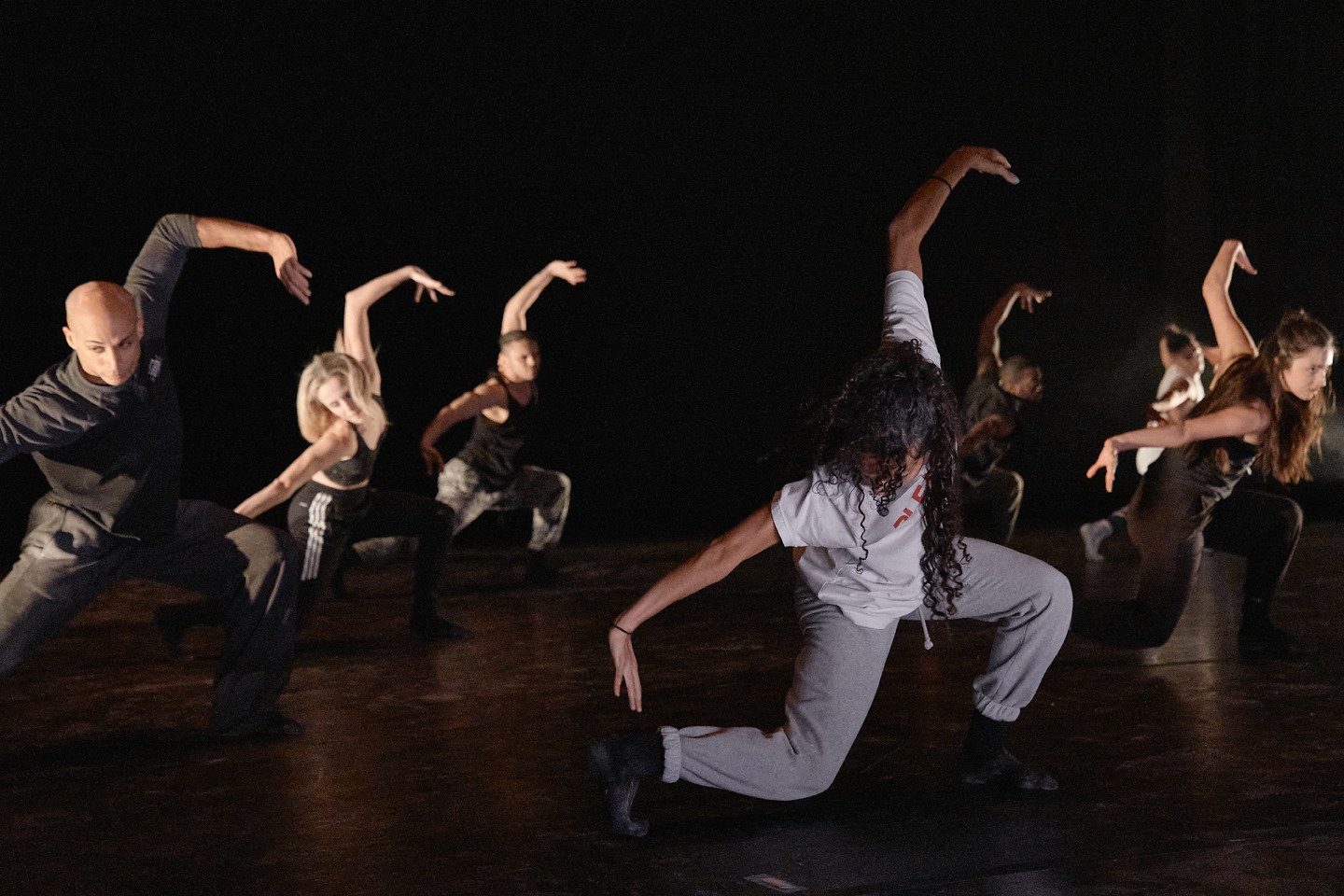
On Nov. 19, Ballets Jazz Montreal dance company performed Approximately Close—Quand le temps n’est presque plus, choreographed by Ermanno Sbezzo. The performance allowed dancers to express themselves safely during a disappointing season. In the midst of the pandemic, online performances have struggled to recreate the magic of set designs, costuming, lighting, and other important elements of live performance. Approximately Close was an exception to this shortcoming, as it was a fully produced performance filmed on stage, making it reminiscent of the live experiences that audiences remember so vividly. 

Ballets Jazz Montréal is known for precision, technique, and effortless execution in their performances. Though the company focusses on contemporary dance, all their dancers receive professional ballet training, and guest choreographers are given creative freedom to develop their artistic skills with some of the most talented dancers in the country. 

Approximately Close skillfully used a variety of props, costume changes, and lighting effects to emulate the changing mood of each number. Some numbers were whimsical and playful while others had a more intense and urgent feeling to them. The show opened on an eerie dimly lit stage with one man skipping rope, another riding a small tricycle, and a woman dressed as a clown. In the background, a lone swing swayed in the breeze while a couple kissed under strobe lights. This strange and creepy introduction successfully grasped the audience’s attention by evoking a scene from a circus of a bygone era. 

As the dancers moved in sync, their energy and attention to detail was undeniable: The dancers articulated each movement of intricate choreography with controlled precision. Powder was used as a prop throughout the show which, in combination with the bright spotlights, created an ethereal echo of the dancer’s movements. Many numbers also featured flashlights, forming dynamic light beams on the stage.

The use of props and lighting effects can sometimes distract from the performers, but //Approximately Close//’s production effectively enhanced the focus on the dancers. The dancers’ simple costumes, composed of black slacks and neutral add-ons, invited the audience to decipher the feeling of the piece based mostly on the choreography and effects. One group number used music with a heavy bass line and red lighting to create a sense of urgency, matching the expressive and energetic choreography.

The emotional final duet depicted the experience of caring for a loved one who is physically or mentally unwell. In one moment, the woman dancer carries the male dancer to depict the burden that many feel they place on their loved ones when they are suffering. The dancers moved as one unit with impressive synchrony. The piece ended tragically as the woman picked up the man’s limp body that could no longer bear his suffering as the stage, which was covered in snowflakes, faded to black. 

Approximately Close was a much-needed spectacle that evoked the in-person mysticism that audiences have missed from live performances. Props, lighting, and music successfully accented the dancers’ technical precision and energy. The show provided a sense of comfort for many struggling through the isolation of the pandemic. Approximately Close was a beautiful moment of unity between creatives, keeping the arts alive. 

The full performance of Approximately Close is archived on YouTube free of charge.

Out on the Town, Student Life

Fortunes for Solidarity forsees a brighter future

Content Warning: Anti-Asian racism.

Since the onset of the novel coronavirus, there has been a spike in acts of racism toward East Asian communities across the world. Anti-Asian racism has greatly affected Montreal’s Chinatown and has stressed the community, which was already struggling due to the loss of tourists from the pandemic. Whether this stigmatization is sparked by Donald Trump’s inflammatory rhetoric in referring to COVID-19 as the “Chinese virus” or the constant circulation of misinformation, Chinatowns around the world have experienced a significant drop in visitors and an increase in acts of hate

To combat the decrease in customers and the uptick in racial profiling, Bill Wong, treasurer of the Montreal Chinatown Development Council, created Fortunes for Solidarity. The initiative was launched only a month after the Chinese Association of Montreal, the Montreal Chinatown Development Council, and The Center for Research-Action on Race Relations called for a $1 million relief fund due to the significant drop in business in the neighborhood. 

The goal of Fortunes for Solidarity is to assuage the racism plaguing the neighborhood with sweet treats. A dozen restaurants, bakeries, and bubble tea spots in Chinatown will be handing out 5,000 fortune cookies with positive messages and a discount code until the winter solstice on Dec. 21. Edmond Ku, co-owner of Restaurant Dobe & Andy, believes that this initiative will help to bring tourists and visitors back to the neighborhood. 

“We wanted to join this [Fortunes for Solidarity] to try to send a positive message about the situation we are in,” Ku said in an interview with the Tribune

Anti-Asian racism in Montreal has risen this past year, as some Asian students at McGill have noticed. Stephanie Zhou, U3 Science, told the Tribune that she has experienced rising levels of discrimination. 

“On the way home from the grocery a couple of weeks ago I was just crossing the street with a mask on and a woman on a bike yelled at me that I had taken away her freedoms,” Zhou said. 

During the early months of the virus, the historic gates that mark the entry to Chinatown were vandalized. In more incidences of vandalism in recent weeks, many store fronts have been broken into, and the community continues to be unjustly blamed for the virus. Sherry Ao, president of the Montreal Chinatown Development Council, told The McGill Tribune in an interview that Montreal’s Asian communities feel attacked. 

“I have personally not dealt with any racism because I have started driving to my office in the morning, but I know many people who have been told to go back to their country,” Ao said. “I know of a young girl who is only 13 who was walking on Sherbrooke [Street] in front of McGill and was hit by a French Canadian. He called her names, hit her, and she even fell to the ground.”

While City Hall’s Deputy opposition leader Francesco Miele and councillor Marvin Rotrand have both made statements denouncing these acts of hate, they still continue to happen.

The fortune cookies contain messages to combat discimination, reminders to respect and follow the government’s COVID-19 guidelines, and quotes nudging customers to visit Chinatown. Some examples included: “The wise practice social distancing, not racial discrimination,” and “Discrimination hurts; solidarity cures.” Additionally, the fortune cookies have a 10 per cent discount code towards participating businesses on the back of the fortune. 

“It is important to not be afraid of us,” Ao said. “If people get to know us, the fear of getting the virus from us will go away because we are all afraid of the unknown. The virus is [infectious and frightening], but we didn’t create it. We have to […] follow the guidelines given by the government, and wear masks.” 

Montreal’s Chinatown is rich with community, culture, and delicious food for students to enjoy. A trip to Chinatown could serve as a great study break and a way to support locally owned Montreal businesses during these difficult times.

As detailed on The Center for Research-Action on Race Relations website, restaurants participating in Fortune for Solidarity include: Chatime Chinatown, Ding Xiang Dumplings, Restaurant Beijing Inc., Pâtisserie Harmonie, Restaurant Cuisine Cantonaise, Pâtisserie Coco, Restaurant Chez Maxim Oriental, Restaurant Le Vent Doux, Restaurant Fung Shing, Restaurant Dobe & Andy, and Fleurs et Cadeaux.

McGill, SSMU

Chinese students allege marginalization after SSMU statement on Hong Kong

On Nov. 16, following the Students’ Society of McGill University (SSMU)’s Nov. 7 email condemning the detainment of 12 Hong Kong nationals by the Chinese government, an anonymous group of students started a petition calling on SSMU to retract its statements on social media pledging support for Hong Kong student protestors.

The initial email was a joint statement between McGill Stands with Hong Kong (MSHK), a student organization that supports the pro-democracy movement in Hong Kong, and SSMU, which urges the Canadian government to demand that the 12 detained pro-democracy nationals be released immediately to Hong Kong to stand trial. In addition, SSMU and MSHK implored students and community members at McGill to demand that the rule of law and freedom of speech be maintained in Hong Kong and attached resources to take action for the cause. 

The petition was posted on change.org nine days after the email statement was sent to the McGill community and directly addresses the SSMU Board of Directors and executives. The anonymous authors of the petition expressed their concern that the email sent out by SSMU was discriminatory towards mainland Chinese students at McGill. 

“We feel that, as a minority group, mainland Chinese students’ voices are unheard and that the Chinese students are under-represented and marginalized in student affairs,” the petition reads. “It is extremely inappropriate for SSMU to make a biased statement like this in the wake of the 2nd wave of COVID-19 [….] It is an attempt to shift people’s attention from the ongoing pandemic and student benefits to another country’s domestic affairs, which indirectly put the Chinese community in a dangerous position for people to blame.”

Joey Li, U3 Engineering, was one of the authors of the petition, which he states was written by a group of volunteers. Li told The McGill Tribune how the petition came about.

“A lot of Chinese kids spontaneously took to WeChat to discuss this issue,” Li said. “I could feel they were deeply upset and wanted their voices heard. Eventually, a group of us decided to create this petition so that others would have a channel to express their frustration.”

MSHK affirmed their respect for the right to use petitions to express dissent as a form of civic discussion, just as they hope that students respect their organization’s right to respond to the petition.

“The distress experienced by those who signed the petition is not unshared by Hong Kongers who have long felt their voices have not been represented, both in the lower relative number of students, as well as the absence of outspoken student associations,” MSHK wrote to The McGill Tribune. “In the end, we hope this will start a long-overdue conversation about China-HK relations on campus as long as all sides respect the principles of evidence-backed civil discussion.”

In an email to the Tribune, SSMU Vice-President University Affairs Brooklyn Frizzle responded to the petition on behalf of SSMU’s Executive Committee. Frizzle explained the responsibility the executives feel to speak out against injustice in solidarity with their members, as outlined in the leadership pillar of the SSMU constitution

“It is with that commitment in mind that the Executive Committee decided to share a message of solidarity, drafted with McGill Stands with Hong Kong,” Frizzle wrote. “This statement falls in line with a long history of taking political stances that align with SSMU’s core values. As such, we maintain our support for students and protestors in Hong Kong, Thailand, and Taiwan alike.”

Frizzle emphasized that executives at SSMU will continue to support the Hong Kong democratic movement and Chinese students at McGill.

“We respect the right of our members to speak out against actions or statements they disagree with—provided these dialogues are mutually respectful and inclusive,” Frizzle wrote. “Regardless of any petitions, letters, or messages denouncing the actions of the SSMU, we will continue to advocate for Chinese students and condemn the rising anti-Asian racism associated with the COVID-19 pandemic.”

Both the Hong Kong Student Network and the McGill Chinese Students’ Society declined to comment.

Arts & Entertainment, Film and TV

‘Dash & Lily’ is a blooming love story with a splash of Christmas spirit

Imagine you’re in New York City during Christmas. The streets are streaked with bright lights, festive carolers, buzzing street markets, and fluffy, white snow. You enter the Strand Bookstore to escape the winter chill, and inside, you spot a red leather notebook, tucked away near J.D. Salinger’s works. Do you open it?

If you’re anything like one of the protagonists of Dash & Lily, you do. Released on Netflix on Nov. 8, this eight-episode miniseries follows two young people—cynical, brooding Dash (Austin Abrams) and bubbly, bright Lily (Midori Francis)—who develop a romantic relationship without ever meeting but solely through passing a red notebook between one another. As the days count down to Christmas, Dash and Lily dare one another to explore new places and try new things, placing the notebook in a new location each time. In a Sherlockian game, the two run through New York City, from an abandoned Grand Central Station to Jewish punk concerts, pushing each other out of their comfort zones, changing each other for the better. 

Both characters are as multidimensional as they are engaging and relatable, largely due to the skillful acting of the leads and an adept writing team. Francis particularly impresses with her outstanding range, making a character that could have easily appeared saccharine and overbearing a sweet, intelligent firecracker. 

One of the particular strengths of Dash & Lily is that it places a great emphasis on courage, and prioritizes a sense of adventure above any cliché-laden ideas of surface-level attraction prevalent in the rom-com genre. By doing so, Dash & Lily reveals the importance of being open to new experiences when entering a relationship and trusting the magic of a deep, emotional connection.

Two outstanding episodes are those directed by Pamela Romanowsky, “Hanukkah” and “Cinderella,” which pay homage to the fairy tales Alice In Wonderland and Cinderella. Romanowsky’s fantastical nightmare sequence of Lily descending the proverbial rabbit hole into an underground punk concert is particularly striking in its grotesque artistic vision and ingenious manifestation of social anxiety. Other episodes are visually clean, impressively switching between the festive grandiosity of Manhattan streets and the quiet intimacy of the students’ interactions.

Despite its heart of gold, the show is spotted with pitfalls. Certain plot points do not make much sense at all, such as a scene where Dash scrolls through Instagram hashtags to find his friend—leading the viewer to wonder whether the writers had ever been on Instagram. Other examples include a scene in which Lily’s brother breaks up with his boyfriend for going on a two-week vacation and one where Nick Jonas randomly pops up to give advice to Dash. Most offensive of all, however, is when Dash’s ex-girlfriend rents out a museum to use as a saucy hookup spot, and it is implied they have sex on a priceless museum artifact.

While the show’s cast represents a diverse array of identities, some of the supporting figures are overlooked by the writers. A glaring example of this is the Black Best Friend trope, filled by Dash’s bizarrely-named best friend Boomer, who seems to have no purpose outside of helping Dash. While Boomer is shown to have a family, he lacks any romantic interests or genuine friends other than Dash. He works as a tool to further the plot, always being on hand to spot Lily, consult Dash, and literally drop everything he’s doing in the middle of a work shift (at a Pizzeria, with a line waiting) to run 45 minutes to pass a hint along to Dash. 

Still, despite the naïveté and the suspension of disbelief that the watcher must have in order to buy into the show, even the most cynical of viewers will be charmed into holiday-magic believers after eight episodes. Full of cinematic shots of New York City in the winter, a refreshing cast, and a clever insight into young love, Dash & Lily is both an escapist and thought-provoking treat.

Campus Spotlight, Student Life

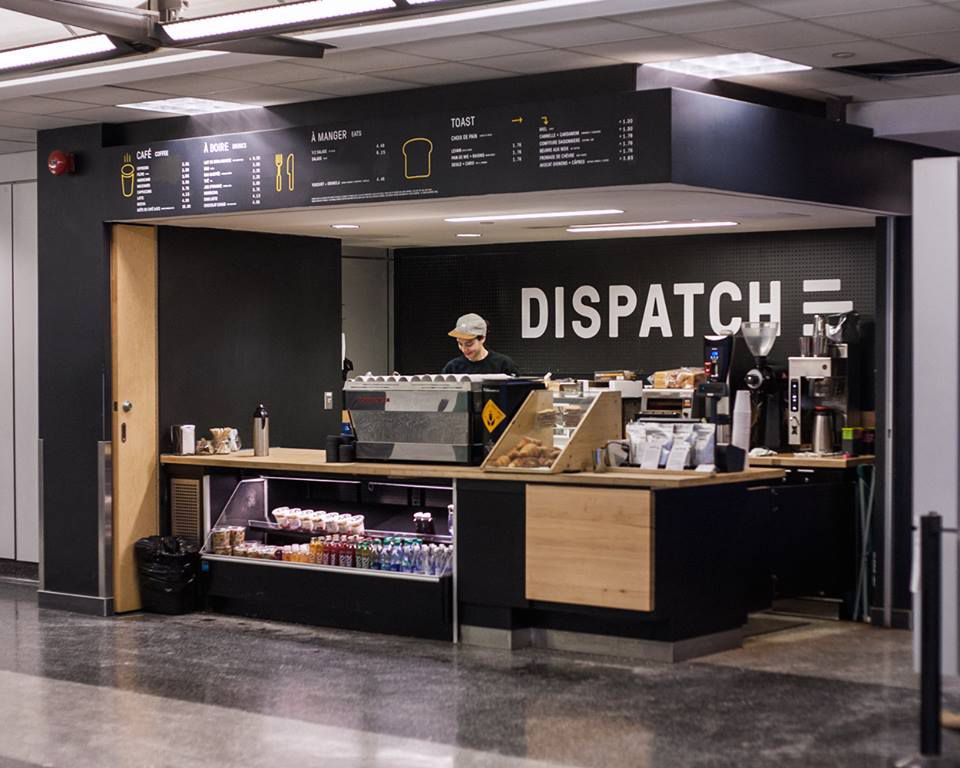
Dispatch Café reopens in McConnell Engineering building

For students still frequenting campus, former food haunts have stood conspicuously empty over the remote semester. Among them was Dispatch Café. Located in the McConnell Engineering building, Dispatch opened in 2014 as the brand’s first brick-and-mortar location. On Nov. 11, Dispatch Café welcomed students and faculty for the first time since the suspension of on-campus activity in late March.

“We launched [without] toast in week [one] in order to run lean and curb our waste while we observed what new traffic patterns will be,” founder Chrissy Durcak wrote in an email to The McGill Tribune. “Thanks to the support of [the] McGill community that came out in our first week [we brought back toast in the second week.]”

For many first year students, the café is not only close to residences but also serves as a great option for coffee and meals on the residence meal plan: The McConnell Engineering location is the only Dispatch Café in Montreal to take OneCard as a payment method. This feature, along with its prime location, makes the café a beloved spot for students. 

Dispatch is also an example of the city’s vibrant local coffee roasting scene, located right on campus. Montreal is home to many micro and nano coffee roasters that purchase beans at the source and roast locally. Durcak identifies Dispatch within the third wave of the coffee movement. The term “third wave coffee” was coined by Trish Rothgeb in 2003, and defines waves of coffee over time, with each wave marking an innovation on the last. The first wave came in the early ‘60s, as coffee became widely accessible and mass-produced by brands like Folger’s and Maxwell House. Large specialty coffee companies like Starbucks were emblematic of the second wave, which elevated coffee from utility to luxury through a focus on the beans’ origins and novel espresso preparations. The third wave defines modern coffee shops like Dispatch, that seek to create artisan, aesthetically beautiful, and traceable coffee experiences. 

“Dispatch was Montreal’s first cold-brew delivery service (by bicycle), and then its first coffee truck,” Durcak wrote. “Since then, Dispatch has opened three cafés across Montreal.”

Like most third wave roasters, Dispatch is committed to lessening its environmental impacts through their sourcing and business practices. 

“At Dispatch, we prioritize buying coffee from regions and farmers that lack the most infrastructure[,] resources, and access to market to encourage the sustainable development of their businesses,” Durcak wrote. “Many of the coffees we serve on campus are from repeat relationships—for example, we are about to launch one coffee from a farm in Ethiopia called Kossa Geshe that we have purchased for four years now.”

To reduce its environmental impact, Dispatch Café uses biodegradable packing for retail coffee bags, composts coffee grinds and food waste, incentivises customers to bring and buy reusable mugs, and roasts its coffee with an afterburner to emit less pollution into the air. 

In the interest of transparency, all Dispatch coffee is traceable online and, as of September 2020, through a QR code attached to each bag. 

For those who are not spending time on campus, brewing coffee at home can help to replicate the comfort of a warm cup at a favourite café. Dispatch explains many common brew methods step-by-step on its website, though Durcak advises students to tweak the ratios of coffee and water to their liking. 

“It doesn’t take much to make great coffee at home,” Durcak wrote. “Great beans from good sources that are freshly harvested are paramount to a good cup, as is grinding fresh (if you can).”

Dispatch is open from 10 a.m. to 3 p.m. in the McConnell Engineering lobby. The building is currently open to students and faculty.

Men's Varsity, Sports

Redbird name fails to bring unity to McGill Athletics

On Nov. 17 McGill announced a new name for the men’s varsity teams: Redbirds. The long-overdue announcement came more than a year after an initial email from the office of Principal Suzanne Fortier, sent in April 2019, which stated that McGill would be dropping the slur formerly used as the name for the men’s varsity teams. The message stated that the teams would be known as “McGill teams” for the 2019-2020 athletic season, during which time a committee would decide on a new name.

A summary of proceedings of the naming committee accompanied the announcement of the new team name, offering members of the McGill community a bare minimum level of insight into the decision making process. One notable section explained the reason behind the choice to maintain separate names for the men’s and women’s teams. 

During the consultations and in the submissions that it received, the Committee noted that Martlets was the name that generated the highest number of negative feedback (i.e., individuals asking explicitly that the committee not choose Martlets),” the summary read. “Several men’s varsity teams expressed that they were against the idea of choosing Martlets, citing a respect for and admiration of the Martlets’ history, and a desire not to encroach on that legacy.”

The summary does not mention whether any women’s teams objected to their male counterparts using the Martlet name, which is a notable omission, considering that it is their legacy that was supposedly under threat. 

In explaining how the name Redbirds, specifically, was chosen, the summary suggests that the school’s existing links to the name were a significant factor in its selection. 

“Red birds can be seen on the McGill coat of arms (as Martlets are mythical red birds),” the summary read. 

When it came time to select a specific name, however, the committee appears to have placed their careful respect for women to the side. Per the committee’s own statement, Martlets are a subcategory of red-coloured birds, which inadvertently positions the men’s teams as the standard or default for sports, and the women as a category within that. This problem is pervasive across sports and competition levels, with one notable example being the NBA and the WNBA. While it is unlikely that this was a conscious decision on the part of the committee, it certainly calls into question the sincerity of those who opposed a unified name for the mens’ and womens’ teams out of respect. 

Immediately following the announcement of the Redbird name, students took to social media to express their dissatisfaction with the new moniker, with several tweets highlighting the continued unnecessary gendering of the team names. Others pointed out that the Redbird name does not put much distance between the racial slur that the teams formerly used and the new brand that they are hoping to build.

The announcement also featured a complete lack of acknowledgement of the years of organizing and activism carried out by Indigenous students. McGill has never credited the #ChangeTheName campaign and the students who organized it, including the Students’ Society of McGill University Indigenous Affairs Committee, for their work. In 2019, when announcing that the university would no longer use the former epithet of the Redbirds, Fortier named the chairs of the Working Group on Principles of Commemoration and Renaming, and even a past McGill principal whose speech she quoted in her statement. The message never mentioned student efforts or their organizers. 

McGill University’s administration has a habit of ignoring student demands until it is no longer convenient to do so. Years of organizing by groups like Divest McGill resulted only in a decision to “decrease the carbon footprint of investments,” and the university’s handling of the renaming has followed in this tradition of doing the bare minimum. 

Read the latest issue

Read the latest issue