
Latest News

Student Life

It’s a Femininomenon!

You have bewitched me, body and soul,” Mr. Darcy declared, over the striking rain on the rolling hills of the English countryside. Many find that this fictional gesture of romance from Jane Austen’s Pride and Prejudice has all but diminished in 2025. Recently, British VOGUE’s Chanté Joseph released an article entitled “Is Having a Boyfriend Embarrassing Now?” Joseph contends that having a boyfriend has social benefits that women want to maintain, yet the idea of being ‘boyfriend-obsessed’ has become decidedly gauche. For women today, it’s less Pride and Prejudice, and more Pride and Poorly Dressed. The question remains—do the women of McGill concur?

In an interview with The Tribune, Léa Finch, U1 Arts and Science, expressed surprise at this recent sentiment.

“[It] feels like the article kind of came out of nowhere [….] There’s no need to bring down men with it [….] Having a boyfriend doesn’t change you being able to have power and show it off.”

On the other hand, Adhara Scholten, U0 Arts, found the article’s topic to come from ‘somewhere,’ replete with contemporary social context. 

“I think it’s a result of a lot of social […] policies against women, restricting women, [and] a lot of stories […] publicly made about, rape, for example […] Gisèle Pelicot [….] Then we think of [the 4B] movement in Korea. [In the article] the narrative blames women. It asks, ‘are women embarrassing themselves by having relationships with men?’” 

As women’s suffering becomes increasingly public through social media and fourth-wave feminist activism, the world is more attuned to the realities of rape, femicide, and female health. As a result, the flaws of patriarchal government and social institutions have become increasingly apparent. In her article, Joseph wrote that in Western history, a woman’s value was entrapped in a relationship with a man.

This narrative has shifted into an era where society can begin to question these inherently asymmetrical heteronormative roles, and decide whether we should still abide by their social laws. With women no longer requiring a male counterpart to guarantee their basic needs, singleness is a more viable option. However, it is time we start questioning male hegemony instead of blaming women for their lack of a partner. 

Anastassia Haidash, U4 Arts, explained her position on boyfriend embarrassment.

“I don’t necessarily find it embarrassing in itself to have a nice, caring boyfriend, but I find it embarrassing how we’ve kind of come to let ourselves be more disrespected and taken advantage of in terms of these, like, situationships.”

Vanessa Hellsten, U0 Arts and Science, expressed a similar sentiment.

 “[W]hen [women] […] pardon a lot of the man’s mistakes, […] you need to be able to hold them accountable, and yourself accountable.”

Women who are navigating McGill’s dating scene must contend with men’s shortcomings. As Hellsten points out, accountability is especially important in this context, to assure a nourishing reciprocal relationship rather than one sustained out of hegemonic expectations of heterosexual coupling. 

However, without accountability, the rampant misogyny of the ‘male loneliness epidemic’—a patriarchally fabricated notion—continues to fuel the fire of ‘red pill ideology’ and incel culture. Specifically, in the ‘manosphere’—a network of online misogynist groups— men refer to women and feminist ideologies as the stem of male frustration. 

Haidash further observes that embarrassment on campus may stem from the concern that a boyfriend may interfere with academic success.

“It definitely may seem more embarrassing at McGill to have a boyfriend, because […] for women, […] everyone here is so, so insanely devoted to their schooling and whatnot, and having a man get in the way of that is lame and awful.” 

This observation about how having a boyfriend may become an obstacle to a woman’s success is what the manosphere demonizes. Women succeeding threatens the misogynist’s preferred gender hierarchy—one that depends on limiting female autonomy and achievement, and where simply being of the male sex can overtake that achievement. 

These changing gender roles within heterosexual relationships underpin the true question British Vogue’s article is asking, or rather telling us. Women no longer need to, or should, be defined by their romantic male counterparts.

Field Hockey, Martlets, Sports

McGill Athletics’ varsity program restructuring: Town hall updates

Following the announcement of the upcoming varsity review, McGill Athletics hosted a town hall on Nov. 7 to promote transparency for its club and varsity teams. Perry Karnofsky, Athletics Director of Wellness Programs and Facility Operations, and Daniel Méthot, Athletics Director of Sport Programs, led the meeting. 

Karnofsky and Méthot explained that the varsity review has three aims. The first is rebalancing programming and facility allocation between varsity teams, competitive clubs, and recreational activities. The second is consolidating all athletic programs under a single umbrella, which McGill Athletics claims will improve both the competitive athletic experience at McGill and the student experience at McGill’s Sports Complex

The third concern, which Karnofsky and Méthot emphasized, is that the review is fundamentally about capacity: With McGill’s current financial and athletic resources, Athletics’ focus is on how to allocate these limited resources most effectively.

Méthot then outlined the process that the review committee is using to reorganize the current varsity structure. McGill Athletics is moving from a three-tier system to a ‘four-group approach’ that aims to more fairly evaluate and accommodate varsity teams that do not align with the Réseau du sport étudiant du Québec (RSEQ) format. 

Currently, all teams in McGill’s three tiers of varsity status must compete in an RSEQ league. The differentiation between the groups is dependent on teams’ competition formats at the provincial and national levels. For instance, tier one sports must be represented at three academic levels across Quebec: High school, Collège d’enseignement général et professionnel (CEGEP), and university level. Teams identified as tier one must also have a national championship, hosted by U SPORTS. Tier two includes sports that are represented at only the university level, but still have a national U SPORTS championship. Tier three also consists of sports that compete at the university level, but that only have an RSEQ provincial championship. 

While the review process has allowed for more open discussion among current varsity and club teams and McGill Athletics, some existing teams remain in a state of uncertainty and anxiety about getting cut.

Avery Berry, U1 Arts and Science, and forward on the Martlets Varsity Field Hockey team, shared in an interview with The Tribune that she is unsure where this leaves teams like hers. 

“We’re not in the RSEQ. We don’t recruit. We often don’t have as many home games, and we’re fully self-funded. So how [McGill Athletics] would take this into account in the auditing process was pretty unclear,” she stated.

Berry noted that McGill Athletics has not concretely communicated how the restructuring will affect teams, such as Field Hockey, in unique situations. If her team’s status changes, Berry explained, they risk losing key off-season resources such as access to the varsity weight room and Strength and Conditioning coaches, as well as crucial visibility and outreach tools like media exposure.

For club teams like McGill’s Nordic Ski Club, the review does not just determine their competitive level—it determines whether they can operate at all.

Nordic Ski Co-Captains Astrid Scarth-Lella, U3 Arts, and Molly Tinmouth, U3 Arts and Science, said in an interview with The Tribune that the uncertainty around the varsity review has been especially difficult for their team, in part because they feel McGill Athletics is not familiar enough with their club to make an informed decision about its status. 

“They don’t really know our training, our performance, or how we operate,” Scarth-Lella said. “They’ve been very unclear about how many teams are going to be cut or have their status changed.”

Tinmouth added that competitive clubs and teams feel pitted against each other, even though they all offer something vital to the student body.

Despite the administration’s attempts to foster open conversations on Nov. 7, many athletes did not get the answers they were looking for. The goal of the town hall was transparency, but the outcomes it discussed remain unpredictable. As teams await their fates, the potentially precarious future of the next season of McGill Athletics looms large.

Sports Editor Clara Smyrski is captain of the McGill Women’s Field Hockey team. She was not involved in the writing, editing, or publication of any section of this article that discusses Field Hockey.

Science & Technology

World Antimicrobial Resistance Awareness Week at McGill

Every year, from Nov. 18 to Nov. 24, the World Health Organization (WHO) observes World Antimicrobial Resistance Awareness Week (WAAW), recognizing antimicrobial resistance (AMR) as one of the greatest modern threats to global development and public health. AMR was responsible for 1.27 million deaths worldwide in 2019 alone.

McGill’s own AMR Centre works year-round to raise awareness about this pernicious phenomenon. Founded in 2021 by Dr. Dao Nguyen, with backing from bodies such as the McGill Interdisciplinary Initiative in Infection and Immunity and McGill’s Faculty of Medicine and Health Sciences, the AMR Centre brings together McGill professors from over 20 different departments to find innovative, interdisciplinary research solutions to AMR. The centre specializes in academic work on AMR diagnostics, therapeutics, and prevention strategies

The support and funding from WAAW give the AMR Centre a particular opportunity to expand public understanding of AMR with the aim of reducing its emergence and spread. In an interview with The Tribune, McGill PhD Candidate in Microbiology & Immunology and AMR Centre Outreach Team co-lead Sophia Goldman explained what AMR is. According to her, basic knowledge of AMR is the first step in halting the public health crisis it creates.

“[AMR] occurs when microorganisms like bacteria, viruses, fungi and even parasites make changes or adaptations over time to develop the ability to no longer [respond] to the drugs that are designed to kill them,” Goldman said. “In the big picture, this makes infections really hard to treat, and increases […] the spread of disease [….] [AMR] is mainly caused by the misuse and the overuse of antibiotics.”

AMR Centre Outreach Team co-lead and MSc student in Microbiology, Ashley McGibbon, described other factors contributing to AMR’s proliferation.

“Doctors and medical practitioners tend to prescribe antibiotics as the solution for everything, even though they’re only able to target bacterial infections,” McGibbon said in an interview with The Tribune. “[AMR is] also induced by the lack of investment by pharmaceutical companies […] into making new antimicrobials [….] Antibiotics are also used in a lot of agriculture [in soils, which] can promote [AMR’s development].”

Goldman outlined key solutions for preventing AMR on an individual basis: Taking antibiotics as prescribed and especially finishing them completely, keeping up with vaccination schedules to prevent infection, not sharing antibiotics or consuming expired ones, washing hands frequently, and staying home when sick.

McGibbon echoed the power of these independent choices in contributing to communal safety.

“Small actions add up,” she said. “If every person takes the time to make themself aware about this global health issue, it can inspire change and support responsible antimicrobial use, which will collectively help safeguard public health for generations to come.”

This week, the AMR Centre will be holding three public pop-up events to challenge pre-existing notions of AMR: On Nov. 18 at Macdonald Campus, and on Nov. 20 at the downtown campus’ Redpath Library, as well as at the McGill University Health Centre. The Centre will also host a scientific symposium on Nov. 19 exploring solutions to antimicrobial resistance, at the McGill Faculty Club from 11:30 a.m. to 5:30 p.m. 

On Nov. 21 from 12:00 p.m. to 1:00 p.m., Dr. Eric Nelson from the University of Florida will run a seminar at the Goodman Cancer Institute discussing AMR diagnostic developments. To round out the week on Nov. 24, the Centre will host an online student roundtable discussion on the WHO’s latest AMR reports from 12:00 p.m. to 1:00 p.m.

Throughout Nov. 18 to 24, the AMR Centre will enter anyone who posts themselves wearing blue alongside the hashtag #GoBlueWithMcGill—in honour of the WHO’s AMR awareness “Go Blue Campaign”—into a raffle. In solidarity with WAAW, the McCall MacBain Arts Building will be lit in blue on Nov. 24. 

Goldman emphasized what she hopes the McGill community will most take away from the AMR Centre’s WAAW events.

“Everyone’s interaction and experience with antimicrobials can affect everyone else around them, within Canada and even worldwide,” she said. “Everyone […] doing their little part matters.”

McGill, News

SSMU Fall 2025 Referendum results

19.1 per cent of undergraduate students voted in the Students’ Society of McGill University’s (SSMU) Fall 2025 Referendum, passing five of the seven ballotted motions. The Tribune sat down with the referendum’s stakeholders to discuss the results. 

Motion Regarding Muslim Students’ Association (MSA) Services Fee Increase

The Motion Regarding Muslim Students’ Association (MSA) Services Fee Increase, moved by the Student Groups Committee, proposed an increase from $1.66 CAD to $2.19 CAD of the opt-outable MSA fee charged to SSMU members each semester. The increase was rejected in the referendum, with 52.4 per cent of students voting against it. 

The MSA advocates for Muslim students’ rights to religious accommodations at McGill by ensuring halal meals and prayer spaces are available on campus, as well as by providing community programming such as mentorship opportunities. The 53-cent increase requested in the referendum was intended to mitigate the group’s financial dependency on the ticketed events they frequently host, which the MSA states decreases the accessibility of their programming. 

MSA President Hamza AlFarrash stated in a written response to The Tribune that while the association’s goal of creating safe spaces for Muslim students on campus will not change, the motion’s failure shows a discrepancy between the level of support the Muslim community actually needs and the resources McGill and its undergraduates have deemed appropriate for this community. Many MSA services will have to be delayed, significantly scaled back, or halted entirely as a result of the ‘no’ vote.

AlFarrash further expressed surprise at the referendum result, stating that he expected more reciprocal support from other groups that the MSA advocates for.

“We have been consistent and unwavering in our advocacy for Palestine—a cause deeply rooted in our inseparable identity as Muslims […] [whether we were] pushing the administration, including the President at one point, to divest, [or] challenging their tone and language in official communications,” AlFarrash wrote. “I expected more support from our allies, especially those who share many of the same struggles and aspirations for justice.”

Motion Regarding the Student Services Fee

Voters also rejected the Motion Regarding the Student Services Fee; the non-opt-outable fee will remain $204.74 CAD per semester for full-time undergraduate students. Put forth by SSMU President Dymetri Taylor, the motion would have seen this fee increase by 4 per cent each Fall term until 2028, ultimately settling at $230.31 CAD, if passed. The increase was intended to address the costs of services such as the Student Wellness Hub, Campus Life & Engagement, the Career Planning Service, International Student Services, Scholarships and Student Aid, Student Accessibility and Achievement (SAA), First People’s House, and the Office of Religious and Spiritual Life; as of this year, these services’ costs have exceeded the revenue the current fee generates. 

In a written statement to The Tribune, Taylor described how the motion’s failure will lead to inevitable cuts to these programs’ resources, increasing work for both the student society and its members.

“It doesn’t affect the SSMU (budgetarily wise); however, it does affect [these] Student Services,” Taylor wrote. “In turn, [we could] see decreases in services offered by the respective departments, whether that’s cuts to employees, events, opportunities, [or] assistance.”

Motion Regarding the Renewal of the Access McGill Ancillary Fee

Taylor also put forward the Motion Regarding the Renewal of the Access McGill Ancillary Fee, which aimed to maintain the fee’s $2 CAD rate until Winter 2031. This referendum item passed, with just over three-quarters of voters in favour. The ancillary fee goes towards Student Accessibility and Achievement (SAA), which is responsible for providing accommodations to students who face disability-related barriers. These resources include exam support, language translation services, and transportation for students with physical impairments. The fee aims to improve the current services offered by SAA, and its passage occurred amid complaints from students regarding unprofessional SAA invigilator conduct.

Motion Regarding the Renewal of the SSMU Access Bursary Fund Fee

The Motion Regarding the Renewal of the SSMU Access Bursary Fund Fee, again moved by Taylor, was approved with a resounding 80.8 per cent of students voting ‘yes’, making it the most popular motion on the ballot. The opt-outable fee, currently costing members $8.50 CAD per semester, is administered by McGill’s Scholarship and Student Aid Office to undergraduate students facing financial barriers. McGill matches each fee payment from students, amounting to an average of $700,000 to 900,000 CAD a year in need-based financial aid available to SSMU members through this fee.

Motion Regarding the Renewal of the Musician’s Collective Fee

Voters also passed the Motion Regarding the Renewal of the Musician’s Collective Fee, moved by Taylor, via a 66 per cent majority. This $0.10 CAD opt-outable fee will be put towards the SSMU Musician’s Collective’s equipment, performance opportunities, and jam room, which are available to any students who pay this fee.

Motion Regarding First Year Fee Renewal Question

The Motion Regarding First Year Fee Renewal Question, moved by Taylor, was approved with 53.2 per cent of voters saying ‘yes’ to the fee. The opt-outable $0.30 CAD charge will come into effect from Winter 2026 through Winter 2031, meant to facilitate the activities of the SSMU First-Year Council. The Council hosts social events, provides forums for first-year discussions, and represents first-year students at SSMU’s Legislative Council.

Motion Regarding Creation of the Gender Affirming Care Fee

The Motion Regarding Creation of the Gender Affirming Care Fee, put forth by Taylor, was narrowly approved by a 51.1 per cent vote in favour. This opt-outable fee will come at a rate of $10.05 CAD per student per year, spanning from Winter 2026 until Winter 2031 when it will be re-voted on for renewal. The fee will provide for an Alumo (previously StudentCare) gender-affirming care insurance plan, which will reimburse students up to $5,000 CAD per gender-affirming procedure, with a cap of $50,000 CAD per plan user. 

This insurance plan seeks to fill the gaps in coverage of gender-affirming procedures under the existing SSMU general health insurance plan. Gender-affirming care was included in the student dental plan starting in 2023, but its cancellation in January 2025 left many students without guaranteed access to this life-saving healthcare, as gender-affirming procedures are often unaffordable without coverage.

Taylor affirmed that the new gender-affirming care insurance plan will be in effect starting in fall of 2026. 

“Conversations have already taken place with Student Care to move forward with the plan, that is the only reason it was on the referendum as well,” he wrote. “Additional time is necessary because of the required work that needs to be done between McGill and Student Care to organise the opt-out process and communicate information.”

Voter Turnout

Reflecting on the 19.1 per cent overall voter turnout, SSMU Vice-President External Affairs Seraphina Crema-Black laid out SSMU’s plans for increasing participation in future referendums. She raised potential ideas such as ramping up SSMU tabling for voting on campus, coordinating with professors to help draw in voters, and preparing clearer resources for students ahead of voting. 

“I recently met with our SSMU Elections team and my Political Campaigns Coordinator to begin planning how we can increase participation in the next referendum,” Crema-Black wrote in a statement to The Tribune. “We know turnout can always be improved, and we’re working on strategies that make voting more visible and accessible for students.”

A previous version of this article stated that the current Muslim Students’ Association Services Fee stood at $1.66 CAD, with the MSA aiming to increase its fee by 53 cents. In fact, the current fee is $1.55 CAD, meaning the proposed increase would have been by 64 cents. The Tribune regrets this error.

Editorial, Opinion

Sudan’s genocide is fueled by global and local apathy toward Black lives

In April 2023, the Sudanese Armed Forces (SAF) and the Rapid Support Forces (RSF) paramilitary group descended into a civil war. Since then, both groups have executed large-scale massacres and targeted ethnic cleansing against Black, non-Arab ethnic groups, such as the Masalit, Fur, and Zaghawa peoples. This genocide—enabled by a complicit international community and funded by the investment portfolios of Western institutions—has killed over 150,000 people, with approximately 9 million displaced internally and 1.8 million fleeing Sudan as refugees.

The ongoing genocide in Sudan reflects the international community’s racist neglect of Black lives and selective disregard for humanitarian crises in Africa. This apathy is clearly mirrored in institutions like McGill, whose refusal to divest from arms manufacturers signals a shameless willingness to profit from global violence against Black communities. 

This pattern of international inaction is not new. Beginning in 2003, General Omar al-Bashir’s regime carried out a genocidal campaign in Darfur that killed an estimated 300,000 people and displaced roughly 2.7 million individuals. Al-Bashir, in collaboration with the Janjaweed militia, conducted mass killings of Black Darfurians, destroying villages, poisoning wells, and systematically raping women and children. 

Yet the international community egregiously refused to multilaterally recognize al-Bashir’s campaign in Darfur as a genocide. The UN Security Council issued repeated resolutions calling for the cessation of human rights violations and hostilities, but offered no meaningful enforcement mechanisms, declining to authorize major interventions or impose punitive measures. 

Although al-Bashir was overthrown in 2019, today’s civil war stems from many of the same perpetrators of past atrocities in Darfur. Current RSF commander General Mohamed Hamdan Dagalo was a Janjaweed leader, and many RSF fighters also fought for the militia group during the Darfur genocide. In failing to intervene meaningfully during the previous civil war, international institutions have effectively enabled the next generation of genocidaires. As such, the same power structures continue to carry out genocidal acts against Sudanese Black ethnic groups today.

Although the RSF and SAF’s military actions today each amount to acts of genocide, the international community has again faltered, refusing to take action beyond symbolic recognition and passive investigation. 

In fact, the very abuses that define Sudan’s ongoing genocide as such—the targeted destruction of a national, ethnic, racial, or religious group—have been reframed by global powers to justify their own neglect and complicity. Overtly racist framings of the genocide by officials and media as ‘tribal conflict’ minimize the responsibility of Western actors to intervene, and reinforce the devaluation of Black lives in Sudan. 

Canada itself, whose Family Reunification Program has served to reunite refugees who have been torn from their families by crisis and war, has largely excluded Sudanese applicants, substantiating the country’s apathy towards the suffering in Sudan. Canada has pledged to admit merely 4,000 refugees from Sudan, while Quebec has refused to admit Sudanese refugees for residence entirely. 

Canada’s institutional response to the genocide in Sudan reveals a glaringly racist double standard. In 2023, the Canadian government did not place a limit on the number of Ukrainians who could apply for refugee status, empowering over 300,000 Ukrainian refugees to enter Canada, an incredible testament to what is possible through effective, welcoming refugee policies. Yet when it comes to the suffering of Black Africans, Canada’s program to address the refugee crisis in Sudan is capped at a low number, reflecting the country’s discriminatory conceptions of whose suffering is urgent and whose is not.

McGill’s own investments in Lockheed Martin and other weapons manufacturers—which directly provide arms to the SAF and RSF—reveal the same selective morality that governs how Canada and the international community allocate humanitarian support. McGill must immediately cease its funding of the genocide in Sudan, as it did in 2006 when it divested from companies doing business in Myanmar (then Burma), and adopt an anti-genocidal framework that values Black lives with the same urgency as other groups facing genocide and mass atrocity.

For the sake of the over 9.5 million people currently internally displaced in Sudan, the over 21 million trapped in famine, and the millions killed throughout generations of civil war. 

Divestment blocks weapons manufacturing at its source. Even with the recently implemented UN arms embargo, the United Arab Emirates continues to arm and finance the RSF. Unless institutions divest, weapons companies will simply find new backers—sustaining the perpetrators of genocide.

When institutions fail to condemn genocide and choose complicity over conviction, the cycle of suffering, neglect, and violence only deepens. McGill’s investments sustain global violence; divestment from Sudan’s genocide is long overdue.

Science & Technology

Freedom space: A new blueprint for river resilience

For decades, river management in Quebec has focused almost exclusively on water. However, rivers do not just carry water; they also transport sediments, and ignoring this may explain why current river management practices fall short.

At last week’s GeoSpectives seminar—an annual seminar series hosted by McGill’s Department of GeographyConcordia University professor Pascale Biron addressed this issue in her talk Integrating hydrogeomorphology into river restoration practices: A winning approach.

In drainage basins—an area of land that drains various water sources to one location—sediments are carried downstream, originating from many sources, including glacial deposits, landslides, hills, and riverbanks.

Lane’s balance model, introduced in the 1950s by Emory W. Lane, helps explain the relationship between water and sediments. It posits that a river maintains equilibrium by delicately adjusting its slope, depth, width, and flow to match the sediment load it receives.

Herein lies the problem: “The way that rivers have been managed in Quebec […] in the last decades was mainly to focus on water,” Biron said in her talk. “If [we] just intervene having water in mind, [we] may create some disequilibrium.”

Such disequilibrium arises from various human interventions, including the development of dams, bank stabilization, and ripraps, a layer of stones added to prevent soil erosion. These prevent rivers from flowing as they naturally would. A common example occurs in agricultural drainage basins, where human intervention has straightened previously meandering rivers. When this happens, the river slope becomes steeper. The river will then tend to naturally increase its sinuosity—a measure of how much a stream bends—by rebuilding meanders through lateral migration.

“There is a spiral flow […] that [erodes] the sediments on the outer bend and brings these sediments into the inside bend,” Biron said.

Flooding is a second natural dynamic informed by river hydrogeomorphology.

“In general, it is a problem where [there are] urban or agricultural developments limiting the space available for rivers,” Biron said.

The two aforementioned hydrogeomorphological movements—meander lateral movement and flooding space—are at the heart of the concept of ‘freedom space.’ This approach to river management allows rivers to follow their natural movements, including erosion, flooding, and meander migration. Riparian wetlands—which harbour biodiversity, stabilize river flows and buffer against floods—also form within this space, but cannot develop if banks are stabilized via human intervention.

Researchers have created a matrix that combines mobility zones, flood zones, and riparian wetlands to determine how much space rivers need to ensure public safety and functional ecological services. The resulting freedom spaces vary widely in width, from a few metres to several hundred.

Other researchers have also conducted a cost-benefit analysis on three rivers in Quebec—the Yamaska River, the Matane River, and the Rock River—to determine whether preserving these buffer zones was economically viable. In their analysis, the team emphasized passive restoration and easements, where landowners agree not to build or reinforce banks.

“We looked at the cost of […] the loss of right to construct in the future, the loss of right to farm in agricultural areas and river management restoration,” Biron said.

The benefits of freedom space preservation included reduced flood damage, reduced bank-stabilization costs, and riparian wetland-induced ecosystem services, ultimately outweighing potential costs across the three rivers.

Biron also advocated for effective communication of river hydrogeomorphology concepts within science education.

“No one is taught about river dynamics in elementary school, in high school and CEGEP, and quite rarely even in university, so it is normal that people are very surprised when they see a river eroding its bank,” she said.

Biron concluded by presenting her PhD student Jean-Philippe Marchand’s project One meander at a time, which helped restore a straightened river on Parentall Farm in Montérégie, Quebec in collaboration with the farmers, whom the Ministry of Environment financially compensated.

After creating the freedom space, the morphological quality of the river increased. Moreover, when Hurricane Debby hit in 2024, neighbouring farms experienced costly damage. However, the Parentall Farm did not, as flooding occurred safely within the designated freedom space, demonstrating the system’s resilience.
The freedom space concept is now being integrated into river-management frameworks, including Quebec’s Plan de protection du territoire face aux inondations. By aligning management practices with natural river dynamics, these policies aim to create more resilient and sustainable landscapes for future generations.

Hockey, Martlets, Sports

Martlets Hockey push league-leading Stingers to brink in gritty OT loss

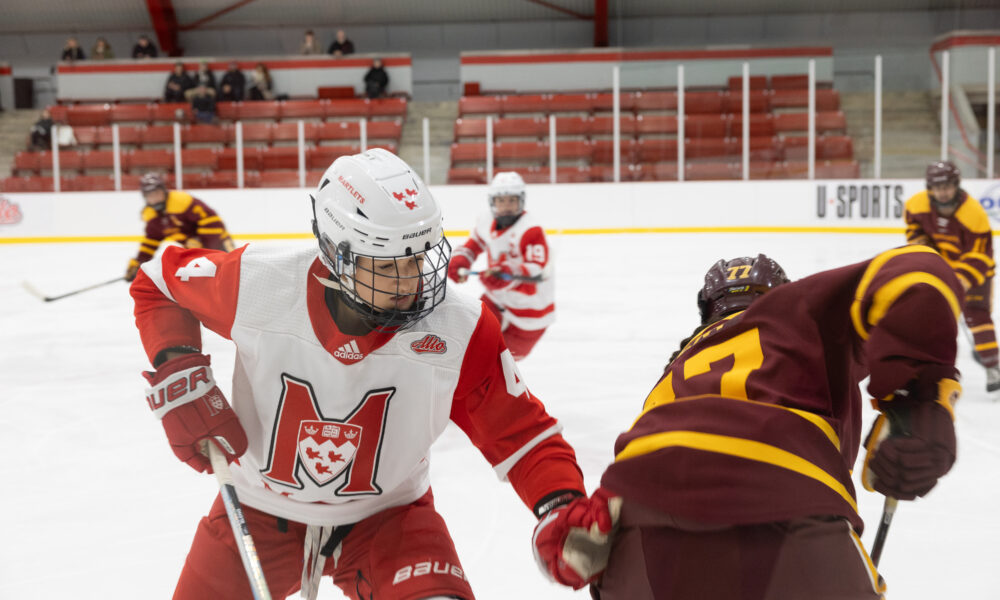
On Nov. 14, McGill’s Martlets Hockey took to the ice at McConnell Arena and showcased a full-team effort, pushing the Réseau du sport étudiant du Québec (RSEQ)leading Concordia Stingers to overtime in a hard-fought 2-1 loss. The effort marked a sharp turnaround from the Martlets’ earlier meetings with the Stingers this season—facing 5-0 and 2-0 defeats in October—signalling that the group is settling into a disciplined, structured identity. In front of a lively home crowd, McGill played with pace, physicality, and purpose, setting an early tone that carried through all three periods and into overtime.

“We had a really good week of practice, and we showed up tonight,” forward Mika Chang, U4 Engineering, shared in a post-game interview with The Tribune. “There was good energy on the bench the whole game.”

McGill opened aggressively, swarming Concordia’s zone for the first five minutes and keeping goalie Jordyn Verbeek under pressure. Their persistence paid off only 5 minutes and 33 seconds into the first period, when forward Anika Cormier buried a backhand upstairs to give the Martlets a 1-0 lead.

The period intensified with heavy board battles and smart body play, culminating in a major penalty awarded to Concordia for a hit on McGill forward Taylor Garcia, who left the game and did not return. McGill carried their resulting five-minute power play into the second period, but could not extend their lead.

“[Garcia] was having a good game, so that one’s going to hurt for sure,” Head Coach Alyssa Cecere said, in an interview with The Tribune. “It’s a tough loss, physically and for the team.”

Garcia’s teammates agreed. 

“She’s a big contributing forward for us, and a huge personality,” defender Meganne Chailler, U3 Education, expressed in an interview with The Tribune. “But we came together to play for her.”

The game’s second period showcased McGill’s defensive discipline. The Martlets blocked shots, clogged lanes, and disrupted multiple Concordia scoring chances, with defenders Hailey Neil and Bridget O’Hare standing out.

McGill nearly extended their lead on a partial break by Jordyn Watson, but with just 0.2 seconds left, Concordia’s Emilie Lussier pounced on a loose puck in the slot and beat McGill goaltender Jade Rivard-Coulombe, tying the game 1-1.

Despite the goal, the Martlets refused to let up.

“We set the tone early, and we just kept building off each other’s energy,” Chailler said. “Getting that first goal gave us a lot of momentum.”

The game’s final 20 minutes overflowed with resilience. McGill’s forecheck created turnovers, their defensive group played with poise, and the pace grew end-to-end. Chailler and Cormier disrupted Concordia’s rushes and cleared the puck under pressure.

With 20 seconds left, McGill called a timeout to prepare for a defensive-zone draw. In the game’s ensuing final moments, Rivard-Coulombe made a spectacular chest save through traffic, ensuring the Martlets secured one of two possible points before entering extra time.

“Jade had a very good game,” Cecere said. “She’s our last line of defence, and for her to have a solid performance like that is really encouraging.”

Four-on-four overtime was frantic—full of end-to-end rushes and scrappy net-front battles. Ultimately, Concordia’s Ekaterina Pelowich shovelled in a traffic-filled goal with 36 seconds remaining, handing the Stingers a 2-1 victory.

But the Martlets still walked off with their heads high.

“We’ve improved tremendously since the start of the season,” Cecere said. “There’s a lot to be excited about with this group.”

For Chang, the game underscored the growing parity in the league. 

“The league is much closer this year,” she said. “Everyone can beat everyone. It’s good to see.”

Women’s hockey is gaining momentum and visibility as the Professional Women’s Hockey League opens up career opportunities, showing RSEQ players a viable post-university path in hockey.

“There’s absolutely a different buzz,” Cecere said. “It’s awesome to see how far the game has come. There’s just a little more jump and urgency in everyone’s play now. A lot of these young women want to get to that level, and it’s really cool to see what they’re capable of.”The Martlets faced off for a second time against the Stingers on Nov. 16, again losing 2-1 in overtime to Concordia. With 15 games left, McGill now looks to turn the page—with confidence—into the rest of their regular season.

Science & Technology

What is the best way to track ammonia pollution?

Ammonia (NH₃) is an essential component of agricultural fertilizers, but can become an environmental pollutant. Roughly half of all nitrogen used in the agricultural industry escapes into the environment; 56 per cent ends up in water bodies and 44 per cent is released into the air, mostly as NH₃. The gas contributes to soil acidification, biodiversity loss, and various respiratory problems. Monitoring NH₃ is particularly difficult due to its high solubility and tendency to stick to surfaces.

A recent study published in Environmental Pollution provides a comprehensive comparison of sorbent materials for Passive Flux Samplers (PFS), a widely used tool in agriculture for estimating emission rates. The research establishes the groundwork for more accurate ammonia monitoring systems. 

In an interview with The Tribune, Angela Trivino Arevalo, lead author of this study and doctoral student in McGill’s Bioresource Engineering Department, detailed how the two-year research was conducted using PFS—a tool utilized in agriculture to estimate emission rates.

“The [PFS] is just a tube, and inside you can change the sorbent according to the gas that you want to target and capture. I am working with ammonia, but there are other samplers that can capture [other gasses]. The idea is that you can go to any farm to measure gas emission, […] and the PFS tries to gather data in a way that […] doesn’t ask the farmer too much work. You can then take the data […] to the lab to analyze what was captured.”

The measured mass obtained from the PFS is then converted into an emission rate. The two processes that determine PFS performance are aerodynamics, how freely air flows through the tube, and sorption, the material’s ability to trap molecules.

Although many materials can be used as sorbents, few studies have compared how these materials affect the PFS’s accuracy. Trivino Arevalo’s team used four materials— glass microfibre filters, glass beads, zeolite, and biochar—and attempted to identify which provided the most reliable NH₃ measurements.

“I love this research, because we are comparing materials that have different characteristics. We have zeolite, that is a material that we know has a big porosity, we have glass microfibre, that is something we use to analyze air, and glass beads [….] It’s not only interesting for the side of chemical and material development, but this knowledge is one specific area that develops something to measure air quality,” Trivino Arevalo said. 

Trivino Arevalo used a wind tunnel to examine how each sorbent affects airflow through the PFS. They measured inlet airflow, pressure drop, and internal air velocity at wind speeds of one to six m/s. From here, they calculated a K factor, a measure of thermal conductivity ranging from zero to one, that describes how wind speed relates to the air entering the PFS. The higher the K factor, the more efficiently airflow passes through the sampler.

Glass microfibre filters displayed the best aerodynamic behaviour, with the highest K factor of 0.61; zeolite and biochar performed moderately well, with scores of 0.58 and 0.59, respectively. Glass beads restricted airflow the most, with a K factor of 0.47. 

The study compared the sorption abilities of these materials. To determine the best overall sorbent, Trivino Arevalo used a scoring system that emphasized four areas: Data variability, aerodynamics, sorbent capacity—the ability for the sorbent inside the PFS to hold ammonia—and handling and practicality. Variability also played a major role in determining the best sorbent. Zeolite and biochar, despite having high capacities, showed inconsistent results due to their complex pore structures. Glass beads and microfibre filters provided lower detection limits for low-concentration sampling.

Sorption results showed zeolite had the longest breakthrough time of 103 minutes and the highest capacity, while glass microfibre filters and glass beads had lower capacities, meaning they saturated quickly. Trivino Arevalo’s research concluded that glass microfibre filters were the most effective sorbent materials for PFS usage. This material offered the most balanced combination of good aerodynamics and moderate capacity. 

Improved PFS performances are a step towards more accurate and reliable data related to ammonia emissions, which is an urgent priority as agriculture is increasingly subject to erratic climate changes. 

McGill, News, The Tribune Explains

The Tribune Explains: Departmental strikes for Palestine

In the November 2023 Students’ Society of McGill University (SSMU) Fall Referendum, 78.7 per cent (5,974 voters) of SSMU constituents voted in favour of the Policy Against Genocide in Palestine. Undergraduates also voted to go on strike for Palestine through the SSMU in April 2025 and October 2025

Now, in November 2025, students are organizing departmental strikes for Palestine, calling on McGill to divest from companies complicit in the genocide in Palestine, drop disciplinary charges against students involved in pro-Palestine advocacy, and end its research partnerships with Israeli institutions contributing to the oppression of Palestinians. 

As of Nov. 17, 19 departments at McGill have voted to strike or are in the strike decision-making process. The Tribune explains the logistics of these strikes.

Why are departments striking? 

McGill University invests approximately $73 million CAD of its endowment into various companies that are directly linked to Israel’s genocide in Gaza, including Lockheed Martin and Airbus. McGill also participates in exchange programs with Israeli institutions, such as the Technion-Israel Institute of Technology, which develops military technology used by the Israel Defense Forces. Furthermore, McGill campus security has heavily policed pro-Palestine student activists over the last two years, which is why disciplinary immunity for these students is at the core of student strikes for Palestine.

What is the process of getting a departmental strike approved?

Each department has its own constitution that dictates how it can strike. Typically, to vote on a motion to strike, departments must hold a general assembly (GA) that meets a certain minimum number of departmental members—referred to as quorum—to ensure the GA is representative. If a GA meets quorum, departmental members can discuss motions concerning a strike, make amendments, and then vote for or against the strike motion. If the majority of students at the GA vote for the motion, the whole department is considered on strike.

What departments are going on strike? Which departments did not vote to strike at their GAs?

The undergraduate departments going on strike in the Faculty of Arts are Anthropology, Art History & Communication Studies, East Asian Studies, English, Environment (Arts), Gender, Sexuality, Feminist, and Social Justice Studies, Geography, International Development Studies, Liberal Arts, Philosophy, Sociology, South Asian Studies, and World Islamic and Middle East Studies. The Faculty of Science’s striking undergraduate departments are Atmospheric and Oceanic Sciences, Earth and Planetary Sciences, Physics, and Physiology. Additionally, Macdonald Campus Agricultural and Environmental Science students are striking, as well as the Computer Science Undergraduate Society.

The departments of Education, History, Linguistics, Mathematics and Statistics, and Religious Studies did not meet the quorum needed to vote for a strike. The departments awaiting GAs to vote on striking are Anatomy and Cell Biology, Biology, Economics (Arts), Neuroscience, Political Science, the Caribbean and Latin American Studies and Hispanic Studies Association and the Electrical, Computer & Software Engineering Students’ Society.

Rather than go on strike, the Faculty of Science Department of Pharmacology passed a motion affirming its solidarity with Palestine and instating a plan to donate 15 per cent of its Winter 2026 proceeds to relief efforts in Gaza through a humanitarian aid organization to be selected by members of the department.

What is the difference between hard picketing and soft picketing?

Departments have announced, via their Instagrams, the unique picketing strategies they will be using during the strike. While hard picketing involves protestors physically blockading classrooms, most departments choose a soft picketing strategy where protestors stand outside classrooms and discourage attendance and participation.

How long will the strike last? What will it look like?

The strikes will occur during the week of Nov. 17 to Nov. 21, with the specific range of dates depending on the department. The strikes call on students to refrain from attending all classes, conferences, labs, and office hours held by their department. Students are still permitted, within the boundaries of the strike, to attend class to take assessments and exams that they cannot miss. 

There will be activities, such as workshops and film screenings, for students to participate in during the strike, hosted by Students for Palestine’s Honour and Resistance at McGill. 

To keep up with the current status of departmental strikes on campus, visit the strike progress tracker.

Montreal, News

Protestors rally against police brutality and impunity

Content warning: Police brutality, racial violence

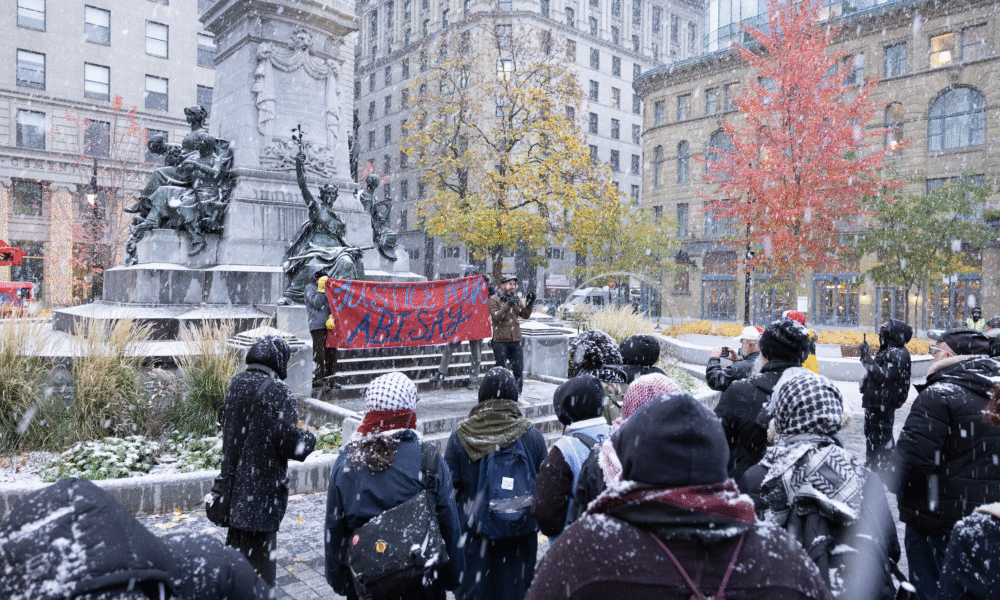
Despite freezing rain, a group of approximately 50 protestors rallied in Montreal’s Philips Square at 3:00 p.m. on Nov. 9 to march with the Defund the Police Coalition to denounce instances of police brutality in Greater Montreal this year.

On Sept. 21, 15-year-old Afghan-Canadian Nooran Rezayi was with his friends when an individual called 911, telling emergency services that a group armed with weapons was at the intersection of rue Joseph-Daigneault and rue de Monaco in Saint-Hubert. Officers with the Service de police de l’agglomération de Longueil (SPAL) arrived ten minutes later. Within 58 seconds, one of these officers—whose identity remains unknown—shot Rezayi twice, killing him.

In another act of police violence, on March 30, Latinx man Abisay Cruz was killed by Service de police de la Ville de Montréal (SPVM) officers, who were responding to a call regarding a person in crisis. While three officers handcuffed Cruz, one of them forced his knee into Cruz’s upper back. In a video captured during the altercation, Cruz can be heard yelling, “I’m going to die.” Moments later, he lost consciousness. After being transported to a hospital, Cruz was declared dead. His death is currently under investigation by the Bureau des enquêtes indépendantes (BEI).

Protesters at the rally directly called out the BEI, Quebec’s police watchdog that investigates potential misconduct. Since its implementation in 2016, zero of the 52 BEI cases concerning police officers who have fatally shot civilians have resulted in charges against an officer. Quebec’s Ligue des droits et libertés has questioned the BEI’s independence, citing its reliance on police services in initiating its investigations, and the fact that the majority of BEI staff come from the policing sector. 

One of the speakers at the rally discussed a recent provincial decision allowing police officers to remain silent and withhold information during BEI investigations. 

“The Court of Appeal of Quebec decided that it was more important to protect the right to silence than the right of the public to information,” the speaker stated. “The police officer who killed Nooran told himself that in Quebec, you can kill anyone, anyhow, as a police officer, because the system is behind you.”

The SPAL, responsible for Reyazi’s killing, has been held in high public regard recently as a reformed, community-oriented police organization. In an interview with The Tribune, an individual at the rally who wished to remain anonymous spoke about these reforms. 

“We’ve seen that not only are they not effective, but they are used by the police to justify further killings, imprisonment, [and] surveillance,” the attendee said. “We [need] to move towards mutual aid. We [need] to move towards systemic changes that eliminate the conditions that lead to […] crime in the first place.”

Another individual, who wished to go unnamed, commented on their experiences with police violence at previous protests.

“You can’t expect the police to police themselves,” they shared, in an interview with The Tribune. “I was forcibly pushed by an [(SPVM)] police officer at the March 15 protest [against police brutality]. I could have been seriously injured [….] My cameras were damaged.”

The individual added that rallies are an important way of fighting police repression and making the cause visible.

“Excessive force shouldn’t happen at all [….] When police brutalize [protestors] and people see that, it has a dissuading effect [on protest attendance],” they said. “We have to put pressure on our politicians.”

In recent times, there has been an increase in heavy and often violent police presence on McGill’s downtown campus, such as SPVM’s presence at Independent Jewish Voices’ peaceful celebration of Sukkot in October, at Association of Graduate Students Employed at McGill (AGSEM) protests in 2024, and at pro-Palestinian protests throughout 2024 and 2025

A 2019 report commissioned by the City of Montreal found systemic bias in street checks performed by Montreal police; compared to white people of the same age, Indigenous, Black and Arab people between ages 15 to 24 were four to five times more likely to be targeted by checks. In 2024, the Black Coalition of Quebec filed a $171 million CAD class-action lawsuit alleging that the City of Montreal was responsible for systemic racial profiling within its police force; a Quebec Superior Court judge agreed.

Some quotes in this article have been translated from French.

Read the latest issue

Read the latest issue