

Latest News

McGill, News

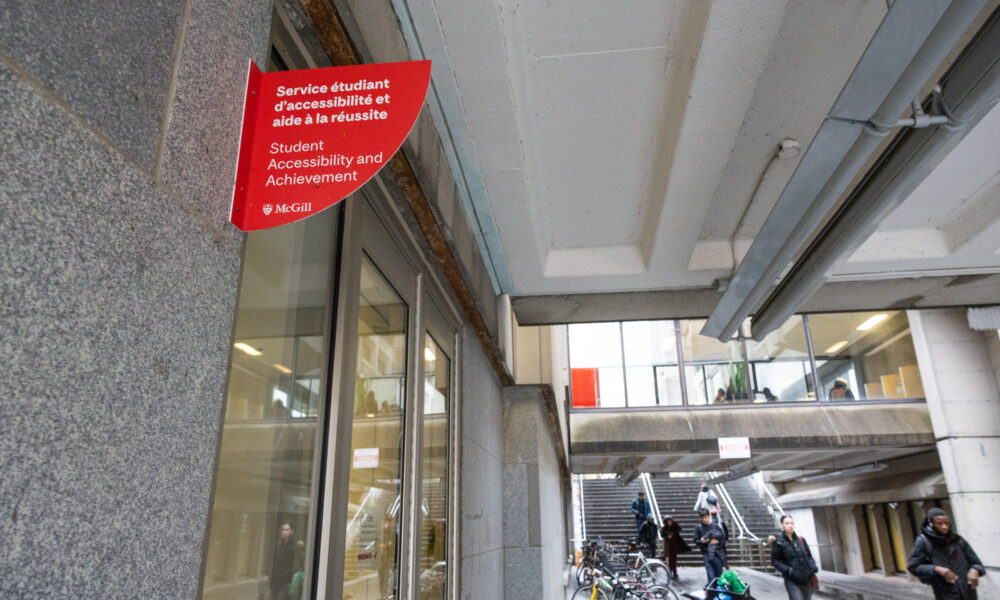
Students report unprofessional treatment from Student Accessibility and Achievement

McGill students have reported unprofessional treatment from the staff at the McGill Student Accessibility and Achievement (SAA) Centre. SAA, as part of McGill’s Student Services, provides students experiencing learning challenges with a sanctioned area to take exams specific to their individual needs. Registered students with documented disabilities may take their final exams in the SAA centre and receive extra time. The SAA also provides services and amenities such as text enlargement in computer labs, earmuffs, and standing desks. However, many students have recently alleged that their SAA needs have not been properly met. 

In a written statement to The Tribune, a student who wished to remain anonymous explained that they noticed a rise in unprofessionalism this year, describing a lack of empathy from SAA invigilators during a recent exam. 

“I have been asked by invigilators in the past to start [my exam] without all of my accommodations being present,” they wrote. “My support person should not be more knowledgeable on the invigilation process than the invigilators themselves, and yet this is the case for every [SAA] exam. My support person has to follow up and ensure that my rights are being respected each time when my accommodations are not set up before I can begin.”

The student also recounted invigilators using mobile devices loudly in the SAA exam room, creating a distracting environment for themselves and other students. 

“I have had invigilators who played games on their phone with the volume on and […] speak the entire time loudly outside the door of my room, despite knowing that many students, including myself, are sound sensitive,” they reported.

This student’s experience is not an isolated instance. Another student shared about SAA neglecting their accommodation in a written statement to The Tribune

“The invigilator stopped me from completing my evaluation a minute early […] by continually speaking to me, telling me to hurry up and leave,” the student wrote. “This even went on till after the minute was up. I tried to fill in my student ID on the Scantron portion as it was the only thing I forgot […] and they got mad at me for that, even though it’s a short-digit code [….] This [experience] has made [the SAA seem] very unpleasant and dreadful.” 

Both students described these situations as having a significant impact on their exam performance. 

“Not being able to focus due to the invigilator [resulted] in lower-than-expected marks that are not my normal marks,” the first student wrote. “I have issues with refocusing once distracted and struggle significantly with focus and migraines due to noise.”

They also highlighted that their peers, who were also entitled to accommodations, had faced scrutiny from the SAA, describing how the SAA discounted their chronic condition diagnoses on file.

“An SAA accessibility advisor has told friends that they should return to their education when they are healthy,” they noted.

The first student affirmed that such an array of unprofessional behaviour has left students with accommodations, like themselves, feeling uncomfortable in testing environments. 

Both students called for change. The first described the professionalism they would expect from the SAA staff, and hope to see in the future. 

“Invigilators should have bias training and sensitivity training on the experiences of a wide range of disabled students, so that they have a strong understanding of what is appropriate to say and what is not,” they emphasized. “Invigilators should be aware that their job is to set up all accommodations listed, not to choose which ones they think may or may not be necessary for that assessment.” 

The Tribune did not receive a response to a request for a statement from the SAA, nor McGill’s Media Relations Office, in time for publication.

In a written statement to The Tribune, Dymetri Taylor, President of the Students’ Society of McGill University, provided students with an alternate way to report unprofessional behaviour from the SAA.
“While we aren’t involved in the accommodations themselves, we do relay feedback we receive to both SAA and to the Deputy Provost [or] Student Services Director,” he wrote. “We’re always looking for further information to avoid […] issues that may arise due to […] unprofessionalism [….] Concerns can be relayed to @ua.ssmu.ca.”

Science & Technology

How dominant genomic narratives reinforce colonial narratives

The ‘Vanishing Indian’ myth—the idea that Indigenous populations are destined to disappear— has long been used to excuse and enact the physical and cultural genocide of Indigenous Peoples in the Americas. This rhetoric remains prevalent in modern genomics, often supporting the treatment of modern Indigenous Peoples not as autonomous communities, but as research subjects from which information about the past can be extracted. 

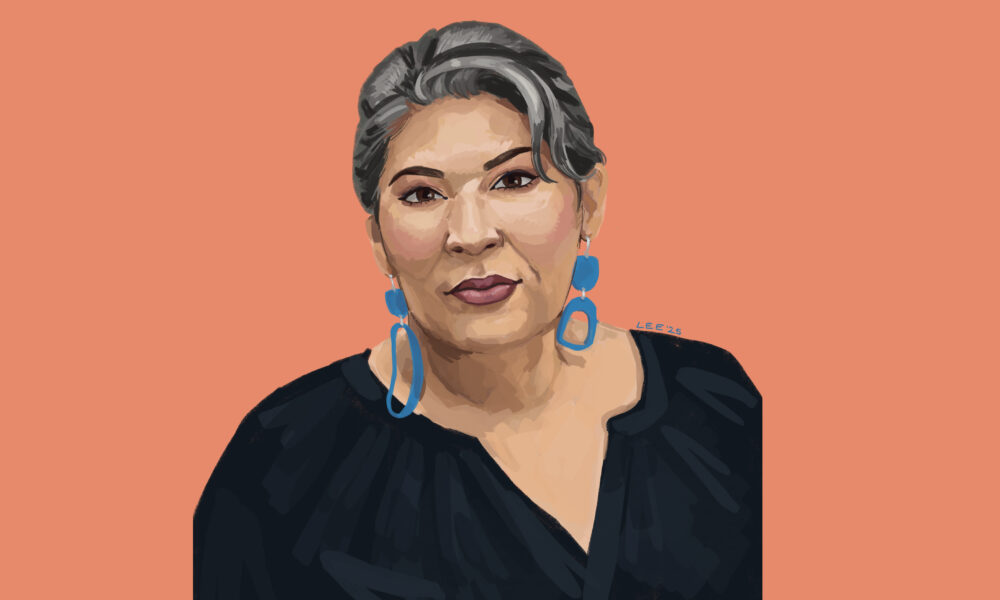
On Nov. 7, at the 48th Annual Osler Lectureship, Kim TallBear, a Sisseton Wahpeton Oyate professor of American Indian Studies from the University of Minnesota, presented her critique of modern human genomic science and its tendency to reproduce the narrative that Indigenous Peoples are ‘vanishing.’ In her research, she argues that modern genetics often undermines Indigenous Peoples’ own conceptions of their tribes and histories by favouring a Eurocentric, genetic-based identity. 

She began by outlining the historical roots of this perspective, showing how it became associated with evolutionary ideas of ‘fitness.’ 

“In conjunction with Indian removal [in the 19th century], popular American imagery began to play on earlier symbolic linkages between Indians and the past, and these images eventually produced the full-blown ideology of the vanishing Indian, which proclaimed that a less advanced society should disappear in the presence of those more advanced,” TallBear said. 

She showed how the Genographic Project—a study aiming to map humans’ movement across the Earth by gathering large amounts of DNA, conducted from 2005 to 2019—exemplified this. It claimed that ‘isolated’ Indigenous DNA was hard to gather because Indigenous cultures were “quickly vanishing into a 21st-century global melting pot.”

TallBear then explained a fundamental difference in how Indigenous Peoples and Western science discuss and understand Indigeneity. She shared that most Indigenous people talk about their identity in explicitly political ways that push back against an assimilative state and emphasize their rights to govern the lands that we live on. They stress the continuity and ongoing connection between pre-colonial societies, modern people, and future generations. 

She noted, however, that science attempts to separate itself from social and political relationships, while remaining implicitly political. Western science frames identity and populations as static, treating Indigenous people as a part of history. While ignoring the notions of kinship, culture, and relationship with land that Indigenous Peoples use to define themselves, science aims to categorize Indigenous tribes and populations purely by genetic ancestry.

“When Indigenous Peoples talk about connection to ancestors and to place, we’re doing it in a way that’s talking about our ongoing continuity [….] But with this [scientific] idea of autochthony, originating where found, this implies stasis,” she said. “So this is really the opposite of the way Indigenous people are using that connection to ancestors [….] Genome scientists use this category [of Indigenous] in a way that assumes and is supported by the assimilative state.”

Tallbear used several examples to support this, one of them being the discovery of the Kennewick Man skull in 1996 in Washington. Although the skull was dated to be 9,000 years old, it took almost 20 years of genetic testing and legal battles for the skull to be identified as legally belonging to the five Native American tribes in the area. 

“[Some scientists] said that despite the antiquity of the remains, there wasn’t sufficient evidence to link the ‘Ancient One,’ or Kennewick Man, to living tribes [today],” she said. 

It was not until scientist Eske Willerslev gathered DNA from one of the tribes and showed the direct genetic link between them and the Kennewick Man that the tribes got legal rights to bury the skull. 

TallBear concluded her talk by discussing her new research directions and involvement with the organization Summer Internships for Indigenous Peoples in Genomics (SING), which teaches young Indigenous scientists to connect scientific education with Indigenous knowledge and governance. 

“A lot of young Indigenous scientists or aspiring scientists may be in great programs and getting really good training, but they’re not taught how to contextualize this within Indigenous governance [….] All nations live governed by science, and that includes Indigenous nations,” she said.

TallBear reminds us that scientific knowledge production does not exist outside of political and social structures. These lessons can help young genomic scientists view research methods and implications critically, and to chart new, more equitable and thoughtful paths in science, just as she has done. 

Out on the Town, Student Life

Calling all McGill foodies: A guide to MTL à Table

MTL à Table is a unique celebration of Montreal’s vibrant culinary scene. From Oct. 30 to Nov. 16, the event features over 150 restaurants across the city offering three- to four-course tasting menus ranging from $35 CAD to $80 CAD. With a list this expansive, decision fatigue is bound to set in for adventurous McGill and Montreal foodies eager to try out some new spots. To counter that, The Tribune has compiled a list of must-try spots before the event is over.  

Downtown

If you find yourself in downtown Montreal, you must stop by Brasserie Le Pois Penché, located at 1230 boul. De Maisonneuve Ouest, for a delicious three-course menu for $65 CAD. On a cold Montreal evening, this is the perfect spot for a meal that warms you from the inside out. Its French classics are unmatched, especially its French onion soup. This traditional brasserie is highly acclaimed for its other French fare as well, such as its delectable onglet à l’échalote and frites. This year, Le Pois Penché is partnering with MTL à Table to offer an affordable brunch menu for $25 CAD, perfect for a leisurely weekend meal with friends!

Old Montreal

Kwizzin Vieux-Port, located at 311 rue St.-Paul Est, serves Afro-Caribbean flavours with a Montreal flair. The vibrant fusion restaurant is serving up a four-course menu for $80 CAD that blends traditional Caribbean spices with modern culinary techniques to create mouth-watering dishes. We recommend the duck foie gras with Haitian-style corn soufflé to capture the unique culinary experience of this establishment. The natural and inviting atmosphere will leave you wanting more—especially on their featured jazz nights every Thursday from 6:00 p.m. to 9:00 p.m.!

Plateau-Mont-Royal

Chai-Yo, nestled in the heart of the Plateau right past Square St.-Louis, features an entirely plant-based, vegan menu. For this limited time, it is offering a three-course menu for $35 CAD. Its culinary mastery rests in its addictive, flavorful dishes, inspired by the fusion of street food and traditional Southeast Asian family recipes. For diners who grew up with traditional Thai and Chinese flavours, this restaurant’s comforting dishes are guaranteed to bring back childhood nostalgia. The fried brussels sprouts with peanut sauce and braised seasonal vegetables in a five-spice sauce satisfy every craving for warm, hearty Thai and Chinese comfort food. 

The Plateau is also home to Le Virunga, located at 851 rue Rachel Est, a 2025 Michelin restaurant that celebrates West African cuisine with enthusiasm and passion. For $65 CAD, this three-course menu will take you on a journey from Mali to Senegal to Cameroon and back, filling you up with rich and satisfying dishes. With a wine list featuring a 100 per cent South African selection, diners are guaranteed to experience a traditional African experience featuring Congolese and Nigerian dishes with a modern Quebecois flair. Order the cream of sweet potato soup followed by the slow-cooked beef chuck roast from Bon Boeuf and enjoy a truly unique culinary masterpiece. 

Little Italy

If you’re looking for traditional Italian food that will transport you to the heart of Naples, look no further. Boggeta Pizzeria is a classic spot in Little Italy, perfect for a cozy, satiating meal, warmed by a huge wood-fire pizza oven (shipped in one piece from the port of Naples). The four-course menu is offered for $50 CAD, and it is remarkably simple and unchanging—a testament to long-lasting Italian culinary tradition. This restaurant’s ingredients are always fresh and bold, allowing for the beauty of simplicity to shine, where the fresh ingredients speak for themselves. The authentic Napolitana-style pizza is a must-try, defined by its raised golden crust and traditional ingredients that explode with flavour. 

Sud-Ouest

Heni Restaurant, located at 2621 Notre-Dame Ouest, is frequently voted one of Canada’s best restaurants. It was a finalist on Air Canada’s Best New Restaurants in 2024, charming diners with its Middle Eastern cuisine that boasts seasonal ingredients for optimal freshness. For this select menu, Heni is offering a four-course menu for $65 CAD. This unique restaurant combines flavours of Southwest Asia and North Africa in a refined and inviting space. Their menu tells a story of the chef’s heritage through its inventive menu, crafted with local expertise and attention to every detail. 

Arts & Entertainment, Comedy, Pop Rhetoric

Katy Perry and Justin Trudeau captivated the world. Who’s next?

A couple of weeks ago, Justin Trudeau was seen with American pop star Katy Perry outside a famed Paris cabaret for the latter’s 41st birthday, apparently keeping in line with his father’s own escapades—dating an American singer. The shocking union between the American musician and the former Canadian prime minister appears amid heightened tensions between the two North American nations, tying them together in a way politics cannot. In a world where cultural unity provides much-needed camaraderie between nations, The Tribune is doing its part to repair Canada-U.S. relations by shipping celebrities from both countries.

Sophie Grégoire and Tom Cruise

Trudeau’s ex-wife Sophie Grégoire would have been magnificently paired with Perry’s own ex, Orlando Bloom. Unfortunately, he’s English, so infamous Scientologist Tom Cruise will have to do. This unlikely coupling represents a union of distinct Canadian and American traditions: Grégoire, a daughter of Quebec and former member of the Trudeau family, and Cruise, the poster boy of Hollywood stardom and the embodiment of America’s zealous religiosity.

Cruise, skilled as many celebrities are in the art of relationship-jumping, would almost certainly be a great help to Grégoire in the transition from her first marriage to a new relationship. While the former First Lady of Canada might not vibe with the ‘Maverick,’ one could almost see these two setting aside their long-held beliefs and living a cozy life where their children explore their own religious paths.

Pamela Anderson and Anthony Ramos

Pamela Anderson, actress, model, and woman of many public relationships, meets Anthony Ramos, former fiancé of Hamilton co-star Jasmine Cephas-Jones and alleged cheater. Just as Ramos danced his way into the life of Alexander Hamilton, he might find himself in the heights of Anderson’s love. The actress has seen her fair share of less-than-ideal lovers, yet perhaps she might find something in the protégé of Lin-Manuel Miranda. Maybe, just maybe, Ramos can actually get married this time. Or maybe not.

Drake and Caitlin Clark

Pairing an athlete who can’t stop winning with a rapper who can’t stop losing might seem odd—but it works. Caitlin Clark, who recently shot to fame in the Women’s National Basketball Association, would not be the first athlete Drake has dated, with rumours circulating in the early 2010s of a romance with tennis champion Serena Williams. Drake, who has a son with French artist Sophie Brussaux, is due for another relationship, and what better way to mend his image than to court Caitlin Clark? Worst-case scenario, if the romance ends badly, we’ll at least get a new Drake album out of it.

If ever these potential lovebirds cross borders to hold each other in their arms, we should absolutely pay attention.

Shawn Mendes and Kim Kardashian

Kim Kardashian is no stranger to relationships with singers, having recently divorced from the musician Kanye West. Shawn Mendes, for his part, has also had a noteworthy dating life, most recently dating Sabrina Carpenter and Camila Cabello. This pairing would unite two icons of celebrity dating culture, guiding the popstar from the complicated Cabello-Carpenter love triangle into the arms of a Kardashian.

If Mendes is drawn to the Kardashian light, he should take note of his lover’s four children from her previous marriage—North, Saint, Chicago, and Psalm—who will certainly add liveliness to their household. Although Mendes does not have any kids of his own, his experience caring for his and Cabello’s golden retriever Tarzan will certainly help him navigate his new parental role.

In the spirit of Justin Perry, or perhaps Katy Trudeau, these ships can bring Americans and Canadians together to celebrate cultural unity in a time of division. While some of these celebrities might not actually get together in real life, magnificent unions like these can bring joy to both nations, tearing down the walls of politics through fits of laughter.

Arts & Entertainment, Film and TV

The revival of ‘Dancing with the Stars’

Halfway through its 34th season, Dancing with the Stars is enjoying renewed fame with some big celebrities competing in the ballroom this fall. Influencer Alix Earle, wildlife conservationist Robert Irwin, and The Parent Trap actress Elaine Hendrix are among those who joined the cast. 

In recent seasons, some of the professional dancers on the show, or ‘pros,’ have gone viral on social media platforms like TikTok. By sharing daily vlogs and dance challenges, they give viewers a look at what goes on behind the scenes, showcase their celebrity partners’ personalities, and create a deeper connection with the audience. This trend has grown this season, with young pros like 20-year-old Rylee Arnold and 24-year-old Ezra Sosa gaining a large online following and bringing DWTS a breath of fresh air. 

Showcasing styles that span ballroom, Latin, jazz, and contemporary, the pros and their celebrity partners have six days to choreograph a dance and then perform it every Tuesday night. With a different theme each week, the competition challenges couples to improve in the hopes of winning the coveted Len Goodman Mirrorball Trophy at the end of the season, decided through a combination of points awarded by judges and the fan vote. Viewers keep coming back to the show after its 20-year run because of its emphasis on spectacle, deep emotion, and growth. Celebrities often arrive with little-to-no dance experience and go on a journey of self-discovery that is both relatable and enticing to watch.

During the Rock-and-Roll Hall of Fame Night on Nov. 4, the top three couples had to dance a Paso Doble—a Spanish ballroom style inspired by the movement of the matador and the bull during a bullfight. The couples were also divided into two teams and had to partake in a team dance with the show’s hosts: Dancer Julianne Hough, and The Fresh Prince of Bel-Air actor Alfonso Ribeiro. The night ended with the exit of beloved Boy Meets World actress Danielle Fishel, as the remaining seven couples proceeded to the quarter-finals.

Fans are already making pyramid rankings of their favourite contestants online and voicing their opinions on this week’s dances. There seems to be a real sense of excitement as the show progresses, with people showing their anticipation ahead of the finale on Nov. 25.

However, this excitement has also come with criticism from fans who feel their favourite celebrities are being scored unfairly, especially by veteran judge Carrie Ann Inaba. Still, the fan vote has been able to tip the balance and help crowd-favourite Andy Richter, comedian and voice-actor of Mort in Madagascar, remain in the competition, while other, more experienced dancers have exited. The ‘Fandies,’ as Richter’s fans call themselves, have kept the 59-year-old in the competition despite him holding last place on the leaderboard throughout the season. His partner Emma Slater is among the pros who use TikTok to show their day-to-day lives in rehearsals, rallying over 550,000 followers.

This new marketing strategy has given the show great visibility, as it broke its historical voting record of 50.15 million votes on Halloween Night. Opinions are mixed, with some pushing for Richter’s exit from the competition so that the best dancers remain, while others are voting to keep him on as long as possible. It is refreshing to see a celebrity commit themselves completely to the process and show genuine progression week to week. His heartwarming personality and close bond with his partner make for great television.

Next week’s episode will be a celebration of 20 years of DWTS. Couples will perform their respective dances and compete in the Relay Dance competition alongside past DWTS winners for a chance at bonus points. You can tune in to DWTS every Tuesday on American Broadcasting Company (ABC) or Disney+ to cheer for your favourites. The show has been a cornerstone of American television for the last two decades, and with its renewed fame, it will surely continue to be.  

Know Your Team, Sports

Know Your Team: McGill Men’s Lacrosse

Redbirds Lacrosse headed to Brampton, Ontario, from Nov. 7 to Nov. 9 for the Canadian University Field Lacrosse Association (CUFLA) Baggataway Cup with the same expectation as every fall: Play fast, play together, and play for silverware. 

Captain and midfielder John Miraglia, U3 Arts, says this year’s group is better for having been tested. After a perfect 2024-2025 regular season ending short at Nationals, 2025-2026’s 9–2 campaign, composed of two one-goal losses, forced the team’s collective growth. 

“We finally felt some adversity, and it really helped us adapt and sharpen what we need to win playoff lacrosse,” Miraglia said in an interview with The Tribune

The path was clear: A Friday bye as the number one seed, then a Saturday semifinal, and, if earned, a Sunday final with a shot at glory. The Redbirds’ biggest edge in the tournament, according to Miraglia, was their tempo and their time to rest. 

“We play faster than anyone, and I have no doubt we have the highest skill level in the tournament,” Miraglia explained before the weekend. “Our bye means whoever we face played less than 24 hours earlier.”

The team’s speed is underwritten by depth and buy-in. Their rallying cry this season was ‘as one.’ Veteran short-stick defensive midfielder Jack Buzby, U4 Arts, shared in an interview with The Tribune that after last year’s stumble, this attitude is a shift. 

“We wanted more trust, less leaning on individuals,” he said. “Those tight, one-goal games made us comfortable under pressure. It’s us against us. [We need to] do our jobs, play our game, and take it one day at a time.”

The team also has a younger back-end than it did a year ago. Long-stick midfielder Preston Norris, U2 Arts, commented on this learning curve. 

“The rookies took criticism, adapted fast, and kept communicating. That’s what has won us our games,” Norris said in an interview with The Tribune.

If there is a snapshot of this group’s identity, it is their overtime play-in escape versus the Ottawa GeeGees on Nov. 2. The Redbirds, down 10-5 late in the game, rattled off five unanswered goals before attacker Mark Symon buried the winner off a tantalizing sprint and feed from roommate and fellow attacker Rowan Birrell. The bench never flinched. 

“No one thought we were going to lose [against Ottawa], and it’s that energy that won us the game and hopefully can win us Nationals,” Miraglia said.

The team has further motivation: This is the final season for head coach Nicolas Soubry. For senior members of the team like Buzby, who took the field at Nationals with his brother Benjamin Buzby for the second time in their varsity careers, the stakes are personal.  

“Playing with my brother is everything. We grew up playing together and it’s truly special to be able to continue that,” Jack Buzby said before the Cup. “For Coach Soubry, I want to end it on the high note he deserves.”

The Redbirds Lacrosse’s season sadly ended in a 15-12 loss on Nov. 8 at the hands of a relentless Nipissing University Lakers opposition in a fast-paced semifinal game—though Nipissing had lost their last nine games against McGill. McGill’s indomitable spirit saw them claw their way back from multiple deficits, tying the game 12-12 early in the fourth quarter before the Lakers closed with three unanswered goals, led by high-impact grad transfer Jason Knox

Despite the loss, Joshua Jewell led McGill’s offence with a hat trick, while Dylan Fenton and Liam Miletich nailed two goals apiece. Goals from Owen Howard, Charlie Hostetter, Torsten Blodgett, Massimo Thauvette, and Norris rounded out the scoring in a hard-fought contest marked by fiery pace and physicality.

Nipissing’s attack, driven by Knox’s nine-point game, ultimately proved too much for even the top-seeded Redbirds. While their defeat brings a painful end to a strong season, McGill was still well-represented in the Nov. 8 CUFLA All-Rookie Game, with Hostetter, Fenton, Spencer Mason, Ryder Sunday, Jake Brady, Nick Gutin, Yoan Pinsonneault, Brennan Visokey, and George Carayiannis all earning selections.

Science & Technology

The effects of tobacco and cannabis use during pregnancy

Around 70 per cent of people who use cannabis have been found to use nicotine and tobacco products (NTP) as well. This trend is similarly observed among pregnant people. While both NTP and cannabis use during pregnancy have individually been shown to negatively impact pregnancy outcomes—such as preterm birth for the former, and increased risk of stillbirth for the latter—some McGill researchers are interested in the impacts of exposure to both of these products while in utero.

In a recent review published in Drug and Alcohol Dependence Reports, Rachel A. Rabin, an associate professor in McGill’s Department of Psychiatry, and her colleagues surveyed the existing literature on the effects of using both cannabis and tobacco during pregnancy. Specifically, they examined the neonatal, behavioural, physiological, and cognitive outcomes for the children of people who co-used while expecting. They hypothesized that these products would interact synergistically, exacerbating the existing negative effects of using them individually. 

Co-exposure appeared to have stronger effects than individual substance exposure across nearly all categories. For neonatal outcomes, infants had an increased risk of impaired physical development and birth malformations. For behavioural changes, researchers in the reviewed studies found an increase in externalizing symptoms, such as aggression and impulsivity, and internalizing symptoms such as anxiety and depression. For physiological outcomes, co-exposure was linked to lower cortisol levels—suggesting issues in stress regulation—as well as changes to biomarkers of immune and inflammation reactions. While the review did not find any cognitive impacts of co-use, Rabin noted that this could be due to methodological limitations in existing studies. 

“Our conclusion was that the [cognitive] data’s not really good, so I wouldn’t necessarily believe that finding, but that’s what the data to date is saying,” Rabin said in an interview with The Tribune. “The studies were mostly these large cohort studies that didn’t do a very good job characterizing cannabis use. And they also were conducted, I think, in the ‘80s when cannabis potency was very, very different than the cannabis used today.”

Rabin’s interest in the subject emerged long before her work on this review. She explained how, in her PhD research, she examined people going through cannabis withdrawal. Her study found that people who used tobacco while abstaining from cannabis actually experienced greater cannabis withdrawal symptoms than those who abstained from either substance—a finding that further confirms the interactions between cannabis and NTP. 

From there, Rabin’s interest in cannabis and tobacco’s interactions continued, which eventually led her to look at the effects of co-use during pregnancy. 

“We’re kind of just looking across the lifespan,” she said.

Given the dangers of engaging in substance co-use while pregnant, it is essential that we have viable treatment options for affected children and that we take measures to prevent such use in the first place. There appears to be a discrepancy in the general public’s understanding of the risks associated with NTP versus cannabis use. 

“I think women are aware of the risks of using a nicotine or tobacco product while pregnant,” Rabin said. “For some reason, they just interpret [cannabis] as being more safe. And so a lot of women are using cannabis, especially in the first trimester to help with symptoms like nausea or problems sleeping. And if they have pain, then we’re seeing a trend that women prefer to use cannabis rather than some types of medications [….] The intervention, I think, is really just educating women at this point to understand some of the harms related to using cannabis while pregnant.”

The prevalence of cannabis and NTP co-use during pregnancy speaks not only to the need to continue researching their synergistic effects, but also to communicate these findings in a way that everyone—whether expecting or not—can understand. With this, we can contribute to children’s safety and longevity for generations to come.

A previous version of this article stated that Dr. Rabin’s PhD research examined people going through tobacco withdrawal and found that those who used cannabis while abstaining from tobacco experienced greater withdrawal symptoms. In fact, her research examined cannabis withdrawal, and found that those who used tobacco while abstaining from cannabis experienced greater withdrawal symptoms. The Tribune regrets the errors.

McGill, Montreal, News

From campus to City Hall: Students campaign for the Montreal Anti-Apartheid Pledge

The Montreal Anti-Apartheid Pledge is a citizen-led campaign, backed by a multitude of civil society groups, to pressure those running in the Montreal municipal elections that took place on Nov. 2 to sign a set of six demands with the aim of ending Montreal’s complicity in Israeli apartheid against Palestinians. 

Specifically, the pledge demands the city cut institutional ties with the Israeli government, divest from municipal contracts that are tied to Israel, and boycott Israeli sports teams, academic institutions, and cultural representatives. It also requests that the city of Montreal welcome more Palestinian refugees, that it demands a bilateral arms embargo from the federal government, and that it supports family reunification through expansion of the Temporary Resident Visa Program.

In the end, Soraya Martinez Ferrada, the winner of the Montreal mayoral election, was the only one of the three main mayoral candidates running who did not sign the pledge. In spite of this, the Montreal Anti-Apartheid Pledge campaign claimed victory on Instagram, stating, “We succeeded in making Gaza a central issue in this election.” Montreal’s new City Hall reflects this, with almost a third of seats now occupied by individuals who adopted the pledge. 

In an interview with The Tribune, Rama Al Malah, U3 Sciences, who is part of the Palestinian Youth Movement Montreal and was involved with the Anti-Apartheid Pledge campaign, drew a connection between the student movement and municipal politics.

“Over the past two years, the student movement has positioned itself as an extension […] of the wider Palestinian movement,” she said. “We understand that the entire movement is united under a larger banner of isolating Zionism and cutting ties with Israel, whether it be through city investments or contracts, a bilateral arms embargo, or, as the students have been demanding, divestment.”  

A representative from McGill’s chapter of Independent Jewish Voices (IJV), a grassroots, anti-Zionist, Jewish organization, stated in an interview with The Tribune, “IJV McGill stands behind [the Anti-Apartheid Pledge] in municipal politics […] as much as national or international politics.” 

“We condemn the use of claims of antisemitism as a tool to suppress pro-Palestine activism [on campus], or against politicians who are trying to have Quebec or Montreal divest,” they said.

In an interview with The Tribune,  a student at Concordia University, who wished to remain anonymous, explained that their participation in pro-Palestine protests in Montreal taught them about Quebec institutions’ complicity in the genocide, motivating them to get involved in the Anti-Apartheid Pledge campaign.

“I attended the Palestinian Youth Movement demonstration at the General Dynamics plant in Repentigny, where bullets were being shipped to the IDF [….] I protested the Israel Premier Tech cycling team at the Grands Prix Cyclistes de Montréal,” they shared in an interview with The Tribune. “Those moments clarified just how directly Montreal, Quebec, and Canada more broadly are complicit in the ongoing genocide.” 

The student felt a responsibility to act on these connections between Israel and Montreal, and said that one of the most direct ways of doing so was by making Palestine a visible issue in this election. They emphasized that their position as a student was particularly important as part of a significant voter base that could  possibly mobilize in the province, as only 21 per cent of youth voted in the last municipal election in Montreal. 

“Our goal for the student strategy was getting them out to vote, because they could easily swing an election,” they said. “Soraya won by just over 30,000 votes, while the student strikes in October had over 80,000 students on strike. Part of our leverage in the campaign was transferring that momentum into municipal election votes.”

Science & Technology

How aspects of body image may predict self-injury in university students

Content warning: Self-injury

Nonsuicidal self-injury (NSSI) remains an urgent and often overlooked mental health concern, and one that demands greater attention from universities worldwide. As many as 44 per cent of those who engage in NSSI in adolescence continue to do so when they start university, and eight per cent of all university students report engaging in NSSI behaviours in the past year. 

The transition from secondary education to university represents a critical period of academic pressure, personal exploration, and increased social opportunities. During this timeframe, students face a heightened risk for mental disorders. Researchers have suggested that body regard—how one perceives, lives in, and cares for one’s body—plays a pivotal role in NSSI engagement.

In a recent publication in the Journal of Affective Disorders, Julia Petrovic, a recent PhD graduate of McGill’s Educational Psychology program and current post-doctoral fellow at Harvard University, explored binary gender differences in the domains of body regard and NSSI. Petrovic hopes that the results of her research can guide the types of resources and support institutions provide.

“The McGill community is very diverse, and so should be the mental health resources that are made available to its students,” Petrovic said in an interview with The Tribune. “It is my hope that my research eventually informs the way that student services at universities will respond to students’ mental health challenges.”

Petrovic’s study investigated four body regard domains—body acceptance, athleticism, body care, and body connection—among students reporting NSSI over the past year. Using a quantitative approach, her study examined 3,343 college students, with 12.7 per cent reporting NSSI history in the past year. Of this 12.7 per cent, 82.4 per cent were women. 

“We had a large sample with over 3,000 university students, so we can be confident in the results we found,” Petrovic said. “It was also the first study to explore body regard in its different domains, which really deepened our understanding of how aspects of body regard might contribute to the prediction of NSSI and how this differs by gender.”

Petrovic’s findings revealed that, on average, females were less accepting of their bodies and perceived themselves as less athletic relative to males. Furthermore, lower levels in the four domains of body regard were linked to a higher likelihood of self-injury in the last year among females, whereas in males, only lower levels in body care and body connection showed this effect. Despite these differences, both reported taking similarly good care of their bodies and felt similarly connected to them.

“We essentially found evidence that having a positive regard for one’s body played a protective role in relation to self-injury, as well as some nuances for gender,” Petrovic said.

Petrovic emphasized the importance of repeating the study with university students who report more diverse gender identities to achieve more inclusive and generalizable results.

“University students who did not identify with a binary gender were unfortunately excluded from our analyses because there were too few individuals to include in a statistically [significant] way,” she said.

Petrovic also noted that the levels of body regard domains in predicting NSSI should be explored through longitudinal research, which follows participants over a longer period of time.

“An important limitation is the study’s cross-sectional design, so our results are really a snapshot of how things are interrelated at a given moment,” she said.

Petrovic concluded by emphasizing the importance of moving away from a ‘one size fits all’ approach and tailoring interventions to more personalized strategies.

“Each individual’s history, whether they have lived experience of self-injury or unique ways in which they view themselves and their body, can impact what sort of mental health support would work best for them,” Petrovic explained. “The best we can do is try different strategies, like meditation, journaling, spending time in nature, exercising, talking to a friend or a mental health professional, so we could really find what works best for the individual.”

Commentary, Opinion

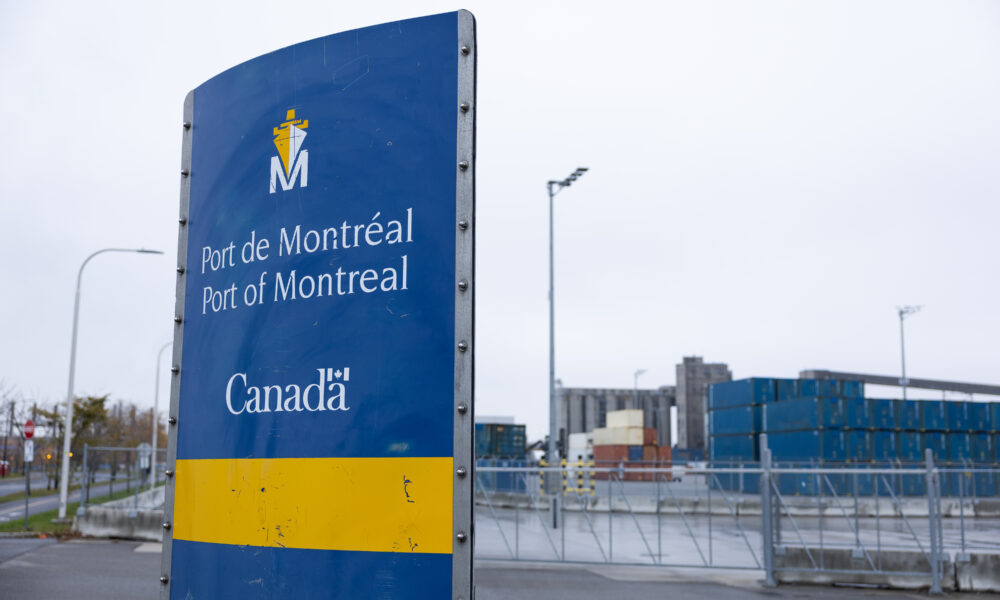
The Port of Montreal expansion can be great—if Carney listens to residents’ concerns

The long-planned Contrecœur Terminal Expansion Project aims to expand the Port of Montreal’s shipping container capacity by 60 per cent by building a new port 40 kilometres away from Montreal. At its core, this expansion is a good idea: It will create jobs and stabilize Canada’s American-skewed international trade dynamic. However, residents worry it will harm their quality of life, local ecosystems, and the broader environment, while others claim its increase in size is unnecessary

Critics’ ecological concerns, as well as their concerns about quality of life, are valid. Locals are the ones who will have to live with the consequences of this massive development. Prime Minister Mark Carney must give affected communities a voice in the planning process rather than steamrolling them. Incorporating community consultation into the expansion project will improve the benefits and sustainability of the port, while simultaneously strengthening public trust in government and its projects. 

Canada’s economic future looks uncertain after President Donald Trump abruptly ended trade negotiations and promised increased tariffs as retribution for an anti-tariff advertisement aired by Ontario Premier Doug Ford. Canada’s economy has historically relied on the U.S., but that trust has recently been frayed, meaning that it is fiscally prudent for Canada to diversify its trading portfolio.

Opponents to the legislation argue that the port expansion violates Bill C-5—which aims to increase Canadian economic autonomy by facilitating free trade between provinces—since it makes Canada’s economy less autonomous and more dependent on international trade. However, by broadening capacity for maritime trade across the Atlantic, the port expansion critically lowers dependence on one specific and increasingly unpredictable trading partner: The U.S. Even though the port expansion will bring external competition for Canadian producers, it boosts Canadian autonomy by diversifying trade partners to offer a safety net to Trump’s flip-flopping policies. Bill C-5 explicitly permits exceptions for certain projects deemed to be in the national interest of Canada, and this plan meets that criterion.

However, this project poses environmental concerns for locals: Over 1,000 cubic litres of river water will be used each day to clean machinery on-site, and it is very possible that dredging may harm the local copper redhorse fish. While minister of Environment and Climate Change Julie Dabsuran has approved the original plan under strict conditions, involving environmental impact mitigation and collaboration with some First Nations communities, the government’s environmental responsibilities cannot end there. It must continue to incorporate input from local residents about the new changes. 

One of the most blatant instances of neglect of community feedback is the project’s abrupt decision to allow construction work to continue late into the night. Instead of tailoring the project to address residents’ concerns, preliminary work began on the site almost immediately after the end of the comment period last month, sending a message to locals that their input is a low priority.

Residents’ environmental concerns about the port expansion are intimately tied to questions about Canadian autonomy. Some residents highlight that the port contributes to an economy fueled by international trade, which contributes more to global warming. However, an economy oriented towards international trade //can// coexist with a healthy environment. Surprisingly, studies have shown that trade within North America is actually more carbon-intensive than trade across the Atlantic or Pacific. Most goods traded between the U.S. and Canada are transported into Canada on trucks, which emit far more carbon than ships do. To be clear, however, a massive expansion in shipping capacity will undoubtedly increase emissions in the shipping sector; a better alternative would be a smaller expansion that accommodates a growing shipping sector without creating surplus capacity. 

Community concern about the effects of the port expansion on Canada’s sovereignty and the global environment is misplaced. However, local issues like water pollution, habitat destruction, and noise disturbance are real risks that the project planners have not clearly accounted for and have poorly communicated to residents under time pressure from the government. Carney’s administration must not let its ambition get in the way of due process. A smaller expansion could address constituent concerns by lowering water usage, requiring fewer construction hours, and curbing greenhouse gas emissions. 


Whatever the compromise the people of Contrecœur and the government of Canada end up finding, the best solution will ultimately be one reached through genuine collaboration.

Read the latest issue

Read the latest issue