

Latest News

McGill, News

AUS Legislative Council condemns award given to McGill professor

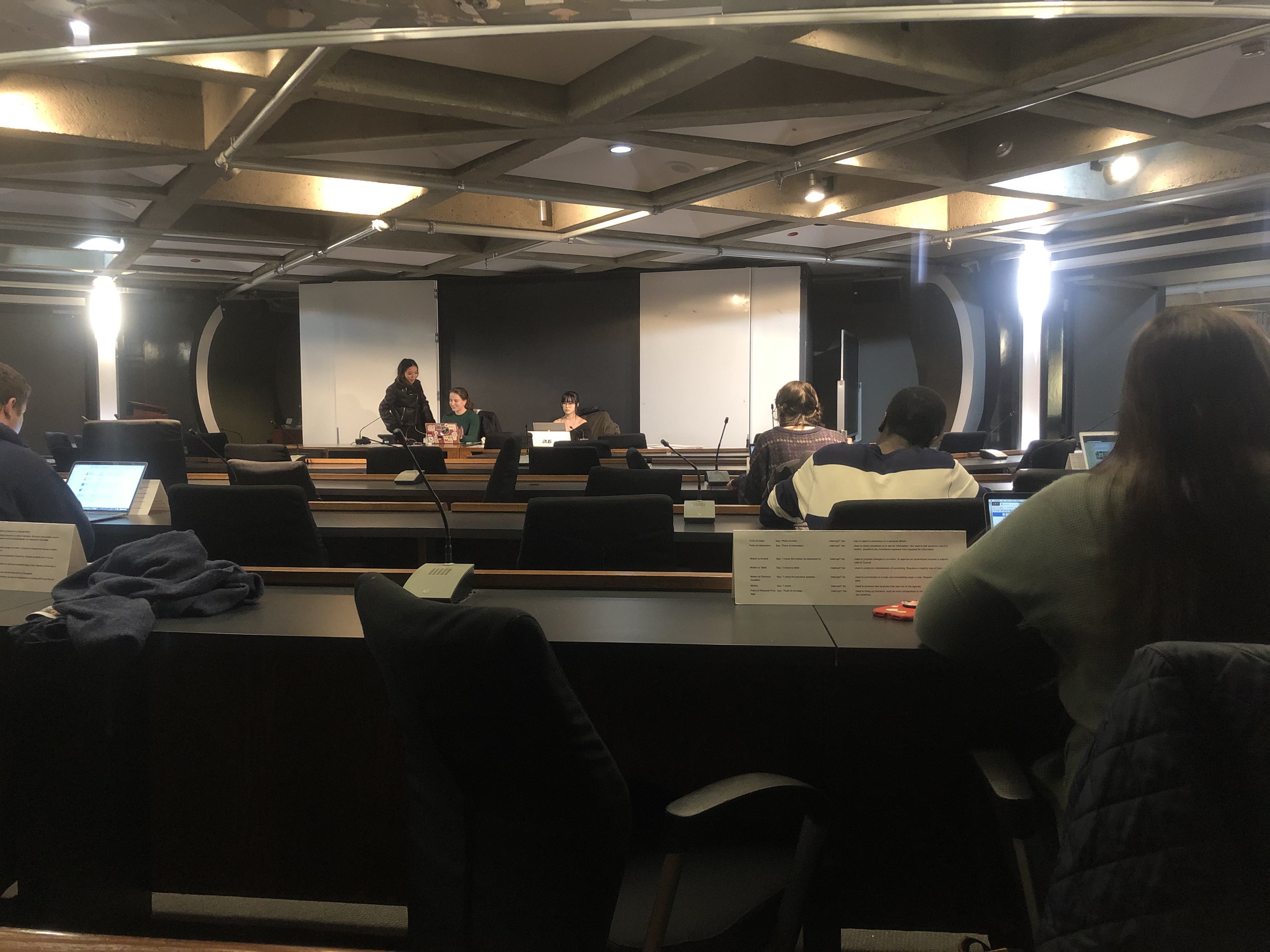
The Arts Undergraduate Society (AUS) Legislative Council convened on Jan. 29 to discuss several issues, including a controversial award given to a McGill professor, expanding the Arts Undergraduate Improvement Fund (AUIF) budget, and the AUS elections. 

The meeting opened with the Motion Regarding Condemnation of McGill Faculty of Arts Promotion of Turkish Academy of Sciences (TÜBA) Award. In 2019, Turkish President Erdogan presented Jamil Ragep, a professor in McGill’s Institute of Islamic Studies, with an award from the TÜBA

The World Islamic and Middle East Studies Student Association (WIMESSA) President Damla Cakmak explained that the motion would denounce the Faculty of Arts’ promotion of the award, since TÜBA is linked to a government with a history of human rights violations, such as the continued abuse of Syrian refugees by border patrol.

“We […] condemn the promotion of this award by the Faculty of Arts,” Cakmak said. “TÜBA is no longer a legitimate scientific institution, due to ties with the government […] TÜBA’s members are elected either by President Erdogan or […] other government-affiliated institutions.”

Brent Jamsa, Vice-President (VP) External of the Canadian Studies Association of Undergraduate Students (CSAUS), asked whether Ragep was aware of the human rights abuses that TÜBA is associated with. According to Cakmak, Ragep was contacted prior to his acceptance of the award. 

“Before he went to Turkey to get the award, two representatives from WIMESSA approached him and had a […] conversation with him about how problematic it would be to get an award from […] an institution with a long list of human rights abuses,” Cakmak said. “He knew very well that the students were not happy with it.”

The motion passed unanimously, with five people abstaining. 

The council also increased the Arts Undergraduate Improvement Fund (AUIF) budget for renovations in classrooms and ratified the AUS Food Sales Policy. The policy outlines the procedures and equipment that AUS departmental associations must follow in accordance with Quebec’s food health and safety protocol. It is similar to that of the Students’ Society of McGill University (SSMU), except that AUS student clubs and organizations do not need to pay a fee and can only serve food on two specific tables in the Leacock Building. 

Finally, VP Social Kimberly Yang proposed a motion to extend the AUS campaign dates to include polling period, which will be occurring from Feb. 17 to 19, so that candidates can share their platforms on campus and social media during elections. Arts Senator Henrique Mecabô remained skeptical on the matter.

“My concern is that if somehow a candidate realized that they were losing the election, as polling continues, they would be able to spend a lot of money on Facebook ads,” Mecabô said.

However, due to campaign spending limits and the inability of  candidates to see election results until after the polling period closes, the council agreed that this would not be an issue, and the motion passed.

Sound Bite

“We don’t release daily updates or anything like that, so you don’t know [the results] until [the] polling period closes, and the only person I know on campus who has run Facebook ads was SSMU President Bryan Buraga, so I don’t think it’s a common thing.” – AUS President Jamal Tarrabain, on the use of Facebook ads in AUS elections.

Flashback

Jamsa criticized democratic backsliding in Turkey but questioned why the AUS Legislative Council would condemn Ragep’s award while student government organizations at Duke University, where another professor received the same award, chose not to do so. Cakmak responded that, regardless of other student bodies’ decisions, the council could still make a difference on the McGill campus. VP Academic Ananya Nair echoed this, saying that when a department distances itself from an award, it speaks volumes.


Arts & Entertainment, Theatre

Tuesday Night Café Theatre hosts 24-Hour Playwriting Competition

The competition’s rules are straightforward: Twenty-four hours to write a play, 24 more to rehearse, followed by their performance. On Jan. 25, an eager audience filled up the Tuesday Night Café theatre, witnessing four concise and fully-realized plays.

Each performance ran about 20 minutes. Sam Katz, U0 Arts, directed the first, called The Boogie, which, from its opening moments, toed a tense line between comedy and horror. As Katz, also an actor, made his way on stage, the room was dark and silent. Seemingly setting up a creepy and uncomfortable experience, Katz stood still until “I’m so Excited” by The Pointer Sisters echoed through the speakers and he began dancing, moving awkwardly like an alien trying mimic a human boogie. The gag set a unique tone for the rest of the act, and once the laughter subsided, the piece began prodding notions of justice and punishment—once it had been revealed that the endless dancing was a punishment for murder. Despite some repetition and an extended runtime, the piece seemed to accomplish what it set out to do: Make the audience laugh, make them uncomfortable, and make them think. Each play that followed was as succinct as the first.

Selene Coiffard-D’Amico, U2 Arts, directed On Purpose, a play that captured grief, love, and family in surprising fullness, while Emma Victoria, U2 Arts, brought to life The Devil and The Wind, a fantastical story which saw the former and the latter personified and locked in a toxic relationship. Coiffard-D’Amico’s piece explored the ways in which the death of someone close to us pushes us to re-examine our relationships and ourselves—and to evaluate our lives in the face of their inevitable end. Meanwhile, Victoria’s play took that shape of a classic folk tale, standing out in contrast to the secular and modern narratives occupying the rest of the show. The folk tale was made all the more poignant through its Old Montreal setting,  grounding its supernatural elements in familiar locations. While Coiffard-D’Amico’s work contributed significantly to the night’s performances, the piece which won the competition, as voted by last year’s directors, was Riley Palanca’s Art, Business, and Coffee.

Funny, touching, and relatable, Palanca’s play focussed on the connections formed between friends and the differences which allow them to compliment one another. With some existential undertones, each scene featured characters engaged in conversation, often speaking pointlessly, revealing their neuroses as much to the audience as to themselves. The play was set up similarly to a sitcom, with each character embodying a particular trait. One character’s mantra, “just gotta keep moving,” contrasted with the laid-back, stoner vibes of another, while a third character’s preoccupation with his financial situation was paralleled by another’s artistic ambitions. It was an all-encompassing meditation on the struggles of being a young, broke student, and it succeeded largely thanks to  the cast’s charm. Art, Business, and Coffee was also genuinely funny, and didn’t force the drama as hard as the other plays tried to. It focussed on the mundanity of daily life and let those moments speak for themselves, instead of shoving quarter-life sadness down the audience’s throat.

If not for the short runtimes, one might not have known that these plays were written and rehearsed in two days or less. Each piece hit on a few specific ideas and carried them through to the end, while the few missteps and awkward moments only added to the joyful, low-stakes atmosphere that makes this festival such a draw among students. The event is set to return next year, and in the words of the Pointer Sisters: I’m so Excited!

Student Life

Starting the conversation about eating disorders

University life is filled with academic and social pressure which can give rise to increased mental health concerns. One class of mental illness that affects many students is eating disorders. According to the National Eating Disorder Association (NEDA), it is estimated that between 10 and 20 per cent of women and four to 10 per cent of men attending university suffer from an eating disorder. These illnesses are characterized by irregular eating habits and an extreme fixation with eating, food, weight, and body image. These often-undiagnosed illnesses can lead to struggles with depression, anxiety, and even substance abuse. 

The Students’ Society of McGill University’s (SSMU) Eating Disorder Resource and Support Centre (EDRSC) aims to ensure that McGill students are aware of the impact of eating disorders and disordered eating as well as the support available for them on and off campus. In doing this, the organization is hosting its second National Eating Disorder Awareness Week starting Feb. 3. 

In an interview with The McGill Tribune, Paloma Helper, Training Coordinator, and Cody

Esterle, General Coordinator, explained how the centre was created to offer peer support and a safe space for better connection, healing, and understanding of eating disorders.

“Our mission in terms of peer support is to create a financially accessible, non-judgemental, non directional space that is aware of and educated around eating disorders,” Helper and Esterle wrote. 

Learning and understanding the characteristics of different types of eating disorders can help increase awareness of these complex diseases. There are various types of eating disorders, each taking on a different form. Anorexia nervosa, bulimia nervosa, and binge eating disorder are the three most common. Anorexia occurs when an individual participates in self-starvation, bulimia is when someone engages in binge eating followed by purging, and binge eating disorder is when one has frequent occurrences of eating large quantities of food. Eating disorders are treatable illnesses; however, the symptoms and consequences can be deadly without medical attention. 

There is no known cause for the onset of these illnesses, but research suggests that a combination of factors can play a part in the development of eating disorders. Sasha Bell, Communications Coordinator for the EDRSC, described how stigma surrounding mental illnesses discourages individuals from accessing proper care. 

One of the main goals of Eating Disorder Awareness Week is to start conversations around eating disorders,” Bell wrote in an email to the Tribune. “Stigma is a huge barrier to education and accessing support, and we want to provide space for people to discuss their experiences and learn more about eating disorders.” 

With the rapid influence of social media and distorted images portrayed online, many stereotypes exist surrounding the various types of eating disorders. In society today, there is a misconception that eating disorders are exclusive to a cisheteronormative standard of womanhood. However, this assumption can be dangerous to men and members of the 2SLGBTQIA+ community. 

“Possibly the most pervasive myth about eating disorders is that they only affect white, thin young women,” Bell wrote. “In reality, eating disorders can affect anyone.”

Research suggests that disordered eating behaviour, particularly compulsive exercise, is an increasingly prominent issue among straight men. A recent study found that another group at higher risk are transgender individuals, who reported experiencing disordered eating at almost four times the rate of their cisgender peers. 

Overall awareness can lead to prevention and treatment of eating disorders. Understanding its complexity helps one practice increased consciousness and empathy for those who are struggling with disordered eating. Awareness of these health concerns can also help decrease the stigma often associated with such mental illnesses. 

“I hope students who come to our events leave with a more nuanced understanding of eating disorders, and increased knowledge of how they could go about accessing support,” Bell wrote. 

Students seeking resources and support for eating disorders should visit https://ssmu.ca/resources/eating-disorders.

McGill, News

McGill’s ROAAr unveils its fully functional 19th century printing press

Patrons of McGill’s Rare and Special Collections, Osler, Art, and Archives (ROAAr) filled the fourth floor of the McLennan Library Building on Jan. 30 for the unveiling and demonstration of the earliest surviving Columbian printing press in North America. The event also launched the library’s Book Arts Laboratory, which will use the press as an educational tool for several faculties across the university. 

McGill’s printing press, first invented by George Clymer of Philadelphia in 1813, is the earliest surviving model of a Columbian press in North America. The library’s copy was manufactured in England in 1821 and obtained by McGill in 1958: The principal and director of libraries at the time, Cyril James and Richard Pennington respectively, spearheaded the printing press’ acquisition. 

Now that it has been renovated, the reveal was the first in a series that will focus on the press itself held in the Book Arts Lab.

“The press was gathering dust in the library’s basement until [the library received a grant] a few years ago allowing the press to be restored,” Book Arts Lab librarian Lauren Williams said. 

The press operated at McGill from 1957 through 1965, and was integrated as a part of McGill’s teaching program, until the library put it in storage in the 1970s. 

“It has been almost 50 years since [the press] has been functional, [and] this is what we’re celebrating today,” ROAAr librarian Anne Marie Holland said. “It is [a part of McGill’s] William Colgate History of Printing Collection […] one of the largest subject specific collections [in North America] and a practical, rich universe for the study of the history of books and print culture in general.”

Professor Eli MacLaren of McGill’s English department, whose teaching focusses on Canadian literature and poetry, spoke next. MacLaren discussed how our understanding of the power of books can influence how we learn not only about literature, but also about other cultures.

“Seeing how books are made, preferably with a glass of red wine in hand […] is really a priceless way to begin to discover what [books] mean and what they have meant at different times and places,” MacLaren said.

Speeches were followed by a demonstration of the printing press, led by Jennifer Garland and Williams, two of the Book Arts Laboratory librarians. The hosts allowed guests to handle the press themselves and create a print with details of the event. 

“It’s so easy to use,” Garland said. “But it is literally back-breaking work!”

Restored to its black and gold gilt colours, the press was shiny and ornate, with a large sculpture of an eagle sitting atop one of the main levers, moving with the lever as it is pulled. This design was very distinctive during the 19th century, and was often known as the ‘eagle press’ by those working in the printing industry. Operating thanks to a weighted lever system, the press applies an enormous amount of pressure, making it easier for those pulling the lever to create numerous copies of a design. 

With plans to use the press for many events in the upcoming Winter 2020 semester, the lab has been equipped with a number of primary type supplies in order to truly promote the usage of the press. Through these actions, the ROAAr hopes to educate both students and staff on the importance of such historic literary tools, creating a unique interactive learning opportunity.

“Using primary sources to show and not tell is the hallmark of any great university,” MacLaren said. “Hopefully, this press will do just that.”

Basketball, Sports

2020 NBA trade deadline predictions

With the NBA trade deadline quickly approaching on Feb. 6, the window for teams to make last-minute moves is closing. While most executives and analysts predict a fairly uneventful buildup to the deadline, The McGill Tribune sees the potential for things to get spicy this season, like they did two years ago when Blake Griffin was traded from the Los Angeles Clippers to the Detroit Pistons. Here is the Tribune’s list of the most intriguing trade possibilities in the coming days.


Joel Embiid

At first glance, trading Joel Embiid might seem absurd. However, in light of Ben Simmons’ recent offensive explosion as a direct result of Embiid’s injury, it has become increasingly obvious that Simmons’s and Embiid’s style of play are not necessarily compatible. Because of Embiid’s inconsistent health and spotty record in the postseason, it seems ever more likely that he might be the player on the trading block in favour of building around the younger Ben Simmons. 

In exchange for Embiid, the Philadelphia 76ers would hope for an elite shooting small forward to compliment the drive-first, slash-and-kick style of play of Simmons; Jason Tatum, of the Boston Celtics, would fit that role perfectly. Jaylen Brown’s formidable improvement, Gordon Hayward’s full return, and Kemba Walker’s meteoric rise as the centre of the franchise make the Celtics a contender looking to make a move for a title. While the Celtics have previously described Tatum as “untouchable,”it seems possible that they would be motivated to sacrifice Tatum to complete their roster with a dominant centre like Embiid.

Frank Ntiklinka

Currently trapped on a dysfunctional roster with the New York Knicks, Frank Ntiklinka has had a dismal offensive performance this season, averaging 31.7 per cent from three, and 37.8 per cent overall, for only 5.9 points per game. These statistics, however, distract from his actual value as a supremely athletic 6’4” guard, capable of defending multiple positions and running a pick and roll.

With an all time low trade value, it is possible that a more savvy organization in need of his defensive prowess will acquire him. Don’t be surprised to see him bought low by the Golden State Warriors or the San Antonio Spurs, who could develop his offensive skills and plug him in to a well-run system.

Bogdan Bogdanovic

Small forward Bogdan Bogdanovic is an oftoverlooked player, but his recent promotion over Buddy Hield in the Sacramento Kings’ starting lineup has demonstrated that he’s a skilled, clutch player, who also led a Euroleague team on a deep playoff run. Additionally, Bogdanovic has the advantage of having an ownership-friendly contract at $17 million a year. 

With his playoff repertoire, versatile playstyle, and desirable price point, it is likely that championship contenders will be looking to add him to their rosters in the coming days. The Los Angeles Clippers and Lakers seem likely destinations for Bogdanovic, as they will be looking to add depth to their benches going into the postseason.

Andre Iguadala

Veteran Andre Iguodala found himself on the Memphis Grizzlies this season after an off-season trade. The Grizzlies, feeling no need to add Iguodala to their roster of young talent, came to a mutual agreement, saying they would trade him before the deadline. 

A former finals MVP and elite perimeter defender, Iguodala will be highly coveted by championship contenders. This is complicated by his burgeoning veteran contract, however, which will make him inaccessible to teams close to the salary cap. The Houston Rockets may be a destination for the accomplished veteran, as their defence is lacking, and he would fit in nicely with their catch-and-shoot style of offence.

Ask Ainsley, Student Life

Ask Ainsley: Should I be worried about the coronavirus?

Dear Ainsley,

I’m very scared of this emerging coronavirus that’s been spreading around the world and killing people. My friends tell me that I’m the type of person who thinks of the worst case scenario when it comes to my wellbeing. Whenever I am near people who cough, I get worried that I might catch something. I hear this disease started in China. Should I be avoiding eating Chinese food or going to places frequented by Chinese people? What can I do to prevent getting this virus?

Sincerely,

Worried Sick About Getting Sick (WSAGS)


Hi WSAGS,

It is normal to feel a sense of panic when there seems to be a constant stream of sensationalized information being flashed on our screens. The first thing to address is your fear of illness itself. It is okay to be worried about being sick, but if you or your friends are noticing that your health is causing an excessive level of anxiety, it may be time to see a doctor. Not only will a checkup with a physician give you an actual indication of any illness, they can also refer you to a mental health professional if this worry has been causing problems in your life. This type of worry is known as illness anxiety disorder and is a real issue that can become debilitating if left untreated. 

With regard to the coronavirus, it is important to know that while the World Health Organization (WHO), has described this epidemic as a global health emergency, the risk to students at McGill remains low, according to federal and provincial public health organizations. At this point, protecting yourself means washing your hands thoroughly with soap and warm water, as well as sneezing or coughing into your arm to reduce the spread of microbes. These pieces of advice are always good to follow even in the absence of the coronavirus outbreak, since there are other more commonplace illnesses that are caught in the same way as this virus, such as the common cold or the flu.

An even more contagious aspect of this virus is the spread of disinformation on the Internet. Social media sites, such as Twitter and Facebook, have historically done very little to stop the spread of false information and, with this outbreak, the issue of falsehoods is no different. Many reports have exaggerated or falsified claims on the origins and reach of this virus so make sure that any news about the virus that you are getting is from a credible, primary source, such as the WHO or the Public Health Agency of Canada.

A particularly appalling result of this hysteria and disinformation that needs to be addressed is the rise of racism against Chinese people. It is easy to get caught up in all this fear-mongering and start panicking but being mindful of those who are most affected by this outbreak is as important as ever. They are as scared of this virus as you are and offering support through solidarity in this difficult time is key. This means not fuelling attitudes around this outbreak that exclude or harass Chinese communities. A prominent example of this prejudice is the one surrounding the ‘bat soup’ theory, which supposes that the virus came from the alleged ‘bizarre’ delicacies of Asian people. These stereotypes are based on a form of Western exceptionalism and disregards the fact that many diseases come from contact with animals that North Americans eat everyday, such as the swine flu, which comes from pigs, and diarrheal E. coli, which comes from eating unwashed meat. Another aspect to note is that Asian-run businesses here in Canada are at no greater risk of having this virus than other businesses, so you have nothing to worry about when eating Chinese food here in Montreal. In a time that can be distressing for those who have ties to China, you have to remember to be kind. What is more dangerous than spreading sickness is spreading hate. 

Stay well,
Ainsley

Do you have questions about love, life, and other things? You can Ask Ainsley in this anonymous form (link) for a chance to be featured in an upcoming article!

McGill, News

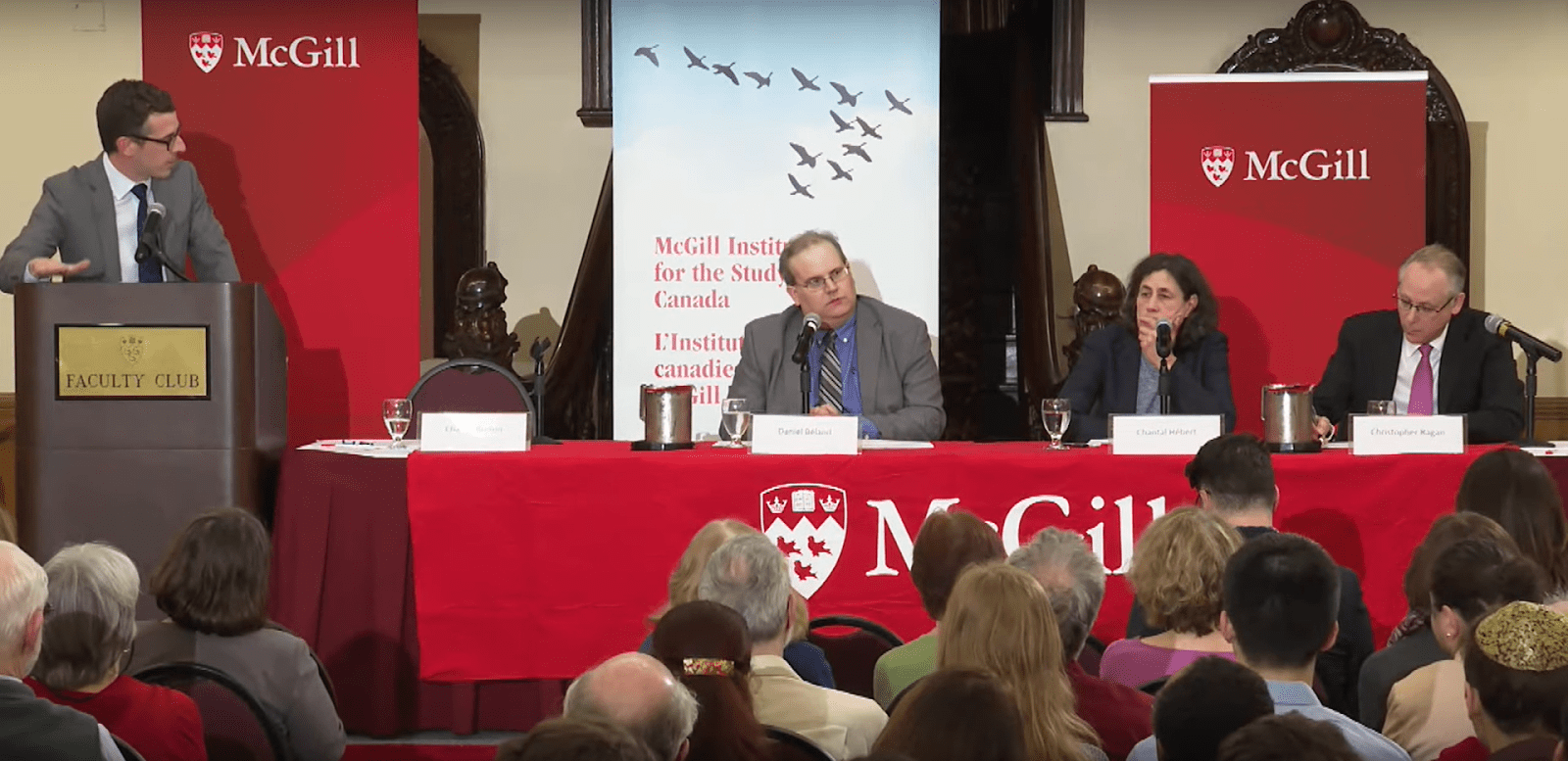
Faculty Club hosts discussion on the future role of Trudeau’s government

In an evening of discussions, a panel organized in collaboration with the Institute for Research in Public Policy welcomed a full house at McGill’s Faculty Club. Titled ‘Justin Trudeau and the Politics of Federalism’, the event extensively examined Ottawa’s interprovincial policies entering the new year. Chantal Hébert, a political journalist at the Toronto Star, began the night with a show of candor, challenging the other panelists to maintain a balance of hope and concern. 

“This parliament is opening 2020 on an incredible show of federal [and] provincial unity,” Hébert said. 

Hébert revealed that she was impressed by the unanimous support for the United States Mexico Canada Agreement (USMCA), but is still concerned by the ways that progress can be inhibited by a minority government.

Daniel Béland, a McGill professor of political science and the Director of the McGill Institute for the Study of Canada, was the first to introduce the rising concern of Albertan separatism, noting how the division of right-and left-wing politics has manifested in geographical conflict.

“This issue of fairness and trust within our federal system [reveals how] partisan divides [have become] way stronger now,” Daniel Béland said. “[…] The times have passed and now we live in a different context [….] These elections at the provincial level [have] change[d] the partisan map across the country.”

At the opposite end of the table, Christopher Ragan, Director of the Max Bell School of Public Policy and a McGill professor of economics, steered the topic of ‘Wexit’ instead to the movement’s relationship with Ottawa. An Alberta native, he reasoned that there is more concern for self-preservation in Western Canada than for federal opposition.

However, the event moderator, Charles Breton, was quick to challenge this view. An Executive Director of the Institute for Research in Public Policy, Breton restated his suspicion of the West during the question and answer session.

“As someone [who has] lived in Vancouver for 10 years before coming here, when we talk about Wexit, there’s only one part of the West that wants out and it’s not British Columbia,” Breton said.

The panel addressed how the disparity between British Columbia and Alberta indicates the necessity of proceeding with the interests of each province in mind. In examining the intricacies of interprovincial negotiations, the panelists emphasized the consequences of categorizing conflict.

“For as long as I have been in politics, Alberta has been all in or all out,” Hébert said. “[…I] don’t think that the kind of debate over Québec’s place in Canada really parallels the current debate about Alberta and Saskatchewan alienation. Both are very real, but they’re grounded in very different phenomena.”

Hébert and Ragan described how ‘Wexit’ will be dependent on the federal government’s course of action, but could create further division in Canada as political and economic fluctuations prove inversely proportional.

“One of the lovely ironies is that […] the decline in the price of oil, which is a big and negative shock in Alberta is a positive shock to the economies of Ontario and Québec,” Ragan said. “So I’m actually surprised that this hasn’t been a point that has been picked up as something that’s adding to the political tension.”

 Despite the challenges facing the minority government, the panel easily identified where Canada is capable of growth, and the possibility of unity.

 “In the end, federalism is not for or about those political actors—it’s supposed to be about the people. It’s an institutional arrangement that’s there to increase accountability,” Breton concluded.

As this parliament moves forward, the audience reflected the developing curiosity of the changing political climate.

“It was a good catch-up […] there hasn’t been a whole lot going on in politics right now,” Nathan Collett, U2 Arts & Science., said. “It’s good to see so much interest.”

Student Life

Dates and mates

With Valentine’s Day rapidly approaching, many students may find themselves reaching for Tinder or Grindr. These dating apps have exploded in recent years: Tinder alone boasts over 50 million active users worldwide since the app was founded in 2012. While such apps offer a large pool of people to choose from, niche dating apps have been gaining popularity, each with unique features to fill unmet needs. Here are four alternative dating apps to try out this Valentine’s season.

Happn: Finding love next door

Similar to Tinder, Happn is a dating app that uses GPS services but takes a far more extreme approach to location-based match-making. Boasting a unique concept of “missed connections,” Happn only shows the profiles of people who have recently been in close proximity to each other, claiming that users should “live in the moment.” Unlike Tinder, Happn displays multiple profiles at once, based entirely on location, and can even alert you if you’ve recently been in the same grocery store as someone. This can be a good way to start conversations. Happn also includes a voice messaging feature so users can talk to each other in a more intimate setting. Its location-based algorithm may cause safety concerns, with reports of the app being used for stalking purposes. However, Happn now allows users to switch to “invisibility” mode to hide their location.

HER: For femme-identifying folks

While mainstream apps such as Tinder and Bumble offer categories for 2SLGBTQIA+ users, these digital spaces are often dominated by a heterosexual audience. HER is a dating app that provides a safe space for queer women and non-binary femmes to connect. The profiles on the app are generally more expressive than other dating apps, allowing users to post multiple pictures or interests that are “likeable” by others. There are multiple categories that can be filled out, including diet preferences and star signs, but HER avoids putting people in a box by having multiple options for categories such as gender identity and sexuality. A recent update in June 2019 included a ‘What does this mean’ field across the sexuality, gender, and pronouns categories to help users understand each other and support queer identity.

Blued: An Asian alternative to Grindr

While Grindr is one of the most popular dating apps for queer men, it also contends with  issues of racism, often in the form of dating preferences. Many men of colour have reported racial discrimination on the app, with profiles that list preferences such as “No Blacks, no Asians.” Blued, a replacement to Grindr, is a Chinese dating app for gay men, created in 2012 by Ma Baoli to normalize same-sex relationships in China. The app boasts over 40 million users, and while it caters toward an Asian audience, it has rapidly gained popularity all over the world. Unlike Grindr, which is primarily a dating app, Blued also has traditional social networking options, giving users the ability to broadcast videos, start group chats for a more social experience, and “follow” each other.

Tastebuds.fm: Music is the food of love

For those people for whom music is the way to their heart, then Tastebuds.fm is the perfect dating app. While dating apps like Tinder and Grindr offer integration with Spotify, Tastebuds.fm places music at the forefront of dating, which attracts those who normally don’t use a dating app. Building a profile on Tastebuds involves selecting artists or importing an account from either Spotify or Last.fm to generate a musical profile. The app not only finds potential romantic matches but also suggests musical artists that the pair would have in common. Currently, Tastebuds is working on adding features to connect its members offline through musical gigs or meetups.

Arts & Entertainment, Music

Thursdays (a) Live makes its debut of the decade

On a chilly Thursday night, a small crowd of student musicians and their supportive fans filed into the basement of The Yellow Door. With enough Tim Hortons’ hot chocolate to fuel a small army and a “shoes off at the front door” policy, Jam for Justice and McGill radio station CKUT’s Thursday’s (a) Live offered students both a cozy reprieve from the biting January cold and a chance to support up-and-coming talent.

Considering McGill’s history of notable musical alumni, CKUT’s monthly showcase is intended to provide a platform for emerging student musicians to perform for a live audience. Mariam Salaymeh, the outreach and events coordinator for CKUT, explained why live events such as Thursdays (a) Live are an important resource for the musicians at McGill. 

“[At CKUT we] have the resources to support and promote student artists. I wish we were a not-for-profit record label personally, because back in the day we would have had Arcade Fire, we would have had Grimes, so many people that we could have given [a]  voice to,” Salaymeh said. “[Students] have so much with academics to juggle, [CKUT] can support them with a venue and the tec [they need].” 

Opening what would prove to be an acoustic guitar-heavy evening were the musical stylings of Johnathon Webb, U3 Arts. Somewhat timid but undoubtedly friendly, Webb was a crowd-pleaser, turning to the audience for requests. Featuring acoustic covers of classics from David Bowie to Bob Marley, Webb delivered a charming performance punctuated by adventurous vocals such as a brief moment of falsetto during Space Oddity. Wrapping up his set, Webb performed an original, jokingly titled “Long March of the Red Army.” While his emotional ode to a nameless lover lacked the communist overtones one might expect of such a title, it was nonetheless entertaining. 

Up next was the duo Moosehowl, made up of U3 Science student Jacob Sanz-Robinson and U2 Engineering student Anthony Porporino, two talented guitarists with a mutual love for classic rock. While the duo performed only Pink Floyd covers with a Grateful Dead song thrown in for variety, they played well together, providing some much-appreciated 1960s hits to a night dominated by folksy love songs. 

As Katie Harbour, U2 Science, took the stage the already crowded basement began to get uncomfortably full. Having recently released her first E.P., titled ‘EP,’ on Jan. 26, Harbour’s performance drew a crowd. With nothing but a guitar to accompany her, she put on a captivating performance of several of her recently released songs. While her music, which focuses mainly on the turbulent world of young love is unquestionably catchy, Harbour’s rich and clear vocals truly set her apart from the previous performers. In particular, her original song “Useless,”  a Rex Orange County-inspired tune, sounded just as polished in person as it does on her album. 

On fourth was Maria Graham, U3 Science. Unlike the other performers that evening she lacked instrumental accompaniment instead relying solely on her powerful vocals to carry her performance. Though Graham initially gave off a subdued impression, the strength of her voice was put on display during a cover of Chet Baker’s “My Funny Valentine.” 

Closing the show was U3 Arts student Sarah Krier, a self-described bedroom pop artist who already has three albums under her belt. With just her guitar, Krier was unable to deliver the full experience of her synth-heavy repertoire, yet her acoustic performance felt like a comforting conversation with a good friend. Her short and often gentle songs feel much like a diary entry made privy to an audience. When combined with Krier’s laid-back stage presence, listeners could not help but feel at ease. Though Krier’s performance differed from the signature neo-psychedelic style of her online discography, her acoustic renditions were a perfect end to the night. 

By 8:45 p.m., the show had wound to a close and the acoustic guitars were shut away. The crowd emerged out from the basement of The Yellow door with the peaceful feeling that only a night of dreamy music and good company can provide.  

Recordings of Thursdays (a) Live are broadcasted on CKUT 90.3 FM.

governance
McGill, News

SSMU Legislative Council discusses mental health policies

The Students’ Society of McGill University (SSMU) Legislative Council reconvened on Jan. 30 to debate new motions regarding communication between SSMU and the community, as well as new proposed health policies.

The second council meeting of the year saw the passing of the Motion Regarding Amendments to the Effective Committees Policy,  aiming to improve the communication between student groups on campus. The policy also affirms the role of SSMU committees and commissioners in discussing with groups that are involved with equity and community engagement. 

Ariana Kaye, SSMU Clubs Representative, expressed concern with the section of the motion involving the “Equity Caucus.” 

“The motion, as it currently stands, makes reference only to groups that represent a limited segment of the McGill student body, and there is no guarantee that other groups will be invited, represented, or consulted,” Kaye said. “Only one of the official member groups of the Solidarity Alliance of McGill (SAM), who was consulted, represents an ethnicity, while all others represent political opinions.”

SSMU Vice-President (VP) External Affairs Adam Gwiazda-Amsel, who proposed the motion, addressed Kaye’s concerns by clarifying the roles of certain committees. 

“This is a difficulty which needs to be addressed specifically within the Equity Committee and with the Equity Commissioners, [rather than] the Community Engagement Committee,” Gwiazda-Amsel said “There are certain groups that are generally not included in McGill conversations about equity. This [amendment] requires the Equity Committee, which currently has the problems you are citing, to [enter] into dialogue with those committees and work towards improvements.” 

The motion carried with 21 in favour, two opposed, and six abstaining. 

The council proceeded to discuss the Motion Regarding Adoption of the SSMU Mental Health Policy and Plan 2019-01-09, moved by VP Student Life Billy Kawasaki. The policy presents long-term goals for improving SSMU’s approach to student mental health and wellness. 

Kawasaki also proposed an amendment to the motion: Changes included the formation of a health and dental review committee, enhanced specialization of care for marginalized student populations, and the collaboration of the advocacy projects of mental and physical health of student groups. 

SSMU Mental Health Commissioner Olivia Frank gave an overview of the drafting of the policy.  

“We did a lot of work with various stakeholder groups across campus to try to create a policy that is as well-rounded, appropriate, and representative of what mental health is like on campus and what we hope it will be,” Frank said. “Most importantly, we amended the structure of what the mental health committee and commissioner would look like, as well as decreased it to a three-year plan, because mental health changes rapidly across campus and Canada.” 

The motion carried with 26 in favour, none opposed, and one abstaining.

Council will reconvene on Feb. 13 in McConnell Engineering 603 at 6 p.m. 

Soundbite

 “Historically, there has not been a commitment to representing the full diversity of the student body at this university within the equity circle. We need clarity to understand which [populations] will be included in these committees, and the assurance that this will not be used to represent certain groups of the student body and systematically exclude other groups.” – Ariana Kaye, on the proposal of an “Equity Caucus” 

Moment of the Meeting 

To mark the last SSMU Legislative Council meeting of Husayn Jamal as Speaker, Andrew Chase, Arts Representative to SSMU, distributed buttons to the council and members of the gallery to honour him.

Read the latest issue

Read the latest issue