


Latest News

Arts & Entertainment, Music

Music as a medium for change: Political voices resonate through sound

Pop culture has changed drastically over the years. Many argue that the era of monoculture—when people shared the same cultural experiences, listened to the same songs, watched the same shows, and followed the same celebrities—is behind us. Audiences are now scattered across various playlists, social media platforms, and niche subcultures. Some claim that, because of this fragmentation, a single song can no longer be universal or unify a broad audience as it might have in the past. This makes activism in music less culturally resonant than in previous decades. 

Yet despite this fragmentation, music has long been—and continues to be—a vehicle for resistance and social change. Through powerful lyrics and rhythmic sounds, music transcends our ever-changing culture and permeates our daily lives. In recent years, many artists have taken their activism one step further: Using music as a form of advocacy and protest. King Krule, alongside Brian Eno and Damon Albarn, played a show in London, Together for Palestine, last November, which raised money to send aid into Gaza. In January 2024, Sudanese singer and poet Mustafa organized the Artists for Aid benefit, with all funds going to the organization Human Concern International, to raise money for food and medical distribution in Gaza, as well as Port Sudan, which is undergoing a genocide resulting in the most devastating humanitarian crisis in the world. Well-known singers such as Clairo and Faye Webster participated in the show. These acts demonstrate that culture can operate as a tool for resistance, even when audiences are diverse and fragmented. 

In a monocultural era, mass media coverage is what sparks widespread public engagement. However, today, activism in music adapts to this decentralized media ecosystem. Lorde, Japanese Breakfast, Björk, and Massive Attack are a few among hundreds of artists who have participated in a boycott against Israel’s genocide in Gaza by banning their music on Israeli streaming services, as part of the No Music for Genocide movement. Not only do such movements aid in denormalizing genocide on a cultural level, but they also aim to influence the music industry to end its complicity in the genocide. The movement claims that even though countries like the United States are also complicit, boycotting Israel holds a specific weight: It encourages social and cultural dissent, fighting against dominant government narratives, while reflecting Palestinian calls to boycott Israel completely. 

Music videos also allow artists to position themselves as activists. Though not a recent development, in an era where censorship is prevalent and dissent is stigmatized, artists continue to embed activism in visual form. In her single “Next 2 U,” American singer Kehlani has background dancers performing with Palestinian flags and wearing suits styled with keffiyehs. Her music video also opens with a quote from the Palestinian poet Hala Alyan: “Keep your moon / We have our own / Keep your army / We have our name / Keep your flag / We have fruit and in / All the right colours.” Symbolic gestures as these show that solidarity through art carries tangible weight.

Musicians worldwide have taken a stand against the genocide in subtle but vital ways, going beyond social media advocacy. While using music as a tool for activism may seem futile, solidarity in the arts is an overlooked yet crucial aspect of social change. Not only do boycotts like No Music for Genocide symbolically reject the normalization of Israel, but they also pressure the music industry to sever economic ties with Israel. These acts demonstrate that advocacy is not limited to marches, petitions, or divestment campaigns; culture, including music, carries political weight. 

In a world without monoculture, it may seem harder than ever for artists to influence broad audiences. Yet the recent activism surrounding Gaza and other humanitarian causes, such as Sudan, demonstrates that powerful messages can still reach listeners. Advocacy extends beyond the overtly political, and culture is a powerful tool in shifting public opinion and (de)normalization.
Behind the Bench, Soccer, Sports

European football experiments beyond borders

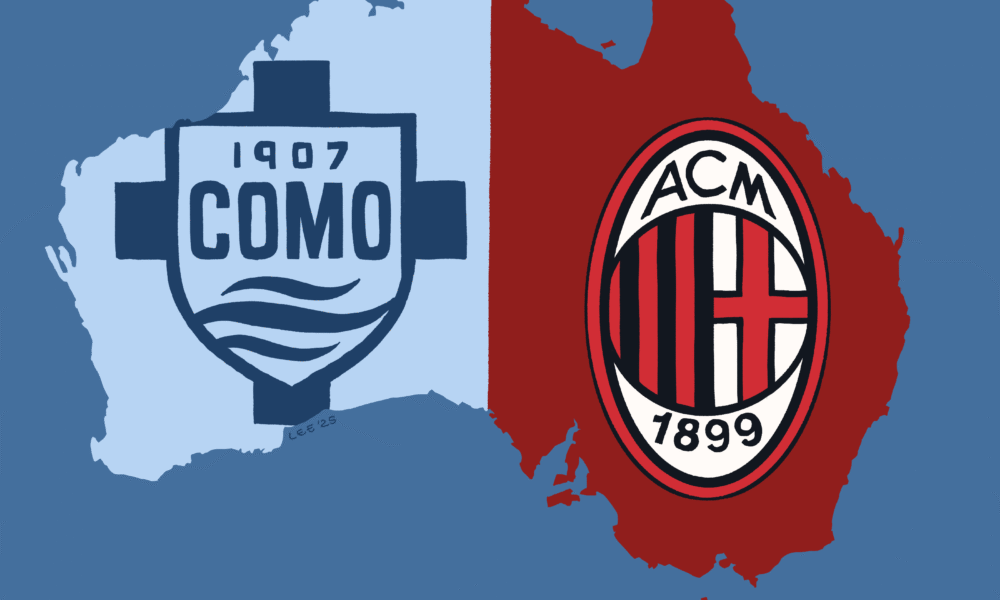
A significant shift has taken place in the world of European football, as the Union of European Football Associations (UEFA) has provisionally approved domestic league matches for Lega Serie A and LaLiga to be played outside their home countries. Specifically, UEFA has approved a proposed match between AC Milan and Como 1907 in Perth, Australia, and a planned match between FC Barcelona and Villarreal CF in Miami, U.S. The UEFA emphasized that these decisions were exceptions and should not be viewed as a common occurrence. As leagues like the UEFA explore new revenue streams and aim to reach broader audiences worldwide, the debate of how these international ambitions clash with the interests of domestic supporters intensifies. 

Fans of the games moving overseas argue that these matches represent an inevitable step in soccer’s spread across the globe. Both Serie A and LaLiga have long searched for ways to grow their international audiences, particularly in regions such as North America and Asia, where the Premier League already dominates soccer viewership and sponsorship revenue. 

Organizers say hosting games abroad will strengthen fan engagement, attract new investors, and showcase the quality of their leagues to emerging markets. In Perth, tourism officials have already projected an economic boost from the AC Milan and Como 1907 match set for early February 2026, with thousands of international visitors expected to attend. This worldwide move reframes soccer clubs as a means of global entertainment rather than local institutions.

However, the UEFA’s language of ‘regret’ when discussing the move highlights the enduring tension between their commercial goals and traditional practice. The union approved the matches abroad only after lobbying from the leagues and insisted they be treated as one-off exceptions, not as a new model for competition. Even after approval, some games have already been cancelled; LaLiga scrapped its proposed Miami game due to logistical and stakeholder opposition issues. 

Critics argue that holding league games abroad undermines the fundamental principle that teams play in front of, and for, their home supporters, on home soil. Soccer fan associations have also voiced frustration, arguing these moves centre profit over loyalty. Many fans view this transition as a harsh betrayal, especially if smaller clubs are forced to sacrifice home-field advantage to satisfy international contracts. 

While this move abroad was a surprise, it is not the first proposition of its kind. In 2008, the Premier League proposed a now-abandoned, extra ‘39th game’ to be played overseas; LaLiga’s earlier attempts to play a match in the United States faced legal challenges and public backlash. The persistence of such proposals reflects a larger transformation within global soccer. As broadcasting deals and sponsorships greatly affect scheduling and location, the sport’s traditional boundaries shift with it. Whether these experiments become rare appearances or the first steps toward a globalized domestic season will depend on fan reactions and how far clubs are willing to go in pursuit of global exposure.

As European football reaches beyond its borders, the tension between global opportunity and displeased local fanbases continues to grow. The UEFA’s weary approval displays both acknowledgment of the game’s international appeal and concern over what could be lost for dedicated local fans and communities. For now, the overseas matches in Perth and beyond remain experiments, rather than the norm. Yet as clubs and leagues continue to chase global audiences, the question of whether the world’s most popular sport will expand its horizons or stay loyal to its long-time traditions and communities still looms. 

Research Briefs, Science & Technology

The cost of silence: How occupational therapy institutions have failed Palestinians

In the face of the Palestinian genocide, Canadian occupational therapy institutions have largely remained silent. This institutional silence has deeply affected many practitioners, who must navigate both ethical responsibilities and moral obligations. 

To challenge this lack of a clear institutional stance, Hiba Zafran, assistant professor in McGill’s School of Physical and Occupational Therapy, and Pier-Luc Turcotte, editor of nursing journal Aporia, co-authored a commentary with collaborators titled “Shattering Silence, Inviting Dialogue: Anti-Oppressive Occupational Therapy During the Genocide of Palestinians.”

The piece argues that occupational practitioners cannot be disconnected from global conflicts and systemic oppression abroad. Thus, they find it concerning that institutions have not even opened a dialogue.

“In this context, deliberate silence is part of the system of oppression and the colonization of Palestine,” Zafran said in an interview with The Tribune.

This institutional silence also reflects a form of hypocrisy.

“As healthcare professionals and occupational therapists, we have the duty to defend human rights,” Turcotte told The Tribune. “And collectively, we all have an obligation to speak against and prevent a genocide when it occurs.”

Notably, the Competencies for Occupational Therapists in Canada explicitly states that practitioners must be anti-oppressive and advocate for social justice. However, many who have spoken for Palestine have been silenced, primarily accused of antisemitism.

“There has been a whole global narrative suggesting that [talking about] Palestine automatically means being anti-Jewish, which is simply not true,” Zafran said.

In some cases, censorship has had devastating effects on students, with some being threatened with the loss of internship opportunities because of their social media posts. The concept of neutrality adopted by Canadian occupational therapy institutions is misused in a harmful way.

“In this context, they are going against the principle of medical neutrality when they refuse to aid an entire population out of fear of being accused of antisemitism,” Turcotte said.

Zafran pointed out the inconsistency in institutional responses to oppression.

“There were some very positive developments in 2020 regarding […] the launch of equity, diversity and inclusion and anti-racism plans,” Zafran said. “Our association issued a statement, ‘No silence in the face of any injustice,’ which was cited by occupational therapy associations all over the world. [….] And when we get to [the genocide of Palestinians], it is just total hypocrisy.”

For healthcare professionals, institutional inaction has had consequences in the workplace.

“In our daily life, with our patients and colleagues, we are walking on eggshells. It is a betrayal of our very ethics, our competencies, and the philosophy in our profession,” she said.

In Canada, occupational therapists work with patients impacted by the genocide. Many Arab, Palestinian, Jewish and other patients have also been affected by the genocide in Canada—some are recalcitrant about opening up to their therapist.

“There are practitioners who, in their work, meet people who are concerned about what is happening, […] and who live with grief and trauma on a daily basis,” Turcotte said. “The work of these practitioners has been impacted [….] Some [patients] even avoid coming [to the hospital] because they do not feel safe in certain clinics or hospitals due to their reputation.”

To advocate against oppression, we must avoid replicating colonial and oppressive patterns responsible for oppression in the first place.

“To me, anti-oppression is all in the process, not just in the hope for an outcome,” Zafran said. “If we have an anti-oppressive process, then the outcome is that we have changed how things are done, and that is going to lead to what we hope for.”

Compassion, kindness, and taking time to think about others can all contribute to effective anti-oppression advocacy.

“It is important to sometimes slow down the pace of our actions […] to ensure that we are acting in the best interest of everyone,” Turcotte said.

For students engaged in advocacy work, Zafran recommends moving beyond criticism.

“If [we] want hope, then [we] need to go beyond resisting the world [we] do not want,” she said. “[We] also need to build the world that [we] want. And to do that, we need to treat each other the way that we want to be treated, even in advocacy spaces.”

*All quotes were translated from French.

McGill, News

Language seminar for Queer History Month emphasizes the power of inclusivity 

The McGill Department of Family Medicine’s Equity, Diversity, & Inclusion Committee hosted a seminar titled ‘Queer History Month: Inclusive Language Awareness’ on Oct. 28. Family Medicine graduate students Brigitte Durieux and Joshua Ramos presented the seminar in which they discussed the importance of inclusive language, emphasizing its vitality in professional and academic spaces.

The event coincided with increasing debates over inclusive language in Quebec. Earlier this year, French Language Minister Jean-François Roberge introduced legislation banning the use of gender-neutral inclusive language in all government communications. This policy has raised concerns among 2SLGBTQIA+ advocates and others who see inclusive language as crucial to visibility and respect. The Family Medicine Department’s seminar aimed to reaffirm that language is not just a policy issue, but one that affects the everyday lives of queer people. 

Brigitte Durieux, a second-year graduate student in the Department of Family Medicine, presented the first segment of the seminar. They stressed the importance of respecting people’s pronouns, even if they appear unfamiliar or confusing.

“You don’t need to deeply understand or relate to something to respect its existence,” Durieux stated. “So it’s okay to be confused if you meet a new person and they use pronouns you’ve not heard before. It’s hard at first. It’s okay as long as you’re trying.”

Durieux went on to provide brief historical context on the treatment of 2SLGBTQIA+ people, discussing how systems of power have historically defined what is considered ‘normal’ or ‘acceptable,’ often marginalizing queer identities.

“Most queer people in most places have experienced some sort of power structure that ensures its own viability over time through identifying a correct way to live, [either] explicitly or implicitly through the way people socially treat each other,” Durieux explained. “In many places, it’s very illegal for sex between men to take place. This is usually related to religious texts and arguments about nature, despite the fact that homosexuality is naturally occurring.”

The seminar proceeded with a segment from Joshua Ramos, another graduate student in the Department of Family Medicine. They presented an overview of some theoretical frameworks of feminist and queer theory.

“There is no single feminist theory. Feminist theory can be considered a family of critical theories and approaches,” Ramos stressed. “Queer theory, [a term] coined by Teresa De Lauretis, is a critical approach to challenge norms and inequalities related to sexuality and gender. De Lauretis saw queerness as a way to understand sexuality and gender as fluid, socially-constructed concepts that enact resistance to dominant cultural and institutional powers.”

While Durieux and Ramos’ presentation emphasized the academic and theoretical dimensions of inclusive language, campus advocacy groups at McGill are also pushing for a broader cultural shift. In a written statement to The Tribune, Queer McGill’s administrative coordinator Val Munoz emphasized that Roberge’s bill is an example of how language can be used to limit rather than empower.

“[Roberge’s language] ban is deeply concerning because it reinforces the idea that inclusivity is optional, something to be regulated rather than lived,” Munoz stated. “It also exposes how language and power are intertwined. By restricting how we can write or speak, the government is effectively restricting how we can think about gender. The French language’s rigid gender binary is already a barrier for many queer and trans people, and policies like this deepen that exclusion.”

Munoz concluded by highlighting the significance of linguistic inclusivity as a way to enact positive social change. 

“Language is powerful; it can either liberate or silence,” they wrote. “True and critical allyship means recognizing that inclusive language is not about political correctness but about survival, dignity, and recognition [….] During Queer History Month, and beyond, I hope the McGill community reflects on how language shapes whose histories are celebrated and whose are erased, and chooses to speak in ways that affirm, rather than diminish, our existence.”

Student Life

We rate this website five stars for not using AI

Many are familiar with scrolling Letterboxd, a platform designed to rate and review movies. There, cinephiles convene over the range of emotions evoked from watching a movie—from laughing to crying, then back to laughing because you’re crying. Now, McGill students who feel the exact same range of emotions all within a one-and-a-half-hour Zoom lecture can debrief on Lecky. Lecky is a platform where students can connect with friends while reviewing lectures on a five-star scale. 

Ashtyn Morel-Blake, U0 Arts, with co-collaborator Regan Heynoski, U0 Arts & Science, spearheaded the website. In an interview with The Tribune, Morel-Blake expressed that Lecky functions similarly to Letterboxd.

 “If you’re a fan of Letterboxd and rating things, why don’t you also just rate your lectures when you go to them?”

Although this concept may sound reminiscent of pre-existing websites like Rate my Professors, Morel-Blake explains, “Rate my Professors is about a person. [….] [With Lecky], you actually choose which [individual] lecture you [rate].”

Because the website can be synced to McGill’s visual schedule builder, students 

can type in their course code to find their lectures easily, as well as tag the date of the 

lecture for more specificity. Morel-Blake intends to expand the app to allow users to share 

notes back and forth, creating more opportunities for collaboration. A packed lecture hall 

can feel isolating, but with Lecky, Morel-Blake hopes to foster a community where students connect through shared experiences.  

Despite his skill in coding, Morel-Blake understands software engineering to be a narrowing 

job market. “There’s a higher probability that that career option’s kind of dead […] for the 

longest time [I wanted] to be a software engineer, […] [but now] the bar for quality of [a 

software] engineer is really high. […] I hope I’m in that top five per cent”. 

Aspiring software engineers are now competing with AI models that have the ability to code. Morel-Blake believes that AI can create specific apps at a fast rate, albeit with negligible craft and ‘sloppy work.’ Morel-Blake refers to this specific type of AI-usage as ‘vibe coding,’ a process where humans use plain speech to describe an app’s purpose to an AI model, which then writes a functional code. Sometimes, however, human users do not read this code. It is often only tested by using the actual app. 

The newness of AI software, like ‘vibe coding,’ can engender a lack of awareness among consumers and investors about the pitfalls of relying on automatically generated code, the backbone of digital products. This naive optimism and overvaluation surrounding ‘vibe coding’ may be akin to the so-called ‘dot-com bubble.’ The ‘dot-com bubble’ of the late 90s occurred when lucrative start-ups received substantial valuations of shares in the stock market. When these companies could not deliver on their promise of profit, the ‘dot-com bubble’ burst, leading many companies to sink and resulting in massive financial losses for individual investors. 

Speculating that the ‘dot-com bubble’ bears a similar mark to the vast investments AI-firms currently receive, Morel-Blake elaborates on this by suggesting that the innovation of these apps does not require comprehensive expert coding knowledge. The ease of creating has, therefore, diminished the standard for well-crafted software. 

“Now we have the AI bubble, and everyone that doesn’t really know how to program and doesn’t really know what good software looks like […] [is] making all of these apps, and there’s no real expectation of quality”. 

Even as AI’s inevitability takes hold, Morel-Blake’s passion for crafting and fostering community is a testament to the most enduring form of intelligence: Creative human innovation.

Arts & Entertainment, Music

Laufey transforms vulnerability into art at Place Bell

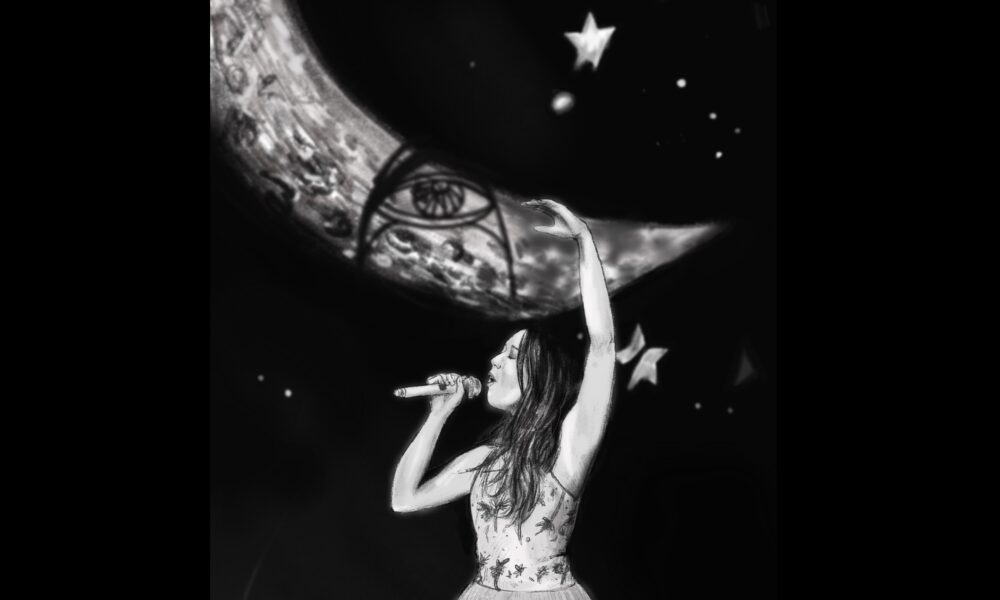
Following a Grammy for her second album, Bewitched, singer-songwriter Laufey’s A Matter of Time tour explores a new side of herself. Suki Waterhouse opened the Montreal tour stop with ethereal vocals, priming the audience for Laufey; both artists delivered outstanding performances at Place Bell on Oct. 21st. From the first musical notes of “Clockwork,” Laufey invited the crowd on an intimate exploration of her being, translating the vulnerability of her album into a compelling performance. 

Laufey’s earlier work often explored youthful, innocent, and almost-naive love through a unique jazz-pop musical style that infused her lyrics with a dreamlike quality. A Matter of Time intentionally subverts these expectations by revealing an honest sincerity. While love remains a major inspiration for Laufey—particularly after entering her first relationship, experiencing the love she had long sung about—her third album does not shy away from some of the more unsavoury experiences of her life. These include the pain of losing a friend, insecurities, and homesickness for Iceland, where she grew up. 

In an interview with TIME, Laufey explained what motivated the risk she took with her album: “I wanted to take this idea of beauty that’s often around my music and throw it in the fire a little bit, just for the sake of showing the complexity of female emotion.”

The dichotomy between A Matter of Time and Bewitched can be seen in the way she treats the theme of insecurities. “Letter to my 13 Year Old Self,” from her second album Bewitched, explores the central theme of physical insecurities. Sung to her younger self, who felt like an outsider growing up half-Chinese in Iceland, Laufey comforts and affirms the child’s appearance.

Snow White,” released as a single earlier this year, is a cynical, dispiriting song about how Laufey feels inferior because of the unreachable standards of female beauty. The lyric, “Sometimes I see her, she looks like Snow White,” reveals her tendency to compare herself to an impossible, idealized image of femininity. The stage was decorated with mirrors and lit in dark blues and pinks; the performance let the audience bear witness to her harsh internal feelings as she embodied her own worst critic. While “Letter to my 13 Year Old Self” explores the same central theme of physical insecurities, the careful sympathy and solace she offers herself is nowhere to be found in “Snow White,” which is marked with a hard-edged pessimism. However, with “Letter to my 13 Year Old Self” as the last performance of the night, Laufey left the audience on a positive note as she fulfilled her childhood hopes and dreams of performing on stage.

Sabotage,” the first song Laufey composed for A Matter of Time, is especially unique in its sound, as it intermittently inserts brief bouts of orchestral cacophony to convey personal anxiety. It’s “a song about the fear of losing someone, because you’re in your own head,” she explained to The Grammys. Her on-stage performance mirrored that anxiety, with the lights flashing erratically when the musical dissonances interrupted her singing. In personifying the anxiety she felt in a romantic relationship, she replicates a dread that many can relate to. Laufey captures the feeling of knowing that her own overthinking and anxiety about a relationship could turn into a self-fulfilling prophecy.

By the end of the night, Place Bell had become a collective diary, where heartbreak, nostalgia, homesickness, and self-discovery intertwined. Her ability to transform authenticity into music left the audience spellbound long after her final notes.

Research Briefs, Science & Technology

Sex-specific autonomic signatures of tonic pain

The subjective experience of pain varies drastically between people, but subjective measures of pain correlation provide an important understanding of its underlying mechanisms. Emerging literature on pain points to a relationship between muscle sympathetic nerve activity (MSNA)—a measure of how active the sympathetic nervous system is while signalling blood vessels to constrict—and acute pain. MSNA is closely tied to the cardiovascular system and typically rises with painful stimulation, linking autonomic arousal to the perception of pain. 

The autonomic nervous system has two branches: The sympathetic nervous system, which controls the ‘fight or flight’ response, and the parasympathetic nervous system, which is associated with promoting states of calm. Previous research has shown that brief painful stimuli and standard cold-pressor paradigms—where participants submerge their hand in a bowl of ice-water—elevate MSNA, blood pressure, and pain ratings in both sexes. However, little is understood about MSNA’s relationship to chronic pain, defined as pain persisting over three months, or whether sex contributes to variability in MSNA responses to pain.

In her PhD Sex Differences in the Relationship between Pain and Autonomic Outflow during a Cold Pressor Test, published in Biology of Sex Differences, Laila A. Chaudhry seeks to address the research gap on the relationship between MSNA and chronic pain. In an interview with The Tribune, Chaudhry spoke about conducting the first such study, segregating pain measures by sex to distinguish whether there was a significant difference in its interaction with autonomic arousal.

“It encourages a shift from viewing sex differences in pain from purely a psycho-social [phenomenon] to something grounded in physiological differences,” Chaudhry said. “This [research] is very indicative that it is actually at the biological level as well, including something as simple as nerve conductance is different between the sexes.”

To test her hypothesis, the intervention protocol included a six-minute tonic cold pressor test (CPT) to simulate chronic pain—a longer protocol than previously tested. While participants submerged their hands in ice-water, they reported a tingling, throbbing, and persistent pain resembling chronic pain symptoms. The team collected subjective pain ratings and objective autonomic measures—heart rate (HR), mean arterial blood pressure (MAP), and MSNA—at various time points throughout the test. The team reported sex-aggregated interactions between time, pain, and the various autonomic markers during the intervention.

Although HR, MAP, and MSNA all increased in the initial submersion for both cohorts, a positive relationship between pain and HR emerged only in males for durations over 30 seconds. This association is an index of parasympathetic activity, meaning it points to predominant vagal withdrawal—as opposed to large vasoconstrictor surges, which indicate sympathetic activity—as the pathway linking sustained pain to cardiovascular arousal in men once the initial shock phase passes. 

In contrast, females showed greater pain-related sympathetic responses, with 2.2 times higher MSNA burst frequency than males. Mechanistically, this suggests that sympathetic drive in response to sustained pain may be implicated in amplifying and maintaining pain more strongly in females.

“[A] prevailing theory is that larger axons are less likely to produce chronic pain because, essentially, they don’t get over-fired [….] They have greater neurotransmitter release just because they have larger burst amplitudes, and men, just because of their physical size, are more likely to have larger axons and larger nerves,” Chaudhry said. 

In other words, chronic pain in men is characterized by a reduction in the pain-inhibiting activity of the parasympathetic branch, whereas in females, it involves higher activity of the ‘fight-or-flight’ system of the sympathetic branch. The discovery of different relationships between pain ratings and autonomic indices by sex—pain versus HR in men and pain versus MSNA variables in women—suggests sex-specific autonomic signatures of tonic pain. Chaudhry explained where this study falls within existing pain literature.

“This was part of a larger set of studies looking at sympathetic factors in pain [….] Pain treatment is interdisciplinary, and other techniques that work to target the sympathetic or parasympathetic systems could be informed by this knowledge of sex differences in chronic pain patients,” Chaudhry said.

Continuing to study the interaction between sex and pain is crucial for developing treatment protocols that adequately address differing physiological profiles and guiding targeted prevention and treatment. 

Baseball, Basketball, Behind the Bench, Football, Hockey, Sports

2025’s sports equinox: Four major leagues, one historic night

Monday, Oct. 27, was a fever dream for sports fans. It was the kind of sporting sensory overload where four screens and a personal highlight-curator were necessities. For only the 32nd time in history, the sports equinox commandeered living rooms and sports bars across North America. The National Football League (NFL), National Basketball Association (NBA), National Hockey League (NHL), and Major League Baseball (MLB) all shared the same stage, each fighting for attention in one of sports history’s most crowded nights. 

The evening began with a bang in the NFL’s Monday Night Football showdown, where the Kansas City Chiefs continued their mid-season surge with a 28-7 win over the Washington Commanders. Polarizing quarterback Patrick Mahomes reminded everyone why he is still the league’s leader for quarterback excellence, throwing for 299 yards and scoring three touchdowns. The Chiefs’ defense held Washington to just 260 total yards, a dominant display that represented their Super Bowl ambitions.

While Mahomes worked wonders on the gridiron, basketball fans were treated to an early-season spectacle in San Antonio. Victor Wembanyama, the NBA’s 2023-24 Rookie of the Year, posted 24 points and 15 rebounds as the Spurs slammed the Toronto Raptors 121-103. The 7-foot-4 phenom danced around the court with his fluid shooting and rampant defensive efforts, while Devin Vassell chipped in 15 points to secure the win. Raptors fans felt an all-too-familiar frustration at their team’s strategy: A dazed defensive response to Wembanyama’s versatility in the paint.

Then came the night’s main event: Game 3 of the World Series between the Toronto Blue Jays and the Los Angeles Dodgers. What began as a battle of the pitchers turned into a gruelling 18-inning marathon that ended in heartbreak for Toronto. The Dodgers ultimately prevailed 6-5, thanks to a walk-off home run from Freddie Freeman that broke a 5-5 deadlock after over six hours of play. Despite the loss, the Jays’ performance kept the series alive, with fans on both sides of the border glued to every pitch deep into the night.

Meanwhile, the NHL added its own two cents to the chaos. In Pittsburgh, the Penguins shelved the St. Louis Blues 6-3, with Sidney Crosby netting his 1,700th point to seal the deal for his team. Elsewhere, the Boston Bruins suffered a painful 7-2 loss at the hands of an overwhelming Ottawa Senators squad. The Senators’ offensive dominance was led by Drake Batherson and Tim Stützle with 2 goals apiece, while their intensive defensive effort was exemplified by goalie Leevi Meriläinen, who made 26 showstopping saves throughout the game. 

What made Monday’s sports equinox so special was not just its variety. For any sports pundit, fan, or casual observer, it was the intensity across every sport that defined the night. From Mahomes’ clinical precision to Wembanyama’s coming-of-age performance, the Dodgers’ late-night resilience to Crosby’s timeless brilliance, fans experienced every possible emotion in one nonstop tidal wave of sporting highlights.

But the night also hinted at a new-age modern reality. With overlapping seasons, streaming exclusives, and wall-to-wall broadcasts, fans are increasingly forced to pick their battles. While this is a great problem to have, the once-rare overlap that defined the sports equinox is now a reminder of how crowded the sports calendar has become. It means that seasons stretch longer, off-seasons shrink exponentially, and networks compete fiercely for attention to provide fans with more time to indulge in their favourite sporting events. 

Monday’s sports equinox will stand as a snapshot of why we watch sports in the first place—more than just for scores or standings, but for the chaos, the cacophony, and those fleeting moments in every game when it feels like the stakes just cannot get any higher.

Commentary, Opinion

Housing is urgent; disclosure should be too

There is no debate that Montreal is experiencing a housing crisis. It is also equally evident that Chinatown’s remaining infrastructural heritage is scarce and essential to the preservation of Chinese culture in Montreal. Those two facts should be mutually exclusive, but right now, municipal lawmakers are threatening to turn Chinatown heritage sites into social housing, forcing a debate over what the city should prioritize: Heritage or housing. However, the urgent question should not be whether to build social housing, but how to do it—in a way that avoids undermining cultural vitality.

Achieving this kind of support is not straightforward; it requires dialogue, visibility and transparency. Montreal has signalled that multiple municipal sites will be released for non-market housing in 2025, yet the government has not disclosed to the public a clear, citywide list of addresses, unit ranges, and timelines. 

However, without a clear public site analysis, the decision to place a housing project in a small, racialized heritage district obscures what was a conscious choice by the city government as an unavoidable sacrifice. That opacity creates an unnecessary opposition between cultural protection and human need—two necessities that do not have to be positioned as rivals. 

Montreal does have a formal policy of ceding municipal properties for non-market housing, along with an online map demarcating these sites. The city has acquired or transferred other buildings for housing throughout 2025, including 20 buildings to the Société d’habitation et de développement de Montréal (SHDM) to lock in affordable supply and several projects outside the Ville-Marie district. However, what the city does not make publicly available is their comparative reasoning: Which sites were assessed first, which were set aside, and what factors led to the selection of the Wing building—which has played a long-standing role in supporting and providing for the Chinese community in Montreal. 

Montreal has only recently acknowledged its historic failure to protect Chinatown. In July 2023, Quebec classified the core of the neighbourhood as a heritage site, protecting 10 key buildings and 14 lots from demolition or major alteration, including the Wing building. In January 2024, Montreal designated Chinatown the city’s first official historic site, alleging an aim to ‘protect and enhance’ the rare francophone Chinatown. 

Altering even one of these culturally emblematic buildings implicitly devalues the culture and history those buildings reflect, while simultaneously denying a geographic and infrastructural cultural hub for future generations.

However, there is no denying that the housing crisis in Montreal is just as pressing as cultural erosion. In the winter of 2024–2025, Montreal shelters and warming stations turned away roughly 50 people each night, and by late 2024, day shelters serving elderly unhoused people were also at capacity. 

In November 2024, the Centres intégrés universitaires de santé et de services sociaux (CIUSSS) de Montréal stated there were 1,864 spaces in shelters across the city, with about 200 more to be added at the start of December. However, local officials warned that Montreal was still short of 500 shelter units. In a city where winter conditions are life-threatening, the acute housing shortage is not an abstract policy problem but a structural shortfall and a threat to basic survival. 

By disclosing part of its plan and keeping the rest offstage, Montreal turned two legitimate claims—social housing and historical heritage—into a confrontation. But this apparent clash between communities is really a gap in disclosure. Montreal has the power—and the responsibility—to disclose its 2025 housing data in full. Publishing the 2025 sites, the selection criteria, and the rejected options for new housing developments is not a courtesy to Chinatown or to housing groups. It is the minimum condition for the project to proceed. 

Transparency is not a rival to urgency; it’s what makes it credible. Montreal is asking residents to accept that some meaningful, historic locations will change and carry new functions. That is a heavy ask, but it’s also a reasonable one—only once the entire plan is on the table. Consent begins with disclosure, and Montreal has still more to show.

Arts & Entertainment, Theatre

‘Cult Play’ triumphantly faces dark truths of the need for belonging

Cult Play, a new play written by non-binary playwright and Concordia graduate Scout Rexe, recently made its world premiere at the Segal Centre. Presented by Imagos Theatre, the play follows Alex (Madeleine Scovil), a queer actress in Montreal who falls in love with a woman named Taylor (Kayleigh Choiniere). The one-woman show explores the cost of the natural desire for belonging and the question hovering over Alex: Do we actually have the capacity for fully informed consent?

Alex narrates the play, and the characters she interacts with are presented through video or, in certain scenes, via audience participation. As the only conveyor of the story, she controls the narrative and grants the audience consent to witness it.

Cult Play begins when the two lovers form a lust that manifests itself through bondage, first interacting on the phone and later meeting in Arizona. Taylor persuades Alex to join her at a mysterious retreat centre in California, referred to as ‘The Centre,’ a place devoted to the practice of bondage. The facility’s charismatic owner, Hunt (Thomas Valliéres), runs the retreat with a sort of radical idealism. 

In videos of his interactions with Alex, Hunt questions societal structures that he believes chain people to a capitalist mindset. He criticizes the idea of therapy, claiming it creates a dependence which prevents individuals from meaningful improvement. As the play unfolds, it is clear that his view of dependence is not exclusive to therapy, shaping Alex’s experience in the retreat.

The centre initially seems like the perfect place for Alex, who has trust issues stemming from her unsupportive, demeaning father. Encouraged to be more definitive in facing her obstacles, she feels like she has finally found a space where she belongs. Surrounded by people who seem to understand her—alongside the love of her life—she quietly steps away from her acting career and focuses on herself.

However, the play quickly reveals that this ‘Centre’ is not entirely meant to heal. A mystery involving Taylor and Hunt, a push for Alex to share more, and ever-weakening personal barriers give Alex the sense that she might just be in a cult.

Hunt dismisses the act of being able to consent, as he claims that individuals do not have the capacity to enjoy their own choices. His belief that people require guidance to make good decisions manifests itself in a gradual but shocking tearing of boundaries, pushing Alex into more intimate bondage situations. Though increasingly nervous about the Centre’s control over retreatants, Alex reluctantly complies with Hunt’s requests to desperately win the approval of the Hunt-devoted Taylor.

Fittingly, Cult Play uses audience interaction as a framing device for its central theme of consent. Alex begins by presenting questions on a projector, lines which audience members are encouraged to ask her.

In doing so, audience members consent to becoming active participants in the story and trust that boundaries will not be crossed. Using the same framing later on, the audience is encouraged to ask for Alex’s consent to look into more harrowing parts of the narrative. Verbally, they affirm the theatre as a safe space. When prompted, audience members may also choose to join Alex in performing scenes alongside her, a gesture of mutual respect and boundaries. 

Scout Rexe’s masterful script blends physical performance, digital media, and audience interaction in an immersive experience that bleeds emotions out into the real world. Through an immensely intimate experience based on trust between the performer and the audience, Cult Play argues that consent isn’t irrational—and that choosing happiness isn’t a perpetuation of some capitalist status quo.
Ultimately, Alex discovers that true belonging means acceptance of all of her. She learns to let go of a place where she felt she belonged because, although it accepted her queerness, it did not accept her desire to feel comfortable with her own choices. In her final reflections, as Alex reckons with the paths laid out in front of her, she harnesses herself to the on-stage shibari structure, pulls herself up, and allows herself to float. And then the lights go out.

Read the latest issue

Read the latest issue