Latest News

Campus Spotlight, Student Life, Student of the Week

Spicing up the snack game

When hunger strikes between classes or during late-night study sessions, the usual snack options can start to feel repetitive. To change things up, Aram Shayesteh, U2 Arts, launched a website named Allsnack in 2024, offering a curated selection of hard-to-find treats from around the world, and delivering them directly to Canadian customers. Inspired by his ongoing experience as a student, Shayesteh created Allsnack to make international snacking more accessible.

Born and raised in Montreal, Shayesteh is no stranger to the city’s multicultural landscape. Still, when he stepped foot on campus as a first-year student, he was struck by the rich diversity that characterizes the McGill student body. 

“I noticed all the different languages that I hear on campus, all the different backgrounds,” Shayesteh said in an interview with The Tribune. “I told myself it would be very interesting if there was a way [to] taste the snacks of all these places that McGill students come from.”

Shayesteh has also found that international students themselves crave the taste of authentic flavours from back home. 

“Honestly, there’s a lot of food that I miss from home,” Aashna Lakhani, U3 Science, told The Tribune. “Snacks like Kurkure and aloo bhujia, […] you can find them in supermarkets in Canada, but for some reason they just don’t taste the same. So, I feel like that’s worse because you get a taste of it, but it’s not the same, so then you’re just complaining about how bad it is.”

Shayesteh looked for a store in Montreal that carried a wide range of international snacks, but there weren’t many. To him, the dearth of such stores was incongruent with the vast cultural diversity around him—so he saw an opportunity. 

Busy schedules and tight budgets make travelling during the semester difficult for many students, but food offers a way to explore the world without leaving Montreal. It connects people, bridging cultures through shared flavours and experiences. 

“It’s like you’re travelling when you’re tasting different foods,” Shayesteh explained.

While studying abroad in the United States, Shayesteh created a nine-question Google Form assessing University of North Carolina Chapel Hill students’ interest in international snacks. To his surprise, the results indicated that students were eager to try a range of flavour combinations they’d never encountered. Among options like matcha-flavoured KitKats and cola-flavoured Haribo, the Snickers Kesta Pista—a saffron and pistachio version of the candy found in India— emerged as students’ most popular choice. Having found that there was enthusiasm for international snack foods, he decided to try and bring Allsnack to life.

In the fall, Shayesteh spent months developing his website, which offers what he calls “The essential C’s”: Candy, Chips, Chocolate, Cookies, and Crackers. Snacks featured on the website are personally tested by his 12-year-old brother, ensuring a stamp of approval before making it to customers. 

Unlike existing brick-and-mortar snack stores in Montreal, Allsnack focuses on limited-edition international food collaborations, such as Hubba Bubba x Skittles gum from the United States. While the website currently carries major brands like Oreo, Doritos, and KitKat, Shayesteh hopes to expand his selection to include regionally popular treats from lesser-known brands. Looking ahead, he envisions adding snacks from even more countries and one day launching an Allsnack pop-up store.

For students ordering from Allsnack for the first time, Shayesteh recommends trying American Wings-flavoured Doritos from Taiwan or coffee-flavoured Doritos from Australia. 

When asked about his favourite part of running Allsnack, Shayesteh’s answer was simple: “It’s a fun business. People are very happy when they eat. I love eating. I love trying new food.”

Student Life

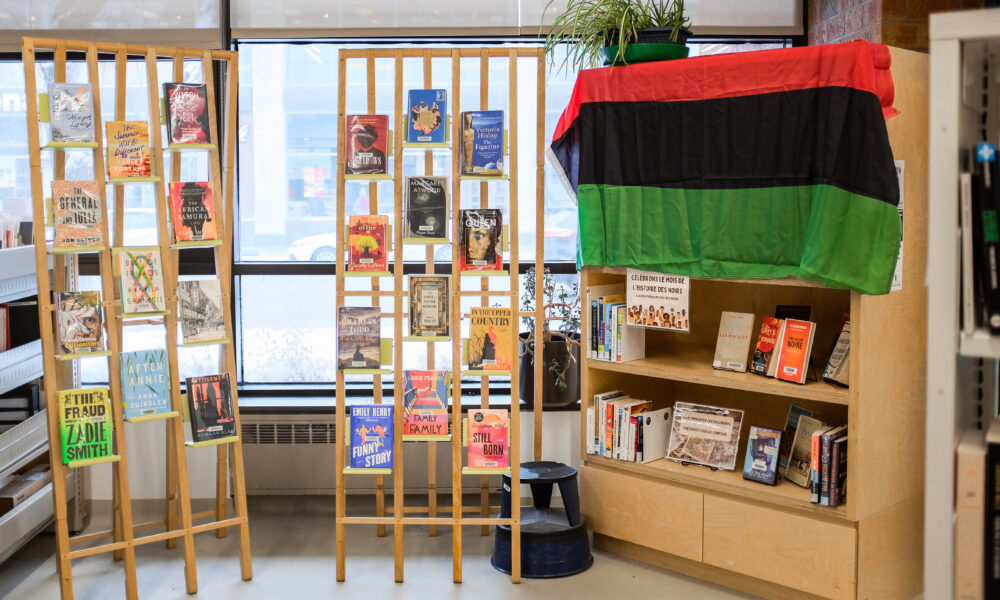
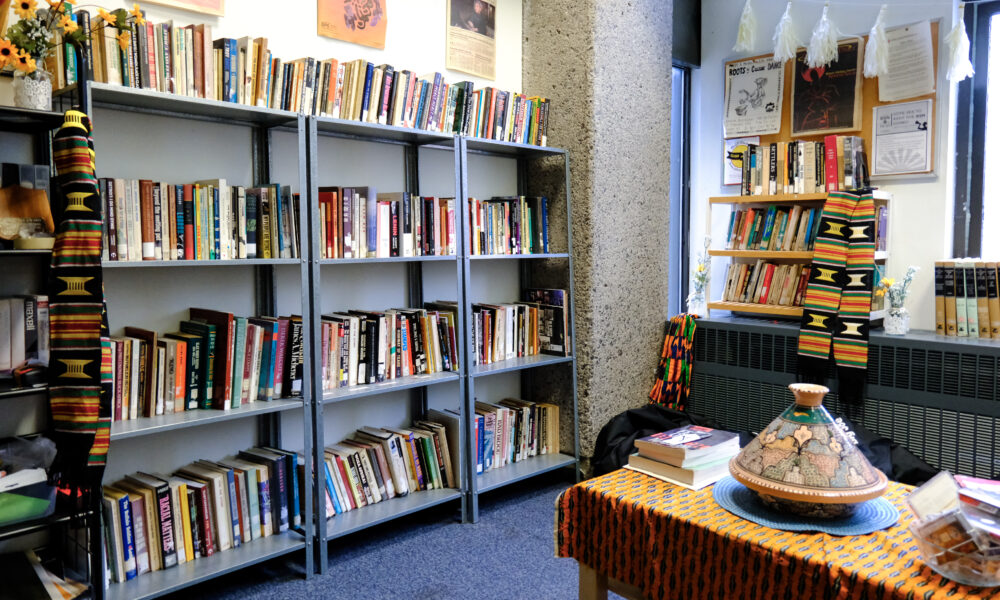
The landscape of clubs and initiatives supporting Black students at McGill

In light of Black History Month, The Tribune spoke with Black students at McGill about their experiences and perspectives on the university’s efforts to foster inclusivity. 

The role of Black student organizations

Across both international and local perspectives, students emphasized how Black student-led organizations were key to their sense of belonging by offering professional support and safe spaces.

“Clubs like [Black Student Network] BSN and [McGill African Students’ Society] MASS provide a great support system, and clubs like [McGill Social Business Network] MSBN do their best at making sure Black people are also exposed to opportunities that may help them professionally,” Hakim Mokwena, U2 Desautels, shared.

Noemi Milca Nouala, U2 Arts, credited these organizations with easing her transition to McGill as an international student adapting to Montreal’s culture, weather, and lifestyle. 

“It is not unusual for me to be the only Black person in the room,” she said. “Being able to have this sense of community and not feel alone or like the odd one out is good. All the friends that I consider close to me, I met them at MASS or BSN during my first week at McGill. ”

Similarly, Emma-Sheryl Nana, U2 Science, told the The Tribune:  “I do think I have been able to build a sense of community throughout my time at McGill, but not because of the initiative McGill takes, but because of people like Antoine [-Samuel Mauffette Alavo, McGill’s Black Student Affairs Liaison], and MASS doing many things where we get to meet our people and build a sense of community.”

Student social life

When asked about their social integration at McGill, student experiences varied, with international students, especially those who came from countries where they were not racial minorities, reporting more positive experiences. 

“I have made friends and I haven’t really had any bad experiences,” shared Makhtar Andre Keny Ndoye, a U1 Science student.

Mokwena echoed similar sentiments: “Given that McGill is a historically white institution, it’s no secret that Black people are underrepresented in many of the faculties. However, with the multiple clubs it has catered to Black students, and Montreal being the diverse city it is, my experience has been mostly pleasant.”

Karen Nguewou, U2 Engineering, described McGill as a supportive environment. 

“It’s been a good [experience] because I feel like we have a community and a lot of spaces for Black students as well as funding for diversity and anti-racism initiatives,” she said. 

Nouala has also had a positive experience and made many friends given her involvement in numerous extracurriculars. 

“I was able to find a sense of community [during my time here], and not only was I able to meet Black people but also international students,” she added.

Black History Month: Meaningful or performative?

While many students feel a sense of belonging at McGill, some were skeptical about the university’s role in committing to supporting Black students beyond its Black History Month initiatives.

“It feels very performative because it’s one month out of the year where we get bombarded and then there’s nothing else,” Nana shared. “[If it were not performative], our history and struggles would be advertised more during Black History Month but also be integrated more seamlessly. These stories should be highlighted every single day.” 

Others acknowledged that, while some initiatives may feel performative, having events dedicated to Black students organized by student groups is better than having none at all, as those efforts seem meaningful.

“I can’t lie—where I’m from, there are absolutely no initiatives for black students,” Nguewou wrote. “Some [initiatives] are performative for sure but the ones organized by [Mauffette Alavo] seem more inclusive.”

The general consensus is that students overwhelmingly credit Black student organizations—not McGill—in creating a lasting community. McGill provides space, but students argue true inclusivity must extend beyond February. Many hope the university will offer lasting support and increase Black faculty representation to ensure real inclusion, every day.

McGill, News, SSMU

SSMU announces direct reimbursement program for gender-affirming care health insurance claims

The Students’ Society of McGill University (SSMU)’s Board of Directors (BoD) announced changes to its Gender Affirming Care (GAC) Plan via email on Jan. 23. Under the new plan, students seeking reimbursement for GAC will now submit requests to SSMU’s internal Gender and Sexuality Commissioner. Previously, these individuals would have submitted their claims to GreenShield, the insurance provider that offers SSMU’s broader Studentcare health and dental plan.

In SSMU’s email, the BoD reported that the Commissioner will anonymize GAC claims for review by their Gender and Sexuality Advocacy Committee. The current Commissioner, Bronwyn Walsh, confirmed in an interview with The Tribune that once the Committee approves these claims, the Commissioner will forward them to SSMU’s Finance Department, who will then distribute reimbursements.

“I hope it’s a comfort to people to know that their applications are going through a group of queer and trans people, rather than some kind of nebulous insurance company,” Walsh said. 

Walsh further clarified that, unlike Studentcare’s GAC, SSMU would not require a gender dysphoria diagnosis for reimbursement.

Alice Postovskiy, representative of the Union for Gender Empowerment (UGE), spoke with The Tribune about how SSMU could be an improvement from Studentcare, which she claimed was a “predatory insurance broker.”

“I trust the Gender and Sexuality Commissioner to not arbitrarily reject claims much more than I do an insurance company,” Postovskiy said.

However, both Walsh and Postovskiy expressed concerns about SSMU’s motivations behind the policy change, and the process through which this shift was made. According to Walsh, they learned of SSMU’s decision to assign their role reimbursement duties only a few weeks before all SSMU members were informed. Prior to this, the BoD had discussed the issue in confidential sessions. Walsh also claimed that the BoD proceeded with the change predominantly for financial reasons, after noticing they were losing money from the Studentcare model.

“I, unfortunately, don’t think that most of the execs […] [had] trans students’ best interests at heart, it was more [about] money,” Walsh said. 

SSMU President Dymetri Taylor told The Tribune that planning publicly would have put the union at risk of being taken advantage of financially.

Rachel Bainbridge-Sedivy, a member of the Trans Patient Union (TPU), reported that the TPU was not consulted, despite their sustained efforts to improve the Studentcare plan. 

“We’ve met with representatives from Studentcare and Greenshield over this: we have valuable expertise on this topic in many ways, and we should have been consulted,” Bainbridge-Sedivy wrote to The Tribune.

Postovskiy also criticized the SSMU’s decision to act in an insurance-provider role without putting proper accountability mechanisms to ensure the longevity of the reimbursement program.

“The SSMU does not have, in the same way an insurance company who signed a contract does, a commitment to [reimburse GAC],” Postovskiy said. “If an insurance company refuses to provide insurance, you can send them a formal demand letter and take legal action [….] [SSMU] could just cancel [the program]. They could just refuse to do it.”

Bainbridge-Sedivy also expressed worries about the program’s long-term stability once Walsh leaves their role.

“We worry that it would be very easy, a few years from now, for this to be either forgotten and underfunded or cut entirely without notifying students,” Bainbridge-Sedivy wrote. 

Taylor stated that SSMU’s status as reimburser will not be “the new norm,” as SSMU is aware that it does not have the infrastructure or expertise to provide GAC reimbursement long-term. 

“Put frankly, this isn’t the position we wanted to be in either”, Taylor wrote. “It’s a stopgap until finances can be properly rectified.”

Despite the changes SSMU has made to its GAC reimbursement structure, GAC will continue to follow the Studentcare plan’s terms of coverage. This means that Studentcare’s maximum reimbursement of $5000 CAD per GAC procedure, and lifetime maximum of $10,000 CAD, remain intact. 

Bainbridge-Sedivy discussed the TPU’s concerns about the policy’s uncertain status.

“This is an improvement if and only if the SSMU has a rigorous plan to fund and manage this, and protections to ensure that keeps happening long term,” Bainbridge-Sedivy wrote. “The problem is that there is currently no evidence that they can do so competently, and if this falls apart, transgender students are worse off than they ever were.”

To submit a GAC claim for procedures happening this semester, fill out the SSMU Form for Gender Affirming Care. To be covered for procedures that occurred before Jan. 1, 2025, submit claims directly to Studentcare.

Campus Spotlight, Student Life

Black History Month on campus with BSN McGill

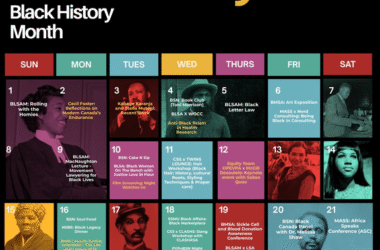
The Black Students’ Network (BSN), a McGill club dedicated to addressing the interests and needs of Black McGill students, has a variety of activities planned in honour of this year’s Black History Month. 

BSN’s first week of Black History Month will focus on education and community building, with events such as Black Women’s Entrepreneurship: Research vs. Reality on Feb. 4. On Thursday, Feb. 6, BSN will host the BSN x McGill African Students’ Society (MASS) First-Year Event, which marks the first collaborative event between two Black student clubs this month. The first week wraps up on Friday, Feb. 7 with CKUT Sounds & Pressure: Reggae in a Foreign Land, a night dedicated to the Caribbean diaspora and culture in Canada with film, music, food, and community.

The second week of BSN’s Black History Month agenda aims to highlight Black excellence, health, and self-love, beginning on Wednesday, Feb. 12 with a talk from the McGill School of Social Work titled Celebrating Black Excellence and Perseverance. The following day will dive into “Health Promotion Interventions in Black Communities Across Canada.” On Valentine’s Day, BSN’s Black Beauty Day will celebrate Black beauty and self-care, featuring a free hair braiding raffle with sign-ups currently open. 

Week three features community, culture, and advocacy with a special Black History Month screening at the Peel Street Cinema Movie Night on Tuesday, Feb. 18. The next day, a Black Community Gathering, Caps Career Drop-In, and the NSBE Black Legacy Dinner honouring Black achievement will take place. On Thursday, Feb. 20, BSN will host a “Know Your Rights” Workshop, equipping students with crucial legal knowledge on their rights. The week concludes on Saturday, Feb. 22, with the MASS Africa Speaks Conference.

Finally, the BSN will wrap up the month with their Feb. 28 event, “BSN Soul Food Friday.

The BSN’s Vice-President Social Events, Reggiany Bourguillon, U2 Arts, spoke with The Tribune about this year’s BSN’s Black History Month.

“I recognize BSN’s values as hosting multi-diversity among the Black McGill community, Black empowerment, and the cultivation of Black young minds,” Bourguillon said.

One of her favourite BSN events is “Youth Day”, which promotes initiatives for Black high school and college students to apply to McGill. The event thus contributes to increasing the diversity in the university—where only 4.4 per cent of the student body self-identify as Black.

“BSN makes sure to include students of any background whether it is cultural, educational, personal, or sexual. They want all Black students to feel seen and understood,” Bourguillon said.

Despite BSN’s efforts, Bourguillon remarks that there is an evident lack of recognition and sincere support of the McGill Black students community on campus. 

“[There should be] more funding regarding scholarship for Black students in different educational fields, as well as more recognition from the university to put to the forefront the different accomplishments of BSN and other black clubs into the university main site to demonstrate the club’s efforts,” Bourguillon said.

Indeed, the responsibility to foster a truly equitable environment on campus cannot rest solely on BSN and other Black student-led clubs. McGill has the duty to actively support Black students’ academic journeys and push for lasting changes. This includes increasing funding for Black student enrollment and the creation of Black studies programs, greater institutional support of Black faculty and experiences of Black students, and stronger collaborations with Black organizations. Active participation helps uplift the voices of Black students and pushes for necessary institutional changes that promote diversity, equity, and representation at McGill. To learn more about the BSN club and its events, visit their Instagram page.

Basketball, Sports

A sibling pick and roll: Matt and Alec Phaneuf’s rival routes

In the heart of Montreal’s university sports scene, a unique sibling rivalry is unfolding on the basketball court. Matt Phaneuf, playing for the McGill Redbirds, and his brother Alec Phaneuf, representing the Concordia Stingers, share more than just DNA. Their love for each other and their competitive spirit has been fostered through countless hours of backyard games and has shaped them into the athletes they are today. The brothers sat down with The Tribune to discuss their sibling bond.

“Anything we did growing up was always competitive,” Alec reflected. 

“Playing football one-on-one, whatever it was—after 15 minutes of doing nothing, we just had to compete against each other,” Matt added. 

Growing up in a family where sports were not just played but lived, the Phaneufs were destined for athletic success. Their mother, Marie Drapeau, was a competitive swimmer at Université Laval (ULaval) who nearly made the Olympics. Their uncle, Simon Noël, won the National Championships with ULaval Volleyball in 1993-94. Their cousin, François Gauthier-Drapeau, recently competed in the 2024 Olympics in Judo, and cousin Isaac Noël played football for the Carleton Ravens

The brothers’ shared profound love for basketball began in their family’s driveway. Their father Chrystian Phaneuf has been their biggest supporter, going as far as to serve as the two boys’ coach. In fact, Matt and Alec attributed their mastery of the mid-range shot—a favourite for both players on the court—to their father. 

“He was never really into one sport—he was [a] multi-sport [athlete] when he played, but now that we play basketball for rival universities, he’s not shy to say, ‘I’m living my dream through you guys,’ which is kind of inspiring,” Matt said. “It’s always nice to know that you have people in your corner.”

Today, they find themselves on opposite sides of one of Quebec’s most intense university rivalries. In their most recent matchups on Jan. 16 and 18, Concordia emerged victorious with 76-54 and 94-47 wins over McGill. However, the score tells only part of the story.

With around 30 family members attending each of their matchups, these games are more than just regular season contests; they become family-wide affairs.

“I think I’d be lying if I said there wasn’t a little more importance when I play against [McGill],” Alec said.

The uniqueness of their situation is not lost on Matt, either. 

“It still feels unreal. On the court, it’s just a regular basketball game. But as soon as [Alec] steps on I feel like I’m back home,” he added.

Living together on Montreal’s South Shore adds another dimension to their relationship. After games, regardless of the outcome, they drive home together. When describing the aftermath of their games, the boys highlighted how they maintain perspective. After all, basketball is just one part of their relationship.

Matt’s view on living with a rival—and sibling—is refreshing. 

“When I’m at home, post-practice, or a game, or a long day of school, I just want to be ‘Matt who cooks,’ or ‘Matt who likes to watch Sunday Night Football,’ so we do that together on our one day off (Sunday) during the season,” he noted. “It’s nice, you know, to wind down and relax together without talking about basketball all the time.”

When asked about their advice for younger players entering collegiate sport, both brothers emphasized the importance of growth and balance. 

“Keep progressing, keep working on new stuff, keep improving,” Alec said. 

“Take it day by day,” Matt also added. “Don’t put all your eggs in the same basket. Don’t focus on just basketball, when it feels like there is no light at the end of the tunnel, you have to remind yourself that it is one day at a time, so enjoy it while you can.”

As their careers progress, both brothers may wonder what it would be like to play together rather than against each other. But for now, they will continue their rivalry, pushing each other to greater heights while maintaining a bond that only brothers can share. Currently, in the Réseau du sport étudiant du Québec, Concordia sits just under the Bishop’s University Gaiters in second place, while McGill is last in the standings. Both teams are aiming for playoff positions—potentially setting up another chapter in the Phaneuf brothers’ story. 

News, SSMU

SSMU sanctions UGE for a week amidst debates on gender-neutral washroom motion

On Jan. 20, the Students’ Society of McGill University (SSMU) imposed a seven-day financial sanction on the Union for Gender Empowerment (UGE) for putting up unapproved posters in the Leacock Building. This penalty meant that any purchases the UGE submitted to SSMU from Jan. 20 to Jan. 27 would be delayed reimbursement until after the sanction had ended. 

UGE is a SSMU-affiliated group that aims to provide anti-oppressive, feminist, and trans-inclusive services to the McGill community and general public, including a pay-what-you-can co-op that supplies gender-affirming products and an alternative library

UGE alleges that SSMU’s sanction was designed to suppress the group’s criticisms of SSMU’s handling of the Motion Regarding SSMU Building Gender Neutral Washrooms. The motion—which the SSMU Legislative Council approved on Dec. 5—aims to increase the number of gender-neutral washrooms in the University Centre. However, SSMU’s Board of Directors (BoD) postponed the motion’s ratification in its Jan. 7 and Jan. 28 meetings as the motion awaits legal review.

Alice Postovskiy, a representative of the UGE and former SSMU Vice-President (VP) Student Life candidate, explained that in the week of Jan. 13, the UGE put up a series of posters in Leacock and other buildings that were critical of the BoD’s decision to delay ratification. These posters included a QR code linking to an email template demanding the BoD pass the motion. The template argued ratification would increase the accessibility and privacy of washrooms for trans people, disabled people, people with children, and all community members at McGill.

Postovskiy noted that the email template also explicitly names SSMU Arts Representatives Rishi Kalaga and Emma Chen, who UGE alleges have been the most vocal opponents of the motion at recent BoD meetings. 

“There are lots of people who perhaps have some authority over the postering in the Leacock Building, and also at SSMU, who would be unhappy with our calling out of their actions and also their legitimacy,” Postovskiy said. “So that, followed by a sanction […] about these posters, which we think is clearly illegitimate and punitive, is why we’re pretty confident about calling this political retaliation.”

In a written statement to The Tribune, Kalaga explained that his opposition to the motion reflected concerns constituents had brought to him regarding student safety and security, particularly surrounding Gerts. In addition, he claimed there is a need for a legal review to take place to ensure that the motion adheres to the law before implementation.

“I completely support increased accessibility for transgender and non-binary students, and that some amendments to this motion will make it so that it is beneficial to all students,” Kalaga wrote.

Chen could not be reached for comment. 

The group first received a warning of a postering violation from SSMU President Dymetri Taylor and Director of Clubs and Services Hamza Abu Alkhair on Jan. 16. Taylor and Abu Alkhair claimed that UGE had violated section 8.2.6 of the SSMU’s Internal Regulations for Student Groups by putting up posters in Leacock that the Arts Undergraduate Society (AUS) had not approved. Section 8.2.6 stipulates that clubs must follow SSMU and McGill’s by-laws and internal policies, as well as the law. 

Postovskiy alleged that after the group received this warning, a UGE member walked through Leacock and claimed they did not find any of the group’s posters remaining. Based on their findings, UGE assumed the posters had all been taken down. 

On Jan. 20, the group received another email from Taylor and Abu Alkhair notifying them that the student union was placing a financial sanction on UGE for unapproved posters. 

Postovskiy told The Tribune that to her knowledge, no group members had put up additional posters since they received the warning. For this reason, she believed both the warning and the sanction referenced the initial batch of posters. Postovskiy speculated that SSMU enforced a sanction on posters that both AUS and UGE had overlooked, and had not removed, after the warning was issued.

Taylor maintained that the sanction was legitimate and that they were only put in place after UGE had twice put up posters without AUS’s approval. He denied that the sanction could have been applied to the same batch of posters, stating that AUS would have removed all the posters when the warning was issued.

AUS President Sophia Garofalo explained that she and her assistants removed UGE’s posters and stamped them with the time and date to ensure they were not accounted for twice. Garofalo also noted that the AUS has sent warnings to other groups such as Students for Palestine’s Honour and Resistance at McGill, Prep 101, and SSMU Elections for unapproved posters in the past.

“We are dedicated to ensuring that the UGE has a platform to make their voice heard, we have allowed them to poster after being stamped for their other events,” Garofalo wrote. “I hope we can encourage an open dialogue which utilizes their resources, and our resources in appropriate manners.”

Taylor also affirmed that sanctions for unapproved posters are not uncommon, and that SSMU has used this disciplinary measure on other groups this academic year for similar offences.

“The whole point of a sanction is to put pressure on an individual or a group, to correct misbehaviour,” Taylor said. “There’s not too many of those [kinds of sanctions] that exist, aside from either locking [a group] out of their room [in the University Centre], removing the room, removing their access to the building if they have it, or a financial sanction.”

Although Postovskiy recognized that there was confusion about how UGE’s unapproved posters came to be sanctioned, she highlighted the greater importance of other concerns surrounding the penalty. For instance, Postovskiy pointed to the fact that Taylor and Abu Alkhair’s original emails did not explain what a financial sanction meant for UGE. She also alleged that SSMU did not respond to the group’s follow-up email inquiring about the details. 

“The fact that [SSMU hasn’t] been willing to communicate, the fact that a financial sanction clearly has nothing to do with postering—it’s not like the sanction says you can’t put up posters for a week—makes it clear that the sanction itself is being done in retaliation, because it can’t really do anything besides hurt our services,” Postovskiy said.

UGE has not observed any financial impacts from the sanction so far, but Postovskiy reported that members remain unsure of the disciplinary measure’s effects after it has expired.

Taylor admitted that there should have been greater clarity surrounding the sanction against the UGE, and suggested potentially adding an appendix to the Internal Regulations that explains what different types of sanctions mean. 

Addressing criticisms of SSMU’s delay of the motion, Taylor emphasized the need for the BoD to establish a clear path for funding and implementation before the motion is ratified. 

“Converting bathrooms into [gender]-neutral ones […] takes money, and it takes the approval of McGill to even go on the step of getting fully-enclosed bathrooms that aren’t just stalls,” Taylor said. “The intention behind why it’s been held up is because of that lack of clear implementation, because the one thing no one wants to [do] is to approve something that doesn’t get done because […] that plan does not exist.”

Taylor also noted that Abu Alkhair was given the power to sanction SSMU groups and services when the BoD delegated the responsibilities of the VP Student Life to his role as Director of Clubs and Services. As Taylor told The Tribune, this transferral of responsibilities is possible under 4.2.1 in section 9 of SSMU’s Internal Regulations of Governance, which states that the student union can delegate the duties of a vacant officer position to another SSMU executive or staff. According to Taylor, this regulation also aligns with Quebec’s Companies Act, which SSMU is legally beholden to. 

Abe Berglas, SSMU VP University Affairs and the Legislative Council member who first proposed the motion, underscored the importance of increasing the number of gender-neutral washrooms in the University Centre in a written statement to The Tribune. They described this action as having “incredible symbolic significance,” particularly amidst the ongoing rise of transphobia on campus and in the general public.

“Increasing the number of gender-neutral bathrooms in the University Centre is an important project for trans safety,” Berglas wrote. “Right now, the University Centre doesn’t conform to McGill’s resolution regarding gender-inclusive washrooms—we have no multi-stall gender-neutral washrooms, and over half of our floors don’t have one at all.” 

Looking to the future, Postovskiy hopes to see SSMU ratify the motion and take steps to support trans advocacy on campus. For Postovskiy, this means that SSMU must go beyond simply “managing” clubs toward actively supporting them.

“The management of student groups according to SSMU’s other policies like the Equity Policy and the Trans Advocacy Plan requires supporting the advocacy that student groups do and requires putting in place […] equitable practices, including for trans people,” Postovskiy said. 

Berglas also called on SSMU to adhere to its Trans Advocacy Plan, which includes commitments such as platforming the work of trans students on campus and offering funding and support to student groups. Berglas also drew attention to the Plan’s condemnation of hate speech, “including hate speech that attempts to disguise itself as legitimate academic discussion or human rights concerns.” 

“I hope that at the end of their term, all directors and executives can say that we have upheld these commitments,” Berglas wrote.

Commentary, Opinion

Building 21 is the future of interdisciplinary education

Did you know that McGill offers a space where you can combine fields of study to explore, innovate, and learn beyond your program? This is Building 21 (B21). Located at 651 Sherbrooke Street West, this research facility welcomes McGill students at all levels—from undergraduate to PhD—to collaborate on groundbreaking interdisciplinary research. However, despite its inviting nature, many students at McGill have never heard of it. Why?

With McGill’s various extracurriculars, programs, and research initiatives, paired with its large student body, B21 flies under many students’ radars. Because B21 facilities provide an abundance of resources for research in uniquely interdisciplinary fields—offering an incredibly valuable dimension to a McGill degree—its programs and resources must be more streamlined into McGill’s curricula. 

B21 offers students creative and academic freedom, setting it apart from other curriculum options at McGill. It provides a space for students to explore any area of study, without the constraints of required courses. While required courses are important in their own way, they offer little autonomy to the students enrolled. Research at B21 not only encourages but requires individual motivation, meaning that any student who walks through its doors does so with an enthusiasm unique to self-directed research. McGill scholars and alumni like Victoria Macheroub Kramer, researching neurodivergence with entrepreneurship, and Mathilde Papillon, who researched multimedia technology with dance, are prime examples of McGill students who merged their academic interests with their interest to develop fascinating projects and research.

Students are further motivated to take on research projects at the B21 building because their work is not graded nor does it count for course credit. In contrast to McGill’s relentless push for academic rigour, B21 emphasizes the journey and research discovery based on an individual’s personal motivation to learn. Thus, B21 fosters genuine creativity, determination, and higher quality of work, enhancing students’ learning through their creative liberties and disciplinary overlap. This should be the goal of all academic programs at McGill, and a dimension of an academic career promoted and made easily available as part of a given courseload.

B21 has its finger on the pulse of the most valuable aspects of a university education, but its opportunities are neither well-advertized nor incorporated easily into a regular course load. Investment in interdisciplinary research is not only beneficial for students individually but is also reflective of the real world outside of academia, where nothing exists in a vacuum. Especially because studying at McGill is already compartmentalized into faculties, the freedom to transcend these barriers and put the world-class McGill education to work at intersections of multiple fields is a necessary counterpart to a student’s education. 

Such emphasis would increase participation, discussion, innovation, and support, and subsequently establish B21 as a crucial and prestigious facet of McGill’s academic resources. A growing community like this—of both professors and other students—would also push students to explore research areas that have not yet been explored. Such work sets one apart from other students, and can even lead to personalized research and internships, or standing as a successful launchpad for careers. 

B21 supports students through meaningful creative journeys and gives them the chance to join a community where exploration, imagination, and creation are the status quo. Being surrounded by people whose unique identities shine through their work is individually inspiring, and constitutes the foundation of a high-quality education. 

McGill’s degree might offer many advantages on its own, but it is clear that the B21 facilitates an unmatched opportunity for students eager to explore beyond their field of study. Without greater integration of B21 into McGill’s curriculum, students risk missing out on a transformative academic experience—one that encourages intellectual exploration and personal growth. The freedom to merge fields, free from the imposed constraints of a degree, empowers students to create and discover in ways that redefine the purpose of higher education. B21 fosters an environment where students can thrive, enjoy learning, and reach their full potential, paving the way for ambitious future pursuits.

Album Reviews, Arts & Entertainment

FKA Twigs liberates the body to free the soul

Pounding electric bass. Neon lights strobing across the curvatures of moving muscle, flexing and softening in rhythmic tandem. Delicate and flowering falsetto melodies. Strangers coalescing in states of hedonistic dynamism. Violent snaps of the drum, spurting its vibrational heartbeats across the dancefloor. Choral pleas for unfamiliarity and euphoric authenticity pounding beneath the bounding footsteps, twirling in luminescent pleasure. Amidst the gritty atmosphere of dancing forms and synthetic song, FKA Twigs questions: “Have you experienced eusexua?”

On Jan. 24, FKA Twigs released her third studio album, EUSEXUA. An exploration of the artistic body and self, Twigs experimented with pure techno sounds on the record following her temporary residence in Prague. Inspired by the effervescent physicality and bodily surrender of the city’s club scene, Twigs made its auditory influence the underlying theme of her album. It was a landscape so undefinable that she crafted an entirely new vocabulary for describing its transcendental qualities, which led to the creation of words like “EUSEXUA.” Twigs’ unending inventiveness, both linguistically and musically, invites the listener to explore this world on her terms, replicating the ethereal quality of her life-altering experiences and the eusexual essence of life waiting to be unlocked.

In conversation with Imogen Heap, Twigs discussed the process of creating her records, explaining: “I started to think about—when making the album—these 11 pillars that hold up EUSEXUA. And the 11 pillars were aspects of my life that I felt, if I looked at and if I made adjustments to, then I could be closer to EUSEXUA. And for me, EUSEXUA is creating, purely and unabashedly. It’s feeling more comfortable in my body sexually. It is being more present and being able to be at that pinnacle of experience.”

Throughout the tracks, Twigs lyrically expresses her desire to be fully understood by another person. She longs for this sense of anonymous intimacy, of surrendering the soul to a stranger as a means to fill the concavities of loneliness that plague her form. In perhaps what is the most emotional track on the record, “Sticky,” she laments, “My body aches to be known / To be expressive in itself / I want to forgive myself / I want to release myself from the pain I have inside.” It’s an understated ballad situated amongst the electronically rapturous tracks that surround it, reflecting on the struggle of finding the inner core of personhood through bodily exploration. The track drifts between acoustic restraint and robotic climax, almost mirroring the nonlinear cycle of selfhood—the ebbing anxieties and simultaneous softness that accompanies life.

At the heart of the record, FKA Twigs asks: Can we find EUSEXUA in all aspects of life? The “Drums of Death” music video certainly shows its pre-existing presence in corporate culture. Even in the scenery of pin-striped greys, clacking keyboards, and glitching emails, one can still assume a being of unabashed authenticity. The corresponding track finds itself at the heart of the record’s utterly combative and dynamic sound; its rupturing instrumentation and skipping electronic vocals practically necessitate a responding movement in its listening. Whether clad in club clothes, khakis, or black tie, one can submit oneself to the unconstrained nature of Twigs’ songwriting to embrace this transcendental essence of being.

The current discourse surrounding this album tends to gloss over the powerful intentions of its whole, instead vocalizing singular criticisms for the song “Childlike Things,” which features North West. Though it’s hard to deny the mediocrity of the track, it should not overshadow the spiritual beauty of all else. We can instead take it as a lesson to encourage children to perhaps find creative solace in a private journal.

The alluring grittiness of EUSEXUA allows listeners to enrapture themselves in pure states of ethereal reflection. FKA Twigs’ creations are undeniably unique and purely authentic to her person. With one of the most astonishing and stunning cultural voices in the world, she is an artist in output and life.

McGill, News

Students report getting trapped in elevators of Sherbrooke 680/688 Building

On Oct. 3, Ella Bachrach, U1 Arts, walked into the elevator of Sherbrooke 680/688 on the ground floor, intending to travel up to the 13th floor. However, after Bachrach entered the elevator, the doors did not fully close behind her, leaving an inch-wide gap. While ascending, the elevator suddenly stopped moving and all the lights turned off. Bachrach remembers trying to find an emergency call button within the elevator but was unable to do so in the darkness. Fearing the elevator would fall 13 stories, she forced the doors open and managed to squeeze out.

“I was so scared that the elevator had lost power and would suddenly drop [.…] The adrenaline helped me,” Bachrach wrote to The Tribune.  

Sherbrooke 680/688 is home to a variety of programs, including the McGill Community for Lifelong Learning (MCLL) and its Language and Intercultural Communication unit, which are part of the School of Continuing Studies. The building also hosts a popular study area on its ninth floor. Because of this, the 21-storey building sees a high number of students entering, exiting, and travelling between floors daily. 

After she was trapped in the elevator, Bachrach reported the incident to the building staff. She alleged that staff replied by saying such elevator-related incidents were extremely common.

Bachrach is not the only student to report technical difficulties with elevators. Sarah Alfaro, a  Bachelor of Science in Nursing (BScN) undergraduate, also reported being trapped in a 680/688 Sherbrooke elevator. 

In Fall 2024, Alfaro took the elevator to the 19th or 20th floor of the building to go to class. Alfaro claimed that when the elevator reached her floor, the doors would not open to let her out. She repeatedly pressed the button to open the elevator door for minutes before they finally opened.

Alfaro recalls being unsure what to do in such a situation, especially since she did not know any classmates to contact to alert them of the problem. She also remembers wanting to call for help, but was unsure of who to contact. 

“[The elevators] could be better, especially because it would really suck to be late in class because the elevator [got] stuck,” Alfaro said. 

Bachrach told The Tribune that the building staff told her there is an electrical issue in the building that frequently causes these elevator problems. 

In a written statement to The Tribune, the McGill Media Relations Office (MRO) denied these claims. The MRO explained that it is aware of a minimal number of elevator stoppages in the past year, citing nine, and that all were resolved within a minute before a response team could reach the elevators in question.

“The number of stoppages in the recent years does not point [to] any type of regular malfunctioning […] though we regret the inconvenience that even a single breakdown causes, elevators can malfunction for various reasons,” the MRO wrote.

The MRO noted that elevator stoppages are unrelated to any power or electrical issues in the building, and claimed that elevators are inspected on a regular basis to ensure the safety of staff and students. 

“Elevator breakdowns are a regrettable inconvenience, but they should not be confused with safety issues,” the MRO wrote. “Furthermore, we have a rapid response protocol in place, including if someone is inside and anxious.” 

Despite this, Bachrach expressed anxiety about taking the elevators in Sherbrooke 680/688 following her experience. 

“I always take the stairs in [Sherbrooke 680/688] now because I’m scared that it’ll happen again and I don’t know what I would do if the door wasn’t open a crack,” Bachrach wrote. “[I’m] not sure why it hasn’t been fixed yet but it definitely should be because getting stuck in the elevator is a big deterrent to students attending class.”

Student Life

Take The Trib’s Black History Month quiz

In what year did William Wright, the first person of colour to earn a medical degree in Canada, receive his degree from McGill’s Faculty of Medicine?

a) 1824
b) 1848
c) 1863
d) 1907

What is the Canadian government’s theme for this year’s Black History Month?

a) Black Liberation
b) Black Excellence
c) Black Legacy and Leadership
d) Ours To Tell 

What was the name of the first Black students’ group at McGill, founded in 1940?

a) The Black Student Network
b) The British West Indian Society
c) The African Students’ Society
d) McGill Black Community Association

When was Black History Month created?

a) 1926
b) 1891
c) 2015
d) 1900

What was the first version of Black History Month, initiated by Carter G. Woodson in the US?

a) It has always been Black History Month 
b) Negro History Week 
c) Carter G. Woodson did not create Black History Month
d) African American History Month

The son of which prominent civil rights activist attended McGill?

a) W.E.B. DuBois
b) Rosa Parks
c) Marcus Garvey
d) Bayard Rustin

Why was February chosen as Black History Month?

a) It was a random choice
b) To commemorate the birth month of two influential figures in Black American history: Frederick Douglass and Abraham Lincoln
c) The first person of African heritage known to have come to what is now Canada arrived in February
d) Carter G. Woodson was born in February

As of the most recent Student Census Report (2023), what percentage of McGill students identified as Black?

a) 3.2 per cent
b) 4.4 per cent
c) 6.8 per cent
d) 9.2 per cent

When did the House of Commons officially recognize February as Black History Month in Canada?

a) 1976
b) 1926
c) It is still not officially recognized 
d) 1995

Answers:

b) 1848
c) Black Legacy and Leadership
b) The British West Indian Society
a) 1926
b) Negro History Week
c) Marcus Garvey
b) To commemorate the birth month of two influential figures in Black American history: Frederick Douglass and Abraham Lincoln
b) 4.4 per cent
d) 1995

Read the latest issue

Read the latest issue