


Latest News

Fact or Fiction, Science & Technology

Exploring the myth of device radiation

Phones have become an integral part of living in modern society. Used for practically every purpose, technology has consumed the lives of almost everyone with access to it. As human interactions with electronic devices increase, controversial debates over whether cell phones cause cancer have also emerged. The idea behind this theory is that since cell phones and laptops emit radiation, and radiation is harmful, these devices must therefore be bad for human health. Many even claim that keeping one’s phone on their person can cause cancer. 

While such statements induce fear in the minds of personal technology consumers, many have called into question the validity of the claims. The short answer is that no, keeping your phone in your back pocket will not give you radiation poisoning. And apart from minor discomfort, the warmth of your laptop will not damage any organs if it is positioned on your torso during a two-hour movie. 

One of the early studies that began the idea that electronic devices have negative health effects came from Dr. Bill P. Curry, a consultant and physicist who sent his findings to the Broward County Public Schools in Florida in 2000. He asserted that introducing laptops to the classroom would have serious health impacts for the county’s quarter million students. 

Sebastian Wachsmann-Hogiu, a professor in the Department of Bioengineering at McGill University, explained the importance of not mistaking correlation for causation.

“Even if there is a correlation between higher rates of cancer and prolonged use of cell [phones], it does not mean that the radiation emitted from cell phones cause cancer,” Wachsmann-Hogiu said.

Wachsmann-Hogiu warned about the presence of too many variables, further explaining that all factors of life, including stress, age, and general health, must be accounted for to accurately conduct a study about the effects of cell phone radiation on users. 

Radiation is released from almost everything in different amounts. Though radiation is released from phones and laptops, the intensity is too low to cause any significant damage. Furthermore, these devices release non-ionizing radiation. This kind of radiation is generally non-harmful in small amounts because it is unable to remove electrons from atoms and therefore cannot cause any damage to biological compounds or alter the composition of chemical structures. 

At worst, concentrated non-ionizing radiation could cause burns due to its ability to heat up any surface it comes into contact with. However, the radiation emitted from portable devices is not concentrated and cannot cause any harmful effects.   

Gamma rays are emitted in very low levels from devices due to the natural decay of their materials. According to Wachsmann-Hogiu, gamma rays in general could be biologically hazardous, as they are a form of ionizing radiation. 

“There are natural gamma ray sources on Earth, and we are also exposed to low levels of gamma rays from cosmic origin,” Wachsmann-Hogiu wrote. “It is unlikely that the level of gamma rays emitted by cell phones is significant when compared with these natural sources.”

Additionally, there are official safety standards set for mobile devices.

“There are regulations in place that limit the amount of radiation emitted by cell phones, and they need to meet [Federal Communications Commission] standards before being sold,” Wachsmann-Hogiu said. 

Though the long-term effects of device radiation have not been extensively studied, he explained that as long as phones and laptops are not kept on one’s person at all times, any emitted radiation will have no effect on the body.

In the early part of the millenium, Curry’s false study published for schools sparked the popular fear of cell phone radiation that has been continuously perpetuated by more inaccurate studies, most of them performed on rats. David Gorski, a doctor and editor of Science-Based Medicine, highlighted this in a 2016 article.

“No, a rat study with marginal results does not prove that cell phones cause cancer, no matter what Mother Jones and Consumer Reports say,” Gorski wrote.
News, PGSS

PGSS Legislative Council discusses long-term plans

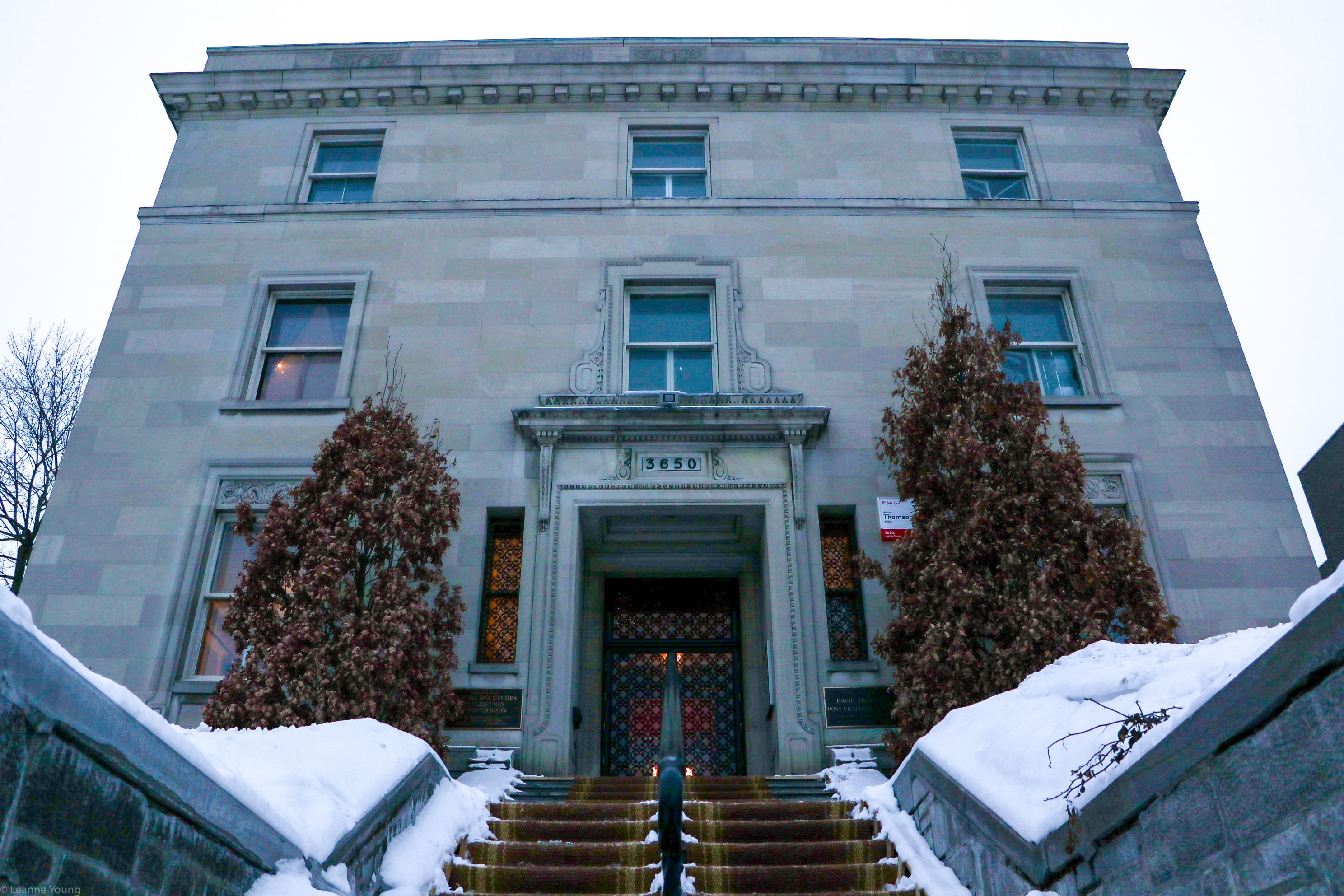
The Post-Graduate Students’ Society (PGSS) Legislative Council reconvened on Jan. 15 to propose a graduate student zone in the planned Fiat Lux Building Project. Further discussion involved the creation of a University Affairs Officer and health insurance coverage for PGSS students.

PGSS Secretary-General Dakota Rogers addressed a recent demand from members to actively use the Library Improvement Fund by prioritizing large-scale, long-term projects. A $3.00 Library Improvement Fund fee was dismissed in a PGSS referendum last year because there was no use for the funds. 

Rogers argued that the fund is wasting its potential to support bigger projects. 

“Currently, this fund has $541,000 [in] it,” Rogers said. “We will never spend that [amount] if we continue at [our current spending] rate. [This is why] we’re proposing to [create] a graduate student zone in this new library.” 

With the Fiat Lux project expected to begin this year, McGill will renovate the McLennan-Redpath library complex to accommodate the university’s growing student population. 

Deputy Provost (Student Life and Learning) Fabrice Labeau briefly outlined the university administration’s vision for the project.

“The library will basically store all low circulation material in a remote location,” Labeau explained. “The high circulation material will remain downtown in the core facility. There’s going to be a new cloud-based system that will have an interface to make a request for a book off-campus.”

Rogers also presented the idea for a graduate student zone, which would entail reserved communal and exclusive study spaces.

“What currently exists in the libraries [are] two rooms specifically intended for graduate students, but they’re only desks for studying and you have to rent them,” Rogers said. “We obviously don’t want to see those disappear, [but] we also want to see an increase in net space that will be used for this kind of communal space.” 

Finally, discussion centered on updates from the Health and Dental Plan review committee, whose proposed changes include increasing insurance coverage in vaccination and health practitioners. Under the proposed plan, mental health coverage would increase drastically as the most expensive change to the current plan.

“The current coverage is $30 per visit up to a maximum of $500. The average coverage is 25 per cent coverage up to $500,” Rogers said. “We are proposing increasing coverage to 50 per cent, up to a maximum of $1,000.” 

Lastly, Academic Affairs Officer Gongora-Bernoske discussed whether the PGSS should seek full membership in the Quebec Student Union (QSU). Currently, the PGSS merely acts as an observer.

“Our point is that a lot of the benefits we get from just being observers of the QSU are the same as being a full member,” Gongora-Bernoske said.  “The benefit of being a member [would be to] get a vote [in the union].”

The response by council members was neutral, demonstrated in a mock-referendum where most members preferred to abstain.

Soundbite: “[Our] government allocation […] has been very low, but it just increased in the last two years, so there’s a sudden availability of money that allows us to address  […] maintenance of all these older buildings that definitely need some love.” – Fabrice Labeau, on construction around campus

Flashback: PGSS members raised some concerns over construction around campus, including disruptions in the classroom and the superficial maintenance of buildings, such as grimy windows and dirty carpets.

Editorial, Opinion

International issues have on-campus consequences

Negar Borghei was a human nutrition and dietetic credentialing master’s student at McGill. She was well-connected on the university’s MacDonald campus and adored by her friends and classmates. Along with 175 other passengers, Borghei was on Ukranian International Airlines flight PS752 on Jan. 8 when it was shot down in Iran. Everyone on board, including one McGill alumni and 57 other Quebecers, lost their lives. 

On Jan. 16, McGill held a memorial service for Borghei at which friends and peers united to speak in her memory and mourn her loss. The emotional toll of Borghei’s passing still echoes through campus; however, classes will continue, and much will be asked of a portion of the student body still struggling to cope with the toll of global conflict. This tragedy is just one example of how international events and domestic politics have tangible ramifications for many members of the McGill community. McGill’s administration, professors, and student body must be cognizant of this reality, and, in response, create more robust mental health resources, exercise leniency when considering requests for extensions on class work, and remain staunchly supportive of McGill’s international community.

The diversity of McGill’s international and domestic student body, and the plurality of these students’ experiences, should not be overlooked. However, McGill students with connections to Iran and the Middle East share the experience of their emotions and needs being dismissed by faculty, administration, and other students within the McGill community. One issue students face is the severe deficiency of mental health resources on campus: However, these shortcomings have particularly harsh consequences for students who are, for example, directly affected by Borghei’s death, come from countries such as Iran where the current political climate is tumultuous, or come from places like Lebanon or Algeria, where full-fledged revolutions have been taking place over the past several months. These global events have direct consequences on the mental health of many students and, as a result, the inadequacy of McGill’s mental health infrastructure is even more damaging for them.    

Further, the demanding nature of McGill’s academics is more difficult for students dealing with stress or grief. McGill professors who fail to exercise measures of leniency with respect to devastating events such as Borghei’s death exasperate these challenges. The demand for sick notes to validate student absences, inflexible deadlines for assignments, refusal to offer extensions or pardon absences, all demonstrate a naivete to the realities of the student experience. When students offer reasons for missing classes or requesting extensions, they should be believed, not pressed for personal details they may not feel comfortable sharing. Professors should strive to create a learning environment that does not abet the stress of the student body, particularly because events which affect international students’ mental health often glean less university-wide recognition and understanding. 

Finally, not only international events, but domestic politics as well affect members of the student body in different ways. Specifically, legislation enacted by the Quebec government, including Bill 21, and previously proposed changes to the Quebec Experience Program (PEQ), are discriminatory policy developments that have damaging ramifications for marginalized groups within the McGill community. It is in response to such legislation where solidarity and support from the rest of the student body, and particularly those in positions of privilege, is most important. 

So far, attempts to organize and protest against Bill 21 have been disappointing: On Jan. 17, the Arts Undergraduate Society (AUS) held a general assembly (GA) at which a quorum of 500 members was required to enact a strike in protest of Bill 21. The GA followed a separately organized protest against Bill 21, one which was not organized by the AUS but rather by third-party, unpaid constituents who had to sign a petition. The protest was poorly promoted by AUS and both it and the GA were poorly attended. The Education Undergraduate Society (EdUS) also held a general assembly on Jan.17 to organize a strike in protest of Bill 21. While the assembly did not reach quorum for in person members at the meeting, EdUS was able to pass the motion to strike through online voting. In contrast, the GA held by AUS to organize a strike for the Climate March was attended by 900 members, drastically exceeding the quorum requirement. While a variety of factors affect the attendance of such meetings, the stark contrast in the number of members present at each sends a troubling message about what kinds of issues that McGill’s student body cares about, and those issues which it chooses to neglect. 

The McGill Tribune commends the AUS on its efforts to organize a strikes but encourages the society to consider committing greater effort to organizing, advertising, and promoting GAs which are of particular importance. In conjunction, the Tribune implores the McGill student body, and those in positions of privilege in the community, to show greater support for their peers who are experiencing hardship due to the entropy of global and domestic politics. This means attending protests such as those held on Jan. 14, but also being available and sensitive to fellow students who may choose to reach out for support. McGill professors, should also practice empathy and understanding for those in the student body who are striving to learn and be engaged in the classroom but face challenges in doing so. Finally, recent events shed further light on the need for improvement to McGill’s mental health resources, a task incumbent upon the university’s administration. 

Student Life

Shag Shop gets physical

The Shag Shop, McGill’s sexual health wellness boutique, has reopened their location in the Healthy Living Annex on the third floor of the Brown Building after going digital in 2014. The return to a physical location seeks to increase awareness of the store among the student body and give people an opportunity to get more accurate representations of the products they are buying. 

“It’s really hard to reach students [online], so having a physical space is a great way to have people interact and get people to come,” Leigh Hoffman, Coordinator of the Shag Shop, said. “When you’re shopping, you want to be able to touch the things, you want to be able to ask questions [… and] looking at measurements on a computer screen is not exactly the same as being able to see [a product].”

The Shag Shop hopes to make sexual health products more accessible to students. An important mandate since a survey by the Sex Information and Education Council of Canada found that 72 per cent of university and college students were reported to be sexually active .

“Our mission is to promote sexual wellness and health on campus,” Hoffman said. “We do that through the boutique [by] providing financially accessible sexual wellness products. That ranges from menstrual products, both reusable and disposable, to sex toys, lubes, and condoms.” 

The shop also wants to educate students on what chemicals are in their sexual health products such as lubes, condoms, and tampons, as well as provide alternatives to products they may have an allergic reaction to. 

“The goal of health services is to promote health and wellness, and part of that is paying attention to what we put in or on our bodies,” Hoffman said. “[…] A lot of lubes are made with chemicals that can be toxic or irritating.” 

The boutique emphasizes their commitment to health by offering a range of organic and natural products at accessible prices, a good choice for students either on a budget or who don’t want bleached products, such as pads and tampons. Most of the time, unbleached menstrual products and organic plant-based lubricants can be hard to find and are expensive at pharmacies; Shag Shop aims to make these products cheaper and more available to those who need them. 

“It is a priority for us to offer options, […] because sometimes people don’t know about those things, and sometimes they can be inaccessible as in harder to find and much more expensive,” Hoffman said. 

In addition to quality assurance, the boutique also vows to show their values of inclusivity through their diverse range of products which aim to serve all sexual and gender orientations. 

“It’s been a priority of mine to have our stock reflect the diversity of experiences in terms of sexuality and gender,” Hoffman said. 

While walking into a physical space to buy or even discuss sex products can be an intimidating experience, the staff at the Shag Shop are completely prepared to handle such situations in an open and welcoming manner. 

“In terms of the staff, all the ambassadors are trained to be able to talk about sex in ways that are sensitive to the multitudes of realities that people live in,” Hoffman said. 

For those who feel overwhelmed at the thought of going to the Shag Shop, however, the boutique will still maintain its online site. 


Research Briefs, Science & Technology

29th edition of Soup and Science

McGill professors presented their scientific research to crowds of students in the Redpath Museum at the 29th iteration of Soup and Science from Jan. 13–17. After snacking on complementary soup and sandwiches, writers from The McGill Tribune compiled highlights from the week.

Nutrient cycling and ecosystem science

Fiona Soper, assistant professor in the Department of Biology, just started at McGill this semester, bringing the Soper Lab with her. Soper specializes in ecosystem science, drawing on plant physiology and biogeochemistry to explore the ways in which plants interact with their environment. In particular, Soper analyzes nutrient cycling processes to understand how plants respond to climate change. 

“One of the big questions in ecosystem science is the extent to which plants can capitalize on having more [carbon dioxide] in the atmosphere to increase their growth and to change the trajectory of climate change,” Soper said. 

An upcoming project will involve field and lab work on the mechanisms by which tropical plants scavenge for nutrients in high carbon environments, which will take the Soper Lab to the slopes of a volcano in Costa Rica.

Exploring species distributions

Professor Anna Hargreaves from the Department of Biology described her lab’s exploration of species range distributions, the areas in which species can be found during their lifetime.

“Thinking about species distribution is interesting [because it is] a fundamental way of understanding a whole bunch of our modern conservation issues,” Hargreaves said.

For example, the effects of climate change can be studied through the response of species distributions. Hargreaves discussed several tools that the lab used, including in-depth field experiments at the community scale, global data syntheses that incorporate worldwide data, and the Biotic Interaction Gradient (BIG) experiment, which is run on mountain ranges in various parts of the world.

Data mining for cybersecurity

Benjamin Fung, an associate professor in the School of Information Studies, gave an overview of his research on data mining for cybersecurity. 

“Data mining is a process of extracting interesting patterns or knowledge from a large volume of data,” Fung said.

Some of Fung’s research focusses on predicting the identity of anonymous communicators on the dark web based on patterns in writing style. He is also interested in preserving privacy in cases where large amounts of sensitive data, such as patient records, need to be released for data mining to a third party, like a university. Anonymization algorithms transform data so that outsiders can no longer obtain sensitive data about patients but can still extract useful information from the dataset.  

The human genome

Guillaume Bourque, an associate professor in the Department of Human Genetics, is focussed on the human genome and the presence of viral DNA within it. After the Human Genome Project sequenced the human genome in 2003, researchers realized that only two per cent of it is DNA that can be used to make proteins, termed coding DNA. Meanwhile, viruses’ inactive genetic code comprise eight per cent of the human genome.

“Part of the placenta is actually derived from viruses in our genome,” Bourque said. 

Bourque’s work shows that viral DNA is integral to humanity. Aside from being involved in pregnancy, viruses in our genome also activate the immune system to fight against disease.

The psychology of pain

Assistant Professor Mathieu Roy from the Department of Psychology presented his research on how brains make decisions between pain and competing rewards. Roy’s research shows that as monetary rewards grow higher, the likelihood of people choosing to endure more pain increases.

“I was interested in how the brain generates consciousness […] and emotions,” Roy said. “Pain is a sensory experience, but it’s also an emotional one, and, contrary to other emotions, it is easy to study in the laboratory [because] pain implies consciousness.” 

In the future, Roy hopes to expand his research by analyzing databases like the UK BioBank and studying the response of the brain as it makes conscious decisions. This understanding of the brain might change the way we treat chronic pain.

Soccer, Sports

Higher wages lead to change in NWSL draft classes

The National Women’s Soccer League (NWSL) held its annual college draft on Jan. 16 in Chicago, and for the second year in a row, an underclassman was selected first overall. This year’s first pick was 19-year-old Sophia Smith, who, along with being the first teenager drafted into the NWSL, is coming off a national-title-winning sophomore season at Stanford University. This growing trend of drafting young players with remaining collegiate eligibility is indicative of a changing landscape in professional women’s soccer, especially in North America.

It was, and still is, common for female professional soccer players to have careers outside of playing. Until relatively recently, many leagues did not pay a living wage, sponsorships were not particularly lucrative, and even if a player could earn a decent salary, it was unlikely that they could fund a retirement starting before the age of 40. 

In North America, and especially the United States, collegiate athletics are a common gateway to a professional sports career. The introduction of Title IX in 1972 required universities receiving federal funding to offer equal access to coaching, equipment, facilities, and other services to both women’s and men’s teams. This eventually created an environment in which university athletics became a viable route to a professional career for female athletes and introduced college drafts in various iterations of professional soccer leagues in the United States as well as in the Women’s National Basketball Association (WNBA). 

Players declaring for the draft with remaining NCAA eligibility, however, suggests a shift in the way women are approaching their careers and raises the question of whether the college system is still the best way to facilitate the development of the game. Collegiate athletics as a development program and pipeline to professional careers has provided female players with a safety net in the form of an education that, for many years, was necessary. But athletes who feel that their playing careers can now support them without a university education calls into question the value the college system still holds. 

The NWSL is home to the vast majority of players on the United States Women’s National Team (USWNT), who are back-to-back reigning world champions. While most players on the roster that won the 2019 FIFA Women’s World Cup spent at least some time playing in the NCAA, perhaps they could have been better served by an academy system integrated into the structure of professional club teams, as is the practice in Europe. It is a model that has helped the best men’s leagues develop over the years, as players have been able to invest more time in training and playing. While the NCAA has served to centralize the development of women’s soccer in North America, an academy system that decentralizes that development has the potential to make soccer more accessible and broaden the talent pool for professional leagues. At a time when players are willing to take risks to pursue their professional careers, youth development programs that feed directly into the club system may be a step toward developing women’s soccer and continuing to attract interest from players, sponsors, and supporters alike. 

Of course, there are valid criticisms of these club academy systems, and there is an argument to be made that women’s leagues should not necessarily seek to imitate men’s leagues. Putting too much emphasis on training and playing could deprive young people of opportunities to pursue other interests, and education has rarely had negative impacts. But, should women’s soccer continue on its current trajectory of growth, investing in academies could help foster homegrown talent for clubs in one of the world’s most competitive leagues. 

Commentary, Opinion

The CAQ’s secular mission masks discrimination

The Coalition Avenir Quebec (CAQ) recently announced its intention to abolish the mandatory Ethics and Religious Culture (ERC) course taught in schools around the province. The decision comes less than a year after Bill 21, a law that prohibits certain public servants from wearing religious symbols, passed in the National Assembly. Some have called the move to end the course an extension of Québec’s commitment to ‘secularism.’ The CAQ has also launched a consultative survey that invites the public to suggest new themes for the course’s replacement, which will partially or wholly abandon religious topics. Like in the case of Bill 21, Québec is using the separation of government and religion to mask its xenophobia. Ending ERC courses will ultimately be harmful to the province’s youth, who stand to benefit from the added understanding of the province’s multitude of religions. 

  Created in 2008 under the leadership of the Quebec Liberal Party, the course, which looks into the vast array of different cultures in the province and encourages students to consider ethical dilemmas, has remained controversial since its outset. Following its introduction, the Supreme Court of Canada considered : One in which parents complained that the course went against the religious and moral beliefs they taught at home and another, Loyola High School v Quebec AG, where a Catholic private school fought against having to teach students about morality in the context of other religions. While the Court ruled against the parents in the first case, their decision in the latter led to an exemption for some private institutions from having to teach the course. 

 In this context, it becomes clear that numerous interest groups in Quebec are more preoccupied with avoiding exposure to a diverse range of religions than protecting secularism, as the CAQ claims. In 2009, sociologist Joëlle Quérin published an article that denounced the course, claiming that it went too far in promoting multiculturalism and served to fundamentally change the nature of Quebec’s culture, traditionally conceived of as French-speaking and Catholic. 

Querin’s view is representative of a broader debate between proponents of multiculturalism and those of ‘interculturalism’: The latter claims to stand in defence of a common Québécois French culture that integrates newcomers into a secular society as opposed to encouraging cultural pluralism. ‘Interculturalism’  is supposedly the logic behind Bill 21, and now the decision on ERC courses. The consultative survey outlines eight potential themes for the replacement class: Citizen participation and democracy, legal education, green citizenship, sexuality, personal development and interpersonal relationships, ethics, digital citizenship, and societal culture. These themes, the government claims, are meant to reflect the values of a modern, secular Quebec. However, these themes can and should stand alongside the currently existing religious component of the course.

Despite their alleged commitment to secularism, the actions of some CAQ politicians suggest other priorities. As of 2011, 82.36 per cent of Quebec residents identified as Christian, and 75 per cent as Catholic more specifically. Premier Francois Legault drew criticism in December for telling California Governor Gavin Newsom that all French Canadians are Catholic. Legault’s comment exemplifies how Quebec politicians use the secularism argument only when it serves them, and evidently to specifically target religious minorities. 

The fact that such a large proportion of Quebecers practice a single religion reinforces the need for a course like ERC. Despite McGill’s location in a relatively multicultural city, a large portion of Québec’s population is rural, and many Québecers have little exposure to cultures other than their own. As such, ERC can serve to introduce those living in less diverse areas to different cultures. Doing away with this course means that some students may be less likely to learn about religious acceptance, which could be particularly damaging to religious minorities in the context of rising immigration rates in the province and country. 

There is no doubt that the new themes that the education ministry has proposed are important and relevant. However, it seems clear that the priority in scrapping ERC is to avoid teaching students religious tolerance. Unfortunately, the CAQ’s policies are popular, and the changes will likely be made before the end of Premier Legault’s mandate. Still, as young people living in Quebec, McGill students opposed to these policies have a responsibility to organize with faculty associations, contact Members of the National Assembly to voice their disapproval, go to demonstrations against discriminatory policies, similar to the Jan. 17 student protest, and defend those made vulnerable by the province’s xenophobia. 

Science & Technology

Immortalizing the mortal: Merging art and medicine

At its annual ‘Immortalizing the Mortal’ event in November 2019, the Maude Abbott Medical Museum revealed its chosen specimen: A uterus with large leiomyoma (or fibroids), benign tumours that occur when smooth tissue or connective tissue grows in the uterus. The event, which uses medical specimens to inspire artists and celebrate the artistic prowess of the participants, aims to explore the intersection of art and science to enable mortals to be immortalized through art focussing on their mystic medical histories. The specimen, which should be ‘artistically clothed with flesh,’ may be expressed through poetry, sketch, photography, or any other medium. 

The Maude Abbott Medical Museum opened around the same time as the founding of the Montreal General Hospital in 1822 and the Montreal Medical Institute in 1823. The Holmes heart, acquired by McGill’s first Dean of Medicine Dr. Andrew Holmes in 1824, is the museum’s oldest and most recognizable specimen. In 1899, the museum was curated by Maude Abbott, the first woman to graduate from McGill with a Bachelor of Arts and the first woman to be admitted into McGill’s Faculty Club. After being denied entry into McGill’s medical school, Abbott went on to transform the medical museum into one of the best teaching museums in North America.

Richard Fraser, a pathologist at the McGill University Health Centre and curator of the museum, supervised the event. Fraser explained that the museum uses the specimens in the way that they were traditionally meant to be used, for analysis and medical diagnosis. However, hosting a creative event uncovers another side of the specimen. His vast knowledge on the topic allows event guests to learn about both pathology at McGill and the history of the field. 

Pathology is a type of medical science in which scientists study surgically removed organs and tissues to diagnose disease. There are three different kinds of pathology: Cytopathology, molecular, and surgical pathology. Cytopathology is used to diagnose diseases such as cancer at the cellular level, while in molecular pathology, scientists study the molecules within the organs, tissues, and bodily fluids of the subject to diagnose and classify disease, such as cancer. For the 2019 specimen, participants applied surgical pathology, which involves examining tissues with the naked eye to provide a definitive diagnosis of the disease.

“The idea was to have an exercise whereby we get a specimen [that] clearly shows pathology but to treat it in a way that brings out the different aspects of the specimen,” Fraser said. “In other words, […] we take a structure […] and then find just the shapes or colours and the way it’s lined up […] or to try and look at the specimen from the point of view of the person that it came from.”

Fraser asked event participants to describe the specimen but not give it a diagnosis, before guessing what part of the body it was.

“I see circles and it’s symmetrical on both sides,” Henriette, a first-year Medicine student, said. “From what I can see it’s quite even, but there’s like a piece here that’s missing.” 

Henriette guessed that the specimen was a brain, after which Fraser revealed the actual name.

“In fact, it’s a uterus, so you’re at the wrong end of the body,” Fraser said. “That’s an ovary, that sac, so this is an ovarian cyst, and the uterus has this whirl structure to it.”

The event staff hope that fellow participants will be similarly inspired by the shape or story of the specimen. All of the submissions of art will be presented at the wine and cheese on Jan. 17 from 5:00 to 7:00 p.m. 

Features

Finding your place

At a large school like McGill, located in the epicentre of an even bigger city like Montreal, it is easy to feel lost and isolated. Many students are stressed by academic pressure, being far from home, and the pressures of living independently. It is normal to feel alone at first, and it may take some effort before you find your community. However, here is a plethora of opportunities to help find your place on campus. Whether you decide to join a new club, hang out and study in a new place, or talk to new people in class, it all starts with a single step outside of your comfort zone. Here are just some of the many opportunities worth exploring on campus.

Creative

Word on the Y | New Year’s resolutions

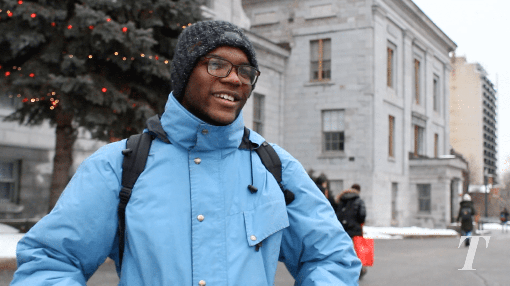
With a new decade and the beginning of the winter semester, we asked some McGill students what 2020 means to them, and what resolutions they have for the new year.

Video by Multimedia Editors Sarah Ford and Aidan Martin

Read the latest issue

Read the latest issue