

Latest News

News, The Tribune Explains

Tribune Explains: The new Société de Transport de Montréal (STM) card readers

Students may have noticed the installation of new card readers in Société de transport de Montréal (STM) buses in recent months. On June 27, the company announced the introduction of enhanced card readers in its vehicles to replace existing ones. The new system will decrease the time it takes to board the bus, while noticeably changing some aspects of its process for customers. The McGill Tribune spoke with the STM about their goals and anticipated timeline for installation. 

What is the purpose of the new readers?

Faster boarding and increased accessibility are among the benefits of the new system. 

The readers will be used to ensure passengers have sufficient funds on their OPUS and L’Occasionnelle fare cards. They are designed to be more efficient than the existing readers, incorporated into fare collection boxes by reading cards twice as fast. The STM anticipates the technological infrastructure to allow for payment with bank cards in the future, which transportation systems in major cities, including London and New York City, have already begun adopting.

STM Public Affairs Advisor Philippe Déry, explained that the new readers are expected to enhance the experience for passengers. 

“Existing card readers were at the end of their life cycle, and thus, the STM seized the opportunity to improve its customers’ experiences by installing new, more efficient readers,” Déry wrote in an email to The McGill Tribune. “[These] will speed up boarding and allow the transition towards new technologies.”

Renovations to the design of the new system will also improve accessibility from the previous readers. 

“Universal accessibility will be enhanced through a larger and clearer screen, improved function, and an optimized location,” Déry wrote. 

What is the timeline for the project?

The project will involve three major phases: Installation, gradual activation, and eventual service across the whole STM network. Installation of the readers began in May 2019 and will continue until Nov. 2020. On standard buses, a single reader is installed at the front of the vehicle, and on extended buses, another two are stationed at the back. In Spring 2020, the readers will continue to be activated, after the software’s proper functioning is confirmed. All readers are expected to be put into service by Nov. 2020.

“The roll-out is going quite well [and] according to our plans,” Déry wrote. 

Will this encourage public transportation use? 

The activation of the new readers will still allow passengers to enter through the rear doors of the bus; however, if paying with cash or on a magnetic strip card, passengers will be required to board through the front. Although the primary purpose of the readers is to expedite boarding, confusion may slow the process at first. Enola Hihi, SSMU Sustainability Commissioner, believes the changes to the boarding process may discourage new riders. 

“A problem I foresee is an initial confusion, which may hold up lines and deter people wanting to try public transportation for the first time,” Hihi said. “I don’t think this is a bad project, [but] I don’t see the point of investing so much money into it, when the money could be [put] to the [improvement] of bus routes, or possibly buying electric buses.” 

On the other hand, Déry predicts that the combined projects of the STM will increase its user base.“This project aims to improve customer service, and it is an added benefit if it encourages more people to take public transit,” Déry said. “In the long term, the addition of other payment options, like bank cards, could facilitate a more spontaneous use of our network.”


Editorial, Opinion

The Wellness Hub needs more than a makeover

Only four months after its official opening, the Student Wellness Hub has received frustrated criticisms, including a recent tweet by a student expressing disappointment about having his appointment rescheduled despite waiting over 80 days to meet with a therapist. Even after receiving a $14 million donation for the Hub, McGill has failed to resolve many of the accessibility issues students have been lamenting for years, such as long waitlists caused by an acute lack of clinical professionals.

Mental health on university campuses is an increasingly important issue that the Hub has aimed to address. In Quebec, one in five students needs treatment for depression. According to Dr. Vera Romano, director of the Wellness Hub, the Hub’s aim was to centralize healthcare services in pursuit of establishing holistic, accessible care. Since Sept. 2019, the Hub has added three psychiatrists, six general practitioners, and three nurses, as well as 11 Local Wellness Advisor for various faculties. Additionally, the Hub also plans to co-purchase off-campus counselling services and implement an online booking system. 

Despite these additions, the continued shortage of counsellors and daunting wait times have left students dismayed. Students are also frustrated to see costly aesthetic improvements to the building while waitlists and treatments remain unchanged. These superficial renovations are another instance of McGill prioritizing appearances over student wellbeing, a trend that has been especially criticized in light of the recent “Made by McGill” campaign. Despite claiming to do its best to build incredible students, McGill has a recurring pattern of striving to maintain its prestigious image while ignoring students’ demands for change.

Other similar-sized universities in North America have taken much larger strides towards accessible healthcare. When faced with a similarly overburdened healthcare system, Harvard University created a same-day drop-in program to reduce wait times. The University of Calgary is attempting to receive some burden off on its healthcare system by removing the need for medical notes to excuse absences; no such policy currently exists at McGill. 

McGill’s overall approach to mental health is lacking. Starting in Fall 2019, the university removed its long term therapy program: Instead, the Wellness Hub focuses on short-term solutions and immediate prevention. The Hub’s approach is astoundingly out of touch with the realities of students living with mental health issues. Mental health issues can very rarely be adequately treated with short-term care, and the Wellness Hub must confront this reality by offering long-term support. Improving support may also mean offering Cognitive Behavioural Therapy (CBT) to students who need it, an option that the Wellness Hub currently does not provide. Wellness advisors can be useful, however, they cannot replace the need for professional psychologists and psychiatrists. 

McGill should consider partnering with more local clinics to fill their gaps in service. Having more partner organizations would increase the availability of specific treatment types for different student needs like eating disorder recovery or CBT. In addition, racialized, 2LGBTQiA+, and other marginalized students require therapists who understand their realities, and even reflect their intersecting identities. White, straight, cis-gendered, or male therapists cannot relate to the experiences of marginalized students, and this may hinder their ability to provide adequate treatment. It is incumbent on mental health services to hire and offer treatment by professionals with diverse backgrounds and identities.

Beyond improvements to the Hub, McGill can take other steps to be more accommodating of those affected by mental illness. For example, if McGill wants to prioritize wellness, the university should start by implementing a Fall Reading Week and increasing the amount of available academic advisors. Additionally, McGill should follow the University of Calgary’s example and abandon sick notes as well to remove the burden from healthcare services, and to allow students to take time off more easily. Other measures to prioritize accessibility, such as eliminating pop-quizzes, offering lecture recordings for all courses, and instituting flexible deadlines will help students balance their mental health with their lectures and homework. 

The Wellness Hub would not deserve so much criticism if it were not for McGill’s consistent failure to listen to students’ concerns. Students struggling with their mental health must be recognized as authorities on their own needs, and their suggestions for improvements should be heeded by McGill.

Student Life, The Tribune Tries

A candid cannabis conversation

Over a year after the national legalization of cannabis, Quebec is raising the legal age to 21, a decision poised to directly impact students. On Nov. 20, Voxcann, a cannabis education initiative by the nonprofit Groupe de recherche et d’intervention psychosociale (GRIP), and the Canadian Students for Sensible Drug Policy’s (CSSDP) Concordia and McGill chapters collaborated to host a cannabis roundtable at the Concordia Art Hive. The event aimed to promote candid conversation about student cannabis use from a medical and social standpoint. A mix of Concordia and McGill students discussed their experiences with cannabis, the changes brought about by legalization, and upcoming reforms to legislation.

The roundtable was a natural partnership between Voxcann and CSSDP. Coco Wang, the director of development for Voxcann, explained the group’s mission.

“Our focus is […] youth empowerment [on] the topic of cannabis education and policy, because that’s what we at Voxcann think is lacking in the current [cannabis scene].” Wang said. 

Similarly, CSSDP’s McGill chapter aims to give voice to student concerns about national drug policy.

“Our goal is to mobilize young people to participate in the political process at all levels [to advocate] for sensible drug policies that aim to reduce harm and […] reflect […] research,” Gabriel Aboutoul, a CSSDP representative, said. 

 Both groups focus on harm reduction and approaching drug use as an issue of public health and human rights rather than criminal justice.

Discussion first turned to where students get information about cannabis, and whether that information is likely to be accurate. Many participants got their information anecdotally and discussed the inherent limitations to this lack of objectivity. One participant discussed their work at the Société québécoise du cannabis (SQDC) and the restrictions on what information vendors can disclose to customers. 

Legalization has paved the way for more accessible information about the technicalities of cannabis. For example, it has facilitated emerging research about the psychoactive effects of different terpenes, the scent compounds in cannabis that define certain strains.

The conversation then turned to the positive and negative effects of cannabis use. Though for some people, weed can alleviate symptoms of mental illness with fewer side effects than medication, while it can exacerbate these issues in others. Despite this, legalization has allowed these individuals to try cannabis in a more controlled environment and learn how it affects them through experience. 

The group also discussed the degree to which cannabis has changed post-legalization. The roundtable recognized the intersections of racial and class privilege. For those in positions of privilege, weed use has always been safer, given the disproportionate rates of cannabis-related incarceration in poor, homeless, and racialized youth, specifically young black men. 

Finally, the facilitator highlighted the changes in cannabis legislation that will take effect in 2020. In late October, the Coalition Avenir Québec (CAQ) government passed a law that will raise the legal age to purchase cannabis within the province from 18 to 21. The change in legislation aims to protect teenagers, a group that lawmakers fear is especially vulnerable to dependency. However, opponents contend that the legislation is both unfair and potentially harmful, since it creates a second class of adults aged 18 to 21 who will likely resort to illegal methods of obtaining cannabis. 

The roundtable agreed that these changes are both confusing, given that the legal age to purchase alcohol will remain 18, and harmful to those who had access to legal cannabis granted and quickly revoked. Though the change is likely due to concerns about stunting brain development, the table concluded that the decision to revoke a right that had already been granted and that in fact promoted safer use, was a misstep. By re-criminalizing use that will likely continue after the change, the Quebec government could endanger teens who will naturally seek to experiment.

News, SSMU, The Tribune Explains

Tribune Explains: SSMU Conflict of Interest Policy

An article published by The McGill Daily on Nov. 13 reported that Students’ Society of McGill University (SSMU) members and representatives were offered an all-expenses-paid trip to Israel by Hillel Montreal, an organization whose mandate  aims to connect Jewish students with the larger community in Montreal. At the Nov. 14 SSMU Legislative Council, some councillors raised concerns over whether or not accepting the offer constitutes a conflict of interest.

What is the SSMU Conflict of Interest Policy? 

The SSMU’s Conflict of Interest Policy defines a conflict as a situation that might affect a member’s impartiality as related to their work. The fact that a conflict exists does not equate to wrongdoing, however, as long as it is addressed by the appropriate authorities.

The policy applies to all decision-making individuals within SSMU. The policy’s purpose is to guide SSMU on whether or not an action of one of its members is a conflict of interest, and if so, how to mitigate the impact on SSMU decisions. 

The policy further lays out specific situations that are deemed conflicts of interest. If a SSMU representative has an unprofessional relationship with another member, they must disclose that relationship to the Legislative Council and also to ensure not to let the relationship influence their partner’s decisions. Additionally, SSMU representatives must not use information that is not available to the public for personal gain. Further, they also cannot influence the negotiation or decision process for SSMU dealings with a business or peer through insider information or financial incentives.

According to the policy, SSMU representatives also have to be careful about receiving “gifts, hospitality, or other benefits” from any person or organization which has the potential to influence their duties or decisions within the organization. This includes gifts worth more than $50. If there is any doubt in the intention of the gift, it must be declined by the SSMU representatives. 

How does this apply to the recent controversy surrounding the Hillel Montreal trip?

The three SSMU members who originally accepted the invitation to go on the trip, called Face to Face, maintain that they were in compliance with the policy. In accordance with the policy, the Board of Directors decided in a confidential meeting whether there was a conflict of interest on Nov. 21. Arts Representative Adin Chan had originally accepted the offer, but then decided to decline.

“While I was still planning on going, I can say that I went through the appropriate Conflict of Interest procedures,” Chan said. “I am confident that I [was] in compliance with the policy.”

Arts Representative Andrew Chase, who accepted the invitation, also believes that doing so is within compliance of the policy. 

“I have attended a couple of Hillel events, and the coordinators know me personally,” Chase said. “[That] is why they invited me to apply to their educational [trip] to Israel and Palestine. […] It should be made clear that the invitation to apply was made because they knew that I would make for a good fit for the program, not because of my position as Arts Representative.”

However, in the invitation letter SSMU Executives posted publicly, Hillel Montreal states that they selected students based on their role as leaders, their experience, and their connections.

“This document acts as an official invitation for you as one of the student leaders for this trip,” reads the letter. “We’ve identified you as an invaluable student to have for this trip due to your student leadership experience and connections on campus.”

Science Representative Jordyn Wright also applied and is going to participate in Face to Face.

“The [Board of Directors] ruling is that my participation in Face to Face poses no Real or Apparent conflict of interest because Hillel Montreal operates outside of a SSMU context,” Wright said. “Should a Potential conflict of interest arise in the future, the chair presiding over whichever body the context involves may ask me to recuse myself from issues related to the content of the trip if they see fit to do so.”

Ask a Scientist, Science & Technology

Helium is an endangered element

The world is running out of helium. This may come as a shock, as helium is the second most abundant element in the universe, but it is also a non-renewable resource that is rapidly being depleted.

Helium is a light inert gas that belongs to a group of elements known as the noble gases.  The result of radioactive decay of other elements over millions of years, helium is found in gas pockets beneath the ground. While some continues to trickle to the surface and escape, most of it is extracted for human use. Due to its light mass, helium does not stay in the atmosphere, but quickly escapes the Earth’s surface and travels into outer space. 

People often associate helium with balloons or know it as the gas that makes your voice sound funny. However, it has a wide variety of applications, including scuba diving tanks and space flight operations. Its inert, or unreactive, properties allow it to be used in the welding and manufacturing of semiconductors. When liquefied, it can also be used as a cooling agent for superconducting magnets in MRI scanners and important pieces of chemistry lab equipment, which only work when bathed in liquid helium.

A crucial piece of equipment in chemistry labs is the Nuclear Magnetic Resonance Spectroscopy (NMR) machine, a piece of equipment that is used to observe local magnetic fields around atomic nuclei. Dr. Tara Sprules, a manager of the Quebec/Eastern Canada High Field NMR facility (QANUC) in the McGill Chemistry Department, uses liquid helium to run the machines. The lab has been affected by helium scarcity, forcing Sprules to search for financial assistance to purchase equipment that can recycle helium. Helium supply is particularly unstable because it relies on other industries, and is often extracted as a byproduct of natural gas and petroleum exploration.

 “If natural gas and petroleum industries get cut down, […] that’s a potential [helium] source that we don’t have anymore,” Sprules said in an interview with The McGill Tribune.

There are not many sustainable alternatives to helium to begin with, and in many applications, there are no sufficient replacements at all.

“For the NMR and MRI applications, there aren’t any alternatives because the superconducting magnets have to be at four [Kelvin],” Sprules said. “The material used to do superconducting has to be that temperature [….] There is nothing else that can get that cold, and there isn’t any semiconducting material that has the appropriate conductance at a higher temperature.”

Sprules pointed out that most people do not directly use helium in their everyday lives, so placing the onus on individuals rather than industry to conserve helium will not have much effect. 

“You may want to stop using helium-filled birthday balloons or devices containing semiconductors, but then it becomes a larger question as to what extent you are willing to go,” Sprules said. “The more practical solution is that wherever there are places where helium can be recycled, it should [be].”

Sprules believes that recycling helium can be very efficient in addressing the helium shortage.

“We are working on purchasing [helium-recycling] equipment,” Sprules said. “If we were to have [it], […] we would be able to recycle 90 per cent of the helium we use. Any place that recycling can happen, it’s a very good solution.” 

Experts are conflicted about how long it will take for helium to run out. Some believe that we will run out in 25 to 35 years, while others think that helium resources will last another 200 to 300 years. Regardless of when we will run out, most experts agree that we need to start thinking about helium conservation.

“There are several sites in Saskatchewan where they are starting to extract helium,” Sprules said. “It all depends on how much gets recycled and how successful new exploration sites are.” 

Hockey, Sports

Martlet hockey falls to crosstown rivals

McGill women’s hockey (3–6) fell 1–2 to top-ranked Concordia (8–1) in a fast-paced game on Nov. 24. Concordia gained the upper hand early, scoring just 55 seconds into the first period. The Martlets allowed a second goal on a power play later in the period, after third-year centre Marika Labrecque was called for a penalty. The period ended with six shots on goal for the Martlets and eight for the Stingers. 

“I feel good about our team,” Martlet Head Coach Peter Smith said. “The reality is that we’ve had three games [where] I thought we played real well, [but] we came out [on] the short end.”

The second period saw an uptick in momentum for the Martlets with 14 shots on goal to 10 from Concordia. Fourth-year forward Léa Dumais put McGill on the scoreboard with a goal poked past the Concordia defence after a struggle around the net, assisted by fourth-year defence Rachel Santini and third-year forward Christiana Colizza. This was Dumais’s fourth goal in three games. The second period also saw Concordia’s only penalty, given for interference, handing McGill a power play 15 minutes into the period. McGill was unable to score again; however, the next two power plays for the Stingers produced no goals, demonstrating the Martlets’ strong defence and performance under pressure. 

“The game started at three o’clock and we didn’t start playing at three o’clock,” Smith said. “Against a team like that you have to play a full 60 minutes, and we got probably a good 45 [minutes] out of it, but we didn’t get 60.”

Both teams kept a clean slate in the third period, with a game total of 24 shots on goal for both teams. The pace of play picked up in the third period with McGill skating hard and fast in an attempt to even the score. While the Martlets could not put themselves back on the score sheet, they remain hopeful for their final game before the break. 

“We only have one game left, so we obviously want to finish on a high note,” Smith said. “We are playing [University of Ottawa] next Saturday, and we would like to do well, and we need to get some healthy bodies back.” 

The break promises to give the Martlets a chance to recuperate from the first half of the season and focus on moving forward and qualifying for the provincial and national championships, coming in February and March, respectively. 

The Martlets next face the University of Ottawa Gee-Gees (4–5) at home on Nov. 30. 


Moment of the Game

Assisted by Rachel Santini and Chistiana Colizza, fourth-year forward Léa Dumais scored her fourth goal in two home games in the second period. In the 2018-19 season, Dumais became the fourth highest scoring player in Martlet hockey history. 

Quotable

“I like what we have going on and I feel good about our team. We work hard.” – Head Coach Peter Smith on the Martlets moving into the second half of the season. 

Stat Corner

Fourth-year goaltender Tricia Deguire made 22 saves, demonstrating why she was invited to the USports Summer Showcase Tournament in August 2019.

Arts & Entertainment

In conversation with Linda Gaboriau

In the world of prestigious literary awards, writers of fiction and poetry often occupy most headlines across major media platforms. Many awards, however, broaden their focus to more accurately capture contemporary literature’s breadth of exciting work. Alongside drama, non-fiction, and young adult literature, Canada’s prestigious Governor General’s Awards features the category of literary translation. 

Linda Gaboriau claimed this top honour with her translation of Wajdi Mouawad’s play, Tous des oiseaux this year. Translated into English from its original French under the title Birds of a Kind, the family drama focuses on the issues of heritage and identity within the heated context of modern-day Israel. Having collaborated with the playwright for over 15 years, Gaboriau has translated several of Mouawad’s previous works, with many of them tackling controversial explorations of interpersonal conflicts within topical contexts. 

Born in Boston, Gaboriau moved to Montreal in 1963 to pursue French Language and Literature at McGill, where she obtained both a Bachelor’s and a Master’s degree in the subject. In an interview with The McGill Tribune, Gaboriau spoke about how she had not always considered that literary translation could be a profession to pursue. 

“I had not thought of being a translator [….] I had one course in translation. It was so deadly boring,” Gaboriau said. 

Gaboriau has since translated over 125 pieces of fiction, most of them novels and plays, and has also undertaken a profession as a dramaturg. Gaboriau noted that the collaborative nature of translation stimulated her work and eventually changed her initial judgement on the discipline.

“The most meaningful, appealing thing about [translation] is to work that closely, that intimately, with writers,” Gaboriau said. “I really feel that writers […] are the witnesses of our time. They’re people who really take the time to look more deeply into what’s going on in human nature or in the political [and] social world around us. To be working side-by-side with people who have taken that risk of trying to raise their voices in the wilderness [is] fantastic. It’s a great privilege.”

This will be Gaboriau’s second Governor General’s Award in collaboration with Mouawad, having previously won the same honour for Forests. Gaboriau noted why his work in particular excited her: In addition to her respect for the source material, she shared the interesting reason why Mouawad wanted Tous des oiseaux translated to begin with. Gaboriau explained that, though Mouawad wanted to write his play in French, he didn’t want it to be performed in French. 

“[Mouawad] was going to write the play in French so that he was writing the story he wanted to tell,” Gaboriau said. “But it would then be performed in English, German, Arabic, and Hebrew, with French subtitles for the production in Paris.” 

Whether the work is groundbreaking or more humble in ambition, Gaboriau stressed the importance of maintaining the integrity of a text. The danger of reinterpreting a text comes from diluting its tone or meaning in the process of translation. Even after over 35 years of work, Gaboriau admitted that she sometimes doubts the accuracy of her translation. Gaboriau explained that, just as with any artist, translators obsess over tiny changes that could improve their material, even years after its publication. Nevertheless, Gaboriau noted that the meticulous nature of her work is what makes her work so fulfilling.

“What I love about translation is that it’s very exacting, it’s like lacework,” Gaboriau said. “It’s really like a very delicate handicraft. You’re alone in your study and you’re focusing on language and you’re weaving it.”  

Ask Ainsley, Private, Student Life

Ask Ainsley: Coming home for the holidays

Dear Ainsley,

I’m dreading going home for the holidays and seeing my family again, and this fear has been hanging over me since midterms. My parents can be really strict and critical, especially about my weight, grades, and struggles with my mental health. The prospect of seeing them again and facing that criticism is daunting, especially since the holidays are already unusually stressful and triggering for me.

How should I cope with this while studying for finals, and how can I prepare emotionally for being back home?

Sincerely,

Not So Sweet Home (NSSH)


Dear NSSH,

It is natural to feel anxious when awaiting the judgement of your family. After all, they are likely very important to you, and their opinion will always matter. Remember  that because they are critical, your parents may focus on the negative. However, you shouldn’t let reminders of your errors make you forget your successes.

If you are worried about your parents putting pressure on your academic performance, a good strategy is to remind parents of your achievements. Start conversations with anecdotes about the courses you were passionate about or extracurricular activities you excelled in. At the end of the day, your parents want to know what you enjoyed about your university experience, so let them know how you made your time at school worthwhile.

It can be very difficult when parents are critical of weight. Firstly, it is important to remember that your parents have not seen you in a long time, which means any bodily changes may come as a surprise. Recognize that any comments will most likely be exaggerations. Additionally, bear in mind that  you are still growing. It is natural to grow into your late teens and 20s—in fact, some medical professionals consider adolescence to last until 24. Finally, embrace any changes. Try your best to be confident with your body and acknowledge that there is nothing wrong with a change in weight. With holidays coming straight after finals, your stress levels could cause temporary weight gain, and this fluctuation is normal.

Finally, criticisms of your struggles with mental health can be especially triggering. As with anything that requires a high level of empathy, it is important to be in constant communication with your family about how you feel. Nobody should trivialize your mental health struggles. If your parents do not understand your challenges, confront them if you feel safe to do so. When in doubt, speak to your peers; you may find that you are not alone in your situation, and there are others who are suffering similarly. You may find comfort in the fact that mental health struggles are common at university: According to the American Psychology Association, 41.6 per cent of college students suffer from anxiety, and 36.4 per cent suffer from depression. Tell your parents about how specific reactions make you feel, and how these feelings can sometimes be overwhelming. If you have the resources, seeking professional help can be useful to give your parents insight into your mental health struggles. 

Ultimately, your family should always want the best for you. Keep in communication with them and let them know how you feel. Try to get their support. However, sometimes your parents may be too critical, and that is not your fault.

Good luck!
Ainsley

McGill, News

Lecture on Alberta energy demystifies fears of western alienation

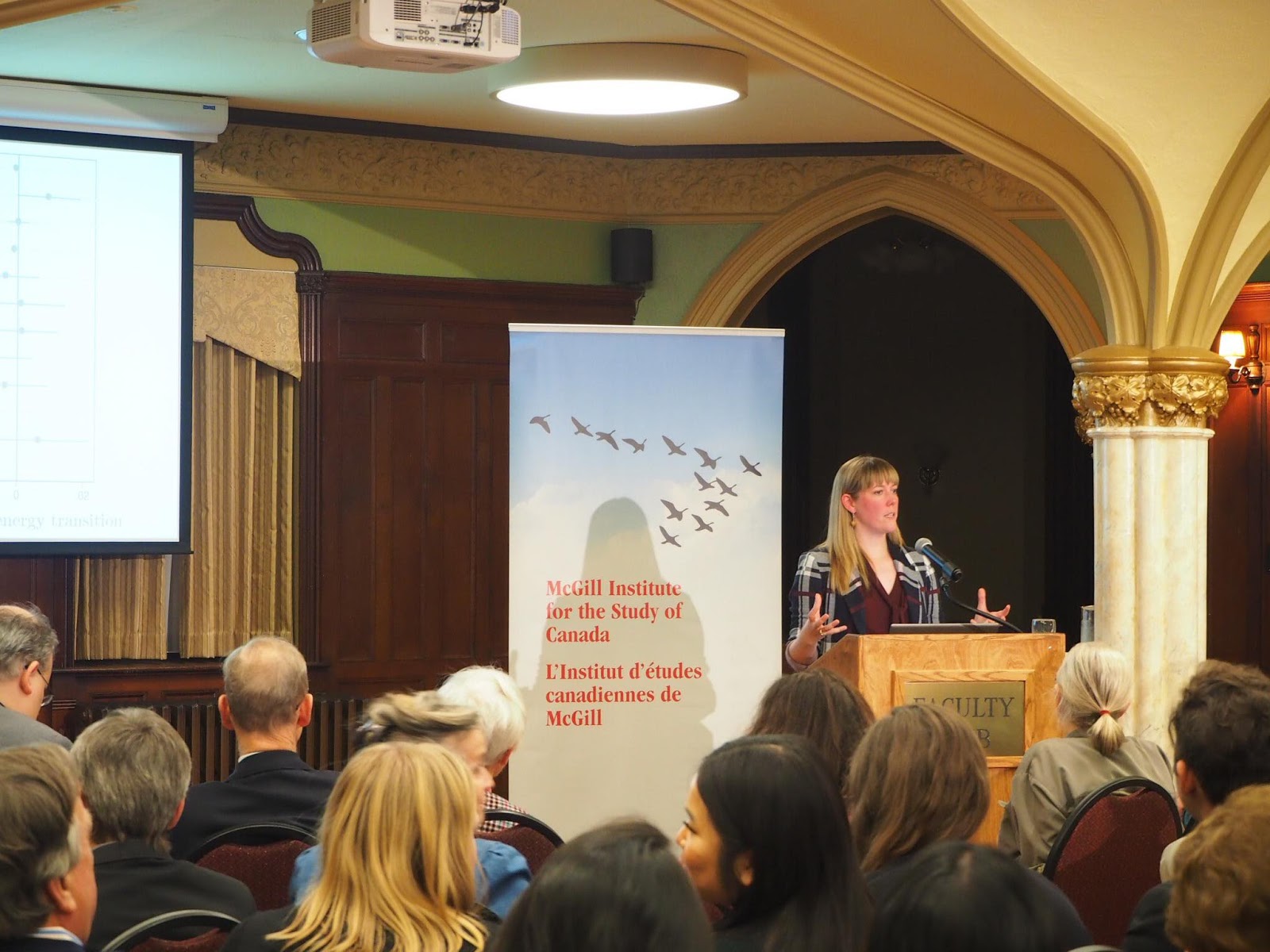
The 2019 Canadian federal election might have highlighted a political divide between Alberta and the rest of Canada on issues like the environment and energy; however, as visiting Eakin Fellow Melanee Thomas noted in a lecture at the Faculty Club on Nov. 21, Albertans are not that different from other Canadians. Her talk, “Balancing ‘Competing’ Interests: How Albertans Think About Energy Transition” was organized by the McGill Institute for the Study of Canada (MISC).

Thomas’ research shows that 59 per cent of Albertans believe that the province should move away from oil and gas and 86 per cent believe in a shift towards renewable energy.

Thomas, who was born and raised in Lethbridge, Alberta, is a professor at the University of Calgary. She drew on her personal experiences and her perspective as a political scientist to sketch a nuanced portrait of political attitudes in the province. She presented the results of a study her research group completed after the federal election about Albertans’ views on climate change and oil and gas, which focussed particularly on demographics, political attitude, and the effects of colonialism. Her research yielded surprising results that demonstrate that, while Albertans believe in human-caused climate change, fewer are worried by its effects.

“It’s interesting that the association between believing that climate change is anthropogenic and being worried about it is not […] a guaranteed one,” Thomas said. “What’s more interesting is that for people who believe that people are causing [climate change], [there are many] who are not worried at all. So, for me, belief is maybe not necessarily the most important thing, it’s the ‘so what?’.”

Thomas highlighted the complex and often counter-intuitive attitudes held by different socio-demographic groups of Albertans. Socially-conservative Albertans, for example, tend to support parties that endorse environmental protection initiatives.

“In parts of rural Alberta the Green Party does reasonably well, because [they are] about [environmental] conservation,” Thomas said. “There is something about the type of person who would [oppose] issues like abortion and equal marriage and LGBTQ rights, [and] about how […] that also makes them more open to [other progressive ideas like] conserving nature.”

During her lecture, Thomas remarked how Albertans are not as ideologically different from other Canadians as the popular perception might suggest. She noted that sentiments of western alienation and support for Albertan separatism, known as #Wexit, are shared by only a minority of people in the province.

“The elite discourse, I don’t think its is a good representation [of our province],” Thomas said.

For Nathan Collett, U2 Arts and Science, Thomas’ findings were surprising and informative.

“The idea that social conservatives [might be] more supportive of conservation efforts is kind of a weird idea that I’d never thought of before,” Collett said.

Francis Lee, U2 Arts, explained how the lecture forced him to re-evaluate his perceptions of Alberta.

“I thought that the only thing they cared about was oil and gas and that they hated climate change [and] renewable energy sources,” Lee said. “But as it turns out, […] a lot of people do care about the environment and the community they live in. [Once they realize that oil and gas] can hurt their communities, they’re willing to change their opinions, and [that] gives me a lot of hope [for] Canada’s future.”

Off the Board, Opinion

Lessons from my hometown

I grew up in a trailer park in Upstate New York. Having moved several times throughout my early childhood, I remember moving into the trailer with my mother and brother as an exciting moment: Even though I had to share my bedroom, it was the largest one that I had ever lived in. However, that naïve enthusiasm did not last. Floods in 2006 and 2011 devastated the region, and during the 2016 presidential election most Upstate counties, including Broome County where I lived, voted for Donald Trump. Living in one of the most economically downtrodden parts of the state, many of my high school friends and I dreamed of getting as far away from our hometown as possible.

If someone asked me what the area I grew up in is like, I would probably tell them how while New York is generally a blue state, Upstate has a distinctly conservative culture. I went to church on June 28, 2015—the Sunday after the Supreme Court declared bans on same-sex marriages in the United States unconstitutional: I remember my local pastor giving a fire-and-brimstone sermon about how Barack Obama and the courts intended to destroy the moral framework of “our” country. Further, many people in the area uncritically ignore the fact that Broome County has the highest incarceration rate in the state and profits off of the prison-industrial complex.

During my first year of university, my mom moved to a different town, my brother joined the Army, and I settled in Montreal full-time. Over my breaks from school, I worked various jobs instead of going back home. Outside of the occasion visit  for Christmas, I have virtually no more ties there. I have never met a single person from my town at McGill.

However, despite my general apathy about the area and its conservatism, I do have fond memories of growing up there. While my hometown is still far from perfect, it has things that a city such as Montreal can never fully offer: I miss buying corn and pumpkins from my friend’s family farm, walking around in nature, eating wild berries, and seeing a full sky of stars at night. While Taylor Swift’s “You Need to Calm Down” music video, and mass media more generally might depict a neighbourhood like mine as full of “trailer trash” and write off poor white communities as beyond saving, growing up in this environment taught me otherwise. My experiences not only made me who I am today, but also give me hope that things can be better.

My time in the trailer park taught me how important it was to show solidarity with those in need. When I started working for the first time, I did not think it was unusual that some of my paychecks went to my mom to help her pay the bills. Similarly, in 2011 when remnants of Storm Lee brought 12 inches of rainfall and flooded the upper Susquehanna River basin, I remember community members coming together to help out the thousands of people displaced by the floodwaters. Some volunteered at shelters, and others set up grills to feed anyone in the neighbourhood who needed a meal. These circumstances illustrate the resiliency of people living in Upstate.

Given this tenacity, I find hope that the Upstate area is not doomed to remain in a state of perpetual malaise. The prejudices and conservatism that turned me away from the region do not exist in a vacuum—the compassion shown by the community throughout my life suggests a potentially more inclusive future. While I doubt that I will ever return there, to simply write off my hometown serves no purpose. Taking the lessons in generosity I learned growing up there into my adult life is the least I can do.

Read the latest issue

Read the latest issue