


Latest News

Joke, Laughing Matters

McGill divests from fossil fuels, funds new Amazon rainforest campus

Since 2012, Divest McGill has protested McGill’s investment in companies that profit from fossil fuels. The student group has led the charge for climate activism on campus, organizing protests, raising awareness, and gaining the support of the Student’s Society of McGill University (SSMU). Their calls for action largely fell on deaf ears, even after countless vocal protests and sit-ins.. Finally, their voices have been heard.

Over the weekend, Principal and Vice-Chancellor Suzanne Fortier announced that McGill would pull investments from all companies profiting from fossil fuels. According to Divest McGill activists, this comes as some surprise, as the administration is not known to listen to students.

“It’s nice knowing I don’t have to stand outside in the cold anymore to protest,” Muña Zaldrizoti, U6 Arts, said. “But I’m not sure why the administration chose to listen now. I guess anytime is better than no time.”

Fortier held a press conference in her office after announcing the divestment plan. However, the building security did not allow members of the press to enter the James Administration Building.

“I don’t understand why students are confused,” Fortier wrote in an email to the student body. “Of course I couldn’t hear Divest McGill’s message, I had my AirPods in.”

According to Fortier, student groups had no influence on the decision to divest. The primary goal is to re-allocate the funding to more socially responsible investments, which the administration takes to mean  “most profitable for McGill.” While the McGill administration would not disclose how the money would be invested, an anonymous source leaked their plans. She desired to be referred to only as “The Lunch Lady.”

“McGill recently purchased a chunk of land in the Amazon rainforest,” The Lunch Lady said. “I saw some blueprints for a huge new McGill campus there.”

The campus would require that 200 hectares of rainforest  be clear-cut to install academic and sports facilities, as well as the “McDonald Farm” sponsored by the Golden Arches. According to local members of the community, building the new McGill campus will force an entire residing indigenous community to leave.

The administration sees the campus as an enticing opportunity that will hopefully bring in more applicants to McGill.

“Here at McGill, we strive to expand our students’ horizons and help them experience the world,” Fortier said. “That’s why, with a small extra tuition fee of $30,000, students will be able to enjoy the beauty that is deforestation and displacement of local communities.”


Features

Alone in a crowd

When I was 17, my therapist told me how excited she was for me to go to college. It would be a clean slate—a new opportunity to make friends with similar interests and to get out of my comfort zone. Throughout my teenage years, the therapist’s office had become an all-too familiar environment to me: Sun-lit, with a view of the public library,  quiet classical music, children’s toys, and gaudy, celebrity-clad magazines arranged in the waiting area. I was hesitantly optimistic—my high school years had been defined by my virtual invisibility in classes and seemingly perpetual identity as an outcast.

For me, like for many others, college was promised to be an opportunity. I soon realized my naivety during my first months at McGill. I told myself that I would become what I had perceived as ‘normal,’ make friends, join clubs, and go to events. What became of my determination was one-time attendance at clubs, excessive amounts of time spent in corners kept company by only a plateful of free food, and fleeting relationships that would soon disappear once the semester ended. The feeling of living with some 744 people in New Residence Hall did nothing to curb the void of loneliness I felt.

brain drain
Commentary, Opinion

Montreal’s anglophone brain drain

With only a limited knowledge of French needed to thrive as a student in Montreal, it’s unsurprising that most anglophone university graduates enter the labourforce without a working knowledge of Quebec’s official language. For anglophone students looking to start a career in Montreal, Quebec’s bilingualism laws restrict employment options, and recent graduates often end up leaving the city to seek other opportunities. Researchers have dubbed this phenomenon the  ‘brain drain,’ and have studied how the exodus of post-graduate degree holders has caused the city to miss out on the valuable skills of English-speaking students. The disconnect between English universities and the French workforce not only hinders the city’s prosperity, but also disadvantages anglophone graduates who want to continue calling Montreal home.

In 2018, Montreal experienced a net population decrease of over 20,000—the city’s largest in a decade. Despite having over 170,000 students at 11 universities, only 32 per cent of Montrealers aged 25 to 64 hold a bachelor’s degree or higher qualification, one of the lowest ratios of all major North American cities. Last May, McGill partnered with the Quebec government to study the anglophone exodus with the aim of finding a sustainable solution. This partnership is a step in the right direction, and it is vital that the city continue to commit itself to a thorough strategy for rectifying the brain drain epidemic.

The linguistic divide between the city’s English universities and its predominantly French labour market can be partly blamed for Montreal’s lack of degree-holding residents. Every year, English universities like McGill and Concordia recruit nationwide and worldwide. Once in Montreal, these students quickly learn that thriving in and around the downtown bubble requires little more than a four-word French vocabulary—je ne comprend pas. This realization, paired with their busy university schedules, means that many students do not have to invest in learning French. Even with an awareness of the French-speaking requirements in Montreal’s job market, students may still rationalize that it makes less sense to learn French when they could work in their mother tongue and save the money and time investments it takes to pick up a new language.

In Quebec, companies seek French-speaking employees to meet the government’s legally-enforced bilingualism standards. Civil service work and jobs at federal institutions both require employees to have French communication skills. Moreover, professionals who speak English and French enjoy significantly larger incomes earn up to 60 per cent more than their unilingual counterparts. No matter how much students may love Montreal, sticking around may not be worth limiting oneself to mostly entry-level jobs.  Most graduates crave the fulfilment of excelling in their field of work, and if Montreal does not offer anglophones occupations in their field they will go elsewhere.

Preserving the primacy of the French language underlies Quebec’s dedication to maintaining its heritage; reflexively suggesting the end of Bill 101 is not a workable solution to the brain drain issue. At the same time, the Quebec government is setting the province up for a massive disadvantage by not prioritizing the retention of anglophone students.

One solution to brain drain could be investing in strategies to make French more accessible for busy English-speaking students. Currently, the Quebec government offers a variety of subsidized French courses for recent immigrants. Promoting this kind of opportunity more heavily in the university setting and offering more part-time courses would send the message that the government wants to welcome and assist English-speakers in becoming bilingual. McGill could also incorporate French into freshman requirements or offer more seats in French courses. Investing in free French courses for all students and more French scholarships for anglophones are also valuable ways that the Quebec government could retain degree-holders. In partnership with the Quebec government, employers could contribute to improving this issue by welcoming anglophone staff and offering avenues and incentives for improving French skills over time.

Hockey, Martlets, Sports

Martlet hockey 2018-19 recap

On March 17, the McGill Martlets (14-6) fell short in the U Sports National Championship game, losing 1-0 to the Guelph Gryphons (19-3-3) to place second in the nation. With a successful, silver-medal season now in the books, The McGill Tribune provides a season in review, looking back at the Martlets’ successful year.

The U Sports championship tournament began for the Martlets on March 15, when they defeated the St. Thomas Tommies (22-5-1) in a 10-2 quarterfinal rout. On the following day, a late goal from second-year forward Stephanie Desjardins sent McGill to the championship game with a win over the number-one ranked Alberta Pandas (23-5). Unfortunately, the Martlets’ efforts came up just short in the final game of the season, and an early second period goal carried the Gryphons to a 1-0 victory and the national title.

In addition to a silver medal, the Martlets received a number of other awards at the national championship tournament; with five points and four assists, third-year centre Jade Downie-Landry was named the tournament MVP and earned a spot on the championship all-tournament team along with first-year centre Valerie Audet. Additionally, four of the tournament’s top five scorers were Martlets, and third-year goaltender Tricia Deguire posted the second best save percentage of all goalies.  

En route to the championship tournament, McGill put together a 14-6 regular season campaign to finish third in the RSEQ standings behind the Université de Montréal (UdeM) Carabins (15-4-1) and Concordia Stingers (13-4-2). In the first round of the RSEQ playoffs, McGill faced Concordia in a best-of-three series. The Martlets took a 6-2 road win in the first game and completed an incredible comeback on home ice to secure the series victory. The opening match of the championship series against UdeM went to double overtime, but, unfortunately, the Carabins came out victorious by a score of 3-2. UdeM won by the same score the next day to complete the sweep and claim the conference title. However, because the Martlets were fifth in the U Sports rankings, they still advanced to the championship tournament in Charlottetown, PEI for the chance to compete against the best hockey teams in Canada.

Martlet Head Coach Peter Smith praised the team’s dedication and passion throughout the season.

“Honestly, I couldn’t be prouder of our group,” Smith said after the championship match. “Over the years, I’ve been privileged to have so many good teams with great character, and this team ranks right up there with the best of them. [It is] a special group that worked hard all season. Not many people outside of our dressing room would have thought that we were going to get this far. We battled from start to finish. There was no quit on this team.”

Beyond their postseason performances, four Martlet players were recognized for their standout play throughout the regular season, with both conference and national awards. Downie-Landry, who had 45 points and a team-high 32 assists, and Deguire made the RSEQ first team all-league and second team all-Canadian. Second-year forward Kellyane Lecours and fourth-year defenceman Emilia Cotter were named to the second team all-league. Additionally, Cotter won the RSEQ Leadership Award for her community engagement with organizations such as the Shoebox Project and The McGill Students for Best Buddies as well as for her coordination of McGill Athletics initiatives like the Bell Let’s Talk Game.

In addition to the award winners, several other Martlets had strong campaigns: Third-year forward Lea Dumais led McGill in goals with 21 in 37 games; second-year centre Marika Labrecque finished with eight goals and 17 assists; and fourth-year defenceman Kate Devries, who had 12 assists, was a crucial defensive presence all season long.

Captain and fifth-year defenceman Alison Mackenzie is the only Martlet player graduating this year. The team will miss her defensive talent and leadership, but, if this season’s results are any indication of what is to come, the Martlets should have another successful year ahead of them.

Out on the Town, Student Life

Bursting out of the McGill bubble

Montreal is a bustling city with some of the best food, music, shops, and art in North America. Many students spend most of their time in the areas surrounding McGill and the Plateau, which offer no shortage of places to see and things to do, but there are so many other destinations beyond these frequented neighbourhoods. Inspired by the New York Times’ ‘36 Hours’ series, here are a few of The McGill Tribune’s suggested activities for students in need of a staycation and those looking to make the most of their time in Montreal before the semester ends.

EAT

Brunch at Café Parvis

Situated in the heart of downtown Montreal, Café Parvis is a hidden gem with a rustic, cozy ambiance and an abundance of indoor plants. The café serves coffee, pastries, pizzas, salads, and other tasty brunch options and is conveniently located near some of the most popular shopping destinations in the city, featuring easy metro access to other neighbourhoods such as Old Port and the Gay Village.

Lunch at Chez José Café

Stop for a midday bite to eat and try a taste of local culture at this quirky Portuguese café located on Avenue Duluth in the Plateau. Chez José serves pastries, crêpes, sandwiches, and coffee at affordable prices, but remember that the restaurant accepts cash only. It is also vegan and vegetarian friendly, so there are plenty of options for everyone.

Fine dining at Perles et Paddock

Located between Griffintown and Little Burgundy, this modern French restaurant specializes in craft cocktails and creative dishes, including a variety of small plates for sharing. The space has a minimalist, fresh ambiance. The surrounding Griffintown is a hip, creative neighbourhood bordered by the Lachine Canal, which is perfect for post-meal exploration.

SEE

The Phi Centre

Most art enthusiasts visit the Montreal Museum of Fine Arts or the Musée d’art contemporain (MAC), but a lesser-known venue is the Phi Centre. Located in Old Montreal, the Phi Centre is an arts and culture venue dedicated to showcasing work addressing timely socio-political issues, and it hosts a range of performances, film screenings, and interactive exhibitions. A virtual reality exhibition entitled The Horrifically Real Virtuality is currently open to the public. The display is a unique, immersive experience that combines virtual reality, cinema, and audience participation.

Montreal Botanical Garden

Enjoy summer weather early by touring the Montreal Botanical Garden, an oasis buried in the city. The garden is recognized as one of the best botanical gardens in the world and showcases plants from every corner of the planet. Located in the Rosemont–La Petite-Patrie neighbourhood near station Pie-IX, it is easily accessible by metro. The garden has a range of thematic greenhouses and gardens, and, as a bonus, it’s situated near the towering Olympic Stadium.

Orange Julep

This giant, orange-shaped fast-food restaurant is located in the Côte-des-Neiges area and is within walking distance of the Namur metro station. The Gibeau Orange Julep is known for its greasy eats and its famous orange cream drink, making it the quintessential roadside destination.


DO

Tour the Quartier des Spectacles

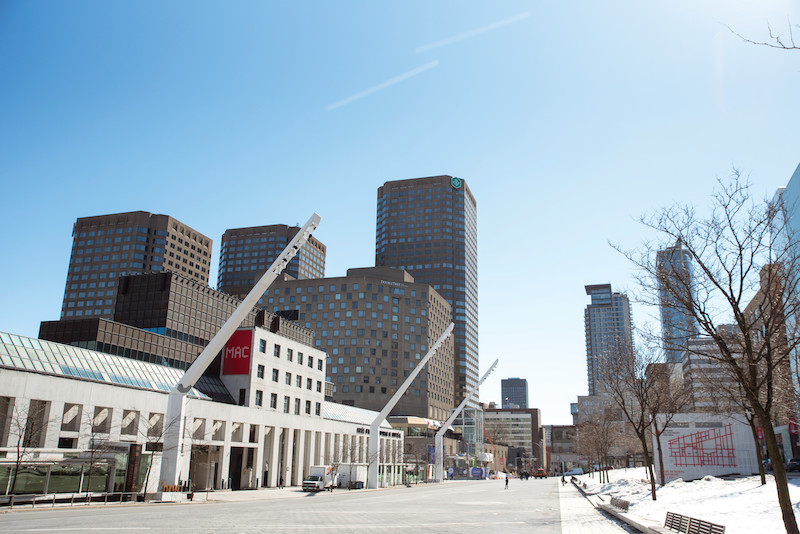
There is always something new to see in the Quartier des Spectacles, whether it’s a festival, a performance, or an interactive outdoor art installation. The Montreal Digital Spring, which encompasses various shows and immersive art pieces inspired by the digital age, and the International Festival of Films on Art, which showcases a rich variety of films on art from around the world, are two current exhibitions on view. Known as the arts and entertainment district, the must-see Quartier des Spectacles is conveniently located in the eastern section of downtown Montreal.

Attend a dance party at the Satosphère

The Satosphère dome is the main attraction at the Société des arts technologiques (SAT), a futuristic venue located near Chinatown. The SAT hosts regular gatherings open to the public under the dome. During the events, they showcase spectacular, 360-degree creative experiences with projected graphics. Some of the events are designed to be more relaxed while, at others, a live DJ is present, and dancing is encouraged.

Montreal, News

Airbnb rentals in the Plateau spark ownership debates

With its alternative cafés, restaurants, and thrift stores, the Plateau neighbourhood might appear to be a flourishing area for anyone who grew up outside of Montreal. However, in reality, the online short-term renting platform Airbnb has caused long-standing residents to be evicted, housing market prices to rise, and small businesses to close. As a result, two housing committees of the Plateau-Mont Royal and Ville Marie areas are calling for a ban on the platform in Montreal.

The platform has enabled an increasing number of buildings to be turned into makeshift hotels with year-round listings. According to the Urban Politics and Governance (UPGo) research group at McGill, 69 per cent of the listings in the Plateau alone are entire homes rather than private rooms.

In Dec. 2015, the Quebec government passed Bill 67 to regulate tourist accommodations across Quebec and ensure adherence to Quebec tax laws. Later, on July 21, 2017, Revenu Québec and Airbnb came to an agreement that Airbnb subletters would pay Revenu Québec a housing tax of 3.5 per cent per night rented. Last year, Bill 150 was passed on June 12, 2018 to regulate companies trying to make a profit off of Airbnb.

“[Under Bill 150], Revenu Québec is [now] responsible [for] the new inspection program in the sector of tourist accommodation in order to oversee the compliance with tax laws and regulations by operators,” Revenu Québec Public Relations spokesperson Geneviève Laurier wrote in an email to //The McGill Tribune//. “Following these changes, Revenu Québec has deployed a team of 25 people to carry out information and awareness programs across the Quebec province.”

To make it easier to distinguish long-term, commercial listings from short-term rentals, UPGo, which is working with the Plateau-Mont Royal Housing Committee to find solutions, has called for Airbnb to make its data on users and rentals available to the Quebec government. Airbnb continues to be reluctant to cooperate.

On Mar. 16, the committee held an Airbnb forum at which residents of the Plateau-Mont Royal area could express their dissatisfaction with the online platform. Odile Lanctôt, vice-president of the committee’s administrative council, shared the committee’s latest study on the impact of Airbnb in Quebec.

“It is the idea of privatizing the urban space, encouraged by Airbnb, which jeopardizes the community life of central neighborhoods,” Lanctôt said. “It leads to the homogenization of these areas […] and to the commodification through tourism of cultural, social life […], [limiting] the access of the lower-income neighborhoods to […] urban life.”

Robert, a tenant who requested anonymity, described the disruptive experience of having neighbours replaced by rentable apartments to the rest of the forum.

“I have lived in the same apartment in the Plateau for around 20 years now,” Robert said. “Since this new company has bought the building […], each time a tenant moves out, the next day the landlord takes over the unit, installs a keypad […] and completely renovates the unit. […] So, out of the eight apartments [in my building], we are currently only two tenants […], the rest being Airbnb.”

Robert misses the sense of community he used to share with his neighbours.  

“I have lost a lot of quality of life,” Robert said. “I don’t know how long I am going to be able to live here for because, eventually, all [my landlord] wants is for me to leave [….] But, I love my apartment, I love where I live.”

Vicky Langevin, a community organizer of the committee, recognizes that banning Airbnb may impact tenants who welcome the platform’s practical nature, such as students. Ultimately, though, she believes that a ban is justified as a means to prevent larger companies from acquiring and renting out apartment space.

“We understand that [this ban] can have a negative impact on some individuals, but, unfortunately […], the majority [of Airbnb rentals are from companies],” Langevin said. “We are not at all against people renting out their unit while they are away […], but, through Airbnb, [the situation] has [gotten] out of control.”

Campus Spotlight, Student Life

Toward a more just judicial system

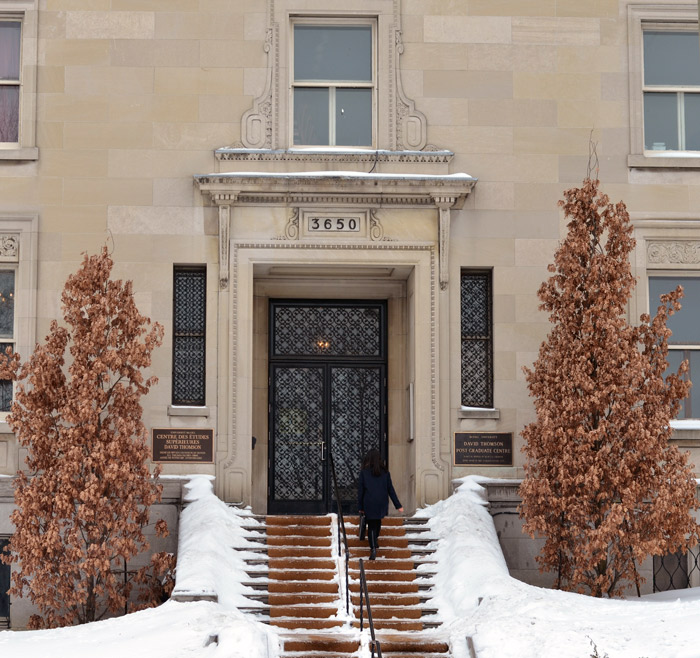
The first Mental Health and Law Conference will take place on March 30 at McGill to facilitate discussion and bring awareness to the links between two prominent fields of study: Law and psychology. The Thomson House event will host researchers from around Montreal who will facilitate a conversation on how lawmakers can reform Canada’s judicial system to better accommodate offenders suffering from mental illness.  

Lawyers often work for clients who suffer from mental health issues including schizophrenia, bipolar disorder, depression, and addiction. Despite their illnesses, the Canadian judicial system often places these individuals in correctional facilities, rather than mental health institutions, and further compromise their mental health. Nina Fainman-Adelman, co-chair of the Mental Health and Law Conference, has found that those in both law and psychology are often frustrated by the lack of cooperation between the two fields.

“When some lawyers work with clients who have mental health issues, sometimes they are not properly trained to deal with those types of situations,” Fainman-Adelman said. “On the other hand, a lot of psychologists are called into courtrooms to testify, but they don’t understand how the legal system works.”

Access to a trained psychologist would help lawyers understand the reasons behind their clients’ crimes. Research suggests that those living with certain mental health conditions are more likely to engage in violent and criminal behaviour. In United States prisons, nearly half of the inmates who died by suicide suffered from serious mental illnesses and were refused necessary care and support.

In Canada, many mentally-ill inmates are held in high security prisons, including solitary confinement. Studies show that sentences are generally longer for mentally-ill inmates than for non-mentally-ill ones; the former often find it difficult to comply with facility rules. The conference’s organizers hope to shed light on the mistreatment of the most vulnerable individuals. Researchers have found that more minority-identifying individuals are placed into prison systems instead of mental health facilities, further illustrating a need for psychologists to take on a more active role in the judicial system.

The link between the two disciplines has gone largely ignored in popular discourse, and, in turn, the conference hopes to underscore how society can more accurately portray the experiences of mentally-ill defendants.

Media reporting is often a direct cause of public misconceptions surrounding the intersection of mental health and law. Nowadays, media coverage of high-profile trials often presents these issues as black-and-white cases, leaving little room for nuanced debate.

Currently, in Canada, the recent development of mental health courts, which adapt to accommodate the psychological health of the defendant, has received an abundance of media coverage debating the pros and cons of this alternative judicial process. Fainman-Adelman described the destructive potential of one-sided media coverage, as the public does not receive the necessary information to create a nuanced, informed opinion. According to the organizer, the media coverage would benefit from acknowledging the overlap of the two issues and educating society in the process.

“Our goal in this conference is to present a range of opinions and perspectives,” Fainman-Adelman said. “We hope to try and get people to think about these topics more critically and recognize that it is always a grey area.”

Those studying the relationship between the two fields hope that the legal community can use its resources to assist individuals who otherwise would not have been diagnosed. For some inmates, courts offer their first access to mental health resources and should be a means to receive support.

The Mental Health and Law Conference will reinforce the interconnection of the two fields and emphasize the need for support through their keynote speakers, panel discussions, and volunteers from McGill’s Peer Support Centre. Arianne Kent, co-chair for the event, hopes that these resources will lead individuals to continue to explore this topic and create networks between the two fields of study on and off campus.

“There is so much to unpack, and we hope the conference encourages and inspires people to explore it further,” Kent said.

Science & Technology

Montreal’s winters unlikely to remain white

Some McGill students count themselves lucky for bearing the harsh Montreal winters. Despite what may feel like another long and harsh winter coming to an end, a recent CBC data analysis shows that winters in Canada are only getting milder. Over the last two decades, they have consistently been characterized by warmer temperatures and less snowfall than any other period in recorded meteorological history.

Since the 1950s, Environment Canada has been measuring the depth of winter snowfall across the country. In 2016, 90 per cent of weather stations reported a decrease in the number of days on which there was at least one centimetre of snow on the ground. Ninety-nine per cent of the same stations reported an upward trend in average winter temperatures. This past January, the maximum snow depth was half of what it was between 1955 and 1975 in Quebec City and Montreal.

Montreal’s climate is very sensitive to even the most minute alterations in winter temperatures.

“It’s such a small temperature change that makes the difference between freezing rain and snow or freezing rain and rain that it’s hard to predict a clear answer,” Christopher McCray, Ph.D. candidate in the Department of Atmospheric & Oceanic Sciences, said. “You may expect to see less freezing rain on the whole, but there is also the possibility that precipitation that falls as snow will instead fall as freezing rain.”

While temperature plays a major role in determining snow accumulation, snowfall itself has a significant impact on reducing daily temperature. During the daytime, snow reflects the sun’s radiation back into the atmosphere. At night, snow releases the heat it accumulates during the day, contributing to the cooler temperatures felt on the ground.

With decreased amounts of snowfall, cooling becomes more vulnerable to other variables such as the amount of sunlight and daily temperature.

“If you get less snow cover because it is warmer, you, in turn, accelerate that warming in the winter,” McCay said.

McCay stressed that observing rainfall is a statistically significant way to model the effects of Earth’s changing climate.

“This winter was the second most rainy since precipitation data started being collected in the 1940s,” McCay said. “[Rainfall] is a very strong trend compared to other variables. The wintertime increase in rain is very steep.”

Meteorologists recorded Montreal’s rainiest winter in history only three years ago in 2016.

Recent flooding in the American midwest is a stark reminder of the dangers that warmer winters can pose. Whereas typical winter conditions allow for melting snow to drain into the ground over a period of weeks in the spring, the frozen ground and increased rainfall are ingredients for disaster. As rainwater continued to accumulate on the saturated surface of the ground, the great plains quickly began to resemble the Great Lakes, and more than 450 people were displaced by heightening flood waters. In the town of Norfolk, Nebraska, almost 60mm of rain fell over the duration of less than a week in mid-March.

With anthropogenic climate change showing no signs of slowing down, local residents can expect Montreal’s future winters to continue to warm.

Soccer, Sports

In conversation with Gemma Clarke

This summer, France will host the eighth FIFA Women’s World Cup. Although historical record shows that women formally organized their own soccer games starting in the late 19th century, it took until 1991 for FIFA to establish a Women’s World Cup. To celebrate the trailblazers who have made women’s soccer everything that it is today, Gemma Clarke wrote Soccerwomen, her debut book, which will release in April.

At the beginning of her career as a sports journalist, Clarke covered men’s soccer. When she started reporting on women’s games, she often compared the players to the men that she had been reporting on. Referring to Kelly Smith as the female David Beckham and Karen Carney as the female Wayne Rooney placed the game in the only frame of reference that most of her readers were familiar with. Over time, Clarke realized that women’s soccer had plenty of stories, characters, and histories that had not yet been shared.

“It was always about finding a good story and finding somebody that I wanted to write about,” Clarke said in an interview with The McGill Tribune.

Soccerwomen takes the reader through the history of the most influential women in soccer from the 1890s to the present. It features the stories of the most prolific women in the history of the sport, including players and coaches from across the globe. While women’s soccer has been largely dominated by the United States since the mid-1990s, Clarke wanted to make sure that her book reflected the variety in women’s soccer.

“I […] think that there is a slight diversity issue in women’s soccer, certainly in the [United States],” Clarke said. “I really wanted to find out what was happening with other women around the world and to find out what their experience was, not only [with] soccer, but also what their life experience was. [I wanted to] use soccer as a channel to tell their stories.”

Clarke documents the current struggles of female soccer players throughout Soccerwomen, particularly with regard to the attempts to professionalize the sport. Despite the quick growth of women’s soccer since the inaugural Women’s World Cup in 1991, multiple professional leagues have folded since 2000 due to financial troubles and a lack of corporate sponsorships. Conditions for professional players have improved slightly. In the United States, where the culture of women’s soccer is arguably the strongest, the National Women’s Soccer League begins its seventh season next month. In England, Barclays recently signed on as a Football Association Women’s Super League sponsor in a deal worth £10 million over the next three seasons.

Players, particularly younger ones, have also been able to attract lucrative brand deals in recent years. There are concerns, however, that these endorsements place players on pedestals, forcing them to act as role models in ways that their male counterparts do not. Furthermore, female players often rely on these sponsorships to make a living since clubs cannot guarantee living wages. Most male players, even if they are below the elite level, can still make comfortable salaries without huge brand deals.

“I see so much paid content [from the American women], and I understand that they have to do that because that’s how they make their living,” Clarke said. “It is interesting to look back at the [American] team of 1999 [….] Tiffeny Milbrett actually had more goals that tournament, but it was Mia Hamm [who] became the face of women’s soccer […], and it comes down to marketability [….] Tiffeny Milbrett was much more of a maverick in the way she wanted to play and be coached, and, at the time, that marked her out as difficult.”

There is still a long way for the sport to go in achieving any kind of equality on and off the field, but, since the first international matches in the 1960s, women’s soccer has come a long way.

“Even if it seems like there are some things that will never change, like the question of equal pay […], you can look at the game and say ‘look at what it was 20 years ago, and look at what it might be in [10] years,’ and it all points in a very positive direction,” Clarke said.

Soccerwomen comes out on April 16.

Read the latest issue

Read the latest issue