Latest News

Campus Spotlight, Student Life

Inside College Insiders

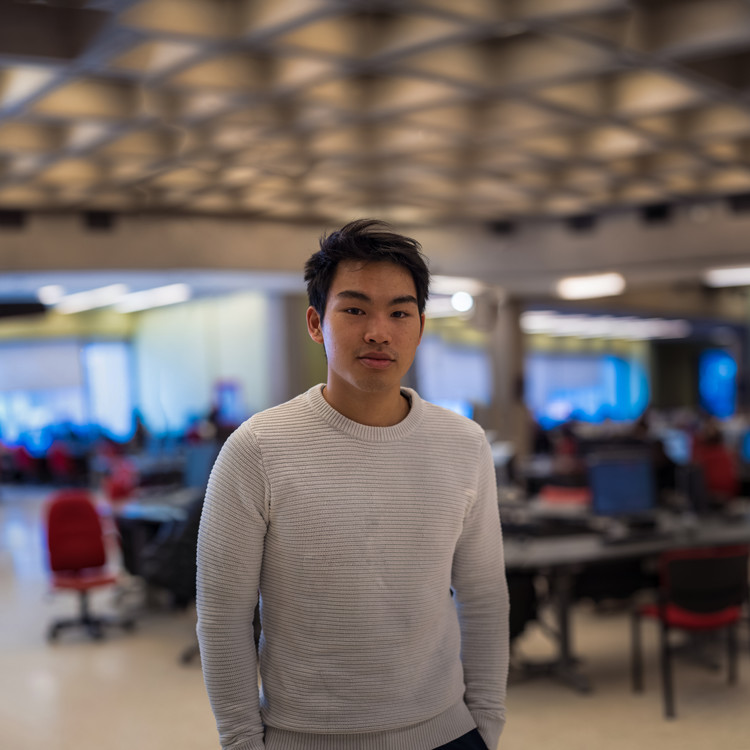
University students are routinely stressed about their postgraduate futures and asking for guidance on career plans can be daunting. In an attempt to address the fear that completing university can induce, Karming Chin, U3 Management, created the podcast College Insiders in Feb. 2019. In this weekly production, listeners hear from experts in a range of industries, who discuss their career paths and offer advice to those preparing for post-grad life.

Chin’s studies in the Faculty of Management first exposed him to the financial and accounting sectors. As his passion for these industries grew, so did his curiosity. This pushed Chin to investigate media outlets outside of McGill where experts discussed their career journeys in depth.

“I’ve always been really interested in finance, but I haven’t taken any courses, so I tried to find another outlet to find more about finance, and, there, I stumbled on podcasts,” Chin said.

Although Chin found numerous podcasts that discussed career paths and interviewed experts in specific fields, he had trouble finding one that addressed the transition from university to the workforce. He started College Insiders to fill that gap, nurture his interest in certain professions, and receive career advice from experts.

“The podcast I used to listen to focused a lot on people’s careers, and I wanted it to focus more on the transition from school, what [the interviewee] stud[ied], and how did they transition from school into their careers,” Chin said. “So, I made that connection [and] found it useful for people to listen to what others say about the careers they’ve had [and how they’ve gotten there].”

With no prior experience in podcasting or interviewing, Chin first began cold calling McGill alumni to ask if they would be interested in sharing their stories and advice with students. Over time, he slowly accumulated a list of contacts to sustain the show.

“I don’t have a technology background, so I found the startup [phase] very hard in the beginning,” Chin said. “I had to google everything, and that took quite a while. I was [also] trying to accommodate [my guest’s] schedule while still committing time to my own, so it was pretty hectic.

To make College Insiders interesting to a diverse array of students, Chin interviews people working in a variety of industries, including law, banking, and software engineering.  He believes that the differences in people’s stories highlight the varying paths that students can choose to take after graduation. Thus far, Chin has explored the benefits of post-graduate education and exploring career options outside students’ majors.

“Initially, I just wanted to help the people that were close to me that were having this [doubt] of, ‘is this all I’m getting out of my classes?’ and ‘where am I going from here?’,” Chin said. “I soon realized that everyone has these sort of doubts and that they needed to be talked about more. My podcast [focuses] on addressing the crisis of not knowing what to do and [gathers].”

So far, Chin has uploaded six episodes and is looking to keep up his weekly postings. With College Insiders, he encourages students to make the most of their university experience and to not let post-graduation anxiety dissuade them from honing in on their passions.

News, SSMU

Tribune Explains: The SSMU Base Fee Increase

In this year’s Winter Referendum, the Students’ Society of McGill University (SSMU) is asking students to approve a significant increase to their mandatory base fee. The McGill Tribune spoke with SSMU President Tre Mansdoerfer about what SSMU is planning to do with the new funds.

Why is SSMU trying to increase the fee?

Compared to similarly-sized Canadian universities, SSMU’s student union membership fee is one of the lowest in the country. For example, the base student fee for Western University’s student government was $84.82 in 2018, while the SSMU membership fee was only $44.33. On this semester’s referendum, Mansdoerfer proposes that the fee be increased by $30, bringing the annual base fee up to $74.33 per semester to make SSMU’s membership fee comparable with other U15 universities.

In addition to the base fee, SSMU also makes revenue by renting out space within the University Centre and from sales at Gerts Campus bar. However, with the University Building under renovation since March 2018, these sources of income have been unavailable. The closure has also meant that SSMU has needed to rent additional spaces elsewhere for clubs services, and Independent Student Groups, raising the annual expenses of the union.

Where is the additional money going to go?

To rally support for the fee increase, Mansdoerfer created a SSMU Master Plan to guide future executives in allocating the new funds. When the plan was being built, SSMU considered the common complaints that students levy against SSMU, such as their previous regular scandals and their lack of support for campus clubs. Mansdoerfer said that he designed the plan around two main goals: Increasing usable student space and increasing the number of SSMU full-time staff.

“SSMU’s done a bad job [of] supporting the student body,” Mansdoerfer said. “Over my entire [undergraduate degree], I have been disappointed in the number of scandals [surrounding SSMU executives] and [I have] not seen SSMU make a significant improvement toward student life [….] The purpose of the Master Plan is to have future executives walk into their roles at the beginning of the year with a plan already made for them so that they’re set up to succeed.”

How are they going to increase their space?

In March 2018, SSMU bought 3501 Peel, a former psychologist’s office next to the First Peoples’ House. In response to McGill’s shortage of resources for student wellbeing, the Master Plan includes plans for SSMU to turn the space into its own independent wellness centre, complementing the new Rossy Student Wellness Hub operated by McGill Student Services. The building will host four psychologists, a nutritionist, a massage therapist, and a physiotherapist to begin with.

The master plan also states that $500-700k of the funds collected yearly from the base fee will go toward a Major Capital Improvement Fund (MCIF). The fund will first go towards renovating spaces within the University Centre, such as remodelling Gerts student bar to be more in the style of SuWu and turning the second-floor cafeteria into a kiosk-style food court. The fund will also be used to buy properties around the Downtown campus, increasing the overall availability of space for SSMU clubs and services.

Where are they hiring new people?

SSMU also plans to create approximately five full-time support staff positions to aid future executives in fulfilling their mandates. One proposal is for SSMU to hire a staff member dedicated to managing the society’s public relations, a job that is currently managed jointly by the VP Internal and VP External. According to Mansdoerfer, hiring new staff members should be a priority to ensure SSMU’s future success.

“There was an article written earlier this week that said that SSMU executives were overworked,” Mansdoerfer said. “We agree. There aren’t enough support systems in place, so we’re setting up [executives] to fail [….] For context, we have around 26 to 28 full-time staff, while Western has around 60. There’s a reason why Western has one of the best-functioning student unions in the country: It’s because they have that amount of support from their staff.”

Science & Technology

VARS gene a new link to a harrowing group of brain diseases

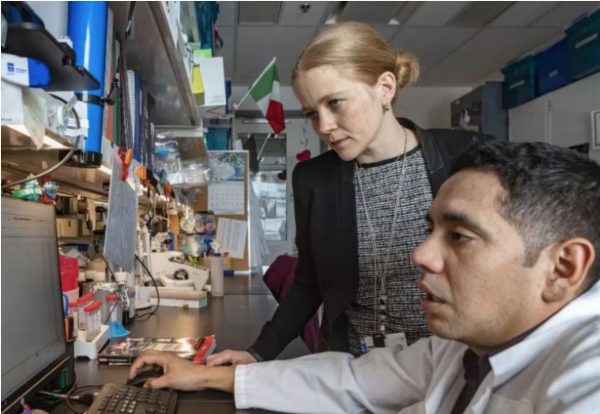
At only two and a half months old, a baby girl named Mathilde Poliquin passed away at the Montreal Children’s Hospital from an unknown neurodevelopmental pediatric disorder. Her head was much smaller than normal, and her brain had not developed properly. Six years later, a group of doctors from the McGill University Health Centre have successfully identified the genetic mutation that resulted in Mathilde’s death. A defect in the VARS gene, previously unlinked to any human disease, resulted in a genetic kind of leukoencephalopathy, a group of neurodegenerative diseases caused by abnormalities in nerve cells and myelin, the white-matter in the brain.

“During my residency, I started being interested in neurodegenerative diseases and realized that families who had a precise diagnosis were, in general, grieving better,” Geneviève Bernard, a co-author of the study as well as an assistant professor in the Department of Neurology and Neurosurgery, said. “Patients with rare and ultra-rare diseases and their families deserve an answer and deserve that researchers work on these diseases.”

The study involved conducting both whole exome and whole genome testing in which the researchers scan an individual’s entire genetic code for any imperfections that could be the source of disease.

By performing extensive genetic tests on seven unrelated children who all suffered from similar neurodegenerative disorders, the group of scientists was able to identify the mutation in the VARS gene. This gene encodes the enzyme Valyl-tRNA synthetase, crucial for protein building. It also generates a protein containing the amino acid valine, which significantly influences cellular health. If any damage occurs to these enzymes, a number of disorders can arise including neuropathy and microcephaly.

“Finding the causal gene is the first step to find[ing] therapies,” Bernard said. “But, before we get there, we need to understand and study the pathophysiology of the disease.”

Through more investigative research, Bernard is hopeful that her team can find potential symptomatic targets for developing therapies. The researchers explained that finding a reduced amount of enzymatic activity in cells prompted the hypothesis that amino acid supplementation could help in the restoration of the altered enzyme in the children’s brains.

International collaboration plays a key role in identifying these kinds of neurogenetic diseases in children all over the world. This study brought together doctors from San Diego, Montreal, and Cairo, which Bernard identified as a key to their success.

“For ultra-rare conditions such as this one, collaboration among multiple research institutions is crucial to confirm changes identified in the genetic code that may be common to multiple children with similar clinical symptoms,” UC San Diego neurologist and study co-author Jennifer Friedman said in an interview with the McGill Newsroom.

Though a cure has yet to be discovered, the identification of the cause of Mathilde’s disease gave closure and hope to her family.

“The diagnosis gave us some closure,” Gabriel Poliquin, Mathilde’s father, said in an interview with the McGill Newsroom. “It felt good to know that our daughter could help other children and the scientific community at large.”

Science & Technology

Using sleep behaviour to predict Parkinson’s Disease

Although the specific biological purpose of sleep is unknown, scientists know that it has an important link to proper brain function. New studies suggest that sleep disorders might also be indicative of the development of neurodegenerative disorders like Parkinson’s Disease.

At night, sleep stages cycle between two statesnon-Rapid Eye Movement (REM) and REM. It is thought that dreams occur during REM and are accompanied by physiological changes that include increased brain activity, accelerated breathing, and muscle relaxation, and are achieved by nerve pathways that prevent muscle movement. However, if these neural networks are compromised, individuals may physically act out their dreams in a condition called REM sleep behaviour disorder (RBD). RBD is characterized by violent limb movements and, often, vocal expression during the night. However, it differs from sleepwalking, which is often brought upon by sleep deprivation and not associated with any psychological or psychiatric problems.

RBD’s association with neurodegenerative conditions classified as synuclein aggregation disorders, including Parkinson’s Disease, Lewy body dementia, and Multiple System Atrophy, has proven useful. Unlike many other neurological diseases, markers for these disorders are quite general; even with a positive diagnosis, it can be difficult to tell which patients will experience worsening conditions. Patients with RBD, however, almost always develop a synuclein-related neurological condition, which means the disorder acts as a strong predictor of disease onset.

In the largest study conducted to date on RBD, McGill researchers looked at 1,280 participants from 24 different countries. As opposed to most studies relating RBD and Parkinson’s which focus on only one research centre, this international study allowed for the study of the disease in different contexts.

“Parkinson’s is a serious disease,” Ronald Postuma, an associate professor in the Department of Neurology and Neurosurgery, said. “We don’t have any [preventative] treatment […for] Parkinson’s, but maybe that’s because we’re already too late [when we test them]. Maybe, if we could start testing treatments in these people really early, we could do something about it.”

Researchers tested patients for RBD using electrodes to assess physiological changes that occur during sleep. They were then assessed based on 21 baseline variables that included standardized motor testing, olfaction, vision, sleep characteristics and disorders, and physiological functions. During follow-up evaluations, patients were observed for changes in these variables, which allowed researchers to determine the predictive value of each factor in the development of Parkinson’s or dementia.

The researchers found that, in 73.5 per cent of participants, RBD progressed to a neurodegenerative condition. Among the baseline variables, irregular motor abilities were most strongly associated with the progression rate of Parkinson’s. Other significant variables in RBD-patients included decreased sense of smell, mild cognitive impairment, erectile dysfunction, abnormal colour vision, constipation, and loss of muscle relaxation during REM sleep.

“There aren’t any clinical trials yet trying to prevent Parkinson’s Disease,” Postuma said. “But, that’s what we’re actively trying to get going.”

Currently, while there is no cure for Parkinson’s, these discoveries will ultimately aid physicians in the selection of patients for preventative drugs undergoing clinical trials.

“No matter how you look, you see [progression from RBD to Parkinson’s],” Postuma said. “You can look at Japan, you can look at China […], you can look anywhere. And it’s not like it’s different. It’s the same across the world. You expect more variety in this […], and when you see that, it means it’s something really strong.”

Art, Arts & Entertainment

Decolonizing Redpath Museum

In the past year, The British Museum and other European institutions have come under scrutiny for continuing to display artifacts that have been acquired through colonial violence and military intervention. In response to this global controversy, French President Emmanuel Macron commissioned a national report calling for the restitution of the artifacts to their place of origin. According to the report, written by French art historian Bénédicte Savoy and Senegalese academic Felwine Sarr, 90 to 95 per cent of Africa’s material cultural objects are held outside of Africa by major museums, validating Macron’s suggestion that European museums should no longer hold control over African heritage.

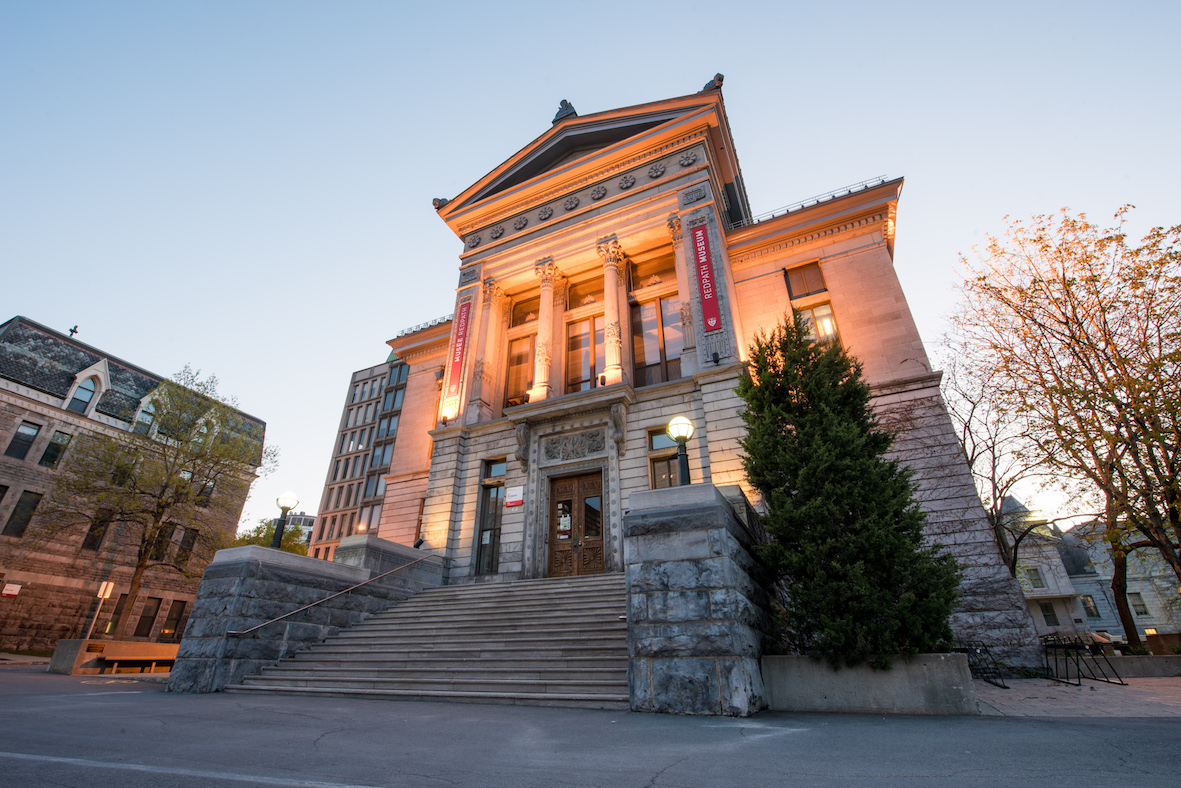
While the restitution of culturally-significant artifacts has become a media flashpoint among larger European museums, it is easy to ignore smaller institutions that perpetuate the same form of colonial appropriation of heritage objects, including McGill University’s own Redpath Museum.

The World Cultures Collections at the Redpath Museum features approximately 17,000 archaeological and ethnographic objects from a wide array of origins including Africa, the Middle East, Oceania, and South America. The collection includes over 2,500 objects from Africa, specifically Angola, Egypt, and the Congo which were collected circa 1900. Of the Redpath’s African collection, two thousand more objects originate from Egypt and the Redpath Museum currently holds and displays three human mummies, as well as other religious and decorative cultural items. While it is admirable that McGill is showcasing so many of these works, many of the artifacts, including the mummies, were acquired through theft or illegal trading.

In 2016, Barbara Lawson, who previously held the position of World Cultures curator at the Redpath Museum, published an article in Fontanus McGill discussing how McGill chancellor James Ferrier illegally obtained the mummies in 1859. Ferrier likely acquired the artifacts from Mustapha Agha Ayat, a well-known trader who was also a major figure in the illicit antiquities market.

Due to the dubious exchanges surrounding the acquisition of the mummy and other items, it is unlikely that Redpath Museum will ever determine the source of the mummies, making their potential return much more complex. Thomas Roddick donated one of the three mummies in 1895 after his travel to Egypt to participate in a colonial British military mission following his participation in the Anglo-Egyptian War of 1882. Similarly, the exact origin of the mummy is unknown.

Khalid Mustafa Medani, graduate program director and associate professor in the Department of Political Science and the Institute of Islamic Studies, explains that the way the museum displays its artifacts is unethical, and propagates an imperialist experience that advances the notion of Western superiority. In an interview with The McGill Tribune, Medani drew particular attention to the texts that accompany the mummy display.

“[Artifacts] are displayed out of context,” Medani said. “They are displayed in ways that diminish and devalue the people who made the artifacts, giving little historical context.”

On the third floor of the Redpath Museum, the descriptions accompanying the mummies vaguely cite how the works were sourced, presenting an incomplete and hazy history of the provenance of Redpath’s collected human remains.

“The mummy was brought to Montreal from Thebes in 1859 by James Ferrier,” one of the texts reads. “[It was] brought back from Egypt in 1859 and donated to Montreal Redpath Museum.”

Despite trying to clarify the artifact’s history, the text still leaves much unclear. The plaque does not detail Ferrier’s motivations for his trip, nor does it provide information about the illegal transactions that allowed him to take the mummy.

Medani also discussed Western curation practices, many of which reflect a belief that the West has the right to display culturally-significant objects from around the world.

“It is a philosophy that it’s Western museums and the Western world that can curate world art,” Medani said. “One of the trustees of the British Museum said very affirmatively ‘We are a world Museum for the world.’ [Western museum] understanding is that the epicenter, the most-elevated and advanced population, resides in the West and that [museum curators] have a legitimate right to curate art of the [entire] world.”

However, even if viewers take the initiative to look beyond exhibitions and search for artifacts’ contexts, obtaining such information is no easy feat. Annie Lussier, the current World Cultures curator at Redpath, described the process of finding more details about the origins of certain objects as extensive.

“Archives related to the collections are accessible to researchers only by request,” Lussier said, noting that researchers can only contact the Redpath Collection Manager, the Director of the Museum, or herself.

While research is possible, there are frequent barriers to accessing information, especially for the majority of Redpath visitors who do not have the necessary credentials to gain admission to the Museum’s archives.

“[The Redpath Museum] has a sensitivity to the ethical issues related to preservation, exhibition, and restitution of cultural heritage,” Lussier said.

According to Lussier, the Redpath Museum is currently working on updating their collection management policy, which will include a new section on restitution and will be available online. She also noted to improve cultural awareness, curators and historians should consult with relevant communities prior to the exhibition of objects.

“It’s a conversation we need to have as people from museums, but also with communities too, to find out what their needs are, and so listening is very important for us, especially listening to different voices,” Lussier said.

However, the Redpath Museum has not contacted any of the communities for which their displayed objects have cultural significance, nor do they have any concrete plans to do so.

Gloria Bell, an assistant professor of Indigenous Arts in the Department of Art History and Communication Studies at McGill, has visited the World Cultures exhibit in recent months, and believes there’s room for improvement.

“[The Redpath Museum] has a historicizing, outdated, primitivizing display [and employs] a very old school strategy,” Bell said in an interview with the Tribune.

Bell noted that the museum is understaffed and in dire need of more employees to begin the extensive process of reconstruction. Bell also discussed the possibility of the Redpath Museum asking contemporary artists to display their work in order to highlight up-to-date works rather than showcasing world cultures of the past.

Medani presented a variety of different solutions to remedy the issue of stolen objects: The immediate restitution of cultural objects, and the possibility of loans to African museums. The advantage of loans is that objects can be returned, and with less red tape.

“It is a temporary resolution, but it has already been happening in museums in Benin City and the Nigerian National Museum,” Medani said.

Medani also evoked the Benin Dialogue Group (BDG), which was established in 2007 to address restitution claims, as a possible solution to loan objects. The BDG is a consortium of representatives from a handful of European museums, the Royal Court of Benin, Edo State Government, and Nigeria’s National Commission for Museums and Monuments.

“That is a way to curate these exhibits in a joint-fashion, where you have the full participation of curators of African museums,” Medani said. “I believe that this is a first step.”

Medani cited Savy and Sarr’s pivotal report when discussing the spiritual-cultural implications of keeping heritage objects in Europe and North America for African youth.

“The report said that this issue led to the spiritual impoverishment of Africans themselves, alienating them from their own culture and history,” said Medani. “African actors are emphasizing a very important note: It is crucial that a continent where 60 per cent of the population is under 20 to have the opportunity to have their own history exhibited and to own the exhibit.”

Engaging communities in the exhibition of their cultural artifacts is pivotal for the Redpath Museum going forward.

“These are arguments that Africans have been making for a long time,” Medani said. “Now, they are gaining traction because there is a global consciousness that this issue is important.”

Arts & Entertainment, Music

Maggie Rogers gives more than a little

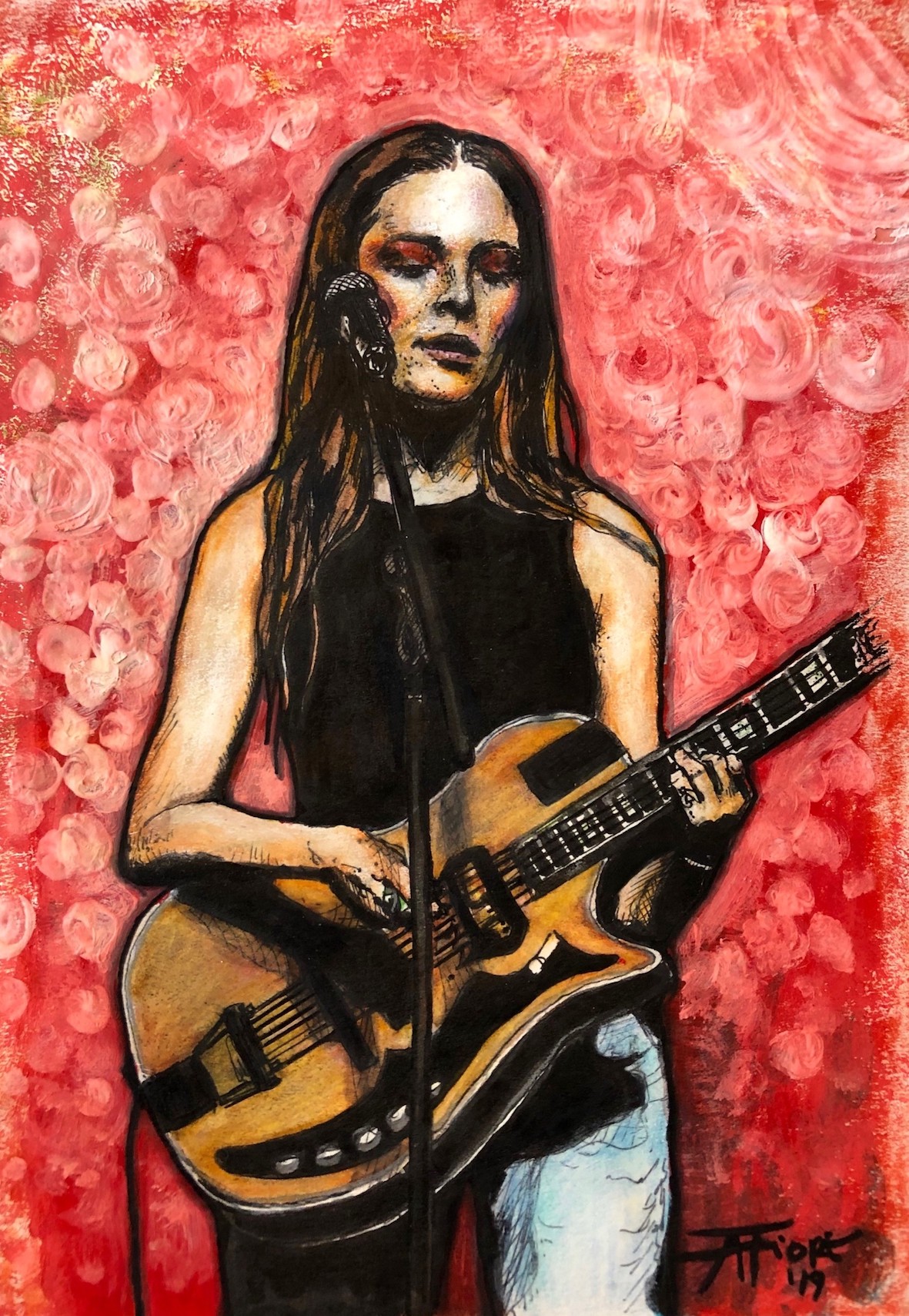
Some artists shine the brightest on their records and others on stage. On March 22 at MTelus, Maggie Rogers did both, breathing new life into her performance of the songs from her major label debut, Heard It In a Past Life, further electrifying the already impressive recorded tracks. In this triumphant concert, the Maryland artist had thousands sweating and dancing until they were sore.

The show opened with a set by emerging Tennessee-based artist Melanie Faye. Despite having only officially released one song, Faye has already played with the likes of Mac Demarco and Noname. Faye captured the attention of the giddy crowd for the entirety of her set. She began on stage alone, playing her guitar as if there weren’t thousands of eyes on her, highlighting her talent as an instrumentalist. She moved seamlessly from strumming playfully to shredding intensely, delivering each note with a look of determination and passion.

When Rogers finally appeared, she did so while her band played the shimmering opening notes to “Give A Little.” Dressed in a zebra print jumpsuit because, in her words, “it’s Friday,” Rogers jumped around the stage outshining even the bold vocals showcased on the studio version. Rogers’ second song “Burning” proved aptly descriptive of both the temperature and the energy in the venue. Following the theme of moving past pain and darkness, Rogers introduced  “Retrograde,” by announcing that the song is “about being in your deep dark shit,” and that, thankfully, “Retrograde is almost over.”

At times, Rogers’ album sounds a tad over-polished, but performed live, ruggedness and energy broke through its sheen and invigorated the songs. Rogers approached “On + Off” with a new drama and animation. “Back In My Body” felt complete with the roars of the crowd in the background and a stream of hundreds of bright white lights bursting out behind Rogers. She then introduced the single “Light On” as a song about finding the space on stage to escape and embrace her overwhelming life.

Constant dancing and a sense of freedom characterized the night. The undeniable groove of “The Knife” turned fans into a dizzy mess of flailing limbs while the jangly bliss of “Dog Years” caused everyone to sway in unison. Each coo in “Alaska” seemed to erase any stress carried by audience members and allow them to feel liberated. “Say It,” which Rogers sang while bathed in a lilac light, cast a spell over the crowd. The spellbinding quality of the song and the tranquil atmosphere were enough to make any viewer fall for Rogers’ charm. During “Overnight,” fans proved their adoration-bordering-on-obsession by wearing masks of Rogers’ face, causing the singer to laugh throughout the second verse. The set’s only misstep was a faceless and uninventive cover of Taylor Swift’s “Tim McGraw,” though it was easily overshadowed by the show’s innumerable highlights.

In contrast to the uncontrollable dancing during most songs, Rogers commanded the room with ease during “Past Life” and her a cappella version of “Color Song.” The latter was performed as an encore, which fans demanded by jumping and chanting in unison. Rogers’ ability to entrance each concert goer and push them to experience liberation and catharsis to the sound of her voice shows that she was born to be onstage.


Science & Technology

Stress: A living nightmare

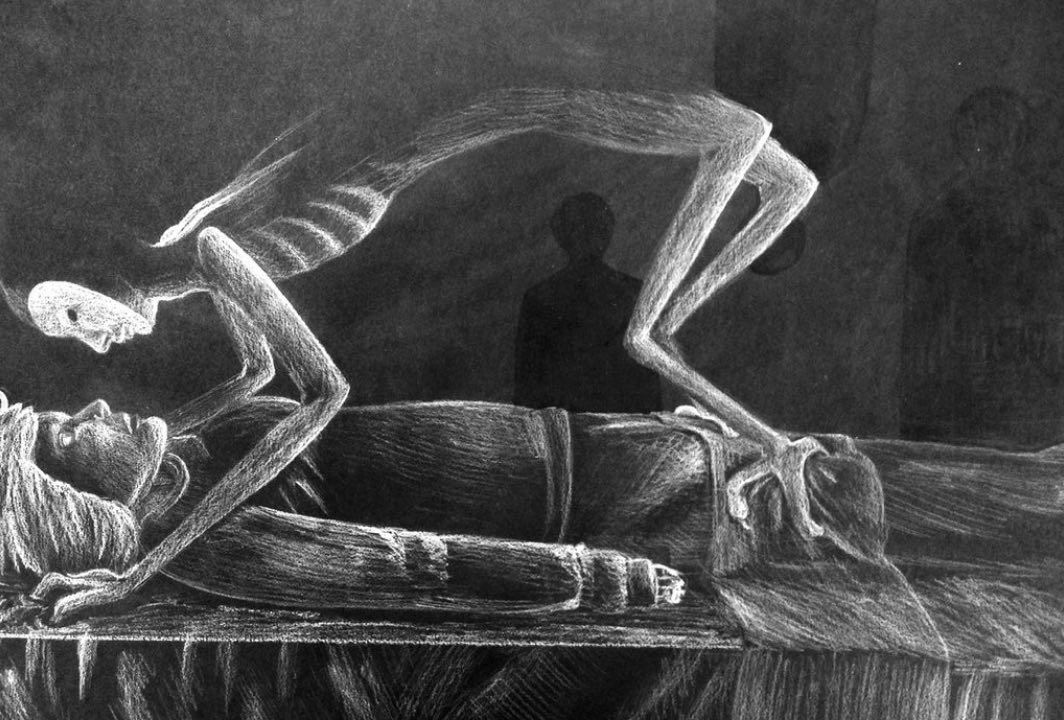
In Old English folklore, a ‘mare’ is a mythological demon that disturbs and haunts people while they sleep, giving them bad dreams. Adding the word ‘night’ before mare gave people further association of this phenomenon as occurring during sleep. Even the Universal Etymological English Dictionary, a text published throughout the 1700s, defined nightmares as a ‘disease’ imposing a ‘great weight’ on people while they rest. Many cultures around the world have their own versions of a night or sleep demon. What these myths have in common, though, is a resemblance to the unnerving, immobilizing phenomenon known as sleep paralysis.

“[Sleep paralysis is] a discrete period of time during which voluntary muscle movement is inhibited, yet ocular and respiratory movements are intact,” Brian Sharpless and Jacques Barber wrote in their study in Sleep Medicine Reviews.

The condition manifests differently in each person. The three basic types of hallucinations are the imagined presence of an intruder, chest pressure, and feelings of levitation or other out-of-body experiences. More rare manifestations include the feeling of falling and fear of dying. For some people, like sexual violence survivors, sleep paralysis can evoke memories of past traumatic experiences, which makes the experience even more horrifying. Although most people report extreme fear, some describe experiencing pleasant feelings during a sleep paralysis episode.

Rapid eye movement (REM) is a normal part of the sleep cycle during which the brainstem paralyzes the body by inhibiting motor neurons; since people are usually unconscious for this, the paralysis passes unnoticed. However, if the REM cycle is interrupted in a sleep paralysis episode, an individual will experience the dreaming and paralysis of REM sleep while fully conscious, sometimes resulting in vivid hallucinations. These episodes can even be multisensory hallucinatory experiences.

Initially thought of as solely a symptom of narcolepsy, sleep paralysis is now understood as also occurring in individuals without sleep disorders. According to a study from 2011, sleep paralysis is not rare among the general population, with 7.6 per cent of study participants having experienced at least one episode in their lifetime. However, the researchers found the condition to be much more prevalent among students, with 28.3 per cent experiencing the phenomenon at least once.

Stress and sleep disorders are closely interrelated: Each amplifies the other in a positive feedback loop. With the Candian Organization of University and College Health reporting almost 90 per cent of students reportedly feel overwhelmed and more than 50 per cent express hopelessness, it is unsurprising that students are particularly vulnerable to the effects of sleep paralysis. One possible reason for this correlation is that students, due to their stressful lifestyles, experience regular sleep disturbances. Many students find it difficult to maintain regular and consistent sleep schedules because of sporadic class times and intense academic pressure. In a study published in Neuropsychiatric Disease and Treatment, student respondents reported several triggers for sleep paralysis, including stressful events, lack of sleep, fatigue, watching horror movies, and daytime naps.

With students in Canada increasingly overwhelmed by the stresses of academic life, it is important to recognize that, while sleep paralysis may be a strange sensation, it is not an uncommon one. It also serves as yet another reason to promote social and mental well-being on university campuses.

Art, Arts & Entertainment

MUPSS 2019: A tour de force of student art

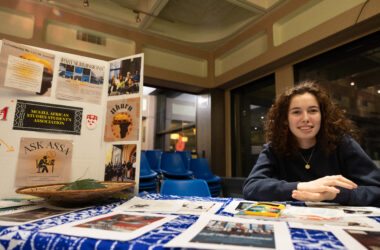
On March 21, the McGill University Photography Student Society (MUPSS) hosted its 2019 Annual Exhibit at Gallery Parfois. MUPSS’s exhibition aimed to encourage an exploration of art and expression by highlighting a diverse selection of student works. The photographs on display varied in subject matter and tone, ranging from ethereal landscapes to portraits, and effectively communicated both human fault and vitality.

Submissions to the exhibition were not restricted to MUPSS members or McGill students, allowing for a wide range of pieces on display. This year, the exhibition did not revolve around a specific theme; instead, photos were selected based on their artistry and impact.

“We [received] a thousand or so submissions and [chose] according to what we thought had a message, or [what] we found had very powerful imagery,” Margot Chambon, Vice-President (VP) Communication of MUPSS, U2 Arts said. “We always try to find new photographers and new kinds of eyes, extending our reach on the types of art we show.”

The exhibition was well received and expertly presented, and, despite no overarching theme, the photographs were arranged based on either their colour palette or the tone of their intended message. Though there was no overarching ideology behind the exhibition, the arrangement of the works within the space provided the room with a sense of cohesion. Since the intention of the gallery was left to the viewer’s interpretation, the photos on display acted as an exploration into the self. The thematic open-endedness of the exhibition allowed the viewer to interpret each photograph at first as an independent work and then again as a piece of the whole. Over the course of the evening, viewers would often return to their favourite pieces. According to Chambon, the social quality of the gallery was a priority in its development.

“We tried to create a space that’s for conversation, for discussion of the artwork,” Chambon said. “Not just coming to look for a few seconds and then [leaving], it’s more about meeting each other, talking, and discovering new works and new people.”

Constructive debate and involved conversation act as a fundamental part of the creative process, especially for McGill students who lack access to a fine arts program. Student organizations and initiatives, like the exhibition put on by MUPSS,  represented one of the few opportunities in which students get to hone and showcase their craft. Chambon was also featured as one of the exhibiting artists and finds that such an environment can dramatically improve the quality of future work.

“To share work with others and get some insight in the form of both harsh and constructive comments helps your work get better and helps you see what you should keep doing and what you should change,” Chambon said.  

MUPSS’s 2019 Annual Exhibition allowed for the exploration of student talent and for engagement within the artistic community. It represents an essential part of the McGill student body, rewarding the hard work and dedication of the artists exhibited.


McGill, News

AUS Council members working to overturn availability of POLI 339

Following the McGill administration’s decision to list POLI 339 on Minerva, the  Arts Undergraduate Society (AUS) claimed that it was working to revoke the move during its Legislative Council meeting on Mar. 20. Additionally, the AUS Equity Commissioners presented their 2018 Frosh Report, which overviews the accessibility and safety of the most receny Arts Frosh.


POLI 339 now being offered on Minerva, despite vote dispute

POLI 399, the controversial Political Science course that spurred debate in AUS Council sessions and led to the resignation of two Executive Committee resignations, is officially considered approved by the McGill administration. Originally, the course fee was turned down by a majority vote during AUS Legislative Council. However, executives held an “emergency vote” over Facebook Messenger, approving the course fee without calling a Legislative Council session. The course approval then went to the Students’ Society of McGill University (SSMU) Board of Directors (BoG), which ratified it and sent it to the Deputy Provost Student Life and Learning (DPSLL). Soon after the emergency vote was announced, though, the approval was put on hold and Secretary General Sophie Zhao and Deputy Secretary General Nathan Mendel began an investigation into the constitutionality of the vote.

After  Zhao and Mendel’s investigation concluded that the vote was unconstitutional, POLI 339 was unfrozen, allowing DPSLL to approve the course and post it on Minerva for registration. According to AUS President Maria Thomas, the AUS is working to overturn the class’ approval, but the logistics of doing  so are unclear. SSMU President Tre Mansdoerfer does not believe AUS has the ability to do so after the course has already been opened for registration by the Deputy Provost.


Frosh Report Extends Beyond Basic Safety Concerns

Equity Commissioners Maheen Akter, Meera Raman, and Evren Sezgin formed a committee to observe Arts Frosh events’ compliance with equity concerns. Their report summarizes and analyzes their observations from each event, and includes a series of recommendations for Frosh organizers.

The Equity Commissioners noticed that the inaccessibility of Frosh venues  continues to be a problem. Most of the bars and clubs which Frosh events take place at have multiple floors, many stairs, and no elevator access, while overcrowded boat cruises may also be cause for accessibility-related concerns.

“AUS Frosh [should] seek more event venues with limited or no separated platforms,” Raman said.

The Equity Commissioners also alleged that Frosh leaders and Orientation-staff (O-staff) were negligent with their responsibilities. They cited examples from the “Explore Camp” portion of Frosh, during which groups walked to restaurants, bars, and clubs around Montreal.

“There was excessive drinking by O-staff and Frosh leaders,” Sezgin said. “Most of the people that were drunk and unable to perform their jobs were employees of AUS, mainly Frosh leaders and O-staff that were there to [do their jobs] and work on harm-reductive [tasks] which they weren’t able to do due to their excessive drinking.”

The Commissioners also noticed that staff drank excessively during the inter-faculty events.

“O-staffers were so drunk [at L’Olympia] that they [were] at one point ushering Froshies into the club and screaming ‘shots,’” Akter said. “Frosh leaders were also getting bottle service and we wondered where the money for this came from.”

Overall, Sezgin added that they tried to address the intrinsic problems of Frosh.

“We really wanted to make [clear] this year that equity isn’t just [about] water and stairs,” Sezgin said. “It’s more about […] interpersonal relationships and positions of power and the different ways in which that perpetuates cultures of Frosh that are flawed and make Frosh a bad environment.”

In pursuit of this, the Commissioners made recommendations about Frosh leaders relating to power dynamics and creating a harm-reductive environment.

“We also recommend that AUS address the various questions around the misuse of power,” Sezgin said. “[They should also address the] failure to acknowledge […] the power dynamic [between…] the Frosh leader and the Froshie. We recommend that during their training, Frosh leaders and O-staff must understand the AUS’s expectations of them which should involve educating employees on creating a harm-reductive environment.”

The Commissioners also recognized the logistical challenge of executing Frosh, and stated that, despite the concerns they raised, they felt that Frosh staff did well overall.

Hockey, Sports

Charting the history of les Canadiennes de Montréal

On March 24, Les Canadiennes de Montréal, affectionately nicknamed the Fabs, lost 5-2 to the Calgary Inferno in the Clarkson Cup championship game despite McGill alumna Ann-Sophie Bettez’s two goals. With four Cups, more than any other team in Canadian Women’s Hockey League (CWHL) history, the disappointing loss does not threaten Montreal’s place at the forefront of professional women’s hockey. While the CWHL was only founded in 2007, the Canadiennes’ history stretches back over 80 years.

In 1933, the Canadiennes were established as the official francophone women’s hockey team in Montreal. Early on in their history, they formed a rivalry with the Maroons, the local anglophone women’s team. Despite the fact that all players were amateurs, their rivalry was as fierce as the one between their male counterparts, the Canadiens and Maroons of the NHL. Twenty years later, however, the advent of TV broadcasting solidified the public’s conception of hockey as a male sport, and women’s leagues all but disappeared.

Approximately 50 years later, the Canadiennes re-emerged in the National Women’s Hockey League (NWHL). The team was called the Montréal Wingstar until 2003; they then changed their name to the Montréal Axion until the league disbanded in 2007. Several Axion players are still involved in the Canadiennes’ organization: Forward Caroline Ouellette is a member of the coaching staff, while forward Karell Emard is still an active player.

After the NWHL disbanded, the CWHL immediately took its place as the only professional women’s hockey league in North America until a new, U.S.-based NWHL emerged four years ago. Then called the Montréal Stars in the NWHL, the team saw immediate success from the league’s inception.

Through the years, Les Canadiennes, who settled on their current name in 2015, count several Olympians in their history including goaltenders Kim St. Pierre and Charline Labonté as well as current captain Marie-Philip Poulin, Hilary Knight, and former McGill Martlet Mélodie Daoust.

While the Canadiennes’ history is one of overall success, they have faced significant resistance. In the earliest days of women’s hockey, popular opinion asserted that by playing rough sports like football and hockey, women were harming their families. Detractors still claim that women’s hockey is less interesting and shows less skill than men’s hockey. There are fewer opportunities for female players to develop, and they generally have shorter playing careers, as nearly all of them have day jobs to supplement their minimal CWHL salaries.

In bringing attention to this divide, one of the most critical moments in the Canadiennes’ history was the establishment of the partnership with the Montreal Canadiens. Following the Calgary Flames and Toronto Maple Leafs’ lead, the oldest and most storied NHL franchise announced in March 2015 that it would back the Canadiennes. Support came in the form of social media promotion, financial assistance, and the ability to use the Canadiens’ larger venues. They also had the Canadiennes match the men’s team name for better brand recognition.

In promoting the sport, it helps that the Canadiennes act as incredible role models for young girls. Players put in efforts, such as staying after games to sign autographs and hosting learn-to-play events and camps, to inspire the next generation of female hockey players. They show girls that they can aspire to be the next Marie-Philip Poulin, rather than the ”Sidney Crosby of women’s hockey.”

Read the latest issue

Read the latest issue