

Latest News

Campus Spotlight, Student Life

A sm(ART) way to combat stress

In response to the overwhelming amount of stress students face in the final weeks of the semester, the McGill Students’ Chapter of Jack.org hosted a Paint Party on March 29. The organization, a Canada-wide charity that works to empower and train youth leaders to combat the stigma surrounding mental health, planned the event to create a space for students to relax and engage in a creative activity that stimulates the brain and promotes self care. By the event’s conclusion, participants had painted a mural which will be displayed in the Education Building.

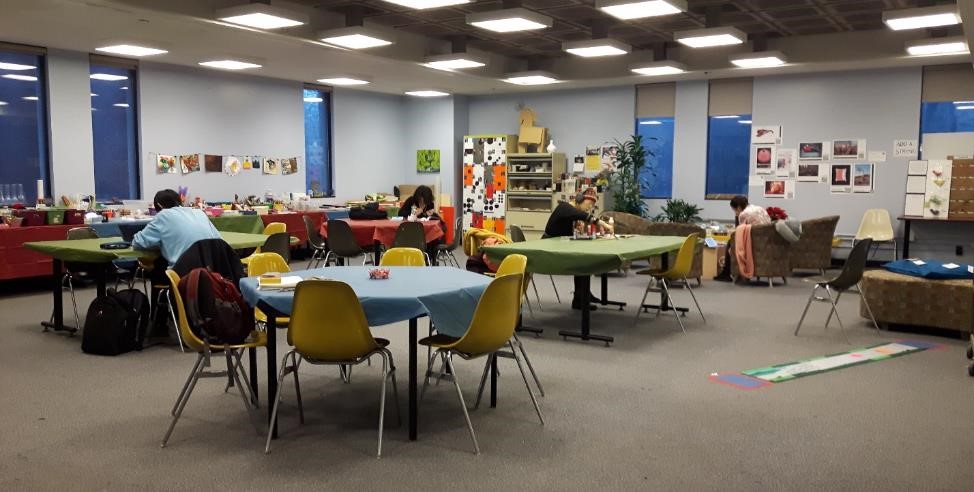
Several students gathered in the McGill Art Hive, where facilitators distributed large pieces of paper for individuals to paint images they associated with positive mental health. Some depicted flowers and landscapes, while others wrote quotes or words that empower them. The facilitators hoped that, once displayed, the painting would encourage those who see the mural displayed on campus to reflect on their own self-care practice and find inspiration in the quotes on the wall.

“It isn’t just about getting the best grades,” Jennifer Ower, U3 Arts, said. “It’s about making sure you are a happy and healthy person first, before you’re a good student. The conversations that start today, as well as the ones that will come about after we hang the mural, will be important, because [at Jack.org we] are all about having those conversations, even if it’s hard to start.”

Julia Caddy, U1 Arts, and Ower are co-vice presidents outreach for McGill’s Jack.org chapter and were the organizers of the paint party. Their goal was to promote mental health awareness and introduce students to the McGill Art Hive, a free space in the Education Library that gives students access to a quiet space with a variety of art supplies.

“So many students don’t know about this space,” Ower said. “People often think if they want to do art therapy they need to buy all the supplies and find a place where they can do it. This is here, it’s free […] and such a great space.”

Research has found art therapy to be beneficial to most people, as it promotes self-expression, independence, and can allow for one to non-verbally convey emotions. Additionally, those who partake in art therapy often find that it helps build self-confidence and improves communication skills. With these benefits in mind, the staff encouraged participants who previously did not know one another to gather to share their ideas and create one collective mural by combining their smaller, individual works. The Jack.org team believes this practice is beneficial in more ways than one.

“[Creating] art is such an easy way to practice self-care,” Caddy said. “If we can provide the supplies, it’s the kind of thing where you can just drop in, take your time, and express yourself both by talking to the people around you and by creating art. So, to us, it’s the perfect combination of self-care [and] thinking and talking about wellness but also relaxing and doing something fun.”

During the event, students painted while enjoying free snacks, listening to music, and getting to know their peers. While creating their work, participants discussed plans after university and popular television stars. Caddy and Ower sat and painted alongside the attendees and spoke to the group about their work within Jack.org and their goals moving forward.

“Our hope is to create a space where students can come to take a break and also be productive because they’re focusing on their wellness which, arguably, is the most productive thing you can do this time of year,” Caddy said.

By the end of the night, organizers strung the colourful designs together to create a larger mural to be hung in the Art Hive, and, hopefully, spark conversations about mental health and wellbeing.

[contact-form][contact-field label=”Name” type=”name” required=”true” /][contact-field label=”Email” type=”email” required=”true” /][contact-field label=”Website” type=”url” /][contact-field label=”Message” type=”textarea” /][/contact-form]


Science & Technology

An obituary for ‘Oppy,’ humanity’s long-lost Space Prince

Opportunity, the Mars robotic rover that stunned humanity by remaining operational for over ten years past it’s original mission date, powered off for the last time on Feb. 13, 2019; a final goodbye at the end of a 225-million kilometer journey.

Affectionately nicknamed ‘Oppy,’ the National Aeronautics and Space Administration’s (NASA) first-generation Mars rover spent 14 years and 46 days on the surface of the red planet. Originally designed to roam the Martian landscape for only 90 Earth days, Opportunity managed to extend its operational lifespan by using solar energy. In total, Oppy travelled a total of 45.16 kilometres on Mars, farther than any space exploration vehicle, robot or human, has walked on any celestial body.

Scientists and fans of Opportunity will remember it for verifying some of NASA’s most prominent discoveries of the last decade. It was Oppy that, in 2004, confirmed the ancient presence of hematite rocks on the surface of Mars, indicating, for the first time, that liquid water once covered the plant.

Before Opportunity’s descent upon Mars, the closest mankind had come to uncovering its secrets was through satellite images and stationary ‘landers.’ Opportunity, and its sister rover Spirit which got caught in a sand dune in 2009, enabled scientists to traverse the surface of Mars, collecting invaluable samples and data along the way.
Twenty-one months into its journey, Oppy circumvented the Victoria Crater, a massive 750-metre-wide hole in the Martian surface.

“The scientific allure is the chance to examine and investigate the compositions and textures of exposed materials in the crater’s depths for clues about ancient, wet environments,” NASA wrote in a 2007 press release. “As the rover travels farther down the slope, it will be able to examine increasingly older rocks in the exposed walls of the crater.”

After months of travel, the rover descended into the crater itself and recorded images of the comet Sliding Spring on its flight path over Mars. From the depths of the crater, Oppy examined new rocks unlike any of those ever observed on Mars. Using x-ray spectroscopy, a data collection tool which analyzes the interactions of radiation and matter, the rover was able to verify the presence of aluminum and silicon in the rock samples.

NASA last made contact with Oppy in June 2018 after a severe dust storm swept large amounts of sand across the rover’s solar panels. Reliant on the ability to remain in direct sunlight to charge its solar-powered batteries, Oppy’s energy stores were quickly depleted. Scientists lost full contact with the rover in Jan. 2019, and declared its mission was over two weeks later on Feb. 13. Both Opportunity and Spirit were part of NASA’s broader Mars rover missions, which include a total of four rovers with two additional robotic vehicles planned for launch in 2020.

Opportunity is survived by the Curiosity rover, which landed in Aug. 2016. According to NASA’s official website, Curiosity is the first of three planned missions that will continue the search for geological clues for the presence of liquid water. Another objective of equal, if not greater, value to NASA, is to determine whether those water-holding environments were ever conducive to life on Mars.

As Oppy’s robotic brothers and sisters continue their quest to better understand the red planet and the nature of life in the near solar system, the multitude of discoveries will only increase.

Arts & Entertainment, Music

Lucy’s Mirror makes concert debut at L’escalier

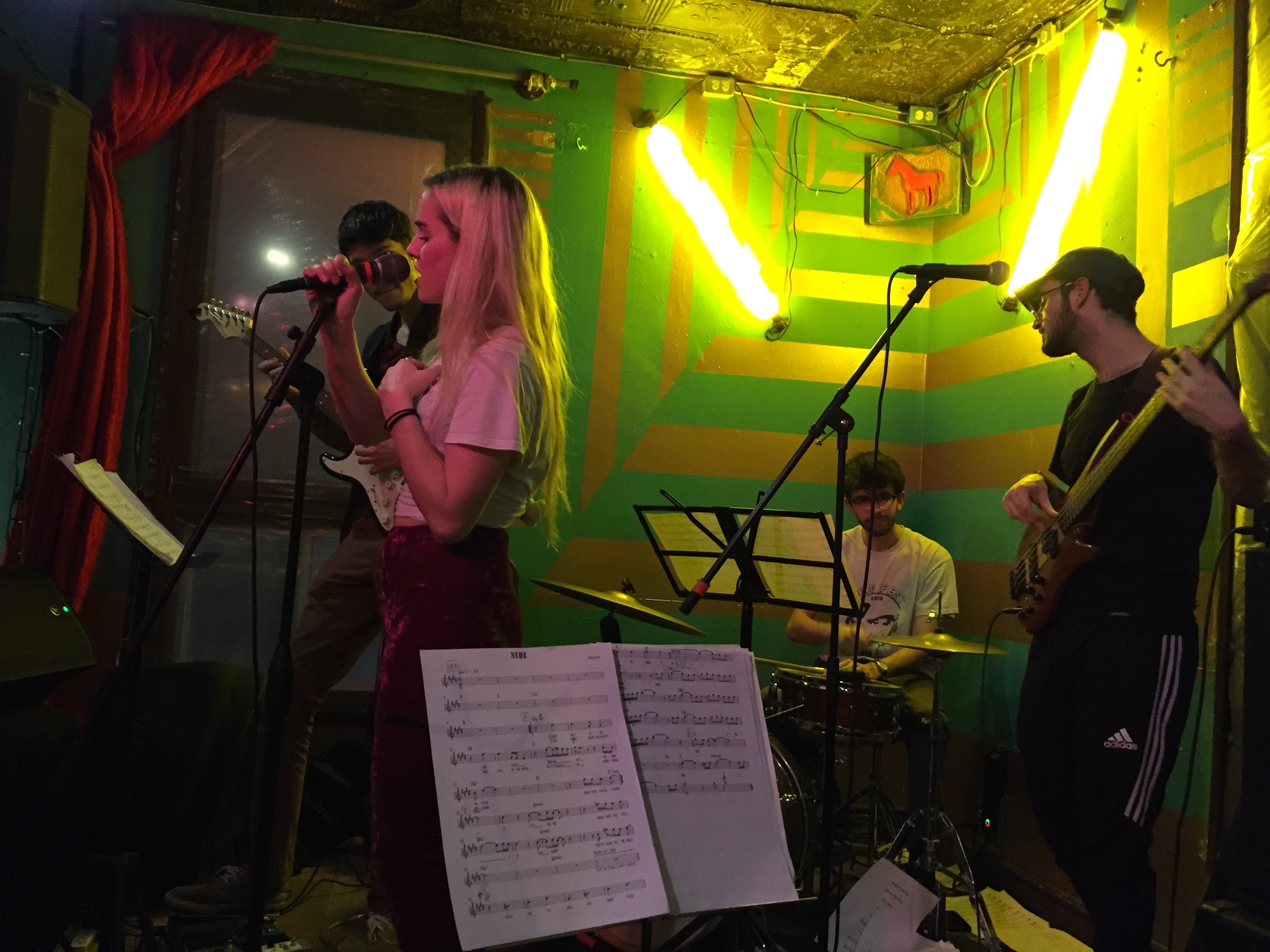
On March 21, Lucy’s Mirror took to the small stage at L’escalier, a local bar and vegetarian restaurant known for hosting live music events. Composed of five McGill students, the band performed two hour-long sets for friends and curious strangers. For those in the audience, the show was a musical spectacle, a warm social event, and a distraction from impending finals; for the band members themselves, it was a chance to practice their craft outside the dusty practice rooms of the Schulich School of Music.

Lucy’s Mirror was founded by Julia Larson, U1 Music, a second-year voice student at McGill. What began as a solo project took on new life after she joined forces with fellow music students Chris Ross, U1 Music, who plays bass, guitarist Stefan Anghel U1 Music, pianist Simon Brosseau, U2 Music, and drummer Rafa Aslan, U2 Music. While they began practicing together for fun, Lucy’s Mirror is now a fully-fledged act, and the band plays a variety of originals and covers.

Ross sat down with The McGill Tribune to discuss Lucy’s Mirror and the process of making music in and beyond the halls of McGill. Ross spoke about the excitement of playing their first non-academic show.

“[The performance at L’escalier] was our first show as Lucy’s Mirror,” Ross said. “It was super fun [and] we all had a great time. It came together.”

Across the two sets, the band slid smoothly between genres and moods: A dreamy cover of Radiohead’s “Nude” preceded a funky, largely-improvised jam.

“Funk, pop, R&B […], I don’t know!” Ross laughed when asked to describe the band’s sound. “We’re figuring it out.”

The band matches their wide musical influences with an easy onstage dynamism. Ross noted that the live setting augmented the group’s freshness and spontaneity.

“When you’re playing in front of people, weirdly, it makes you want to try more things,” Ross said.

Lucy’s Mirror provides the musicians with a freedom in artistic direction that contrasts with the students’ classes at McGill, which are more tightly structured and disciplined.  

“A lot of what we’re learning in school is more traditional stuff,” Ross said.

Yet, it is precisely the discipline of their practice, day-after-day, that enables Lucy’s Mirror to express themselves so comfortably on stage.

“We’re applying what we’ve been learning in school to what we’re playing,” Ross added.

All the musicians bring in arrangements of songs to cover: For example, Rafa is responsible for the ethereal version of “Nude.” Larson writes the majority of the band’s original songs; her lyrics tend toward the personal.

“When we’re doing originals about a breakup or long distance, people know what we’re talking about,” Ross said. “It’s fun.”

The next step for Lucy’s Mirror is another show on Apr. 3 at Maison2109. Looking past the immediate future, recording plans are on the band’s horizon for next semester.

In the meantime, they will keep writing new songs and collecting new musical ideas, walking the electric tight-rope between careful songwriting and free improvisation.

“It’s the perfect mix between knowing how something should go and figuring it out while it’s happening,” Ross said.

As finals—and final recitals for music students—loom over McGill, Lucy’s Mirror offers an alternative to the pressures of undergraduate life. Their tunes draw musician and listener alike into a small, sonic realm, a shared space of creativity and camaraderie, where inventing as important as memorizing.

“It definitely feels like something different than what I’d be doing in my classes,” Ross said.


Student Life

A day in the life of a McGill samosa

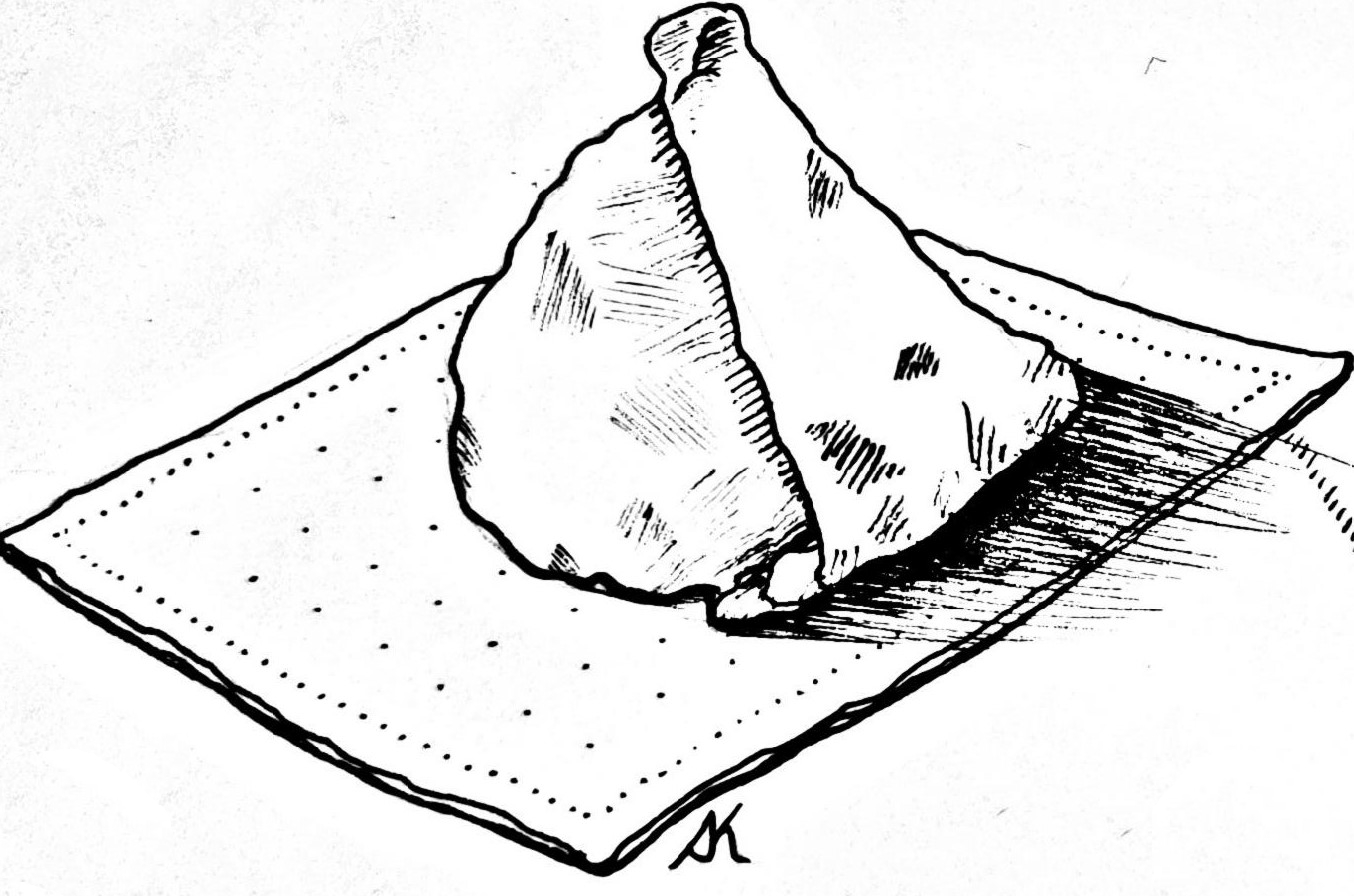
I am pulled to consciousness. My body is torn from the tender embrace of the hot oil from which I was imagined. I am a blank slate with neither thought nor feeling, but, soon, my purpose shall be revealed to me.

“Who am I?” I wonder as I am surrounded by hundreds of my compatriots. “What is my purpose?” I query as my brethren and me are carelessly thrown into a box and covered by some hastily-torn foil.

As a bemused club executive takes us toward a building I know to be called Leacock, I see my surroundings: a gaggle of Toronto girls talking about their recently-failed midterm. A second-year airpod-wearing poli sci bro, pontificating on the latest SSMU drama to a member of the AUS executive team. A lanky French boy in Adidas Stan Smiths is about to slip on another patch of—oh, there he goes.

Our dwelling is slammed onto a rickety table, and, within seconds, exhausted students flood toward us, flinging toonies into a plastic container. Three-by-three, we are lifted out and wrapped up in a page of the Tribune News section that nobody will read because, let’s face it, everything is online these days. Why are they still printing these things?

My purpose, I now understand, is to fill the void left by poorly-scheduled midterms, overpriced Premiѐre Moisson coffee, and mercurial Montreal weather. Yet, this purpose of mine—a band-aid to cover a fundamentally-broken system—is growing old. All I can offer is a one-lunch stand, but these students deserve so much more; they deserve an emotionally nourishing, balanced diet.

There is a fundamental problem to my existence: Much like neoliberalism, I look a lot better on paper than I actually am. I’m speaking, of course, of the three-for-a-toonie ‘bargain,’ which appears economically superior, since one’s extra dollar buys 33 per cent more samosa than the one-for-one option. However, there are externalities which neither the student nor the laissez-faire paradigm take into account.

What I’m trying to say is this: The three-samosa deal includes one samosa too many. Thus, while the other two samosas are devoured with chutney and desperation within moments, I, the third samosa, am left to fend for myself. Although it is only half-past noon, I feel the sun setting on my existence. Soon, dusk becomes midnight as I am tossed into a garbage bin.

Ergo, my story closes. I lay here, sandwiched between two of those cakey Timbits that nobody ever wants to eat and a flyer for exam tutoring—which that student really should have kept because the midterm he is about to sit will take him for a ride. In my misery, I ponder the great theorists—Rousseau, Sartre, Nietzsche—and I come to a realization: There is no God, but there is the samosa creator. He lives within every meltdown, each failed exam, every lost love. He lurks behind every wall, in the asbestos in Schulich, under the counter in what was once Gerts. God is dead, but he survives. Nay, he is thriving.

Science & Technology

You aren’t right-brained, you’re just wrong

For much of history, Western theories of what makes people different from each other, such as phrenology, or the pseudoscience linking head shape to mental traits, have been based on the observable, physical differences in our brains. Such theories are unsubstantiated. However, pop culture continues to perpetuate the myth that people tend to be more left or right brained, and that this affects their personality .

A 2013 study conducted at the University of Utah analyzed over 1,000 brain scans of individuals aged 7 to 29 to determine whether the hemispheric dominance theory had any substance. The answer was a resounding no: Variations in lateralization, or how lopsided one’s brain activity is, only exist within individual brain structures, such as the hypothalamus or the cortex, and not in the brain as a whole. Even then, the impact that lateralization has on cognition is unclear.

“Lateralization of brain connections appears to be a local, rather than global, property of brain networks,” the study’s abstract reads. “Our data [is] not consistent with a whole-brain phenotype of greater ‘left-brained’ or greater ‘right-brained’ network strength across individuals.”

Further, contrary to the notion that the right brain is responsible for creativity and artistic talent while the left brain is more analytical, most tasks—even purely logical ones like solving a math equation—involve structures throughout the whole brain.

The myth’s origin, according to McGill’s Office for Science and Society (OSS), can be traced back to the 19th century. Paul Broca, a French physician, discovered that language processing occurred in an area on the brain’s left side after observing that patients with damage to the area had difficulty understanding speech. These findings proved useful in validating widespread racist and sexist views, contributing to the myth’s longevity.

“When a higher intellectual ability, like language, was found to be localized to the left hemisphere, people interpreted these findings as an explanation for why white men were intellectually superior, because they had a dominant left brain, of course!” OSS Intern Cassandra Lee wrote in an article for the OSS.

In recent years, the right and left brain myth has had a much more benign effect. It was re-popularized in Betty Edward’s 1979 book Drawing on the Right Side of the Brain, a collection of drawing exercises for adults which advised readers to get into ‘R-mode’ (a euphemism for ‘right-mode’) to enhance their creativity. Despite its lack of scientific substance, the book was a bestseller: Three million copies sold worldwide, and the book remains in print to this day.

Debunking theories of hemispheric dominance is relatively easy; providing an alternate explanation for why some people seem more innately creative than others is harder. Logical thinking as a component of intelligence is determined by a combination of genes and one’s environment. However, scientists are only just beginning to understand the neurological basis of creativity.

A 2018 neuroimaging study from the University of Pennsylvania may point to the answer. The study found that participants who excelled in ‘divergent thinking’—measured by how many different uses they could think of for a simple object such as a sock—had stronger connections between the neural networks responsible for spontaneous thinking and goal-setting. Creativity, then, is not just the ability to generate new ideas but to discern which are useful.

Despite the popular myth, brains are far too complex to divide into two neat and independent halves. Rather, they are complex networks of highly-specialized areas. While we might be a long way from fully understanding the physical basis for our mental proclivities, new research suggests that creativity is not determined by which parts of the brain are stronger, but by how well they can connect.

Album Reviews, Arts & Entertainment, Music

March music madness

The month of March saw no shortage of music releases. Both Hozier and Weezer made their comebacks—one triumphant, the other less so—and Solange’s When I Get Home awed Country and R&B fans alike. The final two weeks of this tepid, rainy month have provided us with two more treasures: One from midwest-emo heroes of yore, American Football, and another from seventeen-year-old sensation, Billie Eilish.     

WHEN WE ALL FALL ASLEEP, WHERE DO WE GO? by Billie Eilish

Katia Innes, A&E Editor

Star rating: ★★★☆☆

I approached Billie Eilish’s newest album with a degree of hesitance before I had even listened—I found myself irritated by the goth seriousness of the homeschooled seventeen-year-old California native, who rose through the ranks of sad-girl playlists via a collection of SoundCloud singles. So, it was with great reticence that I listened to her album WHEN WE ALL FALL ASLEEP, WHERE DO WE GO?, an ambitious debut that lulls listeners into Eilish’s cough syrup-sweet vision of Los Angeles.

Produced by Eilish’s older brother Finneas, WHEN WE ALL FALL ASLEEP melds bass-heavy trap with light electro-pop; Eilish cackles and gasps between the opposing elements, grounding the album with her eerie vocals. WHEN WE ALL FALL ASLEEP was inspired by Eilish’s recurring sleep paralysis and night terrors, a subject she references in the lead single “bury a friend.” Eilish’s lilting soprano urges listeners to “Step on the glass, staple your tongue / Bury a friend, try to wake up.” The effect is an unsettling portrait of female youth that rejects Ariana Grande-style #girlbossery and embraces the violent angst that is traditionally reserved for male artists.

Eilish’s youth is apparent in many of the tracks, a characteristic which is simultaneously the album’s biggest strength and biggest detriment. It is hard not to crack a smile when Eilish peels off her Invisalign in the opening track “!!!!!!!,” but she counters this earnestness with cringe-worthy lyrics that betray her immaturity. In “wish you were gay” her assertion that “If three’s a crowd and two was us, one slipped away” is delivered with such self-assurance of her own wisdom, but is genuinely quite confusing. The exhausted ennui that plagues the track “xanny” and unexpected ephebophilic turn in “bad guy” seem out of place. Despite these missteps and the occasionally repetitive melodies, it is refreshing to see a young female artist experiment with her lyricism and style. Following in the footsteps of Lorde’s Pure Heroine and Kate Bush’s The Kick Inside, WHEN WE ALL FALL ASLEEP is a welcome debut that holds a great deal of promise for Eilish.


LP 3 by American Football 

Kevin Vogel, Staff Writer 

Rating: ★★★★☆

On March 22, the Illinois-based emo-indie rock band American Football released their third self-titled album, LP 3. Breaking up only three years after their formation in 1997, American Football took a 14-year long hiatus, performing together again in 2014. Their latest album touches on familiar themes of longing and remorse, yet sets itself apart with a pleasant mix of soft guitar riffs and the smooth, airy voice of lead singer-guitarist Mike Kinsella flowing from track-to-track.

While all of LP 3’s tracks easily hold on their own, “Uncomfortably Numb” (feat. Hayley Williams) deserves special praise. The song tells the story of a broken love and the role of parenting and healing in the aftermath of separation. Kinsella opens with a melancholic assessment of his life: “I can’t feel anything inside / I blamed my father in my youth / now as a father I blame the booze.” Williams joins in the second verse, breaking from the faster tempo style of Paramore to provide a consoling contrast to Kinsella’s sad-dad vibes. She echoes Kinsella’s lyrics, concluding by singing on her own, “I just want you home.” Treading unusual waters, Williams adds a beautiful layer to Kinsella’s sigh-singing.

In more classic American Football style, “Doom in Full Bloom” features a gentle opening trumpet solo by drummer Steve Lamos. Kinsella and backup singers then contribute a choir-like sound for the remaining seven minutes of the song, lamenting in a lonely contrition over lost love. While lyrically unremarkable, the song uses clever harmonies with vibraphones, vocals, and trumpets to produce a musically-rich but easy to listen to piece.

LP 3 gives something for American Football fans and regular listeners alike. Whether played for its moody ambiance or just for study music, American Football hasn’t lost its lustre after all these years.

McGill, News

5,244 donors raised $2.3 million in 24 hours for McGill

On March 13, McGill raised almost $2.3 million for its fourth McGill24, a day-long annual fundraiser. The university received a total of 5,244 donations were received, which will go toward various initiatives including funding for student-led non-profits and the creation of scholarships. Since its inception in 2016, McGill24 takes place every year on the first Wednesday after reading week and is the largest fundraiser for any Canadian university.

McGill24 is a primarily digital campaign organized by the University Advancement department which reaches potential donors through social media platforms such as Facebook, Instagram, and Twitter. To encourage fundraising, some donors, like the Macdonald Faculty Advisory Board, agreed to commit thousands of dollars once a certain number of donations were made. The Faculties of Medicine and Management each received over $200,000 in additional donations after reaching their respective donation targets. Gabrielle Korn, managing director of the McGill Alumni Association, believes that donations with prerequisites and the concept of a 24-hour fundraiser are important strategies for seeking philanthropic support.

“The way things get funded [at McGill] is, in large part, by government funding,” Korn said. “Philanthropy is the added value that makes McGill really be able to go above and beyond. McGill24 is a chance for McGillians to be proud of their own institution and [to] give back to McGill itself.”

McGill24 also matched funds to amplify donations. Donors like the Board of Governors and the McGill Alumni Association offered to match the donations of up to $1,000 for current students and recent graduates under the age of 35. Additionally, online donations made through Seeds of Change, a McGill crowdfunding platform that supports several athletic teams and other student initiatives, are also eligible for fund-matching. Funds are ideally matched dollar for dollar; however, since only some donors allow their support to go toward any McGill cause, there are limited matching funds.

“We would like for [donation matching] to be to a one to one as much as possible, but we didn’t quite anticipate the outpouring of student success this year, which is fantastic,” Korn said. “Our team is processing the over 5,000 donations so we don’t know fully how much money is eligible to be matched.”

Opportutoring, a student-led non-profit that provides online English lessons for refugees, is one of over 30 active Seeds of Change campaigns. Amir McGettrick, vice-president sponsorship of Opportutoring, helped to raise $3,200 for their initiative. As a team member, McGettrick also led the McGill Men’s Baseball Seeds of Change campaign last year, raising over $50,000.

“We targeted the big donors who we knew were going to donate large sums on McGill24 given the matching component, but we also reached out to family, friends, alumni [and] our previous co-directors,” McGettrick said. “That’s the thing with crowdfunding. Everyone needs to be on board because if it is just one person [seeking out donations], it’s not really going to work out.”

McGill24 was inspired by successful one-day fundraising campaigns at many prominent American universities including Columbia Univesity, Cornell University, and University of California-Berkeley. Annual Giving Associate Katherine Hales manages Seeds of Change campaigns and has seen greater student involvement in McGill fundraising events this year.

“With Seeds of Change, we had more than double the number of projects [this year] than we had last year,” Hales said. “The really exciting thing is that we didn’t have to go out [and advertise the Seeds of Change platform]. [Students] all came to us. There is a boost of publicity [for Seeds of Change campaigns] that comes from McGill24 and students now know that they can benefit from this [fundraising] platform.”

McGill, News, Private

Environmentalism takes on gas and Guinness at Board-Student Forum

Representatives from groups, associations, and organizations across the McGill community presented their initiatives to the 2019 McGill Board of Governors (BoG) Board-Student Forum on Feb. 28. Moderated by BoG Senate Representative Edith Zorychta, the event included information sessions led by members of Divest McGill, the First Peoples’ House, the Black Students’ Network, various subsets of the BoG, the Students’ Society of McGill University (SSMU), and the Post-Graduate Students’ Society (PGSS).

McGill Frosh approval ratings on the rise

Engineering Undergraduate Society (EUS) Vice-President (VP) Internal Affairs and Head Frosh Coordinator Laurent Chenet spoke on behalf of Frosh activities, highlighting their changing character at McGill. He cited the increasing percentage of students who rated their Frosh experience as ‘very good’ or ‘excellent’ in annual Frosh exit surveys as evidence of an improved culture.

“[Every year], we put out a survey after frosh to [ask] ‘how did we do?’” Chenet said. “In 2011-2012, we were around 26 per cent. People were not having a good time because Frosh then was a very alcohol-centric event [….] We have undergone a massive culture change since then [….] We’re now at 76 per cent [approval].”

According to Chenet, the rapid improvement in feedback is a result of coordinators working to improve the safety and inclusivity of Frosh-related events.

“In 2012, [the culture] was dismal, […and] there were some pretty awful things being done at Frosh because it was just the fun party time,” Chenet said. “In our training for leaders, staff, [and] coordinators, we’ve taken into account that there are those sensitive topics [like sexual assault], and equity is now at the forefront of every event [….] Again, [Frosh is] not perfect, and I don’t know if it will be in the next few years, but it is improving drastically.”

CAMSR to present divestment report in December

Cynthia Price Verreault, chair of the BoG Committee to Advise on Matters of Social Responsibility (CAMSR), discussed the committee’s ongoing research into divestment from fossil fuels following the McGill Senate’s endorsement of the idea in September. The final report, scheduled for a presentation to the BoG in Dec. 2019, will include consultations from a variety of stakeholders.

“We have heard from representatives of Senate, representatives of the investment committee, the office of investments, representatives of student associations, members of the Board who requested to speak to us, representatives of Divest McGill, and experts from external organizations,” Price Verreault said.

According to Price Verreault, CAMSR has made substantial changes to its procedures in the process of its investigation. In particular, the committee has implemented online feedback forms and published the names of individuals consulted in the present investigation. These modifications come after allegations that CAMSR’s previous reports on divestment were not transparent.

“When I joined this committee, it […] had two meetings a year, and we’ve far surpassed that,” Price Verreault said. “We’ve already set dates for further consultations and meetings in order to address [divestment] with the seriousness it deserves [….] One of the things that was brought to our attention was the transparency and communications of the efforts being made by the committee, [and] we’re working [on] that.”

OAP seeks to improve sustainability track record

McGill Open Air Pub (OAP) Head Managers Malcolm McClintlock and Lynn Hein delivered a presentation on the history and future of the event. According to McClintlock and Hein, the organization’s priorities going forward include making the event more sustainable and inclusive while also expanding its scope.

“Because of the size of OAP, we have a huge impact in a number of ways,” McClintlock said. “Most notably, [in terms of] sustainability, we can improve in many, many ways. We are looking to partner up with the Sustainability and Planning Office because when you’re selling thousands of drinks and burgers, you really should try to focus on the [margins of improvement]. We’re also starting to work with the McGill Alumni Association. Most notably, they’ve been using our name for about four years now across different cities and areas to [attract] alumni.”

Student Life

In the Neighbourhood: Little Burgundy edition

Little Burgundy is located in the Sud-Ouest borough of Montreal bordered by Griffintown, Pointe-Saint-Charles, and Saint-Henri. The area was once highly-industrial, and has since undergone several phases of gentrification. Little Burgundy now offers a mix of upscale restaurants and cafés, upscale antique stores, and boutiques. In the first installment of the “In the Neighbourhood” series, The McGill Tribune has compiled a list of suggestions for an excursion in Little Burgundy.

EAT

September Surf Café

Catch a break from Montreal’s winter weather and stop by September Surf Café, a minimalist, hip coffee shop that radiates coastal vibes. Founded by surf-enthusiasts eager to express their passion for the sport, the café is adjoined by a workshop dedicated to crafting boards. Diners can order from a selection of coffee, pastries, and light fare. With the recent edition of a bar, September Surf Café is also a great spot to unwind and grab a drink.

Patrice Pâtissier

This fresh, modern bakery serves gourmet pastries, coffee, and a variety of more substantial meal options for a sit-down late breakfast or lunch. Some of the locals’ favourites at Patrice Pâtissier include the banana bread, homemade scones, and the Breton cake kouign-amann. With such a widely-appealing selection, it is hard to go wrong at this top-rated dessert spot.

Liverpool House

Sister restaurant to Joe Beef and, more famously, Barack Obama and Justin Trudeau’s date-night spot Liverpool House is located in the heart of Little Burgundy. The restaurant is known for its oyster bar as well as its flavourful and eclectic shareable dishes. Liverpool House is a top-notch destination for fine dining with fewer lines that you might find down the street at Joe Beef.

SEE

L’Arsenal

This open-concept art exhibition space was recently converted from a 19th-century shipyard. L’Arsenal hosts a permanent collection of contemporary art, temporary exhibits, and a program called TD Cultural Tuesdays — a series of experimental events designed to encourage a dialogue between artists and audience members. Véronique Duplain’s Selfie Project, which consists of a series of creative photos that the artist took every day throughout the month of February, is currently on display.

Lachine Canal

Lachine is a popular tourist attraction, offering a scenic getaway from the busy city lifestyle to the serene waters of the canal. It stretches 14.5 kilometres from Old Port to Lake Saint-Louis, and there are plenty of parks, architectural sites, and skyline views to explore along the way. This spot is perfect for a midday break to walk or take a bike ride along the canal, or, once the weather gets a little warmer, kayak or canoe along the waterway.

St. Irenaeus Church

The historic church’s towering green domes are impossible to miss from the streets of Little Burgundy, and its interior architecture is equally stunning. Located a block away from the Lionel-Groulx metro station, St. Irenaeus is a must-see destination for architecture enthusiasts and history buffs alike.

DO

Stroll around Atwater Market

The year-round market buzzes with some of the best grocers, boulangeries, florists, and food stands in the city. Stop by Atwater to browse the selection of locally-produced food, people-watch, and chat with local shoppers.

Shop at Rowntree Antiques

Little Burgundy is known for its offbeat vintage stores, and Rowntree Antiques is one of the most popular. Rowntree sells unique European home decor and is a perfect stop for window shopping.

Catch a show at the Corona Theatre

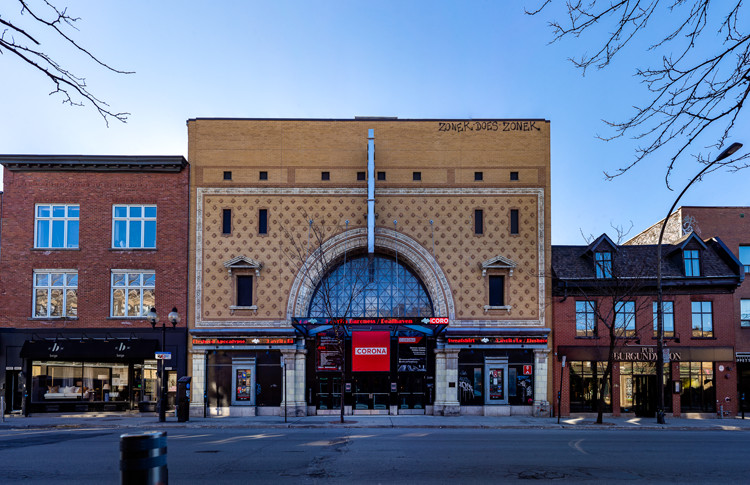
The Corona Theatre has been a cultural hotspot in Little Burgundy since its opening, and it stands as one of the best concert venues in Montreal. The theatre was built in 1912 for silent films and has retained its vintage movie theatre ambiance. It is most popular for its concerts but also hosts occasional film screenings and burlesque performances.

Science & Technology

Absurd science names and where they come from

The naming of scientific discoveries can seem, at times, both absurd and random. For example, shmoos, the mating protrusions of yeast, are so named because they look like a 1970s cartoon character. Meanwhile, dominant male elephant seals are called beachmasters and Somniosus microcephalus, the Latin name for the Greenland Shark, literally translates to ‘sleepy small brain.’ Biology is also responsible for some of science’s most excessively dull names like ‘levator palpebrae superioris alaeque nasi,’ which means lifter of both the upper lip and of the wing of the nose.

Most of the time when someone discovers something new, they are free to choose any name so long as it fits within the structure of naming in the field. Some fields, like chemistry, have an official organization (such as the International Union of Pure and Applied Chemistry, or IUPAC) that has final say on the formal names of discoveries. Other fields, like ecology, use a more systematic system. The binomial nomenclature, created by the botanist and zoologist Carl Linnaeus in the 1700s, gives each organism a distinct two-part name consisting of a genus and a species; which, for the less creative scientist, can be the same as in the case of Gorilla gorilla. Typically, the organism’s formal name is written in Latin. Some scientists use this rule to humourous effect.

In 2010, the ecologist Dennis Desjardin and his team called their newly-discovered fungus Spongiforma squarepantsii, in homage to the beloved cartoon character Spongebob Squarepants. In 1977, Arnold Menke named a newfound species of wasp Aha ha. The Australian ecologist David McAlpine named a type of fly This and hung up a poster on his office door with an illustration of the fly that said “Look at This!”

Sometimes, the same phenomena are given different names, illustrating how subjective the naming process is. In the late 1990s, a University of Texas Southwestern research team studying obesity discovered a new neurotransmitter and named it orexin, after the Greek word for appetite. At the same time, a team at Harvard found the same neurotransmitter in the hypothalamus and named it hypocretin because it resembled secretin, another hormone. Since they found it at the same time, there is no clear consensus over who deserves naming rights, and it is still referred to as orexin/hypocretin.

While scientists often use Latin in biology, Greek serves as inspiration for some chemists. Sir William Ramsay, a Scottish chemist in the late 1800s, used Greek words to name the noble gases he discovered. Xenon comes from ξένος (‘stranger’), or krypton from κρυπτός (‘hidden’), and neon from νέος (‘new’).

Physicists have also been known to partake in whimsical naming with terms like ‘spaghettification,’ which refers to the phenomenon wherein matter elongates as it draws near to a black hole. Plenty of marketing went into naming physics discoveries in the late 20th century. The God Particle, the Big Bang, and even dark matter were all re-namings of previous discoveries, marketed to keep funding flowing and members of the field on their toes. Sometimes, the birth of creative scientific terms can be unintentional: A simple misspelling of ‘shift’ led to the creation of the ‘chemical shit’ scale in chemistry.

In every field, proposed names must first be peer reviewed by the scientific community before being published. Nonetheless, there is plenty of room for creativity, and scientists have even approved names that draw on popular culture like Han solo, a trilobite, and Dracorex hogwartsia, a dinosaur. Knowing that these amusing names exist makes studying Transcription Factor II A that much more bland. But, to all the bored biochemistry students staring out of the window of Schulich, just remember: When you discover a molecule, you can name it something fun.

Read the latest issue

Read the latest issue