

Latest News

Student Life

Tribune Tries: Dumpster diving

One event stood out among the typical offerings at the SSMU Environment Committee’s Sustainable Eating Week, held from March 17 to 23: A Dumpster Diving 101 workshop led by McGill student Emma Melis, U0 Arts & Sciences. Melis was introduced to urban scavenging when she learned to reclaim discarded food and cook sustainably from people who dumpster dived their way through school. She grew to embrace the opportunity of offsetting food waste and now emphasizes it in her environmentalist lifestyle.

Promotion for the event underscored infrastructural issues that contribute to excess food waste and individual measures to reclaim unused food that would otherwise go to waste. A report by food rescue charity Second Harvest showed that almost 60 per cent of all food produced in Canada is wasted. This constitutes a net loss of over $49 billion per year, which would be enough to feed every Canadian for five months.

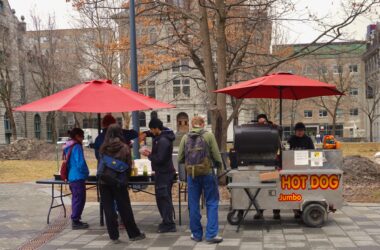
Melis introduced the workshop to attendees as a way to lift the stigma attached to urban food foraging. The workshop’s unconventional nature attracted more than 20 individuals who followed Melis through rush-hour underground traffic from campus to the Sherbrooke metro station. From there, we walked down back alleys, searching for promising bins.

Though our first bin was a bust, Melis encouraged us to stay hopeful—dumpster diving is inherently unpredictable. Many stores change their pick-up schedules, keeping divers guessing, and bins are often locked. Given all of the variables at play, finding unlocked bins at the optimal time to find the freshest over-packaged produce is an art in itself. Melis told workshop attendees that grocery store bins are best and are more likely to have untouched produce, while those from restaurants and personal homes likely only have scraps.

Our successful stops yielded mostly small furniture items, art, and home goods. Reclaiming these perfectly-usable pieces was gratifying; however, Melis focused on food items as a way to combat broader infrastructural issues that contribute to waste such as sell-by dates that cast off usable produce. She also emphasized the need for compassion while dumpster diving as an environmentalist.

“Rather than approaching this issue with an attitude of greed, [we should] consider this systemic problem of food waste from a place of compassion and humility,” Melis said. “Although a full dumpster means you’ll have some great finds that day, it also shows how much food waste is going on.”

This compassionate approach is evident in dumpster-diver etiquette—out of courtesy for those who empty the bins, their owners, and future divers hitting the same spot, Melis advised the group not to leave a mess behind. When diving, it is bad form to tear bags; rather, foragers should open them manually and tie them back up when finished. Along our route, Melis also noticed trash mixed in with recycling and vice-versa and encouraged us to move these misplaced items when we could.

Throughout the course of the workshop, we gained a wealth of dumpster-diving knowledge, but, for posterity, members of the community have collaborated on a map which gives potential divers a sense for the lay of the land. The emergence of these sorts of online dumpster-diving forums are a relatively new phenomenon and allow regular divers to share tips and adapt to the fickleness of garbage pick-up.

Many attendees asked about the legality of dumpster diving. Dumpster diving in Canada is legal as long as the garbage in question is not on private property. Melis advised us to stay calm, stop, and comply if confronted by law enforcement given that diving itself is not a punishable offence.

Melis hoped that the workshop would serve as a starting point to help participants feel more comfortable searching in their areas for promising dumpsters. As the weather warms up, she is looking to organize another similar event through the SSMU Environment Committee: A ‘Dumpster Diving 102’ may be on the horizon for those interested in honing their skills and diving through the bounty of spring produce yet to come.


 

Sports

10 things: Female athletes who inspire us

Angela James

Zoe Babad-Palmer

Few hockey players embody perseverance like Angela James. Despite opposition at every stage of her 20-year professional career, James has left a monumental mark on the hockey scene. Along with Cammi Granato, James was one of the first two women inducted into the Hockey Hall of Fame in 2010 and continues to inspire by coaching young girls.

Clara Hughes

Kaja Surborg

Clara Hughes won a total of six Olympic medals between 1996 and 2010 in both cycling and speed-skating. A rare all-season athlete, she is tied with speed skater Cindy Klassen for the most Olympic medals earned by a Canadian. She also is a spokesperson for Bell Let’s Talk and is an excellent role model for young athletes. In her 2015 book Open Heart, Open Mind, Hughes opened up about her struggles with mental health issues and explained how sports helped her build a better life.

Manon Rhéaume

Zoe Babad-Palmer

Manon Rhéaume shattered countless barriers over the course of her career: She was the first woman to play in the Quebec Major Junior Hockey League’s regular season, the first and only woman to suit up for an NHL team in an exhibition game, and the first woman to play in a professional men’s league, the International Hockey League, during the regular season. Now, the hockey legend coaches a U12 girls’ team and helps young women in sports get scholarships through the Manon Rhéaume Foundation.

Serena Williams

Chiso Ufondu

Serena Williams redefined what it meant to be a female athlete in modern society: Her athletic prowess, coupled with her dominance and longevity in tennis, propelled her to the top of the game and made her an international icon. Growing up as a young black girl, Serena Williams showed me that someone like me can achieve greatness despite the barriers placed in front of them.

Christine Sinclair

Kaja Surborg

Since her debut for the Canadian women’s national soccer team in 2000, Christine Sinclair has become the face of women’s soccer in Canada. Captaining her country to back-to-back Olympic bronze medals in 2012 and 2016, she is currently second in all-time goals scored in international play with 179. Sinclair has led by example throughout her career and will long be remembered as a Canadian sporting legend.

Jessica Mendoza

Miya Keilin

The power-hitting outfielder made her Team USA debut in 2004 and has since become a household name in softball. Mendoza is also paving the way for women in sports broadcasting: As a baseball analyst for ESPN, she sits alongside her male counterparts and challenges the antiquated notion that women cannot work in men’s sports media.

Pandelela Rinong

Micah Angell

At the 2012 Olympics, Pandelela Rinong inspired an entire generation of young female athletes in Malaysia when she won a bronze medal in the 10m diving event. She became the country’s first female Olympic medallist as well as its first medalist in any sport other than badminton. With her success on the world stage, Rinong made a future in sports for Malaysian girls truly tangible for the first time.

Sam Kerr

Kaja Surborg

Australian soccer star Sam Kerr is a name soccer fans should get to know. She represents the growth of women’s soccer outside of the historically-dominant European and North American spheres. Her signature backflip goal celebration has made her easy to recognize on the field, and her dominant offensive presence has marked her as a key member on both her national team and club teams over the years.

Elena Delle Donne

Micah Angell

Boasting an awe-inspiring combination of post moves, outside shots, and ball-handling skills, Elena Delle Donne is everything that young female basketball players aspire to be. When Delle Donne announced her engagement to her long-time girlfriend Amanda Clifton in 2016, she became an idol for the LGBTQ+ community, too.

Jen Kish

Micah Angell

When Jen Kish won the bronze medal for Canada in Women’s rugby sevens at the 2016 Olympics, she showed the country that women’s contact rugby is a worthwhile sport. Watching Kish power through tackle after tackle reminded the world that women have a place in contact sports and that they are just as tough as men—if not tougher.


fee
Editorial, Opinion

Base fee increase: Too much, too fast

While students usually skim past referendum questions, on the ballot for the Student’s Society of McGill University (SSMU) Winter Referendum 2019 is a proposal for a significant mandatory base-fee increase. President Tre Mansdoerfer has suggested a $30 increase, which would raise the current fee from $44.33 to $74.33 per term for full-time students. The substantial proposition is the first since a failed attempt in 2016, when a now relatively minor proposal of a $5.50 raise failed to pass. One justification for the hike is that SSMU’s membership fee is one of the lowest among Canadian universities. Although SSMU’s current base fee is an insufficient contribution given the services it provides, it is unwise of SSMU to ask for such a sudden and dramatic increase of nearly 70 per cent.

Mansdoerfer presented the proposed fee increase alongside a ‘Master Plan’ for future projects to help guide incoming executives. Some of the plan’s suggestions are valuable; for example, the plan to hire more support staff for SSMU’s overworked executives is one the Tribune has endorsed. However, new staff would not be limited to executive assistants—Mansdoerfer has suggested that SSMU hire a full-time public relations specialist to handle their communications. Paying professionals to manage SSMU’s image is not an appropriate use of students’ money.

The Master Plan also suggests several expensive, large-scale, and likely unfeasible initiatives. For example, the plan proposes the creation of a wellness hub that would house psychologists and other professionals at 3501 Peel, as well as additional renovations to the University Centre. Rather than hiring medical professionals to make up for McGill’s lack of satisfactory student services, SSMU should focus on fulfilling their key mandate of representing students’ interests to the administration. The hiring of two psychologists, one nutritionist, one massage therapist, and one physiotherapist will not solve McGill’s mental health crisis; however, pressuring the administration to reallocate proper funds to student wellness might. While this is a well-intentioned undertaking, founding a wellness hub is likely too wide-scale of a project to foist on executives with single-year terms.

The theme of admirable-yet-unrealistic ambition extends throughout the Master Plan. For example, its suggestion to renovate Gerts to become a more ‘café-style’ bar like SUWU is an impractical goal for a students’ society. The past failure of Sadie’s is proof that investing in a new restaurant may not be the most lucrative addition to the new University Centre.

SSMU faced unprecedented barriers this year, particularly considering the University Centre closure in March 2018. Consequently, SSMU’s finances have suffered the loss of revenue from the Gerts Bar, and the renting of additional off-campus space to house clubs and services. However, these additional costs are temporary and do not themselves justify a permanent fee increase.

The fact that SSMU’s base fee has not increased since 2007 is unacceptable, and SSMU should work toward implementing a fee that is comparable to those of other universities. However, SSMU should not expect this change to happen overnight. Instead, SSMU should ask for a series of incremental fee increases, an option that students will likely find more palatable. Not only is such a large undertaking overwhelming for an already overworked executive, but such a drastic raise poses financial concerns for many students.

Before investing in future projects, SSMU should fix their internal operations. Instead of hiring a public relations staff member, the next Vice-President Internal should consider new strategies to handling communications and outreach. While a fee increase is justified, the amount proposed is not, and neither is the associated Master Plan. For their next proposed fee-increase, SSMU should suggest a more realistic number—not shoot for the moon.

LICM
Editorial, Opinion

SSMU Winter 2019 referendum endorsements

The McGill Tribune presents its endorsements for the Winter 2019 Student’s Society of McGill University (SSMU) referendum period.

Student Services Fee increase: Yes with reservations

In response to the inadequate mental health resources on campus, McGill’s Student Services is investing in multiple large-scale projects and renovations. This includes the Rossy Student Wellness Hub, a multi-million dollar project that will consolidate counselling, medical, and psychiatric services to promote health and wellness. Besides the Wellness Hub, Student Services plans to use the fee increase to hire more counsellors and medical doctors and to resolve current operating costs. To resolve the ensuing $3 million operational deficit, McGill has agreed to contribute an additional $337,000 to Student Services provided that the fee increase passes. Additionally, the Student Services fee has not increased in six years. The likely alternative to a fee increase would be budget cuts within Student Services, especially in areas such as Campus Life & Engagement (CL&E) and McGill’s Office for Religious and Spiritual Life (MORSL). However, if the fee is approved, Student Services must consult students about how the Rossy Wellness Hub can address their needs. An increase in the number of general practitioners, receptionists, and counsellors will better equip Student Services to navigate mental health crises, and the Tribune believes that voting ‘yes’ is a necessary step in the right direction. Still, it is important that Student Services deliver on their promises and continue investing in crucial services like CL&E or MORSL.  

Athletics Facility Improvement Fee renewal: No

The Athletics Facility Improvement Fee is designed to improve and update McGill’s athletics facilities, which are operating at near or full capacity. If approved, the money from this fee increase would be matched by the university. On March 19, the Tribune published a commentary by SSMU Indigenous Affairs Commissioner Tomas Jirousek in which he asked students to vote ‘no’ to the fee. Jirousek explained that the men’s varsity team name is derogatory, and that its continued presence inside the athletics facilities isolates and excludes Indigenous students. Although Principal Suzanne Fortier has the final decision-making power with regard to the men’s varsity team name, the fee’s failure would put pressure on the administration to change the men’s varsity team name. A ‘no’ vote is a pledge of support to the Indigenous community at McGill, and to #ChangeTheName. The Tribune believes that the student body should finance these improvements, but only once they are accessible to all students.

Creation and restructuring of the SSMU Space Fund Fee: Yes

The Space Fee would allow SSMU to collect necessary funds to support club operations and student events. The current $10.37 base fee is shared between nine campus resources, and it would be increased by $1 to accommodate a fund dedicated to renting space for campus events. The fee restructuring will give SSMU more money to rent spaces, a necessary provision given the prolonged construction on the SSMU building. Since the SSMU building closure, much of the Campus Life Fund has been depleted to pay for additional space, which is financially unsustainable. Though the reopening of the SSMU building will ultimately alleviate this stress on the Campus Life Fund, additional money is necessary to secure spaces in the interim.

SSMU Health and Dental Plan fee increase: Yes

SSMU’s health and dental insurance plan is an important service for many students on campus, particularly international students, who currently do not benefit from dental care under the Blue Cross International Student Health plan. The proposed Health and Dental plan fee increase responds to the rising cost of health care while expanding coverage for students. In particular, the new fee would increase coverage for psychological services, introduce coverage for massage therapy, and eliminate coverage for naturopathy. Additionally, the increase in the Dental Plan fee will cover the cost of rising dental insurance premiums. A ‘yes’ vote to increase the opt-outable Health Plan fee by $50 and the opt-outable Health and Dental Plan fee by $50 will help SSMU to continue providing comprehensive coverage.

Restructuring of the SSMU Service Fee: Yes

Currently, SSMU collects fees to fund services on campus on an individual basis, with separate fees for 13 student services such as the Sexual Assault Centre of the McGill Students’ Society (SACOMSS), Television McGill (TVM), and the Arab Student Network. For the last several years, SSMU has posted significant bulk of student fees collected for some services, most recently a $325,702 surplus in 2018; while some services, like McGill Student Emergency Response Team (MSERT), still suffer extreme deficits. The question proposes putting such surpluses into a new Student Life Fund, which would be accessible to current services so that they can engage in large capital expansion projects and help pay for administrative overhead costs. The Tribune endorses voting ‘yes’ to the creation of this fund. Creating a mechanism to redistribute surplus revenue across a set of services with highly varied operating costs would maximize the utilization of existing funds and help bring SSMU into compliance with standard not-for-profit accounting practices.

Restructuring of the SSMU Safety Service Fee: Yes

The current $3.97 Safety Network Fee funds the operation of four on-campus safety services: SACOMMS, MSERT, DriveSafe, and WalkSafe. Currently, the fee’s distribution allocates $0.75 to MSERT, $2.50 to SACOMSS, $0.60 to DriveSafe, and $0.12 to WalkSafe. The motion proposes that this distribution be adjusted to account for the services’ respective financial situations: SACOMSS has consistently run surpluses over the past three years, while MSERT suffered an approximately $15 thousand deficit in 2018 and does not have the capital to sustain its operations. SSMU Vice-President (VP) Finance Jun Wang has proposed that the structure of the $3.97 fee be restructured as follows: $1.50 for MSERT, $1.75 for SACOMSS, $0.60 for DriveSafe, and $0.12 for WalkSafe. The Tribune endorses this change to the fee structure to ensure that fees for services to meet their varied needs.

Renewal of the Campus Life Fund Fee: Yes

The Campus Life Fund fee supports projects, events, conferences, publications, productions and athletic teams run by students. Full-time students currently pay $2 per semester while part-time students pay $1 per semester, and it is essential that they continue to support student-run initiatives. The fund allows for the spontaneous development of new projects that may not have been budgeted for at the beginning of an organization’s fiscal year and encourages groups to provide for the community regardless of their financial limitations. The fee is especially beneficial to Independent Student Groups and other groups that do not have club or service status within SSMU and therefore cannot access the Club Fund. The fund has also benefited groups during the University Centre’s closure by prioritizing applications that needed assistance financing rentable spaces.

Editorial, Opinion

Meet the 2019 SSMU Executive Candidates

In order to present the most informed endorsement decisions possible, our editors attended the SSMU debates, conducted in-person interviews with all of the candidates, and examined each platform in detail. The endorsements are the product of an Editorial Board meeting in which we addressed every position, debated, and voted. In order to earn the Tribune’s endorsement, a candidate had to receive a majority vote. Reservations could also be appended to any “Yes” endorsement with the approval of a majority of editors. In the spirit of transparency and as a matter of upholding The McGill Tribune’s credibility, we feel it imperative to make the process behind these decisions public. Should you have questions or concerns about our editorial process—or its outcomes—please send us an email at [email protected].

fee
Letters to the Editor, Opinion

Letter to the Editor: The value of a ‘yes’ vote to the Athletics Facility Improvement Fee

On March 19, The McGill Tribune ran a commentary titled “Stand with Indigenous students and vote ‘No’ to the Athletics Facility Improvement Fee,” arguing that students should vote ‘no’ to the proposed Athletics Facility Improvement fee renewal scheduled to take place March 26-29. This response is a call to action—to understand the distinction between activism that pressures the administration and activism that hurts students.  

I respect Tomas Jirousek’s and other Indigenous students’ continued dedication to the #ChangeTheName campaign. Jirousek’s ability to rally such a large group of students at McGill behind this cause is admirable. However, the renewal of the Athletics Facilities Improvement fee is independent from the #ChangeTheName campaign.  

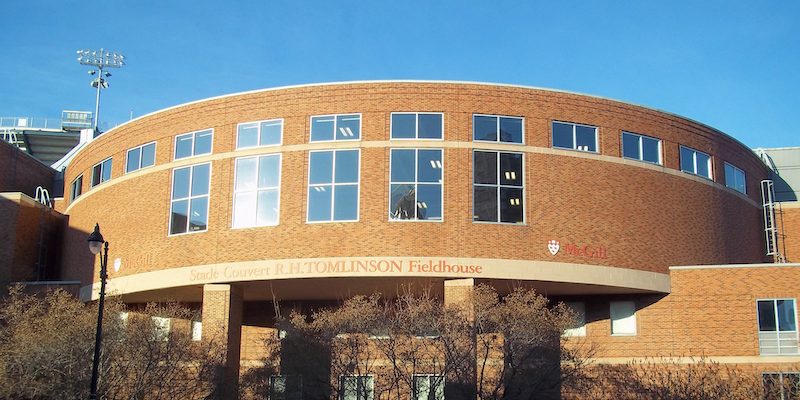
If this fee were to be renewed by the undergraduate student body it would improve  the athletic facilities that all students use, such as the fitness centre, Memorial Pool, gyms, Forbes and Molson Field, and the McConnell Arena among other facilities. In the past, this fee has been used to develop Rutherford Field, install private fitness pods, build three gender neutral bathrooms in the McGill Sports Complex, and expand the fitness centre by adding an upstairs component. The renewed fee would help to refurbish men’s and women’s locker rooms, install air conditioning in the gyms and fieldhouse, and resurface the Tomlinson Fieldhouse, according to Tia Lore, Varsity Council president. The vote is of immense consequence for the future of the Athletics program and its facilities.

The improvement fee affects everyone who uses the Athletics and Recreation building and other athletics facilities, including athletes who represent the university, and those who exercise recreationally. A ‘yes’ vote would allow for the facilities we all rely on to improve in accommodating the McGill community.

At this point, I have no desire to convince anyone about changing the name or keeping it. It is a matter of conscience that ought to be left to the decision of individual students. However, it is important to understand that the fee renewal does not have an impact on changing the name. Trying to connect these two disparate issues may hurt students and with little payoff: It is entirely possible that Fortier will choose to keep the name regardless of the student body’s stance. The outcome of a vote concerned solely with the maintenance and expansion of athletic facilities will play no role in Fortier’s decision on the men’s varsity team name.

I am a varsity athlete. I have played basketball at McGill for five years and I understand my inherent bias regarding this issue. However, I am not speaking out on behalf of my fellow athletes: I am speaking for the people who love intramurals and enjoy friendly competition outside of the classroom. I am speaking for the thousands of people who work out and appreciate the facilities they use regularly—voting ‘no’ will hurt all of these people.

Students should consider voting ‘yes’ on the renewal of the Athletics fee March 26-29. Those who are upset about the men’s varsity team name should direct their anger and dismay to those who have the power to affect change: Fortier and the administration. In the meantime, they should keep this particular fee—as well as the people it affects—out of the crosshairs.


Creative

Meet Your SSMU Presidential Candidates | 2019

Bryan Buraga and Kyle Rubenok are running to be the President of the Student Society of McGill University in 2019 – watch to find out what they have in mind for SSMU next year!


Video by Tristan Surman

Creative

The Planet Takes McGill University | 2019

In 2019 young people around the world got together to address climate change. The McGill Tribune covered the McGill protest.

Video by Aidan Martin

Read the latest issue

Read the latest issue