

Latest News

Athletics
Commentary, Opinion

Stand with Indigenous students and vote ‘No’ to the Athletics Facility Improvement Fee

The R*dmen name hangs like a shadow over McGill Athletics. As the experiences of those who’ve campaigned to replace the name have shown, the name limits accessibility for Indigenous students and contributes to our sense of isolation on campus. The #ChangeTheName campaign clearly articulates our reasons for a name change, and I am proud of the incredible allyship shown by the student body, professors, and individual athletes who stand with us. Sadly, McGill Athletics has failed to demonstrate this same courage by refusing to change the name or address the concerns of Indigenous students. In light of the #ChangeTheName campaign, students should vote ‘no’ to the proposed Athletics Facility Improvement Fee levy in the upcoming Student’s Society of McGill University (SSMU) Winter Referendum from March 26to 29.

The Athletics facility remains a hostile environment for Indigenous students, and the improvements to the facility that the fee would fund fail to support an inclusive approach to addressing mental health issues for students on campus. It is nearly impossible for a student to enter the Athletics facility without confronting some manifestation of the name, whether its physical representation or its history and legacy. The Final Report of the Working Group on the Principles of Commemoration and Renaming includes quotes from an Indigenous student expressing that the name makes her feel as if she is a ‘ghost’ and an ‘erased pencil mark’ at McGill. Another Indigenous student described how the name makes him feel ‘sick.’

Given that we, as Indigenous students, feel so excluded by the name, its physical manifestation only isolates us further. While some Indigenous students have been able to reconcile the name’s history and continue to use the space offered by McGill Athletics, we should not have to concede our identities to use a space that is supposed to be available to all students.

As a student athlete myself, I recognize how essential a safe exercise and practice environment is. Even throughout the #ChangeTheName campaign, being a part of the rowing team offered me a sense of stability, and my coaches and teammates have been sources of support. I would love to see improvements to the Athletics facility, but only if these changes benefit the entire McGill community. As it stands, access to the athletic opportunities is limited for Indigenous students at McGill, forcing us to find more expensive and inconvenient spaces for physical activity off-campus.

Our campaign to #ChangeTheName was successful in rallying an impressive 79 per cent vote in support of changing the name during the Fall 2018 SSMU Referendum. This vote powerfully demonstrated that the non-Indigenous student body stands in solidarity with us, proving our collective commitment to the values of inclusivity, respect, and the recognition of Indigenous rights.

We must hold true to those same values that we pushed for in the Fall Referendum. Even though the men’s varsity team name is not on the ballot during this referendum period, there are still opportunities to fight for Indigenous inclusivity. By voting ‘No’ to the Athletics Facility Improvement Fee, we can demonstrate the same commitment to the values that we stood for during the #ChangeTheName campaign.


Off the Board, Opinion

If I die, delete my iTunes history

I feel awkward at parties. It’s not the drinking, the dancing, or the slurred attempts at small talk, all of which I am shamelessly bad at. It’s the fear that somewhere, sometime, I’ll be asked to put my music on shuffle.

There is an unwarranted anxiety that comes with showcasing your musical tastes to the general public. Even describing the music as ‘yours’ is a stretch. Spotify tells me that my tastes are so predictable they can consolidate them into a simple algorithm. Still, I can’t help but feel like my taste in music represents me. As such, I perceive my musical taste as something special that needs to be preserved, even if some of my friends may make fun of me for liking the World of Warcraft soundtrack.

This discomfort is a result of music becoming increasingly personal over time. The founders of the much of the historical roots of modern Western music are usually the people who had the time and money to invest in it: The aristocracy. A shift happened after the invention of the printing press, and, later, the radio, which made widespread creation and enjoyment of music possible for all social classes. This increased accessibility made it a tool for the marginalized rather than the establishment: The black community created soul music as a space for artistic expression, and Indigenous rap has become an increasingly popular form of empowerment. 

Music is a special form of expression that connects multiple disciplines. Music is often considered a way to connect with innermost emotions. Scientifically, music can interact with dopamine levels, and people suffering from disorders like Alzheimer’s can still sometimes remember music, even if they can’t recall much else. Meanwhile, as wandering around with headphones blaring at full-volume becomes a normal part of daily life, music is a constant and almost intimate companion. On average, studies suggest that Canadians listen to music for 24 hours per week. Today, by virtue of having entire computers in our pockets, we have an entire orchestra in there, too.

People are especially insecure about their music tastes because it feels almost fundamental to their personality. Just think about how fundamental music is to subcultures: An entire genre of Montreal life exists thanks to Mac DeMarco. The act of listening to music is an opportunity to find solace, and exposing one’s preferences is almost equivalent to baring one’s soul. This can be tough when vulnerability is too often seen as synonymous with weakness.

If music taste ever arrises as a source of insecurity, it is valuable to paraphrase the immortal words of the Incredibles: “If everything is personal preferences, nothing is.” Openly touting your musical preferences can even liberating in a perverse way; as every part of one’s identity is susceptible to scrutiny in the public sphere, it is futile to worry about the individual quirks that likely nobody will notice. Even if others do take note, it is a noble goal to encourage people to be accepting of others following the beat of their own drums, with regard to musical taste and otherwise. While the wider accessibility of music is something to be cherished, there is a need to remember its original purpose as a way to share across communities. Musical taste should be a source of pride, not insecurity. If all else fails, the next time someone asks you if you want the aux chord just cite this article verbatim—you probably won’t be asked again. 

LICM
Editorial, Opinion

Legal Information Clinic McGill existence referendum endorsement

The Legal Information Clinic at McGill (LICM) provides essential services for McGill students. It serves as a convenient, free resource for those seeking information on legal matters such as housing laws, defamation, and more. Staffed by current students in the Faculty of Law, the LICM gives McGill law students hands-on experience. In addition to hosting educational workshops, the LICM’s outreach work includes providing information on a variety of topics including legal name changes, immigration issues, and child custody concerns. Information on legal name changes is essential for many transgender students who are transitioning, and this service by the LICM is particularly notable. The LICM’s existence is crucial for marginalized students and students struggling with housing and landlord problems, which is a particularly important role as landlords may take advantage of students who are unfamiliar with Quebec housing law. The McGill Tribune endorses a ‘yes’ vote in the LICM Existence Referendum to allow the organization to continue to help the McGill community.

climate
Commentary, Opinion

Students can’t stop climate change on their own

“Systemic change, not climate change” and “we need solutions, change the institutions,” were among the slogans chanted by McGill students at the Youth Climate Strike on Mar. 15. One-hundred-twenty-five cities around the world participated in the protest, calling for governments and institutions to adopt environmentally-sustainable policies to help diminish the effects of climate change. Protests like the Youth Climate Strike demonstrate that individuals alone cannot counter climate change; governments and institutions must be held accountable.

Popular environmentalist movements often focus on the steps individuals should take to combat climate change. Elementary school students learn to turn off the lights when they leave a room, close the faucet when they brush their teeth, and recycle. The logic behind these actions lead to fad movements like banning straws and going vegan. However, these solutions are unlikely to make a significant difference on their own, as they often assume that such lifestyle changes are accessible to all and ignore economic, cultural, and physical barriers. Moreover, they place the blame on individuals, rather than on corporations causing massive damage. As the organizers of last week’s climate demonstration in front of the Arts Building highlighted in their speeches, governments and institutions like McGill should be using their power to fight against climate change.

Climate activism has been on the rise in recent years in response to the influx of data showing that, without large-scale changes to our treatment of the planet, both Earth and its inhabitants will suffer in the years to come. Outcomes include food shortages, poorer air quality, more natural disasters, and the destruction of public infrastructure. These negative consequences will disproportionately affect people of colour and working-class communities; low-income groups are more likely to be forced to live in areas that experience climate change’s effects at a higher rate while lacking the means to protect themselves and their homes. This knowledge has ignited a widespread sense of panic that is particularly strong among young people, who fear for their chance to lead long, healthy lives.

Increasingly, research proving that climate change is the result of structural factors, notably unregulated capitalism that values profit over all else, often at the expense of the environment. The choice to blame the actions of the individual is no coincidence, as the rich and powerful refuse to admit their faults or give up some of their wealth to save the planet. Young people, racialized groups, and the working class are expected to bear the consequences of mistakes that they did not make.

McGill has a role to play in the fight for climate justice. Banning plastic water bottles is an important step, but the school should devote more time and energy to initiatives like reconsidering its investments and approaches its renovation projects. Divest McGill has been active on campus in recent years in an attempt to persuade the university to stop investing in the fossil fuel industry. While the initiative has experienced some success, with the Senate voting to support divestment, the Board of Governors (BoG) continues to refuse to vote on the issue. The Committee to Advise on Matters of Social Responsibility (CAMSR), which advises the BoG on the social impacts of its investments, is currently investigating the possibility of fossil fuel divestment. It’s essential that CAMSR recognizes the social ills of fossil fuels, and that the BoG heed their recommendations.

Recently, McGill received $1.8 million from the federal government’s Low-Carbon Economy Fund for Climate Action. The money will go towards an upgrade to the university’s heating system to reduce its carbon footprint as a part of its goal of achieving carbon neutrality by 2040. While this is a worthy initiative, it is hypocritical that McGill continues to dance around the subject of divestment while boasting about its other plans. McGill’s investments will not matter if the planet does not have a proper future. It is time to abandon the rhetoric that young people must single-handedly save our planet while those who created the problem sit back and watch, knowing that they may not even be alive to suffer the consequences. McGill is a powerful institution that has significantly contributed to the deterioration of the environment, and, therefore, it has a responsibility to lead efforts to restore it.

Basketball, Sports

The All-Canadian March Madness team

For years, Canadian basketball fans have hoped that U Sports teams will get a chance to participate in the National Collegiate Athletic Association (NCAA) men’s basketball tournament. For now, however, they will have to settle for watching the best local talent lead American schools to victory. Ahead of this week’s Round of 64, The McGill Tribune has compiled a list of the top Canadian athletes to keep an eye on.

PG Luguentz Dort (Freshman); Arizona State

The Montreal-born guard drives hard to the basket, and he is driving up NBA teams’ draft boards, too. As a dynamic scorer for the 11th-seed Arizona State Sun Devils, Dort averaged 16.1 points, 4.3 rebounds, and 2.3 assists this season. He is a strong athlete with a six-foot-nine wingspan, and, because of his excellent defensive fundamentals, he can guard almost anyone on the floor.

SG Nickeil Alexander-Walker (Sophomore); Virginia Tech

Alexander-Walker’s all-star play has been key to his Virginia Tech Hokies’ outstanding season. The Toronto native will likely join his cousin Shai Gilgeous-Alexander, a 2018 Los Angeles Clippers lottery pick, in the NBA next season. A talented athlete capable of playing multiple positions, Alexander-Walker will shine thanks to his steady ball-handling and versatility.

SF R.J. Barrett (Freshman); Duke

Barrett has had a stellar first campaign in the NCAA. The Duke freshman, who is a consensus top three pick in the 2019 NBA Draft, is averaging 22.9 points, 7.5 rebounds, and 4.1 assists thus far and was named to the Associated Press All-ACC team. The 18-year-old from Mississauga, Ontario, and his star-studded Blue Devils squad hope to take home the title in April, but they will have to escape a tough East region first.

PF Ignas Brazdeikis (Freshman); Michigan

Brazdeikis is one of college basketball’s most entertaining characters. The second-seeded Michigan Wolverines have silenced their opponents’ crowds all season with big wins during road games. The six-foot-seven forward from Oakville, Ontario has played a key role in the team’s success. The Lithuanian-Canadian puts his personality on full display: He blows kisses to opposing fans and flexes after big shots. With him, Wolverines games are must-see television this March.

C Kyle Alexander (Senior); Tennessee

Alexander hopes that he and his second-seeded Tennessee Volunteers will head to Minneapolis in early April for the tournament’s Final Four. Their path in the South region will be tough, and it will take a team effort to advance: The six-foot-eleven athlete from Milton, Ontario plays an important role under the basket for Tennessee. He averages 7.4 points and 6.6 rebounds per game and is often tasked with guarding the toughest players that the Volunteers’ opponents have to offer.

Sixth Man: PF Mfiondu Kabengele (Sophomore); Florida State

Kabengele, NBA Hall-of-Famer Dikembe Mutombo’s nephew, earned the 2019 All-ACC Sixth Man of the Year award and for good reason: The six-foot-ten forward from Burlington, Ontario came off the bench and averaged 12.9 points and 5.7 rebounds per game. Kabengele has astonishing defensive instincts, and fourth-seed Florida State will rely on his shot-blocking ability as they look to advance out of the West region.

Basketball, Sports

Playground pickup with NBA stars

Basketball can take on many forms: Professional play, at the playground, five-on-five, two-on-two, and even one-on-one. But one thing basketball players cannot do is play themselves. The McGill Tribune sportswriters wondered, if it were possible, which NBA players would be the most fun to watch challenge themselves in a one-on-one matchup.

Larry Bird

Adam Burton

Watching Larry Bird play himself would be riveting, not only for his all-around dominance on the offensive end of the floor, but also because of his unrivaled trash-talk. ‘Larry Legend’ once told Seattle Supersonics forward Xavier McDaniel exactly how and where he would shoot over him and followed it up by hitting the game-winning shot. Larry Bird versus Larry Bird would be a supreme battle with incredible shots, fierce defence, and brash trash talk. In a physical matchup, fans might get to watch one of the most entertaining games in basketball history.

Kobe Bryant

Adam Burton

Kobe Bryant is one of the most renowned two-way players of of all time. Touting that he has never lost a game of one-on-one, Bryant would finally meet his match when facing himself. His trademark ‘mamba mentality’ would give way to the most competitive game of one-on-one ever, packed with contested fadeaways, ankle-breaking crossovers, and maybe even some morale-destroying dunks. Considering Bryant’s tenacity on the defensive end, he might not ever get a shot off on himself. NBA fans everywhere would be keen to find out.

Kevin Durant

Ender McDuff

In today’s NBA, there is one player that should be on fans’ minds for a one vs. one: 2013-2014 MVP Kevin Durant. Listed at six-foot-nine with a seven-foot-four wingspan, Durant is a force of nature. The small forward possesses the speed and ball-handling of a guard, one of the league’s best jumpers, and incredible footwork, all while being an elite defender and shot blocker. Basketball fans have seen hints of Durant’s one-on-one prowess before: In 2018, Durant beat the rest of the world’s best ballers during Team USA training camp. No other player has the physical tools necessary to stop Durant, so it would be interesting to see the star meet his match in himself.

Russell Westbrook

Chiso Ufondu

Russell Westbrook, the 2016-17 league MVP, is known in the NBA for his relentless playing style and is widely regarded as one of the top point guards in the league. With an explosive first step, Westbrook blows by his defenders, and, as an aggressive offensive player, he would not hesitate to use such power against himself to get to the rim off the dribble. His aggressiveness on offence could be his downfall, however, as, when matched with a good defender, such as himself, he can commit offensive fouls. Considering his poor shooting abilities, the defensive Westbrook would be able to back off while defending and prevent drives to the basket. However, he tends to gamble on defence, going for steals which could lead to his opponent speeding right by him for an easy bucket.

Tony Allen

Alec Regino

Some may not remember ‘The Grindfather,’ better known as Memphis Grizzlies legend Tony Allen. There are few who could match his grit on the defensive end; his ability to bully opposing players is so renowned that Kobe Bryant considers Allen the best defender he has ever faced. However, it is Allen’s offence, that makes this matchup so entertaining. With a solid, but not standout, average of 8.1 points per game for his career coupled with an atrocious 28 per cent three-point shooting, this defensive slugfest is not for the faint of heart. It would be a grind—and that is just the way that Allen likes it.


Student Life

Resources for Muslim students mourning Christchurch

For many students, March 15 was a day of mourning: 50 people were killed in a terrorist attack targeting two mosques in Christchurch, New Zealand. Although New Zealand may seem distant, for Muslim students, the fear of Islamophobic violence hits close to home, and it still permeates campus life. Grieving after international or even local tragedies is an incredibly isolating experience; however, it is still a part of many students’ lived realities, especially Muslim, racialized, or international students. For Muslim students still learning how to cope with this tragedy, The McGill Tribune has compiled a list of resources that may provide help, support, or a safe space to mourn.

McGill Racialized Student Support / Students of Colour at McGill

McGill Racialized Student Support is a Facebook group with over 450 members. This group serves as a virtual resource for racialized students, offering them a safe space for discussion, posts, and questions. Students can come to this forum to exchange advice, share relevant events, or just to vent. For students of colour who may feel isolated on campus, this group can give Muslim students a place to comfortably share their feelings in a supportive environment.

The Muslim Students’ Association

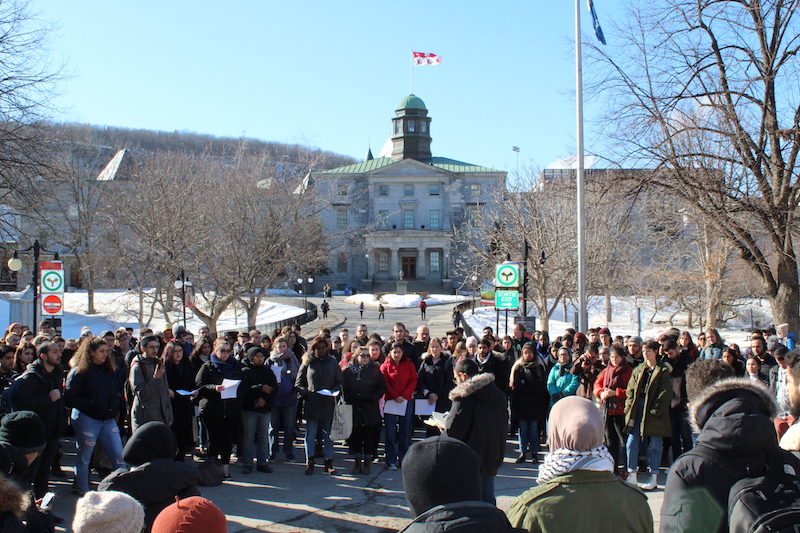
The Muslim Students’ Association (MSA) provides regular spaces for Muslim students to come together and find community, including weekly Jum’uah (Friday) prayers, discussion circles, social events, and workshops. In the past, they have also held events including an Islamic Geometry workshop, a Q&A with Muslim Law students, and Iftar dinners for Ramadan. On March 18, they co-hosted a vigil for the Christchurch victims at the Y-Intersection.

Naseeha Helpline

Naseeha is a hotline that provides an “anonymous, non-judgemental, confidential and toll-free peer-support helpline” centred around supporting Muslim youth across North America. However, anyone can access their services regardless of religion. For Muslim students, a hotline with the express purpose of listening to their lived experience is particularly helpful, especially regarding issues of discrimination, culture, and mental health. Naseeha is available daily from 3 p.m. to 9 p.m. (EST) at 1.866.NASEEHA.

Online mental health resources

Dealing with the emotional stress of grieving can take a major toll on students’ mental health. For those who do not want to seek in-person help from counselling services, online resources can make seeking help more accessible. For example, Empower Me connects students with qualified counsellors, consultants, and life coaches. Under the Student’s Society of McGill University’s health plan, students have access to telephone counselling, video-counselling, and e-counselling services. Empower Me is available 24/7, year-round, and is confidential and faith-inclusive. Another option is 7 Cups, which also serves as an online chat service that connects individuals with volunteer counsellors. Additionally, 7 Cups has a ‘Young People of Color’ support network with over 5,020 members.

Student-run resources

Besides online resources, McGill student volunteers run organizations on campus dedicated to mental health support. McGill Students’ Nightline offers a “confidential, anonymous, and non-judgmental listening service” for students, including a chatline for online support. The resource runs from 6 p.m. to 3 a.m. every night. The Peer Support Centre which provides an in-person listening service for students. Student-run resources like Nightline and the Peer Support Centre provide free and accessible options for students to receive support without leaving campus.


Private, Science & Technology

Women role models hope to inspire students in STEM

The McGill Students Chapter for Scientista and McGill Women in Leadership Students’ Association hosted their third annual Women in STEM Panel and Roundtable event on March 12, welcoming a set of eight accomplished scientists, engineers, and entrepreneurs. The panellists proved as adept at inviting discussion as they are at conducting research. The event encouraged an open dialogue in which students and experts shared their professional and personal struggles as women in the fields of science and technology.

The event provided an opportunity for women, people of colour, and other marginalized students’ identities on campus to network with established professionals in science and technology fields. They were able to express sentiments of solidarity and community, and seek advice for addressing the multitude of obstacles that disadvantaged students in STEM fields face. In an email to The McGill Tribune, Danielle Nadin, the co-director of Scientista McGill, vouched for the importance of creating inclusive spaces where STEM students can share stories and connect over similar experiences.  

“One thing we really want to do with Scientista is reduce isolation and help students who feel marginalized find their allies,” Nadin said. “We didn’t want a glossy, formal, inaccessible panel. We wanted to create a space where people felt comfortable sharing their experiences.”

Ensuring representation and advocacy for students of colour and women becomes more complex in PhD and master’s programs, as the increasingly independent work may intensify feelings of isolation. Even at the undergraduate level, the experience of being a visible minority is not an uncommon one, especially for engineering students. During the Fall 2018 semester, only 31 per cent of undergraduate engineering students identified as female. This is a particularly significant minority when considering the almost 60 per cent female-identifying students collectively enrolled at McGill.

A recurring sentiment among the panellists was that of imposter syndrome, or unwarranted feelings of self-doubt in positions of leadership. The speakers explained how ordinary workplace challenges are heightened when a person finds themself to be one of few women, non-binary, or people of colour in the lab or classroom.

For many students, this challenge manifests as a constant struggle for representation in their respective fields. To Meryem Benslimane, an equity education advisor at the Office for Social Equity and Diversity (SEDE), representation and connections with mentors can make all the difference for marginalized students in STEM.

“[It’s important that everyone] sees real people and role models,” Benslimane said. “ Especially for women, […] this representation is so important”.

For Elena Lin, a co-director of Scientista McGill, while the event’s success showed progress, it also illuminated the potential for future advancement for women and other marginalized groups in science and technology.

“The evening also revealed just how direly women and minorities in STEM fields need a voice of their own,” Lin said. “There is so much for all of us out there, and we hope that safe spaces can be continually created for everyone in STEM so that everyone can reach their full potential in their respective fields.”

Looking beyond McGill, many of the panellists emphasized the importance of creating opportunities for youth, especially girls in STEM. Without introductory programs in primary and secondary schools, careers in science and technology may seem out of reach for young women.

One panellist, Vanessa Cherenfant, a Montreal-based entrepreneur, industrial engineer, and self-proclaimed ‘STEMinist’, spoke about current initiatives to increase intersectionality in predominantly male and white disciplines. Cherenfant praised Technovation, a Montreal non-profit organization which connects scientists, engineers, and technology professionals with children from underrepresented groups to expose underprivileged youth to the possibility of careers in STEM fields.

From primary school classrooms to universities, it is clear that there is room for the greater involvement of women in STEM. Events such as this one are one means of creating an inclusive space.

Student Life, The Viewpoint

Viewpoint: Seeing Montreal from a fresh perspective

Montreal was where I always envisioned myself living during university; it has multicultural influences and its people are welcoming. Interestingly, it was not until a visit to New York that I fully understood why I enjoy my time here: Although it is one of Canada’s most densely-populated cities, I appreciate the calm and relaxed lifestyle the city still manages to offer its dwellers.

After surviving my first Montreal winter as an international student, I decided to use reading week as an escape to relax and travel. Spontaneously, I visited my cousin in New York, and spent six days wandering around the city, going to museums, and eating out. It was not my first time in New York; however, I feel like, each time I return, I rediscover the city and what it has to offer all over again. This time, as a new university student, I imagined what it would be like to study there instead of in Montreal.

On my second day in New York I woke up early, ready to conquer the streets. It was around eight a.m., rush hour, and the streets were filled with people commuting to work. Everyone was in a hurry, but it seemed like they were used to rushing, as nearly every passing individual ate their breakfast, drank their coffee, and speed-walked in formal business attire. It was, without a doubt, a normal morning routine for New Yorkers. As the day passed, I expected to see fewer people, yet, surprisingly, the streets were always teeming with people running around.

Later that day, I found a highly-rated restaurant and brought along a book to read. I was surprised by how exhausted I felt, and when the food arrived, I finished it in seconds. I realized that I had forgotten to enjoy my time sitting and eating; rather, I felt like I was rushing through all of the activities that I scheduled. I was confused, angry, and dissatisfied.

My remaining days in New York passed similarly, and, when I returned to Montreal, I was relieved by the city’s comparatively slow pace. After only spending six days in New York, I was surprised that my perception of the city had shifted so dramatically.

I noticed that, in New York, people tend to live faster, without fully appreciating the present moment. A simple morning routine, such as leaving one’s apartment and walking to the metro, can make people appreciate their time, but New Yorkers were more focused on the next step of their daily agendas, instead of enjoying the present moment. They were prone to disregarding the simple pleasures in life. Although achieving goals can make people feel happy, experiencing life in real time is what I need in order to feel fulfilled.

When I returned to school, I was more appreciative of Montreal’s calm and easy-going atmosphere. Although students often feel pressured to do more and keep up with work in university environments, our city offers students the opportunity to live a slower, and from my experience a more satisfying, life. I am glad to be a student in this city because I feel alive, tranquil, and present. I am excited to explore what more the city has to offer in my remaining years at McGill.

Arts & Entertainment, Film and TV

‘Queer Eye’ is in desperate need of a makeover

On March 15, Netflix released a third season of its feel-good makeover series Queer Eye. Based in Kansas City, the eight new episodes retread familiar ground: Five well-dressed gay men storm into the lives of some beleaguered individual and, through the power of a haircut, group hugs, and pep talks about self-love, all of the person’s problems are solved. While this format compels viewers to laugh along with the Fab Five’s shenanigans and enjoy warm-and-fuzzy moments, the show’s predictably neat endings circumvent frank realities of class and sexuality. Viewers never see any real acknowledgement of why a makeover recipient eats exclusively instant ramen or only wears a broken pair of shoes, nor do they get to see what happens in a person’s life after their Queer Eye episode. The show’s sappiness can be just as infuriating as it is life-affirming.

These shortcomings are made all the more aggravating by the show’s wasted potential. The subjects of each episode all have incredible stories, from dads struggling to get by to a pair of sisters running a barbecue joint. Yet, despite the variety of personal narratives explored, Queer Eye prescribes the same glib solution for everything: Love and take time for yourself. Though this sentiment is not inherently problematic, in relying so heavily on this mantra, the show sweeps larger issues under the rug.

In their makeover for Joey, a divorced father and recovering alcoholic, the Fab Five buys him a whole new wardrobe and refurbishes his home to make him look more like a ‘cool’ dad. For Deborah and Mary Jones, owners of a barbecue restaurant, they pay for Deborah’s dental surgery and set up a deal with a bottling company to mass-produce the Jones’ signature sauce. In both of these episodes, Queer Eye presents the cause of their subjects’ problems as an internal issue, suggesting that they simply needed to look within themselves to find room for personal growth. In the Queer Eye universe, Joey doesn’t wear ragged clothing or live in a rundown RV because of class or financial issues; he simply lacks the self-love needed to improve his life. The Jones sisters failed to bottle their own sauce not because operating a restaurant already demands so much of their time, but because they lacked the confidence to get their product out there.

While it is admirable that Queer Eye promotes self-care and self-love, it refuses to look beyond these platitudes. The show indulges in the fantasy that a visit to the salon and a whole new wardrobe are the only obstacles to happiness. Moreover, most people can’t afford to completely refurbish their homes and businesses. When Tan France, the show’s fashion expert, gives new outfits to Jess, a young lesbian living off of a waitress’ salary, she is visibly ecstatic about her new look. Tan gives her a leather biker vest to try on, asking if she would buy it: “Absolutely. If it was in my price range.” Queer Eye quickly ignores the statement, cutting immediately to a different scene.

And what about the ‘queer’ part of Queer Eye? Despite having an entirely gay main cast, discussion of sexuality, with the notable exception of Jess’ episode, remains limited. The show offers plenty of valuable discussion about body-positivity and resisting gendered beauty norms, but still feels like just another reality TV show marketed more for straight people in the middle and upper class than actual LGBTQ+ people. Instead of showcasing the diversity of queer identities and experiences, Queer Eye is rife with corporate sponsorships and product placements and hardly gives any camera time for expressions of queerness outside of Jonathan’s flamboyance.

If viewers can move beyond Queer Eye’s surface-level solutions, the show provides a pleasant form of entertainment. You can still laugh at its cheesy jokes, but just know that a French tuck and a new haircut won’t help people living below the poverty line.


Read the latest issue

Read the latest issue