


Latest News

Student Life

Winter prep 101

For students who have lived in a cold climate and those new to the negative temperatures alike, Montreal winters are brutal. The McGill Tribune details a few ways to make these dark months feel a bit brighter.

Invest in winter gear

Most students know to splurge on a winter parka and snow boots; however, it is also helpful to have other cold-weather accessories on hand. Wearing a hat and scarf helps stop body heat loss. Alternatively, students can invest in a blanket scarf, which multitasks as both a quilt and a neck warmer. Blanket scarves are particularly useful inside chilly buildings on campus, and, when bundled up under the scarf, students can even trick themselves into thinking that they are still in bed.  

Go to the gym

While it is easy to hide out in bed when there is snow on the ground, going to the gym can drastically improve students’ moods. Exercise can also help decrease symptoms of Seasonal Affective Disorder (SAD). At the McGill Fitness Centre, students can participate in a wide variety of pay-as-you-go exercise classes and intramural sports.  

Additionally, research shows that regular exercise can strengthen the immune system. This health boost is particularly important in the dead of winter when the flu and colds are circulating among students.

Experiment with winter hobbies

Going outside in these dark winter months can seem like an impossible task, but Montreal’s lively social scene can make the season feel shorter. One of the best ways to take part in Montreal’s offering of fun outdoor activities is to visit the skating rinks across the city. From the skating rink located on Beaver Lake on top of the scenic Mount Royal to McGill’s very own rink, there are plenty of different parts of the city to explore through ice skating. Alternatively, students can rent snowshoes from the McGill Recreation Centre and hike along the base of the mountain.

Memorize McGill’s underground tunnel system  

While the tunnels on campus are not as extensive as the Underground City, many McGill buildings are connected so that students can stay inside in between classes and avoid low temperatures during the school day. The system is marked by snail icons, and its entrance is easy to spot beside the large staircases outside of the front of the Burnside Building.

Students can also access directions for the tunnels on Google Maps by searching for ‘McGill tunnels.’ Though icy pavements can make the campus commute laborious, the tunnel system can make students’ winter days a little more bearable.

Socialize with friends at home

Coat checks and the hassle of wearing boots can make winter outings arduous and expensive. For an easy and fun Saturday night at home, host a board game night with friends.

While many students might deem board games childish, they can provide endless hours of entertainment—especially when paired with a bottle of wine. At Le Valet d’Coeur, a charming game store in the Plateau, shoppers can peruse an eclectic selection of alternative, independent board games. This popular spot has a plethora of board games, puzzles, and interactive games that can make any night in more entertaining.

Arts & Entertainment, Film and TV, Pop Rhetoric

Where does ‘Roma’ belong?

With new streaming platforms appearing left and right, the battle for viewers’ attention has become increasingly diffuse. And with more and more content to sift through on a daily basis right from the comfort of one’s couch, the movie theatre’s centrality in the cultural zeitgeist has taken a major hit. It has become a major source of debate: As movies assimilate further into the household, studios will cater their projects to that kind of viewing experience.

Filmmakers around the world are wondering what this shift might mean for their work and whether there will be sufficient opportunities to make movies for the big-screen as well as streaming sites like Netflix. Additionally, film purists worry that streaming giants will completely overtake the entertainment industry, resenting the move away from tradition.

Alfonso Cuarón’s Roma falls squarely into this debate. The film tells the story of Cleo, a housekeeper working in Mexico City, and her relationship to her wealthy employers. Set in the 1970s, the film’s gorgeous black-and-white cinematography portrays a time vividly inspired by Cuarón’s own memories. Filmed in a large 65mm format, Cuarón creates an immersive experience for the viewer. Only a master like Cuarón could draw as much beauty from shots of water going down a sewer as they could from wide Mexican landscapes.  Critics and fans alike have said this affect requires the big screen: It necessitates the clearest projection systems and best speakers. But here’s the catch: In April, Netflix purchased Roma’s distribution and the film is set to be released on Dec. 14. For many, this wonder of sight and sound will be relegated to their laptops. As the old adage goes, cinema is dead. 

Netflix offers eight billion dollars worth of content for its 137 million subscribers worldwide, which makes it a massive stage for curated productions.  Meanwhile, the average movie ticket price in North America is $9.27 and well over $10 in major cities. Netflix’s standard plan is $7.99/month.  Once you add transportation, snacks, or the added cost of a 3-D or IMAX screening, going to the movies has become an unsustainable expense. And with prices only increasing, more consumers are turning toward streaming platforms.  Cinephiles see the service as a blight, which is perhaps more indicative of the elitism of the industry and film nerds than anything else. Given the sheer number of people who have access to their work, in addition to Netflix’s relative creative control for filmmakers, it makes sense that independent directors like Joe Swanberg, and international auteurs like Cuarón and Bong Joon-ho, are flocking to the platform for distribution.

Industry giants have long contested this transition:  Steven Spielberg doesn’t believe that Netflix movies are real movies, and Quentin Tarantino hates streaming. But, streaming is the new reality of the entertainment industry, and Cuarón, who, admittedly, was granted a major theatrical release, still concedes to it.

“We’re going to live with this format,” Cuarón said in a press conference. “It’s important the two things exist not clash. It’s just a question of finding something that works.” 

Fortunately, it appears that Netflix and theatre companies are approaching some sort of synthesis: Roma will be released in select theatres on Nov. 21 before expanding nationwide up until its Netflix premiere. The Coen brothers are employing a similar model for their new film, The Ballad of Buster Scruggs, as is David Mackenzie with Outlaw King, which hopefully predicts a new symbiotic relationship between movie theatres and Netflix.

With the successes of films such as Noah Baumbach’s The Meyerowitz Stories and Bong-Joon Ho’s Okja, Netflix has shown it can nurture prestige films of any scale. Additionally, other recent films like Beasts of No Nation and Mudbound have solidified Netflix’s place as a perennial Oscar contender. With Netflix churning out quality films, it’s ideal that they are trying to get them onto the big screen in addition to their platform. This will allow viewers to watch movies how they want; they can seek out the theatre experience or stay at home. Having the choice is optimal. To deny that is to perpetuate the tradition of dividing art between the binary of ‘real’ and ‘populist,’ as if Netflix’s accessibility inherently worsens the film.

I was fortunate to catch Roma at the Toronto International Film Festival and can vouch for the impact of seeing it in theatres. However, not everybody shares the same priorities when it comes to watching movies. Roma is a cinematic masterpiece, but it’s also a personal, poignant tale of how to find meaning and fulfillment despite life’s adversities. There is no need for a big screen to convey that message.

Arts & Entertainment, Film and TV

RIDM offers stunning portraits of humanity

The 2018 Rencontres Internationale du Documentaire de Montreal (RIDM) took viewers on an unconventional cinematic journey. In ReMell Ross’ Hale County This Morning, This Evening the director takes a job as a teacher and basketball coach in small-town Alabama, while Distant Constellation sees Shevaun Mizrahi visiting residents in a Turkish retirement home. Such themes may not be typical subject matter for the big screen, but anything goes at RIDM, the documentary film festival that brings stories from every nook and cranny of the globe to theatres around Montreal.

Hale County is Ross’ portrait of a small, predominantly-black town in rural Alabama. Filmed over the course of five years, Ross accumulated more than a thousand hours of footage. The result is an intimate and impressionistic picture of life in Hale County. Viewers watch grandmothers play and banter with grandchildren and men stay up late playing video games. The sounds of teenage boys yearning to make it as basketball players, hope and doubt mingling in their voices, echo throughout. Hale County follows a child named Kyrie as he grows up, from the crib to a small plastic basketball hoop of his own. There is a certain tenderness immanent in every situation and every shot.

In a post-screening Q&A, Ross explained that his emphasis on tenderness was intentional: He wanted to defy traditional narratives of blackness in America. The documentary does not gloss over systemic injustice—the red and blue lights of police cruisers lurk in the backgrounds of multiple scenes—but nor does it dwelt upon it. Rather than the typical essentializing narratives of oppression, which Ross only half-jokingly called ‘trauma-porn,’ Hale County shows the real lives of real people, illuminated equally by beauty and pain.

Distant Constellation takes the viewer to an entirely different world: A retirement home for minorities in President Recep Tayyip Erdoğan’s Turkey. Mizrahi’s patient camera captures the testimony of various residents, and the results are amusing, insightful, and sometimes heartbreaking. Two friends ride an elevator up and down, just to chat; a stuttering ex-photographer manages to take a photo out the window. One woman recalls her childhood experience of the Armenian genocide. Best of all, a man proposes to Mizrahi mid-interview.

“You’re very nice to me,” he says. “And, besides, I’ll die before you anyways.”

Outside the windows of the nursing home, an immense construction project is taking place, laying the groundwork for a massive skyscraper. In the Q&A portion, Mizrahi described her desire to construct a visual dialectic between two worlds: The realm of memories within the home and the rapidly modernizing face of urban Turkey just across the street.

The dialectic between nation and citizen is one with pointed political implications: Turkey’s surge toward modernization has left the country in an economic crisis, while Erdogan’s increasingly autocratic government has censored dissent and persecuted minorities. To even acknowledge the Armenian genocide is prohibited, and Mizrahi duly gives a measure of anonymity to her subjects, never revealing their names or the home’s location.  This context elevates Distant Constellations from simply an interesting art film to a radical tribute to memory.

Mizrahi, like Ross, touches on such political realities obliquely. Both Hale County and Distant Constellation seek to recover what lies at the bottom of political, historical and geographical circumstances: That is, the people themselves.

By slowing down, taking a deep breath, and really listening, each film bestows its narrative power to those in front of the lens. In an age dominated by visual culture, Misrahi and Ross have each sought to defy the standard subject-object relations of documentary filmmaking.

“I wanted to avoid the traditional use of photography as an objectifying lens,” said Ross.

Ross’ choice to privilege his subjects’ perspectives is as political as it is aesthetic. Depicting very different circumstances, the films are united in their reminder that behind every headline, every stereotype, and every work of art, lies a human face.

name
Commentary, Opinion

SSMU votes to change the name. What now?

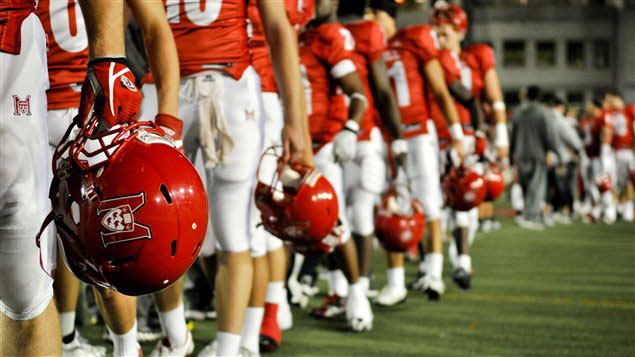
In the Students’ Society of McGill University’s (SSMU) Fall 2018 referendum, 78.8 per cent of students voted in favour of changing the McGill men’s varsity athletics teams’ name. The result comes in the wake of a petition launched by SSMU Indigenous Affairs commissioner Tomas Jirousek, which has over 10,000 signatures, and a recent on-campus demonstration that garnered widespread support.  

The SSMU referendum vote is the culmination of the massively-successful #ChangeTheName student movement. It is a triumph, but also the disconcerting beginning of a new chapter in the process of changing the name: That of the McGill administration’s response, over which students have little control. While the referendum result and #ChangeTheName campaign have demonstrated the widespread sentiment of the student body, the McGill administration is only beholden to this sentiment by principle. The decision to change the name ultimately rests within the hands of the administration, who will be acutely aware of the change’s potential costs.

In order to outweigh the influence of the deterrents confronting the administration, students must continue to publicly engage with this issue and remind the administration that concession to this motion is their moral imperative. Jirousek recently told the CBC that he plans on releasing a letter of support signed by more than 100 professors. This ongoing public engagement and demonstration of support will apply necessary pressure on the administration.

In an email sent to McGill students on Oct. 28, Interim Deputy Provost,  Student Life and Learning Fabrice Labeau, told students that the administration would be approaching a decision in December.

“In December, we will hear from the Working Group on Principles of Commemoration and Renaming, and be able to use their findings as a source of guidance on this issue,” Labeau wrote.  

It seems dubious that the group will be able to present the administration with empirical ‘findings’ that make the decision to change the name simple. This is not an empirical issue, but a moral one in which the greatest instruments of influence are students’ voices. McGill students must insist that the administration take the referendum result seriously.

However, the administration will likely be wary of alienating the support of older conservative donors, whose conception of the McGill identity includes the name as a central element. Given the relatively-minimal cost of attending McGill for in-province students, McGill is more reliant on donors than other universities to fund extra-curricular programs. Alienating donors could put a significant strain on athletic programs. The logistics involved in dismantling Redman-branded accoutrements— such as jerseys and murals—would be daunting, both financially and practically. Additionally, the nagging appeal of preserving the university’s historical identity persists.

Yet, reconciliation and acknowledgement of wrongdoing to the indigenous peoples of Canada must take precedence over the relative triviality of preserving an athletic brand. Furthermore, if the McGill administration were to disregard the sentiment of the student body—as communicated through the SSMU referendum—they would be setting a precedent deleterious to our student government’s leverage to effect change. We are now in the precarious position of relying upon the administration’s deference to principle. For change to occur, we must make this position a vocal one.

McGill, News

Richard King discusses history of Indigenous representation in sports

On Nov. 8, the McGill Indigenous Studies Program and Students’ Society of McGill University (SSMU) Indigenous Affairs hosted a lecture by Columbia College Chicago Professor Richard King on indigenous stereotypes in sports. For over 25 years, King has researched racial politics and representation in sports, publishing several books on the topic.

While the origin of the ‘Redmen’ name is unclear to most students, the McGill Athletics website supports the claim that the name stems from founder James McGill’s Scottish roots and from when Celts and the Scots were known as ‘Red Men’ because of their red hair. Jozéphine Crimp, U2 Arts, attended the lecture to learn more about indigenous representation in sports in connection to the Change the Name campaign.

“McGill’s records clearly show that, in the past, this school had a [large number] of indigenous slurs used in connection to our varsity teams,” Crimp said. “Therefore, [McGill is] the furthest thing from innocent when it comes to a racist past.”

From naming the women’s hockey team the ‘Squaws’ in the 1970s, to the stylized logo appearing on the football and hockey equipment in the 1980s, McGill’s use of indigenous slurs and stereotypical imagery extends far back in the university’s sports history.

King discussed his past experience with inappropriate uses of indigeneity. While he was completing a PhD at the University of Illinois-Urbana Champaign, the mascot and symbol of the athletic teams was Chief Illiniwek. Intended to represent the state’s Native American heritage, the mascot dressed in Sioux regalia—despite the Sioux not historically populating Illinois—danced at halftime shows, and led the crowd in chants. According to King, these experiences inspired him to continue researching the topic.

“This honourific rendering of indigeneity was always accompanied by a kind of [representation] in which mimicry and mockery go hand in hand,” King said.

In King’s examples of indigenous logos and names, mimicry transforms into mockery. What worries him most is that, no matter the original purpose or origin of a team’s name, there exists the possibility to alter the meaning in a ‘dehumanizing’ way.

However, many alumni and athletic groups, such as Friends of McGill Hockey and Friends of McGill Football, believe the origin of the Redmen name deserves more respect and have mobilized in an attempt to keep it. Bruno Pietrobon, honourary president of Friends of McGill Football, spoke as a representative of the coalition.  

“It is unfortunate that the name has been associated with any indigenous connotation,” Pietrobon said. “Even though that connotation was erroneously and regrettably attributed to the name at brief intervals [throughout more than] 140 years of McGill Athletics through the use of other names and imagery, the university acknowledged that, publicly apologized for it, and corrected it almost 30 years ago.”

To King, the context in which a team name is presented overshadows its specific origin.

“You can’t tell someone how to feel about a stereotype,” King said. “When you have a context in which people are belittled or dehumanized, it doesn’t matter what you intended. That’s what’s happening.”

With 78.8 per cent of students in favour of a name change according to the SSMU referendum which took place Nov. 9-12, Vice-President (VP) Internal Affairs Matthew McLaughlin affirmed SSMU’s support in an email to the student body.

Tomorrow, and every day after it, we, as SSMU members, will continue to take every step necessary until McGill acknowledges the damage that the Redmen name has done, and addresses those damages by, first of all, changing it,” McLaughlin said.

 Next month, the McGill administration will receive its final report on the history of the name from the Working Group on Principles of Commemoration and Renaming. According to an Oct. 23 email from McGill Provost Christopher Manfredi, the Board of Governors, which has the final decision-making power, will give a verdict shortly thereafter.

McGill, News

Changes to S/U grading scheme show promise

The proposal to amend the Satisfactory/Unsatisfactory (S/U) grading scheme has gained traction following its endorsement by the Students’ Society of McGill University (SSMU) Legislative Council on Nov. 1. Spearheaded by Vice-President (VP) University Affairs (UA) Jacob Shapiro, the S/U project advocates providing students with the choice to receive a letter grade for their S/U courses. Under this amendment, students could change their ‘S’ or ‘U’ grade to the letter grade they would have received with the normal grading scheme after seeing their results. Shapiro is currently conferring with the McGill administration about amendment details and technological logistics.

The S/U option currently allows students to receive a final grade of ‘S’ or ‘U’which stand for ‘Satisfactory’ and ‘Unsatisfactory’rather than a letter grade for a selected course. As it stands, students cannot switch between the S/U and letter grading scheme after the Add/Drop deadline. Eligible students can only use the S/U grading option for one elective course each semester and for an overall total of 10 per cent of their total course credits. Professors do not know which students take their course as S/U and, consequently, report letter grades for all.

Since Summer 2018, Shapiro has been campaigning to change the S/U regulations. Shapiro explained that the Enrolment and Student Affairs Committee (ESAC), which oversees student records among other academic policies, generally favours his amendment to allow for students to switch from S/U to a letter grade. Nevertheless, he acknowledged that there will be implementation challenges if the McGill administration accepts his proposal.

“[The option to uncover a letter grade] seems to help both the students who are in the overachiever gap and students who need [more leeway],” Shapiro said. “The way I envision this right now […] is that the [S/U] policy would stay exactly as it is with [the option to switch to a letter grade] within two to three weeks after final grades are distributed.”

In response to Shapiro’s campaign, the Faculty of Science Academic Committee (AC), comprised of science professors and members of the Science Undergraduate Society (SUS), discussed the possibility of amending the S/U system at its Sept. 25 meeting. Committee members agreed that the amendment would benefit students who perform extremely well in elective courses but suggested that McGill would need to enforce more stringent S/U opt-out time limits. However, despite discussion, according to SUS President Reem Mandil, there have been no formal proposals for the S/U amendment put forth at the AC.

“[SUS VP Academic] Michael [Ogundeji] and I offered some of our own input [at the Sept. 25 AC meeting] and decided to receive opinions from [SUS] General Council [on Sept. 26],” Mandil wrote in an email to The McGill Tribune. “Should [the S/U amendment proposal] move forward with a formal motion, myself, along with the other student members of the AC, will be sure to represent the voices heard at General Council and the overall Science and Arts & Science student bodies.”

Lawrence Ho, U3 Arts, supports the S/U amendment. He believes that the university should put education first.

“This change [in the S/U policy] would allow students to feel comfortable with stepping outside their comfort zone academically,” Ho said. “McGill should be encouraging students to take all kinds of different classes instead of having students be picky with their course selection because [they are scared of getting a low] GPA.”

Shapiro’s proposal has also faced opposition from some students, including Daniel Miller, U1 Arts. Miller voiced concerns about possible grade inflation, stating that students who are ineligible to take courses under S/U option will be at a disadvantage.

“Certain students, such as those doing a double major and a minor, […] would not be able to use the S/U option in the first place, and thus would be put at a disadvantage in comparison to their peers who could,” Miller said. “In my view, there could appear a grade on the student’s unofficial transcript indicating what [the letter grade] could have been, but this grade would have to be clearly marked as having no bearing on the GPA.”

Art, Arts & Entertainment

‘Wearing our Identity’ explores the cultural significance of indigenous clothing

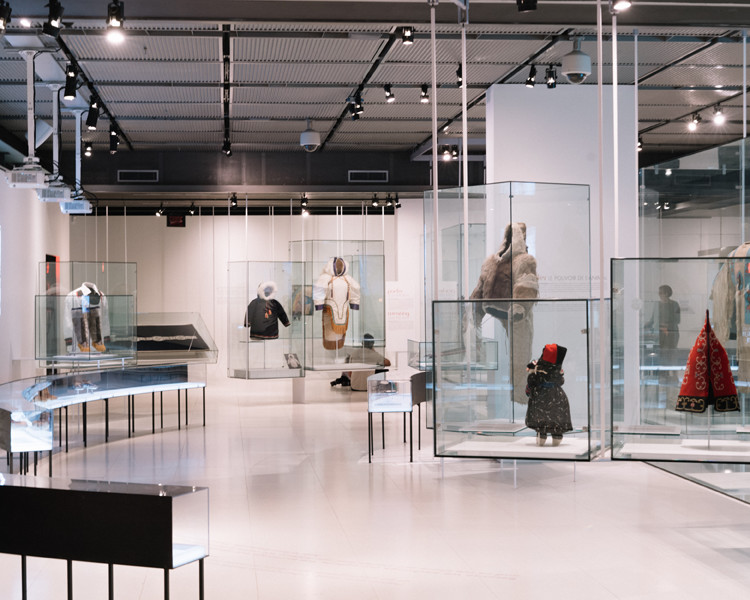
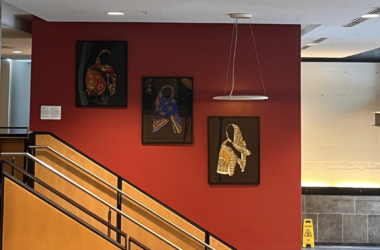
The McCord Museum’s newest addition to their permanent collection, Wearing our Identity. The First Peoples Collection, explores the historical, cultural, and spiritual significance of indigenous clothing. The exhibition showcases garments and artifacts associated with clothing production, such as needles and bone scrapers, to demonstrate how clothing shapes identity and the role of fashion as a tool for self expression within indigenous and First Nations cultures across Canada. The exhibition also documents the effects of colonialism and the relationship between westerners and indigenous people, as captured by their clothing.

The exhibition is organized around loose themes; placards on the wall describe indigenous clothing in relation to concepts such as belief, history, and suffering. The show explains that, within indigenous cultures, clothing connects a person to the natural world, and garments fashioned from animal hide or using plant resources display the bridge between the human and the non-human spheres. Clothing often combined the aesthetic and spiritual with the practical, and ornamental items such as beaded moccasins and cradleboards are used in everyday life.

Wearing our Identity approaches colonialist discourse by describing the ways in which Western settlements and institutional oppression shaped indigenous cultures and clothing. One of the placards addresses residential schools, detailing how administrators stripped indigenous children of their garments and visible cultural signifiers. This discrimination is made all the more visceral when contextualized within evidence of the importance First Nations people place on their dress and expression.

Clothing represents both a mode of resistance and a means of acknowledging indigenous history. Documenting the evolution of particular items of clothing can illustrate cross-cultural exchange and also helps to assess a previously self-contained culture’s evolution as it is forced to integrate and adapt. Having distinctive clothing with cultural meaning that extends beyond aesthetics marks them as different not in a way that others them so much as celebrates their distinctiveness.

Wearing our Identity curates sacred artifacts for a museum format in a way that is respectful of their cultural significance. By contextualizing the work with background information, the exhibition encourages engaged viewing, rather than relying on the  often brief relationship between the active viewer and the passive art object. The exhibition also features work by contemporary indigenous artists such as Terrance Houle and Maria Hupfield and is curated by the Aboriginal artist and curator Nadia Myre, indicating an involved indigenous presence in the creative process.

However, Wearing our Identity also prompts concerns surrounding consent and Western contextualization. Many of the works list names of donors or private owners; an overarching narrative of cross-cultural exchange appears missing. Simply listing a name at the bottom of a museum label ignores colonialist discourse, in which historically, westerners have often appropriated indigenous goods. Placing artifacts significant to indigenous religious and cultural practices without proper credit of the journey by which the artefacts traveled from their creators to the museum strips them of their historical and cultural worth, rendering them commodities that the wealth and often white viewer pays a fee to observe. While Wearing our Identity marks an important step in reconciling colonial Canadian and indigenous relationships, the limitations of the gallery context leaves room for active understanding and greater representation of First Nations media

Arts & Entertainment, Music

In conversation with Gregory Alan Isakov

Given the rustic tone of his music, it seems appropriate that Gregory Alan Isakov recorded his fourth full length record, Evening Machines, in his barn-turned-studio in Colorado. The album, released Oct. 5, blends a familiar palette of indie-folk tropes with elements of haunting electronic production.  

Isakov’s interest in music first emerged during his early teens, when he was inspired by Americana legends like Greg Brown and Richie Havens playing the folk festival circuit around Philadelphia. By age 16, he was touring with bands as a multi-instrumentalist.

“It was all in my parents’ basement,” Isakov said in an interview with The McGill Tribune, recalling his early projects. “All the bands that I was in were in people’s parents’ basements. We just hung out. We were bad and we loved it. We got a chance to be really terrible [….] I think that time in a musician’s life is so important because you can actually explore. Your taste changes every other day and everything changes all the time. It’s so fun.”

Isakov draws from a breadth of influences, praising Bob Dylan and Bruce Springsteen as his ‘folk heroes,’ lauding Leonard Cohen’s lyricism, and professing his love for Michael Jackson and the pop music he grew up with.The USA for Africa 1985 single, “We Are the World” was the first record he ever obsessed over, and he remembers spinning it endlessly as a child.

Working in an industry obsessed with innovation, Isakov remains ever a fan of the classics. When it comes to songwriting, the artist is more interested in making albums feel like complete pieces from beginning to end than trying to force a unique sound.

“We’re not writing anything for the first time,” Isakov said. “There are only so many chords and so many ideas.”

When planning Evening Machines, Isakov focused on cultivating a dark atmosphere that unifies the whole album, cutting songs he loved but felt disrupted the cohesion of his work. The tracks vary from modest acoustic moments to lushly-layered experimentation; however a sense of completeness transcends these sonic differences. Isakov manages to say a lot while using words sparingly, penning sparse yet introspective lyrics brimming with haunting natural imagery. The conflicting feelings of warmth and eeriness expected of folk music permeate Evening Machines.

The five-year gap between Evening Machines and Isakov’s prior release, The Weatherman (2013), was not merely the result of a process of writing and recording. In 2016, Isakov released and toured a compilation album of 11 of his most popular songs, rearranged and performed with the Colorado Symphony Orchestra. On top of his music, Isakov focused on expanding his farm outside of Boulder, Colorado.

The farm is more than a mere hobby or retreat from the hectic lifestyle of touring; it is Isakov’s first calling and complements his music career.

“I always farmed,” Isakov said. “I went to school for it. Next to my bed is a bunch of horticulture books–that’s mostly what I read. Music was something I did with my free time, and I got a chance to work on little bits of writing while I was working. It supplements my life in such an amazing way, not only monetarily […] but the work was good for me and good for the writing. I don’t know how they correlate exactly, but I feel like I need them both.”

As Isakov prepares for his 40th birthday, looming in the not-so-distant future, he feels nothing but grateful disbelief when he reflects on his career.

“I still can’t wrap my head around the fact that I’m not 20 anymore,” Isakov said. “Just running around with my band and trying to make the farm work, I feel like I’m doing the exact same stuff, but I’m not as stressed about it.”

Nonetheless, the singer has no lingering fears about growing older.

“I think I’ve sort of let go of the outcome, I’m just in it for the moment. If that’s what growing up is about, then I’m into it.”

Martlets, Soccer, Sports

In conversation with Sylvie Béliveau

This fall, McGill Athletics appointed Sylvie Béliveau as a senior advisor to its varsity sports program in the first step of the Women In Sports initiative. The initiative is funded by a $3.5 million donation from McGill varsity hockey alumni Sheryl Kerr (BCom ’67) and David Kerr (BSc ’65). The Sherbrooke native is perfect for the job: She has been involved with sports for her whole life and has a diverse professional background. Béliveau got her start in soccer, but, at a young age, discovered a lack of opportunities to continue playing at a competitive level beyond youth leagues.

“At some point, [I got] into the senior age group, and there were not enough players,” Béliveau said. “We had won national [championships], and, in those days, that was the highest level of competition. So my coach said, ‘Why don’t you come and join us as an assistant coach?’”

Béliveau progressed quickly from there: She started by coaching a youth select team, moved up to the Quebec provincial team, and, eventually, became the head coach of the Canadian women’s national team. She received mixed support from her colleagues. Wherever she went, whether it was in coaching or administrative positions, she was always just one of a few women—if there even were any others.

“You’re the only woman,” Béliveau said. “Some will support you, and some will not support you. You kind of have to survive.”

After Béliveau stepped down from her role with the national team in 1995, she joined the board of directors of the Canadian Soccer Association. Later, she became a member of FIFA’s technical study group, which analyzed international games and reported on the progression of play at the highest level of women’s soccer. Béliveau praised FIFA’s efforts in trying to get more women involved, noting how beneficial the experience was for her as a coach.

“You’re exposed to the best level of playing, […] you’re speaking full-time on not [merely] policies, not signing papers, but the game, which helps you,” Béliveau said. “You go back, and that gives you more tools to get back into your coaching tasks.”

In her new role at McGill, Béliveau wants to make female athletes aware of the wide variety of options available to them after university sports and encourages them to stay involved.

“My question to them is, when they stop playing, what will they give back?,” Béliveau said. “It could be, ‘I’ll be a volunteer at some point, and I’ll have a voice for women because I’ve played in those shoes [….] There’s so many different roles [they] could play. Refereeing, coaching, being an administrator, being on a board in some sport [….] It’s not […] necessarily right after you’re finished, […] but it’s […] putting in their mind, ‘I got so much out of it. Now what?’”

With the Women in Sports initiative, Béliveau hopes to help them answer that question. She preaches the significance of having women involved in sports in whatever position that may be because she believes that it is important for the athletes to see that those careers are available to them.

Béliveau supports female athletes in her home province outside of McGill. Alongside six other female champions of women in sports, Béliveau founded Égale Action, an organization that supports women and girls in sports in Quebec, with the goal that no other woman will have to face the barriers she has come up against during her career. Égale Action works with the Quebec government to allocate funds to projects across the province that serve women in sports. They also organize workshops on topics such as leadership, self-esteem, and understanding the dynamic between male coaches and female athletes.

Ultimately, her success is rooted in a competitive mentality that started at home with her brothers and her sister, Rachele, who currently coaches the McGill women’s volleyball team.

“We played games, all sorts of games,” Béliveau said. “Gymnastics in the house, head down and feet up, whatever [….] So, because we are a family of playing, it’s more than just a job, it’s fun.”

Artistic Swimming, Martlets, Sports

McGill artistic swimming laps the competition

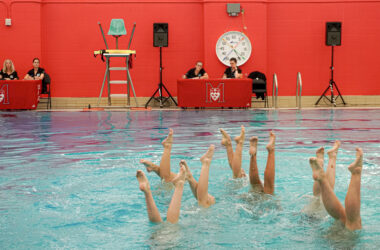
On Nov. 17, Canadian University Artistic Swimming League (CUASL) teams gathered at Memorial Pool to compete in the 2018 McGill Invitational. Universities competed in solo, duet, and team events while a panel of judges evaluated swimmers on artistic impression, execution, and difficulty. Though the scores from the annual event do not count towards the teams’ national rankings, the friendly competition set high standards for the upcoming competitive season. McGill’s novice team placed first in the novice competition, and the white team, one of McGill’s two varsity-level teams, took first place in the team finals.

In the team finals, the McGill white team swam a graceful and energetic routine to a medley of Whitney Houston songs and earned a combined score of 71.47. Lindsay Duncan, McGill Varsity artistic swimming team head coach, expressed her overall satisfaction with the team’s performance.

“I feel really positive,” Duncan said. “We had a great meet [….] I had high expectations because everybody has been looking really good in practice leading into this competition. I think everybody really put good work in today [and] pulled off really good performances.”

The invitational was an opportunity for McGill swimmers to show fans what the team has been working on thus far. For many of the athletes on the novice team, the season opener was the first performance of their university athletic careers. First-year artistic swimmer Leah Birch, who competed in the novice team and solo competitions, spoke of the united, supportive team environment that she has experienced in her first season of artistic swimming at McGill.

“It’s such a family,” Birch said. “[Though there are] three teams within the McGill synchronized swimming [program], it’s not divided by teams. Everyone is friends with everyone.”

The invitational was the only time this season that the Martlets will compete in home water. For novice team swimmer Paulina Piankova, it was enlivening to perform in front of a crowd of familiar faces.

“It’s really exciting because we get to invite our family [and] close friends to cheer us on,” Piankova said. “We know the pool well, we are comfortable in this pool, and seeing the people that support us is amazing for sure. Also, this was an invitational, so it was a friendlier kind of environment rather than an actual competition where it’s a little bit more stressful.”  

The Martlets will next compete at the CUASL Eastern Canadian Meet at Université de Sherbrooke on Jan. 26. In the meantime, Duncan hopes to polish the team’s presentation and technique.

“Our swims today weren’t perfect,” Duncan said. “They were really thoughtful [and] really focused. You could see that the girls were really thinking about the corrections they have been getting from their coaches at practice, but, next, we have to layer in the finesse, bring in more energy, bring in more power, make sure that we can be performing everything, and make it look effortless.”

Moment of the meet:

The white team entered the pool to Whitney Houston’s “Somebody to Love,” with a theatrical dance routine.

Quotable:

“[Our typical training schedule is] crazy. We have lots of training. I am doing an extra routine [….] The standard team schedule is three times a week, and then you add an extra practice a week [….] Some people come in six days a week to the pool.” -Paulina Piankova on the team’s preparation leading up to this meet.


A previous version of this article stated that the Eastern Canadian Championships were taking place at Laurentian University. In fact, they are taking place at Université de Sherbrooke on Jan. 26. A previous version of this article also stated that Leah Birch took part in novice duet and novice solo competitions. In fact she took part in novice team and novice solo competitions. The Tribune regrets these errors.

Read the latest issue

Read the latest issue