Latest News

Letters to the Editor, Opinion

Letter to the Editor: The problem with SSMU’s GSVP funding gap

Content warning: sexual violence

On Oct. 6, The McGill Tribune’s editorial board published an editorial titled “The Anti-Violence Fee Levy requires immediate support.” In the article, the Editorial Board advocated for students to support the Anti-Violence Fee Levy that went before the student body for referendum Nov. 9-12. I wish that the Editorial Board had published an editorial titled “The Gendered and Sexual Violence Policy requires immediate support.”

I write this Letter to the Editor hesitantly, only to speak out against charges that I brought a case to the Judicial Board to further my own political agenda, or to virtue-signal without taking substantive action. This case has personal significance and implications for me, as well as for the undergraduate student body that the Gendered and Sexual Violence Policy (GSVP) seeks to protect.

Early in my first year at McGill, I became a survivor of sexual violence. The trauma I experienced and continue to experience as a result still haunts me to this day. This is why, when the GSVP came to Legislative Council, I took an immediate interest in it. To me, the passage of this policy would help protect me from my abuser and aid me in representing my constituents without having to retraumatize myself or jeopardize my mental health.

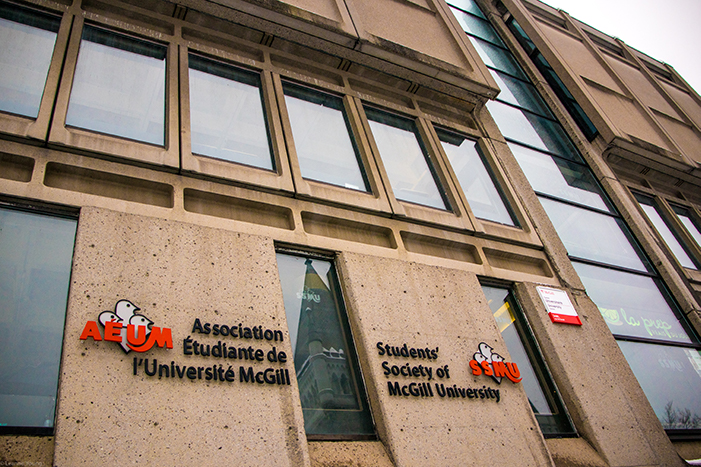
However, the Students’ Society of McGill University (SSMU) executive has maintained that the only way to fund the $20,000 GSVP is through a fee levy due to a current budgetary deficit. As a result, the implementation of the procedural measures regarding sexual violence disclosures of the GSVP has been delayed to next semester due to the apparent ‘lack of funds’ immediately available for it, despite the fact that the executive was financially able to authorize unexpected reimbursements for the Children of the Corn event. I have tried and failed, on more than one occasion, to convince the Legislative Council to mandate the Vice-President (VP) Finance to find funding for the GSVP immediately, without resorting to the use of a fee levy. At the time, I was not prepared to share my personal experience as a survivor of sexual violence.

I argued that if the SSMU made the GSVP a priority, they would find the necessary permanent funding for it. In finding the funding, the adjudicative measures of the GSVP could have been implemented in October immediately after the passing of the policy instead of waiting until next semester. Four months is four months too long for survivors to have to wait in order to feel safe on campus.

Although the Finance Committee has been tasked with restructuring SSMU’s fee levies, providing a permanent source of funding for the GSVP in the SSMU’s base operating budget, there is currently an urgent lack of funding for the GSVP. I feel that the SSMU executive is using the Anti-Violence Fee Levy to put off the immediate and appropriate funding of the GSVP. At the SSMU’s Children of the Corn Halloween event, the SSMU executive resolved to reimburse students’ taxi and Uber rides home after their planned transportation fell through, and rightfully so. This ensured students’ safety at the cost of adding around $10,000 to our current deficit.

In response to concerns about deficits, VP Internal Matthew McLaughlin has stated that SSMU can carry deficits without substantial impact on its operations. This has led me to ask myself why the SSMU executive has chosen to prioritize the safety of one group of its constituents over another, when it has the means to ensure the safety of both. In the absence of an executive or legislative branch that is willing to protect its constituents, the judiciary has always been an option to turn to. That is why I am appealing to the Judicial Board to right this wrong and adjudicate the protection that I and all SSMU members need and deserve.

To this day, I still have to opt myself out of participating in clubs I am interested in to avoid contact with my abuser. To this day, I still have to ask my friends to check Facebook and see if my abuser will be attending a SSMU event. To this day, I still have to retraumatize myself every time I see my abuser at a SSMU function. To me, this represents a failure on the part of the SSMU to protect its members through its duly-passed and currently active Gendered and Sexual Violence Policy.

While I wish that I did not have to share my story as a survivor of sexual violence under these circumstances, I want students to understand that the Gendered and Sexual Violence Policy is not dependent on a fee levy to work; it is dependent on a SSMU executive that is willing to fund and enact it immediately.


Features

LORD, Give Me COFFEE To Change The Things I CAN, And WINE To Accept The Things I CAN’T

All of the clothes on the floor are damp, but the shirt seems to be the least damp. Judging by its position behind his accumulated under-bed objects, he assumes it’s been down there for a while. It’s difficult to discern which of his shirts it is.

Chill Thrills, Student Life

Tribune Tries: Death and cake

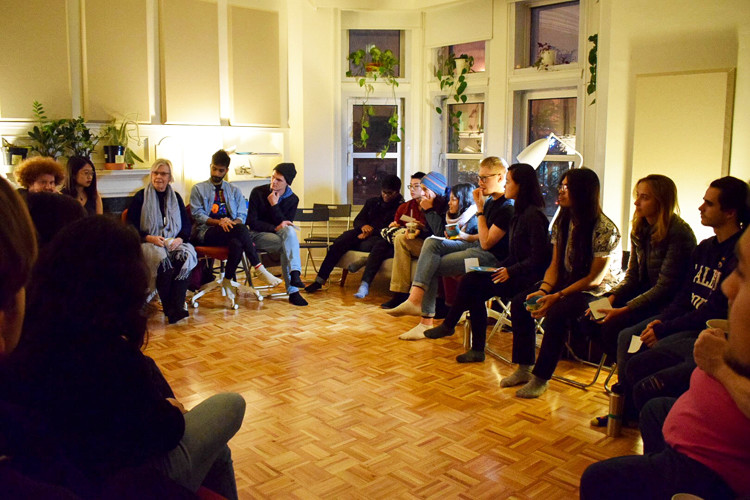
“I love the brownies.” “I’m interested in learning about death.” These are the icebreakers at the November session of McGill’s Death Cafe. Though the event drew a varied crowd, commonalities developed between the full room of people intrigued by both creature comforts and talk of mortality.

On a rainy evening, participants filtered into an airy room with plants on the windowsill, past a table of pastries, berries, and fixings for tea. The contrast between conversations about death and a comfortable space with a whistling kettle and homemade baked goods is intentional, says facilitator Kit Racette.

“Death tends to separate us, and food brings us back together again,” Racette said.  

The café held on Monday, Nov. 5 was the second of a series hosted at McGill’s Building 21. Death Cafe’s stated aim is to make people more aware of death to help them maximize their life. The sessions at McGill are organized by Amanda Brown and Daniel Almeida in conjunction with Racette, who has hosted many death cafés across Montreal.

The pervasiveness of the death café, though it may seem niche, has been buoyed by a strong internet presence. The death café model was developed by Jon Underwood and Sue Barsky Reid based on the ideas of Swiss sociologist Bernard Crettaz, who held informal discussions about death over food and drink at his cafés mortels. Cafés mortels had no prescribed trajectory or religious inclination, and existed merely as spaces for people to talk openly about mortality. Inspired by Crettaz’s work, Underwood started the website deathcafe.com and wrote a guide to hosting death cafés based on Crettaz’s model. Death cafés based on this model are nonprofits, have no set agendas, and always serve refreshments. In the years following the website’s launch in 2013, death cafés have grown into a worldwide phenomenon.

Racette got involved since early in the project’s development. In a conversation after the event, she explained that she was intrigued by the concept. She went on to explain how shrouding mortality in taboo makes the inevitability of death feel all the more isolating and painful. Through her own experience of loss, she realized how an awareness and acceptance of death might allow us to better value our lives.

“I went looking for a way of getting people to talk about death and dying,” Racette said.

On occasion those conversations have brought out conflict in participants’ belief systems. Racette reiterated that the death café model recommends relative neutrality in terms of religion and spirituality.

“It’ll especially go there with people that are very Christian versus [those that are] very agnostic,” Racette said. “Death café isn’t a place to convince anyone.”

The conversation at McGill’s November Death Cafe touched on a variety of topics, including what people plan to do with their bodies, what attendees would do if they had three more months to live, reincarnation, ways of achieving immortality, whether faith is a comfort, and putting the pain of losing a pet into words. We discussed the ecological impact of traditional burial and the sentimental reasons for ‘formaldehyde-ing’ bodies, a desire which, as one participant pointed out, has roots in the post-Civil War need to preserve bodies until they got home as a comfort to loved ones. A few people in attendance had worked in areas related to death and, thus, had unique perspectives from their careers in palliative care or neuroscience. By the end of the conversation, I found an answer to my own fears of aging and losing autonomy after listening to another participant’s experience of working in a World War II veterans’ hospital and seeing people who had lost many of their faculties but still found joy and things to live for.

“[Today’s café had] a lot of philosophy,” Racette said. “And I find that’s normal with younger people […] to philosophize rather than deal with practicalities of their own deaths.”

The café ended with Racette asking attendees to reflect on their time at the café. Participants described the experience as  comforting and grounding. By the end, I felt that the collective initial hesitation at the topic had lifted, and that the group shared the comfort of a common understanding of their shared fate, however distant it may be.

Album Reviews, Arts & Entertainment

Hot take: Greta Van Fleet’s debut album is a rock n’ roll throwback

The world of music journalism is full of takes: Good takes, bad takes, medium takes, and even hot takes. Here, in the Arts & Entertainment section of the The McGill Tribune, we try to supply the hottest takes around. Recently, Pitchfork lambasted Greta Van Fleet’s newest album. In the article, Jeremy D. Larson gave Anthem of the Peaceful Army a dismal 1.6 out of 10. While one could easily contest Pitchfork’s critical ability, they are undoubtedly one of the biggest voices in music journalism. We at the Tribune, however, believe that the biggest opinion does not necessarily correlate to the best. Here’s our hot take on Greta Van Fleet.

Album Review: Anthem of the Peaceful Army

Star rating: ★★★★

“Rock and roll is dead.” It’s a complaint heard often these days among classic rock enthusiasts. The recent emergence of Michigan-born blues and hard rock band Greta Van Fleet provides a glimmer of hope and a compelling piece of evidence to the contrary. After gaining traction last year with their EP “From the Fires,” the band released their first full-length album, Anthem of the Peaceful Army, on Oct. 19.

Greta Van Fleet’s bluesy melodies and extended instrumental interludes take listeners back to the ‘70s and into the era that gave rise to emblematic bands like Deep Purple, Lynyrd Skynyrd, and Led Zeppelin. Critics often draw comparisons to the latter, and it’s obvious why: Lead singer Josh Kiszka’s raspy howl, featured prominently on songs like “When The Curtain Falls,” is strikingly similar to Robert Plant’s style, and the swirling guitar riffs of “Age of Man” and “Brave New World” are undoubtedly reminiscent of the legendary group. It’s like stepping into a time machine.

There’s a fine line between a style inspired by one’s predecessors and one that feels derivative. Critics of the band often dismiss them as a carbon copy of classic musical acts, lacking in creativity. There is validity to that argument: Most of the songs on Anthem of the Peaceful Army could inconspicuously feature on a Led Zeppelin playlist, and the average listener would never notice. But, the band’s members are barely in their twenties, and they are skilled in the art of rock ‘n roll. With time and experience, they’ll find a sound of their own.

Anthem of the Peaceful Army might be imitative, but it’s energetic, nostalgic, and just plain fun. In a world of autotune and drum machines, I’ll take a Led Zeppelin rip-off any day.


Student Life, Student of the Week

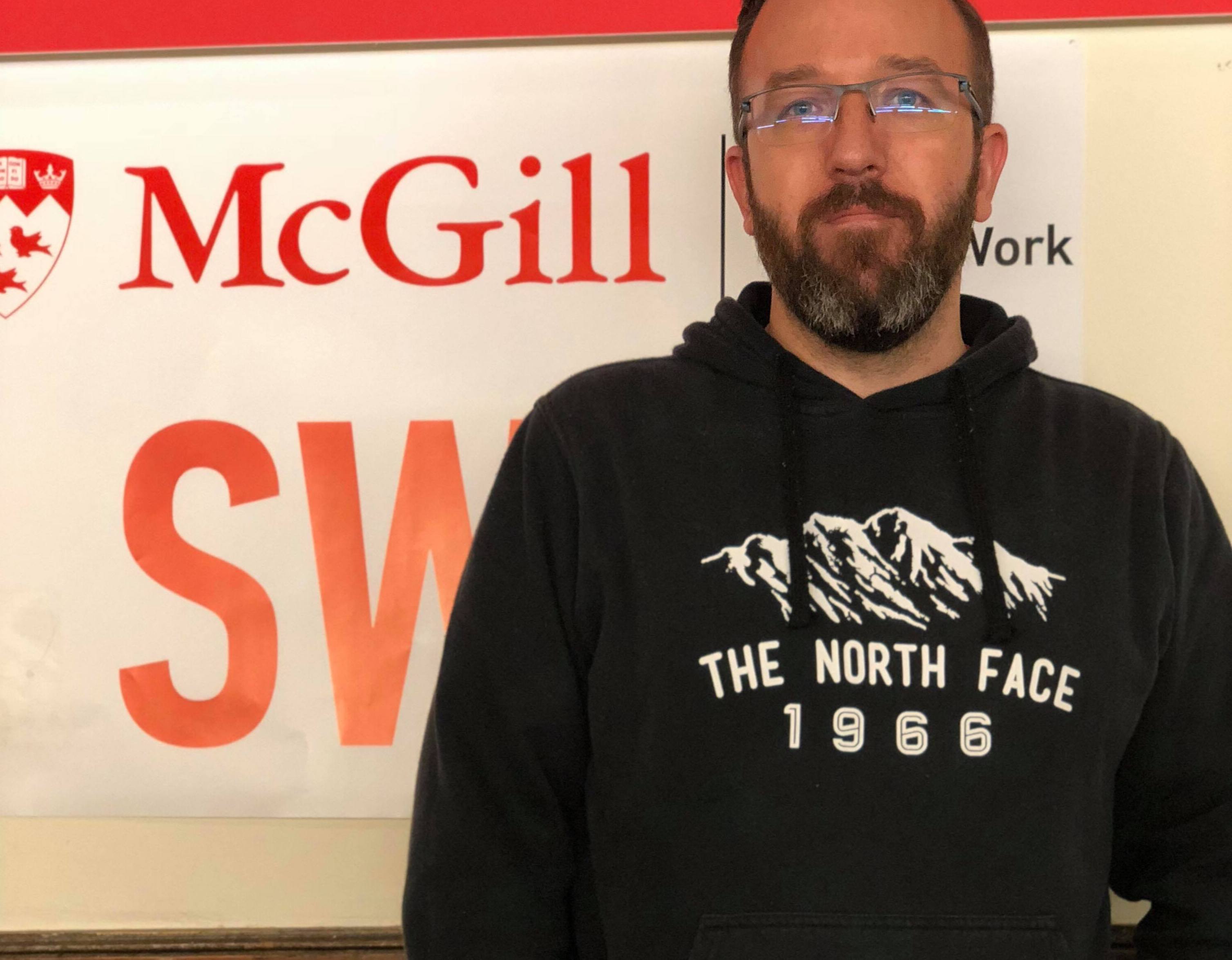
Student of the Week: Richard Davy

In 2017, Canada saw 3,987 cases of opioid-related deaths, 72 per cent of which resulted from the use of fentanyl-laced drugs. Given these frightening statistics, Richard Davy, U1 Social Work, aims to raise the public’s still-limited awareness of the opioid crisis and naloxone, an antidote that can be administered in the event of an opioid overdose. Through his independently-run workshops, Davy hopes attendees will learn more about naloxone administration and that they will have the ability to prevent future opioid-related deaths.

Though his primary academic interests is mental health research, Davy was first inspired to pursue the project when volunteering in the Montreal area during the Fall 2018 semester. He first witnessed the destructive effects of the opioid crisis when distributing food to individuals living on the streets.

“I’ve been doing outreach work on the streets […] as a link to talk to people [and] refer them to services, […] and I started to see that there was this problem with overuse of opioids,” Davy said.  “My major interest is around mental health, [and] I see addiction and drug use and misuse as a link back to mental health as a core concern.”

At each workshop, Davy begins by introducing the history of the opioid crisis. To reduce the stigma surrounding fentanyl overdoses, he also underscores the pervasive nature of the opioid crisis; he explains that, in addition to drug users, it afflicts children in homes where opioids are present. Because people of all ages and backgrounds are affected by the opioid crisis, Davy believes that it is imperative that more Montrealers are educated in naloxone use.  

“This isn’t just an interest with the ‘other’ [disadvantaged communities] and this isn’t just about recreational drug users,” Davy said. “This is also about regular, middle-class people, who are taking […] opioids at home. Youth ages 14-24 […] use [prescription opioids] recreationally […] from parents or caregivers. [Since] this impacts everybody […], we all need to know how to use naloxone.”

Davy has naloxone kits available at the workshop and shows attendees how to use and administer the antidote. As part of this training, he also teaches guests the signs of drug overdose: Loss of consciousness, slowed or stopped breathing, and blue lips, among others. If attendees notice this reaction Davy advises administering naloxone.

So far, the workshops have been a success. At his most recent event on Nov. 7, Davy had 40 attendees, and he expects a much larger crowd for his upcoming event. To further spread Davy’s message, the Centre Des Jeunes (CJD) will be broadcasting the workshop on Nov. 16. At present, Davy has rented a room for 120 guests, but is hopeful that the turnout is even greater.

In the near future, Davy plans to expand the program across the greater Montreal area by collaborating with the city’s health administrators.

“I’m talking to [the] Jewish General Hospital and they’re talking about me coming and presenting to the doctors there,” Davy said. “We had a family physician come to the [last] presentation, and […] he really wanted [doctors] to learn more.”

Through this work, Davy hopes to empower attendees with the knowledge that can save lives. He sees naloxone accessibility and education as a necessity in the province: Under the Civil Code of Quebec, bystanders are under a legal obligation to help those in need. In the future, he hopes that the university takes greater steps to keep students safe such as making naloxone kits a part of standard first-aid kits and holding mandatory naloxone workshops as part of orientation events.

“I think we need to make it a part of our education curriculum,” Davy said. “We know that people are going to be using these opioids recreationally and we know that people are using them under prescription, [so], if people are going to use them, they should use them safely.”

gsvp
McGill, News

Trib Explains: The SSMU Gendered and Sexual Violence Policy

What is the GSVP?

During the 2016-17 academic year, accusations of sexual violence were levied against the former vice-president external and president of the Student Society of McGill University (SSMU). While McGill’s administration had a policy against sexual violence during the upheaval, SSMU had no such legislation, leading to an organizational crisis within the student union. Following the resignations of the accused, the remaining executives needed to double the size of their portfolios and students’ trust in SSMU was eroded. In response, the 2017-18 SSMU executive team committed to creating the Gendered and Sexual Violence Policy (GSVP). This policy, the funding for which recently passed in the Fall 2018 referendum, takes three distinct approaches toward addressing rape culture at SSMU: Prevention, support and advocacy for survivors, and disciplinary procedures.


What is gendered and sexual violence?

Actions that target or delegitimize an individual’s gender identity are acts of gendered violence. This includes misogynistic or transphobic slurs, misgendering, and intentionally ‘outing’ closeted queer people. Acts of sexual violence can be any non-consensual sexually-motivated behaviour, which may or may not be physical. This includes assault, harassment, and non-consensual condom removal.


How does the GSVP prevent future sexual violence?

The prevention efforts enacted by the GSVP are focused on the development and administration of training for SSMU staff and specific members. The two Anti-Violence Coordinators (AVC) will oversee the training, which must be completed by all SSMU employees and half of the members of every SSMU club during the fall semester. If they do not attend the training, or refuse to go, AVCs will suspend the SSMU member from their employment or, in the case of a non-compliant club, cease funding.


How does the GSVP support and advocate for the survivors of sexual violence?

In order to provide institutional support to survivors, the GSVP compels SSMU to promote existing support systems to the SSMU community, such as the Sexual Assault Centre of the McGill Students’ Society (SACOMSS) and the Montreal Sexual Assault Support Centre. After the GSVP is enacted, SSMU will continue to advocate for more resources for these services, and the VP External Affairs will continuously update the SSMU website with information for survivors. The GSVP also works in tandem with the OurTurn National Action Plan, a SSMU-published strategy that guides student societies in creating anti-violence initiatives.


How does the GSVP respond to allegations of sexual violence?

The GSVP allows survivors to file disclosures and complaints to the AVCs against anyone within the SSMU context, including SSMU members, employees, and visitors on SSMU-owned property. While a disclosure can lead to an informal resolution process, a complaint can proceed to a formal investigation led by the AVCs or an independent third party if requested by the complainant. After an investigation is conducted, the AVCs will ultimately assess whether its findings substantiate the complaint; if they do, the complaint will be referred to a GSVP committee comprised of six students. The committee will decide which sanctions should be levied against the accused, ranging from a mandatory letter of apology to dismissal from SSMU employment or position. The GSVP also provides a timeline that the disciplinary procedure should follow.

“The SSMU GSVP timeline requirements seek to ensure that, barring extraordinary circumstances, formal complaints will be completed within 2 months,” the GSVP reads. “[AVCs] will have extensive training not only on sensitively facilitating the GSVP process, but also on the central importance of frequent updates and information provided to parties involved in informal or formal resolution processes.”


When will the GSVP be enacted?

SSMU will begin implementing the GSVP in Jan. 2019, with the aim of full implementation by Sept. 2019. Starting next semester, students will pay an opt-outable fee of $0.45 per term to fund the GSVP’s implementation.

Commentary, Opinion

Women in STEM and men in the arts: Gender roles in academia

The regrettable lack of women studying science, technology, engineering, and mathematics (STEM) in post-secondary education is well-documented. Efforts to minimize this gender imbalance are widespread, and include initiatives such as Girls Who Code and a UNESCO publication investigating its root causes. However, similarly concerning, yet often overlooked, are rising gender imbalances in creative fields and universities as a whole. The Guardian reported last year that women, disproportionately pursuing creative fields, are now over 30 per cent more likely to attend university than men. In order to reach a more equitable gender distribution in higher education, the widespread initiative to encourage girls to study STEM subjects should coincide with an effort to encourage men to pursue arts, the humanities, education, and the numerous other faculties in which they are now the minority. Such initiatives are necessary as this imbalance is likely both an indication and perpetuator of toxic gender stereotypes.

The simplest explanation for the lack of men in university, their uneven distribution among majors, and specifically, their tendency toward STEM degrees, is the perceived economic utility of a university degree. As the number of people receiving undergraduate degrees increases—from two per cent of the population in 1945 to 43 per cent today—the value of those degrees decreases. It could be that, in the face of anxiety about financial prosperity, men have tended toward trades, STEM, and business degrees in order to fulfil the lingering ideological archetype of the breadwinning man.

But, this narrative is complicated by the increasing gender imbalance in medicine faculties, in which women now make up the majority of students. If it were the case that men are more motivated by the economic utility of a degree, then surely we would see a similar percentage of men pursuing medical careers. A far more disturbing explanation for why men and women are enrolled in different faculties to such varying degrees is that men are ideologically imbued to view the empathetic engagement necessary for the practice of medicine, arts, and education as effeminate.

When I first came to McGill, I found myself in classes where women seemed to constitute 80 per cent of the students around me. I began entertaining the bizarre—and ultimately absurd— proposition that perhaps men don’t like books and art as much as women. Of course, it doesn’t seem impossible that different genders are predisposed to different interests based on subconscious and diverging notions of a biological imperative. Yet, such a conclusion fails to account for the extent to which men are affected by a gendered ideology which finds some of its last footholds in trades, STEM, and business. This ideology condescends upon introspection and creativity, unless it’s coupled with antiquated rhetoric of masculine genius.

To dissolve this outdated ideology, there need to be more concerted efforts to direct boys toward the subjects to which they are apparently disinclined. We need to disabuse boys of their conception of arts and learning in general as being unmasculine. Surely, a better academic world is one in which people study what they want, free from the gendered societal pressure that skews the distribution of students within institutions of higher education.

McGill, Montreal, News

Freeland and EU High Representative Mogherini affirm transatlantic unity

Federica Mogherini, the High Representative of the European Union (EU) for Foreign Affairs and Security Policy, and Chrystia Freeland, the Canadian Minister of Foreign Affairs, met on Nov. 6 to discuss trade relations between the EU and Canada. The public discussion, titled “Navigating uncharted waters: EU and Canada closer than ever,” touched on the implications of foreign policy, Brexit, and what it means to be a woman in the current political landscape.

Mogherini served as an Italian member of the Chamber of Deputies before being promoted to Minister of Foreign Affairs and International Cooperation, and now represents the EU at the United Nations (UN). She was a key player in drafting the Iran nuclear deal in 2015 and making climate change a prominent topic of conversation. In her opening remarks, she expressed optimism for the EU’s relationship with Canada.

“I think, with Canada, we share not only interests and policy agenda, I think we also share a [cooperative] philosophy of international relations that looks for the common grounds, win-win solutions, and finds a way to accommodate things [by] finding practical solutions,” Mogherini said. “I think we also share one fundamental thing, [and] that is the value of diversity.”

Chrystia Freeland was appointed Minister of International Trade in 2015 and Minister of Foreign Affairs in 2017 under Prime Minister Trudeau. She has since succeeded in renegotiating the North American Free Trade Agreement.

When asked about how Brexit will impact trade negotiations with Britain and the EU, Freeland appealed to deep historical ties.

“We are supportive of both the UK and the EU in what is a difficult process,” Freeland said. “All Canadians are pretty familiar with the complexity [and the] the existential national character of a trade negotiation [….] I think, for Canada, this is just about continuing some great relationships in a new configuration. Canada has an extremely close, deeply-historic relationship with Britain. We’re more than historic allies: We’re family.”

In response to a question about being a woman in politics, Freeland asserted the importance of providing equal opportunities.

“When I think about myself and how being a woman shapes my own [life], one of the things that has struck me the most is that I really hate it when, in international relations, people assume that a particular group of people, by virtue of their ethnicity, or their history, or their religion [are not] desiring of the full panoply of rights that we enjoy in a liberal democracy,” Freeland said.

Attendees brought forward additional queries on current issues with a focus on sanctions on Russia and trade with China. Throughout the discussion, both women emphasized the importance of multilateral cooperation in their economic relationships with the rest of the world.

“What I have noticed […] is that, around the world, more and more people are looking at Europe, at Canada, and at us together as a point of reference,” Mogherini said. “When it comes to human rights as a basis for foreign policy, when it comes to free and fair trade, when it comes to [supporting] the UN system, peacekeeping, you name it, countries [and economies] that, maybe, are smaller than ours are looking at us as ones that can help them join the club of those that are supporting multilateralism.”

In his closing remarks, the Chair of McGill’s Board of Governors Ram Panda elaborated on the faces behind the trade deals and Canada’s role in peacekeeping.

“It’s quite easy to forget, when we talk about free and fair trade, [that] it is always negotiated by people, [there are] individuals behind it who exhibit a sense of warmth and wisdom,” Panda said. “Creating the world that you would like to live in is an essential part of creating peace [….] I’m so glad to see that Canada and Europe remain the torch-bearers of the flame of peace. Our peace and prosperity depend on the peace and prosperity of everybody in this world.”

Homelessness
Commentary, Opinion

Left out in the cold: Homelessness in Montreal

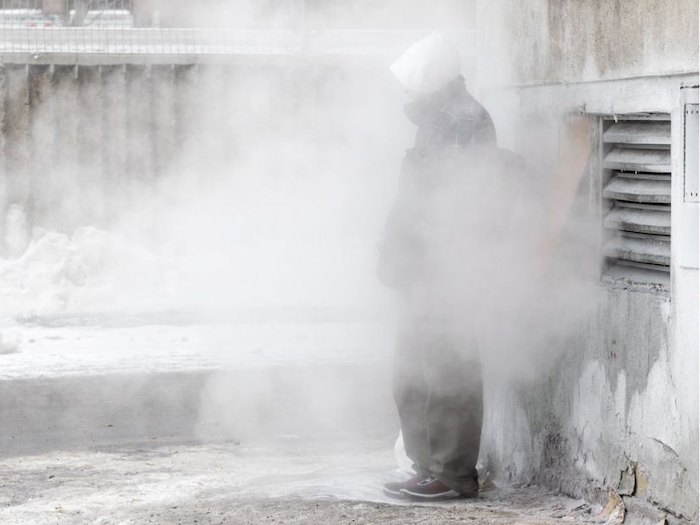
The month of November is often the time that Montreal gets painfully, unbearably cold. Suddenly, a five-minute walk to campus feels like a frigid expedition, a treacherous hike through white, icy streets. While this expedition may be momentarily uncomfortable to students, others call Montreal’s streets home throughout the winter.

Montreal’s homelessness crisis is multifaceted and there are thousands of Montrealers suffering insecure housing situations. Despite a 2015 report indicating that there were 3,000 to 3,500 homeless people in Montreal, the number might be significantly larger, as it fails to recognize the ‘hidden homeless’. The hidden homeless are those who temporarily have no fixed address and are potentially couchsurfing or living in their cars. These experiences are not always represented in official reports, impeding their ability to access the help that they require.

While some can’t access the help that they need, others can’t find the right kind of help. Meeting the needs of the homeless cannot accommodate a one-size-fits-all approach. Like everyone else, their hardships are heterogeneous and can’t be understood at a glance. While dealing with the gruelling hardships of hunger, cold, and uncertainty, Montreal’s homeless people also carry the weight of racial, gendered, ageist, and ableist discrimination. Likewise, homelessness and mental health have a nuanced relationship. With a reported 20–25 per cent of the Canadian homeless population suffering from severe mental illness, it is imperative to offer specialized support.

According to a paper published by Columbia University, having a stable and secure place to live is a key determinant of health. Mental health and homelessness cannot be addressed independently, as they are uniquely intertwined as both antecedents and consequences. Health problems associated with homelessness include chronic schizophrenia—which can impede one’s ability to cope with their external environment—malnutrition, hypothermia, and trauma resulting from assault and rape. By providing necessary and tailored help to Montreal’s homeless populations, the city can address the root of the problem.

As part of a three-year plan to aid the homeless, the Plante administration sought to introduce a 950 new housing units and a wet shelter, which offers refuge to alcoholics without prohibiting drinking. However, the plan hinges on the support of the new Coalition Avenir Québec government, which plans to cut taxes and government spending. This philosophy, however, will do little for the bracket of homeless who are unable to pay taxes.

The cost of inaction will be greater in the long run. By neglecting the underlying causes of homelessness, a significant number of people are being re-circulated through a variety of government-funded services without ever receiving the help they need.

Several avenues exist whereby students can offer their support to the homeless. Groups on campus like 5 Days for the Homeless, Health and Hygiene for the Homeless, and Monthly Dignity all raise awareness and offer meaningful support to those without access to housing. Monthly Dignity, for example, raises financial and material funds to supply feminine hygiene products to homeless women in Montreal.

Although many of us only call the city home for eight months of the year, students can play an active role in ensuring that more Montrealers have access to a home year-round. Homelessness may not be solved overnight, but through dedicated efforts, students can help mitigate its effects. Students can help the city focus on preventative measures that will not only provide a roof over their heads, but also create a foundation under the feet of the homeless and at-risk populations in Montreal.

Read the latest issue

Read the latest issue