


Latest News

Science & Technology

Tribune Tries: Visiting Montreal’s Biodome

Montreal’s Biodome is part of the Space for Life complex, a network that includes four other museums––the Biosphere, the Botanical Garden, the Insectarium, and the Rio Tinto Alcan Planetarium. The network aims to provide educational and research opportunities that prioritize sustainability and biodiversity protection. 

Researchers at the Biodome have access to a living laboratory, which acts as a hub for projects related to ecology, habitat protection, urban wildlife, and animal ethics. With five ecosystems under one roof, the centre boasts a collection of over 130 different animal and plant species. After paying a visit to the centre on a rainy day, The McGill Tribune has compiled a list of our favourite animals found in each ecosystem. 

Tropical rainforest – Capybara

Often found hanging around the rainforest’s bodies of water, the capybara spends its days munching on leaves, rolling in the dirt, or cooling off in the water. Capybaras can grow as large as 1.3 metres long and can weigh up to 68 kilograms, making them the largest rodents alive today. To communicate, these overgrown guinea pigs bark, whistle, and click, and can typically be found in groups of 20 with a large male at their helm. 

Fun fact: In the wild, capybara’s backs are prime real estate for birds hoping to hitch a ride or catch some rays. 

Laurentian maple forest – Canada lynx

One of Canada’s largest felines, the Canada lynx can be identified by its disproportionately large paws and black tufts of hair on its ears. As excellent climbers and jumpers, the lynx is often on the hunt for hares, of which they consume as many as 200 per year. Mostly found in Canada, Alaska, and the northern United States, they tend to spend most of their time alone, roaming four to 20 kilometres a day. 

Fun fact: The Canada lynx can jump as far as seven metres. 

Gulf of St. Lawrence – Moon jellyfish 

Made up of 98 per cent water, moon jellyfish are basically the celery of the sea. Much like anemone and coral, moon jellyfish use their tentacles (all 1,200 of them) to capture their prey. The nematocysts covering each tentacle release a stinger that injects a paralyzing agent into the plankton and larvae that make up their diet. 

Fun fact: Contrary to popular belief, peeing on a jellyfish sting will not actually make it feel better. 

Subantarctic Islands – Macaroni penguin 

These medium-sized, flightless arctic birds are recognizable by their yellow head tufts, similar to those of the rockhopper penguin, which you can also find at the Biodome. The most ecologically vulnerable species on this list, macaroni penguins have experienced a population decline ranging between 30 to 65 per cent over the past 30 years, depending on the study conducted. They only come onto land to moult and reproduce, spending most of their time in the sea, where they find their diet of krill, fish, and cephalopods. 

Fun fact: When colonizers first saw these penguins, they called them “macaronis” after the 18th century fashion trend referenced in the song “Yankee Doodle.” 

Labrador coast – Atlantic puffin

Atlantic puffins are easily identified by their matching orange beaks and feet. The small birds tend to nest around cliff sides when they aren’t looking for fish to eat. While they may have the macaroni penguin beat when it comes to their flying abilities, Atlantic puffins are hardly experts––to keep themselves in the air, they must flap their wings 300 to 400 times per minute. 
Fun fact: The Atlantic puffin can catch up to 60 fish in one dive.

Arts & Entertainment, Books, Pop Rhetoric

Albert Camus: A visionary of pandemic-era life?

Albert Camus’ 1947 novel The Plague masterfully portrays the death and suffering that a fictional bubonic plague brings to the people of Oran, an Algerian city under French colonial rule. The events take place over many months, with protagonist Dr. Rieux working to both physically and psychologically help others suffering from the plague. The novel has undergone a resurgence in popularity since the start of the COVID-19 pandemic, perhaps as it appropriately captures much of the public’s response to the pandemic over the past two years. Indeed, the novel’s emphasis on human resilience and the value of life are especially relevant in today’s social climate. 

Since the pandemic began, the global death toll has surpassed 6 million.

Much in the same way that we have watched the steadily rising figures released by the government, many people in Camus’ novel attach great significance to their government’s weekly release of health statistics. Though many newspapers have struggled to raise revenue, especially those that still print paper copies, general trust in the news has increased since 2020. Reports and information have clearly taken on a heightened importance, which reflects not only the pertinence of the time period, but also the significance we attach to the subject of the news itself—tragedy.

Outside of exploring the value of life, The Plague also focusses on Dr. Rieux, who grapples with the chaos of his situation. It is the human condition—namely, the desire for meaning in a meaningless world—that drives the oft-ineffectual fight against that which we cannot make sense of. For example, Rieux works day-in and day-out at quarantine facilities providing care, but most of the time his work is futile. Most people die from the sickness. Rieux, in sum, finds that “Weariness is a kind of madness. And there are times when the only feeling that I have is one of mad revolt.” Rieux’s exhaustion from fighting against the seemingly inexplicable is apt when reflecting upon both the pandemic’s early days, characterized by confusion and a global lack of knowledge, as well as its tiring, two-years-this-month perpetuation. As a beacon of hope, Camus’ plague eventually recedes after mass vaccination campaigns, however. 

Recently, Camus’ call to action and firm adherence to moral principles have been observed in contemporary movements. Though one fifth of health-care workers in the U.S. have left their jobs due to unsafe working conditions, many more stayed and tried to provide care to those who need it. To rectify these conditions, some nurses and workers have gone on strike and demanded more resources and staff necessary to properly handle cases. Across Europe, including places like France, health-care workers have done the same. The challenges of the pandemic have brought notice and resistance to the seemingly absurd conditions people have been living in, and Camus’ rebel has, in a sense, resembled aspects of those essential workers who, like Rieux, try to do the best they can with what they have been given.

Art often reflects reality, but for Camus’ novel, life almost seems to be imitating the book. In particular, Camus’ concludes that “in time[s] of pestilence […] there are more things to admire in men than to despise” and that humans should “go forward, groping our way through the darkness […] and try to do what good lay[s] in our power.” Society has responded in a similar way to Camus’s predictions: With the media’s continuous despondency, the resilience of essential workers, and most importantly everyday citizens’ searches for meaning in a hostile world. 

Rieux remarks that he shall “refuse to love a scheme of things in which children are put to torture,” and it is against the world that Rieux tries to realize his purpose as a doctor. Likewise, when we have been confronted with the suffering brought on by the pandemic, we have tried to fight against it to preserve the things we love. In Camus’ fiction, the plague slowly ends thanks to the diligence and realism of those who oppose its violence. Perhaps leaning into the same message, in addition to greater support for our health-care system and vaccine outreach, can help get us through COVID-19.

Arts & Entertainment

Soundtracks, Chinese queer culture, and Swedish news algorithms: McGill graduate students present their research

The Spring Student Speaker Series wrapped up with its recent March Session on March 17. Three graduate students in the Department of Art History & Communication Studies (AHCS) presented brief summaries of their research in Arts 260 as well as on Zoom. The hybrid event included a half-hour talk from each researcher, followed by a quick question and answer period after each presentation. 

Allyson Rogers, a doctoral candidate in communication studies, kicked off the event with a critical examination of the National Film Board (NFB) soundscapes in the post-WWII period. The NFB’s primary focus is slice-of-life Canadian documentaries, the soundtracks of which have a homogeneous nature that Rogers characterizes as a distinct “NFB Sound.” Rogers presented clips exemplifying this sonic trend, pointing to several key elements like small ensembles of woodwind instruments, multiple independent melodies, and an overarching tone of optimism. Such distinct sounds also correspond to Canadian political motivations, such as promoting Canadian pride and patriotism. The later half of the postwar period, specifically the 1950s and 1960s, saw a rise in stylistic changes and more adventurous musical interpretations. The different examples of the NFB sound teem with nostalgia for those who watched these documentaries during Canadian history education. 

Next up was Reina Yuan, a first-year master’s student in AHCS. Yuan’s research is centred on the queer counterpublic and the rise of alternative nightclubs in her hometown of Chengdu, China. Yuan aims to create a theoretical city map of queer spaces, focussing on several key locations and their connections through a framework inspired by Di Wang’s The Teahouse, which examines cultural changes throughout the city in 1900-1950 through the lens of teahouses. Yuan’s research seeks to use physical spaces in order to explore the political and youth culture of the city. In her presentation, Yuan discussed the Poly Center, a skyscraper with different nightclubs at almost every level. Yuan elaborated that she has seen the Poly Center in person in her visits to Chengdu every summer. 

“The thesis is a very personal project to me,” said Yuan during the discussion section following her presentation. “It’s part of the microhistory of my hometown.”

Torbjörn Rolandsson closed the event with a dive into the “News Value Project” in Sweden. He completed his PhD at Stockholm University and is now a graduate research trainee in ACHS. Rolandsson’s presentation explored the impacts of the Svergies Radio News Value System, a recent technological addition to the Swedish public service radio that helps categorize different news stories for output. The project rates stories through a three-tiered algorithm of importance, lifespan, and accordance with journalistic values, which strive for authentic and personal programming that includes unique voices. To make narration authentic and personal, an effect that can sometimes be aided by incorporating natural soundscapes, radio journalists often go beyond the studio into real environments to capture the unique ambience of the world. Although elements of theatricality still remain—Rolandsson shares an example of reporters hitting nearby water to record a splash—the radio soundscape attempts to foster a more connected engagement with the real world.

The speakers’ admirable ability to condense months or years of research into a half-hour presentation displayed their serious dedication to their studies. While each presentation was enlightening, the slideshows they had prepared only scratched the surface of the depths of their knowledge.

Out on the Town, Student Life

Having fun in Montreal without spending a penny

With spring fast approaching, many McGill students are braving the outdoors for the first time in months, finally getting the chance to explore the city. However, it can sometimes feel impossible to experience all that Montreal has to offer, with the costs of popular student activities like going to restaurants, cafes, and bars adding up before you know it. Luckily, The McGill Tribune’s suggestions will help you forge long-lasting spring memories in Montreal, without taking a hit to your bank account.

1. Check out a local museum

Montreal boasts 40 different museums, making it an ideal city for a museum tour. With attractions ranging from historical artifacts to modern art exhibits to scientific demos, there is a venue for all interests. Among these museums is the Musée des beaux-arts, located a mere 10-minute walk from McGill’s downtown campus in the Golden Square Mile. This renowned gallery features Quebec and Canadian art, international contemporary art, and even a sculpture garden. Students wanting to check out this attraction are in luck—the Musée des beaux-arts offers free admission to those 20 and under. If you are 21 or over, don’t worry—you can enjoy free admission on the first Sunday of every month at this artist’s paradise. Alternatively, Musée McCord, conveniently located across the street from McGill’s Royal Victoria College, includes exhibitions in Canada-based fashion, photography, and more. This student-friendly locale offers free admission on Wednesday evenings and on the first Sunday of every month.

2. Host a potluck picnic

For the foodie, planning a picnic is an ideal way to socialize with friends and indulge your taste buds in some new dishes this spring. And luckily, Montreal is the perfect city for a homemade picnic—just invite some friends and choose one of the city’s numerous parks as a destination! Perhaps the most popular picnicking spot in the city is Parc La Fontaine. This sprawling green space offers prime picnic real estate, with glowing lawns and tall trees that will shade you from the sun. If you’re looking to host your picnic closer to campus, try Parc Jeanne-Mance, or even Parc du Mont-Royal if you’re willing to brave the hike up the hill. To avoid depleting your budget, make your picnic a potluck. With each of your friends bringing a dish, you can each prevent additional trips to the grocery store and still enjoy a hearty meal. It’ll also be a great opportunity to try out a new recipe and impress your friends. 

3. Go on a walking tour of the city

Though often regarded as mere tourist attractions, walking tours of Montreal can be a great way to explore new parts of the city without spending a cent. Free Montreal Tours offers a walking tour of Old Montreal for people of all ages at absolutely no cost. Beginning at Metro Place d’Armes, this trek takes just over two hours to show participants attractions such as Place Jacques-Cartier, Notre-Dame de Bonsecours Chapel, and the Rue Saint-Jacques West, with stories and anecdotes from knowledgeable guides. Alternatively, you can try a free walking tour of Montreal’s Chinatown, starting at the Champ-de-Mars metro station. If you are looking for a more self-guided experience, try picking a new area of the city from a map and simply go explore it. Taking a walk in other neighbourhoods can help you get out of the student bubble while learning more about Montreal’s rich and diverse history. 

4. Visit a public library

While McLennan may have us all clasped firmly in its grip, challenge your friends to venture outside of their routines this spring by going to one of Montreal’s public libraries. The city is home to 45 library branches and holds upwards of four million books. Not only do these branches provide study materials, but they also offer great options for a light spring read, perfect to enjoy on a sunny day. In particular, La Grande Bibliothèque located between Quartier des Spectacles and Gay Village is embellished with glass walls and spiral staircases, making it a stunning backdrop for a quiet spring study session.

Campus Spotlight, Student Life

The show goes on: The McGill Savoy Society returns to live theatre after a two-year hiatus

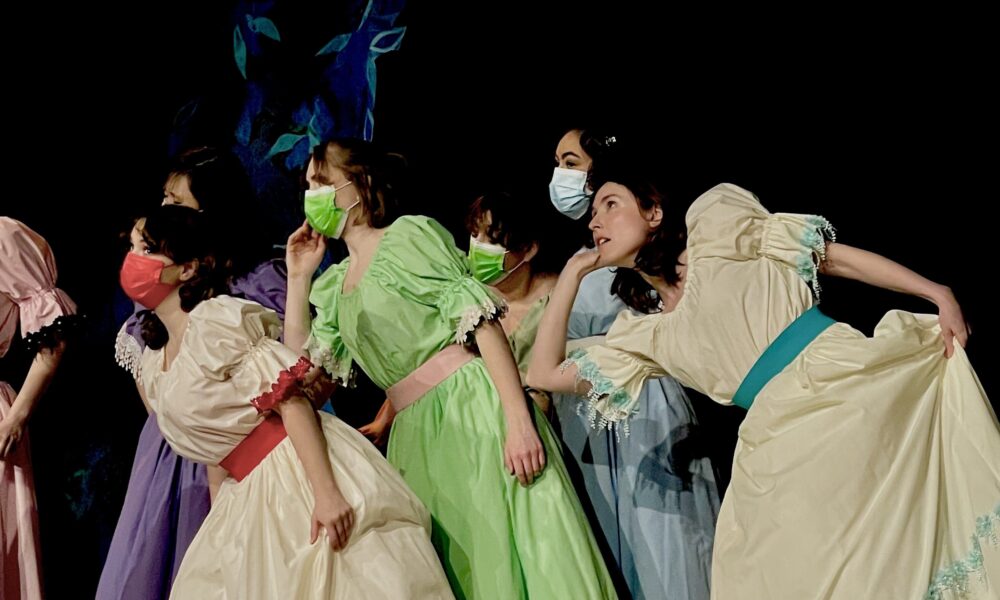
As Montreal loosens its restrictions, live theatre has regained its place as an integral part of campus life. In going to see the McGill Savoy Society’s wildly entertaining show, The Pirates of Penzance, I was reminded of what makes going to the theatre such a distinctive experience: The connection between performers and their audience, and the simple sense of camaraderie born from this shared experience. 

The McGill Savoy Society was able to cultivate exactly this energy. A Gilbert and Sullivan-focussed theatre troupe, Savoy performs operettas that fall somewhere on the spectrum between operas and musicals. This year’s annual mainstrage operetta, The Pirates of Penzance or, The Slave of Duty, is a comedy about a pirate apprentice, Frederic, who upon being released from indentureship, must navigate his exaggerated sense of duty to the pirate ship and his desire for love. 

During a particularly comedic set of hijinks, I took a look around the Vanier College auditorium, where The Pirates of Penzance was staged, and thought about how different theatre looks today. Half the cast, as well as all of the audience, were masked, and the audience was spread out across the auditorium. Facing a crowd again was an especially striking experience for the performers. 

“There was a two year hiatus for me, and being back on stage was quite surreal,” Alice Wu, U3 Arts and vice-president of Savoy, explained. “I had to remind myself to think of how poor your visibility of the audience is, or how it feels to be standing all hushed backstage, waiting for the curtain to part [….] Being back on stage was a gift.”

Even the venue, a CEGEP in the Saint-Laurent borough, was a world away from the troupe’s usual Moyse Hall Theatre on campus. 

“We had a week in the venue […] so that includes all the dress rehearsals and the shows,” Wu said. “We had to figure out spacing on the stage. It was just quite the time crunch, and it made everything more hectic than it probably needed to be most years.”

The important aspects, however, remained—people gathering together to laugh and enjoy the arts together. Lee Federle, U1 Arts, was happy that the venue was outside of her usual sphere. 

“It was nice to explore a new part of the city,” Federle said. “Sometimes first-year students, myself included, find it hard to leave the McGill bubble, and this was a fun way to do just that. I never would have thought to come to this neighbourhood, but it was an interesting experience nonetheless.” 

With many of McGill’s traditions and activities either cancelled or shifted to an unsatisfying Zoom format, it can be hard to feel connected to the university as a place for more than just academics.

“I didn’t really have a baseline to compare it to,” Federle said. “A lot of club meetings and events are online so it was just fun to experience an in-person show hosted by the school. I really try to look for things I can go to that aren’t virtual, and a hidden benefit to that is finding things that push me out of my comfort zone.” 

With the pandemic taking a hit to in-person gatherings, performing arts groups have become more invisible to students. Jacqueline Olechowski, U1 Arts and lover of performing arts, lamented the difficulties of finding shows like The Pirates of Penzance to go see.

“I find it hard to find out about events like these,” Olechowski said. “Now that I know about the McGill Savoy Society I will definitely try to see more of their shows and try to find other theatre groups to go watch. It was a fun way to spend a night!” 

The electricity of the performance was palpable not only for the audience, but also for the cast and crew themselves.

“As for the highlight of the production, I think it’s always got to be the camaraderie,” Wu said. “I love the people, and I love making the production possible and creating a space for us to make magic and memories together and to create something we’re really proud of.”

As the university tiptoes toward normalcy, supporting the performing arts is a great way to feel connected to the McGill community. 

Student Life

The process is the protest

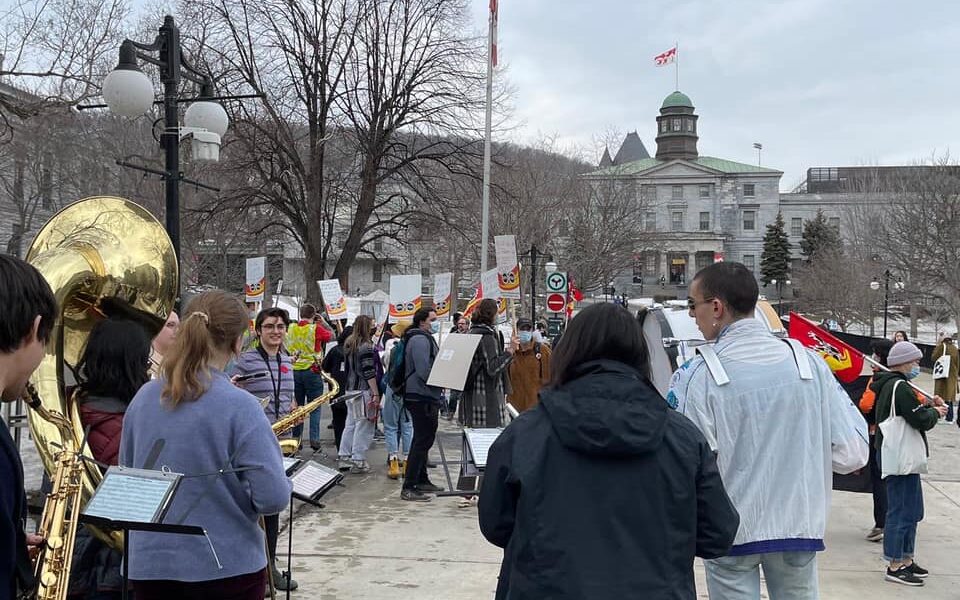
Between March 7 and March 18, organizers from Divest McGill occupied the McCall MacBain Arts Building to protest McGill’s multi-million dollar investments in the fossil fuel industry, calling on McGill to confront their complicity in settler-colonialism, white supremacy, and capitalism. 

Over the past two weeks, Divest not only called attention to its cause but also welcomed in students and passersby, regardless of their knowledge of the movement. The doors were open for anyone who was open to learning, wanted a bite to eat, or even needed a place to sleep. Through a variety of events such as communal meals, film screenings, reading circles, and conversations, Divest succeeded in transforming the first floor of Arts into a site of learning, protest, and care. In addition to the various events, members and organizers created a collaborative study zone for students, organized meals with food sourced from the community, and supplied a plethora of books and materials related to decolonization, racial justice, anarchist theory, and climate justice for individuals to browse.

The structure of the occupation itself was of great importance to the movement—creating a lasting community within the exploitative, institutional space is integral to Divest’s mission, explained U2 Divest McGill Member Dakota.* 

“[The movement is] not just trying to fight for democracy, but enact it,” Dakota said in an interview with The McGill Tribune.

With an emphasis on their non-hierarchical structure, members and organizers hoped to show those who passed by the occupation that the only way forward is together. 

For many, the first floor of the MacBain Arts Building during the occupation became a safe haven away from the often isolating feelings that often come with being a student at McGill. 

Due to the individualistic nature of academia where each student is responsible for their own learning and competition amongst peers is implicitly encouraged, the importance of community and forming meaningful connections is often overlooked. Members of Divest promote the idea that this structure is not sustainable, nor is it conducive to dismantling the oppressive systems that exist within academia. 

In contrast to the individualistic culture academia often fosters, Divest wanted to create a welcoming space for students, a goal that a U0 student, Jordan*, feels they achieved.

“I felt like regardless of my previous knowledge of the movement I was welcome here,” they said. 

Another U1 student agreed, describing the positive and constructive atmosphere in Arts.

“People were always so welcoming and passionate,” they explained. “The organizers and occupants were always inviting and encouraged me to learn more about their cause.”

This attention to community building was palpable among the members of Divest themselves.

“Divest has been a very important part of my time at McGill, and has offered me a sense of community even when I couldn’t find it anywhere else,” River,* a Divest organizer, said in an interview with the Tribune.

Emerson,* another Divest organizer, noted that the movement is meant to encourage a new way of living that values community care, inclusion, and equity. 

“The success of the occupation can be found in the relationships we’ve fostered and the connections we’ve formed,” Emerson told the Tribune. “Divest aims, through this occupation, to not only educate individuals on anti-colonialism, climate justice, and equity but also to encourage identification with one another.”

Organizers and members illustrate that community care itself is a protest. According to Emerson, this emphasis on non-transactional relations with each other is key in dismantling deep-rooted capitalist ideals that encourage hyperindividualism––and ultimately in working toward creating equitable spaces for all people.

The occupation came to an end on March 18 due to a positive case of COVID-19. However, Divest asserts that this is nowhere near the end of their work toward a better and more equitable world. In their Instagram post announcing the news, they expressed that although there “may not be tents in the arts building lobby tonight, nothing has ended. The community, energy, and power created in the last twelve days goes on.” 

*All names have been changed to preserve the organizers’ anonymity.

Science & Technology

The gendered accessibility problem with HPV vaccines

While COVID-19 vaccination continues to dominate public consciousness, the rate of vaccination for other diseases has decreased. In Canada, recent estimates show that up-to-date routine vaccine coverage was five per cent lower in children compared to the pre-pandemic rate. 

The fear of contracting COVID-19 at the doctor’s office is one likely cause for the decline of routine vaccination rates in Canada. Citizens in high-income countries, and those with universal health care such as Canada, enjoy the privilege of a government that has the means to vaccinate its people. But what happens when countries cannot afford to purchase enough vaccines for everyone? 

This is a question commonly asked in the context of human papillomavirus (HPV), the world’s most common sexually transmitted infection (STI). In an interview with The McGill Tribune, Eduardo Franco, chair of the Department of Oncology and professor in the Department of Epidemiology, Biostatistics and Occupational Health at McGill, explained that not all types of HPV are equally worrisome. 

“Some HPV types are commensal and don’t cause any disease or clinical manifestation,” Franco said. But: “There is a sub-genus that includes types that cause cancer.” 

He noted that one type, HPV 16, is responsible for almost half of all cervical cancers, while HPV 16 and HPV 18 cause nearly all anal cancers and also contribute to penile, vaginal, and oropharyngeal cancers. Although all HPV vaccines provide immunity against HPV 16 and HPV 18, some such as Gardasil 9 can help protect against nine types of HPV. However, the vaccine is only effective if the patient has not already contracted HPV.

“Once HPV is in the body, it wreaks havoc in the process of cell growth, and in turn causes cancer,” Franco said. “The vaccine will not eliminate [an] existing infection.”

In an effort to reduce the rates of cervical cancer, the World Health Organization called for a halt to gender-neutral vaccination in favour of female-only vaccination in 2019. The idea was that if low- and middle-income countries (LMICs) cannot afford to vaccinate all of their citizens against an STI, vaccinating only women should suffice. But this assumes heterosexual activity. Additionally, women in LMICs have a heavier HPV-associated disease burden compared to men, making them the more persuasive candidates for vaccination. 

To better understand the implications of gender-neutral vaccination versus female-only vaccination, Franco worked with lead authors Margaret Logel and Cassandra Laurie, as well as other collaborators, to conduct a literature review on the legal and ethical aspects of this debate.

“In general, women in low- and middle-income countries would benefit most from HPV vaccinations,” Laurie, an epidemiologist and alumna of McGill’s Division of Cancer Epidemiology, said. “In these countries, cervical cancer is one of the two most likely causes of death for women, the other being breast cancer.”

Unfortunately, female-only vaccination inherently excludes identities that are still vulnerable to HPV infection, as noted in the review. Men who have sex with men (MSM), as well as some transgender women, do not share any of the benefits of a female-only HPV vaccination policy, yet are still at risk for anal, penile, and oropharyngeal cancers.

This problem is not exclusive to LMICs either. While data is scarce, some estimates say only 13 per cent of MSM in the United States have received any doses of the HPV vaccine. 

Other benefits of gender-neutral vaccination include the shared social responsibility of HPV prevention among all genders, as well as increased awareness of HPV for everyone at risk. Laurie explains that a lack of awareness could contribute to MSM and transgender women being at higher risk of contracting HPV and developing HPV-associated cancers and lesions. 

“I think it’s important to note that whether governments implement female-only or gender-neutral vaccination, both have meritorious arguments,” Logel, a master’s student in McGill’s epidemiology program, said in an interview with the Tribune.

“I want to underscore that we wanted to capture the essence of the debate without capturing our own views on this,” Franco added. “We wanted to be as unbiased as we possibly could.” 

One glimmer of hope that could change the conversation entirely is emerging evidence that one dose of Cervarix, a vaccine already on the market, could be as effective as two or three doses, the standard for HPV vaccination. A one-dose schedule would relieve the pressure on LMICs to procure vaccines, as well as relieve policymakers from having to choose between female-only or gender-neutral vaccines. 


To get your HPV vaccine, visit your local CLSC, contact your family physician, or book an appointment with McGill’s Student Wellness Hub. Eligibility requirements for free-of-charge HPV vaccinations can be found here.

A previous version of this article incorrectly wrote the “Department of Epidemiology and Biostatistics.” In fact, the full name of the Department is the “Department of the Epidemiology, Biostatistics and Occupational Health.” The Tribune regrets the error.

McGill, News, SSMU

Risann Wright elected as 2022-2023 SSMU President

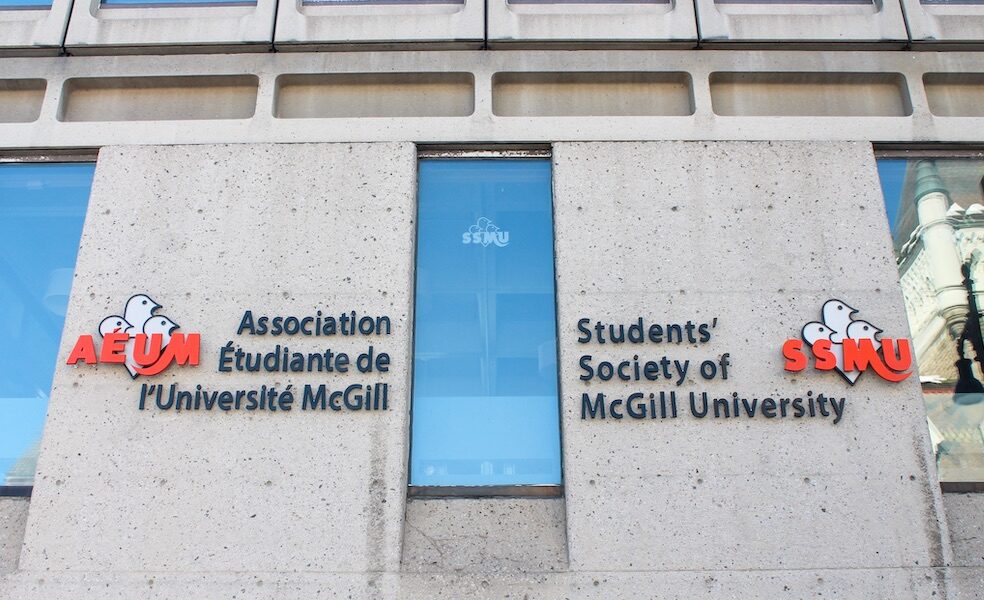
The 2022-2023 Students’ Society of McGill University (SSMU) executive team was announced on March 18 after a five-day voting period that saw the lowest voter turnout of the past decade. Only 12.9 per cent of the undergraduates cast their ballots this year. Risann Wright, U3 Arts, clinched the SSMU presidency with 51.9 per cent of the vote, beating opponents Bryan Buraga, U4 Arts and Science, and Julian Guidote, 1L. 

With 61.1 per cent of the vote, Hassanatou Koulibaly, U2 Arts and Science, was elected vice-president (VP) Student Life against Olivia Bornyi, U1 Arts. After five rounds of preferential voting, Catherine Williams, U3 Arts, won the VP Internal position over Jaz Kaur, U2 Arts, and Ananya Seth, U1 Arts. 

The rest of the executive team, all of whom ran uncontested, comprises Kerry Yang, U3 Science, as VP University Affairs (UA), Val Mansy, U3 Science, as VP External, and Marco Pizarro, U3 Science, as VP Finance. 

In an interview with The McGill Tribune, Wright affirmed that her priorities as SSMU president are to push for “systemic change” in the society, which would include reforming Human Resources and creating an Equity, Diversity, and Inclusion committee.

“The environment that I hope to create at the SSMU is one that is first and foremost professional, that is collaborative, and one that, should conflicts arise, [has] a very clear process to swiftly and effectively deal with them,” Wright said. “I can’t tell you that no conflict is ever going to happen or there are going to be no disagreements, but I can tell you that I can make every effort to have a safe environment and a structured process to deal with it so that it does not go to the sizes we have seen or overshadow work.” 

Wright plans to work with the rest of the executive team to improve student engagement in the SSMU, emphasizing the importance of getting immediate resources to students, such as stipends for wifi modems and access to COVID-19 rapid tests. 

“Students have every reason at this point to be disenchanted with the SSMU,” Wright said. “The way that we can improve engagement and improve voter turnout is by showing students that it is important, that [the SSMU] does impact you [….] We can improve confidence in the SSMU by genuinely and directly helping students, by allowing them to see that there are leaders, there are executive teams that are transparent, that are going to be held accountable, and that will own up to what they say they are going to do, which I have every intention of doing.”

VP Internal Williams referred to her status as a newcomer to the society, and discussed her focus on having better communication with students. 

“I understand being a student and feeling left in the dark, you see all these things happening, but no one is telling you anything about it,” Williams said in an interview with The McGill Tribune. “I completely get the frustration of a lack of transparency. My aim is to be as transparent as possible.”

In an interview with the Tribune, Yang cited the importance of centring students for a democratic student society. 

“This is going to be my fifth year at McGill and I have seen four SSMU exec teams all from varying levels, and I understand what a good SSMU team looks like and what a bad one looks like,” Yang said. “It is being humble and being people-centric and student-centric, because at the end of the day [being a SSMU executive] is about making every student’s experience the best it can be.”

The SSMU Winter 2022 Referendum results were released later on March 21 to account for an extended voting period after the Palestinian Solidarity Policy was removed from the ballot following an order from the SSMU Judicial Board. The Referendum ballot was rerun and the Policy passed with 71.1 per cent of the vote in favour. 

Other motions that passed included the creation of Dialogue telemedicine service fee, the creation of the MUSTBUS fee, the creation of the Student Support fee, and the creation of a Black Affairs fee levy. The proposals to increase the SSMU membership fee and to create aFrench Accessibility Fee did not pass.

Hockey, Martlets, Sports

Stymied by Concordia Stingers, Martlets hockey falls short of RSEQ title

Delayed by a week due to COVID-19 protocols, game one for the Martlets hockey team (12-3-0) versus the Concordia Stingers (11-3-1) best-of-three playoff series took place on March 17. Throughout the season, McGill worked hard to earn their spot in the RSEQ finals. Though the team fought tooth and nail, they ultimately fell just short of the championship title, losing their first game 3-0 and their second 4-1. 

Though the Martlets couldn’t clinch this series, fifth-year forward Stephanie Desjardins emphasized that this does not hinder the girls’ end goal. 

“Obviously it was not the result we wanted,” Desjardins said. “But we still have a shot at our ultimate goal which is the national championship. The games were good [to] prepare for next week.”

McGill played Thursday night’s home game to a packed arena, with fans from both schools cheering loud and hard. Both Martlets and Stingers glided onto the ice with a powerful demeanour—ready, willing, and able to go to all lengths to secure the win. However, within the first five minutes of the period, Rosalie Begin-Cyr from the Stingers scored a swift goal to put the Stingers on the board. 

The Martlets tried to get past the Stingers’ wicked fast defence, with forward Katie Rankin attempting several shots on goal, but to no avail—the Concordia skaters were just too fast. They frequently intercepted McGill’s long passes, leaving no Martlet unguarded. Yet, goalie Tricia Deguire let no pucks through for the rest of the period, leaving the first frame of the game at 1-0 for Concordia.

During the second period, the Stingers left the Martlets’ defence scrambling. Even as their main tactic became to keep the puck away from the net, the Martlets’ offensive shots often took too long to set up, resulting in an impenetrable fortress forming around the Stingers’ goalie, Alice Philbert, and the shots inevitably being blocked. 

Things got bleaker for McGill fans when the Stingers scored another two goals, putting the Martlets at a three-point deficit. The third period saw little change in either teams’ strategies, and the first game closed off with a loss for McGill. 

Both teams returned refreshed on Friday, ready for the second game, with McGill hoping to push the series to a tie-breaker. Alas, the Martlets had a disheartening start, with the Stingers up 2-0 in the first period. Though their aggression increased in the second half of the game, McGill needed to step up and throw shots at goal, but their energy could not drive the team all the way to the net. With a goal from team captain Jade Downie-Landry, the score was briefly 2-1 for Concordia. However, with 7.8 seconds left in the second period, the Stingers scored again, followed later by a final open net goal after McGill pulled goalie Deguire off the ice, closing the series with another loss for McGill, 4-1. 

Marika Labrecque, a fifth-year centre on the team, shared Desjardins’ sentiments about the national championships, remaining proud of her team while recognizing what held them back. 

“Our first game was a bit more difficult and we knew that we would have to do better, especially shooting more,” Labrecque said. “We gave everything we got for this game. The intensity was there, but we didn’t capitalize when we had the opportunity.”

Despite this loss, the Martlets advance to the Final 8 tournament in Prince Edward Island, set to begin March 24.

Moment of the game: Reignited after a goal from the Stingers, goalie Tricia Deguire did not let in another goal for the rest of the game, saving five shots in a row even as the opponents’ offence continued to push forward.

Quotable: “I’m proud of how far we have come this season and still more to come. I feel as though we came together as a team and played a great game. Although we didn’t get the outcome we wanted, it was a hard fought battle. Tricia had two amazing games, which really held us in there.” – Third-year forward Makenzie McCallum
Stat Corner: Martlets goalie Tricia Deguire made 39 saves during the first game, and 32 during the second, putting her total number of saves at 11th-best in the USports Association.

McGill, News

McGill floor fellows go on strike, demand new Collective Agreement

On March 17, by way of a town crier, the Association of McGill University Support Employees (AMUSE) announced that floor fellows—upper-year students living and working in residences to provide support to first-year students—will be on strike as of March 18 at noon. The floor fellows’ last Collective Agreement (CA) with McGill expired in July 2020 and is still undergoing negotiations. Though AMUSE chose to go on strike after McGill reduced their wage offer from $13.64 to $13.50, there are other core tenets that they are pushing for, including updating the meal plan amount and implementing retroactive pay. For now, no end to the strike has been announced, with the main goals of the action being getting the McGill Administration to acknowledge AMUSE’s demands, such as $18.00 for the floor fellows’ wage, and ultimately arrive at an agreement on the terms of the new CA.

The strike began with a march from Jeanne Mance park to the Roddick Gates on March 18. AMUSE also hosted a cookout on March 19, where, according to Joanna,* a floor fellow in an upper residence, floor fellows gave out free samosas to students outside of the McLennan Library. Since July 2020, floor fellows and AMUSE have pushed for the inclusion of harm reduction and anti-oppression policies, and have also demanded that their wage and meal plans be adjusted to the rising costs of living in Canada. Floor fellows currently follow the terms of the expired CA, which means that their wages have been stagnant at the 2020 rate for 18 months now.

“De facto, we have been operating on the same collective agreement pending the signing of a new one. One consequence of this is that meal plan rates and wages have been frozen since then,” said James Newman, MA ‘20 and president of AMUSE, in an interview with The McGill Tribune. “If we sign a collective agreement that includes the retro[active] pay we insist upon, wage increases will be paid out to employees in a lump sum retroactive to the last collective agreement.” 

Newman told the Tribune that the strike’s primary action was to have floor fellows not enter residences, and perhaps stay in a hotel, from March 18 at noon until March 21—a measure funded by the Public Service Alliance of Canada, AMUSE’s parent union. In doing so, floor fellows did not cross the picket line nor did they perform their regular duties during the strike.

Because floor fellows are bound by an expired CA, they are currently receiving minimum wage for no more than 13 hours a week. According to Newman, floor fellows often work overtime, sometimes up to 30 hours a week, but will still only be paid for 13 hours. Floor fellows are often expected to respond to student crises, build a community within residences, and serve as role models to younger students. It was the lack of compensation for work, according to Newman, that primarily led to the 84 per cent vote in favour of a strike authorization on March 7. 

“[The McGill administration] have been quite clear about their disdain for the idea that floor fellows deserve anything beyond the upcoming provincial minimum wage,” Newman said. “What they have thus far failed to communicate clearly is why so many floor fellows have received net-zero pay stubs, when we can expect them to come to us with a fair deal.” 

According to Joanna, having an expired CA means that floor fellows face situations that fall beyond the scope of their mandate—like having to mitigate drug use despite receiving no training in harm reduction practices. Hazard pay, too, is a major demand AMUSE is pushing for. 

“We really hope that McGill will meet some of our demands,” Joanna said. “We believe what we are asking for is fair. We would like enough meal plan money to cover three meals per day at dining halls [….] We would also like to get hazard pay for 2020-2021 because we were working at the height of COVID.”

In an email to the Tribune, McGill media relations officer Frédérique Mazerolle stated that McGill is working alongside AMUSE and floor fellows in order to find a solution, and that some agreement has already been reached.

“McGill has been in discussion with the union for several months. Both parties have come to [an] agreement on all non-monetary elements within the collective agreement,” Mazerolle wrote. “Further meetings are planned with the union in the coming days. It is our hope we will reach a fruitful agreement rapidly.”

*Joanna’s name has been changed to preserve their anonymity.

Read the latest issue

Read the latest issue