Read the latest issue online


Latest News

McGill, Montreal, News

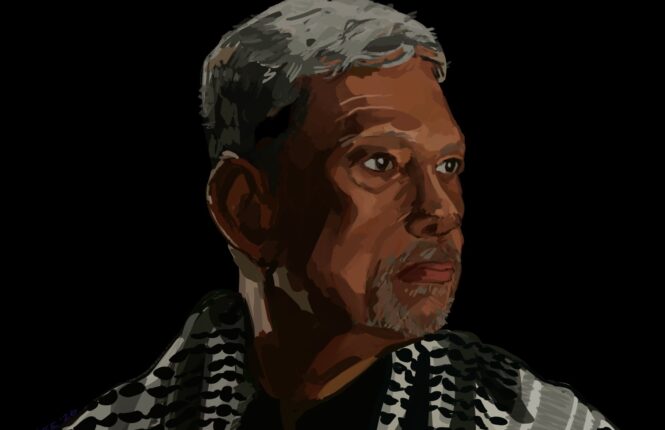
A conversation with Ehab Lotayef: A lifelong voyage to the conscience of humanity

On May 14, 429 activists carrying more than 11,000 kilograms of humanitarian aid set sail to Gaza from Marmaris, Türkiye, to protest against Israel’s blockade of the Gaza Strip and ongoing genocide of Palestinians. Two Palestinian solidarity activist coalitions—the Global Sumud Flotilla (GSF) and the Freedom Flotilla Coalition (FFC)—organized this mission in tandem; the sailing activists represented the largest-ever civilian-led maritime mobilisation project in support of Palestine.

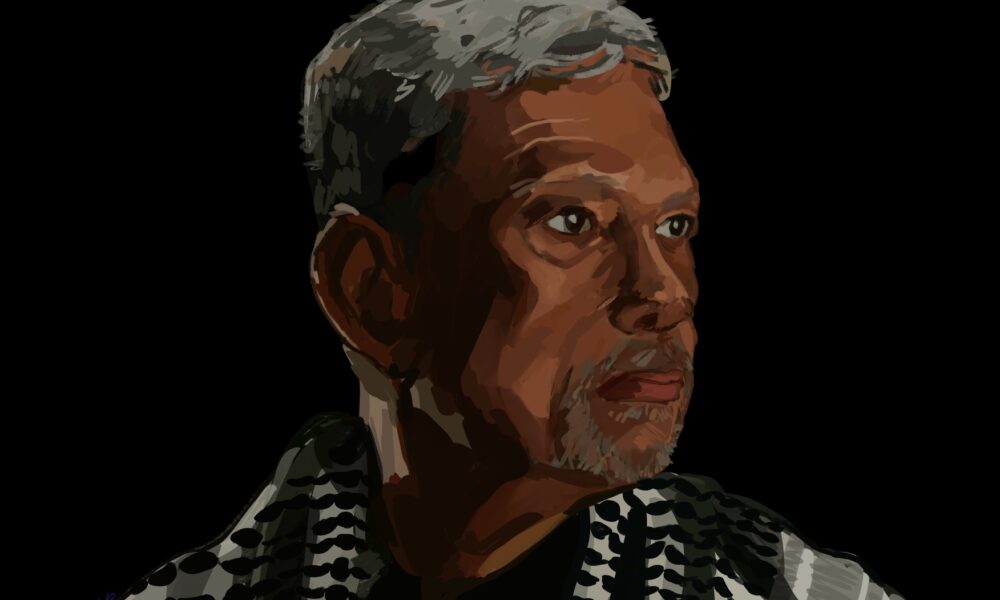
On May 18, the Israel Defense Forces (IDF) raided over 50 boats from the GSF-FFC fleet in international waters and detained all of the activists aboard, transferring them to Israeli naval vessels containing makeshift prisons constructed from barbed wire and metal shipping containers. Detained activists have since testified against the IDF, speaking to the brutal acts of physical, sexual, and psychological torture the IDF inflicted during this period—abuse that continued until Israel deported the activists on May 21. Among these activists was Ehab Lotayef: FFC organizer, local Montreal activist, poet, and IT and Technical Services manager at McGill University.

Lotayef was born in Cairo, Egypt, and moved to Montreal in 1989. Throughout his career in activism, Lotayef’s work has spanned international, national, and local fronts. Alongside his advocacy for Palestinian rights, he has campaigned against the 2003 Iraq war, served on the boards of the Muslim Council of Montreal and the Egyptian Canadian Coalition for Democracy, and organized locally against Bill 21, a 2019 Quebec law that prohibits public-sector workers from wearing visible religious symbols while on the job, among a myriad of other causes. In honour of his late mother, Lotayef also founded the Dr. Fatma Amer Educational Charity, which seeks to provide financial support to women and girls completing higher education in Egypt. In an interview with The Tribune, Lotayef shed light on the roots of this decades-long, intersectional advocacy.

“My involvement in activism has always been related to my late mother, who herself was a trailblazer in her own way,” he shared. “She was one of the [first] women in Egypt to get a PhD from England [….] She was somebody who didn’t accept injustice […] [and raised] me as a single mother with this strict moral code, […] so I cannot look the other way when I see [injustice].”

Lotayef first became involved in flotilla missions to Gaza in 2010, following the IDF’s raid of Mavi Marmara, the lead flotilla vessel in the 600-person Gaza Freedom Flotilla mission. During the raid, Israeli soldiers killed nine civilian activists and injured over 50 more. In response, Lotayef and 25 other Canadian activists founded the Canadian Boat to Gaza (CBG), a national division of the FFC. The CBG has since taken part in over 10 humanitarian missions to Gaza, including the May 2026 flotilla. According to Lotayef, the purpose of such voyages to Gaza lies far beyond the cargo the fleet transports.

“If all the boats that attempted to break [Israel’s] blockade since 2008 till today were filled to the brim [with aid] to the point where they risk sinking due to the load on them, […] they would [still] not be [carrying] enough [to support] the people of Gaza for even a day,” he said. “Our destination on the map may be Gaza, but our real destination is the conscience of humanity.”

Lotayef further noted that flotilla missions to Gaza do not occur spontaneously, but rather require months of research and training. In the days leading up to the May 14 mission he participated in, legal experts convened for the Civilian Resistance Against Genocide: Global Sumud Flotilla and International Law conference to finalize a global accountability strategy in response to Israel’s prior attack on the April 2026 GSF mission. GSF and FFC organizers also distributed updated risk and impact assessments to all flotilla participants, and participants convened for a general assembly for final discussions regarding risk, strategy, and feasibility. The GSF website described the mission as a “moving body of law.”

Lotayef recounted the extensive preparations that individuals involved in a flotilla mission to Gaza must undergo before ever boarding a boat.

“We have a participant committee that interviews people that are interested [in joining], social workers [who] screen people to make sure they are suitable for such a mission,” he stated. “Preparation [for] Israeli attack, confrontation, and imprisonment also [happen] again and again in different forms during different phases of the mission, some theoretical, some practical role-playing.”

Lotayef highlighted the scale of international coordination the mission required, with activists from over 40 countries working together to break Israel’s blockade of Gaza.  

 “Anybody who works in activism knows that one activist group has 10 opinions [within it]. 15 [international] campaigns […] worked together [on the latest flotilla mission to Gaza], and that was a success in itself [….] They put their differences aside and united on one goal, pooling their meagre resources,” he said. “It’s a very big collective action, and that is one of the things that I personally am very proud to be a part of.”

Lotayef’s voyage on a vessel named ‘PERSEVERANCE’ was his third flotilla mission since 2010 and his second time being captured by Israeli forces. He underscored that the IDF inflicted violence on this latest mission at levels incomparable to its prior aggression against activists.

“In our worst expectations, we did not expect Israel to be as violent and intentionally harmful to us as it was in this May [2026] flotilla,” Lotayef stated. “[Activists showed] no physical resistance, even when [Israeli soldiers] were taking us from our own vessels in international waters. The hurt, the harm, the physical torture, the psychological torture, the starving of [activists], subjecting [activists] to cold and heat, […] the sexual abuse […] all that was done [by Israel] for one reason, to punish us and teach us a lesson.”

Lotayef recounted how an IDF soldier stabbed him in the hand as he attempted to distribute water and assist a fellow activist on the verge of losing consciousness. 

“One person was collapsing, and I realized that he had his heart medicine in his pocket, but he was so weak that he could not put his hand in his pocket to get it out, so he asked me to do that,” he said. “I [had some] freedom of movement, so I used it to help people in whatever way I [could]. When I got my hand slashed, I did not regret it for a second. That I could’ve avoided that […] didn’t even cross my mind.”

Lotayef maintained that despite IDF-inflicted violence against activists, the focus must remain on Palestinian suffering under Israel’s genocide.

“If the price of what we have gone through is getting back some Palestinian rights that have been ignored and denied for decades, I think we’re all very happy to pay that price,” he said. “If we’re serious about human rights, we need to do more, as a country, on the Palestinian file. It is not because a group of Canadians were subjected to [torture]. We do not want to be the story. Our story is the story of the Palestinian suffering, and that’s what we want the attention to be directed to.”

On May 20, prior to Israel’s deportation of the flotilla participants, Israeli National Security Minister Itamar Ben-Gvir released a video in which he personally mocked and abused handcuffed flotilla detainees. According to Lotayef, Prime Minister Mark Carney not only neglected to adequately condemn this public torture of civilian activists; he also failed to intervene to prevent further abuse following Ben-Gvir’s post.

“Canada failed us. I […] say that without hesitation,” Lotayef stated. “What happened to us was known to Canada and to other Western countries while it was happening. It is not that we told [our] stories after we were released [….] Itamar Ben-Gvir released [the video] himself […] during the time we were being subjected to the worst torture [….] Other countries like Australia, Spain, and Ireland [are] speaking much more strongly about what’s happened, […] but we are still screaming […] to get a meeting with [Canada’s] Prime Minister or Minister of Foreign Affairs.”

Although flotilla organizing remains a defining part of Lotayef’s advocacy for Palestinian liberation, he argued that meaningful change depends on a diversity of activism tactics and consistent engagement, rather than on a single form of resistance.

“I hate it very much when people say that any particular form of activism is the [only] right way to fight for justice for Palestinians, or for the Palestinian cause,” he explained. “There is not [only] one way to achieve results. [Results are] an accumulation of different ways of action [….] I don’t belittle any kind of work […] [and] this is something that is absent in many activist circles [….] The important thing is not to withdraw from the justice scene altogether.”

Lotayef’s activism also extended to his time at McGill. In 2021, Lotayef resigned from his role as a member of McGill’s Board of Governors (BoG) after three years of service. He cited the BoG’s decision not to table a motion that would mandate McGill to display a statement acknowledging the university’s ties to colonialism and enslavement and expressing a commitment to equity as his reason for resigning. 

According to Lotayef, the BoG failed to follow its own democratic protocol—an issue he still observes at McGill in the form of administrative misconduct.

“I couldn’t live with myself staying on the Board,” he said. “We’ve […] seen, many times, the [Students’ Society of McGill University] being threatened by [McGill] cancelling or putting on hold [their shared] Memorandum of Agreement [….] McGill uses any tools at their disposal to […] keep [the university] as this conservative bastion of old-school ways of thinking and doing things.”

In a written statement to The Tribune, a spokesperson from the McGill Media Relations Office (MRO) stated that the BoG did not bring forward the motion regarding the statement because it had not undergone the proper review process, rather than for a content-related reason.

“McGill University recognizes that the wealth leading to its establishment was derived, in part, from James McGill’s engagement in the colonial economic system and the transatlantic slave trade […] [and] is proud to welcome exceptional students, faculty, and staff of all identities, beliefs, and origins,” the MRO wrote. “The University thanks Mr. Lotayef for his work on the Board of Governors and for his continued contributions to [the McGill] community.”

Alongside his formal experience in activist organizing, Lotayef has also practiced art as a mechanism of advocacy. He described how his poetry and lyricism were key to maintaining morale throughout the May 2026 flotilla mission.

“When I was on the boat, and we were sailing, […] my art saved me,” he shared. “I wrote, ‘Do you sail to free Palestine or sail to free yourself? You sail to break a siege while under siege yourself.’ It was a saviour for me. Maybe I would have been disillusioned [if] I wouldn’t have expressed myself in that song.”

For Lotayef, this recent journey to Gaza reaffirmed a lesson learned over decades of activism: Despite reprisal and regardless of potential shifts in the form of resistance, persistence will remain so long as Israel’s siege on Gaza continues.

“Many incidents during those three days [in Israeli detainment] have shown me how weak the powerful can be and how strong the determined person can be,” he stated. “After years of self-disciplining and focus, […] I have managed to [be at] total, internal peace, [knowing] that whatever [the IDF] does to my body is not going to reach my soul, my mind.”

Behind the Bench, Soccer, Sports

The Balogun scandal is just the latest instance of FIFA’s political pandering

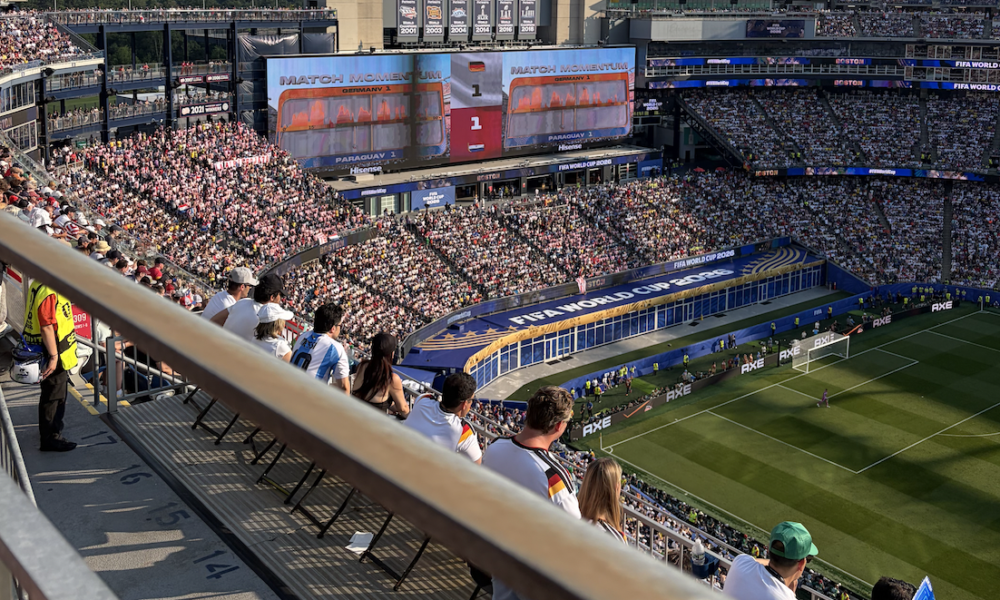
On July 2, Folarin Balogun, star forward for the United States Men’s National Team (USMNT), received a straight red card in the 64th minute of the USA vs. Bosnia and Herzegovina Round of 32 match in the Fédération Internationale de Football Association (FIFA) World Cup 2026. Balogun stepped on Bosnia and Herzegovina defender Tarik Muharemović’s ankle, leading to the automatic consequence of a red card under the FIFA Disciplinary Code (FDC): A one-game suspension. The FIFA Disciplinary Committee also issued Balogun a $40,000 USD fine, as the player ignored the conditions of his red card when he joined his team’s post-game victory celebration on the pitch.

However, just hours after the match, U.S. President Donald Trump contacted FIFA president Gianni Infantino, demanding the association revoke Balogun’s suspension. Three days later, the FIFA Disciplinary Committee invoked Article 27 of the FDC, deferring Balogun’s one-game suspension by a year-long probationary period to exceptionally allow the USMNT’s leading player to compete in the USA vs. Belgium Round of 16 match. FIFA’s decision was met with significant global backlash, with the Union of European Football Associations  and the Royal Belgian Football Association issuing public statements questioning whether the federation was upholding its duty to impartially administer the World Cup tournament. 

Although FIFA insists the Balogun decision is in line with FDC protocol, FIFA has not postponed a World Cup red card suspension since Manoel Francisco dos Santos—famously known as Garrincha—earned a red card in 1962. This was another incident where extensive lobbying by the politically powerful enabled a beloved, penalized player to compete. 

Political interference in the federation’s operations has taken more ideologically charged forms too: During the 1934 World Cup in Italy, former Italian prime minister Benito Mussolini routinely dined with referees and officials the night before crucial matches for his country, including before Italy’s victory in the World Cup final. Mussolini also used the tournament as a stage from which to propagandize fascist Italy. Clearly, pressure from world leaders, whether due to love for a star player or ideological ambition, routinely coincides with a lack of adherence to the FDC—Trump seems to be an example of both.

Despite frequently capitulating to unequal global power politics, FIFA has positioned soccer—and, by extension, itself—as a force for unity, dialogue, and peace. In February, FIFA announced a $75 million USD collaboration with Trump’s Board of Peace, a transnational political organization seeking to make progress toward peace in the Middle East—notably, with minimal substantive Palestinian representation. FIFA has described its role in the Board of Peace project as “harnessing the power of football to support recovery, stability, and long-term development” in Gaza by aiming to construct 50 mini-pitches, five full-size pitches, a FIFA Academy, and a 20,000-seat national stadium in the region. 

This act of sportswashing is a blatant attempt to distract from the United States’ complicity in Israel’s genocide in Gaza. The FIFA-Board-of-Peace collaboration joins countless “infrastructural” initiatives spearheaded by Trump, including his vision of the Gaza Strip as a beach-front investment hub and travel destination. Infantino is equally complicit, basking in the importance vested in his organization’s sport through collaboration with the Board of Peace.

In June, Infantino proposed a symbolic Israel-Palestine soccer match to serve as the opener for FIFA’s newly-instituted under-15s soccer festival, positioning the sport as the peacemaking solution to the decades-long, intractable divide between the nations. This proposal perversely calls on Palestinian athletes to play against their colonial oppressor and genocidaire, and completely disregards Israel’s systematic targeting of Palestinian athletes and sports infrastructure. Since October 7, 2023, Israel’s genocide has killed 1,012 Palestinian athletes and destroyed 285 sports facilities in the Gaza Strip.

When a world leader can decide the verdict of a soccer match, the FIFA World Cup becomes nothing more than an extension of realpolitik, paradoxically surrendering to the powerful while casting the sport of soccer as the idealized, apolitical peace broker. The Balogun incident is a mere reminder that FIFA must finally decide if it will remain a political pawn or a genuine sports association.

Behind the Bench, Soccer, Sports

Lumumba’s legacy on football’s biggest stage: How one fan utilized FIFA’s fandom to remember a martyr of colonial violence

For the last month, the 2026 Fédération Internationale de Football Association (FIFA) World Cup has produced beautiful stories, displayed tremendous underdog wins, and brought together fans from all corners of our vast planet: right here in Canada, as well as in the United States and Mexico. FIFA goes beyond simply a football tournament, as fans from various competing nations have used the FIFA stage to reflect their underrepresented histories. Michel Kuka Mboladinga—a superfan from the Democratic Republic of the Congo (DRC)—gained global attention for his statue-like act in which he stood motionless behind the DRC team bench as they competed at the World Cup.

Known by many as Lumumba Vea, translating to “Lumumba Lives,” Mboladinga’s statue pose impersonates Patrice Lumumba, the DRC’s first prime minister. Patrice Lumumba was an active voice opposing Belgium’s colonization of Congo. He denounced the terror colonialism caused on many occasions during his time in office.

In 1885, Belgium’s King Leopold II seized the land presently considered to be the DRC from the Congolese people. From this period onward, King Leopold II and his administration exploited, violently attacked, and discriminated against the Congolese people through means of forced labour, disease, and famine, indelibly scarring the DRC’s societal dynamics.

During DRC’s Independence ceremonies of 1960, Lumumba gave a fiery speech that ignited a spirit in Congolese society to violently challenge their colonial oppressors. His words were so impactful that Belgian administrators and civilians fled the country, sending in paratroopers to reestablish rule. On January 17, 1961, just months into his term, Lumumba was murdered by a firing squad backed by Belgium and their allies, including the United States. Lumumba’s murder sparked global outcry, establishing him as a martyr against colonialism and Western imperialism.

A longtime supporter of the DRC national football team, Mboladinga first gained attention for his Lumumba impersonation at the 2025 football tournament African Cup of Nations. This summer, as DRC returned to the World Cup for the first time in 52 years, Mboladinga took the opportunity to highlight Lumumba’s legacy on soccer’s biggest stage. He was even included in the official delegation for the nation by President Félix Tshisekedi

Mbolandinga’s act serves not only as a remembrance of Lumumba, but also as a reclamation of Congolese pride following the country’s last World Cup appearance in 1974. In 1965, four years after Lumumba’s death, Mobutu Sese Seko obtained power in a coup, leading a horrific dictatorship in the DRC and renaming the nation Zaire—which the nation competed under at the World Cup. Hence, Lumumba Vea is also a tribute to a nation that continues to reclaim its Congolese identity after decades of terror. 

Mboladinga has received a substantial amount of love and support for his performance, though that did not prevent him from facing roadblocks in attending the World Cup. While on his way to Mexico to support the DRC in their first match against Portugal, Mboladinga was forced into quarantine due to the DRC’s recent Ebola outbreak. Further, he was denied a United States visa to enter and support the team in Atlanta against Uzbekistan. This also left him unable to attend the DRC’s knockout stage match versus England.

Despite nonstop obstacles, players, fans, and the media were able to see Mboladinga behind the DRC bench during the team’s 1-0 loss versus Colombia in Guadalajara, Mexico. Standing on his pedestal in a vibrant yellow, blue, and red suit—the colors of his nation—Mboladinga finally completed his goal of bringing Lumumba’s legacy to the World Cup.

What Mboladinga represents extends far beyond football: He embodies Lumumba’s role as a symbol of Congolese pride, while also shedding light on the lengths to which colonial powers went in an attempt to silence him. Now more than ever, the unique global stage of the World Cup serves as a space for sociopolitical discourse for fans and players alike. As viewers, we must educate ourselves on the histories that shape our beloved sport.

Student Life

Ask the Trib: How do I survive summer in my hometown?

Dear Tribune,

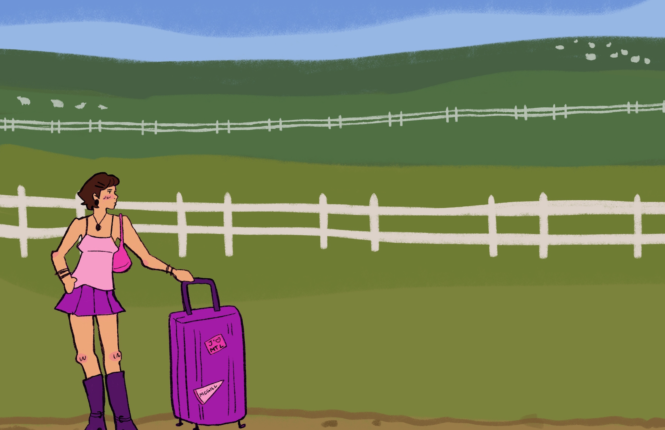
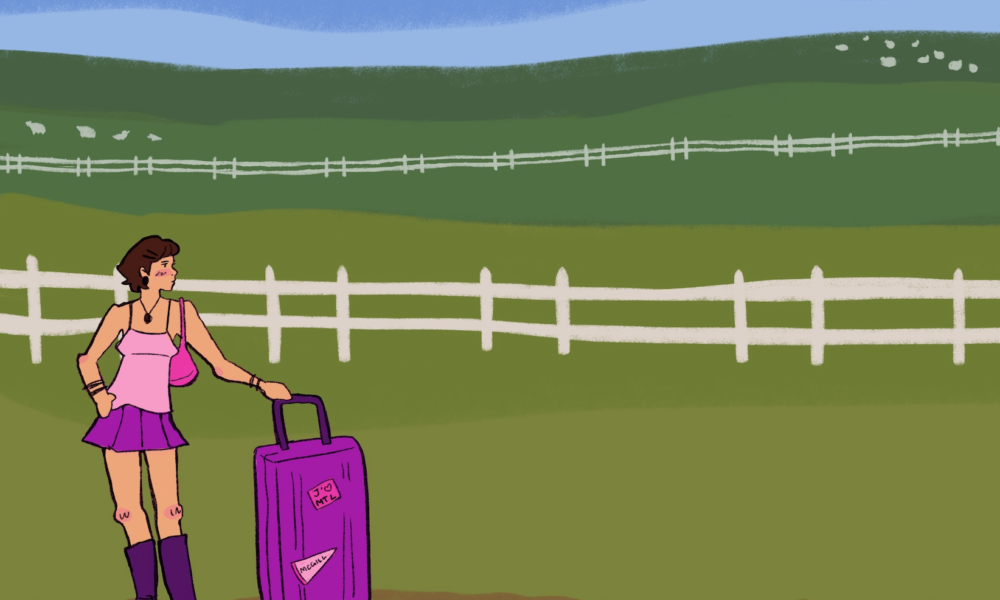
Since returning to my hometown from McGill a little over a month ago, I’ve been so extremely bored. I’m out of errands to run—other than bumping into someone from my high school every time I leave my house. If I have to have the, “How was your year?” small talk conversation one more time, I might actually explode. Please please please, if you have any tips on how to survive life in my hometown for the next three grueling months of summer, share them. I’ll take anything. 

Thanks, and PLEASE answer soon,

Hometown-Outgrown Student (HOS)

Dear HOS,

Don’t fret: You aren’t alone. All college students have inevitably experienced this homecoming at the end of the school year. No one talks about how difficult it can be going from a free bird exploring and discovering a new city, to a barely-employed and fed-up idler who feels 18 once again. It’s like entering a new (but really, all-too-familiar) reality where everything that happened during the school year doesn’t seem to matter anymore. Thankfully, there are many ways to occupy yourself during your time at home that can give you a sense of agency, take your mind off McGill, and ensure you have interesting updates to share in your small talk. 

Spend time with family

It’s important to take a step back and remember what really makes home, home: Your family. Instead of coping with your boredom by scrolling on Reels for an hour or avoiding your ex-situationship on a CVS trip, turn your attention towards greater and more important things (and people). Plan family activities, dinners, movie nights, or even a camping trip! You’ll soon realize—if you haven’t already—that as a college student who spends most of the year away from family, you may have taken the time you have with them for granted. So, make every second count and remind them how much you have missed them! 

Try new activities with friends

You most likely tired out all the basic things to do in your town three years ago. When is there a better time than now to get creative, and try something new with your friends? A new sport like pickleball, a painting class you wanted to try in high school but decided not to, or a hiking trip that never made it out of the group chat could all be contenders. Test out new restaurants around your hometown that have opened since you left for university. While these activities themselves may not be absolutely life-changing, the unique journeys they provide will guarantee a few inside jokes. Let the summer be full of reconnection and strengthened hometown friendship; like with our families, we’re not appreciative enough of the now-limited time we have with these friends.

Take road trips (to get out of there) 

Step out of your not-so-comfort zone, fill up your tank—even if you’re borrowing your mom’s car—and take a trip out of your hometown! Go to a bordering province or state you’ve been dying to visit, or visit a nearby landmark you’ve always wanted to see. There are endless possibilities when you’re somewhere unfamiliar, like meeting new friends, and potentially even a summer fling. 

Look at things through a new perspective

When you’re home, it may feel like you have morphed back into your high school self. But remind yourself this isn’t the case. After a long year, and an even longer winter, in Montreal, you have made countless new connections, memories, and accomplishments. You have lived a completely new life. You most definitely are a matured version of yourself; don’t let being in your hometown take that away from you! So what, you have an awkward interaction with your ex-best friend at a local restaurant? You’re not the same old always-annoyed, constantly-holding-grudges person you used to be. Remember that, and bring everything you’ve learned and experienced at McGill back with you.

Art, Arts & Entertainment

‘Kanga I, II, III’ brings Projections: SANKOFA’s afrofuturist vision to Trottier

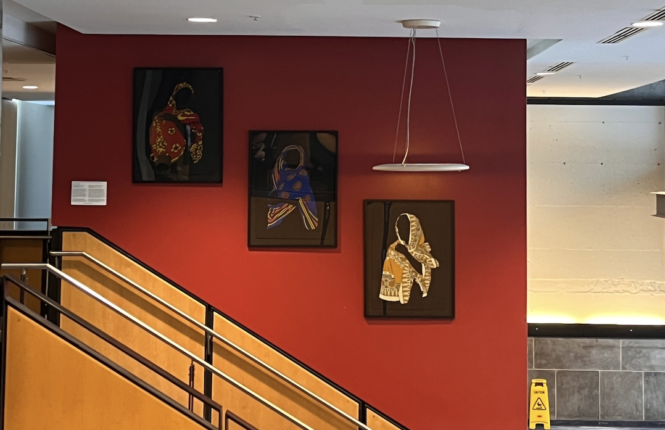
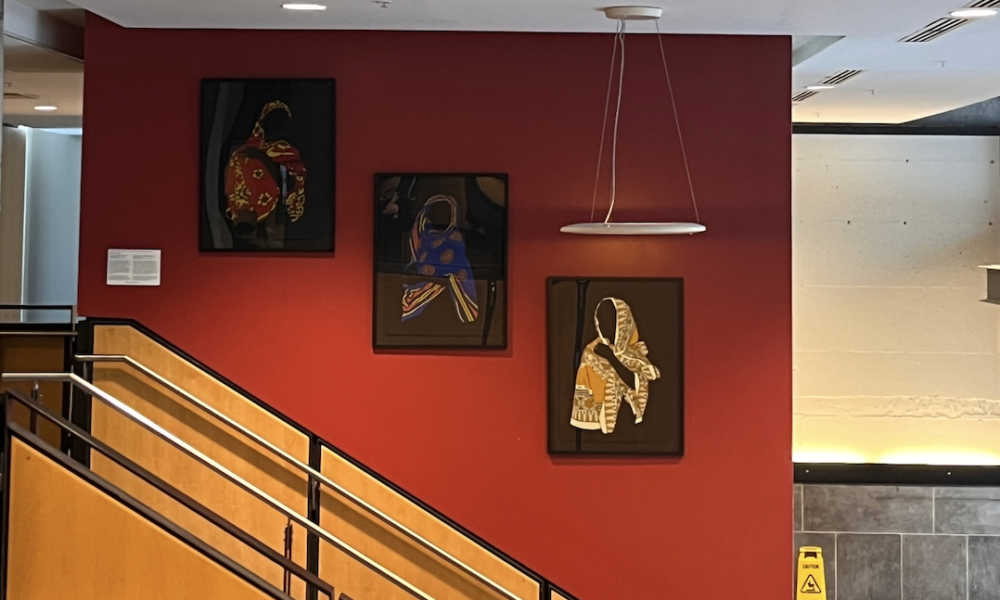
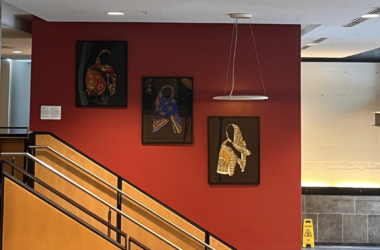
Tanzanian-American-Canadian artist Shanna Strauss’s screenprint triad Kanga I, II, III joined the student-led digital art exhibition Projections: SANKOFA on Feb. 23. Displayed in the Lorne M. Trottier Building mezzanine, the Kanga series combines negative space with vibrant colour to assert the unifying power of shared cultural identity. 

Projections: SANKOFA is a subsection of McGill’s Projections Art Series, an initiative under which students and staff jointly curate digital art exhibits aiming to increase the inclusion of underrepresented groups in the Faculty of Engineering. SANKOFA emerged as a collaboration between the McGill Visual Arts Collection, the Office of Engineering Inclusivity, Diversity, and Equity Advancement, and a curatorial team of five Black students at McGill: Dami Bali, Sarah Al Ghassani, Gloria Muco, Yvehenry Samee Julsain, and Fedgi Dony Gaspard. 

Largely recruited from McGill’s chapter of the National Society of Black Engineers, SANKOFA’s student coordinators began the curatorial process with minimal formal experience in the arts. While they initially aimed for the exhibit to represent life in the global Black diaspora in its entirety, the curatorial team progressively narrowed their focus to emphasize reflection as a means of community building. 

In an interview with The Tribune, Bali, B.Sc. ‘26, described how adjusting the exhibition’s scope offered opportunities for community building among Black Engineering students at McGill.

“We stepped away from trying to represent all of Africa and the Caribbean and […] the global diaspora, and focused more on encouraging people to look within themselves [and] learn about art [from] different areas of the world,” he said. “We [wanted] Black students, coming from all walks of life, to have a physical space at McGill University where they can feel […] seen and represented, […] share knowledge, share experiences, and form friendships.”

The SANKOFA curatorial team pursued this vision through an afrofuturist analytical lens, tackling questions of temporality within post-colonial Africa and the global diaspora. In an interview with The Tribune, Al Ghassani, U4 Arts, described how categorizing Black cultural practices in terms of ‘past,’ ‘present,’ and ‘future’ can risk erasing their continuity in the diaspora. 

“We found at many points during the curation process how problematic [it can be to] classify culture as ‘past.’ What does it mean to say that we are ‘looking back’ to our traditional practices? Why isn’t it a current practice?” she said. “So, from there we shifted into not seeing [culture] as past versus future, but instead looking at things more fluidly.”

Through this exploration of nonlinear time, the curators landed on the series’ theme: SANKOFA, a term derived from the Akan people of Ghana which encourages reflection on the past to inform the future. The Kanga installation, the exhibition’s sole physical work, embodies this message. Strauss’s portrait series depicts three women in negative space, their kanga headscarves the only component of the pieces created via the addition of ink. This visual anonymization of the women’s features in favour of symbols of their shared cultural identity asserts the ability of a textile like the kanga to transcend space and time. 

As noted by Al Ghassani, Swahili proverbs line the borders of Strauss’s kangas, reflecting the textile’s longstanding role as a communicative tool.

“Beyond its aesthetic function and utility as an everyday piece of clothing, [the kanga is] a very critical tool in Zanzibari and East African culture for sending messages [and] is still being functionally used as an everyday piece, as a form of resistance,” she stated. “To consider kanga as something that’s ‘past’ or ‘tradition’ [is] a completely false thing [….] People still utilize their tradition today and beyond.”
Beyond Projections: SANKOFA’s extensive digital art profile, the curatorial team also pursued its goal of community building through interactive events. With the assistance of Destiny Kirumira, a PhD student at McGill’s Peter Guo-hua Fu School of Architecture who helped design the events’ spatial layouts, the team brought the exhibition beyond passive viewing by incorporating art stations, short films, and live radio broadcasts of African and Caribbean music. 

For Bali, events like SANKOFA’s launch are crucial in offering Black students a space at McGill for reflection and connection, particularly as Black representation among McGill faculty remains low, with only 39 Black tenure-track or tenured professors employed across the university.

“Throughout my entire time at McGill, I don’t think I’ve had a Black professor, and that was […] jarring,” Bali said. “So, the [Projections: SANKOFA] events that we host to engage the community really do mean a lot for people [….] When people feel they’re cared for, catered to, respected, welcomed, a lot of beautiful things can blossom from that.”
Opinion

AI’s use in legal decisions poses major risks to the Canadian judicial system’s integrity and neutrality

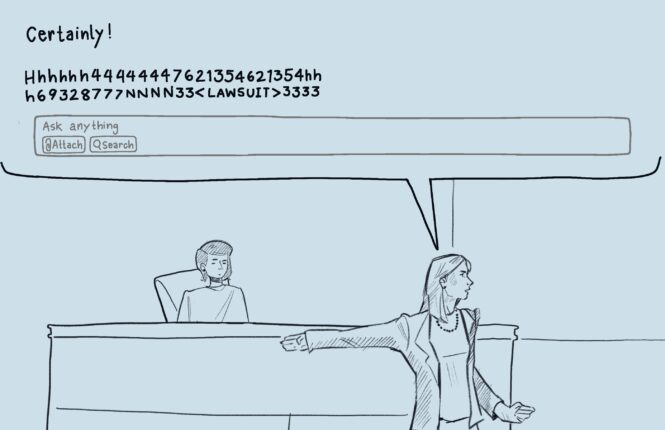
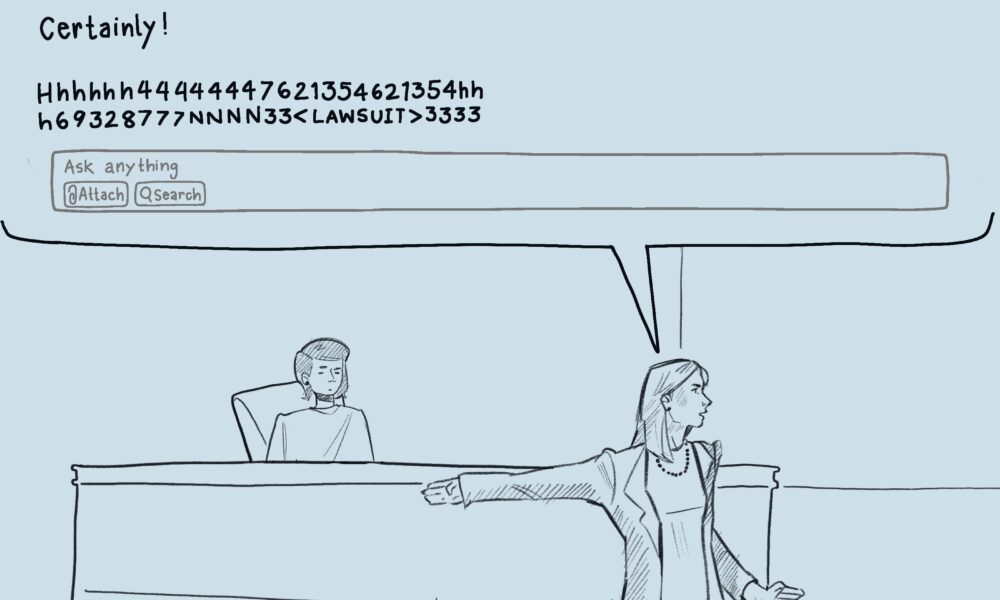
On April 22, the Superior Court of Quebec annulled the August 2025 arbitration Association des Ressources Intermédiaires D’Hébergement du Québec (ARIHQ) v. Santé Québec, as the ruling was based on nonexistent, likely artificial intelligence (AI)-generated legal doctrine and jurisprudence. Each citation of a legal precedent linked in the award led to completely different judgments; the precedents did not actually exist.

Quebec Judge Martin F. Sheehan ruled that arbitrator Michel A. Jeanniot could not delegate his decision-making authority to a third party, much less to an AI large language model (LLM). Since nonexistent references constituted the entirety of Jeanniot’s legal argument, this undermined confidence in his ruling, as an accurate, human-led review on Jeanniot’s part could have prompted an alternative sentence. Sheehan established that adjudicators who outsource their reasoning to an LLM are abandoning the deliberative function they are appointed to perform and are therefore liable for the model’s mistakes.

The ruling marks an important precedent for the role of AI in law, highlighting both the danger of granting decisional power to generative AI, and the pernicious integration of AI into legal systems and research. Legal professionals are increasingly using LLMs for the purposes of summarizing texts, scraping big data for relevant documents, cross-referencing precedents, and conducting legal research. AI is also being embedded into legal platforms, such as search engines, browsers, and databases, raising concerns about the supposed objectivity of legal tech, and creating a crisis of accountability for errors when humans are not deliberately prompting models.

Growing adoption of AI systems, which frequently hallucinate and possess ingrained biases against racialized groups, both negatively impacts litigants, and violates the Canadian justice system’s tenets of fairness and impartiality. Thus, AI safety—the outlining of AI risks and formation of computational and governance frameworks to address these risks—is a legal necessity.

Researchers at Mila, a Quebec AI institute, have found that transformers, the neural network architecture for LLMs, often misstate facts, generate invented content, and incorrectly fill in gaps in reasoning, all of which can interfere with the validity of legal work. AI systems are also unable to fully grasp the complexity of context-dependent human values and fail to handle shifting circumstances. This issue, commonly known as value-lock, makes LLMs ill-equipped to handle complex normative questions, which can lead them to reinforce outdated, exclusive social norms. For example, media outlets tend to ignore peaceful protest, instead covering extreme or violent events to attract viewership. LLMs trained on this data may then reinforce this view of social movements and, in doing so, maintain current regimes of power.

Further, the data used in transformer pre-training, which is gathered through web scraping, is often unrepresentative, holding a Western hegemonic bias and perpetuating discriminatory views and social stereotypes. This means that marginalized communities are at a higher risk of being victimized in legal decisions. For example, AI predictive policing systems, which use historical crime data to decide where to deploy officers and to identify individuals “most likely” to commit violent crimes, can absorb biases from past criminal data and replicate them in their recommendations for punitive outcomes. Since Black communities have historically faced overpolicing and overincarceration in Canada, such systems risk further entrapping Black Canadians in the country’s criminal justice system.
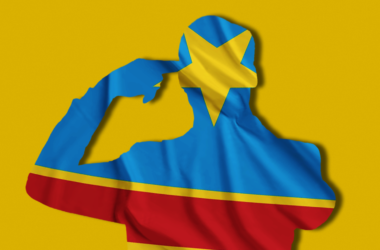
While AI tools can offer meaningful research potential, these nontransparent, inaccuracy-prone, and inherently biased models must be heavily regulated. At the baseline level, AI should be banned from direct legal decision-making, prohibited from generating text that could directly influence legal outcomes, and thoroughly audited for any purposes ranging from legal drafting to research. In increasingly complex and covert circumstances, the deep integration of LLMs into legal systems will necessarily demand both self-regulation from within legal bodies, and external public governance over which AI systems are allowed to be deployed in the legal field, and for which cases.

Art, Arts & Entertainment

Know Your Artist: Theodore A. Harris

American artist and poet Theodore A. Harris is a genius of the political collage. Born in Manhattan, New York and raised in Philadelphia, Pennsylvania, Harris brings an autobiographical focus to the subversive, polysemous medium of the collage, one shaped by his upbringing, mentors, and personal experiences with anti-Black discrimination and American capitalism’s exploitative nature. 

In an interview with The Tribune, Harris described his medium as uniquely capable of placing disparate images in dialogue with one another, so that these images transgress time and space in an instantaneous, profoundly political manner. 

“Collage is like a novel that can go back and forth in time, just by the very fact that [it uses] existing images which you can appropriate,” Harris said. “Because those images are each from a different time period, you can talk about the past and the present at the same time […] [and] get multiple meanings.”

Yet for Harris, meaning does not just emerge from the clippings themselves and the way they interact; rather, the viewer’s own experiences mediate their individual interpretation of the work. Harris draws on James Baldwin’s concept of the “most disagreeable mirror” to explain this phenomenon: A theory where Baldwin argues that Black bodies reflect back to white Americans their unacknowledged histories of colonialism, racial prejudice, and complicity in oppressive economic systems. As such, viewers encountering Harris’s collages are forced to confront their own place within the political realities his work depicts.

“Collage is a great vehicle for […] dealing with the personal as political,” Harris said. “When the viewer is looking at the work, the experience that [they] bring to that artwork determines how [they] feel about it, what [they] think about it, how [they] see [themselves] in that artwork.”

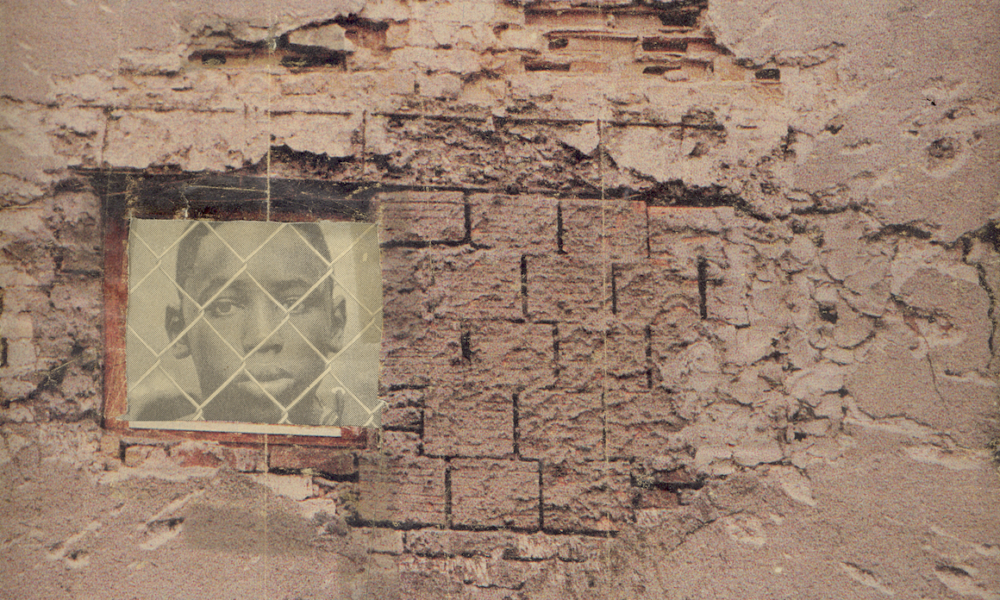
Harris’s 1995 piece, The Long Dream, After Richard Wright, is on display in the McGill Visual Arts Collection (VAC)’s Visible Storage Gallery, located on the fourth floor of McLennan Library. One of the VAC’s more than 3,500 works, the collage measures only 12 by 15.5 inches and is shown among dozens of far larger pieces. Yet, you can’t miss it. The collage is almost deceptively simple, combining only two images: One of a young boy looking through a fence, clipped from an advertisement for the 1994 film Fresh, and a photograph of a wall destroyed by an Israeli missile strike in Palestine. By layering the demolished wall over the movie poster, Harris creates a trompe l’oeil effect, making the boy appear trapped behind both the fence and the rubble.

“You get this mixture of push and pull of the form and content [in the collage],” Harris explained. “[It] is a reflection of a dystopian dream that is reality. That reality, for that [boy’s] innocent face, is […] trying to dodge the bullets of race, class, capitalism, and a country that is doing everything it can to stifle your growth.”

The collage’s title The Long Dream, After Richard Wright pays homage to American novelist Richard Wright’s 1958 novel The Long Dream, set in Jim Crow-era Mississippi. In the novel, Wright highlights how systemic racism perpetually defers the American Dream for Black individuals, turning it into a prolonged, agonizing fantasy that is never fully realized due to anti-Black discrimination. Harris reinterprets Wright’s thesis in a contemporary context through this collage, illustrating how systemic racism still renders the American Dream elusive.

The collage was anonymously donated to McGill by a friend of Harris’s in honour of Charmaine A. Nelson, provost professor of Art History at the University of Massachusetts Amherst, founding director of the Slavery North initiative, founder of the Nova Scotia College of Art and Design’s Institute for the Study of Canadian Slavery, and former professor of Art History at McGill. Nelson became the first Black person appointed as a tenure-track professor of Art History in Canada in 2001, and went on to teach at McGill for 17 years before leaving the university in 2020; she resigned after the Art History department refused to consider her for the department chair role and discriminatorily denied her full professorship. At the time of her departure, only 10 of McGill’s 1,700+ faculty members were Black. 

By dedicating his piece to Nelson, Harris transforms McGill’s own gallery space into a platform through which to recognize the significance of Nelson’s scholarship, advocacy, and impact on the field of art history, something the university failed to do while she was working there. For Harris, the presence of this work is itself political, serving to facilitate discourse on anti-Black racism, capitalist exploitation, and American colonialist projects abroad.

 “A lot of institutions do use art as a cover for their dirty deeds,” Harris stated. “It’s been going on forever. Politics have always been in art, and art has always been in politics. All I can do is make work that I hope will be in a conversation down through history. Just by that artwork being [displayed at McGill], it has a function of being in that space to raise consciousness.”

Institutions also possess a responsibility to go beyond merely showcasing conscious-raising works. In an interview with The Tribune, Assistant Curator of the VAC Michelle Macleod described how McGill’s Action Plan to Address Anti-Black Racism 2020-2025, introduced a few months after Nelson resigned in 2020, entails a responsibility that the VAC actively seek to acquire and curate a collection that is “as diverse as the McGill community.” According to Macleod, identifying and filling these gaps must be substantiated by active reflection.

“It’s tricky in the art world [….] [Inclusion] can quickly become tokenism. You can’t just install one artwork and be done,” she said. “The work is baked into everything you do, everything you put out there, and how you put it out there as well.”

Harris himself has worked to create institutional pathways for active, structural inclusion, most notably as the founding Artistic Director of the Institute for Advanced Study in Black Aesthetics—an educational project designed to spotlight the Black Arts Movement’s approach to art and aesthetics through events, written works, and exhibitions. The Movement was founded by poet and Harris’s close collaborator Amiri Baraka as a cultural counterpart to the Black Power Movement, emphasizing the need to create a Black cultural identity independent from Eurocentric artistic standards: A project Harris continues through the Institute. 

Beyond The Long Dream, After Richard Wright, in the exhibitions he presently curates, Harris continues to foster unlikely conversations between disparate art forms, techniques, and genres, making each exhibition a collage in itself.“I [want] to see abstraction exhibited with figurative work, blatantly political artwork juxtaposed to more subtly political or minimalist work next to abstraction, all mixed up,” he said. “The only thing that’s important to me is the truth. It’s what makes [art] beautiful.”

Montreal, News

Montreal protestors commemorate the 78th anniversary of the Nakba

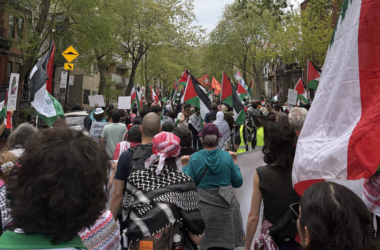
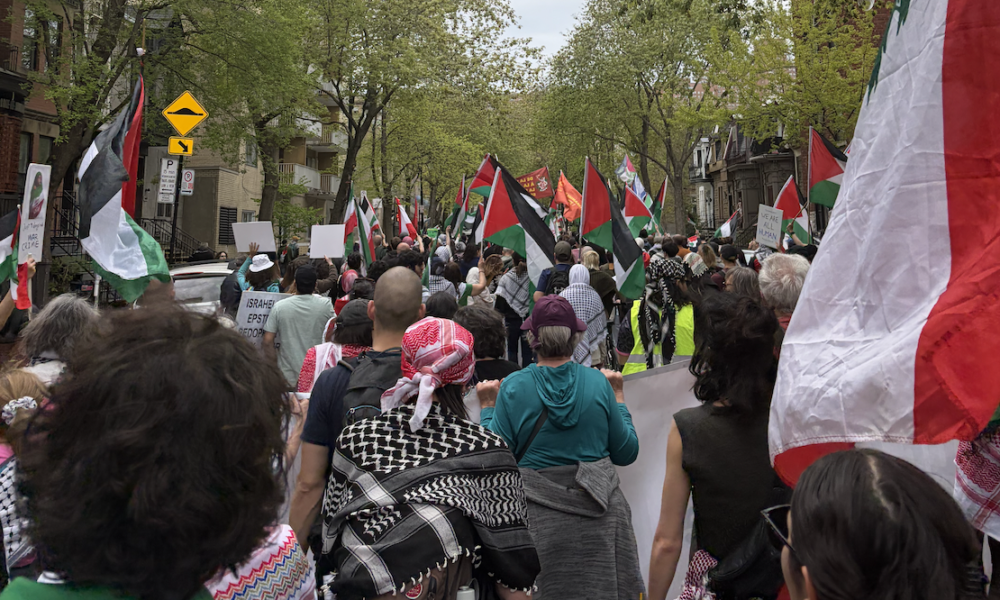
On May 16, hundreds of protestors gathered in front of the Consulate General of Israel in Montreal to commemorate the 78th anniversary of the Nakba (Nakba Day). Demonstrators waved Palestinian, Rotisken’rakéhte (Mohawk Warrior Society), and post-1979 revolution Iranian flags amidst the music of live drummers. 

Nakba, which translates to ‘catastrophe’ in Arabic, describes the Israeli army’s mass displacement and dispossession of Palestinians following the Declaration of the Establishment of the State of Israel in 1948. During the Nakba, Zionist militias and Israeli forces expelled over 750,000 Palestinians from their homeland, or approximately 75 per cent of the Palestinian population, and destroyed approximately 400 Palestinian towns and villages in an explicit effort to prevent Palestinians’ future return. Attacks such as the Deir Yassin Massacre, during which Israeli paramilitaries killed hundreds of Palestinian civilians, accelerated this expulsion. 

The Nakba resulted in a refugee crisis that still exists today; Palestinians displaced by the Nakba and their descendants number over seven million people, many of whom currently live in stateless limbo in temporary camps administered under Israeli military rule.

Ali Salman, an affiliate with Students for Palestine’s Honour and Resistance Concordia, opened the commemorative event by recalling this history, and asserting the continued importance of advocating for the Palestinian people’s right of return.

“The grandparents, who to this day, still hold the keys to the houses that they left 78 years ago, are a reminder that 78 years of occupation breeds 78 years of resistance and liberation,” he said. “The hearts of those who had to witness [the Nakba] were broken, but their spirit of return has and never will be.”

Counter-protestors stood opposite the demonstration on av. Wood, waving flags representing Israel, the United States, Quebec, and pre-1979 revolution Iran. The opposition held signs declaring, Pas de Charia dans nos rues* (“No Sharia on our streets”). 

After Salman’s speech, Indigenous human rights activist Ellen Gabriel, a Kanien’kéha:ka (Mohawk) woman from the Kanehsatà:ke First Nation, began addressing the crowd in her native tongue, explaining that doing so is a symbolic act of resistance given Canada’s historical residential school system, under which Indigenous Peoples were systematically denied acts of linguistic or cultural expression.

“Children [in residential schools] were punished, needles put in their tongues, so they would not speak their language,” Gabriel said. “Today, speaking my language is an act of resistance against a colonizer.”

Gabriel then drew connections between the genocide of Indigenous Peoples in Canada and Israel’s genocide in Gaza, emphasizing that they both occurred under the same colonial power: Great Britain.

“All settler-colonial states are founded on racist doctrines like the Doctrine of Discovery and terra nullius, a land without a people,” she said. “But we are a people, and this is our land, just as Palestine belongs to the Palestinians.” 

At the end of Gabriel’s speech, demonstrators chanted, “Land back for all Indigenous people, from Turtle Island to Palestine.” 

Following Gabriel, Global Sumud Flotilla (GSF) Canada spokesperson Colombe Dimet described the GSF’s most recent flotilla mission, which set sail toward Gaza on May 14, carrying aid and over 400 activists. While in international waters, the Israel Defense Forces raided and intercepted the GSF’s vessels on May 18. Among the activists detained were 12 Canadians, including McGill University IT and Technical Services manager Ehab Lotayef

Dimet emphasized that Israel’s disregard for international maritime law reflects its broader commitment to maintaining its settler-colonialism in Gaza.

“The Mediterranean [Sea], a space of international solidarity, has become a militarized zone controlled by Israeli forces and their allies where civilians from around the world can be attacked or kidnapped while attempting to open a humanitarian corridor by sea,” Dimet stated. “With every attack, [Israel] shows it is ready to go to any lengths to maintain the siege imposed on the Palestinian people.”*

The event’s next speaker, Secretary General of the Conseil central du Montréal métropolitain (CCMM-CSN) Chantal Ide, described the importance of global class solidarity in advocacy efforts for Palestinian liberation. She stated that global capitalists are complicit in Israel’s genocide, with their fortune deriving from investments in or the production of weapons technology.

Palestinian Youth Movement Montreal representative Rama Al Malah then spoke, asserting that despite Israel’s continued attempts to suppress Palestinian uprisings throughout history, the future bears promise.

“The future does not belong to empire. The future belongs to our prisoners, who have taught us that even when you have nothing, you fight with your stomachs and your bodies,” Al Malah stated. “The future belongs to the children in the West Bank, who face tanks with nothing but rocks [….] The future belongs to the Arab and Palestinian people who have reclaimed their struggle from the far diaspora. And the future belongs to all of you […] who have committed yourselves to […] the Palestinian struggle for national liberation.”

After the speeches concluded, protesters began marching down rue Sainte-Catherine, chanting, “Nous sommes tous des enfants de Gaza.” They then turned left on rue Chomedey, where residents cheered from their balconies and waved flags. The protest next turned right onto boulevard De Maisonneuve, where chalk artists sketched visual representations of the protest’s chants. 

At around 4:00 p.m., the protest paused briefly on rue Saint-Mathieu, where Salman delivered a second speech reminding marchers and passersby of the purpose of the Nakba Day protest.

“Our responsibility is to ensure that the sacrifice of these martyrs is not forgotten, and that Zionism’s global image never recovers,” he said. “Netanyahu has said himself in a recent interview that [Israel is] now fighting on multiple fronts. Well, we are one of those fronts.”

Marchers replied by chanting, “Say it loud and say it more, not a conflict, not a war,” and, “Mark Carney, pick a side. Justice or genocide?” The group continued down boulevard De Maisonneuve until they reached rue Peel. They then turned left on rue Sainte-Catherine, with the protest concluded at Square Phillips. Salman offered closing remarks, expressing his hope that this year will be the last Nakba anniversary with Palestine still under Israeli occupation.

“We hope that the next time we take the streets for this occasion, for Nakba 79, it will be because Palestine is liberated,” he said.

*These quotes were translated from French.

Off the Board, Opinion

A final note from the Editor-in-Chief of Volume 45, for the record

One week before The Tribune’s first production night, I found myself in Toronto in a black dress, black shoes, and sparkles on my eyelids. I was at the funeral of Fabienne de Cartier, a former News Editor. 

We dedicated Volume 45 to Fabienne, an unforgettable force of nature who shaped our paper in countless ways, so it is only fitting that our final special issue return to the theme of memory.

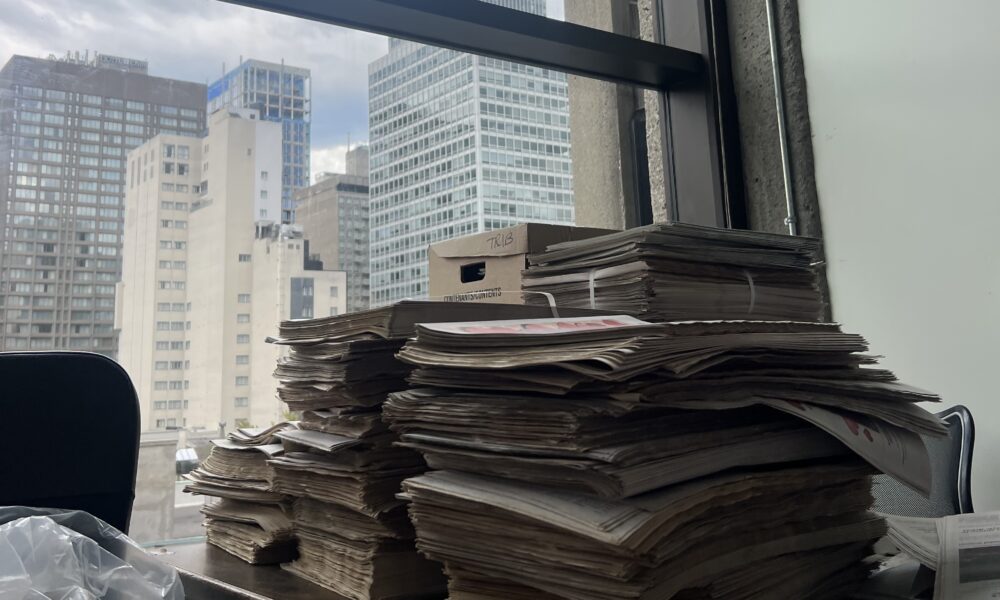
Journalism, at its core, is an act of remembering. On a team with constant turnover, what we publish becomes the only thing that tangibly endures. The archive outlives us and holds what might otherwise be forgotten. It is a great privilege to preserve memory in this way. 

But memory is imperfect. In our newsroom, we try to document events faithfully, but the paper you hold will always be an incomplete record. There is never enough space for everything that we know matters. Stories are constantly pushed online, paragraphs cut, and photos sacrificed so more words can fit. But however incomplete it may be, the act of preserving something is always tremendously important, because when the future comes, and someone inevitably asks what students saw and what they stood for, they will find the answers in our pages. 

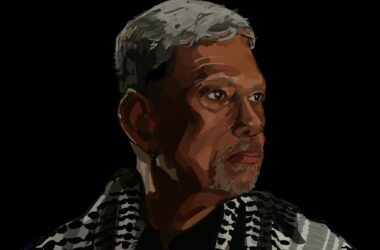
My favourite, most terrible memory is of our first production night. I didn’t remember that we needed permission to stay in our office past midnight, so after getting kicked out with several more pages to complete, we snuck into the Ferrier computer lab to finish the issue. I asked Zoe, one of our design editors, to redraw Fabienne’s portrait about ten times until it was finally perfect—at 5:00 a.m. That’s when I realized that we had taken so long, our paper would be distributed a day late. I felt like I had disappointed everyone.

But the next day, I saw Fabienne’s face across campus, on every stand, and it didn’t feel like disappointment anymore. It was the most rewarding moment of my four years at McGill, and that sense of pride and care carried me through the 26 issues that followed. 

Even if “nobody reads student papers” (which, of course, isn’t true, because I read them), I am overwhelmed with pride at Volume 45, because while I cannot promise perfection in our pages, I can promise honesty, thought, and real, genuine care. 

I leave with a sense of comfort that this promise will be kept in the future. I am certain that Mairin, our incoming Editor-in-Chief, will transform the paper in ways I cannot imagine. I am so grateful to be leaving it in the most competent and gentle hands. 

To the unforgettable Tribune community: each of you has shaped me in ways I will carry long after our final publication. My years of writing fail me when I try to put my gratitude into words, but I hope you can feel it. I am truly in awe of all of you.

Thank you for letting me be part of your memory, and for being a beautiful part of mine.

— Yusur Al-Sharqi, Editor-in-Chief

Read the latest issue

Read the latest issue