Latest News

Arts & Entertainment, Theatre

TNC Theatre’s ‘The Suicide’ goes out with a bang

Content Warning: Depictions and mentions of suicide

It’s 1928 in Soviet Russia. Semyon Semyonovitch Podsekalnikov is poor, unemployed, and about to commit suicide. As he puts the gun to his head, the audience erupts with laughter. 

Tuesday Night Café Theatre’s production of Nikolai Erdman’s Russian Farce: The Suicide, directed by Carmen Mancuso (U2 Arts), begins with a domestic scene: Semyon (Henry Kemeny-Wodlinger, U0 Arts) and his wife Masha (Tessa Lupkowski) live with Masha’s overbearing mother Serafima (Molly McKenzie, U3 Arts). Masha is trying desperately to sleep, but Semyon lies awake, unable to think of anything but sausage.

They begin to argue, and during the ensuing kerfuffle, Semyon casually mentions that he ought to kill himself, an idea with which Masha casually agrees. 

Semyon struggles to justify his life in the ensuing scenes until he finally finds something worth living for: The tuba. He believes that becoming a professional tubist will solve his marital woes, lift him out of poverty, and give his life purpose. But after realizing he can’t actually play the tuba, Semyon spirals back into thoughts of ending it all. His smarmy “comrade,” Alexander Petrovich (Matthew Erskine, BA‘22), rushes to profit from the imminent suicide, selling the rights to Semyon’s suicide note to a host of deliciously mercenary characters, all of whom want to use the suicide for their own personal and political gain. Pompous Aristarkh (Max Grosskopf, U3 Arts) wants to claim he died for the Intelligentsia. Vodka-loving Mother Yelpidy (Ava Picquart, U1 Arts) wants to use his death for religious legitimacy and influence. 

Although the play is very funny (at one point, Semyon wakes up at home and, thinking he has died, assumes he must be in hell because his mother-in-law is there), it does not trivialize suicide. Rather, the show’s comedic nature makes the moments where the laughter falls silent all the more chilling.

“The play’s never making fun of suicide, it’s never thinking that suicide is this light and easy thing,” Mancuso said in an interview with The McGill Tribune. “It becomes so much heavier, you just become so much more invested.” 

From the endearing Semyon’s dopey expressions, the libidinous Alexander having to zip up his fly every time he walked on stage, and the shrillness of Masha’s outbursts, you could tell that everyone involved cared deeply about bringing the story to life. The host of characters trying to exploit Semyon nail the art of acting genuinely ungenuine. 

The live band was a definite highlight, performing on stage inches away from the audience. The ensemble’s ability to move in and out of the story itself blurred the lines between performance and production. In one scene, the characters throw a party and the band plays for and interacts with the characters (including a hysterical interaction between Semyon and the play’s actual tubist). 

“I think what’s so brilliant about the play is that it’s very clever in the way it uses comedy, it uses farce, it uses all the jokes and comic moments,” Mancuso said. “[I]t brings the audience to empathize, and connect with, and feel with these characters in a way that you wouldn’t normally have the opportunity to.” 

In contrast to the lighthearted approach to the play’s contents, the backstory of the play is not as funny. Erdman was arrested in 1933 for his inflammatory work, then exiled to Siberia. Vsevolod Meyerhold, the play’s original director, was eventually tortured and executed during the Great Terror, along with his wife. The play was never even performed until after Erdman’s death. 

During the ongoing war in Ukraine, performing Russian plays has become a subject of controversy. But the decision to perform The Suicide is very intentional. 

“It gives the opportunity to give a voice to people, and to make you empathize with them, and laugh with them, and have fun with them and have two hours of your evening with people, with characters, in a world that you would never otherwise experience,” Mancuso said. 

Nikolai Erdman’s Russian Farce: The Suicide ran from March 8-17 in Morrice Hall.

Arts & Entertainment, Theatre

‘What Rough Beast’ explores the power and pitfalls of political discourse

Universities often reflect our broader society in terms of both shared values and differences, creating a privileged microcosm of the world. By setting her newest play, What Rough Beast, on a college campus, playwright Alice Abracen condenses complex political dynamics into a conversation between seven characters. Her script examines the contrast between encouraging open discourse versus censorship when addressing dangerous extremist rhetoric.  

The play, which debuted at Centaur Theatre on March 2, follows the conflict between university students after a controversial right-wing speaker is invited to speak at their campus. Audiences watch as characters both dehumanize each other and attempt to “reach across the gap.” Abracen initially began writing the play in college, intending for the script to be written “by and for students,” with no adult characters ever actually appearing on stage.

In a unique chance for young people to access theatre, Centaur Theatre hosted a mid-afternoon matinee in addition to evening performances, allowing groups of high school students to experience the power of live performance. The students sat on the edge of their seats, deeply engrossed as they whispered to their friends, gasping and laughing at outrageous lines. In a talk-back panel after the show, the director noted a personal interaction she had with a 13-year-old student after the show, claiming he related strongly to the white, privileged characters and expressed frustration over the play, annoyed that there was “no right answer” or character. 

What Rough Beast provokes difficult conversations, delving into the challenges of creating dialogue and empathy within a small, polarized community. Despite the weighty subject matter, the plot is surprisingly dynamic and colourful. According to Abracen, the script’s tone is “a marriage of humour and humanity with political horror,” and this is evident in its bold and raunchy style that manages to make up for any awkward dialogue. 

Charlotte Dennis delivers a particularly poignant and heart-breaking performance as Alyssa, capturing the anguish of a sister watching her brother’s rapid descent into right-wing extremism and critical mental health issues. Her portrayal of Alyssa’s struggles is both nuanced and raw, conveying the complexity of emotions—guilt, helplessness, and fear—that comes with watching a loved one slip away. Dennis’s performance highlights the devastating impact of radicalization and mental illness on families and communities, leaving a strong, lasting impression on audiences.

The immersive experience of live theatre allows audiences to connect in a more authentic way, especially in an era where screens mediate much of our communication and dialogue across differences. By investing in younger audiences and creating spaces for them, Centaur Theatre is helping to cultivate a new generation of theatre-goers who are eager to engage in meaningful conversation.

The plot and conflict of the play exhibit haunting parallels with the demonstrations that took place on  McGill’s campus against the  “Sex vs. Gender (Identity)” debate and anti-trans speakers in early January. Much like the right-wing professor invited to speak in the play, the debate in Chancellor Day Hall sparked discourse about the difference between encouraging open dialogue and platforming hatred and intolerance. Abracen’s script is perfectly geared toward McGill students, providing an enlightening and sobering social commentary on the current state of political tensions and vulnerabilities on campus.

“It was very important to me that the students are central characters,” Abracen said in an interview with The McGill Tribune. “Each of [them], in some way, feels that they are carrying the weight of the world on their shoulders. They are making decisions that are going to have major ramifications. The stakes are no less high because they are students.” 

What Rough Beast asks the question many college campuses are currently grappling with: Does fostering genuine discussion have to mean legitimizing bigoted views, and if so, how can we achieve consensus and unity? This thought-provoking and nuanced conversation is sure to have a lasting impact on audiences, sparking discussions about politics and ideological differences long after they leave the theatre.

What Rough Beast ran at Centaur Theatre from March 2 to 11.

Baseball, Sports

MLB’s new rule changes: Should we be excited?

Baseball fans, it’s finally here––a new era of the sport is on the horizon. With the average game length coming in at three hours and four minutes, a plummeting fanbase, and offensive output on a steady decline since the juiced ball of 2020, Major League Baseball (MLB) finally recognized its dire position and took action last September, when its competition committee voted to implement a slew of rule changes for the 2023 season. 

“I think we’re gonna see a more exciting brand of baseball,” Mike Wilner, former play-by-play announcer for the Toronto Blue Jays and current columnist for the Toronto Star, told The McGill Tribune. “There will be more action more often.”

The new rule changes are set to alter critical aspects of the game, with a pitch timer, bigger bases, shift bans, and pickoff restrictions implemented at the start of Spring Training. Fans got a sneak peek of the impacts in Minor League Baseball (MiLB) games in 2022 during the rules’ testing period. And with average game length dropping from three hours and three minutes in 2021 to two hours and 38 minutes in the 2022 season, it’s safe to say that MLB made the right call. 

With the new pitch timer in place, pitchers will have 15 seconds to deliver their pitch with the bases empty and 20 seconds with a runner on base. Hitters will have to be in the batter’s box, ready to hit with eight seconds left on the timer. If the pitcher fails to initiate their motion to deliver the pitch before the expiration of the timer, they will be charged with a ball, and if the batter is not ready to hit at eight seconds, they will be charged with a strike. 

“[The pitch timer] is something that is absolutely brand-new that people have never had to deal with before,” Wilner said. “Baseball has always been this game without a clock but [the timer] sort of gets it back to where it was 30-40 years ago.”

Outside of the pitch timer, the shift––a situational defensive realignment where infielders and outfielders shift from their traditional positioning if the hitter has a tendency to hit the ball to a specific part of the field––will no longer be allowed. The shift saw a major increase in use after its employment by the Houston Astros and the Tampa Bay Rays with usage rates skyrocketing league-wide from 6.2 per cent of the time in 2016 to 33.6 per cent in 2022. 

“It’s going to open up the infield for ground balls,” Wilner said.“Teams will find ways around it but I do think batting averages are going to go up as a result and especially the left-handed pull hitters.” 

The remaining rule changes––outside of restricting instances when position players can pitch, to when a team is winning by 10 or more runs in the ninth inning or losing by eight or more at any time––all hope to revive a crucial element of baseball: Base stealing, an art that has largely been lost over the years.  

Bases will increase in size from 15 to 18 inches squared, but the home plate will remain unchanged, giving players more room to maneuver around tags and avoid collisions. Pickoffs—when the pitcher attempts to throw the runner out before delivering the pitch—will be limited to two attempts per plate appearance, and the count will reset if the runner advances. If a third attempt is made, the pitcher will be charged with a balk—when a pitcher makes an illegal motion on the mound with runners on base that the umpire deems to be deceitful to the runners—and the runner will automatically advance. The league announced that it will also crack down on the enforcement of balks, a move that forced a number of pitchers to completely restructure their deliveries. 

While some mourn the loss of a game slowed down by the adjusting of velcro, the tossing of the rosin bag, and the rubbing of hands in the dirt, the baseball of 2023 will be a welcome change for the majority of fans. No more dozing off as a 1-0 game on July 15 heads into hour three in the seventh inning. No more yelling at your TV for the batter to get in the goddamn box. A new brand of baseball is upon us and it’s time to get excited. 

News, SSMU

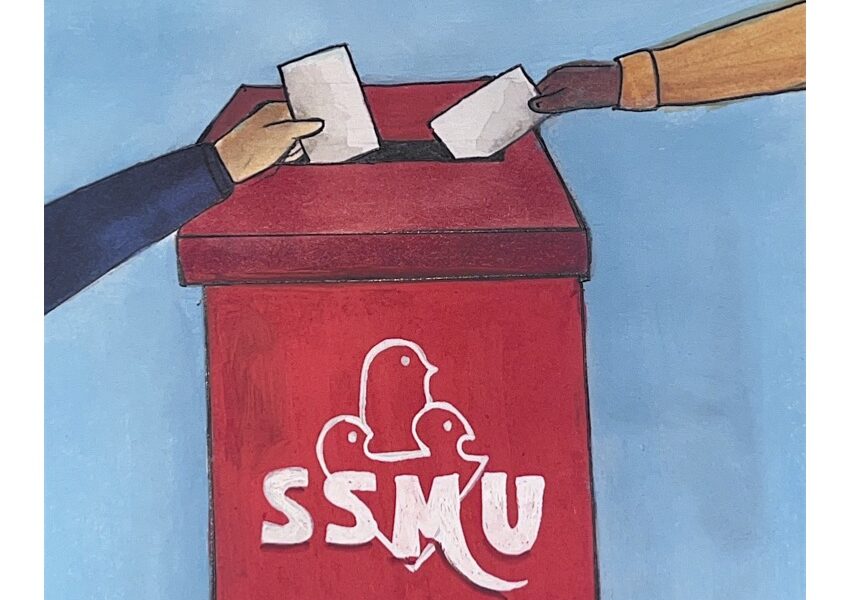
Students vote to increase Midnight Kitchen fees, usher in 2023-24 SSMU executive

The results of the Students’ Society of McGill University’s (SSMU) Winter referendum and executive elections were finalized on March 17. Alexandre Ashkir clinched the SSMU presidency and all but two referendum questions passed. 

Of the 23,550 undergraduate students eligible to vote in the referendum, 3,944 cast their ballots. Students voted on 20 referendum questions, some of which had multiple parts, and for seven executive positions. The referendum questions concerned the fee renewals and increases for clubs and services.

Student Support—which offers Grammarly, Calm, and Udemy to students—was up for a fee renewal and increase following its pilot program this year. The question passed with 68 per cent voting “yes”, meaning that the service will remain available until it is up for renewal in 2024. Fee increases for the Muslim Students’ Association (MSA), the Referral Services fee, the Mental Health fee, and Safety Services, which encompasses MSERT, WALKSAFE, and DriveSafe, all also passed.

The Midnight Kitchen Collective successfully passed two questions in the referendum, asking first for a fee renewal—meaning they will continue to receive their fee until 2028—as well as a fee increase from $3.35 to $8.00.

The Daily Publications Society (DPS), which provides funding for The McGill Daily and Le Délit, failed to pass a fee increase with 57.6 per cent of people voting “no”. The Société de Publication de la Tribune (SPT), which runs The McGill Tribune, also ran two questions in the referendum: Students voted yes to a fee renewal and no to a fee increase of $1.50.

Other questions that passed include the creation of fees for the Legal Essentials Plan Fee, the SSMU Grocery program, and the International Relations Students’ Association of McGill (IRSAM). Students also voted to renew the fees for the Arab Student Network (ASN), Plate Club, Student Space Fund, Black Students’ Network (BSN), Environment Fee, and ECOLE

Aside from questions about club fees, the referendum results determined the new SSMU executive team for the 2023-2024 academic year. Newly-elected SSMU President, Alexandre Ashkir, who is currently Speaker of SSMU’s Legislative Council and Chair of the SSMU Board of Directors, told the Tribune that he is excited to step into his new role but acknowledged that his unopposed campaign reflects underlying issues.

“I’m happy that the students trusted in me and voted for me. I promise to do all I can to accomplish the platform I presented and to support the SSMU in providing the best possible services and representation to the student body,” Ashkir said. “I must also recognize that while they could’ve voted no, the lack of other presidential candidates made my election less than ideal in terms of democratic values, and I hope to rectify the situation that caused this by the time of the next elections.”

Lalia Katchelewa, vice-president (VP)-elect University Affairs, is also excited about her new responsibilities and hopes to build on the work done this year by her predecessor, Kerry Yang, especially on pressing issues such as food accessibility and menstrual health equity.

“My head is buzzing with a million ideas and plans for next year,” Katchelewa told the //Tribune// in a post-election interview. “I can’t wait to sit down with this year’s VP University Affairs and discuss, evaluate, and strategize for next year [….] I want students to feel safe on campus regardless of who they are and I want them to have access to basic necessities.”

The other executives elected are Alice Fang for VP Finance, Nadia Dakdouki for VP Student Life, Jon Barlas for VP Internal, Liam Gaither for VP External, and Hassanatou Koulibaly, who currently serves as VP Student Life, for VP Operations and Sustainability. 

Each elected executive ran unopposed except for Barlas, who won his two-way race with 55.2 per cent of the vote. Barlas told the Tribune that while he looks forward to his tenure, the lack of candidates for all executive positions was disappointing.

“Winning feels good, but this year’s executive elections season was definitely a huge letdown,” Barlas said. “The lack of interest in running for a SSMU executive position might be due to a number of things, but whatever the reasons may be, the fact that six of the seven positions ran uncontested, including the president, marks a real dent in student democracy. I don’t think many students saw any reason to vote at all, given their lack of options.”

McGill, News

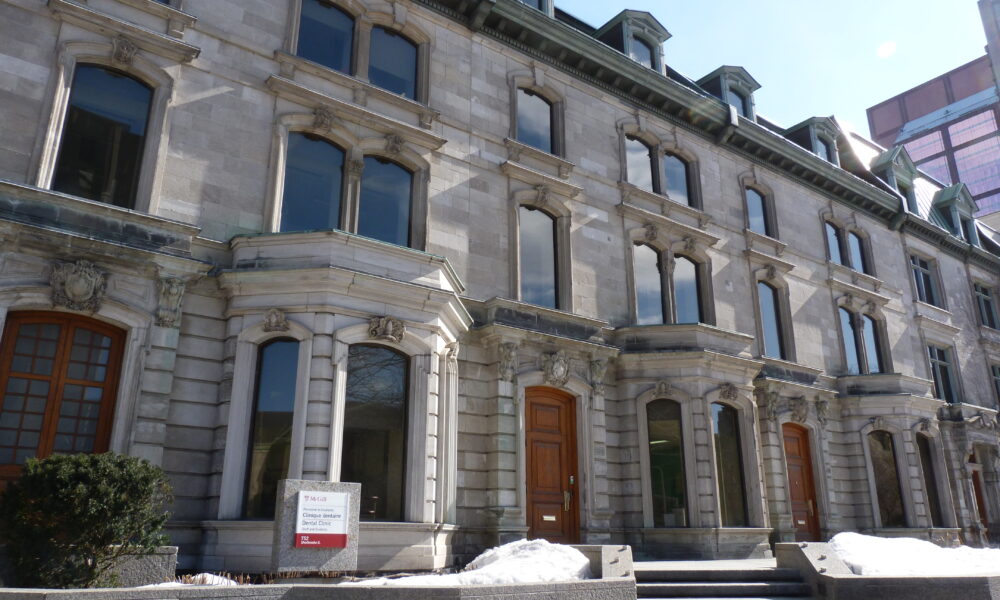
Former student goes to court over alleged toxic culture and discrimination within Faculty of Dentistry

A former McGill dentistry student has sued McGill and three professors who were part of the Faculty of Dentistry while he was at the university over alleged discrimination. Adam*, the complainant, says his experiences at McGill were marked by targeted threats, a toxic atmosphere, and efforts to limit his ability to continue his studies.

Adam, who is Muslim and of North African heritage, is now 42 years old. He came to McGill as a mature student in 2012, entrance scholarship in hand, having graduated from the University of California, Los Angeles (UCLA) at the top of his class. Entering McGill, Adam hoped to ultimately become an oral and maxillofacial surgeon.

“At UCLA, I felt it wasn’t based on how you look […], [your] origins,” Adam told The McGill Tribune. “It was just based on merit, you know,  if you’re serious about your work, if you are professional, if you are interacting with others in a polite and nice way […] that’s how it should be, not based on how you look. But at McGill, it was different [….] I felt like I was entering politics. It was who you knew […] how much you [are] willing to give up.”

During conversations with the Tribune, Adam alleged that he was subject to verbal abuse, had grades manipulated maliciously, and had negative feedback added to his Dean’s letter—a reference letter required to apply for a specialization in oral and maxillofacial surgery—without due cause. He believes that both his race and willingness to voice his opinions about unjust structures and practices within the institution precipitated this treatment.

Ashraf Azar has been an advocate for students for over a decade and has his own experience going to court against Concordia University. He has helped Adam navigate his experiences with McGill and advocate for himself.

In an interview with the Tribune, Azar explained that listening to students and giving them the tools to challenge large institutions is crucial for holding power to account and helping students recognize their worth.

“A lot of the students, whenever they get involved in these things, they kind of feel isolated and secluded,” Azar said. “Some of these targeted events and some of these situations almost make you feel like you’re undeserving of continuing this program, or you’re not worthy, or, you know, ‘why is this happening to you?’ You’ll see a lot of these [instances], they’re almost psychological, [they’re] extremely dramatic events for people.”

Azar noted that Adam was not the only student in the Faculty of Dentistry concerned about the culture and practices ingrained at the school.  

“Just in his graduate cohort alone, I had spoken to at least five to 10 people who told me that it was complete abuse in that faculty,” Azar said. 

Adam explained that pre-clinic, which some faculty members referred to as “boot camp,” is meant to help students prepare for a mandatory summer clinic between their third and fourth years. This, however, was when his experience at McGill took a turn for the worse. According to Adam, the director of pre-clinic at the time would curse at students and put them on his so-called “shit list,” creating a hostile environment. The director also allegedly told Adam—who was on this “shit list”—to “get used to it” and that he would encounter patients in his clinic that were hard to work on.

Another professor allegedly made inappropriate and derogatory comments about Muslims, referring to them as “fucking Muslims,” and asking Adam what was “wrong with [his] kind.”

In 2016, Adam was told he was being held back from entering his fourth year of Dentistry because he failed a summer clinic course led by former assistant professor Nareg Apélian. After appealing the failing grade, the decision was rendered null, and Adam was reinstated with the rest of his cohort in the fourth year. 

Though he ultimately graduated on time, Adam felt that his experience in the program was hindered by the extreme stress of the barriers and discrimination he faced, along with the time and practice he lost. When he began his fourth year, Adam was behind and excluded from the listserv and Facebook group where important information was disseminated to Dentistry students in his year.

Another student from Adam’s year, Gregory Gareau, was also held back but not reinstated. In 2016, Gareau, who is Indigenous, recounted his story of alleged discrimination and ableism within the Faculty of Dentistry to The McGill Daily, explaining that he was denied necessary accommodations and felt unwelcome and unvalued in the Faculty.

When Adam requested a Dean’s reference letter in 2016 to apply to get an MDCM (Medicinæ Doctorem et Chirurgiæ Magistrum) at McGill, the then-Dean, Paul Allison, provided him with a document that stated Adam was “below expectations” in three categories. Adam vehemently argued that this was an inaccurate reflection of his performance and pointed out that the letter was based on the overturned summer clinic evaluation. 

Apélian, who taught the summer class, was one of the subjects of Adam’s complaints and was deemed to have carried out “psychological harassment” against him by a McGill assessor. The dean’s letter also stated that Adam repeated a year in 2012-2013, when in fact he took a leave of absence, after which he resumed his studies. The Dean’s letter was later amended to say that Adam “met expectations” and the error regarding his leave of absence was corrected. 

Documents shared with the Tribune show that two other instructors believed that Adam “exceeded expectations” across the board in their evaluations.

Azar helped Adam reach out to the administration and eventually file an official grievance over his experiences.

“All the channels were accessed, the Dean of Students was contacted, the Associate Dean was contacted, the Provost was contacted throughout this process,” Azar said. “And everybody just kept giving [Adam] the runaround, like nobody addressed anything, all the way up to when the grievance was reached. After the grievance was reached […] nobody did anything. I think the only thing that they did, which says a lot for what was going on internally, was that they found Nareg Apélian guilty of psychological harassment.”

In his written statement to the Senate Committee on Student Grievances, which compiles a systematic list of his complaints against the school, Adam quotes an assessor at the university as having determined that “the situation in the Faculty of Dentistry is clearly troubling” and that “there is sufficient evidence to indicate management and governance issues.” The assessor also wrote, “the charge of psychological harassment [against Nareg Apélian] is deemed founded [….] Given the nature of the transgression, I believe discipline is warranted in this case.”

Apélian was later at the centre of a sexual assault scandal and removed from his position in 2019.

Unsatisfied with the university’s handling of his case, Adam decided to sue for damages in March 2018. In September 2022, he was unable to attend a hearing because he had contracted COVID-19. As a result, his case was dismissed and Adam was mandated to pay McGill’s legal fees. He is in the midst of fighting this decision by requesting a revocation of judgment.

When the Tribune reached out to the Faculty of Dental Medicine and Oral Health Sciences for comment, the university’s Media Relations Office replied that the university “does not comment on cases involving former students.”

A representative from the Dental Students’ Society of McGill University (DSS) wrote to the Tribune on behalf of the Society. They noted that the makeup of the senior faculty has changed significantly since 2017. 

“Since 2020, there has been an [Equity, Diversity, and Inclusion (EDI)] committee established and implemented to the 2021-2026 strategic plan; [and] in 2021, as part of our accreditation visit by the [Commission on Dental Accreditation of Canada (CDAC)], the student body was surveyed,” the representative wrote. 

They went on to quote some of the internal survey’s findings about Dentistry students’ feelings toward the Faculty as of 2021:

“Most students felt that faculty members exhibit professionalism and/or ethical behaviour (85 per cent) [….] A great number of students felt respected by their faculty (75 per cent) and themselves respect the faculty (85 per cent). Half the students felt that their time and needs are valued by the faculty (53 per cent) and that the faculty has adequate policies in place to deal with harassment or abuse (physical and mental) (43 per cent).”

The report also states: “Students’ comments voiced concerns over the faculty not taking student feedback and making changes regarding timing and coordination of the different aspects of the curriculum and elements of the curriculum itself [….] Some students share the view of ‘us vs. them’ in regards to the faculty and commented on the lack of [a] formal process to hold professors and faculty accountable.”

Adam, who is now a practicing dentist in the U.S. but never got to specialize in oral and maxillofacial surgery, hopes to create a non-profit where he can platform and advocate for students. Although plans have not yet been solidified, he believes in the need for a “ contre pouvoir to make a difference.”

*Adam’s name has been changed to preserve their confidentiality.

Ask a Scientist, Science & Technology

On the origins of stereotypes: Implicit bias rooted in identity markers

Are Canadians ridiculously polite? Is Gen Z exceedingly self-absorbed? Stereotypes pervade our day-to-day lives, with their roots grounded in false notions and “othering” media portrayals. However, stereotypes of age, race, gender, and other identifiers do not exist in a vacuum—an identity consists of multiple identifiers that mesh and interlock. A person is not just their age or their race—they also have gender identities and sexual preferences that affect how they move through and experience the world.

In a recently published article, assistant professor Jordan R. Axt of McGill’s Department of Psychology examined how in-group identity and group status affect people’s race-gender associations. The researchers discovered that theBlack women and Asian men respondents in their study exhibited weaker stereotypical associations between race and gender. 

In the first part of the study, 1,071 American participants of different racial and gender backgrounds completed a computer mouse-tracking task, categorizing Black and East Asian faces as either male or female. The mouse movements were tracked as participants reacted to each face, mostly collecting straight-line responses for Black man and Asian woman faces but recording a pull toward the incorrect gender label when shown the faces of Black women and Asian men. 

While there could be a multitude of reasons for this race-gender bias, Axt offered an explanation rooted in societal stereotypes due to repeated, harmful media portrayals that essentialize entire racial groups. 

“Black people are disproportionately likely to be shown as perpetrators of violent crimes on [news outlets]. Exposure to this type of media could, over time, build up this association between Black and masculine,” Axt said in an interview with The McGill Tribune

In a similar vein, Asian people in North America are underrepresented in high-status or leadership positions that are societally associated with masculinity, which the researchers theorize leads to an association between being Asian and femininity.

When audiences are exposed to these images in the media, they subconsciously absorb this misinformation to form stereotypes and biases. These race-gender biases exert a weighty influence on educational institutions, workplaces, and even how people choose their romantic partners.

“When these associations exist, they might subtly push us in one direction [over] another,” Axt explained. “For example, we live in an educational context where, oftentimes, students are rewarded for portraying behaviours […] like leadership and assertiveness that have more historically masculine components.”

Structural discrimination does not end in educational institutions. Starting with disproportionately excluding Black students from gifted and talented programs to phenomena such as the bamboo ceiling in the workplace, Black and Asian people are often subjected to microaggressions at various levels due to unjustified stereotypical associations.

Axt’s research team also found that Black women and Asian men—the respondents who most opposed the stereotypical association—exhibited less of a pull towards incorrect gender labels in the mouse-tracking task, suggesting that people’s intersectional identities influence their perception of other groups.

“It could be that, for example, Black women and Asian men are more proactive about the type of media that they choose to consume,” Axt speculated about the reasons behind this difference in race-gender association. The race-gender identity of all  other respondents were white and Hispanic men and women, with more women than men being surveyed.

Axt suggested that considering intersectionality in social psychology research is crucial going forward.

“Social psychology has done a lot of great work to show some of the effects of these social characteristics, such as race, gender, and age, in isolation,” he said. “But we can begin to more fully appreciate, in the years to come, that when we start to combine these social identities, there are unique effects. And I hope that our research is just one more example of that.”

ABCs of Science, Private, Science & Technology

Advancing scientific frontiers through undergraduate research

On March 15, the fourth Undergraduate Poster Showcase took place in the Students’ Society of McGill University Ballroom, bringing in a new cohort of student scientists. Nearly 400 attendees congregated that evening to learn from the 117 students presenting their projects, ranging from earthquakes melting rocks to building a safer community through harm reduction. The McGill Tribune brings you some of the highlights:

Screening cystic fibrosis amongst newborns

Grace Parish, U2 Science, is researching the impact of blood spot tests on infants to screen for rare diseases—mainly cystic fibrosis (CF), which causes severe respiratory difficulties. The cystic fibrosis transmembrane conductance regulators (CFTR) from patients with CF are currently being sequenced to deduce the exact genes that cause CF. As opposed to a panel test, which screens against a common set of mutations, CFTR sequencing has fewer false positives.

“We’re able to now discharge all these people we can identify as healthy carriers of cystic fibrosis,” Parish explained in an interview with the Tribune. “ You need two cystic-fibrosis-causing alleles to have cystic fibrosis, [but] they have one allele that’s cystic-fibrosis-causing, and one that’s normal.”

Despite fewer false positives, CFTR sequencing can still produce inconclusive tests, leading to over-medicalization—when your health is harmed because of undue treatment—which has unknown long-term side effects. But this is balanced by how versatile CFTR is, as it isn’t limited to CF.

“[CFTR sequencing] can be applied to any kind of genetic disease. In some cases, that already is being applied,” Parish said. “Identifying [CF] mutations and new mutations would be useful.”

Poetry as a mathematical language

Eve-Marie Marceau, a recent graduate from McGill’s Département des littératures de langue française, de traduction et de création, is researching how words can be translated into a mathematical context to devise a way of evoking the “sublime” in poetry.

Edmund Burke said that the sublime was, and I quote, ‘the strongest emotion that the mind could feel,’” Marceau told the Tribune

Marceau almost experienced the sublime after having an inexplicable emotion when reading a poem.

“I was like […] ‘what is this kind of emotion I cannot explain?’ So, I went to ask my friend who is doing his PhD in mathematical logic if he could define what I was feeling—the infinity of discovery,” Marceau said.

Marceau and her friend then combined mathematics and poetry to construct a model for the sublime. They used both mathematical and linguistic approaches, including category theory and semantics, but this proved to be challenging.

“The more and more we try to find a model, the less we can really grasp the sublime,” Marceau said. “We realized that poetry was really similar to mathematics in a way that [it] was going toward the sublime, but never reaching it.”

She asserted that the sublime was “the best way to describe the experience of infinity, but in a qualitative way,” and that the sublime is about “hazard and imperfection,” not beauty.

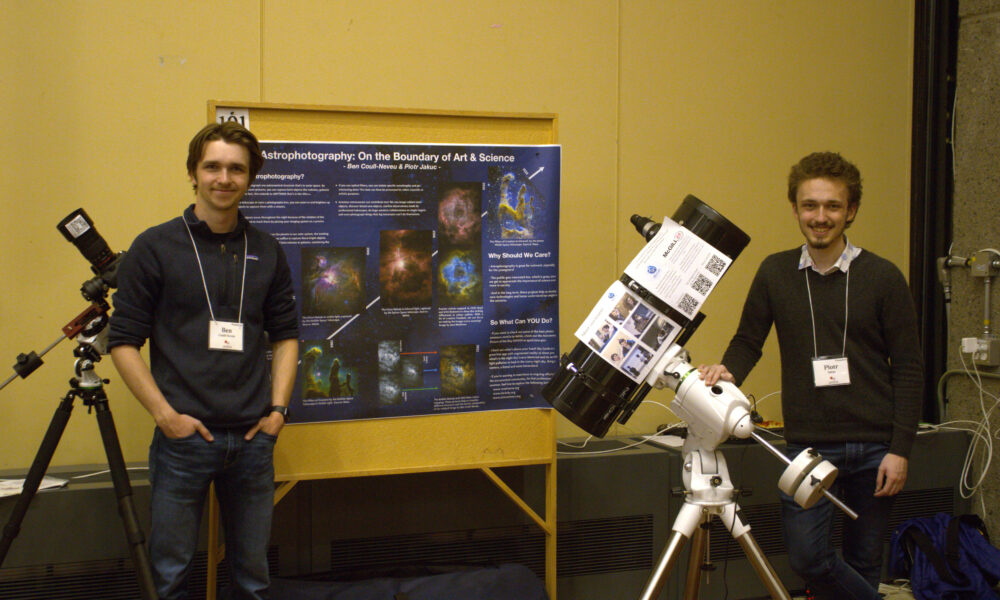
Astrophotography: Intersecting art and science

U1 Science students Ben Coull-Neveu and Piotr Jakuc transformed their astronomy hobby into art. As astrophotographers, both Coull-Neveu and Jakuc carefully control the colour and focus of their photographs for artistic flair.

“A lot of [astrophotography] kind of comes back to the person who processes it to find what they wanted to get out of the image,” Coull-Neveu explained to the Tribune. “Even if they’re using the exact same initial data, the final image will pretty much always come out completely different because it’s their choice as to […] what colours they really want to bring out on the image.”

When it comes to space photographs, this artistic freedom is also found in the James Webb Space Telescope’s photograph of the Pillars of Creation, which Jakuc states is colour-saturated to give a sense of awe.

“And that’s kind of like the artistic side of things because no one’s supposed to really tell you how to present your pictures if the final goal is to just impress the public,” Jakuc told the Tribune. “At that point, [astrophotography is] just what’s prettiest to you and what’s prettiest to most people.”

A previous version of this article incorrectly stated that this was the third edition of the Poster Showcase. In fact, It was the fourth.

Ask a Scientist, Private, Science & Technology

Stiffer DNA hydrogels open new paths for biomedical applications

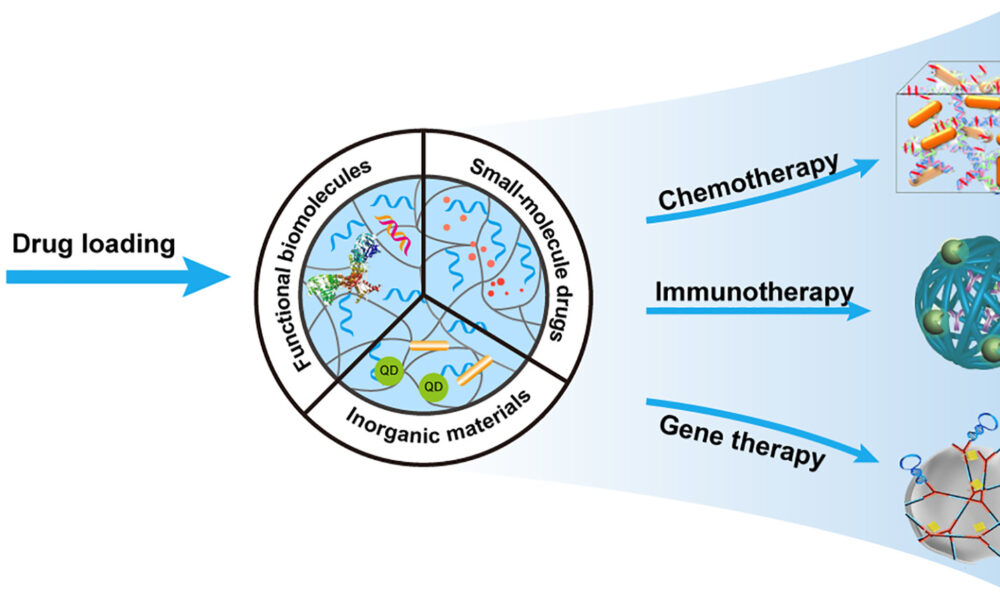
Besides acting as the backbone of genetic material, DNA is getting significant attention for being a versatile building block of nanomaterials—particles one-thousandth of the diameter of a hair strand—including a type of nanomaterial called DNA hydrogels

As a rising star in the field of nanoengineering, which is the study of extremely small-scale particles, these hydrogels have great potential for biomedical uses. In a recent paper published in Advanced Science, McGill researchers proposed the use of a novel structure that would allow the formation of stronger DNA hydrogels for wider biomedical applications, such as enhancing drug efficacy. 

Hydrogels are structures that can hold large amounts of water. For example, some hydrogels can absorb up to 600 times their original volume of water. They can be prepared from protein molecules, such as collagen and gelatin, and carbohydrate molecules, such as starch and agarose. DNA’s ability to absorb water enables it to possess the properties of a hydrogel.

DNA-based hydrogels, which are composed entirely of DNA, can be produced through chemical or physical linkages between DNA strands. They exhibit various sought-after qualities, such as biodegradability, the ability to self-heal, and non-toxicity, making them an ideal choice for in-body tasks such as drug delivery, targeted gene therapy, and cancer treatment.

However, DNA hydrogels are not without their drawbacks. For instance, hydrogels made of unmodified DNA are extremely soft, making them incompatible with certain environments, such as the spleen, which has stiffer cells. 

Additionally, unmodified DNA hydrogels lack a convenient chemical handle, so they cannot be used for specific biomedical applications, such as controlled drug delivery, tissue engineering, and cell transplant therapy. Chemical strategies for the construction of hydrogels, notably ligase-mediated reactions, allow the hydrogels to be fine-tuned and tailored for these kinds of applications. 

“Scientists who wish to combine the attributes of DNA with say, catalysis, drug delivery, photochemistry, cell growth, or any other purpose for which chemistry has many solutions, rely on synthetically modified DNA,” wrote Christophe Lachance-Brais, a PhD student in McGill’s Department of Chemistry who led the study, in an email to The McGill Tribune. “Without a convenient chemical handle, DNA hydrogels are limited to the chemistry of DNA, and that may not be enough.” 

In other words, a convenient chemical handle allows biomaterials such as DNA to be re-constructed for biomedical applications.

Lachance-Brais and his team proposed the use of a novel nucleic acid structure resulting from a genetic assembly called a dA/CA motif, which is made up of poly-deoxyadenosine (dA)—a derivative of DNA components—and cyanuric acid (CA)—a small non-toxic molecule. 

“Our hydrogels could theoretically load up one molecule per adenine base, while the ones incorporating the molecule as low-density synthetic modifications could only release one per strand,” Lachance-Brais wrote. In other words, the new hydrogels are high-density, allowing them to have a high drug-loading capacity. This is advantageous because it means fewer hydrogels could be used to deliver the same amount of medicine. 

This novel DNA hydrogel can also respond to complex stimuli, including specific DNA sequences and small molecules. When the hydrogels come into contact with a stimulus, such as a drug solution, they swell up to absorb the drug.

The new hydrogel can even influence gene expression by delivering a high concentration of gene-related therapeutics. This is done by enhancing the gene-silencing efficacy of antisense oligonucleotides—a versatile group of therapeutics with gene-silencing effects used to treat diseases such as Duchenne muscular dystrophy and spinal muscular atrophy.

Although the development of DNA hydrogels is still in its infancy, McGill researchers have opened up exciting possibilities for biomedical applications of DNA hydrogels by making them a little less rigid—and their uses a little more flexible. 

Ask a Scientist, Private, Science & Technology

Call off the search for a “normal” brain

A “normal” brain—also termed “neurotypical”—has long been used in cognitive science research as a benchmark for brain activity comparisons. But this distinction between brains actually limits neuroscience research and has long escaped the notice of experts.

Jakub Kopal, a postdoctoral fellow in neuroscience at McGill, researches the effect of genetic mutations on brain architecture and behaviour, and has come to the conclusion that there is no such thing as a normal brain—at least in the general population.

“We talk a lot about a normal brain […] and I think these are notions that were used in the literature. This is more like the vocabulary from the 20th century,” Kopal explained in an interview with The McGill Tribune. “We are trying to argue now that there is no such thing as a typical brain or a normal brain.”

The idea of a “normal” brain is usually found in studies that look to distinguish between subjects with and without a brain disease. Those with “normal” brains make up the control group—a sample that is not affected by the experimental conditions and is used as a baseline—and are labelled as neurotypical.

“The term [neurotypical] was really focused on WEIRD [Western, educated, industrialized, rich and democratic] people. Most of the research takes place at the universities, [and] there is a specific [socioeconomic] group of people that go to university,” Kopal said. 

Previous research has focused mainly on WEIRD people, who actually do not make up more than 15 per cent of the global population. Another defining factor of neuroscience research, according to Kopal, is its high cost, which had limited sample sizes to only 15 to 20 subjects per study until the 2000s. 

“[We] need to reduce the ‘noise,’ so [researchers] would focus only on people that are right-handed or meet several other criteria,” Kopal said. “They would put these criteria to homogenize their group to get the strongest evidence. But then it is really not telling you much about the whole population.”

As Kopal explained, the inclusion of only right-handers in studies consolidated a popular conjecture that our language centre is localized in the left hemisphere of the brain. It was only when researchers included left-handers in their studies that it became clear that the lateralization of the language centre in the brain is quite different for lefties—found in the right hemisphere. In this case, narrow sample sizes lead to results that don’t apply to the wider population and are not reproducible in future experiments. 

Lack of reproducibility in current research has been a big motivation for the creation of databases such as UK Biobank and Adolescent Brain Cognitive Development (ABCD) Study, which allow us to look at neuroscience research from a more global, inclusive perspective. UK Biobank is a resource with extensive genetic and health data from British patients, while ABCD comprises research focusing on the brain development of children in the United States. These databases have shown that ethnicity, gender, and other socioeconomic and personal characteristics factor into the makeup of one’s cognition. 

“The reproducibility crisis [showed that] we need large sample sizes in order to reproduce our results. And then there was another set of studies showing that the samples we have right now are really WEIRD,” Kopal said. “And this probably means that our results might not generalize to the whole population.” 

A potential application of expanding sample sizes in neuroscience research is using technology to assess risks of developing neurodegenerative diseases, such as Alzheimer’s

“With the advances in machine learning, we also saw that often our algorithms fail for minorities,” Kopal said. “Our machine learning approaches are really tailored to the majorities and they fail non-stereotypical populations.” 

This is especially critical in the medical industry because physicians must provide high-quality services to diverse patients and need reliable data based on inclusive studies. 

“I don’t want to claim I can predict Alzheimer’s disease if you are of European ancestry, well-educated, have a higher income and you’re a male,” Kopal said. “This doesn’t really serve us as a tool. [We want] a tool that serves the whole population.”

McGill, News

Students, faculty frustrated by administrative changes within Faculty of Science

Recent changes within the Faculty of Science concluded with the merging of administrative staff from the Geography, Earth and Planetary Sciences (EPS), and Atmospheric and Oceanic Sciences (AOS) departments into one administrative pod as of March 13. This decision has brought on significant frustration and stress for staff and students, who cite a lack of effective communication from the faculty and sudden changes to advising and research procedures.

Bruce Lennox, Dean of the Faculty of Science, and Maria Babiak, Director of Administration and Operation for the Faculty of Science, announced the merger at an EPS department meeting on Nov. 11, 2022. The change required the administrative staff of all three programs to move to a shared office in Burnside Hall and reconfigure their workloads to cover all programs rather than just one. 

The administration told students and staff that the changes were implemented to “create redundancy,” meaning that if one or more administrators were away on vacation or leave, the other administrators would be able to cover their work.

The physical move was initially supposed to take place on Jan. 5, but was subsequently postponed to March 13 because the shared office was not yet ready for occupation. While the administrative staff for Geography and AOS were already housed in Burnside Hall, the administrators for EPS moved there from the nearby Frank Dawson Adams Building. 

When contacted about the changes within the Faculty of Science, media relations officer Frédérique Mazerolle confirmed that the restructuring was taking place but did not provide further detail. 

Julia Baumgarte, president of the EPS graduate student society, The Adams Club, told The McGill Tribune that the physical displacement of the administrative staff has changed day-to-day operations and put a strain on certain research procedures.

“I know that a bunch of other students in the department […] need frozen samples for their research,” Baumgarte said. “As soon as that stuff [is] delivered, it has to go into a freezer. And if that were to be taken out of our building, those students’ research would be really compromised.”

Many students and faculty members of the affected programs have communicated that this change does not only reflect a difference in workloads or office space, but also disrupts the community and culture within these programs. 

According to William Minarik, an EPS faculty lecturer, the current administrators’ deep knowledge of their respective departments makes for an efficient workplace environment. To Minarik, altering these relationships affects the workplace’s  ability to run smoothly. 

“As a teacher and researcher, I interact daily with our department staff in order to work in these roles,” Minarik told the Tribune. “Our departmental office is the nerve centre of all departmental activities, the hub [….] Students with questions, concerns or other issues currently can visit and immediately talk to a knowledgeable, empathetic, and helpful person.”

EPS associate professor and Wares Faculty Scholar Christie Rowe told the Tribune that many students and staff feel that the delayed timeline of the merger reflects a broader trend of administrative disorganization at McGill. Rowe believes that there was insufficient consultation with the faculty about the essential function of the administrative staff. 

“[B]ecause we’re getting information very piecemeal, it’s not possible for us to prepare in any way,” Rowe said. “It would have been nice to consult with the department about what are the key functions that these admins are providing and what support we really need to ensure that the new system would also address the same issues. But so far, that consultation has been pretty thin.”

Rowe, Minarik, and Baumgarte all pointed out that because these programs are small and tight-knit, the changes have affected their sense of community.

“One of the key elements of my 10 years at McGill has been that we tend to appreciate one another as colleagues through all levels of the university,” Rowe said. “It’s that kind of social network of relying on one another that has made this a really rewarding place to work. And so I’m upset with anyone feeling undermined or feeling not valued in our community.”

Read the latest issue

Read the latest issue