Latest News

News, SSMU

Legislative Council passes motions on Uyghur rights, support for trans students

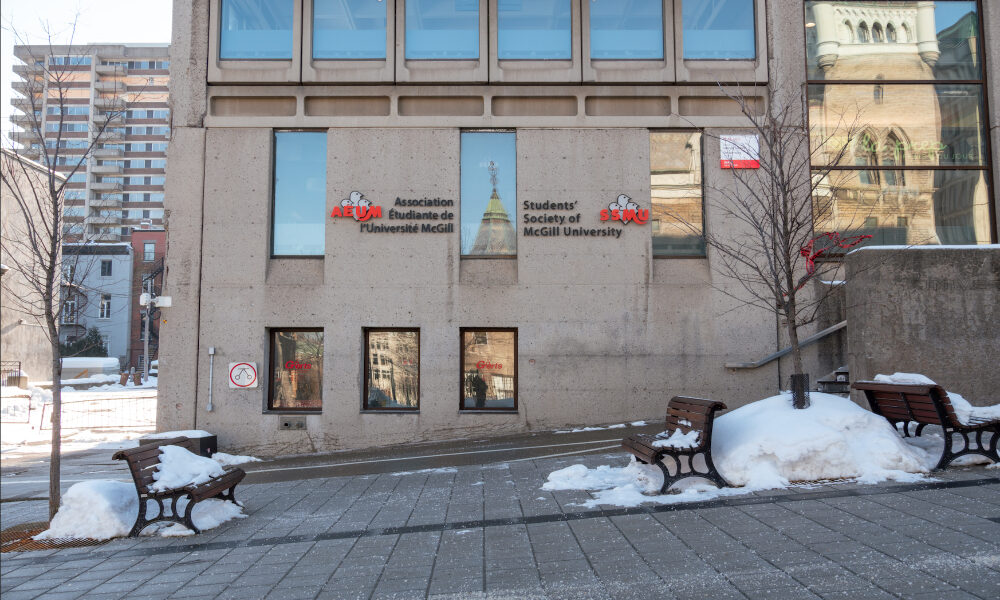
The Students’ Society of McGill University (SSMU) Legislative Council convened on Jan. 19 for its first meeting of the winter semester to vote on two motions: One regarding the state repression of Uyghur people in China and another one which serves to bolster SSMU’s support for trans students in the wake of Robert Wintemute’s scheduled talk at McGill’s Centre for Human Rights and Legal Pluralism (CHRLP). 

Vice-president (VP) External Val Masny presented the first motion, which seeks to pressure the McGill administration into divesting from companies involved in the Uyghur genocide. The motion was originally presented at SSMU’s Winter General Assembly but did not pass because the meeting did not reach quorum. The Speaker of the Council then sent the motion to the Legislative Council, in accordance with SSMU’s Internal Regulations of Governance.

Demands outlined in SSMU’s Divest for Human Rights Policy—which already calls on the university to divest from roughly $1,000,000 of holdings in companies deemed complicit in the genocide—would now apply to the full range of McGill investments outlined by the motion.

“The way in which the [Uyghur genocide] operates is knowably through mass surveillance of the Uyghur population, built in China and abroad, and those companies that we’ve researched have been found to engage in […] surveillance,” Masny said. “[McGill’s] investments total 115 million dollars. It is quite an impressive number.”

SSMU, borrowing from a study by the Uyghur Rights Advocacy Project, outlined their qualifications for companies considered to be complicit in the Uyghur genocide in the motion. The standards earmark any company known to use forced Uyghur labour, any company manufacturing in or partnered with East Turkestan, and any Chinese surveillance company or biotech company engaging in genomic identification—a tool China has broadly used to track its citizens.

The motion passed with 17 votes in favour and one vote in opposition.

Masny then brought forth a motion regarding Robert Wintemute’s foiled seminar, which reiterated SSMU’s support of trans people.

“There have been people in the student body who have named what has happened as hate speech,” Masny said. “[Our] firm position against hate speech is a prolongation of SSMU’s firm position against discrimination.”

Beyond officially condemning Wintemute, the motion requires that an action plan be created to equip SSMU in future efforts supporting the transgender community. This action plan, will be drafted before the end of this academic year in collaboration with SSMU’s Gender and Sexuality Committee and executives in University and External Affairs. 

The motion passed unanimously, with a single member abstaining.

Before either motion was voted on, representatives from undergraduate faculties—as well as SSMU executives—each presented reports from their respective branches of responsibility. Arts representative Matthew O’Boyle gave an update on the upcoming Fiat Lux project, which will shut down the McLennan-Redpath complex from Winter 2024 until 2026.

“There were a lot of concerns about study space, and [the university] has secured a contract with a place to secure study space,” O’Boyle said. “They’re also trying to find some other work-study programs for students.”

O’Boyle’s colleague, Arts representative Angelica Voutsinas, also had some news to share.

“If anyone has classes in Leacock, [AUS] Snax will be up and running soon—we’re just finishing up some construction,” she said, referring to the beloved snack bar whose reopening has been hampered in recent years by renovations and hiring struggles.

Moment of the meeting:

Masny expressed frustration with the motion supporting trans rights over the fact that, without clear mandates, decisions on how, if, and when to enforce guidelines are made at the discretion of SSMU executives alone. 

Soundbite: 

“We’re monitoring sidewalks at McGill because it’s one of our mandates—so if you see snow unshoveled or sidewalks unsalted, you can email me [….] We’re trying to pressure the city to do better shovelling snow.”
—VP External Val Masny, delivering an open invitation for students to email [email protected]  should they spot unkept sidewalks

Sports, Varsity round up

Varsity Round Up: Jan. 19-22

Martlets out-grind Laval Rouge et Or

Final: 55-54 W

Nate Northfield

On Jan. 19, an energetic and competitive atmosphere filled Love Competition Hall as the McGill women’s basketball team (2–8) took on Université Laval (7–3). 

The energy was contagious, providing the spark that the Martlets needed to overcome the Rouge et Or in a narrow 55–54 victory. In the absence of one of their key players—Jessica Salanon— the Martlets knew they had their work cut out for them matching up against a Laval squad with elite mental toughness and athleticism.

The Martlets started off shaky, allowing Laval to gain an early advantage with a 10-5 lead. However, a key timeout kept the Martlets poised, helping them solidify their defensive attack and earn them a two-point lead to close out the first frame.

In the second quarter, the Martlets converted their relentless defence into an unstoppable offence, going on a crucial 11-3 run to give them a comfortable lead. 

After halftime, Laval came out of the locker room with a mission. They made a 7-0 run thanks to Audrey Béland’s stellar offence and were able to cut their deficit to only eight points. The score sat at 45-37 going into the final frame.

In the fourth quarter, the Martlets went cold from the field and allowed Laval to chip away at the scoreboard. With two minutes remaining, second-year guard Katie Rathwell drew a massive charge to prevent Laval from getting ahead. In the next possession, third-year guard Emma-Jane Scotten hit two crucial free throws that would end up being the game-winning baskets. Laval was ultimately able to narrow the lead to only three points with 35 seconds remaining. The game reached a climax with 10 seconds left to go, when Laval’s Léa-Sophie Verret hit a layup to bring the score within one, but the Martlets held on to secure the victory. 

An emotional win against a versatile offence like the Rouge et Or should be a positive step in boosting the Martlets’ defensive confidence.

“We were told to switch on everybody,” said Rathwell. “They are a really athletic team and a really strong team, we’re mostly guards out there, so we were just trying to make the right switches off screens and not get those mismatches.” 

After falling 72-47 in a miserable rematch against Laval on Jan. 21, the Martlets will play their next game on Feb. 2 against the Bishop’s Gaiters (7–2). 

Rouge et Or basketball bests the Redbirds in back-to-back games

Final: 81-70 L 

Eliza Lee

After a tough loss against UQÀM (6–2) on Jan. 14, McGill Redbirds basketball (2–8) returned to Love Competition Hall for a match-up against Laval Rouge et Or (6–4) on Jan. 19.  

McGill began the game with energy and drive, seizing rebounds and skillfully evading Laval defence with quick passes. The team gained confidence from steady handling by first-year guard Samuel Chaput and five successful three-pointers, each of which were celebrated by the lively McGill fans. By the end of the second quarter, the Redbirds were up 35-21. 

In the second half, Laval sharpened their defence, with the Rouge et Or weaponizing their height advantage to grab rebounds and cover McGill’s offence. Though the Redbirds continued to fight hard, Laval shut them down, scoring 16 free throws in the final quarter and besting McGill 81-70. 

In an interview with The McGill Tribune, head coach Ryan Thorne admitted that the team went into the game expecting to win.

“We beat them last […] so we felt pretty confident in what we had as a game plan, and we executed it well in the first half, and just didn’t execute it well in the second half,” Thorne said. “We’re just trying to win one game at a time.”

Redbirds guard Sam Jenkins noted that the team plans to work on improving their stamina so they can play their best for the entire duration of the game.

“In the first half, we were […] the better team, defensively and offensively, and in the second half […] our intensity fell apart,” Jenkins said. 

He added that the team was optimistic going forward despite the loss. 

“We know we’ll be the team coming out of Quebec, we just need to find it within ourselves to play two halves of the game, instead of just playing one.” 

The Redbirds fell 88-74 to the Rouge et Or on Jan. 21 and will face off against the Bishop’s Gaiters at home on Feb. 2. 

Martlets hockey fall to the Ottawa Gee-Gees in a high-scoring affair 

Final: 7-2 L 

Jack Armstrong

The McGill Martlets (2–15–1) faced off against the Ottawa Gee-Gees (10–6) on Jan. 20 at McConnell Arena. Having won two of their last three games, the Martlets hoped to continue on their recent path of successes. The Martlets started strong and quickly jumped into the lead with a power play goal by first-year forward Anika Cormier. Ottawa, however, quickly outmatched McGill’s intensity and tied it up just three minutes later. The Gee-Gees continued to apply pressure throughout the period and scored an additional three goals, giving them a 4-1 lead heading into the first intermission. 

The Martlets began the second period much like the first and netted their second goal when first-year forward Maika Lecavalier produced a brilliant pass to fourth-year forward Makenzie McCallum, who calmly slotted the puck past the Ottawa goalie. The rest of the period was the battle of the tendies, as the Martlets were unable to capitalize on several scoring chances while second-year goalie Sarah Carmichael produced a myriad of saves.

The Martlets carried their momentum into the third period and just missed a couple of scoring chances within the first minutes. Both goaltenders continued to trade stunning saves until Ottawa managed to sneak one by Carmichael to restore their three-goal lead. McGill fought valiantly to get back into the game and continued to create scoring opportunities, but two late goals from Ottawa sealed the deal and handed the Martlets another defeat.

Despite the loss, head coach Alyssa Cecere remained optimistic heading into the final month of the regular season. 

“We’re taking it one game at a time,” said Cecere. “We want to have a better end to our season so we are taking it each game at a time, that’s our focus.”

The Martlets fell 6-1 to the Bishop’s Gaiters (8–8) on Jan. 22 at McConnell Arena for Bell Let’s Talk Mental Health Night. They will play next on Jan. 27 against the Carleton Ravens (6–11).  

Martlets volleyball takes revenge on the Ottawa Gee-Gees 

Final: 3-1 W

Philippe Haddad 

The McGill Martlets (8–4) exacted their revenge on the University of Ottawa Gee-Gees (4–9) on Jan. 22 in a three-set game. The second-seeded Martlets wore their special-edition pink “Dig for the Cure” uniforms as part of a fundraiser for breast cancer research. 

The first set began with matched fervor on both sides. Tension intensified throughout the opening stretch of play as both teams failed to score consecutive points. Phenomenal defensive efforts from libero Catherine Vercheval, middle blocker Charlene Robitaille, and outside hitter Clara Poiré allowed the Martlets to pull away with a lead, forcing Gee-Gee errors throughout the set. Middle blocker Meaghan Smith used her size to wall off the net, contributing two of the last four points to close out the first set 25-18.

The second set’s beginning echoed the first, with McGill capitalizing on Ottawa’s mistakes and duking it out defensively. This was the trend for most of the game, as the Gee-Gees committed 22 errors to McGill’s 10. Neither team was willing to give up easy points throughout this set, however, and hard-nosed digs from Vercheval and power hitter Victoria Iannotti along with Poiré’s heads-up awareness allowed McGill to finish it off 25-18.

The final set was a tale of two halves. McGill jumped to an early 14-6 lead with cut shots from Masha Solaja and beautiful assists by Audrey Trottier. The game seemed all but decided at 19-11 but Ottawa flipped a switch, pounding service aces down into McGill’s court and dominating through aerial combat to climb within two points of the Martlets’ 24-22 lead. It took a powerful spike from Poiré to close out the final set at 25-22.

“We studied [Ottawa] a lot,” Vercheval told the Tribune, explaining McGill’s defensive strategy. “At some point you have a game plan and you know where to go, but the rest you just grind and get up and do it.”

With the Martlets bringing home a 3-1 victory over the first seed Université de Montreal Carabins on Jan. 22, McGill has officially ascended to the number one spot in the RSEQ standings.

Ask a Scientist, Science & Technology

Could invasive species biologists bring their expertise to NASA?

In February of 2021, NASA’s Perseverance rover landed on Mars. Perseverance was the fifth rover that the space agency sent to the planet, but it had a unique purpose. The rover conducted the first mission to Mars designed to collect samples to be brought back to Earth, where they would be analyzed for signs of current or past life. With the return mission scheduled to arrive in 2033, questions about potential biological contamination are becoming increasingly urgent. 

Anthony Ricciardi, professor of invasion ecology and aquatic ecosystems at McGill, along with an international team of biologists, published an article last year in BioScience outlining a new approach to the issue, which they term “planetary biosecurity.” 

Ricciardi is not an astrobiologist or an engineer, but rather a biologist who has studied invasive species and their effects on Earth for the last 30 years. He helped develop a new field called invasion science, which combines several disciplines in order to study, predict, and prevent the impacts of human-carried invasive species.  

“The science of invasion biology has guided biosecurity at regional, national, and international scales,” Ricciardi said in an interview with The McGill Tribune. “So my colleagues and I believe that it could similarly guide biosecurity at the planetary or interplanetary scale.”

Invasion biologists are trained to observe organisms taken out of their natural habitats and the destructive impacts this can have on a host ecosystem. Familiar examples of invasive species in Canada include zebra mussels, which remove plankton, an important foundation for aquatic food chains, and buckthorn trees, which are notorious for changing soil conditions to inhibit other plant growth.

Having studied species invasions on Earth, biologists like Ricciardi have learned a number of important lessons and developed principles that Ricciardi believes could be extended to the issue of possible interplanetary contamination. 

One of the patterns that invasive species biologists have observed is that isolated ecosystems are especially vulnerable to ecosystem breakdown because the ecosystem has no experience with the invasive species.

“Ecosystems that have evolved in isolation, like Hawaii, or Australia, or Antarctica, are quite sensitive to the effects of introduced non-indigenous species, because they’ve evolved in the absence of similar organisms,” Ricciardi explained. “My colleagues and I would argue that planets and moons should be treated as if they’re insular systems.”

If planets are thought of as isolated systems, then maintaining biosecurity is an even more important issue, and biologists should apply other techniques to protect these ecosystems on Earth.

“For [an] example of how might we do this, a fundamental principle of invasive species management that could be applied to planetary biosecurity is the concept of early detection, rapid response,” Ricciardi said. 

Locating and identifying a potentially invasive organism as soon as possible is a challenge on Earth, and an even greater challenge on another planet, where we might not immediately recognize a foreign life form. 

Rapid response, on the other hand, is critical to address a possible threat before it becomes entrenched and more difficult to control.

However, any organisms on other planets would probably resemble bacteria or fungi, and there is a very low risk of transmission to Earth. 

“The aliens we’re talking about are not little green men,” Ricciardi said.

While the chances of fungal or bacterial contamination are extremely low, Ricciardi says that scientists must take them seriously and prepare for the unexpected. 

“We’re talking about things, which are realistic scenarios, but highly improbable. But that’s what low risk disasters are,” Ricciardi said, likening it to a natural disaster such as an earthquake.

For Ricciardi, while these risks are serious, they are also justified by the possibility of new discoveries. 

“To any biologist, the search for life beyond Earth has got to be on a list of noble human endeavours,” Ricciardi said. “It could very likely produce an enormous discovery, and I think that could happen in the not-too-distant future. It justifies exploration, but it also justifies caution.”

Campus Spotlight, Student Life

The super family behind Super Sandwich

If you are a McGill student, odds are you have heard of Super Sandwich. Or, if you are my roommate, you have eaten it every single day you have been on campus for the past year without fail. Wherever you fall on this spectrum, you can agree that Super Sandwich provides a necessary community service.

As a frequent Super Sandwich consumer, I was curious to find out the story behind the restaurant-slash-depanneur’s inception. Turns out, the neon Super Sandwich sign outside the store has been lying to us, and we have been loyal customers of Charcuterie Le Cartier, not Super Sandwich, this whole time! Jerry and Jocelyn Lo opened Charcuterie Le Cartier in 1988 as a convenience store and deli. They are originally from Mauritius and their children Mathis and Jenny Lo were born and raised in Oslo, Norway. 

Mathis and Jenny started out by helping their parents with the family business on weekends. After they graduated, their father was no longer able to run the business, so they took over in 2005. It has become a staple of McGill culture ever since. Mathis takes the orders and processes the payments, while Jenny makes the sandwiches. 

As a prospective McGill student, I was sent a list of places to check out in Montreal by a family friend who had graduated from McGill in the mid-2000s, and Super Sandwich was at the very top of that list. The unassuming location of the deli coupled with its lack of advertising anywhere on campus made me curious as to how so many people knew about it, especially considering the disconnect between pre and post-COVID students. While Mathis concedes that COVID-19 lockdowns were very difficult for the business due to the lack of students on campus, this semester has been one of their most successful ever. 

The passion that Mathis and Jenny share for their business is apparent when they discuss it. 

“I think there’s not one day in my life that I woke up and said that I don’t want to go to work [….]  I guess it’s because most of my customers are students. Students are busy with their studies and don’t have time to give a person like me a hard time,” Mathis said in an interview with The McGill Tribune.

Mathis amusingly points out that he used to make friends with customers in his younger days but doesn’t anymore, now that he’s older. However, he has become quite close to some customers and has even attended a couple of their weddings.

On the topic of weddings, Mathis himself met his late wife working at Super Sandwich. She was a management student at McGill who came into the store regularly to buy sandwiches. 

Mathis credits the business’s success to the fair pricing of their sandwiches, as well as the speed with which their customers are served. That speed is in part thanks to his memorization of around 75 customers’ orders.

“If I already know the order, it saves time. It’s funny, sometimes the customer and [I] just have to look or nod at each other without speaking and we know,” Mathis said. 

If you are an avid Super Sandwich customer, you have probably heard the chatter about it possibly closing down or moving. Mathis explained that they are currently in talks with their landlords about their lease and are uncertain about how long they will be able to stay at their current location. If staying entails raising their prices to an unsustainable level, they will have to move. 

With its close link to the McGill community, some have wondered if the business will ever make its way to campus. However, Mathis is wary of the McGill administration’s lengthy wait times for adding new food vendors on campus. 

“We also inquired about a location on McGill campus, but unlike Super Sandwich, it takes a bit more time to get an answer.”

Ask a Scientist, Science & Technology

Get excited about endophytes

In the world of industrial production, there is often one resource that goes forgotten—microbes. Microbes are everywhere and have adapted to almost every environment, from the inside of nuclear reactors to the outside of the International Space Station.

When thinking of natural interactions with microbes, we often think of disease, but microbial partnerships can be mutually beneficial. Many species of bacteria have established partnerships with  larger organisms, including plants, with the microbe and the host exchanging nutrients to help each other survive. Many plants give the bacteria sugars, while the bacteria help the plant acquire nutrients. Legumes, such as peas and lentils, have root nodules full of nitrogen-fixing bacteria. And luckily, humans can use these partnerships to our advantage.

Professor Suha Jabaji is no stranger to mutualistic microbial partnerships. Her research focuses on plant-pathogen and plant-endophyte interactions. Specifically, Jabaji’s lab focuses on endophytes, microorganisms that live within plants without harming them in a mutualistic relationship. The lab also works on bioprospecting—the process of identifying useful compounds from microbes like endophytes and other bacteria to find compounds that can be used in agriculture and industry. 

“[Endophytes] don’t have any side effects, they have a mutual relationship with the plant. They use the plant for a little bit of food, but they help the plant with so many things,” Mamta Rami, a research assistant at the Jubaji lab, said in an interview with The McGill Tribune.    

The Jabaji lab works with a number of industrial partners to find endophytes and bacteria that can be put to work. One of their goals is to identify endophytes that can act as an eco-friendly alternative to chemical pesticides and fertilizers and increase crop yields. Other bioprospecting targets include endophytes that can enhance a plant’s production of secondary metabolites. Secondary metabolites are not required by plants for growth, but help them respond to environmental stressors like ultraviolet radiation or animals that eat them. For example, caffeine is a secondary metabolite that helps trees from the Coffea species deter herbivores.

“Secondary metabolites mostly have medicinal and other kinds of biological effects that can be harvested and used in the pharmaceutical or cosmetic industry,” Rami said. 

With one of their industry partners, the Jabaji lab was looking for bacteria adapted to growing in crude oil, which produce compounds that disperse or break down oil compounds that could be harnessed to clean up oil spills. The lab isolated a bacterium called Bacillus velezensis from crude oil.

“It was leftover stock, whatever was leftover after extraction [. . .] it was creating problems for the environment because when the company takes out all the oil from the oil well, they just leave it there,” Rami explained. “So the company wanted to do something organic to remove the contamination.”

Once a promising bacterium or compound is found, it’s a long, slow process to take it to market. Since you can’t just sell bacteria by themselves, scientists have to either find a way to stabilize the microorganisms or to produce their active compounds in large quantities. Despite these challenges, more and more microbial products are finding their way onto the market, providing environmentally-friendly alternatives to the more harmful chemicals of the past. 

Arts & Entertainment, Film and TV

Diving into the ‘Love Island’ fishbowl

This past summer, I binge-watched season eight of Love Island UK in its entirety—an embarrassing total of more than 50 hours. Each day for eight weeks, I would occupy my well-worn seat on my family’s couch at the given hour and embrace the experience of watching the hot new bombshells throw down for love in a large, luxurious villa. The pool of contestants, usually half women and half men, are isolated from the outside world. With no connection to the internet or anything else beyond the villa walls, the generally ludicrously-attractive contestants have one goal: To find love. 

One evening, my mother walked into the room, watched approximately 10 seconds of it and sighed, “Why are you watching this crap?” 

It’s a valid question.

Since the show’s onset, the women islanders have been subjected to double standards, slut-shaming, and objectification from their male counterparts, not to mention an overall lack of emotional intelligence. In season three, contestant Jonny Mitchell openly stated that he did not believe in feminism and that women “almost already have more opportunities” than men. Adam Collard, a contestant on season four of Love Island, was the subject of a complaint lodged by Women’s Aid for “clear warning signs” of “gaslighting and emotional abuse” against the women contestants. Regardless, the Love Island casting crew decided to re-hire him for season eight. 

The male contestants encourage each other to flirt with every bombshell that walks in, despite their loyalties lying elsewhere. But the moment a woman expresses the slightest interest in another man, the men make their contempt very clear. An example of this was season eight’s Ekin-Su: The male islanders latched on to one moment of infidelity as grounds to slut-shame her for the entire eight weeks. Meanwhile, four out of the five non-single men wasted no time cheating on their partners within the first 48 hours of Casa Amor during the same season, yet none of them were taunted or harassed.

Contestants of colour are also continuously disregarded by their white counterparts on Love Island. Traditionally, in the first episode, islanders must choose who they want to couple up with solely based on appearance, picking from a line-up without so much as an introduction. And six seasons in a row, a Black contestant was picked last, deeming them the not-said-but-heavily-implied title of ‘Least Desirable’ among the islanders. White male islanders will also claim that their preferred “type” of woman are those with blue eyes and blonde hair. Due to Eurocentric standards, the beauty standard for Black women is an absurdly high-bar, especially dark-skin Black women, whereas, for white women, the bar is only at toe-stubbing height. The fantasy of love that invades our homes via the TV is one exclusive to conventionally attractive white people who, in most cases, enter the show for financial gain or clout. And throughout all eight seasons and 16 winners, all have been white except one. 

“They choose the worst people to go on this show,” my mother said, tutting at the screen.

But I disagree.

Love Island doesn’t act as a catalyst to worsen social injustices, but rather as a microcosm through which the inequalities of everyday society can be magnified. The events of each season are not unique to the confines of its villa; Love Island shows us a subculture entrapped within a fishbowl, and as we stare at its contents, our reflection in the glass stares back.

So why do I watch Love Island? Aside from the entertainment value, which I cannot pretend I don’t enjoy, I suppose my eyes stay glued to the screen out of morbid fascination. I enjoy watching exaggerated social dynamics play out within a controlled setting. Complete strangers are thrown into novel surroundings with no external influences and the same familiar social injustices are reproduced, highlighting just how deeply scarred we all are by our limiting subconscious biases. As the ninth season airs this winter, it will be interesting to see whether anything will change. 

Editorial, Opinion

Privatizing health care won’t fix a failing system

The Quebec health-care system is in a state of crisis. ER wait times are dangerously high, and there is a chronic lack of staff—including nurses who are exceptionally underpaid and overworked. Amidst a similar crisis in Ontario, Premier Doug Ford unveiled plans to increase the role of private clinics in the health-care system—a lead Quebec Premier François Legault seems to be following. However, privatization is a step towards undermining Canadians’ right to life by creating a system that prioritizes only those who can afford care. In order for universal health care to live up to its name, Canadian  politicians must work to transform the single-payer system so that health care is truly accessible to everyone.

Apart from overall poor infrastructure leading to long wait times for all, systemic racism remains rampant in the Quebec health-care system. Forced sterilization of Black and Indigenous women continues without large-scale inquests, and in 2020, Joyce Echaquan, an Atikamekw woman, died after racist negligence at the hospital where she sought care. Minute forms of racism also permeate medical care, including the underestimation of pain for Black and Indigenous people, which leads to lower pain-medication prescriptions and poorer outcomes. 

Meanwhile, Quebec’s health-care crisis is creating a workers’ rights catastrophe as nurses and orderlies are subjected to inhumane working conditions and the lowest median pay in the country. The largest union of Quebec nurses filed a complaint with the United Nations due to their forced overtime—which they describe as forced labour. The McGill University Health Centre (MUHC), which runs the Montreal General Hospital, also plays a role in the oppression of workers, alongside the institutional racism it perpetuates against its staff andpatients. The crises of overwork and poor health care reinforce each other: When staff are too exhausted to properly do their jobs, then patients suffer as a result, creating a larger strain on the single-payer system.  Government funds must be more efficiently allocated to ensure that staff are treated with respect and not exploited for their labour. 

But instead of taking measures to address the staffing crisis, there are still unreasonably high barriers to entry across medical degrees. Medical school acceptance rates such as McGill’s are unrealistically low, and the process favours wealthy applicants. Such obstacles also extend to the recognition of foreign medical degrees. Highly-qualified health-care workers, with degrees mainly from the Middle East and Asia, are not recognized, and many must entirely restart their degree or clinical requirements—which is often a pricey, tedious process that keeps skilled workers from doing their jobs.

Although the public health-care system is in crisis, privatization is not the way to solve it. Just look south of the border: In the U.S. in 2022, 31.6 million people did not have any health insurance, while 43 per cent of working-age adults were inadequately insured. In a privatized system, where there is no incentive to serve poor, working people, health-care facilities will mainly emerge in the wealthy downtown core, where they can service rich clientele. Privatization efforts and paid clinics will eliminate the concept of health care as a human right

Despite what politicians like Ford have espoused, even partial privatization will undermine the entire single-payer system. With more private clinics, many people will stop using public services, and highly qualified doctors and nurses will leave to the higher-paying, private facilities. This will lead to a vicious cycle where there is further underfunding and staff shortages in the public system, decreasing access to and quality of health care for people who can’t pay.

Instead of calling for privatization, we need to invest in the current system to make sure that health care is truly a human right. McGill, especially, must use its institutional power to make medical school entrance requirements more equitable. McGill also has a responsibility to ensure that workers’ rights are protected at the MUHC. In parallel, Quebec government funds must be properly distributed tofix the health-care crisis—not through privatization—but by improving resources for hospitals and ensuring that health-care professionals, especially nurses, are properly compensated and treated with dignity. Quebec’s hospitals need solutions that can equitably care for the needs of all people—not just those who can afford it. 

McGill, News, The Tribune Explains

Tribune Explains: Emergency and safety services at McGill

Various university and student-run safety services exist on campus, from the Campus Public Safety department to McGill’s Student Emergency Response Team (MSERT), WalkSafe, and DriveSafe. The McGill Tribune looked into these services and how McGill students can use or join them.

What emergency and safety services does McGill offer?

McGill’s Facilities Management and Ancillary Services (FMAS) offers 24/7 security services for students, faculty, staff, and visitors through its Campus Public Safety department. Students and staff members can also benefit from safety escorts at both the downtown and Macdonald campuses. 

“Agents patrol the campuses, manage access, transport students and staff with disabilities[,] as well as respond to incidents and emergencies,” McGill media relations officer Frédérique Mazerolle wrote in an email to the Tribune. “In addition, we develop and implement standards and programs for emergency management at McGill, including the University Emergency Response Plan. We operate the Emergency Alert System and the University Security Operations Centre, and work with units across campus for a coordinated response to incidents.”

What independent emergency and safety services do student organizations offer?

In addition to university-run services, there are also student-run emergency services on-campus, including MSERT, DriveSafe, and WalkSafe.

MSERT is a service offered by a team of more than 75 student volunteer first responders certified by the Canadian Red Cross with the mission of providing free access to first aid to both students and Montrealers. 

The team offers first aid services from 6 p.m. to 6 a.m. to all McGill residences except for Solin Hall, while also helping ensure student safety during various events such as Frosh. They partner with the Canadian Red Cross to educate the public on first aid through courses and certifications.

DriveSafe is also run by student volunteers and the Students’ Society of McGill University (SSMU) and offers a safe means of transportation on the island for McGill students between 11 p.m. and 3 a.m. from Thursday to Saturday. In Fall 2022, Drivesafe managed to drive over 636 people home safely with 100 cars on shift. 

Walksafe, also run by SSMU, is a similar service that, instead of a car, offers McGill students and Montrealers the opportunity to have a trustworthy volunteer walk them home. Volunteers wear red jackets and accompany the callers to their destination from 9 p.m. to 12 a.m. from Sunday to Thursday and 9 p.m. to 3 p.m. from Friday to Saturday.

How can McGill students access these services?

For medical emergencies requiring ambulances—which are often the fastest and safest way to get to the hospital—one must call 911. Although there is a fee for ambulance services, some may qualify for free service or insurance reimbursement. After calling 911, one should call McGill’s Security Services, who will coordinate with emergency responders. For internal issues such as water leaks or strange odours, contact Security Services. The Security Services’ downtown phone number is (514) 398-3000. The Macdonald Campus Security Services’ phone number is (514) 398-7777. 

The McGill Student Emergency Response Team can be reached at (514) 398-5216.

To access WalkSafe, students can call (514) 398-2498 or make a request on WalkSafe’s website. Reservations are not allowed; services are offered on a first-come, first-serve basis.

DriveSafe can be reached at (514) 398-8040 or by filling out an online form. Like WalkSafe, they do not accept reservations

How can students volunteer with these services?

Those interested in volunteering with MSERT can apply at the beginning of every fall semester. Students do not need to have a first aid certification to apply, as MSERT trains its new members. 

Those interested in volunteering with WalkSafe can contribute to the service by becoming walkers or dispatchers, who are responsible for assigning volunteers where needed.

DriveSafe volunteers can either become drivers; “shotguns,” who ride next to the driver and contribute by giving directions, taking care of passengers, and corresponding with dispatchers; or dispatchers, who take calls and assign users to available cars. 

ABCs of Science, Science & Technology

Social chatbots are abetting the loneliness epidemic

Isolation. Anxiety. Depression. The loneliness epidemic rages onward even as the era of lockdowns is mostly behind us. Around 33 per cent of adults worldwide report often feeling lonely, with research showing that social isolation is correlated with greater physical and mental health risks, including heart disease, weakened immune system, higher sensitivity to pain, and various psychological disorders. 

Confronted with such an enigmatic, seemingly Sisyphean issue, society responds with what it does best: Problem-solving with technology. Humanlike social chatbots, or conversational artificial intelligence (AI) applications, now function as virtual friends who are unnervingly attentive and inordinately supportive—seemingly the perfect antidotes to loneliness. Yet, with rising concerns about digital privacy, the murky ethics of AI, and overall detriments to wavering mental health, the proliferation of AI chatbots is much more of a danger than a tool for well-being.

Cybersecurity issues are inevitable when interacting with chatbots. Users’ names, email addresses, phone numbers, usage data, and cookies are often stored and shared with external services by AI applications, despite superficial reassurance that user information is completely secure. This means that unidentified third parties will have access to all contact information, unbeknownst to most users. Worse yet, chat history, images, voice recordings, and calls are almost always recorded and stored semi-permanently as the chatbots’ training bases. Personal identifiable information (PII), such as speech patterns, voice and facial recognition, as well as racial and gender profiles, may thus be stored without the users’ direct consent. Even though digital privacy regulations are in place in Canada, they simply cannot account for the fast-paced, almost parasitic encroachment of AI chatbots.

Replika, a chatbot launched in 2017, has espoused physical violence and sexual harassment time and again. Purported to be the non-judgmental, 24/7 available friend who supports the user no matter what, the chatbot rarely disagrees—even when users suggest illegal, discriminatory, or self-sabotaging actions. Replika has encouraged people to commit murder or suicide, often within a mere few lines of message exchange. 

Contrary to what companies may promise, AI chatbots do not ‘comprehend’ human language. Conversations are collected and deciphered through natural language processing (NPL) and human-like feedback generated through machine learning. All chatbots do is analyze the users’ language, syntax, opinions, and beliefs, then mirror their responses accordingly. In this sense, they could easily pick up and learn biases, discrimination, or hate speech, often reflecting neither common sense nor basic moral values. These AI chatbots thus pose critical risks by feeding into their users’ often already turbulent state of mind by depriving them of real, human interactions.

The questionable effects of chatbots do not end with violence—the perceived anthropomorphism of AI technology often creates delusions of interacting with another person. With features of styling one’s own chatbot avatar, starting from haircuts and eye colours to ethnicities and gender expressions, users are encouraged to regard their AI companions as their perfectly tailored friends, much more compatible and amenable than actual humans. Additionally, these chatbots do not have real needs, nor do they ask for anything in return. They are merely designed to appease users, often leading to toxic emotional dependence

Indeed, some users have become deeply attached to the point where even they are concerned about chatbots replacing their real, human connections. Worse yet, people have been developing romantic relationships, convinced that the AI application is capable of loving them back. Companies such as Replika have borne witness to severe attachment issues as petitions for restoring pre-update, intimate connections with their chatbots circulate the internet. While these social chatbots provide a space for users to be seen, heard, and supported, the one-sided interaction can only fuel delusions and worsen existing mental instability in the lives of vulnerable people.

At first glance, social chatbots might seem like an efficient, temporary replacement for actual therapy, but it was never designed as a proper psychiatry tool. From personal cases to wider user data, the detriments of AI applications far outweigh their potential support for mental health. If tech companies are to combat the epidemic of loneliness, they must start addressing the moral quagmire of conversational AI.

McGill, News, SSMU

SSMU General Assembly discusses internal policy audits, financial losses, and motion regarding Uyghur rights

On Jan. 16, students and Students’ Society of McGill University (SSMU) executives assembled via Zoom for SSMU’s Winter General Assembly (GA). The agenda included a vote on the Motion Regarding Uyghur Rights, the Divest for Human Rights policy report, a report from the Board of Directors (BoD), as well as portfolio reports from each SSMU executive.

Seventh on the agenda was a vote on the Motion Regarding Uyghur Rights. The motion, if passed, would expand Divest McGill’s mandate to include divestment from companies considered to be complicit in the ongoing Uyghur genocide. An investigation by The McGill Tribune in March 2022 revealed over 15 million dollars of McGill’s endowment fund tied up in companies complicit in the mass detention of the Uyghur people.

With an attendance just shy of 50 students, including SSMU executives and the Speaker of the Council, the meeting failed to reach quorum—350 attendees must be present to pass any motions. Although a unanimous majority voted in favour of the Uyghur Rights motion, it could not be approved at the GA—it was later presented at a Legislative Council meeting. Before the vote, gallery member Naomi Sacks, U0 Arts, voiced her support for the motion to the Assembly.

“I think that as a university, and as members of our university, we have a responsibility to make sure that the endowment goes towards good causes, and not towards genocide,” Sacks said. “I do think it is super important that SSMU takes a stand, because SSMU is a powerful organization, and with the backing of SSMU, McGill might listen to us.”

The GA then proceeded with a presentation of the BoD’s Report from SSMU President Risann Wright. She had several updates to share since the Fall 2022 GA, including contract renewals and the hiring of new staff, approval of the Financial Statements for the 2022 fiscal year, and ratification of the new Consultation Policy. The BoD also authorized a budget request for an activist bootcamp, and similarly approved the Fall 2022 Referendum Questions.

From there, the GA heard summary reports from SSMU’s various executives. President Risann Wright explained SSMU’s ongoing audit of all governance and policy documents to ensure that the Society adheres to practices of equity and inclusivity.

“This past semester I did quite a bit of research […] to look at doing an audit from an EDI [Equity, Diversity, and Inclusion] perspective of all of our government documents, including our Constitution and Internal Regulations,” Wright said. “We have met with various firms and organizations and consultants in this space, who were able to provide insight, and hopefully we will continue to use their support moving forward to ensure that we have the cutting edge of EDI and equity considerations in our policies and governance.”

Vice-president (VP) Finance Marco Pizarro followed with an explanation of the considerable financial losses suffered by SSMU in the past year. According to Pizarro, the current economic climate, in combination with the campaign for McGill to divest from fossil fuels, has had a “huge impact” on SSMU’s finances. He added that Gerts Bar and Café, which is run by SSMU, is struggling due to current inflation rates.

“With our investment fund, we lost a lot of money, a few hundred thousand dollars,” Pizzaro told the Assembly. “The only people that were making money [this year] were the ones that were invested in oil and gas, and thanks to our Divestment and Human Rights Policy, we were not.”

Moment of the Meeting:

SSMU President Risann Wright reported that the Pilot Groceries Program—which launched in December to provide vouchers and free meals to registered students—will soon be made permanent if the program fee motion manages to pass during the Winter 2023 referendum.

Soundbite:

“SSMU is currently working on building affordable student housing for students. The Affordable Student Housing Committee has been truly formidable and is super motivated to do research and to advocate for student priorities in terms of housing [….] Shortly, you should see more information about your housing rights, events, listers, social media posts, all of that.”

—VP External Val Masny on the Affordable Student Housing Committee

Read the latest issue

Read the latest issue