

Latest News

McGill, News, SSMU

McGill student sues university, SPHR McGill and SSMU with support of B’nai Brith

Jewish service organization B’nai Brith Canada announced on July 27 that it will back a lawsuit filed against McGill University, the Students’ Society of McGill University (SSMU), and Solidarity for Palestinian Human Rights McGill (SPHR) for “participating in creating an antisemitic environment.” The lawsuit, filed by Jonah Fried, U3 Arts, claims that attempts to implement the Palestine Solidarity Policy not only contradict McGill’s Memorandum of Agreement with SSMU, but also violates SSMU’s own constitution. 

Fried, the plaintiff, officially filed the lawsuit on July 22 in the civil division of the Superior Court of Quebec. He is receiving financial support exclusively from B’nai Brith’s Legal Defense Fund though he declined to clarify whether his attorney, Michael Bergman, is associated with the organization. In an email to The McGill Tribune, Fried claimed that McGill failed to properly address the “discriminatory” Palestine Solidarity Policy.

“We [Fried and B’nai Brith] are suing because McGill’s administration is not enforcing its anti-hate policies—which the Palestine motion violates—allowing antisemitism to fester,” Fried wrote. “We want to show all Canadian universities that, with the help of B’nai Brith Canada, the Jewish community will not stand for this any longer.”

Fried also said that “Jewish students need to see that they are not alone, and that there are legal resources available to challenge antisemitic prejudice.”

Riley* and Blake*, two representatives from SPHR McGill, told the Tribune in an interview that SPHR has yet to gain access to a copy of the lawsuit; the plaintiff has not sent the group a copy and, despite the lawsuit being part of the public record, an electronic version of the document has not been made available online. In fact, SPHR members only learned of the lawsuit after it was reported on by several media outlets. 

“We do not have more details than what the press has released,” Riley said. “We do not even know if [Fried] is actually going to go through with it [….] We have not looked into [obtaining a lawyer] yet because we do not know what we are faced with […] but so far we have been offered legal support.”

The lawsuit did not come as a surprise to Riley and Blake, however, as they explained that backlash against pro-Palestinian activists is commonplace. 

Blake shared that SPHR has received lots of support from organizations outside the McGill community. This support extends from the willingness to provide legal aid to requests for interviews about the struggles Palestinian students have dealt with on and off campus. Media organizations and non-profits have also asked for resources that provide in-depth information about the injustices Palestinian people and their supporters face. 

One organization that has openly and proudly supported SPHR and the larger Boycott, Divestment, and Sanctions movement is the Canadian Foreign Policy Institute (CFPI). On July 14, CFPI hosted a virtual rally, during which it invited members from SPHR McGill to share their stories about pro-Palestinian advocacy and the attacks they have faced—such as having personal information posted on the pro-Israel watchdog website Canary Mission—as a result of such work. 

In an interview with the Tribune, Yves Engler, board member and fellow of CFPI, explained that the webinar was preceded by the publication of a letter in support of the Palestine Solidarity Policy signed by CFPI, Just Peace Advocates, and Roger Waters, among others. According to Engler, the rally was not only about supporting students, but also showing organizations like B’nai Brith, the Centre for Israel and Jewish Affairs, and the McGill administration that they cannot suppress the will of the student body without facing external backlash.

“There needs to be pushback against the hard, aggressive, outside lobbying of these anti-Palestinian, pro-apartheid organizations,” Engler said. “It is important that B’nai Brith and these other bullies do not get their way.”

Engler, along with representatives from SPHR, expressed confusion over why Fried filed his lawsuit, since the Palestine Solidarity Policy was ultimately abandoned by  SSMU. Richard Gold, a law professor at McGill, explained in an email to the Tribune that the basis of the lawsuit is unclear. He pointed to the passing of Bill 32 earlier this year, which protects an individual’s right to freely participate in discussions and debates on campus without being persecuted for their “doctrinal, ideological, and moral” beliefs. 

“Whether one agrees or not with the substance of the referendum […] you cannot sue because someone tried to run a referendum that never had any effect,” Gold wrote. “I see no obvious legal basis for the claim against McGill and the student organizations, [it] would seem to run against Quebec’s Bill 32.”

Riley and Blake questioned whether other Jewish students at McGill felt the same as Fried. Both SPHR members clarified that they do not consider themselves to be antisemites and explained that their pro-Palestinian activism is only ever geared toward raising awareness about the killing of innocent Palestinians, not spreading hate. 

Hillel McGill told the Tribune in a written statement that it took issue with the Palestine Solidarity Policy, but relied on the mechanisms in place at McGill and within SSMU to address their concerns. The student group clarified, however, that it is not opposed to the lawsuit.

“This is one individual’s approach, his way of doing things, and that is his right,” the statement read. “At Hillel we are committed to working with students on the ground to build bridges, fight antisemitism and work to affect change ensuring everyone can enjoy a good campus life [….] That is why it was so important for us to participate in in the process that led to McGill’s Initiative Against Islamophobia and Antisemitism.”

Some, on the other hand, such as Liam*, BA’ 20 and former member of Independent Jewish Voices (IJV) McGill, find Fried’s claims of antisemitism brought on by the Palestine Solidarity Policy to be unfounded. IJV is a Canadian Jewish organization that bases itself on the principle that supporting the pro-Palestine movement does not make one antisemitic. As a member of the Montreal chapter, Liam expressed dismay at Fried’s decision to go to court in an email to the Tribune

“There is a difference between being uncomfortable and unsafe, and university is supposed to be a place where you can be exposed to a diversity of opinions,” Liam wrote. “Given the serious incidents of antisemitism that have happened around the world in past few years, the focus should be on combatting actual antisemitism. Attempting to stifle students’ free speech criticizing Israel’s policies by claiming that it’s antisemitic is not going to make a safer environment for Jewish students.”

Liam’s position on the lawsuit, as well as those of Engler, Riley, and Blake, is not shared by McGill. As demonstrated by its threat to terminate its Memorandum of Agreement with SSMU, the McGill administration felt that the Palestine Solidarity Policy sowed further divisions on campus. Claire Loewen, a McGill media relations officer, detailed in an email to the Tribune that McGill attempted to rectify the division caused by the referendum question by creating the Initiative against Islamophobia and Antisemitism (IAIAS). 

“The Final Report of the IAIAS contains a series of bold and concrete recommended actions that we will implement over the coming years. The University will act on each of these recommendations immediately to enhance inclusion and belonging for Muslim and Jewish members of our university community,” Loewen wrote. “Our diverse identities are not only accepted at McGill but honoured and celebrated; no one should ever feel that they must hide who they are to feel that they belong on our campuses.”

As of yet, no date has been set for when the lawsuit will be heard in court. SSMU did not respond to the Tribune’s request for comment and the McGill administration declined to directly address the lawsuit. 

*Riley’s, Blake’s, and Liam’s names have been changed to preserve their anonymity.
Student Life, Word on the Y

Word on the Y: Migrating to Montreal

With the end of August fast approaching, thousands of incoming first-year students are preparing to begin their studies at McGill and, for many, their new lives in Montreal. While this period of transition can be daunting, upper-year students have been through the same thing: Facing the struggles of missing home, making new friends, and adjusting to the city. The Tribune gathered some of these students’ best advice on how to ease the transition of moving to Montreal.

Being in Montreal alone for the first four weeks was simultaneously the best and worst weeks of my life. It was the first time I had spent more than a few days away from my family members, and the friends I had from high school that were also at McGill seemed to be moving on without me. However, I started to notice a change around one to two weeks before Thanksgiving, as I ended up joining an intramural frisbee team with some people I had started getting close to. To my surprise, I not only got closer with those people but also with the same high school friends I once thought were going to “leave” me. To me, moving away from home allowed me the space to be able to find out who I am and enter a sort of “personal metamorphosis,” if you will. The relationships I forged are the best I have ever had, and my personal acceptance and happiness have grown so much from what they used to be.

— Amanda Klunowski, U1 Arts

Deferring my application and starting my academic year during the winter was a challenge! From friend groups already being formed to the harsh snow, it was not easy. However, getting involved in classes and finding people that have similar interests to me made the process way smoother. Moving from Brazil to Canada, and experiencing the snow was so fun—like a movie! I usually get annoyed with the snow, but [it’s] nothing that a good winter jacket can’t fix! Don’t forget the snow boots, otherwise, your feet will become so wet. In order to make friends, I would recommend participating in class or at least sitting next to someone who seems interesting. I made good friends from small talk. Another thing about Montreal that I love is that I never get bored. From clubs and bars to thrift stores and little cafés, there’s something for everyone.

— Julia Gaspar, U1 Arts

I was shocked by how quickly everything moves. Not only classes, but your interests, the people you meet, and your perspectives. It’s a pretty big adjustment at first, but once you figure out what works for you and find the people who feel like home, things slowly start to fall into place.

— Ellie Mota, U1 Arts

I had a pretty different but good experience moving to Montreal for my first year. Around two weeks before school started I was able to move into an apartment with my older sister who also attends McGill. Being able to stay with her this school year, especially at the very start, really allowed me to feel comfortable adjusting to the new city since it was my first time moving away from home. As someone who stayed off campus, I wasn’t able to make friends right away through residence, however, I ended up meeting so many great people in my classes. I think my first year was an awesome experience getting to meet so many different people, making friends, exploring the city, focusing on academics and experiencing independence for the first time in my life.

— Sadie Wang, U1 Science

Montreal was a very new and cool city compared to where I lived most of my life! With so many things to do within walking distance, I definitely can see why it’s ranked quite highly as a student city. I’ve felt pretty safe walking alone at night since the first day here, and overall, the location is one of the big reasons why I am super happy that I chose this university. It was a newer experience putting myself out there because I never left my little group in high school but everyone I met was super friendly. If I could go back in time I would have told myself to stress less about meeting people, and instead look forward to fun experiences. Welcome and best of luck with your arrival to McGill!

— K.R Sun, U1 Science

Out on the Town, Student Life

Auprès de ma blonde falls short on Mediterranean delights

Score: 1/5 stars
Price: $$

For those who aren’t familiar with it, Mediterranean cuisine is a complex term. I mostly think of it as Greek––and while Greek food is Mediterranean, not all Mediterranean food is Greek. There’s a big slice from Turkey, the South of Italy, France, North Africa, and the Levant, too.

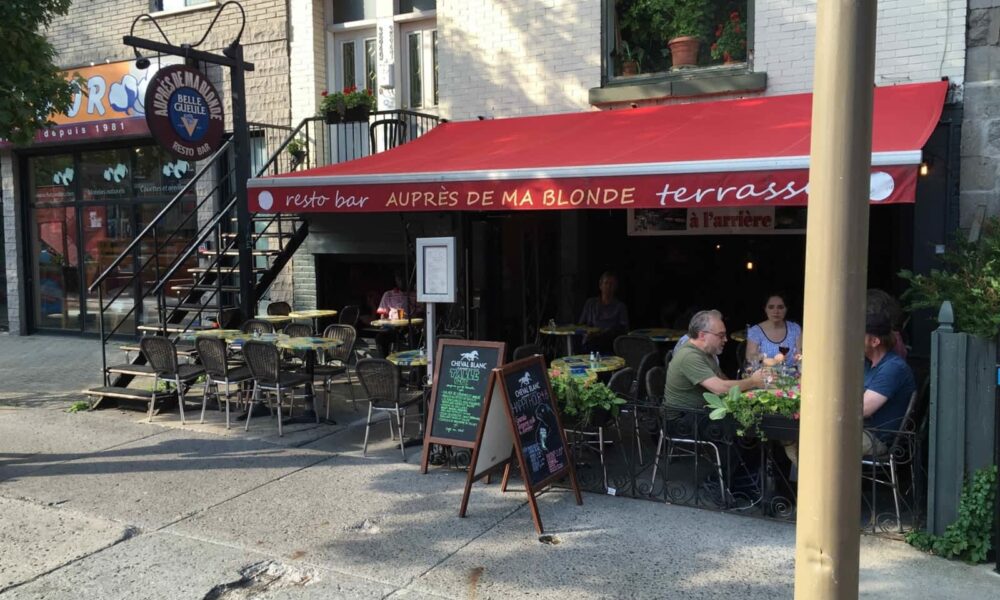
I’d been meaning to find a good Mediterranean spot in Montreal when I came across Auprès de ma blonde on St. Denis. It looked like a sliver of the Cretan coastline, with its sunshades and rustic bistro chairs on the front terrasse, so I stopped by.

It was one of those unbearably hot and humid days. That’s the thing about Canada actually: Everyone talks about the winters, but no one mentions the summers—they make you sweat like Prince Andrew in Café Campus. Sweltering, I went inside and sat by the window, as it was too hot to sit outside on the terrasse. There was another outside area at the back too, which was less run-down than the front, but again, it was too bloody hot.

For a late lunch on a Saturday, the inside dining room offered the same warm and welcoming hospitality as a shabby casino in Paphos. It had this eerie light brown colour scheme, and not the trendy kind in pricey Scandinavian furniture stores, but the unpolished, decrepit kind Legault has in his living room. The chairs were out of an 1980s Hilton and were in desperate need of a pension—and a Hoover. But the art on the walls took the cake. Utterly, utterly bizarre. One was of a sullen witch sitting behind a steering wheel—the sort of painting I imagine Marjorie Taylor Greene would cheer “girl power” to.

(Harry North / The McGill Tribune)

A selection of mains

Beef burger wth Tzatziki, feta, salad – $16

Couscous (vegetarian, lamb, chicken) – $13- $24

Fish and chips – $19

Souvlaki pita (chicken, pork, vegetarian) – $7.50

Steak and chips  – $24

The menu was reasonably priced and fairly expansive. To start, I got the soup of the day, which the waitress described as a “mushroom herb soup.” What arrived was a puddle in an ashtray. Grey as it was gloomy, with herbs floating on the surface like life jackets, doused in resolve, without the faintest idea how they’d be getting out of this alive. 

Through the surprising thickness, I managed to make out a mushroomy flavour. It had the same pizzazz as a SSMU email. Oh, and just in case my eyes and taste buds were deceiving me, I could see my live reactions by the mouthful in the soup’s reflection: A fierce grimace followed by a look of despair as I pondered how I’d stomach the next.

(Harry North / The McGill Tribune)

For a main, I was swayed by the half page of burgers over the fish, and opted for a beef burger with tzatziki, salad, and fries on the side––hold the feta. 

Burgers are best when they’re simple and made with fresh ingredients. And to its credit, this burger was simple. It didn’t collapse and the bun was lightly toasted. The patty, though, had been left in the freezer long past its bedtime. Not vile, but far, far worse: Dry, insipid, stomach-tickling in a bad way, clinging to the back of my mouth like a new astringent L’Oréal exfoliating cream. Then there was the tzatziki, which was bitter to the point of being outright hostile. I didn’t blame it, though. I felt the same. 

The fries on the side were Mediterranean-style, too—medium thickness and sprinkled with herbs. Most of them needed Viagra, poor sods. There was the side salad as well but by that point my stomach was aching and my patience withering. 

Tell me, how does Auprès de ma blonde make money? If you have to be a local retiree to return, how does it stay in business? I’ve spoken to a number of restaurants in the Plateau recently, and inflation is biting and margins are slimming. My sneaky suspicion is that they aren’t making money and that their days are numbered. My other sneaky suspicion is gigolos come here to play board games, but that’s more of a gut feel than anything else. 

Places nearby to try instead:

Auprès de ma blonde

3845 rue St. Denis  (25 minutes walk from McGill’s downtown campus)

Read more of Harry North’s restaurant reviews on Instagram: @roasting_reviews

Commentary, Opinion

We need to change how we talk about abortion

CW: discussion of reproductive violence, racism, violence towards Indigenous people

It has been over one month since the Supreme Court of the United States overturned the constitutional right to an abortion. Since then, the abortion debate is the loudest it’s been since the 1973 Roe v. Wade ruling: Anti-abortion activists are revelling in the decision while pro-choice supporters are mobilizing to protect whatever is left of safe reproductive care in the U.S. 

This hands-on battle, however, is tainted with racist, transphobic, and exclusive language. Approaching the abortion ban as solely a women’s issue reflects a narrow understanding of the ongoing struggle against reproductive injustice, often faced by people of marginalized gender identities. How we talk about abortion matters, and the way the abortion debate is unfolding in the U.S. should serve as a warning to pro-choice supporters in Canada for how not to go about their advocacy. 

Discussions around abortion often focus exclusively on womanhood and assumes that all women are cisgender and that only they need abortions. This is both incorrect and exclusionary. Womanhood, or gender more broadly, is not dependent on reproductive organs, and an insistence on making the abortion debate about womanhood misrepresents the realities of pregnancy across the gender spectrum. 

The language we use shapes how we understand an issue, how we mobilize around it, and eventually, how we write policy. If officials writing reproductive care policy only focus on women, their efforts will inevitably neglect the health care needs of queer and trans people. Obsessions over the so-called erasure of women echo the rhetoric of mainstream feminism from the 1970s that actively excluded Black, Latine, Indigenous, and queer people from discussions about their rights to bodily autonomy. The irony! 

White feminism also manifests itself in the public discourse that says restricting abortion access is a step back in time. Quebec Premier François Legault echoed this sentiment when he stated that the Supreme Court’s overturning of Roe v. Wade was a “sad setback”. Despite the seemingly unprecedented panic raised by white feminists, restrictive and oppressive control of bodily autonomy and reproductive rights is not a thing of the past. Many Black and Indigenous people have not been granted a “choice” when it comes to family planning. The recent discovery of hundreds of unmarked graves of Indigenous children in residential schools, the forced sterilization of Black and Indigenous people, and the racist medical abuse in the name of “experimentation” on Black people by white doctors is proof of it. A linear understanding of reproductive rights is perhaps accurate for white cisgender women but not for all who are affected by anti-abortion legislation. 

The way the abortion debate is unfolding in the U.S. is an opportunity for activists in Canada to reflect on and ultimately change how we talk about abortion. Feminists must center the concerns of queer, racialized, disabled, and working class individuals who will bear the disproportionate brunt of abortion bans. As much as this is a time for grief and recovery, it is also an opportunity to reshape the pro-choice movement without using the same exclusionary tactics that stripped the right to an abortion in the first place. Mainstream understandings of gender are changing and the language about abortion should reflect the work of queer activists of colour who continue to shape feminist mobilization. Benefitting from their labour and then excluding them from the conversation they helped raise will de-radicalize a movement that seeks liberation at its core. 

Playing by the rulebook of white feminism is not the answer. It is a fear-based response and a reflection of a scarcity mindset that says there is not room for everyone in activism. The sooner we embrace the power of difference, the more powerful the movement becomes.

McGill, News

Kanien’kehà:ka Kahnistensera address Pope’s visit, press for further investigation into possible graves at Royal Victoria site

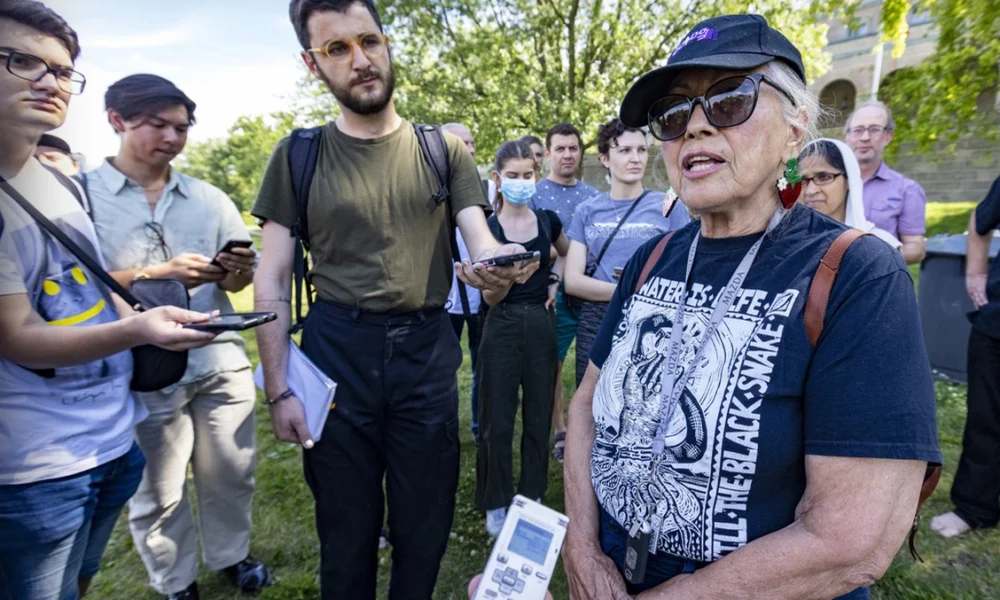
The Kanien’kehà:ka Kahnistensera (Mohawk Mothers) held a joint rally and press conference on July 27 to call for the removal of the cross at the top of Mount Royal in the wake of the Pope’s arrival in Canada. The Mohawk Mothers also updated the public on their legal proceedings with McGill over the New Vic Project, which the university says will go ahead as planned. The event, hosted by the Milton Parc Citizens’ Committee (CCMP), took place by the Mordecai Richler Gazebo on the unceded Kanien’kehà:ka land of Tekanontak, or Mount Royal, and drew a crowd of roughly 50. 

Throughout the rally, several Mothers explained why they take issue with the cross on Tekanontak, which was originally erected in 1643 by British colonizers. Kahentinetha, a Mohawk Mother, added that the religious symbol serves as a reminder of the horrors that the Catholic Church has inflicted on Indigenous peoples.

“That place that it sits is one of the most important communication centres of our people,” Kahentinetha said.“Where the cross is was where we would send messages by smoke signal [….] We could send these to Mount Bruno, the Adirondack, and all the way through.”

Kwetiio, another Mohawk Mother, addressed the Pope’s visit, calling the Pope’s apology insufficient and a painful reminder of the mass suffering the Catholic Church inflicted on Indigenous people.  

“Nobody asked him to come here. I don’t want him back on my land [….] Every time that [he comes] it hurts our people more and more to think of the injustice of that entity that he represents,” Kwetiio said. “[His visit] gets more attention than the people that are here, trying to save our land and save our culture and save our people and our babies from repeated abuse.”

Kwetiio believes that for an apology to be genuine, the Pope would need to rescind the Doctrine of Discovery, which has been used to justify colonization and forced religious indoctrination since the 15th century.

“The [doctrine] needs to be rescinded and he needs to write a new plight for the people that follow him and let it be known that this land, it belongs to the Onkwehonwe children,” Kwetiio said.

The Kanien’kehà:ka Kahnistensera also provided an update on their ongoing legal battle with McGill. The Mothers are demanding a halt to construction on the New Vic Project until an Indigenous-led investigation has been conducted into concerns that there may be Indigenous children buried nearby, from the time of Dr. Donald Ewen Cameron’s brutal experiments. Kahentinetha explained that the Mothers have refused to hire a lawyer, instead representing themselves because they do not believe in the Canadian legal model. Regardless, McGill announced at a July 26 hearing that construction will go ahead in October. 

“We need help [getting answers] and we need it soon, because they want to start digging up McGill in October and they don’t have our permission. The land belongs to us, the school was built with our money, and they never asked our permission for anything,” Kahentinetha said. “I think that they are going to try to hide the evidence so that we can’t do these investigations.”

CCMP organizers delivered a statement at the rally, declaring their unwavering support for the Kanien’kehà:ka Kahnistensera, criticizing the Catholic Church and the Pope’s visit, and condemning McGill’s decision to renovate the old Royal Victoria Hospital despite community disapproval. 

“We’d also like to emphasize that this campus expansion serves no other purpose than to cover up McGill’s heinous role in the MK Ultra experiments, their ongoing contributions to the fossil fuel industry and invasions of Indigenous territory,” CCMP organizers said.

In a statement to The McGill Tribune, McGill media relations officer Frédérique Mazerolle affirmed that the university is dedicated to having a collaborative relationship with Indigenous communities. Echoing past remarks, Mazerolle stated that the university will investigate claims of unmarked graves in partnership with Indigenous communities but did not provide specifics.

“We are committed to collaborating with governments, the Société québécoise des infrastructures (SQI)—responsible for the requalification of the former Royal Victoria Hospital—and Indigenous community leadership to undertake the work necessary to investigate this concern,” Mazerolle wrote by email.

The day after the rally, Mohawk Nation News, run by Kahentinetha, announced that the Mohawk Mothers’ next court hearing with McGill is set for Oct. 26, 2022.
Those in need of support can reach out to the Montreal Indigenous Community Network by email at [email protected] or phone at 438-992-4589. A 24-hour helpline for residential school survivors and their families is available at 1-866-925-4419.

Research Briefs, Science & Technology

McGill study finds anti-inflammatory drugs may lead to chronic pain

Pain is one of the most common reasons why people seek medical attention. The most popular medications people reach for when experiencing pain are anti-inflammatory drugs, such as ibuprofen—also known as Advil. But according to a new study led by Dr. Luda Diatchenko, a renowned pain researcher and professor of medicine and dentistry at McGill, these drugs may actually prevent pain resolution and promote the development of chronic pain

Diatchenko’s study aimed to better understand the underlying biological mechanisms associated with chronic pain development. The team of researchers recruited 98 patients with lower back pain for the study. The patients were divided into two groups: Those whose pain was resolved within three months of their first visit, and those whose pain persisted, and was therefore considered “chronic”.

To gain insight into which mechanisms are causing persistent pain, Diatchenko’s team analyzed the gene expression of the participants. Knowing which genes are differentially expressed between the two groups would allow the researchers to know what mechanisms—the researchers look at any and all mechanisms to avoid bias—are activated in one group and not the other. Diatchenko and her team hoped to find unique mechanisms that were active in the patients whose pain persisted, and that these mechanisms would therefore potentially be responsible for the development of chronic pain. 

“We expected that something was happening in the patients whose pain persisted […] but it was actually the opposite,” Diatchenko said in an interview with The McGill Tribune

What they found instead was a mechanism that was much more active in the group of patients whose pain resolved—and this process was inflammation. The results showed that during the phase of acute pain, up to a few days after the injury, genes associated with inflammation were more highly expressed in patients whose pain resolved, compared to patients whose pain persisted. This led to the scientists hypothesizing that inflammation during early pain stages protects against the development of chronic pain. 

The team then ran several experiments to test this new idea. They induced pain in mice and treated them with five different types of drugs. Two of them had anti-inflammatory properties while the other three only had analgesic, or pain-reducing, properties. All five drugs were effective at reducing pain in the short term. However, only the mice that were administered the anti-inflammatories developed chronic pain.  

In fact, anti-inflammatory drugs, such as ibuprofen, inhibit the inflammatory process, which consequently reduces pain. On the other hand, analgesic drugs with no anti-inflammatory properties, such as acetaminophen, also known as Tylenol, do not interfere with inflammation. 

The researchers’ findings suggest that inflammation following an injury allows proper healing to take place, which prevents the prolongation of pain. When people use anti-inflammatory drugs to provide relief, it interferes with this healing process. Although pain will be reduced in the short term, the development of chronic pain becomes more likely. 

“For acute pain, this study would very much suggest that Tylenol is a better idea than Advil,” said Jeffrey Mogil, a senior author of the study and E.P. Taylor Professor in Pain Studies at McGill, in an interview with the Tribune.

The final part of the study consisted of analyzing data from a large cohort of patients with acute lower back pain. Diatchenko and her team found that the biggest predictor of whether the pain would persist or be resolved was the use of anti-inflammatories.

“People who used [anti-inflammatory drugs] at acute back pain stages had a 1.7 times higher probability of having chronic pain two to 10 years later,” said Diatchenko.

Diatchenko and her team’s findings have garnered international attention, as it is the first study ever to show that anti-inflammatory drugs play a role in the development of chronic pain. However, the authors emphasize that no medical advice can be given based on this study alone as no clinical trials have been conducted yet. It is important to conduct diligent randomized controlled trials, especially when the findings of this study are challenging centuries of medical practice. 

Campus Spotlight, Student Life

Learning at lightning speed: The McGill summer student experience

While many McGill students spend their summers working seasonal jobs or jet-setting around the globe, for many others, this presumed period of rest and relaxation is all but an extension of their years-long quest to earn their degree.

During three sessions in the summer months, McGill offers a vast array of summer courses across departments at both the downtown and Macdonald campuses. These courses offer a condensed alternative to semester-long courses, allowing students to earn credits quickly but more intensely.

As Clement Cai, U1 Arts, points out, this can be particularly beneficial for graduating students seeking to complete complementary or required courses and electives.

“If you’re a senior student on the verge of graduation without enough credits, then taking one or more summer courses can help you collect [credits], and give you time to [focus on] graduation,” Cai told The McGill Tribune.

With the return to in-person learning, summer courses also give McGillians the opportunity to extend their stay in Montreal and explore all that the city has to offer in the summertime. From terrasse season to studying outdoors, there are tons of memories that can be made during the Montreal summer. For Melissa Carter, U1 Arts, this was one of the biggest draws to taking a summer course this year. 

“I saw a different side of Montreal than ever before,” said Carter. “It’s beautiful during the spring and summer and there are tons of parks to explore.”

The smaller class sizes of some summer courses versus larger prerequisite courses allow students like Cai and Carter to connect with their classmates on a one-on-one basis—bonds that were difficult to create during the winter semester that largely began online.

“My sociology course had about 40 or 50 people and after being online for so long, everyone made an effort to talk to each other and form study groups,” Carter said.

These condensed courses, however, are not without their own set of challenges. The fast pace of summer classes means that they require different learning and study methods to keep up with the material and evaluations.

For Carter, staying on top of her course’s content right after lectures was key to overcoming the shorter windows between evaluations. 

“I studied what [I] learned immediately after class and then put my notes into Quizlet to make studying for the exams easier,” Carter told the Tribune.

Georgia Soumakis, U1 Arts, echoed the need for consistent studying for those who wish to stay on top of their summer studies.

“[Summer courses] can be tough because during the year you can catch up pretty easily if you fall behind,” Soumakis said. “With condensed courses, you really have to put in the time every day and stay on top of your game—there’s not really time to slack off.”

Students who are working jobs in addition to taking summer courses are faced with the further challenges of balancing work expectations with school—a balancing act that is necessary for the countless McGill students who rely on the summer to earn a full-time income. 

Soumakis’s job, along with her lingering feelings of burnout from the fall and winter semesters, were what made summer studying difficult, particularly when her final exam was approaching.

“I was working a job and an internship that all overlapped during the final week of my summer course, which made studying for the final [exam] much more challenging,” Soumakis said. “The workload definitely felt like a continuation of the school year.”

K.R. Sun, U1 Science, found that efficient and varied studying patterns were key to juggling a full-time job with the fast-paced demands of summer learning.

“I upped my work hours during the summer, but it left me with very little energy to study,” Sun told the Tribune. “I started to look for multiple resources online to learn, which helped me grasp class content better.”

Despite these challenges, Sun highly recommends summer courses to their fellow McGill students.

“You get the same knowledge, but quicker, and if you’re interested, summer provides a lot of time to do that extra reading.” 

Research Briefs, Science & Technology

A killer menu: How climate change is modifying orca diets

If you’re thinking of going killer whale watching this summer, you might have a harder time than usual catching a glimpse of those famous black-and-white tail flips. 

Climate change is driving killer whales north, further into the Arctic Circle, triggering a cascade of disturbances within the Arctic marine ecosystem. Scientists, such as Melissa McKinney, an assistant professor in McGill’s Department of Natural Resources, are investigating how whale migrations have and will disrupt food webs in the Arctic. Anaïs Remili, a PhD student in McKinney’s lab, is leading a project to reconstruct killer whales’ diets and to understand how food webs are changing now that the whales are moving into unprecedented territory

Unlike many Arctic marine mammals, killer whales are restricted by the presence of ice sheets—their dorsal fins hit the sea ice as they move through the water, preventing them from crossing into the Arctic icescape. But as the Earth’s atmosphere has warmed and the ice sheets have begun to melt, more space in the Arctic has become available to whales. As they migrate northwards, into the territory of narwhals, belugas and seals, killer whales expand their diets, feasting upon these larger prey items with greater nutritional value, ultimately disrupting a food web that researchers know little about. 

 “As the Arctic is changing so rapidly, we don’t know yet if the killer whales are having a huge impact or a moderate impact […] on the food web’s dynamics,” Remili said in an interview with  The McGill Tribune. “We know from past experience that killer whales have […] some trophic cascade effects on different food webs […] and that can have huge impacts down the line.” 

Remili explained that there is some concern within the scientific community that this increase in predatory activity will shrink narwhal, beluga and seal populations, which could provoke further ecological disruptions. 

Reconstructing a killer whale’s diet is no simple task. Orcas are already difficult to track because they swim to parts of the ocean that are hard for humans to access, which also makes recording prey ingestion via observation nearly impossible. Remili has overcome this challenge by using a technique called Quantitative Fatty Acid Signature Analysis (QFASA) to understand the diets of killer whales. 

“We cannot get a long-term feeding assessment, so what we do is go to the Arctic and collect samples [by] shooting a little dart with a modified tip […] to take a biopsy,” said Remili. “We can then look at the blubber […] and look at the fatty acid composition.”

A whale’s blubber consists mostly of fatty acids, the building blocks of fat. One specific class, called dietary fatty acids, is acquired from ingesting prey and it accumulates in the predator’s fatty stores. A closer inspection of these fatty stores can reveal the exact kinds of prey that a whale has consumed. Remili used QFASA to measure the different proportions of dietary fatty acids within the biopsy sample to figure out which prey were eaten by the whales.

“The problem is there is [a] little modification that happens from the prey to the predator and that’s because the predator will metabolize some of these fatty acids,” Remili explained. “That’s the piece of the puzzle that we have been missing for such a long time.” 

Remili was able to identify the fatty acid modification between prey and predator by using captive killer whales from SeaWorld as models, who have been fed the same diet for their entire lives. Once the scientists could distinguish between the fatty acids from prey and those from the killer whales, it was possible to use QFASA to model the diets of 200 wild killer whales of the North Atlantic. 

This breakthrough is a significant step in advancing research on killer whales as they are notoriously difficult to study due to their inaccessibility. In the future, Remili is hoping to use her research to determine how anthropogenic threats, such as contaminants like pesticides and flame retardants, affect the livelihoods of these enigmatic marine mammals.

Student Life

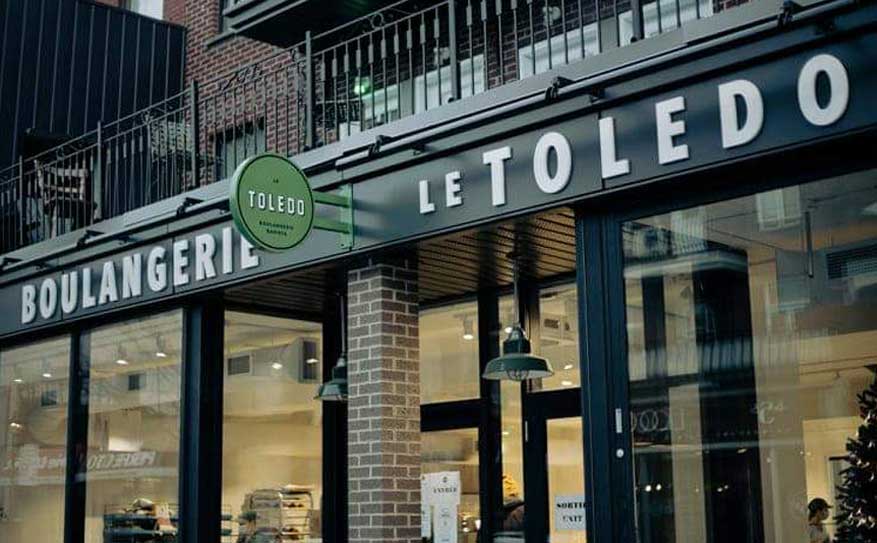
Serving locals loaves: A taste of Paris at Le Toledo

That smell. My, isn’t it wonderful? Warm and yeasty like a Dutchman’s front pocket. It’s a smell that has fuelled nations, built pyramids, and gotten Julius Caesar out of bed! Do you smell it? Unblocking your nose might help; I know hay fever has been killer this year. Smell it now? C’mon, try harder! 

That’s the smell of fresh bread—the first thing that greets you upon entering Le Toledo, which I guess didn’t directly fuel nations and pamper emperors, but still, it can pamper me. 

Le Toledo is a bakery-café down Mont Royal—an absolutely fantastic street. It’s smack dab in the middle of the Plateau and it is the older brother to Saint Laurent. Of course, you can still find the same hustling locals and swaying hippies, still, you know, swaying. But the street is just slightly quieter and more composed. The restaurants and stores are that bit more polished. You also find fewer tourists than Saint Laurent and certainly not the hordes flocking to St. Catherine.

Inside, the room feels grand and stately, with sumptuous-looking chairs—but it isn’t intimidating. You don’t feel underdressed or like you’re in the wrong place. And while it’s a bakery first and a café second, there’s a casual, rather pleasant buzz of people working and friends gossiping. 

It’s French by influence, which brings any nostalgic Parisian to an almost instant climax. Indeed, the variety behind the counter is seemingly endless: Small loafs, large loafs, crusty loafs, long loafs, baguettes, of course, pretty pastries, and tarts, too. It’s all there and quite something. Most of the servers also speak Parisian French, not Quebecois French, which is the cherry on the cake for the Parisians. How did I notice this? Well, I didn’t, of course. My Parisian pals pointed it out while I was plucking up the courage to order. 

Now is probably a good time to mention I can’t speak French. Aside from ‘bonjour’ and ‘au revoir’, my French is somewhat limited to speaking English in a French accent. And not by choice—it’s just not my bread and butter. Anyone who knows me can confirm this. But for legal reasons now, I have to try to speak French. And unfortunately, servers are somewhat shy about stepping in as my surrogate French teacher. Here was no different. It went, well, as you’d expect—my wide array of  vocabulary combined with my traditional rustic French accent was so compelling, the server replied to me in English. 

Despite this, I did manage to get my order taken: I bought the patriarche and a slice of the tomato and blue cheese focaccia bread. 

I’ve come to love the patriarche. It’s slightly wider than regular baguettes and it has a wonderful gritty texture—truly, the upper crust of the crumby world. You only need one slice in the morning with your eggs and it’s also very tasty with butter. Incidentally, Toledo’s patriarche is as brilliant as a French kiss on acid. 

The focaccia bread wasn’t too shabby either. Light as a libertarian’s touch and cheesy as a frat boy’s pick-up line. They do a few different types of focaccia every day, usually including a vegetarian option too. 

I also got a croissant and a black Americano too, for good measure. The coffee was freshly ground and not too bitter. My only disagreement  was with the croissant. It was like having a conversation with someone who majors in business—a bit bland. 

The bill came to a pretty reasonable total. The patriarche was $7 and the rest was priced like any other café—around three or four bucks for espresso-based drinks and five for the focaccia, which can serve nicely as a light lunch.

Altogether, Le Toledo? Rather good. Perfect for bringing dates and friends, and even better for buying your weekly loaf. Don’t bother with the croissants, though—leave those for the lost American tourists. 

4/5 stars

Le Toledo, 351 Mont-Royal Avenue 

(35-minute walk from McGill’s downtown campus) 

Read more of Harry North’s restaurant reviews on Instagram: @roasting_reviews

Formula One, Sports

Tribune Tries: Canadian Formula 1 Grand Prix

After three long years, the Formula 1 (F1) Grand Prix finally made its return to Montreal. From June 17 to June 19, fans came from all over North America to see the race and The McGill Tribune followed suit, heading down to the track to scope out the scene and experience the excitement of the F1 Grand Prix firsthand. 

The city streets were filled with fancy cars, electronic racing simulators, and lavish pop-up bars all as a part of the Grand Prix weekend celebration. Before actually seeing the race, we explored some of the booths, including displays with the McLaren and Williams cars where you could take pictures and get a closer look at how each car was carefully crafted into a hundred-million-dollar racing machine.

Friday began with fairly rainy weather, making the track slippery and viewing conditions cold and wet. After the free practice sessions, Red Bull racer Max Verstappen was a clear favourite, finishing first in both FP1 and FP2. This momentum continued into Saturday, where Verstappen dominated the competition, driving the fastest lap in all three qualifying sessions.

Even with General Admission tickets, we were able to find spots right next to the track, where we were blasted by the sound of powerful engines and the best views. With cars driving by at over 300 kilometres per hour, fans were on their toes knowing they could blink and miss all the action. One surprising element was the smell. With the rain and wind, the smell of a race car—burnt rubber and gasoline—filled the air. Although these smells are traditionally unpleasant, it added to the full experience of being at the race track. After scoping out the viewing locations around the track, we settled on a spot at the start of the hairpin turn—a prime location as we were able to see the cars both as they downshifted into the turn and accelerated out of the corner. Around us were fans from Edmonton, Mexico City, Chicago, and L.A. who had all waited for years in anticipation of the return of the Canadian Grand Prix.

Going into Sunday’s race, the weather cleared and the sun crept out from behind the clouds for a beautiful day of racing. The most notable news for race day was that Charles Leclerc of Ferrari, currently P3 in the Drivers’ Championship, would be starting 19th after a 10-place grid penalty for changing his engine a third time, when only two engine changes are allowed

Leclerc proceeded to gain 14 places over the course of the race to finish fifth. With his ability to perform exceptionally under pressure, and provided the problems with his car are resolved, Leclerc is a strong contender to be the Drivers’ Champion, the single driver with the most points at the end of the F1 season. 

While Saturday’s qualifying was a historic day for the Haas team as they qualified fifth and sixth—their best-ever team results—the race was unfortunately not as successful. After an impressive race start, Mick Schumacher had a power unit issue in his car and was forced to retire just over halfway through. Teammate Kevin Magnussen sustained damage to his front wing in the opening lap of the race and was forced to make a pit stop for repairs, leaving him to finish in 17th place—dead last.

As a relatively new fan to the sport, experiencing my first Grand Prix was a once in a lifetime opportunity. Seeing the city come to life, and thousands of passionate fans fill the streets and the stadium after two pandemic summers was an unforgettable experience. 

F1 races are often inaccessible, with ticket prices reaching up to thousands of dollars per day. But if you get the chance to attend, participating in a Grand Prix weekend is a great way to feel the full intensity of a race, meet other fans, and check something new off your F1 bucket list.

Read the latest issue

Read the latest issue