

Latest News

Football, Sports

The legacy of Tom Brady: His impact on the past, present, and future of football

Amidst the excitement of the National Football League (NFL) playoffs, rumours began to circulate about the retirement of one of the most talented players to ever step foot on the field: Tom Brady. To the shock of many fans, the announcement was made official on Feb. 1, when the quarterback confirmed his retirement from the NFL via Instagram

Brady wrote a heartfelt message to his fans, teammates, and anyone else who had an impact on his career in an eight-page post.

“I’ve done a lot of reflecting this past week and have asked myself difficult questions,” Brady wrote in his announcement. “And I am so proud of what we have achieved. My teammates, coaches, fellow competitors, and fans deserve 100 [per cent] of me, but right now, it’s best I leave the field of play to the next generation of dedicated and committed athletes.” 

Anybody who knows anything about sports knows Tom Brady. The debate over the greatest athlete of all time is always a heavily contested one; however, most football fans staunchly believe it to be Brady. Being held to such a high standard is both a blessing and a curse: Brady has shown up year after year dominating the NFL, but this level of success does not come easy. Any sport, especially at a professional level, is gruelling on both the body and the mind, and his accomplishments only add extra pressure to maintain his stellar record. Perhaps, after 22 years, Brady wanted to end on a strong note with the most passing yards in the league this regular season—a whopping 5316—or perhaps he just wanted that monumental pressure lifted off his shoulders. 

Since being drafted by the New England Patriots in 2000, Brady has never given less than his absolute best for the teams and organizations he’s played for. With his countless accolades, it is difficult to make a valid argument denying Tom Brady as the greatest athlete to ever play the sport of football. The statistics are there to see: 15-time pro bowl competitor, three-time all pro team member, three-time MVP, and perhaps most notably, seven-time Super Bowl champion. Adding on, over the span of the 20-year Brady-Belichick era, when the Patriots were playing at home in the regular season and leading at halftime, their record was 106-1. 

Brady’s impact extended past the football world, bringing the athlete up to role model status. Patrick Domsa, U1 Management, felt that though Brady’s initial entry into the NFL was met with many doubts, his perseverance and dedication to his craft propelled him forward. 

“He came into the league not really having anything going for him besides the underdog mentality and his drive to succeed,” Domsa said. “He wasn’t an insane arm talent, [and] he couldn’t run like Steve Young or Randall Cunningham, but he still ended up proving everyone wrong, […] which is a pretty great message for kids.”

Nobody has dominated the game like Brady, especially at his age, with his last Super Bowl win at 43 years old. Winning the same number of Super Bowl titles in his twenties as he did in his forties, he’s demonstrated that skill does not necessarily decline with age. 

Brady has been met with nothing but support from the world of football after his decision to retire. Fans like Luke Dawick, U1 Education, continue to celebrate the talented player’s accomplishments. 

“When thinking of Tom Brady, you think of a winner, a leader,” Dawick wrote to the Tribune. “Someone that not just athletes but anyone can look up to. He broke almost every record that a quarterback can have. There will never be another Tom Brady to play in the NFL.”

With his passion for the sport, it is likely that Brady will continue to be involved with the industry in other respects. Whether it be in analytics, management, or another position, many doors remain open for the football veteran. 

Tom Brady is not only the most decorated athlete in football, but one of the most decorated athletes in the history of sports. His retirement is well earned, and his legacy will continue to make an impact on both football and sports as a whole for many years to come. 

Off the Board, Opinion

Back to the tailor

No matter where I live or how old I get, I never escape that one ill-fated afternoon every two weeks when my family declares that we are going to the tailor shop. As a toddler, a trip to this seemingly mundane part of town was an uphill battle––one where I turned into the poster child for restlessness. I fidgeted near the head tailor’s standing desk, which was always covered in a coarse beige cloth. While my mother discussed her latest fashion fixation with the head tailor, I always found the sights frustratingly boring and whined about wanting food or water. 

Childhood irritation fed by five-hour wait times and custom-made pieces soon came to an end as I gave in to the grandeur of the Indian tailor shop. With my toddler days behind me, my clothing preferences developed from multi-coloured ghagras with mirrors sewn into them to lavender blouses embroidered with flowers. For every new phase, my friendly neighbourhood tailor and his team of artists were ready to embrace change and create a new masterpiece.

Growing up, my local tailor shop had two floors, with the second hidden away from the customer’s gaze. Influenced by years of reading fantasy novels, I imagined a large sewing machine at the centre of the room surrounded by the desks of tailoring wizards who lorded over their personal projects. 

While they may not harness magical powers, or own abnormally large machines, tailors have been a vital presence in Indian communities due to a commonly held belief that ready-to-stitch fabrics are better than fully stitched garments. Tailors were a staple in Indian neighbourhoods because they served every social class and religion, exempting their profession from the rigid hierarchies of Indian society. Unlike the gradual disappearance of independent tailors in Western countries, India has a rich network of small-scale tailor shops that serve the local clientele.

Local tailor shops create special bonds that blossom when two people are inside the establishment. I found a friend in every little girl who stood behind her mother while she haggled over the price of stitching a new sari or fixing an old outfit. Meanwhile, mothers shared quick looks of exasperation at their cranky children and the increased tailoring costs. Although I never spoke to my younger companions, their presence was enough to remind me that this is a communal experience. 

Across South Asia, bespoke tailoring has made its way into the closets of millions of wedding-goers. In India, for example, the tailoring industry boomed, courtesy of a decentralized garment industry with no universal sizing chart. While the clothing industry has experienced a rapid increase in production, tailoring still remains at the heart of creating unique Indian traditional clothing for marriages and milestones alike. 

With its origins in making clothes accessible to different body types, the tailoring industry encourages customers to alter and customize their clothes instead of seeking out weight loss programs and diets. As South Asia continues to grapple with the aftermath of colonization, media representation constantly works against this message and prioritizes thin and fair-skinned bodies in its conception of beauty.

Tailoring is a refreshing escape from the cultural obsession with imagining an ‘ideal’ body type. When the restrictive nature of the fashion industry caught up with me, my admiration for the beautiful patterns on the shelves of a tailor shop became distorted. I felt an overwhelming sense of dread toward stuffy dressing rooms, measuring tapes, and my reflection. 

Luckily, fixing my relationship with my body is a life-long journey, and it began as soon as I stopped attaching moral judgment to the fact that my body will never mirror the sizing chart of stores with “ready-made” traditional clothing. It might have gone underlooked in the past, but tailoring is more than just a commercial venture or a hub for social connection—it stitches together a better reality where clothes fit the body, and not the other way around.

McGill, News

Black students and organizations reflect on Black History Month ahead of the annual programming

February 2022 marks the sixth official celebration of Black History Month at McGill, though members of Montreal’s Black community, including student groups at McGill and Concordia University, have been leading the occasion for more than two decades. This year’s celebrations were organized by the Office of the Provost and Vice-Principal Academic (OPVPA) in partnership with the Faculty of Science and will include four main OPVPA events and more than 10 general events spearheaded by students, staff, and faculty. 

Since 2020, McGill’s Equity Office has partnered with a different faculty each year to organize Black History Month events. This year, the Faculty of Science teamed up with student groups such as the Black Students’ Network (BSN), Black Students Financial Society, and the African Studies Students’ Association.

In addition to events organized by the McGill administration, the McGill African Students’ Society (MASS) hosts their annual Africa Speaks Conference, which covers a variety of contemporary Afrocentric issues, and aims to expand discussions about African society and culture beyond the oft-discussed topic of “development.”

According to Joy Sebera, U2 Arts, this year’s theme is “Africa in the Media.” As MASS vice-resident Education, Sebera is the lead organizer of the Africa Speaks Conference 2022, which will explore the evolution of Africa’s creative industries.

“‘Africa in the Media’ aims to engage content creators, authors, entrepreneurs, and more in conversation about African media and art as well as the African presence, or lack thereof, in Western media,” said Sebera. 

Hassanatou Koulibaly, MASS president and U2 Arts & Science, appreciated the administration’s inclusion of student groups in the planning process of Black History Month 2022 was welcomed, but says that more needs to be done to spread the word to the wider McGill community.

“I think generally we appreciate the efforts made and the events planned and the consideration for student groups and the activities we may have individually planned,” Koulibaly said. “But we feel that visibility and awareness of these events definitely need to be worked on so that students and faculty at McGill are aware.”

Beulah Omo-Idowu, U3 Science, however, believes the problem extends beyond a simple lack of awareness about Black History Month. Omo-Idowu told the Tribune she had attempted to organize a Black History Month movie night for La Citadelle residence, where she is a floor fellow, but that it never came to fruition.

“People don’t like to be confronted with conversations about race, because, especially in spaces like McGill where it emphasises how diverse it is and how diverse we are, no one ever wants to examine where maybe they’re not being exactly inclusive,” Omo-Idowu said. 

When it comes to McGill as an institution, James McGill’s racist and colonial history, alongside the administration’s efforts to downplay it, have been welldocumented and protested. While McGill’s Action Plan to Address Anti-Black Racism 2020-2025 discusses the university’s problematic glorification of James McGill, the Strategic Equity, Diversity & Inclusion Plan 2020-2025 makes no direct mention of his connection to the enslavement of Black people.

“[McGill is] lacking in terms of actually doing things outside of February,” Omo-Idowu said. “[Black History Month] celebrations are nice but [in regards to] the policies in this school, […] at least in my program, I have not seen any Black staff or professors.”

There remain few Black faculty and students at McGill. As of September 2020, only 14 of approximately 1,750 tenure-track and tenured professors—0.8 per cent—were Black, and during the Spring 2019 convocation ceremony, a total of 40 Black students accepted diplomas on stage. Black students and staff, who often report feelings of isolation and lack of representation, would benefit from a designated space in which they could bond and interact, suggested Koulibaly. 

“I think also creating a space for discussion with non-Black persons at McGill in a less formal setting than a town hall, for example, would also help bridge a gap at McGill,” Koulibaly added. “Beyond just the month of February, it would be nice to still see some of the excellence that exists in the Black community recognized.”

Arts & Entertainment, Pop Rhetoric

The renaissance of Andrew Garfield

2022 is, without question, an excellent time to be Andrew Garfield. At 38 years old, the British-American actor is having a remarkable resurgence in his career: In the past 12 months alone, he’s starred as real-life televangelist Jim Bakker in The Eyes of Tammy Faye, reprised his role as Peter Parker in the Marvel/Sony blockbuster movie Spider-Man: No Way Home, and is garnering Oscar Buzz for his turn as Jonathan Larson in the film adaptation of the late Rent-creator’s semi-autobiographical musical tick…tick…boom!.

So what’s responsible for sending this fan-favourite actor back into Hollywood’s stratosphere? The answer is simple: A perfect combination of vulnerability, a wealth of critically acclaimed performances, and an unexpected boost from the TikTok algorithm.

Garfield’s breakout role came in 2010’s The Social Network, the fast-paced origin story of the world’s largest social media company. He played the ousted Facebook co-founder Eduardo Saverin, an embittered but likeable counterpart to Jesse Eisenberg’s cerebral, arrogant Mark Zuckerberg. Though the story necessitates that he play second-fiddle to Eisenberg, Garfield’s acting steals the show, and his now-famous, “Sorry my Prada’s at the cleaners, along with my hoodie and my fuck-you flip flops” outburst remains one of the movie’s best-loved scenes 12 years on. 

While The Social Network earned Garfield critical acclaim, The Amazing Spider-Man made him a household name. Stepping into the iconic dual role of Peter Parker/Spider-Man meant filling some big shoes, especially considering that original Spider-Man, Tobey Maguire, had only hung up his Spidey suit five years earlier. Full of witty one-liners and palpable chemistry with co-star-turned-girlfriend Emma Stone, Garfield’s Peter Parker proved a more suave version than Maguire’s. Still, reactions to the first two instalments were lukewarm from fans and critics alike, and plans for The Amazing Spider-Man 3 were ultimately cancelled. Between fan loyalty to the original and the immense popularity of the latest reboot starring Tom Holland, Garfield was left as the mostly forgotten middle child of the live-action Spider-Man lineage. However, his reappearance as Peter Parker in No Way Home sparked renewed interest in both The Amazing Spider-Man franchise and Garfield’s acting career as a whole.

Recently, TikTok’s “For You Page” has become inundated with scenes from his time as Spider-Man, videos of people lip synching to his Eduardo Saverin outburst, and clips emulating the frenetic energy of his tick…tick..boom! musical numbers. As a result, both his recent work and his formerly overlooked career years populated with gems like his Oscar-nominated role in Hacksaw Ridge and Tony award-winning performance in the revival of Angels in America have received renewed widespread attention. On a platform that feeds on our increasingly short attention spans, the fact that these longer, Garfield-inspired clips garner so much attention speaks volumes about the actor’s engaging performances.

Garfield’s performances aren’t the only thing grabbing his ever-growing fanbase’s attention; his vulnerability is equal parts endearing and compelling. Compared to the banter and charming anecdote-filled talk-show interviews common of most Hollywood actors, Garfield is unflinchingly honest and unexpectedly sincere. In a recent interview on The Late Show with Stephen Colbert, he opened up about how playing mortality-obsessed Jonathan Larson helped him reckon with the recent passing of his mother.

“I hope this grief stays with me,” he said, tearing up. “Because it’s all the unexpressed love I didn’t get to tell her.” 

This earnest admission has been viewed over 1.3 million times, demonstrating just how far his vulnerability goes.

After such a whirlwind of a year, some might question where Andrew Garfield’s career will go next. If this powerful mix of dedicated performances, loyal fanbase, and penchant for vulnerability keeps up, there’s nowhere to go but up. 

McGill, News

Reddit posts show student restlessness and deliberations about dropping out of McGill

On Jan. 30, Chloe Legault, U1 Arts, made a reddit post asking whether it was too late to request a leave of absence due to her mental health. Subsequent discussion threads posted to the McGill subreddit have revealed that a number of students are considering dropping out, deferring, or taking a leave of absence due to mental health issues. 

Simon Kidd, U4 Arts and a moderator for the Reddit thread, has noticed the number of posts related to mental health issues steadily increase over the pandemic—though he says they have recently decreased since the return to in-person teaching. Posts from students contemplating dropping out were nothing new, however: Kidd says they were only frequent during stressful academic periods of the semester prior to the pandemic, whereas now they trend throughout the year. 

“Often mental health, physical health, or loss in the family is the driving force behind dropping out,” Kidd wrote in a message to The McGill Tribune. “The pandemic has led to an uptick of posts with users expressing their desire to drop out of McGill.”

Though most of her classes are currently delivered in a hybrid format, Legault says she is experiencing burnout, and that taking a break from school would be beneficial for her mental health. She says that McGill has not been very accommodating throughout her struggles with depression and anxiety, citing a lack of accessibility to the Wellness Hub.   

“I wish I could say the university is accommodating,” Legault said. “They offer the idea, ‘Here are some mental health resources on the Hub,’ but usually the counselors or psychiatrists are too busy.”

Olivia Bornyi, U2 Arts and the mental health outreach coordinator for the Students’ Society of McGill University (SSMU), told the Tribune in an email that she, too, has noticed an increase in burnout and hopelessness due to the unique circumstances of the pandemic. 

“I think everyone is tired of feeling uncertain and having to constantly adapt,” Bornyi wrote. “I definitely believe that students feel overwhelmed during online classes with an ever-growing workload, not to mention other responsibilities such as clubs or part-time jobs.”

Bornyi noted that difficulty accessing mental health services has only compounded the struggle.

“Accessing student mental health services has been hard, with both the Wellness Hub having long wait times and provincial services lacking in accommodation for students that need immediate assistance,” Bornyi wrote. “Throughout Mental Health Action Week, the general sentiment seemed to be that people were feeling lonely and missing social interaction.”

Frédérique Mazerolle, a McGill media relations officer, stated in an email to the Tribune that the university had not observed a rise in university withdrawals throughout the COVID-19 pandemic. 

“Fall 2021 enrollment (39,267 students) is comparable to Fall 2020 (39,736 students) and Fall 2019 (39,664 students),” Mazerolle wrote. “In fact, withdrawal numbers are, since the first semester impacted by the pandemic (Winter 2020), down compared to the terms preceding the pandemic.”

Legault has, however, abandoned the idea of taking a leave of absence. Since the Arts OASIS notes that the request must be made before the withdrawal with a full refund deadline, she assumed that it was too late. 

“There is no definitive statement from McGill that I can find, but what I gathered is that you can probably get a leave of absence for mental health issues provided that you get the proper documentation,” Legault wrote. “If McGill wants to be more progressive about mental health issues, they must be more forward and transparent about [leaves of absence].”Students seeking support can contact the SSMU Mental Health team, and Keep.meSAFE. Students can also consult the McGill mental health webpage.

Science & Technology

Projecting global temperatures more accurately

Estimating global climate change with any degree of accuracy is no easy feat. Although climate models all agree that global temperatures are increasing, the rate and extent to which predictions differ leaves us with uncertainty. For example, it is unclear when the Earth will surpass key temperature thresholds, such as the 1.5 degrees Celsius limit set out by the Paris Agreement, past which a slew of negative climate impacts will become inevitable. 

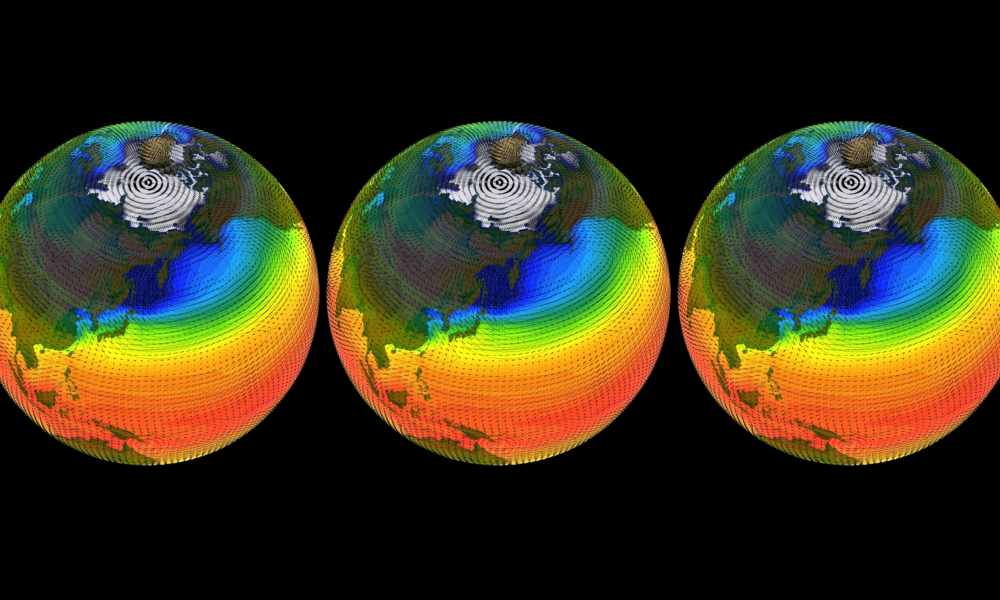
A group of scientists at McGill found a new way to project climate change more accurately using new mathematical equations that incorporate the Earth’s energy balance. These results were recently published in the journal Earth System Dynamics in a study led by former graduate student Roman Procyk and professor Shaun Lovejoy from the Department of Physics. 

“It is common in geophysics to start with a mathematical result or model and then try to find an application,” Lovejoy said in an interview with the McGill Tribune. “I proceeded in the opposite manner.” 

Early in his career, Lovejoy focussed on discovering scaling relationships between large and small structures, such as weather systems and clouds. This symmetry principle can be seen in objects such as “fractals,” which have patterns that, when zoomed in, repeat exactly the same pattern ad infinitum. For example, a tree has branches that also have smaller branches, and those branches have even smaller branches, all of which resemble trees at different scales. Understanding these scaling relationships in the atmosphere helped Lovejoy discover the macroweather regime—an intermediate period that is distinct from short-term weather, or atmospheric conditions in periods of less than 10 days, and long-term climate, or atmospheric conditions over decades. 

While other models projected climate by simulating weather in the long term, Lovejoy and his group projected their climate model based on this macroweather regime. To simulate weather, researchers must take many details into account, such as the shapes of clouds, altogether resulting in a huge computational burden. But by making the model directly in the macroweather regime, these details become irrelevant because variations in these details will average out over a long period of time.

Additionally, this new model incorporates equations for the Earth’s energy balance—an energy exchange between the solar energy input from the sun and thermal energy output to outer space. However, because of greenhouse gases which trap heat due to their molecular structures, there is less energy leaving than coming in, disrupting this balance and contributing to global warming. The key aspect of this new model is that it takes into account this extra energy stored on Earth by applying principles of scaling. Adding in the collective behaviour of other atmospheric structures such as clouds and weather, Lovejoy and his group were able to project climate temperatures to 2100.

 “Our projections overlap a huge amount with the IPCC projections,” Lovejoy said, referring to the projections used by the Intergovernmental Panel on Climate Change. “They fundamentally agree with each other, but our uncertainty range is quite smaller.”

This means that there is a narrower timeframe for reaching the 1.5 C limit. To date, human activity has caused global warming to reach 1 C above pre-industrial times. Many people have witnessed and suffered the effects of climate change in the last few years, with wildfires in California and severe floods in Europe. Lower-income countries have experienced food insecurity, increased poverty, and climate migration as a result of these extreme weather changes. Exceeding the 1.5 C threshold would mean that heatwaves, storms, and floods will become more and more frequent.

Climate projections have important implications for individuals’ everyday decision making, from planning what crops to grow to choosing where to live. At the infrastructure level, climate predictions guide mitigation policies, such as for managing floods or building seawalls. With the smaller uncertainty range projected by this new model, Lovejoy says that this means less “wiggle room” for politicians when it comes to reaching their targets—policies will have to be more stringent about reaching their goals.

With these promising results, his group hopes to extend this model to make regional climate projections. But first, they aim to further understand and improve the model by trying techniques such as testing its accuracy against satellite data. 

“This [model] is the beginning of something that will be going on for a long time,” Lovejoy said. “It’s going to be really interesting times.” 

Art, Arts & Entertainment

‘Landscapes, Colour and a Portrait’ exhibit adds colour and vitality to winter days

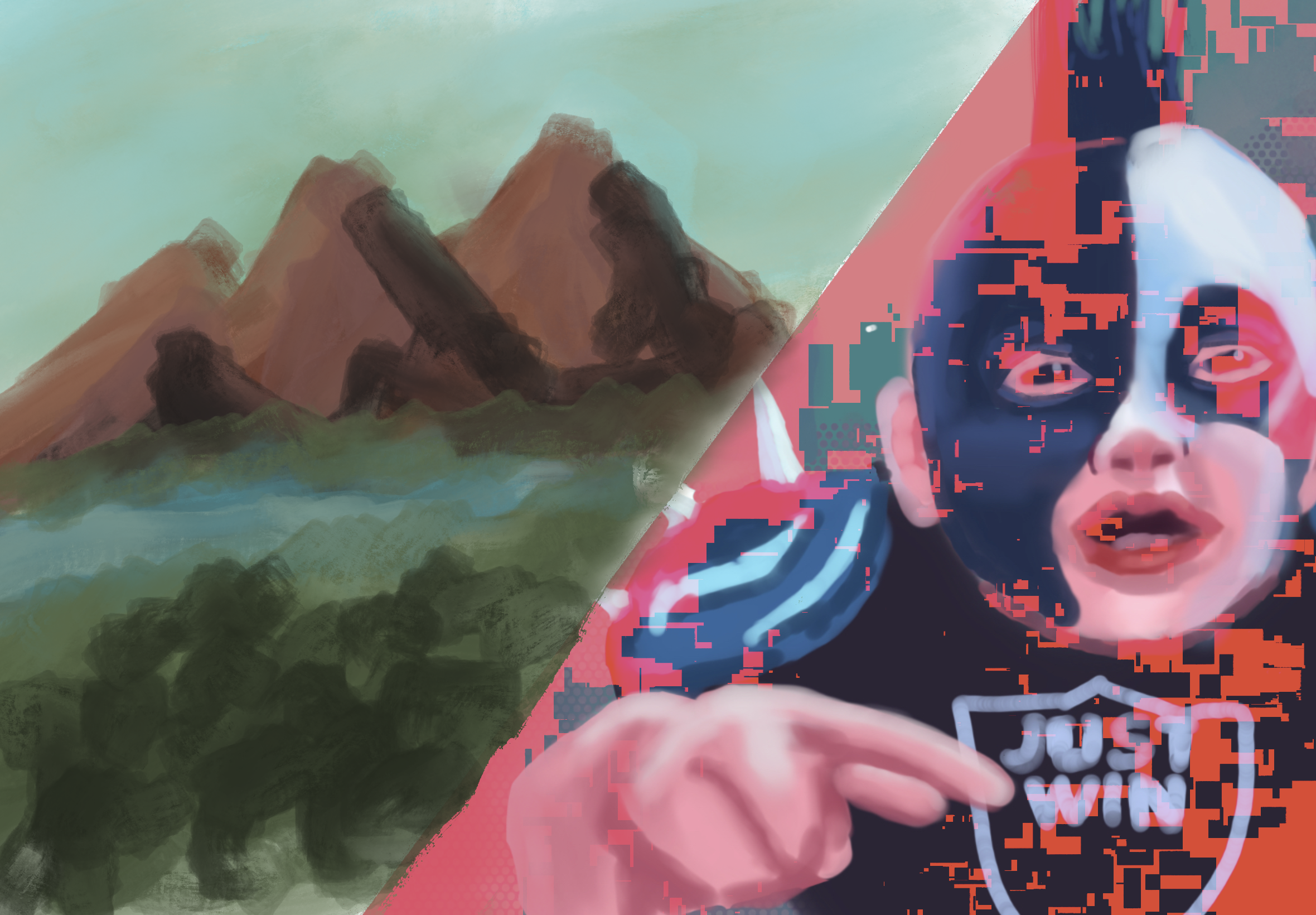
Landscapes, Colour and a Portrait is a one-room exhibit currently hosted by Bradley Ertaskiran, a gallery nestled in the Saint-Henri area. Featuring pieces painted by Toronto-based Canadian artist Kim Dorland, the exhibit portrays 13 forests and a single portrait. As traditional depictions of winter landscapes are often seas of grays, the brightly coloured oil paintings of foliage and sky are an especially compelling collection. 

Dorland employs three-dimensional aspects of visual art to create a diverse array of texture-based effects, which add dimensionality—literally—to the viewing experience. Many of the artworks invite viewers into a dense, deep forest.  For instance, his large painting Black depicts a forest in monochrome black, with brush strokes creating tree-like shapes amongst what is otherwise a homogeneous canvas. Additional techniques are featured in Orange and Pink, which has globs of thick paint that curl downwards to resemble shrubbery. In The Fence, the paint is a translucent wash which reveals the canvas underneath.

Contrasting colours are also a focal point of Dorland’s work. In Pink and White, for instance, a neon pink background affronts the eyes, and the whiteness of the trees contrasts with a psychedelic sky behind it. The landscapes aren’t realistic, nor can they be tied to specific locations, but they nevertheless possess an air of nostalgia for a viewer familiar with the Canadian winterscape. The depth of paint strokes, as well as their wild direction, is reminiscent of thick foliage. The absolute white emerging from harsh colour is similar to the blinding reflectivity of freshly fallen snow. 

Viewers can then turn their attention to the uneasiness present in many paintings, which surfaces through the tangles of brushstrokes and unnatural neons. As written in the exhibit description, Dorland’s landscape follows the stakes of the climate emergency from vague concern to approaching palpable reality. In light of this helpful interpretive guide, one can see an undercurrent of climate crisis-related panic running through many of Dorland’s pieces. A particularly striking example is Smoke, which depicts the sky above a burning forest. At the bottom of the painting, the top of a black treeline lies beneath a red sky with trails of white smoke. Rather than drawing the viewer’s eyes to the forest below, the smoke situates the viewer’s perspective into the atmosphere, where the smoke from forest fires, which are ironically also often exacerbated by climate change, further contribute to the greenhouse effect. In Smoke, Dorland makes subtle, but poignant, social commentary: Just as a fire rages beyond the painting’s frame, the forces propelling climate change, such as the emission of greenhouse gases and building of pipelines, are invisible to many. 

The final photo, if viewers circle the room, is a portrait of a girl called Lori. She is bisected by different colours, and her face is demolished with thick paint smears. The brushstrokes leave traces of the canvas underneath, and there is a troubling sense of incompleteness as the featureless face confronts viewers at eye level. 

The masses of oil pants Dorland works with artfully impress depth and chaos to the forests and Lori. The journey from deep pink to pure black to olive green is a reflection of the turbulence witnessed in the environment today. The more time spent in Landscapes, Colour and a Portrait, the more the paintings reveal themselves to be a dreamlike meditation on the tensions of our relationship with the outside world. It is a thought-provoking and moving experience.

The art gallery is free and open to the public without reservation and can be visited during 11 a.m. to 6 p.m. Wednesday through Friday, and 12 p.m. to 5 p.m. on Saturdays, until Feb. 26.

Album Reviews, Arts & Entertainment, Music

Saba’s ‘Few Good Things’ is a musical scrapbook

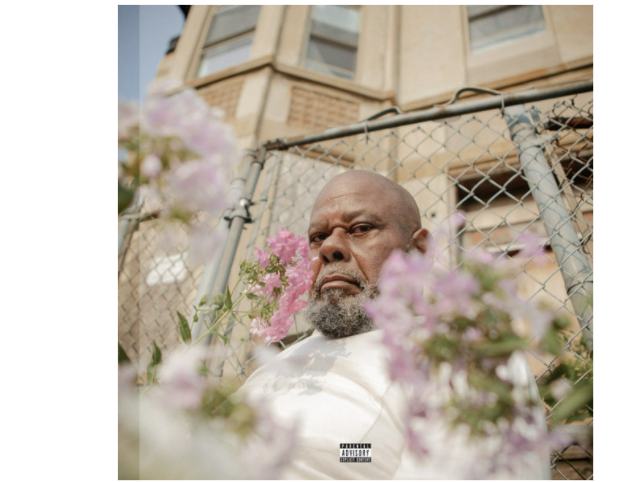
Four years after the release of his second studio album, the pain-ridden CARE FOR ME, Chicago-based rapper Saba has returned with Few Good Things, released on Feb. 4. This new project takes a refreshing step away from the despair of its predecessor, with Saba reflecting upon what he loves and appreciates in his life through his lyrical storytelling. Although the songs lack musical cohesiveness, Saba’s exploration of new themes and emotions makes up for it, creating a stunning album packed with stories of his life.

For most of the 48-minute project, Saba remains in his comfort zone of melodic beats and rhythmic flow. In “Still,” guest features Smino and 6LACK flow well with Saba as he explains his fast-paced life, over airy percussion and a mellow bass line. However, Saba does occasionally venture into uncharted territory. Unlike his more mellow tracks in past albums, Saba successfully creates a joyful tone in “Fearmonger.” Here, he juxtaposes the bright beat of the song with an amusing monotone flow, a perfect addition to the playful character of the track. While Saba’s mix of style is generally pleasant, his experiments with rhythm and percussion in “A Simpler Time” are sloppy at best. Saba’s verses provide some stability in the song, but overall, the beat feels disjointed, with just a few ad libs, drum beats, and sound effects thrown around randomly.

The lack of sonic consistency in Few Good Things ideally paints Saba’s changing emotions and perspectives, despite the new musical endeavours not always succeeding. Saba contrasts hard-hitting, drill inspired songs like “Survivor’s Guilt,” which vividly details his adolescence in disadvantaged, marginalized Black communities, with ambient pieces like “2012,” where he candidly reflects on his meaningful and affectionate childhood. Thematically, the album is very consistent, exploring the topics of money, gratitude, and fame. On “Make Believe,” one of the most stunning songs off the album, Saba raps solemnly over fluttering synths about making it in the music industry: “Cause Black boys on this side of town not supposed to be on / the front page of the newspaper / For doing greater.”

Few Good Things feels like a scrapbook. Saba experiments with new sounds and instrumentation, sometimes succeeding and other times falling short. Although the album is slightly disjointed, overall it is an honest reflection of Saba’s emotions, capturing him doing what feels right musically. 

McGill, News

Staff and students face difficult trade-offs as they transition back to campus

Following 2.5 weeks of online classes spurred by the Omicron wave, the administration’s decision to transition back to campus for the remainder of the Winter 2022 term has stirred up both positive and negative reactions amongst staff and students. Many eating spaces on campus do not respect provincial health guidelines and there is currently no compulsory distancing in classrooms—factors which have fostered ongoing discussions of how McGill could better protect the health and safety of those returning to campus. Despite this, students are appreciative of the opportunity to once again learn in person.. 

In an attempt to aid in the transition back to in-person teaching, the administration offered professors the option to spend up to 20 per cent of the term—two weeks—teaching remotely. The grace period ended on Feb. 7 for professors who continued teaching solely online after the Jan. 24 return to campus. 

Samuel Guertin, U2 Management, noted that many professors in his faculty have opted to make material available both in-person and online, even after the grace period elapses. With factors such as zoom fatigue, isolation, the inability to concentrate, and a lack of mental health support, Guertin finds that grasping course material can be more difficult over Zoom than in person.

“A lot of profs in the management faculty teach hybrid, so they have Zoom open and students can either go online or in-person, but you are missing some things if you don’t go in person,” Guertin explained. “I feel like in-person is better for the learning, it’s better for the atmosphere, it’s better for the participation. You feel like you’re a real student.” 

Not all students, however, have found the transition to in-person instruction comforting. Executives from the Students’ Society of McGill University (SSMU), the Arts Undergraduate Society (AUS), and the Post Graduate Students’ Society (PGSS) feel that there has been a lack of preventative safety action on the part of the administration, creating a sense of distrust between the student community and administration. Claire Loewen, a McGill media relations officer, stressed that the administration is persistently working to implement protective measures for those on-campus.  

“The health and well-being of our community remain our top priority, and all necessary health and safety measures will continue to be implemented to ensure that our campuses remain safe places to learn and to work,” Lowen wrote in an email to The McGill Tribune. “Throughout the Summer and Fall semesters, ventilation in classrooms (and exam spaces) was optimized, and CO2 levels were measured in rooms without CO2 monitors already built-in.” 

The current ventilation system, MERV 13, was implemented prior to the pandemic and is capable of trapping less than 75 per cent of air particles that are 0.3-1.0 microns in size. Coronavirus particles are 0.1 microns in size. 

In an interview with the Tribune, Loïck Lépin, U2 Arts, explained that it has been difficult to remain on campus for extended periods of time due to the regulations around eating. In the few spaces designated eating spots on campus, social distancing is often not adequately practiced due to overcrowding and a lack of table separators. The administration has also removed many microwaves on campus, adding another barrier for students who pack food.

“Eating on campus seems like a logistics operation,” Lépin said. “You would think that more than two microwaves would be available to the 40,000 students on campus.” 

Library security, tasked with enforcing proper masking and “no eating” regulations, have faced disrespect from select students who do not wish to, or care to, comply with COVID-19 rules. 

As Quebec begins to loosen COVID-19 provincial restrictions, the administration plans to follow suit. Starting on Feb. 14, gyms in Quebec will be allowed to reopen at 50 per cent capacity and in-person extracurricular activities with up to 25 participants will be able to meet. It is currently unclear when, and to what extent, McGill will act in accordance with these provincial relaxations. At this time, SSMU continues to advocate for increased safety measures and accommodations directly from the administration. SSMU has compiled a crowdsourced list of accommodations provided by professors in over 60 courses, and continues to accept submissions for more. 

Recipes, Student Life

When in doubt, eat out (of your fridge): Veggie leftovers soup

We all know the crushing feeling of opening the fridge and finding nothing to eat—with the exception, of course, of your leftover scraps, some languishing vegetables, and a bunch of mystery containers. Instead of giving in and going out, here’s how to save money, clean out your fridge, and minimize food waste by turning those random ingredients into a warm bowl of soup. This recipe is designed to be flexible, so you can use whatever ingredients you have lying around.

Part 1: The Broth

This is where you can get rid of any scraps left over from the last time you cooked, or any vegetables that aren’t looking so fresh––don’t worry, a bit of withering or staleness will not affect the broth’s flavour much. If you don’t want to spend too much time in the kitchen and just want to whip up a quick meal, skip to Part 2 to go straight to making soup with store-bought broth. 

Ingredients: 

  • Water

Possible additions:

  • Chicken—legs, wings, necks or back bones; with or without meat (If you are using chicken bones, split them open to maximise flavour)
  • Celery, including leaves
  • Carrots, including peel
  • Onions 
  • Mushrooms
  • Potato, including peel
  • Herbs (parsley, cilantro, etc.), including stems
  • Good seasoning options: garlic, bay leaves, rosemary, thyme, pepper

Steps:

  1. Cut all of your desired ingredients into medium-sized pieces.
  2. Put all of your ingredients into a big pot.
  3. Fill the pot with water until the vegetables start to float (it should be about ¾ full).
  4. Bring this to a boil and then let it simmer on low heat for at least 30 minutes. The longer you simmer, the more flavour the broth will have, so keep the broth on the heat for around 60 minutes for maximum umami.
  5. Strain the broth into a container. This broth will keep for 4 days in the refrigerator and 3 months in the freezer.

Tip: Start collecting your vegetable scraps instead of throwing them out. Keep a bag of kitchen scraps in your freezer and once the bag is full, make it into broth!

tasty.co

Part 2: The Soup

Your pre-made broth will be the base of your soup, bringing together any remaining leftover vegetables and miscellaneous ingredients. If you’re in a rush to eat, you can also use store-bought broth instead.

Possible ingredients: 

Possible ingredients: 

  • Any fresh vegetables: Onions, carrots, celery, potatoes, cabbage, etc. 
  • Frozen vegetables: Peas, corn, etc.
  • Canned tomatoes
  • Beans
  • Tofu
  • Meat
  • Cooked rice, noodles, quinoa, etc.
  • Seasoning: Some great options include garlic, fennel, black pepper, salt, and red pepper flakes

Steps:

  • Cut any large vegetables you have into bite-sized pieces. 
  • In a big pot, sauté vegetables in oil on medium heat for about 10 minutes or until soft.
  • Add your seasoning and stir.
  • Pour in the broth (and canned tomatoes if you have them).
  • Stir in any additions (tofu/meat, or rice/quinoa/noodles) and smaller vegetables (peas, corn, etc.). Bring the soup to a boil, then partially cover the pot with a lid and reduce the heat to a low simmer.
  • Simmer for 20 minutes or until the vegetables are tender. 

This soup will keep for three to five days in the refrigerator and one month in the freezer. Enjoy, and rejoice in your newly available fridge space!

This recipe is adapted from the following sources: tasteofhome.com, inspiredtaste.net, tasty.co

Read the latest issue

Read the latest issue