

Latest News

Arts & Entertainment, Theatre

From The Viewpoint: The Festival of Marionettes

No one likes marionettes. In my mind, a marionette is one of three things: A lying rascal named Pinocchio, a demon-possessed puppet that haunts an abandoned Opera House, or, simply, entertainment for children. Marionettes are uncanny—miniature human figures stripped of all bodily autonomy, hanging limply with lifeless eyes. I never thought there was any artistic merit in puppetry, that is, until I saw it performed.

Le Festival Marionnettes Plein La Rue – Édition 9.5 is a multi-week event featuring pop-up performances and scheduled shows on Saturdays and Fridays at the Wellington Promenade in Verdun. The event features not just marionettes—puppets moved strictly by strings—but also other puppets of varying shapes and sizes. Some were propped up on sticks, attached to mouths, laid out flat in 2D, or even put on as costumes by actors. It is a festival that swells with life, showcasing the multitudinous mediums of puppetry.

The first pop-up event on Sep. 11 was a set-up of endearing cardboard homes where onlookers could pop their heads into a cut-out window and view a miniature image inside the boxes. Kids formed lines leading up to the boxes, excited to peek inside the pocket-sized show. 

The second was an interactive street show with two actors miming a performance. One was a short man dressed in a Magritte bowler-hat, while the other was a towering, skeletal Raggedy Ann, balancing on multi-foot stilts, dressed in a flowing 16-foot Victorian dress. Both had white-painted faces, red lips, and black diamond eyes.

The performers had multiple scenelets set to music playing from the actors’ suitcases. The radio crooned “Sous Le Ciel De Paris,” and the clowns became lovers, grasping one another’s hands as the Raggedy Ann stooped down like a giraffe to kiss her partner. Suddenly, the music switched to the rumbling of a storm, and the actors scuttled out of the rain, running with water-sprinkler-topped umbrellas. 

Finally, when the tune changed to a crackly tango, the giantess opened her suitcase, from which a puppet of an elderly man peered out. With a swift grace, the actress, now a puppeteer, manoeuvred the puppet’s body up the suitcase handles as if he was climbing a pole. In response, her scene partner leaned close to watch, and when the puppeteer moved her finger so as to threaten the balance of the old man perched atop the handle, her scene partner gasped, on the brink of tears. As she moved the old man up the shoulders of the bowler-hatted performer, he reacted to the weight, his shoulders jumping and arms shaking.

Soon, it became clear that the actors were both the puppets and puppeteers. Their movements were sudden, slap-sticky, charming, and incredibly precise. I had never before considered the Herculean work of these performers. From the twitch of a pinky finger to the twist of a torso, everything was methodical, exact, and hypnotizing. For the first time, I finally understood the appeal; puppeteering, unlike other artforms, hides nothing. There is no backstage. No crew. Puppeteering does not attempt to convince you that you are watching real life, that the puppets are moving on their own. Instead, it embraces the visibility of the puppeteer’s hands. You see the human moving the puppet, yet you cannot look away because it moves as if it were alive. And the puppeteers know that this is where the magic lies: In our ability to make life out of stillness.
 

Arts & Entertainment, Books

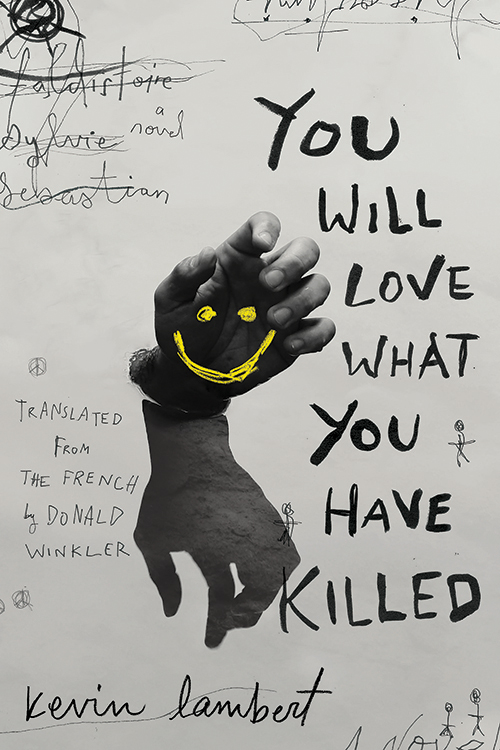
‘You Will Love What You Have Killed’ presents a haunted childhood

Content warning: Violence, child abuse, and sexual assault

Murder, rape, and infanticide are not usually present in conventional coming-of-age novels. In Québecois author Kevin Lambert’s You Will Love What You Have Killed, however, these themes take center stage. Exploring individuality and childhood, Lambert’s novel is about children who are victims of violent deaths and reincarnated to plot their revenge on the adults of their small town. Published in French in 2017 and translated into English this year by Donald Winkler, the novel won the Prix Découverte du Salon du livre du Saguenay, and was a finalist for the Prix littéraire des collégiens

“It’s a fun and funny book,” Lambert said in an interview with The McGill Tribune. “The children in the story are very cruel and mean, […] but they are powerful individuals that can […] destroy the adult world. The feeling that this book describes about growing up in a society where you feel there is no consideration for the younger generations, that’s a universal feeling today.”

Lambert drew from his own memories and experiences to weave an emotional story about children growing up in his hometown, Chicoutimi, Quebec. 

“There was hatred that I felt towards Chicoutimi,” Lambert said. “I didn’t feel that I could be gay there, [and I felt that] I had to move to Montréal to do that. I wanted to give the story a sense of vengeance by using that feeling which I had towards my childhood.”

Yet, Lambert’s sense of estrangement did not dissipate once he moved to Montreal. After he participated in Quebec’s 2012 student strikes, he understood that intergenerational conflicts can exist in urban areas just as they had in Chicoutimi.

“I was politically educated during the student strike of 2012,” Lambert said. “This time was important for Quebec society because political leaders [basically] told the younger generation, ‘What you ask for is not important. We do not care about what you want and we do not want to hear about your opinion.’”

Lambert emulated his political and personal life experiences through his troubled and isolated protagonist, Faldistoire. 

“[Faldistoire] at the beginning, has [a] rage that has no purpose or form,” Lambert said. “He does not know what the cause of this anger is, but he feels a great energy. His development in the story is linked to understanding this anger, and to the society in which he grows up.”

Now completing his Ph.D in creative writing at l’Université de Montréal, Lambert wrote the novel in part to explore the misconceptions that urban society often has about rural towns.

“I found the idea of writing about places which are special to me because I grew up in them, but are trite and suburban to others, very interesting,” Lambert said.

You Will Love What You Have Killed tells an unique story that draws its imaginative power through anecdotes. Together, Lambert’s contrasting influences have told an otherworldly story meant to resurrect childhood memories and explore their lasting effects in adulthood. Echoing past authors with similar interests in history’s hold over the present, Lambert shows that the past is never really dead. 

News, SSMU

SSMU holds the first legislative council of the semester

The Students’ Society of McGill University (SSMU) held its first legislative council meeting of the Fall 2020 semester on Sept. 8. As McGill has transitioned to online learning platforms, student organizations such as SSMU have similarly adapted to social distancing restrictions by holding their meetings via recorded Zoom calls. While the meeting lacked the usual energy of in-person SSMU assemblies, the council introduced new standing rules for future legislative council meetings and provided updates from the summer. 

Speaker of the Council Lauren Hill outlined changes to these rules that, when passed, will officially supersede SSMU’s pre-existing parliamentary procedure. Seeking to make council proceedings more efficient, another motion proposed banning late additions to the agenda.

“Up to one motion submitted after the deadline shall be considered as a late motion,” Hill said. “This is new from last year, […] but if you were on council before, you understood the issue with late motions, so we’ve decided that we’re essentially going to ban the practice [altogether].”

SSMU further increased its commitment to decorum within SSMU proceedings by instituting penalties for late or absent council members.

“If [a member of the council is] unexcused twice, [they] are automatically suspended,” Hill said. “If [they] are late, four times excused, [they’re] automatically suspended. All committees and reports must be submitted by the Sunday prior to Legislative Council [….] If [a council member] submits a late report, [it will] be equivalent to half of one absence since failure to submit a report will be equivalent to one absence in total.” 

Closing Tuesday’s meeting were executive reports from SSMU President Jemark Earle and Vice President of University Affairs Brooklyn Frizzle. Earle summarized SSMU’s progress over the summer and addressed issues with the absence of a French translation of the new SSMU constitution.

“This summer, there was a Judicial Board hearing on the validity of the 2020 Constitution that was approved last year [that] went to a referendum because it wasn’t submitted in French,” Earle said. “The results of the case are that the 2020 constitution that was voted on was declared invalid because it wasn’t approved in French. But the judgment won’t come into effect until Nov. 1, giving us enough time to run a special referendum which will be coming soon to approve both the English and French versions.”

Moment of the meeting:

Notable during the SSMU livestream was the upbeat game show-like music that played for a total of over 35 minutes during the three-hour meeting. Played as a lengthy musical interlude to open the proceedings and to punctuate each recess taken by councilors, the whimsical soundtrack truly set a fun tone for the student council meeting. 

Soundbite: 

“There’s a tech drive […] to raise awareness and collect technology for folks who might not have it this year, given that at least the fall semester is going to be conducted remotely. So basically, we’re looking to collect old laptops, or iPads, whatever that people have lying around or are not using. We’re hoping to hire someone who’d be able to fix them up if they’re broken. And then we would be delivering [the electronics] to students or community members in need so that they can study appropriately given the [online] semester.” – Jemark Le Jean

The meetings can be accessed on the SSMU Livestream Youtube channel.

Football, Sports

NFL 2020 Season Preview: Looking for a new dynasty in the AFC

The 2019 NFL season ended with the Kansas City Chiefs, led by Super Bowl MVP Patrick Mahomes, capturing the Lombardi Trophy in Super Bowl LIV over the San Francisco 49ers. The subsequent off-season has been unstable and unpredictable and is sure to change the landscape of the NFL for the foreseeable future.

While COVID-19 has instilled discomfort and uncertainty in the months leading up to the restart of the NFL season, the NFL has subsequently addressed several concerns regarding the pandemic. Players, coaches, and team personnel will be tested daily to ensure minimal spread of the virus and are required to wear masks throughout the facilities. In addition, special devices called SafeZone tags must be worn at all times while on NFL property for the purpose of advanced contact tracing. Concerns have arisen that cases could rise when team travel resumes, as was the case with the MLB earlier this summer, but protocols have been put in place in the event of positive tests, with expanded practice squads and future time slots for games that may be cancelled. 

Racial injustice has also been a dominant concern regarding the 2020 NFL restart, as players voiced their frustration with institutions throughout the United States. League Stars such as Michael Thomas, Ezekiel Elliot, and Patrick Mahomes, among many others, were vocal during protests this summer, demanding that the NFL support the fight for racial justice. In response, the league has committed $250 million dollars over the next 10 years to help fight “social injustice.” The league has allowed players to put social justice messages on their helmets and has chalked “End Racism” into the back of all endzones.

AFC

The American Football Conference has experienced a drastic shift for the first time in almost two decades with increased parity among teams and a new leading title contender for the foreseeable future. The New England Patriots lost quarterback Tom Brady in the offseason, a partnership that won six super bowls, nine AFC championships, and saw sixteen seasons atop the AFC East. The end of the Patriots’ dynasty this season marks the end of an era for the entire league and has subsequently paved the way for the newly-crowned Super Bowl Champion Kansas City Chiefs to dominate the field in the coming years. The Baltimore Ravens and 2019 NFL MVP Lamar Jackson, however, will be looking to dethrone the Chiefs after a disappointing divisional playoffs loss. Though these two juggernauts will likely lead the conference this season, the Buffalo Bills, Pittsburgh Steelers, and Tennessee Titans are also all talented, proven teams within the conference. 

NFC

In the past five seasons, the National Football Conference has sent a different team to the Super Bowl each year, demonstrating the and dispersed talent that exists within each division. Unlike the AFC, several teams have a legitimate chance of dethroning the defending conference champion 49ers. San Francisco’s largest threat may be within their own division: The Seattle Seahawks, led by Superbowl Champion quarterback Russell Wilson. In the South, Drew Brees and Tom Brady look to bring New Orleans and Tampa Bay back to the Superbowl. Although neither franchise has gone that far in more than a decade, the two future Hall-of-Fame signal callers and Lombardi Trophy winners are looking to change that. In the East, the Dallas Cowboys are looking for a rebound season with a loaded roster and first-year Head Coach Mike McCarthy. The Philadelphia Eagles also hope to return to championship contention by staying healthy this year, after two disappointing seasons riddled with injuries following their Super Bowl victory in the 2017 season. The lack of a clear favorite for the NFC this season is sure to make for several upsets and an interesting postseason.

McGill, News

Certain international graduate programs see sharp tuition hike

International students in some non-thesis masters’ programs will see their tuition rate jump by 30 per cent, compared to a 3.1 per cent tuition increase for students in other programs relative to the 2019-2020 school year. The increase comes after the Quebec government announced a policy in May 2018 that allowed public universities to deregulate international tuition rates, meaning that McGill was able to set its own tuition rates without legislative oversight. The policy came into effect in Fall 2019. 

Although the increased tuition will help McGill run programs and research, the rise in tuition for some programs was thought to be drastic by many. Michael Overton, a master’s student in the Sound Recording program, expected to pay approximately $11,100 in Fall 2020 tuition fees. When his tuition increased by more than 28 per cent to over $14,300, Overton was alarmed. 

It makes me feel as though international students are simply seen as a revenue stream instead of people that come from different economic situations,” Overton said.

 For many students, this increase came as a surprise. Connie Shen, Financial Affairs Officer of the Post-Graduate Students’ Society (PGSS), believes that many students were not given enough notice to financially plan for the tuition fee spikes.

Many students did not anticipate such a large increase, and therefore did not get the chance to budget and plan accordingly,” Shen said. “Some students were not even aware of this increase until it appeared on their bill in August.”

Given that the COVID-19 pandemic has already exacerbated the financial strain for many students, the massive increase added unnecessary stress for many of Shen’s classmates who were expected to pay their bills by Aug. 25. Shen would have preferred if McGill had implemented the increase gradually and communicated the changes more clearly.

“The timing of this increase is very unfortunate,” Shen said. “There will be many students who will be unable to pay increased tuition due to the pandemic. There are many students who relied on income from part-time work in order to pay tuition. Many graduate students also have dependents, and the added pressure of caring for children during the pandemic has made it difficult for student-parents to work as they normally would.”

Although not all students experienced a tuition increase as drastic as 30 per cent, all 2020-2021 tuition rates increased by 3.1 per cent compared to last year. International student Ahmad Hendie, U1 Engineering, is concerned that these increases may force students who are already struggling to pay tuition to study at another university. 

“McGill needs to expand its financial aid offerings for returning [international students] in need,” Hendie said. “As [even] the annual three to four per cent fee increases might squeeze out internationals who are stretching to afford McGill.”

However, Hendi also acknowledged that the tuition increase will help McGill stay competitive among other top-tier universities in Canada.

“Funding, of which a large [percentage] comes from international tuition, is vital for [McGill’s] rankings as it highly affects research output.”

McGill Media Relations Officer Frédérique Mazerolle explained that the increase in tuition would help to fund academic programs and services.

This policy change will allow McGill to retain tuition paid by international undergraduate students to support academic programs, services, and financial assistance delivered to McGill students,” Mazerolle wrote to the Tribune

The Graduate and Postdoctoral Studies (GPS) society will be helping the affected students, such as those in Overton’s program, to offset the increased costs. In addition, McGill’s administration noted the creation of certain programs to help students pay for their elevated tuition rates, such as a “line of credit” for students in critical need. The administration also offers the McGill Student Emergency Support Fund, which serves to assist students affected financially by the COVID-19 crisis. While these programs can potentially help international students afford attending McGill, the tuition increase continues to burden many.

Student Life

Feminist Health Research Conference highlights gender inequities in medicine

On Sept. 6, Medical Herstory hosted a virtual Feminist Health Research Conference to discuss the gendered impacts of health and medicine. The event brought together current students and graduates from the University of Cambridge’s MPhil in Health, Medicine and Society to address and explore how gender impacts health and illness.

The conference was split up into two separate panels titled “Disruptive Voices” and “Creating Community,” where speakers highlighted intersectional issues within medicine. In the first, panellists explored how listening to unheard women’s voices can expose institutionalized gender inequity. Panelists discussed how women’s bodies are stereotypically seen as ‘messyor mutilated’ and how this skewed perspective impacts the treatment of women in medicine. The second panel addressed how marginalized individuals have historically formed communities to share their experiences, negotiate, and resist treatment offered by mainstream medical practices. 

Medical Herstory aims to expose structures of sexism, racism, classism, and ableism within medicine and works to counteract traditional healthcare methods by refusing to allow women’s experiences to be erased. Founder and Editor-in-Chief of Medical Herstory Tori Ford, BA ‘19, started the platform as a way to elevate women’s stories and break the stigma surrounding discussions of their bodies. In an email interview with the The McGill Tribune, Ford described the inspiration behind hosting the conference.

“Often in academic spaces, experiences of inequity, illness, and suffering can become sanitized or heavily medicalized,” Ford wrote. “With the Feminist Health Research Conference, we wanted to highlight work that foregrounds lived experience, subverts traditional narratives, or examines how gendered discourses shape health and illness. Applying a feminist lens to clinical encounters, medical treatments, or patient experiences opens up new possibilities for understanding intersecting and interlocking structures of oppression and advocating for change.” 

Panellists spoke about how gender inequality permeates clinical encounters, community formation, and self-esteem. Discussion topics ranged from chronic yeast infections, to off-label drug use, to breastfeeding, to postpartum depression.

A common theme threading through the presentations was the lack of current clinical research on women’s health issues. Panelists also spoke about the difficulty of conducting feminist research given that men have written the majority of existing literature. The stigma surrounding women’s health issues often results in women avoiding medical care and choosing to engage in potentially dangerous self-treatment practices. As a result, they feel that they must often cope alone, and in silence. Medical Herstory’s hopes to highlight positive discussions of women’s bodies rather than their pain. Ford hopes that attendees walked away feeling more educated and excited about the prospects of feminist health research. 

We hope that our attendees left feeling empowered to better understand and undo gender health inequity by applying a feminist lens to their own research, lived experiences, or understandings of gender, health, and illness,” Ford said.

Since Ford’s graduation from McGill, Medical Herstory has continued to expand into university chapters around the world, and the McGill chapter continues to be a community for sharing stories and hosting events to de-stigmatize conversations about womens’ bodies. Medical Herstory is currently working on introducing workshops and is recruiting volunteers for the first time. Their website is open to submissions all year and is currently welcoming new stories.

To learn more, watch the full recorded conference here.

Campus Spotlight, Student Life

Student ingenuity on display at virtual Activities Night

Activities Night has come and gone once again, but this year, there was no standing in line, no Martlet stamps, and no bustling fieldhouse. Activities Night, along with McGill’s many other annual events, was held entirely virtually. On Sept. 9 and 10, students of all years and faculties logged on to learn about the various clubs and organizations that McGill has to offer. As has become the “new normal,” Activities Night was held online through Eventus.io, a virtual career fair service platform that was repurposed to allow each club to show off their services and opportunities to interested students. 

There were 304 clubs in attendance, hosting virtual booths that students could click through to learn more about their missions and future plans. Many clubs, including SSMU Musicians Collective, MealCare McGill, and McGill Students Knitting Club, made promotional videos to outline how they function and how to get involved. Each club also clearly explained how they planned to make the most of their shift to online meetings, events, and fundraisers. Links to Facebook events and signup sheets made it easy to learn about upcoming meetings and activities. The switch to online Activities Night required more work from club members and executives, but the extra effort made for a remarkably engaging experience. 

Club leaders are eager to be back into the swing of things. Many executives spent their summers preparing virtual activities and fundraisers to give new and returning members the best online experience. Danielle Fuchs, U3 Arts, President of Challah for Hunger, is optimistic about her organization’s plans for this semester.

Usually, Challah for Hunger bakes challah in person with dozens of volunteers five times per semester,” Fuchs said. “Then, we sell the challah in various buildings on campus to raise money for charities that fight food insecurity throughout North America.” 

Now that Challah for Hunger has moved completely online, they have had to rethink how their club will function and how they can do the most good while keeping everyone safe. For Fuchs, this means virtual challah bakes and donation-based events like movie nights and workshops. 

Conversely, some clubs have been able to continue with relatively few changes. Democrats Abroad (DA) Vice-President of Communications Cameron Leonard, U3 Arts, is confident about DA’s ability to stay true to their mission. One of the club’s main activities throughout the school year is phone banking, which was an easy virtual transition. 

“[We’ve] hosted several remote phone banking events over Zoom, in which we got together and made calls to American citizens to assist them with requesting their absentee ballots,” Leonard said. “This is not a significant change from the way that we have operated in the past, [as] the only change here is that we are hosting the events virtually.”


DA’s strategies for advertisement were not much different from previous years: They created a video for their virtual booth, where they were able to creatively present their organization’s goals, much as they would have in-person. DA has planned for more online events over the course of the semester, and were excited to have the opportunity to share these plans at Activities Night.

The McGill Women in Computer Science Team (McWiCS) shared a similar sentiment. McWiCS Co-President Heather Bosiljevac, U3 Science, is enthusiastic about the club’s ability to successfully transition online. The club was grateful for the opportunity to reach out to those who might have normally shied away from computer science, in hopes of bringing some fresh faces to the upcoming Zoom events. 

Our main goal for Activities Night is simply to get our name out there and invite people to follow us on social media and attend our events,” Bosiljevac said. “Overall, we are really just trying to continue helping people feel more comfortable in [computer science] at McGill, especially incoming first year [students] who may be nervous starting at a new school in this environment.” 


Emerging Trends, Student Life

Love in the time of COVID-19

For university students, dating does not always mean heartfelt conversations over candlelit dinners. In fact, dating rarely means going on dates at all. 

Instead, dating can mean late night hookups after long hours spent in the library. It can mean watching Netflix to fill the silence, and avoiding labels in a desperate attempt to keep things casual and to stifle any real emotions that might swell up inside.

But now the COVID-19 pandemic has forced couples to enter relatively unexplored territory: The digital realm, full of awkward Zoom calls and lengthy text conversations. This may not seem like a romantic atmosphere, but, believe it or not, online dating has actually brought many couples closer together despite their physical distance—or maybe because of it. 

To explore this transition into primarily online dating, The McGill Tribune chatted with Julian*, a U2 engineering student. He started hooking up with Nikki* only weeks before the pandemic struck in March. Suddenly, the simplicity of their relationship was gone. Faced with the choice of either breaking up or committing to a long-distance relationship after being together for less than a month, they decided to give long-distance a shot.

Unsurprisingly, long-distance changed the nature of Julian and Nikki’s relationship. With casual encounters no longer an option, the couple had to establish a different kind of intimacy. 

“Since we couldn’t be physical anymore, we started to talk over FaceTime or Zoom almost every day,” Julian said. “It forced us to have real conversations and get to know each other even more. It was nice having her to rely on [during the pandemic.] We grew closer [and] established a [deeper] emotional connection.” 

When Nikki returned to Montreal in July, Julian decided to quarantine with her for two weeks—a commitment he could have never made without hundreds of Zoom calls beforehand. As a result of the pandemic, Julian and Nikki were ready to make a real commitment.

Pierre*, U4 Psychology, was in a similar situation. He and Adele* dated for a couple months before the pandemic, but never made it “official.” 

“I wasn’t comfortable labelling [our relationship] before,” Pierre said. “It was always a grey area.” 

The night before they each left Montreal, Pierre and Adele were finally forced to define what they really were. They agreed that it would be easier to just be friends and stop talking to give each other space to heal.

Only weeks after breaking up, Pierre already regretted his decision. He missed Adele. 

“I didn’t know just how much I cared about her until I stopped talking to her altogether,” Pierre said. “I definitely took our relationship for granted before.” 

After a long month of silence, Pierre finally gained the courage to contact Adele—only to discover that she was planning on reaching out that same day. The two started talking again and agreed that long-distance dating actually brought them closer together than ever before. 

Today, both Pierre and Adele are back in Montreal, but had to wait until the end of Adele’s quarantine to see one another. However, Pierre surprised Adele by making a homemade ice cream cake for her birthday and dropping it off on her back doorstep. 

More stories like Pierre or Julian’s are available on The Social Distance Project. This site gives couples a virtual space to anonymously discuss how the pandemic has altered their dating experiences—either for better or for worse. COVID-19 has left many of us catching feelings like never before, but hopefully feelings will be the only thing you’re catching this fall.

*Last names omitted for privacy.

McGill, News

Scholars strike to call for an end to systemic racism within academic institutions

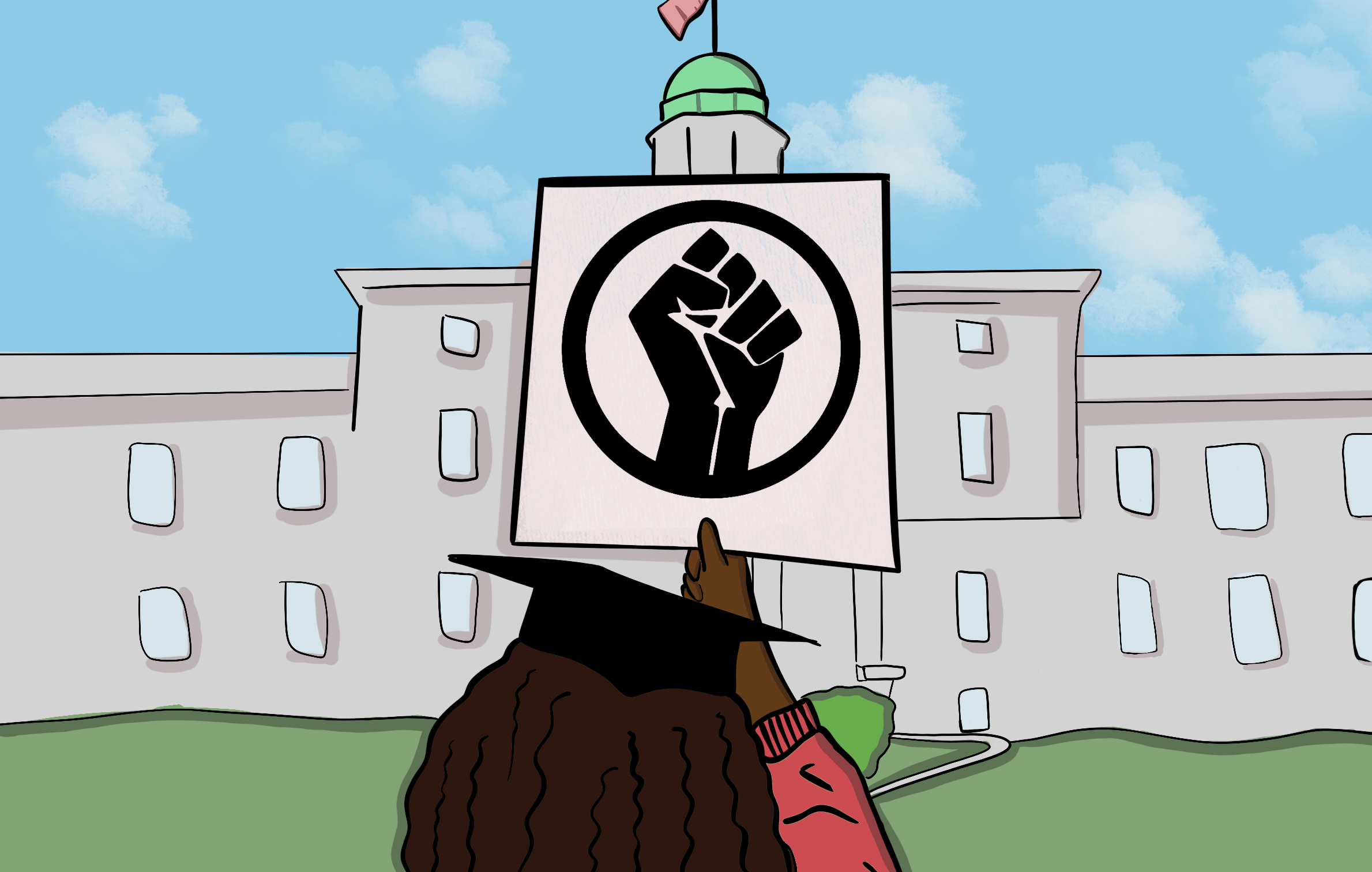
Scholars across Canada and the United States took part in a collective action on Sept. 9 and Sept. 10 to protest anti-Black, anti-Indigenous, and colonial violence within academic institutions. Known as the Scholar Strike, workers in academia boycotted normal class schedules for the two-day period to organize teach-ins on police violence and social justice.

The Scholar Strike initiative, which calls for an end to anti-Black police violence and discrimination within academia, was initiated in the U.S. by Dr. Anthea Butler, a professor at the University of Pennsylvania. Butler’s call for a strike was motivated by the recent actions by players in the NBA and WNBA, who boycotted games in response to police brutality in the U.S. and Canada. Butler then started the Scholar Strike initiative on Twitter.

As in the United States, thousands of Canadian scholars took this opportunity to advocate for an end to systemic racism. Additionally, Scholar Strike Canada was dedicated to addressing systemic and institutional forms of violence, which have resulted in the underrepresentation of Black and Indigenous scholars and students in Canadian institutions.

Aziz Choudry, a professor in the Faculty of Education, has been involved in

anti-racist and anti-colonial activism since the 1980s. Choudry spoke to the Tribune about his participation in Scholar Strike Canada and highlighted McGill University’s own institutional racism.

I’m supporting Scholar Strike Canada as one action in the ongoing fight against racism and colonialism that those of us working in universities can take part in by interrupting ‘business as usual’ and uplifting anti-racist education work as the new university term starts up,” Choudry said. “Institutional racism continues to permeate McGill, Canadian higher education institutions, and broader Canadian society. At McGill, the struggles and work of racialized students, faculty, and staff against racism have been frequently erased or forgotten. Much of the anti-racist work has been and continues to be done by relatively few racialized faculty.”

Dr. Mehri Ghazanjani, a professor in the Department of Sociology, stated that her participation in Scholar Strike Canada provided professors with the opportunity to educate their students on forms of systemic racism that exist within post-secondary education.

“[The] Scholar Strike for Black lives in Canada has been a great teaching and learning moment for all of us,” Ghazanjani said. “Not only should we stand in solidarity with the Black Lives Matter movement, but we also should take it upon ourselves to understand and respond to social injustices in our society. The teach-ins provided us with an important opportunity to learn more about systemic [and] inferential racism and discrimination and to reflect upon our role in it. It is time to stand together and push for long-overdue changes in our institutions.”

Canadian educational institutions, including McGill University, occupy unceded traditional territories of Indigenous Peoples and have a long-standing history of racial and institutional discrimination. Scholar Strike Canada hopes that their actions will call attention to systemic racism, as well as educate individuals in the hopes of sparking progresisve change.  

For Robin Vochelet, a U4 Arts student, the Scholar Strike’s provided an opportunity to have an important conversation about dismantling stereotypes and discriminatory academic structures.

“I genuinely believe there’s a need for a discussion on the way academia perpetuates white supremacy,” Vochelet said. “To me, this is a crucial point that we need to keep in mind moving forward in our academic careers, mostly because Canada is too often deemed as better than the United States regarding systemic racism. It is about time we break these harmful stereotypes down and start working on building an environment that is, in fact, inclusive and free of systemic racism.”

McGill, News

McGill Max Bell graduate student bridges borders with comparative policy tool

The ongoing COVID-19 pandemic has prompted a graduate student at McGill’s Max Bell School of Public Policy to create the Bridging Borders project, an interactive policy tool that compares the effectiveness of pandemic response plans from regions around the world. Since the project started in May, graduate student Henna Hundal and Sai Rajagopal have interviewed the Prime Ministers and Presidents of over 40 countries on camera about their responses to the pandemic.

Both Hundal and Rajagopal studied and conducted research at Harvard University during their undergraduate years. Hundal’s academic background in health policy and clinical medicine and Rajagopal’s studies in biomedical and mechanical engineering provided them with the experience necessary to develop Bridging Borders. When the COVID-19 pandemic started affecting regions of the United States differently, Hundal and Rajagopal sought to compare how policy responses and epidemiological outcomes varied from state to state. Recently, their project has expanded to include countries around the world.

“When we saw that some developed countries had worse policy responses than the developing countries in which we worked, we realized there was a space in which to inform listeners about COVID-19 policy responses across borders,” Rajagopal wrote in an email to The McGill Tribune. “That’s how the project was born.”

By interviewing international leaders directly, the Bridging Borders project has brought attention to regions of the world that are not regularly discussed in mainstream media. Discussions with President Jonathan Nez of the Navajo Nation and Principal Chief Chuck Hoskin Jr. of the Cherokee Nation highlighted the importance of facilitating dialogue within communities hit harder by the COVID-19 pandemic, and outlining the infrastructural issues that have contributed to these regional differences. 

“Those stories don’t get reported,” Hundal said. “There’s all these nuances and granularities that the [Bridging Borders] program is able to reveal. We’re hoping that after this pandemic we get serious about solving some of these issues.”

Weekly interviews with global leaders posted to the Bridging Borders website provide the primary data needed to create their comprehensive policy comparison tool. Launching on Sept. 18., the tool examines the policies implemented by each country, such as social distancing guidelines and mask and quarantine decrees. These policies are overlaid with the caseload and death charts of each region, so that users can see the effectiveness of different public health guidelines in real-time. 

Director of the McGill Institute for the Study of Canada and professor of Political Science Daniel Béland shared his perspective on the Bridging Borders project.

“The various episodes posted on the website features interviews with world leaders and policymakers that allow us to better understand both the global and the local COVID-related public health and policy challenges [that] they face,” Béland wrote in an email to the Tribune. “COVID-19 is a global pandemic but the policy responses can vary significantly across the world, and taking stock of fast-evolving national strategies to cope with COVID-19 is potentially important to improve responses to current and future pandemics.”  

The Bridging Borders project focusses on core questions during each interview, including asking leaders about the severity of the pandemic in their own countries or regions, the death tolls, and what basic measures have been implemented since the onset of the pandemic. With the help of listener feedback, the project has worked to better contextualize their interviews, and aims to give users a more well-rounded picture of what the pandemic response is like in a given region.

“We’ve been very pleased by the level of engagement among the leaders who are interested in coming together on this platform and pooling their policy ideas,” Hundal said. “That’s a function also of the need to work together during a pandemic. It’s not a problem that stops at borders.” 

All of the Bridging Borders’s interview episodes can be found on their website. Episodes are released weekly and the project’s policy tool will be updated as each episode is uploaded. Bridging Borders can also be found on social media with @bridgingbordersproject on Instagram, and with @bridgingproject on Twitter.

A previous version of this article stated that Sai Rajagopal is a graduate student at the Max Bell School of Public Policy. In fact, only Henna Hundal is a student at Max Bell. The Tribune regrets this error.

Read the latest issue

Read the latest issue