

Latest News

Research Briefs, Science & Technology

New evidence of sticky proteins redefines bacterial cell organization

A team of biologists at McGill are changing the way scientists think about the subcellular organization of bacteria. The research group, led by Dr. Stephanie Weber, Assistant Professor of Biology at McGill, examines the spatial organization of living systems using E. coli, a species of bacteria commonly used in laboratory research. In a recent study published in the journal PNAS, the group found that bacteria are far more organized at the subcellular level than scientists traditionally thought.

Bacteria are classified as prokaryotes, meaning that they lack a nucleus and other membrane-bound structures collectively referred to as organelles. Unlike animal, plant, or fungal cells, bacteria do not discretely compartmentalize their cells with organelles.

The lead author of the study, Dr. Anne-Marie Ladouceur, a microscopy specialist at the McGill Advanced BioImaging Facility, found that bacteria may contain primitive organelle-like structures, contrary to what scientists have believed for decades.  

“We still think of [bacteria] as a ‘bag of enzymes,’” Ladouceur said in an interview with The McGill Tribune

Ladouceur believes that this outdated concept of bacteria vastly understates the degree to which these organisms are organized at the molecular level. To better understand how bacterial cells are organized, Weber’s group took a highly technical approach of tracking single molecules. Rather than using historically ubiquitous methods like light microscopy, Weber’s team instead applied techniques for studying a trendy phenomenon in molecular biology known as liquid-liquid phase separation (LLPS). 

LLPS is the emergence of organelle-like structures through “sticky” proteins that aggregate together, rather than being physically contained by a membrane. This phenomenon is similar to the way oil forms distinct droplets in water, rather than mixing evenly throughout. 

In recent years, LLPS has become a well-established mechanism for subcellular compartmentalization in animal models. Still, strong evidence for its presence in bacteria has previously been elusive, a detail that Weber attributes to their very small size.  

“All of the criteria to define phase separation used to require a droplet bigger than [the E. coli] cells,” Weber said in an interview with the Tribune.

In this study, the sticky proteins comprising the bacterial proto-organelles were identified as RNA polymerase (RNAP). RNAP is a key enzyme that functions in the early stages of gene expression, responsible for copying DNA into RNA. The group has identified clusters of RNAP molecules as the first instance of LLPS organized structures in bacteria. Weber noted that this finding provides evidence for an intermediate mobility state between immobile, DNA-bound, and freely diffusing RNAPs.

Interestingly, their data also provides a potential explanation for a previously noted discrepancy between the high number of RNAP molecules and a corresponding, lower-than-expected level of gene expression. The group’s research provides evidence that many of the intermediate state RNAP molecules are not actively transcribing, prompting future studies to account for low levels of gene expression.  

The McGill team also proposed that bacteria may use LLPS in order to quickly and acutely control the location, activity, and accessibility of these RNAP molecules in response to both cellular and environmental cues and in order to rapidly regulate growth.

This study is the first to provide evidence for the ubiquitous nature of LLPS as a mechanism of organizing cells. It is even possible that LLPS played a role in organizing macromolecules in the context of the RNA world hypothesis for the origin of life on earth, Weber and Ladouceur commented. 

“People have found that RNA and small proteins can form these condensates in vitro, and so [LLPS] could be a way to concentrate in the diluted soup of the RNA world,” Weber said.


Ask a Scientist, Science & Technology

Facing the back-to-school blues

Stress levels of university students have peaked during the COVID-19 pandemic.  Whether these students return to campus or continue their studies remotely, that stress is unlikely to dissipate. In a recent survey, the U.S. Centers for Disease Control and Prevention reported that 62.9 per cent of individuals aged 18-24 disclosed increased feelings of anxiety or depression in June of 2020, compared to only 49.4 per cent in June of 2019. As the new school year begins, anxiety in students is likely to worsen, with the onset of a phenomenon colloquially referred to as the back-to-school blues.

Dr. Kristy Robinson, an assistant professor in the Department of Educational and Counselling Psychology at McGill, investigated the underlying emotional experiences that affect academic engagement and student motivation.

“I don’t doubt [back-to-school blues’] existence. It’s about mourning the loss of activities and fun that one gives up to pursue school,” Robinson said in an interview with The McGill Tribune. “Back to school anxiety is entirely natural for students of all ages and even affects professors.” 

With the added pressure of focusing on schoolwork during the pandemic, students are likely to face unprecedented obstacles while trying to stay motivated throughout the semester. Demotivation, distracting home environments, and a lack of familiarity with online learning are all factors that can contribute to increased feelings of anxiety. 

Motivation is multifaceted and results from the complex interplay between intrinsic and extrinsic influences. Intrinsic motivation comes from finding fulfillment in doing the activity itself, such as enjoying the process of learning. In contrast, extrinsic influences lie outside of the individual. The incentive of achieving good grades, for example, would be an instance of external motivation. 

One study published in the journal Contemporary Educational Psychology, found that internal motivation declines rapidly as the semester progresses. This makes it crucial for students to acknowledge their external influences and establish mental and physical habits early in the semester to support their motivation and reduce anxiety. In situations where students have little control, regularly disconnecting from the source of stress for short periods of time is shown to be a useful coping mechanism.  

Courses that are particularly difficult can create an unwelcoming and highly competitive environment with more sources of stress. 

“Our studies have shown that students who aim to outperform others are more likely to feel stressed and become demotivated quickly,” Robinson said.

Ultimately, fear of the unknown is largely what drives the back-to-school blues. Uncertainties generate complex emotions of frustration and self-doubt, and can become overwhelming. According to self-determination theory, to become motivated, one must realize that determination relies on three basic needs: Competence, autonomy, and social connections. 

For many students, online learning is already a challenging experience due to limited social interactions, fewer opportunities to study outside of their homes, and the expectation to quickly adapt to modified coursework while working equally as hard. 

There are several ways students can approach this semester with more structure in order to manage their anxiety and motivation. To maintain focus while studying at home, students should prioritize building a routine and designating certain tasks to different spaces. Robinson advises to avoid using Netflix or eating at the same desk used to study.

While the aforementioned techniques build concentration, boosting motivation requires a different approach. 

“Write down the reasons you want to do well at the beginning of the semester when you’re most motivated,” Robinson said. “Periodically checking in on those goals can uplift sinking motivation.”

This semester will require students to proactively develop a support system while respecting public health regulations. 

“The best way to stay connected is by sharing our feelings,” Robinson said. “If you’re confused, say it, because it can help normalize the anxiety that many other students may also be experiencing.” 

Art, Arts & Entertainment, Film and TV

Venice VR Expanded Satellite program brings the universe to Old Port


For a limited time, the price of admission to Old Port’s Centre Phi will land you front and centre in your very own episode of Black Mirror. Courtesy of the globally renowned Venice Biennale, Montreal is currently home to the VR Expanded satellite program, the virtual reality component of the Venice International Film Festival. This year’s event features 44 cutting-edge virtual reality (VR) films and games hosted in art institutions from Copenhagen to Beijing, with Montreal boasting the only satellite location in Canada. Guests are invited to delight themselves in two-hour intervals, sampling state-of-the-art VR experiences which organizers claim are a glimpse of the future of digital entertainment.

Immediately upon entry, the Centre Phi looks like an exhibit of tomorrow. The ultra-modern multimedia centre occupies the hollowed-out interior of an Old Port heritage building. VR Expanded is housed in Espace D, a sparse white room encased in one-way glass and illuminated by the calm glow of orange and pink LEDs—somewhere between Mark Zuckerberg’s yoga room and the interior of a kaleidoscope. Once seated at appropriately distanced swivel chairs, guests are instructed to put on the goggle-helmet apparatuses dangling from the ceiling, and the adventure begins.

The experience, at first, is immensely disorienting. Immersing oneself in an artificially constructed reality is genuinely novel, and requires some acclimation. Substituting a screen for goggles allows for a serious reduction of distance between media and audience, which profoundly amplifies one’s sensory experiences. What’s more, the physicality of VR entertainment—standing up, spinning around, reaching out—lends a dynamic that cannot be experienced from the depths of a sofa. It would appear the future of entertainment is both immersive and kinetic, with dizzy spells to spare.

The implications of this novel medium vary across the exhibit’s diverse offerings. In children’s programming—films like Ajax All Powerful and the Canadian animated short In the Land of the Flabby Schnookthe transition is not so jarring, and is more like stepping inside a 360-degree television set than an alternate reality. In the Land of the Flabby Schnook is particularly endearing, as the user glides through an adorably spooky dreamscape while watching two siblings learn to conquer their fear of the dark. In more ominous games, however, such as Vibeke Bryld’s Hush, a Danish installation that slowly submerges the user in the haunted murk of the North Sea, VR raises the stakes. Fear is not exempt from the intensifying effects of VR, and users will quickly find themselves swiveling in their chairs to make sure there is nothing behind them.        

The exhibit’s most exciting promises for the future of entertainment lie in the works that test VR’s capacity to augment emotional experiences. In Randall Okita’s oral history project The Book of Distance, interviews and family photographs are woven together with VR animation to tell the story of his grandfather, who immigrated to Canada from Hiroshima, Japan in 1935. In transforming his grandfather’s life—from departure and integration to forced internment and incalculable loss—into a first-person, interactive experience, Okita alludes to perhaps the greatest virtue of VR: Its power to inspire empathy. Compassion has always demanded that we walk in the shoes of others and look through borrowed eyes at new perspectives; The Book of Distance, like many of the selections at VR Expanded, takes this literally.

Whether or not VR truly is the future of the digital world, works like the ones at the Venice Biennale prove that there is merit to the experiment. There will always be value in works of art that interrupt our solipsism and pull us outside of ourselves—even if only for a brief moment spent standing on the deck of a virtual steamship, feeling the unexpected urge to wave goodbye to a home you never knew.  

The Venice VR Expanded – Satellite Program is running at the PHI Centre until September 12.


Off the Board, Opinion

Studying politics in a society that is rigged against you

When news reports came out on Aug. 26 about yet another incident of sexist harassment outside the Minister of Infrastructure and Communities Catherine McKenna’s office, I felt a familiar sinking feeling in my stomach. Since I began engaging with politics in my early teen years, my awareness of gendered attacks has taken an increasingly sinister toll on my desire to pursue a career in politics. Though I know the very point of identity-based harassment is to discourage marginalized groups from pursuing politics, it is difficult not to internalize the message that you do not belong when stories of such behaviour are plastered all over every newspaper. Although there are valid critiques to be made of every politician, the line between expressing different political opinions and ad hominem attacks based on the person’s gender, race, or sexuality is often crossed, particularly as politics grow increasingly polarized.

Women are three times more likely than men to be attacked online for their politics, in part due to the legal and social impunity that social media provides. While women and non-binary people in politics are less likely to be attacked physically than men in the same positions, verbal attacks are common and tend to employ gendered language. When I read articles about such attacks, like a man scrawling the word “cunt” on McKenna’s office last October, or Ted Yoho calling Alexandria Ocasio-Cortez a “fucking bitch,” I am reminded that it was not that long ago that women were excluded from politics. Perpetrators of verbal violence, intentionally or not, reinforce the conception that women do not belong in positions of power. 

Women of colour and 2SLGBTQIA+ women often face hatred and vitriol far more intense than white women. These attacks are not unique to Canada: One only has to look across the border, at politicians such as Rashida Talib, Ilhan Omar, and Alexandria Ocasio-Cortez, to see the frequency and force behind such attacks. Racialized politicians in Canada are similarly no stranger to race-based violence. Former Attorney-General Jody Wilson-Raybould was targeted with Indigenous stereotypes meant to disparage her work ethic after she resigned during the SNC-Lavalin scandal. 

Politics tend to reward stereotypically masculine behaviours, such as aggressiveness, reason, and strength. When women attempt to conform to these standards, they are in violation of perceived feminine norms, and are more likely to be ridiculed by the public. On the other hand, when women are perceived as too feminine, this still inhibits their electoral success and opens them up to other lines of attack. When it comes to the way women present themselves to the public, we can’t win. Yet, our speaking styles, clothing, and mannerisms are still constantly dissected.

To young women and non-binary studying political science, like myself, the routine harassment of politicians due to their gender sends a stark message: We are not welcome in politics. Attacks based on race, gender, and sexuality are something that no one should have to bear, and their consequences are grave. Fewer women in politics, in many cases, contributes to a lack of important policies, such as access to safe abortion, childcare, and parental leave. 

Criticizing politicians is fine, and an integral part of our democracy. But when civil disagreements devolve into identity-based abuse, we are actively eroding the civic ethics that are necessary for effective political discourse. While gendered comments are often seen as part of the job, especially since social media has enabled harassment of all sorts, there are no excuses for inappropriate behaviour. As the next generation of politicians, leaders, and activists, we need to take a stand against identity-based attacks and focus on what matters: The issues affecting human lives.

Arts & Entertainment, Comedy

Stand-up comedy in a stay-at-home world

The COVID-19 pandemic has halted the regular bustle of Montreal life, and with it, halted its entertainment industry. Cirque du Soleil was forced to lay off 95 per cent of its staff; music festivals, including Osheaga and Ilesoniq, were postponed; and even the world-famous comedy festival, Just For Laughs, was delayed and moved online. Montreal’s comedy scene has been equally impacted: In fact, it initially ceased altogether. As the lockdown and public health restrictions led to cancellations of every comedy event, Montreal, for the first time in a while, wasn’t laughing.

In the early days of quarantine, performers and producers of local comedy shows were forced to adapt to new public health regulations. Large audiences could no longer gather in small bars, and those who braved social distancing had to wear masks and allow for venues to be sanitized between performances. Essentially, in-person shows went on a break. 

Some attempted to join the ranks of entertainers around the world by performing on Zoom. While these efforts were commendable, a key aspect of stand-up comedy remained missing: A visible audience. Comedy show producer Sid Khullar described the connection between performers and their audiences as integral to the success of a show.

“You want comedy that you can enjoy with other people,” Khullar said. “The audience [is] pretty much on mute. So even if you have 100 people on mute you can’t really see what’s happening [….] There’s a disconnect.”

As public health restrictions gradually lifted, Montreal’s comedy shows only slowly returned. Producers organized outdoor shows in parks and backyards that respected new health guidelines. Khullar even decided to run his new festival, the Montreal Comedy Series, under socially distant conditions. He pointed out that especially with the postponement of Just For Laughs, the city’s comedy shows needed to gain momentum. 

“Every year, when JFL does their festival, the rest of the comedy scene gets […] a little push from them,” Khullar said. “Comedy is no longer in the back of people’s minds.” 

While many producers and comedians adapted their in-person shows to accommodate public health guidelines, others expanded their mediums. Comedian Quinn McMorrow, host of the weekly show Comedy At The Art Loft, was already planning on releasing an Art Loft podcast in the fall, but accelerated his timeline amidst the pandemic. Rather than attempting to do socially distant shows, McMorrow and his roommates started the comedy podcast Artloft Radio. Guests include other comedians, as well as Montreal locals with unique stories. The goal of the show, McMorrow explained, is to provide an outlet away from the politically charged reality discussed in many comedic settings. 

“We thought, why don’t we have a podcast that’s just light and fun and not topical,” McMorrow said. “We can get into serious stuff, but in a lighthearted manner.”

In many ways, the pandemic stimulated comedians’ creativity and drive to generate content. McMorrow pointed out that isolation has taught comedians that a performance can be successful even without typical comedy conventions.

“When summer hit, that’s when you saw people get really innovative and have shows in the park or along the canal,” McMorrow said. “It’s good that we’re all sort of retooling ourselves and seeing what we can do.”

Despite the uncertainty and fear that the pandemic brought, Montreal’s comedy scene has endured. Months of quarantine and logistical challenges may have discouraged comedians and producers at first, but ultimately led to a boom in creative solutions. Zoom shows, outdoor venues, distanced festivals, podcasts, and sketch videos all continue to engage audiences in one way or another, showcasing Montreal creatives’ renewed inspiration for comedy. The city’s community proved that while the coronavirus may persist, so does the resilient spirit of Montreal’s comedy scene. 


Sid Khullar’s upcoming comedy events can be found on Mtlcomedyclub.com. Quinn McMorrow’s upcoming series BOMS (Best Of Montreal Sketch) will be released Sep. 20th.

Sports

A street-Kart named desire

Like most students returning to Montreal for the Fall semester, Matthew Hawkins, U3 Arts, is weathering out his 14-day quarantine in his apartment. During his spare time, he decided to hone his Mario-Kart skills.

“I’ve seen vlogs, read captions, and watched stories of people quarantining, and I knew I’d have to find something besides the beginning of class to keep me occupied,” Hawkins wrote in a message to The McGill Tribune. “During my six month stay at home I unearthed my Wii, and luckily, my favourite (and only remaining) game: Mario Kart Wii.” 

Hawkins had borrowed a projector from McGill’s Information Technology Centre back in early March, which he was unable to return due to quarantine. When he returned to Montreal, he logged some mario kart game hours at home, projecting the game on his wall, and decided to work on his skills while stuck inside.

“During my layover in Toronto, I had an idea: A single person tournament with every character I had unlocked,” Hawkins said. “My friends asked me what that meant and I could not explain it, but I spent my first night in my apartment scheming. What I came up with the next morning was as follows: I put the names of all the playable characters into a bracket—including, after some debate, Mii (Outfit A)—and generated a bracket.” 

Hawkins then laid out some rules. To remove any unpredictable variables, he played each race on time trial—meaning no non-player characters and no items except for the three mushrooms that players start with. It was an easy way to time each race accurately. He also raced each character on their Standard Kart to keep performances as consistent as possible. Then, he raced each pairing one character at a time and logged the winners in the bracket. The race was DS Delfino Square.

“To my dismay, one of the first eliminations was Mii (Outfit A), which felt personal,” Hawkins said. “As of [this message], I’m 72 per cent of the way through the tournament and very tired of Delfino Square. There are some interesting patterns, however. Unsurprisingly, my average time has been dropping, though it has plateaued.” 

One of Hawkins’s main concerns has been not allowing his personal biases of each character to influence the races.

“For whatever reason I’ve always liked some [characters] and disliked others,” Hawkins said. “I know that there wasn’t any tangible difference between them besides Kart classes [….] I’ve come to realize that, above all else, what matters in these time trials is mushroom use. I can play the most technically perfect game, drift in all the right places, aim my jump on the drawbridge perfectly, but if I use the mushrooms in an inefficient place (sharp turns, for example) I’m less likely to win the round with that character, let alone break my all time record.

After 26 races, Hawkins has also pinpointed small factors that add up to a faster lap. Aiming perfectly off the drawbridge jump is crucial, as is getting as many mini-turbos from drifting on the narrow turn section near the beginning.

“As a general rule, I try not to bet against myself, but I have predictions about the outcome of the tournament,” Hawkins said. “Despite the fact that no one character should have an inherent advantage, every time I break my overall record I happen to be playing Peach or Diddy Kong.”

Whether this is a significant development or a subconscious bias emerging, Hawkins predicts that the final match will be between Peach and Diddy Kong. All the while, he will be trying to beat himself at every turn, shatter his records, and finally finish his wild quarantine project. 

Know Your Athlete, Sports

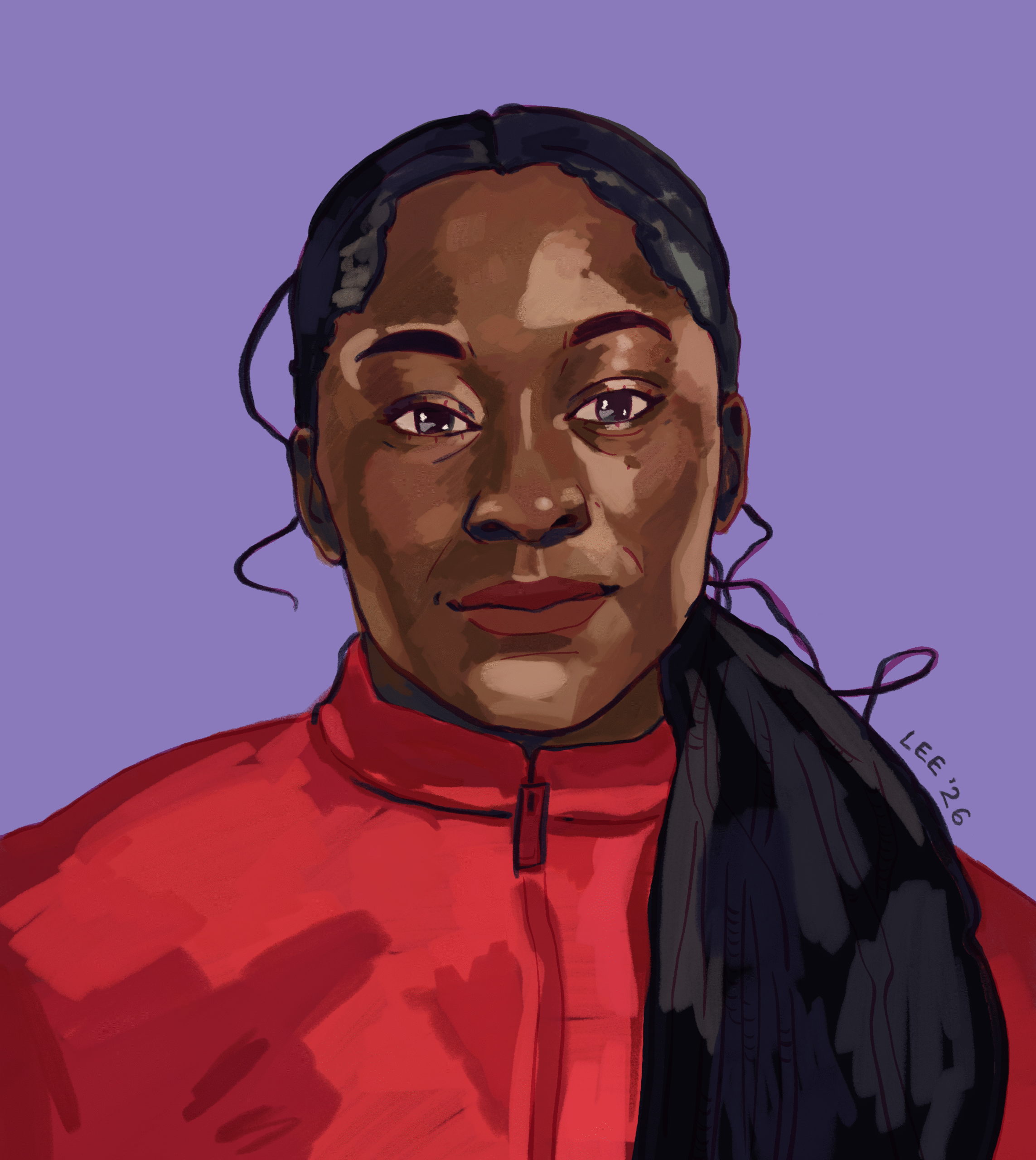
Know your athlete: Jorden Savoury

Jorden Savoury, U2 Arts, is one of McGill’s star track and field athletes. She competes in the 60 metres, 300 metres, 4×200 metre relays, and long jump. Her performance in the 25th McGill Team Challenge in January 2020 was nothing short of impressive. Savoury broke McGill records in both the 60 metre relay and long jump. 

“I was very ready for the meet [and] prepared really well,” Savoury said in an interview with The McGill Tribune. “I went into that [meet] very confident, knowing that I am able to do really well and that’s exactly what happened. I got two personal bests.”

Competing in multiple track & field events can be a challenge for many athletes, but Savoury considers these different events to be complementary in her preparation. 

“60 metres is executing your fast speed. Three hundred metres is a long sprint [which requires] speed endurance. [In] long jump, you [have] a lot to work on—your takeoff, landing, run-up, [and] approach,” Savoury said. “Each event I do is technical in its own way, but they help each other.”

Savoury, who is one of Canada’s 2021 and 2024 Olympic hopefuls, takes this status as a motivating force rather than a source of stress. 

“[Being considered an Olympic hopeful] is not an expectation; it’s more of a motivation,” Savoury said. “I [always] have it at the back of my mind. It is my biggest goal. The motivation keeps me on my toes. If I am having a bad day, I think of my dreams and goals.”

Apart from athletics, Savoury has a keen interest in modeling. She has modeled for the Redbird Sports Shop and her outdoor club, Saint-Laurent Select, whose mission is to promote athletic events among youth. 

“[I have] two big different dreams: One is the Olympics and the other is modeling,” Savoury said. “Modeling allows me to express my fashion and true colors as a person [….] Modeling for the McGill clothing line was so fun.”

The pandemic has disrupted Savoury’s training schedule as well as her modeling work, but she has managed to adapt to the social-distancing measures.

“The pandemic has hit us hard,” Savoury said. “In March, I continued training as best as I could. I would do bodyweight exercises in the house, run up and down stairs, [and] sprint on the concrete, which hurt.” 

She also values the company of her teammates and coaches, a comfort lost during the pandemic.

“It’s very hard training on your own,” Savoury said. “You are less motivated [and] it is not as fun.”

Due to the social distancing measures, keeping in touch with coaches and colleagues can be challenging. Despite feelings of isolation, Savoury has stayed connected with her peers both at McGill and Saint-Laurent Select. 

“From March to May, it was very hard [because we were] not in touch that much,” Savoury said. “Everyone was in their own space. We have video calls with Saint-Laurent Select to keep in touch. [It’s] not only about track and field, but [about] how life is going [in general, which] really helped me move forward.”

With the university athletics season indefinitely postponed, Savoury is focusing on the present and taking each day as it comes. 

“I have an outdoor season, [so] I am in the zone of what’s going on right now,” Savoury said. “To know that Nationals and RSEQs will be cancelled makes me sad, of course. All the hard work I have put in will not be proven in [those] big meets.” 

Savoury shares some key life lessons she learned throughout her journey as a student-athlete.

“I have learned about being patient,” Savoury said. “Things don’t always go your way. I had surgery [and] could not do my sport for three years. I train five times a week as a full-time student. I need to plan my week, [my] food, [and] when I am going to study [so that] I am not stressed [….] Patience and time management are two key things I have learned from my sport.”

Album Reviews, Arts & Entertainment, Music

Embracing the new without abandoning the old in ‘Imploding the Mirage’

Imploding the Mirage sounds distinctly like a Killers album: The upbeat, new wave-meets-modern rock style is recognizable to longtime fans of the Las Vegas band. However, it’s impossible to ignore the album references to other artists, styles, and eras. The busy instrumentalism, coarse-sounding vocals, and reinvented ‘80s synth-pop sound is remarkably similar to Arcade Fire’s 2017 album Everything Now, reflecting a current trend of retro nostalgia in musical production. Overall, Imploding the Mirage’s cohesive sound reinforces the story arc it aims to convey, edging the line between inspiration and imitation.

Lead singer Brandon Flowers describes the album as a story of two people becoming one through love, using inspiration from his parents’ marriage and his own relationship with his wife. “Dying Breed” showcases the beauty of a rare love with the lyrics “For the coveted touch of a girl in love / I was taken by the sound of a spirit in need / Baby we’re a dying breed.”

Many of the album’s tunes sound similar to the ‘80s gospel pop anthems. “Lightning Fields” has a high-energy choral quality that is reminiscent of Madonna’s “Like a Prayer.” The song features K.D. Lang, who Flowers explained is meant to emulate his late mother. Lang’s angelic voice sounds to be coming from above the clouds as she sings, “There’s no end to love” in the bridge. 

Along with the album’s more referential material, songs like “Blowback” embody the classic Killers’ sound. The B-Bender guitar adds a vintage rock feel that evokes nostalgia for the band’s first album Hot Fuss. “Caution” and “My Own Soul’s Warning” employs introductory soundscapes, a technique that is very familiar to the group. It’s clear The Killers have not abandoned their signature style but have revamped it in ways that keep listeners on edge.

Editorial, Opinion

Reconciliation must go beyond a toppled statue

The police murder of George Floyd on May 25, 2020 sparked global protests against police brutality and anti-Black racism, giving renewed momentum to the Black Lives Matter movement. In light of these events, McGill, an institution whose history is rooted in violence and enslavement, expressed its intention to put forward a ‘Plan for Addressing Anti-Black Racism’ by Sept. 30. The university’s administration has a history of stalling on equity-related issues. It took months of courageous activism by student leaders such as Tomas Jirousek for Principal and Vice-Chancellor Suzanne Fortier to come to a decision regarding the renaming of the men’s varsity team. Now, McGill must act quickly to implement its Black students’ demands, or else continue to actively contribute to the perpetuation of racism on campus. These demands start, but do not end, with taking down the statue of James McGill that stands by the Roddick Gates. 

The #TakeJamesMcGillDown movement was started over the summer by Black students at McGill. Its three core demands call for the removal of the James McGill statue, the creation of a Black or Africana Studies department, and the establishment of a resource-based office for social equity that prioritizes funding for Black students. Other demands include, but are not limited to, providing additional funding for events like Black Grad and Black History Month, and amending the Harassment and Discrimination Policy. Failure to comply with these necessary and attainable demands, especially as McGill seeks to raise $2 billion through the Made by McGill campaign, would indicate a conscious commitment to upholding the racism that has plagued the school since its founding. 

James McGill enslaved two Black women, one Black man, and two Indigenous children. We know this to be true, yet the McGill administration continues to publicly glorify its founder. Last year, the university announced the creation of two research positions to investigate McGill’s ties to slavery and colonialism, though the administration has not yet announced whether any action will be taken using this information beyond a self-congratulatory media campaign. While this paid work is crucial, it largely ignores the labour of Black members of the McGill community who have already started to uncover and communicate this history, such as former Art History professor Dr. Charmaine Nelson’s Bicentenary Recommendations. 

Of course, the creation of research positions does not mean McGill will actually do anything substantial. During a roundtable with the student media, Associate Provost (Equity and Academic Policies) Angela Campbell did not indicate that any action would be taken following the conclusion of the researchers’ contracts, instead stating that the purpose of the new positions is to recruit and support post-doctoral students. Understanding our history means nothing if it is not paired with meaningful actions that seek to fulfill Black students’ longstanding demands for the respect and equitable treatment that they deserve. 

Black students’ efforts in advocating for more equitable practices and creating safer environments for their communities are not new at McGill. The Black Students’ Network (BSN) has been working since last October to put forward a Black Student’s Bill of Rights. Other Black student groups, like the McGill African Students’ Society, Caribbean Students’ Society, and Black Law Students’ Association, hold and support events for Black community members, whereas the creation of two research positions are the best the university has offered so far. BIPOC students at McGill have and continue to be at the heart of some of the most crucial movements on and around campus. 

Black students should not have to take on this challenging work themselves. All students, clubs, and associations must take action to mitigate the barriers that have harmed and unwelcomed Black students. Non-Black individuals must make space for Black voices, join them in confronting the administration, call out and correct the people that use racist language, and dismantle their own internalized biases. Students should support the #TakeJamesMcGillDown campaign by signing their open letter and showing up to future demonstrations. This must come with a determination to hold themselves and others accountable to ensure that this movement does not lose momentum, which would make it easier for the administration to ignore.

McGill cannot simply take back two centuries of complicity in upholding anti-Black racism on campus and beyond. But it can and must begin to make amends for its past by listening to Black community members and implementing long-overdue changes without delay. 

Montreal, News

Hundreds of protestors demand the defunding of Montreal police

Over 200 people marched through the streets of Montreal on Aug. 29, calling for the defunding of the Service de police de la Ville de Montreal (SPVM) in a protest organized by the Montreal wing of the BIPOC Liberation Collective

The recent police shooting of Jacob Blake, an unarmed Black man in Kenosha, Wisconsin, sparked renewed efforts in Montreal to protest racialized police brutality. Speakers at the protest highlighted the SPVM’s murders of unarmed Black and Indigenous civilians, including the 2008 killing of Fredy Villanueva.

The energetic crowd was undeterred by weather that wavered between a light drizzle and heavier downpour. Ahead of protestors, police cars and neon-clad police officers on bikes patrolled the area, clearing the streets of traffic. Masked protestors chanted “Black Lives Matter,” “defund the police,” and “abolish the police,” and were often met with honking cars and cheers from passersby. 

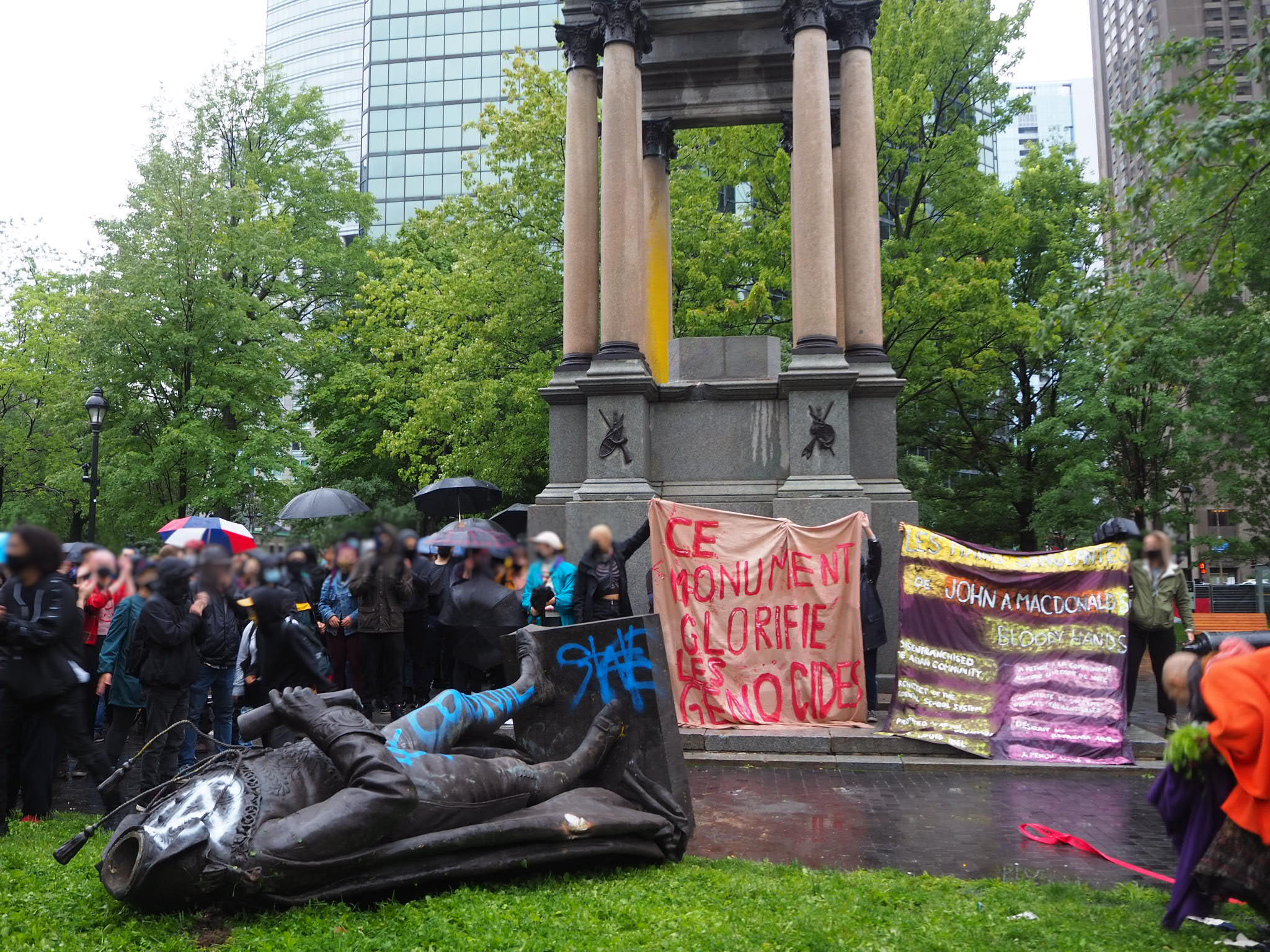
For over two hours, the crowd marched peacefully along Sherbrooke Street and west on Saint Catherine Street, where officers in riot gear blocked the street near the Montreal Police Neighborhood Station #20. Protestors continued west on Boulevard René Lévesque before gathering in Dorchester Square, where organizers gave speeches pushing for the reallocation of police funding. As the crowd reached Dorchester Square, a group of protestors toppled and spray-painted the statue of Canada’s first Prime Minister John A. Macdonald. There were no reported injuries or arrests. 

During the march, one activist with the BIPOC Liberation Collective spoke about the importance of reinvesting in communities as a means to reduce crime. He lauded the crowd’s activism and pushed participants to support BIPOC members in their own communities.

“I’m not going to sit around and watch more lives be lost and more lives be destroyed, because just one is too many,” he said. “And as a community we should understand that, and not be desensitized to peoples’ struggles and not dehumanize groups of people. Because when people become disenfranchised from our communities, [they] resort to the things that we don’t want in our society. And when we hold ourselves accountable for that and we realize that we are all part of the process [.…] We realize that it’s all our jobs.” 

Another activist bluntly assessed SPVM funding.

“Why is education not funded as much as the police?” he asked. “Why does education keep getting defunded [and] public schools beg for subventions [while] the police are there with almost tanks in protests. Why the fuck is this happening?”

Jessica Quijano, Missing and Murdered Indigenous Women Coordinator at the Native Women’s Shelter of Montreal, expressed frustration over her interactions with the SPVM during her work. She explained that she often needs to push for police to open investigations into missing and murdered Indigenous women. 

“How is it that a community has to hire someone like myself so that the police are supposed to do what they are paid to do,” Quijano said. “This is all intentional. The genocide of Indigenous people is intentional [in] Canada, [which] actually does not act. We know what needs to be done. We had an inquiry with 233 recommendations and the government has done none of them.”

Quijano denounced systemic racism in Canada’s criminal justice system.

“The Indigenous population here in Canada is less than five per cent, [but in our prisons], 25 per cent of men [incarcerated] are Indigenous and 40 per cent of women [incarcerated are Indigenous],” Quijano said. “That is a travesty. If you want to think about the U.S., how they have an issue with the prison industrial complex, we have the same thing here. We are no different than the United States.” 

Following the speeches, a handful of protestors, dressed entirely in black, climbed the John A. Macdonald statue, covering it with banners detailing Macdonald’s past. While John A. Macdonald was one of Canada’s founding fathers, he established the residential school system, which forcibly separated over 150,000 First Nation, Inuit, and Métis children from their families between 1880 and 1996. The Truth and Reconciliation Commission of Canada, published in 2015, called the residential school system a “cultural genocide.”

Read the latest issue

Read the latest issue