

Latest News

McGill, News

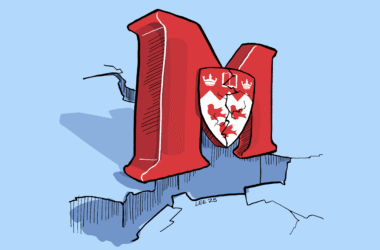
McGill launches new Bachelor of Arts program in Population and Global Health

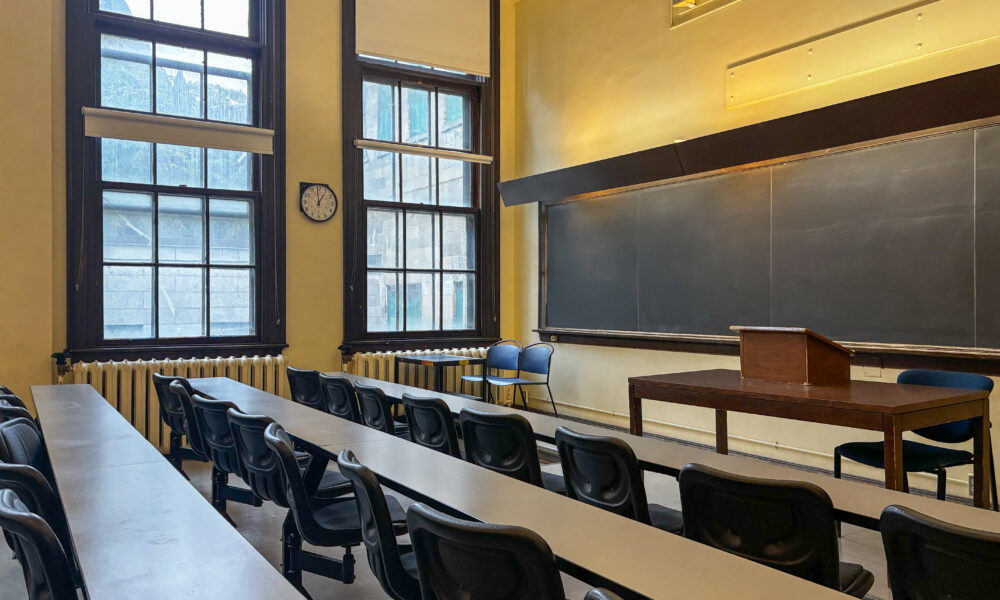
McGill University has launched a new Bachelor of Arts (BA) faculty program in Population and Global Health. Beginning in the Fall 2026 semester, U0 students and incoming first years will be able to enroll in the program. Unlike other major concentrations in the Faculty of Arts, students in the program will progress together as a cohort, which they will be sorted into through the program’s five stream options.

In a written statement to The Tribune, Lisa Shapiro, dean of the Faculty of Arts and Department of Philosophy professor, explained that the new BA will extend beyond the Faculty of Arts’ scope because of its socioscientific approach to globally pressing issues.

“[The new program is] truly interdisciplinary [and] focused on developing a comprehensive understanding of the social determinants of health, ethics, [and] policy,” she wrote. “The program not only draws on expertise situated in the Faculty of Arts, it also represents the intrinsic strength of a Bachelor of Arts in enabling students to articulate values and understand complex contexts through a range of methodologies to be positioned to develop solutions to real world problems.”

Shapiro also explained why McGill will place students in cohorts in order to expedite their learning processes.

“The idea of a cohort is that students enter as a group and form a community with shared intellectual interests through which they can learn from each other, as they develop specializations, as well as from faculty members,” she wrote.

Alayne Mary Adams, associate professor in McGill’s Department of Family Medicine and co-director of the new BA, highlighted the community-focused and experiential learning aspects of the Population and Global Health program in an interview with The Tribune.

“The program will admit a cohort of 40 to 50 students each year from high school and [CÉGEP],” she said. “They will progress through the program […] attending the same classes, [with] full semester [work placements], collaborating in teams of three to four students.”

Adams elaborated that the program’s community-engaged learning will primarily take place in two courses. GPHL 303: Community-Engaged Learning will connect students with local partners to work in small groups on pre-vetted, equitable projects for 24 hours across eight weeks. GPHL 401: Experiential Learning will assign students 455-hour projects, placing them locally or internationally in collaboration with research institutes, health agencies, and community organizations.

In an interview with The Tribune, Pearce-Tai Thomasson, the Arts Undergraduate Society’s (AUS) Vice President of Communications, expressed that the new program will balance the MDCM’s—McGill’s four-year undergraduate medical program—admission process, which is currently disproportionately based on provincial residency status.

“In Quebec, with CÉGEP rules, you can apply to go to medical school […] straight out of your CÉGEP with the [Med-P qualifying year],” he said. “[Now] there’s only five spots [in the MDCM] for out-of-province students [….] The [new BA program] is another way to […] [guide more out-of-province students] towards the health professions.”

Thomasson continued to elaborate on how the Population and Global Health program will narrow gaps between academic knowledge and tangible world issues. He mentioned that during the COVID-19 pandemic specifically, many students became interested in finding realistic solutions to global crises.

“[In many other programs] you’re not necessarily going to be studying anything related to that, […] you’re [only] going to get a little bit of that knowledge every once in a while,” he said. “People are interested in medicine, but don’t certainly go to med school, but want to get into some health-related careers and diplomacy careers [instead] [….] I’m excited about the program, just because it gives people [such] opportunities.”

Commentary, Opinion

Housing is urgent; disclosure should be too

There is no debate that Montreal is experiencing a housing crisis. It is also equally evident that Chinatown’s remaining infrastructural heritage is scarce and essential to the preservation of Chinese culture in Montreal. Those two facts should be mutually exclusive, but right now, municipal lawmakers are threatening to turn Chinatown heritage sites into social housing, forcing a debate over what the city should prioritize: Heritage or housing. However, the urgent question should not be whether to build social housing, but how to do it—in a way that avoids undermining cultural vitality.

Achieving this kind of support is not straightforward; it requires dialogue, visibility and transparency. Montreal has signalled that multiple municipal sites will be released for non-market housing in 2025, yet the government has not disclosed to the public a clear, citywide list of addresses, unit ranges, and timelines. 

However, without a clear public site analysis, the decision to place a housing project in a small, racialized heritage district obscures what was a conscious choice by the city government as an unavoidable sacrifice. That opacity creates an unnecessary opposition between cultural protection and human need—two necessities that do not have to be positioned as rivals. 

Montreal does have a formal policy of ceding municipal properties for non-market housing, along with an online map demarcating these sites. The city has acquired or transferred other buildings for housing throughout 2025, including 20 buildings to the Société d’habitation et de développement de Montréal (SHDM) to lock in affordable supply and several projects outside the Ville-Marie district. However, what the city does not make publicly available is their comparative reasoning: Which sites were assessed first, which were set aside, and what factors led to the selection of the Wing building—which has played a long-standing role in supporting and providing for the Chinese community in Montreal. 

Montreal has only recently acknowledged its historic failure to protect Chinatown. In July 2023, Quebec classified the core of the neighbourhood as a heritage site, protecting 10 key buildings and 14 lots from demolition or major alteration, including the Wing building. In January 2024, Montreal designated Chinatown the city’s first official historic site, alleging an aim to ‘protect and enhance’ the rare francophone Chinatown. 

Altering even one of these culturally emblematic buildings implicitly devalues the culture and history those buildings reflect, while simultaneously denying a geographic and infrastructural cultural hub for future generations.

However, there is no denying that the housing crisis in Montreal is just as pressing as cultural erosion. In the winter of 2024–2025, Montreal shelters and warming stations turned away roughly 50 people each night, and by late 2024, day shelters serving elderly unhoused people were also at capacity. 

In November 2024, the Centres intégrés universitaires de santé et de services sociaux (CIUSSS) de Montréal stated there were 1,864 spaces in shelters across the city, with about 200 more to be added at the start of December. However, local officials warned that Montreal was still short of 500 shelter units. In a city where winter conditions are life-threatening, the acute housing shortage is not an abstract policy problem but a structural shortfall and a threat to basic survival. 

By disclosing part of its plan and keeping the rest offstage, Montreal turned two legitimate claims—social housing and historical heritage—into a confrontation. But this apparent clash between communities is really a gap in disclosure. Montreal has the power—and the responsibility—to disclose its 2025 housing data in full. Publishing the 2025 sites, the selection criteria, and the rejected options for new housing developments is not a courtesy to Chinatown or to housing groups. It is the minimum condition for the project to proceed. 

Transparency is not a rival to urgency; it’s what makes it credible. Montreal is asking residents to accept that some meaningful, historic locations will change and carry new functions. That is a heavy ask, but it’s also a reasonable one—only once the entire plan is on the table. Consent begins with disclosure, and Montreal has still more to show.

Baseball, Basketball, Behind the Bench, Football, Hockey, Sports

2025’s sports equinox: Four major leagues, one historic night

Monday, Oct. 27, was a fever dream for sports fans. It was the kind of sporting sensory overload where four screens and a personal highlight-curator were necessities. For only the 32nd time in history, the sports equinox commandeered living rooms and sports bars across North America. The National Football League (NFL), National Basketball Association (NBA), National Hockey League (NHL), and Major League Baseball (MLB) all shared the same stage, each fighting for attention in one of sports history’s most crowded nights. 

The evening began with a bang in the NFL’s Monday Night Football showdown, where the Kansas City Chiefs continued their mid-season surge with a 28-7 win over the Washington Commanders. Polarizing quarterback Patrick Mahomes reminded everyone why he is still the league’s leader for quarterback excellence, throwing for 299 yards and scoring three touchdowns. The Chiefs’ defense held Washington to just 260 total yards, a dominant display that represented their Super Bowl ambitions.

While Mahomes worked wonders on the gridiron, basketball fans were treated to an early-season spectacle in San Antonio. Victor Wembanyama, the NBA’s 2023-24 Rookie of the Year, posted 24 points and 15 rebounds as the Spurs slammed the Toronto Raptors 121-103. The 7-foot-4 phenom danced around the court with his fluid shooting and rampant defensive efforts, while Devin Vassell chipped in 15 points to secure the win. Raptors fans felt an all-too-familiar frustration at their team’s strategy: A dazed defensive response to Wembanyama’s versatility in the paint.

Then came the night’s main event: Game 3 of the World Series between the Toronto Blue Jays and the Los Angeles Dodgers. What began as a battle of the pitchers turned into a gruelling 18-inning marathon that ended in heartbreak for Toronto. The Dodgers ultimately prevailed 6-5, thanks to a walk-off home run from Freddie Freeman that broke a 5-5 deadlock after over six hours of play. Despite the loss, the Jays’ performance kept the series alive, with fans on both sides of the border glued to every pitch deep into the night.

Meanwhile, the NHL added its own two cents to the chaos. In Pittsburgh, the Penguins shelved the St. Louis Blues 6-3, with Sidney Crosby netting his 1,700th point to seal the deal for his team. Elsewhere, the Boston Bruins suffered a painful 7-2 loss at the hands of an overwhelming Ottawa Senators squad. The Senators’ offensive dominance was led by Drake Batherson and Tim Stützle with 2 goals apiece, while their intensive defensive effort was exemplified by goalie Leevi Meriläinen, who made 26 showstopping saves throughout the game. 

What made Monday’s sports equinox so special was not just its variety. For any sports pundit, fan, or casual observer, it was the intensity across every sport that defined the night. From Mahomes’ clinical precision to Wembanyama’s coming-of-age performance, the Dodgers’ late-night resilience to Crosby’s timeless brilliance, fans experienced every possible emotion in one nonstop tidal wave of sporting highlights.

But the night also hinted at a new-age modern reality. With overlapping seasons, streaming exclusives, and wall-to-wall broadcasts, fans are increasingly forced to pick their battles. While this is a great problem to have, the once-rare overlap that defined the sports equinox is now a reminder of how crowded the sports calendar has become. It means that seasons stretch longer, off-seasons shrink exponentially, and networks compete fiercely for attention to provide fans with more time to indulge in their favourite sporting events. 

Monday’s sports equinox will stand as a snapshot of why we watch sports in the first place—more than just for scores or standings, but for the chaos, the cacophony, and those fleeting moments in every game when it feels like the stakes just cannot get any higher.

Commentary, Opinion

Trump’s ‘Department of War’ rebrand shows the power of rhetoric in framing political narratives

United States President Donald Trump renamed the Department of Defence (DoD) the ‘Department of War’ in an executive order issued on Sept. 5. Subsequently, ‘Secretary of War’ Pete Hegseth stated that the government is “going on offence, not just defence.” The White House’s rebranding of the institution is not a benign change in nomenclature but a symbolic shift to embrace violence in governance. The new department title serves as a prime example of language weaponized to accomplish political goals and influence public perception—a strategy also wielded by educational institutions like McGill. 

Trump’s rhetoric surrounding the DoD name change emphasizes victory, strength, and a readiness to engage in warfare to “secure what is ours,” a combative language bordering on imperialistic intent—one that harks back to Trump’s last labelling stunt of renaming the Gulf of Mexico the ‘Gulf of America’ just this January.

The administration’s war on naming speaks more broadly of a will to heroicize America in the eyes of American citizens and the international community. Hegseth glorified violence when he declared that the DoD title change aims to restore warrior ethos.” Yet, language that celebrates strength and warfare often finds its counterpart in language that disguises domination as diplomacy and violence as peace. Hegseth justified the evolution of the Department of War’s mission by arguing it seeks to bring peace—a comically paradoxical declaration that is a testament to America’s long history of waging devastating wars under the pretense of peace.

The bitter irony of Trump’s ‘peace’ rhetoric is more conspicuous in his 20-point plan announced on Sept. 29, in which he pledged to bring about an ‘everlasting reconciliation’ between Israel and Palestine. The plan aims to establish a transitional government for Gaza, overseen by a ‘Board of Peace’ led by Trump and former British Prime Minister Tony Blair

The ‘Board of Peace’ is questionable by definition, given the two key figures appointed as its leaders. First, Blair was responsible for Britain’s decision to back up American troops in the 2003 Iraq war. Second, Trump has displayed nothing short of a flippant attitude towards Israel’s genocide. On Feb. 25, he reposted a concerning AI video imagining the future of Palestine, featuring himself sipping a cocktail by the pool of a luxurious hotel with Israeli leader Benjamin Netanyahu.

Trump leverages the language of war and peace to legitimize and glorify America’s participation in international conflicts—a common rhetorical tactic in high-power politics around the world. Whether it is the Israel Defence Forces title invoking national defence to deny genocidal violence, or Quebec Premier François Legault’s fear-mongering claims of a French Language extinction to rationalize Bill 96, curated rhetoric saturates global politics.

Like politicians, institutional leaders too weaponize rhetoric to shape public perception on political affairs and drown out the objectives and campaigns of social movements. On campus, we have also witnessed firsthand how the ‘peace’ rhetoric often hides a latent and divisive political agenda. At McGill, students and faculty continuously organize against the university’s financial investments in military technology companies tied to the Israeli occupation: This movement has included—but is not limited to—the passing of the Policy Against Genocide in 2023, the McGill Association of University Teachers endorsing an academic and cultural boycott of Israel, the 75-day encampment, and two student strikes for divestment. 

However, McGill President and Vice-Chancellor Deep Saini consistently asserts that McGill University must abstain from “commenting or taking a position” when addressing protests. By asserting a supposedly neutral political position, McGill fundamentally sides with the perpetrators of genocide. Abstaining from taking a side in a political conflict is, in effect, siding with the powerful, and is far from an act of peace. 

The president of a university is appointed to represent the institution’s interests. President Saini’s condemnation of vandalism advocating for divestment in February is understandable in its aim of protecting McGill property. However, Saini’s systematic refusal to address the motives behind the vandalistic acts dismisses the greater concern of students at hand. By cherry-picking what to comment on and where to claim alleged neutrality, Saini constructs a ‘peace’ rhetoric that maintains the genocidal status quo.

The rhetoric embedded in our political landscapes shapes and distorts depictions of political events. Whether glorifying aggression or masquerading behind the façade of peace, these distortions serve one purpose: To protect power. Students must proceed with caution and consider the intentions and interests underlying seemingly impartial political statements appealing to ‘peace’ or ‘security—especially during times of intense mobilization.

Research Briefs, Science & Technology

Trust your gut: How your gut microbiota uses the foods you eat to prevent disease

Hidden deep within the human digestive tract lies a dynamic and complex population: The gut microbiota, a community of over 100 trillion microbial cells that influence the body far beyond digestion. Consisting of bacteria, viruses, eukaryotes, and archaea, a diverse microbiota has been shown to have many beneficial health effects, particularly in patients with cancer. But which of these countless microbes are responsible for transforming the beneficial compounds we get from our diet into molecules that can improve treatment outcomes?

This question has been the focus of researchers such as Arianna Giurleo, a second-year PhD student in McGill’s Pharmacology and Therapeutics program and member of the Castagner Lab. Her work explores how plant compounds called polyphenols interact with the gut’s microbiome. Gieurleo is particularly interested in identifying bacterial species that metabolize castalagin—a polyphenol isolated from the berry camu camu—to improve outcomes for cancer patients.

“Patients with cancer undergoing treatments like immunotherapy, when supplemented with castalagin-rich supplements, tend to do better [….] We’re interested in understanding which bacteria will break down castalagin into these downstream metabolites, which are beneficial for health,” Giurleo said in an interview with The Tribune. “I am currently looking at certain bacteria we’ve recently found that are capable of having this effect, and which genes or functions they use to do this.”

Giurleo explained that her motivation to pursue this research stems from a desire to bridge the gap between traditional research in microbiology and real-world applications.

“Microbiology can be very specific to just looking at a specific gene or bacteria, but it doesn’t really have as much translation as I would have liked [….] Having my own research be [applicable] to something that might help people down the line, such as in the form of a drug, is why I’m here now,” she said.

High levels of polyphenols are widely present in a variety of everyday foods.

“Polyphenols are obtained from our diet, mostly through fruits, vegetables, teas, nuts, and some wines,” Giurleo said. “Pomegranates and walnuts are what have been particularly studied the most.”

Gut bacteria play many roles, from harvesting energy from food to producing neurotransmitters like serotonin and essential vitamins such as vitamin K. However, diet seems to be the most powerful influence for the establishment of a diverse gut microbiome. Non-digestible dietary compounds known as prebiotics, often found in fibre-rich foods such as berries, are key nutrients for stimulating the growth and activity of new gut flora.

“Your gut microbiome is connected to so many things, and it’s crucial for general homeostasis of health [….] It’s really important to pay attention that what you’re eating is right, so that you can continue to keep proper functioning of your microbiome,” she said.

Giurleo discussed how even her own habits have changed as a result of her research.

“I have been a bit more aware of my overall diet, and I now try to implement a lot more fibre-rich things,” she said.

The gut microbiota undergoes extensive changes across the lifespan, and these alterations may influence the gut’s ability to metabolize beneficial compounds. Although unable to disclose her exact results due to the ongoing nature of her research, Giurleo’s work is part of a growing body of epidemiological studies that have shown that polyphenols offer protection against the development of cancer, as well as induce a reduction in tumour formation and growth. These effects have been observed at several sites of the body, such as the mouth, stomach, intestines, and liver.

Giurleo concluded by pointing out that polyphenol intake will not be very effective without a pre-established strong microbiome. She highlights the importance of maintaining a healthy gut so that it can continue to protect us, particularly from metabolic diseases.

“We can take in all the polyphenols we want, but without them being broken down or transformed [by the proper microbes], there won’t be any benefit,” she said.

Out on the Town, Student Life

Boredom-busting activities that disrupt the endless midterm grind

During McGill’s never-ending midterm period, motivation decreases at the speed of light. Your long hours at the library get less and less productive, yet the foreboding your incessant workload inspires, combined with the battle it took to secure a seat on your favourite floor of the library, keep you rooted in place. 

Before this monotony and anxiety overwhelm you, making any level of studying impossible, it is crucial to build in breaks that combat academic ennui. The Tribune presents a list of boredom-busting opportunities that will fit your tight study schedule and nourish your soul in ways McLennan never could.

Take advantage of campus museums

A hop, skip, and a jump away from any university library is McGill’s Redpath Museum, free with voluntary admission and open Tuesday to Saturday. Though it is perhaps most known for its central Gorgosaurus fossil, do not miss the museum’s stunning Abe Levine Shell Collection, which holds over 2,000 seashells that genuinely sparkle. Redpath also boasts a fascinating Ancient Egypt Collection that dives into the civilization’s funerary rites and mythos, and many stuffed zoological specimens, including extinct creatures.

For a more grisly experience, head to the equally proximate Strathcona Anatomy and Dentistry Building to visit the Maude Abbott Medical Museum. Free to visit on Tuesday to Friday afternoons, Maude Abbott’s Cardiovascular Collection hosts a fascinating display presenting 39 examples of heart disease, including an alligator’s heart. While you could get lost perusing either museum, both Redpath and Maude Abbott offer quick breaks from schoolwork that are much more informative and engaging than the classic midterm season doomscroll. 

Watch dogs frolic at Percy-Walters Park

Whether strolling from campus along the south side of Mount Royal or coming from the mountain itself mid-run or walk, consider stopping by Percy-Walters Park. A quiet enclave surrounded by stately homes, the greenspace is a refreshing breather from McGill’s bustling buildings, and it offers amazing pet-watching via its fenced-off dog park. If you’re lucky, an owner might even let you say hello to their puppy: Just like a McGill-run animal therapy session, but without the queue. 

Skip the cooking

There is nothing more rewarding during midterms than not having to coordinate meal prep. Whether by yourself or on a study date with friends, treat yourself to lunch or dinner at a restaurant to break up long library sessions and make sure you fuel your hardworking brain properly. 

A BIXI ride away from campus on rue Rachel E, visit AMBER Restaurant for Indian-Pakistani cuisine with a wide range of exceptional vegetarian options. While the menu is sharing-friendly, try to stop by during lunch service from Thursday to Sunday to order your own personal thali, which comes with a comprehensive appetizer, three curries, rice, naan, and a dessert for only $25.99 CAD. The warm food will feel like a hug in your stomach during even the most trying of academic times.

Slightly farther on av. Fairmount O, brave the line at the Drogheria Fine window for piping-hot gnocchi, at just $5 CAD per takeout box—with a slight premium to add parmesan cheese or chilli flakes—payable by cash or debit card only.

If you don’t have any time to dine in during the midterm grind, order from I Am Pho near Concordia. This popular spot offers delicious soups that withstand food delivery journeys without compromising quality. Fragrant and spicy, their bún bò Huế is a must-try.

Take a total brain break to explore av. Laurier
For when you’ve truly given up on studying, call it a day and take a proper break to recharge: Why not spend an afternoon meandering along av. Laurier? Start by grabbing a warm beverage from Noble Café to sip on as you walk through Sir-Wilfrid-Laurier Park and admire the last of the autumn leaves. If you head east after the park, consider picking up colouring supplies at art store Lézard Créatif as a further de-stressor for home, or enjoy a beer at Dieu du Ciel! If heading west on Laurier, stop by Librairie un livre à soi, a beautifully curated French bookstore, to find an alternative to your myCourses readings, or Marie Vermette, a florist whose bouquets can brighten up your desk even in the darkest of midterm seasons.

Football, Hockey, Soccer, Sports, Tennis

Turning back time: What daylight savings teaches us about athletic career endurance  

Daylight saving time: You hate it when you lose an hour of sleep in March, and love when you gain the hour back in November. This past Sunday, Nov. 2, our clocks turned back, and we attained that beloved hour. What if athletes could also ‘turn back the clock’ on their careers? Often, as sports stars age, they lose the athleticism they once had in their younger prime—but some athletes have withstood the test of time. In celebration of daylight saving time, here are the top athletes who have shown that, despite their age, they can “turn back the time” and still put up elite performances against younger competition. 

Tennis: Venus and Serena Williams

Both household names, the Williams sisters have dominated tennis for decades. Venus and Serena have done it all, winning a combined 30 Grand Slam singles titles. As a duo, they have won three Olympic gold medals and 14 doubles titles

Last July, at 45 years old, Venus became the second-oldest player ever to win a Women’s Tennis Association tour singles match, defeating 22-year-old Peyton Stearns. Despite their 23-year age gap, Venus dominated the game, winning in two sets. Similarly, during the 2022 US Open, Serena pulled off a major upset, beating the globally-ranked number two player Anett Kontaveit. Serena, who was 41 at the time, is 15 years older than Kontaveit, who was 26 and in her prime. While Venus is 45 and Serena is turning 44, Venus continues to compete despite Serena’s retirement in 2022, showing that age is just a number—even at tennis’s highest level.

Football: Tom Brady

Known as the Greatest of All Time (GOAT) of football, quarterback Tom Brady has not only achieved all one can in the National Football League (NFL) as its most decorated player ever, but continued to do so late into his career. Brady did not retire from the NFL until he was 45, even coming back to play another year after he initially announced his ‘retirement’ in 2021

At age 43, Brady led the Tampa Bay Buccaneers to his seventh career Super Bowl championship victory. In his decisive 31-9 win over the Kansas City Chiefs, Brady had an age advantage over opposition quarterback Patrick Mahomes of 18 years and 45 days.

Soccer: Marta

Marta Viera da Silva (Marta), regarded as ‘The Queen’ of soccer, has been critical to the success of her home nation Brazil on the international stage and is historically one of the best to ever play around the world. Still in the game at age 39, she has participated in six World Cups and six Olympic Games, scoring 122 goals

Despite initially ‘retiring’ from international soccer after the 2024 Olympic Games, Marta returned to play for Brazil in the 2025 CONMEBOL Copa América Femenina, a tournament between South American nations. Playing alongside many of her teammates who were a full decade younger than her, she was the star. In Brazil’s final against Colombia, Marta scored two goals in extra time to secure Brazil’s victory as the champion of the continent. 

Hockey: Jaromír Jágr

A hockey legend, Jaromír Jágr continues to play professionally at 53 years old. Originally from the Czech Republic, Jágr was drafted into the National Hockey League (NHL) by the Pittsburgh Penguins in 1990. Throughout his NHL career, Jágr recorded 756 goals and 1135 assists, making him second on the all-time NHL points leaderboard

Jágr played in the NHL until 2018, 28 years after he was first drafted. Today, he continues to play in the Czech Extraliga, the highest-level league in the Czech Republic, for Rytíři Kladno. His last feature was on Oct. 17 against HC Vítkovice, showing that despite his age, Jagr still competes at the top level. 

Ultimately, these athletes have taught us that skill does not have to come at the expense of age. Just as our clocks turn back every November, we are reminded of the stars who have done the same with their careers, proving that star power in the most elite players can trump the effects of growing older.  

McGill, Montreal, News

MISC hosts 2025 Mallory Lecture ‘Back to the Future’ with speaker Chantal Hébert

On Oct. 29, the McGill Institute for the Study of Canada (MISC) hosted its 2025 Mallory Lecture. Daniel Béland, professor in the Department of Political Science and director of the MISC, began the event with a land acknowledgement, followed by an overview of previous lectures MISC has held since 1995 in honour of James Russell Mallory.

“After retiring in 1982, [Mallory] was appointed professor emeritus, and continued to teach for another 10 years. Professor Mallory passed away in 2003,” Béland contextualized. “[Previous] lectures featured such renowned speakers as Bob Rae, Andrew Cohen, Alain Dubuc, Tom Kent, John Gomery, Elizabeth May, and many others.”

Béland then introduced the speaker for the 2025 lecture, Chantal Hébert, a bilingual freelance political columnist. In 1975, she started her career in Toronto in Radio-Canada’s regional newsroom, before covering federal politics on Parliament Hill. She has since written for a range of newspapers, including La Presse and The Toronto Star.

In 2015, Hébert’s book The Morning After: The 1995 Quebec Referendum and the Day that Almost Was was published in both English and French. Hébert started the lecture by describing her inspirations for writing the book.

“I suggested that I do a story about the 1995 referendum, and that my plan was to go around to everyone […] in an elected political position, I would ask them […] what would happen if the ‘yes’ had won?” she said. “The morning after the last referendum and in the year that followed, nobody wanted to talk, […] because once the votes were counted, there was one question on everyone’s mind […] and the question was: Did no mean no?” 

Hébert continued to comment on Quebecers’ evasive attitude towards the question of a sovereign Quebec.

“Since that night in 1995, [Quebecers] have had 18 opportunities to use the ballot box to rekindle the sovereignty debate,” she said. “If you were to connect the dots between all those votes, what you find is that over the past three decades, Quebec voters have gone out of their way to avoid revisiting the issue.”

Hébert ended her lecture by referring to Paul St-Pierre Plamondon’s vow to organize another potential referendum.

“The next Quebec campaign is going to feature a referendum commitment, a real one, apparently, for the first time since Jacques Parizeau was elected in 1994,” she said. “In the world that I’ve lived in, we only had a referendum in 1995 because the rest of Canada really created the conditions for it during the Meech Lake Debate.”

Hébert then moved on to a Q&A session. An attendee asked Hébert about her thoughts on how some ‘spoiled’ ballots were destroyed by electoral officers during the 1995 referendum. Hébert responded by saying that both the federalist and sovereignist sides were responsible for tampering with the results.

“With 94 per cent of voters voting, I don’t believe that one side stole it from the other,” she said. “The federal government [also swore] in people as citizens to make sure that they showed up to vote, so [it would be] kind of a waste of time [to compare the sides].”

As one of the final questions, an attendee asked Hébert, “What [do] you think the motivations for this referendum are, and how would they be different from the referendum 30 years ago, especially considering the rise of support for independence among young people?”

Hébert explained that the idea of a new referendum still centres on creating a country that protects the French language.

“The Parti Québécois [(PQ)] wasted 30 years and drew too much distance from not just newer Quebecers, but you cannot, in the same breath, say we’re proud of les enfants de la loi 101 and then not realize that your French-rooted kids went to school with people who are not from necessarily the same background,” she responded. “I think the PQ has failed to work its way into finding a way for Quebec’s diversity to be part of its project, and that would cost a vote [because] if you feel that your kids don’t fit in because of [la loi], you’re less likely to want to vote ‘yes’ [in the next referendum].”

Commentary, Opinion

Quebec French seduction programs are a win-win for francophones and anglophones alike

Since the 1960s’ Quiet Revolution, Quebecois secessionists have advocated for the creation of a separate Quebec nation-state and the preservation of strong French cultural and linguistic ties within the province. Yet French cultural initiatives, such as business language requirements, are often unnecessarily exclusionary towards the province’s anglophone residents, enforcing rigid norms in the name of cultural preservation. However, unlike exclusionary language policies, Quebec’s French educational seduction programs strengthen cultural preservation while respecting both francophone and anglophone autonomy. 

Recently, the French Consulate announced a new initiative aptly termed the ‘seduction program,’ designed to increase the accessibility of French education for Quebecois students. The program enables Quebecois students to enroll in French universities at the same tuition rate as French citizens. Additionally, the program streamlines the application process to French universities, allowing students to apply to multiple schools for a modest cost. As of 2019, merely 1,600 Quebec students study in France—a paltry headcount that seduction programs aim to increase.

This program offers a positive counter-model to other Quebec initiatives aiming to preserve French language and culture. Unlike some contemporary policies that promote French language use at the cost of English linguistic accessibility, French educational seduction programs provide Quebec citizens—regardless of their native language—with opt-in opportunities to immerse themselves in French culture. 

Given relatively low demonstrated student interest in studying in France, some might argue that the program’s continuation is unjustified. However, in reality, the volume of interest in these programs does not decisively determine their value. Regardless of whether French educational seduction programs are capitalized upon, they serve an important secondary function: The provision of increased cultural agency for the Quebecois people. 

Increased autonomy is the core demand of Quebecois secessionists, who view the preservation of French culture as a vessel for autonomy. Providing francophone students with the option to engage in affordable, French-immersive education empowers them to determine their own cultural destinies. This program could offer a substitute for more exclusionary practices—such as proposed French proficiency mandates at universities like McGill— that promote similar aims of French language retention. In short, this seduction program offers the option for Quebecois to embrace French without undermining English linguistic rights.

Of course, each Quebecois student who chooses to pursue higher education in France represents a loss in revenue for Quebec universities. Only five to six per cent of students from Quebec obtain their college degree out of province, so, indeed, it appears that every student gained by French seduction programs is effectively ‘poached’ from the Quebec university system. Yet, major Quebec universities like McGill and Concordia generate the majority of their tuition revenue from international and out-of-province students who //are not// eligible to participate in French seduction programs. Additionally, given that roughly 95 per cent of Quebecois students remain in-province for university, it doesn’t appear that local schools would suffer from the loss of a few resident students to France.

Ultimately, French education programs are a positive opportunity for Quebecers and a net-neutral for universities. Functionally, these programs won’t lead to mass disinvestment from local universities due to their demonstrated lower levels of participation. Rather, these programs bolster provincial cultural autonomy and provide a positive outlet for engagement with French culture. Unlike more typical cultural preservation programs, incentivized education abroad has no exclusionary impact on the province’s English-speaking residents. What little revenue is lost to Quebec universities through these seduction programs seems a small price to pay in exchange for a cultural compromise that honours both francophone and anglophone interests.

Art, Arts & Entertainment

Artistic gems within the depths of Montreal 

Art drifts through Montreal like a living current, extending far beyond museums and concert halls. It spills out of the city’s hidden bars, sculptures, and cinemas, inviting anyone who dares to wander to step into its imagination. Here are four corners where Montreal’s artistic heart pulses strongest.

Step into the secret rhythms of Bootlegger 

The bar Bootlegger has a discreet, almost concealed entrance meant to emulate the speakeasies of the bootlegging Prohibition era. Stepping inside, you find yourself transported back to the time of secret and illicit jazz saloons and taverns. Dim, red lighting creates an intimate and warm setting. The bar displays many decorative antique bottles of liquor; the stylized lounge area near the entrance adds to the 1920s feel. Live jazz music plays every Sunday and Wednesday, contributing to this mysterious ambiance. The music from the backstage fills every corner of the room, and there isn’t a bad seat in the house. Bootlegger is more than a bar; it is a place where music, light, and memory entwine into a world apart from time.

Take in artistic ambiance at Else’s

Located in the Plateau, Else’s is another cocktail bar and restaurant which presents an artistic environment with its theatrical decorations and quaint street corner location. The exterior is completely blue, an intriguing disruption from the classic beige and brick colouring of the surrounding houses and buildings. The inside is even more eye-catching: The walls are painted a dark green, and near the bar area lie all kinds of medieval puppets of devils and other creatures. There isn’t an inch of the place without some form of artistic display. Though at a slightly costlier price range, it is worth it for the ambiance. At Else’s, the mundane melts into the extraordinary, turning every drink into an encounter with art.

See the French-English feud immortalized in Old Port

Located in Old Montreal, one of the more noteworthy public displays of art in the city is The English Pug and the French Poodle—two opposing but interweaving statues. It features two pet owners wearing masks, comically tipping their noses up in the air at one another. Incidentally, the alternate name of the statue is The Two Snobs. This sculpture is meant to evoke humour, a joke between the French and the English. With the woman carrying a French poodle and the man holding an English bulldog, it represents the dynamic between the two cultures in Montreal, and satirizes the friction between the two. 

Study the classics at Cinema du Parc

If you are in the mood for some quality entertainment, Cinema du Parc is the perfect place for film buffs, cinephiles, and casual movie-goers alike. Located on av. du Parc, not far from McGill’s downtown campus, the cinema is convenient, less expensive than other theatres, and screens both classic films and new movies. With a distinct charm, an old-fashioned feel, and smaller screens and rooms all on one level, it offers a much more traditional movie-going experience. Cinema du Parc is also one of the few theatres that celebrate prominent anniversaries of renowned films, such as its recent rescreenings of Jaws, One Flew Over The Cuckoo’s Nest, and more. An independent cinema, it promotes local artists, charity organizations, and Montreal communities. Cinema du Parc is a great way to be entertained without a huge price tag. 

Montreal’s art can not be contained: It lives, breathes, and whispers in every corner. If you have run out of sights to see and places to visit, these four places are a few of the many places that you must check out. They are just droplets of the city’s artistic scenery.

Read the latest issue

Read the latest issue