

Latest News

McGill, News

McGill launches ninth annual Indigenous Awareness Weeks

McGill’s ninth annual Indigenous Awareness Weeks (IAW) launched on Sept. 16. The theme this year is “matriarchy and Indigenous languages,” inspired partly by the United Nations proclamation of 2019 as the International Year of Indigenous Languages. Indigenous Education Advisor Janelle Kaperski spearheaded the organization of 12 of the 16 IAW events, taking place Sept. 1627. She explained the lens through which Indigenous languages will be exhibited this year.  

“I believe that Matriarchy and Indigenous languages are inextricably linked,” Kasperski said. “There’s no way you can talk about one without the other as many of us have learned our languages from strong women in our lives.”

IAW 2019 will feature a variety of events including workshops, panel discussions, keynote speakers from across Canada, and the 19th Annual McGill Pow Wow hosted by McGill’s First People’s House. Although IAW provides an opportunity for the McGill community to learn about Indigenous cultures, Kasperski emphasizes that the goal has always been to highlight Indigenous excellence. 

“[The purpose of IAW has] always [been] to celebrate Indigenous successes and provide space and a platform for Indigenous voices, knowledges, sharing, and really to highlight how important [these are] on campus,” Kasperski said. “I believe that’s what [IAW] is and what it always has been and that’s what it will continue to be.”

The Student’s Society of McGill University’s (SSMU) Indigenous Affairs Commissioner Tomas Jirousek pointed out the lack of physical space available for Indigenous staff and students on campus and hopes that IAW can help increase campus expressions of indigeneity. 

“There are very few expressions of indigeneity on campus,” Jirousek said. “IAW helps break that a little bit, whether it’s physically hanging banners, whether it’s actually having the physical spaces occupied by Indigenous knowledge holders, that helps disrupt this type of neoliberal [and] colonial learning environment.”

Jirousek highlights the importance of solidarity by referring to a collaboration with McGill’s Black Students’ Network (BSN) on a panel discussion examining the impact of colonial power on both black and Indigenous students.

“[The event is] speaking specifically to solidarity within colonial context as people of colour,” Jirousek said. “Black students and Indigenous students both face a variety of unique challenges whether it be economic, pedagogically-based, any other conditions which may create barriers to black and Indigenous students accessing post-secondary institutions.”

Founded in  2011 by Associate Director of the First People’s House Allan Vicaire, the McGill IAW started as only four days of celebrations, but has since expanded to two weeks after Kasperski began planning the event in 2018. Although Kasperski hopes for IAW to be a full month, there are challenges that come with extending the celebrations.

“When I first started the position, [IAW] was one week and immediately my thought was that, why don’t I have a month?” Kasperski said. “I know we have Black History Month [and] LGBTQ2I+ Month, but [when I initially] started, it was not feasible to be able to expand [IAW] to a month. To know that it’s in September is really difficult because there has been so much orientation. There were very specific reasons that the people before me chose this month. It is the fall equinox and an important time of year for many Indigenous nations [and] peoples”

Vicaire believes that it is not just about extending the length of IAW, and Indigenous issues should not be limited to set dates, but instead  discussed throughout the year.

“We should be infusing Indigenous people’s issues in all areas during the year,” Vicaire said. “We can’t just stop at one week or two weeks. We always have to be mindful about Indigenous peoples because we are the original peoples of this land.”


Arts & Entertainment, Film and TV

Birds of Passage is a disappointing misrepresentation of Wayuu culture

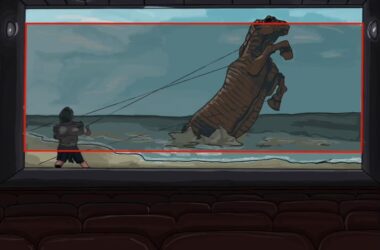
Birds of Passage lives in the moral grey area between cultural accuracy and creative license. On Sept. 20, in conjunction with the Centre for Oral History and Digital Storytelling, Concordia University screened the 2018 Colombian film, which depicts violence within Wayuu communities, and invited Wayuu leader Jakeline Romero to speak about Wayuu representation in Birds of Passage

Birds of Passage provides a hefty dose of violence and tragedy. Based on a true story, the film’s five distinct acts focus on a Wayuu community that becomes involved in international drug trafficking during the ‘90s. The film follows its protagonist, Rapayet (José Acosta), as he is thrust into the daunting role of leading a drug empire. Rapayet must reckon with the constant discord among the Wayuu and the inevitable war that ensues within the formerly peaceful group. 

The narrative is elevated by the beautiful scenery the La Guajira region, featuring sprawling deserts, beaches, and dense forests. Once drug money starts to roll in, however, they erect massive houses in the middle of endless sand. Though entertaining and visually astounding, much of the film’s drama depicts inaccurate and harmful representations of the Wayuu.

“Sometimes people say that reality goes beyond fiction, but in this case it is the opposite,” Romero said in a brief lecture following the screening. “How do I feel? It’s my second time watching [Birds of Passage] and I’m frustrated because the Wayuu is a living culture, [we are] not fiction like Avatar. It’s frustrating because when talking about real people, [the individuals depicted] are affected.” 

Romero explained that, not only are the Wayuu far less violent than they are portrayed, but the film butchers many of the simple facts of Wayuu culture: Since the Wayuu have a matrilineal culture, it would have been impossible for Rapayet to be in power. Furthermore the filmmakers completely misrepresented many of the culture’s wartime codes and rituals. Fundamental plot elements were exaggerated or fabricated entirely.

“This is a historical period that existed, but it was not [true] that [the events depicted were] carried out solely by the Wayuu people. It was much bigger than that, it was just that [the Wayuu] were part of the transit of the drugs,” Romero said. 

Romero expressed satisfaction at seeing some aspects of her culture accurately portrayed, but understands that the details the film succeeded in portraying are not what audiences will remember about Birds of Passage

“As a Wayuu I can appreciate many things about the film, but the general audience will not see those things,” Romero said. She observed that even the remarkable beauty of the film could not be attributed entirely to its filmmakers.

“The movie may be beautiful, but that’s because La Guajira is a beautiful place,” she said.

While Birds of Passage succeeds aesthetically, the misrepresentation of its subjects discredits much of the film’s content: Those details that initially seemed illuminating were in fact misleading. Romero’s perspective shed light on the realities of Wayuu life during the period when the film takes place; realities which perhaps would not have lent themselves as well to a Hollywood style movie. 

Considering the level of familiarity most  Western audiences likely have with the Wayuu people, many viewers may take for granted Birds of Passage’s inconsiderate portrayals of the communities it depicts. Despite the aesthetically appealing cinematography and superficially entertaining narrative of the film, Birds of Passage lacks an understanding of Romero’s culture that would have made the plot far more compelling. 

Arts & Entertainment

Soul Sessions celebrates communal creativity

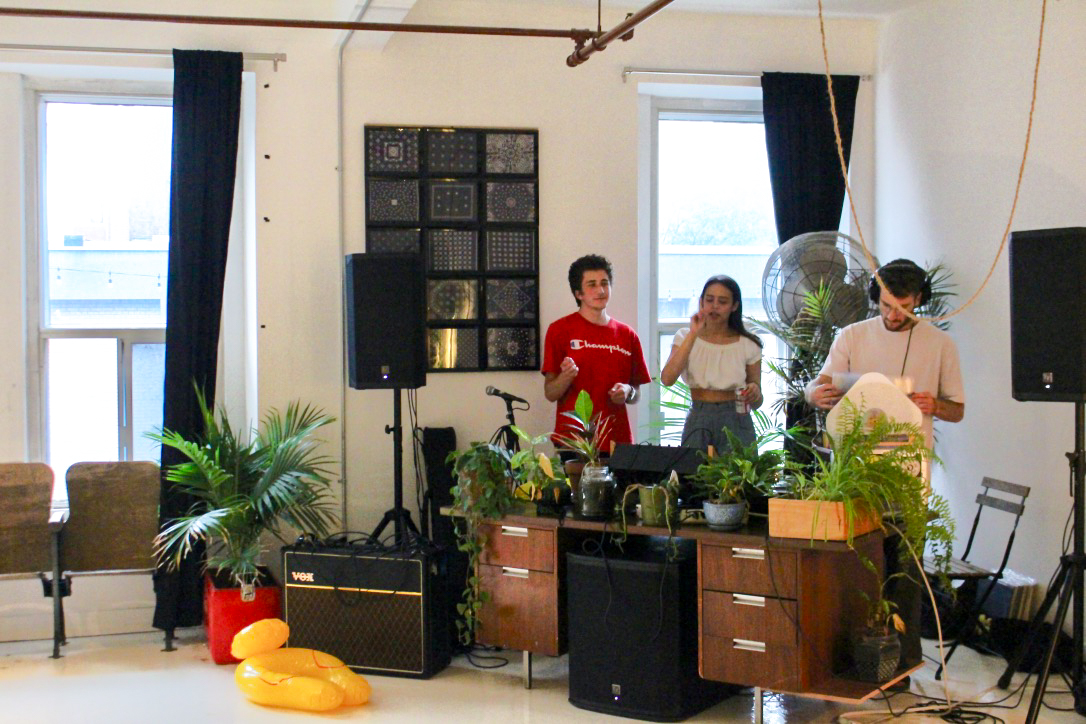
Soul Sessions, a mixed media vernissage produced in collaboration with École Publique, a Montreal student artist’s collective, and Turning Point, a musical distributor/collective, celebrated the diverse talents of the city. The event featured a bizarre but wonderful combination of painting, photography, film, and live art. On the eve of the Sept. 7 event, every inch of Deneb.es, a music venue located on Saint-Laurent boulevard, was filled with artworks and other curiosities—from a barber’s chair sitting conspicuously by the door to a bowling ball painted to look like a person wearing a ski mask. 

Visual artist Pamela Andonian was one of several artists taking part in live painting as the guests milled around the gallery. 

“It’s my first time painting in front of people,” Andonian said. “Watching someone else paint is so entertaining, it’s like watching a sports game.” 

Andonian’s canvas featured a cross-legged woman, her face and chest unfinished but still bursting with character. 

“I’m very often drawing this woman, not exactly a self-portrait, but an extension of myself,” Andonian said, pausing to take in her painting from a distance. 

Two short films were being projected onto a wall in the middle of the venue. One, entitled If We Had Met Sooner by Joshua Lennon, Alexa Rhynd, and Isaac Vaccaro, was a brief but effective series of shots of a man and a woman, never on screen at the same time but with an implied emotional connection. The film emulates the style of a long forgotten home video, evoking a feeling of nostalgic regret from its unnamed, unspeaking characters. The other, Bagstory by AKRE productions, was lighthearted and unambiguous compared to its counterpart. The film focusses on the peculiar journey of the eponymous bag. The small black purse transferred hands from character to character, and with each transaction, the audience’s curiosity about what may be inside gets more intense. 

Ana Maria Marcu was the artist responsible for one of the most vivid and personal works showcased at the event. Marcu projected an original film onto a lively, colourful painting entitled nudité, oiseau, & arc-en-ciel (libération), by Mephisto Bates. The film showed a split screen, one side depicting Ana at her most raw and vulnerable, quietly crying while browsing her phone, the other showing her at her most empowered and joyful, dancing by herself, completely content. The film depicted a wealth of complex emotions into just a few minutes. It’s impact was elevated by the space itself, a small area secluded from the other works with white walls covered in colourful painted shapes. The resulting effect is a uniquely nostalgic and childlike atmosphere, reminiscent of simpler times, that contrasts the tone of the film. 

Despite the multidisciplinary nature of Soul Sessions and École Publique, the vernissage connected a broad artistic community.

“It’s a place for any kind of artist– filmmakers, visual artists, anything—to share their work all in the same place,” Tristan Surman said, one of École Publique’s organizers. 

Even the music, DJ’d by members of Turning Point, contributed to the overall atmosphere, inviting viewers to stay and watch the artists at work for hours. École Publique hopes to host plenty more events that celebrate local artists, each time with new talent and an entirely different ambiance. 

Science & Technology

The applications of graphene at McGill and beyond

Imagine a future where cell phones can be charged in seconds and tablets roll up like newspapers. As scientists delve deeper into the field of nanoscience, developments like these appear more possible than ever. 

Nanoscience is the study of matter at the nanoscopic level, or nanoscale. Consequently, scientists and engineers can study nanomaterials, such as nanotubes and nanogold, at the molecular level to reveal their unique properties.

One such material is graphene, which is often referred to as a “wonder material.” Discovered by researchers at the University of Manchester in 2004, graphene is a single layer of graphite, which makes up materials such as pencil lead. Graphene is an allotrope, or form of the element carbon. The carbon atoms are arranged in a hexagonal, honeycomb-like structure, giving rise to important properties such as thermal conductivity, elasticity, and chemical inertness. 

Due to its unique physical and chemical properties, graphene demonstrates fascinating traits. It is the lightest, thinnest, and strongest carbon allotrope and was the first human-made two-dimensional material to be isolated. Despite being one atom thick, it is 200 times stronger than steel and is the lightest, most conductive human-made material on Earth. It thus has the potential to be applied to many different fields, although it is still in the early stages of development.

“As with any new technology, it takes time to commercialize a product, and not many [graphene products] are on the market yet,” Raed Abdo, a Master’s student in Electrical Engineering, wrote in an email to The McGill Tribune. “However, we can expect to see it soon in different applications, including battery sensors, coatings, and construction.”

Indeed, graphene has numerous applications. For example, scientists at the University of Manchester have created a graphene coating that could protect cars and ships from rust. Graphene’s thinness and sensitivity to chemicals has led to the design of graphene membranes to purify water, keep food fresh for longer, and identify harmful substances in the agricultural industry, which allows farmers to protect crops accordingly. Additionally, because it is capable of filtering out nuclear waste and salt, graphene could provide clean drinking water to millions of people in developing countries. 

Water quality monitoring is an extremely important application of graphene, and one that is being pursued by McGill researchers. Along with PhD candidate Ibrahim Fakih and Professor Thomas Szkopek, Abdo recently launched UltraSense, a start-up that uses low-cost, high-resolution chemical sensors composed of graphene to monitor water quality. 

Furthermore, graphene’s high flexibility and strength make it an ideal candidate for use in implant and tissue engineering technology, as it can withstand and adapt to biological forces. It can even be programmed to target specific tissue, such as cancer cells, to effectively deliver drugs. Graphene has also been used in running shoes, since it is more resistant to wear and tear. At McGill, Szkopek’s lab has designed graphene-based headphones that showcase exemplary sound quality. 

However, despite graphene’s benefits, Abdo noted that there are some challenges.

“Graphene is just a single layer of carbon atoms, so it is a challenge to make large-scale devices without degrading the quality of the graphene,” Abdo said.

Other difficulties include biological compatibility, toxicity, and stability, as well as the financial challenges associated with obtaining large amounts of graphene, which is not currently produced at an industrial scale. Though there is promising new research on sustainably producing graphene with bacteria, Abdo warns against over-reliance on the material.

“While graphene is indeed a unique material, we should not force it into our daily lives just for the sake of it,” Abdo said. “We can use it in applications that improve existing technologies, and that takes time.”

Arts & Entertainment, Theatre

Home Theatre Productions is a welcome addition to the Montreal theatre community

Title of Show,  Home Theatre Productions’ inaugural project, debuted on Sept. 12 at the Mainline Theatre. Those in attendance on opening night saw the intimate space packed with friends of the cast and crew, members of the community, and theatre fans alike, leaving nary an empty seat. The excitement in the room was palpable, for the evening marked not only the show’s premier but the beginning of something brand new for the Montreal theatre community. 

“I kind of came up with the idea around September of last year,” Steven Greenwood, director of Title of Show and founding member of Home Theatre Productions, said in an interview with The McGill Tribune. “In order to do a Fringe Show you need a company, so I was like ‘oh, okay, I’ll just start a company,’ but then I was like ‘what if I actually started a company?’” 

A Cultural Studies PhD candidate and course lecturer at McGill, Greenwood has been greatly involved in McGill’s theatre community. He has worked as a director and dramaturge with Player’s Theatre as well as the Arts Undergraduate Theatre Society (AUTS). Despite his enthusiasm for student theatre, Greenwood hoped to create a space for those seeking a challenge beyond university productions.  

“There’s this weird gap in between student theatre and professional theatre, and a lot of students, once they’ve graduated, don’t know how to manage that,” Greenwood said, “I think that [Home Theatre Productions] could be a good in-between space for that. I think it’s also cool to get students off campus and out into the community.” 

Being a lover of ‘lowbrow culture’ himself, Greenwood says he wanted to create an accessible space within the often exclusive realm of theatre,  

“I love theatre, but I always have trouble finding plays I want to do because I love pop culture stuff, I love superheroes and detective stories, and stuff you don’t see on the stage a lot,” Greenwood said. “A lot of times, theatre can feel like a space where […] you need to know who Brecht is, or Becket, and there’s this whole cultural literacy that’s expected of people [in order to participate.] I kind of just wanted to break all that down.”

Title of Show fulfills this mandate to a tee. The story follows Jeff (Eric Lee), Hunter (Cathal Rynne), Heidi (Maya Lewis), and Susan (Mary Looney) as they attempt to write and produce the very one-act musical that they are currently performing for entry into the New York Musical Theatre Festival. What ensues is a hilariously meta meditation on the trials of creative collaboration and the importance of following your dreams. With musical accompaniment from pianist “Larry” (Zach Ripka), stage management and production by Cheyenne Cranston, and set design by Lucas Amato, the show was a heartwarming and triumphant first production for Home Theatre.

Cranston, Amato, and Greenwood, Home Theatre’s three permanent members, hope to mount four shows per year as a company, further establishing their ties to the community by producing plays by local playwrights. Open calls will be held to students, graduates, and members of the community for both acting and backstage opportunities.  

“We want to be as open as possible to as many different people as possible,” Greenwood said. 

Home Theatre Productions will be holding auditions Sept. 19—21 for their upcoming “Late Night Double Feature” event. The show will feature two original one-act plays, with dates and location to be announced. Theatre geeks and novice fans alike will be welcomed warmly.


Science & Technology

Faculty of Science presents the 28th edition of Soup and Science

From Sept. 9—13, the Faculty of Science hosted Soup and Science, a semesterly event where professors briefly present their research and talk with students at Redpath Museum.

The expanding universe

Pouya Jafarian

Contributor

Jonathan Sievers, a professor in the Department of Physics and researcher at the McGill Space Institute, shared his research on galaxy expansion. Sievers started by throwing a basketball in the air and letting it fall back into his hand.

“If, on its way up, this ball accelerated, slowed down, reaccelerated, and finally fell down, you would be shocked, wouldn’t you?” Sievers asked. “Well, it seems that our universe is expanding in this manner.”

Sievers explained that the rate at which the universe grows is not constant at all. This strange phenomenon is associated with dark energy, a form of energy thought to drive the expansion of the universe.  

The evidence for this phenomenon comes from the observation that distant galaxies appear more red than expected . This distortion in colour indicates that the wavelength of light travelling from a distant galaxy is longer than its value when emitted. This shows the expansion of the universe, since it suggests that the source of light is moving away from the observer.

To escape human-created radio interference and properly observe this expansion, Sievers has expanded his research to remote Marion Island, which lies between South Africa and Antarctica.

Inter-group biases

Sara Eldabaa

Contributor

Jordan Axt, a professor in the Department of Psychology, presented his work on inter-group biases. In his research, he observes whether research participants are more likely to select physically attractive individuals for a fake honour society over “uglier” people holding the same credentials. 

Axt found that attractive applicants were indeed more likely to be accepted than less attractive ones when the two were equally qualified. The same was true when the two groups were equally unqualified. This bias occurred because the participants, who implicitly relied upon the candidate’s image to reach a decision, had lower standards for the attractive group.

The results of this study exemplify how biases can easily become ingrained, and how one’s perceived attractiveness—which they have little control over—can significantly influence their opportunities.

Axt has previously demonstrated that other biases, such as in-group favouritism and political affiliation, influence judgement. In the future, he hopes to study whether the perception of one’s own attractiveness influences their tendency to evaluate others based on attractiveness.

How planets form

Daria Kiseleva

Contributor

Eve Lee, an assistant professor in the Department of Physics, gave an overview of her research on planet formation. 

She explained that, generally, planets begin forming when electrostatic forces, which are created by interacting positive and negative charges, stick tiny dust particles together. Gravitational attraction and collisions allow for the formation of rocky planets the size of Earth. To reach the size of gas giants like Jupiter, a rocky planet must also build a very thick atmosphere.

However, outside of the solar system, researchers have observed a variety of unexpected phenomena. For example, they have found that some planets much larger than Earth orbit their central stars at a significantly closer distance, while others reduce their size by shrinking their atmosphere. 

Lee’s team uses knowledge of thermodynamics to do analytical calculations and create computer simulations of planet formation. 

“What my research group is really looking at is how common our solar system is and just how lucky are we to live on a planet that has just the right conditions to harbour life,” Lee said.

Sports

Body diversity and “The Body Issue”

On Sept. 4, ESPN The Magazine released the 11th edition of “The Body Issue.” This year’s issue boasts 17 covers, all featuring world-renowned athletes completely nude. 

The artfully-shot photographs are meant to celebrate these athletes and the bodies that allow them to perform at the highest level. The accompanying interviews frequently speak to athletes’ personal struggles with body image and their journeys to feeling comfortable in their own skin. A common conclusion for many of the athletes is that their body has allowed them to pursue the sport that they love at a professional level, and they have, therefore, learned to be thankful for both the function and aesthetics of their bodies. 

“I feel really accepting of the things I used to be insecure about,” American gymnast Kaetlyn Ohashi said. “I have gone through eating disorders and body shaming and here I am today doing this shoot.” 

Ohashi’s interview accompanies a series of photographs of her doing the splits and other physically impressive feats that most of us can only dream of—and she is not the only one. Many of the photoshoots centre on the athletes’ skills and capabilities, with the cover stars holding barbells, basketballs, and hockey sticks. Framing the photoshoots around the function rather than the aesthetics of an athlete’s body is important in an era where eating disorders and body dysmorphia have become increasingly common. It would be easy for the magazine to ignore issues of inclusivity and diversity, especially regarding size and ability. But, “The Body Issue” notably includes athletes from a wide range of sports with different body shapes as well as athletes with physical disabilities. 

This year’s issue features Scout Bassett, an American Paralympic long-jumper and sprinter. Bassett’s prosthetic leg is on display in every one of the 12 photos in the online gallery

“I get devastated when I hear [that a girl doesn’t want to run because the prosthetics are ugly],” Bassett said. “I tell them, ‘but it’s how it makes you feel.’ That’s a problem, and it’s a huge part of why I did ‘The Body Issue.”

Size remains another significant barrier to entry in many athletic environments. When Nike began using plus-sized mannequins, the backlash included comments on how fat people would not be using these clothes to actually do sports, implying that people above a certain weight or body size cannot or do not participate in athletics. Most people have some notion of what they believe to be an ideal body for an athlete, and visible abs are a part of that mental image more often than not. 

In past years, “The Body Issue” has included, athletes not only with visible disabilities, but a diversity of body shapes and sizes as well. This includes athletes who would be considered plus-size by clothing companies. Making all bodies in athletics visible, regardless of size or ability, demonstrates that sports do not need to be exclusive to those with stereotypically athletic bodies. 

Broader social issues, particularly the commodification of bodies in professional sports should not be ignored when discussing “The Body Issue”. Racialized and lower income groups, whose athletic ability is often a route toward upward mobility, whether through gaining a higher education with an athletic scholarship or through professional sports, should also not be left out of the conversation. It also brings up questions of injuries and athletes’ physical and mental health, which can be ignored in order for sponsors or teams to continue to profit from their performance. 

Like many industries, the sports industry is built around human bodies, which brings up issues of race, gender, and poverty that cannot be ignored. But, showcasing all bodies as capable and valid is a definite positive for an industry that many still see as exclusive. 

Divest McGill Illustration
Opinion

Divestment should not be decided by an ex-PetroCan executive

“International research results have undoubtedly established that climate change and its resulting socio-economic impacts pose a serious threat to life on earth.”

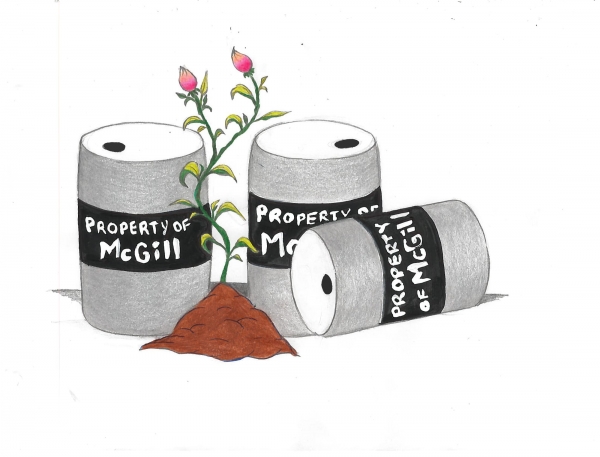
This is the first sentence from the letter that Suzanne Fortier opens McGill’s Vision 2020 Climate and Sustainability Action Plan with. The letter goes on to say that McGill should act in accordance with the science it produces. If the university wants to live up to this statement, the McGill Board of Governors (BoG) must divest from fossil fuel companies this year.

The Committee to Advise on Matters of Social Responsibility (CAMSR) is responsible for investigating and recommending divestment, among other socially responsible investing practices. After CAMSR makes their recommendation, the final decision ultimately rests with the BoG. However, all of CAMSR’s eight members sit on the Board. By allowing members of BoG to sit on CAMSR, the committee will inherently be subject to Board politics.

The strongest example of the Board’s influence on CAMSR was the proposed revision of its terms of reference in 2018. The Nominating, Governance, and Ethics Committee (another committee comprised of members of the BoG), proposed changing CAMSR’s mandate to prevent them from recommending investments that advance specific social or political causes. This would have prevented CAMSR from recommending divestment from any companies that engage in harmful practices, including fossil fuel companies.

McGill has divested twice in the past: From companies doing business with South Africa’s apartheid regime in 1985 and from tobacco companies in 2007. Divestment has shown to be an exceptionally effective tool for shaping public discourse and bringing attention to these harmful practices. As a prestigious public institution, McGill withdrawing their support for fossil fuel companies would send a powerful message about the climate crisis facing humanity.

CAMSR is currently investigating divestment for the third time after deciding not to recommend divestment in 2013 and again in 2016. They will make their decision in December, meaning the next few months will be critical for students, faculty, and administration to put pressure on the Committee. 

McGill has divested twice in the past: From companies doing business with South Africa’s apartheid regime in 1985 and from tobacco companies in 2007.”

The 2016 investigation was neither thorough nor transparent. CAMSR consulted six experts throughout their investigation, none of which were experts in ethical investment. Their testimonies were withheld from the public until Divest McGill conducted a sit-in at the James Administration building, after which five of the six testimonies were released. In their upcoming investigation, CAMSR should consult experts in ethical investing and make their testimonies publicly available.

Further, CAMSR’s current chair, Cynthia Price Verreault, worked as the director of retail services for PetroCan for 18 years. Given PetroCan’s status as a fossil fuel company, this affiliation is a glaring conflict of interest within the context of divestment.

One year ago, McGill’s Senate adopted a resolution in favour of divesting from fossil fuels. The BoG responded by referring the matter back to CAMSR. This decision led two members of the Board to resign in April, stating that they could not maintain solidarity with a Board that “places the university in ethical jeopardy and undermines the integrity of collegial governance.”

As long as CAMSR is led by an ex-PetroCan executive and comprised of Board representatives, there is no reason to believe that the outcome of this investigation will be any different than the last. If CAMSR does not recommend divestment this time, serious reform will be required to insulate CAMSR from BoG politics. 

Commentary, Opinion

It’s time to end the era of wasteful and overpriced textbooks

The beginning of each school year is a time of fresh excitement and a newfound enthusiasm to study for many students. This inevitably leads to either furiously stalking Facebook Marketplace for a specific set of textbooks, or giving up and waiting in line at Le James or Paragraphe. No matter the method, the outcome almost always remains the same: Money is lost, another tree is cut down, and the textbook gathers dust in a corner because it turned out to be useless. Textbooks should not be a required part of any course as they can be expensive, inaccessible, ineffective, and unsustainable. Since professors are not charged for demanding expensive textbooks, they have no right to expect their students to purchase them.

On average, a Canadian student spends $773 on textbooks throughout their university career, an astronomically high sum considering the expense of tuition and the mounting debt of graduates. Collectively, Canadians owe $28 billion in student debt. Textbooks don’t actually need to be that expensive: Their luxury price point is driven by the fact that 80 per cent of textbooks are produced by the same five companies, effectively establishing a monopoly on the industry. Publishers can price books however they want, knowing students are required to buy them.

“On average, a Canadian student spends $773 on textbooks throughout their university career, an astronomically high sum considering the expense of tuition and the mounting debt of graduates.”

Even second hand textbooks can be expensive. Depending on the course, certain used textbooks can go for over $100. The scramble to resell books is yet another contributing factor to textbook related stress, as many students feel the need to at least make some money back. There are so many of the same books on the market that students invariably lose money due to competition. Nonetheless, textbook manufacturers do everything they can to prevent resale. Companies like McGraw Hill, Pearson, and Cengage are able to continuously produce new editions along with regional variations. They then convince professors of the necessity of these ‘new and improved’ textbooks, with the added cost rarely proportional to the additional information.

Professors will often list a mandatory book at the beginning of the semester only for their students to find out that the lectures alone were sufficient to obtain a good grade in the class. In fact, some critics have claimed that textbooks don’t help to promote student achievement as they are not designed by educators nor are they engaging enough for students. Nobody reads the entirety of their textbooks—at most, they are used for specific sections that a lecturer did not cover in class. Aside from the weak content of textbooks, they are also too heavy to carry around and wholly inaccessible visually-impaired students.

Textbooks are not only a wasteful expense for students, but also a burden on the environment. Textbook production requires an excessive amount of resources like wood, water, and plastic. In fact, a single sheet of paper takes over three gallons of water to produce multiply that by the 400-500 pages in a textbook and that is over 1, 200 gallons of water, not including the inks or book cover. Even after production, textbooks contribute to a growing waste problem. Because of their hard-covers, many textbooks cannot be recycled without first ripping out the pages; this crucial step is often forgotten, leaving many books to be thrown out as garbage. 

Textbooks are an archaic tool that only serves as a financial strain and environmental burden. Professors have a responsibility towards their students to provide better options, including PDF copies of readings, open-source books, slim course packs, or textbooks available at the library and online, all of which should be accompanied by audio options for students with visual impairments. If professors want to provide meaningful education, then getting rid of textbooks is a crucial step in that process. To ‘shape the future,’ sometimes you need to let go of the past.


Editorial, Opinion

Barriers for club execs hinder community on campus

Last week, the Students’ Society of McGill University (SSMU) posted a schedule for a series of mandatory club trainings on Sept. 14 and 15, requiring attendance from between two and five executives or members. These training sessions included workshops on the responsibilities of SSMU clubs, their tasks regarding financial reporting, and sexual violence awareness training. Clubs that fail to meet the attendance quota will face sanctions that may hinder future operations. Students responded with complaints about the short notice and excessive time commitment required for the training sessions: However, the condensed nature of the training was attributed to the feedback SSMU received last year to keep training less spread out. 

This concern comes just a few months after SSMU sanctioned over 100 clubs in early February 2019, leading to widespread vexation in the McGill community. Going into the new school year, SSMU must take steps to repair its relations with SSMU-registered clubs and the McGill community by easing the complexities of club management. Due to their vital role in fostering community on campus, SSMU must maximize its supportive role to better help clubs prosper.

On its website, SSMU presents creating a club as a straight-forward task; the site outlines six steps to maintaining club status including attending all workshops and completing club audits. As the recent training sessions demonstrate, the seemingly easy steps often involve more complexity. Club audits, for example, may prove difficult for clubs without a financially literate executive. While being a SSMU-registered club commands several benefits, SSMU must increase assistance for clubs wishing to gain and retain their status, especially newer clubs with fewer resources and less support than their more established counterparts. It could be argued that it’s up to clubs to find solutions to the issues of maintaining status, but SSMU also has a responsibility to foster community through campus clubs—especially during a time of displacement due to the University Centre closure—and they ought to extend their support in ways that will ease the difficulties of club management. 

Going into the new school year, SSMU must take steps to repair its relations with SSMU-registered clubs and the McGill community by easing the complexities of club management.”

 One place SSMU could make improvements is in the proffering of their workshops. SSMU workshops present necessary information on all the tasks clubs must carry out to maintain their status. This includes auditing, financial literacy, equity, sustainability and gendered and sexual violence awareness workshops. However, the current formatting of these sessions do not maximize SSMU’s potential to assist clubs in learning SSMU’s vital regulations. For one, the one-week notice of this year’s training proved highly inconvenient for several clubs who were still in the midst of assembling their executive team and member base. In the future, SSMU should give sufficient notice to allow clubs enough time to assemble their teams. Secondly, a more effective and convenient way to deliver workshops would be through online modules, a similar way the new Sexual Violence Prevention module, “It Takes All of Us” is being administered. Not only would this medium be easier for executives to fit into their schedule, but online modules may increase participants’ focus since they cannot easily feign paying attention like in group workshops. Finally, if fall audits are due in January, facilitating audit workshops in September seems less useful to students who will likely have forgotten the workshop knowledge by Jan. 31. Given the consequences of last year’s sanctions, SSMU can and should take steps to facilitate and clarify bureaucratic procedures for club executives.

Another way SSMU could break down bureaucratic barriers is to categorize clubs by financial needs or number of executive members and use these classifications to assign responsibilities and support clubs accordingly. For example, SSMU could separate clubs by those with executive teams and those without: While the former may have a VP Finance to manage their audits, the latter may require more support with their finances and by granting them special status, SSMU could quickly discern which clubs ought to be given more financial instruction. Another way SSMU could categorize clubs is by distinguishing those with spending or funding needs in a certain bracket from those that are self-funded. In this case, SSMU could save time by focusing their strictest regulations on clubs with higher spending and relax their requirements on clubs with much smaller budgets.

While students deal with the lack of communal areas on campus, clubs continue to provide a space for individuals to gather and enjoy a sense of community and stress-relieving recreation. SSMU’s responsibility to foster campus community hinges on the prosperity of campus clubs and they must heed this reality in the coming school year.

Read the latest issue

Read the latest issue