Latest News

Off the Board, Opinion

Light your academic fire

In the first few sessions of every graduate seminar I’ve taken at McGill, a particular routine has unfolded without fail: The class goes around the table introducing themselves, their progress in the program, and how their research interests relate to the course. When my turn comes, I take a deep breath, and prepare myself for the plunge.

“Hi, my name is Marie, I’m in the first year of my Master’s, and I’m interested in researching creation myths in post-disaster science fiction.”

I exhale, winded from the length of my statement, but contented by the accompanying knowledge that I have found a place in the academic ecosystem. That satisfaction is underscored by the fact that I haven’t always felt a sense of belonging at McGill, particularly in the classroom.

I find reassurance in having an identity within the confines of the university’s walls, which I can use to navigate its systems and networks. As an undergraduate student and a part of the largest student cohort at McGill, I felt that I rarely shared the privilege of asserting an academic identity.

Defining and taking pride in one’s academic passion is an investment that takes time and effort. However, neither are luxuries that a student has in particular abundance, preventing them from committing themselves to finding a passion to define their academic experience. I stumbled upon my own desire to study science-fiction literature somewhat by accident. The genre wasn’t included on any of my course syllabi, but I had always enjoyed reading it in my own time.

University is touted as a place for reinvention where young adults living independently, often for the first time, discover who they are. The best way to learn how to navigate the educational landscape is finding a way to adapt it to one’s own educational goals. Having a research interest allows students to interact with class material in more depth by providing them with an appealing lens through which to approach it. In graduate school, students are actively encouraged to make links between their personal research and the classes they take, which may not necessarily directly overlap with their interests. By trying to connect science-fiction texts with 19th century American literature, I have uncovered unlikely parallels between their plots which have informed the direction of my research.

Still, few universities extend undergraduate students the opportunity to develop an academic personality defined by their own unique curiosities beyond semester-long independent reading courses and honours programs. Without opportunities for research accessible to all students, finding an academic passion and identity is almost impossible.

Finding a calling and refining it is a lengthy process; it takes time to come up with a valuable question to research and even more to hone it into a manageable and useful project, an operation that often takes a student in a completely different direction than the one in which they were initially headed. With every new seminar that I take, I uncover a new angle to pursue in my research from an author I didn’t know to a whole range of themes. The knowledge that, with every passing day, I can find a way to broaden my project and interests without feeling rushed to do so has made my experience as a graduate student much more engaging than my undergraduate studies.

By presenting research as a one-time activity rather than a long term project that spans the length of an academic career and informs its progression, institutions mirror a contemporary approach to higher education as a requirement for a professional future where the piece of paper students obtain at the end is more important than the critical skills they acquire. It’s no wonder that students struggle to feel an attachment to their institution and class materials if they can’t see its broader purpose and aren’t encouraged to do so.

My own willingness to discuss my research interests is newfound and still developing. I struggle sometimes to explain what interests me about English literature when I am outside of the classroom. I broach the topic gingerly, a little embarrassed to admit that I have found a passion and a place for myself at an institution that sees tens of thousands of students rush in and out of its revolving doors. But, with the encouragement of my peers and faculty, I am starting to take pride in my academic passion.

Laughing Matters, Opinion

Schulogy for the library

This month, the McGill community suffered a great loss. We received news of the beloved Schulich Library of Physical Sciences, Life Sciences, and Engineering’s impending closure. Home to mostly stressed students and a couple of bookshelves, this 24-hour study spot will be missed. Though moving on seems hard, it is not impossible.

One cannot describe the beauty of the recently deceased without mentioning its stark white, asylum-like walls, uncomfortable polyester seats, and drab grey carpets, which are perfect for camouflaging your third breakdown of the hour. Many a time, with tears in my eyes and stress gripping each breath, I have retreated to that corner to cry—only to find it occupied by another student in the same sorry state. After all, community building is what hygiène de vie is all about.

I don’t know a single student who hasn’t fallen in love with the coffee-less, food-free, asbestos-filled building that was Schulich library. Some of my best first-year memories took place in there: Curling up in a ball on the floor, starving, but unable to leave my seat in case an eagle-eyed engineer stole my spot, all without having seen sunlight for two days straight. Oh, to be a froshie again.

The Engineering Undergraduate Society will be hosting a memorial service at Blue’s Pub this week. Dear Ol’ Schu drove many of its inhabitants to drink, so it’s the only way to truly honour its memory.

Features

Pipelines, blockades, and sovereignty

Much to journalists’ chagrin, progress doesn’t come in satisfying narrative arcs. It is unsteady, disjointed, unpredictable, and ongoing in a way that frustrates the limits of news coverage. The indigenous protests at Standing Rock captured the world’s attention for weeks in early 2016, but few reporters were on the scene when the constructed pipeline leaked 84 gallons of oil of oil on Apr. 4 and 6 the following year. This familiar narrative is playing out in Canada, and the eyes of the nation are on the indigenous Wet’suwet’en Nation, where the Unist’ot’en Camp is blocking a pipeline route. It is only the latest flashpoint in the ongoing struggle for indigenous land ownership, but media attention has brought this protest to the front of Canadian consciousness.

Out on the Town, Student Life

Local gin and geniality

At the southwest warehouse of Montreal’s star micro-distillery Cirka Distilleries rows of awards line a public tasting counter. Cirka’s sleek website echoes this artisanal aesthetic and invites guests to peek behind the curtain by touring their space, breaking the seemingly intricate process of distillation down into simple steps.

The Cirka building is an open warehouse with high ceilings and is filled with the sweet, heady smell of gin botanicals. Weaving in between barrels and past humming machines, distiller Isabelle Rochette expertly explains the three steps of the distillation process to visitors: Cooking the grain, turning starch into fermentable sugar, and then fermentable sugar into alcohol through fermentation with yeast, and, finally, extracting and refining the alcohol.  From start to finish, production takes place between three rooms; the bottling line is laid out a stone’s throw from where the grain is cooked at the beginning of the process.

In the back is what Rochette refers to as the  ‘controlled chaos’ warehouse, which houses everything from bottles, grain, product packaging, and whiskey barrels. Whiskey needs to be aged for three years to be labelled as such in Canada—the same standard as in Scotland—and Cirka plans to release their first batch by the end of the year.

Though it is their latest release, whiskey is the driving force behind Cirka. Namesake Paul Cirka worked as a botanist and in the IT industry before deciding that producing whiskey was his calling. With a couple of friends on board, he decided to try to put Quebec whiskey back on the map. The team knew that they had a couple of years of waiting time before coming out with their whiskey, so they began by distilling gin and vodka to debut the brand and build consumer confidence.

“If we [make] good vodka and good gin, [then people will] know we’ll be making good whiskeys,” Rochette said.

Rochette joined the team in 2015 after returning from a motorcycle tour across Canada and the US, trying out distilleries, wineries, and breweries. Rochette, who previously worked in video game development before training as a sommelier, initially planned to open a wine tasting bar in the city when she was connected with Cirka. Both were drawn to Montreal as a home base for a spirits business.

“We really love the energy of Montreal,” Rochette said. “It’s a super curious, epicurean city. We’re lucky in Quebec to have access to really good grains, so that’s why even our rye is local.”

Cirka likes to preserve a local flair in their spirits. Their current lineup includes one vodka and two gins, each made from a base of 100 per cent Quebec corn and the latter two filled with a plethora of regional botanicals. These infusions create a final product with a more complex flavour profile than the overwhelming ‘uppercut of juniper’ that Rochette often tastes in the mass-produced spirits. The company flagship, Gin Sauvage, is distilled using a botanical basket that allows warm vapours travelling upward to infuse the gin with essential oils from the 30 plus botanicals it contains. In creating the second, limited-edition Gin375, the micro-distillery challenged themselves to replicate centuries-old flavours in honour of the city’s 375th anniversary.

“[In developing Gin375] we went to the Château Ramezay in Old Port, […] met with a historian, and asked what [historically] was in the orchards and the medicinal plants that were used, and that’s where we got our inspiration,” Rochette said. “For the base, we dehydrate sour cherries and cranberries, and, once we proof it, down we add [local] honey. [It’s limited edition] because I can only make it twice a year since it’s [made from] all foraged ingredients.”

Cirka is in good company in Quebec, where the local micro-distillery business has boomed in recent years, equally dedicated to creating a unique and well-crafted product. They see themselves as part of a family of  local businesses and welcome questions, even from potential competitors.

“Most of the distilleries that are open right now […] passed through here, visited, and talked to us,” Rochette said. “We’re one of the few that are open [for tours], and we like to [explain] the process so people can understand [….] The fact that they want to know more about the industry, about us [makes me] more than happy to do the tours and answer the questions.”

McGill, News

Arisha Khan named McGill’s 145th Rhodes Scholar for youth welfare advocacy

The Selection Committee for the Rhodes Global Scholarship has chosen Arisha Khan (U3 Arts) as McGill’s 145th Rhodes Scholar. Rhodes Scholarships fund at least two years of postgraduate studies at the University of Oxford and are awarded to promising young leaders motivated to tackle global challenges.

Khan’s focus on the intersection between health services and child-welfare policies stems from her own experiences in the Ontario foster care system. Raised in the foster system,  Khan lost financial support at the age of 18 after her children’s aid society, the Peel Children’s Aid Society (Peel CAS) deemed that she was not following her plan of care, a guideline developed by the children’s aid society to determine their future living situation, by choosing to work full-time as a high school student. According to Khan, the privatized and decentralized nature of the child protection system makes it difficult to hold accountable.

“The volume-based funding model [of the Ontario foster care system] is a profit-seeking game because, instead of [providing] continued care for the young person, it becomes about keeping the youths in as long as they are making money for the [foster care] agencies,” Khan said. “There is really no way to seek recourse and justice unless you have the resources, and when you’re that vulnerable [as a foster child], you can’t.”

From 2013-2016, as a high school student, Khan was an appointee on the Premier’s Council on Youth Opportunities (PCYO) where she advised the Ontario Premier and Ministry of Children and Youth Services on youth-oriented policies and programs. Since 2016, she has been the Vice-President (VP) of Youth in Care Canada, a national charitable organization that promotes a national strategy for child welfare and provides legal education for youth.

“When I was on the [PCYO], I [saw] how a single line in a policy can impact so many people because it can enable [someone’s access] to a service, or it can restrict someone from accessing vital [support],” Khan said. “Youth in Care Canada is uniquely run by and for youth in care […], and I’ll be wrapping up my work there before I go to Oxford.”

While working on policy development for Ontario youth mental health systems, Khan became involved in technical policy work. At McGill, Khan pursued her interest in funding models by serving as VP Finance of the Students’ Society of McGill University (SSMU)  in 2017. Khan also analyzed healthcare systems and integrated care for aging populations at the McGill Observatory on Health and Social Services Reforms under the supervision of Daniel Weinstock. Weinstock, also Khan’s program advisor, noted her resourcefulness and determination in an interview with The McGill Tribune.

“When I heard that Arisha got the Rhodes Scholarship, I was not surprised at all,” Weinstock said. “She took the difficult task of coming up with her degree [Comparative Health and Social Policy] that fit her purposes and is incredibly engaged to a level that is rare even among McGill students.”

Khan will enroll in the Evidence-Based Social Intervention and Policy Evaluation Master’s program at Oxford in Sept. 2019. Her thesis will focus on the impact of child protection health services.

She hopes that recent publicity of her winning the Rhodes Scholarship will deter the media from underplaying what she believes are serious inadequacies in the current Canadian foster care system.

“When people tell me ‘you pulled yourself up by the bootstraps,’ it’s harmful because we shouldn’t be expecting kids [in foster care] to do that,” Khan said. “[Many media outlets] just want to sell a story about the first foster kid to win [a Rhodes Scholarship], and it’s a harmful narrative because it pats the [foster care] system on the back.”

In an email to the Tribune, McGill Principal and Vice-Chancellor Suzanne Fortier congratulated Khan on her accomplishments.

“[Khan] is committed to making a positive impact on the world and to giving back to others, and has done so right here at McGill with a project aimed at offering scholarships for students from the foster care system,” Fortier wrote. “She has a strong sense of purpose, and I have no doubt that she has the qualities, commitment, and character to lead lasting change.”


A previous version of this article stated that the Ontario Association of Children’s Aid Societies had deemed that Khan was not following her plan of care. In fact it was her children’s aid society, Peel Children’s Aid Society.

Science & Technology

Ebrahim Noroozi recognized for sustainable lab initiatives

The only thing that makes Ebrahim Noroozi salivate more than food is its sustainable practices. As lab supervisor, he clearly takes pride in making his experiments more environmentally friendly. He carries with him a seemingly endless list of the many innovations he has implemented in the Department of Food Science and Agricultural Chemistry, like a badge of honour.

This fall, Noroozi received the inaugural Sustainable Lab Awardthe most recent of many formal recognitions for his service to the McGill community.

Amongst nearly 800 research and teaching labs currently operating at McGill, Noroozi’s lab was selected by the McGill Sustainable Labs Working Group for its environmentally-conscious chemical purchasing policy of buying supplies in reduced amounts, its novel system to recover and reuse chemicals, and other uniquely-sustainable lab practices.

The award, presented to a lab which demonstrates “a commitment to integrating environmental, social, and economic considerations into the way they work,” is one of many initiatives proposed in McGill’s Climate and Sustainability Action Plan, a framework to increase the university’s dedication to sustainability.

“Mr. Noroozi has consistently demonstrated the utmost regard for [the] best practices around health, safety and sustainability in the laboratory he operates,” Vice-Principal (VP) of Administration and Finance Yves Beauchamp wrote in a statement to The McGill Tribune. “He goes above and beyond the call of duty by making use of his expertise as a chemist and a safety professional in providing guidance to others in the Faculty around chemical safety, hazardous waste disposal, spill response, and environmental protection in general.”

From eliminating thermometers containing mercury to using small containers to reduce commercial alcohol use, Noroozi’s success is credited to his eye for identifying ways in which the lab can be improved.

In the case of alcohol storage, Noroozi noted that the 200-litre containers they used previously were easily contaminated because of their large size.

“By purchasing smaller, 25-litre containers, the amount of waste product due to cross-contamination [when performing experiments] was drastically decreased,” Noroozi said. “I try to teach students good lab practices, [such as] the difference between which substances are waste and those which are recoverable and can be used again for teaching purposes.”

When students brought to his attention that the rubber lining in one apparatus was wearing down, Noroozi purchased stainless steel ones to replace them. As a more durable material, stainless steel equipment can be used for longer periods of time without needing to be replaced.

Noroozi has also started multiple internal initiatives, including the promotion of sharing chemicals between labs and buying products that meet modern environmental standards.

McGill currently employs ‘lab-packs,’ a series of steel-drums which help to safely dispose of unwanted, dated, or contaminated chemicals. When Noroozi realized the lab-pack system did not account for leftover reusable chemicals, he offered an alternative solution.

“These chemicals are not necessarily bad,” Noroozi said. “[It] could be from a lab which has been retired or from a researcher who had a surplus of one product. Before I get rid of [the chemicals], I let my colleagues know what I have and they can then come and pick-up what [they need].”

Under his leadership, Noroozi estimates the faculty has spent upwards of $100,000 on safety equipment over the last two decades to improve health and safety features across the Macdonald Campus.

“An institution of McGill’s size owes it to the environment to have laboratory practices that are sustainable,” Noroozi said. “Our research has the potential to carry a lot of biological, chemical, and physical harm. If we are careful with the way in which we implement our laboratories, then society can benefit from our research without the imposition of environmental consequences.”

Art, Arts & Entertainment

A look back on art’s historical past in ‘Manifesto’

Manifesto, one of German artist Julian Rosefeldt’s most internationally renowned video works, ran at the Musée d’art contemporain de Montréal (MAC) from Oct. 20 to Jan. 20. The work is comprised of 13 videos—each showcasing Australian actress Cate Blanchett assuming different roles, including that of a teacher, a homeless man, and an anchorwoman. During each scene, Blanchett presents multiple manifestos corresponding to a specific modernist avant-garde artistic movement, such as dada, futurism, and fluxus. An artistic manifesto is a statement of purpose, and, while the term is often associated with political movements such as Marxism, manifestos were similarly employed among the artistic movements that emerged in the twentieth century. Manifestos organized a movement’s ideology and allowed lay-persons to understand the its guiding artistic objectives.

In Manifesto, Rosefeldt explores history and temporality through video, a medium associated with technological advancement, thus allowing him to present the manifestos to a contemporary audience. The exhibition examines current receptions of historical manifestos, looking at how the works change once extracted from their original contexts. Rosefeldt also draws on performance art in the 13 videos; while the word ‘performance’ suggests live-action art that cannot be reproduced, Manifesto establishes a unique relationship between video and viewer by allowing Blanchett’s performances to loop infinitely.

“[E]xploring the powerful urgency of these historical statements, which were composed with passion and conviction by artists many years ago, Manifesto questions whether the words and sentiments have withstood the passage of time” wrote Rosefeldt in a statement for the MAC.

While, at first, the settings and characters appear to hold only aesthetic appeal, listening to Blanchett read each manifesto demonstrates the ideologies behind the visual content. In the pop art video, Blanchett plays a mother leading her southern family in saying grace while reading Claes Oldenburg’s text, “I am for Art.” While pop art seems inseparable from rows of grinning Marilyn Monroes or Lichtenstein’s comic book characters, the video draws on pop art’s use of the everyday material and manipulation of items, such as the Campbell’s soup can, that appear in the average American households. In the video devoted to Surrealism, Blanchett plays a puppeteer crafting a puppet in her own likeness, echoing the absurdity of works by canonical artists such as Salvador Dali or René Magritte. In the video for abstract expressionism, Blanchett is cast as a CEO at a party reading manifestos by artists Barnett Newman, Wyndham Lewis, Wassily Kandinsky, and Franz Marc, contrasting the sterile business environment with the dynamic and spontaneous quality of expressionist art.

Rosefeldt’s Manifesto provokes commentary through audience reflection. Rather than using the elaborate scenes to deconstruct the manifestos’ contents, Rosefeldt presents the 13 scenes in such a way that the audience is encouraged to determine for themselves how Blanchett’s characters and environments connect to each movement and to decide whether the artists’ statements remain provocative or whether time has rendered them archaic. The videos are at once utopian and dystopian; it becomes difficult to settle on a single emotional response, as the videos each employ starkly contrasting imagery. Rosefeldt uses Blanchett’s background in acting to its fullest extent: She employs different accents, appearances, and mannerisms within each video. Despite the distracting melee of sounds playing throughout the room, Rosefeldt coordinated the videos to align once every 10 minutes—at that moment Blanchett’s face dominates every screen as she reads from the respective manifestos.  

While integrating manifestos into video performances at times appears forced, Manifesto is notable for its attention to detail and the history the exhibition honours. While artworks often deploy symbolism or draw influence from the art of the past, Rosefeldt’s work is an explicit tribute to evolving artistic movements and how they engage with the present. Despite demanding that the viewer take the time to watch each 10 minute video to gain a greater understanding of each movement, Manifesto delivers a choreographed and visually engaging video art installation.

Baseball, Hockey, Sports

Eakin fellow Robert Elias delivers lecture on baseball in hockey’s shadow

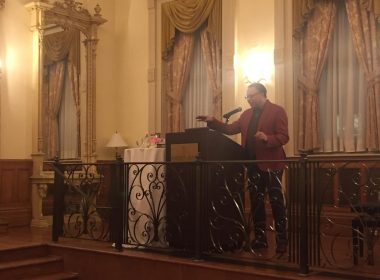
On Nov. 29, Robert Elias gave the Fall 2018 Eakin lecture, the summary of the McGill Institute for the Study of Canada’s (MISC) Eakin Visiting Fellow’s research, titled “Sports and Canadian Values: Baseball in Hockey’s Shadow” at the McGill Faculty Club. Elias, who was visiting from the University of San Francisco for Fall 2018, has written multiple books on baseball including The Empire Strikes Out and Baseball and the American Dream: Race, Class, Gender, and the National Pastime.

Before coming to McGill, Elias researched baseball’s role in American life and politics, including its use as a way to sell the American Dream around the world. Elias currently coordinates the Legal Studies program at the University of San Francisco, and has lectured on baseball to audiences including the Society for American Baseball Research.

“I had done a lot of work on sports and politics, […] particularly baseball and politics in the US,” Elias said in an interview with The McGill Tribune. “Although I had done work with baseball in the Caribbean, Korea, and Japan, I really hadn’t looked much at Canada.”

Elias presented his findings in a lecture that focussed on the hidden history of baseball in Canada, which has been overshadowed by hockey. Elias pointed out that Canadians have played crucial roles in the development of the game that we know today. Babe Ruth, one of the game’s all-time greats, owes his career to Canadian priest Martin Boutilier, who introduced the Sultan of Swat to baseball. Canadian Tip O’Neill won the first-ever Triple Crown, a seldom achieved statistic handed out to players who manage to lead their league in batting average, home runs, and runs batted in all in the same season.  Baseball was even Canada’s main sport for the first four decades of the twentieth century. Most significantly, the first recorded game of baseball did not take place in Cooperstown, New York, as the legend goes; instead, ballplayers first gathered in Beachville, Ontario in 1838.

The parallels between baseball and Canadian culture were of particular interest to Elias. During his presentation, Elias played a George Carlin stand-up comedy routine in which the performer contrasted the aggressive game of football with the more peaceful nature of baseball. Team collaboration is crucial to baseball, and the sport is a paragon of diversity and multiculturalism—values which Canadian culture aspires to embody.

However, hockey dominates Canada’s sporting scene, though Elias argued that it does not reflect Canadian values to the extent that baseball does.

“Baseball actually fits with Canadian culture in many ways that I think are being neglected,” Elias said. “The main other sport to look at in Canada is hockey [….] There has been a lot of criticism in recent years with what’s going on in hockey. It’s become increasingly violent [….] There is an increase in hockey goons, and there’s some sexual abuse [.…] Even some hardened supporters of hockey have said, ‘Maybe, we need to pull [hockey] back to be more in line with Canadian values.’”

Elias was quick to debunk the myth of hockey’s invention in Canada and by extension the sport’s centrality to the country’s culture. While it is the case that ice hockey was first played in Canada, it was based off of field hockey which originated in the United Kingdom.

“A lot of people claim that hockey was invented here, but it really wasn’t. It was actually invented in Britain,” Elias said. “That may not seem like a big deal, except that that’s one of the claims that a lot of supporters of hockey use to say, ‘It’s our game and that’s why it ought to be dominant’.”

Elias also believes that baseball’s relative obscurity in Canada is, in part, a political issue.

“There are certainly political issues that come up as far as how resources are allocated, that could determine the extent to which one sport is dominant over another.,” Elias said. “That would be true [in Canada] for hockey and baseball too.”

To conclude his lecture, Elias hit close to home. Donning an Expos hat, he spoke optimistically about a return to Montreal for Nos Amours. From a financial perspective, Elias believes that a well-located stadium could help bring the team back to life.

“There are all the ingredients for more baseball at the highest level […] in Canada,” Elias said. “The good news is there’s a lot of momentum to bring a team back to Montreal [….] I think that would be a great development.”

Read the latest issue

Read the latest issue