

Latest News

Private, Student Life

To Remember or Not to Remember: The role of nostalgia in the lives of university students

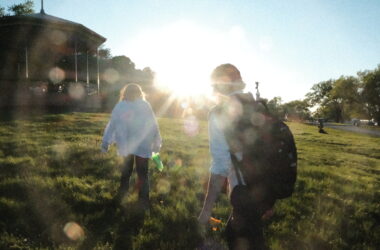
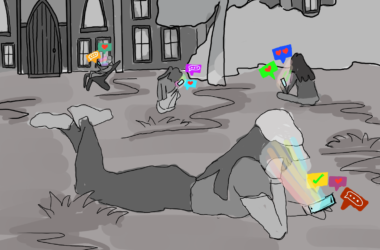
When McGill is a student’s entire world, it is easy to become overwhelmed by the present. The past begins to look like a worry-free paradise that has gone by all too quickly. What comes next for many students is a hit of nostalgia for those memories of childhood, high school, or even last summer. Some students combat this feeling with photo collages, talking to friends back home, and reading articles with cultural childhood references, claiming that “only 90s kids will remember” these moments. These flashes of nostalgia—potentially bordering on homesickness—present a troubling paradox: University provides a platform for exploration and growth, yet, for some, the past can prove hard to leave behind.

In the 17th and 18th centuries, moments of nostalgia were seen as a cerebral disease, common among soldiers, in which patients were “stuck” in the past. Other doctors believed that the psychological disease was caused by a “pathological bone" which could never be found in the human body. Doctors commonly treated this by shaming patients for their glorification of the past, labelling it as a failure to live in the present.

However, for many university students—like Michaela Drouillard, U0 Arts—feelings of nostalgia inspire one to become more active in the present.

“I have some pictures in my room from when my family and I were at my cottage, like, back in the day,” Drouillard said. “[….] It makes me sort of want to do more stuff here.”

Constantine Sedikides, professor of Social and Personality Psychology at the University of Southampton, studies this phenomenon in his 2016 paper entitled “Past Forward: Nostalgia as a Motivational Force.” Sedikides describes nostalgia as both a painful and positive emotion; nostalgia increases optimism, evokes inspiration, and boosts creativity. According to him, pictures and memories from home are not a symbol of regression, but of motivation.

Some first-year students find themselves completely stable in their new environment, but for others, feelings of homesickness affect their first year. For Berenger Garnica, U1 Arts, feelings of nostalgia kicked in hardest during her transition into university.

“[In first year], I scrolled through photos of home on my computer while listening to sad music and I talked with friends from home a lot,” Garnica said. “[My homesickness is] less so than last year because I’ve adjusted to the environment.”

Another 2011 study by Routledge et al., entitled “The Past Makes the Present Meaningful: Nostalgia as an Existential Resource,” describes the main function of nostalgia to strengthen “a sense of meaning in life.” According to Routledge et al., when one is put in a position where his or her sense of purpose in life is compromised, such as through extreme change, he or she will turn to nostalgia. Beginning university is a big social change, and the demanding level of academics at McGill can exacerbate that transition. Routledge et al. report that students who find meaning in their life tend to benefit in both psychological and physical health, while those who struggle with this more may deal with higher anxiety or unhealthy behaviours.

To mitigate these feelings of anxiety, looking at pictures from the past and making phone calls to loved ones are methods of self-care rather than moments of weakness and failure at university. The experience of nostalgia does not necessarily require one to revisit or relive past memories, but instead conjures the same positively associated feelings.

“[Nostalgia is] more like the feelings you had in the [past that you] wish were present in your life right now [….] I find that most people are nostalgic when [they are] feeling lonely or feeling stressed [….] When you’re studying, you’re nostalgic to be a kid when you didn’t have to study,” Sarah Nelson, U1 Arts, said. “Nostalgia is a longing for something to be in your future, not a longing for you to be in your past.”

University forces students to focus on both their present academic performance, as well as their future prospects for jobs and graduate programs; the uncertainty of both makes the past the only period of time within one’s control. Nothing from the past will change, and therein lies its comfort. In the end, nostalgia is a rock in the windstorm of McGill. Sometimes the past is what is needed to get through the present.  

McGill, News

Change through music: Department of Family Medicine partners with Share the Warmth

Since October 2016, the Family Medicine Graduate Student Society (FMGSS) of McGill has partnered with community organization Share the Warmth to conduct research on a volunteer basis for the foundation’s music program. A research team made up of graduate students from the McGill Department of Family Medicine has been working to demonstrate the benefits of music. The team has looked at the effect that a musical education can have on the cognitive skills of children by using interactive tools, such as apps and games, to measure the participants’ memory, learning, reasoning, and problem solving skills.

Founded in 1989, Share the Warmth is a charity based in Montreal that provides music lessons for disadvantaged youth, in addition to tutoring and food banks. According to Share the Warmth’s Music Coordinator Nadège Wary, the music course is closely inspired by El Sistema–a program created 40 years ago in Venezuela that aspired to use music to prevent children from getting involved with drugs and street gangs. Share the Warmth aims to help young students remain academically successful and counteract the risks that can come with low socio-economic status by offering after-school music lessons.

“We have children with a lot of family difficulties or social difficulties, coming from disadvantaged [households],” Wary said. “Through music, we want to give the children who are in the program skills for living in a community, and for working together.”

The Share the Warmth El Sistema music course is offered to children in Pointe-Saint-Charles, which is among the most disadvantaged areas in Montreal and has economically been identified as one of Canada’s poorest neighbourhoods. According to Pathways to Education, the area’s high school dropout rate is approximately 41 per cent—more than twice as high as the dropout rate in Quebec.

According to Nickoo Merati, one of the Family Medicine graduate students involved in this project, a majority of Share the Warmth funding comes from donations. The organization is seeking a way to assure donors of the validity and impact of their music course.

“Providing an intensive music program to children that are not paying for it is incredibly costly to their donors,” Merati said. “So, having that concrete evidence will hopefully be able to convince the donors of their continued support.”

Cristina Longo, FMGSS president, said that the society has spent the last year working to establish a research capacity within the Share the Warmth organization that will provide measurable, scientific evidence of the positive influence of their El Sistema program.

To accomplish this, the graduate students working with Share the Warmth are using interactive games and questionnaires to measure integral factors, such as the cognitive ability and the level of happiness of the music program participants.

Longo believes that the El Sistema program at Share the Warmth is a project worth volunteering for, especially since it involves helping disadvantaged children to reach their full potential. In 2012, a study conducted by UCLA Graduate School of Education & Information Studies Professor James S. Catterall showed that an education in the arts lessened the achievement gap between children of low and high socioeconomic status.

“Intervening in these types of populations early on, even if it’s an educational intervention like music, could actually help them become more successful later on in life, and be less likely to [be affected by] low socioeconomic status,” Longo said.

Overseeing this initiative is Dr. Gillian Bartlett, the Research and Graduate Program Director for the Department of Family Medicine at McGill. Dr. Bartlett said that she would like to see this unique collaboration expand to reach more students in the future.

“I hope [FMGSS] will continue to form partnerships with charities and organizations where the mandate is about children and education, or the education of more deprived populations or areas in the city that typically would not be able to have this type of support available to them,” Dr. Bartlett said.

Sports

The Williams sisters: From practice partners to tennis royalty

Venus and Serena Williams’ ascent to stardom has transcended sports and moved into the forefront of popular culture. Serena recent appearance in Beyonce’s music video for “Sorry” demonstrates the extent to which the sisters have penetrated all facets of American society. While their supremacy is undisputed, it’s the sisters’ humble roots, hours of relentless practice, and their father–a man who wouldn’t stop pushing his daughters to greatness–that go largely unnoticed. In a form of poetic justice, their sibling rivalry transcended childhood practice to one of the most prolific tournaments in the world.

This past weekend, on Jan. 28, Venus and Serena battled one another for the Australian Open title, their first finals meeting since 2009. Ultimately, Serena won consecutive sets to claim her seventh Australian Open title and her 23rd Grand Slam—the most by any tennis player in history. However, after the match, she chose to speak about her closeness to Venus in both interviews and on social media, highlighting their sisterhood rather than their competitiveness. As such, revisiting their origins and their climb to winning Grand Slam titles is a cornerstone in understanding the impact they have had on their sport, on female athletics, and even on the politics of race relations in the United States.


Coming from modest beginnings, the Williams sisters father, Richard Williams, was the pair’s first and most influential tennis coach. Working as a sharecropper in his early years, he was drawn to tennis by the incredible amounts of money he noticed was exchanged after championships. Realizing the profitability of the sport, he decided that his two youngest daughters would become tennis players, but first, he had to teach himself how to play. Once he had a grasp of the game, he took his daughters to practice on the derelict tennis courts in Compton, California, where they spent countless hours working on tennis fundamentals. The time and effort put into the sport certainly paid off. By the time she was 16, though still unranked, Venus made it to the finals of her first U.S. Open. Serena soon followed suit, joining her older sister on tour and at some moments proving to be even more dominant.


The Williams sisters both leveraged and overcame their circumstances. Growing up in historically segregated areas of New York and California, their father asked passerbys to yell  racial slurs to prepare them for competitions. Their upbringing motivated them to be better and more competitive, mainly to improve life for themselves and their family. Even when faced with racial abuse, most notably at the 2001 BNP Paribas Open in which the sisters and their father faced harassment from the crowd, the sisters maintained their competitive edge.


Over the duration of their careers, the sisters have been both one another’s greatest rivals and greatest supporters; perhaps being siblings fuels the sisters into optimal performance when playing each other. They have faced one another in 28 professional tournaments with Serena leading the meetings 17-11, yet off the court their competitiveness waivers and their sisterhood shines. Each one recognizes that without one another and their childhood competitions, they wouldn’t be where they are today.


Venus and Serena, with their sheer athleticism, rags-to-riches story, and close sibling relationship have brought new attention to women’s tennis. They’ve also made significant strides in breaking down the barriers keeping African-Americans out of tennis. Ultimately, the Williams sisters have left an awe-inspiring legacy on tennis, but they have also left a mark on women and black athletes in sports—making strides in changing social biases. Considering their age and Venus’ autoimmune disease, this may be the last time we see the two sisters taking each other on in a Grand Slam final, but their legacies in the sports world are sure to survive.

Arts & Entertainment, Music

The Kalmunity Vibe Collective brings improvised jazz to Cafe Campus

“Chill is explosive,” is the opening line of the weekly Tuesday night showcase of the Kalmunity Vibe Collective. This idea rang true throughout the three hour set. Held at Petit Campus, the lesser known first floor of Café Campus, Kalmunity’s unique approach to improvised jazz is as captivating as it is relaxing.

Kalmunity was founded in 2003 by the current drummer, Jashun. Since then ,the collective has cultivated a dedicated rotation of accomplished musicians and poets. In the 13 years since their inception, Kalmunity has grown from hosting small jam sessions at the Sablo Cafe to drawing in weekly crowds at the roomier venue Petit Campus. Throughout the years, Kalmunity has given an opportunity for countless instrumentalists, vocalists, and performing artists to improvise together. Kalmunity has become Canada’s largest collective of musicians ranging from the professional to the amateur. 

Before the set began, Jashun took the stage to remind the audience that what they were about to hear is 100 per cent improvised. This feat is made all the more impressive by the skill with which Kalmunity’s performance is delivered. Jashun established a backing rhythm with polished ease; the bassist, keyboardist, followed by the rest of the band joined in to produce a cataclysm of jazz sound that had elements of funk, indie, electronica, and blues. While ad-libbing an entire song, the musicians maintained a cool, calm, and collected demeanour—truly befitting their “vibe collective.” 

Though the backing music is impressive in itself, a large portion of Kalmunity’s draw comes from the vocals. Singers, spoken word poets, and rappers alike perform, each bringing their own unique style and rhythm.  When two, three, or even four vocal performers take the stage at once, the effect is amplified as they effortlessly combine their voices into one dynamic, yet undoubtedly unified, sound. The stories told are not strictly improvised; many performers bring a written journal, or even a phone onto the stage, and read or sing pre-written thoughts out to the audience. The beat of the backing track is always followed to a tee, and, in the case of the singers, the improvised melody is entrancing. Vocalists explore themes ranging from love to political and social issues, each highlighting the artists’ diverse backgrounds.

The ever-changing rotation of artists creates striking differences from one Kalmunity performance to the next. One week, the band can be jovial and relaxed, with funky basslines and animated brass section. The next week, the band could be more reserved, with brass being replaced by bongos and jangly, indie-sounding guitar. Some sets of vocalists may favour performing one at a time, while others prefer two or four people sharing the stage. The Kalmunity vibe rotates with the musicians, but the talent and spirit is unwavering.

Kalmunity’s Tuesday night show at Petit Campus are lesser known within the McGill community—many students favour the more popular Throwback Tuesday Night at Café Campus, happening just above the heads of the improv jazz fans. But for those looking to branch out and experience more of what Montreal’s musical culture has to offer, Kalmunity is a perfect introduction. Their catchy hooks and chill vibes can be just what one needs for a mid-week study break.

Science & Technology

Safety first: A history of lab mishaps at McGill

Any student who has taken a chemistry lab at McGill is familiar with the infamous “Safety Lecture.” For most students, this means an hour of staring off into space as an overly-dramatic video shows acids inevitably spilled on unprotected eyes. Yet, such unfortunate accidents have such a low probability of occurrence that many students disregard safety precautions in the lab altogether. Lab accidents can feel like an abstract concept to most, but they have happened at McGill.

Wayne Wood is McGill’s director of Environmental Health and Safety. In his over 30 years of working for the university, Wood has done everything from calling a bomb squad to conducting a massive dig-up of the athletic fields in search of illegally buried chemicals. Wood is one of the first people called if an incident in a lab occurs and his team is the first line of defence against potentially hazardous situations.


Acid explosion shielded by hazmat suits

In 2003, when a 20-litre container of acid started heating up in a lab in the Stewart Biology Building, Wood sent two members of his team to respond. Their plan was to pack the container of acid into a secure drum, neutralize it, and then dispose of it. But the team never got that far. Just as they opened the door to the cabinet, the container of acid exploded and the two men were covered with 20 litres of hot concentrated acid. Fortunately, they were fully equipped and covered head-to-toe in $6,000 hazmat suits. For Wood, this was a lesson in the value of precautionary safety measures.

“Until then, I was wondering why I had spent $6,000 on that equipment,” Wood said.  “But those guys would’ve died without those suits.”

The root cause of the explosion was the mixing of materials that should not have been mixed together. This is the reason why most introductory chemistry labs clearly specify which waste container each chemical must be placed in to dispose of it.


Not-so-expected incidents at the Neuro

Fifteen years ago, a major explosion occurred at the Montreal Neurological Institute. Although no researchers were present at the time, the room was left with blackened walls and unrecognizably charred objects strewn across the area. There were also other smaller incidents involving the cleanup of radioactive materials in a chemistry lab and the disposal of nitroglycerine by firefighters in a psychiatry lab, but neither resulted in any injuries or major damage to materials.

(Photo courtesy of Wayne Wood)


Fume hood fails to protect from burning acetone

Despite improvements in lab safety in recent years, one incident occurred as recently as 2009 in the lab of Chemistry Professor Dr. Dima Perepichka.

The reaction involved bubbling oxygen in acetone and gradually adding a catalyst—a chemical used to accelerate a reaction—to the solution. The same routine procedure had been done many times before with no previous unusual or dangerous behaviour. This time, however, when the researcher in Perepichka’s lab went to add the catalyst, the reaction caused the solution to erupt and he was hit with a wave of burning acetone. The researcher was rushed to the hospital with serious burns, and fortunately recovered within a couple of weeks.

“The safest method would have been to perform the reaction under a shield,” Perepichka said.

Instead, the researcher had been working under a fume hood. While the fume hood does offer a layer of protection between the reaction vessel and the person conducting the experiment, it was not enough to prevent the researcher’s injury.

The explosion had been caused by static electricity between the metal thermometer in the vessel and the metal tip of the syringe used to add in the catalyst—the two together created a spark that was enough to trigger the combustion event. The chances of such an incident occurring were incredibly slim. In fact, nothing like it had ever happened before, despite the reaction being a routine and often repeated procedure. The incident left Perepichka with an important lesson on taking proper safety precautions in the lab.

“Unpredictable things do happen, so you must always be vigilant,” Perepichka said.

As corny as it sounds, being vigilant for the everyday lab student means always wearing a lab coat and goggles, and following the precise instructions written in the manuals. Wood noted that he had no recent incidents to report, affirming the “new culture of lab safety” that has arisen at McGill, largely due to increased caution on the part of students and instructors. So, next time a safety video plays, think twice before tuning it out to scroll through Facebook–a fireball could be right around the corner.

Chill Thrills, Out on the Town, Private, Student Life

The history of Igloofest: The path to becoming one of the hottest festivals in Montreal

Every winter since 2006, Igloofest has provided Montrealers with the largest, rowdiest month-long party to occur at the Old Port. At the heart of the thumping beats and dancing people is Nicholas Cournoyer, the executive producer of the festival. Along with co-founder Pascal Lefebvre, Cournoyer thought of creating a festival in the middle of winter after he founded another staple of the Montreal music scene—Piknic Electronik. Piknic Electronik is an electronic music festival that occurs every Sunday at Parc Jean-Drapeau from May to October.

“What came first [before Igloofest] was Piknic Electronik,” Cournoyer said. “[….] After two years [of Piknic], we were thinking, ‘There are people that want to have electronic music in a different environment, what can we do differently?’ We started brainstorming on doing things and we ended up on the idea, ‘Let’s do this in the wintertime!’ And at first, we laughed, [but] in the end we thought, why not?”

[metaslider id=50201]

Before officially putting on the first Igloofest, the Piknic Electronik crew held two editions of its “semi-predecessor” at Lac des Cygnes at Fête des Neiges. They were equally successful as the summer festival, with the first event attracting 1,200 people and the second achieving an attendance of 1,500 people. The success of these trial runs gave Cournoyer and his Piknic Electronik team the confidence they needed to create Igloofest.

Creating this massive winter electronic festival does not come without its challenges, the first and most obvious being its temporal setting: The dead of winter. The low temperatures are a physical strain for both attendees and organizers.  

“Weather forecast for Piknic can be a problem […,] but the variety of weather challenges are bigger during the wintertime,” Cournoyer said. “The other thing is, [dragging] people out in the wintertime is more tough than in the summertime, […] there’s people that have heard about the event, but will never make the move [….Another thing is] all the employees’ situation in cold weather, […] it’s physically more demanding. If you work the same amount of hours during the summertime [compared to] the wintertime, you won’t have the same fatigue.”

Another logistical problem for Igloofest as it became a bigger event, was its unexpected popularity. Cournoyer and his team struggled to manage the increasing fanbase of Igloofest—tickets selling out at accelerating paces meant more fans got upset by their inability to buy tickets.

“We had some sold-out shows in the beginning […] and [one] would say, ‘It’s a good thing to have sold out shows,’ but you have to manage how people that won’t be able to make it […] would react,” Cournoyer said. “In the first few years, we had [a DJ named] Modeselektor, there were sold-out shows and we were happy, but people were going nuts and just jumping over the fence. So [we needed] to prepare the security guys. And people were walking on the ice and [trying to] come to the backstage to try to go in. [People] went nuts.”

This year, in celebration of Montreal’s 375th anniversary, Igloofest has teamed up with other organizers of winter events, with hopes of building bridges across the city. Cournoyer and his team are sharing their experience with Igloofest by helping out other /Hivernales/ events, such as Barbegazi—an extreme sports competition that occurred on Jan. 9—and Jeux Nordik—a comical obstacle course based on winter life in Montreal that will happen during the weekends of Feb. 11 and 18. The growing presence of Igloofest in the Montreal winter festival scene is sign of their essential role in the city. The organizers are very content with the improvements the event has seen over the years.

“We improved the sonography [of Igloofest] a lot this year, we invested a lot,” Cournoyer said. And the show is awesome. […] It’s really more immersive, it’s incredible, it’s perfect.”

Science & Technology

McGill Psychiatry professor directs documentary about divorced fathers in Montreal

In Canada, approximately 40 per cent of heterosexual marriages end in divorce, with women initiating 70 per cent of those breakups. In divorces that involve the custody of children, judges nearly always give full custody to mothers. Historically, a common custody arrangement  only let the father see his children every other weekend. This was because the dominant research throughout the last half of the 20th century was focused on the importance of the mother’s role in the child’s development and not on the father’s role. Advancements in psychology have come to demonstrate the importance of the father figure in the lives of children.

Dr. Robert Whitley, assistant professor in Psychiatry and principal investigator of the Social Psychiatry Research and Interest Group (SPRING) at Douglas Hospital Research Centre, focuses his research on recovery and stigma. This month, he directed a short documentary entitled, Père-sévérance: Briser L'isolement (Separated Fathers: Breaking the Isolation). The film chronicles a group of separated fathers who use or have used the services at Pères Séparés (Separated Fathers) inc., a not-for-profit referral centre located in eastern Montreal. In this documentary, the fathers discuss their experiences, feelings, and perseverance through their divorce and separation from their children. The film stresses the importance of a father figure in the lives of children.

The ending of any meaningful relationship is always extremely difficult for both partners. Men and women often have different ways of dealing with their emotions after a divorce and the documentary takes the perspective of the man. In general, men have trouble dealing with their emotions because they are socialized not to vocalize them and find it harder to do so than women.

“They tend to keep to themselves to avoid the judgment of others because they think that if they say something to someone it will be perceived as a failure on their part,” Jerome, a father in the documentary, separated since 2008, said.

Many men also have a reflex to isolate themselves, which is tied to traditional ideals of masculinity or the perception of the quintessential man who is strong, autonomous, and capable of coping. Patrick, a father in the documentary who has been separated from his wife since 2006, describes his feelings of isolation and helplessness.

“I found myself feeling vulnerable and completely weak,” Patrick said. “I had suicidal thoughts and was ready to act them out.”

From the child’s perspective, previous research was centred on determining the role of the maternal figure in a child’s life. In general, findings stated that absence of a mother figure in the early years of child development can lead to delinquent character development and persistent misbehaviour in children. Newer research findings presented in the documentary do not undermine the importance of the mother, but particularly emphasize the father’s role in child development.

“It is essential for children to have access to both their parents,” Martin, a father who has been separated since 2014, said in the documentary. “It is what is best for the children. However, there are exceptions and situations and cases where it may not be ideal to grant joint custody [.…] Children need both their parents, but only if the parents are stable.”

The organization highlighted in the documentary, Pères Séparés (Separated Fathers) inc., aims to break the isolation by bringing together groups of separated fathers and providing a safe, non-judgmental space where they can share their experiences and thoughts. The organization offers resources over the phone and over Skype, as well as individual hour-long meetings, weekly support groups, and meetings with a volunteer family lawyer. Patrick describes how he overcame his suicidal thoughts with the help of Separated Fathers inc.

“I got through it by remembering the saying that suicide is a permanent solution to a temporary problem,” Patrick said. “Just the fact that I was not alone and that we were all experiencing the same suffering awakened something in me.”

A few years later, he is now a facilitator at Separated Fathers inc. and leads the support groups.

The film highlights the need for further information that focuses on fathers who go through divorce.

Private, Student Life, Student of the Week

Student of the Week: Claire Motyer

“I’ve been playing violin since I was four, so I’ve always defined myself as a musician,” Claire Motyer, U3 Music, said.

Motyer spent her whole life immersed in musical performance, until she injured herself in her first semester at McGill University from over-rehearsing.

“I was […] practicing four hours a day plus rehearsals, so up to six to eight hours a day,” Motyer said. “It was just way too much on my body and I immediately started experiencing discomfort and pain.”

After only a month of studying in an intense violin performance programme, Motyer developed tendonitis in her wrist, creating a major setback in her degree and passion. Her injury also took a toll on her mental health. The sheer demand of the music programme at McGill can create a stressful environment for students, which led to the development of a mandatory peer mentorship program for musicians’ mental health in 2015. For Motyer, studying music caused her to experience high levels of anxiety.

“I think part of the reason I got injured was the stress and anxiety that I was experiencing when I arrived here, and feeling like I had all these expectations that I had to meet,” Motyer said. “[….] Then when I was faced with this injury, I had to redefine who I was if I wasn’t going to be a musician anymore.”

This unfortunate event ultimately kickstarted Motyer’s interest in musician’s health, and over the past couple years she has invested increasing amounts of her spare time into the subject. In September 2016, she started an Instagram account, @c__natural, and last month she posted her first blog post on her new website, C Natural.

Over 80 per cent of orchestra musicians have experienced a physical injury during their careers, but discussion of the topic is stigmatized, as many perceived health struggles as a flaw that would detract from their image as an accomplished musician. Motyer speaking out about her personal experience will hopefully demonstrate, not only to musicians but the wider public, that such struggles are normal and can even provide a path to alternative opportunities.

Though the blog is still fairly new, it has provided Motyer with an outlet to express her thoughts on the under-acknowledged issue of musicians’ health. In some of her first blog posts, she discusses her personal experiences and gives advice to other musicians who are also suffering. As the blog develops, Motyer aims to explore structural flaws in the music world.

In her most recent blog post, published on Jan. 15, Motyer discusses the pressures of practicing an instrument as a musician. Even when there is good reason to continue practicing, such as an upcoming concert or audition, pushing oneself too hard can lead to injury. This is more harmful in the long-run, as it can affect one’s future opportunities or success by hindering his or her ability to play.

“I want to […] show it’s not necessarily what [musicians] are doing wrong, but what the education system is doing wrong,” Motyer said. “[Physical strain] wasn’t just the reason that I got injured, it was [also] because I had to do so many things, […] its because I had a lot of pressure on me.”

Considering the short amount of time that the blog has been active, she has already received positive feedback for her efforts, and regularly receives messages from professional musicians, former music teachers, and colleagues about her work.

“I wanted to start a lot of this a long time ago, but because I was still experiencing [health problems] so much myself, I couldn't start everything,” Motyer said. “Now that I’ve come to terms with my own situation and my own mental health, as well as the injury, I’m really able to see where this is going.”

Motyer’s focus on musician’s health is paying off. In addition to her online presence, she is currently working as the Music Intern at the Canadian Broadcasting Corporation (CBC), which has enabled her to speak to a large and diverse audience of people about health issues for musicians. As of January 2017, she has also put together the Schulich Musicians' Health Committee at McGill, which has organized a Musician’s Health Awareness Week to take place from Feb. 13 to 19.

“Musician’s health is [now] where I want to go [professionally], instead of being a performer, but it took me a long time to acknowledge that I couldn’t be a performer anymore,” Motyer said.

Though Motyer hasn't fully recovered yet and still struggles with her injury while playing, she frequently incorporates her own daily practice into her blog and social media posts. The violinist also has plans to develop the blog further by including featuring guest posts from peers and professors. She has a friend working on the next blog post for C Natural, who will be describing her own experience with music and mental health.

“People that I’d rarely spoken to who wanted to share their stories and contribute to the blog,” Motyer said. “[….] That’s what I want this blog to become, it’s not just about me sharing my experience, but people in general communicating more about this issue and really coming together on this and raising awareness about it.”


An earlier version of this article incorrectly stated that Motyer has fully recovered from her injury, and that Musician's Health Awareness Week will take place from Feb. 18-19. In fact, Motyer has not yet recovered from her injury, and still struggles with it while playing, and Musician's Health Awareness Week will take place from Feb. 13-19. The Tribune regrets these errors.

Arts & Entertainment, Film and TV

Oscars snub some of the year’s best films

Silence

Based on the 1966 Japanese novel of the same name, Silence follows two Jesuit missionaries who are sent to Japan with two missions. The first is to find Father Ferreira (Liam Neeson), a priest who is believed to have committed apostasy. Second, to continue Ferreira’s work developing small Christian communities, which at the time were persecuted in Japan. Silence is a longtime passion project of director Martin Scorsese; it has been in development for 25 years—and it shows. Every shot, character, and line of dialogue is purposeful, and they come together to create a film that is both stunning and thought-provoking. The amazing power Silence has is in its ability to make the viewer question their own faith, and beyond that, the meaning that faith has in one’s life. This is embodied in the two missionaries, Father Sebastião Rodrigues (Andrew Garfield) and Father Francisco Garupe (Adam Driver), whose idea about God, and what God means to this Japanese community, shift and change through the course of the film.

 It  was shocking to see Silence only receive one Academy Award nomination, especially considering Scorsese’s history as an Academy favorite. His movies have received eighty nominations and 20 wins throughout his career. 

– Declan Embury

Contributor 

Nocturnal Animals

From emotional real-world dramas, to inspirational and uplifting biopics and self-congratulatory musicals, this year’s Oscars seem to represent every genre; save for morally-questionable psychological thrillers. Enter Tom Ford’s second theatrical release, Nocturnal Animals.

The film is anchored by a trio of strong performances from Amy Adams, Aaron Taylor-Johnson, and Michael Shannon (who received the film’s sole nomination in the Supporting Actor category), the film weaves together three separate narratives over two time periods, focusing on the relationship between Susan Morrow (Adams) and her ex-husband of twenty years (Jake Gyllenhaal). Ford’s direction is focused: The tone of the film never wavers from the nightmarish and torturous grit necessary for the plot, and is immaculately crafted through the film’s stunning imagery, cinematography, and score.

Having accumulated various BAFTA and Golden Globes nominations, as well as the Grand Jury Prize in Venice, the film was well on its way to Oscar recognition. Perhaps Academy voters were turned off by its graphic violence or ambiguous ending, but the film’s complete shutout from most major categories comes as a shock.

– Niklas Kaemmerer

Contributor

Sully

Sully appeared to possess the qualities of an award-winning film. Directed by household name Clint Eastwood and starring the beloved Tom Hanks, Sully’s retelling of the true story of US Airways Flight 1549 seemed to be a successful equation for awards season. When Captain Chelsey “Sully” Sullenberger miraculously landed his failing aircraft on the Hudson River, the story caught the attention of millions. The two names at the forefront of Sully’s promotional efforts—Eastwood and Hanks—have received plenty of Oscar love in the past. Hanks has received the title of Best Actor five times in his career and Clint Eastwood has won twelve Academy Awards in multiple categories. 

2016 took a substantial step in the direction of discussing a broader array of stories in film. The feminism and antiracism of Hidden Figures, the exploration of cultural identity Lion and queer love story of Moonlight all address the reality of a diverse American society. Perhaps, what limited Sully’s Oscar success was its choice to depict an outdated version of the ‘all-American hero,’ ­rather than  more socially topical characters. Hanks and Eastwood are nonetheless two talented men that succeeded in creating a captivating visualization of a historical airline incident.  

– Morgan Davis

Staff Writer

Don’t Think Twice

It is hard to consider Mike Birbiglia’s small, independent film as a conventional snub. The film is not a star-studded, big budget affair, and it wasn’t even nominated for any Golden Globes. Perhaps the counterpoint to the Academy Award favourite La La Land, Don’t Think Twice explores the dark underbelly of the entertainment industry. The film follows an improv troupe, the Commune, after one of their own is hired for a Saturday Night Live-esque show. Whereas La La Land follows the glamorous Ryan Gosling and Emma Stone as they chase their creative dreams, Don’t Think Twice’s characters confront the hard truth that they may never “make it.” Oscars are typically awarded to broader, more obvious studio films, but Don’t Think Twice is no less powerful. Each scene is physically excruciating, highlighting the non-comedy specific jealousy, ambition, and resentment. With a 99 per cent rating on Rotten Tomatoes, Don’t Think Twice has been lauded by critics—and yet, Hollywood is hesitant to acknowledge its efforts. Rarely does the Academy award comedy, but funny films are no less poignant than their dramatic counterparts—and a great movie should be both. 

– Ariella Garmaise

Staff Writer

Science & Technology

Using Tor for anonymous internet browsing

Commonly known as the “onion router,” Tor Project is a free software that allows users to browse the Internet anonymously. By defending against traffic analysis—a type of Internet surveillance—Tor aims to protect its users’ privacy and anonymity on the web.

Tor works by creating a distributed, anonymous network.

“The idea is similar to using a twisty, hard-to-follow route in order to throw off somebody who is tailing you—and then periodically erasing your footprints,” Tor’s website explains.

Tor builds circuits of encrypted connections by using many connected relays on a network, such that no single connection can be used to pinpoint a user’s location. Without the full information, each relay knows only where data packets have come from or where they are going, and the user’s Internet protocol (IP) address is never revealed to any website. By sending communications around a distributed network of servers run by volunteers around the world, Tor helps reduce the risk of traffic analysis.  

Under the condition of characteristic anonymity, a Tor core developer came to speak at McGill’s Cultural Industries (COMS: 541) class during Fall 2016.

"You can’t be anonymous alone,” he said. “Anonymity is strengthened by its numbers.”

The many relays around the world help users remain anonymous. In this way, Tor users will become even more secure the more people use the software.

Tor is often used in countries where access is limited due to censorship or other restraints, and thus functions as a vessel for users to reach otherwise blocked content.

“Journalists use Tor to communicate more safely with whistleblowers and dissidents,” Tor’s website explains. “Non-governmental organizations (NGOs) use Tor to allow their workers to connect to their home website while they're in a foreign country, without notifying everybody nearby that they're working with that organization.”

Tor was first created by the United States Naval Research Laboratory almost 20 years ago. Today, there are estimated to be nearly two million users, although it is hard to measure due to the inherent anonymity of the software. The U.S. Navy still uses Tor for open source intelligence gathering and anonymous communications while in the field. Tor is also used for security during sting operations or to prevent websites from seeing government IP addresses in their web logs.

As a result of Tor’s privacy capabilities and ability to mask a website’s location, online black markets are also often formed.

While Tor helps users remain anonymous, it is important to still exercise precaution on the Internet even while using Tor. Almost all communications over the Internet are sent in the form of data packets. Data packets consist of the packet header, which contains information—such as source, destination, and size—and the packet payload, containing the actual data.

“Even if you encrypt the data payload of your communications, traffic analysis still reveals a great deal about what you’re doing and, possibly, what you’re saying,” Tor’s website cautions.

Tor prevents observers from learning what sites a user visits and prevents the sites from learning their actual physical location. However, it does not defend against end-to-end attacks—where statistical analysis is used on traffic coming out of the user’s  computer and into the destination computer to determine if they are part of the same circuit.

Although Tor protects anonymity, it is not foolproof. In fact, in 2009, a McGill student was put on academic probation for editing a professor’s Wikipedia page on McGill’s Virtual Private Network (VPN). IP addresses on a network are managed by a central computer called a router, which forwards data packets between computer networks.

“In the case of McGill networks, this router is owned by McGill,” a 2009 McGill Daily article explained.

Now, IP addresses serve as identifiers and location addresses so when students log into McGill’s VPN with their McGill ID, their identity is revealed and anonymity is no longer a possibility.

In the absence of McGill’s VPN, consider Tor for improved security. As a free and open source software, Tor is a perfect example of human collaboration and innovation, and first and foremost promotes and helps protect personal privacy.

Read the latest issue

Read the latest issue