
Latest News

Student Life

TEDxMcGill makes waves by celebrating ripples

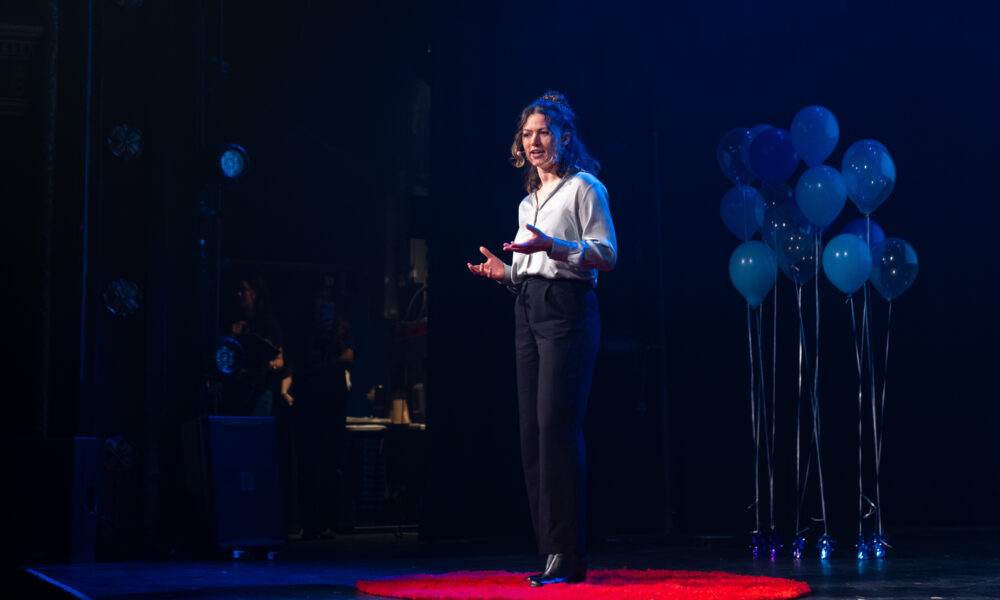
TEDxMcGill brought together seven speakers and two performances by McGill students at their annual conference on Feb 9. TEDx events are similar to TED Talks, except that they are independently organized all over the world by community groups who have obtained a free license from TED to use their name and format. In turn, all of the speeches are uploaded to a centralized TEDxTalks library

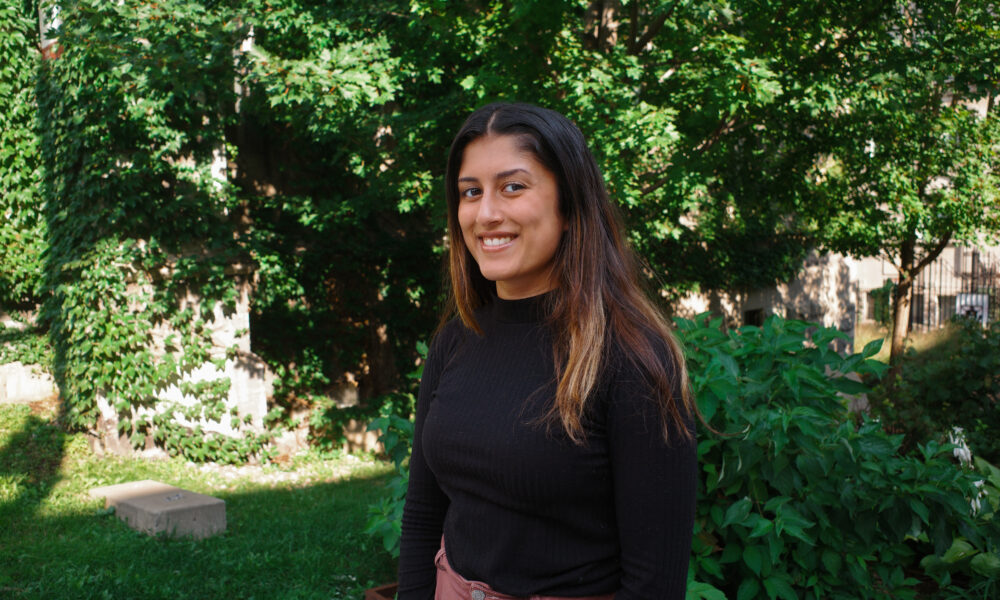
“I really love [TEDx’s] international community,” Katherine Squitieri, U3 Arts and Chair of TEDxMcGill said in an interview with The Tribune. “It’s a super strong network of people. You’re constantly in contact with other TEDx leaders, attendees, and members. I think it’s really inspiring to be able to see that so many people are working towards the same goal throughout the world.”

This year’s event featured lectures on a variety of topics, from equality in healthcare, to community-based AI literacy, to reflections on working with cancer patients in an oncology ward. The morning session ended with a performance by McGill’s Soulstice acappella group, and the afternoon kicked off with a dance number from United Groove

“I hope that people will be inspired to learn more and explore more opportunities to connect with topics that maybe they don’t hear about as much,” Squitieri told The Tribune. “I think that’s the beauty of TEDx: The variety in talks and being able to get snapshots of things that people are so passionate about.”

The organizers for this year’s TEDxMcGill event asked presenters to incorporate the idea of “ripples” into their talks as a guiding conceptual thread, although it was left to individual speakers to interpret the theme as they wanted. 

“Ripples are a reminder that even small actions matter, often in the largest ways,” Mikalah Martindale, U1 Arts and VP Communications of TEDxMcGill, said in her opening remarks. “Our speakers today have carefully curated both ideas and stories to share with all of you of ripple effects in their lives, from comedy to human connection.”

Charlotte Spruzen, a PhD candidate at McGill whose presentation focused on a geological response to climate change denialism, began her talk with a very literal reference to the conference theme. As it turns out, physical ripples appear in various materials and along different time scales in the geological record. 

“Modern ripples are everywhere [….] You can also find them in rivers, desert sands and lakes,” Spruzen said in her talk. “Ripples are fundamentally transient structures; ripples you see on the beach today will not be the same as the ripples you see the beach tomorrow, and that makes it, in my opinion, mind-blowing that the same structures of ripples can be preserved in rock for billions of years.”

Spruzen went on to describe how climate change deniers misconstrue evidence from the geological record—such as the fact that there have been large spikes in global temperature in the past—and she carefully demonstrated how those claims draw invalid conclusions from valid data. 

Coming from a different angle, Michael Zegarelli, Vice-President of Project Management at Colliers Project Leaders, spoke about the wide-reaching ripple effects that can result from seemingly small changes to city design, such as improving parks, infrastructure, and gathering places. Charlie Scholey, U3 Engineering, took yet another perspective, talking about the positive impacts that comedy can have on people. 

“If there’s one thing I’ve learned, it’s that everyone has the ability to be funny. Everyone has a sense of humour,” Scholey said in his discussion. “They just need the tools to use it, and then they have to want to use those tools.”

Montreal, News

Quebec rental tribunal recommends record rent rate increase

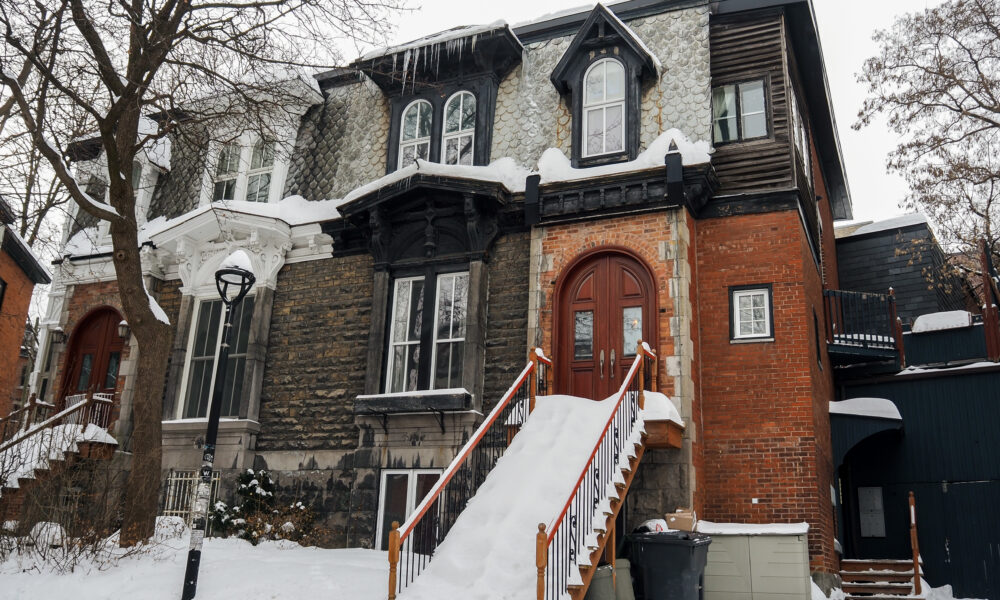
On Jan. 21, Quebec’s Tribunal administratif du logement (TAL) announced that its recommended rent increase rate for 2025 was 5.9 per cent for units that do not include paid heating, and between 4.1 and 5.5 per cent for units that include heating in the rent. While this recommended increase rate is not binding, it is a signal for both landlords and tenants of what is considered a reasonable rent hike. 

This year’s recommendation is the highest since 1988. It also represents a significant jump from 2024’s rate of 4 per cent and 2023’s rate of 2.3 per cent, although when tenants contest rent increases, the TAL often approves increases in excess of their recommendations. In 2024, the average rent adjustment granted by the TAL was 5.8 per cent. Daphne Sainte-Onge, an organizer for the tenant union Syndicat des locataires autonomes de Montréal (SLAM), commented on the difficulties these hikes can pose for tenants.

“The majority of tenants are not receiving raises, (cost of living or otherwise), that match these increases, so every year rent is eating away a bigger chunk of our earnings and landlords are taking more from our pockets as tenants,” Sainte-Onge wrote in an email to The Tribune

Sainte-Onge also noted that students are particularly vulnerable to exploitation by landlords through high rent increases, due to their high turnover rates and lack of collective organization. She emphasized the importance of speaking with one’s neighbours about rent prices and contesting unreasonable hikes. 

“Landlords often ask for unjustifiably high increases because they do not expect tenants to push back, but you have the right to refuse and to stay in your apartment,” Sainte-Onge wrote. “Negotiating collectively multiplies the power tenants have to fight back.”

Elliott Kalt, U2 Science, and his roommates were paying $3,000 CAD a month for a three-bedroom apartment in the Plateau, where one of the bedrooms did not have a window. When Kalt and his roommates decided not to renew their lease, the landlord listed the apartment for $3,300 CAD, a 10 per cent increase in just one year. 

“I think that my old apartment was already a bit expensive for what it was, but increasing the rent by $300 almost feels criminal,” Kalt wrote in a statement to The Tribune

While upper-year students navigate the housing market in broader Montreal, first-year students living in McGill residences are also considered tenants, signing leases with McGill for the duration of the academic year. While the Quiet Residences at the Downtown Campus and Laird Hall at Macdonald Campus offer prices per room from $585 to $985 CAD for some students, prices in residences range from $1,055 CAD to $1,780 CAD, with a regular single room in Royal Victoria College costing $1,610 CAD per month, and a double room in La Citadelle costing $1,545 CAD per month. 

These rents do not take into account the mandatory meal plan in most residence halls, which is currently $5,800 CAD for the year. In the Plateau, the average rent for a one-bedroom apartment is $1,512 CAD; however, that price includes a bathroom and kitchen. 

As a landlord to thousands of students, McGill also makes decisions about rent increases year to year. The McGill Media Relations Office (MRO) commented on the factors the university takes into account when setting residence fees. 

“The Quebec Rental Tribunal’s rent increase rate provides a guideline for understanding the housing market, but it is not the main factor we consider when revising our fees,” the MRO wrote in an email to The Tribune. “More importantly, we take into account the overall cost of living in residence, the condition of each building, and if any recent upgrades and renovations have been done.”

The rent for McGill residences in the 2025-2026 academic year has not yet been finalized, but the MRO stated it would be announced in the next several weeks. 

With rent increases across Montreal, students are struggling to find suitable apartments for reasonable prices. 

“I’ve definitely seen pricing get worse over time, but the more annoying part of looking for a place is just finding a place that has windows in all rooms—something you would think is a normal standard,” Kalt wrote. “Overall, it feels like the quality of places has gone down while prices have increased.”

McGill Recommendations, Out on the Town, Student Life

Dollars and sense: The cheapest places to grab lunch near campus

While many students choose to meal-prep for the week, weekends often topple the best-laid plans of mice and men. We’ve all had the experience of arriving on campus Monday morning with an empty lunch box and a growling stomach. What are the best options to satiate your mid-day cravings on a budget? The Tribune took a walk around the neighbourhood to find meal deals within a 10-minute radius.

Free option: Midnight Kitchen

The Midnight Kitchen is a non-profit worker- and volunteer-run collective that serves free lunches in the University Centre, typically at 1:00 p.m. on Wednesdays and Thursdays. Their food is vegan and always includes a dessert, often made with produce grown in their community garden. You have to bring your own container and utensils if you want to pick up a meal, and remember to get there early as the services are limited.

$0-$5 CAD options: The Yellow Door, Japote, and McGill metro finds

The Yellow Door (3625 Aylmer Ave) is a non-profit whose mission is to reduce social isolation of vulnerable groups in downtown Montreal. They run the Rabbit Hole Lunch, offering vegan meals for under $5 CAD every Friday at 12:00 p.m.. Their mains typically cost $3 CAD, and $1 CAD for dessert. You are encouraged to bring your own containers, but can also use their plates and utensils (which you have to wash afterwards). The service is cash-only, and you can dine in their basement.

Japote is a family-owned fast food restaurant located on the concourse level of 1000 Rue Sherbrooke O. You can grab a homestyle curry there for the small price of $6 CAD. Remember to bring lunch money, because it’s cash only, and to prepare for a wait. 

Along the same line, Lee N Kim (located inside of the McGill metro station) and Marché Eden (3575 Parc Ave) both sell onigiri at around $4 CAD a piece. These balls of rice wrapped in seaweed are filling snacks, sure to keep you going through a long day. Also located inside the McGill metro is Pizza Soleil, where you can get a beef patty and a drink for under $5 CAD.

$5-$10 CAD eats: Vinh’s Café, McGill Pizza, Opiano, G-Store

Vinh’s Café (Genome Building and Strathcona Music Building) offers Vietnamese food, with their classic bánh mì for about $8 CAD.

McGill Pizza (625 Rue Milton) is permanently part of the McGill gastronomic canon. Don’t let their expensive main plates fool you—their two-slice combo of pizza goes for $8.75 CAD, perfect for a light lunch. Or, you can get one slice with a side of fries, for $8.50 CAD. 

Opiano (1115 Rue Sherbrooke O) is located where the famous Super Sandwich used to be.  This Korean spot offers kimbap from $6.50-$8 CAD, depending on whether you choose a tuna, beef, or regular roll. They also sell eight fried dumplings for $9 CAD. If you’re more in the $10-$15 CAD range, their curry plates are a good bang for your buck, typically including two pieces of fried meat, rice, salad, and a miso soup.

If you’re looking for a quick bite without leaving campus, G Store in McConnell is your spot for lunch on the go. They sell wraps for $6 CAD, though these can sell out during the day if you don’t buy one early. The wraps are from Ô Four, a Lebanese restaurant and bakery located on Avenue du Parc.

A satiating meal for $10-$15 CAD: Nouilles Zhonghua

Nouilles Zhonghua (908 Rue Sherbrooke O) is an excellent spot for a filling bowl of noodles. A small bowl of their beef special is $14.99 CAD, though you can grab their small combos such as their cold noodles with a Chinese hamburger for around $12 CAD (or, you can just get a Chinese hamburger for about $7 CAD).

Next time you’re feeling snackish, just remember that there are many options around! Lunch on campus does not have to cost you $20 CAD—it doesn’t even have to cost you $5. Just remember to bring cash wherever you go, and support these local spots to ensure students have accessible eats in the future.

Science & Technology

Our universe through the James Webb Space Telescope

For some, seeing images of distant galaxies induces feelings of excitement and curiosity. For others, it sparks fear and a sense of insignificance. And who can blame them? It’s easy to feel small when living in a seemingly infinite universe.

The James Webb Space Telescope

On Feb. 14, at the sixth McGill Physics Society Colloquium of 2025, guest speaker Sarah Rugheimer—an astrobiologist and Associate Professor at York University—delivered a lecture on the James Webb Space Telescope, the most technologically advanced space observatory ever created. Known for its breathtaking images of distant galaxies and cosmic phenomena, Webb has opened new frontiers in our understanding of the universe.

Rugheimer began by explaining the remarkable technology behind Webb, focusing on its primary mirror, which is composed of 18 smaller, gold-plated mirrors that measure a combined 6.5 metres in diameter.  

“These 18 different [mirrors] are each getting their own image, and then they have to be brought together to sing as one choir, so to speak, so that they actually are functioning as a single telescope,” Rugheimer said in her lecture.

The mirrors work together to concentrate their light onto one smaller secondary mirror which reflects back to the telescope’s processing system, ultimately allowing Webb to capture extremely high-resolution images. To reflect their light onto such a small point, each mirror must be able to adjust its position within eight nanometres of precision, equivalent to one ten-thousandth of a human hair.

Webb & Hubble

Before Webb claimed the title of ‘most advanced telescope ever built,’ the Hubble Space Telescope was the reigning champion. Hubble, a reflecting telescope, captured the first images of deep space, revealing thousands of galaxies, each with hundreds of billions of stars. First launched in 1990 and still functioning today, it has fundamentally changed our understanding of the universe. 

While Hubble captures light in the ultraviolet and visible spectrum, Webb’s much larger mirror surface allows it to capture longer, infrared wavelengths of light. Because our universe is expanding, light waves from distant galaxies are subject to the Doppler effect, meaning they have been stretched by the time they reach us. These stretched wavelengths are redshifted into the infrared frequency range, making Webb an ideal candidate for capturing them.

“James Webb [Space Telescope] is needed in order to see those most distant galaxies because that light has really shifted to those infrared wavelengths. So Webb is able to just look back further than Hubble ever could,” Rugheimer explained. 

Infrared wavelengths also paint a clearer picture of our universe, since they travel right through clouds of gas and debris, revealing details that Hubble couldn’t capture.  

Together, these telescopes give us clues about the early stages of the universe’s formation. The light emitted from these distant galaxies has often been travelling for billions of years by the time it finally reaches the telescopes’ point of view.  

“Hubble can see back to about a billion years after the Big Bang, and Webb is able to go back to 0.3 billion years.” Rugheimer said. “Telescopes are time machines in a way, because of the constant speed of light. The further we look away, the earlier the parts of the universe we see.” 

From exoplanets to our own solar system

Webb’s scope isn’t limited to galaxies and supernovas: It is also helping scientists explore exoplanets—planets outside of our solar system. Rugheimer highlighted the TRAPPIST-1 system in particular, containing three Earth-sized exoplanets in the habitable zone, where conditions may be suitable for life.

Closer to home, Webb has also captured the clearest picture of Neptune’s rings in existence and imaged water plumes on one of Saturn’s moons that are larger than planet Earth.

Rugheimer shared a personal moment during Webb’s launch on Christmas Day, 2021, reflecting on the significance of Webb in our journey through the universe. 

“We were watching it on our cell phone, my husband and I, and I started to cry as this telescope launched: This is really the telescope of our generation.”

McGill, News, The Tribune Explains

The Tribune Explains: McGill’s ongoing construction projects

In August 2024, McGill Vice-President (Administration and Finance) Fabrice Labeau and Provost and Executive Vice-President (Academic) Christopher Manfredi announced the provincial government’s changes in its funding mechanism for university construction and renovation projects. As a result of these changes, new projects and all calls for tender for construction have been halted at McGill.

At McGill’s second budget town hall of the academic year on Feb. 7, President and Vice-Chancellor Deep Saini highlighted additional financial pressures the university is facing. 

In light of the university’s projected financial deficit, The Tribune breaks down the funding processes behind current and future construction projects at McGill, and examines the timelines of these various projects.

What are some of the outstanding construction projects at McGill?

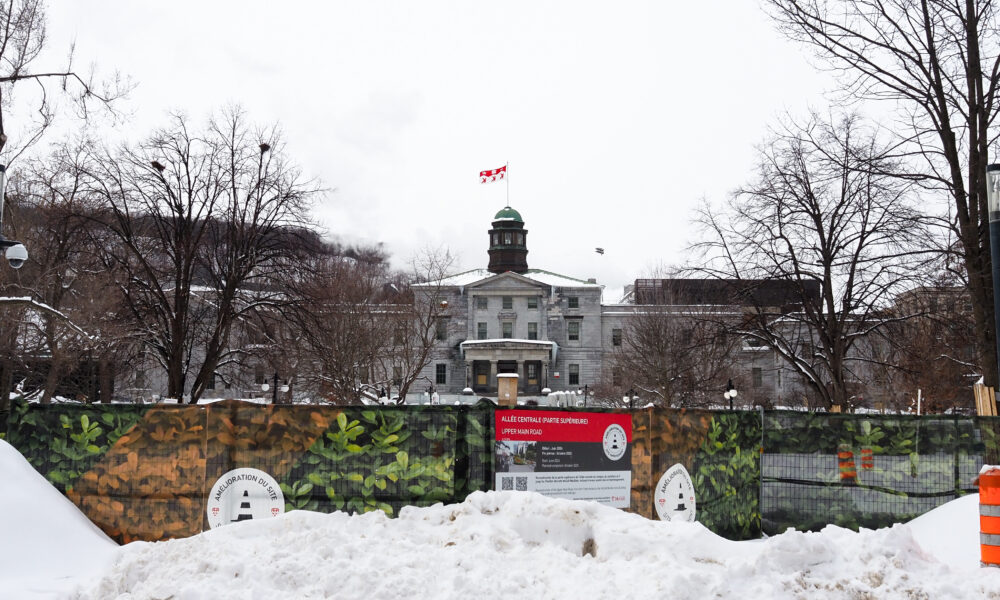
The McGill Downtown Campus’ Upper Main Road, otherwise known as the Y intersection, has been under construction for eight months. The project was outlined in McGill’s 2019 Master Plan, with construction beginning in June 2024. The Master Plan set out short-, medium-, and long-term plans to improve the built environments of McGill’s Downtown and Macdonald campuses. 

In a statement to The Tribune, the McGill Media Relations Office (MRO) wrote that although some construction projects may seem stalled, it can be due to the phasing of work and environmental factors.

“The Y intersection redesign is a project that involves ground infrastructure,” the MRO wrote. “Though some work can happen during frost periods, other phases must wait for warmer periods.”

The New Vic Project, which was first introduced in 2015, has been under construction since 2022. The project takes place in part on the grounds of the former Royal Victoria Hospital, whose Allen Memorial Institute was a site of the CIA’s MK-ULTRA mind control and chemical interrogation experiments. Since its inception, the Kanien’kehá:ka Kahnistensera (Mohawk Mothers) have contested the project, arguing the site may hold unmarked graves. Despite the Mothers’ calls to halt construction and undertake a comprehensive investigation of the site, McGill maintains that the New Vic will be completed and inaugurated in 2028.

Other ongoing construction and renovation projects include the Strathcona Music Building, the Raymond Building on the Macdonald Campus, the New Residence Hall, and the McConnell Arena. Currently, there are over 60 ongoing or planned construction projects at the downtown campus.

Pending or new construction projects, like the Fiat Lux library project, have been suspended until further assessment.

How will cuts to McGill’s financial budget affect current and future construction projects?

The McGill Media Relations Office (MRO) wrote to the The Tribune, clarifying that construction projects are not affected by McGill’s financial budget.

“Capital projects like construction are not part of the operational budget. They have their own envelope,” the MRO wrote. “Government rules require that these remain totally separate.”

What factors may affect the timeline of McGill’s construction projects?

McGill construction projects require governmental approval as they are heavily funded by the provincial government of Quebec. With Labeau and Manfredi’s announcement on the government’s yearly cap on provincial funding, the university has to suspend new construction projects. In turn, this may delay the completion date of various construction projects.

In addition, any construction or renovation project in the Golden Square Mile must be approved by the Ministre du Patrimoine Pascale St-Onge due to the neighbourhood’s historical significance. 

The Golden Square Mile, bordered by Avenue des Pins on the north, covers most of McGill’s Downtown Campus. Most construction projects on campus therefore require this second layer of approval, adding time to their completion.

For more information on McGill’s current construction projects, visit the McGill Interactive Accessible Network Map. For future construction projects, visit McGill’s Campus Planning and Development Team’s Master Plan.

Off the Board, Opinion

McGill’s “gatekeeper courses” are against the spirit of education

The first time I expressed my desire to attend McGill, my enthusiasm was met with a warning: “You might get in, but it’s difficult to stay in.” They meant that although the university does not have the traditionally single-digit acceptance rates of American Ivy Leagues, the difficulty and low averages of many McGill courses make passing classes almost as difficult as getting into the university itself.

Courses taken early in one’s degree, like BIOL 200 (B- average in Fall 2022 and Fall 2023), MATH 140 (B- average in Fall 2023 and C+ average in Winter 2024), and ECON 209 (B- average in Fall 2023 and Winter 2024, and C average in Summer 2024) have been notorious for their incredible difficulty, leaving a sense that the course is designed to “weed people out” of the program or school. This seems extremely counterintuitive, especially in a student’s first or second year when they are just starting to navigate university life and venture into new areas of study. 

University degrees are structured so that students must learn the foundations of their desired program before moving on to upper-level courses that will make use of those same concepts throughout the rest of their degree. The purpose of early-degree prerequisites should be to solidify students’ knowledge in preliminary concepts before they either specialize or proceed to upper-level courses, not to discourage those who don’t immediately excel. 

Yet, even for those who don’t get “weeded out”, the high-intensity nature of these foundational courses might weaken a student’s academic foundation. When a student spends a prerequisite course cramming and struggling to keep up rather than thoroughly absorbing the information—especially if they are taking several of these types of courses at once—they will enter future classes without a strong enough grasp on the foundational material to succeed. 

As such, these courses essentially “gatekeep” certain degree programs by demotivating students with intense and excessive requirements, leading them to transition to another program they might be less passionate about, or even to a different school entirely. Foundational courses at McGill seem to serve as a test instead of an opportunity to learn, be inspired, and build important skills that will be useful in upper-year courses. Such a system design fails to reward a desire to learn, meaning students end up neglecting courses that inspire them in favour of courses they know they will pass.

The feeling of working hard and still struggling academically has adverse mental health implications, especially for those with learning disabilities or for students who are struggling to adjust to university life. The first year of university requires coming to terms with newfound independence, residence life, unfamiliar social situations, and, for some, even a new country and culture. Unnecessary academic pressure makes this transition even more difficult.

It is true that McGill is a world-class educational institution and therefore needs to hold itself to certain academic standards, but the purpose of a university is to teach and uplift, not to hastily thin the crowd of first-years probing a newfound interest in economics or biology. If courses prioritized supporting students to retain information and less on trying to “weed people out,” then a more accurate sample of people who would not thrive in a program or at the school would self-select. This is a much better alternative than discouraging students with a passion for their desired program by subjecting them to intense preliminary courses and low-grade averages. Instructors can and should encourage learning and retention without compromising academic rigour, and course material should be appropriate for the level of the course. McGill as an institution should be uplifting the students it accepts, rather than using difficult early-year classes to prey on their downfall.

McGill, News

Adrien Wing leads panel discussion on critical race theory and intersectionality

On Feb. 12, Professor Adrien Wing, Director of the University of Iowa Center for Human Rights, explored the role of critical race theory (CRT) in challenging institutionalized oppression at a panel hosted by McGill’s Faculty of Law. Organized to commemorate Black History Month, the panel highlighted the historical patterns of racial exclusion that persist in modern governance and spoke to the need for systemic change. 

The panel began with Wing’s presentation on CRT and intersectionality. CRT refers to an academic approach that examines race as a social construct and functions under the assumption that racism is not solely the product of individual bias. It analyzes how racial inequality has been deeply embedded in many parts of Western society, particularly in its legal systems and social institutions. 

During the panel, Wing discussed how CRT can shed light on how racism is ingrained in legal and economic systems. She pointed to the GI Bill in the United States—a policy that provided WWII veterans with funds for housing and education while systematically excluding Black veterans

“We weren’t told the truth,” Wing said. “Black veterans were not given that money. Critical race [theory] helps to deconstruct that, and say the system is racist, has been racist since the beginning, as well as sexist, homophobic and other ‘-isms.’”

After Wing’s presentation, the three panellists, jurist Tamara Thermitus, McGill Faculty of Law Professor Sarah Riley Case, and McGill Adams-Burke Fellow Lena Dzifa Phillips, continued the discussion. 

Building on Wing’s examination of systematic racism in legal structures, Phillips turned the conversation to the gap between constitutional ideas and their real-world application, questioning whether legal frameworks designed to promote equality are effectively implemented. 

“We know that today constitutional statehood is still elusive,” she said, “But how would you describe the present-day operationalization of the very progressive norms and ideals that are included in those constitutional projects?”

In response, Wing emphasized the fluid nature of legal texts, noting that their meanings change over time and in different geographical contexts. 

The discussion continued with a question from Case, in which she referred to the work of Columbia University Professor David Scott. Case highlighted that initiatives such as anti-colonial or civil rights movements have not always led to the expected structural changes. She asked how past efforts toward justice should be reexamined in the present moment.

“David Scott, a Jamaican scholar, Black studies and Caribbean studies, who calls our present moment of post-revolutionary conjuncture in the context of decolonization […] asks, ‘How can we reevaluate now, at this post-revolutionary conjuncture, what’s necessary for transformation?’ So, I wanted to know, what do you think?” Case asked. 

Wing responded by rejecting the idea of a “post-revolutionary” time, which implies a successful revolution that resulted in lasting change. She questioned whether there had ever been a shift that effectively addressed structural racism. 

Wing also challenged the idea that diversity and inclusion programs are enough to address racial inequality. Although these initiatives may help individuals, she argued that they fail to dismantle the structures that uphold systemic oppression. 

“These programs are band-aids on cancer,” Wing said, “They will help a few people, but they will not help deal with great structural injustices. That’s not what they’re about. They weren’t meant to do that.” 

Rather than focusing solely on personal change, Wing emphasized the importance of confronting the deeper economic and systematic realities that prevent meaningful change.

Throughout the conversation, Wing and the panellists underscored that addressing systemic oppression requires more than theoretical discussions or surface-level policy changes. They noted that, while legal and institutional frameworks shift over time, the structures that sustain inequality remain, raising questions about the effectiveness of current approaches to transformation.

Wing urged the audience to commit themselves to efforts to oppose these systems of oppression and emphasized the need for sustained engagement in the fight for justice. 

“In your lifetime—and the lifetime of my grandchildren—we will not end racism, sexism, homophobia, any other ‘-ism.’ We will not end it,” Wing said. “But each of you will be judged by the quality of your [resistance].”

McGill, News

McGill Senate discusses smashed windows and budget cuts at Feb. 12 meeting

Smashed windows of campus buildings, academic freedom, and upcoming budget cuts were among the discussion items at the McGill Senate’s Feb. 12 meeting.

The meeting began with memorial tributes to Patrick Dias in the Faculty of Education, Patrick Farrell in the Department of Chemistry, and Abraham Fuks in the Faculty of Medicine and Health Sciences. McGill President and Vice-Chancellor Deep Saini, the Senate Chair, then moved to the Report of the Senate Steering Committee

Saini then addressed the Senate regarding the protestors who smashed windows of the Leacock, McCall-MacBain Arts, Dawson Hall, and James Administration Buildings on the night of Feb. 5. Saini noted that “an anarchist group […] with no known connection to McGill” has taken responsibility, stating they were protesting McGill’s refusal to divest from companies with ties to the state of Israel. The base repairs are expected to cost McGill hundreds of thousands of dollars. 

“Even higher, though, is the price to our collective morale,” Saini said. “Our campus cannot continue to bear the brunt of outrage caused by a war half a world away.”

Saini then read two written statements from instructors whose classes were writing exams in Leacock when the protestors smashed the building’s windows before concluding that the university cannot make decisions “rooted in response to threats.” From there, he opened the floor to comments.

Arts Senator Anzhu Wei noted students’ frustration with a lack of communicable channels with McGill, particularly surrounding the university’s investments in companies connected to Israel. Wei highlighted that 78.7 per cent of voting students in the Fall 2023 referendum voted in favour of the Policy Against Genocide in Palestine, which called on McGill to divest from such companies. An injunction subsequently suspended the policy. 

“I’m not saying that McGill should make any decisions in response to violence or intimidation,” Wei said. “I think where a lot of the frustration comes from is that disconnect between what students want and what students want to say and what they perceive McGill to be taking in as input.”

The Senate moved on to address McGill’s expected budget cuts as the result of a projected $15 million CAD deficit for the current fiscal year. Engineering Senator Nathaniel Quitoriano asked what role the Senate would have in determining how the cuts will be allocated given the Senate’s jurisdiction over academic matters at McGill. Saini responded that budget cuts are administrative in nature, but situations of academic concern would be brought to the Senate, such as the hypothetical amalgamation of departments.

“Or, in an extreme scenario, there’s a suggestion to eliminate a faculty to save money,” Saini said.

The Senate then addressed questions from members. The first—submitted by Wei and Arts Senator Vivian Wright, concerning artificial intelligence and pedagogy—was deferred to Provost and Executive Vice-President (Academic) Christopher Manfredi, who was not present but provided a written response. Manfredi also answered the second question—submitted by Quitoriano and Member-at-Large Christa Scholtz—about the Report on the Policy on Indigenous Membership

Student Senator Abe Berglas raised concerns regarding this report’s accessibility. 

“It’s quite difficult, if you start from the main page of the Office of Indigenous Initiatives [website], to find the report. I wouldn’t have been able to find it if I didn’t work backwards from the full hyperlink,” said Berglas.

Saini noted the feedback before turning Senators’ attention to the annual reports on the Action Plan to Address Anti-Black Racism, Student Life and Learning, the Committee on Student Services, the Equity, Diversity, and Inclusion (EDI) Strategic Plan, and the EDI Committee.

The meeting ended with a confidential session regarding an honourary degree.

Moment of the Meeting: 

The two written statements from instructors—who were teaching and invigilating when the protestors smashed windows in Leacock—reported a climate of uncertainty, with one noting that some students screamed out that there was a shooting, while another described locking the doors and calling security. 

Soundbite: 

“If you think that the university should have a role in thinking through these issues, such as the ones raised by BDS, I suggest that we just have an academic conference where we talk about these things [….] I think it would be wrong to not do things just because the [protestors who smashed the windows] want something.” — Senator Catherine Lu in response to Saini’s request for comments in regard to academic freedom.

A previous version of this article stated that Catherine Lu was an Arts Senator. In fact, Lu is an Arts Faculty Senator. The Tribune regrets this error.

News, PGSS

PGSS councillors debate McGill’s proposed labour cuts and referendum question selection

The Post-Graduate Students’ Society (PGSS) of McGill University held its second council meeting of 2025 on Feb. 12. After approving the agenda, PGSS councillors moved on to discuss budget cuts, hiring freezes, and questions for the upcoming referendum

The first discussion item was the potential impact of staff cuts in the Faculty of Arts on Teaching Assistant (TA) positions. This follows Provost and Executive Vice-President (Academic) Christopher Manfredi’s announcement that the university will cut 250-500 positions in response to a $15 million CAD budget deficit for the upcoming fiscal year. 

Zoe Neubauer, a third-year PhD candidate in History, explained that an internal survey in the Graduate Department of History and Classical Studies found that proposed cuts to the teaching support budget would adversely impact graduate students’ education, scholarly research, and quality of life. They requested that the PGSS circulate the survey results to all Post-Graduate Student Associations (PGSAs) in the Faculty of Arts and formally condemn the university’s proposed labour cuts.

All new business items involved adding questions to the upcoming PGSS referendum taking place April 7-14. One of the motions sought to add a referendum question on PGSS lobbying the government to make labour rights applicable to graduate research. In other words, it sought to add a question to the referendum to get the PGSS to ask the Government of Quebec to classify graduate research as a job, not just part of academic coursework. 

This motion sparked a 27-minute debate among attendees. Opponents raised concerns that such a change could affect the tax status of grants and awards and put students’ education at risk if they failed to meet job requirements. 

“Making the argument to consider grad students—Master’s and PhD students—completely as employees will completely […] disregard the fact that [they] are still students,” PGSS External Affairs Officer Naga Thovinakere said.

Supporters argued that the broader PGSS membership should decide these debates through a referendum vote and with campaigning from ‘Vote Yes’ or ‘Vote No’ committees rather than just the 60 voting members present. 

“The debates that we’re having right now and the nitty-gritty can be further dealt with [in the future],” Sheheryar Ahmed, External Affairs and PGSS representative from Graduate Islamic Studies, said. “Right now, we should focus on whether or not this should be a question that the general student body should have an opinion on.”

With 14 votes in favour and 18 against, the motion did not pass.

The council voted in favour of adding a question to the referendum on approving a new provider for online primary and mental health care for members. This referendum question stands to switch PGSS’s telemedical services from current provider Dialogue, for which members pay $45 CAD per year, to Digital Doctor, a service hosted by Maple, for $25 CAD per year, maintaining the current opt-out option. 

In addition to Digital Doctor primary care, councillors also passed a motion to add a question to the referendum regarding mental health care under the service. This would be an additional $30 CAD per year fee that members could add to their Digital Doctor primary care subscription, allowing access to online mental health care; this motion also passed with an overwhelming majority. 

Moment of the Meeting:

In its final motion of the night, the council voted to include a referendum question proposing a significant reduction to the PGSS Special Projects fee. If approved, the fee would drop from $4.60 CAD to $1.50 CAD, citing severe underuse. According to the motion, the fund has primarily served as a contingency for potential legal fees and website maintenance rather than supporting new projects in recent years.

Sound bite: 

“It’s useful [and] important to have access to some kind of virtual healthcare platform. [It is] just too bad that this requires us giving money to privatized healthcare, and it’s unfortunate that the state of our public healthcare system means that [private virtual healthcare] is something we want to do, which I and my members are opposed to [….] But I’m not opposed because we’re not going to fix the public healthcare system at PGSS [council].” — School of Urban Planning PGSA representative Brenagh Rapoport, discussing the switch to Digital Doctor. 

A previous version of this article did not list Zoe Neubauer’s name. The Tribune regrets this error.

Science & Technology

Confronting anti-Black racism in Canada’s healthcare system

With a national identity built upon the idea of being a cultural “melting pot,” racism often gets swept under the rug in Canada. Despite curating this idealized image of inclusivity, racism is ingrained in the nation’s history and institutions, including the Canadian medical system

Khandideh Williams, a PhD Candidate in McGill’s Department of Family Medicine, shed light on inequities in healthcare through her recent publication in BMC Public Health, which explores how Black individuals perceive and experience anti-Black racism in Canadian healthcare.

“I started my work in 2020, which as we know, a lot was happening in 2020, including the murder of George Floyd. His murder brought about widespread conversations about anti-Black racism both at McGill and within my department,” Williams said in an interview with The Tribune. “It was through engaging in those discussions and learning more about anti-Black racism myself on my own time that I realized that that’s something I would like to focus on.” 

Williams interviewed 32 Black volunteers in Montreal who represented 20 different ethnicities and whose ages ranged from young adults to seniors. The diversity of the participants was reflected in their experiences of racism, supporting William’s hypothesis.

“The Black community, especially [in] Montreal, is extremely diverse. Whether we’re talking about place of birth, mother tongue, or ethnicity, we’re an extremely diverse group with diverse worldviews, ideas, and ways in which we approach different situations,” Williams said. “So for my project, I approached it with this logic that if the Black community itself is diverse, then it follows that experiences of racism are diverse.”

Williams’ research focused on two central questions: Did participants perceive racism during their healthcare interactions, and how did their unique identities and social positions influence their experiences and perceptions of racism?

For participants, the perceived racism was most often subtle and covert, manifesting itself through microaggressions and harmful stereotypes. 

“One common stereotype was that of the strong Black woman: ‘Black women don’t feel pain, so they don’t need anesthesia. They don’t need pain medication because they’re strong; their skin is stronger.’ Or that ‘Black men are drug dealers; they’re delinquents. So, we’re also not going to give them drugs because they’re going to abuse it,’” Williams said. 

The study also revealed that Black immigrants’ perceptions of anti-Black racism in Canada varied depending on their country of origin. For example, participants who had come from the UK and the U.S. found racism to be more openly discussed and overtly expressed in those countries than it was in Canada. They noted that the socially taboo nature of race discussions in Canada often made it harder to identify racism in their everyday lives. 

Contrastingly, immigrants from African countries may not have had prior experiences with anti-Black racism before coming to Canada.

“In Nigeria, in many African countries, Black people are the dominant group [….] Blackness or race is not necessarily what people use to classify people in such societies,” Williams explained. “So when [a participant from Nigeria] came here, he knew that there was this thing called Blackness, but he didn’t really understand its implications until he and his mother experienced it.” 

Williams’ research also highlights the impact of intersectionality on racism. Experiences and perceptions of racism are informed by more factors than just race, including gender and age. Williams is now focusing on a second phase of her project—a quantitative analysis with data from Quebec, Ontario, and British Columbia—to determine if these intersectional trends are consistent across Canada.

Ultimately, Williams’ work highlights the urgent need for open conversations about race and racism in Canada. We can’t make our communities and institutions equitable until we acknowledge that they are fundamentally unjust.

“I think our country is still battling with their comfort in even tackling the issue. To tackle an issue means to first acknowledge that it exists,” Williams said. “But I think many people are not yet ready to do that.”

Read the latest issue

Read the latest issue