


Latest News

Hockey, Sports

Martlet hockey triumphs over top-ranked Carabins

The McGill Martlets (4–5) faced cross-town rival and RSEQ top-ranked Université de Montréal (UdeM) Carabins (5–2) at McConnell Arena on Nov. 16. From the sound of the opening buzzer, the Martlets dominated, maintaining the lead with the help of third-year forward Lea Dumais’ decisive hat-trick and ultimately securing a 4–1 victory. This victory was especially meaningful for the Martlets considering their last encounter with the Carabins ended in a 1–3 defeat.

“[The Carabins] are definitely […] very physical,” Dumais said. “We’ve played them a lot in the playoffs, so it’s definitely sometimes a bit emotional, but [they’re] always a fun [team] to play against, and it’s very competitive.”

Within minutes of the opening faceoff, the Martlets kept the Carabins in their defensive zone, setting the tone for the rest of the game. Another precedent set early on was in penalties: Two minutes into the game, third-year forward Stephanie Desjardins was called for interference. Though the Martlets were the first in the penalty box, they did not let this deter them. A structured offence and tight passing gave the Martlets ample opportunity for shots on goal, and on a power play for the Martlets, Dumais scored her first point of the game, assisted by third-year forward Kellyane Lecours and fourth-year defencewoman Kate Devries

“[We played] with lots of confidence,” Head Coach Peter Smith said. “We had a great week of practice. The previous weekend, we played well against Concordia, [but then] we didn’t play well against Carleton, and I think that that was a lesson learned. In this league, you have to come out of every game and play hard, and I think that’s what we did today.”

The second period saw the Carabins returning the pressure as both teams found the back of the net, with Dumais scoring her second goal. McGill then surged in the third period, gunning to secure victory. A pair of penalties against Dumais and fifth-year center Nicole Howlett for slashing and hooking, respectively, resulted in a five-on-three Carabins power play. Fourth-year goalie Tricia Deguire defended shot after shot from a hungry Montréal offence, remaining steady on the penalty kill. The Martlets used this newfound resolve to score two goals within the last five minutes of the game: One by Dumais to round-out her hat-trick, and an empty net goal from Desjardins. 

With this victory under their belt, the Martlets feel confident that they can use this momentum to power through the final three games of the semester. 

“Today we played amazing,” Deguire said. “It was really a team effort [….] Right now what we need to do is continue on that track, and if we can play the same as today, we will be really good to go [for the next game].”

The Martlets will face off against the University of Ottawa Gee-Gees (7–5) on Nov. 22. 


Moment of the game

With third-year forward Lea Dumais and fifth-year centre Nicole Howlett in the penalty box, the Martlets had just three skaters on the ice. Thankfully, the Martlets soldiered through the penalty kill, with fourth-year goalie Tricia Deguire keeping the Carabins’ out of her net. 

Quotable

“Every game that we’ve played has been a […] lesson, and […] today is no different. I think our players realize what they’re capable of [….] Every game I think we’ve gotten better and better at understanding that. I have a lot of confidence that we’ll come out and play exactly like that in our remaining three games of our semester.” — Head Coach Peter Smith on the team’s growth

Stat Corner

The Martlets and Carabins kept the penalty box full this game, with seven penalties against the Martlets and five against the Carabins.


Baseball, Sports

Fantasy sports are ruining real sports

The Athletic’s Evan Drellich and Ken Rosenthal reported on Nov. 12 that the Houston Astros had used technology to steal signs in 2017. They had installed a camera in centre field to watch the opposing catcher’s signs to the pitcher; someone in the dugout would then bang a garbage can loudly to alert their own hitters as to what pitch was coming. Stealing signs is acceptable if teams can pick up the patterns on their own but using cameras is a step too far. The Astros wanted to win baseball games, but they ignored competitive spirit to do so. The “win-at-all-costs” mentality has a long history in sports, and, more recently, it has been a big factor in ruining them.

About 30 years ago, Sports Illustrated writer Daniel Okrent invented Walks and Hits per Inning Pitched (WHIP), a statistic to assess pitcher performance. Okrent could calculate the statistic by hand, given the easy mathematics. He checked box scores every morning for his rotisserie fantasy baseball league—the first ever—in which friends drafted teams in order to see who would be the best baseball general manager. This story, in and of itself, was okay: They were simply friends having fun.

However, fantasy baseball, and fantasy sports more broadly, have transformed from fun into a cruel money-making machine. Startups DraftKings and FanDuel turned it into a daily game to win money. In daily fantasy sports, players are assigned monetary values and managers must put together the best lineup while staying under the salary cap. The Astros first hired their now-former Assistant General Manager Brandon Taubman because of his Ivy League credentials and a financially successful fantasy sports endeavour. He, like many savvy mathematicians, created algorithms to exploit matchups. 

“Sometimes there were mispricings,” Taubman said to The Athletic in 2018. “One of the big advantages was paying attention to which players were mispriced and taking advantage of that.”

The rhetoric in baseball media has since matched the way we talked about fantasy sports to the point where fans no longer discuss the ins-and-outs of good play on the field. Instead, we debate whether that team should have made a trade or whether a player is a “valuable asset.” Most fans are not on the players’ side. In a sense, they are general managers in their own minds. As a result, real baseball has become such a fantasy to some that they forget that real people are involved, both on and off the field. 

This change in how we watch sports was highlighted during an outburst from Taubman after the Astros advanced to this year’s World Series. 

“Thank god we got [Roberto] Osuna!” Taubman yelled to three female reporters. “I’m so f***ing glad we got Osuna!”

Osuna, the team’s closer, had just blown the save, but it is clear why Taubman yelled at who he did. Sports Illustrated’s Stephanie Apstein reported that Taubman directed his outburst at one reporter in particular who was wearing a domestic violence awareness bracelet. Osuna had been suspended for 75 games the year prior under the Domestic Violence Policy; the Astros acquired him in a trade from Toronto for a lessened cost due to his suspension. Taubman saw his new closer as a mispriced asset, rather than as a domestic abuser, and that is abhorrent.

The Astros’ leadership defended Taubman at first and issued a statement effectively calling Apstein’s report a false accusation. Yet, strong reporting won out, and the league began an investigation into the events. When others confirmed Apstein’s account, the Astros finally fired Taubman in what felt like a case of too little, too late.

The Houston organization is the prime example of a broken system. Teams are preoccupied with how to maximize their value—winning each and every game however they can—which neglects serious problems like players with histories of domestic violence. The Nov. 12 report exposing how the Astros stole signs in the year they won the World Series came out to much fanfare but no real surprise. Baseball’s human element has already gone missing.

From the BrainSTEM, Science & Technology

From the Brainstem: The ethics of gene editing

Since the discovery of the structure of DNA in 1953, society has debated whether our understanding of human biology might one day be our downfall. These debates progressed through the transgenic mice and in vitro fertilization of the ‘70s, DNA copying of the ‘80s, viral gene delivery and cloned sheep of the ‘90s, and completion of the human genome in 2003. The controversy has not dissipated, following an explosion in genome editing techniques that were spurred on by the repurposing of Cas9the effector enzyme of CRISPR-Cas9in 2012

As genetic technologies progress at breakneck speed, humanity’s capacity to safely fix debilitating or fatal genetic disorders has grown to the point that we will be rolling out gene-editing treatments to a greater audience in a matter of years. As the clinical adoption of this field of therapies appears imminent, ethical discussions surrounding the topic of human gene editing have returned to the forefront. Fuelling these debates are two major causes for concern: Designer babies and equitable access to healthcare. 

In late 2018, the genomesthe library of genes within each of our cellsof a set of twins born in China were modified by Cas9 for the purpose of enhancement. The announcement of the births spurred a whirlwind of controversy and renewed calls for a memorandum on the use of CRISPR and similar techniques in human embryos. To the wider public, this controversy may suggest that we have already begun to move toward consumer eugenics, wherein people tailor their children’s features to reflect their ideals. 

However, eminent scientists have underlined that the conservative nature of mainstream science will prevent genome editing research that is not thoroughly vetted by ethics boards. In light of greater ethical oversight, scientists in the coming years will likely focus their research on disease prevention in embryos, rather than on enhancement.

Although concerns about the use of CRISPR-Cas9 in embryos are legitimate, last November’s announcement should not negate the positive impact that gene editing will have in the future. Once genome editing technologies are proven safe for humans, their ability to allow people to live their lives without costly and painful medical conditions should be weighed against other ethical concerns such as potential adverse health effects and societal inequalities. Thousands of heritable single-gene mutations are already known to cause disease, and a majority of them may soon be curable with advanced CRISPR-based techniques. These techniques are likely to be more effective in early embryos than in developed humans. As soon as embryonic gene editing is deemed safe, those who oppose gene editing will need to explain how it is ethical to block people who have no reasonable alternative treatment from accessing a veritable cure.

Equitable access to healthcare remains one of the major hurdles that policymakers face each time new treatments become available. For example, in the early 2000s, patients diagnosed with HIV in Canada had access to more expensive, yet newer and more effective drug combinations than patients in sub-Saharan Africa. This divide in access to treatments allowed HIV to persist within African populations: In 2018, 68 per cent of worldwide HIV infections were in Africa. Meanwhile, only six per cent of worldwide cases were spread across Western and Central Europe and North America, combined. If genome editing technologies are not designed to fundamentally maintain the concepts of equality, disease burdens will again concentrate in lower-income countries, and global social structures will further polarize populations by income. 

No responsible government can stop the advancement of technologies in medicine that have encouraging potential. Rather than fighting off advancements, more effort must be placed on reshaping ethical and legal frameworks to ensure that as new technologies become available, free-market economics do not dictate their use and all people are granted equal access. Conversations on the use of these technologies are needed between policymakers, scientists, and the public, such that everyone understands the implications of their use before they become available.

Research Briefs, Science & Technology

The hidden costs of ‘orphan wells’

According to some estimates, there may be up to five million oil and gas wells in Canada and the United States. In Alberta alone, more than 600,000 wells have been drilled—one for every seven people in the province. The consequences of the extraction, refinement, and use of petroleum is well understood; the effect of extraction on the immediate environment, less so.

The oil drilling process creates pathways for the movement of fluids within the Earth’s subsurface, allowing for the extraction of oil, natural gas, and groundwater—yet, these very same pathways can also facilitate leakage of gases and harmful contaminants. On paper, if wells are properly sealed and maintained, this should not happen, but in practice, it often does—especially when they are abandoned, or ‘orphaned’ by the companies that drilled them in the first place.

Mary Kang, an assistant professor in the Faculty of Engineering, is an expert on the environmental cost of orphaned wells. In 2013, when Kang was conducting research for her PhD, the wells were mainly considered a risk factor for carbon dioxide emissions. 

“I thought, ‘Could they be a source of methane emissions?’” Kang said in an interview with The McGill Tribune. “Apparently, at that time, there was nobody who measured them.” 

As a greenhouse gas, methane is 30 times more potent than carbon dioxide. Kang’s measurements of abandoned wells in Pennsylvania, the oldest in North America, found that they were in fact emitting significant amounts of the gas, and to an extent far beyond what scientists and oil executives had imagined. Since the publication of Kang’s findings in 2014, methane emissions from abandoned oil and gas wells have finally been included in the Environmental Protection Agency’s (EPA) emissions inventories—crucial tools used by government and business alike to calculate their greenhouse gas emissions. Emissions inventories are generally calculated using emission factors, averages based on measurements taken elsewhere.

“All studies show that if you take, say, 100 oil and gas wells, it’s only two or three that emit a lot,” Kang said. “So you can see how using an emission factor from another study can give you uncertain estimates.” 

Kang believes that emissions accounting needs to be more measurement-based, a conviction echoed by the National Academy of Sciences in a 2018 report.

Kang’s work has also shed light on other consequences of orphan wells, finding that they are at risk of polluting groundwater aquifers, the primary source of water for nearly nine million Canadians.

Under the ‘polluter pays’ principle, oil and gas companies are legally bound through Asset Retirement Obligations (ARO) to account for the cost of cleaning up and dismantling wells. However, until a Supreme Court of Canada ruling this January, declaring bankruptcy allowed companies to shirk these responsibilities in lieu of paying back creditors, saddling the government with the cost of clean up. From 2012 to 2017, a downturn in oil and gas saw the number of orphan wells in Alberta catapult from 100 to upward of 3,200. Meanwhile, the number of wells that are effectively out of business and not yet properly sealed or remediated reached the staggering figure of 155,000, which amounts to 30 per cent of all wells in the province. The Alberta Energy Regulator (AER) publicly claimed the total financial liability of clean-up measures for the province’s oil and gas industry to be $58 billion. In 2018, however, journalists unearthed private AER documents warning that the actual sum could be closer to $260 billion, of which only 1.6 billion in liability securities had been collected from the private sector. 

While action lags on the issue, the orphan wells will continue to contaminate groundwater and belch methane into the atmosphere. Given the magnitude of the issue at hand, one can only hope that government and industry will be able to pick up the slack, and soon.

Arts & Entertainment

Expozine 2019 opens up the world of independent publishing

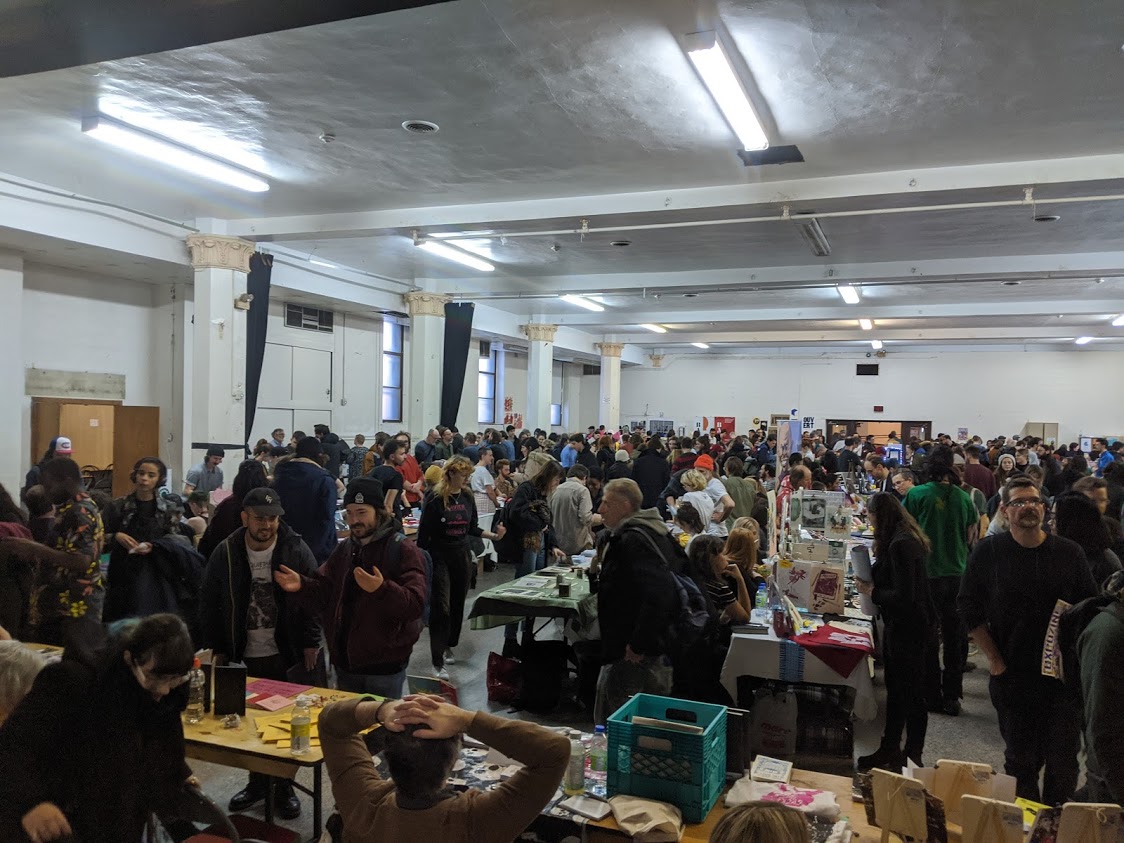
Mainstream culture often seems omnipresent—but every mainstream contains lively subcultures, and in the case of publishing, that subculture is zines. Montreal’s Expozine, which took place Nov. 16-17, had over 270 vendors set up in Église Sainte-Arsène’s basement and drew over 15,000 visitors. 

Typically, a zine is an independently published work meant to circumvent more traditional avenues for sharing art. Zines have often been associated with fringe issues, speaking for and about marginalized people and providing a platform for countercultural ideas and movements. Since zines have often had small circulations due to their DIY nature, their distribution has generally remained within the communities that produced them. 

Expozine hosted its first convention in 2002, and has since grown to be Canada’s largest small-press convention and one of the most popular events of its kind in North America. With its continued success, Expozine has begun attracting artists internationally. Rows of vendors lined the hall with their visual art, poetry, essays, photography, comics, criticism, and political manifestos. Even within the world of zines, differences in artist resources and funding—some publications are run by a single person, while others boast dedicated editorial teams—make it difficult to reduce the disparity in popularity between larger and more obscure publications. Expozine, however, is an equalizer, where visitors can find kiosks of staple-bound poetry pamphlets next to mainstream publishers displaying their fully-coloured magazines.

Notable attendees included the Quebec literary publisher Véhicule Press, whose kiosk boasted novels and poetry collections from award winning writers. In another corner, Tania Mignacca, the creator of the webcomic Ponto, an endearing series about Montreal’s orange construction cones, displayed her newly published collection of the same name. A few tables down, Concordia’s student-run Queer Print Club exhibited their newest contributions discussing gender and sexuality. In contrast to mainstream conventions like the upcoming Salon du livre de Montréal, Expozine’s value comes from showcasing a variety of artists whose eclectic niches might otherwise be overlooked.

Over the years, Expozine has expanded to include several workshops and talks. One such round table, hosted by La Petite Librairie Drawn & Quarterly on Nov. 14, invited several artists to speak about the collaborative nature of making zines. Jimmy Beaulieu, a Montreal-based cartoonist and comic artist, spoke about the difficulties of distributing work in Canada. Beaulieu spoke of the benefits of working with conventions like Expozine, especially in the era before it was common practice to advertise artwork through social media. Without a major publisher to back his work and distribute it country-wide, concentrated gatherings such as Expozine helped him to reach audiences made inaccessible by Canada’s vast landscape.

Meanwhile, Iris Boudreau, whose illustrations of urban life mix autobiography and fiction, spoke about the benefits of collaborating with fellow artists, some of whom she had met at conventions like Expozine. Boudreau remarked that she has often used collaboration as a means to assuage feelings of self-doubt and to share her projects’ failures and successes with collaborators, many of whom she now considers friends. More than just building solidarity, though, Boudreau also felt that collaboration was a great source of motivation, a tool for completing work and launching new projects.

Embodying this communal spirit, the convention brought together a vibrant collective of artists, writers, and illustrators. As Expozine continues to grow, so will its ability to champion the distinct voices that make up the world of zines.

Arts & Entertainment

Canada’s literary rock star pays a visit to Montreal

Dark green lights illuminate the walls and ceiling. Hundreds of people cheer and applaud. 

“I’m sorry, this microphone must be broken,” a man in front of the audience exclaims. “I said we have Margaret Atwood here tonight!” The applause in response is deafening.

On Nov. 12, critically acclaimed novelist, poet, and essayist Margaret Atwood presented her latest novel at the St. James United Church. Organized by Librairie Paragraphe as part of its “Words After Dark” series, the event drew hundreds of people to one of Montreal’s biggest literary events of the year. The evening was a stop on Atwood’s book tour for The Testaments, the sequel to her 1985 novel The Handmaid’s Tale.

Atwood sat in front of the altar, an ironic setting given the novel’s critique of  institutionalized religion. Yet, it was simultaneously fitting: The eager audience was hanging on every word of the literary sermon that Atwood delivered. The green lighting, chosen to match the front cover of Atwood’s new novel, was discernible, but soft enough that one could make out the bright red spectacles that she wore on a chain around her neck.

A self-described Atwood fan, radio journalist and host Ann Lagacé Dowson interviewed Atwood throughout the evening, beginning by inquiring about the decades in between publishing The Handmaid’s Tale and its sequel. Atwood decided to return to the story by the recent rise in conservative and extremist politics.

“We’re in a pushback,” Atwood said. “I got to a point where I couldn’t keep my hands off [of] it. In 2016, just before the election, it was crying to be written.” 

Dowson began to point out the similarities between Atwood’s dystopian novels and the current political events around the world, before Atwood clarified the inspiration behind her novels. 

“Everything I wrote about actually happened sometime throughout history,” Atwood said. “I did that because otherwise people would say I made it all up. I didn’t.” 

In literary studies, Atwood is noted for having coined the term ‘speculative fiction’, a genre describing possible consequences of the horrific realities that society creates.

The conversation then shifted to a discussion on climate change and social justice. A long-time environmental advocate, Atwood noted connections between societal unrest and the environmental deterioration. She shared her personal experiences as an activist, and joked about social expectations of activist celebrities. 

“People are saying ‘If Jane Fonda can get arrested, why can’t you?’ to me,” Atwood chuckled, referencing the actress’s weekly protests and subsequent weekly arrests. 

Although the event was advertised as promoting The Testaments, the point of fascination and delight throughout the evening was not Margaret Atwood’s novel, but her demeanour. Throughout her conversation with Dowson, Atwood maintained a relaxed but formidable air of blunt and charming sarcasm. She did not allow Dowson to get away with any stray, misquoted line or not-entirely-correct fact. When Dowson referred to a speech that the writer gave to West Point cadets years ago, Atwood did not hesitate to show some playful attitude. 

“I had said that to more than just cadets, you know. They sat up straighter, too,” Atwood retorted. 

Each time that Atwood made a curt remark, the audience chattered amongst themselves, adoring the literary icon’s authenticity. At times, Dowson was left searching for words, unprepared for and surprised at Atwood’s unapologetic attitude. By the end of the evening, however, both Dowson and Atwood developed a bond in their occasionally off-rhythm conversation, smiling and holding hands as the audience cheered for them.

Librairie Paragraphe’s Words After Dark event left its audience satisfied, and with a new level of understanding of the world-famous writer. The Testaments’ author is not just a brilliant thinker and influential literary figure; Margaret Atwood is a contemporary icon and a celebrity, and she knows it.

McGill, News

SSMU debates Hillel Montreal’s offers of free trips to Israel

Content warning: Mentions of violence against children

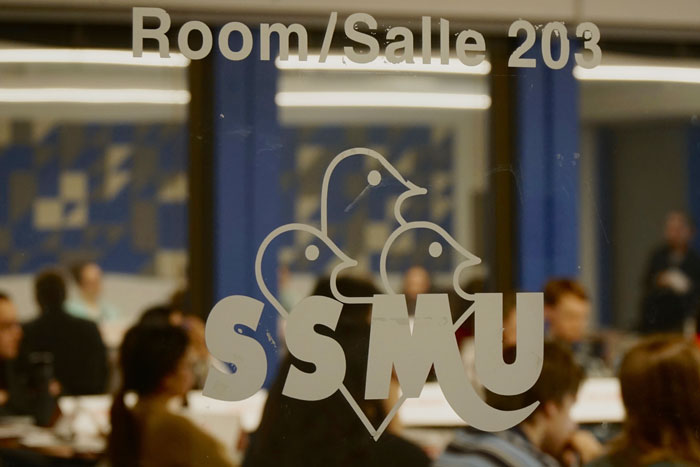
At the fifth Students’ Society of McGill University (SSMU) Legislative Council meeting, the discussion turned toward an article published by The McGill Daily. On Nov. 13, The Daily reported that several student leaders and executives on campus such as the Black Students’ Network (BSN), had been offered an all-expenses-paid trip to Israel by Hillel McGill, an organization dedicated to providing a space for Jewish students on campus. Many students are concerned about the trip, and whether executives who had accepted the trip were breaking the trust of their Palestinian constituents.

SSMU Arts Representatives Adin Chan and Andrew Chase, as well as Science Representative Jordyn Wright, will be taking part in the Hillel trip and addressed concerns voiced by other SSMU representatives during the council meeting. During the question period, Medicine Senator Andre Lametti initially brought up the issue. 

“I was wondering if anyone here had any comments […] about these trips,” Lametti said. “Do [these trips] constitute a conflict of interest? Are they a gift that should not be accepted by members of council?” 

Reading from a prepared statement, Adin Chan provided an explanation to the council for his desire to take advantage of this opportunity to travel to Israel, a move which is considered by some to be insensitive to the Palestinians that the councillors represent.

“[The trip] was advertised to me as a trip with the purpose of promoting dialogue and a greater understanding of the Israel-Palestine region,” Chan said. “I accepted this opportunity entirely in my capacity as an individual, as a Christian, […] to visit the most important sites [for] my faith [.…] I am not attending this trip in my capacity as Arts Representative whatsoever.”

SSMU Vice-President Adam Gwiazda-Amsel expressed his concerns about the trip presenting a conflict of interest for student governors who have decided to attend. 

“I obviously recognize that it’s very unfortunate and rather sad that people can’t enjoy their heritage [through this trip], that this [has become] a very entangled political issue,” Gwizada-Amsel said. “[However], I think that it’s naive, if not ignorant, to say that there is a separation at this point between a personal decision and the office. I think that you’re just turning a blind eye to […] the reality and the nature of the Israeli-Palestinian debate on this campus.” 

SSMU president Bryan Buraga reiterated the contents of a letter sent to Hillel McGill in response to the invitations. While three members of the SSMU Legislative Council have chosen to be involved with the trip, the SSMU executives have, as a group, rejected Hillel’s offer.

“[The SSMU Executives] oppose the invitations themselves, and now we ask Hillel McGill to immediately make public three points,” Buraga said. “[First, why] these invitations were extended. Secondly, who these invitations [had] been extended to and why these individuals were chosen. […] Thirdly, the details and specific purpose of the trip being offered.” 

Erratum: An article in the Nov. 19, 2019 issue #11 (SSMU debates Hillel Montreal’s offers of free trips to Israel) incorrectly stated that six SSMU legislative council members applied for Hillel McGill’s free trip to Israel. In fact, only three did. The Tribune regrets this error.

Sound bite:

“What’s been going on [in Gaza] is horrible and tragic and unfortunate and a lot of other words that I just don’t have the chance to articulate myself right now. I agree with those sentiments that [it is] something that needs to change [.…] However, in my capacity as a professional, I have faith in my abilities to remain an objective leader even though I plan on going on the trip,” Jordyn Wright, Science Representative to SSMU said on her decision to accept his invitation to join the Hillel trip.

Moment of the Meeting: 

Social Work Representative to SSMU Jo Roy displayed an image of an injured child taken to a hospital and stated to the council that the rest of the child’s family had been killed in a bombing in Southern Gaza. Roy went on to ask those who had accepted the trip to either decline it or resign from their position at SSMU.

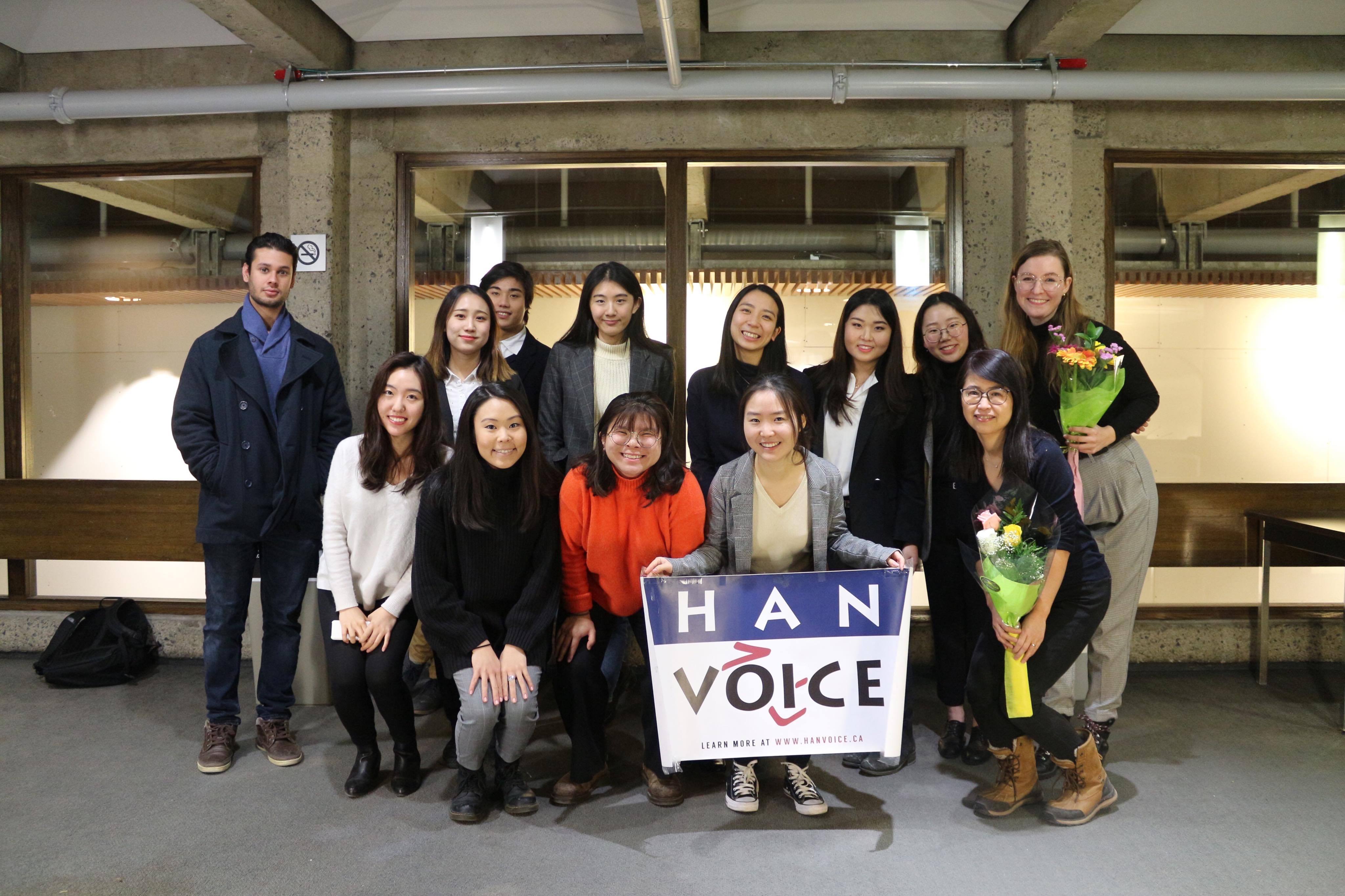
HanVoice students posing
Montreal, News

HanVoice hosts panel on the gendered experience of North Korean defectors

McGill Students for HanVoice, a student chapter of the Canadian advocacy group for North Korean refugees and human rights, hosted a panel on Nov. 15 to shed light on the gendered experiences of North Korean migration and to highlight the ways that women are disproportionately marginalized throughout their journeys. 

McGill Institute for the Study of International Development (ISID) professor Kazue Takamura, whose research focuses on the movements of migrants from developing areas, particularly in Asia, opened the panel by contextualizing Asian migration regimes. Takamura spoke about the role of migrant surveillance, which takes the form of border security and detention centers, in creating distinct migration experiences based on gender and the limitations of international human rights regimes in to improve women’s precarious mobility. 

“Migrant surveillance regimes are contributing to [capital-driven migration-related policies], the state of not just opening up borders but also controlling the border and deporting migrants,” Takamura said. “You see intensified migrant surveillance but also […] the [creation] of [forced] displacement, meaning that those asylum seekers are subject to detention and deportation.”

Building on Takamura’s presentation, HanVoice Director of Research Mégane Visette discussed the inherent link between the gender-based experience of refugees and border surveillance regimes between North Korea, China, and other Southeast Asian countries that defectors have to cross to reach South Korea. Most North Korean defectors flee to South Korea because its Ministry of Unification offers them protection through a resettlement program. Since 2004, however, refugees can also seek asylum in the United States under the provisions of the North Korean Human Rights Act (NKHRA), but less than 200 refugees have been admitted to date.

Visette emphasized some reasons for the gender-based experience of North Korean women defectors, pointing to China’s former one-child policy. In Jan. 2016, the policy was loosened to allow couples to have two children; however, the 36-year long policy created a demand for brides, which also increased mobility opportunities for women.

“Marriage, then, [became] a survival strategy,” Visette said. “When you’re crossing the border, you don’t have much choice […] but you [may] know someone who can make you go through the border if you become the bride [to a stranger]. The advantage of [this survival strategy] is that [it allows you to] get into those very invisible spaces [of] famil[ies], which [protects you from being denounced] by the Chinese authorities.” 

Visette concluded by discussing how Southeast Asian countries rationalize their treatment of North Korean refugees by classifying North Korean defectors as economic migrants as opposed to refugees. China, for example, has been able to deny them the protection mandated by the United Nations 1951 Refugee Convention, which defines the term “refugee” and ratifyies states’ obligations to protect them. 

“[T]he international legal system [offers] such a cookie-cutter sort of interpretation of what a refugee convention [that leaves, which leaves] a lot of people […] in a grey zone,” Visette said. “North Korean refugee women cannot access refugee status [in Thailand, which prevents them from accessing] private sponsorship programs in Canada because this is reliant on the UNHCR […] definition.”

The event ended with a video interview of North Korean defector Yeeun Joo, who spoke about her journey from North to South Korea by travelling through China with the help of missionaries, who protected her from experiencing any gender-based violence. Joo described her 20 years living in the one-party state.

“There’s such a drastic difference in the quality of life compared to South Korea,” Joo said. “There are a lot of people who live unaware of the fact that their freedoms were stolen from them [….] We have this song about freedom [even though] we [don’t] know what “freedom” mean[s].”

Joo also spoke about her experience arriving in South Korea five years ago and the challenges of integrating into the country as a North Korean refugee.

“I was just in a daze,” Joo said. “I really thought that I was in a dream and kept questioning it. And there was a part of me that was really worried. I questioned how to live here, how to act […] We spoke […] differently and, [because] we live so far [from each other], our cultures, manners, stories, and ways of speaking [are] all different, so I had to be careful about everything, but I didn’t know how.” 

Joo dreams of becoming a teacher, with ambitions of creating an education system to teach North Korean children if the two Koreas ever unify. 

Arts & Entertainment, Film and TV

‘Beastmode: A Social Experiment’ sheds light on the Philippines’ drug war

For the latest installment in its weekly film screenings, Concordia’s chapter of Cinema Politica featured Eshei Mesina’s Beastmode: A Social Experiment, a documentary that is part exposé on the horrors of Filipino President Rodrigo Duterte’s regime, and part docudrama of how a fabricated viral video became a nationally reported mixed martial arts (MMA) fight. These seemingly unrelated subjects coalesce in a film that tackles the perception of violence in a country where drug users, and even those tangentially related to them, are killed by the police daily in the name of a war on drugs

The film begins with shaky footage of Duterte delivering a speech to an audience of citizens protesting against the brutal treatment of drug users and imploring the president to fulfill his campaign promises, such as increasing minimum wage. This frantic moment defines Beastmode, as its hectic pacing and visual style mirrors the social panic as desperation sets in among Duterte’s many opponents. The film then takes a hard turn and focuses on Baron Geisler, a celebrated Filipino actor. Mesina had the idea of orchestrating an impromptu brawl between Baron Geisler and fellow actor Kiko Matos. The fight would be captured on a phone camera with the hope of going viral on the internet. The catch would be that the fight would occur in front of a sign calling for the release of a political prisoner. 

The social experiment aimed to determine whether anyone would notice the sign itself or if viewers would ignore it and instead simply indulge in the fight. Beastmode intercuts the development of the ever-growing hoax with more of Duterte’s speeches, an apparent commentary on how Duterte’s call for extreme violence is a symptom of the country’s admiration for brutality. Unsurprisingly, most viewers fell for the bait, choosing to indulge gossip regarding Geisler and Matos instead of supporting the political prisoner. Some tabloids went as far as to make up outlandish theories about the actors’ motivations and personal history. The internet made it clear that they wanted more from the two actors; one fight was not nearly enough. 

Eventually, the initial premise of the experiment is dropped entirely: The “feud” between the two actors has become a national sensation. Despite the director not intending his social experiment to reach such a scale, Geisler and Matos agree to fight in a genuine MMA match, and throngs of people show up for the spectacle. Once again, Mesina implies, the public has chosen to focus on trivial violence rather than pressing political issues. At a certain point, the movie becomes a parody of itself, promoting the violence it set out to criticize. The film never shies away from its unexpected twists and, as a result, Beastmode provides an incredibly earnest snapshot of the political climate in the Philippines. 

The film’s versatility is its strongest draw, and it makes Beastmode important both as a political statement and a piece of entertainment. Serious, upsetting scenes involving Duterte are often punctuated with an onslaught of chaotic, colourful internet memes about Duterte and Geisler along with animated explosions, juxtaposing political discourse in the Philippines and how the public consumes it. The film prides itself on depicting the country’s crisis with candor and, at times, wit. 

With this portrayal, Mesina creates one of the most honest depictions of the war on drugs yet. Geisler and Kiko’s climactic fight is the lens through which Beastmode inspects society’s attitude towards violence, and though the event has no bearing on the Filipino political climate, it sheds light on life in the Philippines far more than a presidential speech ever could.

Student Life

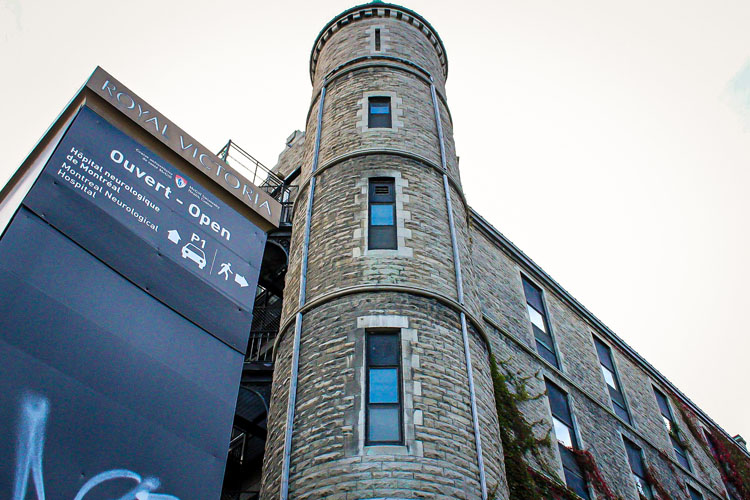
Emergency shelter to open for winter at former Royal Victoria Hospital

After a successful pilot project last winter, the overflow homeless shelter at the former Royal Victoria Hospital is set to reopen for another winter season. The emergency shelter will open its doors on Dec. 2, with around 150 beds available until April 15. The overflow shelter will be open to individuals in a state of inebriation, those with substance abuse disorders, and those with pets. 

“This [shelter] is a low-barrier, high-access service,” Matthew Pearce, president and CEO of the Old Brewery Mission, said. “[It] is intended to support existing shelters in Montreal, which are typically in greater demand during the winter months.”

As extreme cold sets in, most of Montreal’s emergency homeless shelters meet and exceed capacity. The overflow shelter will continue to operate in partnership with local health authorities, homeless organizations, the Society for the Prevention of Cruelty to Animals (SPCA), and the Montreal police.

The pilot project, which operated from January to April 2019, had over 1500 unique clients inhabit the shelter in the historic Ross Pavilion at the old Royal Victoria Hospital. The project was spearheaded by four Montreal homeless missions: The Old Brewery Mission, the Welcome Hall Mission, Maison du Père, and the Accueil Bonneau. 

Statistics collected over the course of the project were published in a recent report by the Old Brewery Mission’s research department. They found that 55 per cent of interviewed participants self-declared as alcoholics and used the overflow unit frequently. In addition, 85 per cent of the respondents felt that the overflow shelter should stay open year-round. 

The researchers suggested that the temporary shelter provided a service for homeless individuals that was missing in Montreal for homeless individuals and found that the Royal Victoria project highlighted an absence of lower barrier shelter options in the city. Although a majority of women reported feeling safe at the Royal Victoria project, one third reported the opposite . The upcoming project in December will offer goods and services adapted specifically to women’s needs, including a women-only floor.

Recent surveys in Quebec have shed light on the multifaceted dimensions of the homelessness issue in Montreal. As of 2018, there were 3,149 individuals visibly living on the streets in Montreal, making up over half of Quebec’s total homeless population. A study conducted by Quebec’s Ministry of Health and Social Services found that Indigenous people, immigrants, refugees, and queer individuals were over-represented in Quebec’s homeless population. Although Indigenous people make up less than one per cent of the general population, they represent approximately 10 per cent of Montreal’s homeless.

“Right now, housing is the largest service offered by the Old Brewery Mission, bigger than our emergency housing service,” Pearce said. “[…] The [overflow] shelter is not a solution, it is a band-aid. [Our priority] is getting affordable and available housing and not needing homeless shelters in the future.” 

Every year, missions like the Old Brewery depend on volunteers who help these organizations deliver their services, raise funds and provide administrative support. Students interested in volunteering for the Old Brewery Mission can reach the organization by emailing [email protected].

More information about the shelter project is available on the Old Brewery Mission website.

Read the latest issue

Read the latest issue