


Latest News

Sports

10 Things: Sports misrepresented on-screen

Stranger Things – Basketball

Indiana is renowned for its Hoosier basketball; however, the battle of Steve “the Hair” Harrington and Billy Hargrove wildly misses this mark. Rather than a 1980s callback to the likes of Larry Bird, this poorly executed game inexplicably features multiple beyond-the-three-point-line postups and a ridiculous through-the-legs layup that undercuts Billy as an antagonist for the rest of the season to come. 

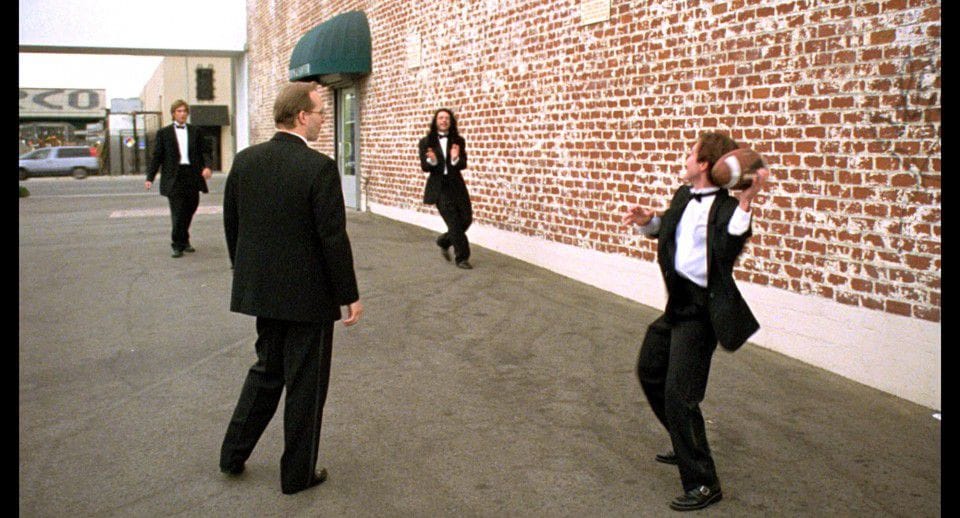
The Room – Football

A spectacular disaster from start to finish, The Room features one of cinema’s worst sports scenes. While there are several moments of aimless football throwing, none is more bizarre than that when a tuxedo-clad group of friends take to an alleyway for an epic contest of underhand throws, near-fumbles, and iconic tripping—all to the sound of a faint tuba and one character saying “pshew” after his throws. 

She’s The Man – Soccer

After removing her wig mid-game to reveal that she is, in fact, not her twin brother whom she had been impersonating, Viola Johnson plays the rest of the match with her hair down. Long-haired soccer players were left questioning why she did not simply take a moment to put it up, knowing how annoying it is to play with hair flying everywhere. 

The Amazing Spiderman – Basketball 

The Amazing Spiderman’s basketball showdown was meant to be a “Revenge of the Nerds”-style redemption scene for Peter Parker, but it wound up being a poorly executed ball-bounce off of Flash’s face. Peter follows it up with a travel violation into an unconvincing backboard-shattering dunk, further undermined by Andrew Garfield’s impressively unathletic  140-pound build.

Blades of Glory – Figure skating

Chazz Michael Michaels and Jimmy MacElroy’s final performance, set to Aerosmith’s “I Don’t Want to Miss a Thing”, has several elements that make real skaters cringe, as well as blatant violations of International Skating Union (ISU) rules. Male pairs are not allowed under ISU competition regulations, and the ISU did not allow competition music with lyrics until 2014. The film was released in 2007. 

Twilight – Baseball 

As far as we know, there is no rule stating that baseball players must be alive, although it’s safe to say that the Cullens’s baseball game isn’t exactly kosher. Normally, outfielders don’t have to dash through the forest to catch a line drive, players wear baseball gloves, and pitchers do not have precognitive powers.

Air Bud – Baseball, basketball, football, soccer, and volleyball

The Air Bud franchise stars a golden retriever who can miraculously play basketball, football, soccer, baseball, and volleyball. While the first movie makes sure to state that there is no rule prohibiting dogs from playing, a last-minute substitution of a player, dog or human, who wasn’t on the roster would never fly. Buddy can drool, but he certainly can’t dribble.

Rookie of the Year – Baseball

Rookie of the Year’s premise, that a 12-year-old can pitch for the Chicago Cubs, is only believable if the pitches are comparable to those of actual professional baseball players. However, no audience could ever be expected to believe the film’s finale, however, in which a professional baseball player strikes out on a tween’s underhanded lob.

Catwoman – Basketball

This scene answers the question, “What if a writer’s room filled with sexually frustrated and physically inactive filmmakers directed a basketball scene?” The ‘90s-themed girlfriend-versus-boyfriend game is riddled with strangely flirtatious eye contact, awkward butt-shaking, defence that wouldn’t stop a cucumber, and a complete disregard for the rulebook, which makes for possibly the single worst basketball scene in the history of film.

Jimmy Kimmel Live – Basketball

The self-dubbed “Blobfish Charity Classic” featured Senator Ted Cruz and Jimmy Kimmel in a sweaty battle to 11 points that would have been more skillfully played by two actual blobfish. In nearly two hours of play, the closest thing to a highlight in this horrifically captivating affair was when the referee reduced the winning score from 20 to 11 for fear of a stroke or a heart-attack.

Science & Technology

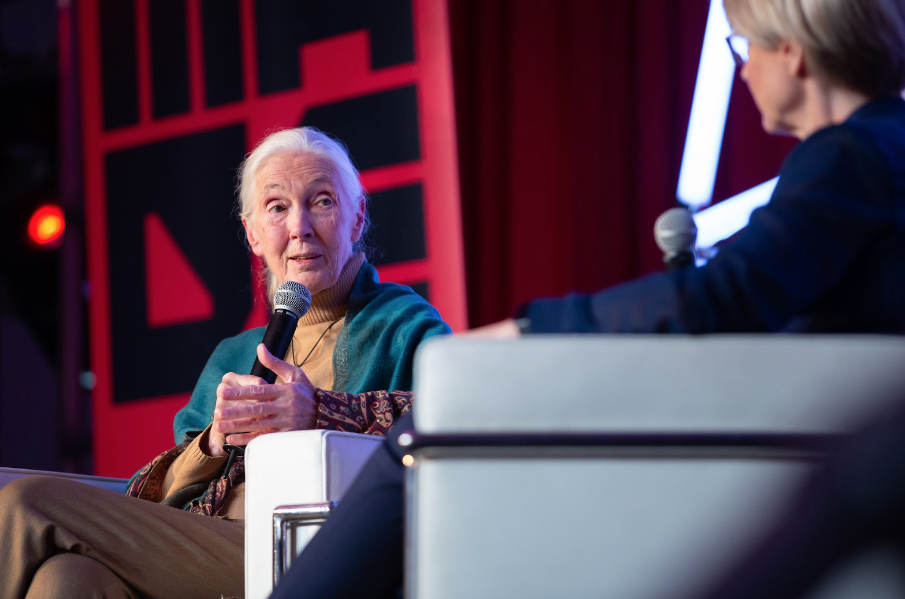
Jane Goodall returns to McGill

Jane Goodall began her second Beatty Lecture as she did her first: By saying hello to the audience in “chimpanzee.” Goodall, best known for her work in studying African chimpanzees and her later humanitarian and environmental activism, spoke on Sept. 26 at the 65th anniversary of McGill’s Beatty Lecture series

It had been forty years since Goodall visited McGill in 1979 to give her first Beatty Lecture. Then, still an up-and-coming researcher, Goodall was invited to present a portion of her ground-breaking work on the complex behavioural dynamics of wild chimpanzees. At the time, the event’s organizers feared that she would not draw a large enough crowd to fill a lecture hall. They ended up needing an extra room for the overflow of people waiting to hear her speak.  

This year, speaking to a sold-out crowd of 1,200 people, Goodall recounted the beginnings of her scientific careera journey that took her from the shores of England, to Kenya, and finally to Tanzania, the now famous site of her chimpanzee research. 

Goodall knew from the start of her investigation that chimps held the key to understanding human evolution; they were a vital link between ape and man. 

“The thing that was so striking [to me] was how alike the chimps are to us,” Goodall said. “[Their] postures and gestures of communication, they are the same as ours […] kissing, embracing, sometimes holding hands, begging for food, using tools in many situations.” 

Before Goodall, the world knew very little about chimps, their highly diverse social networks, and their close evolutionary proximity to humans. But with Goodall’s research, the scientific conception of evolution was forever changed. 

“I could spend hours out in the rainforest,” Goodall said. “Sometimes with the chimps, sometimes, just out there in the forest […That] is where I learned about the interconnectedness of all living things, and how each species, no matter how small or insignificant they may seem, has a role to play in this wonderful tapestry of life that we call biodiversity.”

Goodall recalled that it was during that period that she began her lifelong mission of protecting chimpanzees from the dangers of human interference. All around her, she began to see the adverse effects that deforestation, population growth, and destructive agriculture had on chimps. 

After attending a 1986 conference about chimpanzee evolution, Goodall was struck by the conditions in developing countries, seeing parallels between the plight of chimps and that of local communities in Africa. 

“It hit me then […] How can we even try and save the chimps when people are living and struggling to survive?” Goodall said.

Goodall’s speech quickly turned from saving the chimps to tackling issues at the heart of worldwide humanitarian and environmental crises, work that has defined the latter half of her life so far.

“Most people understand the problems of the planet, but don’t do anything because they don’t know what to do,” Goodall said. “And that’s why the most important message is that each one of us can make an impact every single day. We can make a choice as to what we buy, where it comes from, and if it harms the environment.”

Though Goodall admitted that we live in a time that poses exceptional challenges, she offered the audience an optimistic perspective. 

“I’ve seen so much suffering and destruction,” Goodall said. “But my main reason for hope remains with our young people, because when we listen to their voices and empower them to take action, as you know, they can and are changing the world.”

The exhibition “With the world to choose from: Celebrating 65 Years of the Beatty Lecture” is on now at the Rare Books and Special Collections on the fourth floor of the McLennan library. The interactive exhibition gives onlookers a glimpse into the history of the Beatty Lecture including a closer look at some of the world leaders, best-selling authors, and Nobel Prize winners who have graced the Beatty Stage.

Science & Technology

Microplastics: A ubiquitous problem

In 2017, Orb Media, a non-profit media group, sparked public concern after they published research showing that microplastics were present in global drinking water. Since then, research efforts have increased to examine the effect of microplastics on species and find ways to make the removal process more efficient. 

At a lecture at McGill on Sept. 20, Robert Andrews, a lead scientist at the Drinking Water Research Group (DWRG) at the University of Toronto, explained that scientists have not yet determined a universal definition for ‘microplastics.’ However, they are widely agreed to be small pieces of plastic with a diameter ranging from one nanometre to five millimetres. If produced on purpose, these small plastic particles are called primary microplastics. Common primary microplastics include plastic pellets used in large-scale plastic production and microbeads found in cosmetics. Secondary microplastics, which include plastic film from labels and microfibres from laundry, are pieces that have degraded from larger plastic products.

The Drinking Water Research Group (DWRG) is one of the most prominent expert organizations in this relatively new field of study. In 2017, Andrews and his colleague Chelsea Rochman tested water samples from Lake Ontario and found microplastics in them. Ever since, DWRG’s main objective has been to quantify the presence, size, and type of microplastics in the Great Lakes and evaluate and improve the efficiency of current water treatment.

Andrews explained that conventional water treatment processes often add microplastics to the water. 

“If you go to a water treatment plant where everybody dresses in a blue uniform, guess what colour the primary fibres that we find [are]? Blue!” Andrews said. 

The DWRC found that although microplastics ranging from 100 to 500 micrometres were effectively removed by treatment, the number of those ranging from 10 to 45 micrometres increased after filtration.

“Had [the smaller pieces] been broken down by filters [or] by oxygen?” Andrews asked. “We don’t know. But within the next year, we will find out.”

Among the samples collected from Lake Huron, Lake Erie, and Lake Ontario, they found that Lake Ontario had the highest count of microplastics per litre. One explanation is that since Lake Ontario is downstream from the other Great Lakes, plastic particles accumulate. This is concerning for Ontario residents, because Lake Ontario provides nearly half of the population’s water source.

Scientists are unsure whether microplastics cause harm to humans once ingested, which is particularly troubling given recent McGill research showing billions of microplastics in tea. Research shows that plastic pieces can act as contaminant vectors in transporting pollutants and pathogens. Furthermore, the tiny plastics can also be translocated to the circulatory system in mussels and fish, leading to questions of whether the toxic chemicals released from these microplastics will go on to poison the organisms through their bloodstream. 

According to Andrews, medical researchers have also expressed concerns regarding plastic use during medical procedures, specifically the breakdown of these plastics causing DNA damage and genetic mutations. However, a recent report issued by the World Health Organization (WHO) assessed the risk associated with ingesting microplastics as low but acknowledged the insufficiency of available information and the need for further studies. 

“Even though [microplastics] are small, there may not be a whole lot of them [in your body],” Andrews said in an interview with The McGill Tribune. “If you accumulate them over a lifetime, perhaps there is an issue.”

Since the DWRG quantifies microplastics but does not study their effects on organisms, Andrews admitted that their research runs on the basis of the precautionary principle. 

“That’s what we do in drinking water research,” Andrews said. “[We] try and say ‘what’s there?’ and then somebody else can say, ‘is it dangerous?’” 

In the future, the DWRG aims to automate analysis and standardize testing water sampling methods. It also plans to continue examining the process of microplastics removal.

McGill, News

McGill’s second annual Queer History Month holds its opening ceremonies

Sept. 27 marked the beginning of McGill’s second annual Queer History Month and the 17th annual queer homecoming ‘Return of the Rainbow.’ Meryem Benslimane, equity education advisor to the provost and Vice Principal, as well as chair of the Planning Committee of Queer History Month, spoke on the importance of recognizing the difficulties that 2SLGBTQIA+ people may face within their own families and communities. 

“This [month] will be to celebrate [Queer] histories, so the focus is really on learning, on the educational purpose, [and] on raising awareness,” Benslimane said.

The opening ceremony included presentations from those in the McGill 2SLGBTQIA+ community, who shared their personal experiences as well as queer history from McGill, Montreal, and beyond. Afterward, hors d’oeuvres and drinks were served and McGill students, staff and alumni had the opportunity to socialize.

 Organized by student and staff organizations at McGill, Queer History Month is intended to reach out to McGill and Montreal communities with 17 events celebrating various aspects of 2SLGBTQIA+ lives. Coming up this week is a lecture by Sara Ahmed, “Complaint as a Queer Method” on Oct. 4 that sold out within minutes: Staff relocated the event to a larger room in the McIntyre Medical Building to accommodate the large demand. The event concludes with a closing ceremony on Halloween featuring various speakers, artists, and an open mic opportunity.

Shawn McCutcheon, a PhD candidate studying queer history, described his experience as a student in his speech during the opening ceremony. 

“Reading, seeing, [and] hearing testimonies from individuals of the past is akin to an emotional rollercoaster,” McCutcheon said. “Past voices can be almost unbearable, echoing hatreds and despair […] One also encounters beautiful examples of solidarity and love.” 

McGill has a rich history of queer activism, which includes students and staff who have fought for rights, safety, acknowledgement, and the establishment of the Subcomittee on Queer People in 2002 that now plans McGill’s Queer History Month. Juanita Marchand Knight, a Research Assistant and Performer at the Schulich School of Music, described her vision for the month at the ceremony. 

“We can see that the Queer community has accomplished splendid things and those things are celebrated at Mcgill,” Marchand Knight said. “We can see that people remember the times when our rights were limited and acknowledge how wrong it is, and that, moving forward, we are going to keep fighting for those who are still marginalized, together […] It means that, hopefully, others will not waste 20 years wearing a skin that isn’t theirs and is so heavy that they cannot reach those goals and dreams.”

McGill’s first Queer History Month last year was the first of its kind at any Canadian university. The month has grown in scope since its inauguration, and the title has been changed from 2SLGBTQIA+ to Queer History Month to draw on the community’s reclamation and empowerment of a word once used as an insult and slur. 

“Now the acronym that we’re using is 2SLGBTQIA+,” Benslimane said. “To acknowledge that Indigenous people were here on this land first before us and to show solidarity.” 

Though McGill is currently Canada’s only university with a Queer History Month, Benslimane expressed her hope for Queer History Month to continue to grow in popularity. 

“It would be really [nice] to see [a Queer History Month]  in every institution, and not just universities, but in high school, because you see the impact on folks,” Benslimane said. “That would be my dream, to see it happening everywhere and keep happening forever.” 

Science & Technology

Nobel Prize winner in Chemistry inspires McGill students

On Sept. 26, a sea of undergraduate and graduate students packed into the Pollack Hall auditorium. They were there to listen to Martin Chalfie, an acclaimed geneticist and winner of the 2008 Nobel Prize in Chemistry, speak about his discovery of the green fluorescent protein (GFP).

GFP is a bioluminescent tracker derived from the crystal jelly, a species of jellyfish that glows bright green under UV light when activated by calcium ions in seawater. By attaching GFP to a protein, scientists can observe its pathway through the systems of living organisms. Chalfie found the protein particularly interesting because his research primarily concerned nematodes, a type of roundworm with transparent skin, which makes it easy for him to observe GFPs flow. The biological marker allowed scientists to move away from dead specimens and instead work with live ones, since GFP doesn’t hurt or damage the organism.

“[Before], in order to do any of [our] experiments, we had to prepare the specimen, which meant killing it,” Chalfie said. “We were just getting a step of what was going on; we had no idea of what was happening over time.” 

GFP has a vast range of applications that go beyond its original intent. From detecting the HIV-1 virus to locating explosive dynamite in active landmines, the versatility of bioluminescence is impressive.

Chalfie’s talk was not limited to the conclusions of his experiments. He also shared some valuable wisdom with the audience on the true nature of science. According to Chalfie, there are certain traits that society has attributed to scientific success that are blatantly untrue. 

For one, few scientists are actually lone geniuses. This stereotype likely emerged from prodigious pioneers of the past, such as Galileo Galilei or Albert Einstein. Today, however, scientific research is done by teams of devoted individuals, whose passion and hard work negate any need for a photographic memory. Chalfie used his university transcript as an example of this. 

“I showed my transcript at a college reunion after [winning] the Nobel,” Chalfie said. “Everyone came up to me and said, afterwards, ‘Thank you for showing that. I was embarrassed about my transcript.’” 

Chalfie also proposed an amendment to the scientific method based on his experience. The scientific method is a structured manner of conducting an experiment that has long been drilled into the heads of eager baking-soda-and-vinegar science fair students. The six steps begin with a question and end with a discovery. In the modern and professional context of research, Chalfie said, the discovery tends to come before the hypothesis. It is not uncommon for raw data to emerge in an unexpected way that will require scientists to completely rethink their approach. According to Chalfie, science is chock-full of stumbling and failure, and falls short of the exceptionally precise reputation that precedes it. As a result, a great deal of discoveries actually happen by accident. 

“I know people who have had very successful experiments by throwing their parts on the floor,” Chalfie said. “It’s not exactly the scientific method, but it’s something!” 

In fact, the cultivation of the bioluminescence from jellyfish was one such accident. Osamu Shimomura, an organic chemist and marine biologist who shared the 2008 Nobel Prize with Chalfie, noticed that certain elements in seawater activated the glow in the organism because he threw his species into the sink one night before closing the lab. 

Although Chalfie paints a generous picture that attempts to distribute much of the credit of his Nobel Prize to chance and luck, it is clear that his contribution to science lies not only in his team’s discoveries, but also in his unique scientific approach.

Off the Board, Opinion

Social media: The scrapbook of our time

Being a naturally private person, I have never felt social media came easily to me. I’ve often found myself sympathizing with those who criticize my generation for our tendency to overshare online, not because I see it as symptomatic of narcissism, but simply because I don’t share the same impulse. As a result, my  presence online has always felt phony and contrived. My resentment for the practice is only emphasized by the fact that I, like many, feel compelled to stay active on social media, for no other reason than my inability to remember life without it. 

None of this would be so strange if I weren’t such a sentimental person. I’ve always liked taking photos, keeping diaries, and collecting souvenirs, and I’ve always hated throwing things away. In this way, self-documentation has always been important to me, and it’s a practice that runs in my family.  

In August, I visited my grandfather, who more so than anyone I know my own age, is an ardent oversharer. Having always been a prolific writer, my grandfather made a hobby of chronicling family history after retirement. During our most recent visit this summer, he presented me with a manila envelope containing about a dozen printed pages. He explained that it was a condensed history of all the sailors in our family, dating back to the 1850s. The pages contain sophisticated descriptions of boats that our family has sailed, significant voyages they have taken, and even a brief excerpt from a diary entry written by my great grandfather.

“None of this would be so strange if I weren’t such a sentimental person. I’ve always liked taking photos, keeping diaries, and collecting souvenirs, and I’ve always hated throwing things away.”

Having spent many years as a commercial fisherman in Yarmouth, Nova Scotia, my grandfather included some of his own stories as well. He compiled all this information a couple years back, but said that he was reminded of the document when he learned that I had spent the past summer bartending on a commercial cruise ship. He was pleased to learn that I was carrying on the family tradition. 

There’s one section in the document where he describes the cast of characters one might have encountered in a ship’s crew in the 1930s.

“By occupation alone they were hard men, working at a difficult, dangerous job. Individuals might be either gentlemen or the scum of the earth,” my grandfather wrote. 

Reading this made me equally as pleased to have joined their ranks.

A couple years ago, my now 91-year-old grandfather joined Facebook. Like me, he posts infrequently and seems relatively uninterested in the platform, which is a shame; because it would make staying in touch easier and I think he would be great at it. Instead, his preferred method of communication are phone calls—long ones. Unlike me, his reticence to communicate online stems more from a lack of familiarity with the platform than any feelings of self-consciousness. Were he more tech-savvy, there’s no doubt in my mind that he would come up with some excellent content, being such a natural storyteller.

Whether or not I’ll ever successfully get over my own internet shyness, I’ve come to appreciate social media as not only a communication tool, but also a means of cataloguing and recording personal history. Those quick to criticize my generation for oversharing or for being self-involved misunderstand that it’s human nature to want to record one’s experiences. From our grandest adventures to life’s minutiae, stories and storytelling remain an invaluable part of the human experience.

McGill, News

McGill student creates #NoFutureNoChildren movement to inspire climate action

The #NoFutureNoChildren movement, a pledge to not have children until the Canadian government takes effective action toward addressing climate change, was started by a McGill student. Since creating the pledge, Emma Lim, U0 Science, has gathered over 4,000 signatures.

While Lim has only been engaged with climate activism for about a year, she has already made a global impact. On Sept. 23, she participated in the first United Nations (UN) Youth Climate Summit, and marched alongside Greta Thunberg on Sept. 27 during Montreal’s global climate march. While her pledge is not the first of its kind, Lim’s movement specifically targets the Canadian government, denouncing its failure to recognize the urgency of the current ecological crisis. 

Sophie Arseneault, U1 Arts and official spokesperson of the movement, spoke with The McGill Tribune about the reasoning behind the pledge. 

“[It is] surfacing from a place of fear, as well as frustration,” Arseneault said. “It’s our generation’s way of saying that, if the government doesn’t act on the promises that they’ve already established, we don’t feel safe establishing our own families [….] So this is the closest that we can get to politicians’ hearts [….It’s a way] to alarm politicians to [realize] that the children of today are at risk, but the children of tomorrow are facing even greater risks.”

The pledge is not intended to replace or compete with other forms of climate activism, such as fossil fuel divestment, veganism, and school strikes. Arseneault clarified that it is an urgent cry for help to the leaders of Canada. 

“[We] aren’t looking at one specific policy, we’re only asking that the promises and the policies that have already been established be answered, realized, [and] put into effect,” Arseneault said. “[Major] companies shutting down pipelines and ending their practices that increase carbon dioxide emissions, that’s what we’re looking for.” 

McGill students striking on Sept. 27 for the Global Climate March expressed their doubts regarding the #NoFutureNoChildren.

“I’m really glad that people are taking a stand but I don’t know if this exact pledge is the best means of doing that,” Julia Elson, U4 Chemical Engineering, said. “I don’t know if just pledging to not have kids is enough for the Canadian government to provide a substantial action plan for climate justice.” 

Others, including Meagan MacKenzie, U3 Arts and Science, are concerned about the potentially discriminatory socio-economic implications and repercussions of the movement. 

“I think it’s a really cool, radical, political action [but] I’m doubtful of the impact,” MacKenzie said. “I do think that there is a potentially slippery slope with regards to shaming people for having children. Traditionally, marginalized folks or people from [developing countries] tend to have a lot of children, yet they aren’t the ones who are really creating much of the global [climate] impact. So I think that it’s great but should be used with a bit of caution.”

Arseneault believes that people’s reluctance to sign the pledge stems from a misinterpretation of its intent, sparking controversy on social media. Outrage about this pledge has caused certain detractors to harass Lin online.

“This isn’t a campaign to reduce population growth,” Arsenault said. “It’s not even a campaign to try to invite youth of our generation to stop all ambitions of growing a family. It’s a pledge that we hope [that we] will be able to step back from [….] It’s a pledge [that aims] to push the government to act on the promises already made, to stop creating more promises.” 

The Tribune spoke with anthropology PhD student and professor Adam Fleischmann, who also took to the streets on Friday, about the #NoFutureNoChildren movement. With a research focus on non-state climate actors, Fleischmann views the pledge as a compelling political strategy. 

I think one of the reasons why this action is so powerful is [because it is] a symbolic force trying to cause [a] social echo,” Fleischmann said. “Saying you’re not going to have [kids] for a specific cause, [….] really hits people in the chest [….] And if we’re going to uphold any sort of shred of our ideal of representative democracy, then we have to think that the leaders will eventually respond if there are enough of us, right?”

Fleischmann does not see this environmental movement as clashing with other efforts ranging from individual-to systemic-level climate action. 

“Often, I think [….] that this person is pledging to not have children is like, this is their action,” Fleischmann said. “I haven’t eaten meat in 10 years and part of it is to make a little bit of a difference on climate change, but more of it is to signal to those around [me] that there’s an emergency.”

Montreal, News

500,000 people march for climate justice in Montreal

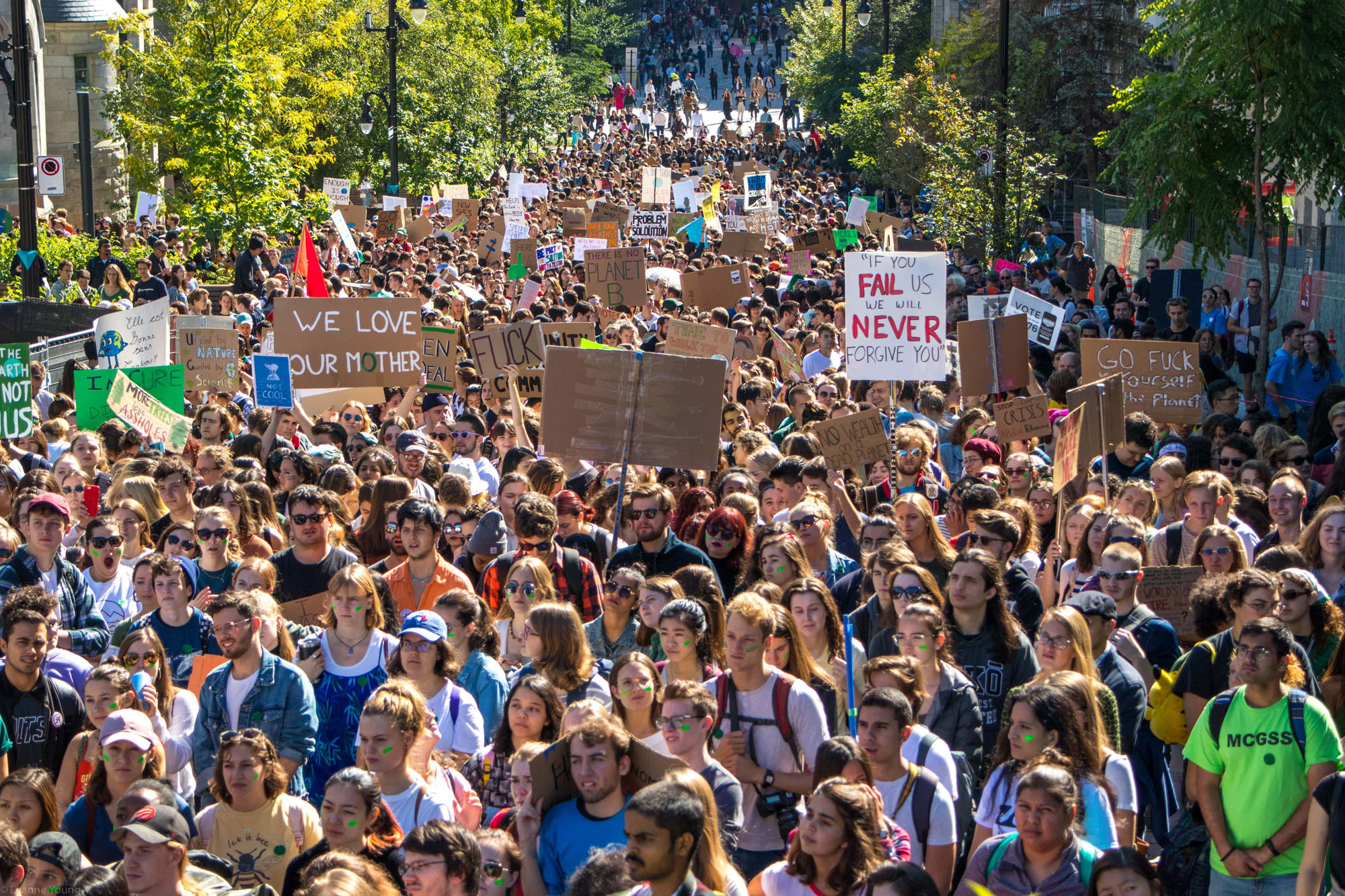
Montreal held its second march for climate justice on Sept. 27: The march was part of a series of worldwide climate protests taking place this month, with millions rallying across the globe. 

On Sept. 18, McGill’s Senate failed to pass a motion to cancel classes for the strike, although Provost and Vice-Principal Academic Christopher Manfredi asked professors in an email to be accommodating of students who wanted to attend the strike. Several Montreal universities and CEGEPs cancelled classes, including Concordia University, Dawson College, and John Abbott College.

The Arts Undergraduate Society (AUS), the Macdonald Campus Students’ Society (MCSS), the Medical Students’ Association, the McGill School of Environment, and the faculties of law and nursing voted to strike.

McGill’s protest was organised by Climate Justice Action McGill (C-JAM) in coordination with strikes at other Montreal universities and the larger Montreal climate march. Students and faculty members presented three demands to McGill: Publicly acknowledge that fossil fuel companies cause “grave injurious impact” that disproportionately affects marginalised populations, divest from the fossil fuel industry, and pressure the provincial and federal governments to recognise the United Nations Declaration on the Rights of Indigenous Peoples (UNDRIP).

Tomas Jirousek, a member of the Kainai First Nation and Students’ Society of McGill University (SSMU)’s Indigenous Affairs Commissioner, wants McGill to publicly recognise that Indigneous communities are among the most affected by the climate crisis, despite contributing to its effects the least.

“Indigenous people have been fighting [for] climate justice, long before non-Indigenous people joined us in this fight,” Jirousek said. “We have always been fighting to protect this land, and as Indigenous nations, we always will.”

English Professor Darek Nystrom resigned from the Board of Governors (BoG) in April, alongside fellow Board member Darin Barney, over concerns that McGill would once again fail to divest from fossil fuels.

“[Barney and I] spent our time on the Board of Governors explaining that investing in fossil fuels is as if your house is on fire, and you decide to give some money to the guy that’s going to pour more gasoline on that fire,” Nystrom said.

Nystrom was inspired to join the climate justice movement after being impressed by a presentation that Divest McGill gave to the BoG.

“We kept trying to persuade the other Board members of the need to divest, but for three years they kept finding one reason after another not to do so, and I fear that they are heading for another such decision,” Nystrom said. “Because they had stopped listening to us, Darin and I felt that we had no other choice but to resign.”

Nystrom expressed his frustration with Board members and politicians for passing the responsibility to solve the climate crisis over to younger generations.

“The next time someone my age looks at you and they think they’re giving you a compliment by saying ‘you give me hope,’ look them in the eye and say, ‘and what are you going to do with that hope?’” Nystrom said.

16-year-old Swedish climate activist Greta Thunberg addressed a crowd of at least 500,000 people at the Montreal rally. Thunberg has garnered worldwide attention for starting the #FridaysForFuture striking organisation. This peaceful movement calls on students to skip school every Friday to protest outside of their local town halls for climate action.

On Sept. 23, Thunberg gave an emotional speech at the United Nations (UN) Climate Action Summit, criticising world leaders for their failure to prevent irreversible climate damage.

“This week, world leaders […] gathered in New York for the UN Climate Action Summit,” Thunberg said. “They disappointed us again with their empty words and insufficient plans. We told them to unite behind the science, but they didn’t listen [….] It should not be up to us, but somebody needs to do it.”

Thunberg also met with Prime Minister Justin Trudeau before the march, telling him that he was not doing enough to prevent climate change. 

“[Canada is] very similar to Sweden, where I’m from,” Thunberg said at the march. “You are a nation that is allegedly a climate leader, and Sweden is also a nation that is allegedly a climate leader. In both cases, it means absolutely nothing.”

Thunberg noted that throughout history big changes tend to follow massive grassroots movements. She believes that skipping school and work to protest is necessary to enact change at the global level.

“Some say that we are wasting lesson time, but we are changing the world,” Thunberg said. “So that when we are older, we will be able to look our children in the eyes and say that we did everything we could back then.”

Emerging Trends, Student Life

Finsta culture creates space for more personable social media

Finstas, or “fake Instagrams,” is a trend among young people who create a secondary Instagram account for the purpose of expressing themselves more freely. The content posted on these accounts often differs greatly from what is posted to a finsta user’s main account, a real Insta, and is often less polished. While this trend is increasingly popular with students, those who are unfamiliar may wonder about the purpose of having two diametrically opposite Instagram accounts, and why one account does not suffice. 

Despite the variations and differing styles of the accounts, finsta users tend to agree that secret accounts are beneficial for dealing with social media pressure, and they value having a private space online. Finstas typically create a setting where users allow their personality to take centre stage without worrying about what others might think. Delina Efrem, U0 Science, shares her experience with finstas, detailing the unspoken pressure that surrounds a lot of social media. 

“There are too many lurking eyes on your main account,” Efrem said. “It just feels uncomfortable. When I’m posting on my main [account], it has to be in tip top shape because I want people to like it. When I post on my finsta, it’s because I like it, and I want people to enjoy it.”

The desire to appear perfect on social media affects many people who share their lives online, especially young people. This pressure to present a perfect version of oneself is reinforced by the growing industry of Instagram influencers who make a living off of promoting brands on their personal accounts. Apprehension about posting on main accounts is a fear  many Instagram users relate to. Zoe Karkossa, U3 Science, explained the difference between primary Instagram accounts and finstas intended for friends.

“In the context of a finsta […], you have the privacy to express yourself in a way that isn’t public, in a way that you won’t be judged for,” Karkossa said.

A traditional Instagram account comes with an unspoken set of standards that a majority of users follow. It creates a platform where people are held accountable for their actions by the public. By alleviating the stress of a public platform, finstas offer their users more freedom to broadcast their authentic selves. However, this freedom can also encourage a space that enables unhealthy behavior under the guise of being candid and relatable.

“[Finstas can] allow for enabling, since you can take your night out and spin it as something funny or no big deal, [and] a good time,” Karkossa said. “A lot of people will do that in their finsta, talk about how much they go out. It’s nice to have a safe space to talk about that but a lot of [it is] also enabling [….] It’s easy to hide if you have actual problems.” 

To the people that use them, finstas represent an overall positive progression of social media. 

“There’s more of a sense of authenticity, [which allows] for more actual social connection,” Karkossa said. “Not necessarily deep conversations, but relating [to people] on a deeper level than sending hearts in Instagram comments].”

The rise of finstas is a subculture creation wherein individuals no longer feel the pressure to uphold a perfect image online. It represents a new wave of social media culture led by young people, which allows them to feel more free and connect with one another in a more meaningful way. 

Chill Thrills, Student Life

Bike and scooter-shares are changing the way Montrealers commute

With concern for climate change at an all-time high, autumn in Montreal is a great time for students to explore new eco-friendly ways to get around the city. BIXI and JUMP bikes and Lime and Bird e-scooters offer fun, cost-effective options that do not contribute to the pollution problem exacerbated by carbon-emitting cars, buses, and trains. With these small but mighty vehicles more accessible than ever, The McGill Tribune investigated Montreal’s four bike and scooter-shares. 

BIXI bikes 

The first public bike-sharing system of its kind in Montreal, BIXI bikes became a part of the city in 2009 with 3,000 bicycles available across at 400 stations. Today, there are over 7,250 bikes in 600 stations. Unlike other providers, Bixi bikes are only docked at designated stations, meaning they are more easily located for riders in a pinch. The availability and sheer volume of bikes makes for a particularly fast and accessible ride, often faster than waiting for a bus or metro. Additionally, using Bixi can be much cheaper than relying on public transport or Ubers. A 30-minute trip would cost only $2.95; unlimited 30-minute trips throughout the day cost $5.25 for one day, $15 for three, $34 for 30, and $94 for a year. In addition to the standard BIXI, 100 blue motorized e-BIXIs are also available throughout the city. 

JUMP e-bikes 

The bright red bicycles with the spacious baskets are slowly becoming a feature of the city. JUMP e-bikes, which are owned and operated by Uber, can ease a tough commute up Montreal hills. These bikes can be unlocked for free through the Uber app but cost 30 cents per minute of use, making them significantly more expensive than BIXI. Furthermore, since Jump bicycles can be picked up and dropped off at any public bike rack, they are more difficult to find than regular BIXI bikes but easier to find than the rarer e-BIXIs. And while JUMP bikes allow for a quicker commute, for safety purposes, they have a speed limit of 32km per hour. Due to their speed, JUMP requires that users wear helmets while riding. 

Lime e-scooters 

Lime scooters, the ubiquitous neon green electric scooters from an electric bike startup formerly known as LimeBike, have become a familiar sight across Montreal, whether in the center of the sidewalk or discarded at the bottom of the Lachine Canal. The fact that Lime scooters are dockless paired with riders’ tendency to leave scooters everywhere led Montrealer Pascal Robichaud to post a collection of Lime parking infractions to Flickr. Despite controversy over the haphazardly parked scooters, Lime attracts many riders curious about how e-scooters operate. After the first push, e-scooters require little effort to move. Riders simply press down on the throttle on the right handle bar to accelerate and squeeze the hand brake on the left to stop. The scooters cost $1 to unlock in the Lime app by scanning a QR code on the scooter and, like JUMP e-bikes, cost 30 cents per minute of use. 

Bird e-scooters 

Sleek, matte black Bird e-scooters are new to Montreal’s scooter-share scene, appearing for the first time in early September as part of a pilot project that will run until Nov. 15. Only 250 dockless Bird e-scooters have hit the streets, joining Lime’s fleet of 430. Operation is comparable to Lime, with a right-hand throttle and a left-hand brake. However, Bird’s cleaner aesthetic comes at a price: Scooters cost $1.15 to start and an additional 35 cents per minute. Unlike Lime, Bird will soon adopt a monthly rental plan that would allow riders to pay a flat fee for unlimited use of a scooter for a month or more.

Read the latest issue

Read the latest issue