Latest News

Hockey, Men's Varsity, Sports

Tremblay scores twice in men’s hockey quarterfinal win

On Feb. 16, the McGill men’s hockey team (17-11) defeated the University of Ontario Institute of Technology (UOIT) Ridgebacks (14-14) in an exciting 6-2 win to advance to the OUA semifinal round. In the rough-and-tumble affair, 12 players—including both teams’ goalies—received penalties.

McGill dominated the game from the start. Just 38 seconds into the opening frame, a clean snipe from third-year forward Samuel Tremblay gave McGill the lead. Tempers ran high, and the occasional post-whistle malice soon escalated into the Ridgebacks taking penalties for slashing, high sticking, and tripping. Although McGill failed to score on their first two power plays, they established a rhythm of solid passing and several close shots. On their third power play, however, the team broke through: Fourth-year forward Christophe Lalonde put the puck over the goal line, and, 31 seconds later, first-year forward Jordan Fournier scored to advance McGill 3-0.

Both McGill and UOIT got physical in the last three minutes of the period, pushing and shoving until second-year forward Keanu Yamamoto masterfully stickhandled through traffic to score yet again. The first period ended 4-0, with 12 shots from McGill compared to just two for the Ridgebacks.

According to Head Coach Kelly Nobes, the team focused on remaining consistent heading into the second period.

“We just talked about keeping the game plan the same as it was,” Nobes said. “We wanted to grind, we wanted to stick with it, and keep pucks going north.”

Throughout the period, McGill played keepaway, frustrating the Ridgebacks’ efforts at a comeback. The home side had promising chances on their single power play, breathing life into the period. However, they could not convert, and eventually gave up a power play goal with 1:22 left in the period.

Emotions ran highest in the final period, but McGill remained in control of the game. About halfway through the period, third-year transfer defenceman Maximilian Daigle increased the score to 5-1 McGill with a slapshot. Tremblay scored for the second time that night with a power play goal shortly after.

With just over five minutes remaining, a major netfront brawl disrupted McGill’s momentum. The scuffle sent two Ridgebacks and two McGill players to the penalty box for roughing and unsportsmanlike conduct. At this point, McGill eased their pressure and allowed a last-minute goal. However, the Ridgebacks had lost the competition far earlier in the game, and, when the buzzer sounded, McGill was victorious by a score of 6-2.

Going into the game, McGill was determined to win the series on Saturday and avoid a third, winner-take-all match.

“We were really ready in the room,” Tremblay said. “We wanted to finish [the series] right now and not play tomorrow, so it’s a little bit more rest for us [….] It was a good motivation to end this tonight.”

Fourth-year defenceman Dominic Talbot-Tassi, who celebrated his 25th birthday on game day, wants his team to play against their next opponent with the same intensity that fuelled their win against UOIT.

“We’ve got to keep up with the same energy [and] stick to the structure and I think things should go our way,” Talbot-Tassi said.

McGill will face Carleton in the OUA semifinals.


Moment of the Game

Third-year goalie Louis-Philip Guindon made a spectacular save on the penalty kill during the second period, rolling onto his back to stop the Ridgebacks.

Quotable

“I think the message was pretty clear in the room that we had to come out strong and impose our tempo, and I think that’s what we did.” –Dominic Talbot-Tassi on the impressive first period start.

Stat Corner

Four McGill players—third-year transfer defenceman Nikolas Brouillard, Tremblay, Yamamoto, and Fournier—recorded two or more points in the win.

McGill, News

Law enforcement and community experts call for dialogue on systemic discrimination

To promote a better understanding of systemic discrimination and how to combat it, the Centre for Research-Action on Race Relations (CRARR) and the Criminal Law Group of McGill co-hosted a panel discussion on Feb. 11 titled “Systemic Discrimination: Challenges for Policing in An Age of Diversity and Heightened Public Scrutiny.” The speakers consisted of Quebec Police Ethics Commissioner Marc-André Dowd, Ottawa Police Community Co-chair Ketcia Peters, McGill Department of Psychiatry Assistant Professor Myrna Lashley, and Marc Charbonneau, the chief inspector of the Corporate Service Division of the Montreal Police Service (SPVM).

Alain Babineau, a CRARR advisor and member of the Criminal Law Group, co-hosted and moderated the panel discussion. In an email to The McGill Tribune, Babineau emphasized productive discourse on systemic discrimination requires representatives from both law enforcement and black communities.

“[In] my experience, the conversation [about police discrimination] is usually unidirectional,” Babineau wrote. “The police tell the audience what they do and what they expect from the community. Or, in the case of town hall meeting, the community yells at the police to vent their frustration. In either scenario, it is not typically productive. I believe our panel discussion was interactive and informative for [both the] participants and panellists.”

Speaking from the perspective of the black community, Peters discussed the challenge of reconciling the interests of law enforcement and those of black communities when these conversations occur. According to her, police view themselves as professionals and are, therefore,  not always willing to accept the help of civilians. But, in Peters’ view, community members have valuable insight from their own firsthand experiences with systemic discrimination.

“It’s like two different cultures, and they’re not understanding each other.” Peters said. “The police culture, the community culture, they’re not even speaking the same language.”  

Laughrey also addressed the misunderstandings between law enforcement and racialized community members. She highlighted the many areas of everyday life in which systemic discrimination manifests itself.

“When I’m talking about systemic racism, I’m talking about policies, practices, and economic and political structures which place racial minorities and ethnic minorities at a disadvantage,” Lashley said. “It’s the things that we take for granted every day that we never question. And the bad thing about it is that the person who’s oppressed, start[s] taking it for granted, too.”

Valérie Black St. Laurent, a member of the Criminal Law Group at McGill and co-host of the panel, believes that systemic discrimination can be best understood through a social lens.

“We seem to have an aversion to the word systemic, […] we tend to take it personally,” Black said. “[I believe] we might want to take it less personally in the sense that we all have a role to play within that system, and, therefore, when we discuss systemic discrimination, it is not a personal attack on a person.”

Nonetheless, Lashley reiterated the need to reflect critically on one’s personal privilege.

“If you never have to ask yourself […] ‘can I do that’ […] you’ve got privilege,” Lashley said. “If you never have to ask yourself when the police car stops, ‘I wonder if they see me as a black person first or if they see me as a human being,’ you’ve got privilege.”

According to Lashley, members of police forces need to acknowledge the power they hold as enforcers of the law. However, police must also be recognized as members of the broader society, and that it is the collective responsibility of communities to combat systemic racism.

“Police are nothing more than members of society,” Lashley said. “And we, as members of society, set the tone. Each time we engage in racism, […] we are setting [that] tone. Don’t expect the police to be different than we are. We are responsible, and if we don’t want our police to engage in bad behaviour, then we must stop behaving [badly…]. But, it is not up to the people who are being oppressed to take away the guilt from the oppressor.”

McGill, News, Private

UTILE proposes an affordable student housing project for McGill

The Students’ Society of McGill University (SSMU) is in the preliminary stages of constructing residential spaces in collaboration with Unité de travail pour l’implantation de logement étudiant (UTILE), a non-profit organization that works toward establishing affordable housing for students in Québec.

UTILE was founded in 2012 in an attempt to revive a vacant UQAM student housing project. The effort was unsuccessful, but the organization has since invested in other projects, including an affordable student housing project for Concordia University.

In 2014, SSMU approached UTILE to conduct research on the state of student housing around McGill’s Downtown campus and the possibility of erecting new affordable accommodations. This past January, UTILE presented a 60-page feasibility report to SSMU.

The report found that the cost of rent in the Plateau-Mont-Royal area is increasing faster than inflation. This has resulted in McGill students paying the highest rent on the island; 40 per cent more than students at other French-speaking universities, on average.

“We are paying $200 to $300 more than other [students] in Montreal,” SSMU President Tre Mansdoerfer said. “Those numbers are upsetting [….] Affordable housing is something that should be important to SSMU, [and] UTILE is one avenue [to] affordable housing.”

The feasibility of such a project hinges on its financing. UTILE recommended building a new, medium-rise structure that would provide 150 units, estimating that monthly rent would be around $761 for a studio and $500 per occupant in a three-bedroom apartment, with amenities included.

Based on their detailed model, UTILE projected development costs to be around $19.3 million. Most of the financing would come from private and public donors, but at least $1.5 million would need to come from student fees. UTILE suggested imposing a semesterly fee of $5.15 per student for 10 semesters. With this budget, UTILE predicted that the development could be built by the Winter 2023 semester.

“We haven’t decided if we want to run the fee this semester or not,” Mansdoerfer said. “[We would need to] start mass advertisement on what this project should be. The fee, if it were to run, [would be called] an ‘Affordable Housing Fee.’ There would have to be a referendum [to insert the fee]. [Referenda] go through McGill, and they last for five years [maximum].”

Mansdoerfer emphasized the importance of immediate awareness and advertising campaigns to ensure that the student body is knowledgeable about the prospective project and is able to make informed decisions about the development.

“As long as they have the basis of information, I’ll be very happy,” Mansdoerfer said. “If it’s a yes, great. If it’s a no, then I’m glad that students can engage in making the decision [….] I am of the opinion that SSMU should be working toward tangible wins. There’s nothing more tangible than something like this.”

According to Mansdoerfer, initial obstacles for SSMU include selling the student body on a project that they will personally never benefit from, convincing the student body that SSMU is capable of managing a multi-million-dollar project, and deciding who will manage the project once it is built.

Laurent Levesque, head of UTILE’s media relations, mentioned that Montreal’s rent could one day resemble Vancouver’s and expressed dismay at the complete absence of non-profits with missions similar to that of UTILE.

“There is no other group doing this in all of [Canada],” Levesque said. “We are talking with student groups in Toronto and Vancouver to try to export the Quebec model. The [main objective] is to […] maintain Montreal as an affordable city forever.”

UTILE and Concordia’s own affordable student housing project has concluded the design and financing stages and will soon begin construction. John Hutton, the finance coordinator for the Concordia Student Union (CSU), expressed optimism about the project.

“The ‘McGill Ghetto’ is a perfect example of landlords overcharging for apartments while not doing much to maintain them,” Hutton said. “Students need better housing options.”

Science & Technology

MAPS Canada charts the way for psychedelic therapy

When McGill students hear about psychedelics, their minds might wander to that friend who tried magic mushrooms once, or maybe MK Ultra’s acid-based electrotherapy experiments. What might not immediately register is the novel and promising potential for these drugs today in the form of psychedelic therapy.

The perception of psychedelics as medicinally viable and socially acceptable diverges from their historic prohibition and stigmatization. However, changing norms raises a variety of questions concerning psychedelics’ potential benefits and harms as well as the role they might play mental health treatment. The public face of this movement in Canada, the Multidisciplinary Association for Psychedelic Studies (MAPS Canada), is working toward the legalization of psychedelics by facilitating research on psychedelic therapy, educating the public, and sparking a healthy dialogue regarding psychedelic drugs.

Magic mushrooms, acid, and mollyor, as they are medicinally known,  psilocybin, LSD, and MDMAhave all emerged as substances of interest in the field of psychotherapy over the past ten years. LSD and psilocybin have been shown to be helpful in treating disorders like alcoholism and depression, particularly in patients whose conditions are the result of life-threatening illnesses. MAPS has carried out two successful clinical studies showing how MDMA could aid individuals suffering from Post-Traumatic Stress Disorder (PTSD), and further  trials are on the horizon to expand on the safety and efficacy of the treatment.

Cognitive behavioural therapy is a form of psychotherapy which enables patients to revisit traumatic memories in a safe environment with the goal of permanently altering the thinking and behavioural patterns surrounding the memory in question. While conventional therapy follows a similar procedure, it can be an extremely difficult process for a subject with PTSD, as revisiting the memory can induce anxiety, agony, and other extreme emotions reminiscent of the inception of the trauma. MDMA can help facilitate the process by easing recollection of traumatic memories.

“Normal therapies, when they start to access that tape loop, have a huge fear response that people don’t want to go through,” Mark Haden, executive director of MAPS Canada and adjunct professor at the University of British Columbia School of Population and Public Health, said. “MDMA assisted psychotherapy allows access to the loop in a way that doesn’t stimulate fear.”

In treating an aggressive disorder like PTSD, the therapist-patient relationship is particularly important. Reliving traumatic events in their emotional totality requires vulnerability from a patient and sensitivity from a therapist. According to Haden, MDMA is invaluable in building a strong relationship of this type.

“[MDMA] also bonds the therapist to the subject,” Haden said. “It’s a connector, and that connection is a huge benefit in terms of therapy.”

Haden also stressed the medicinal potential of LSD. Informed by some inaugural research done on psychedelics in Canada in the 1950s and ‘60s, he speculated that LSD might be useful in treating alcoholism.

“If you think about what alcoholism is, there’s a certain rigidity of ego,” Haden said. “If someone is killing themselves with this behaviour that they somehow justify and make okay, that’s rigid thinking. So, LSD is useful for insight [and] reflection on self, and it kind of shakes the ego up.”

LSD simulates a spiritual experience, a phenomenon which Bill Wilson, one of the co-founders of Alcoholics Anonymous (AA), asserted is helpful in combatting alcoholism. Wilson was an advocate for the use of LSD to treat alcoholism because he perceived it as aiding in one’s spiritual development and abstention from alcohol.

“He was a proponent of the benefits of LSD because it produces one of the things which is an underpinning of AA, that is, a spiritual experience,” Haden said.

Haden is confident about the future of psychedelics and psychotherapy. He believes that the scientific community is engaging with the idea in a new way.

“There are a wide range of people, from psychologists to psychiatrists, who are taking a look at the evidence that’s being produced and saying this will change our profession,” Haden said. “People have these sorts of disorders over long periods of time, and they’re very difficult to treat [….] What we’re observing with psychedelics is that they’re actually much easier to treat and that [they are] treatable within a relatively short period of time.”

While the potential of psychedelics is difficult to ignore, there is reason to be cautious. The current available research is not extensive enough to constitute scientific certainty, and funding for such studies is still sparse. That being said, it is crucial that the societal perception of these substances keeps pace with a quickly evolving scientific understanding. Jonathan Jarry, a science communicator at McGill’s Office for Science and Society hosts the video series “Cracked Science,” to which he most recently added an episode on the ‘psychedelic renaissance.’ He believes that, although the foundational evidence is promising, our current regard for psychedelic therapy should be limited to cautious optimism.

“There is preliminary evidence in phase two clinical trials that certain psychedelics, within a therapeutic context, could potentially help certain patients with certain kinds of psychological disorders,” Jarry said. “I’m very much in favour of MAPS funding these studies because these substances do have a potential to help people, but we just don’t know at the moment if they do help people better than current standards of care.”

Some of Jarry’s apprehension is prompted by the media’s depictions of psychedelic therapy as a definite, blossoming success. For example, Rolling Stone ran an ambitious story in March 2017 titled “The Psychedelic Miracle,” which equated the proliferation of psychedelic research and anecdotal evidence with scientific success. Such exaggerations incite another concern in Jarry: The possibility that individuals may decide to self-medicate due to a lack of options.

“Depending on your access to healthcare, depending on your willingness to go through the healthcare system, depending on your experiences with psychiatrists and psychologists, I could imagine people rushing to these substances outside of healthcare institutions to find help, which could be quite damaging,” Jarry said.

Jarry is not trying to dismiss or delegitimize the few positive scientific studies so far. He simply wants to reiterate that they are exactly that: Few and far between. For its part, MAPS has worked to rectify this shortage. According to Rick Doblin, the organization’s founder and director, MAPS has treated 107 PTSD patients in six phase two studies. As Jarry explains, though, the public denouncement of psychedelics still makes it difficult to acquire funding

Psychedelic drugs have the potential to aid struggling individuals with severe psychological disorders, and the idea that these drugs might help ease and expedite their treatment is reason to be excited, but scientific certainty is a waiting game. The substantive evidence for the efficacy of psychedelic therapy is not robust enough to assert that these drugs will assume a role in the future of mental-health care. Yet, the potential of psychedelic therapy presents an invigorating notion: These drugs might no longer exclusively provide a vivid, psychoactive experience to the recreational user, but may also come to aid and enrich the lives of people who truly need them.


Science & Technology

Davos 2019: Climate change and empowerment

Globalization, climate change, social entrepreneurship, and sustainability were just a few of the topics on the table at the 2019 World Economic Forum held in Davos, Switzerland Jan. 22-25. This year, the annual forum provided a platform for environmentalists, young innovators, world leaders, multinational corporations, academics, and more to consider the issues that threaten humanity and potential solutions.

David Attenborough, a renowned English broadcaster and natural historian, delivered an optimistic yet realistic speech about the necessity of acting quickly to counter climate change. At 92 years old, Attenborough was born during the Holocene, a different geological era than the current Anthropocene era. Reminiscing about the nature docuseries “The Blue Planet,” the environmental activist marvelled at the unbelievably rapid changes in the climate and at the speed of information transmission in this epoch.

Climate change was a central theme at the Davos 2019 World Economic Forum. Protesters such as 16-year-old Greta Thunberg, a climate change activist and one of the youngest attendees this year, brought attention to the prominence of the issue and called out previous generations’ passivity toward the crisis.

“You say you love your children above all else, and, yet, you are stealing their future in front of their very eyes,” Thunberg said.

In their attempts to address climate change, attendees suggested novel solutions, ranging from artificial trees to seagrass. In addition to brainstorming practical solutions to the crisis, participants grimly acknowledged the devastating consequences of climate change including ocean acidification, rising ocean temperatures, smog and air pollution, and extinction. These realities paint a dire depiction of already irreversible trends, although many attendees at the forum remained hopeful that it wasn’t too late to save the planet.

Also present at the Forum were Suzanne Fortier, principal and vice-chancellor of McGill University, and Isabelle Bajeux-Besnainou, dean of the Faculty of Management. As the only Canadian members of the Global University Leaders Forum in attendance, they took on the task of promoting the interests of university students all over Canada. Fortier emphasized the importance of communication between teachers and learners.

“Universities have the opportunity to help people who want to learn, and the challenge is to listen to the new generation and find out what they want,” Fortier said at the forum.

Fortier and Bajeux-Besnainou were just  two of 696 women in attendance this year, 22 per cent of the just over 3,000 total attendees. This figure is an improvement compared to 2016, when women made up only 18 per cent of attendees.

Amidst the many leaders present at the World Economic Forum, six young people stood out as inspirational figures because of their diverse backgrounds, expertise, and ideas. Basima Abdulrahman, founder of Iraq’s first sustainable architecture consultancy firm, spoke as a fervent environmentalist but also as a philanthropist keen on improving social cohesion in her country. Akira Sakano, chair of Zero Waste Academy, explained her organization’s aim to make a small Japanese town waste free by 2020. Julia Luscombe, director of Strategic Initiatives at Feeding America, represented her non-profit that aims to improve food security in the United States through food banks. Finally, Juan David Aristizábal, Mohammed Hassan Mohamud, and Noura Berrouba attended as co-chairs of Davos 2019 with the common mission to empower young people all around the world.

Empowerment shone through at the Davos 2019 World Economic Forum, reminding attendees of the power of change and of shaping our own future.

Out on the Town, Student Life

Conscious coffee-brewing

The plant-filled café Le 5e in Verdun has a sweet secret: They make their non-dairy lattes and vegan fare with minimal waste. The cafe strikes a tricky balance between cool minimalism and coziness, with plants lining a bookshelf above a cozy reading nook. Co-founders Vincent Dessureault and Dorian Zéphir were both interested in cafés’ potential as places to meet and exchange information about the environment and social impact. A mutual desire to move away from careers in big business brought the pair together, and Le 5e developed after over three years of collaboration on the project.

Walking straight through Le 5e, past the kombucha on tap, leads customers to the entrance of the similarly ecologically-minded grocery store Épicerie LOCO. The sparsely-decorated space boasts everything from unusual bulk toothpaste and crickets to more pedestrian grocery finds, like bulk grain and bath products. The partnership between the café and the grocery store developed out of serendipitous timing: Le 5e’s pilot project in Griffintown concluded its trial year just as Loco’s owners decided to expand to a second location from their original outpost in Villeray.

“[At the time], we were the only two officially zero-waste companies, so we connected and kept in touch,” Dessureault said. “We ended up finding a nice place that was actually twice as big as we needed, and we [landed on] the idea of sharing the space.”.

Dessureault and Zéphir found that implementing zero-waste policies was a daunting but worthwhile task. While international chains like Starbucks have been lauded for taking small steps toward minimizing waste in their takeout options, Le 5e took more drastic steps to deliver on their zero waste promise. For one, they don’t stock paper cups and, instead, prompt customers to adopt reusable alternatives.

“The biggest challenge we have, and the most impactful decision we’ve [made], was removing all the cup waste,” Dessureault said. “With a typical coffee shop business model, [around] 50 per cent of the revenue comes from takeout.”.

Initially, getting potential customers to change their habits was a challenge, but, for every patron taken aback by the business’s decision to forego disposables, the pair saw a customer developing new habits. For those open to making the switch, Le 5e offers reusable mason jars that customers can purchase for a dollar. But, there is more going on behind the scenes of a zero-waste business than one might assume.

“The other […] challenge […] is what you don’t really see as a customer,” Dessureault said.

This includes everything from choosing the delivery containers that stock arrives in to minimizing transportation emissions. Le 5e sources local and fair trade as much as possible and is thoughtful in every step of the process to reduce waste. They have negotiated with suppliers to make deliveries in reusable containers, which they wash and send back to minimize waste produced from stocking the store. Lately, they have been doubling down on cutting transportation emissions by sourcing their stock from local suppliers that use emission-free transportation options like bike delivery.

Dessureault is made hopeful by the growth of other waste-minimizing businesses across Montreal. Thousands of Montrealers turned out to the city’s first Zero Waste Festival in 2018, and the movement has only continued to grow in the years since.

Le 5e has been connected with the Association Québécoise Zéro Déchet (AQZD), a Quebec nonprofit that aims to raise awareness among citizens, municipal governments, and businesses of the benefits of a zero-waste lifestyle. AQZD’s other partners include NousRire, a group that buys organic and ecologically-responsible food in bulk to make the products more accessible to customers and businesses, and Circuit Zéro Déchet, which compiles a directory of local zero waste businesses. Such projects, which have emerged in response to popular interest in zero-waste living, are encouraging for local trailblazers like Le 5e and Épicerie LOCO.

“They gave us a lot of opportunities to share our experiences with different people, and I think it was a nice way to connect with […] people that are curious or interested in [integrating zero waste principles] into their businesses or their future businesses,” Dessureault said.

Student Life

McGill Art of Wellness sells 2,400 doughnuts in two hours

The McGill Art of Wellness club found itself drowning in pastries on Feb. 5 after accidentally ordering 2,400 Krispy Kreme doughnuts instead of 200 for their fundraising sale in McConnell Engineering. They sold out in under two hours.

Lina Chen, founder and president of the organization, realized the miscommunication when she received a $1,000 bill for what she believed was an order for 200 doughnuts. Upon consulting the receipt, she realized that the order form was by the dozen instead of for individual donuts.

“Krispy Kreme […] thinks in dozens, and […] we think in single doughnuts,” Chen said.

Although the Krispy Kreme Delivery & Returns Policy does not clarify the customer’s rights if they make a mistake in their order, it does provide for refunds, minus transportation costs and reductions in the doughnuts’ value.

“You must send off the Products within 14 days of telling us you wish to end the contract,” the Krispy Kreme Delivery & Returns Policy reads.

After learning from the factory’s manager that, if she did not take the order, all the doughnuts would be discarded, Chen decided to proceed with the delivery. According to Chen, Krispy Kreme donated 80 of the 200 boxes after learning that the order was an accident.

“Krispy Kreme was really generous throughout this whole process, and they were extremely nice about this,” Chen said.

Asli Ercem, vice president events of the club, was taken aback by the club’s sudden, substantial investment in baked goods. Under the impression that they had more doughnuts than they knew what to do with, the club gave away free boxes to the McGill building staff who helped them unload the packed minivan.  

“[I thought] ‘what the hell are we going to do with all of these doughnuts?’” Ercem said. “We literally thought it would be impossible to sell them [….] The one worker I gave [doughnuts] to received it warmly, saying ‘I’m going to tell everybody in the building to go buy doughnuts.’”

Ercem credits their success to her Facebook post advertising the organization’s predicament in the McGill Free and For Sale Facebook group, which rallied the McGill community. In the end, they appreciated it as an unexpected marketing opportunity.

“We had the McGill building staff come by. We even had a professor come by saying there was a faculty email circulating around,” Ercem said. “The law faculty ordered 10 boxes from us [….] We got e-transfers, we got American dollars, we were taking everything [….] A lot of people were like ‘let’s go help this club out!’ [which goes to show that], when we mobilize together, [even just] to buy these doughnuts, we are really powerful.”

McGill Art of Wellness hosts events for students to creatively express themselves and engage with the therapeutic effects of visual arts, including events like a free ‘Paint Night’ in collaboration with Stronger than Stigma, another student club which is dedicated to raising mental health awareness. Art of Wellness will use its profits from the doughnut sale to purchase art supplies for its next event.

“[Art of Wellness events are a way] to focus and de-stress and completely forget about everything else for a few hours, so, then, I just wanted to spread that feeling to McGill and maybe people who have never done art before,” Chen said.

Overall, Chen looks back on the fundraiser as a learning opportunity.

“Read every form you send,” Chen said. “You can make a mistake, learn from it, and sometimes great things you don’t expect will happen.”

Art, Arts & Entertainment

Kent Monkman’s latest exhibit inspires resilience

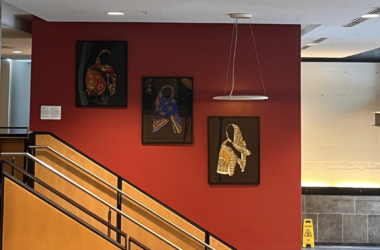
Canadian artist Kent Monkman’s solo exhibition, Shame and Prejudice: a Story of Resilience, on display at the McCord Museum until May 5, offers a selection of the artist’s re-appropriated paintings and sculptural works focusing on indigenous experience, including well known pieces such as The Scream. Monkman is one of Canada’s prevailing contemporary artists and draws on his Cree ancestry to inform the body of his work. Monkman’s oeuvre is primarily concerned with the history of colonialism in Canada, touching on themes such as resilience, loss, and sexuality to engage with settler-indigenous relationships. Many of his sculptures, paintings, and installations employ what local historian Reilley Bishop-Stall terms ‘archival intervention’ or ‘visual sovereignty.’ These terms refer to works of art that challenge colonial representation within the artistic canon, while deconstructing traditional representations generated by white individuals.

Monkman’s mastery of the mediums that he parodies and re-appropriates is striking. At first glance, The Bears of Confederation appears to be a replica of a  landscape by an artist like Albert Bierstadt and George Varley that nostalgically renders nature as a resource to which man feels entitled. Upon closer examination, Monkman subverts artistic tropes, using historical or invented characters. These figures frequently enact homo-eroticism or BDSM play amid scenic vistas. His works expose centuries of indigenous oppression, expressing the atrocities of the residential school system and the negative implications of colonial trade systems.  

One of Monkman’s recurring characters is Miss Chief Eagle Testickle, Monkman’s alter ego fashioned in the likeness of Cher, who provoked controversy with her 1973 album Half-Breed in which the singer-songwriter exploited her supposed Native American heritage by wearing traditional feathered headdresses in her performances and on the album cover. Many of the works at Monkman’s exhibition cast Miss Chief as a troublemaker, able to traverse spacial and historical boundaries by appearing in scenes from multiple time periods and locations. The character plays on social perceptions of ‘deviant’ sexuality to reclaim indigenous autonomy. For instance, in The Daddies, Monkman reproduces Robert Harris’ 1884 painting Meeting of the Delegates of British North America to Settle the Terms of Confederation, and places a nude Miss Chief in the centre of a room filled with gawking male delegates.

The first several rooms of the exhibition intersperse Monkman’s own works and those from which he draws influence, including paintings by 19th and 20th century Western masters, juxtaposing canonical religious scenes and landscape vistas beside re-appropriated versions. The exhibition also showcases Monkman’s sculptural installations, including an eery, moving replica of Fragonard’s The Swing, and nativity scenes in which stereotypical representations of indigenous persons, dressed in Red Skin and Chiefs sports jerseys, replace Mary and Joseph.

In conjunction with the exhibition, Monkman delivered a lecture on Feb. 6 at Pollack Hall, providing an overview of his work’s development and describing the processes and inspirations behind his opus.

“There’s so many histories of indigenous experiences, both present and historical, that have never been authorized in this very powerful language of painting,” Monkman said. “I needed to fill these gaps that really authorize indigenous experience”.

Canada and the United States are only beginning to acknowledge their histories of violence and oppression, which have long been obscured by narratives of national development. Monkman believes that part of this process must include providing outlets and voices for indigenous persons, and allowing their expression to to pervade mainstream art and pop culture. While works detailing the ongoing turbulence of settler-colonial relationships are often critiqued for reifying the very violence they seek to dispel, Monkman’s work is unique for its comical yet critical approach to the indigenous experience.  


Baseball, Football, Hockey, Soccer, Sports

10 things: Ugly uniforms through the years

1960-61 Denver Broncos

With this uniform, the Denver Broncos made one thing clear: Sports teams should avoid brown and yellow. However, the Broncos went a step beyond the ugly colour combination by adding stripes on the pants and socks. While the pants were merely lacklustre, the striped socks may have been the worst addition to any uniform ever.  

1964-76 Chicago White Sox

Few teams can pull off powder blue jerseys, and the 1971 White Sox were no exception. The light blue and bright red colour scheme was a bold choice that failed to even register in the ‘so-bad-it’s-good’ category. The worst part of the uniform was the pants: In general, teams that elect to use the same colour for their tops and bottoms do not look good, and this is doubly true when the primary colour is powder blue.

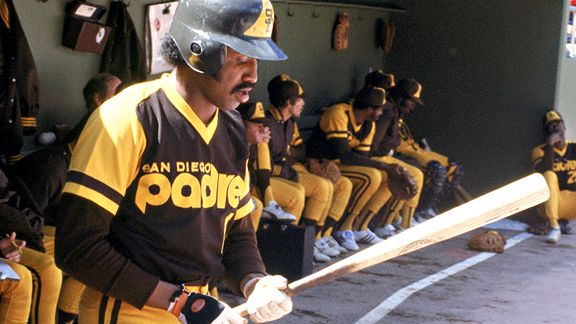
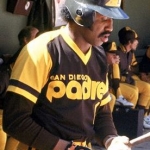
1972-84 San Diego Padres

The brown and yellow jerseys that the San Diego Padres wore from 1972-1984 are even more disappointing than their 50 consecutive seasons without a World Series title. In the otherwise-beautiful city of San Diego, the brown and yellow stuck out like a sore thumb. The Padres’ promise to return to ‘mustard and mud’ as their main colour scheme in 2020 assures that they will look as bad as they will likely perform.

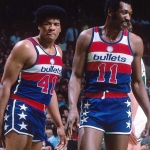
1974-87 Washington Bullets

The horizontal red and white stripes on these uniforms are terrible. However, the shorts are the true villain here. With their red waistband, white piping, and star-shaped patches, these shorts more closely resemble an American flag than an article of clothing.

1975-1986 Houston Astros

In a long history of unique jerseys, the Astros’ white, orange, and red masterpieces are easily the most famous. Colloquially known as ‘tequila sunrise,’ these uniforms are the perfect combination of beautiful and ugly. In the last few years, they have brought back the look on several retro nights. Conspiracy theorists are still trying to prove a direct correlation between their resurgence and Houston’s recent success.

1978-85 Vancouver Canucks

In an effort to revamp their look, the Vancouver Canucks swapped their classic blue and green uniforms out for a brand new red, black, and yellow design. The jersey featured a large V-shape across the chest which, according to the designers of the uniform, stood for victory. Fortunately, they ditched the ‘V’ after seven seasons and abandoned the red, black and yellow for good in 1997.

1989 Ajax away uniform

This Ajax redesign makes them look like a travelling circus. The kit’s combination of an abstract geometric pattern and a bright red and blue colour scheme is disastrous. Perhaps, the team hoped that their hideous jerseys would distract their opponents.

1995-98 New York Islanders

In 1995, the New York Islanders decided to change their logo from the classic ‘NY’ to a new fisherman emblem. The change led to a disaster of a jersey, which featured bright orange, teal, and black—three colours that were never meant to be in such close proximity. Islanders fans hated the logo so much that the team changed it back as soon as league rules allowed them to at the end of the 1997 season, but the colours remained until the end of 1998.
2016-present Seattle Seahawks

A uniform should be noticeable from the bleachers, but maybe not from space. The NFL-wide colour rush, in which teams wear bright, monochromatic uniforms, is an interesting concept and has produced some gorgeous uniforms. However, the Seattle Seahawks’ variation, which they wore starting in 2016, featured matching neon green jerseys and pants: An ugly and deeply unpleasant colour for a uniform.
2019 Tampa Bay Lightning third uniform

The Lightning’s new alternate jersey is bland. The uniform, unveiled in early February, features only the uninspiring colours black, white, and grey. The steel-grey socks and numbering are both particularly off-putting because of how spectacularly they clash with the black. That, coupled with a lack of detailing, makes this outfit look like a practice uniform in action.

Read the latest issue

Read the latest issue