


Latest News

Album Reviews, Arts & Entertainment

Girlpool evokes the pain of transition in ‘What Chaos is Imaginary’

Contemporary indie bands tend to follow a well-worn formula based on monotonic, parched vocals delivering angsty lyrics over a simple, distorted guitar. Fans and critics likely expected little else from Girlpool’s newest release, What Chaos is Imaginary. The band fits all of the criteria—two teens from L.A. who got their start with a collection of compositionally-bare angst ballads released on Bandcamp in 2014. The album meets expectations, but the sum of all of its ordinary alt-rock parts leaves listeners with an unexpected feeling: Not angst or a topical sadness but, rather, the feeling of returning to your childhood bedroom after a decade.

After over four years of touring and producing, What Chaos is Imaginary demonstrates the band’s maturity. The album is meticulously arranged: Tracks like “Chemical Freeze” and “Where You Sink” expand and unravel elements unfamiliar to previous Girlpool releases. The drum sequences and glimmering synth tones in these songs build to a surprising breadth of tones and textures. These choices culminate in a sound that is both technically and emotionally elegant. While still holding true to their emotional explorations of what it means to be a young, introspective, growing person, the developments in their sound leave listeners both fearing and marvelling at life’s inherent transience. Every song in the album conjured up a memory from a quiet suburban adolescence.

The album is unadventurous in its sound and style—a negligible flaw considering the growth and maturity it represents. It is a classic coming of age story, and, for a theme so universal, there is no need for experimental or shocking composition. Girlpool has come to do what they know best and are earnestly trying to build upon it. Lyrics like “Dressed up all depressed / in my Sunday best”  in “Lucky Joke” provide the same emotional candour that resonates in earlier works. Equal parts self-critical and reflective, the title track, “What Chaos is Imaginary”, lifts listeners out of the confines of a straightforward songwriting into an ethereal, dreamlike introspection with its pounding drums and cinematic violin, like a gloomier Kate Bush. Despite stylistic nuances, all 14 tracks come together as bedroom jams; exploring the interior, What Chaos is Imaginary provides a meditative listening experience.

Arts & Entertainment, Theatre

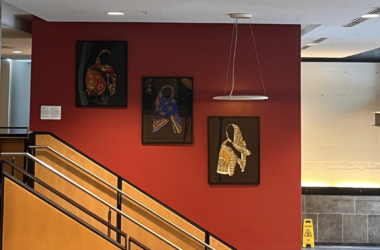
Mich Cota combines opera and Algonquin in ‘Wàsakozi’

From Jan. 24 to 26, the Montréal, arts interculturels (MAI) staged Wàsakozi, an opera written and composed by Mich Cota. Cota is an Algonquin-mixed, Two-Spirit artist based in Montreal, and the debut of Wàsakozi was a milestone: It was the first recorded opera performed in Algonquin.

‘Wàsakozi’ means ‘reflection of light’ in Algonquin, and the opera told the story of an agender spirit named Odjìshìngwe, born from the confluence of light and darkness. Through interpretive dance to an ambient score rising into gorgeous melodies, Odjìshìngwe learns to walk, befriends a trickster spirit, and engages in a love affair with a metaphorical white colonizer, portrayed by a white dancer. Wàsakozi is a tale of life cycles, growth, and the contradictions and triumphs which emerge from indigenous identity.

The McGill Tribune sat down with Cota, who also plays Odjìshìngwe, a week after the final performance, to discuss the work and Cota’s own artistic identity.

Growing up in a mixed indigenous community in rural Ontario, Cota occupied herself by playing piano and singing. In fact, much of the music for Wàsakozi originated from her childhood.

“When I was about eight years old, I made the first melody for Odjìshìngwe’s song,” Cota said.

Two decades later, what had once been a simple song living inside Cota’s head grew into a collaborative project with actors, dancers, stage and costume designers, and even a string quartet. Of course, these collaborators imprinted their own magic on the performance.

 “I can hear the music now and I see their movement so vividly,” Cota said.

 Cota gave special praise to two of her castmates, in particular, KiKi Harper and Nimikii Couchie, the two other indigenous women in the cast.

“I hadn’t met them before but I’m so glad that now we know each other,” Cota said. “They just made it next level.”

Neither woman, nor Cota herself, had prior formal training in dance. Yet, dance is the driving visual force of Wàsakozi, from the birth dance of Odjìshìngwe to the allegorical dance of desire and death between Odjìshìngwe and a white colonist. One of the most moving moments in the work occurs as Odjìshìngwe, newly born, stumbles poetically across the stage and slowly learns to walk. Cota pulled the movement off with expert finesse.

“As a child, I did some dancing in powwows, but I’m not a dancer in any kind of trained sense.” Cota said. “I just do movement.”

Music, on the other hand, is Cota’s specialty. Aside from writing the score for Wàsakozi, she released an album titled Kijà / Care last year. Cota has always had a special relationship with music; as a child, it opened up imaginative worlds, and allowed her to express a feminine side initially silenced by her society.

“One of the secrets that one of my elders told me was about Two-Spirit people,” Cota said. “That they exist, and that I’m one of them.”

For Cota, the link between indigeneity and Two-Spirit identity has always been clear, and in the character of Odjìshìngwe, she brings these identities into a creative dialogue, showing how all identities are born from powerful, sometimes conflicting inner forces.

It might seem strange that, of all possible genres to express her self-discovery, Cota chose the dusty, aristocratic form of opera. Yet, Cota has been enamored with the possibilities of opera since childhood when her parents saw Phantom of the Opera and brought back the tape.

Cota enjoyed, too, the fact that she was able to put a twist on the classical, typically European form by staging the opera in Algonquin, the indigenous language she heard growing up in her community.

“It had to be in Algonquin because I had heard too many operas that were not in Algonquin,” Cota said.


McGill, News

McGill Senate passes revisions to Code of Student Conduct

The McGill Senate, the governing body responsible for academic policies at the university, met for the first time of the new year on Jan. 16. Senators deliberated two major policies: They passed revisions to the Code of Student Conduct and Disciplinary Procedures and presented updates about upcoming changes to the Policy against Sexual Violence.


Approval of proposed revisions to the Code of Student Conduct and Disciplinary Procedures

After showing the Senate his initial revisions to the Code in November, Dean of Students Christopher Buddle presented his final draft for approval, which passed. Buddle highlighted the important revisions he had made, noting that the updated Code reflected a significant clarification of the appeal process.

“If I’m to be totally honest with you, we just didn’t pay enough attention to that in the [working]  group,” Buddle said. “So, we looked at it carefully between November and today.”

Other notable revisions included clarifying and broadening the terms ‘disciplinary procedures’ and ‘assessment.’ In closing, Buddle recognized the value of collaboration in the revision process.

“We all need a Glenn [Zabowski, associate dean of students] in our lives, someone who helps us along with big projects,” Buddle said. “And to the students who have been very collaborative as well, thank you.”


Reports on the Policy against Sexual Violence

Shaheen Shariff, chair of the Ad Hoc Panel to Conduct a Campus Study on Sexual Violence, and Lucyna Lach, chair of the Committee for the Implementation of the Policy against Sexual Violence, described their groups’ work and their recommendations. Their findings will inform the upcoming revisions to the Policy against Sexual Violence.

Shariff determined three key areas of concern: Clarifying the current policies and procedures, rebuilding trust, and reducing ‘rape culture’ through education and regular open communication with the community. In her presentation, Shariff noted that 25 per cent of students and 50 per cent of faculty staff concurred that sexual violence is a problem at McGill.

Meanwhile, Lach’s committee recommended revising the Academic Integrity tutorial to teach new students about sexual violence. Instead of making the tutorial required for graduation, they recommended that it be mandatory in order to register for courses. Further, they proposed modules on sexual violence for teaching and administrative staff.

Several senators questioned the legitimacy of the study given its small sample size. In response, Arts Senator Madeline Wilson asked the Senate to consider the sensitivity of the issue as a cause of the low response rate. Shariff agreed and urged the committee to use the findings as a reference for how the university could improve its policies.

“We have so much talent across McGill and knowledge on addressing and teaching in different ways and addressing some of these issues,” Shariff said. “We need to not be focused only on consent and bystander workshops. We need to do it at the grassroots level where we engage our students in their learning and thinking about [the issues].”


Upcoming library changes announced

Colleen Cook, Trenholme dean of libraries, gave an update on the McGill libraries, including the recently announced Schulich closure.

“When you come back to school in the Fall, that library will be closed and it will be very tight and close and chummy in the McLennan-Redpath complex,” Cook said.

Cook also reported on the status of the Osler library after a July fire; the affected books have been freeze-dried, the Osler rare collection has been moved to the McLennan Rare Books collection, and plans to revitalize the physical space are in preparation. Cook further announced that the Fiat Lux project had secured a donation of $35 million. McGill intends to reveal the identity of the donor this coming Fall.

The next Senate meeting will take place on Feb. 20. The agenda will include a presentation on the the revised Policy against Sexual Violence.

Baseball, Football, Soccer, Sports

Changing the game: Competition in pro sports

Fixing the flaw in NFL OT rules

Gabe Nisker

Some of the NFL’s biggest games come to anticlimactic finishes, with stars like Patrick Mahomes stuck on the sidelines because of the current overtime rules. As it stands, if the team that starts with the ball in overtime scores a touchdown on their initial drive, the game is over—before the other team gets a chance on offence. It’s clear that the NFL needs a new overtime rule.

Slate’s Nick Greene landed on the perfect solution: The California tiebreaker. The California Interscholastic Federation was the first to use the tiebreaker for high school games in 1968. The premise is simple: Team A wins the coin toss and starts with the ball. After they run their first play, Team B, going the other way, takes over from the spot on the field where the first play ended. Each team gets four tries to make the most progress down the field in their direction, and whoever gains the most yardage wins the game.

While this format may eliminate scoring in overtime, it raises the stakes for both teams. Passes need to be completed, runs need to gain yards, and defences need to make stops. As pressure mounts toward a climactic final play, both teams will get their shot, and, in this version of overtime, the winner is whoever can make the most of their final plays.

Capping European soccer to redirect investment

Kaja Surborg

European soccer clubs offer outrageous deals to attract top men’s players and, consequently, win leagues and make money, all the while investing nothing in their women’s teams. Establishing a salary cap in Union of European Football Associations (UEFA) leagues would prevent teams from putting up offers for players that are worth more than their entire annual investment in their women’s team. For instance, if FC Barcelona did not have to pay Lionel Messi $667,000 a week to prevent him from transferring to another club, that money could help fund their women’s team. If teams across the continent followed suit, they could start evening the playing field for women’s soccer. Europe already has some of the best female players in the world; with more resources, they might actually get the pay and attention that they deserve. Salary caps alone likely won’t ensure this reinvestment, but, in combination with policies from UEFA that require the reallocation of profits into women’s and youth teams, they would help.

Instituting salary caps would also help balance out the men’s leagues. Currently, the same few clubs rotate through the top spots while the rest of the league is ignored. Salary caps would prevent rich teams from buying their way to the top every year and make the competition more exciting.

Out with pitchers hitting; in with the universal DH

Mitchell Bannon

Hitting a 73-mm ball with a 66-mm bat is a difficult feat. It is so difficult that even the best MLB hitters are only successful just over 30 per cent of the time. Nonetheless, half of Major League Baseball is stuck in the past, forcing pitchers to hit, or at least attempt to. The American League does not force their pitchers to hit, instead allowing for a designated hitter to hit in the pitcher’s place.

On their journey to the big leagues, most major league pitchers are not required to hit, and many haven’t picked up a bat since their high school days, well before their arrival in the National League. For every Madison Bumgarner, a surprisingly-competent pitcher-hitter, there are a hundred pitchers who go up to bat just to strike out on three pitches. Even worse are the consequences of forcing pitchers to hit, like Cardinals pitcher Adam Wainwright’s horrific Achilles injury in 2015. In 2018, Major League pitchers had an atrocious .115 batting average, less than half the league average, and far from high enough to warrant the risk involved with stepping into the batter’s box.

Some may be entertained by watching pitchers hit, but only in a can’t-look-away kind of way. It is far from the pinnacle of professional athletics that Major League Baseball aims to promote. The National League should acknowledge a changed game and finally embrace the designated hitter.

McGill, News

$14 million Rossy Student Wellness Hub to be completed by May

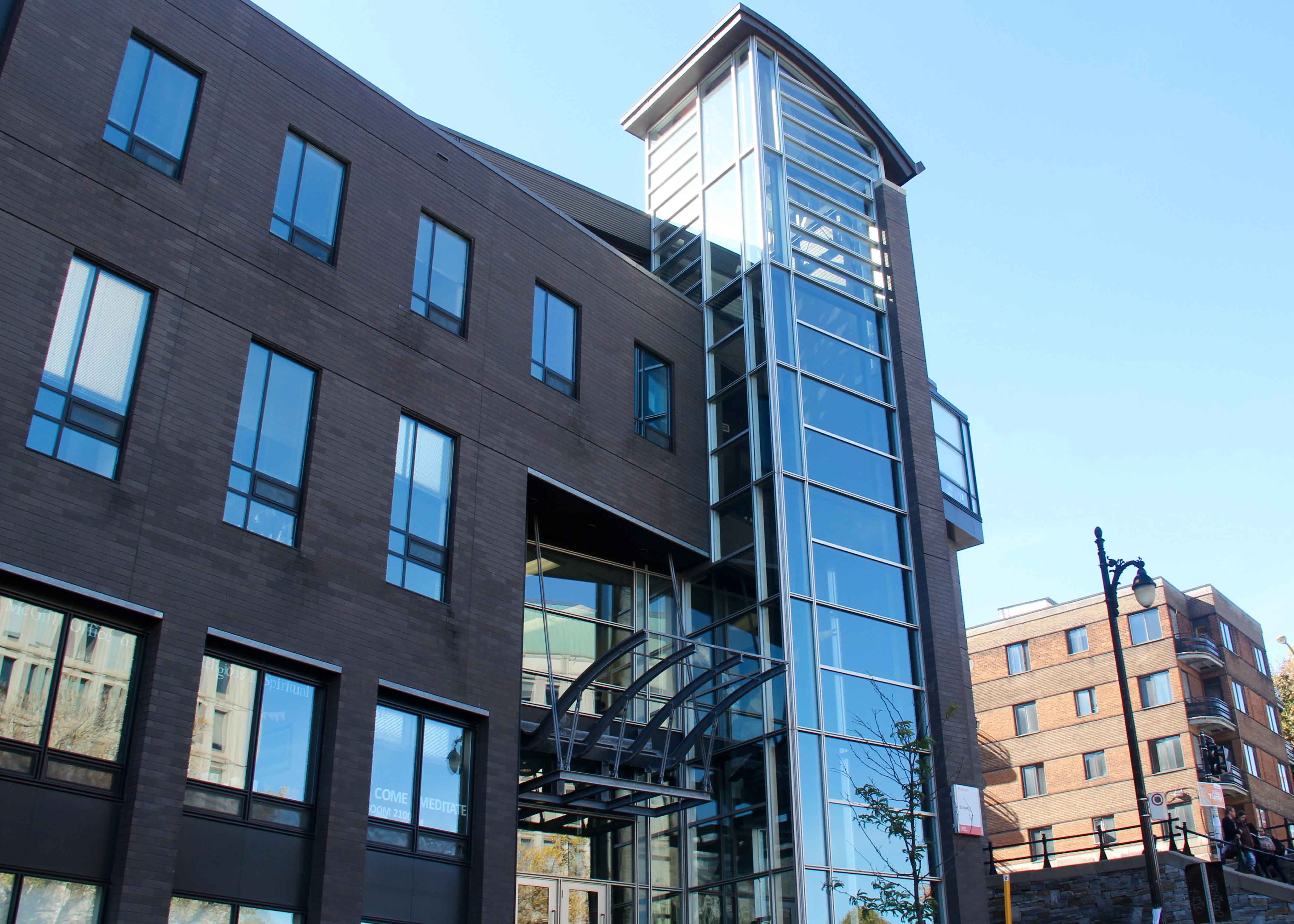
Members of the McGill community and the Rossy family presented McGill’s plan for the new Rossy Student Wellness Hub (RSWH) on Jan. 28. The $14 million Hub will merge the Student Health Service (SHS), Counselling Services, and Psychiatric Services. The Hub’s pilot project is set to open by May 2019.

“This is the first time that McGill University is investing in [a comprehensive, campus-wide] student mental health [approach],” Martine Gauthier, executive director of Student Services, said. “Over the next six years, McGill is investing eight million dollars, and the Rossy Foundation [is investing] five million dollars [….] I think it’s really going to change the way we serve the needs of students.”

The Hub will be accessible through the West and East Wing entrances of the Brown Building. 11 staff members will be trained in check-in procedures, with five on shift at all times, as opposed to the three at the McGill Clinic. The new waiting areas will also have desks and outlets so that students can study while waiting for appointments. As for treatment, Student Services will hire four more general practitioners, bringing the total number to eight, and will train its six nurses to respond to mental health crises.

“[The Health Services space] was really disgusting,” Gauthier said. “We’ve completely flipped the floor plan [….] We want students to be able to walk in here, no matter what is going on, whether it’s physical or mental, [and] be able to get support.”

The Geography Department is designing a virtual mapping tool for all health services. The new website will allow students to enter criteria, such as Blue Cross Insurance or weekend hours, and view services available to them on an interactive map. Finally, 12 Local Wellness Advisors (LWAs) will be added to various departments across campus.

“LWAs will be embedded in faculties [and] residences, [… plus] there will be one for grad students, [and] one in athletics,” Gauthier said. “[The idea is] to bring wellness where students are learning instead of students having to come [to the clinic].”

Jennifer Chen, member of the Post-Graduate Students’ Society (PGSS) Health and Wellness Committee, praised the new Hub’s preventive care model, resilience-building techniques, and attention toward graduate students’ needs.

“For graduate students, there are no set rules that say ‘if you do this, if you follow this, you will be successful,’” Chen said. “[We also] face the pressure from the supervisors’ expectations, leading to a culture where [graduate] students feel that it might be less acceptable to take any leave if they do have mental health issues [….] With the RSWH, they’re starting at prevention and awareness for healthy living, and they’re targeting not just students. [They’re] targeting everyone around them, raising awareness for healthy living. Therefore, the culture and the community will change.”

Nancy Heath, associate dean of Research and Graduate Studies in the Faculty of Education, remarked that many students were using unhealthy coping strategies to deal with stress.

“Over the last seven years, we’ve surveyed over 10,000 students,” Heath said. “10 per cent said they were using illegal substances, consciously, to self-medicate in times of stress. 15 per cent were using frequent alcohol use, not for fun or partying, but to deal with their stress, and 10 per cent indicated that they were hurting themselves on purpose.”

Heath also advocates for a multi-dimensional approach to increasing resilience to stress, minimizing the need for later interventions.

“In the last five to ten years, […] we’re seeing this resilience-building approach [emerge],” Heath said. “It’s really about teaching students ways to be able to manage difficult emotions [and] challenging situations which they will encounter in a very demanding environment [….This can be] through peers, it can be through a course, it can be online.”

Chen believes that the construction of the Hub indicates that McGill is accepting more responsibility for student well-being.

“Ideally, it shouldn’t be on the shoulders of the students to have to make those conscious, healthy-living choices,” Chen said. “Rather, the institution fosters a culture that promotes healthy living. I think McGill is taking a big step forward in that case.”


A previous version of this article stated that the Geography Department was designing a centralized website. In fact, it is designing a virtual mapping tool. 

Science & Technology

A brain without a body

Parkinson’s disease affects the dopamine neurons in as many as ten million people worldwide yet, to this day, nobody has identified a concrete cause. However, science may be a step closer, as researchers have recently shown that the protein alpha synuclein detrimentally affects the brains of Parkinson’s patients. Scientists have long suspected that alpha synuclein plays a role in the disease and this discovery opens up new research avenues to better understand it.

During her presentation at the Science Undergraduate Society’s Academia Week, Nguyen-Vi Mohamed, a postdoctoral fellow at the Montreal Neurological Institute, presented her lab’s work on the future of disease modelling: Growing realistic 3D organs.

Mohamed’s lab seeks to better understand the propagation of alpha-synuclein to investigate the pathological mechanisms that drive Parkinson’s disease. To do so, they follow a simple recipe to reprogram adult cells, credited to 2012 Nobel Prize for Medicine winner Shinya Yamanaka. The novel method takes blood samples from individuals with a genetic predisposition to Parkinson’s and uses them to generate stem cells, which can potentially become any cell of the human body.

“The development of [3D organs is] a major technological advance in the stem cell field,” Mohamed said. “This model [represents] a bridge between traditional 2D culture and the […] mouse model.”

Scientific researchers have been using mice for more than one hundred years because they are genetically similar to humans, as well as an array of other organisms. However, human biology is essential to fully understanding and treating medical conditions. Another popular option for research are cells grown in 2D cell cultures. Although they are human cells, these 2D cultures are still different from natural biological systems because they grow in a flat layer on a plastic surface.

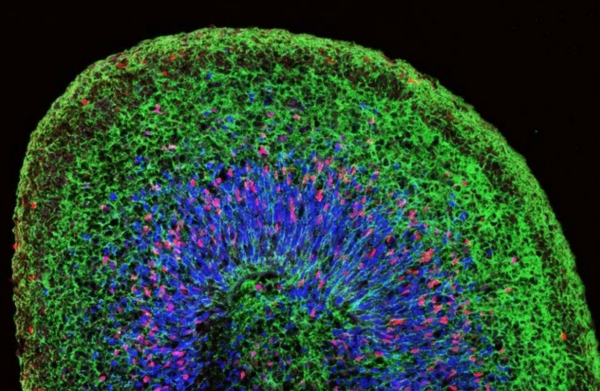
Researchers like Mohamed are increasingly looking into 3D cultures, which produce organs that can attach organically to one another. These 3D culture organs, or organoids, can grow in as little as 50 days to a diameter of four millimetres. Their increased complexity allows for a wide range of cell types that researchers can observe to determine their involvement in pathologies like Parkinson’s.

The organ most relevant to grow for the study of Parkinson’s is the brain. Mohamed’s work on creating small, human brain-like organs joins other recent research, including a 2013 study outlining the first cerebral organoid model. Researchers soon followed this development in 2016 with the formation of an organoid model specific to the midbrain, a region where dopaminergic neurons, which are lost in patients with Parkinson’s, are found in abundance.

Future work will focus on the fusion between a mini-brain derived from a patient with Parkinson’s and that of a healthy individual to study the effects of alpha synuclein in a healthy system. More broadly, the formation of a fully-functional brain in absence of a body opens doors to the study of other neurological conditions, such as Alzheimer’s and autism.

Mohamed’s ultimate goal is to integrate her model into drug-screening platforms. The future of pharmacological research exists at the intersection between traditional methods and these newer 3D models.

In addition to gender, ethnicity, and genetics, one of the risk factors for Parkinson’s disease is age. Since mini-brains have the capacity to age naturally, Mohamed hopes to make scientific breakthroughs in organoid ageing.  

“It’s [an] exceptional kind of work,” Karina Paliotti (U3 Science) said. “I think it’s really cool [and] I think there’s a lot of hope [that] a lot of [good could] come out of it in the future.”

Montreal, News

Provincial student federation AVEQ announces dissolution

In a joint statement issued by the Concordia Student Union (CSU) and L’Association étudiante générale de l’Université de Rimouski (AGECAR), the Association for the Voice of Education in Quebec (AVEQ) announced its dissolution on Jan. 26. AVEQ, the primary mandate of which was to represent students across Quebec by uniting their student unions and societies, was forced to dissolve following low student participation and poor financial management in recent years.

Students’ Society of McGill University (SSMU) President Tre Mansdoerfer said he was saddened, but unsurprised, by the announcement.

“It kind of makes sense,” Mansdoerfer said. “I think the group had good values, but they just really couldn’t act on them very well. They constantly created poor briefs, there wasn’t really any transparency, and they struggled.”

In Feb. 2018, Mansdoerfer, then an engineering senator at SSMU’s Legislative Council, presented a report of critiques against AVEQ. The report detailed the experiences of then-Post Graduate Students’ Society (PGSS) external affairs officer Jacob Lavigne during his observation of AVEQ meetings, which he described as disorganized and ineffective.

“AVEQ’s plans were bare and only consisted of a rubric with a timetable showing when they would be working on each item,” Lavigne wrote in the report. “While my objective at the start of my term was to have a referendum for affiliation to a federation during my term as [external affairs officer], I have realized over the past few months that this was not favourable.”

AVEQ’s financial troubles resulted in the organization posting a deficit of approximately $66,700 in its 2017-18 budget. Association members approved this budget in July 2018, with the stipulation that it be revised before their next congress in October. When AVEQ missed the deadline to balance its checkbook, the Mouvement des Associations Générales Étudiantes of l’Université du Québec à Chicoutimi (MAGE-UQAC), an association representing UQAC’s approximate 6,500 students, withdrew from the organization. Laura Daigneault, vice-president (VP) external of the AGECAR student association, said the withdrawal had a severe impact on AVEQ’s ability to operate.

“As [AVEQ] had to pay rent, our executives and our employees had […] to reduce our expenses elsewhere,” Daigneault wrote in an email to The McGill Tribune. “Because we were entirely funded by dues paid by student-members, the departure of MAGE-UQAC created a serious financial problem for us.”

A disruptive work environment may have also contributed to divisions between the association and its members, according to an article published by The Link on Jan. 27. The article cites accusations that an employee used a line of credit to pay for AVEQ’s hydro bill without consulting the executive team. Former association members have denied any knowledge of this or any workplace dysfunction.

Despite AVEQ’s dissolution, CSU External Affairs and Mobilization Coordinator Camille Thompson expressed optimism for future student movements in the province.

“It is important to look at the current movement for unpaid internships,” Thompson said. “A lot of students are coming together, and maybe this movement will evolve into something new.”

Although critical of AVEQ itself, Mansdoerfer believes in the importance of amplifying student voices to influence provincial politics and points out that many of AVEQ’s ideals overlap with movements at McGill.

“I think [provincial student associations] are really important,” Mansdoerfer said. ”The price [to pay] is very [much] up for debate, but there’s definitely a lot of value in trying to bring students’ voices to the provincial government. As for McGill, we can’t really do that on our own [….] We don’t have that big of a voice compared to [the combination of] every school in Quebec.”

Hockey, Sports

Tremblay scores overtime winner in comeback win

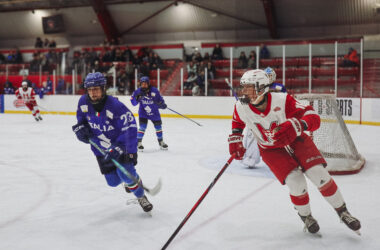
On Feb. 1, the McGill men’s hockey team (16-11) defeated the University of Ontario Institute of Technology (UOIT) (13-13) Ridgebacks in an exciting 3-2 overtime win. Despite a slow start to the game, McGill opened scoring in the first period with a goal from second-year defenceman Nikolas Brouillard assisted by fourth-year defenceman Dominic Talbot-Tassi and first-year defenceman Johnatan Legault.

“We had a little bit of a rough start,” first-year defenceman Taylor Ford said. “They were kind of all over us. We expected that, because we won last time, we were there, but we found a way to win, and that’s all that counts.”

The second period saw two Ridgeback goals, but McGill continued to create scoring opportunities. The home side recorded 12 shots in the second period, while UOIT took eight.

Entering the third period, McGill remained persistent in front of the OUIT net with 10 shots to the Ridgebacks’ five. With two minutes left in the game and the score sitting at 2-1 in UOIT’s favour, McGill pulled third-year goaltender Louis-Philip Guindon to put an extra skater on the ice. Fourth-year centre and captain Jerome Verrier scored the equalizing goal almost immediately with an assist from third-year defenceman Nathanael Halbert and second-year forward Michael Cramarossa, sending the game into overtime.

Three minutes into the overtime period, third-year right wing Samuel Tremblay, assisted by Talbot-Tassi and second-year forward Keanu Yamamoto, capitalized on a power play to secure the 3-2 home ice victory for McGill.

McGill currently sits third in the OUA East and has secured its spot in the OUA playoffs.

“[We’re] confident,” Ford said. “We’ve had a couple good games where we’re playing really good hockey [….] If we can keep doing what we’re doing, we’ll be heading into [the] playoffs in the right shape.”

After a loss to Concordia on Feb. 2, McGill could finish anywhere between second and sixth in the conference.

“We have [a] strong tradition and history of being toward the top of the conference,” Associate Coach Liam Heelis said. “We’re not there now, but it’s going to be nice coming in [on] a different avenue than normal, and our guys are really excited.”

The playoffs will certainly present unique challenges, but the team is optimistic about this final stretch of the season.

“Once [the] playoffs come around, the intensity gets a little bit higher,” Ford said. “If we can keep doing what we’re doing and getting better in practice, I think we’ll be good.”

Heelis spoke to the team’s progression since the winter break.

“Our guys […] have really come together in the new year,” Heelis said. “We’ve been building on our success each and every week, and we’re really excited for [the] playoffs quickly approaching.”

This was the final home game of the regular season for McGill, and, with six wins in their last 10 games, the team is looking strong going into their final game of the season on Feb. 9 against the Queen’s Gaels (18-8).

Moment of the Game

In the final minutes of the third period, fourth-year centre Jerome Verrier tied the game to force an overtime period, giving McGill a chance to claim victory in their final home game of the regular season.

Quotable

“Our guys were really able to just stick to the process of the game plan and found a way to tie things up at the end.” – Associate Coach Liam Heelis on the last minute comeback for McGill.

Stat Corner

McGill played a strong offensive game, outshooting the Ridgebacks 31-20.

Emerging Trends, Student Life

Just do it, yourself

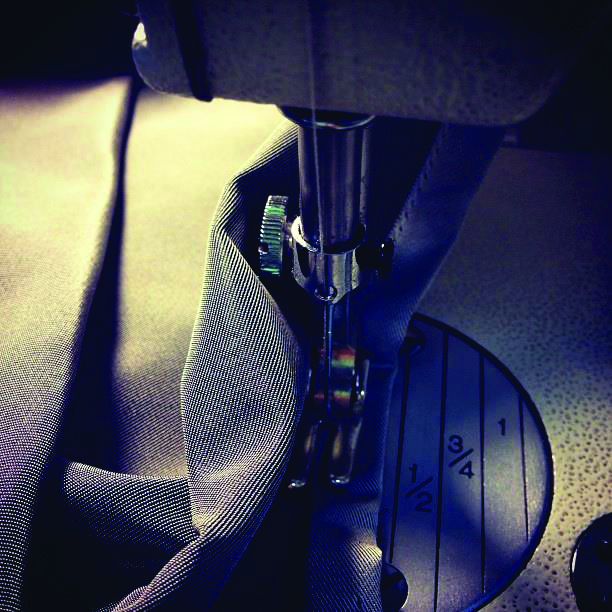
As frustration with consumer culture grows, some creatives are choosing to stop buying ready-made goods and start producing objects themselves. Often referred to as the ‘Maker Movement,’ this recent trend involves creating just about anything—from knitting a scarf to forging a knife. Some participants aim to save money by making their own products, while others seek an outlet to relieve stress. The crafting industry has grown significantly within the past decade, with the largest percentage of the demographic between the ages 18 and 34.

Social media provides ample inspiration for the prospective maker. In 2017, the most popular category on Pinterest was ‘Art & Crafts.’ The platform delivers simple and thrifty crafting ideas that are particularly appealing to a younger audience that might need visual inspiration. Similarly, on Youtube, ‘how-to videos’ are one of the most-viewed categories on the site. One mother built an entire house using Youtube tutorials to save money and still enjoy her dream home. For people looking to learn a craft, a simple Google search can provide all of the necessary information to start.

The rise of do-it-yourself (DIY) culture is also attributable to a growing consciousness of the ethical impact of commercial products. Documentaries like The True Cost show that ‘fast fashion’—cheaply made, trendy clothes—often relies on exploitative labour and produces massive amounts of environmentally-harmful waste. Phoebe Pannier, U2 Arts, sews and embroiders her own clothes, rather than buying them, as a way to combat the ethical drawbacks of the fashion industry.

“The disposability of clothing […] really distances consumers from the objects around them,” Pannier said. “Making something for yourself allows you to deconstruct what you take for granted about material goods.”

For many makers, the act of creating something makes them more aware of the amount of work that goes into producing a single item. Corrina Greenler, U2 Arts, recently took a pottery workshop and was surprised at how much work and time was required to craft a small ceramic piece.

“It made me appreciate using [something that I made] much more,” Greenler said. “It’s satisfying to know that I made something cool out of just a block of clay.”

Though DIY stands for ‘do it yourself,’ many crafters find that the process of hand-making an item can bring people together. Olivia Mendelson, U2 Arts & Sciences and the vice-president communications of the McGill Students Knitting Club explained that club meetings provide participants with an opportunity to get assistance with their knitting projects.

“It’s hard to find people to knit with, but, when people do get together and knit and talk about knitting, it creates a really amazing community atmosphere,” Mendelson said. “More experienced knitters are always there to help beginners if they run into issues.”

Some crafters find that making things connects them not only with their peers, but also with past generations. Pannier, for example, learned to knit from her grandmother.

For stressed McGill students, it might seem like there simply is not enough time to pick up a new hobby. Pannier, however, finds moments throughout the day to incorporate crafting to make mundane tasks a bit more interesting.

“I [do crafts] while I’m doing other stuff, like, if I’m listening to a lecture recording, I’ll embroider, or, if I’m in a boring work meeting, I’ll take out my knitting,” Pannier said.  

Similarly, Mendelson believes that the process of making something can act as a valuable form of self-care for overwhelmed students. She finds the repetitive movements of knitting calming.

“Hands-on crafts force you to slow down and focus on what you’re doing in the moment, which isn’t something we often take the time to do, especially as busy students,” Mendelson said.

The trend of ‘doing it yourself’ simultaneously promotes a sense of individuality and of community. Crafters come together to produce and share their creations.

“Our ancestors had to make their own stuff out of necessity, so it’s kind of a way of connecting with the past,” Greenler said. “Creating is what makes us human.”

Read the latest issue

Read the latest issue