


Latest News

Sports

The creative realms of fictional sports

In many long-running TV or book series, there is a game or sport that is wildly popular in-universe, but does not exist in real life. They range from one-off mentions, like Velocity in Star Trek: Voyager, to plot-central activities, like podracing in Star Wars Episode I: The Phantom Menace.

Calvinball

The comic strip Calvin and Hobbes features a chaotic, incomprehensible game called Calvinball, which has only three rules: Calvinball games may never be played the same way twice, players can invent rules whenever they please, and masks must be worn at all times. Aspects of the game featured in the comic include the “Pernicious Poem Place,” where players must recite poetry, the “Song Zone,” where they must sing, and nontraditional scores of “Nosebleed to Trousers” and “Q to 12.” 

Podracing

Podracing, as featured in the Star Wars franchise, is a sport where drivers, mostly non-humans, pilot small crafts to compete in races so dangerous that the sport is outlawed between Episode III: Revenge of the Sith and Episode IV: A New Hope. In Episode I: The Phantom Menace, a young Anakin Skywalker wins his freedom through his podracing skills. Podracing gives film viewers all the fun of traditional racing with the added excitement of bizarre-looking creatures and faraway planets.

Exy

Nora Sakavic’s All for the Game trilogy centers around a ragtag NCAA Exy team. Exy resembles co-ed lacrosse, but is played on an indoor court and tends to be more violent, with a character being expelled via red card in nearly every game in the books. It was invented in Japan a few decades before the books are set, and quickly made its way to the U.S., where it caught on and expanded to college-level and professional leagues, and eventually became an Olympic sport.

Pro-bending

One of the more complex fictional sports featured on this list is pro-bending from The Legend of Korra. Benders, who can manipulate water, earth, fire, or air, use their powers to defeat their opponents in a sport loosely inspired by pro wrestling.

Each team consists of an earthbender, a waterbender, and a firebender, with specific rules governing the use of each bending type—for example, only waterbenders may make headshots. Pro-bending is extremely popular in-universe and plays a key role in the show, as the protagonist, Korra, joins a pro-bending team in the first season. The daring martial arts-inspired moves are mesmerizing, and the tension as they attempt to knock their opponents into receding territory zones or out of the ring is electric.

Quidditch

Quidditch is by far the most well-known and expansive fictional sport. Originating in the Harry Potter series, Quidditch is played on flying broomsticks. Over the years, it has been given an immense amount of attention. In addition to Quidditch matches often serving as the backdrop for character conflict and plot development, the supplementary book Quidditch Through the Ages tells the story of the “historical” development of Quidditch, lists common strategies and some of the 700 fouls in the sport, and provides an overview of its place in the wizarding world.

As the phenomenon of Harry Potter grew, Quidditch jumped out of the pages and was adapted to non-magical play by a group of students at Middlebury College in Vermont in 2005. In the 16 years since, scores of other schools, including McGill, have created Quidditch teams, and there is even a semi-professional league operating in North America. Although players cannot fly, they do hold broomsticks between their legs, and games can get almost as physical as they do in the books.

Not only are fictional sports invaluable contributions to worldbuilding, they can also give fans a physical way to connect with their favorite forms of media, whether through video game tie-ins or real-world versions. While one may never be able to live in the world of The Legend of Korra, they can become just as excited about a hero’s pro-bending victory as the characters do.


Off the Board, Opinion

The bad omens of Fall 2019

We all remember the day we heard about the samosa ban. The news rocked all of our worlds; we had been robbed of our beloved, cheap campus snack. But the ban was not the first of bad news on campus in the Fall of 2019. Reflecting on this particular semester—the last to be unaffected by COVID-19—I realize now that the samosas were one of three terrible omens of what was to come just a few short months later. 

Let’s rewind a bit. The first event that indicated the coming doom was the closure of the Arts Lounge and the subsequent decline of Bar des Arts (BdA) as a central social location on campus. I remember when I heard this news in the summer of 2019. After having just finished my first year at McGill, an experience that was defined in large part by being a BdA staff member, the thought of not spending my Thursday evenings in the basement of Leacock serving beers was difficult for me to wrap my head around. I chose to remain optimistic, but this hope later proved to be naive.

I barely had time to process the absence of BdA before even more devastating news struck the McGill community: Selling samosas had been banned on campus. Samosas, a uniting force, a delicious treat, a shining light on a dark day, were no longer there to make our days. We had been robbed of the savoury, spicy glue that held our large and often flimsy campus community together. Surely, it could not get any worse than this. 

Although I was disappointed that my second year experience would be different from what I had envisioned, I remembered that Gerts was set to reopen in December 2019. Knowing that my BdA experiences could be replaced by good times spent at a different beloved student bar relieved my mourning. I had never experienced a night at Gerts, but from the excitement of my upper-year friends I could tell that it would be worth the wait.

Of course, this dream too was crushed. An Oct. 28 email from SSMU announced yet another delay in re-opening the University Centre. I was disappointed, of course—the dream of having a go-to social spot on campus that was not the Redpath Café was becoming more and more unrealistic. To consider Blues Pub as an alternative would go against my BdA roots.

Undoubtedly, there was good news in the Fall of 2019 that eased some of the pain. One example was the surprise that Première Moisson, with its overpriced snacks and bad coffee, was replaced with better food options. More importantly, McGill did the bare minimum and finally changed the racist men’s varsity team name after months of protests led by Indigenous students.

While it is nice to focus on the bright side, let’s face it: Things suck right now, and we should let ourselves mourn what once was. The reality is, most students are missing campus life and are fondly looking back on the months before the pandemic flipped our worlds upside-down. However, as we reflect, we should remember that even before March 2020, a certain kind of McGill student culture was already on the decline. We can understand now that the trifecta of BdA closure, samosa ban, and the Gerts delay was only a taste of what was to come.

Hopefully, one day, we will be able to attend campus social gatherings and eat old samosas without washing our hands beforehand. It will be a beautiful day, but it must not be taken for granted. McGill students deserve to experience the vibrant campus community that slipped away from us in the Fall of 2019, hopefully with the same traditions that shaped the campus culture for which McGill was once known.

Science & Technology

A walk a day keeps the doctor away

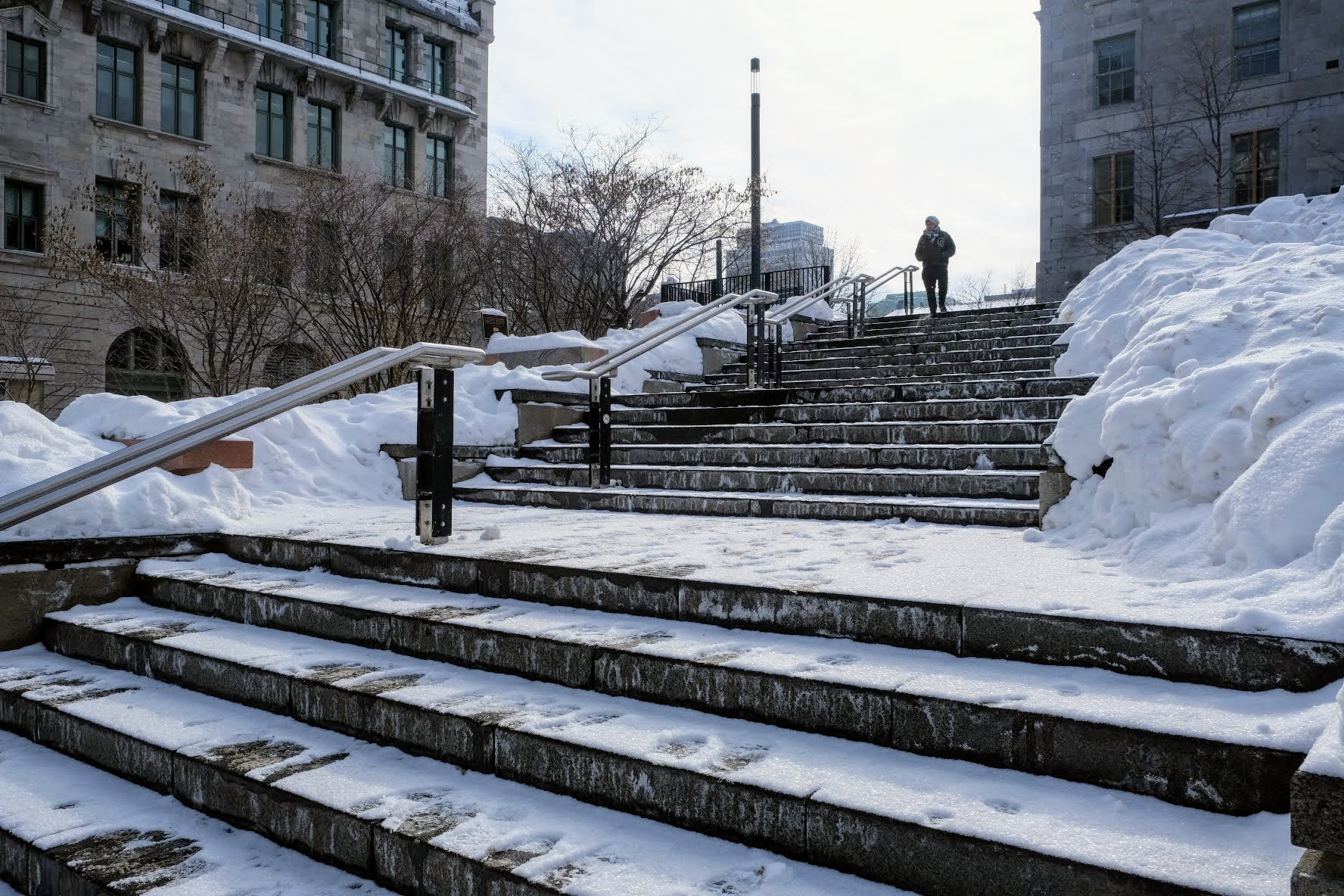
Every year, McGill students curse the campus terrain as they trudge up the hill towards the Life Sciences Complex. However, the health benefits of climbing up the hill are abundant. Research has shown that for those able, walking reduces the rates of cardiometabolic diseases like diabetes, heart attacks, and strokes. 

A new study conducted by a group of McGill researchers explores the link between a city’s walkability scores and rates of cardiometabolic disease and mortality.

“Cardiometabolic diseases, such as cardiovascular diseases and diabetes, are the kinds of chronic diseases that are influenced by individual behavioursnamely physical inactivity and diet,” Sarah Mah, a PhD candidate in McGill’s Department of Geography, wrote in an email to The McGill Tribune.

Active living environments, also known as walkable environments, are defined as easily navigable areas with well-connected walking paths, a variety of destinations within walking distance, and denser populations. The team wanted to expand on previous research that showed that these types of neighbourhoods are linked to positive health outcomes. 

The group conducted their study using data from 250,000 respondents from the Canadian Community Health Survey and death records from the Canadian Mortality Database. The datasets contained information regarding social and demographic characteristics as well as health behaviours like physical activity levels. Afterwards, Mah and her colleagues used the Canadian Active Living Environments (Can-ALE) database to assess how living environments impact physical activity levels, and the risk of premature cardiometabolic death.

The team observed that people walked more frequently in neighbourhoods with favourable conditions for active living. They also found that walking was associated with lower premature cardiometabolic death in all groups except for middle-aged men. On average, people walked more in these environments, regardless of sex and age. 

Overall, these results highlight the importance of the built environmentman-made structures and features in a neighbourhoodin shaping behaviour and health. 

“We have seen a huge increase in obesity rates and overweight rates over the last 30 to 40 years,” Mah said in an interview with The McGill Tribune. “One of the ways to curtail that is to encourage people to be physically active. Whether our neighbourhoods are built to support active lifestyles is part of that.”

Mah believes these environments can also encourage sustainability.

“We are heading towards a future that is not looking good in the way of climate change,” Mah said. “I think figuring out how to structure our environment such that we can reduce motorized transportation and live more sustainably is going to be really important.” 

Mah suggests that improvements on neighbourhood design plans can be made by considering these research findings.

“The research shows that neighbourhoods that support active living tend to be places that are easy to navigate, have more people, and have more places that people can walk to for their daily needs and activities,” Mah said. 

She further recommends that policymakers re-examine existing neighbourhoods to identify ways of improving active living, like increasing mixed-use planning. Another way to promote a city’s sustainability is to support initiatives like the creation of safe bike lanes.

In our increasingly sedentary lifestyles, designing environments that promote walkability is more important than ever. Cities all over the world stand to benefit from active living environments. Universities like McGill could be a source of inspiration, given its active living environment that includes opportunities for walking and cycling.

“Universities tend to be very active living friendly,” Mah said. “Not only do students have destinations that are walkable, densely connected population areas, [they] also have some great destinations to amenities, to groceries, to healthcare.”

Commentary, Opinion

Shop local to support Quebec businesses affected by COVID-19

In April 2020, the Quebec government introduced Le Panier Bleu, an online directory of Quebec retailers that supports local businesses impacted by the pandemic. The initiative maintains that if shoppers are presented with an accessible way to shop local, they may be more likely to opt for those options rather than purchasing from large retailers. While Panier Bleu’s mission is promising, the platform must be reworked to become more user-friendly, and students can help it reach its full potential. 

When the pandemic set in, businesses struggled to survive because of government imposed public health measures to curb the spread of COVID-19. As businesses were suddenly restricted to online sales, many local vendors without the resources to adapt to a web-based sales model suffered. Furthermore, many local stores only sell specific products. Even if the population has access to multiple shops from the comfort of their home, it is still far more practical to do all of one’s shopping at once. Consumers looking to buy a variety of products instinctively visit Amazon, which offers almost everything one could need on one site. 

The government sought to adopt Amazon’s model not only to help small businesses survive, but also to try and combat the retail giant’s monopoly on online shopping. However, Panier Bleu’s strategy has some glaring flaws. Although it is meant to support local shops, critics have expressed concerns over some of the vendors listed on the site, like IGA, which is part of a multinational chain that already has its own online platforms and clientele. By including IGA and other stores like it on Panier Bleu, attention is taken away from truly local vendors, detracting from the purpose of the initiative. If the government wants to better support local businesses, it should consider removing any already well-established chains from the website. To do so, it could implement a revenue threshold that business must be under in order to appear on the platform.

Beyond issues with the selection on Panier Bleu, users will find that it is not nearly as intuitive as its competitors. While it aims to become an alternative to Amazon in Quebec, Panier Bleu merely redirects shoppers wanting to buy a product to a store’s website. Users looking for different products still have to visit several sites. This urges shoppers to buy from large online retailers, as they can search for a variety of products in one place and easily make a single purchase. 

Despite its flaws, Panier Bleu’s shortcomings should not discourage potential customers from using it, including McGill students who are typically likely to shop on Amazon. While it may be less convenient, the benefit for small businesses can be massive. Further, increased use and feedback may push the government to improve the directory rather than eventually abandon it due to low traffic. To further support local businesses in the long term, when using Panier Bleu, students should also take note of which local stores sell the products they need to promote a shift to local shopping especially when it becomes easier to shop in person again. The process may take more time than shopping on Amazon, but if done en mass, these small actions support local shops that are in dire need of help. 

By shopping on Amazon, students are supporting a company that made a monstrous profit last year while letting down struggling businesses. Although Panier Bleu must be improved, it can be incredibly meaningful to local shop owners, which ultimately outweighs the mild inconvenience that may come with using it.

Art, Arts & Entertainment

Heartbreak Museum offers students a cathartic space to express hurt

For those who are single, have recently ended a relationship, or are simply not interested in romance, Valentine’s Day can often feel like a punch in the gut. With the additional isolation of the COVID-19 pandemic, this year’s solitude hits especially hard. 

Enter the Heartbreak Museum, an annual exhibition hosted by Mcsway Poetry Collective. The Heartbreak Museum provides a digital space for artists and poets to share their heartache—romantic, platonic, or otherwise—authentically. This year’s edition was held virtually through a website and Zoom open mic. 

Event organizer Zeina Jhaish, U3 Education, spoke with The McGill Tribune about the impetus for this event. 

“I joined Mcsway three years ago as a project lead,” Jhaish said. “I had to create a project for that year, and […] I remembered the [Museum of Broken Relationships and] seeing white empty rooms and objects that represented heartbreak. I really thought the idea was nice and I wanted to see it in the Mcsway context [.…] For me, the inspiration personally was [that] heartbreak is always relatable.” 

When viewers enter the website, they are greeted by a digital painting of a heart with a gash down the middle and stitches alongside to patch the wound. Immediately, the audience is drawn in by the painful beauty of a broken heart. 

Along with its virtual exhibition, the Heartbreak Museum hosted an open mic on Feb. 12 where poets shared their most intimate heartbreaks. These readings revealed that heartbreak is not limited to simply romantic relationships. Jhaish explained that the Heartbreak Museum is meant to be an inclusive space that discusses many different types of heartbreak. 

“We have a lot of heavy material and a lot of great sensitive, amazing poetry from our participants,” Jhaish said. “We always emphasize that heartbreak is not just about relationships and Valentines [….] So, our audience can also talk about family and friend-heartbreak and maybe even self-heartbreak.”  

The exhibition hosts a range of work, including sites where photographers documented their broken hearts and artifacts from past relationships, collages, and short films. In one set of images entitled “the sound of leaving,” the artist, Amanda, shows that moving from one place to another can also feel heartbreaking. 

Despite the fact that Zoom often feels like an impersonal platform to share art, the open mic offered a welcoming and supportive space for artists. As participants read their poetry, the chat box was flooded with loving and encouraging words. Poets shared experiences detailing the loss of friends and family, the pain of unrequited love, and the turmoil of toxic relationships. 

Jhaish discussed how moving the event online allowed Mcsway to expand its programming to include the open mic element. 

“We all love [the] Heartbreak Museum, so we thought we should find a creative way to bring it to life in COVID-19,” Jhaish said.“We decided to put it in the form of a website […] and then we also wanted to create a platform for people to perform their pieces [….] We wanted to add a little more pizazz to it and have an open mic where people could share and discuss and talk […] and use Zoom to our advantage.” 

Jhaish emphasized that the Heartbreak Museum offers students a sense of catharsis at a challenging time of year, which has been exacerbated by stay-at-home orders. 

“This year [heartbreak] hits differently because it’s COVID and all the frustration that comes with it,” Jhaish said. “It’s especially important to continue with this because we saw that a lot of people obviously want to share and […] and we believe in […] channelling our energies into expressing ourselves and having a platform to do that.” 


Album Reviews, Arts & Entertainment, Music

‘OK Human’ is sort of human, but definitely less than okay

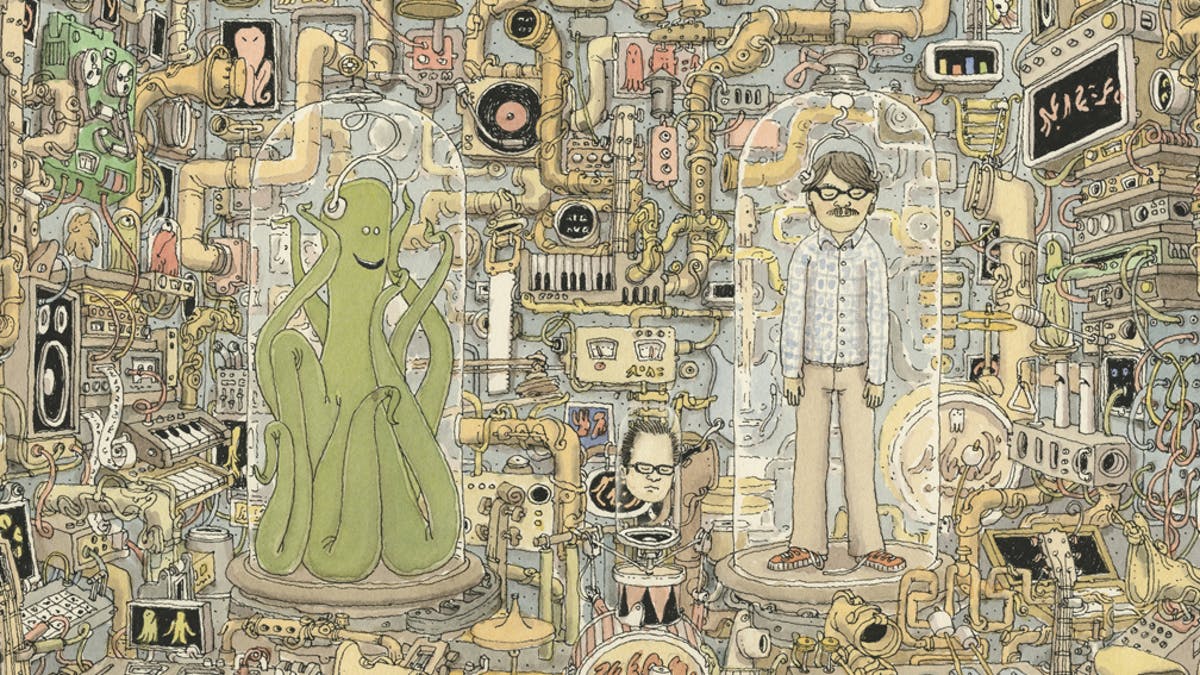
Due to the indefinite nature of the pandemic, the subgenre of the “pandemic album” has become an increasingly large fixture. Although some, such as Taylor Swift’s folklore and Charli XCX’s how i’m feeling now, were massive critical and financial successes, Weezer’s latest album, OK Human, is not poised to join those ranks. While the album is clearly inspired by the classic Beach Boys album Pet Sounds, OK Human comes off as an odd imitation of Coldplay with quirky yet unremarkable lyrics and string orchestras in place of more brooding melodrama. 

Although the album deserves a certain amount of credit for sticking to a moody, dramatic aesthetic and producing a cohesive vision, this vision is ambivalent and mediocre. In what can be viewed as an unintentional homage to the band’s pop-punk roots, most of the songs sound almost exactly the same, and virtually none of them are memorable or good enough to propel the album to a higher quality. While “Screens” and “Here Comes the Rain” stand out amongst the sea of homogeneity and are more indicative of Weezer’s typical alternative rock sound, most of the songs on the album feel like a misplaced and half-hearted attempt to revisit a once-experimental, now dated style of production.

The high concentration of orchestral backing throughout the album is at its best in the final song, “La Brea Tar Pits,” where it takes on a more subdued version of the role that a guitar riff might have filled in earlier Weezer work. However, any power built up in the standout songs is fundamentally washed away by the bland repetitiveness of OK Human as a whole. While it may feel briefly representative of the moody blues of the pandemic, there is no quality or longevity beyond this pedestrian work. 


Commentary, content warning sa, Opinion

The problem with the pornography industry

*Content warning: This article includes mentions of sexual violence and discrimination.

A December 2020 New York Times article by Nicholas Kristof exposing Pornhub’s refusal to take down videos depicting rape and child abuse has sparked international outrage. Since then, credit card companies like MasterCard and Visa have cut ties with the Montreal-based site. Financial institutions are now part of the public debate of whether porn should be banned entirely by governments. The fact that 93 per cent of male and 62 per cent of female college students watch porn before turning 18 shows that pornography influences students’ sexual interactions. But beyond the popular prohibitionist feminist stance that porn is dangerous for women and the permissive stance that rejects moralist concerns, there is an often-overlooked point: The business model behind the industry. The problem with porn is how it makes money. Understanding how it works is important and can ultimately change harmful consumption habits. 

The purpose of porn is to entertain and arouse viewers. Although porn is available to everyone who has access to the internet, it caters to white, straight, cisgender men. From Hugh Heffner’s Playboy to many Pornhub videos, a lot of free and mainstream pornography objectifies women. Women are often at the centre, but we see them through the eyes of men. This does not mean that women, people of colour, or gender and sexual minorities cannot watch or enjoy porn. But the filming is done with a certain demographic in mind, tapping into harmful gender and racial stereotypes to please its audience.

Pornography, like any industry, prioritizes profits above all else. Its business model provides little to no incentives to regulate the content that users upload. It would not be profitable to get rid of something that people clearly enjoy. In this sense, Pornhub is the perfect blend of racism, patriarchy, and capitalism because it takes advantage of people’s biases to make a profit. Pornography platforms make money off leaked videos of 14-year-old girls, revenge porn, violent depictions of rape, and in a broader sense, racist and sexist content. One could argue that porn is subversive and that it defies moralist and prudish values that seek to villainize sex by representing hidden sexual desires that people cannot publicly claim. However, the racist and sexist mainstream porn industry challenges nothing; it upholds the oppressive systems on which it is built. 

Debates about the ethics of porn can often seem abstract and ideological, but it is important that they centre around the people they tangibly impact. The critique should not seek to criminalize and punish sex workers for making a living. Moreover, not all porn is created equal, and the rise of ethical porn provides an important alternative. Instead, criticism should be aimed at companies like Pornhub and their respective business models, which incentivize them to profit off of the violence and trauma of others.

Rather than debating whether porn should be banned, it is important to focus the discourse on the systems and the companies that facilitate and actively partake in harm. Discussions should not fall into the trap of individual responsibility that tends to distract from the true perpetrators. The danger of criticizing porn is punishing people for their sexual desires. But as Kristof states, criticizing the porn industry and being sex-positive should not be mutually exclusive. 

Awareness of the structural dynamics that enable porn should not become an excuse for mindless porn consumption. People can choose what type of pornography to watch, what stereotypes they buy into, and to stop consuming violence. Young people and students have the power to shape the way we understand sex, and resignation to injustice should not eclipse the power of dissent.

Arts & Entertainment, Books

Celina Caesar-Chavannes calls to build an inclusive world

On Feb. 12, the West Island Black Community Association (WIBCA) hosted a virtual book launch for Can You Hear Me Now?, the memoir of businesswoman and former Member of Parliament (MP) Celina Caesar-Chavannes. Caesar-Chavannes, the first Black person representing Whitby, Ontario, in Parliament, was among the most outspoken Liberals and later Independents during her tenure, advocating for causes like mental health, international development, and gender and racial equity in the House. Her commitment to humanity-based governing principles brought her acclaim as Secretary to the Prime Minister and as Minister for International Development, yet that principled commitment ultimately caused her to leave the Liberal caucus and choose not to run for re-election in 2019. Can You Hear Me Now? explores Caesar-Chavannes’ mistakes, guilt, and pain in the creation of a call to action.

The launch began with a set by DJ Don Smooth Garrett, which introduced the hosts and Caesar-Chavannes into the groove of Marvin Gaye, Al Green, and Stevie Wonder. But it was Sam Cooke’s “A Change Is Gonna Come” that aptly introduced the author.

The conversation between Caesar-Chavannes and moderator Fimo Mitchell, a Montreal meditation coach, covered her memoir and beyond, delving into topics like Caesar-Chavannes’ childhood, career, and love for Prince.

Like her public service, Caesar-Chavannes’ memoir is a work of authenticity, and writing it pushed her to pen several letters to family members informing them of its unflinching content. Caesar-Chavannes and Mitchell spoke about the former’s upbringing. Having immigrated to Canada from Grenada as a toddler, she noted memories of her parents taking care of her through her childhood.

Her description of her mother’s tough parenting outlines Caesar-Chavannes’ need to show realities of Black motherhood coupled with the immigrant experience.

“It’s not the soft and squishy that sharpens me,” Caesar-Chavannes said. “I feared her while she feared for me [….] She treated me in a way that she knew the world would.” 

Caeser-Chavannes’ father grappled with racism at work, which also presented her with an understanding of the power of words.

“The haunt around my dad made him look gray and emaciated,” Caesar-Chavannes said. “It would be years until I understood that the haunt was racism and that is part of the Canadian experience for Black people.” 

In light of the 2020 Black Lives Matter protests, Caesar-Chavannes urged listeners to engage in dismantling systemic racism. Stressing fact-based dialogue, she referenced the deaths of Toronto’s Regis Korchinski-Paquet and Joliette’s Joyce Echaquan, and highlighted the disproportionate consequences that Canada’s COVID-19 response and policing practices have on Black and Indigenous peoples. Democracy, she argued, is key to change.

“Democracy does not belong to a man with well-coiffed hair on Parliament Hill,” Caesar-Chavannes said. “Politicians have borrowed jobs. We decide whether they get that job again.”

She further emphasized that passion results in substantive progress, not just virtue-signalling. Caesar-Chavannes left her work running clinical trials across Canada to run for office because of her passion for people. However, people often do not understand why she left her position in office.

“I’m not interested in being at the table to eat the crumbs off the floor [or] even worse, to be on the menu,” Caesar-Chavannes said. 

After a federal election in 2019 promising change, Caesar-Chavannes still sensed that same haunt her father felt seeping in. The government reverted promises, like electoral reform and ending mandatory minimum sentences, and antagonized independent voices in their party, especially women of colour like Jody Wilson-Raybould and Caesar-Chavannes. After being told in early 2019 to support the party over principles, she left the Liberals.

“I was left alone […] so cold on that side of the House,” Caesar-Chavannes said. “I didn’t deserve anything they did over the three years. I don’t know why they did that.” 

After a gripping two hours, Caesar-Chavannes rallied the audience to do the work, unpack toxic environments, and importantly, extend humanity. 

“I want my tombstone to read, ‘All she had left to do was die.’” Caesar-Chavannes said. “But I ain’t going anywhere soon.”

Can You Hear Me Now? is available for purchase now.


News, SSMU

Student organizations collaborate on SSMU ‘Divest for Human Rights’ motion

Seven McGill student organizations have collectively drafted a motion titled the “Divest for Human Rights Policy” to advance at the upcoming Students’ Society of McGill University (SSMU) General Assembly (GA) on Feb. 16. Divest McGill, Climate Justice Action McGill, Students in Solidarity for Palestinian Human Rights (SPHR), McGill Students for a Free Tibet, McGill Stands with Hong Kong, Indigenous Student Alliance, and Students for Peace and Disarmament (SPD), collaborated to develop the policy which demands that McGill divest from companies that either aid or are complicit in human rights violations and environmental destruction.

With each group addressing different areas of McGill’s investment portfolio, the policy targets corporations and institutions complicit in a variety of human right abuses, such as Canada’s militarization of Wet’suwet’en territory, China’s forced labor camps for Uyghurs, and the state-sanctioned crimes against Palestinians.

In an interview with The McGill Tribune, Maya Garfinkel, U3 Arts and SPD representative, and one of the founders of the campaign responsible for the policy, highlighted the main objectives of the motion.

“What we want from this motion is to basically set the foundation for mobilization in the future,” Garfinkel said. “In the motion, we break it down into specific bodies within SSMU, within the McGill administration, of what we are demanding from those institutions [….] We just [want] this policy to be a foundation for education for mobilization towards the ultimate goal of divesting from these harmful companies.”

An anonymous source representing SPHR elaborated on the importance of the policy in an email to the Tribune and explained how it serves to direct resources to areas that students are concerned about. 

I hope that this motion can be a conversation starter,” the source wrote in an email to the Tribune. “[It is] the kind of conversation that forces us to really think about what our tuition money is being invested into. [A conversation] that forces us to think of our positionality as settlers on stolen land and not think of injustices in Palestine, Yemen or East Turkestan as ‘far away.’ Instead, as McGill students, we must recognize the power and responsibility that we have to pressure institutions like McGill until they stop investing our tuition dollars in corporations which directly facilitate and profit from violent oppression and exploitation, in Turtle Island and abroad.” 

Brooklyn Frizzle, SSMU Vice-President (VP) University Affairs, believes that the motion’s implementation will require further work from SSMU’s executives.

“This campaign will be a multilateral effort from the Offices of the President, VP External Affairs, and VP University Affairs, alongside nearly a dozen politically-oriented student groups,” Frizzle wrote in an email to the Tribune. “In the weeks following the GA, if we are successful [in the policy’s implementation], we will start by mobilizing public support through outreach and education campaigns before setting up our action plan for […] advocacy.”

Garfinkel is confident that passing the policy will strengthen student sentiment that McGill’s divestment from human rights violations should no longer be delayed.

“Historically, the McGill administration has required a lot of pushing from the outside, from the student body, for things like this to really move,” Garfinkel said. “[…] I think that we are preparing for the worst and hoping for the best when it comes to the McGill administration response.”

In a statement to the Tribune, McGill Media Relations officer Frédérique Mazarolle relayed a comment from the university administration on its investments and commitment to following recommendations from the McGill Board of Governor’s Committee to Advice on Matters of Social Responsibility (CAMSR).

To better align the mandate of its investment committee with the CAMSR recommendations, the Board of Governors has approved in June 2020 changes to the Statement of Investment Policy of the Endowment Fund to include ESG, [environmental, social and governance], considerations and a socially responsible investment concrete action plan,” read the statement from McGill.

A previous version of this article incorrectly referred to McGill Students for a Free Tibet as Students for a Free Tibet. The Tribune regrets this error.

Student Life

Searching for the cities of the future

A panel discussion about the future of sustainable cities was presented by Sustainable Development Goals Student Hub (SDG), ECOLE, and the Research and Sustainability Network on Feb. 12 and marked the close of Sustainable Development Goals (SDG) week. SDG week ran from Feb. 8-12, featuring panel discussions and movie screenings open to all who were interested. The panel addressed the 11th and 12th of the United Nations’ 17 sustainable development goals, and the three panellists—Building, Civil, and Environmental Engineering professor Dr. Ursula Eiker, Urban planner Louis Mazerolle, and Geography PhD candidate Kerstin Schreiber—presented research to show how academics, planners, and city governments are working hard to meet these goals. 

Eiker, who teaches at Concordia University, opened with a presentation on creating cities with smaller energy demand and carbon footprints. Eiker argued that planners should build cities in a compact formation to lower energy consumption in buildings and reduce the amount of transit required for movement. Eiker works in the Next Generation Cities Institute at Concordia, where researchers use computers to model the impact of planning for sustainability on cities’ greenhouse gas outputs. Developed countries tend towards increasing levels of urban sprawl, and Eiker’s research argues why this sprawl is highly detrimental to the environment and health of people living in cities. 

“Cooperative or communal housing needs to see a renaissance,” Eiker said. “It is good for social interaction, and it is a good way to slow the rebound effect we see where people with money choose to spend their money on goods that are less sustainable.”

The rebound effect, also known as the Jevons paradox, is a widely discussed phenomenon in sustainability. It occurs when technological advancements introduced to reduce emissions fail to do so because of a rise in improved technology use. In developed countries with more resources, communal goods are a thing of the past because most people have their own products. The rebound effect will continue to strengthen as wealth builds and more people can purchase their own cars instead of taking public transit.

Next, Mazerolle argued that safe public spaces and large green areas are important for creating sustainable cities that benefit their residents. Currently, Mazerolle is working on a project in Laval to update development bylaws for environmental protection. Mazerolle’s approach to planning sustainable cities is similar to Eiker’s, in that it is better to build up than out. 

“It is always better to start building a new sustainable city on top of the older city,” Mazerolle said. “Green fields are easier to build off of, and there is less of a wait for permits, and the land is often cheaper. We need to flip the incentives so that it is easier to build on what is already there.”

The final speaker was Schreiber, who discussed the issues of food accessibility in high density cities. Since cities are not usually conducive to food production, city dwellers have always relied on others to procure their food. This is part of the reason for food deserts, areas where healthy food is not available, and other inefficiencies in the food system, such as food waste. Schreiber proposed several solutions to these problems, including the food waste ban that was piloted in French supermarkets. Urban agriculture has also seen a revival in the past 10 years, with rooftop farms and community gardens appearing across North America. This offers a sustainable way to close food cycles and serves as a short term antidote to food deserts. 

“We are still figuring out which is the most sustainable way to feed cities: Food supply coming from local food systems, or global trade of food,” Schreiber said. “Global trade keeps food affordable and accessible, but the emissions are also higher, so it is likely that neither of the two extremes will be the solution, but rather a combination of those and other ideas.” 


Read the latest issue

Read the latest issue